#AbKoiBahanaNahi Campaign to end Gender-Based Violence launched

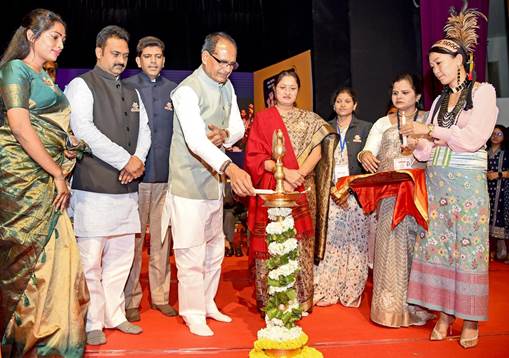
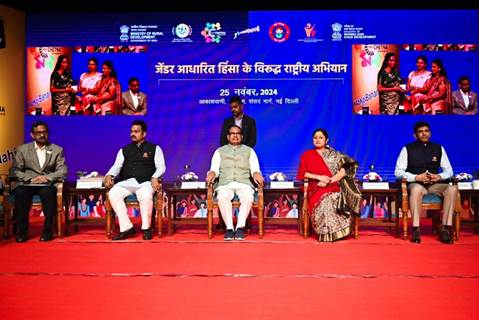
A National Campaign “#AbKoiBahanaNahi” was launched today in New Delhi. It is a collaborative effort between the Ministries of Women and Child Development and Rural Development, with support from UN Women. The Union Minister for Women and Child Development, Smt. Annpurna Devi, Union Minister for Rural Development, Shri Shivraj Singh Chouhan, Minister of State for Rural Development Shri Kamlesh Paswan and Dr. Chandra Sekhar Pemmasani, Minister of State for Rural Development and Communications were present on this occasion.

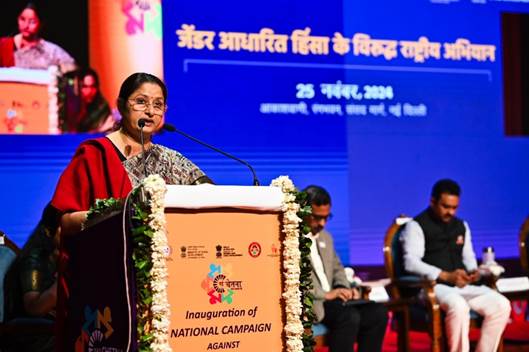
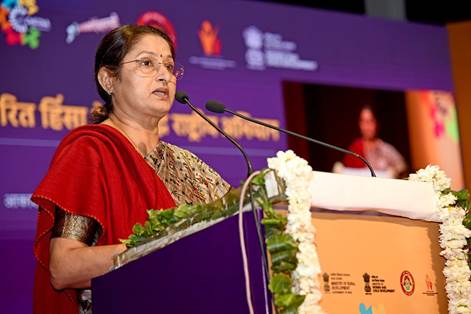
While addressing the gathering the Minister Smt. Annpurna Devi said that the purpose of this campaign being launched today is to advance the rights of women and individuals of diverse genders, and to free their lives from fear and gender-based discrimination. This aims to empower women to break free from shame and societal constraints, enabling them to report the atrocities they have faced and fight for their dignity.

A person speaking into a microphoneDescription automatically generated

This year, building on the Global Campaign of the United Nations of , which draws attention to the alarming escalation of violence against women to revitalize commitments, call for accountability and action, the Government of India launched with the aim to highlight the message of urgency of ending violence against women and girls, and underscoring zero-tolerance stance of central India towards any and all forms of gender-based violence.

The Government of India, implementing the paradigm shift in governance to women-led development, has created enabling provisions for women’s full, equal and meaningful participation in all spheres of life and the economy, such as several large scale interventions to reduce women’s drudgery and  poverty, building public care infrastructure and universal access to healthcare, to reduce women’s disproportionate care work, improving access to formal financial systems, bridging the gender digital divide, ensuring safe mobility, safe accommodation, and building a robust service delivery infrastructure for the prevention and redressal of all forms of violence against women and girls. 

A group of people sitting on a stageDescription automatically generated

Highlighting the good work already underway the Union Minister for Rural Development, Shri Shivraj Singh Chouhan, said that if women are to be completely empowered, then women empowerment, social empowerment, political empowerment, and educational empowerment must be achieved. Under the leadership of Prime Minister Shri Narendra Modi, women empowerment initiatives are being implemented as a campaign.

Gender-based violence inhibits women and girls from living with dignity and contributing as equal partners in the development process. As India aims to become a developed country by 2047, under the visionary leadership of Prime Minister Shri Narendra Modi, this dream will not be possible without women’s full and equal contribution, which, in turn, is hindered if women continue to face violence or the threat of violence. The Union Minister for Women and Child Development reiterated the importance of female participation in the economy to make Viksit Bharat, as envisioned by Prime Minister, a reality.

Hence, in order to urge all stakeholders to take decisive steps towards addressing violence against women and girls, the “#AbKoiBahanaNahi” (#अबकोईबहानानहीं)  campaign commenced with a national Call to Action. To ensure a wide reach on spreading the call to action on ending gender-based violence, leaving no one behind, the campaign was launched in conjunction  with the ‘Nayi Chetna 3.0 campaign,’ organized by the Ministry of Rural Development, reaffirming the national commitment to end all forms of gender-based violence.

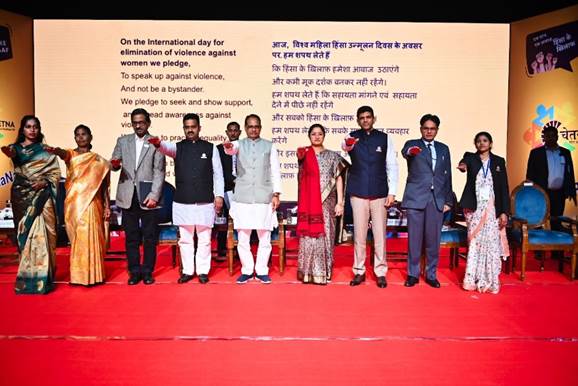
A group of people standing on a red carpetDescription automatically generated

At the launch event, a film on was showcased, highlighting the need for accountability from all stakeholders, including citizens, to pledge against ending gender-based violence.

The primary objective of the campaign is to foster advocacy efforts and inform policy directives concerning the safety and security of women and girls. Furthermore, this campaign serves as a critical and urgent call for systemic change, emphasizing the imperative for justice, equity, and transformation. The campaign aims to catalyze a ripple effect, where each action and initiative contributes to reinforcing the message of women’s safety as a fundamental and non-negotiable priority for national growth and development.

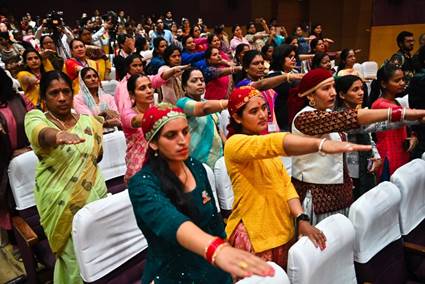
A group of women in colorful clothes doing a danceDescription automatically generated

The launch event was attended by women leaders from Self Help Groups across the country, staff from service providers for redressal for survivors of violence against women and girls, such as One Stop Centres, and Aanganwadi workers, amongst others.  To spread the awareness of the campaign to the remotest corners of the country, the launch was telecast live through the Webcast link and  Ministry of Women and Child Development’s YouTube channel.

Globally, every year, from 25th November, which is observed as the International Day for the Elimination of Violence against Women, to 10th December, which is observed as the Human Rights Day, the 16 Days of Activism campaign is observed by civil society to raise awareness on ending gender-based violence.

YouTube Link -https://www.youtube.com/embed/xTcQfXFuRmo

****

NHRC, India organizes a three-day capacity building programme on human rights for the State Human Rights Commission, Arunachal Pradesh

Daily writing prompt
Who are your current most favorite people?

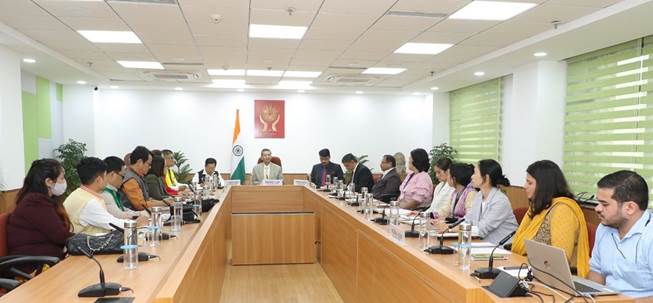
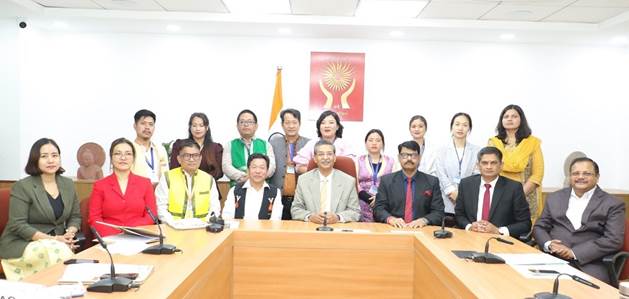
The National Human Rights Commission (NHRC), India is organizing a three-day Capacity Building Programme on human rights for the officials of State Human Rights Commission, Arunachal Pradesh, at New Delhi. The programme is a part of the ongoing initiative of the Commission to reach out and help in the capacity building of the State Human Rights Commissions (SHRCs) for protection and promotion of human rights of all. The NHRC works in tandem with SHRCs and other such bodies to protect and promote human rights in the country.

alt

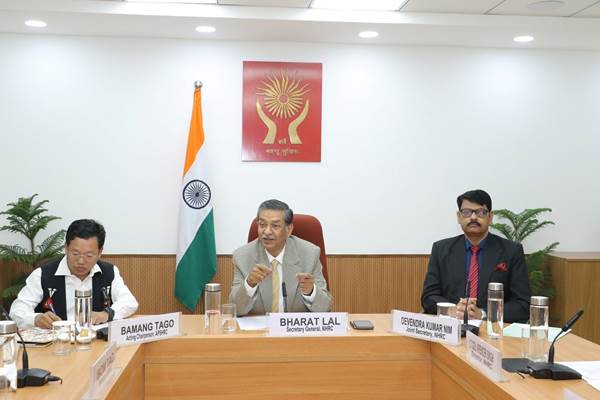
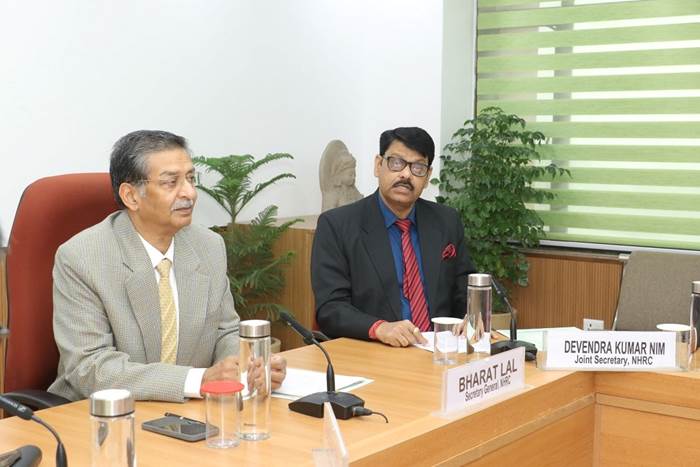
In his opening remarks, Mr Bharat Lal, Secretary General, NHRC emphasized that sensitivity, promptness and responsiveness are important traits to dealing with human rights issues and violations. The NHRC and SHRCs are part of a framework in the country to ameliorate the cause of human rights. The programme has been designed for having interactive sessions.

alt

Mr Lal underscored the importance of proactive and speedy redressal of complaints to provide relief to the victims of human rights violations. This would help people to develop faith in the system. The three-day programme would enable the officers to understand how the system should be functioning. He expressed the hope that the exposure to the structured functioning of the NHRC, within the ambit of the Protection of Human Rights Act, 1993 would be useful for the officers of the APSHRC.

alt

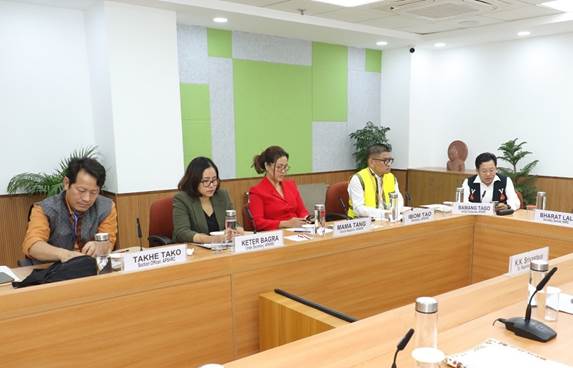
Earlier, the APSHRC Acting Chairperson, Mr Bamang Tago thanked the NHRC, India for organizing this programme. He said that the APSHRC is relatively a new SHRC, therefore, this capacity building programme is crucial for its officers, particularly in terms of learning the handling, registration and disposal of cases from the NHRC given its experience over the past three decades. He expressed the hope that the training would help not only the SHRC as an organization but also each participant individually in deepening their understanding of human values and the rights in the country.

alt

At the start of the 3-day programme, Shri Devendra Kumar Nim, Joint Secretary, NHRC said that it would equip the officers towards promoting and protecting the rights of the people. Their exposure to the functioning of the NHRC which inter alia includes registration and processing of complaints, enquiries, training, research, international mechanism, outreach activities, media and communication, publications, etc. may support them in carrying out their work more efficiently and effectively, to build a shared vision of protecting and promoting human rights in the country.

alt

*****

Human Rights Day Celebration Organised by the National Human Rights Commission

 The President of India, Smt Droupadi Murmu graced and addressed the Human Rights Day celebration, organised by the National Human Rights Commission, in New Delhi today (December 10, 2022).

Speaking on the occasion, the President said that it is an important occasion for the whole of humankind, as it was on this day in 1948 that the United Nations General Assembly adopted the Universal Declaration of Human Rights (HDHR). She noted that the text of the UDHR has been translated into more than 500 languages, which makes it the most translated document in history. She said that still, when we consider the sad developments that keep taking place in many parts of the world, we wonder if the declaration has been read at all in some of those languages. The fact remains that human rights are a work in progress around the world.

The President said that in India, we can take solace in the fact that the National Human Rights Commission has been making the best possible efforts to spread awareness about them. Now in its 30th year, the NHRC has done a commendable job of protecting as well as promoting human rights. It also participates in various global forums for human rights. India is proud of the fact that its work has been appreciated internationally.

The President said that developing sensitivity and sympathy is the key to promoting human rights. It is essentially an exercise of the faculty of imagination. If we can imagine ourselves in the place of those who are treated as less than human, it would open our eyes and compel us to do the needful. There is a so-called ‘golden rule’, which says “Treat others as you would like them to treat you”. That sums up the human rights discourse beautifully. 

The President noted that today is the beginning of the worldwide, year-long celebrations of the 75 years of the UDHR. And the United Nations has chosen ‘Dignity, Freedom and Justice for All’ as the theme of the year 2022. She said that over the past few years, the world has suffered from a high number of natural disasters caused by unusual weather patterns. Climate change is knocking on the doors. People in the poorer nations are going to pay a heavier price for the degradation of our environment. We must consider the environmental dimension of justice now.

The President said that the challenge of climate change is so enormous that it forces us to redefine ‘rights’. Five years ago, the High Court of Uttarakhand held that the Ganga and Yamuna rivers have the same legal rights as human beings. India is a land of sacred geography, with countless holy lakes, rivers and mountains. To these landscapes, the flora and fauna add rich biodiversity. In old times, our sages and seers saw them all as part of a universal whole, along with us. So, just as the concept of human rights exhorts us to consider every human being as no different from us, we should treat the whole living world and its habitat with respect.

The President shared that she wonders what the animals and trees around us would tell us if they could speak, what would our rivers say about human history and what would our cattle say on the topic of human rights. She said that we have trampled on their rights for long, and now the results are before us. We must learn – rather re-learn – to treat nature with dignity. This is not only a moral duty; it is necessary for our own survival too.

Please click here to see the President’s Speech – 

***

HUMAN RIGHTS IN INDIA

Human rights day celebrated in 10th December.The National Human Rights Commission of India defines human rights as provided under the Protection of Human Rights Act (PHRA), 1993, as Rights Relating To Life, liberty, equality and dignity of the individual guaranteed by the constitution or embodied in the international covenants and enforceable by courts in India.Human Rights Day is observed on December 10 every year, since it was on this very day in 1948 that the United Nations General Assembly (UNGA) adopted the Universal Declaration of Human Rights, a milestone document that enshrines the rights and freedoms of all human beings.The international document also commits nations to recognise all humans as being “born free and equal in dignity and rights” regardless of “nationality, place of residence, gender, national or ethnic origin, colour, religion, language, or any other status

7 human rights in India:-

* Origins.


* Significance and characteristics.


* Right to equality.


* Right to freedom.


* Right against exploitation.


* Right to freedom of religion.


* Right to life.


* Cultural and educational rights.

An Act to provide for the constitution of a National Human Rights Commission, State Human Rights Commissions in States and Human Rights Courts for better protection of human rights and for matters connected therewith or incidental thereto. Ministry: Ministry of Home Affairs. Department: Department of States.Protection of human rights is essential for the development of the people of the country, which ultimately leads to development of the national as a whole. The Constitution of India guarantees basic human rights to each and every citizen of the country.The Constitution of India guarantees to all Indian women equality (Article 14), no discrimination by the State (Article 15(1)), equality of opportunity (Article 16), equal pay for equal work (Article 39(d)) and Article 42.

Human rights are important because no one should be abused or discriminated against, and because everyone should have the chance to develop their talents. Unfortunately, many people around the world don’t have these basic rights and freedoms.It is constitutional mandate of judiciary to protect human rights of the citizens. Supreme Court and High Courts are empowered to take action to enforce these rights. Machinery for redress is provided under Articles 32 and 226 of the constitution.

The most significant human rights issues included police and security force abuses, such as extrajudicial killings, disappearances, torture, arbitrary arrest and detention, rape, harsh and life-threatening prison conditions, and lengthy pretrial detention.

In India, a child has the right to be protected from neglect, exploitation, and abuse at home and elsewhere. Children have the right to be protected from the incidence of abuse, exploitation, violence, neglect, commercial sexual exploitation, trafficking, child labour, and harmful traditional practices.

PLIGHT OF WOMEN IN AFGHANISTAN

BY DAKSHITA NAITHANI

The Afghan women, maybe more than anybody else, have dreaded the Taliban’s return. There have been many advances in women’s rights over the last 20 years, which appear to be set to erase nearly overnight.

A quick lesson from history…

The Taliban, a political and military force, is said to have started in Islamic schools in Northern Pakistan in the early 1990s. Its aim was to restore order in Afghanistan following the withdrawal of Soviet troops in 1989, as well as to impose a harsh form of Sharia law. By 1998, the organisation had seized 90% of Afghanistan’s territory.

Once in control, the organisation garnered worldwide condemnation for a slew of human-rights violations. The ban on female education above the age of ten as well as harsh limitations on day-to-day liberties, were among the stringent mores imposed on women and its influence has frequently threatened to expand beyond, to places like Pakistan, where the organisation memorably shot teenager Malala Yousafzai in 2012. Women were treated worse than at any previous period or by any other culture throughout its rule (1996–2001). They were prohibited from working, leaving the house without a male escort, seeking medical assistance from a male doctor, and being compelled to cover themselves from head to toe, including their eyes. Women who had previously worked as physicians and teachers were compelled to become beggars or even prostitutes in order to feed their families during the Taliban’s rule.

Following the 9/11 attacks, it was thought that the Taliban were harbouring Al-Qaeda soldiers, thus an US-led international operation was started against Afghanistan. As a consequence, the Taliban were deposed from power, an Afghan government was established, and soldiers occupied the country for 20 years. It destabilised several regions of the nation due to battles with US and UK forces on a regular basis, and Afghan people were continued to be assaulted. Many would agree that the political and cultural status of Afghan women had improved significantly since the Taliban’s collapse in late 2001.

The Bush administration’s acceptance of women’s rights and empowerment as rationale for its assault on the Taliban is long gone. So it was under the Barack Obama administration, when then-Secretary of State Hillary Clinton stated that the Taliban’s repudiation of al-Qaida and promise to support the Afghan constitution and safeguard women’s rights were preconditions for US discussions with them. The rejection of al-Qaida has yet to be declared openly and publicly less than 10 years later; the constitutional order and women’s rights are still subject to intra-Afghan talks and will be influenced by the changing balance of military power.

In February 2020, US-Taliban peace talks were concluded, with the US pledging a quiet departure in exchange for an end to hostilities. Afghan leaders and top military generals have warned that the government will collapse without foreign assistance. It looks like the worst has transpired only weeks before Biden’s deadline of September 11th.

The Taliban rule wreaked havoc on the institutions and the economy, which had already been ravaged by decades of conflict and the Soviet scorched-earth counterinsurgency policy.

The post-Taliban constitution of 2004 granted Afghan women a wide range of rights, and the political epoch brought social and economic progress, which greatly improved the socioeconomic situation. From a crumbling health-care system with almost no healthcare available to women during the Taliban years, the post regime built 3,135 functional facilities by 2018, giving more than 80 percent of Afghans access to a medical facility within two hours’ drive.

 Less than 10% of females were enrolled in elementary schools in 2003; by 2017, that figure had risen to 33%, while female secondary school attendance increased from 6% to 39%. As a result, 3.5 million Afghan females were enrolled in education, with 100,000 of them enrolled in academic institutions. Women’s life expectancy increased from 56 to 66 years in 2017 and maternal mortality fell from 1,100 per 100,000 live births in 2000 to 396 per 100,000 in 2015. By 2020, women made up 21% of Afghan public workers, including 16% of top management positions, and 27% of Afghan parliamentarians.

 These benefits for women have been dispersed inequitably, with women in metropolitan areas benefiting considerably more than women in rural regions. Despite formal legal empowerment, life for many rural women has not improved much since the Taliban era, notably in Pashtun regions but also among other rural minority groups. Many Afghan males are staunch conservatives. Families often let their daughters to complete a primary or secondary education before proceeding with planned marriages. The burqa is worn by the majority of Afghan women in rural regions without any pushing from the Taliban.

What is the situation for women in Afghanistan now?

Women’s rights in Afghan had arguably maintained pace with many other Western countries prior to the 1970s. Women were granted the right to vote in 1919, one year after women in the United Kingdom. In the 1950s, gender segregation was eliminated, and in the 1960s, a constitution was enacted that included women in political life. As the region became more unstable in the 1970s, these rights were steadily eroded.

Only 38% of the international humanitarian response plan for Afghanistan is financed as of August 2021. This gap might result in the loss of specialised protection services for 1.2 million children, putting them at risk of abuse, recruitment, child labour, early and forced marriages, and sex abuse. About 1.4 million females, many of whom are survivors of domestic abuse, would be left without access to safe spaces where they may receive full care.

Females, who have experienced life with rights and freedoms, are among the most exposed as a result of the Taliban’s fast progress in Afghanistan. As the Taliban capture control of Kabul, they risk losing their hard-won achievements.

Those cries for aid may be too late as the capital city falls into the clutches of Islamist rebels. There have been several stories of the Taliban going door-to-door and compiling a list of women and girls aged 12 to 45 who are then compelled to marry Taliban warriors. Women are told that they cannot leave the house without a male escort, that they cannot work or study, and that they cannot wear anything they want. Schools are also being shuttered.

There is a lot to lose for a whole generation of Afghan women who entered public life – legislators, journalists, local governors, physicians, nurses, teachers, and public administrators. While they worked alongside male colleagues and in communities that were unfamiliar with people in positions of power to help establish a truly democratic civil society, they also wanted to pave the way for future generations to follow in their footsteps.

The Taliban offers itself a broad range of possibilities by claiming that they will “protect” women’s rights under sharia but refusing to explain how women’s rights and life in Afghanistan will alter if they achieve their goals. Even if the government did not openly adopt as cruel a system for women as in the 1990s, the Taliban’s dispositions are quite likely to undermine women’s rights, impose cultural prohibitions on women, and reduce socio-economic possibilities for them.

In summary, even with this change in behaviour, the Taliban in power would almost certainly strive to curtail Afghan women’s legal rights, exacerbating their social, economic, and political circumstances. How much and in what manner, is the question.

(IN)HUMAN RIGHTS

It’s a weekend and you’re wondering how you should spend your time. Maybe go out with friends , or maybe just stay in and read something, or maybe just be locked up in a prison cell. What’s wrong? The last one sounds odd ? Is it not how many people are spending their weekends or maybe everyday of their lives ?

Stan Swamy , 84 year old Jesuit priest, Tribal rights activist based in Jharkhand ,suffering from Parkinson’s disease , died a few days back after being on ventilator for 2 days. He had been lodged in Tihar jail since a year under the stringent charges of UAPA [ Unlawful Activities (Prevention) Act ]. Since he was suffering from Parkinson’s disease , it became difficult for him to carry on his normal day to day activities. It took NIA 50 days to render his request for a sipper and a straw. Yes 50 days. For a straw and a sipper.

Stan Swamy , had worked for Adivasi community and their land and labour rights for decades. He had also questioned the non implementation of 5th schedule of constitution which had led to setting up of Tribes Advisory Coucil with members solely of adivasi communities. He had also raised his voice against indiscriminate arrests of thousands of young adivasis and labelling them as “Naxals”.

Stan Swamy was arrested last year in relation to the Bhima Koregaon case along with many other activists.A brief context to the case – on January 1, 2018 , thousands of Dalits had gathered in Pune to commemorate 200 years of the Battle of Bhima Koregaon — which was won by the British Army (comprising many Dalit soldiers) against Peshwas in 1818.The quiet gathering soon turned violent with many activists being blamed for having instigated and having Maoist links with CPI( M ).

Cartoon 173: Hunger Strike in Iran – Center for Human Rights in Iran

After contracting the corona virus, which further added to his derailing health , he was admitted in the hospital but lost the battle of life before even trying to win the battle of justice.

Human Rights lately sound like a hoax. Despite the fact , that India has Rights of Persons with Disabilities Act ,2016 which protects disabled convicts of torture and discriminatory behaviour in prisons , Stan Swamy was not provided the very basic facilities . India is also signatory to UNCRPD – UN Convention on Rights of Persons with Disabilities, which imposes positive obligation on authorities,including prison staff to ensure that the disabled prisoners are treated equally.

Sudha Bhardwaj, prominent activist , lawyer from Chhattisgarh , also is logded in jail since 2018 in relation to the Bhima Koregaon case and has been refused bail multiple times.

Umar Khalid , activist and former JNU student is also locked up in jail in relation with Delhi riots case under stringent UAPA .

Recently , Pinjra Tod activists, Natasha Narawal and Devangana Kalita were finally released on bail after spending a year in jail. What is most worrisome regarding these cases and many others , is that people have been deprived of their basic fundamental rights. Supreme Court in many of its past judgments has reiterated the right of the accuse of BEING HEARD. Every accused in considered innocent unless proven guilty. And for that purpose BAIL is a very integral part of the process. Bail is the norm , Jail is exception.

How beautiful the sky is , how melodious is the chirping of the birds, how fun it is to catch up with friends at that chai ki dukaan , and how peaceful freedom is. Sadly for some, it’s just a dream.

RTI ACT- Every Citizen’s right!

Right to Information (RTI) is an act of the Parliament of India which sets out the rules and procedures regarding citizens’ right to information. This particular act was passed as an independent act by the Indian Parliament in the year 2005.

The RTI act has been useful in getting to know our personal grievances, making our politicians and elected representatives accountable.

The RTI act empowers common public in India by indirectly involving them in decision making and in other important public affairs. Every citizen in India through this act got the privilege of right to be informed.

RTI ACT: Controversial, yet beneficial.

Very recently, an RTI application was filed by a group of individuals seeking to know about source of a particular line in NCERT History textbook of grade 7th which said “Temples were rebuilt after they were destroyed by the Mughals”. The individuals wanted to know about the source of information regarding the text to which the response was “Source of information is unknown”.

In such a case, one may argue that RTI act doesn’t mandate an authorised body to respond “according to the query” (meaning, they just have to respond, it does not matter what the response is) that is, an authorised body doesn’t necessarily have to respond, they can just pass the query off by saying “no source of information available.”

But at the same time, RTI ACT as mentioned earlier is a powerful tool for citizens through which commoners in the country can keep an eye on the government and its activities. For example, in 2016, when Demonetisation was announced by the Government of India, Mr. Venkatesh Nayak filed an RTI application which revealed that RBI did not agree with Government of India’s justification that the decision would curb corruption in India.

Another example could be the Commonwealth Games Scam, in which an RTI application was filed by a non-profit organisation which revealed that Delhi Government had diverted Rs. 744 crores from funds which were kept only for Dalits to Commonwealth Games.

A very successful case was also found in Bangalore where a bundle of corruptions and dereliction of duties in allowing encroachment of government land of 12,000 square feet without the permission from the respective authorities by New Cambridge School Trust. The Assistant Executive Engineer who was supposed to actions against the encroachment of land which was worth Rs. 6 crores was found protecting the illegal encroachment of land. These irregularities came out when an RTI application was filed before the Executive Engineer Division in Bangalore.

Denouement:

RTI act from the beginning has been into controversies for being chaotic and problematic in many cases. But in my view, these instances of chaos are again because of the same loopholes we have in our democratic system and legal system we strive to fight against via the help of RTI act. Nonetheless, the act has enabled the citizens to become more aware and hold the government accountable when required. This is evident from the fact that India ranked 4th best in the world for RTI laws. The recent amendment of act in 2019 is however criticised as many feel, it would give Central Government more power.

Human Rights

‘A right is not what someone gives you; it’s what no one can take from you.’

We need human rights for protection when our legal rights have been violated by the state or individuals, and to encourage justice and fairness within our societies.

Because of this widely accepted reason human rights are protected by raising both national and international awareness of human rights violations. This can help draw attention and resolve such situations, by creating moral pressure on the government.

Photo by cottonbro on Pexels.com

Constitutional Rights:

The Constitution of India provides for six Fundamental Rights:

  • Right to equality (Articles 14–18)
  • Right to freedom (Articles 19–22)
  • Right against exploitation (Articles 23–24)
  • Right to freedom of religion (Articles 25–28)
  • Cultural and educational rights (Articles 29–30)
  • Right to constitutional remedies (Article 32)

Chronology of events:

1989- Scheduled caste and scheduled tribe act was passed.

1993- National human rights commission established under human rights act.

2001- Supreme court passes extensive orders to implement the right to food.

2005- National Rural Employment Guarantee Act (NREGA) guarantees universal rights to employment.

Latest petitions in Supreme Court:

The Nirbhaya case- to ensure right against exploitation.

Cheap cancer drugs- to ensure right to life.

Curbing the sale of acid- to ensure the right against exploitation.

Photo by Belle Co on Pexels.com

The Inherited Right- Human Rights

What are Human Rights?

The society operates on some moral principles and norms, which regulate human behavior. Human rights validate these principles and norms and protect the rights of humans internationally. 

Human rights follow the concept of ‘natural right’. These rights are inherited by birth just because he or she is a human being. Every human being is entitled to these rights irrespective of their place of birth, religion, age, or any other regard.

Human rights are universal i.e., it is applicable everywhere in the world, irrespective of which nation you are in. The rights are also said to be egalitarian, which means these rights are equal for every human being without any discrimination.

Origin of Human Rights

The roots of human rights can be dated back to 1215, when the first king of Persia, Cyrus the Great, conquered Babylon. Unlike other conquerors, he freed all the captive slaves and provided them with the freedom of right to choose, and the abolition of slavery by signing the ‘Magna Carta’, also known as the ‘Great Charter’. The Magna Carta significantly proved to be the start of the evolution of human rights. The Universal Declaration of Human Rights (UDHR) has taken the two rights mentioned in the Magna Carta.

The most important right human right is based on is ‘right to life. The right to life believes that every human being has the right to live, and should not be killed by anyone including the government. It does not merely mean to have a right to live, but have a life of dignity, which helps in laying down the rest of the human rights such as the right to equality and freedom from discrimination, right to equality before the law, freedom of belief and religion, and more such rights that affect the life of a human being.

What is the Universal Declaration of Human Rights (UDHR)?

Every law or right is drafted in a document. One such international document, comprising of 30 articles is the Universal Declaration of Human Rights (UDHR). The UDHR is the drafted document that has all the rights of human beings mentioned in it. The United Nations General Assembly ratified the document on 10th December 1948, in Palais de Chaillot, Paris.

The UDHR along with the International Covenant on Civil and Political Rights (ICCPR), AND International Covenant on Economic, Social, and Cultural Rights is called the International Bill of Human Rights.

Human Rights Governing Bodies

The Human Rights Council works for the protection and promotion of human rights around the world. It is an intergovernmental body made up of 47 United Nation member states. The former governing body, United Nations Commission on Human Rights was replaced by The Human Rights Council in 2006. 

Nationally, in India, the National Human Rights Commission (NHRC) operates as a statutory public body. It works for the protection and promotion of human rights in the state (nation).

Every state in India has a Human Rights Commission that works for the protection of human rights in that particular state. If any person finds his or her human rights are violated can file a complaint with the respective state commission.

Why Discuss Human Rights?

Human rights are not something that should be only known to a lawyer, judge, or any other individual working in the field of law, but by every human being. It is important to know one’s rights and duties. 

Inheriting the rights is not the end of it. It is important to know what is rightful and what is not. Unless we know our rights and duties there is no way to analyze what is right and what is wrong. 

If any violation of these rights takes place, it is important to be brought to the notice of the governing body for seeking justice. We often see in our surroundings discrimination taking place based on caste and colour most commonly, but often ignore it. Victims of such discrimination also don’t raise their voices against it due to a lack of knowledge about their rights. Awareness must be created among people regarding their rights, and they can seek justice not just for themselves but also help others facing such issues. Raising your voice against such issues is important to create and maintain a balance in society and making the world a better place to live

HUMANS OVER GENDER.

Today, homosexuality and queer identities may happen to be acceptable to wider Indian youths than ever before, but in the confines of family, home, and school, recognition of their sexuality and liberty to openly display their gender preferences prevail to be a constant conflict for LGBT (lesbian, gay, bisexual, transgender) people. On September 6, 2018, India’s Supreme Court ruled that consensual homosexual acts would no longer constitute a crime. The historic move changed Section 377 of the Indian Penal Code which was a legacy from British colonial control. The difference was welcome by Indian and global LGBTQ+ populations being progressed towards consent and equal rights, but nearly two years following the passing of this order, what is the status of LGBTQ+ titles in India?

Several people encounter harassment and bullying, and to avoid shame and brutality they oftentimes skip classes or drop out of school entirely. Most teachers are not qualified or allowed to acknowledge to anti-LGBT bullying, so in several circumstances, they don’t. In some situations, they also join in harassment. The ‘LGBT’ stands for lesbian, gay, bisexual, and transgender. A lesbian is a woman interested in another woman. Gay is applied to indicating men who are interested in other men. Bisexual means that a person is interested in more than one gender. A transgender person is someone whose gender status differs from that one person was indicated at birth. Being different arises with its difficulties and the LGBTQ community perceives this extremely well. As people do not realize their way of life, it becomes quite tough for them to presume their lifestyles.

Modern research noticed that one of the main factors that occur in the branding of LGBT people is a familial attitude towards homosexuality. This research continues to reason that most LGBT people are allowed in the family simply if they accept to act like heterosexuals. In a culture-bound on a rigorous set of civil and social norms that decree the terms and conditions of education, profession, and wedlock, the loss of parents’ support can prove to be a huge setback to the mental and physical well-being of LGBT people. Separation and stress to conform usually drive to despair, thoughts of suicide, and psychosomatic diseases. Several of them prefer to migrate to a different city to stay aside from the extensive demand to marry and start a family.

Families that accept their identities set multiple limitations in the method they prefer to try different outfits and communicate with their partners. In the loss of parents’ support, online crowds and social media have allowed easy options to build an alliance outside of the family. It’s time for people in India to argue on the matter of homosexuality. Civic knowledge and sex education for all should hold the bottom line to resolve the sexuality regulation and to build empathy and respect for India’s homosexuals. If India wants to be acknowledged globally as an democratic country, then it should finally improve or the prejudicial law so that the neglected homosexual community can be liberated at least.

Climate Change and Human Rights

It is an indisputable fact that climate change has detrimental effects on human beings and in particular on the disadvantaged. Yet, many normative frameworks of analysis tend to ignore the human rights angle.

Scholars such as Simon Caney believe that a Human Rights approach is the appropriate way forward to use as the main lens while viewing and analyzing Climate Change. Caney recognized three major elements of this.  1. Climate change jeopardizes some key human rights. 2. A human-rights-cantered analysis of the impacts of climate change enjoys several fundamental advantages over other dominant ways of thinking about climate change. 3. A human-rights-cantered analysis of the impacts of climate change has far-reaching implications for the kind of action that should be taken.

The need of the hour is an understanding among the international community at large that climate change isn’t simply a political or economic issue. It is very much a human rights issue, the biggest one of its kind. Problems such as greenhouse gas emission into the atmosphere, not only destroy ecosystems but at the same time, they also violate human rights.

The United Nations Environment Programme in its 2015 Climate and Human Rights report outlined that extreme weather events are more prevalent in a warming world, leading to death, destruction of property and crops and limited access to food, water, shelter, healthcare as well as education. This report hence highlighted the detrimental implications that climate change has on human life.

World leaders must understand the severity of the problem at hand. A lot is at stake for humanity and the question of human rights if we continue to delay climate action. Environmentalists believe that most effective option would be to reduce greenhouse gas emissions as quickly as possible. The impacts of the greenhouse gasses currently in the atmosphere will be felt for decades. Thus, applying a human rights approach is more crucial than ever before.

As climate change intensifies, people will be forced to adjust, invest big in infrastructure or migration. This shows that those who have more money can afford to escape severe damage. But those who are historically neglected or marginalized in will be further disadvantaged and threatened. This shows that climate change does not impact everyone equally. Low income communities, women will all be disproportionately affected as global temperatures rise. These groups will thus suffer the most due to climate change. But what this inequality of climate impacts could lead to is a continued hindrance to the progress of climate action as those better-off would continue to feel that they’re relatively safe from the adverse effects of climate change.

Thus, in order to level the playing field, it is crucial to recognize the adverse effects of climate change, which violates human rights and disproportionately affects communities that are already most vulnerable. The reason that we need a human-rights approach is because it attempts to protect the vulnerable, while a cost-benefit analysis fails to do so because of its character, and a security-based approach fails to do so because its concern is only with climate change that causes conflict.

“Justice delayed is Justice denied” – The case of police brutality in Sathankulam, Tamilnadu.


The very phrase “Justice delayed is Justice denied ” is an antonym for the word “justice” because justice means the quality of being fair and reasonable which in the very least is considered in our country. Everyday we see innocent people being charged for something they did not do, women being victims of sexual assaults, people being murdered in the name of honour killing etc . But are the people who commit these crimes arrested?. Justice has become a joke material in our country. Justice is something people talk about in social media platforms, create memes and write articles about, but nothing can ever change the delay in justice because after months and years of yearning for justice the only thing innocent people receive is their justice being denied.
India is a country known for dragging innocent people all their lives for justice. The recent incident of the police assault done to Felix and Jeyaraj is the perfect example of a manifold denial of justice. Jeyaraj aged 58 and his son Fenix aged 31 who resided in Sathankulam, Tuticorin, were arrested on the night of June 19, 2020 for having their shop open beyond the curfew time of coronovirus induced lock down but a video evidence proved that they weren’t guilty of the charge. Yet the duo was arrested and tortured throughout the night only because the police had some personal vengeance against them. They were tortured in ways that was extremely inhuman and cannot be explained. The police used their power and authority to murder those men and shamelessly blame the men for their fate. Justice was murdered in the first place when the men were taken under custody for a crime they did not commit. Justice was crushed into pieces when these men became the victim of assault by the police. And justice was denied to them when they were deprived of their basic Human Rights. The men were not allowed to exercise their right to life and liberty and freedom from torture.
The incident became the recent best example of the phrase ” Justice delayed is Justice denied” because justice was not given even at the cost of two lives and the plight of their family members. The policemen who assaulted these men were only suspended and transferred not dismissed or put in jail for the crime they committed but the innocent lost their lives with peace being shattered for the rest in their family. Here is a serious delay in justice because the policemen have not received the punishment they deserve which by all means is a pure denial of justice in our country. This alone is not a pathetic situation of our country, there is more to it, an article stated that a senior police officer told the press that hardly any police officer had been put behind bars for any custodial deaths. This is just one case among the thousand other cases of police brutality which is often not addressed. Policemen are supposed to be the protectors of the people in a country. But rather they have instilled fear in the minds of people and have failed to be man’s best friend. Fenix and Jeyaraj are not the only ones who have been deprived of their justice but the entire nation because it is very evident that when justice is delayed eventually it leads to its denial creating a scenario where anybody who is in power and authority can get away with whatever crimes they commit.
Such incidents do not just reflect badly on the police force of our country but also on the justice system which is supposed to give people hope that their lives and words matter. Social media posts, memes, videos, petition letters, rally, strike or anything of that sort will not advance justice. The government must realise that every single life in the country has a right to justice and it must be bestowed upon them irrespective of their power, authority etc. Everybody must be equal in the eyes of justice because that is what the scales of justice stand for. There are good people and there are bad people but justice must always on the side of the good and it should be provided immediately otherwise it looses it’s meaning and purpose.

Universal Declaration of Human Rights (UDHR)

“The rights of every man are diminished when the rights of one man are threatened.”

John F. Kennedy

One week after World War II began, Herbert George Wells, wrote to the Times of London, with “What are we fighting for?” The science fiction writer answered his own questions with, “The Rights of Man.” On the February 5th publication of the Daily Herald in 1940, Wells published his own “Declaration of Rights.” This article was well received and was later turned into a book.

The United Nations (UN) was founded in 1945. The two main resolutions were; to prevent another world war and to attempt to make the world a better place for all the citizens of the world. The idea of the United Nations was suggested by the League of Nations, established in 1919 (post World War I). In 1878, Congress of Berlin was formed the same way the League of Nations was formed. Yet it wasn’t successful in avoiding World War I. UN was formed in hopes to rectify the shortcomings of the Congress of Berlin and the League of Nations.

On 10th December 1948, unanimously the General Assembly of the United Nations passed the Universal Declaration of Human Rights (UDHR). The 30 articles and sub-clauses of the UDHR promotes and the UN and Human Rights Commission (HRC), oversee that “everyone is entitled to all of the rights and freedoms set forth in this Declarations, without distinction of any kind such as race, colour, sex, language, religion, political or other opinion, national or social origin, property, birth or other status.”

The UDHR comprises the basic human rights every person deserves, like the civil and political right to life, free speech, privacy, seeking asylum, freedom from torture, right to education and so much more.

Below I list every Article of the UDHR and an explanation.

“Article 1: 

All human beings are born free and equal in dignity and rights. They are endowed with reason and conscience and should act towards one another in a spirit of brotherhood.”

Every person born into this world has equal worth and rights. Everyone should be kind and respectful of others.

“Article 2: 

Everyone is entitled to all the rights and freedoms set forth in this Declaration, without distinction of any kind, such as race, colour, sex, language, religion, political or other opinion, national or social origin, property, birth or other status. Furthermore, no distinction shall be made on the basis of the political, jurisdictional or international status of the country or territory to which a person belongs, whether it be independent, trust, non-self-governing or under any other limitation of sovereignty.”

No matter a person’s, race, colour, sex, or any other difference, everyone is entitled to all the rights listed in this Declaration.

“Article 3: 

Everyone has the right to life, liberty and security of person.”

Everyone has a right to live, freely and securely.

“Article 4: 

No one shall be held in slavery or servitude; slavery and the slave trade shall be prohibited in all their forms.”

No one can be enslaved or punished for being alive.

“Article 5: 

No one shall be subjected to torture or to cruel, inhuman or degrading treatment or punishment.”

No one deserves or should be tortured or subjected to cruelty, inhumanity, or degrading behavior.

“Article 6: 

Everyone has the right to recognition everywhere as a person before the law.”

Everyone in this world has the right to be recognized everywhere as a person.

“Article 7: 

All are equal before the law and are entitled without any discrimination to equal protection of the law. All are entitled to equal protection….”

Everyone is equal before the law and is entitled to impartiality. And if anyone faces discrimination, they deserve equal protection.

“Article 8: 

Everyone has the right to an effective remedy by the competent national tribunals for acts violating the fundamental rights granted him by the constitution or by law.”

Everyone has the right to legal support if and when needed/

“Article 9: 

No one shall be subjected to arbitrary arrest, detention or exile.”

No one, unless proven guilty, can be arrested or exiled.

“Article 10: 

Everyone is entitled in full equality to a fair and public hearing by an independent and impartial tribunal, in the determination of his rights and obligations and of any criminal charge against him.”

Everyone accused of a crime has a right to a fair and equal public trial. Subjective judgment is a violation of Human Rights.

“Article 11: 

(1) Everyone charged with a penal offence has the right to be presumed innocent until proved guilty according to law in a….”

Everyone accused of a crime has the right to be considered innocent until proven guilty.

“Article 12: 

No one shall be subjected to arbitrary interference with his privacy, family, home or correspondence, nor to attacks upon his honour and reputation. Everyone has the right to the protection of the law against such interference or attacks.”

No one has the right to enter another persons’ house, mail, or intrude without a good reason. We have a right to be protected if that happens.

“Article 13: 

(1) Everyone has the right to freedom of movement and residence within the borders of each state.

 (2) Everyone has the right to leave any country, including his own, and to return to his country.”

Everyone has the right to move around one’s home country and travel abroad with proper documents.

“Article 14: 

(1) Everyone has the right to seek and to enjoy in other countries asylum from persecution.

 (2) This right may not be invoked in the case of…..”

If a person is at risk of harm in one’s own country, one has the right to seek asylum in other nations.

“Article 15: 

(1) Everyone has the right to a nationality.

 (2) No one shall be arbitrarily deprived of his nationality nor denied the right to change his nationality.”

Everyone has a right to be a citizen of a country, and no one or government can deny that without a justifiable reason.

“Article 16: 

(1) Men and women of full age, without any limitation due to race, nationality or religion, have the right to marry and to found a family. They are entitled to equal rights as to marriage, during….”

Every one of the legal age has the right to marry and start a family without any limitation of any race, nationality, religion, or any other reason.

“Article 17: 

(1) Everyone has the right to own property alone as well as in association with others.

 (2) No one shall be arbitrarily deprived of his property.”

Everyone has the right to own a property, and anyone deprived of this right is a violation of Human Rights.

“Article 18: 

Everyone has the right to freedom of thought, conscience and religion; this right includes freedom to change his religion or belief, and freedom, either alone or in community with others and in public or private, to manifest his religion or belief in teaching, practice, worship and observance.”

Everyone has a right to their thoughts, beliefs, and religion. Anyone wishing to change their religion is entitled to do so.

“Article 19: 

Everyone has the right to freedom of opinion and expression; this right includes freedom to hold opinions without interference and to seek, receive and impart information and ideas through any media and regardless of frontiers.”

Everyone has the right to express their thoughts and opinions freely with anyone.

“Article 20: 

(1) Everyone has the right to freedom of peaceful assembly and association.

 (2) No one may be compelled to belong to an association.”

Everyone has the right to form groups and organize peaceful protests. Anyone denying a person or group of protesting peacefully is violating Human Rights.

“Article 21: 

(1) Everyone has the right to take part in the government of his country, directly or through freely chosen representatives……”

Everyone has the right to freely choose their political representative. Either by democracy or any other method. Any government or leader denying that right is violating Human Rights.

“Article 22: 

Everyone, as a member of society, has the right to social security and is entitled to realization, through national effort and international…..”

“The society we live in should help every person develop to their best ability through access to work, involvement in cultural activity, and the right to social welfare. Every person in society should have the freedom to develop their personality with the support of the resources available in that country.”

“Article 23: 

(1) Everyone has the right to work, to free choice of employment, to just and favourable conditions……”

Everyone has the right to work and freely choose any occupation. Unless the person is underqualified, no one can be denied the position.

“Article 24: 

Everyone has the right to rest and leisure, including reasonable limitation of working hours and periodic holidays with pay.”

Everyone has the right to work reasonable hours. Everyone holds the right to enjoy leisure time each week. Any overtime spent working needs to be compensated with additional holiday/vacation pay.

“Article 25: 

(1) Everyone has the right to a standard of living adequate for the health and well-being of himself and of his family, including food…..”

Everyone has the right to adequate food, clothing, housing, and healthcare. Everyone who is unable to work, or work adequately is entitled to benefits. Every disabled person is entitled to services and benefits to make life easier.

“Article 26: 

(1) Everyone has the right to education. Education shall be free, at least in the elementary and fundamental stages. Elementary education shall be compulsory. Technical and professional education shall be made…….”

Everyone has the right to educations and elementary and primary education should be free for all. Education every child receives should include these rights and fundamental freedoms. Every parent has the right to choose the right kind of education for their children.

“Article 27: 

(1) Everyone has the right freely to participate in the cultural life of the community, to enjoy the arts and to share in…..”

Everyone has the right to freely participate in the cultural activities of the community and also hold the right to reserve the copyright of one’s work.

“Article 28: 

Everyone is entitled to a social and international order in which the rights and freedoms set forth in this Declaration can be fully realized.”

Everyone has the right to live peacefully at the local, national, and international order that this Declaration provides.

“Article 29: 

(1) Everyone has duties to the community in which alone the free and full development of his personality is possible……”

“We have duties to the community we live in that should allow us to develop as fully as possible. The law should guarantee human rights and should allow everyone to enjoy the same mutual respect.”

“Article 30: 

Nothing in this Declaration may be interpreted as implying for any State, group or person any right to engage in any activity or to perform any act aimed at the destruction of any of the rights and freedoms set forth herein.”

No person, group, or government holds the right to deny or destroy the rights and freedoms allocated by this Declaration.

Many countries, governments, and influenced groups are violating these basic Human Rights. A few examples of this are listed below:

  • Landlords forcibly evicting tenants who are unable to pay rent amidst the COVID-19 pandemic.
  • The Indian government detaining peaceful protestors during the anti-NRC and anti-CAA protests in 2019-20.
  • Police Brutality in the form of custodial rapes, custodial torture, no-knock searches, wrongful imprisonment, denial of medical attention, excessive force, and more.
  • Dictator rulers are violating human rights.
  • Victims being denied justice.
  • Systematic- Racism and Discrimination against African-American citizens in America.
  • Chinese Political unjust towards Uighur Muslims.
  • Civil War zones in Syria, Yemen, and other countries.
  • Malnourished people being denied access to food and necessities,
  • Political prisoners” who spoke out against their government.

This is list can go on, so many people are being denied basic human rights.

Role of WHO during pandemic in light of human rights

Human rights are key in shaping this pandemic for both public health and people’s livelihood. WHO declared novel coronavirus disease as a pandemic and the call for countries to take immediate actions.

Human rights are centre- stage,by ensuring healthcare for everyone and preserving human dignity. The world is facing an unmatched crises. In this time priority is to save lives. To save lives, extensive lockdowns were adopted to slow the transmission of virus that has restricted the freedom of movement from people. These had affected people’s livelihoods,growth. Above all this crises, human rights focus on how it is affecting people and what can be done for future.

Human rights guide states on how to exercise the power so that it is used for the benefit of the people,not to harm them. In this current situation, human rights help the states to recalibrate their measures to maximize their effectiveness. The scale of COVID-19 now reaches a level where restrictions are necessary. This is the only time when human rights are needed the most rather than neglecting that will also focus on achieving sustainable development and peace. There are 3 rights that are in the frontline of the current pandemic:-

  • Right to life and duty to protect life: We are fighting to protect human lives fromCOVID19 that reminds us that state have a duty to protect human life of every individual. States are making extraordinary efforts in doing so and their primary focus is up to that.
    • The right to health and access to health care: The right to health is inherent to right to life. Every human being is entitled to the enjoyment of best healthcare facilities,regardless their social or economic status. Everyone must be entitled for the basic healthcare facilities like testing, intensive care by providing vaccination, regardless of ability to pay.
  • The central challenge is freedom of movement: To control this virus and breaking the chain of virus people must stop moving. The most important measure taken by state is restricting the freedom of movement which is to safe lives.The world is discovering, freedom of movement as a crucial right that also facilitates the enjoyment of many other rights.

Moreover, these crises has revealed the weakness of country that human rights can help to fix it.Human rights help us to develop strategy for future generations to deal with such intense situations in future. The WHO emphasized on COVID19 pandemic that all countries must have a fine balance between protecting health and respecting human rights. Human rights are the framework that strengthen the global efforts.

‘It Was As if We Weren’t Humans’- Inside the Modern Slave Trade

Libya is a country in the Maghreb region in north Africa, bordered by the Mediterranean Sea. It is the fourth largest country in Africa and sixteenth largest in the world. Libya became an independent Kingdom in 1951 and was ruled by king Idris I who was overthrown by a military coup in 1969 and the ‘bloodless’ coup leader Muammar Gaddafi ruled the country from 1969 until the 2011 Libyan civil war in which he was killed.

A brief history of slavery

Slavery can be traced back to many of the world’s oldest societies, from the “emergence of civilization” in Mesopotamia to ancient Egypt, Greece and Rome, as well as the Mayan and Aztec empires.
Male prisoners of war and seized sailors became laborers; prerogative women became concubines and domestic servants; children were used as farm hands or to help around the house.The Arab slave trade flourished on the African continent.

The corridor from Africa’s most populous country to its northern Mediterranean shores has proved especially remunerative. As conflict, climate change and lack of opportunity push increasing numbers of people across borders.

A video of men in Libya being sold off for as little as $400 at an auction shocked the world and brought the much needed attention  at the plight of migrants and refugees in the north African country.

The slave trade of Libya

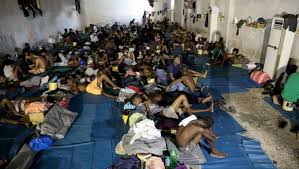
Libya is the main conveyance point for refugees and migrants trying to reach Europe through sea. According to International organization for migration, almost 150,000 people have made this dangerous journey across the sea of which 3000 people could not make it through . The Libyan Coast Guard, supported with funds from the UN and Italy cracked down on  boats smuggling refugees and migrants to Europe. With estimated 1 million people stuck in Libya, the detention centres are flooded and have ascending reports of rape, robbery and murder. The conditions in concentration camps are horrendous and make refugees vulnerable to being sold off as laborers in slave auctions.

How is Libya handling the crisis?

 The U.N.backed Libyan government has launched a formal investigation into the allegations. But Libya is largely considered a failed state. Since Muammar Gaddafi, who ran the country for four decades, was ousted in 2011, the country has descended into civil war. A transitional government failed to implement rule of law in the country, which has shattered into several factions of militias, tribes, and gangs. In lawless Libya, many see the slave trade and smuggling as a lucrative industry and tackling the country’s humanitarian crisis will require international support.

Slavery may seem like a relic of history but according to the U.N.’s International Labor Organization, there are more than three times as many people in forced serfdom today. What the ILO calls “the new slavery” takes in 25 million people in debt bondage and 15 million in forced marriage. As an illegitimate industry, it is one of the world’s most remunerative, earning criminal networks $150 billion a year, just behind drug smuggling and weapons trafficking. Modern slavery is far and way more profitable now than at any point in human history.

The trade might be most noticeable in Libya, where aid organizations and journalists have documented actual slave auctions. But now it is seeping into southern Europe too—in particular Italy, where vulnerable migrants are being forced to toil unpaid in the fields picking tomatoes, olives and citrus fruits and peddled into prostitution rings.

How many slaves are there today, and who are they?

The word “slavery” summons images of shackles and transatlantic ships – depictions that seem relegated firmly to the past but more people are enslaved today than at any other time in history. Experts have calculated that roughly 13 million people were captured and sold as slaves between the 15th and 19th centuries; today, an estimated 40.3 million people are living in some form of modern slavery, according to the latest figures published by the UN’s International Labor Organization (ILO).Women and girls comprise 71% of all modern slavery victims. Children make up 25% and account for 10 million of all the slaves worldwide.

Where is this happening?

Statistically, modern slavery is most ubiquitous in Africa, followed by Asia and the Pacific, according to the Global Slavery Index, which publishes country-by-country rankings on modern slavery figures and government responses to tackle the issues.

What’s the difference between slavery and human trafficking?

Human trafficking is just one way of subjugating someone. Whereas centuries ago it was common for a slave trader to simply buy another human being and “own” that person as their property (which does still happen), today the practice is largely more insidious.

Trafficking involves the recruitment, transfer or obtaining of an individual through coercion, abduction, fraud or force to exploit them. That exploitation can range from forced labor to forced marriage or commercial sex work – and the exploiter can be anyone, including strangers, neighbors or family members. Most people are trafficked within their own countries, although they can also be trafficked abroad; most often the individual is trafficked into forced labor.

Strategy for resistance

What’s needed is to address the root causes. Poverty alone does not explain slavery. Roughly 700 million people meet the threshold of extreme poverty, the number of slaves is estimated to be 40 million. What distinguishes these 40 million from the other 700 million very poor? Slavery usually occurs when poverty is compounded by specific risk factors.These include an inability to assert basic human rights, lack of access to essential social and economic services (especially schools, health care and credit),the failure of the rule of law and, an absence of services for slavery survivors that leads to re-enslavement.

Libya is considered a failed state. After Gaddafi, the country has been in shambles due to the civil war and hence in lawless Libya,but what is really disheartening is that there are broken people with stories of barbarity and abuse, hoping to find a way out of it, waiting for help but unaware of the reality that there are too little people who care,too little ears to hear their stories and too little hands guided their way for help.