“If any individual is judged by his character and morality, society is judged by its culture and tradition” said Dr S. Radhakrishnan. Culture means the way of life followed by a community that consists of custom, tradition, religious practices and the human values. Every culture has its distinct positive features. The culture of a community never remains same. It is evolved over a period and is always in the process of reforming itself.
Even from very ancient time, the Indian civilization was highly developed. Many factors have contributed to the cultural formation. Our scriptures like Vedas and Upanishads are considered as immense treasure of knowledge. There are various other scriptures like Ithihas, Purana etc. Bhagawad Gita, Ramayana and Mahabharata have taught us how we should conduct ourselves. We have developed very good art like Music, dance, paintings, sculpture etc. While the temples like Ramanathapuram on the southern corner of India are noted for their workmanship, novelty and sculpture, temples like Rishikesh and Badrinath in north are considered as the very abodes of God. Hinduism is one of the oldest religions of the world and great saints like Adi Sankara, Ramanuja, Sri Ramakrishna Paramahamsa and Swami Vivekananda have enriched our religion by their interpretations. From the day Swamy Vivekananda addressed the Parliament of Religions at Chicago; many people have turned towards India for spiritual knowledge. Though Adi Sankara and other saints have set Self-realisation as the ultimate goal, it was Sri Ramana Maharshi who highlighted its importance and showed the way for achieving that goal. All these developments have contributed to India a rich cultural heritage and tradition. India has thus inherited a great tradition and a way of life which formed the basis of its culture.
Though Mughals came and then the British came and ruled over the land, they could not destroy the culture. The Indian culture has now become universal and it has become a land where different religions and culture survive, co-exist peacefully and flourish. Now there are different communities and nationals in India pursuing their own beliefs and faiths. Though India presented a picture of diversity, India has grown as a national that welcomes all ideas, philosophies and doctrines. It is a land where people of different faith live in peace and harmony, like a family bound in mutual love and affection.
Indians have adopted and assimilated the foreign culture and yet they have retained what is good for their own culture. They may be communicating in English, traveling in Mercedes, dressing in western style but they never deviate from their basic tradition and culture. The car symbolizes the modern trend but its name, Maruti, symbolizes the legendary past. Those who migrate to foreign countries adopt the culture of the country to which they migrated without deviating from their own culture. Like , I f you ever met any family who use to live in USA and still touches feet of elders. Wherever Indians go, whether USA or Dubai, along with their spouses, children and belongings, they make it a point to carry the Indian culture also with them. This is evident from the various cultural programmes being regularly organized in foreign countries like USA, Dubai or Singapore. Music Festival is a regular annual feature in Cleveland, USA and leading Indian artists take active part in them. Indian temples are seen in most of the States in America, the Venkatachalapathi temple at Petersburg being the biggest among them.
Cinemas, the computer, air linkage, information technology have all brought the inhabitants of the world closer. The world which remained unreachable and wide apart before has become a global village now. As the geographical boundaries became mere symbols, people to people contact became more frequent. As people mingled with each other, we find a cultural synthesis taking place in India now.
Some adverse changes have also come in the Indian family tradition. Previously, the wife used to be the home maker, attending to house hold duties, managing the children, attending to religious practices etc. Now, according to the modern trend more and more house-wives are going beyond their home-making avocation and take up responsibilities in business undertakings. “Now, for women, there is life even after marriage” commented a friend in a lighter vein. Women are well educated and became partners with men in bringing about progress and prosperity. Thanks to the winds of change blowing over and thanks to the free and liberal outlook created by modern era, India now finds itself free from its outmoded customs and practices. Though woman has proved her enormous power as a contributor for nation building, it cannot be denied that she has left a vacuum at the home front. We need to bring up a system where our culture and tradition should be passed on to our children also. Woman has a higher responsibility in this sphere.
It would be pertinent to conclude this essay with the quotation of Swami Ranganathananda, the late President of Ramakrishna Mission, Kolkata: “Change is the order of the day. Everyday, we witness changes occurring all around us and even within us. Society may change in infinite ways in response to historical necessities but that is no reason why cultural values underlying all human endeavors should change.” Let us all be proud of our culture and cherish it for ever.
So, we not only say that we are proud of being and Indian but we really are. It is always indian culture which gave us a different definition or identity infront of whole world. Like, only by seeing a Foreigner you can’t say from where he/she belongs from, but, any Foreigner can easily say that he/she belongs from india. Jai hind.
The HSTDV is an unmanned scramjet demonstration aircraft for hypersonic speed flight. It is being developed as a carrier vehicle for hypersonic and long-range cruise missiles, and will have multiple civilian applications including the launching of small satellites at low cost. The HSTDV program is run by the Indian Defence Research and Development Organisation. India is pushing ahead with the development of ground and flight test hardware as part of an ambitious plan for a hypersonic cruise missile.
The Defense Research and Development Laboratory’s Hypersonic Technology Demonstrator Vehicle (HSTDV) is intended to attain autonomous scramjet flight for 20 seconds, using a solid rocket launch booster. The research will also inform India’s interest in reusable launch vehicles. The eventual target is to reach Mach 6 at an altitude of 32.5 km (20 miles).
India is pushing ahead with the development of ground and flight test hardware as part of an ambitious plan for a hypersonic cruise missile. The Defense Research and Development Laboratory’s Hypersonic Technology Demonstrator Vehicle (HSTDV) is intended to attain autonomous scramjet flight for 20 seconds, using a solid rocket launch booster. The research will also inform India’s interest in reusable launch vehicles. The eventual target is to reach Mach 6 at an altitude of 32.5 km (20 miles).
Initial flight testing is aimed at validating the aerodynamics of the air vehicle, as well as its thermal properties and scramjet engine performance. A mock-up of the HSTDV was shown at the Aero India exhibition in Bangalore in February (see photo), and S. Panneerselvam, the DRDL’s project director, says engineers aim to begin flight testing a full-scale air-breathing model powered by a 1,300-lb.-thrust scramjet engine in near future.
Future strike: When when ready for test and subsequent use, the hypersonic missiles will considerably augment India’s arsenal, putting it along a a handful of countries that have such weapons. Besides the velocity of over five times the speed of sound (Mach 5), the manoeuvring capability of hypersonic missiles makes maximum very effective offensive weapons capable of defeating enemy missile defence and tracking systems.A Hypersonic missile’s potency is the speed at which it travels, enabling it to have a quick reaction time considered invaluable for both defence and offence.
India has been working on making BrahMos – a supersonic cruise missile – hypersonic and the scramjet will help in the endeavour too. Developed jointly with Russia, the BrahMos now files at Mach 2.8 speed.
Low cost sat launches Further, on the civilian side, the HSTDV can total satellites at low cost. However, its ability to do so will be restricted. Experts believe that such a vehicle using scramjet can only push satellites into LEO (LOW EARTH ORBIT), and the air breathing engines will not find oxygen at higher altitudes.
According to ISRO, at present, satellites are launched by multistage satellite launch vehicles that can be used only once (expendable). these launch vehicles carry oxidizer along with the fuel for combustion to produce thrust. large vehicles design for one time use are expensive and their efficiency is low because they can carry only 2-4 % of their lift off mass to orbit.
Nearly 70% of the propellant (fuel oxidizer combination) carried by today’s launch vehicles consists of oxidizers. Therefore, the next generation launch vehicles must use a propulsion system which can utilise the atmospheric oxygen during their flight through the atmosphere which will considerably reduced the total propellant and required to place a satellite in orbit. Also, if those vehicles are made reusable, the cost of launching satellites will further come down significantly. Thus, the future reusable launch vehicle concept along with air breathing propulsion is an exciting candidate offering routine access to space at a far lower cost.
A- Sat Capabilities
A Hypersonic vehicle/missile also has the potential to augment India’s anti satellite (A-Sat) capabilities. The country, on March 27 2019, successful be conducted an A-Sat missile test in an operation codenamed ‘Mission Shakti’, making it only the fourth country after the US China and Russia to demonstrate such a capability.
As the world battles the COVID-19 pandemic, countries are moving to stringent measures like lockdowns and curfews. With markets crashing, the global economy is staring at a deep distress.
Entire world is fighting against epidemic COVID 19 outbreak and Hon’ble Prime Minister of India Sh. Narendra Damodardas Modi has taken much need precautionary step of complete lockdown from midnight 12’o clock of 24th March, 2020 onwards for next 21 days and again extended to 3rd May, 2020 for another 19 days.
In this difficult environment, each regulatory body is releasing relief measures and guidelines for easing out the impact of COVID 19. On the financial and compliance front, announcements have been flowing from the Government authorities in the form of deferment of statutory due dates or relaxation in payment terms to overcome the financial crisis being faced due to lock-down.
Similar to several countries, the Government of India has begun working on an economic package to deal with the impact of the pandemic. Realising the hardships faced by its citizens, the Union Finance & Corporate Affairs Minister Smt. Niramla Sitharaman has announced several important relief measures on tax and regulatory aspects.
The Finance Minister also announced that necessary legal circulars and legislative amendments for giving effect to these relief measures will be issued by the concerned Authority.
Following is the summarised form of the key announcements made by the Finance Minister here below:
Direct Taxes
1. Extension of tax return filing deadline
The deadline for the following types of tax return have been extended from 31 March 2020 to 30 June 2020
Belated income-tax return for tax year 2018-19
Revised income-tax return for tax year 2018-19
2. The timeline for linking Aadhaar with PAN has been extended to 30 June 2020
3. Relief with regards to delay in payment of taxes
Interest at the reduced rate of 9% (i.e. 0.75% per month instead of 1/1.5 percent per month) will be charged on delay in respect of following payments made between 20 March 2020 and 30 June 2020:
Advanced tax
Self-assessment tax
Regular tax
Taxes withheld or collected at source
Equalization levy
Securities Transaction Tax and
Commodities Transaction Tax
Penalty and late fees in relation to the above mentioned payments are to be waived off
4. Extension of compliance due dates
In respect of the following, where the due dates fall between 20 March 2020 and 29 June 2020, the revised due dates shall be 30 June 2020:
Issue of notice
Intimation
Notification
Approval order
Sanction order
Filing of appeal
Furnishing of return, statements, applications, reports, any other documents
Completion of proceedings by the authority and
Any compliance by the taxpayer including investment in saving instruments or investments for roll over benefit of capital gains
5. The Direct Tax Vivad se Vishwas Act, 2020:
The timeline for payment of disputed arrears without attracting additional 10% amount under the Vivad se Vishwas Scheme extended from 31 March 2020 to 30 June 2020.
Indirect Taxes
1. Extension of GST return filing deadlines:
The last date for filing the forms GSTR-3B due in months of March, April and May 2020 (i.e. returns of February, March and April 2020) will be extended till 30 June 2020 (in staggered manner)
Date for filing GST annual returns of FY 18-19, which is due on 31 March 2020 is extended till the last week of June 2020
2. Relief in respect of payment of taxes
For those having aggregate annual turnover less than INR 50mn, no interest, late fee, and penalty will be charged for the period
However, for those having an aggregate annual turnover of more than INR 50mn, a reduced rate of interest @ 9% per annum will be charged from 15 days after due date (current interest rate is 18 % per annum) for the delayed payment between 20 March 2020 and 30 June 2020, but no late fee and penalty will be charged if complied before 30 June 2020
Last date for making payments by the Composition dealers for the quarter ending 31 March 2020 will be extended till the last week of June 2020
Payment under Sabka Vishwas Scheme shall be made without interest till 30 June 2020
3. Extension of compliances due dates
In respect of the following under GST law, where the due date falls between 20 March 2020 and 29 June 2020, shall be extended to 30 June 2020:
Issue of notice
Notification
Approval order
Sanction order
Filing of appeal and
Furnishing of return, statements, applications, reports, any other documents
4. Date for opting for composition scheme for the F.Y. 2020-2021 is extended till 30 June 2020
5. 24X7 Custom clearance till end of 30 June 2020
Corporate Laws
1. CARO 2020
Applicability of Companies (Auditor’s Report) Order, 2020 will be effective from FY 2020-2021
2. Board meeting
The mandatory requirement of holding Board meetings within prescribed interval provided by the Companies Act, 2013 (120 days) shall be extended by a period of 60 days till next two quarters i.e. till 30 September
3. Meeting of Independence Directors
For FY 2019-20, if mandatory one meeting of independent directors is not held, the same will not be treated as non-compliance
4. Form INC-20A- Declaration of commencement of Business
New Companies being given 6 more months for filing declaration of commencement of business
5. Debenture
Time line to invest 15% of debentures maturing in a particular year has been extended from 30 April 2020 to 30 June 2020
6. Deposit Reserve
Requirement of creating a Deposit Reserve (equal to 20%) of deposits maturing during FY 20-21, extended to 30 June 2020 instead of 30 April 2020
7. Minimum residency
Non-compliances with 182 days residency in India by Director will not treated as non-compliance
8. No Additional Fees
Moratorium period from 1 April 2020 to 30 September 2020, during which no additional fee would be charged in respect of any filing, irrespective of its due date
9. Insolvency and Bankruptcy Code 2016 (IBC)
Minimum amount of default required to initiate insolvency and liquidation on corporate debtors raised from INR 1 lakh to INR 1 crore, effective immediately, in order to prevent admission of MSMEs defaulting due to economic conditions in lieu of COVID-19
Proposed Suspension of new initiations of Corporate Insolvency Resolution Process under Sections 7, 9 and 10 of IBC for 6 months, contingent upon scenario beyond 30 April 2020 as a safeguard companies from defaults attributable to financial downturn pursuant to the COVID-19 pandemic
Among the measures announced late on Tuesday, the government extended the e-way bill validity for the second time since the lockdown was imposed. The e-way bill generated on or before March 24 and expiring during the March 20-April 15 period would now be valid till May 31. This is likely to help trucks stuck en route to reach their destinations.
Further, the notification extended by three months the deadline for furnishing the annual return and GST audit for financial year 2018-19 to September 30. Additionally, a taxpayer can now furnish monthly return GSTR-3B showing nil sales through SMS using the registered mobile number. This return would be verified by a registered mobile number based one-time password (OTP) facility, the notification said.
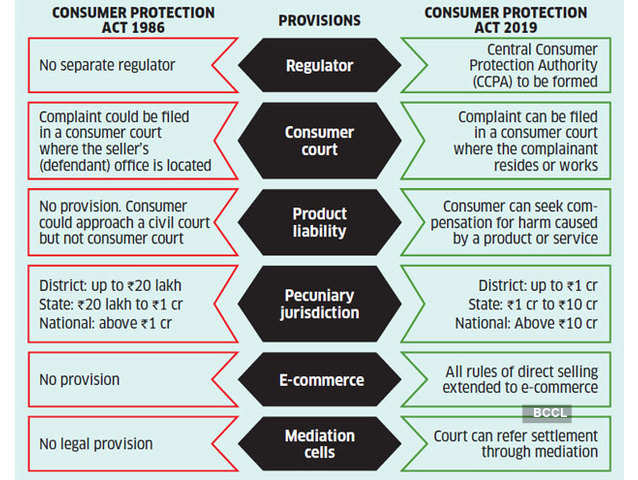
The Consumers can now cheer as the Consumer Protection Act, 2019 has recently replaced the three decade old Consumer Protection Act, 1986. The Consumer Protection Act, 2019 which came into effect on Monday (July 20) has replaced the earlier Consumer Protection Act, 1986.
The new Act as per the Experts say that “it gives more power to the consumers”. It seeks to revamp the process of administration and settlement of consumer disputes, with strict penalties, including jail term for adulteration and misleading ads by firms.
On July 20, 2020 certain provisions of the Consumer Protection Act, 2019 came into force as notified by the Central Government. Following the the key features of the relevant provisions:-
Key features of the Consumer Protection Act, 2019 which came into effect on July 20, 2020:-
1) Consumers can now institute a complaint from where they reside or work for gain.
2) The original pecuniary jurisdiction of the District Commissions has increased upto ₹1 crore from ₹20 lakh earlier.
3) The Pecuniary jurisdiction of State Commissions has been increased from ₹1 crore to Rs. 10 crore.
4) The National Commission can hear cases above ₹10 crore when compared to above ₹1 crore earlier.
5) While the provisions relating to e-commerce are not yet notified, a section relating to electronic service provider (covering software services, electronic payments) is notified.
6) The opposite party needs to deposit 50% of the amount ordered by the District Commission before filing an appeal before the State Commission. Earlier, the ceiling was a maximum of ₹25,000, which has been removed.
7) The limitation period for filing of appeals to the State Commission has been increased from 30 days to 45 days.
8) The Parties can be allowed to settle the disputes through mediation.
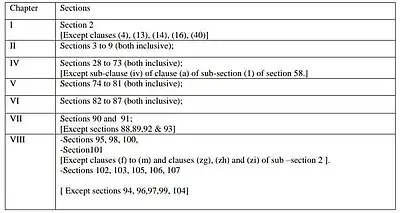
Following are the Sections which came into force:
Above mentioned provisions pertain to the Consumer Protection Councils, Consumer Disputes Redressal Forum, Mediation, Product Liability, punishment for manufacturing, selling, distributing etc spurious good or products which contain adulterant.
As per the rules, the e-commerce players will have to display the total ‘price’ of goods and services offered for sale along with break-up of other charges. Only a few certain miscellaneous provisions with regards and respect to the powers of the Central and State Government to make the rules and regulations have also been enforced.
On misleading advertisements there is provision for jail term and fine for manufacturers. There is no provision for jail for celebrities but they could be banned for endorsing products if it is found to be misleading.
For the first time there will be an exclusive law dealing with Product Liability. A manufacturer or product service provider or product seller will now be responsible to compensate for an injury or damage caused by the defective product or deficiency in services.
The Act has also defined an “e-commerce” as the buying or selling of goods or services including the digital products over digital or electronic networks. The existing definition of e-commerce has been adopted from India’s FDI Guidelines on e-commerce.
The definition of ‘e-commerce Entity’ as provided under the FDI Guidelines includes inventory and market place models.
There is also a provision for class action law suit for ensuring that rights of consumers are not infringed upon. The authority will have power to impose a penalty on a manufacturer or an endorser of up to 10 lakh rupees and imprisonment for up to two years for a false or misleading advertisement.
The COVID-19 pandemic is a major public health crisis which has affected the entire Economy and it’s stakeholders especially from the macro economy angle. Due to the novel coronavirus which spread widely the entire supply chain has been badly hit, not only has it disrupted and cut-off the Indian Economy but this has resulted in widespread economic losses across all the economies of the world.
It has caused widespread damages, hinderances and inconvenience especially in regards to the interruptions of people’s movement which has in turn halted and jolted the entire production line and activities which also poses as a serious risk to the macro economy.
Apart from having devastating and damaging effects on human lives, it has claimed over 543,605 lives and infected over 11 million people all around the world. The novel coronavirus (COVID- 19) has significantly knocked down not just the Chinese economy from where it emerged but also the global economy.
Kristalina Georgieva, Managing Director of the International Monetary Fund has officially confirmed that we have entered into a recession as bad as or even worse than that of 2009.
In order to revive the economy by 2021 we first must contain the virus at the earliest by hook or by crook. In Italy the number of confirmed cases are increasing and depicting a spiking up trend with over 1.8 million in the United States and also the number of deaths increasing in Italy and the UK which was under a 6 months long lockdown, this seems like a far blown possibility.
FACTORS REQUIRED TO DETERMINE THE EFFECTS OF COVID–19
There are 3 factors which is to be analysed and discussed in order to get a clear understanding about the plausible damages caused due to this pandemic, they are as follows:-
1) Demand
2) Supply
3) Finance.
On the demand side declining income, fear of contagion, reduced working hours, possible layoffs, absence of vaccine has detrimental effect especially in the service sector.
On the supply chain as the manufacturing line took a bad hit and almost came to a standstill, the manufacturing activities in the most affected regions were badly affected and this resulted in bottlenecks in the global value chain
China is reopening its factories but due to the COVID-19 pandemic the manufacturing companies abroad are finding it exceedingly difficult to purchase products in and ship them out of China.
The Covid-19 is posing an unprecedented Global Public Health Emergency and this has resulted in also creating financial distress in the form of drying up of liquidity, providing credit and meeting contractual obligations.
As a matter of fact, demand, supply or financial disruptions, might not directly affect but they do have a profound indirect effect on the legal field.
IMPLICATIONS OF COVID-19 PANDEMIC ON THE LEGAL FRATERNITY
The last two decades have seen an exponential growth in the legal field. As per the Bar Council of India( apex body of Indian Legal Professionals) the Indian legal profession consists of approximately 1.2 million registered advocates, around 950 law schools and approximately 400-500 thousand law students across the country and high numbers are seen across the world. This data is as per the Vision Statement of the year 2011-2013.
While the supply side of the legal education remains almost the same year after year, barring minor changes, this recession will surely contract the manufacturing and service sector. Thus, the demand for the new entrants in the legal industry might observe a sharp fall.
As the economy is in a recession due to COVID-19 pandemic, the legal industry will be affected by it, but How? In order to predict the future the past must be examined. In 2008 Global economic crises the event’s that took place need to be analysed and only then we will know how brave the 2020 recession shall be as the contours of legal landscape look more or less the same.
The impact of an economic recession on the legal profession has been disastrous as this has resulted in mass layoffs, hire freezing and salary decreases and this has in turn rendered an overwhelming amount of law graduates unemployed.
The legal field in the last decade witnessed methodical changes, remoulding and a tremendous shift of power from the hands of providers to the hands of consumers.
Also new skillsets have been developed, multi-disciplinary problem solving as well and technological adoption all of those has resulted in the rise of data and digital transformation.
The law firm dominance and an emerging global legal community in order to Analyze the industry trends it is easy to predict and also which category of lawyers will fare better or worse during this COVID-19 scenario is a must due to the consequent economic downturn.
VARIOUS NEW AVENUES AND AREAS OF OPPORTUNITIES OF LAW THE COVID-19 PANDEMIC HAS CREATED
People/Businesses will always require trained legal professionals in the long run. Certain areas of law will be in great demand in comparison to others.
With increasing health crisis all over the globe, there will be a great requirement for health care lawyers. High value mergers and acquisition areas of corporate law may dry up. A
Attention will turn towards restructuring, insolvency, bankruptcy and litigation work. Firms with varied practice areas are more likely to perform better during recession. Policy lawyers will be in favour as new companies will aggressively invest on policy lawyers to move far ahead from traditional industries.
With business downsizing, decline in job market and hire freezing there will be a lot of scope for Public Interest Litigation/Class Action, Labour and Employment lawyers. Global Environmental Catastrophe is not far away and Environment will be a highly litigated issue. Thereby creating a need for efficient Environmental and Animal Right Lawyers.
As part of Alternative Dispute Resolution, Conciliation, Mediation and Arbitration are effective ways of resolving a dispute. Parties to the dispute will lack the means viz., time and money to pursue litigation post the covid-19 pandemic and will prefer arbitration, mediation and negotiation.
International Arbitration is facing challenges during the COVID-19 pandemic due to the travel restrictions in place but, even with inhibiting factors of the currently available technology the post covid phase will see tremendous growth in usage of technological methods for dispute resolution i.e., online dispute resolution; video conferencing; chats; teleconferencing etc.
Lease disputes will burst at the seams, tenants are already serving notices invoking Force Majeure clause. Hence, Property Law will have scope for development.
SUPPLY CHAINS MOVING OUT OF CHINA
Due to existing trade war between USA and CHINA and thepending legal suit against China for the spread of COVID-19, hedging the risks of MNC’s corporations are mulling, moving their production out of China. The ongoing pandemic has only worked as a catalyst to this process.
Japanese, South Korean and Taiwanese multinational companies have already started moving their Chinese production facilities to countries with favourable business policy regime and friendlier International relations viz.Vietnam and other South East Asian Countries.
The warm ties between India and the USA pegs India as a potential production hub. In case of such an eventuality Asian transactional lawyers will benefit tremendously.
TECHNOLOGICAL ADVANCES
Providers that have embraced technological advances have a sure shot success through the recession period.
The Supreme Court of India has started hearing urgent matters via video conferencing. E-filings make the courts productive as it saves time from lengthy paperwork. Such circumstances will give young techno savvy lawyers an edge over the established lawyers.
JOBS
The Post Covid-19 phase will open the doors for a lot of young and aspiring lawyers as well as experienced lawyers who are open to the idea of juggling between different practice areas.
Senior Advocates who are otherwise experts in their respective fields but not adept at using technology will now be forced to employ younger and technologically savvy lawyers in their traditional offices.
The legal process analyst will have the job of analyzing a piece of legal work, subdividing the assignment into meaningful and manageable chunks, and identifying the most appropriate supplier of services for each. This task requires deep legal insight and experience. This individual will often be employed within an in-house legal department, rather than at a law firm.
Legal Risk Managers will emerge who will have to anticipate a problem and propose solutions.
AI/Algorithm/Blockchain Dispute Resolution will emerge to deal with matters related to Motor Accidents or Consumer Compensation etc.
Virtual law libraries will emerge and the experience of Senior Advocates or Lawyers will be necessary for writing monographs and book reviews.
Online Legal Services will throw open an array of a lot more new practice areas for lawyers, who were till now, practicing their skills using traditional methods.
CONCLUSION
We are living in an era of revolutionary changes and technological advancements and we must consider how vast and far stretched the paradigm shifts in information technology have taken place which is a boon for the entire legal fraternity.
Even biomedical research, genetic discoveries, biotechnological advances and nanotechnology have changed our world.
One must observe how deeply the LPG has influenced the exchanges of legal and other professional services. This has led to the homogenization of cultural trends and consumption patterns across the world.
What more, even the viruses of both biological as well as software kinds have become all pervasive. This has resulted in the reduction of the mortality rates across the country, as a by-product of which we are experiencing a massive population growth.
Due to the Global climate change and acute scarcity of resources which has resulted in mass migration of the humanity in search of better pastures, it has resulted in the shifts of each day which generates the fundamental questions and answers which shall alter the shape of the human experience.
It is certain that lawyers will play an indispensable role in tackling it with the help of these developments and harnessing the opportunities to secure an orderly change and which will in turn enhance the human welfare in the much larger context.
The period of Economic Downturn is critical for every field. It has a huge impact on global healthcare facilities and legal professionals around the world. Though, the legal profession is more resilient to the recession than many others but it hops in the economic downturn.
The law firms and individual practitioners who widen their horizons by welcoming the opportunities will adapt to and triumph the current situation.
The legal profession should take advantage of the ongoing paradigm shift to develop liberalized business structures that allow the firms to build and develop a sustainable and competitive practices so that it will result in the evolution of the market for legal services.
Till date no panacea exists for the situation at hand unless there is an immediate containment of the disease and invention of the vaccine, the world as we know it will never be the same again.
This will not only require targeted and active macroeconomic measures but a series of medical policies as well. Until a permanent solution is found, the legal fraternity has to proactively explore the fields of law for upcoming opportunities and sow seeds of progression, which will bear fruits for the generations to come. “
‘Intellect’ refers to the creations of the mind. Intellectual Property is a type of intangible property and includes inventions, literary and artistic works, symbols, names and paintings.
Intellectual Property Rights (IPRs) are the Rights granted to the creators of Intellectual Property (IP) by the Government. The nature of IPR is territorial. In any country an IP has to seek protection separately under the relevant laws.
Mechanisms which are Special in nature have been kept in place for various territories in order to provide protection to different types of IPRs. It confers an exclusive right to the inventor/ creator or assignee to fully utilize the invention/ creation for a given period of time.
It’s been established that the intellectual labor associated with the innovation should be given due importance so that public good emanates from it.
This is a strong tool, to protect investments, time, money, effort invested by the inventor/creator of an IP, since it grants the inventor/creator an exclusive right for a certain period of time for use of his invention/creation.
Hence it aids in the economic development of a country by promoting healthy competition and encouraging industrial development which shall also aid in the growth of the economy.
WHAT IS AN INTELLECTUAL PROPERTY?
Intellectual Property(IP) refers to creations of the mind; inventions; literary and artistic works; and symbols, names and images used in commerce.
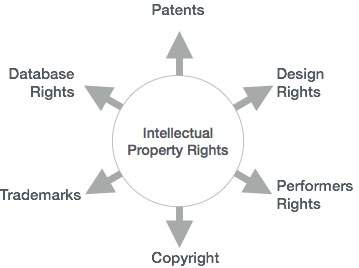
IP is divided into two categories: 1) Industrial Property:- includes patents for inventions,trademarks, industrial designs and geographical indications. 2) Copyright:- covers literary works (such as novels,poems and plays), films, music, artistic works (e.g., drawings, paintings, photographs and sculptures) and architectural design.
In Intellectual property(IP), there are Rights which relates to the rights of performing artists in their performances, producers of phonograms in their recordings, and broadcasters in their radio and television programs are included.
WHAT ARE INTELLECTUAL PROPERTY RIGHTS?
So what do you mean by intellectual property rights? IP rights like any other property right allow creators, or owners, of patents, trademarks or copyrighted works to benefit from their own work or investment in a creation.
These rights are outlined in Article 27 of the UDHR which provides for the right to benefit from the protection of moral and material interests resulting from authorship of scientific, literary or artistic productions.
The importance of intellectual property was first recognized in the Paris Convention for the Protection of Industrial Property (1883) and the Berne Convention for the Protection of Literary and Artistic Works (1886). Both treaties are administered by the World Intellectual Property Organization (WIPO).
There are various pros which are more compelling than the cons.
1) The progress and well-being of humanity rest on its capacity to create and invent new works in the areas of technology and culture.
2) The legal protection of new creations and this encourages the commitment of additional resources for further innovation.
And Lastly the third pros is that the 3) Promotion and protection of intellectual property spurs economic growth, creates new jobs and industries, and enhances the quality and enjoyment of life.
An efficient and equitable intellectual property system can help all countries to realize intellectual property’s potential as a catalyst for economic development and social and cultural well-being. The intellectual property system helps strike a balance between the interests of innovators and the public interest, providing an environment in which creativity and invention can flourish.
INTELLECTUAL PROPERTY HOLDERS IN A QUANDARY DUE TO COVID-19 PANDEMIC
While experts are in a combat mode and the race is on to discover the cure for COVID-19, the claim of intellectual property rights for exclusive use of the cure poses a dilemma as it is not considered the most rational thing to do at the moment.
Carlos Correa addressed to organizations like WHO, WTO and WIPO via an open letter to seek support for WTO countries that invoke the ‘security exception’ contained in Article 73 of the Agreement on Trade Related Intellectual Property Rights (TRIPS) Agreement, to take ‘actions it considers necessary for the protection of its essential ‘security interests’ in the wake of COVID-19 threat.
It has been suggested that invocation of exception under Article 73 will be warranted to procure medical products and devices or to use the technologies to manufacture them as necessary to take cue of the present public health emergency.
By suspending the enforcement of any Intellectual Property right as given under Article 73(b) of TRIPS Agreement, an obstacle for the procurement or local manufacturing of the medical equipments shall be necessary in order to protect the population of the world will be outlasted.
The question which is raised due to the above is regarding IP rights which are aimed to aid the public by promoting technological advancement in return of providing the inventor an exclusive right over the invention, though for a limited time. Though the IP rights are at a standstill due to the outbreak the IP Registry offices all over have limited their functioning.
TYPES OF INTELLECTUAL PROPERTY
Trade Mark: –
A trademark is used in order to identify a business entity and it also differentiates the goods made or services offered by a company or an individual. Names, Words, Logos, Colors, Packaging, Sounds (audible), Signs (visual) or any combination thereof are considered and can be filed as trademarks.
A trademark must be Unique and Distinctive in nature and must also avoid adjectives for eg efficient and Names of person or places (E.g. India). Even Obscene words, Religious or Government words or symbols (E.g. OM) and Common Shapes (Square) should be avoided.
The Trade mark means a mark used in relation to goods for the purpose of indicating a connection in the course of trade between the goods and some person having the right as proprietor to use that mark.
The function of a trade mark is to give an indication to the purchaser or a possible purchaser as to the manufacture or quality of the goods, to give an indication to the trade source from which the goods come or the trade hands through which they pass on their way to the market.
The Trade Marks Act, 1999 is an act which provides for the registration and better protection of trademarks for goods and services and for the prevention of the use of fraudulent marks. A trade mark is valid for a period of 10 years.
Case Name: The Coca-Cola Company v. Bisleri International Pvt. Ltd Case Citation: Manu/DE/2698/2009
Copyright: –
Copyright is an exclusive legal right granted to the creators of an intellectual work. The owner of a Copyright has rights to reproduce, translate, adapt, perform, distribute and must be publicly allowed to display the work, etc.
Registration is not mandatory since copyright comes into existence as soon as the intellectual work is created but it is recommended to register a copyright for better enforceability, since registered copyrights have more evidentiary value in court.
(a) Types of Works covered under Copyright:-
(1) Literary including Software – Books, Essay, Compilations, Computer Programs.
(2) Artistic – Drawing, Painting, Logo, Map, Chart, Plan, Photographs, Work of Architecture.
(3) Dramatic – Screenplay, Drama.
(4) Musical – Musical Notations.
(5) Sound Recording – Compact Disc.
(6) Cinematograph Films – Visual Recording which includes sound recording.
(b) Duration of Copyright:-
(1) Literary, Dramatic, Musical or Artistic Works – Lifetime of the author + 60 years from the death of the author.
(2) Anonymous & Pseudonymous Works – 60 years from the year the work was first published.
(3) Works of Public Undertakings & Government Works – 60 years from the year the work was first published.
(4) Works of International Organizations – 60 years from the year the work was first published.
(5) Sound Recording – 60 years from the year in which the recording was published.
(6) Cinematograph Films – 60 years from the year in which the film was published.
Case Name:- Indian Performing Rights Society Ltd. v. Eastern India Motion Picture Association Case Citation: – 1977 SCR (3) 206
Designs: – The Design Act, 2000 states that it protects the aesthetic and ornamental features of an object. As per the Act a 2D or 3D pattern of a handicraft, a product, or even an industrial commodity.
The Unique Selling Point (USP), protects the looks and feels of the product and it prevents the duplication of the product. An industrial design helps in drawing a customer’s attention and helps in increasing the commercial value of an article.
Case Name:-Cello Household Products v. M/S Modware India and anr Case Citation:- Notice of Motion (L) No. 209/2017 in Suit (L) No. 48/2017
Patents On the 4th December, 2018, The Ministry of Commerce and Industry released the draft (rules amendment) for Patents Act 1970. These rules are mainly amended with respect to international applications, patent opposition and a few form related extensions. The Central Government proposes to make these amendments in exercise of the powers conferred by section 159 of the Patents Act, 1970.In order to align with TRIPS, inventions which are not patentable have been included even, wider rights of patentee is incorporated. Uniform period of protection is 20years. Case Name: Bajaj Auto Limited v.TVS Motor Company Limited. Case Citation: JT 2009 (12) SC 103
5. Integrated Circuits
Semiconductor Integrated Circuits Layout Design (SICLD) Act 2000 states the meaning of Semi conductor Integrated Circuit as, a product having transistors and other circuitry elements designed to perform an electronic circuitry function. There are 2 types of designs as per the act:-
(i) Layout Design – A layout of transistors and other circuitry elements including lead wires which connects semiconductor integrated circuits.
(ii) Layout-Design Registry (SICLDR) is the office where the applications on Layout-Designs of integrated circuits are filed for registration. The jurisdiction of this Registry is whole of India. The Registry, as per the guidelines laid down in the Semiconductor Integrated Circuits Layout Design (SICLD) Act 2000 and the Semiconductor Integrated Circuits Layout-Design (SICLD) Rules 2001, examines the layout-designs of the Integrated Circuits and issues the Registration Certificate to the original layout-designs of the Semiconductor Integrated Circuits.
Case Name: Sunil Alag v. Union of India and Others Case Citation: W.P. (C) 8152/2013
6. Biological Diversity
The Biological Diversity Act 2002 was enacted to realize the objectives enshrined in the United Nations Convention on Biological Diversity (CBD) 1992 which was passed by the Lok Sabha on 2nd December 2002 and by the Rajya Sabha on 11th December 2002.
It recognizes the sovereign rights of states to use their own Biological Resources due to the scarcity and also to conserve it. The Act provides for a mechanism for equal sharing of benefits arising out of the use of traditional biological resources and knowledge. It is a federal legislation enacted by the Parliament of India for preservation of biological diversity in India.
Case Name: Environment Support Group vs National Biodiversity Authority Case Citation: W.P. No.41532 / 2012
7. Plant Varieties and Farmers
Protection of Plant Varieties and Farmer’s Rights Act of 2001(PPV & FR Act, 2001) confers right to breeders, researchers and farmers over their plant varieties. Reaching legislation with regards to establishing rights for farmers to save, use, exchange and sell farm saved seed.
The Act establishes nine rights for farmers of which the most important in this regard are the right to “seed” and the right to “compensation” for crop failure (Art. 39). Not only does the 2001 Act protect the rights of framers to save, use, exchange and sell farm- saved seed, it also seeks to ensure that these seeds are of good quality, or at least that farmers are adequately informed about the quality of seed they buy.
In addition, safeguards are provided against innocent infringement by farmers. Farmers who unknowingly violate the rights of a breeder are not to be punished if they can prove that they were not aware of the existence of such a breeder’s right (Art 42).
Case Name:- Monsanto Technology LLC & Ors Vs. Nuziveedu Seeds Ltd & OrsHigh Court of Delhi Case Citation: CS (Comm) 132/2016
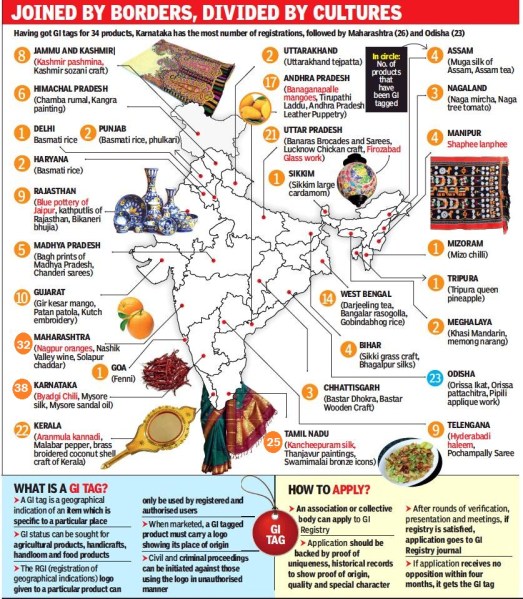
The Geographical Indication of Goods:- The Geographical Indications of Goods (Registration and Protection) Act, 1999 states Geographical Indication as it is primarily an agricultural or food product, natural or a manufactured product (handicrafts, Handloom textiles or industrial goods) originating from a definite geographical territory. A product is considered to be manufactured in a territory if any one of the activities of either the production or of processing or preparation of the goods takes place there. It promotes the producers prosperity of goods which have been produced in the geographical territory.
It helps the producer community to differentiate its products from other competing products that are present in the market and generate goodwill around its products. Hence, it acts as a signaling device by helping consumers to identify genuine quality products.
Case Name:- Tea Board Vs ITC Limited on 20 April, 2011 Case Citation:- GA No. 3137 of 2010 CS No. 250 of 2010
It has been suggested that invocation of exception under Article 73 will be warranted to procure medical products and devices or to use the technologies to manufacture them as necessary to take cue of the present public health emergency.
CONCUSION
The above overview clearly depicts that India has adopted and adhered to the latest IPR Regime and it has forayed into the global trade competition with a double edged sword.
The Covid-19 pandemic has hit all the countries hard but as far as the legal system is concerned, it has shown us how the coming times and the future shall be and also how things in the ‘new normal’ would be.
But there is always a Silver lining in these tough times which is the Virtual Court Hearings which has ensured that Justice isn’t delayed for the one’s who seek it inspite of these tough times as Justice delayed is Justice denied.
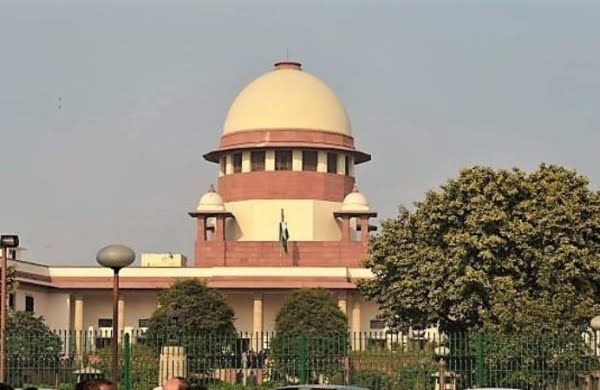
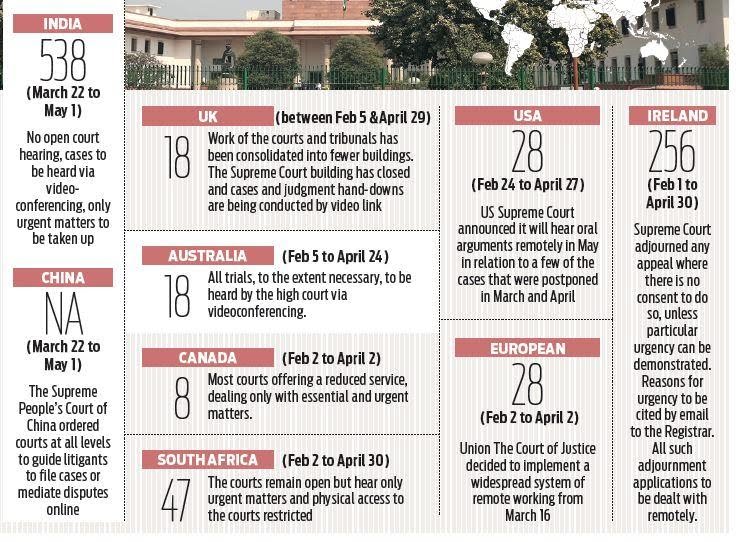
The lockdown has affected the functioning of courts across the globe, but the Hon’ble Supreme Court of India has done much better than the top courts in countries like the UK, the US, Singapore and Canada.
The Apex Court began the hearing of urgent matters virtually till May 1st and heard them for 22 days via video conferencing in March after the imposition of lockdown in order to curb the spread of COVID-19.
ABOUT VIRTUAL HEARINGS
Virtual hearings are court hearings conducted by audio-visual means, where cases are progressed without the need for participants to attend the Court in person. It also shows how the distance becomes immaterial when one has to appear before the court to argue the case.
FOR THE FIRST TIME
The Hon’ble Supreme Court of India held its first Constitutional bench sitting and this is the first time since March 5 that five judges sat together in a single court hall ever since the lockdown forced the apex court to stop physical court hearings and begin hearing cases through videoconferencing from March 25 this year.
It was for the first time on Tuesday, the 14th July, 2020 that a Constitutional Bench (comprising five judges) held a virtual hearing. A bench of justices Arun Mishra, Indira Banerjee, Vineet Saran, MR Shah and Aniruddha Bose appeared wearing masks and maintaining nearly two-feet distance between them on the bench.
The first case that was heard by the five-judge bench was a legal tussle on whether Centre or States have the power to provide reservation to in-servicecandidates in post-graduatemedical degree courses. The plea was brought up by Tamil Nadu Medical Officers Association.
Opening the argument, Senior Advocate Arvind Datar exchanged the extensive compilation of his arguments including cases to be referred through Google drive with all Lawyers. One of the Lawyers, Senior Advocate Vikas Singh appearing for Medical Council of India (MCI) complained about being unable to access Google Drive.
He objected to Datar referring to the same, the first hiccup encountered by the Court in the virtual proceeding. The problem was sorted as Hon’ble court asked Senior Advocate Arvind Datar to give case law citations.
As the virtual hearing proceeded the Senior Advocate Arvind Datar was inaudible to the Hon’ble Court. Hon’ble Justice MR Shah commented in a lighter vein that, “Don’t keep social distancing with your mike.” Datar heard ‘mike’ as “wife”, leaving the bench in splits.
SUCCESS STORY: DATA THAT MATTERS
The Hon’ble Supreme Court of India shared the ‘success story’ of virtual court proceedings. At the beginning of June as many as 2,893 lawyers appeared in the hearings via video-conferencing, it said in the data release.
According to the data, 538 matters were taken up by the SC during the lockdown period, besides 297 connected cases. Judgment was delivered in 57 matters. Besides, 49 special leave petitions, 92 writ petitions, 138 review petitions and 58 pleas for interim relief were also taken up.
HOW THE COURTSFAREDAND PERFORMED?
India has fared the best as per the above data as many other countries have been using the virtual system but their top courts that have lagged way behind in the hearing or disposal of cases.
It conducted proceedings via video-conferencing from March 25 as it has suspended the entry of lawyers and other staff into its premises and also the apex court decided to explore the feasibility of ‘physical appearance’ of advocates in real courtroom hearings after strictly adhering to the guidelines of the COVID-19 triggered lockdown and resorting to virtual hearings since March 25.
Data available on other judicial websites indicate that in the nations hit hard by the pandemic like the US, the UK, France, Italy, Germany, China, Canada, Australia etc., The organs of that state which carried out the administration of justice are mostly relying on the virtual court methodologies and online case management.
CONCLUSION
Hence after going through the above facts and circumstances it’s certainly a grand success yet there is always room and scope for improvement.
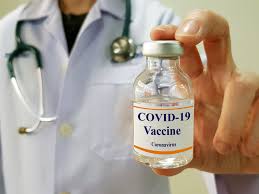
As the whole world is waiting for discovery of corona virus , the next big challenge in front of world is large scale production of vaccine so that it is feasible to common man.India is going to play major role in vaccine production as it has past experience as well as skilled doctors. India is responsible for providing 2/3 of world’s children with vaccine.
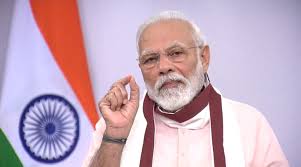
Prime Minister Narendra Modi, in his inaugural address at the India Global Week 2020, said that India will play an important role in developing and in scaling up production of the vaccine once it is discovered.
“Vaccines made in India are responsible for 2/3rd of the vaccine needs of the world’s children. Today also our companies are active in international efforts for development and production of #COVID19 vaccine. I’m certain that India will have an important role in developing and in scaling up production of the vaccine once it is discovered,” PM Modi said.
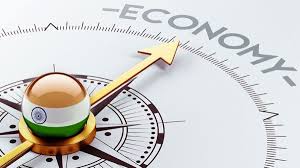
Speaking on India’s economy, PM Modi said, “India remains one of the most open economies in the world. We are laying a red carpet for all global companies to come and establish their presence in India. Very few countries will offer the kind of opportunities India does today.”
“The pandemic has once again shown that India’s pharma industry is an asset not just for India but for the entire world. It has played a leading role in reducing the cost of medicines, especially for developing countries,” the Prime Minister said.
He also further said that India will lead world in the path of revival post corona virus pandemic in terms of economic as well social development.India is power house of young talents may it be technological or scientific or doctors field.
World over, you have seen the contribution of India’s talent-force. Who can forget the Indian tech industry & tech professionals. They have been showing the way for decades. India is a power-house of talent that is eager to contribute. In these times, it is natural to talk about revival. It is equally natural to link global revival and India. There is faith that the story of global revival will have India playing a leading role,” PM Modi said.
Hope there will be discovery of vaccine soon and life comes back on track.




















 Eduindex
You must be logged in to post a comment.