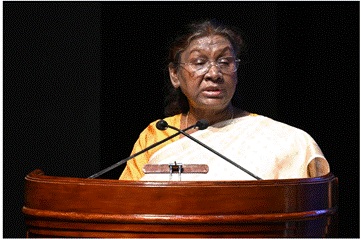
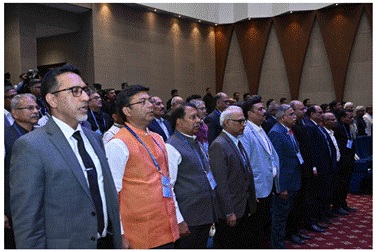
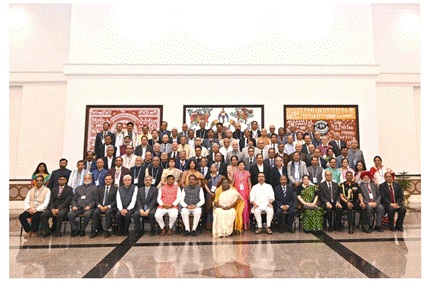
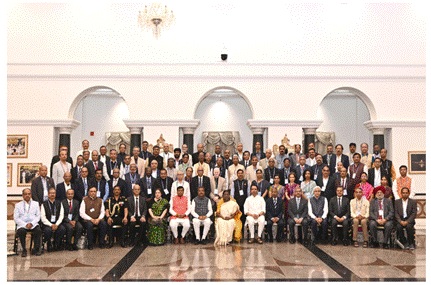
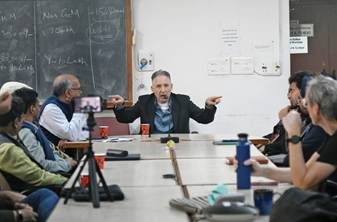
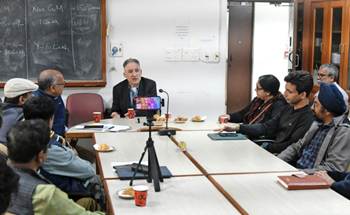
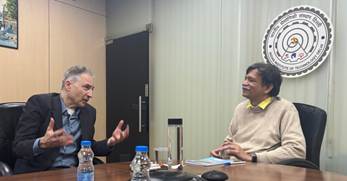
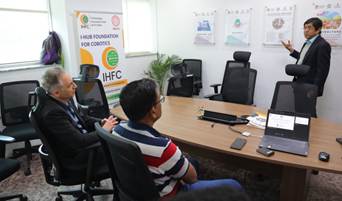
Prof. Brian Greene  renowned American Physicist and Professor of Mathematics & Physics, Columbia University visits IIT Delhi and interacts with students

Daily writing prompt
Write a letter to your 100-year-old self.

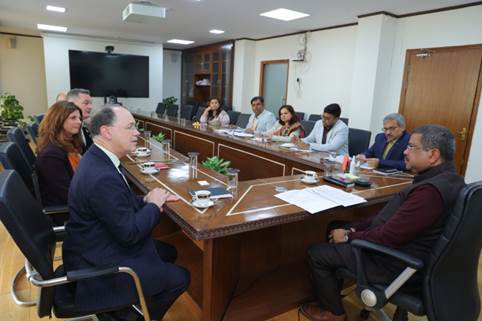
Prof. Brian Greene, renowned Theoretical Physicist, Author, and Professor of Mathematics & Physics, Columbia University, visited Indian Institute of Technology (IIT) Delhi today and interacted with the students. Director of IIT Delhi, Dr. Rangan Banerjee, faculty and students were present at the event. Prof. Greene also visited the Research & Innovation Park of the Institute and appreciated the facilities.

While interacting with the students, Prof. Greene expressed his gratitude for the wonderful visit and the engaging discussions with both the faculty and students. He appreciated their energy, creativity, and zeal for innovation. He also emphasized that their keen interest in scientific and technological development is highly significant, as it will pave the way for a better future.

Acknowledging India’s rapid advancements in scientific innovation, Prof. Greene expressed his hope that this progress would position the country as a global leader in science and technology. He praised IIT as a world-class institute, highlighting the remarkable faculty dedicated to nurturing some of India’s greatest minds.

During the session, students posed intriguing questions, including where, in his opinion, subjects such as physics and mathematics diverge and converge, as well as inquiries about string theory. In response, he elaborated on his work related to the mathematics of string theory.

Prof. Greene visited the Research & Innovation Park of IIT Delhi. The establishment was inaugurated by President of India Smt. Droupadi Murmu during the Diamond Jubilee Celebrations of the Institute. It focuses on innovation and product development where IIT Delhi, industry, entrepreneurs and government agencies interact and enable creation of advanced technological solutions. The Park works towards accelerating research translation, providing avenues for IIT Delhi students and faculty to interact more closely with industry and bring to market technological breakthroughs through incubation, amplifying technological and societal impact of R&D, and galvanizing entrepreneurial aspirations. It has facilities including labs for start-ups, board rooms, conference hall, meeting and training rooms, etc.

*****

Hindu College’s 126th Founder’s Day

Daily writing prompt
What movies or TV series have you watched more than 5 times?

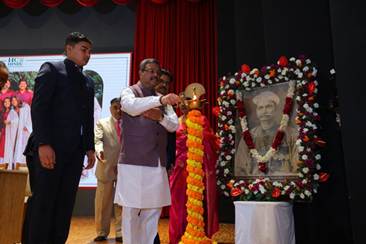
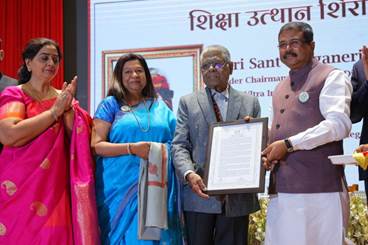
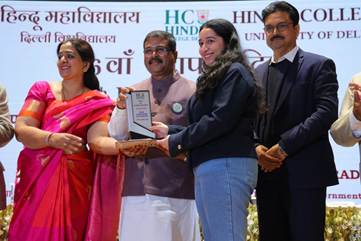
Union Minister for Education, Shri Dharmendra Pradhan, attended an event celebrating Hindu College’s 126th Founder’s Day in New Delhi today. Academicians, staff members and students also were present at the event. He engaged with the students and faculty of the college during his visit to the exhibition on Skill Development and Entrepreneurship activities. While exploring ideas, prototypes, and business models, he expressed confidence that they will serve as flag-bearers of innovation, entrepreneurship, job creation, and wealth generation in the times ahead.

Image
Image
Image

While addressing the event, Shri Dharmendra Pradhan highlighted the esteemed legacy of Hindu College, describing it as a temple of learning and a cradle of educational excellence, innovation, diversity, plurality, democratic ethos, nationalistic spirit, and nation-building.

He reflected on the college’s founding by Shri Krishan Dass Ji Gurwale, who sought to counter Macaulay’s efforts to dismantle India’s education system and culture. He emphasized how Hindu College has since carved an unparalleled legacy in shaping India’s intellectual, cultural, and national identity. The path of progress and prosperity on which India stands today, he asserted, has been paved by Hindu College.

Shri Pradhan also remarked that while creating a legacy is easier, sustaining it requires relentless dedication. Congratulating the students, faculty, and staff for their unwavering ‘Sadhna’ in upholding the college’s tradition of excellence, he urged them to continue this commitment, striving to transform the institution into a global hub of solutions.

He also underscored that Viksit Bharat 2047 is a collective goal for all Indians. The next 22-25 years, he noted, mark the Amrit Kaal, a crucial period for the Hindu College community. He emphasized that as India celebrates the centenary of its independence, Hindu College will also mark its 150th Founder’s Day. During this pivotal phase, the college must aspire to establish itself as an epicentre of research, innovation, entrepreneurship, and solutions to 21st-century challenges, he added.

Expressing confidence in Hindu College’s role in shaping India’s future, he envisioned it emerging as a ‘Captain’ of India’s transformation in the coming decades. He expressed hope that its students will evolve into wealth-creators, job-creators, deep-tech innovators, policymakers, and global citizens of tomorrow.

*****

Farmers’ Welfare Measures

Agriculture is a State subject and Government of India supports the efforts of States through appropriate policy measures, budgetary allocation and various schemes/ programmes. The various schemes/ programmes of the Government of India are meant for the welfare of farmers by increasing production, remunerative returns and income support to farmers. The Government has substantially enhanced the budget allocation of Department of Agriculture & Farmers’ Welfare (DA&FW) from Rs. 21933.50 crore BE during 2013-14 to Rs. 1,22,528.77 crore BE during 2024-25. Schemes/programmes initiated by DA&FW are conceptualised and implemented taken in consideration of improving the economic condition of farmers owning small handholdings, access to credit and to enhance overall income of farmers and remunerative returns in the agriculture sector.

PM KISAN Samman Nidhi Scheme has been launched in 2019 with the sole objective to enhance the income of farmers owning small landholdings. This scheme provides Rs. 6000 per year in 3 equal instalments. So far, more than Rs.3.46 lakh Cr. has been disbursed to eligible farmers through 18 instalments.

The other major schemes run by Department of Agriculture & Farmers Welfare for enhance of overall income of farmers are as under:

  1. Pradhan Mantri Kisan Maan Dhan Yojana (PM-KMY)
  2. Pradhan Mantri Fasal Bima Yojana (PMFBY)/ Restructured Weather Based Crop Insurance Scheme (RWBCIS)
  3. Modified Interest Subvention Scheme (MISS)
  4. Agriculture Infrastructure Fund (AIF)
  5. Formation and Promotion of 10,000 new Farmer Producers Organizations (FPOs)
  6. National Bee Keeping and Honey Mission (NBHM)
  7. Namo Drone Didi
  8. National Mission on Natural Farming (NMNF)
  9. Pradhan Mantri Annadata Aay SanraksHan Abhiyan (PM-AASHA)
  10. Agri Fund for Start-Ups & Rural Enterprises’ (AgriSURE)
  11. Per Drop More Crop (PDMC)
  12. Sub-Mission on Agriculture Mechanization (SMAM)
  13. Paramparagat Krishi Vikas Yojana (PKVY)
  14. Soil Health & Fertility (SH&F)
  15. Rainfed Area Development (RAD)
  16. Agroforestry
  17. Crop Diversification Programme (CDP)
  18. Sub-Mission on Agriculture Extension (SMAE)
  19. Sub-Mission on Seed and Planting Material (SMSP)
  20. National Food Security and Nutrition Mission (NFSNM)
  21. Integrated Scheme for Agriculture Marketing (ISAM)
  22. Mission for Integrated Development of Horticulture (MIDH)
  23. National Mission on Edible Oils (NMEO)-Oil Palm
  24. National Mission on Edible Oils (NMEO)-Oilseeds
  25. Mission Organic Value Chain Development for North Eastern Region
  26. Digital Agriculture Mission
  27. National Bamboo Mission

PM-AASHA (Pradhan Mantri Annadata Aay SanraksHan Abhiyan) scheme ensures remunerative prices for farmers’ produce and prevent distress sales. It aims to strengthen the Minimum Support Price (MSP) mechanism and provide better price support for farmers.

“Formation & Promotion of new 10,000 FPOs with budget outlay of Rs 6,865 Crore. Farmers Producer Organization (FPOs) are being set up to give farmers collective bargaining power in markets as well as enabling small farmers to pool resources, access technology, and get better prices for their crops.

Agriculture Infrastructure Fund (AIF) with financial provision of one Lakh Crore scheme has been launched with an objective to mobilize a medium – long term debt financing facility for investment in viable projects for post-harvest management Infrastructure and community farming assets through incentives and financial support in order to improve agriculture infrastructure in the country. Following supports are being provided under Agri Infra Fund. 

Interest SubventionAll loans under this financing facility have interest subvention of 3% per annum up to a limit of ₹ 2 crore. This subvention is available for a maximum period of 7 years. In case of loans beyond ₹ 2 crore, interest subvention is limited up to ₹ 2 crore.

Credit Guarantee: Credit guarantee coverage is available for eligible borrowers from this financing facility under Credit Guarantee Fund Trust for Micro and Small Enterprises (CGTMSE) scheme for a loan up to ₹ 2 crore. The fee for this coverage will be paid by the Government. In case of FPOs the credit guarantee may be availed from the facility created under FPO promotion scheme of DA&FW.

Modified Interest Subvention Scheme (MISS) provides Interest Subvention (IS) of 1.5% to various Financial Institutions (Banks, RRBs, PACS, etc.) for delivering Short-Term Agriculture Operation (STAO) loans at a fixed rate of 7% to farmers through KCC. If the farmer repays the loan within time, he gets a Prompt Repayment Incentive (PRI) of 3%, bringing his loan liability to 4% overall (7% minus 3%). It is exclusively operated through Kisan Credit Card (KCC).

National Mission on Edible Oils – Oilseeds (NMEO-Oilseeds) has been launched on 3rd Oct, 2024 for enhancing the production of key primary oilseed crops such as Rapeseed-Mustard, Groundnut, Soybean, Sunflower, and Sesamum, as well as increasing collection and extraction efficiency from secondary sources like Cottonseed, Rice Bran, and Tree Borne Oils. The mission aims to increase primary oilseed production from 39 million tonnes (2022-23) to 69.7 million tonnes by 2030-31. Together with NMEO-OP (Oil Palm), the Mission targets to increase domestic edible oil production to 25.45 million tonnes by 2030-31 meeting around 72% of our projected domestic requirement. To ensure the timely availability of quality seeds, the Mission will introduce an online 5-year rolling seed plan through the ‘Seed Authentication, Traceability & Holistic Inventory (SATHI)’ Portal, enabling states to establish advance tie-ups with seed-producing agencies, including cooperatives, Farmer Producer Organizations (FPOs), and government or private seed corporations. 65 new seed hubs and 50 seed storage units will be set up in public sector to improve the seed production infrastructure.

The following have been proposed in the upcoming budget for income support, improve access to credit and overall growth of agriculture sector:

Enhanced Credit through KCC: – Loan increased from 3 lakh to ₹5 lakh to facilitate short term loans for 7.7 crore farmers, fishermen, and dairy farmers.

Aatmanirbharta in Pulses: – To launch a 6-year Mission with special focus on Tur, Urad and Masoor, emphasizing development and commercial availability of climate resilient seeds, enhancing protein content, increasing productivity and improving post-harvest storage and management, assuring remunerative prices to the farmers.

National Mission on High Yielding Seeds: – Targeted development and propagation of seeds with high yield, pest resistance and climate resilience.

Prime Minister Dhan-Dhaanya Krishi Yojana – It has been proposed Agri Districts Programme to cover 100 districts which is likely to help 1.7 crore farmers.

Mission for Cotton Productivity: – To be launched a 5-year mission to facilitate improvements in productivity and sustainability of cotton farming.

Makhana Board in Bihar: – It is proposed to set up Makhana Board to Improve production, processing, value addition, and marketing and organisation of FPOs.

Agricultural Infrastructure Fund

In order to enhance the income of farmers, it is not only essential to enhance production and productivity of farm produce but also minimize the post-harvest losses and ensure better realization of prices for farmers through creation of modern post-harvest management infrastructure. With an objective to address the existing gaps in post-harvest management infrastructure in the country, the flagship scheme of Agriculture Infrastructure Fund (AIF) was launched in 2020-21 to strengthen the infrastructure in the country through creation of farm gate storage and logistics infrastructure to enable farmers to store and preserve their farm produce properly and sell them in the market at better price with reduced post-harvest losses and lesser number of intermediaries. Improved post-harvest management infrastructure like warehouses, Cold stores, sorting and grading units, ripening chambers etc will allow farmers to sell directly to a larger base of consumers and hence, increase value realization for the farmers. This will improve the overall income of farmers. Further, AIF scheme aims to benefit all stakeholders in the agricultural ecosystem by contributing in the holistic development of the agriculture sector. Under AIF, provision for Rs. 1 Lakh crore loan has been made through lending institutions with a interest rate cap of 9% on loans. The scheme is operational from 2020-21 to 2032-33.

All loans under this financing facility have interest subvention of 3% per annum up to a loan limit of ₹2 crores. This interest subvention is available for a maximum period of 7 years. In case of loans beyond ₹2 crores, interest subvention is limited up to ₹2 crores. Credit guarantee coverage is also available for eligible borrowers from this financing facility under Credit Guarantee Fund Trust for Micro and Small Enterprises (CGTMSE) scheme for a loan up to ₹2 crores. The fee for this coverage is borne by the Government.

Budgetary support is being provided for interest subvention and credit guarantee fee as also administrative cost of PMU. This will be amount to Rs. 10,636 crores over a period of 10 years. The detailed break up is as below.

SL NO.Name of ComponentAllotted Fund Amount
1Interest Subvention CostRs. 7907Cr
2Credit Guarantee CostRs. 2629 Cr
3Administration Cost of PMURs. 100 Cr
TotalRs. 10636 Cr

 State/UT wise details of Projects approved under AIF scheme during the last three years is as below: –

  (Amount in Rs Crore)

Sl.State / UTSanctioned NoSanctioned Amount
1Madhya Pradesh7,7015,853
2Maharashtra6,8604,151
3Rajasthan1,8022,310
4Gujarat2,0722,215
5Uttar Pradesh3,8543,636
6Haryana2,7042,108
7Punjab12,0033,116
8Telangana1,6622,178
9Karnataka2,2082,148
10Andhra Pradesh6801,116
11West Bengal2,5371,441
12Tamil Nadu5,8891,189
13Chhattisgarh8141,008
14Odisha1,098810
15Assam409726
16Bihar848680
17Kerala1,600604
18Uttarakhand236315
19Jharkhand225255
20Himachal Pradesh347137
21Jammu And Kashmir88198
22Delhi710
23Goa1910
24Meghalaya28
25Chandigarh28
 26Arunachal Pradesh56
27Tripura510
28Nagaland00
29The Dadra And Nagar Haveli And Daman And Diu11
30Puducherry22
31Manipur31
32Mizoram00
33Sikkim00
34Ladakh00
35Lakshadweep00
36Andaman and Nicobar Islands00
 Total         55,683               36,250

An impact assessment study of AIF was conducted by Agro Economic Research Centre, Gokhale Institute of Politics and Economics, Pune in December 2023 to evaluate overall performance of the scheme, primarily based on feedback from beneficiaries as well as farmers in selected states.  The main findings of the study are as below. 

1.       Based on this study, till 26th January 2025, investment in the agri sector under AIF has generated more than 9 lakh employment opportunities. Out of the sanctioned projects, nearly 97% of the projects created are in rural areas promoting investment and employment opportunities in rural areas. 

2.       The average number of persons employed per unit in the peak season was found to be 11. The average was highest i.e. 27 in Rajasthan and lowest i.e. 5 in the state of Maharashtra.

3.       Further, the storage infrastructure created under AIF has added nearly 550 LMT of storage capacity which includes approx. 510.6 LMT of dry storage and nearly 39.4 LMT of Cold storage capacities (as on 26.01.2025). This additional storage capacity can save up to 20.4 LMT of food grains and 3.9 LMT of horticulture produce annually. 

4.       The Agro processing centres created under the scheme is promoting timely value-addition of farmer’s produce resulting in increase in farmer’s income up to 20% and reduction of post-harvest losses. Custom hiring centres set up under the scheme is boosting farm mechanization and adoption of better crop residue management practices.

5.       31 percent of the AIF units have availed of government subsidies also. Thus, they have been benefitted due to Convergence under AIF. 

6.       For around 85 percent of the total units, availability of AIF loan was the main reason for starting the unit.

Celebrating a Decade of Soil Health Cards

Daily writing prompt
Describe a phase in life that was difficult to say goodbye to.

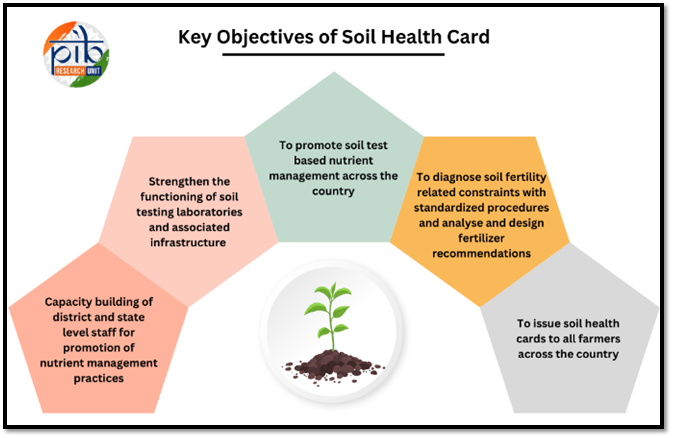
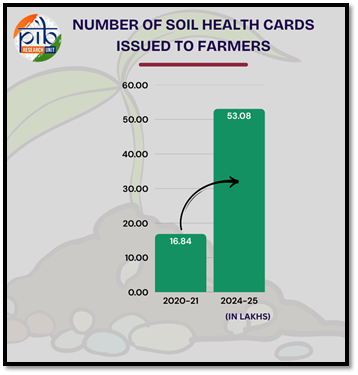
The Soil Health Card Scheme was introduced by Prime Minister Shri Narendra Modi on 19th February, 2015 at Suratgarh, Rajasthan. The scheme was launched to assist State Governments to issue soil health cards to all farmers in the country. Soil health card provides information to farmers on nutrient status of their soil along with recommendation on appropriate dosage of nutrients to be applied for improving soil health and its fertility.

The Soil Health Card Portal (www.soilhealth.dac.gov.in) facilitates generation of Soil Health Cards for the benefit of farmers in uniform and standardized format across country in all major languages and 5 dialects.

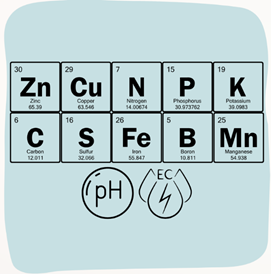
The Soil Health Card contains status of the soil with respect to 12 parameters, namely N,P,K, S (Macro-nutrients); Zn, Fe, Cu, Mn, Bo (Micro – nutrients) ; and pH (Acidity or Basicity), EC (Electrical Conductivity) and OC (Organic Carbon).

Based on this, the card will also indicate fertilizer recommendations and soil amendment required for the farm. Soil Samples are taken generally two times in a year, after harvesting of Rabi and Kharif Crop respectively or when there is no standing crop in the field.

The Guideline of Village Level Soil Testing Labs (VLSTLs) was issued in June 2023. VLSTLs can be set up by individual entrepreneurs i.e. rural youth and community based entrepreneurs, including Self Help Groups (SHGs), Schools, Agriculture Universities etc. The beneficiary/village level entrepreneur should be a youth whose age should not be below 18 years and should not be more than 27 years. Self Help Groups, Farmers Producers Organisation (FPO) can also be enrolled as VLSTL.

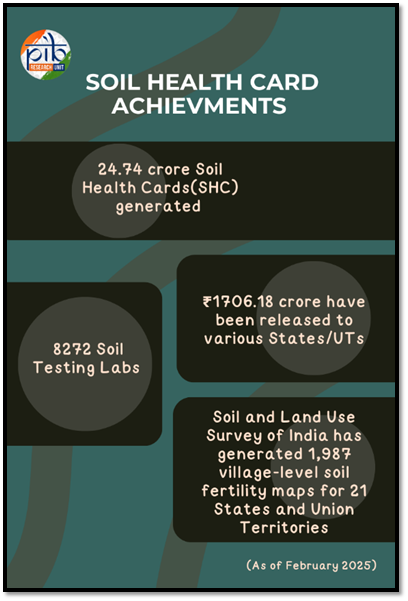
As of February 2025, 665 Village-level Soil Testing Labs have been established in 17 States.

School Soil Health Programme

A pilot project on School Soil Health Programme has been undertaken by Department of Agriculture and Farmers Welfare in (DA&FW) collaboration with Department of School Education & Literacy (DSE&L), Indian Council of Agricultural Research (ICAR) and State Governments in 20 schools (10 Kendriya Vidyalaya & 10 Navodaya Vidyalaya) in rural areas. The aim is to make students aware about soil health for sustainable agriculture practices. 20 soil health labs were set up in these schools. Modules for students from class VI to XII and teachers were developed and disseminated. Under the programme, soil samples were collected by School Students and soil testing were also done by students and SHCs were generated Students also educated farmers about the recommendation of Soil health card for judicious use of fertilizer and crop recommendation.

As of 2024, 1020 schools are implementing the School Soil Health Programme, with 1000 soil testing labs set up and 125,972 students enrolled.

Soil Health Card scheme has been merged in Rashtriya Krishi Vikas Yojana (RKVY) scheme as one of its components under the name ‘Soil Health & Fertility’ from the year 2022-23.

Technological Advancements

SHC Mobile App

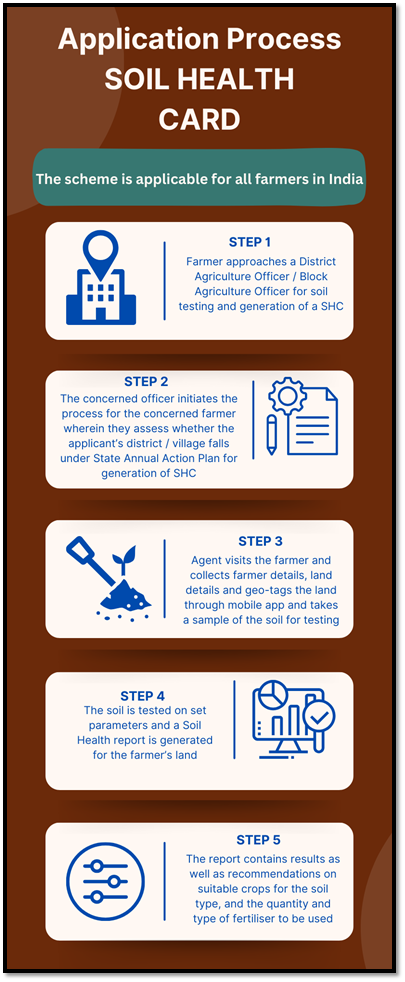
To further ease the process of obtaining easy access to the Soil Health Card, the Government of India in 2023 made technological interventions in the New Soil Health Card Scheme. The Soil Health Card portal was revamped and integrated with a Geographic Information System (GIS) system so that all the test results are captured and seen on a map. To make the implementation/monitoring of the scheme smooth and to facilitate farmers an easy access to his soil health card, the mobile application has been made robust with the additional features such as:

  • Restrict the sample collection region for the Village Level Entrepreneur/Operator collecting the soil samples
  • Auto selection of the latitude and longitude of the location
  • Generation of a QR code to link with the sample and test results of all samples directly on the portal from the geo-mapped labs, without any manual intervention.

This application provides the graphical information of all over the India and also shows multiple layers State Boundary, District Boundary, Taluka Boundary, Panchayat Boundary and Cadastral Boundary.

The new system was rolled out in April 2023 and samples are now being collected through the mobile application. Soil Health Cards are now generated on this revamped portal.

For digitizing the Soil Health Cards, Web based work flow application Soil Health Card portal has been designed and developed by National Informatics Centre (NIC).

Conclusion

The Soil Health Card Scheme has transformed agricultural practices in India over the past decade. Since 2015, it has empowered farmers with crucial information on soil nutrient status and optimal fertilizer use, promoting sustainable farming and improved crop productivity. Initiatives like the School Soil Health Programme have expanded soil health awareness among students and local communities. With a robust mobile app, the process of obtaining a Soil Health Card has enhanced accessibility, efficiency, and transparency. As the scheme evolves, it continues to play a vital role in fostering sustainable agricultural development and safeguarding India’s soil health for future generations.

References:

Kindlty find the pdf file 

****

Kashi Tamil Sangamam 3.0 to be inaugurated on 15th February

Daily writing prompt
What advice would you give to your teenage self?

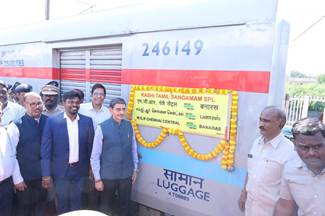
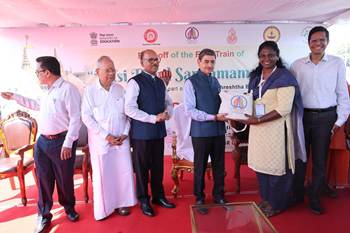
The Governor of Tamil Nadu, Thiru R.N. Ravi, flagged off the train carrying the first batch of Kashi Tamil Sangamam 3.0 delegates—including students, teachers, and writers—today at Dr. MGR Central Railway Station, Chennai. This 10-day-long event is scheduled to take place from 15th to 24th February 2025. Director of the Indian Institute of Technology Madras, Prof. V. Kamakoti and other dignitaries were also present at the event.

The Union Minister for Education, Shri Dharmendra Pradhan, in a social media message, welcomed everyone to embrace the spirit of ‘Ek Bharat, Shreshtha Bharat’ at Kashi Tamil Sangamam 3.0. He emphasized that the event serves to cherish, celebrate, and strengthen the deep-rooted bonds between Kashi and Tamil Nadu—two enduring centers of culture, civilization, and knowledge.

The central theme of this edition of KTS will be Maharishi Agasthyar and Mahakumbh and Shri Ayodhya Dham will be the backdrop. The event will offer a divine experience and bring Tamil Nadu and Kashi—the two timeless centres of our civilisation and culture, more closer.

An exhibition on the different facets of Sage Agasthyar and his contributions to world of Health, Philosophy, Science, Linguistics, Literature, Polity, Culture, Art, particularly to Tamil and Tamil Nadu, etc. and seminars, workshops, book release, etc. will be organised at Kashi during KTS 3.0.

This year, the government has decided to bring around 1000 delegates from Tamil Nadu under five categories/groups: (i) Students, Teachers, and Writers; (ii) Farmers and Artisans (Vishwakarma Categories); (iii) Professionals and Small Entrepreneurs; (iv) Women (SHG, Mudra Loan beneficiaries, DBHPS Pracharaks); and (v) Start-up, Innovation, Edu-Tech, Research. This year, an additional group of around 200 students of Tamil origin studying in various CUs will be a part of this event to enliven the bond between Kashi and Tamil Nadu. Participation of youth in all categories has been encouraged this year. The duration of the tour for the delegates will be 8 days (4 for travel, 4 at site). The first group left Tamil Nadu today and the last group will return to Tamil Nadu on 26th February 2025.

The objective of the Kashi Tamil Sangamam is to rediscover, reaffirm, and celebrate the age-old links between Tamil Nadu and Kashi—two of the country’s most important and ancient seats of learning.

Kashi Tamil Sangamam is being organized by the Ministry of Education, Govt. of India in collaboration with other ministries including Culture, Textiles, Railways, Tourism, Food Processing, I&B etc. and the Govt. of UP. The programme aims to provide an opportunity for scholars, students, philosophers, traders, artisans, artists and people from other walks of life from the two regions to come together, share their knowledge, culture and best practices and learn from each other’s experience. It also aims to make the youth aware and experience cultural oneness. The endeavour is in sync with NEP 2020’s emphasis on integrating the wealth of Indian Knowledge Systems with modern systems of knowledge. IIT Madras and BHU are the two implementing agencies for the programme.

The Government has so far celebrated the Kashi Tamil Sangamam on two occasions earlier; i.e., for one month in 2022 and for a fortnight in 2023 and around 4000 delegates from Tamil Nadu have been a part of this event. In both the editions of KTS, there were overwhelming responses from people of Tamil Nadu and Uttar Pradesh. IIT Madras will be the sender institution and BHU the receiving institution, as in the earlier editions.

Union Minister for Education, Shri Dharmendra Pradhan, launched the registration portal for KTS 3.0 on 15th January 2025. The portal for registration was open till 1st February 2025.

KTS 2.0 was inaugurated by Prime Minister Shri Narendra Modi at Varanasi on 17th December, 2023, with the first-ever real-time, app-based translation of a part of the Prime Minister’s speech in Tamil for the benefit of visiting Tamil delegates.

MANIT Bhopal to Host 11th International Conference on Transportation Systems Engineering & Management (CTSEM 2025)

Daily writing prompt
What bores you?

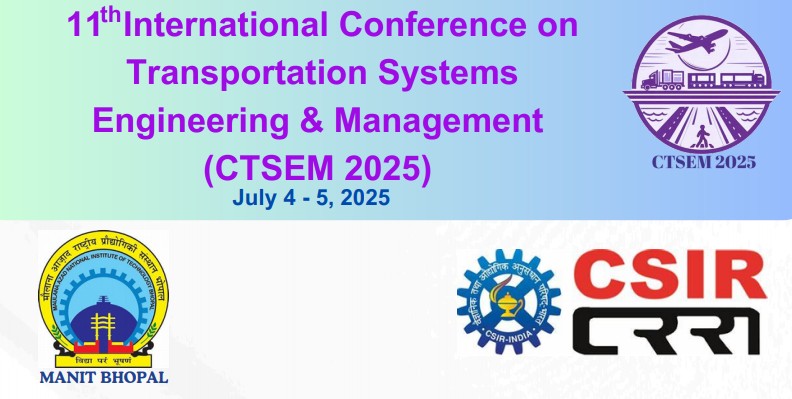
Bhopal, India – Maulana Azad National Institute of Technology (MANIT) Bhopal, in collaboration with CSIR-Central Road Research Institute (CRRI), New Delhi, is set to host the 11th International Conference on Transportation Systems Engineering & Management (CTSEM 2025) on July 4-5, 2025. The conference aims to bring together researchers, academicians, scientists, and transportation professionals to discuss emerging challenges and advancements in transportation engineering and management.

Conference Leadership

  • Chief Patron: Dr. Manoranjan Parida, Director, CSIR-CRRI, New Delhi
  • Conference Chairperson: Dr. P.K. Agarwal, MANIT Bhopal
  • Conference Secretaries:
    • Dr. Siddhartha Rokade, MANIT Bhopal
    • Dr. Pritikana Das, MANIT Bhopal
    • Dr. Bivina G.R., MANIT Bhopal

Conference Highlights

CTSEM 2025 will provide a platform for experts to discuss key issues related to transportation systems, including:

  • Sustainable and Intelligent Transportation Solutions
  • Traffic Management and Congestion Mitigation
  • Road Safety and Infrastructure Development
  • AI, Big Data, and IoT in Transportation
  • Public Transport Planning & Management
  • Urban Mobility and Non-Motorized Transport (NMT)
  • Freight Transport and Logistics

The event will feature pre-conference workshops, networking sessions, technical visits, and best paper awards, making it a valuable gathering for professionals in the field.

Paper Submission and Publication Opportunities

Authors are invited to submit their full papers via the MSCMT platform by April 15, 2025, with final acceptance notifications to be sent by June 1, 2025. Selected high-quality papers will be published in SCOPUS-indexed conference proceedings by Springer, and some outstanding papers will be considered for publication in the Journal of Traffic and Transportation Engineering (JTTE) by Elsevier.

Sponsorship Opportunities

CTSEM 2025 welcomes industry sponsors to participate, with sponsorship categories ranging from Platinum (INR 3 lakhs) to Bronze (INR 0.5 lakh). Sponsors will receive branding and promotional benefits, exhibition space, and recognition during the conference.

About MANIT Bhopal and CSIR-CRRI

MANIT Bhopal, one of India’s premier technical institutions, has been at the forefront of engineering education and research. The Civil Engineering Department is a key center for academic excellence, fostering innovative solutions for urban and rural transportation challenges. CSIR-CRRI, a leading research institute, is known for its contributions to road and transportation planning, playing a crucial role in shaping India’s infrastructure.

Venue and Connectivity

The conference will be held at MANIT Bhopal, located in the heart of Bhopal City, known as the City of Lakes. Bhopal is well-connected by air, rail, and road, with the campus just 20 km from the airport and 8 km from the railway station.

Contact Information

CTSEM 2025 Organizing Committee
Transportation Engineering Division, Civil Engineering Department
Maulana Azad National Institute of Technology (MANIT), Bhopal, India
Email: ctsem2025manit@gmail.com
Website: CTSEM 2025

With a rich history of successful editions hosted by reputed institutions across India, CTSEM 2025 at MANIT Bhopal promises to be an enriching event for professionals in the transportation sector. Don’t miss the opportunity to be part of this significant international conference!

‘GYAN BHARATAM MISSION’ TO PRESERVE OVER 1 CRORE MANUSCRIPTS

Daily writing prompt
Tell us about your favorite pair of shoes, and where they’ve taken you.

Union Minister for Education Shri Dharmendra Pradhan lauded the Budget 2025-26, emphasizing it as a budget that takes everyone together and prioritizes welfare, well-being, and empowerment of all citizens while firmly placing India on the path to achieving the goal of developed India by 2047. The Minister expressed his gratitude to the Prime Minister Shri Narendra Modi and Finance Minister Smt. Nirmala Sitharaman for a visionary and futuristic Budget.

Shri Dharmendra Pradhan said that this Budget is aiming to cater to the comprehensive requirements, right from childhood to youth, who would be leading from the front in realizing the Viksit Bharat agenda in 2047 and beyond.

Photo by Pixabay on Pexels.com

He further stated that the Budget announcements encompass today’s entire youth demographic, who will lead the nation for the next 25 years. This will strengthen the Bhartiya Gyan Parampara within our education system and foster a global community, he added.

The Minister highlighted that the Budget 2025-26 emphasizes investing in people and facilitating all-round development of India’s human capital. He noted that with “Gareeb, Yuva, Annadata, and Naari” as the pillars, this budget would uplift sentiments of the poor and middle class, accelerate spending, catalyze investments, and spur growth. He emphasized that it would remove regional imbalances, build rural prosperity, nurture research, innovation and entrepreneurship, invigorate the education and skilling landscape, and lead to employment-led development.

The Minister expressed gratitude for continuing with bigger and bolder investments in education, skilling, research, and innovation, stating that this budget represents another big leap towards empowering India’s population with more opportunities for world-class education and building capacities of human capital.

The Minister informed that the total budget allocation for the Ministry of Education has reached ₹128,650 crore, marking a 6.22% increase over BE 2024-25.

Union Education Minister informed that Fifty thousand Atal Tinkering Labs (ATL) will be set up in Government schools in next 5 years to cultivate the spirit of curiosity and innovation, and foster a scientific temper among young minds. With this, students of all Government secondary schools will have access to ATL. The Union Budget also proposes to provide Broadband connectivity to all Government secondary schools and primary health centres in rural areas under the BharatNet project, he added.

Shri Pradhan informed that the total number of students in 23 IITs has increased 100 per cent from 65,000 to 1.35 lakh in the past 10 years. Additional infrastructure will be created in the 5 IITs started after 2014 to facilitate education for 6,500 more students. Hostel and other infrastructure capacity at IIT, Patna will also be expanded, he further added.

Shri Pradhan said that with the aim to help students understand their subjects better, it is proposed to implement a Bharatiya Bhasha Pustak Scheme to provide digital-form Indian language books for school and higher education.

The Union Minister also informed that five National Centres of Excellence for skilling will be set up with global expertise and partnerships to equip youth with the skills required for “Make for India, Make for the World” manufacturing. The partnerships will cover curriculum design, training of trainers, a skills certification framework, and periodic reviews.

Shri Pradhan highlighted that the fourth AI Centre of Excellence in Education, envisioned in the Budget 2025-26, aims to revolutionize India’s educational system from pre-primary to professional and research levels. By harnessing artificial intelligence, it seeks to address disparities and inefficiencies, ensuring equitable and high-quality education across the nation. This Centre of Excellence in Artificial Intelligence for Education will be established with a total outlay of ₹500 crore, he added

The Minister informed the allocation of Rs 20,000 crore to implement private sector driven Research, Development and Innovation. In the next five years, under the PM Research Fellowship scheme, provision of ten thousand fellowships for technological research in IITs and IISc with enhanced financial support is also proposed in the Budget, he added.

The Minister informed that a Gyan Bharatam Mission for survey, documentation and conservation of our manuscript heritage with academic institutions, museums, libraries and private collectors will be undertaken to cover more than 1 crore manuscripts. A National Digital Repository of Indian knowledge systems for knowledge sharing will also be set up.

D/o School Education & Literacy

  • The Budget Allocation for the FY 2025-26 of ₹ 78572 Cr is the highest ever for the Department of School Education & Literacy.
  • There has been an overall increase of ₹ 5074 Cr (7%) in the Budget Allocation of Department of School Education and Literacy in the FY 2025-26 from BE 2024-25. As compared to RE of FY 2024-25, there has been an increase of ₹ 11,000 Cr (16.28 %).
  • The highest ever Budget Allocation may be seen in the Autonomous Body of Kendriya Vidyalaya Sangathan (KVS) at Rs. 9,503 Cr. Allocation in KVS has increased by ₹ 201.17 Cr as compared to Budget allocation of FY 2024-25. There has been an increase of ₹ 776 Cr (9%) as compared to RE of FY 2024-25.
  • Budget Allocation of FY 2025-26 in Flagship Schemes have increased i.e Samagra Shiksha (by ₹ 3750 Cr), PM-POSHAN (by ₹ 32 Cr) and PM-SHRI (by ₹ 1450 Cr) with respect to Budget Allocation (BE) of FY 2024-25. As compared to RE 2024-25, allocation in Samagra Shiksha has increased by ₹ 4240 Cr (11%), allocation in PM-POSHAN has increased by ₹ 2500 Cr (25 %) and allocation in PM-SHRI has increased by ₹ 3000 Cr (66%).
  • Out of the overall Budget Allocation in FY 2025-26 of ₹ 78,572 Cr, the Scheme allocation is ₹ 63,089 Cr and Non-Scheme Allocation is ₹ 15,483 Cr.
  • Increase in Scheme Allocation in BE 2025-26 is ₹ 5284 Cr (9.14 %) as compared to BE 2024-25. As compared to RE 24-25, increase in Scheme Allocation is ₹ 10248 Cr (19%) and non-Scheme allocation has increased by ₹ 752 Cr (5%) in BE 2025-26.
  • Fifty thousand (50,000) Atal Tinkering Labs (ALT) will be set up in Government schools in next five years to cultivate the spirit of curiosity and innovation, and foster a scientific temper among young minds.
  • Broadband connectivity will be provided to all Government secondary schools under BharatNet project in the next three years.

Department of Higher Education, Ministry of Education

  • The overall Budget Allocation in FY 2025-26 is Rs. 50077.95 Cr out of which Scheme allocation is Rs. 6990.88 Cr and Non- Scheme allocation is Rs. 43087.07 cr.
  • There has been an overall increase of Rs. 2458.18 Cr (5.16%) in the Budget Allocation of Department of Higher Education in the FY 2025-26 with respect to FY 2024-25.

Allocations to Major Autonomous Bodies under Higher Education

  • The total Allocation of Autonomous Bodies in 2025-26 increased to Rs. 42732 Cr from Rs. 39777.40  in 2024-25. There is increase of 7.42%
  • Allocation in Central Universities has been kept at Rs. 16691.31 Cr, against Rs. 15928 Cr in 2024-25 which is  Rs 763.31 Cr more i.e.  4.79 % increase.
  • UGC has been allocated Rs.3335.97 Cr in 2025-26, against Rs. 2500 Cr in 2024-25 which is Rs. 835.97 Cr more i.e. 33.44 % increase.
  • IITs have been allocated Rs. 11349.00 Cr in 2025-26, against Rs. 10324.50 Cr in 2024-25 which is Rs. 1024.50 Cr more i.e. 9.92% increase.
  • For NITs, Rs.5687.47 Cr has been allocated in FY 2025-26, against Rs.5040 Cr in 2024-25 increasing the allocation by Rs. 647.47 Cr i.e. 12.85% increase.
  • Deemed Universities have been allocated Rs.604 Cr in 2025-26, against Rs.596 Cr in 2024-25 increasing the allocation by Rs. 8 Cr i.e. 1.34% increase.
  • IIMs have been allocated Rs.251.89 Cr in 2025-26, against Rs. 212.21 Cr in 2024-25 increasing the allocation by Rs. 39.68 Cr i.e. 18.70% increase.
  • IIITs have been allocated Rs.407.00 Cr in 2025-26, against Rs.315.91 Cr in 2024-25 increasing the allocation by Rs. 91.09 Cr i.e 28.83 % increase.
  • Grants for Promotion of Indian Languages have been allocated Rs.347.03 Cr in 2025-26, against Rs.310.10 Cr in 2024-25 increasing the allocation by Rs. 36.93 Cr i.e. 11.91% increase.                                                                                 

*****

Measuring the Pulse of Indian Education

Daily writing prompt
Tell us about your favorite pair of shoes, and where they’ve taken you.

Education is not only the foundation upon which our civilization has been built, but it is also the architect of humanity’s future.”

~Prime Minister Shri Narendra Modi

Education has always been a key priority for the government and with the vision to make India a global education hub, the Union Budget 2025-26 introduces innovative initiatives. Focused on expanding medical seats, enhancing skilling infrastructure and growing IITs, these measures aim to provide more opportunities and equip youth with essential skills for the future.

Announcements for a Smarter, Inclusive India

  1. Bharatiya Bhasha Pustak Scheme: To provide digital-form Indian language books for school and higher education. This aims to help students understand their subjects better. 
  2. National Centres of Excellence for Skilling: Building on the July 2024 Budget, five National Centres of Excellence for skilling will be established with global partnerships to equip youth with skills. These centres will focus on curriculum design, trainer training, skills certification, and regular reviews.
  3. Expansion of Capacity in IITs: Additional infrastructure will be created in the 5 IITs started after 2014 to facilitate education for 6,500 more students. Hostel and other infrastructure capacity at IIT, Patna will also be expanded. Total number of students in 23 IITs has increased 100 per cent from 65,000 to 1.35 lakh in the past 10 years.  
  4. Centre of Excellence in AI for Education: A Centre of Excellence in Artificial Intelligence for education will be set up with a total outlay of 500 crore.
  5. Expansion of Medical Education: The government had added almost 1.1 lakh UG and PG medical education seats in ten years, an increase of 130 per cent. In the next year, 10,000 additional seats will be added in medical colleges and hospitals, towards the goal of adding 75,000 seats in the next 5 years.

Inside India’s Education System

The Indian education system has undergone significant transformation over the years. Serving 24.8 crore students across 14.72 lakh schools, it is supported by a dedicated workforce of 98 lakh teachers, as reported by the UDISE+ (Unified District Information System for Education Plus 2023-24). Government schools form the backbone of the system, comprising 69% of the total, enrolling 50% of students and employing 51% of teachers. On the other hand, private schools make up 22.5% of institutions, catering to 32.6% of students and employing 38% of teachers. This growing structure reflects the dynamic changes in the Indian education landscape, paving the way for continuous improvements in enrollment and access over the years.

Enrollment Trends in India

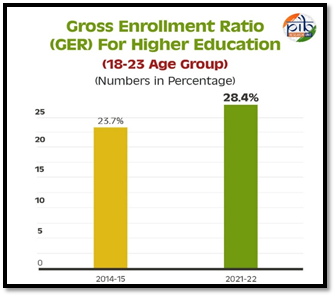
The NEP 2020 aims for a 100% Gross Enrollment Ratio (GER) by 2030. The GER is near universal at the primary (93 %) and the efforts are underway to bridge the gaps at the secondary (77.4 %) and higher secondary level (56.2 %), driving the nation closer to its vision of inclusive and equitable education for all. In the realm of higher education, India has seen a dramatic rise in student enrollment. The total number of students enrolled in higher education reached 4.33 crore in 2021-22, a 26.5% increase from 3.42 crore in 2014-15. The Gross Enrollment Ratio (GER) for the 18-23 age group also rose from 23.7% to 28.4% in the same period.

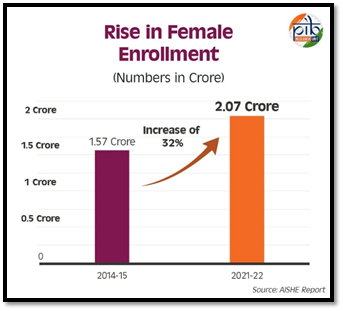
Women’s participation in higher education has also witnessed significant growth, with female enrollment rising from 1.57 crore in 2014-15 to 2.07 crore in 2021-22, marking a 32% increase. This progress is especially evident in fields like Medical Science, Social Science, and Arts, where women are now leading the charge in enrollment.

Decline in Dropout Rate


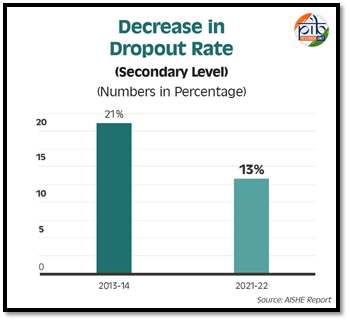
However, challenges still persist and the dropout rate remains a critical concern. While there has been a steady decline in dropout rates. School dropout rates have steadily declined in recent years, standing at 1.9 per cent for primary, 5.2 per cent for upper primary and 14.1 per cent for secondary levels. According to AISHE report the dropout rate at the secondary level has also decreased significantly from 21% in 2013-14 to 13% in 2021-22.

Transforming India’s Education Landscape

Over the years, India has seen a remarkable transformation in its higher education ecosystem. The number of Higher Education Institutions (HEIs) has grown significantly, increasing by 13.8% from 51,534 in 2014-15 to 58,643 in 2022-23. This expansion reflects the country’s commitment to making higher education more accessible and diverse.

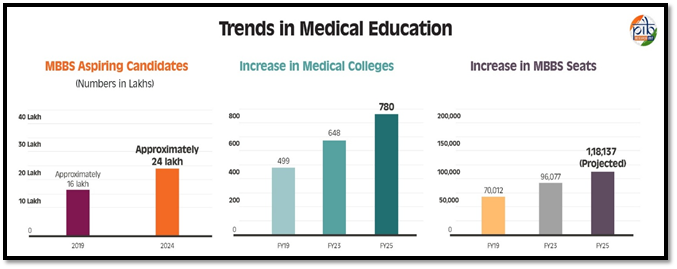
  • Growth in Medical Education and Workforce:  Medical Colleges grew from 499 in FY19 to 780 in FY25.
  • Candidates aspiring to study MBBS increased from 16 lakh in 2019 to 24 lakh in 2024.
  • MBBS Seats increased from 70,012 in FY19 to 1,18,137 in FY25.
  • Postgraduate Medical Seats grew from 39,583 in FY19 to 73,157 in FY25.

  • Doctors Available: 13.86 lakh registered practitioners as of July 2024, with a current ratio of 1:1263 per person. The WHO norm of 1:1000 could be met by 2030 with an annual increase of 50,000 doctors.
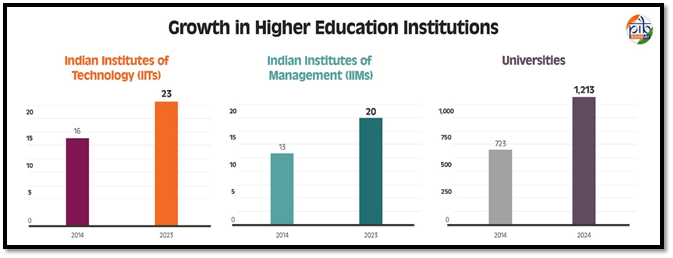
  • Growth of Indian Institutes of Technology (IITs): The number of IITs increased from 16 in 2014 to 23 in 2023.
  • Growth of Indian Institutes of Management (IIMs):The number of IIMs grew from 13 in 2014 to 20 in 2023.
  • Expansion of Universities:The number of Universities grew from 723 in 2014 to 1,213 in 2024, marking a 59.6% increase.
  • Increase in Higher Education Institutions (HEIs): Total HEIs increased by 13.8%, from 51,534 in 2014-15 to 58,643 in 2022-23.

Progress in Basic Facilities

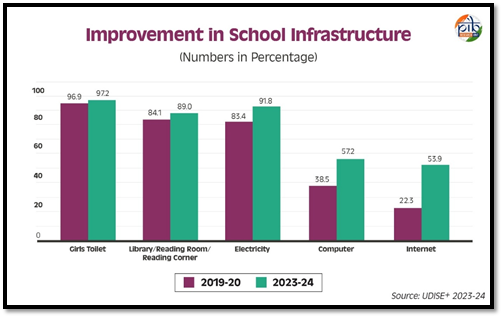
Education infrastructure has significantly improved, with a rise in the number of higher education institutions. Key areas like medical check-upssanitation, and ICT availability have also seen substantial upgrades, highlighting positive progress in school facilities to enhance the quality of education. From 2019-20 to 2023-24, there have been notable improvements in school infrastructure. The percentage of schools with girls’ toilets increased slightly from 96.9% to 97.2%, while access to libraries/reading rooms rose from 84.1% to 89%.  The availability of electricity improved from 83.4% to 91.8%, and computers in schools increased from 38.5% to 57.2%. Additionally, internet access grew significantly from 22.3% to 53.9%, marking a positive shift toward better-equipped schools.

Conclusion

The education sector in India is being strengthened through various government initiatives aligned with NEP 2020. Programs like Samagra Shiksha Abhiyan, PM SHRI (Pradhan Mantri Schools for Rising India) and PM POSHAN (Pradhan Mantri Poshan Shakti Nirman) are driving improvements in infrastructure, teacher training and learning outcomes. The Economic Survey highlights the progress and the government’s commitment to making education more inclusive and accessible.

References

Click here to download PDF

*******

IAF CONDUCTS SEMINAR ON ‘NAVACHAR UTKRISHTAM BHAVISYAM’ (Innovation is Path to Better Future) AERO INDIA 25

Daily writing prompt
If there was a biography about you, what would the title be?

Indian Air Force (IAF) is working to harness the potential of indigenous defence industry through Govt policies under the umbrella of Atmanirbharta by continuously engaging with the Industry Partners. Considerable success has been achieved in the indigenisation and innovation of spares and sustenance of equipment. The efforts are now being focused towards complex futuristic technologies, weapon systems and space domain.

Aero India being one of the premier aerospace and defence exhibition, serves as a global platform for showcasing cutting-edge technologies, innovations, and products in the field of aviation. IAF has been at the forefront of embracing the vision of ‘Make in India‘ by actively supporting indigenous defence development and manufacturing. IAF is the biggest stakeholder in aerospace domain and a major participant in leading the drive towards Atmanirbhata.

In pursuit of futuristic technologies and to highlight the drive towards self-reliance, lAF is conducting a seminar on the theme ‘NAVACHAR UTKRISHTAM BHAVISYAM’ (innovation is the Path to better Future). The Hon’ble Raksha Mantri Shri Rajnath Singh has been invited as the Chief Guest for the event with Chief of the Air Staff in attendance.

The seminar is planned on 11 Feb 25, from 1400-1630 Hr, at Hall No 1, Air Force Station Yelahanka, Bengaluru. The seminar is expected to have attendance from senior officers of Armed Forces, Govt officials, Industry leaders from aviation and aerospace domain, reps from Defence Public Sector Units (DPSUs), MSMEs, Start-ups, Innovators and the Academia. The seminar aims to inspire collaboration between defence forces, industry and R&D agencies, fostering a robust ecosystem for innovation. During this seminar, the following are planned to be released /launched by Hon’ble Raksha Mantri:- a publication titled ‘IAF Compendium (Samarthya Margdarshika) of Challenges and Opportunities for Indian Industry‘, for the Indian industries, Micro Small Medium Enterprises (MSMEs), Start-ups and individual innovators, encompassing current and future requirements of IAF; Declaration of the winners of Mehar Baba-ll Competition (MBC). The MBC-II was launched for the Indian Industries in the year 2022. This competition harnessed exceptional talent of Indian industry in swarm drone technology and showcased their capabilities in realising solutions to specific problem statements. In addition, MBC-III ‘Collaborative Drone Based Surveillance Radars‘ will be launched to develop an unmanned capability similar to an Airborne Warning and Control System.

Towards bolstering the ‘Digital India’ drive, IAF will be launching ‘VAYU VITT‘ digital portal for placing orders, certification and payments between lAF and HAL. This is aimed towards enhancing digitisation along with improved efficiency and transparency.

Additionally, a panel discussion on ‘Manned Unmanned Teaming- From Concept to Targeting‘ is planned with eminent experts from the aerospace domain including scientists, industrialists, certification agencies and end users. The panel discussion is intended towards underscoring the pivotal role of Indian Industry in driving indigenous solutions for futuristic technologies to meet the evolving defence and security needs of our Nation.

***

Aero India 2025 at Yelahanka Air Force Station in Bengaluru on February 10, 2025

Daily writing prompt
What were your parents doing at your age?

The 15th edition of Aero India, Asia’s biggest aerospace and defence exhibition, will be inaugurated by Raksha Mantri Shri Rajnath Singh at the Yelahanka Air Force Station in Bengaluru, Karnataka on February 10, 2025. With the broad theme of ‘The Runway to a Billion Opportunities’, the five-day extravaganza will showcase India’s aerial prowess and indigenous cutting-edge innovations alongside state-of-the-art products of global aerospace companies. In line with ‘Aatmanirbhar Bharat’ and ‘Make in India, Make for the World’ vision, the event will also provide a stage to forge international collaborations to fast-track the indigenisation process, thereby providing a thrust to Prime Minister Shri Narendra Modi-led Government’s resolve of making the country Viksit Bharat by 2047.

Addressing a press conference in Bengaluru on the eve of the event, Raksha Mantri described Aero India as a crucial platform, which will drive forward the Government’s vision of a strong, capable India, secure and self-reliant India. “Aero India is a platform that showcases the strength, resilience, and self-reliance of New India. It is not just crucial for India’s defence preparedness, but it also plays a pivotal role in shaping the future of our nation. It will demonstrate our defence capabilities and forge global partnerships. Our goal is to enhance collaboration in areas of common interest with our friendly nations, fostering deeper cooperation and shared progress. The event is not just a showcase of technology and innovation, but will also serve as a source of inspiration for our youth, fostering scientific temperament and a spirit of innovation,” he said.

Organised in a total area of over 42,000 sq m and with the confirmed participation of over 900 exhibitors, including 150 foreign companies, the event is set to be the biggest-ever Aero India till date. Shri Rajnath Singh termed the participation of more than 90 countries as a testament to the growing global confidence in India’s aerospace and defence capabilities. “Defence ministers or representatives from about 30 countries have come to participate in this event. The presence of Air Chiefs and Secretaries from 43 countries further highlights the significance of this event – not just for India, but for the entire international defence community,” he said.

Highlighting the transformation of the defence and aerospace sector in the recent years, Raksha Mantri asserted that, today, India is not only capable of designing and developing major platforms and equipment within India, it has also successfully established a vast supply chain within the country. “Advanced platforms like Light Combat Aircraft Tejas, Light Combat Helicopter Prachand and C-295 Transport Aircraft are now being produced in India. We have also taken a firm resolve to manufacture fifth-generation fighter aircraft within the country. From the advanced variants of the Agni missile, the Astra missile system, and the Pinaka missile system to the cutting-edge Hypersonic missile system and the Akash air defence system, we have built numerous success stories. These achievements have played a crucial role in strengthening our defence sector, making India more self-reliant and secure,” he said.

Shri Rajnath Singh added that post corporatisation of Ordnance Factory Board, the newly formed companies have started performing exceptionally well in defence production. “Under a well-considered and well-developed plan, we have actively worked to empower the private sector in the defence and aerospace industries. Today, India has a thriving private defence industry that has firmly established itself and is making significant contributions to our national security,” he said.

Raksha Mantri expressed confidence that defence production, having crossed the record figure of Rs 1.27 lakh crore, will exceed Rs 1.60 lakh crore by the end of 2025-26. Defence exports, which touched the record figure of Rs 21,000 crore, he said, will surpass Rs 30,000 crore.

Shri Rajnath Singh underlined the crucial role being played by the defence industrial sector in making India an economic super power. He stated that any breakthrough in the defence sector not only strengthens national security, but also impacts the economy. Technologies developed for defence applications promote innovation in the civil sector as well, leading to employment generation and economic development, he said. He termed Aero India a significant driver of economic strength, contributing to the overall growth and development of the economy. He expressed confidence that Aero India will be remembered as a historic milestone in India’s journey towards becoming a global leader in the aerospace and defence sector.

The 15th Aero India will be held between 10th and 14th February 2025. February 10th to 12th have been reserved as business days, with 13th & 14th set as public days for people to witness the show. The event comprises Defence Ministers’ Conclave; CEOs Roundtable; inauguration of India & iDEX Pavilions; Manthan iDEX event; Samarthya Indigenisation event; Valedictory function; seminars; breath-taking airshows and an exhibition of aerospace companies.

Defence Ministers’ Conclave

With the aim to strengthen defence cooperation with friendly nations amidst a rapidly-evolving global security landscape, Raksha Mantri will host the Defence Ministers’ Conclave on February 11 in hybrid mode. The theme this year ‘Building Resilience through International Defence and Global Engagement (BRIDGE)’ underscores the importance of supply chain resilience and strategic collaboration in defence.

The last edition witnessed the participation of 27 Defence Ministers and Deputy Defence Ministers alongside 15 Defence & Service Chiefs and 12 Permanent Secretaries. This year, the participation has expanded as representatives from more than 80 countries are likely to participate in the conclave. Approx. 30 Defence Ministers in addition to Defence/Service Chiefs and Permanent Secretaries from friendly nations will attend the event.

The conclave will provide a crucial platform to address key aspects such as Defence capacity building through investment, joint ventures & co-production, Collaboration in R&D, training & technological advancements in AI & space, Maritime security cooperation and strategic partnerships.

CEOs Roundtable

CEOs Roundtable 2025 will be chaired by Raksha Mantri on February 10, on the theme ‘Enabling Defence Cooperation through Global Engagement (EDGE)’. Over 100 Original Equipment Manufacturers (OEMs) have confirmed their participation in the event. These include 55 from 19 countries (USA, France, Russia, South Korea, UK, Japan, Israel & Brazil etc), 35 Indian (Larsen & Toubro, Bharat Forge Ltd, Adani Defence & Aerospace, Mahindra Defence Systems Ltd, BrahMos Aerospace & Ashok Leyland Defence) and 16 Defence Public Sector Undertakings (DPSUs). Shri Rajnath Singh had addressed over 73 CEOs of 28 Foreign OEMs and 45 Indian OEMs in the 2023 edition of the event.

Major foreign OEMs including Airbus (France), Ultra Maritime (USA), GNT (South Korea), John Cockerill Defence (UK), Mitsubishi (Japan), Rafael Advance Defence System (Israel), Safran (France) and Liebherr Aerospace (France) are expected to highlight their future plans, Joint Ventures, collaborations, partnerships with Indian companies for production of spares parts, development of aero-engines, setting up of Maintenance, Repair and Operations (MRO) facilities and establishment of R&D facilities etc.

India Pavilion

The India Pavilion will provide an opportunity to Indian Defence Industries to showcase their design, development, innovation and manufacturing capabilities. It will be inaugurated by Raksha Mantri on February 10. The grandeur show at India Pavilion would signify the ‘Flight of Self-Reliance’ which encapsulates India’s journey towards becoming a global aerospace and defence powerhouse.

India Pavilion will be divided into five distinct zones displaying indigenous capabilities in aero aviation, land aviation and naval aviation, def-space and niche technologies domains.  More than 275 exhibits will be at display through various mediums, represented by complete defence ecosystem of the country which includes DPSUs, design houses, private corporates including MSMEs and start-ups. The Central Area exhibits will include a striking display of marquee platforms including Advanced Medium Combat Aircraft, Combat Air Teaming System, Twin-Engine Deck-Based Fighter.

iDEX Pavilion

 The iDEX Pavilion will be inaugurated by Raksha Mantri on February 10. It will showcase cutting-edge indigenously developed products and technologies, marking a significant milestone in India’s defence innovation journey. Leading innovators will display their indigenously-developed products spanning a wide-range of advanced domains including Aerospace, DefSpace, Aero Structures, Anti-drone systems, Autonomous Systems, Robotics, Communication, Cybersecurity, Surveillance & Tracking, Unmanned Ground Vehicles etc. The Pavilion will also feature a dedicated section highlighting the winners of Acing Development of Innovative Technologies with iDEX (ADITI) scheme, showcasing their ground-breaking work in critical and niche technologies.

iDEX has successfully onboarded over 600 start-ups and MSMEs, marking a significant milestone in fostering innovation. Furthermore, 40 prototypes developed under iDEX have received official clearance for procurement, with 31 procurement contracts worth Rs 1,560 crore already signed.

Manthan

Manthan 2025, the flagship annual defence innovation event, will be graced by Raksha Mantri on February 12. Organised by Innovations for Defence Excellence – Defence Innovation Organisation (iDEX-DIO), the event will bring together stakeholders of the defence innovation ecosystem including innovators, industry leaders, academia, incubators, investors, thought leaders, senior government officials etc.

Manthan will deliberate on emerging challenges and opportunities in the sector, with a focus on supporting defence start-ups and MSMEs, enhancing innovation capabilities, and fostering strategic collaborations within the defence ecosystem. It stands as a testament to the scale and speed of iDEX, showcasing the rapid strides made in defence innovation and the pivotal role of start-ups in transforming India’s defence capabilities.

Samarthya

On the success story of indigenisation and innovation in the defence sector, an Indigenisation event on the theme ‘SAMARTHYA’ will be held on February 12 alongside the Valedictory function which will be graced by Raksha Mantri. This event is first-of-its-kind during Aero India, as it will showcase India’s indigenous ingenuity in defence manufacturing by demonstrating some of the major items indigenised by DPSUs, DRDO and Services with the involvement of the private sector.

Bilateral Meetings

Bilateral meetings at the levels of Raksha Mantri/Raksha Rajya Mantri/Chief of Defence Staff/Service Chiefs/Defence Secretary/Secretary (Defence Production) will take place on the sidelines of Aero India 2025.

Seminars

A number of seminars on a variety of topics will be organised as part of Aero India 2025. On February 11, Raksha Mantri is scheduled to address a seminar organised by the Indian Air Force on the theme ‘Manned Unmanned teams for Aerial Warfare – concept to targeting’ and another organised by DRDO on the theme ‘DRDO Industry Synergy towards Viksit Bharat’.

Other seminars on the themes – Mission DefSpace: From Vision to Reality – A Progress Report; Indigenous Development of Aerospace Materials: Strengthening India’s Self-Reliance; Transition to Aatmanirbhar Indian Naval Aviation 2047 and its associated ecosystem; Transformation of Maritime Aviation by Adopting Technological trends and Indigenisation; Aligning Technologies to Future Conflicts; and Investment Opportunities for Aerospace & Defence Manufacturers in Karnataka – will also be held as part of the event.

Historic First – Su-57 and F-35 at Aero India

For the first time in history, Aero India 2025 will witness the participation of two of the world’s most advanced fifth-generation fighter aircraft – the Russian Su-57 and the American F-35 Lightning II. It marks a milestone in global defence collaboration and technological advancement, offering aviation enthusiasts and defence experts an unparalleled prospect to witness these state-of-the-art warplanes.

  • Su-57: Russia’s premier stealth multirole fighter is designed for superior air superiority and strike capabilities. Equipped with advanced avionics, supercruise capability, and stealth technology, it is making its debut at Aero India 2025. Visitors can expect high-speed aerial manoeuvres and tactical demonstrations that highlight the fighter’s agility, stealth and firepower.
  • F-35 Lightning II: The Lockheed Martin F-35 Lightning II, the most widely-deployed fifth-generation fighter, integrates advanced stealth, unparalleled situational awareness and networked combat capabilities. Its presence at Aero India 2025 will enable visitors to witness the flagship of US Air Force.

The inclusion of both the Su-57 and F-35 highlights India’s position as a key hub for international defence and aerospace collaboration. Aero India 2025 will provide a rare side-by-side comparison of Eastern and Western fifth-generation fighter technology, offering defence analysts, military personnel and aviation enthusiasts valuable insights into their respective capabilities.

Visitor-Friendly Experience

With key infrastructure upgrades and improved amenities, Aero India 2025 promises to be bigger, smoother and more visitor-friendly than ever before.

  • Enhanced Infrastructure & Traffic Management: Recognising past challenges, extensive improvements have been made to facilitate seamless entry, movement and connectivity and there has been close coordination between Ministry of Defence, Indian Air Force (IAF), various arms of Karnataka State Government like Bengaluru Traffic Police, BBMP, NHAI, and Namma Metro. Approach roads have been widened to optimise traffic flow around Air Force Station Yelahanka so as to ease congestion and improve movement around the venue.
  • Security and Emergency Preparedness: Red drone zones have been designated and published with countermeasures in place to tackle unauthorised drone activity. Rapid Mobile Units will be deployed strategically to provide quick assistance and emergency support. Continuous mock drills with multiple agencies are being conducted to ensure practical and implementable contingency plans.
  • Exhibitor & Visitor Experience Enhancements: To enhance the experience for exhibitors and business delegates, the exhibition area has been revamped with several key upgrades:
  • Expanded and better-ventilated exhibition halls to accommodate more exhibitors and visitors comfortably.
  • Improved seating and rest zones throughout the venue.
  • Additional food courts and refreshment kiosks, including Indira Canteens (at parking areas).
  • Lost and found counters and ATM kiosks for visitor convenience.
  • Multiple water points, medical aid posts, and a dedicated cardiac aid post for emergencies, including medical evacuation.
  • Multi-Layered Security Measures: Ensuring the safety of all attendees, a multi-layered security system is being deployed in collaboration with the Ministry of Home Affairs, Bengaluru Police, CISF, and Intelligence Agencies. Measures include:
  • Enhanced security protocols and faster access control.
  • An operational Command and Control Centre for real-time responses to security concerns.
  • 24/7 CCTV monitoring for situational awareness.
  • Dedicated screening zones for visitors, exhibitors, and VIPs.
  • Disaster management and fire safety committees to handle emergencies.
  • Connectivity & Digital Infrastructure: To address connectivity challenges, all telecom service providers are deploying temporary mobile towers and network boosters for uninterrupted communication. A dedicated Aero India 2025 mobile app has also been launched which will provide live updates, navigation assistance, and event scheduling. Secure digital communication channels have also been established for coordination among agencies. Additionally, provisions have been made to support increased electricity demands during the event while ensuring safety.
  • Airspace Management & Demonstrations: Aero India demonstrations and aircraft movements are a major highlight of Aero India 2025. In coordination with AAI and HAL, the Indian Air Force has structured a dedicated Airspace management plan including:
  • Temporary flight restrictions around Aero India Force Station Yelahanka to maintain safety during scheduled demonstrations.
  • Strategic Aircraft parking and refuelling plans for domestic and international participants.
  • Business and Innovation Support: The Aero India provides a platform for collaborations and to facilitate B2B, G2B interactions and hosting roundtable discussions to showcase technological advancements. Special focus will be given to supporting start-ups and MSMEs by providing them with a global platform to present indigenous innovations.
  • Sustainability Initiatives: Aero India 2025 is committed to sustainability and has incorporated several eco-friendly measures in its conduct like:
  • Reduced vehicle movement to minimise pollution and enhance pedestrian comfort.
  • Exclusive use of more than 100 E Karts for movement of visitors in the exhibition venue.
  • Comprehensive waste management, including increased recycling bins, waste segregation zones, and timely disposal of waste.

With these multi-agency collaborations, Aero India 2025 is set to be one of the most well-coordinated and better organised editions to date.

Raksha Rajya Mantri Shri Sanjay Seth, Chief of Defence Staff & Secretary, Department of Military Affairs General Anil Chauhan, Chief Secretary, Government of Karnataka Dr Shalini Rajneesh, Secretary (Defence Production) Shri Sanjeev Kumar, Secretary, Department of Defence R&D and Chairman DRDO Dr Samir V Kamat, other senior officials of Ministry of Defence and industry leaders attended the curtain raiser press conference.

*******

2025 Budget: Aarthik Vikas Ki Nayi Raah

2025 Budget: Aarthik Vikas Ki Nayi Raah

written by Priya Acharya

Prastavana
Bharatiya Budget har saal desh ki aarthik niti, development aur vikas ke liye ek mahatvapurn kadam hota hai. Har varsh, sarkar naye budget ke madhyam se apne vision aur goals ko prastavit karti hai. 2025 ka budget bhi kisi bhi anya budget se kam nahi, isme naye reforms aur schemes ka zikr hai jo aam janta se lekar business aur agriculture tak sabhi ko prabhavit karenge.

Budget Ka Mukhya Uddeshya
2025 ka budget desh ke aarthik vikas ko boost dene aur garib aur madhyam varg ko zyada suvidhaen dene par kendrit hai. Is budget ka main uddeshya hai:

  • Garib aur madhyam varg ko fayda: Is baar ki sarkari schemes mein aise reforms shamil kiye gaye hain, jo middle-class aur lower-income groups ko direct fayda denge.
  • Infrastructure mein sudhar: Sarkar ne infrastructure ke sector mein investment ko badhane ka vada kiya hai, taaki desh mein rozgar ke naye avsar mil sakein.
  • Naye taxes aur schemes: Kuch naye tax reforms aur business-friendly policies ka bhi zikr hai, jo vyapariyon aur karyakari vyaktiyon ko fayda pahuchayenge.

Khudra Vistaar
Is budget mein kuch mukhya highlights hai:

  • Fiscal Deficit: Fiscal deficit ko control karna, inflation ko stable rakhna aur public debt ko manage karna budget ka ek important goal hai.
  • Naye taxes: Budget mein kuch naye tax slabs propose kiye gaye hain, jo aam aadmi ko relief denge.
  • New Schemes: Infrastructure, education, aur health sectors ke liye naye schemes ka prastav hai, jaise ki “Har Ghar Tak Rozgar” aur “Swachh Bharat Mission 2.0.”

Key Sectors Affected by the Budget

  • Shiksha aur Swasthya: Education aur health sectors mein funding ko badhaya gaya hai, jo ki desh ke yuva aur poor communities ko zyada benefits dega.
  • Krishi aur Kisan: Budget mein agriculture aur rural development ke liye kai schemes announce ki gayi hain, jo kisano ki income ko badhane aur unhe sustainable farming techniques se judne mein madad karengi.
  • Defence: Desh ki suraksha ko mazboot karne ke liye, defence budget mein bhi badhotri ki gayi hai, jo desh ki security aur technology development mein kaafi mahatvapurn sabit hogi.

Budget Ka Samarthan Aur Aalochana
Samarthan:
Budget kaafi positive responses la raha hai. Experts aur economists ka kehna hai ki yeh budget desh ke liye ek strong growth path dikha raha hai. Garib aur madhyam varg ko financial relief aur business environment ko sudharne ki koshish ki gayi hai.

Aalochana:
Lekin kuch critics ka kehna hai ki budget mein kuch sectors ko abhi bhi kam focus diya gaya hai. Jaise ki, unemployment ke issues ko address karte hue, jo asli problems hain, unko zyada detail mein nahi discuss kiya gaya.

Aarthik Vistaar
Yeh budget desh ki economy ke liye important hai. Agar yeh successfully implement hota hai, toh aane wale kuch varshon mein GDP growth, employment rate aur standard of living mein sudhaar dekhne ko mil sakta hai. Infrastructure mein investment se rozgar ke naye avsar banenge aur business sector ko bhi boost milega.

Antim Vichar
Is budget ka aam janta par kaafi asar hoga. Khaas kar middle class aur lower-income groups ko direct financial relief milega. Agar yeh budget sahi tarike se lagu hota hai, toh desh ki economy mein ek positive change dekhne ko mil sakta hai. Yeh budget, desh ke vikas aur growth ki taraf ek naya kadam hai jo sabhi ko fayda pahuncha sakta hai.

Naye Tax Reforms aur Schemes Ki Jankari
Aap is budget ko apne daily life mein aise samajh sakte hain ki naye tax reforms se apke income aur spending par kuch prabhav padenge. Agar aap ek business owner hain, toh aapko tax slabs aur business-friendly policies se fayda ho sakta hai.

Is budget ke madhyam se sarkar ne apne vikas ki neeti ko ek nayi disha dikhayi hai, aur har kshetra ko sudharne ka prayas kiya hai.

written by Priya Acharya

University of Southampton Delhi NCR campus will offer high quality education driven by research, innovation and real-world applications to both Indian and international students

Daily writing prompt
Write about your approach to budgeting.

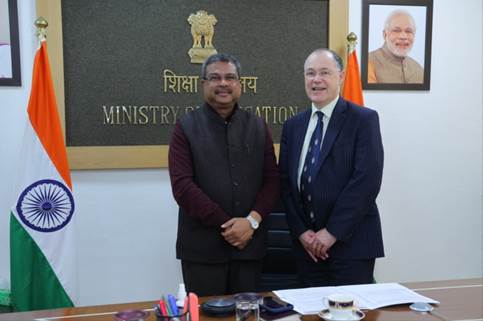
Union Minister for Education, Shri Dharmendra Pradhan, met with a delegation from the University of Southampton and the British Council in India today in New Delhi. Also present at the meeting were Secretary of the Department of Higher Education, Shri Vineet Joshi; President and Vice-Chancellor of the University of Southampton, Prof. Mark E. Smith; Country Director of the British Council in India, Ms. Alison Barrett MBE; along with other officials from the Ministry.

Image
Image

Shri Dharmendra Pradhan highlighted that as a globally top-100 university and the first foreign institution to establish a campus in India, the University of Southampton Delhi NCR campus will provide high-quality education rooted in research, innovation, and real-world applications for both Indian and international students. He emphasized that this initiative marks a crucial step in India’s journey toward the internationalization of education, supporting the Study in India program and advancing global education standards domestically, as envisioned in NEP 2020.

During the discussion, Prof. Smith briefed the Minister on the progress of the University of Southampton’s Delhi NCR campus.

*****
Minister of Education felicitate Super-100 winners of Veer Gatha 4.0

Daily writing prompt
How do significant life events or the passage of time influence your perspective on life?

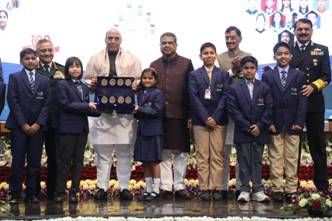
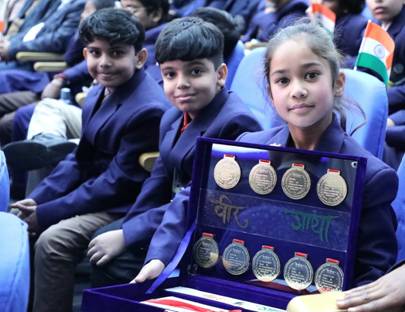
RakshaMantri Shri Rajnath Singh and Minister for Education Shri Dharmendra Pradhan felicitated the Super-100 winners of Veer Gatha 4.0 in New Delhi on January 25, 2025. Among the 100 winners, 66 are girls from different parts of the country. During the felicitation ceremony, each winner was presented with a cash prize of Rs. 10,000, a medal and a certificate. These Super-100 are among the approx. 10,000 Special Guests, who will be witnessing the Republic Day Parade at Kartavya Path on January 26, 2025.

In his address, RakshaMantri congratulated the winners and appreciated the joint efforts of Ministry of Defence and Ministry of Education towards achieving Veer Gatha’s objective of connecting the youth with the glorious history of the country’s bravehearts. He acknowledged the pan-India participation of over 1.76 crore students in this fourth edition of the Project, stating that it is providing recognition to the bravehearts through education. He commended the intelligence, enthusiasm and patriotism of the students who participated in the competition.

Expressing delight over the fact that 2/3rd of the Super-100 winners of Veer Gatha 4.0 are girls, Shri Rajnath Singh made special mention of a Class 10 student named ‘Nemneineng’ from Manipur, who had lost her parents when she was a child. RakshaMantri commended her perseverance for not giving up her studies despite numerous difficulties and securing a place among the winners.

Explaining the true meaning of a ‘hero’ to the students present on the occasion, RakshaMantri asserted that a hero works for the upliftment of the nation; whose work gives a new direction to the society. He added that the youth are future heroes of India and they will play a major role in making India ‘Viksit Bharat’ by 2047, as envisioned by the Government, led by Prime Minister Shri Narendra Modi.

“India’s stature has grown on the global stage due to the Prime Minister’s dynamic leadership. Today, when we speak on any international forum, the whole world listens. This has been made possible due to the hard work of every Indian, including our brave soldiers, scientists and young ignited minds. We have a major young population of about 50 crore youth. How can a country with such creative minds not develop?,” Shri Rajnath Singh asked the students.

RakshaMantri exhorted them to continue taking inspiration from bravehearts such as freedom fighters Bhagat Singh, Chandrashekhar Azad, Ashfaqulla Khan and courageous soldiers, whose bravery and sacrifice will never be forgotten. He termed the sense of national pride as the most crucial aspect for the development of any country.

Shri Rajnath Singh encouraged students to not feel afraid in the face of challenges and continue moving forward towards their goals with confidence & good intent. He urged them to never allow the feeling of ego creep into their hearts, even when they touch greater heights. Always remaining polite and modest is the key, he said.

Speaking on the occasion, Minister for Education Shri Dharmendra Pradhan emphasised that initiatives like Veer Gatha educate school students about the valour and sacrifices of the brave gallantry award winners while nurturing the creativity of young minds. He highlighted the record-breaking participation of 1.76 crore students from over 2.5 lakh schools who engaged in activities such as drawing, painting, and essay writing, paying heartfelt tributes to the heroes for their immense service and sacrifice to the nation.

The Minister of Education also noted that this initiative would help instil values of patriotism, grit, and national pride, inspiring students to contribute to the nation’s progress. Congratulating every student who participated with enthusiasm and respect for the gallantry award winners, he lauded the Super-100 awardees for their success. Wishing them a bright future, he remarked that their enthusiasm and creativity would serve them well in life.

During the event, ParamVir Chakra Awardee Subedar Major Sanjay Kumar shared his inspiring experience from the 1999 Kargil War, urging students to embody the values of bravery, selflessness and integrity in their lives. “True bravery lies not only in combat but in standing up for what is right in everyday life,” he said, inspiring the young participants.

RakshaRajyaMantri Shri Sanjay Seth, Chief of Defence Staff General Anil Chauhan, Chief of the Naval Staff Admiral Dinesh K Tripathi, Chief of the Air Staff Air Chief Marshal AP Singh, Secretary, Department of School Education & Literacy Shri Sanjay Kumar, Secretary (Defence Production) Shri Sanjeev Kumar, Secretary, Department of Defence R&D and Chairman DRDO Dr Samir V Kamat, Vice Chief of the Army Staff Lt Gen NS Raja Subramani and other senior officials attended the event.

*****
Prizes for National School Band Competition 6.0

Daily writing prompt
Write about your first computer.

Union Minister of State for Defence, Shri Sanjay Seth, gave away prizes for the National School Band Competition 6.0. Secretary, Department of School Education and Literacy (DoSEL), Ministry of Education, Shri Sanjay Kumar and Additional Secretary,DoSEL, Shri Anandrao V. Patilwere also present at the event.

Shri Sanjay Seth, while addressing the audience, praised the exceptional performance of the young participants, describing the event as a mini replica of the nation. Highlighting the individual performances of several teams, he urged students to reduce their reliance on mobile devices, as advised by Prime Minister Shri Narendra Modi, and to engage in outdoor activities and creative pursuits. He encouraged the students to become brand ambassadors of the Viksit Bharat of 2047.

Shri Anandrao V. Patil, in his address, encouraged students to carry forward the message of Ek Bharat Shreshtha Bharat, as envisioned by Prime Minister Shri Narendra Modi, and to contribute to nation-building with a nation-first approach.

In the Brass Band – Girls category, Government Sr. Sec. School West Point, Gangtok, Sikkim, secured the First Prize. St. Joseph’s Convent Sr. Sec. School, Bhopal, Madhya Pradesh, received the Second Prize, while St. Joseph’s Anglo-Indian Girl’s Higher Secondary School, Kozhikode, Kerala, earned the Third Prize. The team from GayatriVidyapeeth, Shantikunj, Haridwar, Uttarakhand, received the Consolation Prize.

In the Brass Band – Boys category, the First Prize went to Prince Lotus Valley, Sikar, Rajasthan. St. Xavier’s Higher Secondary School, Pathaliyaghat, Sepahijala, Tripura, won the Second Prize, and Pinegrove School, Solan, Himachal Pradesh, secured the Third Prize. The team from St. Xavier’s English Medium School, Pathalgaon, Chhattisgarh, received the Consolation Prize.

In the Pipe Band – Girls category, the First Prize was awarded to PM SHRI KGBV Patamda, PurbiSinghbhum, Jharkhand. Bhonsala Military School Girls, Nasik, Maharashtra, secured the Second Prize, and Shri ThakurdwaraBalikaVidyalaya, Ghaziabad, Uttar Pradesh, earned the Third Prize. The team from Monte CBSE School, Pandipadu Village, KallurMandal, Kurnool, Andhra Pradesh, received the Consolation Prize.

In the Pipe Band – Boys category, City Montessori School, Kanpur Road Campus, Sec DLDA Colony, Kanpur Road, Lucknow, Uttar Pradesh, claimed the First Prize. North Sikkim Academy, Nangan, Sikkim, secured the Second Prize, while RBP Military School Sports Academy, Sangli, Maharashtra, won the Third Prize. PM SHRI KendriyaVidyalaya No. 2, BelagaviCantt., Karnataka, received the Consolation Prize in this category.

The First Prize-winning teams will receive ₹21,000, while the Second Prize-winning teams will be awarded ₹16,000, and the Third Prize-winning teams will receive ₹11,000. Teams receiving the Consolation Prize will be awarded ₹3,000. In addition to the cash prizes, all winning teams will be presented with a trophy and certificates.

Ministry of Education, in collaboration with the Ministry of Defence, organised the grand finale of National School Band Competition 6.0 on 24-25 January 2025 at Major Dhyan Chand National Stadium, New Delhi. This year 16 band teams from 13 States with 463 children were shortlisted for the finale (list annexed) through State- and Zonal-level competitions. At the State-Level Competitions, 568 teams comprising 13,999 children participated; while at the Zonal Level, 84 teams comprising 2,337 children took part.

For the first time:

1.   Band Teams from three government schools have got the opportunity to participate in the Republic Day Parade.

2.   PM SHRI KGBV Patamda, PurbiSinghbum, Jharkhand school students will be giving their performance at the rostrum in front of the Presidential stage.

3.   Two band teams (KendriyaVidyalaya and Government Sr. Sec. School West Point, Sikkim) will be performing at Vijay Chowk in the Republic Day Parade.

4.   In tandem with the “whole of Government approach”, initiative has been taken for training of PM SHRI school band teams by the band instructors/teams of Army Regimental Centres. Training has begun in 11 States/UTs and will commence shortly in the rest of the States/UTs. This is a step towards imparting holistic education to students of PM SHRI schools and developing them into well-rounded personalities.

The National Education Policy 2020 is the first education policy of the 21st century and aims at large-scale transformational reforms in the education sector. In that direction, this program will not only instil a sense of patriotism and national pride but will also enhance the musical skills of the students and inculcate discipline among them. This initiative aims to rejuvenate the spirit of patriotism and unity amongst school students throughout the country and help in the furtherance of holistic education.

Joint Secretary, DoSEL, Dr.AmarpreetDuggaland other dignitaries from the Ministry of Education and Ministry of Defence

*****