NATIONAL mean a person owing allegiance to and entitled to the protection of a sovereign state. CITIZEN is preferred for one owing allegiance to a state in which sovereign power is retained by the people and sharing in the political rights of those people. the rights of a free citizen SUBJECT implies allegiance to a personal sovereign such as a monarch. the king’s subjects NATIONAL designates one who may claim the protection of a state and applies especially to one living or traveling outside that state.
The term “domestic violence” includes a broad range of violent acts committed by one member of a family or household against another. It often refers to the mistreatment of a child or spouse, and includes not only physical harm but also threats and verbal, psychological, and sexual abuse. The relationship of the abuser to the victim is the key distinction between other assault crimes and domestic violence. In India, domestic violence is always believed to be inflicted on women. However, during personal interactions with many males in society and in the organized setups such as industries and offices, it was observed that men also suffer from domestic violence. Due to stereotyped gender roles, it is hardly believed by society that a woman can inflict violence on men. Many courts also commented on false allegations of domestic violence by women. Men are still not ready to speak of this violence against them and they are ignorant about any legal help to avoid this.
Comparison of India and Other Countries
The prevalence of spouse/intimate partner violence (51.5%) in the latest Indian study2 was found to be higher than data collected for domestic violence under partner abuse state of knowledge project (PASK) from the USA, Canada, and the UK (19.3%).
Domestic violence was recognized as a criminal offense in India in 1983. The offense is chargeable under section 498A of the Indian Penal Code.
Prevalence
Scarce research data on domestic violence against men are available in the scientific literature.
However, according to a recent study, 51.5% males experienced violence at the hands of their wives/intimate partner at least once in their lifetime and 10.5% in the last 12 months.
According to the National Family Health Survey, 2004, this violence is not always inflicted by the female partner/wife but many a time by a male relative of the wife attacks or threatens the man. When physical violence and threats against men by wife’s relatives are taken into account, an estimated 3 crore men are facing domestic violence in India.
In a study conducted by My Nation along with Save Family Foundation (Delhi) on domestic violence against men, between April 2005 and March 2006, 1,650 men were interviewed and their personal cases looked into. The study concluded that Indian women were the most abusive and dominating.
From all over India, 98% of the respondents had suffered domestic violence more than once in their lives. The study covered Indian husbands from various socioeconomic strata, but the bulk of the respondents, according to the researchers, came from the upper middle class and the middle class.
Nadda et al found much higher physical violence, 35% and 26.9%, respectively, against women this reflecting that Indian women are much less physically aggressive than Indian men. Gender symmetry does not exist in India for physical violence.
Types of Violence
Domestic violence has been recognized across the world as a form of violence that affects a person’s life in every way, physically, mentally, emotionally, and psychologically, and is a violation of basic human rights. In a recent study by Malik and Nadda, the most common spousal violence was found to be emotional followed by physical violence.
Physical Violence
This can include slapping; pushing; hitting by wife, her parents, or relatives; or throwing objects like utensils, cell phones, and crockery at the husband. In physical violence, slapping was identified as the most common form (98.3%), and the least common was beaten by weapon (3.3%). Only in one-tenth of the cases, physical assaults were severe.2
Psychological Violence
In emotional violence, reported 85% abuse against the men was criticism, 29.7% were insulted in front of others, and 3.5% were threatened or hurt. It can also be in the form of mental abuse such as constant threats to the husband and his family under false allegations of dowry and domestic violence.
Types of Crime Committed Against Men in India
At home or at the workplace to avoid punishments or to get some rewards, men too can be involved in sexual activity by force. In many states of India, a young man with good qualifications and income is abducted and forced to marry without his consent. False rape and other charges such as molestation are also common. Since law and society always traditionally favor females as the weaker sex, many a time, false complaints of sexual abuse/rape are lodged against men. This is true regarding cases against men under 498A (domestic violence) and false dowry cases, and the same was expressed by various courts during their proceedings.
Effects of Domestic Violence Against Men
Any violence affects life physically, mentally, emotionally, and psychologically. It is also a violation of basic human rights. Unreported and unnoticed violence against men may lead to denial in accepting the family, divorce, depression, or suicide in extreme cases. It has been observed that suicides were more in married men as compared to separated/unmarried men. According to WHO (2002), women think more about committing suicide, whereas men die by suicide more frequently. This is also known as a gender paradox in society.
According to WHO, exposure to violence can increase the risk of smoking, alcoholism, and drug abuse; mental illness and suicidality; chronic diseases such as heart disease, diabetes, and cancer; infectious diseases such as HIV, and social problems such as crime and further violence.
Legal Issues
Despite the data available, suggesting violence against men, no law to protect men is yet to be formed by the legislature. All laws for controlling domestic violence consider women as victims. Antidowry laws Dowry Prohibition Act, 1961, and later Section 498A passed by the Supreme Court of India already show the concern and asked to stop the “Legal Terrorism” in the form of misuse of 498A and the necessary changes to be made by the Parliamen
Need for Gender Neutral Laws
In cases where men are falsely accused of violence or dowry, a law which can address these false allegations is the need of the hour. Human rights and gender equality should include both men and women. Domestic violence should be considered as spousal violence and must not be differentiated due to gender.
Domestic violence act in India is for women only. Studies show that men are also the victims of violence at the hand of women. Hence, necessary amendments addressing violence against men are suggested.
Anand Milk Union Limited, a brand so distinctively Indian has been a part of our lives for nearly five decades now and still is able to touch a chord in our hearts. Brand Amul has grown as a dynamic factor which protects the interests of producers and consumers of Indians and it is a symbol of many aspects of high-quality products sold at reasonable price, of the genesis of a vast co-operative network, of the marketing savvy of a farmers’ organization, and of a proven model for dairy development.
In 1946 the colonial government of Mumbai had the rights of the procurement of milk from the villages ofKaira district. The milk was to be supplied to the government for distribution in Mumbai. The firm, Polson dairy in turn appointed contractors for collecting milk from these villages. The farmers found the contractors entirely unreliable in collecting the daily milk supply and paying them what they considered to be unfair and insufficiently remunerative price. This state of affairs was not tolerated by the farmers; they retaliated and refused to supply milk. Hence they formed a co-operative under the guidance of Sardar Vallabhbhai Patel and Morarji Desai and eventually won the right to collect milk in the district and also sell it to the Government.
The co-operative was started with an initial collection of just 250 liters a day. This was the beginning of the Kaira District Co-operative Milk Producers’ Union, which is now better known as AMUL which was formally registered on December 14, 1946.
Amul inspired ‘Operation Flood’ and credited to bring the ‘White Revolution’ in India. It began with two village cooperatives and 250 liters of milk per day and it distributes over a million liters of milk per day, collects and processes various milk products. By managing milk supplies from the cattle farmer and sending it straight to the factory, it’s been able to eliminate the middleman. Amul has become a symbol of the aspirations of millions of farmers.
With ‘White Revolution’, we cannot ignore the remarkable contribution ofDr. Verghese Kurien who is better known as the “father of the white revolution” in India and his name is synonymous with the Amul brand. He is also called as the Milkman of India. For his outstanding input he has earned many accolades and awards that include: Ramon Magsaysay Award for Community Leadership, Padam Shri, Padam Bhushan, Krishi Ratna Award, Wateler Peace Prize Award of Carnegie Foundation and many more.
The Amul Model is a three-tier cooperative structure. This structure consists of a Dairy Cooperative Society at the village level affiliated to a Milk Union at the District level which in turn is further federated into a Milk Federation at the State level. Three-tier structure was set up in order to delegate the various functions; milk collection is done at the Village Dairy Society, Milk Procurement & Processing at the District Milk Union and Milk & Milk Products Marketing at the State Milk Federation. Three-tier structure was first developed at Amul in Gujarat and thereafter replicated all over the country under the Operation Flood Programme, it is known as the ‘Amul Model’ or ‘Anand Pattern’ of Dairy Cooperatives.
The effects of Operation Flood Programme are more appraised by the World Bank. An incremental return of Rs. 400 billion annually have been generated by an investment of Rs. 20 billion over a period of 20 years. This has been the most beneficial project funded by the World Bank anywhere in the World. One can continue to see the effect of these efforts as India’s milk production continues to increase and now stands at 90 Million Metric Tonne.
AMUL is recognised as the country’s largest milk producing cooperative. Based in the village of Anand, it expands exponentially. Originally marketed by the Kaira District Cooperative Milk Producers’ Union, Anand, it was taken over by the Gujarat Cooperative Milk Marketing Federation (GCMMF) in 1973 and further it joined hands with other milk cooperatives and now covers 2.12 million farmers, 10,411 village level milk collection centers and fourteen district level plants (unions) under the overall supervision of GCMMF (Gujarat cooperative milk marketing federation ltd).
Amul has a wide spread supply chain network across the country. Its products are available in over 500,000 retail outlets across Indian through its network of over 3,500 distributors.There are 47 storehouses with dry and cold warehouses to buffer inventory of the entire range of products.
Amul network follows an umbrella branding strategy i.e a common brand for most product categories produced like liquid milk, milk powders, butter, ghee, cheese, cocoa products, sweets, ice-cream and condensed milk. AMUL is considered as India’s best known local Brand across all categories.
In fact, it is not just the core values at Amul that have remained the same; since long the core team associated with the brand is still the same. Even the advertising agency hasn’t changed, and Da Cunha and FCB Ulka, have played a pivotal role in the growth of Amul.
Amul’s unique marketing strategy is really surprising. Despite of the fact that in today’s business world advertising plays a vital role to marketing a product, Amul does not spend more than 1% of total turnover for marketing, compared with 7-8 % spent by most of food and consumer product companies.
With top of mind use of its jingle, Utterly Butterly Delicious and animated Amul girl, campaign- Amul brand has set a longest running advertising Campaign and it is a world record that got registered its name in Guinness World Record and has won the many accolades. Amul features in top 100 Brands of Asia.Competing with other international brands like Nastle, Dutch Lady, Dumex etc it has been ranked as the best and number one dairy brand from India.
From a sales turnover of Rs 1,114 crore in 1994-95, Amul’s sales have risen substantially to Rs 9,774.2 crore in 2010-11. Amul is all set to fight in the global arena and has entered overseas markets such as Mauritius, UAE, United States of America, Bangladesh, Australia, China, Singapore, Hong Kong and a few South African countries.
The Gujarat Cooperative Milk Marketing Federation Ltd. cannot be viewed simply as a business enterprise. It is an institution created by the milk producers themselves to primarily safeguard their interest economically, socially as well as democratically. Business houses create profit in order to distribute it to the shareholders. In the case of GCMMF the surplus is ploughed back to farmers through the District Unions as well as the village societies. This circulation of capital with value addition within the structure not only benefits the final beneficiary – the farmer – but eventually contributes to the development of the village community. This is the most significant contribution the Amul Model cooperative has made in building the Nation.
KFC was the first foreign fast food restaurant chain to enter India in 1990s after the Indian government implemented the economic liberalisation policy. At that time, KFC received permission from the Indian government to open 30 outlets across the country. The first KFC outlet in India was opened in Bangalore in June 1995 and from 30 outlets, the number has grown to 296 today. Fast food restaurants have gained popularity in India because of their customised menus that suit the taste buds of the citizens. Many people have the misconception that KFC only sells fried chicken; this is not at all true. In India, KFC has added a number of vegetarian items on its menu – Veg Zinger, Veg Rice Bowlz, and Veg Strips.
When KFC first entered the Indian market, there were a lot of protests, and the Bangalore outlet was repeatedly ransacked. Many Indians were worried that the Western culture would seep into the Indian roots, leading to the dilution of indigenous traditions. To prevent further onslaughts on the KFC outlet, the management of the KFC outlet demanded a police van to be permanently parked outside for almost a year. Another KFC outlet was opened in Delhi in the same year but the combined revenue of both the Bangalore and Delhi outlets was not sufficient to continue the KFC business in India. The reason why KFC did not gain popularity is because of anti-KFC movements that accused KFC of using illegally high amounts of monosodium glutamate, which are harmful to health. Also, the anti-KFC movements claimed that KFC sold food that was cooked and fried in pork fat. Given all these accusations against KFC, the fast food restaurant did not reap sufficient revenue to continue its operations in India. As a result, KFC had to abandon the Indian market.
Once the Indian market cooled down, KFC returned to the country in 1999 and set up an outlet in Bangalore. Until 2004, KFC only operated one outlet in India. As the sole outlet started making money, KFC expanded its operations throughout India and today, KFC outlets can be found in a number of cities. KFC has come a long way since its establishment in India in 1995. Despite facing a rejection from consumers, KFC did not lose hope in the Indian market. Instead of eliminating India from its venues of operation, it analysed the problems faced by KFC in India and worked hard to resolve them. It is this tenacity that won the hearts and stomachs of millions of Indians, who finally decided to embrace KFC’s dishes and give KFC a second chance.
KFC (short for Kentucky Fried Chicken) is an American fast food restaurant chain headquartered in Louisville, Kentucky, that specializes in fried chicken. It is the world’s second-largest restaurant chain (as measured by sales) after McDonald’s, with 22,621 locations globally in 150 countries as of December 2019. The chain is a subsidiary of Yum ! Brands, a restaurant company that also owns the Pizza Hut, Taco Bell, and WingStreet chains.
KFC was founded by Colonel Harland Sanders, an entrepreneur who began selling fried chicken from his roadside restaurant in Corbin, Kentucky, during the Great Depression. Sanders identified the potential of the restaurant franchising concept, and the first “Kentucky Fried Chicken” franchise opened in Utah in 1952. KFC popularized chicken in the fast-food industry, diversifying the market by challenging the established dominance of the hamburger. By branding himself as “Colonel Sanders”, Harland became a prominent figure of American cultural history, and his image remains widely used in KFC advertising to this day. However, the company’s rapid expansion overwhelmed the aging Sanders, and he sold it to a group of investors led by John Y. Brown Jr. and Jack C. Massey in 1964.
KFC was one of the first American fast-food chains to expand internationally, opening outlets in Canada, the United Kingdom, Mexico, and Jamaica by the mid-1960s. Throughout the 1970s and 1980s, it experienced mixed fortunes domestically, as it went through a series of changes in corporate ownership with little or no experience in the restaurant business. In the early-1970s, KFC was sold to the spirits distributor Heublein, which was taken over by the R.J. Reynolds food and tobacco conglomerate; that company sold the chain to PepsiCo. The chain continued to expand overseas, however, and in 1987, it became the first Western restaurant chain to open in China. It has since expanded rapidly in China, which is now the company’s single largest market. PepsiCo spun off its restaurants division as Tricon Global Restaurants, which later changed its name to Yum ! Brands.
KFC’s original product is pressure-fried chicken pieces, seasoned with Sanders’ recipe of 11 herbs and spices. The constituents of the recipe are a trade secret. Larger portions of fried chicken are served in a cardboard “bucket”, which has become a feature of the chain since it was first introduced by franchisee Pete Harman in 1957. Since the early-1990s, KFC has expanded its menu to offer other chicken products such as chicken fillet sandwiches and wraps, as well as salads and side dishes such as French fries and coleslaw, desserts, and soft drinks, the latter often supplied by PepsiCo. KFC is known for its slogans “It’s Finger Lickin’ Good !”, “Nobody does chicken like KFC”, and “So good”.
‘Power Of Attorney’ is an authority given by an instrument by one person, called as the donor or principal, authorising another person, called donee or agent to act on his behalf. There may be possibility of giving ‘Power Of Attorney’ by two or more persons jointly to one or more persons. Here a legal authority is given by the principal to the agent which may be broad or limited and an agent can take all necessary decisions i.e. financial, property related matters and all other matters where principal cannot be present to sign or in the case of principal’s illness and disability. A paper signed by principal giving powers to an agent is sometimes itself called a power of attorney. A paper giving a power of attorney should be clear and understandable.
Importance of Power of Attorney
A power of attorney document is an extremely important part of estate planning yet one of the most misunderstood. It is often convenient or even necessary to have someone else act for you as there is advancement in the business and commerce transactions. As many people confuse the power of attorney (POA) with a will (Probate), but these documents are two very different things and have two very different functions. A will comes into effect on the day person die. A POA applies during a person’s lifetime and ceases to apply when he dies. So you actually need both a POA and a will as they complement, and do not overlap, each other. To add a twist to the subject, there are two types of POA: one for property and one for personal care. These two types are completely separate. They deal with different areas of your life and both are required for effective estate planning.
Classification of Attorney
The Power of Attorney can be classified into two categories which includes:
General Power of Attorney: A general power of attorney is one by which an instrument is executed by the principal authorising the agent to do certain acts in general on his behalf. The word ‘General’ here means that the power must be general regarding the subject matter and not general with regard to powers in respect of a subject matter. If the subject matter is not general but restricted to something either specific or specifically mentioned by the principal while drafting an instrument then it will not constitute a general power of attorney. It is otherwise called as limited power of attorney.
Special Power of Attorney: A special power of attorney is one by which a person is appointed by the principal to do some specified act or acts. In this type of power of attorney, an agent conferred with a power to do specific act in a single or specified transactions in the name of the principal.
Durable Power of Attorney: A Power of Attorney which specifically says otherwise, agent’s power ends if principal become mentally incapacitated. However, a power of attorney may say that it is to remain in effect in the event of future incapacity of the principal. A power of attorney that says this is called a durable power of attorney.
To ascertain whether power of attorney is of general or special in nature, the subject matter in respect of which power is conferred Is to be seen accurately. The power of attorney is the unilateral document wherein donor or the principal gives authoritative power to the agent by signing the document and the agent’s sign is not always required.
Persons Competent To Execute
A power of attorney can be executed by any person who is competent to enter into a contract. However, the married women can execute powers of attorney even if they are minors. A company while executing power of attorney must make conformity with the ‘Articles of Association’ and its common seal. A person must be competent to give power to the appointed person so that it will not affect the legality of the instrument/deed of power of attorney.
Authentication of power of Attorney
As per Indian law, a power of attorney is a legal document that has to be properly framed, using the right legal terminology and setting out the objectives and responsibilities that you wish to authorise the appointee to carry out on your behalf. If a person wants to authorise someone to act as a power of attorney on his behalf, it must be signed and notarised by a certified notary advocate, who is able to declare that you are competent at the time of signing the document to issue the said power of attorney. You will need to show your ID to the notary advocate before he/she is able to certify and issue the document. It must be executed and authenticated by the registrar or sub-registrar of assurances as per the ‘Registration Act, 1908’.
Presumption About Power of Attorney
A power of attorney is legal written document which has more legal value and the authenticated attorney will be presumed by the court as legal document under ‘Indian Evidence Act, 1872’. According to the Section: 85 of ‘Indian Evidence Act, 1872’, which provides that the court shall presume that every document purporting to be a power of attorney, and has to be clearly authenticate and executed before the notary or magistrate. If there is any issue arises concerning to the genuineness of the attorney then proof of its execution can be called for the verification.
A victory saga of ‘Operation Vijay’, no matter how many time we hear, it always makes us proud. It’s been 21 years of victory on Pakistani troops in Kargil.
The war started after Indian forces detected infiltration from Pakistan side into our territory. By the time Pakistani troops had positioned themselves in key locations and were in a better position than the Indian Army.
After a three month long battle, under the temperature of minus 10 degree Celsius, our brave soldiers fought and evicted the Pakistani troops. The Indian Army succeeded in recapturing the Tiger Hill and other posts as a part of Operation Vijay but in order to achieve this victory we lost nearly 490 officers and soldiers, who gave their supreme sacrifice in this battle.
Today on the 21st anniversary of the Kargil war, Prime Minister Narendra Modi paid his tribute to the brave heart martyrs. On his ‘Mann ki baat’ address he said that, “India can never forget the circumstances under which this war was fought. Pakistan undertook this misadventure with sinister plans to capture India’s land and to divert attention from its ongoing internal conflicts. India was then trying to have cordial relations with Pakistan but as it is said, it is the nature of the wicked to have enmity with everyone for no reason,”; “People of such nature think evil even of those who do good to them. That is why in response to India’s friendly endeavours, Pakistan tried to backstab. But the entire world witnessed the valour and strength of India’s brave forces.”
PM also appealed against the social media posts that, demoralises our soldiers who fight for the country. He added that, ‘these days wars are not only fought on borders but within the country too on multiple fronts simultaneously, and every countryman has to decide his or her role in it.
Some other important facts about the Kargil war:
* IAF’s launched its air operations under Operation Safed Sagar in support of the army on May 26. Indian MiG-21, MiG-27 and Mirage-2000 fighters fired rockets and missiles throughout the Kargil War at the “fortified enemy positions” from their side of LoC.
* IAF had planned to bomb targets in Pakistan during the Kargil War. But the then National Democratic Alliance or NDA government led by Atal Bihari Vajpayee instructed the then IAF chief air chief marshal AY Tipnis that his fighter jets must not cross LoC under any circumstances.
* IAF also wanted to cross the LoC slightly during the Kargil War but this request was also rejected by the government.
* Pakistan shot down two Indian fighter jets while another crashed during the operation.
* The Indian Navy also launched Operation Talwar to blockade Pakistani ports, especially the one in Karachi, during the Kargil War to stop the supply of oil and fuel.
* The Indian Navy’s western and eastern fleets patrolled the Arabian Sea and threatened to cut Pakistan’s trade routes.
* Pakistan asked the US to intervene but then American president Bill Clinton declined its request, saying Islamabad must withdraw its troops from LoC.
* Indian armed forces attacked the rest of the outposts as Pakistani troops withdrew and captured the last of them by July 26.
* The official death toll on the Indian side was 527 and that on the Pakistani side was between 357 and 453.
* Pakistan had initially denied it had any role in the conflict and said that India was facing off with “Kashmiri freedom fighters.” It, however, awarded its soldiers medals for the conflict later.
* After the Kargil War, India increased its defence spending in the budget.
* The complete overhaul of India’s intelligence set-up and the creation of a younger and fitter army are among the most significant changes made by the government on the basis of recommendations of the Kargil Review Committee (KRC).
* The creation of the post of a Chief of Defence Staff (CDS) was also among them. General Bipin Rawat took over as the first CDS on January 1 this year and will serve a full three-year term till December 2022.
* The creation of the Defence Intelligence Agency in 2002 and the technical intelligence gathering agency, National Technical Research Organisation (NTRO) in 2004, were some of the report’s key outcomes.
* The timespan for promotions was slashed up to the rank of commanding officers (COs) or colonels and their equivalent in the air force and navy.
A virtual bilateral summit was held virtually for the first time between the Prime Ministers of India and Australia.
A few of the major outcomes of the Summit was the Elevation of the bilateral Strategic Partnership to Comprehensive Strategic Partnership. The Elevation of the “2+2” engagement to the level of Foreign and Defence Ministers, where strategic discussions will be taking place every two years. India previously has had such mechanisms with USA and Japan.
Memorandum of Understanding (MOU) was established for cooperation in the field of mining and processing of Critical and Strategic minerals. Along with it, the Mutual Logistics Support Agreement was also signed. A Joint declaration on the shared vision for Maritime Cooperation in the Indo- Pacific region was also emphasized upon.
India- Australia Relations is not a ‘today affair’ as the two countries began their alliances during the cold war period back since when Australia was United States’ closest ally, also remembered to when India opted for non-alignment. The end of the Cold War and the launch major economic reforms in 1991 provided the first positive move towards development of closer ties between these two nations.
However, this could not last long as India’s nuclear status outside the nuclear Non-Proliferation Treaty (NPT) resulted in Australia taking a particularly strong stance against India’s 1998 nuclear tests.
With the changing global scenario in 21st century, Australia looked at India as an important partner in promoting regional security and stability. This led to up progression of their bilateral relationship to a ‘Strategic Partnership’, as well as a Joint Declaration on Security Cooperation in 2009.
Talking of the Economic and commercial relations, the Bilateral goods and services trade between these two nations was about $30.3 billion in 2018-19, and the level of two-way investment was $30.7 billion in 2018.
Australia announced implementation of “An India Economic Strategy to 2035” in 2018. A vision document to shape India- Australia bilateral ties. India is also preparing an Australia Economic Strategy Paper (AES) on these similar outlines.
The two countries have also decided to re-engage meetings on a Comprehensive Economic Cooperation Agreement (CECA). These discussions first started in 2011, and the last time it happened was in 2015.
In the Defence and security cooperation field, there was a Civil Nuclear Cooperation Agreement signed between the two in 2014 which had also enabled India to secure uranium from Australia.
Both of the countries also contracted Mutual Legal Assistance Treaty (MLAT), Extradition Treaty and the Social Security Agreement.
Maritime Security cooperation is seen in the form of joint exercises like AUSINDEX 2019, AUSTRAHIND, Exercise Pitch Black and Kakadu biennial exercise (Hosted by the Australian Navy).
Some concerns that remain in India-Australia relations is the Comprehensive Economic Cooperation Agreement (CECA) which is still unsettled after nine rounds of negotiations. India had also earlier opted out from Regional Comprehensive Economic Partnership (RCEP). Among other things, India and Australia could not reach to agreement on the market access over agriculture and dairy products.
Furthermore, an Australia-India Strategic Research Fund commenced in 2006 for scientists to collaborate on leading-edge research. Agreement on Cyber and Cyber-Enabled Critical Technology was also signed of late to promote cooperation in the extents of digital economy, cyber security, critical and emerging technologies.
The economy of Australia has been quite heavily dependent on China, as China is one of Australia’s largest trading partners and accounts for 26 % of its world trade. Chinese aggressions and assertive foreign policies are common apprehensions between the two nations and certainly has brought both the democracies closer.
Both the countries have also shown similar interests in the vision of an open, free inclusive and rules-based Indo-Pacific region. Australia’s Pacific Step Up and India’s Forum for India-Pacific Islands Cooperation (FIPIC) give reaffirmation of their cooperation in the South Pacific region.
Both also have co-operated in various multilateral fora including QUAD security dialogue, G-20, Indian Ocean Rim Association (IORA), East Asia Summits, ASEAN Regional Forum etc.
The People to People Relations have found a different edge for these countries as the Indian diaspora, estimated at nearly 7 lakhs is the fastest growing in Australia and has become a constructive factor in the bilateral relations. Including that, almost 1 lakh Indian students are enrolled for studying in Australia and the under New Colombo Plan of Australian government, Australian undergraduates have studied and completed numerous internships in India.
Australia Government has also affirmed to help in establishing a world class Sports University in India.
The term “custodial violence” has not been defined under any law. It is a combination of two word custody and violence. The word ‘custody’ implies guardianship and protective care. Even when applied to indicate arrest or imprisonment, it does not carry any evil symptoms during custody. In a law dictionary the word ‘custody’; has been defined as charge and with regard to a person in imprisonment: judicial or penal safekeeping. As Per Chamber Dictionary, the condition of being held by the police, arrest or imprisonment is called ‘custody’. As Per Legal Glossary Dictionary, custody is imprisonment, the detaining of a person by virtue of lawful Power or authority.
Section 167 of the Code of Criminal Procedure speak about two type of custody i.e. police custody and judicial custody. As per section 167(1) of Cr. P.C., “the magistrate to whom an accused person is forwarded under this section may whether he has or not has jurisdiction to try the case, from time to time, authorize the detention of the accused in such custody as he may think fit. Provided that the magistrate may authorize the detention of the accused person, otherwise than in the custody of the police, beyond the period of 15 days if he is satisfied that adequate ground exist for doing so. So as per section 167 (1) of Cr. Pc. ‘police custody’ can be granted for a maximum period of fifteen days only’ Police custody basically means police remand for the purpose of interrogation. In law actually a police officer has two occasion to keep a person in its custody firstly, from the period when he arrest a person till he produce the said person in the court i.e. first 24 hours of the arrest of accuse. Secondly, when police gets, remand from court after producing the accuse in the court which can be extend up to a maximum period fifteen days, thereafter, a person is sent in judicial custody which in general terms means jail or prison, where an accuse remain in custody till he gets bail or if convicted and sentenced to jail till the completion of sentence. As per law, ‘custody’ of a person begins when the police arrest him.
Other type of custody as mentioned earlier is ‘judicial custody’ which means sending a person in jail or prison. As per section 3 (1) of ‘The Prison Act, 1894’, ‘Prison’ means any jail or place used permanently or temporarily under the general or special order of a State Government for the detention of prisoners and include all land and building appurtenant thereto, but does not include:-
(a) Any place for the confinement of prisoners who are exclusively in the custody of police; or (b) Any place specially appointed by State Government under section 541 of the old Criminal Procedure Code, 1882, (c) Any place, which has been declared by the State Government by general or special order to be subsidiary jail.
The term ‘violence’ is the state or quality of being violent, excessive unrestraint or unjustified force, outrage perforate injury. ‘Violence’ in its literal sense has been defined as the use of force by one person over another so as to cause injury to him. The injury may be physical, mental or otherwise. The simple definition of violence is behaviour designed to inflict injury on a person or damage to property. Custodial violence is a term, which is used for describing violence committed against a person by a police authority. Thus, custodial violence can be defined as “an inhuman trait that springs out of a perverse desire to cause suffering when there is no possibility of any retaliation; a senseless exhibition of superiority and physical power over the one who is overpowered.” According to Law Commission of India, crime by a public servant against the arrested or detained person who is in custody amounts to custodial violence. According to Dr. S. Subramaniam, “Any use of force threat psychological pressure istermed as custodial violence. According to Justice B.P. Jeevan Reddy, “Custodial violence includes torture, death, rape and excessive beating in police custody”.
Although, overcrowding, malnutrition, unhygienic conditions and lack of medical care are some of the factors of death in police and judicial custody, but custodial violence remains the common cause of deaths in prisons and lock-ups. The custodial violence is a generic term and includes all and every type of torture, third degree, harassment, brutality, use of force not warranted by law, etc. custodial violence include illegal detention, arrest which is wrongful or on illegal or on insufficient grounds using third degree method, on the suspects, humiliating them, using filthy language, not allowing them to sleep, extorting confession under pressure, padding up of additional evidence, misuse of the power regarding handcuffing not allowing to meet counsel or family member to accuse, denial of food etc. However since the torture or third degree in the most common and prominent form of custodial violence by the police.
The police officials commit an act of violence upon the persons in their custody under the guise of investigation and interrogation. The heinousness of this crime is that it is committed upon the citizens by the very person who is considered to be the guardian of the citizens. It is committed under the shield of uniform and authority within the four walls of Police Station or lock up, the victim being totally helpless in these circumstances. The protection of an individual from torture and abuse of power by police and other law enforcing officers is a matter of deep concern in a free society.
The chances of violence committed by police on persons in its custody are much greater than any other form of violence. The basic reason behind it is that the victims of such violence are unable to protest against it. The police officers use their official position to manipulate evidences against themselves. Death in custody is generally not shown on the records of the lock-up and every effort is made by the police to dispose of the body or to make out a case that the arrested person died after he was released from jail. Any complaint against torture is not given attention because of ties of brotherhood. No direct evidence is available to substantiate the charge of torture or causing hurt resulting into death, as the police lock- up where generally torture or injury is caused is away from public gaze and the witnesses are either policemen or co-prisoners who are highly reluctant to appear as prosecution witness due to fear of retaliation by the superior officers of the police.
However, in spite of the Constitutional and Statutory provisions contained in the Criminal Procedure Code and the Indian Penal Code aimed at safeguarding personal liberty and life of a citizen, the growing incidence of torture and deaths in police custody has been disturbing. Experience shows that the worst violations of human rights take place during the course of investigation when the police, with a view to securing evidence or confessions, often resort to third-degree methods including torture and techniques of arrests by either not recording them or describing the deprivation of liberty merely as “prolonged interrogations”. A reading of the morning newspapers carrying reports of dehumanising torture, assault, rape and death in police custody or other governmental agencies almost every day is, indeed, depressing. The increasing incidence of torture and death in custody has assumed such alarming proportions that it is affecting the credibility of the rule of law and the administration of the criminal justice system. As a result the society rightly feels perturbed. The society’s cry for justice becomes louder.
Any form of torture or cruel, inhuman or degrading treatment, whether it occurs during investigation, interrogation or otherwise needs the severest condemnation. If the functionaries of the Government become law-breakers, it is bound to breed contempt for the law and no civilised nation can permit that to happen. Custodial violence may be both physical and or mental. It may also consist of gross negligence or deliberate inaction. In a case, when a person was suffering from high blood pressure or similar type of disease, almost for which continuous medicine is essential, and he is not allowed to take medicines the men develop serious health problem or dies. The Apex Court held it to be a case of custodial violence and the State was made liable for damages for their gross negligence in protecting the person in custody.
Indian inventions and discoveries have been instrumental in shaping the face of the current modern world. I have picked 12 such interesting findings out of a whole bunch that will make you go, “I didn’t know that”.
Shampoo
The word ‘Shampoo’ is derived from chāmpo (चाँपो). It was initially used as a head massage oil for the Nawabs of Bengal during the Mughal Empire around 1762. It evolved into shampoo over the years. Yes, you have India to thank for shampoo.
Buttons
Buttons were first used in Mohenjo-daro for ornamental purpose rather than for fastening. They were first used in the Indus Valley Civilization by 2000 BCE.
The Chess Game
Chess developed out of Chaturanga, which is an ancient strategy board game developed during the Gupta Empire in India around the 6th century AD. Now you know why Vishwanathan Anand is such a pro. It is simply in our roots.
Ruler / Scale
Rulers were first used by the Indus Valley Civilization prior to 1500 BCE. Made of ivory, the rulers found during excavation, reveal the amazing accuracy of decimal subdivisions on it.
Radio / Wire-less Communication
We all know that Marconi received a Nobel Prize in Physics in 1909 for contribution to the development of wireless telegraphy. But the first public demonstration of radio waves for communication was made by Sir Jagdish Chandra Bose in 1895, two years prior to Marconi’s similar demonstration in England.
Sir Bose was posthumously credited (more than a century later) for his achievement. The fact remains that this discovery truly shaped the face of modern wireless communication.
Ink
Many ancient cultures and civilizations independently discovered and prepared ink for writing purposes. The source of carbon pigment used in Indian Ink (called musi) used in ancient India, was India. Since 4th century BC, the practice of writing with ink with a sharp pointed needle was common in South India.
Flush in Toilets
Flush toilets were first used in the Indus Valley Civilization. These existed in most homes and were connected to a sophisticated sewage mechanism. The civilization was prominent in hydraulic engineering.
Diamond Mining
Worldwide, India was the only source of diamonds until the discovery of mines in Brazil in the 18th century. Almost 5000 years ago, diamonds were first recognized and mined in central India.
Cotton – so basically we clothed the World!
The ancient Greeks used to wear animal skins and were not even aware of cotton. But Indians were sort of cool and started cultivating cotton during the 5th – 4th millennium BCE in the Indus Valley Civilization. The word spread to the Mediterranean and beyond and soon everyone was ordering one from Flipkart. Well, pretty much.
Steel and Metal Works
Ancient Indians were pioneers in metallurgy. High quality steel was produced, almost two thousand years before it was understood by the West. One of the most remarkable feat in metallurgy: creating a seamless celestial globe, was invented in Kashmir. It was earlier considered impossible to create a metal globe without seams.
So thanks to India, Iron Man can wear his suit now.
Plastic Surgery & Cataract Surgery
Yes, you heard it right. Indians were pioneers in Plastic Surgery and Cataract surgery, too. It was carried out in India as early as 2000 BCE by Rishi Sushruta also known as the father of surgery.
Snakes & Ladders
The game, Snakes & Ladders, was invented in India as a game of morals. Later it spread to England and eventually introduced in the USA by game pioneer Milton Bradley in 1943.
Being one of the oldest civilizations in the world, complete with a rich history and culture as well as a strong and long scientific and technological tradition, it comes as no surprise that many significant inventions have come out of INDIA.
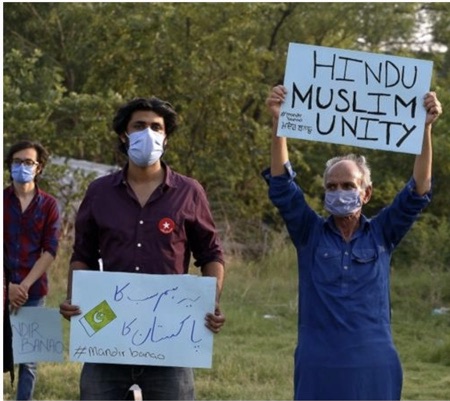
You must have seen a video which got viral few days back where a boy was seen damaging the walls of a temple that is currently being built in Islamabad(Pakistan). Another example like this was where a five year old boy was seen warning the Pakistani Prime Minister Imran Khan that if he will allow the the temples to be built, he will “kill all the Hindus”. Imagine a five year child speaking in his childish voice and warning such higher authority which may seem funny, but on the other hand this is a very important matter for the society that some people of Pakistan are filling up their children’s mind with filth and not showing them the right way where they should treat everyone as equal irrespective of caste, colour, gender plus nationality. I do agree with some of the things that the conflict between India and Pakistan is never ending but at least we can try to change the minds of the youth who will take the country forward.
Let me begin with the actual story where the Pakistani Government has decided to release funds for the Hindu temple to be built in Islamabad. This decision was made for the Minority class- the Hindu’s in Pakistan who also have the right to worship God in the temples. This plan was committed in the year 2017 by Nawaz Sharif’s government but it got delayed due to some issues. This is not the first time where the government has taken such step, before this the government took many initiatives for Hindu pilgrimage like they renovated Katas Raj Temple– a buddhist temple for the Hindus to worship. The Government has also helped the Sikh community with building gurudwaras for them like The Peshawar Gurudwara and the Nankana Sahib in Sailkot which was renovated for the sikhs.
aljazeera.com
Well, all of these things are small stepping stones by the Government for the minority so that they can also live like normal people without the barriers of religion. But on the other hand some projects have been backlashed by the Muslims of Pakistan where in a recent example the Pakistani government was planning to celebrate the legacy of Maharaja Ranjit Singh with statue, but it ended up causing a controversy on social media and in less than two months the statue was vandalised by the people. How will the country progress like this where the people are still not agreeing to some basic terms of accepting their fellow citizens as equal, building a temple or a gurudwara will never harm the other religion in fact all of these initiatives will bring the conflicts to an end. I am not saying that we Indians are the best and we don’t do such things, we are still facing major conflicts between Hindu and Muslim and there is no other solution to bring an end to this but there are Gurudwaras, Temples, Mosque and Church which are built together on the same lane and people respect that.
But why are these issues still arising, why can’t the soldiers just guard the country peacefully? The major reason for this is ‘Education‘ where the children are taught some facts which are against Hindus and Muslims, the facts which are putting them apart instead of living in tranquility and in harmony. The youth is being taught the wrong subjects with wrong facts and the society is also playing a major role in this, where they term minority people with funny names, where they are always referred to as a ‘minority class‘ instead of terming them as equal citizens.
All these examples and statements are not to hurt anyone be it from any religion or country. Building a temple or a gurudwara or even a mosque will never help the people to understand and have respect for the other religious sentiments, but education is and will be the only factor to bring everyone together and to treat everyone as equal, not becoming religion bias.
“My religion is ver simple, my religion is Kindness.” -Dalai Lama
India is a beautiful country with waterfalls originating both from the ice glaciers to the waterfall that caters their way into the sea. Waterfalls have always been inspiring forces of nature and people travel from all over the world to experience these natural wonders on Earth. However, there are hundreds of beautiful waterfalls in the world but India and its waterfall beauty have something unique in them. They have a charm that can attract a huge number of viewers in and around.
Iruppu Falls, Coorg –
Iruppu Falls is located in the Kodagu district of Karnataka. Coorg is one of the most popular hill stations of South India. The Iruppu Falls is located close to Nagarhole National Park. This beauty of Nature attracts a lot of people from all over the world especially during Maha Shivratri- a festival celebrated in honour of the Lord Shiva probably in the month of February or March every year.
Nohkalikai Falls Meghalaya –
Meghalaya is a small state situated in the Northeast of India. It is the wettest region in India. Meghalaya fully justifies its name as “The Abode of Clouds” as this beautiful place situated in the East Khasi Hills District of Meghalaya enjoys rain cats and dogs throughout the year. The seven sister states is the home to India’s tallest waterfall – Nohkalikai Falls. Nohkalikai Falls is located near Cheerapunji Meghalaya and is also known as the seven sister falls because of the seven streams cascading side-by-side.
Bhimlat Falls, Rajasthan –
Rajasthan is a place known for the extreme temperature, and it is a place where the sun does not hesitate to shine brightly throughout the year. Having one of the top ten waterfalls in such a dry state is no less than a wonder. You would be surprise to know that the Bhimlat Falls crash this stereotypical image of Rajasthan. Bhimlat Falls is just 60 meters high, but for a dry state like Rajasthan and for the people residing there it is no less than a jewel.
Dudhsagar Falls, Goa –
Goa is the smallest state in India known for a huge tourist spot. It is one of the most beautiful states with one of the top ten waterfalls, Dudhsagar Falls in India. No wonder it is also called as the” Ocean of Milk”. This beauty of the world is 310 meters tall, surrounded by the deciduous forest which is simply worth its see.
Kempty Falls, Uttarkhand –
Kempty Falls, situated in a northern part of India “Uttarkhand”. It is nearly 1364 meters above sea level, surrounded by the high mountain ranges deserves to be among the top ten waterfalls in India. You can visit it at any time of the year and explore this beauty of Nature.
Chitrakote Falls, Chhattisgarh –
The Chirakote Falls is located to the west of the Jagdalpur in Bastar district in Chhattisgarh. It is also known as the Nigara Falls of India, with this waterfall being 29 meters tall, surrounded by dense forest makes it fit in the top ten waterfalls in India.
Jog Falls, Shimoga, Karnataka –
Jog falls is located near Sagara taluk, Shimoga district in the state of Karnataka. Karnataka is a state which is blessed with some of the highest waterfalls in India. Jog Falls is the second highest waterfall in India. It is a treat to watch this 253 meters tall waterfall as it can almost make you feel the force of it against the rock. This beauty of Nature is also on the 13th number in the world by the waterfall database.
Jang Falls, Tawang, Arunachal Pradesh –
Arunachal Pradesh has yet another beauty of the Northeast India, which holds the maximum number of population among the states in the Northeast region of India. This beautiful crashing water scares can attract both souls and minds. The beauty of nature is yet not known to many and only came into notice after a song from the movie Koyla, featuring Madhuri Dixit was shot in here.
Athirappilly Waterfall Kerala –
Kerala is the Land of Gods, situated in South India on the Malabar Coast. Athirappilly falls is situated at Athirappilly Panchayat of Thrissur district. You can visit Athirappilly Falls during the monsoon in Kerala and experience the beauty of this 80 ft. tall waterfall. Athirappilly Waterfalls passes through a landscape of winding roads, small villages and dense green trees.
Human resources is the set of the people who make up the workforce of an organization, business sector, industry, or economy. A narrower concept is human capital, the knowledge which the individuals embody. Similar terms include manpower, labour, personnel, associates or simply people.
A human-resources department (HR department) of an organization performs human resource management, overseeing various aspects of employment, such as compliance with labor law and employment standards, administration of employee benefits, organizing of employees files with the required documents for future reference, and some aspects of recruitment and employee off boarding.
HR Industry (Human resource) industry in India has become a common need for almost every business that is looking forward for a good growth at the same time improved organization managements. Right from hiring the right candidate for the company till providing the best of the curriculum activates for the employees to grow, there are so many things that an HR actually does.
As per the research conducted, according to social, economic and cultural landscape, it is in unprecedented change due to which the need for a right solution that can lead to growth and professionalization has become quite common. This is the reason why HR industry in India has gained lot of scope.
It is considered as one of the most precious resource for any organization. Right from recruiting the right person on the board of a company till ensuring that the management works in an organized manner to achieve success of the organization, HR looks into every concern related to the company.
The solution that is offered by the team of HR is worth to take and certainly leads to the growth. There is a dedicated team of experts in HR who are engaged to offer the clients with workforce solutions and thus also acts as a middleman between the client and the employee.
To staff the industry in a proper way has become a necessary for the dynamic business environment. The HR industry thus, ensure that entire gamut of employment solutions are given to the client to satisfy him in all the best possible ways.
Looking forward to the increasing demand of HR industry, the following services are performed by the team which includes :
• Recruitment process outsourcing • Corporate training • Pay-roll processing • Organizing the clients meeting • Representing the team • Looking forward to increase ether venue of the Company
History
Human resource management used to be referred to as “personnel administration.” In the 1920s, personnel administration focused mostly on the aspects of hiring, evaluating, and compensating employees. However, they did not focus on any employment relationships in an organizational performance level or on the systematic relationships in any parties. This led to a lacked unifying paradigm in the field during this period.
According to an HR Magazine article, the first personnel management department started at the National Cash Register Co. in 1900. The owner, John Henry Patterson, organized a personnel department to deal with grievances, discharges and safety, and information for supervisors on new laws and practices after several strikes and employee lockouts. This action was followed by other companies; for example, Ford had high turnover ratios of 380 percent in 1913, but just one year later, the line workers of the company had doubled their daily salaries from $2.50 to $5, even though $2.50 was a fair wage at that time. This example clearly shows the importance of effective management which leads to a greater outcome of employee satisfaction as well as encouraging employees to work together in order to achieve better business objectives.
During the 1970s, American business began experiencing challenges due to the substantial increase in competitive pressures. Companies experienced globalization, deregulation, and rapid technological change which caused the major companies to enhance their strategic planning – a process of predicting future changes in a particular environment and focus on ways to promote organizational effectiveness. This resulted in developing more jobs and opportunities for people to show their skills which were directed to effective applying employees toward the fulfillment of individual, group, and organizational goals. Many years later the major/minor of human resource management was created at universities and colleges also known as business administration. It consists of all the activities that companies used to ensure more effective utilization of employees.
Now, human resources focus on the people side of management.There are two real definitions of HRM (Human Resource Management); one is that it is the process of managing people in organizations in a structured and thorough manner. This means that it covers the hiring, firing, pay and perks, and performance management. This first definition is the modern and traditional version more like what a personnel manager would have done back in the 1920s. The second definition is that HRM circles the ideas of management of people in organizations from a macro management perspective like customers and competitors in a marketplace. This involves the focus on making the “employment relationship” fulfilling for both management and employees.
Some research showed that employees can perform at a much higher rate of productivity when their supervisors and managers paid more attention to them. The Father of Human relations, Elton Mayo, was the first person to reinforce the importance of employee communications, cooperation, and involvement. His studies concluded that sometimes the human factors are more important than physical factors, such as quality of lighting and physical workplace conditions. As a result, individuals often place value more in how they feel. For example, a rewarding system in Human resource management, applied effectively, can further encourage employees to achieve their best performance.
The HR industry also known as staffing industry is highly noticed in different streams like Information Technology, Finance, Management, Sales, and Engineering. As per the research made, it has been also noted down that now a days, the need for such services has increased in aviation and retail industry as well.
The growth in the economy that is shown by India is highly said to be due to the HR industry that has come into existence. There are so many factors due to which Indian HR industry is driven that includes the client industry growth, entry of multinational companies, large conglomerates in new business domains and many more. As per the report, it has been noticed down that the Indian HR industry with regards to permanent and temporary recruitment segments has shown tremendous improvement. It has been providing with the best of the opportunities in the market.
The HR industry is fast gaining ground. They are no longer a small and slow department but crucial members in the major business decision making processes in various companies. Read on to know how and why the Human Resources industry has changed, the prospects in this field and what skills are necessary to be employed in HR now.
So far, this industry in India as grown at a compounded annual growth rate of 21% which is certainly a good thing to notice. HR industry in India is certainly at its peak to get to more success and allow the client to grow.
The Department of Posts (DOP),trading as India Post, is a government-operated postal system in India, which is a subsidiary of the Ministry of Communications. Generally called “the Post Office” in India, it is the most widely distributed postal system in the world. Founded in 1854 by Lord Dalhousie who laid the foundation for the modern Indian postal service. Dalhousie introduced uniform postage rates (universal service) and helped to pass the India Post Office Act 1854 which significantly improved upon 1837 Post Office act which had introduced regular post offices in India. It created the position Director General of Post for the whole country.
It is involved in delivering mail (post), remitting money by money orders, accepting deposits under Small Savings Schemes, providing life insurance coverage under Postal Life Insurance (PLI) and Rural Postal Life Insurance (RPLI) and providing retail services like bill collection, sale of forms, etc. The DoP also acts as an agent for Government of India in discharging other services for citizens such as old age pension payments and Mahatma Gandhi National Rural Employment Guarantee Scheme (MGNREGS) wage disbursement. With 155,015 post offices, India Post has the most widely distributed postal network in the world.
The country has been divided into 23 postal circles, each circle headed by a Chief Postmaster General. Each circle is divided into regions, headed by a Postmaster General and comprising field units known as Divisions. These divisions are further divided into subdivisions. In addition to the 23 circles, there is a base circle to provide postal services to the Armed Forces of India headed by a director-general. One of the highest post offices in the world is in Hikkim, Himachal Pradesh operated by India Post at a height of 14,567 ft (4,440 m).
Many a times we use essential services of an organization without knowing details of source. MBA Aspirants are expected to have curiosity to know even the known but unknown organization like Indian Postal service.
The Indian Postal Service, known as India Post, was founded in 1774 and today, it has over 100,000 post offices all over the country. In fact, India has the largest postal network in the world, with close to 90% of the post offices located in rural areas. The Indian Postal Service comes under the Department of Posts, which is a part of the Ministry of Communications and Information Technology.
India Post offers both retail and financial services to over one billion people in India. Apart from providing bill mail, direct mail and retail mail services, India Post also provides the e-Payment service through which organizations can collect their bills and other payments from customers across the country.
India Post has changed the way people look at post offices – in the past, a post office was simply a place for people to post letters; however, today, India Post has partnerships with other organizations such as the Indian Railways and HDFC Bank to provide other services too. Now, people can book train tickets at selected post offices through the India Post Passenger Reservation System and purchase foreign currency and travelers cheques with the India Post Forex Service. Gone are the days when organizations would only provide a service or two. To stay ahead of the competition and to provide better service to the public, both government organizations and private companies are diversifying their services, and India Post is no stranger to this business model.
Some of the popular financial services offered by India Post are the Post Office Savings Schemes and the Postal Life Insurance. In fact, the Post Office savings bank is the oldest and the largest banking system in the country, providing services to both rural and urban dwellers.
Financial services at India Post are offered as an agency service for the Ministry of Finance and they have helped millions of people nationwide. India Post keeps up with the trends in the industry and has come up with remittance schemes to help people living in India to transfer money to their family and friends abroad and vice-versa.
The business of Indian Postal Service is growing by leaps and bounds, which is why the organization is keen on establishing the “Post Bank of India”, an independent entity with complete focus on financial products and services. With the advent of technology, many people, especially those in urban areas, have started sending electronic mails, which not only saves time but also money. This is one of the reasons why majority of the post offices are located in rural parts of India. However, this does not mean that the demand for postal services in India is decreasing.
In fact, with the diversification of services, the Indian Postal Service has managed to increase its customer base and enhance its revenue significantly. Today, the Indian Postal Service employs over 450,000 people and generates revenue of over Rs 70,000 million on an annual basis. With greater investments in IT infrastructure and diversification of its product portfolio, the Indian Postal Service will be able to cross the Rs 100,000 million mark in a few years.
The children should not have to work is universally accepted, but there are no universal answer why the problem of child labour persist and how it needs to be tackled. India is faced with the crucial task of eliminating the child labour which is prevalent in all spheres of life. Thousands of children are engaged in the carpet factories, glass factories and other hazardous industries all over the country.
The term child labour has generally two-fold interpretations. Firstly, it is implied to be an economic necessity of poor households and secondly, the explosive aspect in children‟s work concerned with the profit maximizing urge of commercial establishment wherein children are made to work for long hours, paid low remuneration and deprived of educational opportunities.
International Labour Organisation (ILO) defines child labour to “… include children leading permanently adult lives, working long hours for low wages under conditions damaging to their health and physical and mental development, sometime separated from their families, frequently deprived of meaningful educational and training opportunities that could be open up to them a better future”.
Reasons For Child Labour: There are many reasons for the existence of child labour and it varies with place and place to place. In India, poverty is one of the important factors for poverty, but it‟s not the sole factor. Children provide cheap labour, the person who wants labour has to pay less to them than adult labour. The child can be commanded more than an adult. The pull factor of the child labour is the profit maximization.
The main causes to failure to control the child labour are; poverty, low wages than adult, unemployment, absence of schemes for family allowance, migration to urban areas, large family size, children being cheaply available, non existence of strict provisions for compulsory education, illiteracy, ignorance of parents and traditional attitudes.
Child Labour In India: India accounts for the second highest number where child labour in the world is concerned. Africa accounts for the highest number of children employed and exploited. The fact is that across the length and breadth of the nation, children are in a pathetic condition.
Child labour in India is a human right issue for the whole world. It is a serious and extensive problem, with many children under the age of fourteen working in carpet making factories, glass blowing units and making fireworks with bare little hands. According to the statistics given by Indian government there are 20 million Child labours in the country, while other agencies claim that it is 50 million.
The situation of Child labours in India is desperate. Children work for eight hours at a stretch with only a small break for meals. The meals are also frugal and the children are ill nourished. Most of the migrant children, who cannot go home, sleep at their work place, which is very bad for their health and development. Seventy five percent of Indian population still resides in rural areas and are very poor. Children in rural families who are ailing with poverty perceive their children as an income generating resource to supplement the family income. Parents sacrifice their children‟s education to the growing needs of their younger siblings in such families and view them as wage earners for the entire clan.
In Northern India the exploitation of little children for labour is an accepted practice and perceived by the local population as a necessity to alleviate poverty. Carpet weaving industries pay very low wages to Child labours and make them work for long hours in unhygienic conditions. Children working in such units are mainly migrant workers from Northern India, who are shunted here by their families to earn some money and send it to them. Their families dependence on their income, forces them to endure the onerous work conditions in the carpet factories.
While experts blame the system, poverty, illiteracy, adult unemployment; yet the fact is that the entire nation is responsible for every crime against a child. Instead of nipping the problem at the bud, child labour in India was allowed to increase with each passing year. And today, young ones below the age of 14 have become an important part of various industries; at the cost of their innocence, childhood, health and for that matter their lives.
Indian Constitution And Child Labour: Article 23 of Indian Constitution prohibits the trafficking in human beings and forced labour. And Article 24 prohibits the employment of children in factories. It says that No child below the age of fourteen years shall be employed to work in any factory or mine or engaged in any other hazardous employment.
The general understanding was that right secured by Article 24 will hardly be effective in the absence of legislation prohibiting and penalising its violation. However, Supreme Court clearly stated that Article 24 “must operate proprio vigour” even if the prohibition lay down in it is not “followed up by appropriate legislation.” In Labourers, Salal Hydro Project v. State of J&K it was again held that the employment of children below 14 in construction work violates Article 24. It was noted in M C Mehta v. State of Tamilnadu, that menace of child labour was wide spread. Therefore it issued wide ranging directions in the context of employment and exploitation of children in Sivakasi, prohibiting employment of children below the age of 14 and making arrangement for their education by creating a fund and providing employment to the parents or the able bodied adults in the family. These directions were reiterated in Bandhu Mukti Morcha v. Union of India, concerning the employment of children in carpet weaving industry in U.P.
The State shall, in particular, direct its policy towards securing the health and strength of workers, men and women, and the tender age of children are not abused and that citizens are not forced by economic necessity to enter avocations unsuited to their age or strength. Also the State shall, direct its policy towards securing the given opportunities and facilities to develop in a healthy manner and in conditions of freedom and dignity and that childhood and youth are protected against exploitation and against moral and material abandonment to the children.
Article 45 of Indian Constitution made provision for early childhood care and education to children below the age of six years. As per this Article the State shall endeavours to provide early childhood care and education for all children until they complete the age of six years.
The Code was enacted in 2016 following decades of recommendations suggesting improvements to the previous insolvency regime, which was fragmented, fraught with delays and resulted in poor recoveries for creditors. [1]
The insolvency resolution process in India has in the past involved the simultaneous operation of several statutory instruments.
These include the Sick Industrial Companies Act, 1985, the Securitisation and Reconstruction of Financial Assets and Enforcement of Security Interest Act, 2002, the Recovery of Debt Due to Banks and Financial Institutions Act, 1993, and the Companies Act, 2013.[2]
Broadly, these statutes provided for a disparate process of debt restructuring, and asset seizure and realization in order to facilitate the satisfaction of outstanding debts. [3]
As is evident, a plethora of legislation dealing with insolvency and liquidation led to immense confusion in the legal system, and there was a grave necessity to overhaul the insolvency regime.
All of these multiple legal avenues, and a hamstrung court system led to India witnessing a huge piling up of non-performing assets, and creditors waiting for years at end to recover their money. [5]
The Bankruptcy Code is an effort at a comprehensive reform of the fragmented regime of corporate insolvency framework, in order to allow credit to flow more freely in India and instill faith in investors for speedy disposal of their claims. [4]
The Code consolidates existing laws relating to insolvency of corporate entities and individuals into a single legislation.
The Code has unified the law relating to enforcement of statutory rights of creditors and streamlined the manner in which a debtor company can be revived to sustain its debt without extinguishing the rights of creditors[5]:-
1) The scheme of the Code marked a sea change from the previous regime. In respect of corporate entities, the Code introduced a creditor-in-control regime (with a focus on empowering financial creditors), a time-bound resolution process and reduced scope for judicial intervention, and established institutions such as the Insolvency and Bankruptcy Board of India, insolvency professionals and information utilities.[6]
Since the implementation of this new regime, the constitutional validity of various provisions of the Code has been challenged before various High Courts, and the Supreme Court.
Applicability
The Code provides creditors with a mechanism to initiate an insolvency resolution process in the event a debtor is unable to pay its debts. The Code makes a distinction between Operational Creditors and Financial Creditors. [7]
A Financial Creditor is one whose relationship with the debtor is a pure financial contract, where an amount has been provided to the debtor against the consideration of time value of money (“Financial Creditor”).
Recent reforms have sought to address the concerns of homebuyers by treating them as ‘financial creditors’ for the purposes of the Code. [7]
By a recently promulgated ordinance, the Insolvency and Bankruptcy Code (Amendment) Ordinance, 2018 (“the Ordinance”), the amount raised from allottees under a real estate project (a buyer of an under-construction residential or commercial property) is to be treated as a ‘financial debt’ as such amount has the commercial effect of a borrowing.[7]
The Ordinance does not clarify whether allottees are secured or unsecured financial creditors. Such classification will be subject to the agreement entered into between the homebuyers and the corporate debtor.
In the absence of allottees having a clear status, there may be uncertainty about their priority when receiving dues from the insolvency proceedings. [7]
An Operational Creditor is a creditor who has provided goods or services to the debtor, including employees, central or state governments (“Operational Creditor”). A debtor company may also, by itself, take recourse to the Code if it wants to avail of the mechanism of revival or liquidation. [7]
In the event of inability to pay creditors, a company may choose to go for voluntary insolvency resolution process – a measure by which the company can itself approach the NCLT for the purpose of revival or liquidation. [7]
What was the judicial approach to the Insolvency and Bankruptcy Code?
SERIES OF JUDICIAL PRONOUNCEMENT
With almost more than two years since the introduction of the Code, there have been various challenges in the effective implementation of the Code. However, constructive interpretation by the judiciary coupled with effective amendments to the Code has helped in eradicating most of these teething issues. [8]
Some of the key judicial pronouncements are discussed below:
The Insolvency and Bankruptcy Board of India which is the regulatory and supervisory body in charge of the IBC, has done a commendable job in proactively spreading awareness and regulating the space. [9]
Many important judgments were pronounced throughout the year, including certain landmark cases, where in the Supreme Court has tried to ensure that the spirit of the Code is given primacy over procedural requirements. [9]
Suspended Board of Directors of Corporate Debtor Entity are entitled to access the resolution plan and other related documents:-
In a significant judgments delivered on January 31, 2019, the Hon’ble Supreme Court of India decided on an important aspect with respect to the rights of the suspended board of directors of the Corporate Debtor Entity to receive and access the resolution plan and other related documents, whose case has been admitted by the Adjudicating Authority under the relevant provisions of the Code. [10]
Facts of the Case:
In respect of Mr. Vijay Kumar Jain, Director of Corporate Debtor (‘Appellant’) vs. Standard Chartered Bank and Ors. (As ‘Financial Creditors’), the NCLT had approved the appointment of Resolution Professional (‘RP’) to conduct Corporate Insolvency Resolution Process of Corporate Debtor Company i.e. Ruchi Soya Industries Limited (‘RSIL’). [10]
The appellant, being a member of the suspended board of RSIL, was given notice and agenda for the first meeting of Committee of Creditors (‘CoC’) and was permitted to attend the meeting of CoC. The appellant alleged that he was not granted permission to participate in subsequent meetings of CoC. [10]
As a result, the appellant filed a miscellaneous application before the NCLT to allow his participation in the subsequent meetings of CoC. The appellant also executed a Non-Disclosure Agreement (‘NDA’) to keep information received through participation in the CoC meeting strictly confidential and even undertook to indemnify RP. [10]
However, NCLT vide its order dated August 1, 2018 dismissed the said application of appellant with liberty to the appellant to attend the COC meetings, but not to insist upon the CoC or RP to provide information which is considered as confidential by the CoC or RP. [11]
Against the said order of NCLT, the appellant filed an appeal before the Appellate Tribunal, which recognized the right of appellant to attend and participate on the CoC meetings but Appellate Tribunal vide its order dated August 9, 2018 [12] denied the prayer of the appellant to have access to certain documents including sensitive resolution plan.
The appellant aggrieved by the order of the NCLAT, filed an appeal before the Hon’ble Supreme Court of India. [13]
Apex Court Observations and Findings:
On advertising relevant provisions of the Code and arguments of parties to the dispute, the Supreme Court opined that notice of each meeting of the CoC will have to be given to the suspended board of directors of the corporate debtor entity. [14]
The Supreme Court further noted that the statutory scheme of IBC makes it clear that though the suspended board are not members of the CoC, yet, they have a right to participate in each and every meeting held by the CoC and also have a right to discuss along with members of the CoC, resolution plan that are presented at such meeting. [14]
The Supreme Court further observed that Section 31(1) of the Code make it clear once the resolution plan is passed by the Adjudicating Authority, it shall be binding on the corporate debtor together with guarantors and other stakeholders. [14]
This being the case, it is clear that the erstwhile board of directors, which consists of persons who may have given personal guarantees for the debts owed by the corporate debtor, will be bound by the resolution plan, and therefore, have a vital stake in what ultimately gets passed by the CoC’s.[14]
The Supreme Court also made it clear that so far as confidential information is concerned, RP can take an undertaking in the form of NDA from suspended board of directors of the corporate debtor entity with an objective to maintain strict confidentiality in regard to resolution plan and other related documents. [14]
Further, according to Regulation 39(5) of IBBI (Insolvency Resolution Process for Corporate Persons) Regulations, 2016, the RP shall forthwith send a copy of the order of the Adjudicating Authority approving or rejecting a resolution plan to the participants and resolution applicant. The term ‘Participants’ includes members of the erstwhile Board of Directors of Corporate Debtor. [14]
Thus in view of the above, the Supreme Court allowed the appeal and set aside the impugned order of the Appellate Tribunal. [14]
What was the result of Insolvency and Bankruptcy Code in the present scenario? Also cite relevant case laws.
IBC came into being repealing SICA (Sick Industrial Companies Act), SICA was repealed with effect from 1 December 2016. [15]
To know the background of IBC, it is important to know more about SICA and why it failed to prevail as a law. [15]
This is the exact rationale for the existence of The Insolvency and Bankruptcy Code in India which has been into effect since 2016. [15]
To know the background of IBC, it is important to know more about SICA and why it failed to prevail as a law. [15]
The journey from SICA to IBC
The SICA, 1985:-
The name SICA, itself connotes the reason for its actuality. India witnessed an atmosphere of rampant industrial sickness in the 1980s in furtherance of which the Government of India came up with key legislation i.e. the Sick Industrial Companies Act to combat the issue. [15]
Widespread industrial sickness affects the economy in a number of ways, thus The Act came into being to spot the sick or potentially sick companies owning industrial undertakings and take speedy remedial measures for their revival or in a scenario where there is no such measure, close such units. [15]
This was an action to get the locked up investment in such industrial units released and use them in a more productive manner. SICA was repealed and replaced by the Sick Industrial Companies (Special Provisions) Act of 2003, which diluted certain provisions of SICA and filled certain gaps. [15]
One of the main changes to the new law was that, in addition to combating occupational diseases, it also aimed to reduce the growing incidence by ensuring that companies do not use a medical certificate simply to evade legal obligations and access concessions granted to financial institutions to receive. [15]
The comprehensive performance of the Act did not live up to the expected results and thus, IBC was notified as on 28th May 2016 and the repeal of SICA came into full effect from December 1, 2016. [15]
IBC Kicks In
Mistakes of the past were taken in view and The Insolvency and Bankruptcy code came into being with a wider scope and aiming to resolve the issues via more effective provisions and implementation. It is an act to consolidate and amend the laws having reorganization and insolvency resolution issues as the subject-matter. [15]
The provisions of the Act shall apply to the following in case of insolvency, liquidation, voluntary liquidation or bankruptcy; [15]
“An Act to consolidate and amend the laws relating to reorganisation and insolvency resolution of corporate persons, partnership firms and individuals in a time bound manner for maximisation of value of assets of such persons, to promote entrepreneurship, availability of credit and balance the interests of all the stakeholders including alteration in the order of priority of payment of Government dues and to establish an Insolvency and Bankruptcy Board of India, and for matters connected therewith or incidental thereto.
Whether the expression “and” occurring in section 8(2)(a) may be read as “or”?
The Court held that the expression “and” occurring in section 8(2)(a) may be read as “or” in order to further the object of the statute and/ or to avoid an anomalous situation – once the operational creditor has filed an application, which is otherwise complete, the adjudicating authority must reject the application under Section 9(5)(2)(d) if notice of dispute has been received by the operational creditor or there is a record of dispute in the information utility – So long as a dispute truly exists in fact and is not spurious, hypothetical or illusory, the adjudicating authority has to reject the application – A “dispute” is said to exist, so long as there is a real dispute as to payment between the parties that would fall within the inclusive definition contained in Section 5(6). [16]
2) Surendra Trading Company Vs. Juggilal Kamlapat Jute Mills Company Ltd. & Others- Supreme Court:
The time limit prescribed in IBC, 2016 for admitting or rejecting a petition or initiation of CIRP under proviso to sub-sec. (5) of Sec. 9, is directory. [17]
The question before the NCLAT was to whether time of fourteen days under section 9(5) given to the adjudicating authority for ascertaining the existence of default and admitting or rejecting the application is mandatory or directory. [17]
NCLAT hold that the mandate of sub-section (5) of section 7 or sub-section (5) of section 9 or sub-section (4) of section 10 is procedural in nature, a tool of aid in expeditious dispensation of justice and is directory. [17]
Further question (with which supreme Court is concerned) was as to whether the period of seven days for rectifying the defects under proviso to sub-section (5) of Section 9 is mandatory or directory. The aforesaid provision of removing the defects within seven days is directory and not mandatory in nature. [17]
3) Essar Steel India Ltd. Vs. Reserve Bank of India-
RBI is authorized to direct any banking company to initiate insolvency resolution process- Gujarat High Court. [18]
A long-drawn legal battle for Essar Steel ends with this Supreme Court judgment. In one of the most discussed cases under IBC i.e. the case of Essar Steel Limited, the Supreme Court delivered its judgment which would probably be the final judgment of the case. Key highlights of the Essar Steel Supreme Court judgment are as follows: [19]
The requirement of completing the corporate insolvency resolution process within 330 days from the insolvency commencement date as introduced by the 2019 Amendment Act was held as non-mandatory. [19]
CoC can delegate its administrative powers or power of negotiation with the resolution applicants to a smaller committee (sub-committee) since such acts would be ultimately required to be approved and ratified by the CoC. [19]
Prospective resolution applicant has a right to receive complete information as to the CD, debts owed by it, and its activities as a going concern and as such it cannot suddenly be faced with “undecided” claims after the resolution plan submitted by it has been accepted. [19]
To put an end to uncertainty, parameters were laid down for limiting the scope of interference of Adjudicating Authority and Appellate Authority with the commercial decision taken by the requisite majority of CoC. [19]
The Supreme Court has re-emphasized the primacy of the commercial wisdom of the CoC in relation to resolution of the corporate debtor as well as difference in treatment of unequally placed creditors based on its earlier decisions in Swiss Ribbons and K. Sashidhar cases. [19]
Why are the judgments of the Insolvency and Bankruptcy cases pending with court?
The judgments of the cases are pending with the Court due to the Causes for the delays which range from frivolous challenges by operational creditors and promoters to basic issues like shortage of judges. [20]
There is no stipulated time-line for operational creditors to challenge the rejection of their claim, shortage of members at the bench, allowing intervention by promoters at the admission stage and long gaps between conclusion of hearing and passing of written orders are all causing delays,” said Sapan Gupta, national head banking and finance practice at Shardul Amarchand and Mangaldas. [20]
To be fair, delays are not a peculiarly Indian phenomenon. Many advanced countries struggle to provide quick, high-quality justice to citizens. But in India the scale of the problem is unprecedented. Focusing on capacity alone won’t reduce delays. [21]
A pervasive reason for the delays is adjournments. Many advanced countries struggle to provide quick, high-quality justice to citizens. But in India the scale of the problem is unprecedented.[21]
Conclusion
In conclusion, the Insolvency and Bankruptcy Code, 2016, is a progressive legislation that is intended to improve the efficiency of insolvency and bankruptcy proceedings in India. The new legislation provides for the early detection of financial distress and a time bound process for resolution. [22]
However, many details on the IBC’s implementation need to be worked out in the regulations, and its success will depend to a large extent on how quickly a high quality cadre of insolvency resolution professionals will emerge and on whether the time bound process for insolvency resolution will be adhered to in practice. [22]
The IBC has taken its first steps to regularize the insolvency process in India. It has amended over 11 legislations in India, bringing about one of the most significant changes to commercial laws in India in recent times. However, the 22 months of this nascent legislation have been ridden with controversies and speedy resolutions. [23]
It has also become a very important tool for banks to regularize multitudes of non-performing assets plaguing the country’s economy. Within 7 months of the enactment of the IBC, the Reserve Bank of India released a list of 12 companies which held about 25% of the gross non-performing assets of the country.[23]
With more than 11% of all loans in India being terms as bad loans, the IBC has become the need of the hour. The IBC has brought a plethora of changes to insolvency laws in India and aims to reduce the amount of bad loans that has saddled the economy over the last few years. [23]
We are beginning to see this through various companies successfully concluding their insolvency process. The first successful case of a CIRP was that of Bhushan Steel wherein TATA Steel agreed to purchase Bhushan Steel for Rupees Thirty-Two Thousand Five Hundred Crores. [23]
With many more insolvency resolution processes in the pipeline, only time will tell if the IBC will prove to be a successful tool with its objective of streamlining the insolvency process in India. [23]
1) Bankruptcy Law Reforms Committee, The Interim Report of the Bankruptcy Law Reforms Committee (2015).
2) Rule 2.1.1. of RBI Master Circular – Prudential Norms on Income Recognition, Asset Classification and Provisioning – Pertaining to Advances defines an NPA as ‘An asset, including a leased asset, becomes non-performing when it ceases to generate income for the bank. A ‘non-performing asset’ (NPA) was defined as a credit facility in respect of which the interest and/ or installment of principal has remained ‘past due’ for a specified period of time.
3) It must be noted that creditors having outstanding debts continue to have the right to approach an appropriate forum like civil courts or arbitral tribunals for recovery of debts which would be a contractual right of recovery.
4) As cited in the “Abstract” of “Emerging Jurisprudence on Corporate Insolvency” by Shipra Sayal Institute of Law, Nirma University, Ahmedabad, Gujarat, India.
5) As cited in the “Introduction” Para of “A Primer on the Insolvency and Bankruptcy Code, 2016” by Nishith Desai Associates:- The Legal and Tax Counseling Worldwide.
6) As cited in the “Introduction” para of “Understanding the Insolvency and Bankruptcy Code, 2016:- Analysing the developments in jurisprudence” by “Vidhi Bankruptcy Research Programme” at the Vidhi Centre for Legal Policy and the Legal Division of the Insolvency and Bankruptcy Board of India.
7) As cited in the “Applicability” Para of “A Primer on the Insolvency and Bankruptcy Code, 2016” by Nishith Desai Associates:- The Legal and Tax Counseling Worldwide.
8) As cited in the “4th Para ,viz, Series of Judicial Pronouncement” of “Series of Judicial Pronouncement – Insolvency and Bankruptcy Code, 2016” written by Rushabh Ajmera on TaxGuru.
9) As cited in the “Introduction” Para of “Insolvency and Bankruptcy Hotline:- ANALYSING 2018 THROUGH THE LENS OF THE INSOLVENCY CODE” written on January 17, 2019 by Nishith Desai Associates.
10) As cited in the “4th Para” viz, Series of Judicial Pronouncement” of “Series of Judicial Pronouncement – Insolvency and Bankruptcy Code, 2016” written by Rushabh Ajmera on TaxGuru Website India 11 months ago.
11) As cited in “NCLT pronounced order on August1, 2018”.
13) As cited in “Facts of the Case Para” of “Series of Judicial Pronouncement – Insolvency and Bankruptcy Code, 2016” by Rushabh Ajmera 11 Months ago on TaxGuru India Website.
14) As cited in ” Apex Court Observations and Findings Para” in “Series of Judicial Pronouncement – Insolvency and Bankruptcy Code, 2016” by Rushabh Ajmera 11 Months ago on TaxGuru India Website.
15) As cited in “IBC (Insolvency and Bankruptcy Code, 2016) – The Bankruptcy Law of India” written by Vidushi Trehan, LL.M from Symbiosis Law School, Pune , Intern at Khurana & Khurana, Advocates and IP Attorneys.
16) As cited in “Brief about decision para” in ” “and” occurring in section 8(2)(a) may be read as “or”- Mobilox Innovations (P) Ltd. Vs. Kirusa Software (P) Ltd.- Supreme Court” written by IBC LAWSon September 21, 2017.
17) As cited in “Case Name: M/S. Surendra Trading Company Vs. M/S. Juggilal Kamlapat Jute Mills Company Limited and Others” written by IBC LAWS on September 18, 2017
18) As cited in “RBI is authorised to direct any banking company to initiate insolvency resolution process- Essar Steel India Ltd. Vs. RBI- Gujarat High Court” written on July 17, 2017 by IBC LAWS.
19) As cited in “The Insolvency And Bankruptcy Code In 2019 : Recent Amendments And Key Judgments” written by Mayur Shetty and Chintan Gandhi of Rajani Associates on 12th March 2020.
20) As cited in “Delay becomes the norm in insolvency & bankruptcy cases” by Joel Rebello & Saikat Das, ET Bureau on Aug 15, 2019 at 11:25pm.
21) As cited in “Hidden factors that slow our courts and delay justice” written by Arghya Sengupta.
22) As cited in “Insolvency And Bankruptcy Code” written on 12 September 2017 by Samvad Partners.
23) As cited in “2016: Overview Of The Insolvency And Bankruptcy Code, 2016” written by Namrata Bhagwatula , Senior Associate on 20 September, 2018.
You must be logged in to post a comment.