Analysing Satyajit Ray: Through The Eyes of The Master

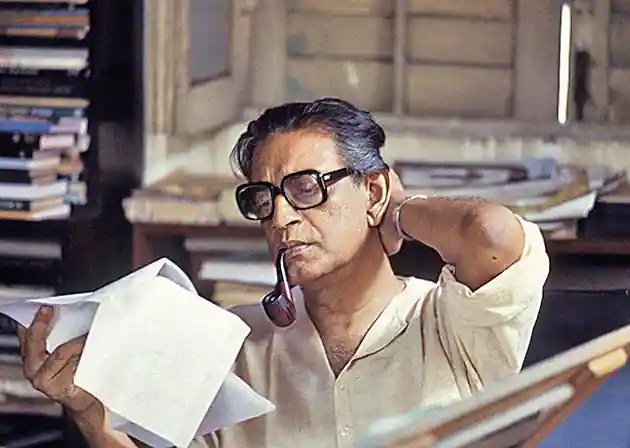
Satyajit Ray

Introduction

Satyajit Ray was India’s first internationally recognized film-maker and, several years after his death, still remains the most well-known Indian director on the world stage. Ray has written that he became captivated by the cinema as a young college student, and he was self-taught, his film education consisting largely of repeated viewings of film classics by de Sica, Fellini, John Ford, Orson Welles, and other eminent directors.
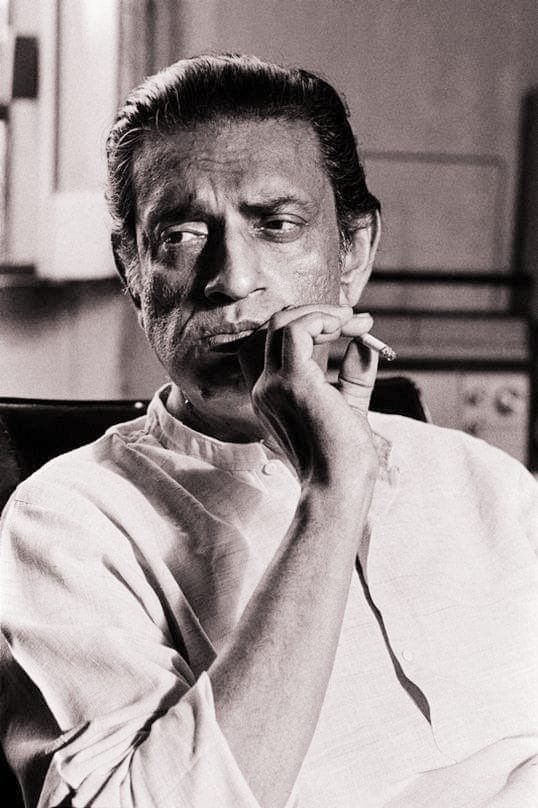
Satyajit Ray

Early Life and Family Background

Satyajit Ray was born into an illustrious family in Kolkata (then Calcutta) on 2nd May,1921. His grandfather, Upendra Kishore Ray-Chaudhary, was a publisher, illustrator, musician, the creator of children’s literature in Bengali and a leader of the Brahmo Samaj, a religious and social movement in nineteenth century Bengal. His father, Sukumar Ray, was a noted satirist and India’s first writer of nonsensical rhymes, akin to the nonsense verse of Edward Lear. Having studied at Ballygunge Government High School, Calcutta and completed his BA in economics at Presidency College, Satyajit Ray went on to develop an interest in fine arts. Later in life, Satyajit Ray made a documentary of his father’s life. His film, Goopy Gyne Bagha Byne, was based on a story published by his grandfather in 1914, but even other films, such as Hirok Rajah Deshe, “The Kingdom of Diamonds”, clearly drew upon his interest in children’s poetry and nonsensical rhymes.
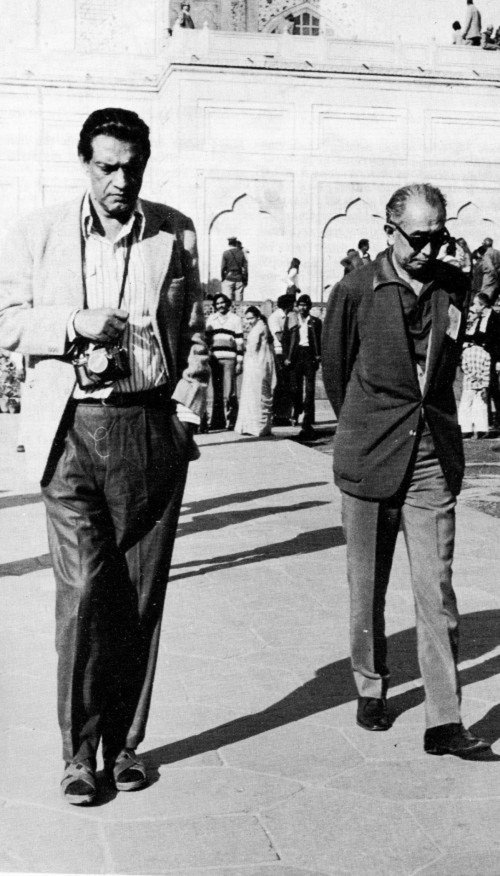
Satyajit Ray with Akira Kurosawa

The Crisis of Indian Cinema Before Ray

From the 1920s to the early 1950s, several directors working within Hollywood—as well as filmmakers in former Soviet Union, France, Italy, Germany, and Japan—considered cinema not as a mere tool of entertainment but as a medium for creative expression. Filmmakers such as Charlie Chaplin, Sergei Eisenstein, Jean Renoir, Roberto Rossellini, Vittorio De Sica, Akira Kurosawa, and others deployed artistically innovative filmic devices to convey profound statements about the complexities of life. Some of the aesthetically satisfying films produced during this period were hailed as cinematic masterpieces. Films in India, however, prioritised cliched elements such as sentimental slush, ersatz emotion, theatricality, romantic tales, spectacle-like songs, and happy endings in these decades. Instead of making serious attempts at formal experimentation, Indian directors continued catering to the lowest common denominator audience.
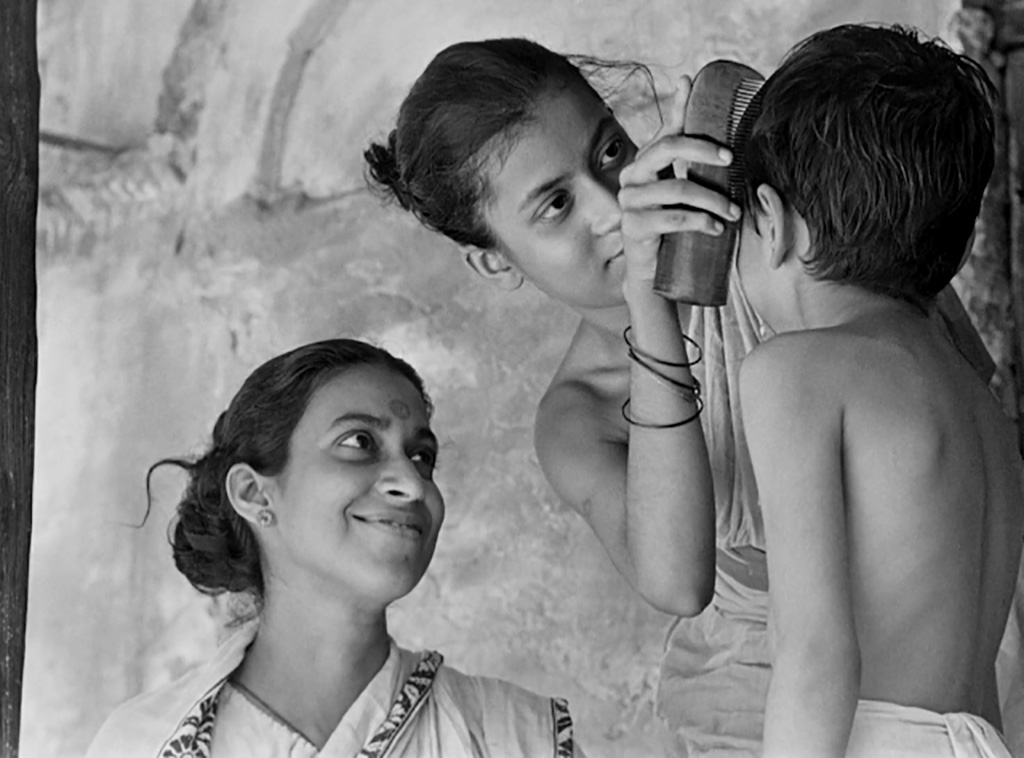
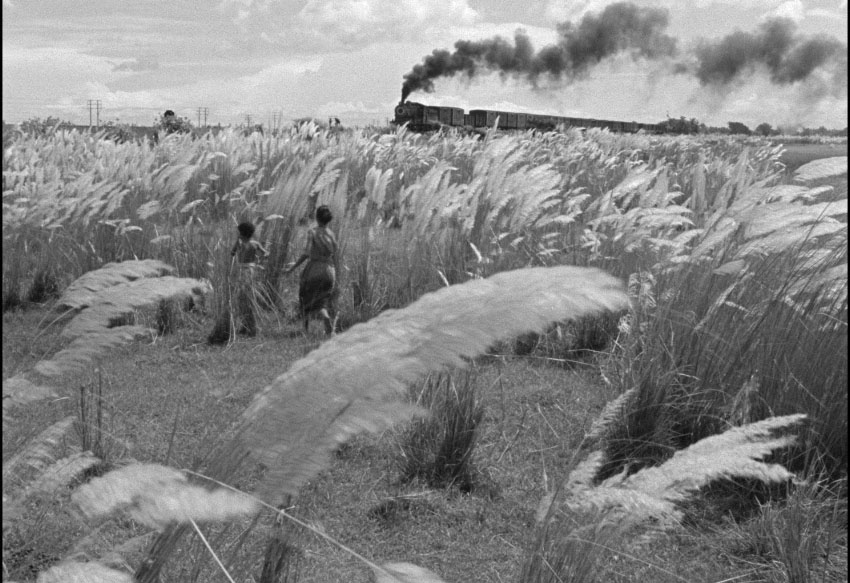
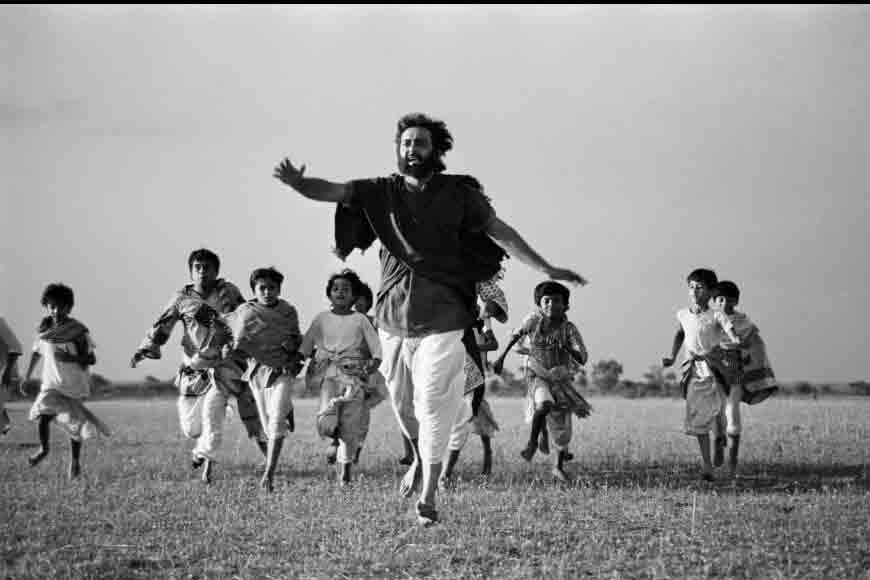
Iconic scene from Pather Panchali (1955)
Pather Panchali (1955)

Breakthrough of Satyajit Ray

A young Ray had grown up on Hollywood movies, so when his ad agency sent him to London for higher training, he spent more and more of his time in the company of films and started “losing interest in advertising in the process,” he once said in an interview. During this trip, he saw Vittorio De Sica’s “Ladri di biciclette” (Bicycle Thieves),in 1948, a neo-realist Italian masterpiece of post-War despair and was entranced by its beguiling simplicity and humanism. Back in Calcutta, he heard that Jean Renoir was in town and walked straight into the hotel where the great French filmmaker was staying to confide in his own dreams of making a movie someday. Renoir, who was location-scouting for The River in Calcutta at the time, encouraged the aspirant. And so began the journey of the song of the little road.
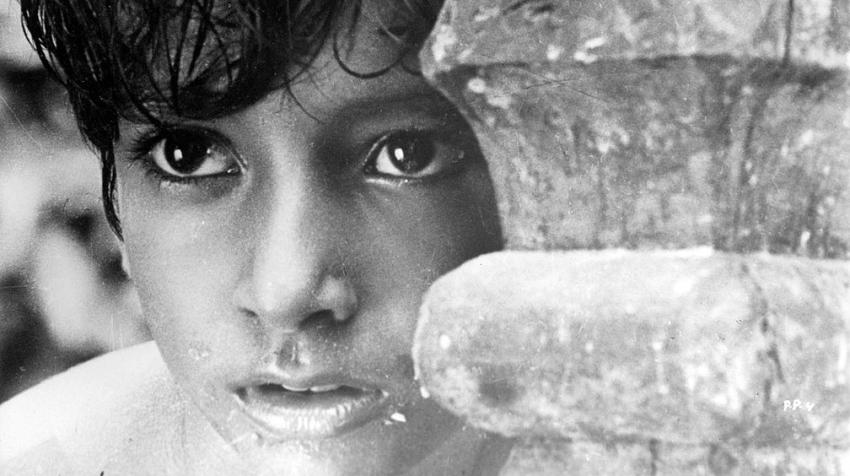
Subir Banerjee as Apu in Pather Panchali (1955)


Ray’s landmark debut, Pather Panchali ( which was adapted from  eponymous 1928 Bengali novel “Pather Panchali” by eminent Bengali novelist Bibhutibhusan Bandopadhay) was on a shoe-string budget in 1955 with a mostly non-professional cast. All the while, he clung on to his job for a safety net even as he shot what would become the first of the classic Apu Trilogy on weekends. The film was apparently being made by a group of neophytes, who had to stop filming more than once, owing to the depletion of their shoestring budget.
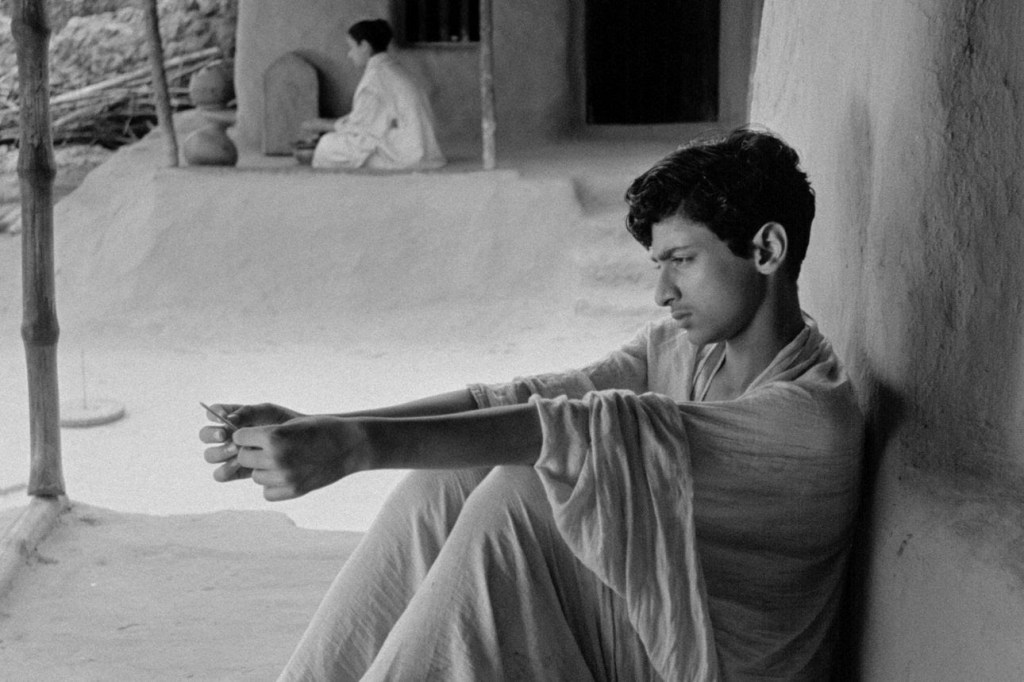
Smaran Ghoshal as Apu in Aporajito (1956)

Notable Films of Satyajit Ray

Ray directed 36 films, comprising 29 feature films, five documentaries, and two short films. Pather Panchali was completed in 1955 and turned out to be both a commercial and a tremendous critical success, first in Bengal and then in the West following a major award at the 1956 Cannes International Film Festival. sured Ray the financial backing he needed to make the other two films of the trilogy: Aparajito (1956; The Unvanquished) and Apur Sansar (1959; The World of Apu). Pather Panchali and its sequels tell the story of Apu, the poor son of a Brahman priest, as he grows from childhood to manhood in a setting that shifts from a small village to the city of Calcutta.
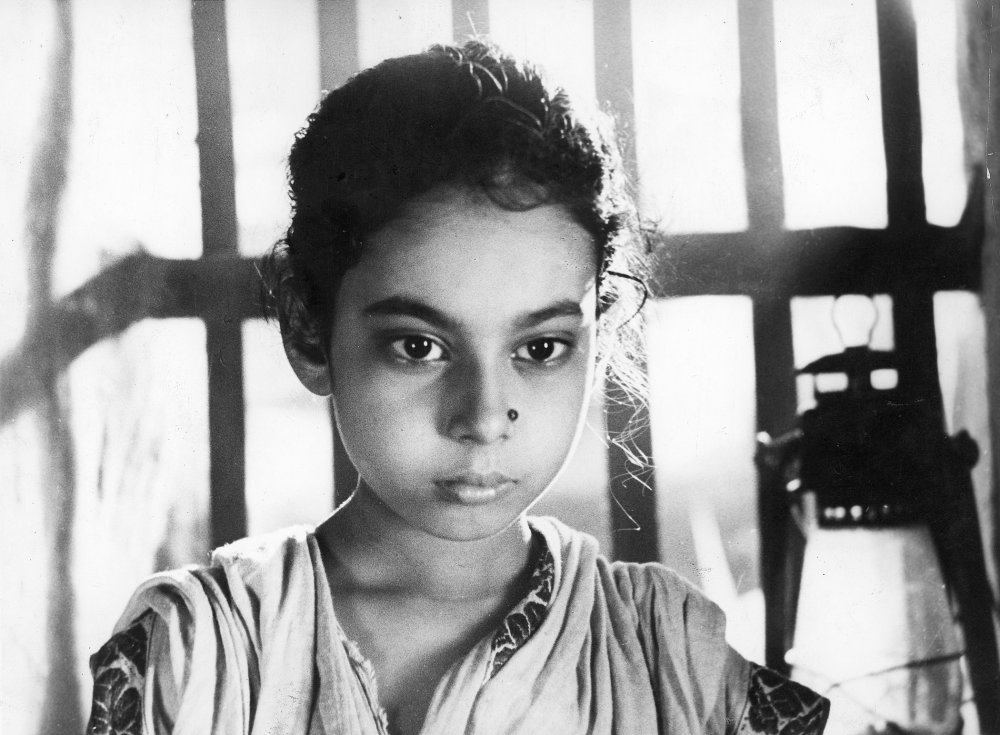
Chandana Banerjee in Teen Kanya (1961)
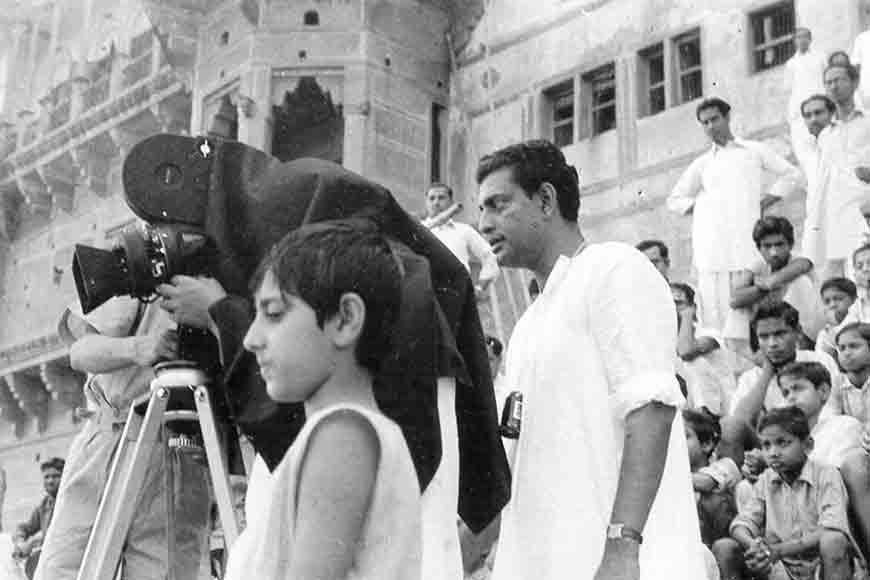
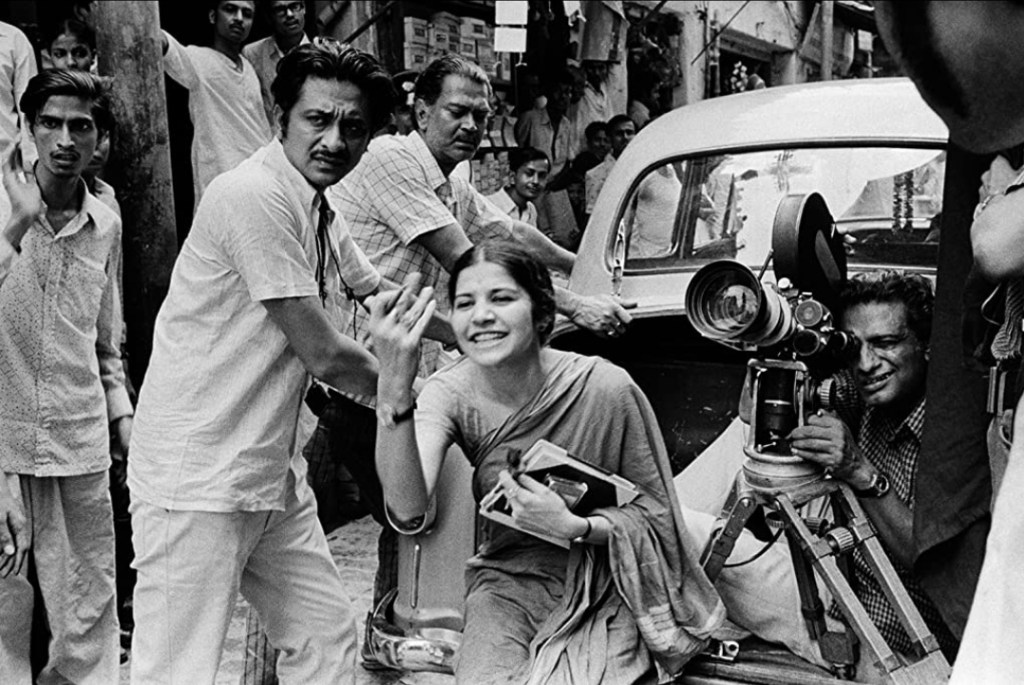
During the Shooting of Jana Aranya (1975)
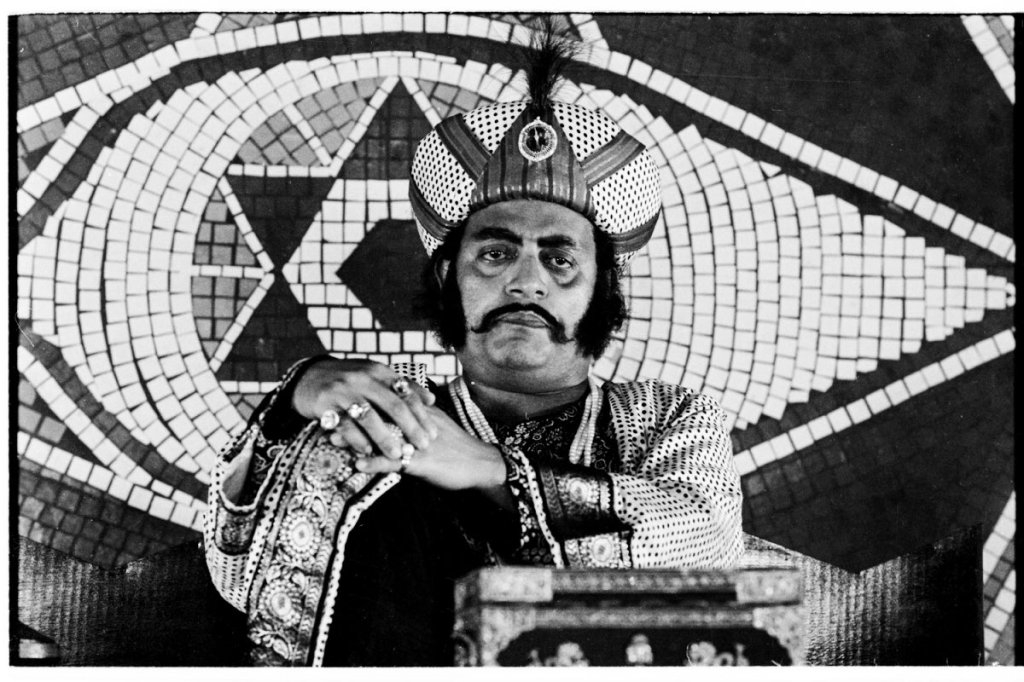
Utpal Dutta in Hirok Rajar Deshe(1980)
Soumitra Chatterjee in Hirok Rajar Deshe (1980)
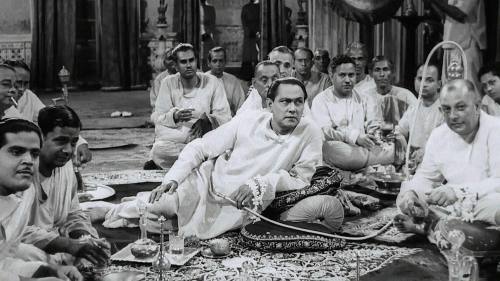
Chhabi Biswas (in middle) in Jalsaghar (1958)
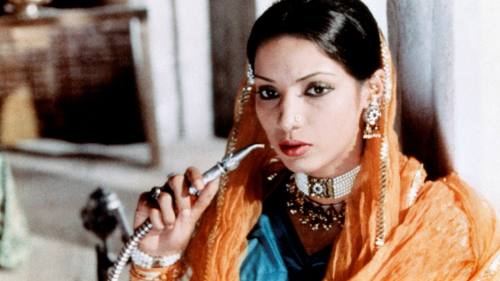
Shabana Azmi in Shatranj ke Khilari (1977)
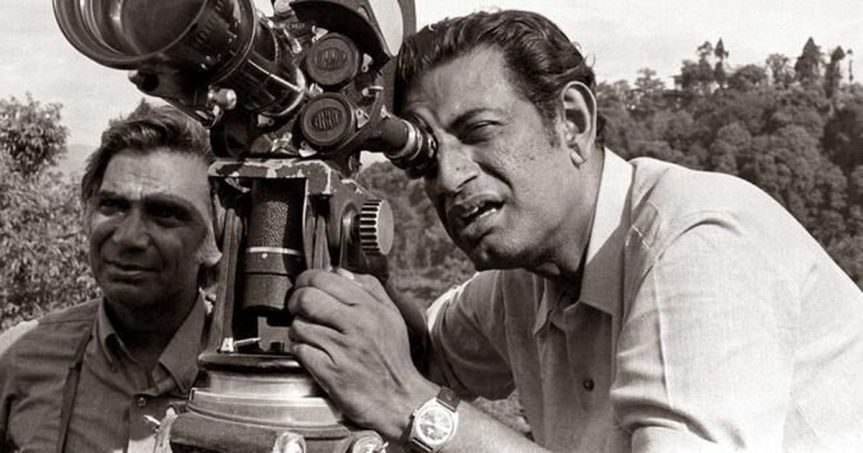
Satyajit Ray during the shooting of Sonar Kella(1974)

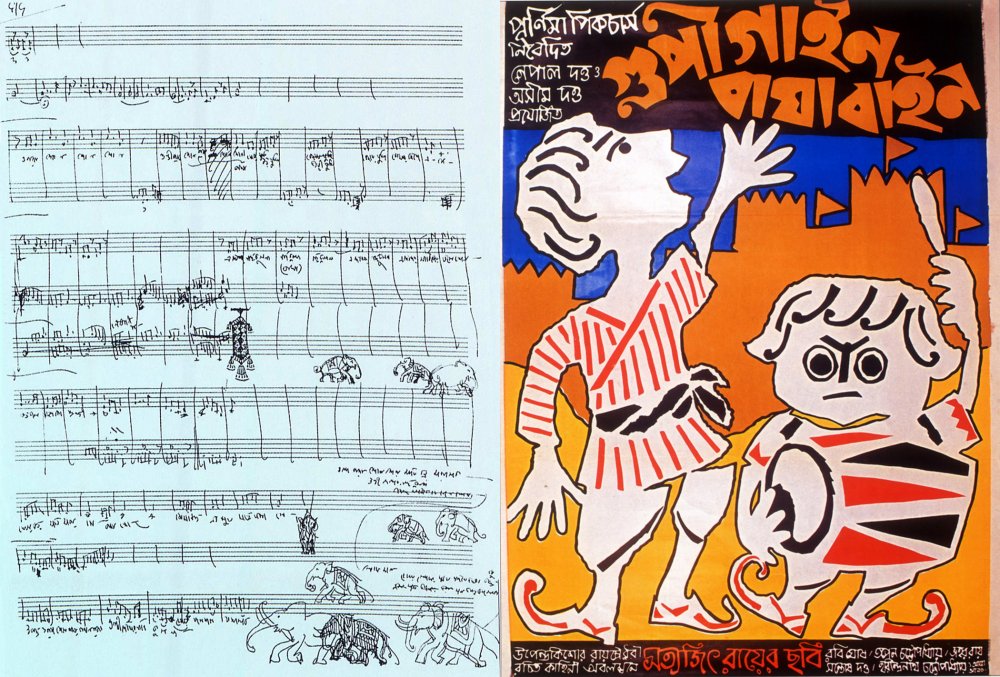
Ray’s major films about Hindu orthodoxy and feudal values (and their potential clash with modern Western-inspired reforms) include Jalsaghar (1958; The Music Room), an impassioned evocation of a man’s obsession  with music; Devi (1960; The Goddess), in which the obsession is with a girl’s divine incarnation; Sadgati (1981; Deliverance), a powerful indictment of caste; and Kanchenjungha (1962), Ray’s first original screenplay  and first colour film, a subtle exploration of arranged marriage among wealthy, westernized Bengalis. Shatranj ke Khilari (1977; The Chess Players), Ray’s first film made in the Hindi Language , with a comparatively large budget, is an even subtler probing of the impact of the West on India. Although humour is evident in almost all of Ray’s films, it is particularly marked in the comedy Parash Pathar (1957; The Philosopher’s Stone) and in the musical Goopy Gyne Bagha Byne (1969; The Adventures of Goopy and Bagha), based on a story by his grandfather. 

His other notable films were Ahsani Sanket (1973; Distant Thunder), Aranyer Din Ratri (1970; Days and Nights in the Forest) , Mahanagar (1963; The Big City) and a trilogy of films made in the 1970s—Pratidwandi (1970; The Adversary), Seemabaddha (1971; Company Limited), and Jana Aranya (1975; The Middleman), Ganashatru (1989; An Enemy of the People),  Shakha Prashakha (1990; Branches of the Tree), and the Agantuk (1991; The Stranger).
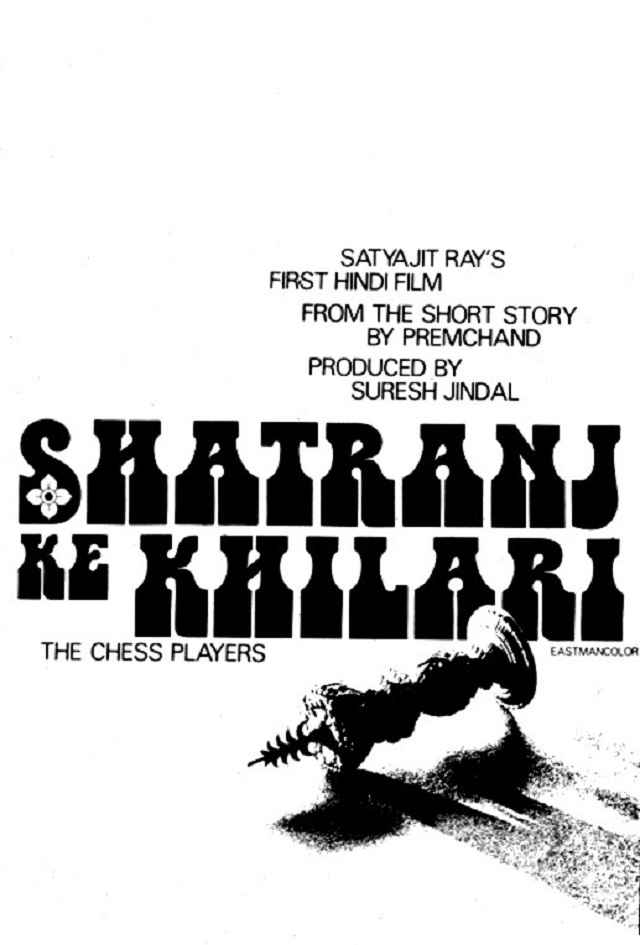
Poster of Shatranj ke Khilari (1977)
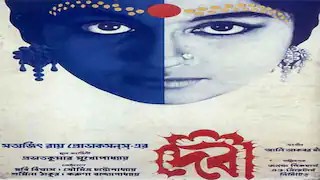
Poster of Devi(1960)
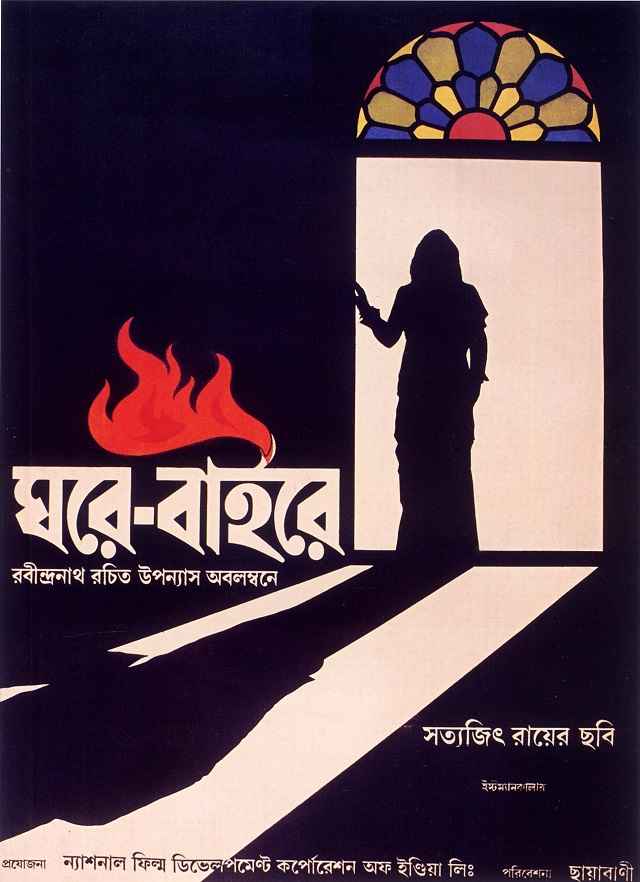
Poster of Ghore-Baire
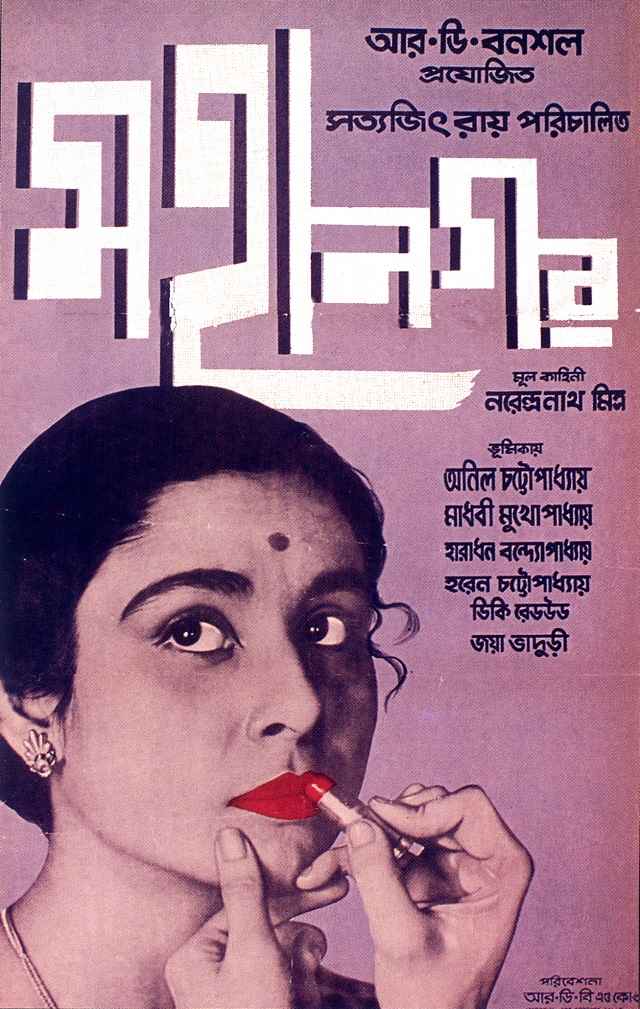
Poster of Mahanagar(1963)
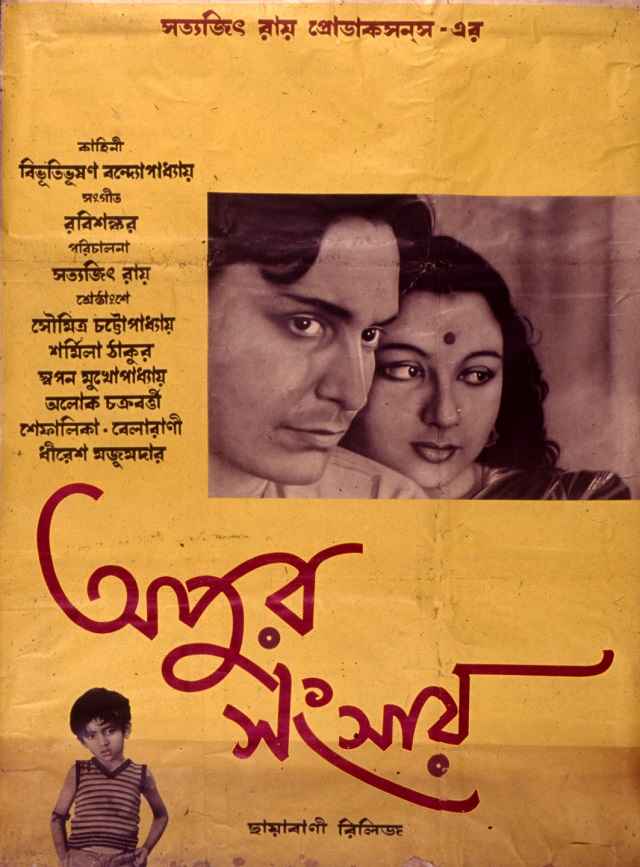
Poster of Apur Sansar (1959)
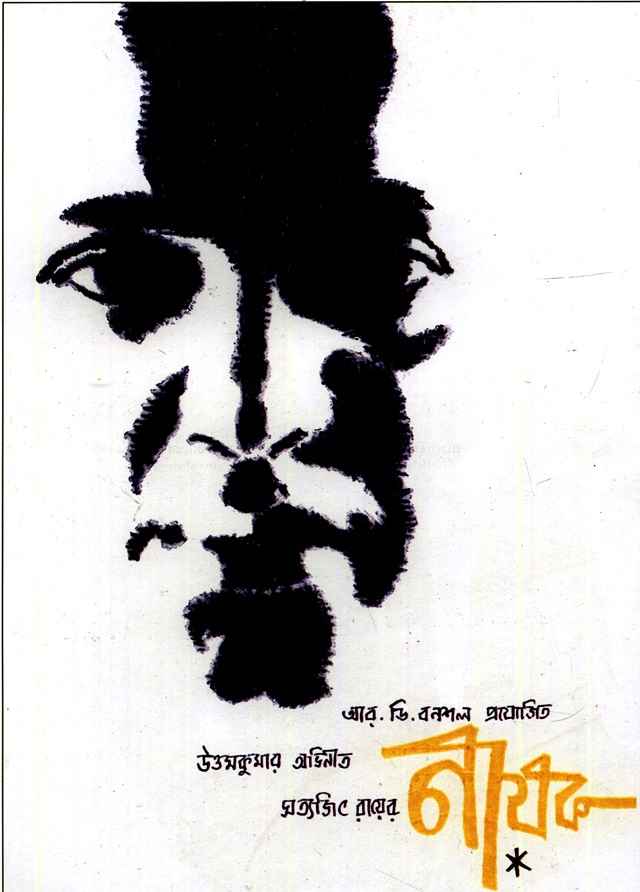
Poster of Nayak
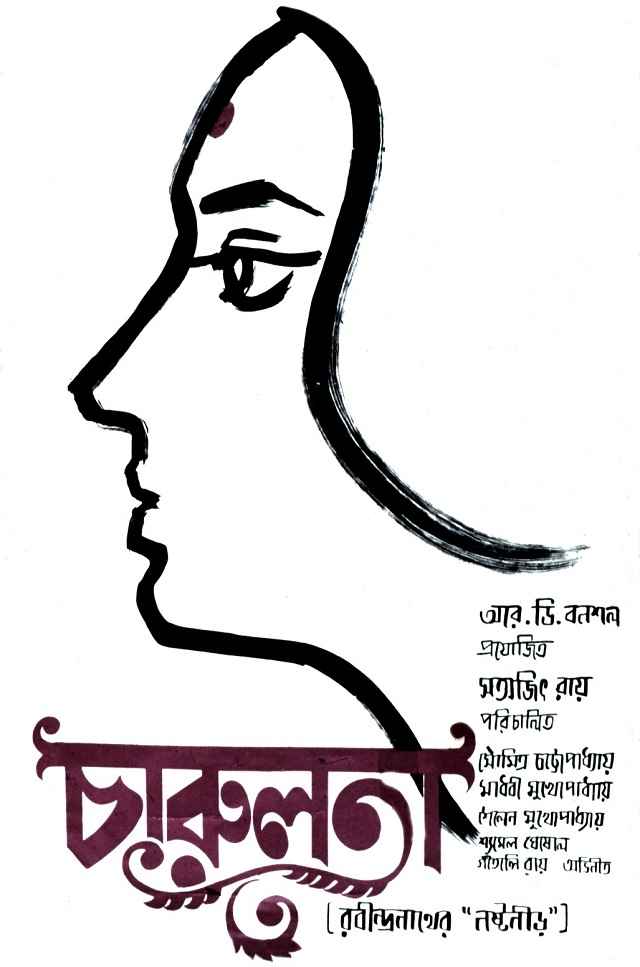
Poster of Charulata

Work As A Novelist

Ray created two popular fictional characters in Bengali children’s literature—Feluda, a sleuth, and Professor Shanku, a scientist. The Feluda stories are narrated by Topesh Ranjan Mitra aka Topse, his teenage cousin, something of a Watson  to Feluda’s Holmes. The science fictions of Shonku are presented as a diary discovered after the scientist had mysteriously disappeared. Ray also wrote a collection of nonsensical verses named Today Bandha Ghorar Dim, which includes a translation of Lewis Carroll’s “Jabberwocky”. He wrote a collection of humorous stories of Mulla Nasiruddin  in Bengali.  Ray wrote an autobiography about his childhood years, Jakhan Chhoto Chhilam (1982), translated to English as Childhood Days: A Memoir by his wife Bijoya Ray. In 1994, Ray published his memoir, My Year’s with Apu, about his experiences of making The Apu Trilogy.
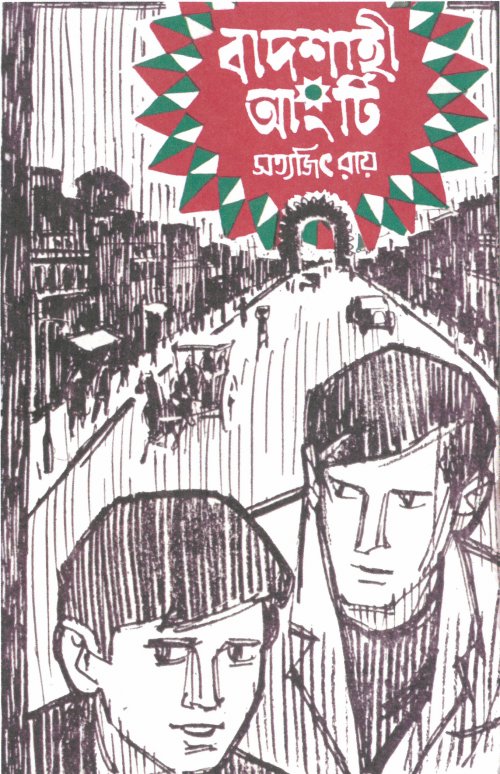
Book Cover illustrated by Satyajit Ray, himself for his first detective novel “Badshahi Angti”.
The musical score and Poster for Goopy Gyne Bagha Byne(1969), done by Satyajit Ray, himself
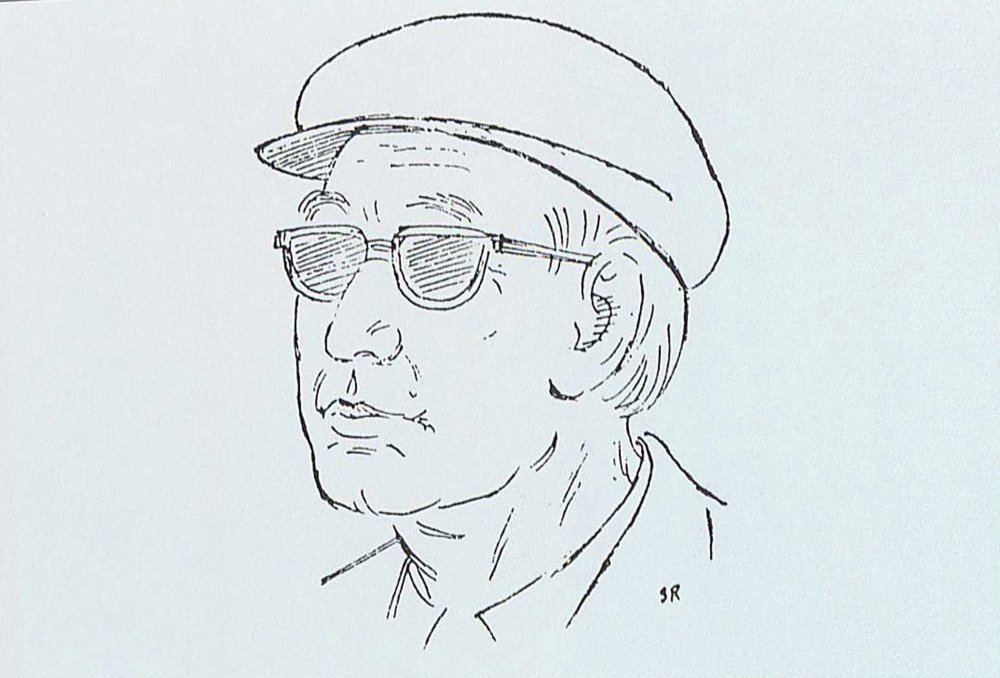
Portrait of Akira Kurosawa, illustrated by Satyajit Ray

Critical Analysis of Satyajit Ray

Instead of acting like a propagandist, Ray wanted to make people aware of the persistence of certain social problems. Devi and Ganasatru show people’s blind religious beliefsSakha Prasakhadiscloses the involvement of the top officials with bribery and corruption, Shatranj ke Khilari indicates the indolence and lack of political consciousness of the wealthy people, Aranyer Din Ratrireveals the insensitivity and boasting of the urban young men, and Mahapurush mockingly exposes the failure of the urban elite to embrace rational thoughts. Given the necessity of making people conscious of the same problems in present-day society, these films are still relevant today. Ray’s films also made a departure from tradition by frequently including strong women characters. Sarbajaya in Pather Panchali and Aparajito, Manisha in Kanchenjungha, Arati in Mahanagar, Charu in Charulata, Karuna in Kapurush, Aditi in Nayak, Aparna and Jaya in Aranyer Din Ratri, Sudarshana in Seemabadhdha, and Ananga in Asani Sanket appear as bolder, more confident, and more resilient than the male characters. In an interview, Ray states that the inclusion of unwavering women characters reflects his own attitudes towards and personal experience with women.

Awards Received by Satyajit Ray

Ray received many awards, including 36 National Film Award  by the Government of India, and awards at international film festival. In 11th Moscow International Film Festival 1979, he was awarded with the Honorable Prize for the contribution to cinema. At the Berlin International Film Festival, he was one of only four filmmakers to win the Silver Bear for Best Director  more than once and holds the record for the most Golden Bear  nominations, with seven. At the Venice Film Festival, where he had previously won a Golden Lion for Aparajito  (1956), he was awarded the Golden Lion Honorary Award in 1982. That same year, he received an honorary “Hommage à Satyajit Ray” award at the 1982 Cannes International Film Festival. Ray is the second film personality after Charlie Chaplin  to have been awarded an honorary doctorate  by Oxford University.

He was awarded the Dadasaheb Phalke Award  in 1985, and the Legion of Honour  by the President of France  in 1987. The Government of India awarded him the Padma Bhusan in 1965 and the highest civilian honour, Bharat Ratna, shortly before his death. The Academy of Motion Picture Arts and Sciences  awarded Ray an Honorary Award  in 1992 for Lifetime Achievement. In 1992, he was posthumously awarded the Akira Kurosawa Award for Lifetime Achievement in Directing at the San Francisco International Film Festival.

Conclusion

Whenever we talk about radical filmmaking in the realm of Bengali cinema, Satyajit Ray’s maiden feature (made in the face of tremendous odds) is mentioned. From Pather Panchali to his last film Agantuk, Ray never compromised on high standards, thereby making a huge impression. Having a greater familiarity with the oeuvre of Ray would enable people to understand the impressive qualities and importance of socially-meaningful cinema. We are surely in need of films that would make us perceive the beauty of a dewdrop on a blade of grass, strengthen our sense of humanism, and raise our social consciousness—hence, the everlasting relevance of the cinema of Satyajit Ray.
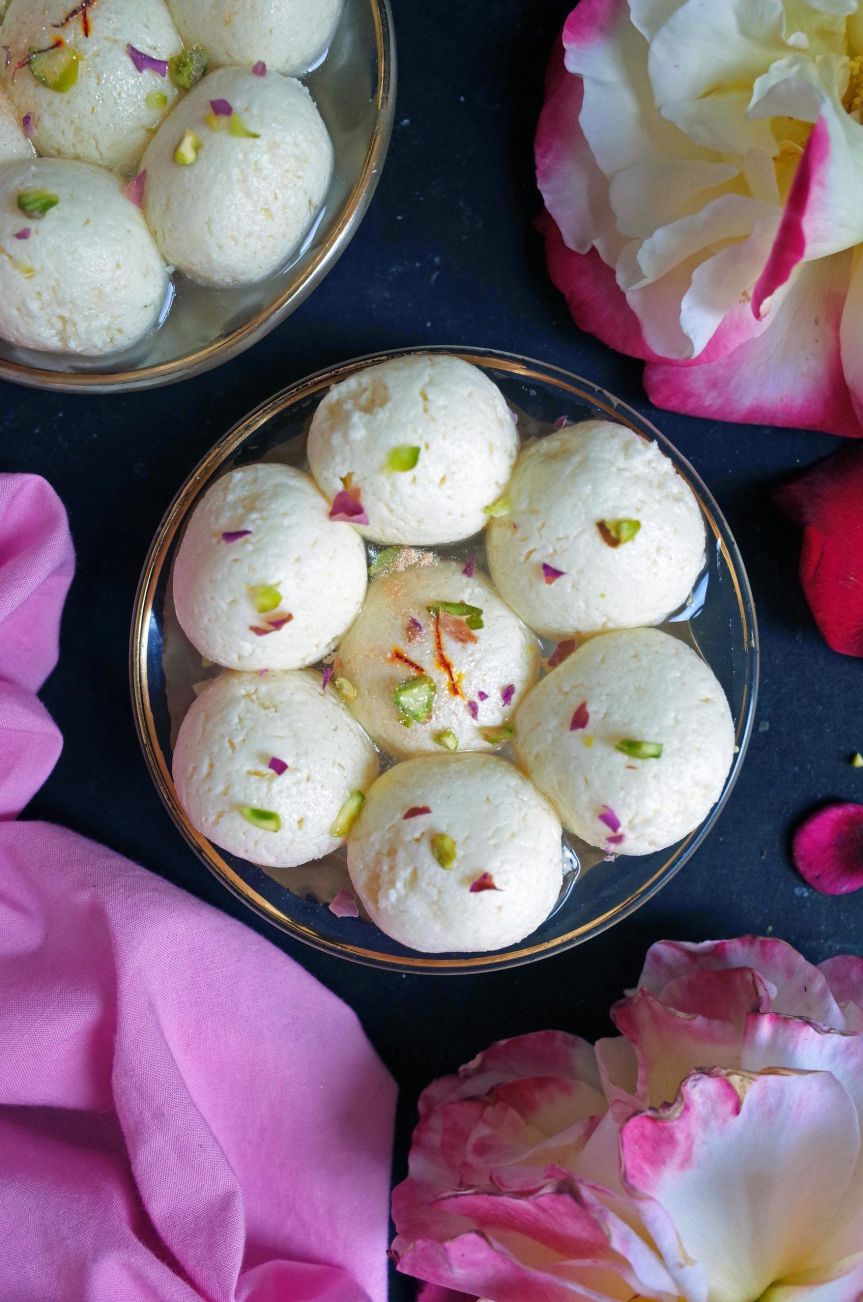
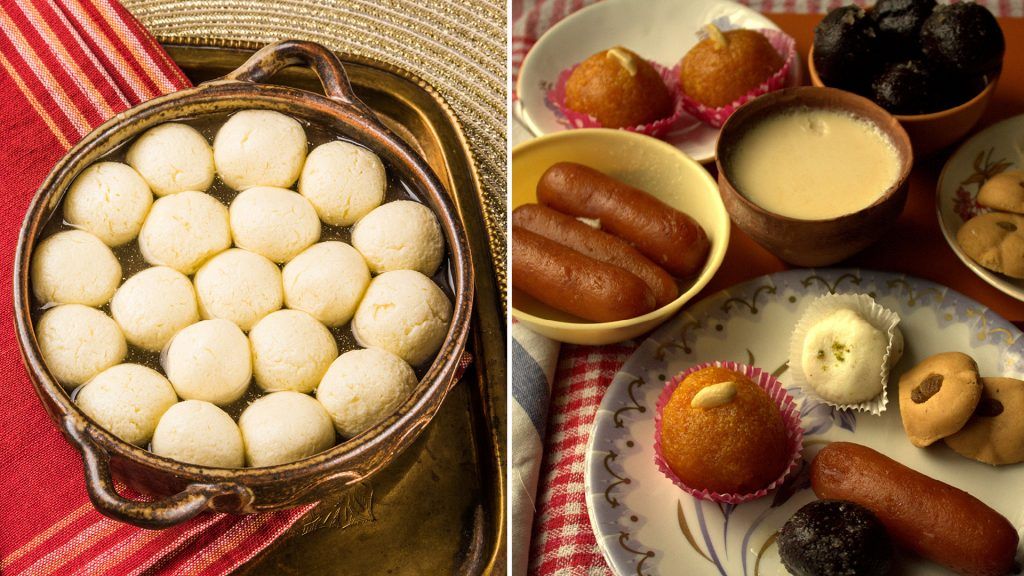
Bengali Mishtis: The Delectable Sweet Affair of Bengal

Traditional Sweets of Bengal

Introduction

Bengal is well-known for its music, cinema and delicious food, especially the mouth-watering sweets. In fact, it’s rather hard not to run into a sweet shop in almost every corner of the land, including the narrowest of the lanes. And, it’s equally hard to find a Bengali who is not in love with their ‘mishti’. Bengalees are incredibly proud of the sweets of Bengal and their unique appeal. And for a good reason too — Bengali sweets have wooed Indians and foreigners alike.

Bengali Mishtis

History of Sweets in Bengal

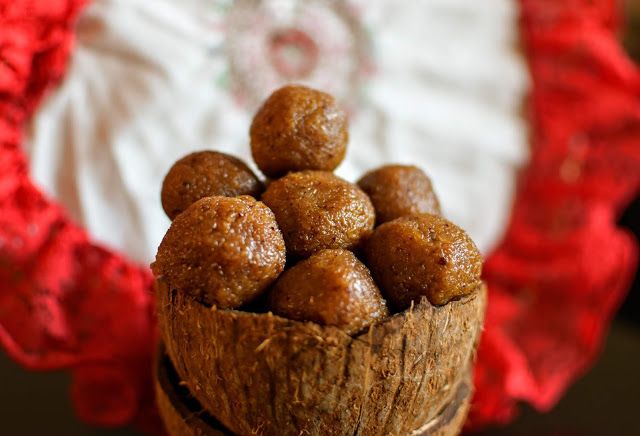
The prominent presence of sweets in Bengali cuisine can be noted throughout history. Ancient Bengal was known as ‘Gauda Banga’, a name believed to be originated from the term ‘Gur’ or molasses that were harvested in abundance in the region. The early Bengali sweets were made from the delicious jaggery or molasses and coconuts. There were several sweets made from ‘khoya and kheer’, which are Bengali names for milk solids and condensed milk, respectively. Sweets like ‘Naru’, ‘Moya’ and ‘Takti’  were popular in ancient Bengal. The uses of different fruits to make a variety of sweets were also prevalent. Books like Manasa Vijaya Kavya, written by 15th-century Bengali poet Bipradas Pipilai, also account for how varieties of ‘pithe’ or Indian Cake made from rice flour, jaggery, kheer and milk solids have been an integral part of Bengali rituals and festivals.

Traditional Coconut Balls or Narkel Naru
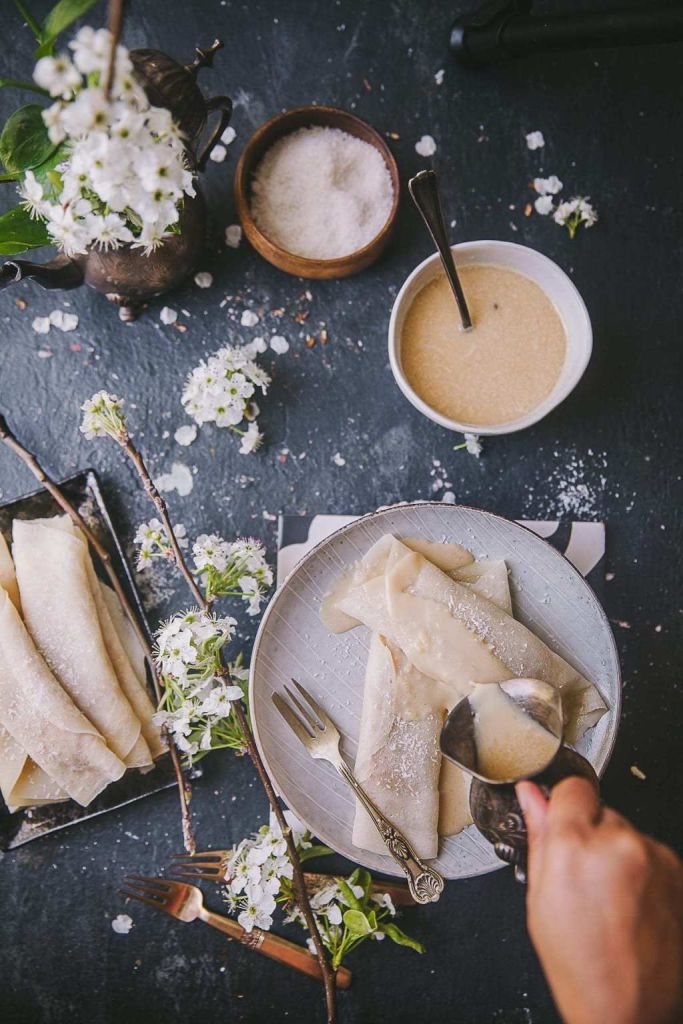
Patisapta or Eggless Crepes
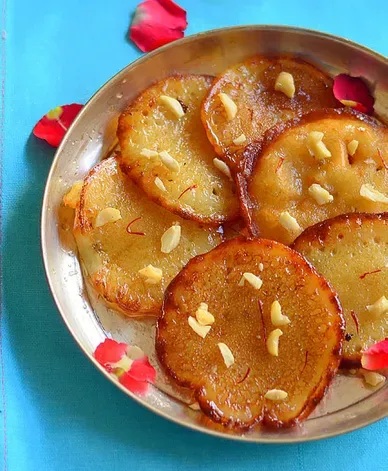
Malpua or Indian Pancakes

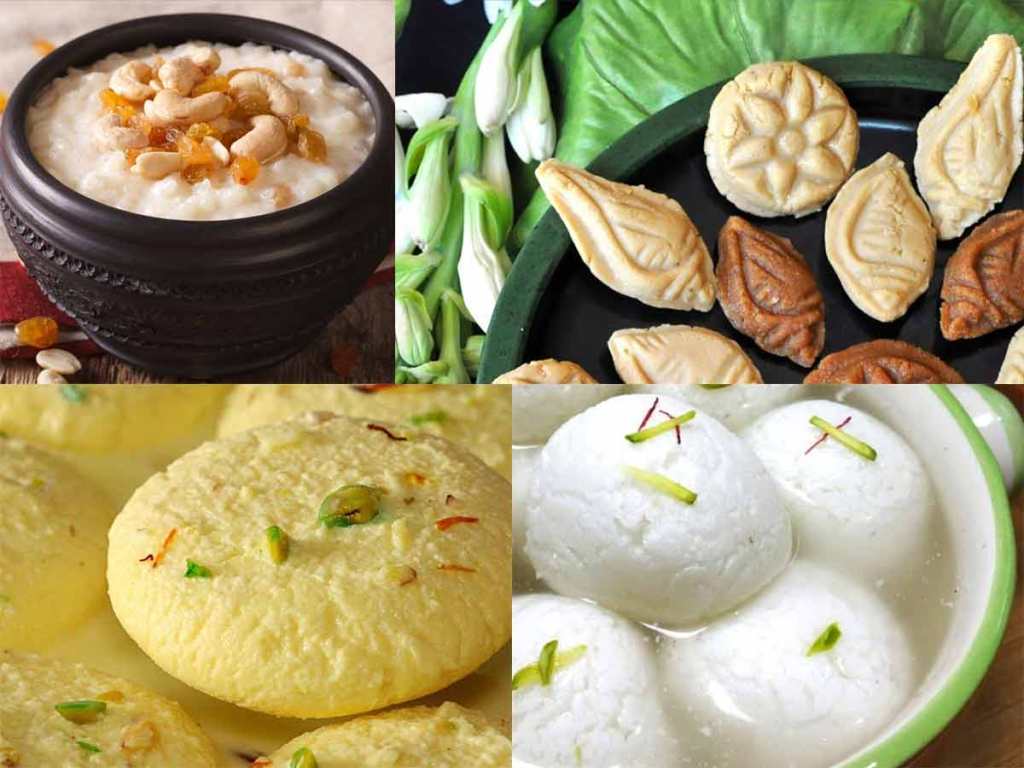
The introduction of ‘Chhana’ (Cottage Cheese) in Bengali cuisine happened after the Portuguese invaded Bengal, yet it’s interesting how today most of the characteristic Bengali sweets are made primarily from fresh ‘chhana’ (cottage cheese) and sugar. The curdling of milk with an acidic substance was forbidden according to Hindu cultures, but the Portuguese loved their cheese. After settling down in and around Kolkata in the 17th century, the Portuguese tradition of making sweets with cheese inspired the local cuisine as well. The Bengali confectioners then picked up this incredible art of curdling milk and creating mouth-watering ‘Sandesh’ and ‘Rosogollas’ among others.

Some Famous Bengali Sweets

Bengalees love all their sweets but among those, some are all time winners who can brighten up moods on a tiring day, and can even spoil a diet that you are maintaining for too long! Let’s dive deep into the varieties of some scrumptious and unique Bengali Mishtis.

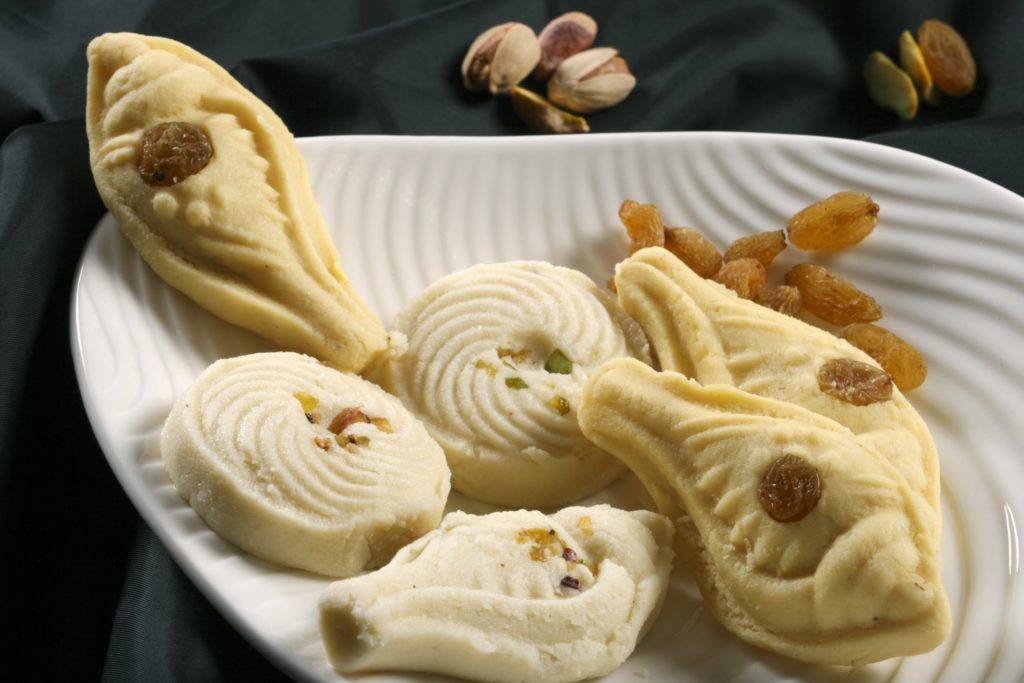
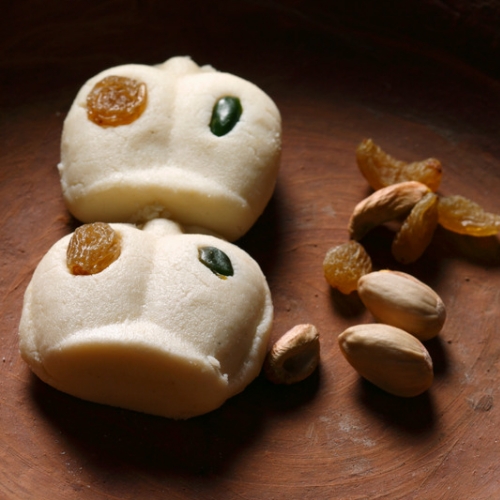
Sandesh

The simplest yet one of the most loved sweet of Bengal, is Sandesh. Generally, made by fine kneading of fresh cottage cheese along with sugar powder, cardamom essence and pistachios to garnish. If jaggery is used, instead of sugar then, it’s called Nolen Gurer Sandesh.

Sandesh

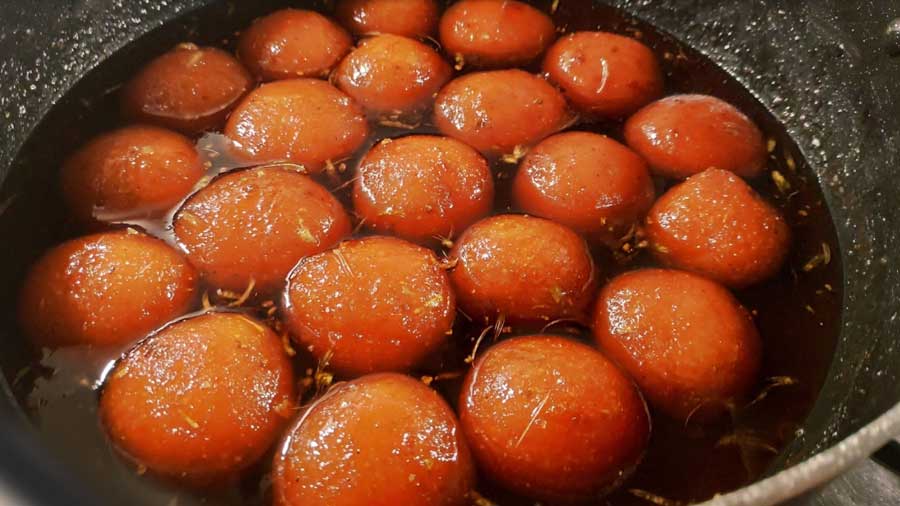
Pantua

One of Bengal’s most loved syrupy sweets, is Pantua. Though it has an uncanny similarity with North India originated Gulab Jamun, taste and procedure wise they are quite different. Balls made of cottage cheese, semolina are deep fried and then tossed in sugar syrup until completely soaked in. And unlike Gulab Jamun, they can be served cold too.

Pantua

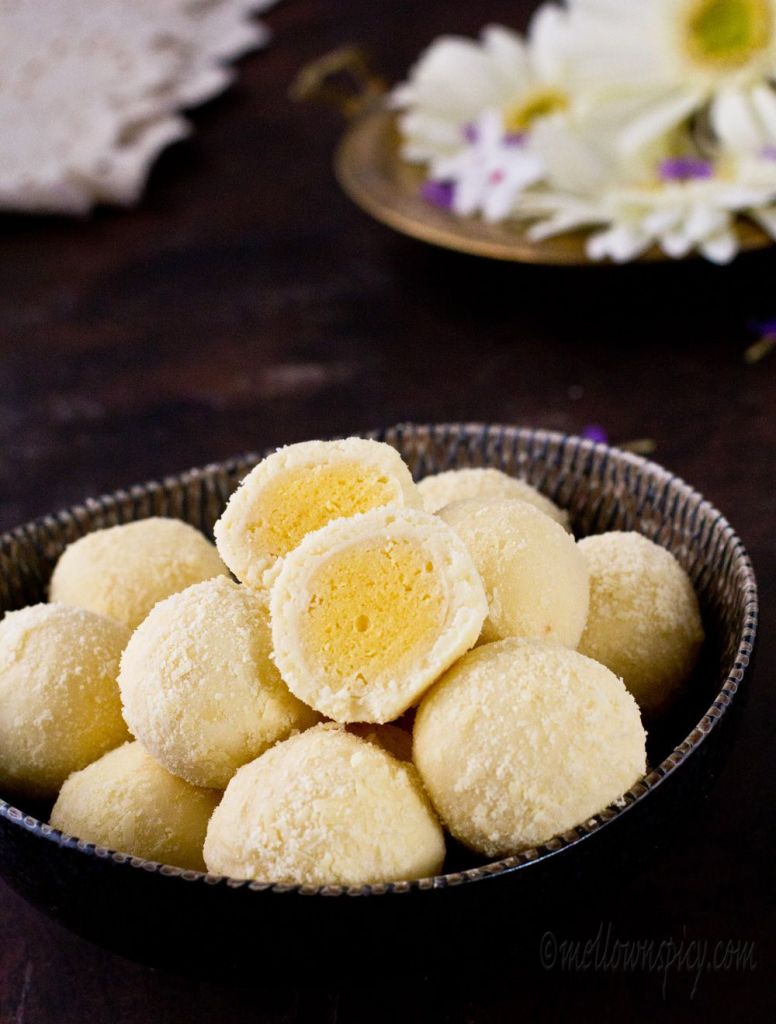
Kheer Kadam

The name of this sweet is suggestive of a flower named Kadamphool in Bengal. The flower is bright yellow in colour cover by soft, white spikes and has a distinctive smell. This Mishti resembles the flower, and has a layer of Sandesh covered over small Rosogollas .

Kheer Kadam

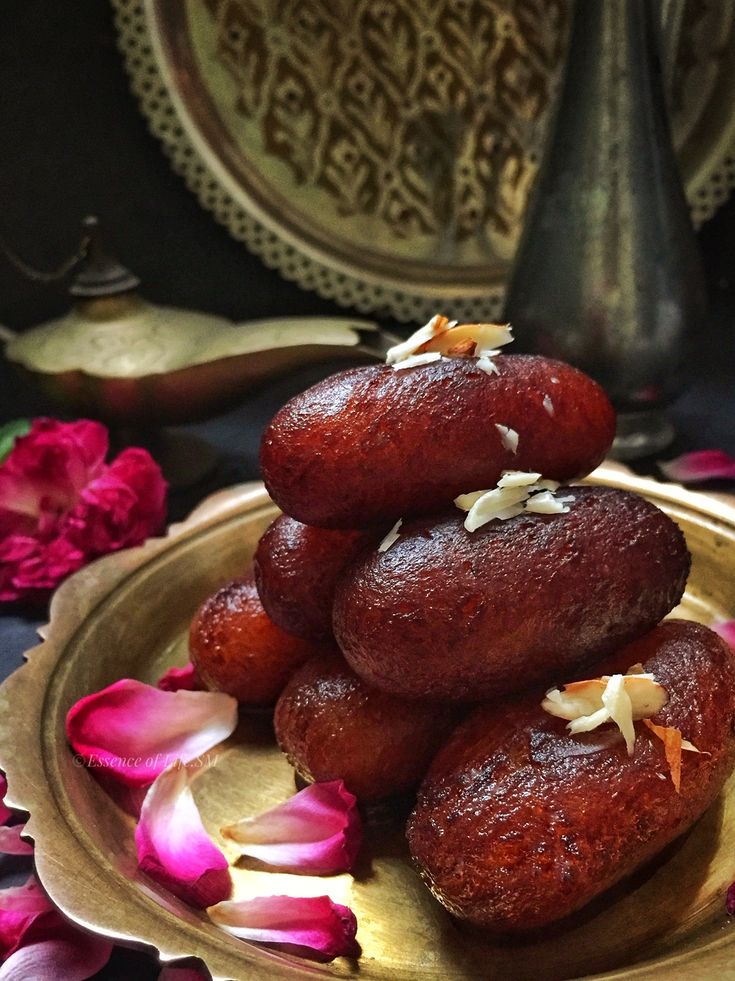
Lyangcha

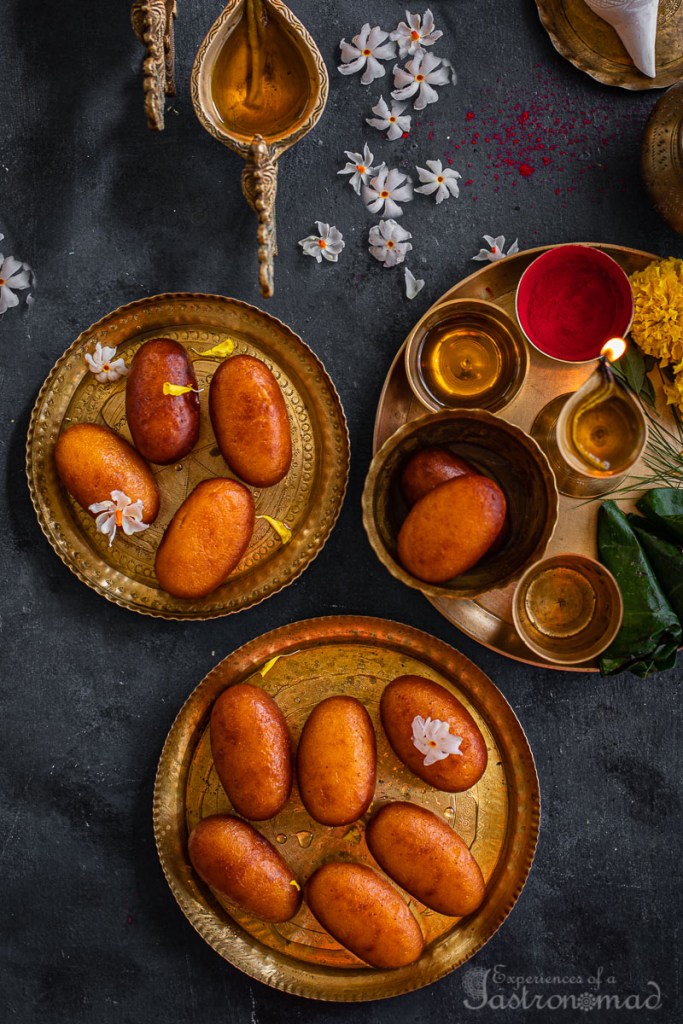
Lyangcha is a cylindrical fried sweet, soaked in sugar syrup and prepared with Fresh Chhena (Cottage cheese) and Mawa/ Khowa. To make soft and tasty Lyangcha use of Fresh Chhena is must. Originated from Shaktigarh, around 80kms from Burdwan in West Bengal, Lyangcha is a staple of Traditional Bengali Mishtis.

Lyangcha

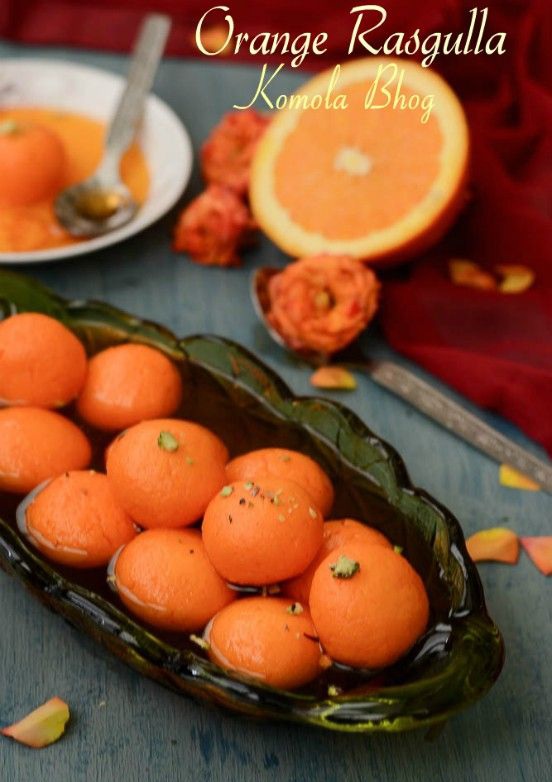
Komola Bhog

As the name suggests, Komola Bhog is literally the orange flavored Rosogolla, (Komola means Orange in Bengali) with the sweetness of Rosogollas and the tanginess of Orange. And of course, they are bright Orange in colour.

Komola Bhog

Jolbhora Sandesh

Jolbhora Sandesh, also known as Taalsas, is a sweet shaped like a ‘taal’ or kernel of the palm fruit. The sweet was created on the event of ‘Jamaisasthi’ by Surjya Modak. It is filled with sweet ‘Nolen gur’ inside and thus got its name. According to stories, Bandopadhay family of Chandernagar requested these sweets for their son-in-law. When he took his first bite of the sweet, the sweet juice spilled out. The sweet, thus, got well-known among the Bengalis.

Jol Bhora or Taal sas Sandesh

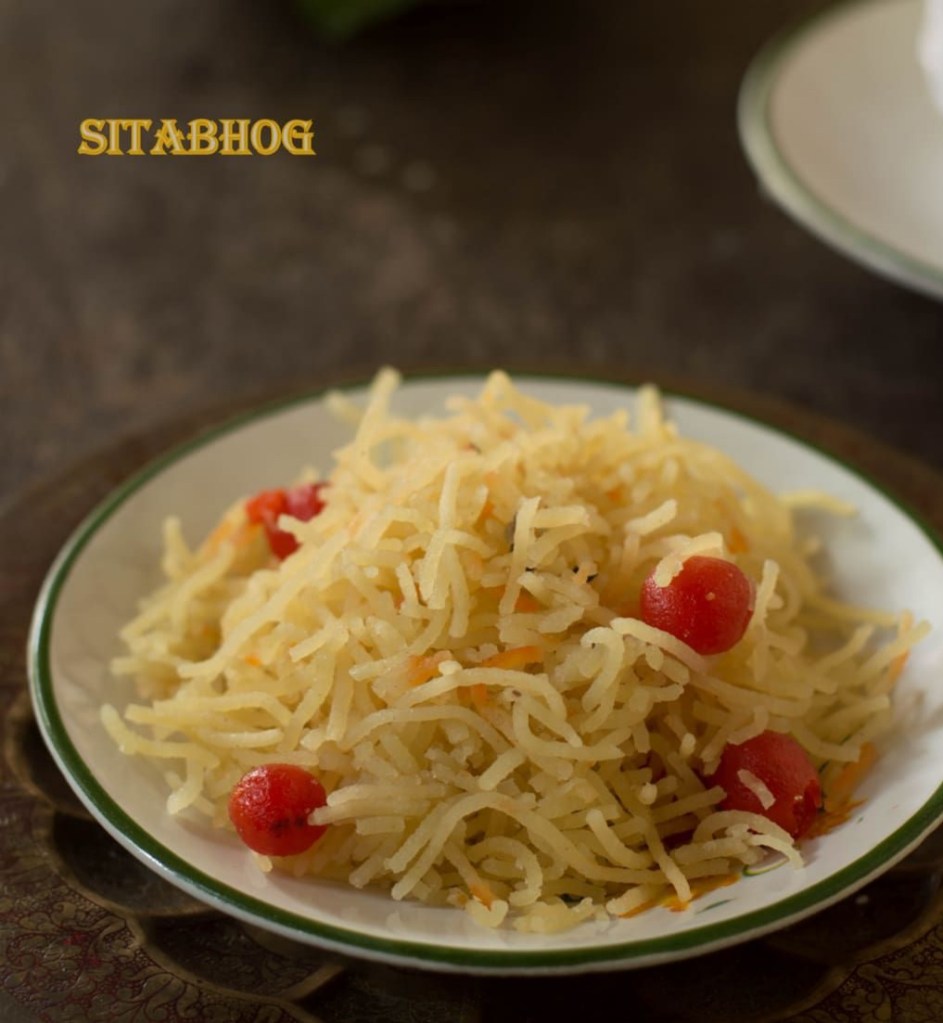
Sitabhog

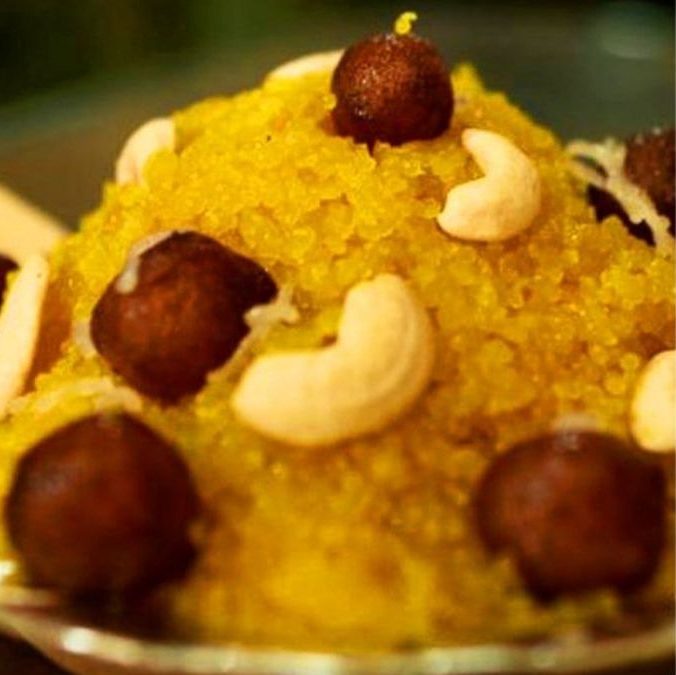
Originated from Burdwan in Bengal, Sitabhog, according to Legends, was Goddess Sita’s favourite dessert and hence the name. Sita Bhog is prepared by frying a dough made of cottage cheese and powdered rice in ghee and then soaking it in sugar syrup. The final product looks like vermicelli served along with mini Gulab jamuns.

Sitabhog

Mihi-Dana

Originated from Burdwan in Bengal , these are one of the famous sweets, that has similarities with Motichur. These are granular, deep fried and soaked into sugar syrup. Recently, Mihi-Dana has received GI Tag from UNESCO and has received its first enormous foreign order to export to The Kingdom of Bahrain.

Mihi-Dana

Ledikeni/ Lady Kenny

Ledikeni or lady Kenny has been a popular Bengali dish since the British rule. The dish is named after Lady Canning, the wife of Charles Canning who was the Governor-General of India during the 19th century. The dish a light brown sweet ball made of Chenna which is fried and then soaked in sugar syrup. It tastes divine and is prepared on most auspicious days. 

Lady Kenny

Rosogollas

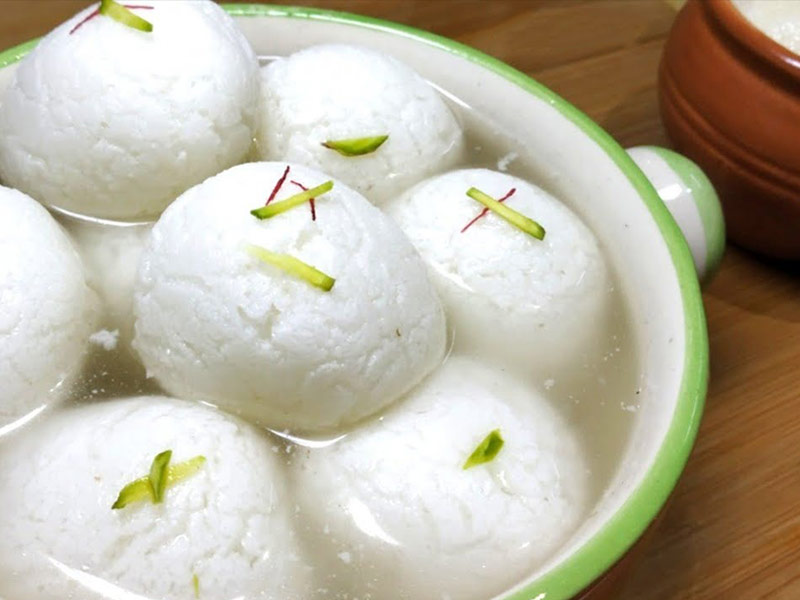
Rosogollas has done the honourable deed of introducing many, if not all, North Indians to the Bengali cuisine. These magical balls are prepared by dipping a mixture of cottage cheese and semolina dough into a sweet sugar syrup. The mere thought of those soft and spongy balls makes the mouth water.

Rosogollas

Laal Mishti Doi (Caramelized Sweet Yogurt)

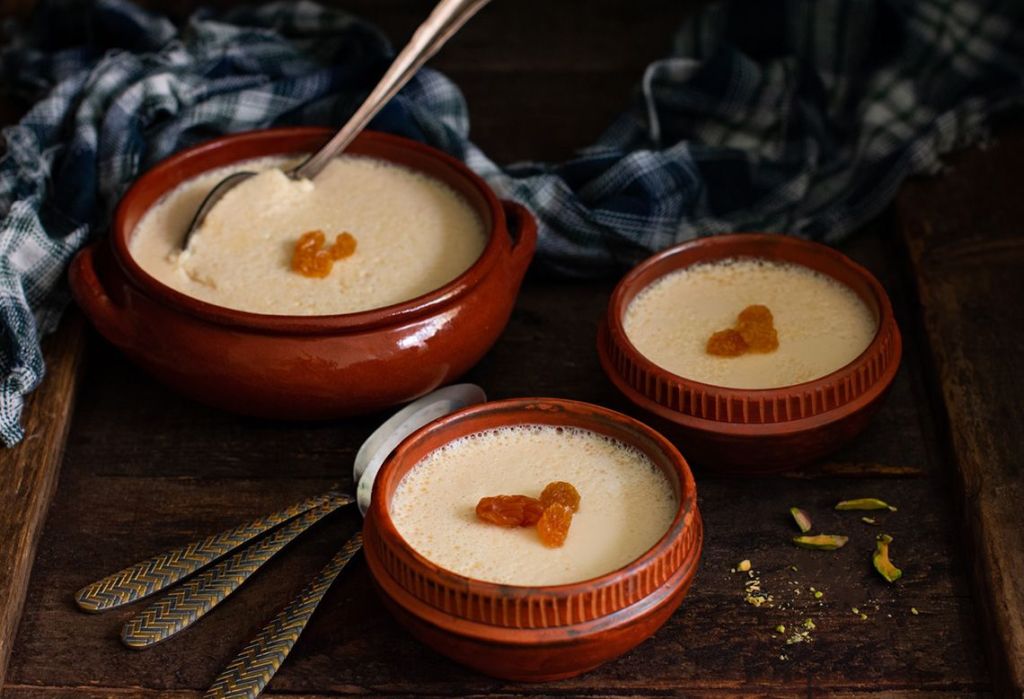
Just like the name, this Bengali dessert is extremely simple and sweet. Mishti Doi is essentially sweetened yogurt which is prepared by adding sugar to boiling milk, then leaving it to ferment overnight and is served chilled. This quintessential dessert is often served in small earthen pots which add to the aesthetics of this dish.

Laal Mishti Doi

Conclusion

Ending on a sweet note, Mishtis are also an important part of the culture and tradition of Bengal. Be it during the festivals or weddings or just greeting guests, Bengali Mishtis are always the stars of the show. If you’re a sweet-tooth, you should try these once in a while. And good news is, that many of them are now available online to order from in India and abroad.

Bauls of Bengal: The Devoted Folk Singers

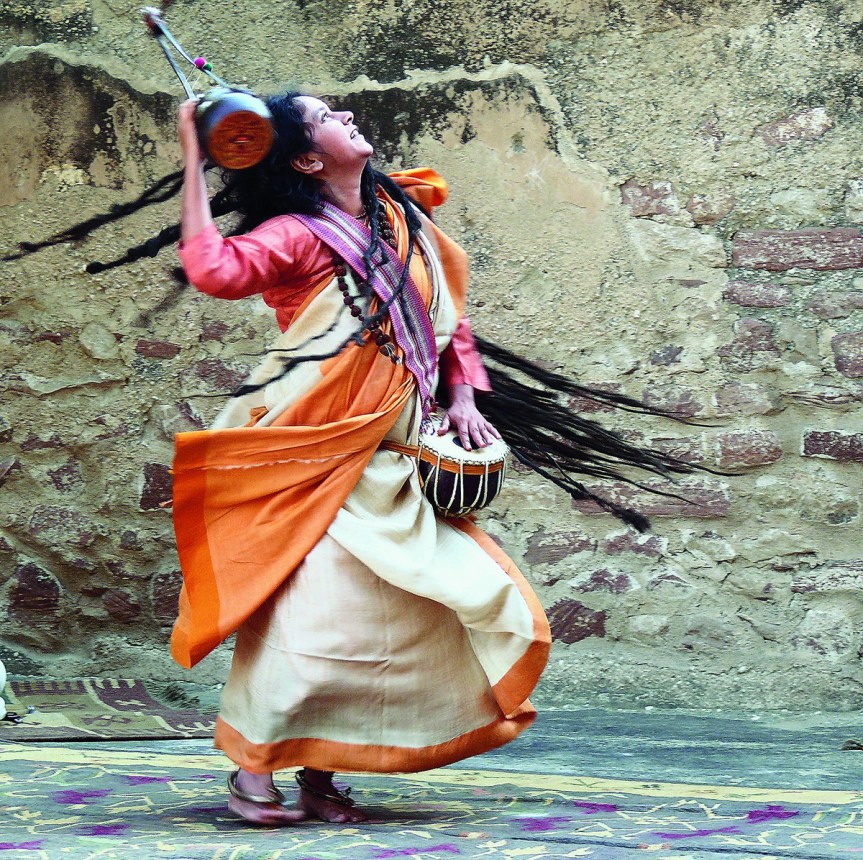
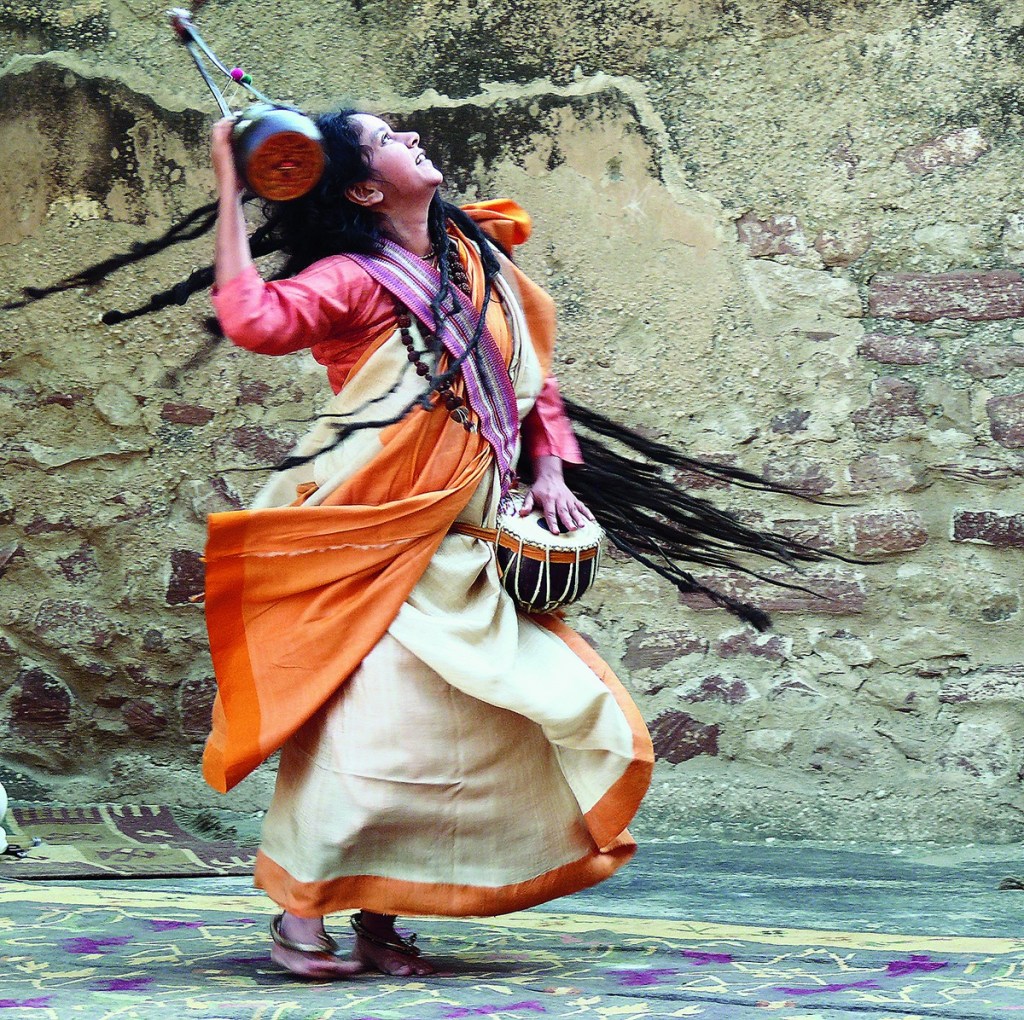
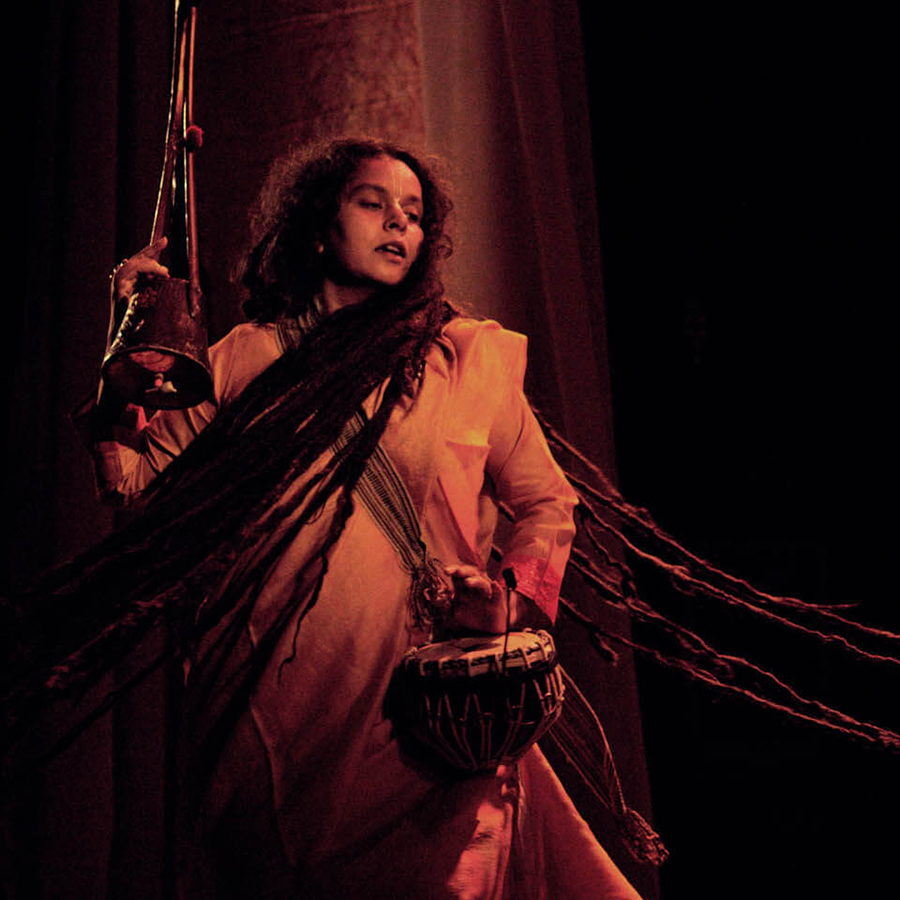
Parvathy Baul

Introduction

The Bauls of Bengal are an order of wandering folk singers that have kept their philosophies alive for centuries. But modern demands threaten to overtake their simple, itinerant lifestyles. Now, an audio-visual record is being taken to keep their vocal traditions alive for generations yet to come.

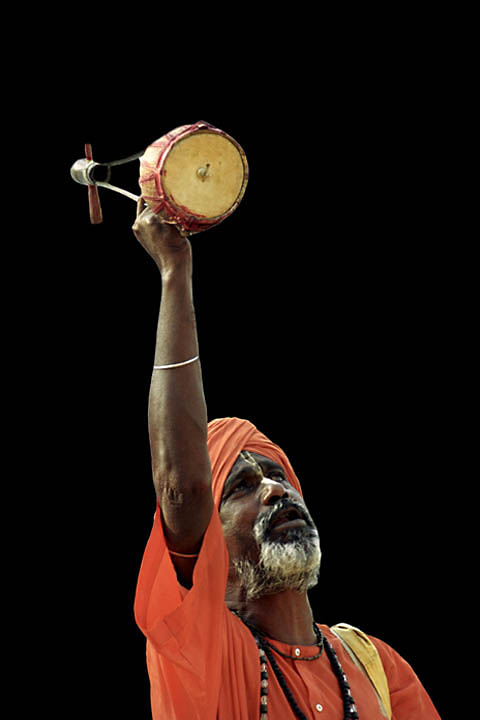
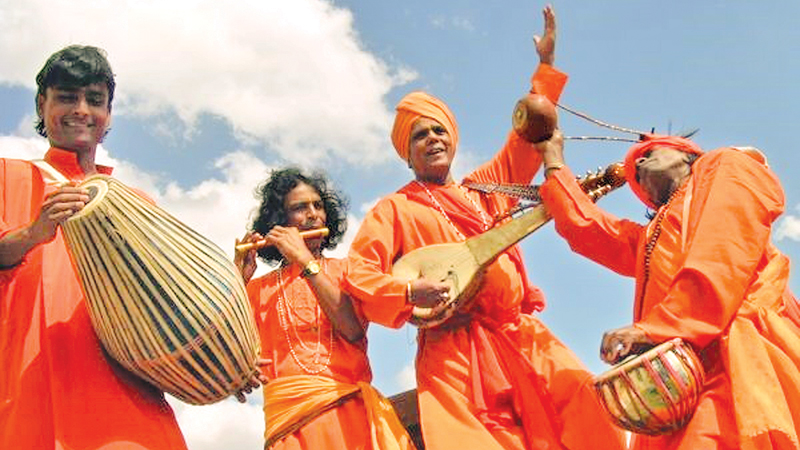
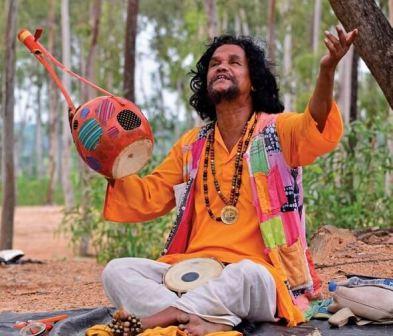
A Baul holding a Dotara

Bauls : Who They Are

In the Bengal region of South Asia, however, itinerant mystics are still welcomed widely, respected for their sincere but simple way of life, and rewarded for the brilliance of their performances, sharing memorable poetry and music, mainly with rural communities, much as they have done for several centuries. These are the Bauls of Bengal – a group that pursue a life of self-denial and meditative discipline, committed to a belief that ‘the ultimate’ existence is to be found, not so much through rituals in holy places, but in every ‘self’ and are enthusiastic to share this passion almost exclusively through their art. Bauls belong to an unorthodox devotional tradition, influenced by Hinduism, Buddhism, Vaishnavism and Sufi Islam, yet distinctly different from them. Bauls neither identify themselves with any organized religion nor with the caste system, special deities, temples or sacred places. They share only one belief —that God is hidden within the heart of man and neither priest, prophet, nor the ritual of any organized religion will help one to find Him there. To them we are all a gift of divine power and the body is a temple, music being the path to connect to that power.

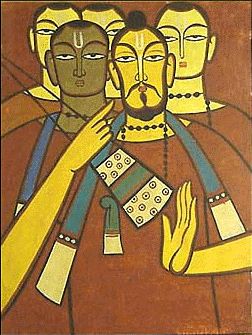
Bauls artwork by Jamini Roy

Historic Background

The word Baul comes from the Sanskrit word “Batul,” which means mad and is used for someone who is possessed or crazy for God. The Bauls are wandering minstrels of West Bengal and Bangladesh, whose song and dance reflect the joy, love and longing for mystical union with the Divine. The Baul tradition of mendicancy – ascetics who entertain in exchange for subsistence – has ancient origins, and seems to have thrived well before the rule of the great Mughal Emperors from the 16th to 18th centuries, a period during which Islam spread eastwards from the Middle East to Bengal and beyond. Originally the district of Birbhum in West Bengal was the seat of all Baul activity. Later, the Baul domain stretched to Tripura in the north, Bangladesh in the east, and parts of Bihar and Orissa in the west and south respectively. In Bangladesh, the districts of Chittagong, Sylhet, Mymensingh and Tangyl are famous for Bauls. Bauls from far off places come to participate in the Kenduli Mela and the Shantiniketan Poush Mela –the two most important fairs held in West Bengal for Baul music.

A group of Bauls in Bengal

The Characteristics and Attires

They can often be identified by their distinctive clothes and musical instruments. It’s easy to identify a Baul singer from his uncut, often coiled hair, saffron robe (alkhalla), a necklace of beads made of basil (tulsi) stems. Bauls use a number of musical instruments: the most common is the ektara, a one-stringed “plucked drum” drone instrument, carved from the epicarp of a gourd, and made of bamboo and goatskin. Others include the dotara, a long-necked fretless lute (while the name literally means “two stringed” it usually has four metal strings) made of the wood of a jackfruit or neem tree; besides khamak one-headed drum with a string attached to it which is plucked. The only difference from ektara is that no bamboo is used to stretch the string, which is held by one hand, while being plucked by another. Drums like the duggi a small hand-held earthen drum, and dhol and khol; small cymbals called kartal and manjira, and the bamboo flute are also used. Ghungur and nupur are anklets with bells that ring while the person wearing them dances.

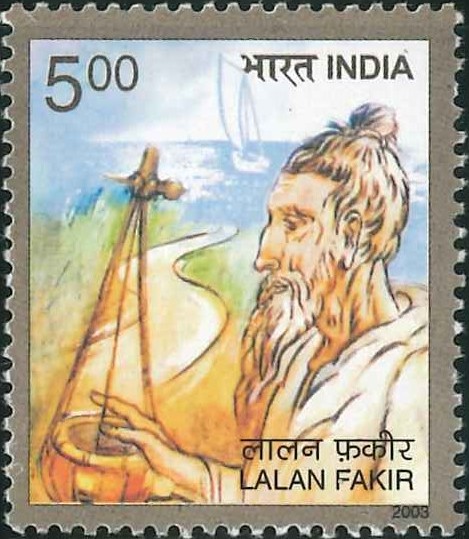
Lalan Fakir

Lalan Fakir : The Legend of Baul Movement

 Lalan Fakir (1774 -1890), the greatest of all Bauls, continued to compose and sing songs for decades without ever stopping to correct them or put them on paper. He composed a thousand songs, of which just 600 can be traced. It was only after his death that people thought of collecting and compiling his repertoire. He rejected the division of society into communities, protesting and satirising religious fundamentalism of all kinds. Lalan’s metaphysical lyrics raise a basic question – that if there is a single creator then why so many religions exist ? This is a pertinent problem in today’s world; we all know that the different ‘Gods’ have created acrimony between races and sects and as of today this concept of different ‘Gods’ remains the most decisive divisive force on planet Earth. His most famous song quoted, “Khanchar Bhitor Ochin Pakhi Kemne Ase Jay”. In 2004, Lalan was ranked 12 in BBC’s poll of the Greatest Bengali of all time.

Parvathy Baul

Baul Philosophy

Bauls do not believe in the pious ‘other world’ and most of the times deny the presence of super powers. Looking from a different angle it can be said that according to them, ‘God’ resides in each human being and it is for the human being to realise this truth, the human beings are the best exponents of spirituality ever to tread on this Earth. Nowhere did this philosophy leave its imprint more powerfully than on the work of Rabindranath Tagore, who talked of Bauls in a number of speeches in Europe in the 1930s. An essay based on these was compiled into his English book ‘The religion of man’. An important part of Baul philosophy is “Deha tatta”, a spirituality related to the body rather than the mind. They seek the divinity in human beings. Often, the lyrics philosophize on love and stress to remain unattached and unconsumed by the pleasures of life even while enjoying them. Baul music celebrates celestial love, but does this in very earthy terms.

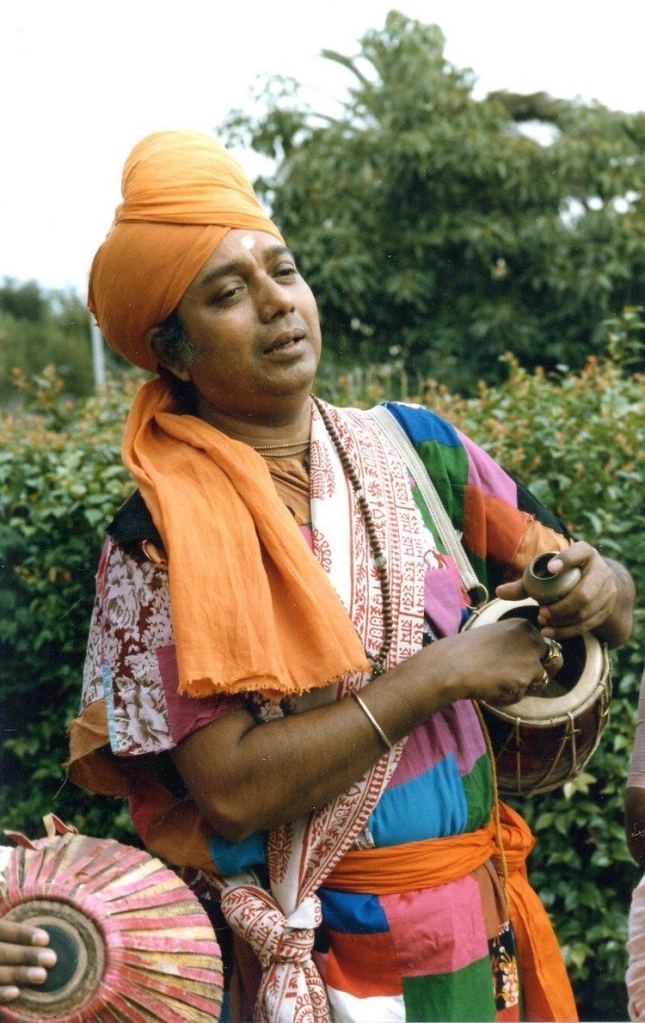
Purna Das Baul

International Connection

Referred to as the Baul Samrat, Purna Das Baul, introduced Baul songs to the West during an eight-months tour of the US in 1965 with stars like Bob Dylan, Joan Baez, Paul Robeson, Mick Jagger, Tina Turner, and all. Dubbed “India’s Bob Dylan” by the New York Times in 1984, Purna Das Baul has played with Bob Marley, Gordon Lightfoot and Mahalia Jackson and the likes. Currently another version of Baul called the folk fusion also called baul rock is also greatly accepted by the audience, especially in West Bengal. Kartik Das Baul has taken baul to different heights by associating himself with folk fusion. This type of baul was brought into the world of music by ‘Bolepur Bluez’, which was world’s first folk fusion band. There are also the Western Bauls in America and Europe under the spiritual direction of Lee Lozowick, a student of Yogi Ramsuratkumar. Their music is quite different (rock /gospel/ blues) but the essence of the spiritual practices of the East is well maintained.

A Baul in Shantiniketan,Birbhum

Conclusion

The tradition is so integral to Bengal that it’s hard to think of Bengali culture sans the Bauls. They’re not only an intrinsic part of Bengal’s music, they’re in the mud and air of this land and in the mind and blood of its people. The spirit of the Bauls is the spirit of Bengal– ever-flowing in its society and culture, literature and art, religion and spirituality.

Dhakai Muslin: The Exclusive Bengal Silk from The Past

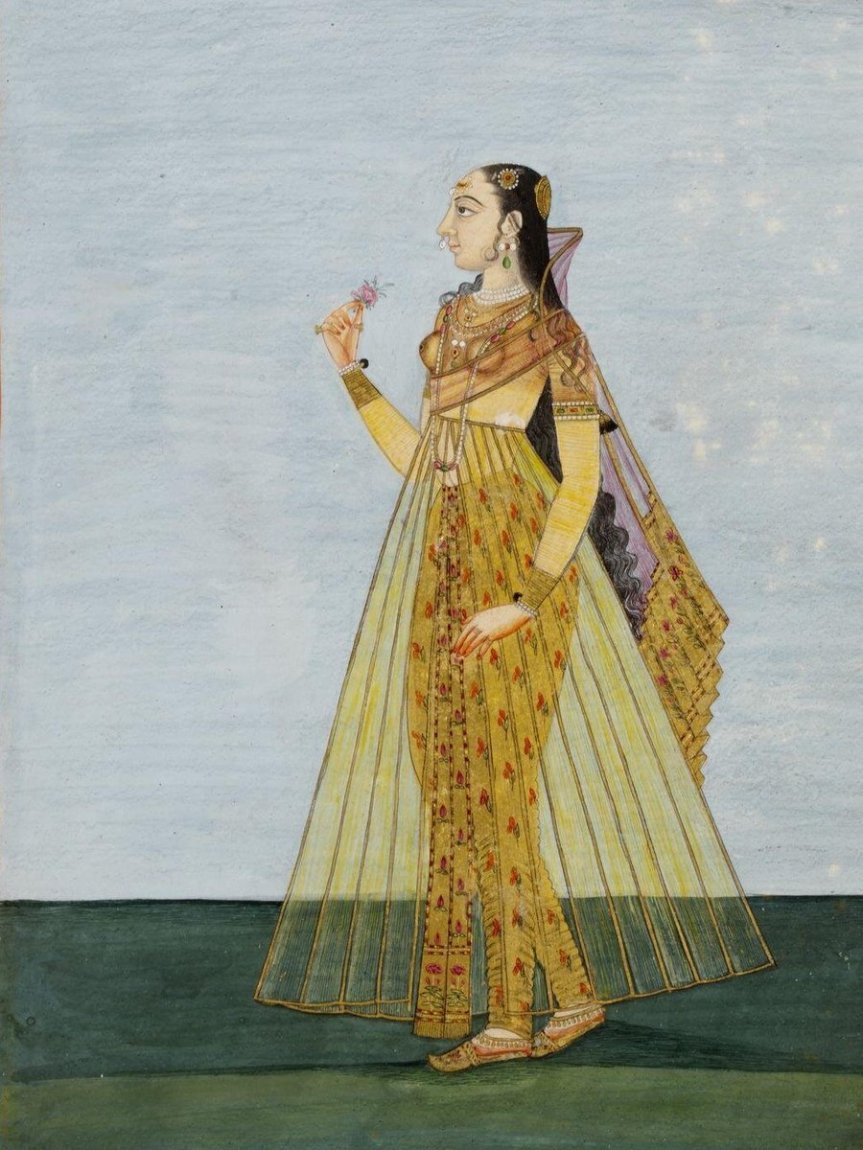
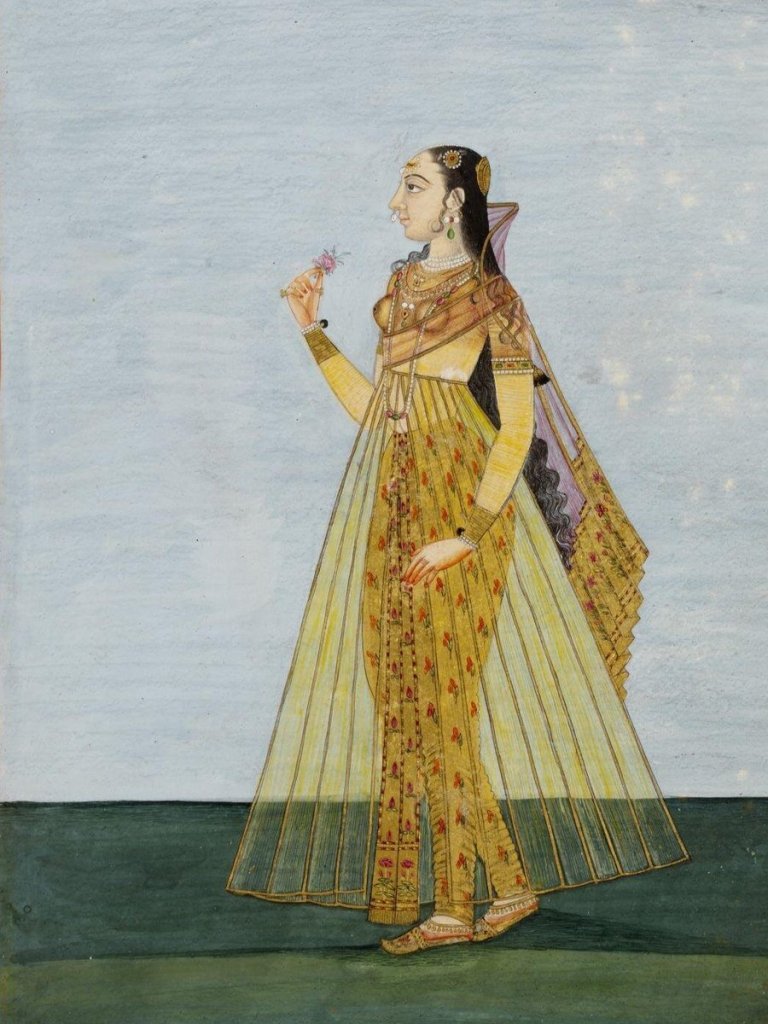
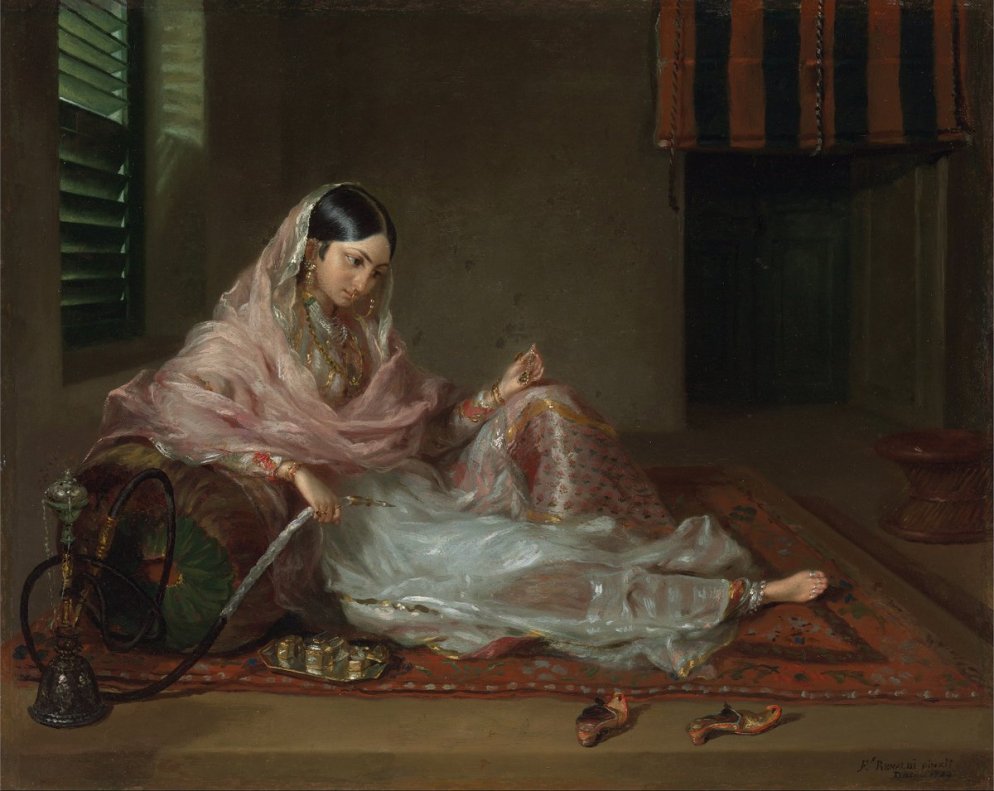
A portrait illustrating how Transparent Muslins were

Introduction

Muslin today has come to mean almost any lightweight, gauzy, mostly inexpensive, machine-milled cotton cloth. The word has lost all connection to the handwoven fabric that once came exclusively from Bengal. Cotton, stated the historian Fernand Braudel, was first used by the ancient civilizations on the Indus, while the art of weaving itself has been traced back to much earlier times. This head start perhaps was why ancient India became proficient in making cotton textiles. They became a staple export commodity to the Roman Empire, and they expanded in volume in the Middle Ages with the growth of the “maritime Silk Road” in the Indian Ocean.

Historic Background

Muslin a brand name of pre-colonial Bengal textile, especially of Dhaka origins. Muslin was manufactured in the city of Dhaka and in some surrounding stations, by local skill with locally produced cotton and attained world-wide fame as the Dhaka Muslin. The origin of the word Muslin is obscure; some say that the word was derived from Mosul, an old trade centre in Iraq, while others think that Muslin was connected with Musulipattam, sometime headquarters of European trading companies in southern India. Muslin is not a Persian word, nor Sanskrit, nor Bengali, so it is very likely that the name Muslin was given by the Europeans to cotton cloth imported by them from Mosul, and through Mosul from other eastern countries, and when they saw the fine cotton goods of Dhaka, they gave the same name to Dhaka fabrics. That the name Muslin was given by the Europeans admits of little doubt, because not only Dhaka cotton textiles, but cotton goods imported by the Europeans from other parts of India like Gujrat, Golconda, etc were also called Muslin.

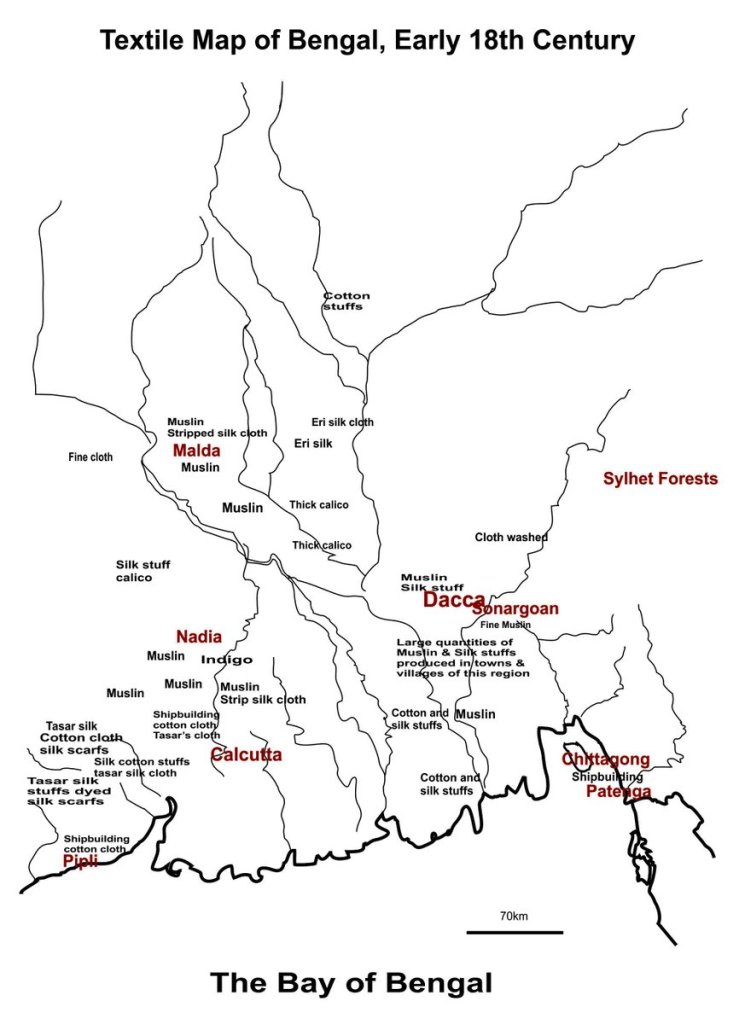
The route connecting the Hubs of Muslin Industry in Bengal

How Muslins Were Made

The textile industry of Bengal is very old. Bengal cotton fabrics were exported to the Roman and the Chinese empires and they are mentioned in Ptolemy’s Geography and the Periplus of the Erythraean Sea, and by the ancient Chinese travellers. But Dhaka Muslin became famous and attracted foreign and transmarine buyers after the establishment of the Mughal capital at Dhaka. The Muslin industry of Dhaka received patronage from the Mughal emperors and the Mughal nobility. A huge quantity of the finest sort of Muslin was procured for the use of the Mughal emperors, provincial governors and high officers and nobles. In the great 1851 Exhibition of London, Dhaka Muslin occupied a prominent place, attracted a large number of visitors and the British Press spoke very highly of the marvelous Muslin fabrics of Dhaka. Weavers in Dhaka, Bangladesh, used to make this incredibly fine cloth using a method called the discontinuous weft technique. This technique required the weaver to work two layers of weft – one as fine as spider’s silk to hold the cloth together and the other forming the pattern. Each pattern motif was worked individually, using fine bamboo sticks to interlace the pattern threads with the warp threads.

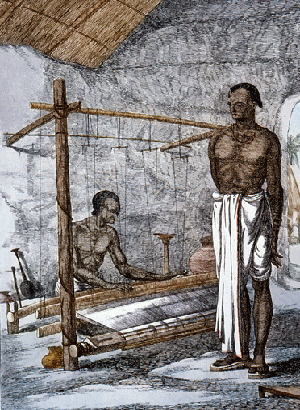
Weaving of Muslins under the supervision of royal official( Painting, in 1800s)

Types And Variations

The finest sort of Muslin was made of phuti cotton, which was grown in certain localities on the banks of the Brahmaputra and his branches. The other kinds of cotton called bairait and desee were inferior and were produced in different parts of Dhaka and neighbouring areas; they were used for manufacturing slightly inferior and coarse clothes.The productions of Dhaka weavers consisted of fabrics of varying quality, ranging from the finest texture used by the highly aristocratic people, the emperor, viziers, nawabs and so on, down to the coarse thick wrapper used by the poor people. Muslins were designated by names denoting either fineness or transparency of texture, or the place of manufacture or the uses to which they were applied as articles of dress. Names thus derived were Malmal (the finest sort), Jhuna (used by native dancers), Rang (of transparent and net-like texture), Abirawan (fancifully compared with running water), Khasa (special quality, fine or elegant), Shabnam (morning dew) Alaballee (very fine), Tanzib (adorning the body), Nayansukh (pleasing to the eye), Buddankhas (a special sort of cloth), Seerbund (used for turbans), Kumees (used for making shirts), Doorea (striped), Charkona (chequered cloth), Jamdanee (figured cloth). The finest sort of Muslin was called Malmal, sometimes mentioned as Malmal Shahi or Malmal Khas by foreign travellers. It was costly, and the weavers spent a long time, sometimes six months, to make a piece of this sort. It was used by emperors, nawabs etc. Muslins procured for emperors were called Malbus Khas and those procured for nawabs were called Sarkar-i-Ala. The Mughal government appointed an officer, Darogah or Darogah-i-Malbus Khas to supervise the manufacture of Muslins meant for the emperor or a nawab.

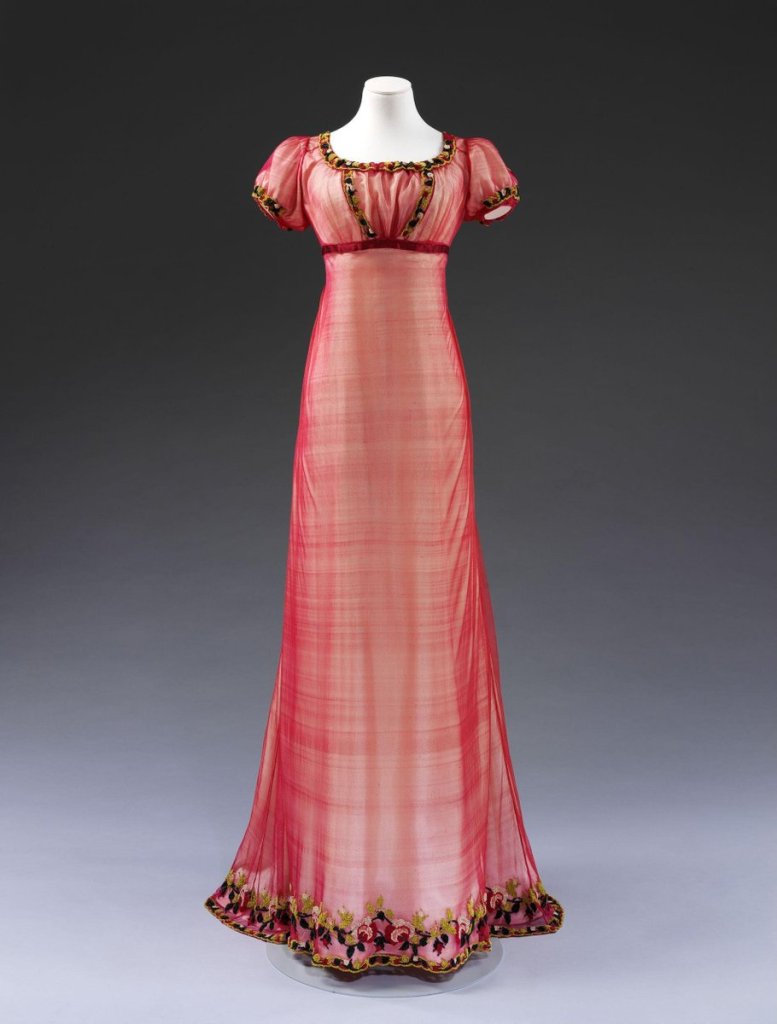
A real Muslin dress exported to England from colonized India

Areas of Production

Weaving was prevalent in the Dhaka district in almost every village, but some places became famous for manufacturing superior quality of Muslins. These places were Dhaka, Sonargaon , Dhamrai, Teetbady, Junglebary and Bajitpur.

Why It Was So Exclusive

The finest of Muslins were honoured with evocative names conjured up by imperial poets, such as “baft-hawa”, literally “woven air”. These high-end muslins were said to be as light and soft as the wind. According to one traveller, they were so fluid you could pull a bolt – a length of 300ft, or 91m, through the centre of a ring. Another wrote that you could fit a piece of 60ft, or 18m, into a pocket match-box. Dhaka muslin was also more than a little transparent.

Muslins were adored by the elites

How The Industry Was Lost

Unfortunately, during the period of the East India Company, European manufacturers all but destroyed the industry by flooding the market with factory produced muslin equivalents. Through a combination of punitive taxes on locally produced textiles and the dissolution of local and influential patrons, Jamdani muslin became uneconomical to produce and the skills were almost lost.

Conclusion

Thankfully, there are organisations in Bangladesh today that are encouraging local weavers to continue to practice their craft. Coupled with the UNESCO listing of Jamdani muslin on its Representative List of the Intangible Cultural Heritage of Humanity, there is more impetus to continuing production, albeit on a very small scale. With the proliferation of mass produced and synthetic fabrics on the market today, it is important that these historical techniques aren’t lost forever. No factory can ever emulate the quality arising out of a skilled artisan. Their skills are part of our textile heritage and it’s wonderful they are being recognised and preserved.

Dhakis of West Bengal: Where They Come From and Where They Go

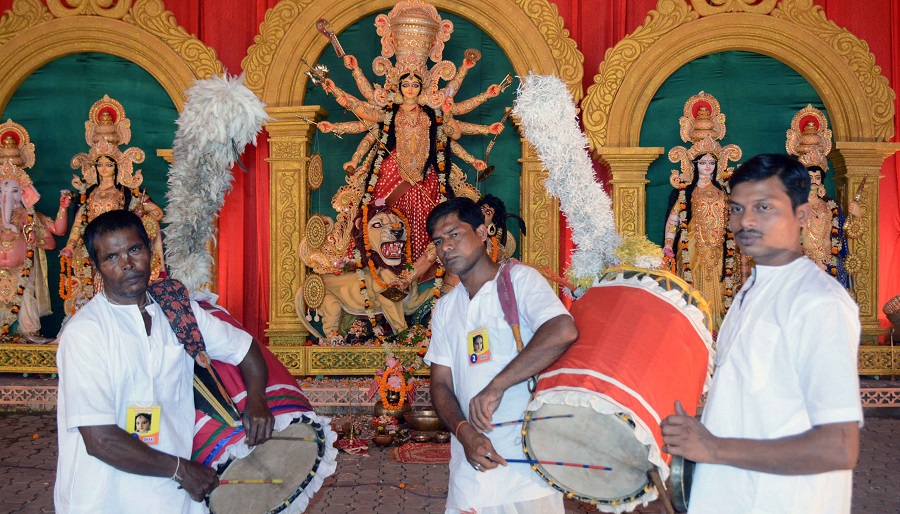
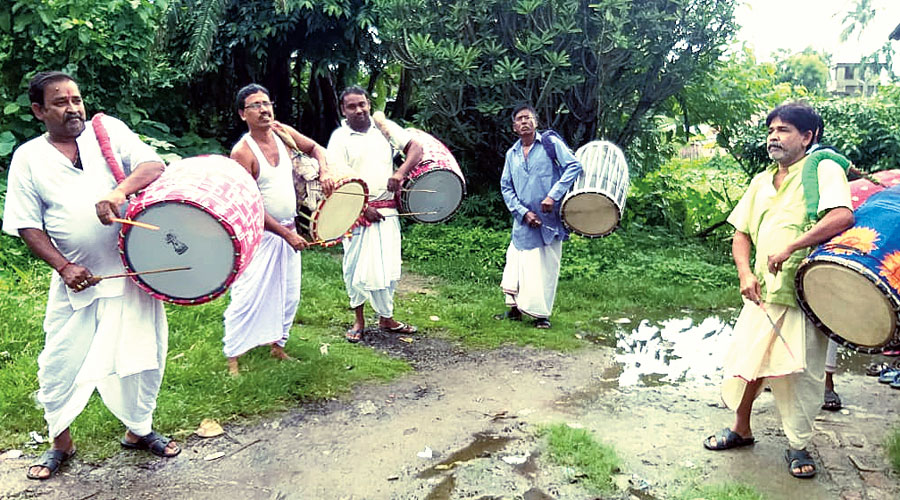
Dhakis playing dhaks in a Durga Puja pandal

Introduction

India is a country of rich cultural diversity and the essence of festivity for each Indian state is unique on its own. The main festival of the Indian state of West Bengal is Durga Puja, which is held during the auspicious Aashwin Durga Navtras in the months of September-October. During the festival the Mother Goddess is welcomed to her home on Earth with 9 long days of celebrations and joy. As a ritual of the festivity both her arrival and departure are rung by hundreds of thousands of “Dhaks” played by the professional drummers, locally called as “Dhakis”.

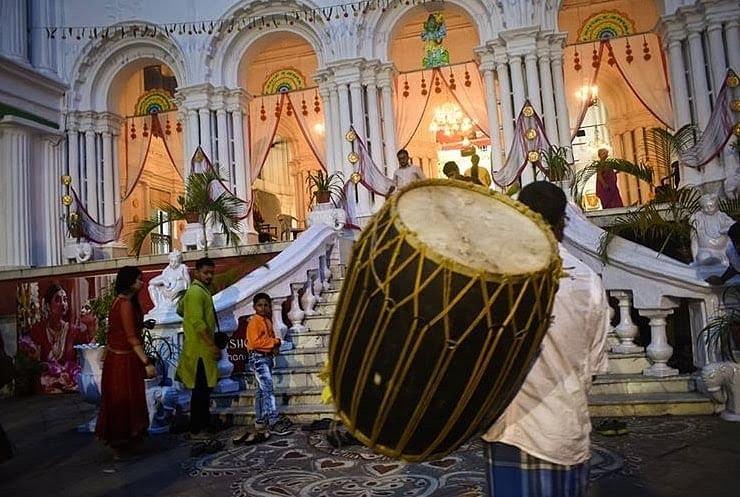
Dhak at a Puja Bari

What “Dhaks” Are: How They Are Made

The word “Dhak” comes from the Austric word “Dhaka” included in the Sanskrit language. The word later became a part of the Bengali script. The dhak is a big membranophone instrument that originally belongs to South Asia. The dhak has become an integral aspect of the widely loved Bengali festival of Durga Puja, other Bengali rituals and festivities. It would have no festive aura if not for the maddening rhythm of the dhak. The dhak is beaten with two sticks loudly to infuse the frenzied beats into the listeners. These beats are enough to raise the spirits and conjure up the feel of the Durga Puja. Without the instrument, the heavily celebrated festival would have felt sombre.

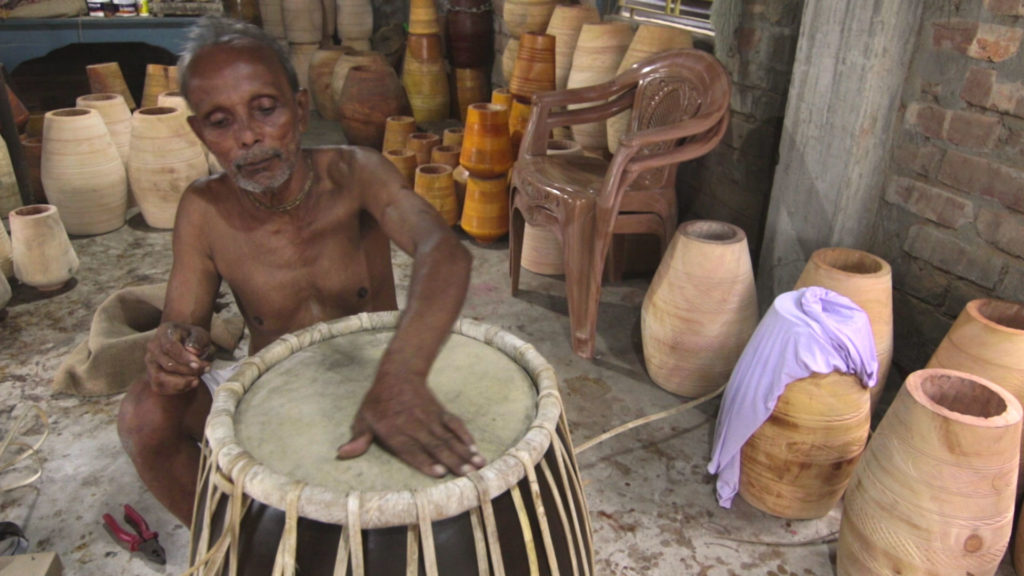
The sound of the dhak depends on a lot of factors like the shape. The shape varies from almost cylindrical to barrel-like. On one hand, the outer portion of the wood is shaved off and carved to create the barrel shaped instrument. On the other hand, the inner side of it is made to be absolutely hollow.The two ends of the dhak are wrapped up with goat skin on the top and calf skin at the bottom. It is said that using these two types of hides bring out the perfect sound texture of the dhak. The manner of stretching the skin over the mouth of the dhak and lacing it is also an important factor in the kind of sound that will be produced. The more the strings on the side of the dhak are pulled the higher the pitch of the dhak gets. The two sticks that are used to beat the dhak are carefully chiseled and formed out of thin cane or bamboo. Because of the drying session of the wooden structure and the intricate handwork and decoration, it takes around one month to reach the perfection in making the instrument.

Making of Dhaks

Who “Dhakis” Are: The Heritage follows

‘‘Dhakis’’ are integral to almost all festivities in Bengal but the art of playing the huge barrel-shaped membranophone instrument is considered as a staple of Bengal’s most celebrated Durga Puja. Most of the ‘dhakis’ or men who play the ‘dhak’ hail from humble rural backgrounds of Murshidabad, Hooghly, Malda, Bankura and Purulia districts of the state. Just like playing any other instrument that is highly associated with a centuries-old cultural heritage, the art of playing dhak, or the business of dhakis are often found to be ancestral and moving in the families since ages. The art of playing such instrument is considered as a living witness, bearing the tradition of the state of West Bengal. The art of playing dhak is passed on from one generation to the next though this art is gradually dying out and losing its focus. One of the reasons for this is the uncertain informal nature of this profession. They still teach the children to play the dhak is to preserve the culture and heritage.

Each part of Durga Puja rituals has a different and unique tune and beat of the dhak right from the arrival of the idols till their immersion. It is played when the idol enters the pandal and even when it exits the pandal on the last day of puja, Dashami. In fact, it is the deafening sound of the dhak that fills the air of immense celebration during the ‘Sandhya Arati’ on Ashtami. This ceremony is absolutely incomplete without the beats of the dhak. Along with that, the ‘Dhunuchi Nach’ is also an essential part where the dhak provides the musical rhythm to which people dance with the ‘dhunuchi’. Another popular tradition is the ‘Dhaker Lorai’ or ‘Fight between Dhaks’ where the grandeur is revealed the best when dhakis play in groups. It is usually a fascinating experience for the audience to see the feathered drums being played by the dhakis dancing to the music produced. Finally, on Dashami, the majestic beats of the dhak helps lift the air of sadness and gloom during the vermilion ritual and ultimately, the immersion.

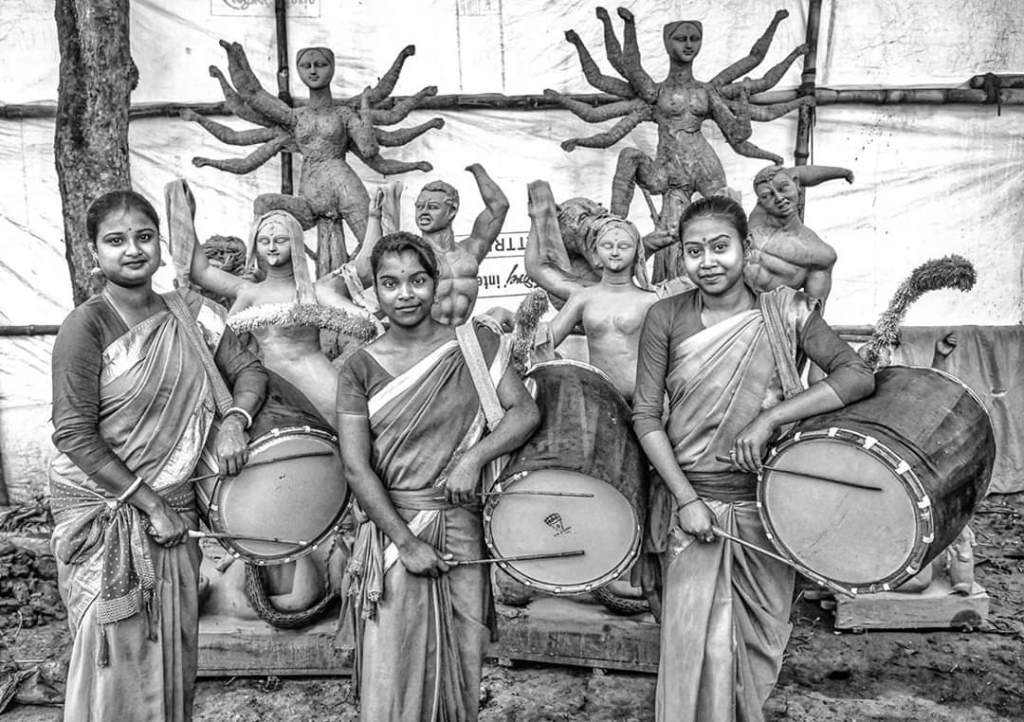
Female artists too have now taken up the responsibility to revive the age old art of playing the dhak. In such a male-dominated profession where carrying the dhak is a major issue, women have proved themselves to be no less than their male counterparts. Teams of women dhakis are finding fame and getting established slowly in their fields.

Dhakis of Bengal

COVID-19 and The Livelihood of Dhakis

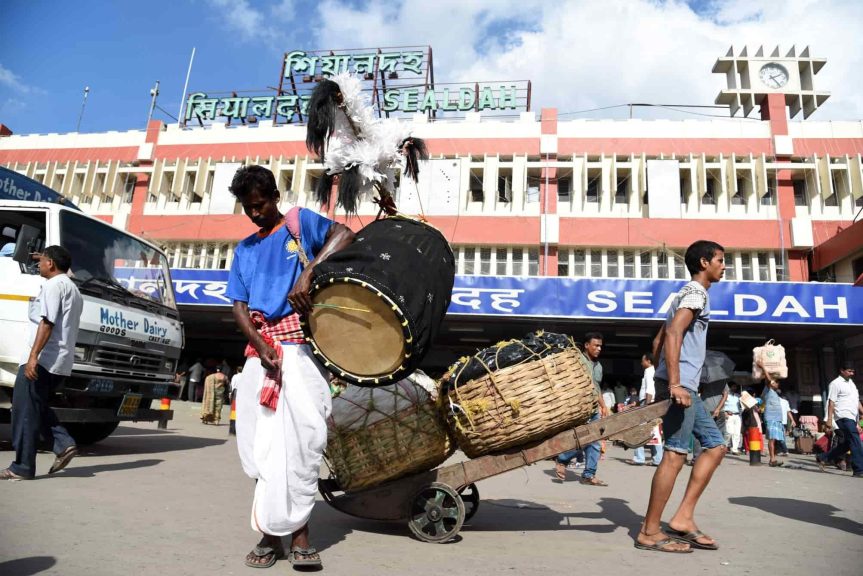
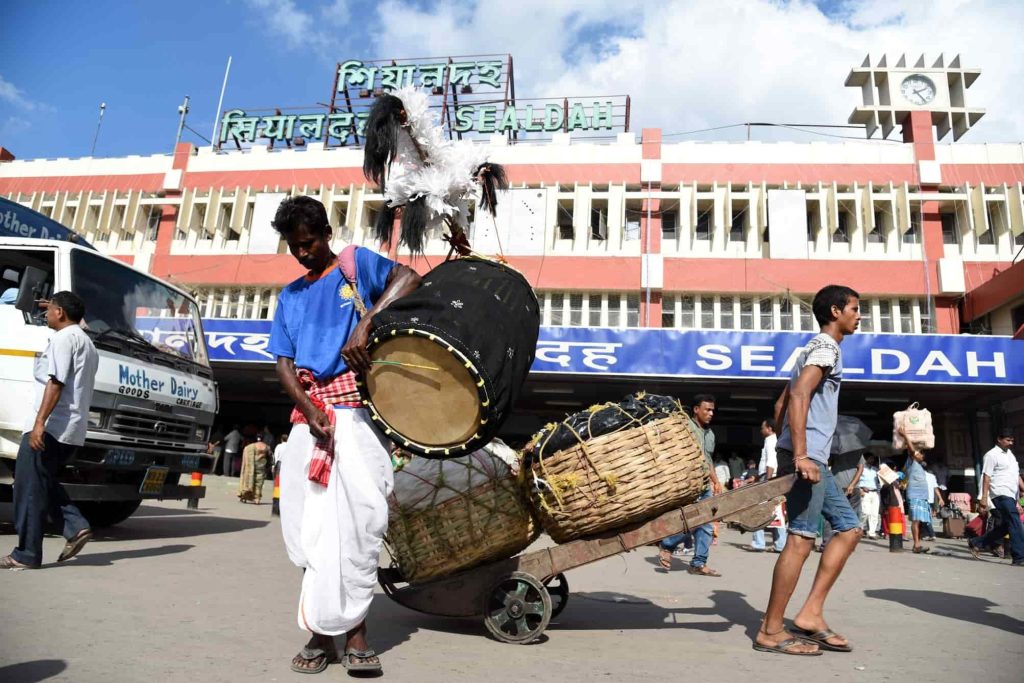
The Impact The drop in the number of Durga Pujas in and outside Bengal amid the novel coronavirus outbreak has taken the rhythm out of the lives of many dhakis (traditional drummers) who look forward to this festive season as their main source of earnings in the year. Every year, the dhakis from different districts and villages of Bengal use to appear at Sealdah station premises before Durga puja. The dhakis used to play the drums in front of Sealdah station every year before puja. From there, various puja committees used to take them in the puja pandals to play the ‘dhak’. But for the past two years the situation is very different, as Puja Committees and Organizers are tight in budget and have to follow a lot of restrictions . Moreover, thousands of dhakis from Bengal districts like East Burdwan, Birbhum, Purulia, Bankura and Hooghly would in other years travel to states such as Assam, Maharashtra, Delhi, Uttar Pradesh to perform at Durga Puja pandals and get higher pay than what they would have got in their home state. But, COVID-19 has restricted that option too for these drummers in past years.

Dhakis at Sealdah station, Kolkata

Where Are They At Now: How We Can Help

Acknowledging the fact that, playing dhak couldn’t be considered as a stable profession and is more inclined to be an occasional source of performing art and earning money, most of the dhakis are often associated with other rural jobs like farming, weaving, fishing to support their livelihood. During Pandemic, the dhakis hope that though they could not travel outside Bengal, they were still lucky if they got calls from Bengal puja organisers. When budgets are low, organisers play recorded beats of the dhaki in pandals. However, several organisers in Bengal have decided to go ahead with dhakis to add the traditional fervour to festivities with the state government offering a dole of Rs 50,000 to each puja committee.

A group of Women Dhakis in front of Goddess Durga idols

Conclusion

Just like of everyday’s, MachhBhaat, Bengal ’s essence of festivity is incomplete without the rhythmic beats of Dhaks. Along with everyone one of us, they are also looking forward for a better situation in the upcoming years, while we can celebrate together the joys of life without fearing for the safety of our health . With the constant effort of the Government and the citizens together , hope we are going to reach that phase very soon.

Shashi Tharoor and his ideology on British rule in India

An author, politician and former International civil servant, Shashi Tharoor, once said – ” India matters to me and i would like to matter to India.”
He is currently a third-term Lok Sabha MP representing the Thiruvananthapuram constituency. People mostly regard him as “Oxford dictionary”, because of his impeccable knowledge of English Literature. Shashi Tharoor, in his book named An Era of Darkness: The British empire in India that was published in the year 2016 talked about colonization and the
disastrous effects it had on Indians. In his book, he explained about the evils of British rule and how it affected us Indians, deeply explaining how we were being trampled upon by the Britishers and treated as animals without any freedom. Tharoor wrote in details how the Britishers looted India off of it’s rich resources, culture and wealth. In one of the most famous lines from the book, he writes:

“They (the British) basked in the Indian sun and yearned for their cold and fog-ridden homeland; they sent the money they had taken off the perspiring brow of the Indian worker to England; and whatever little they did for India, they ensured India paid for it in excess. And at the end of it all, they went home to enjoy their retirements in damp little cottages with Indian names, their alien rest cushioned by generous pensions supplied by Indian taxpayers.” Tharoor has remarked that every single thing or development that occured in British India such as establisment of Railways, parliamentary democracy, rule of law and others were simply done for their own benefits and luxury and not for Indians or for India’s progress and betterment. Tharoor explains that though some British legacies proves to be useful today, however they were just mere side effects that came along with colonial authoritarianism.
Tharoor genuinely believes that after 200 years of immense brutality and injustice to Indians, Britain owes an apology to India and Indians. Some of the most outrageous events in history of India took place under British reign. For instance, according to recent studies, the Bengal Famine of 1943 that costed millions of lives was caused not only by drought but also by the complete failure of the policy of British India under the Ministry of Winston Churchill, who is remembered as the man who caused the Bengal famine. Furthermore, the horrendous Jallianwala Bagh massacre was a heinous crime committed under British Raj. Today, Indian society is divided along lines of caste, creed, religion and culture but it is little known fact that the Colonial Government ignited such divides and pitted one community against the other. Shashi Tharoor did a marvellous job with the book and made us realise what we had forgotten with passage of time.

WHY INDIA IS INCREDIBLE ?

You may have heard the expression “Incredible India” commonly however the genuine significance behind this expression can fascinate you. Martin Luther King, Jr said that “To different nations, I might go as a tourist, however to India, I come as a pilgrim.” What is the genuine article that made our nation so incredible ? Life in India can be upbeat, intense, beautiful, distressing, tumultuous however never exhausting.

What makes India a great country — The Indian Panorama

India really sets an illustration of “Unity in diversity”. It’s practically difficult to track down some other country with as much variety as India. Every Indian state can be considered as another country since when you go there language changes, garments changes, food changes and way of life changes. Despite that we all have same thoughts and we live with each other peacefully.

11 Quotes About India By Famous Personalities

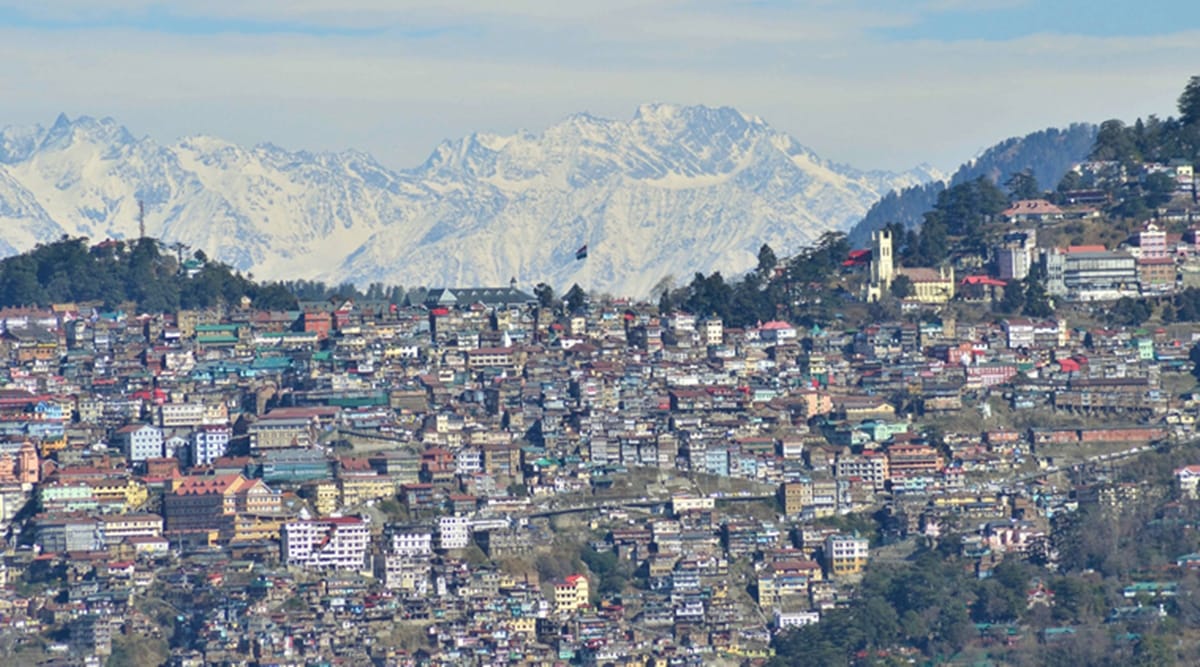
Not only that but people of different religions also live in India. That is the reason we have such countless celebrations which we praise all together. “Atithi Devo Bhava” which implies our guests are God to us. Indian food is overall mainstream you can’t get enough of it. Indian markets are open for both richer as well as poorer. Variety isn’t just among individuals yet additionally in climate. Assuming you need to see the warm places then, at that point deserts of Rajasthan can draw you in. However, assuming you need to see excellence of mountains you are generally welcome in Himachal Pradesh and Jammu Kashmir. Also there are numerous vacationer places in India which incorporate posts, sanctuaries, landmarks and some more.

50 years of Himachal Pradesh: A trip down the history lane | India News,The  Indian Express

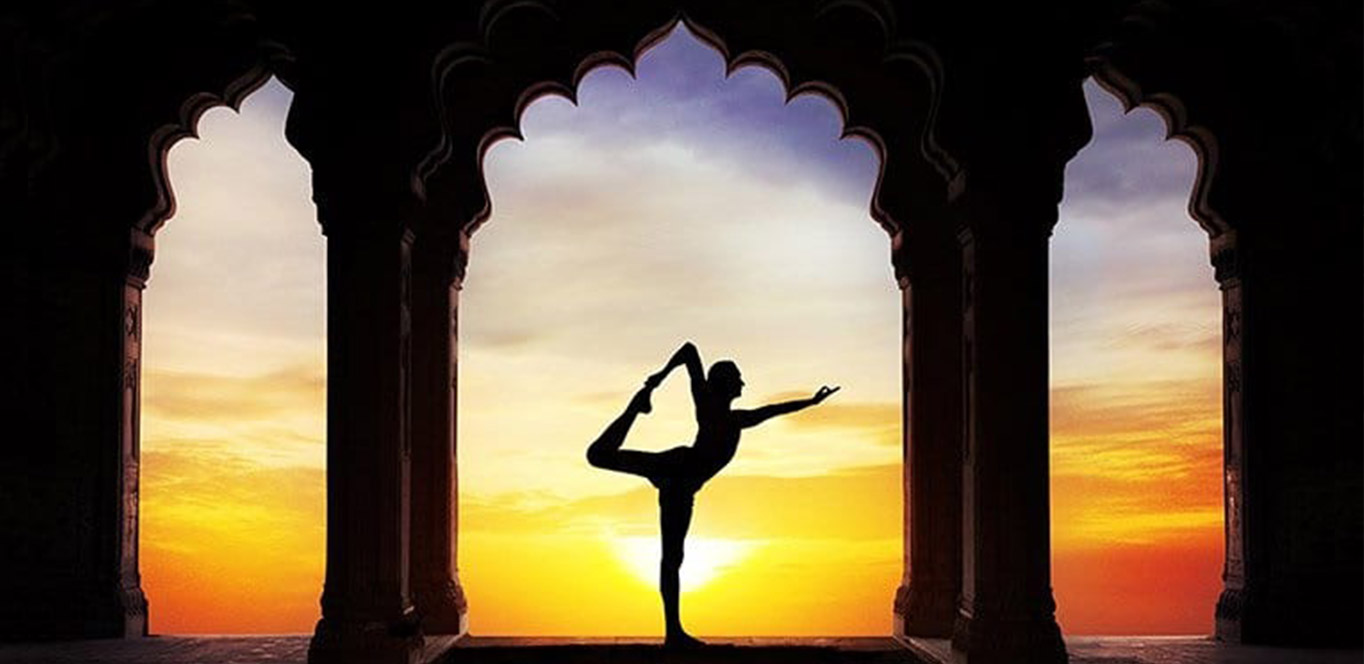
India is the land of Yoga. Yoga assists one with being truly and intellectually fit. It assists you with expanding your focus, give alleviation while having a pressure entire day. Subsequently, these all things demonstrate that why India is great. On this 75th Independence Day let us all make a promise to serve our country till death and endeavor to make India “The Best Nation in the World”. We are extremely fateful to be born in this Incredible Nation.
Yoga and Well-being - 15 Days - India Tour Guide & Driver

ESSENCE OF INDIAN TRADITION

HERITAGE

The word heritage is defined as “Anything transmitted from ancestors or past ages”. The Indian heritage is often best appreciated concerning different historical periods. We are the inheritors of a cultural and non-secular tradition stretching over 4000 years.

CULTURE AND CIVILIZATION

The word ‘culture’ and ‘civilization’ are often used as the same. However, they have their own clearly defined meanings which differentiate them.

CIVILIZATION

‘Civilization’ means making better ways of living and making use of nature to satisfy daily needs. Civilization includes developing societies into politically well-defined groups that work together for improved conditions of life in terms of food, dress, and communication.

CULTURE

The English word ‘Culture’ is coined from the Latin word ‘cult or cultus’ which means tilling, or cultivating or refining and worship. ‘Culture’ refers to the inner self, a refinement of mind, soul, and heart. Culture includes various art forms and sciences, music and dance, and several higher activities of human life which also are classified as cultural activities. On the whole, it is cultivating and refining a thing to an extent such that its outcome evokes our admiration and esteem. This is often practically an equivalent as ‘Sanskriti’ of the Sanskrit language.

CHARACTERISTICS OF CULTURE

 • Culture is learned and purchased

 • Culture is shared by a cluster of individuals

 • Culture is cumulative

 • Culture changes

 • Culture is dynamic

 • Culture gives us a variety of permissible behaviour patterns

 • Culture is diverse

 • Culture is ideational

CULTURAL HERITAGE

Cultural development may be a historical process. Cultural heritage includes all those aspects or values of culture transmitted to citizenry by their ancestors from generation to generation. They’re cherished, protected, and maintained by them with unbroken continuity, and that they feel pleased with it. Architectural works like monuments, material artifacts, the intellectually achieved properties, philosophy, treasures of data, scientific inventions, and discoveries also are a part of heritage.

TRADITIONAL KNOWLEDGE

Traditional knowledge or ‘local knowledge’ may be a record of human achievement in comprehending the complexities of life and survival in often unfriendly environments. Traditional knowledge, which can be technical, social, organizational, or cultural was obtained as a part of the good human experiment of survival and development. We have to analyse, evaluate conserve, and revive the normal Knowledge Systems for the economic betterment of the planet in a holistic manner. It is that the knowledge system possessed by various communities across the world. Such knowledge has been accumulated, used, and has been bequeathed through several generations. It’s usually regarding the natural surroundings of the community and includes agricultural knowledge like manner of cultivation, environmental knowledge, and knowledge of natural medicines.

TYPES OF TRADITIONAL KNOWLEDGE

 • Cultural knowledge

 • Artistic knowledge

 • Biodiversity or natural resources

 • Agricultural knowledge

 • Sacred knowledge

CHARACTERISTICS OF TRADITIONAL KNOWLEDGE

 • It has been handed on from generation to generation.

 • In many cases, it’s transmitted orally for generations from person to person.

 • It is being considered by the communities as a gift of God and not as personal property.
 • This knowledge generally distinguishes one community from another community.
 • It is typically impossible to spot the first creator of the knowledge.

 • It is learned by observing continuously, experiencing, and practicing it.

 • It is inseparable a part of the communal and cultural life of its holders.

 • It is typically related to biological resources.

NEED FOR SHIELDING TRADITIONAL KNOWLEDGE

 • Lack of proper legal policy framework for the protection of traditions.

 • Exploitation of traditional knowledge and indigenous resources.

 • Patenting the medicinal plants and their derivatives.

 • Commercial interests violate indigenous property rights.

Republic Day

India celebrates Republic Day on January 26 annually with a lot of pride and fervor. It is a day that is important to every Indian citizen. It marks the day when India became truly independent and embraced democracy. In other words, it celebrates the day on which our constitution came into effect. On 26 January 1950, almost 3 years post-independence, we became a sovereign, secular, socialist, democratic republic.

History of Republic Day

While we got independence from British rule on August 15, 1947, our country was still lacking a concrete constitution. Moreover, India also did not have any experts and political powers which would help in the functioning of the state affairs smoothly.  Up until then, the 1935 Government of India Act was basically modified in order to govern, however, that act was more bent towards the colonial rule. Therefore, there was a dire need to form an exclusive constitution that would reflect all that India stands for.

Thus, Dr. B.R. Ambedkar led a constitutional drafting committee on August 28, 1947.  After drafting, it was presented to the Constituent Assembly by the same committee on November 4, 1947. This whole procedure was very elaborate and took up to 166 days to complete. Moreover, the committee organized sessions were kept open to the public.

No matter the challenges and hardships, our constitutional committee left no stone unturned to include rights for all. It aimed to create the perfect balance so all citizens of the country could enjoy equal rights pertaining to their religions, culture, caste, sex, creed and more. At last, they presented the official Indian constitution to the country on January 26, 1950.

Moreover, the first session of the India Parliament was also conducted on this day. In addition to that, 26th January also witnessed the swearing-in of India’s first president, Dr. Rajendra Prasad. Thus, this day is very important as it marks the end of the British rule and birth of India as a Republic State.

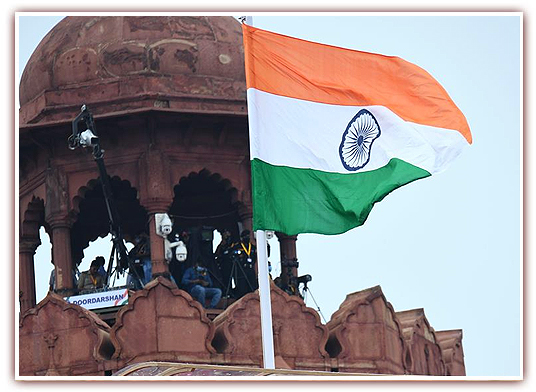
Photo by Alok Uniyal on Pexels.com

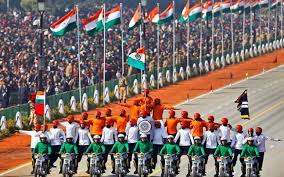
Republic Day CelebrationsIndians celebrate January 26 each year with lots of enthusiasm and zeal. On this day, people forget their religion, caste, creed, sex, and more. It brings together the country as a whole. It truly shows the diversity of our country. The capital city of India, New Delhi, celebrates it with a Republic Day Parade that showcases the might of the Indian Military and the cultural diversity of our country.These parades take place in other cities as well, where a lot of schools participate in.

It is a delight to watch the children and professionals put in so much effort. The way they grace the parade makes one proud of their country. We also do National Flag Hoisting on this day. In New Delhi, after the President of India hoists our National Flag, 21 guns salute follow it with the national anthem played by the military band.Further, in schools, March Past takes place and it is mandatory for every student to attend the celebrations. In many schools, they distribute sweets on this day as well.

While it is a very joyous day, we must not forget the struggle of freedom that our forefathers took part in. Moreover, it is a day to celebrate the spirit of freedom and make sure to help India reach greater heights in the future.

Interesting facts about our country India!

  • India never invaded any country in her last 100000 years of history.
  • When many cultures were only nomadic forest dwellers over 5000 years ago, Indians established Harappan culture in Sindhu Valley (Indus Valley Civilization)
  • The name ‘India’ is derived from the River Indus, the valleys around which were the home of the early settlers. The Aryan worshippers referred to the river Indus as the Sindhu.
  • The Persian invaders converted it into Hindu. The name ‘Hindustan’ combines Sindhu and Hindu and thus refers to the land of the Hindus.
  • Chess was invented in India.
  • Algebra, Trigonometry and Calculus are studies, which originated in India.
  • The ‘Place Value System’ and the ‘Decimal System’ were developed in India in 100 B.C.
  • The World’s First Granite Temple is the Brihadeswara Temple at Tanjavur, Tamil Nadu. The shikhara of the temple is made from a single 80-tonne piece of granite. This magnificent temple was built in just five years, (between 1004 AD and 1009 AD) during the reign of Rajaraja Chola.
  • India is the largest democracy in the world, the 7th largest Country in the world, and one of the ancient civilizations.
  • The game of Snakes & Ladders was created by the 13th century poet saint Gyandev. It was originally called ‘Mokshapat’. The ladders in the game represented virtues and the snakes indicated vices. The game was played with cowrie shells and dices. In time, the game underwent several modifications, but its meaning remained the same, i.e. good deeds take people to heaven and evil to a cycle of re-births.
  • The world’s highest cricket ground is in Chail, Himachal Pradesh. Built in 1893 after leveling a hilltop, this cricket pitch is 2444 meters above sea level.
  • India has the largest number of Post Offices in the world. And world’s only floating post office.
  • The largest employer in India is the Indian Railways, employing over a million people.
  • The world’s first university was established in Takshila in 700 BC. More than 10,500 students from all over the world studied more than 60 subjects. The University of Nalanda built in the 4th century was one of the greatest achievements of ancient India in the field of education.
  • Ayurveda is the earliest school of medicine known to mankind. The Father of Medicine, Charaka, consolidated Ayurveda 2500 years ago.
  • India was one of the richest countries till the time of British rule in the early 17th Century. Christopher Columbus, attracted by India’s wealth, had come looking for a sea route to India when he discovered America by mistake.
  • The Art of Navigation & Navigating was born in the river Sindh over 6000 years ago. The very word Navigation is derived from the Sanskrit word ‘NAVGATIH’. The word navy is also derived from the Sanskrit word ‘Nou’.
  • Bhaskaracharya rightly calculated the time taken by the earth to orbit the Sun hundreds of years before the astronomer Smart. According to his calculation, the time taken by the Earth to orbit the Sun was 365.258756484 days.
  • The value of “pi” was first calculated by the Indian Mathematician Budhayana, and he explained the concept of what is known as the Pythagorean Theorem. He discovered this in the 6th century, long before the European mathematicians.
  • Algebra, Trigonometry and Calculus also originated in India. Quadratic Equations were used by Sridharacharya in the 11th century. The largest numbers the Greeks and the Romans used were 106 whereas Hindus used numbers as big as 10*53 (i.e. 10 to the power of 53) with specific names as early as 5000 B.C. during the Vedic period. Even today, the largest used number is Terra: 10*12(10 to the power of 12).
  • Until 1896, India was the only source of diamonds in the world (Source: Gemological Institute of America).
  • The Baily Bridge is the highest bridge in the world. It is located in the Ladakh valley between the Dras and Suru rivers in the Himalayan mountains. It was built by the Indian Army in August 1982.
  • Sushruta is regarded as the Father of Surgery. Over 2600 years ago Sushrata & his team conducted complicated surgeries like cataract, artificial limbs, cesareans, fractures, urinary stones, plastic surgery and brain surgeries.
  • Usage of anaesthesia was well known in ancient Indian medicine. Detailed knowledge of anatomy, embryology, digestion, metabolism,physiology, etiology, genetics and immunity is also found in many ancient Indian texts.
  • The four religions born in India – Hinduism, Buddhism, Jainism, and Sikhism, are followed by 25% of the world’s population.
  • Jainism and Buddhism were founded in India in 600 B.C. and 500 B.C. respectively.
  • Indian Constitution is the longest constitution till date.
  • Islam is India’s and the world’s second largest religion.
  • The oldest European church and synagogue in India are in the city of Cochin. They were built in 1503 and 1568 respectively.
  • Jews and Christians have lived continuously in India since 200 B.C. and 52 A.D. respectively.
  • Varanasi, also known as Benaras, was called “the Ancient City” when Lord Buddha visited it in 500 B.C., and is the oldest, continuously inhabited city in the world today.
  • His Holiness, the Dalai Lama, the exiled spiritual leader of Tibetan Buddhists, runs his government in exile from Dharmashala in northern India.
  • Martial Arts were first created in India, and later spread to Asia by Buddhist missionaries.
  • Yoga has its origins in India and has existed for over 5,000 years.

Vedic Literature

A few centuries after the decline of the Harappan civilization, a new culture flourished in
the same region and gradually spread across the Ganga-Yamuna plains. This culture came
to be known as the Aryan culture. There were significant differences between this culture
and the culture which preceded it.
Aryans settled on the banks of rivers Indus (Sindhu) and Saraswati (which is now non
existent). They composed many hymns in honour of the gods and goddesses they
worshipped. These were compiled in four Vedas – the Rig Veda, Sama Veda, Yajur Veda
and Atharva Veda. The word veda means knowledge of the sacred spiritual knowledge.
These vedas were considered infallible as they imparted the highest spiritual knowledge.
Initially the Vedas were transmitted orally. Since our knowledge of the early Aryans is
based on these Vedas, the culture of this period is referred to as the Vedic Culture. Scholars
divide the vedic period into the earlier and later Vedic period. The earlier is represented by
the Rig Veda while the latter by all other Vedic literature including the Brahmanas, Aranyakas
and Upanishads. Two epics, the Ramayana and the Mahabharata and the Puranas, though
compiled much later, also throw light on the life and society of an earlier period. For this
period archaeological evidence has also been found in some areas of Uttar Pradesh.

Society and religion
Though Aryan society was patriarchal, women were treated with dignity and honour. The family
was the smallest social unit; several families (kula) made a village (grama) and several
villages formed a vis. A number of villages formed a tribe or jana which was ruled by a
chief called rajan. His chief function was to protect the tribe from external attack and
maintain law and order. He was assisted by the members of two councils called sabha and
samiti. The Purohita performed religious functions while the senani looked after military
activities. There was no concept of the state or kingdom at this stage. Although the post of
Rajan had become hereditary, he could be removed from power if found weak and inefficient
or cruel.
Towards the later Vedic period, society was divided into four varnas – Brahamanas,
Kshatriyas, Vaishyas and Shudras. This was also called the Varna-Vyavastha. To begin
with it denoted categories of people doing different kinds of functions but with the passage
of time this division became hereditary and rigid. The teachers were called Brahmans, the
ruling class was called Kshatriyas, farmers, merchants and bankers were called Vaishyas
while the artisans, craftsmen, labourers were called Shudras. Moving from one occupation
to another became difficult. Simultaneously, the Brahmans also occupied a dominant position
in the society

Our Nation! Our Identity!!

Ever wondered what is common between you and a person in a different state having different background and ideologies?

It is “INDIA”. It is our country and a sense of patriotism and brotherhood which unites two people in two different parts of India having different background and ideologies. It is this Pride of being an INDIAN which keeps us together and fills our heart with Pride when we hear the name of our country “INDIA”.

India is one of the oldest civilizations in the world with a kaleidoscopic variety and rich cultural heritage. It has achieved all-round socio-economic progress since Independence. As the 7th largest country in the world, India stands apart from the rest of Asia, marked off as it is by mountains and the sea, which give the country a distinct geographical entity. Bounded by the Great Himalayas in the north, it stretches southwards and at the Tropic of Cancer, tapers off into the Indian Ocean between the Bay of Bengal on the east and the Arabian Sea on the west.

Here the National Identity Elements of our country INDIA

National Flag

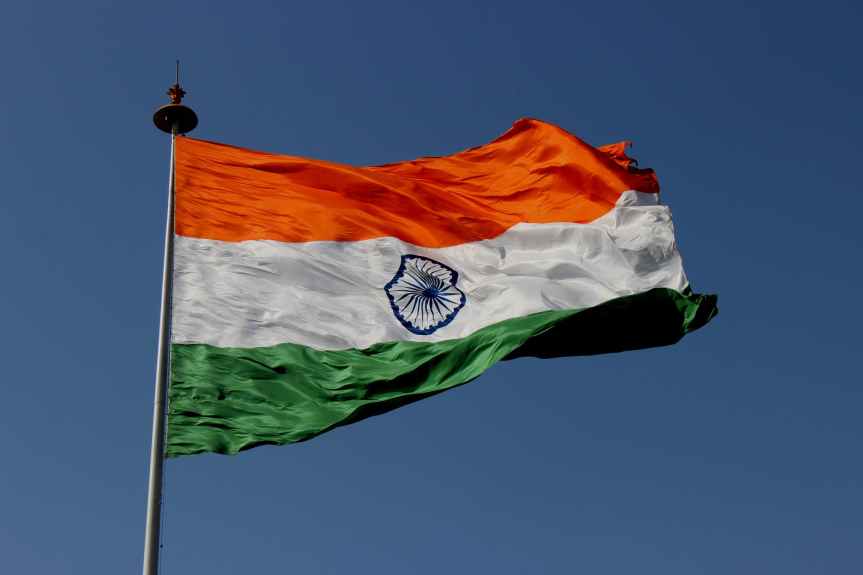
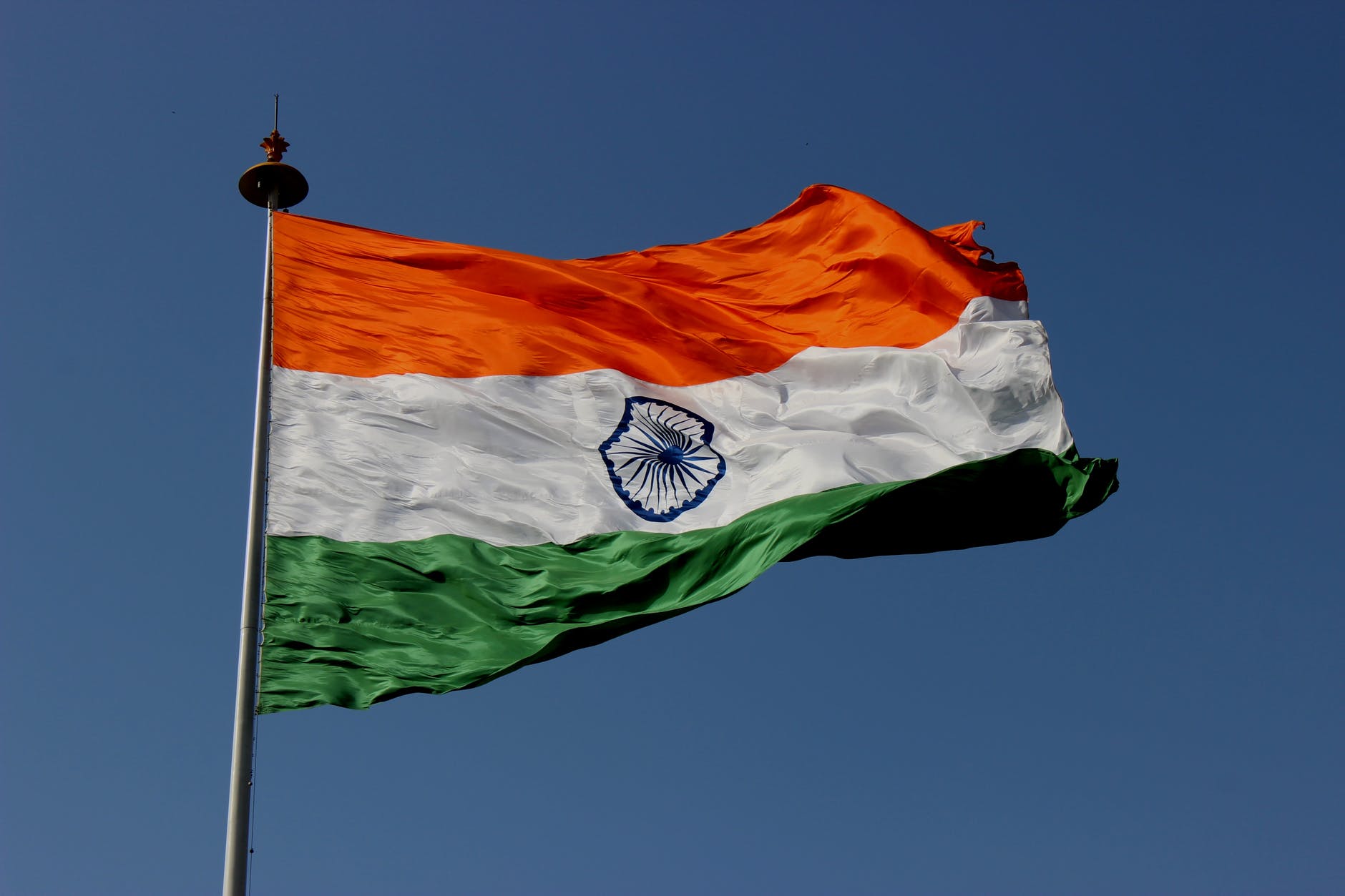
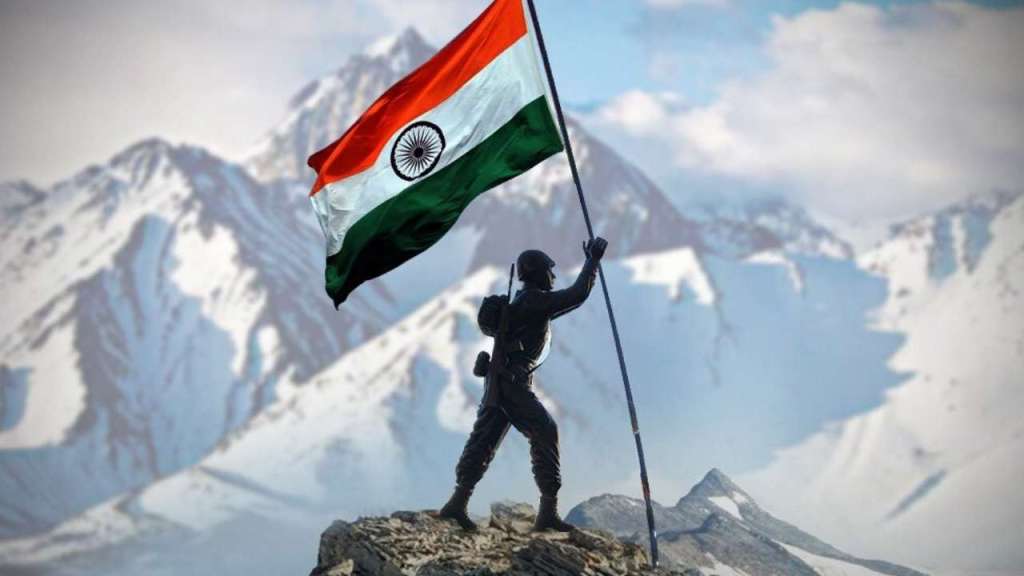
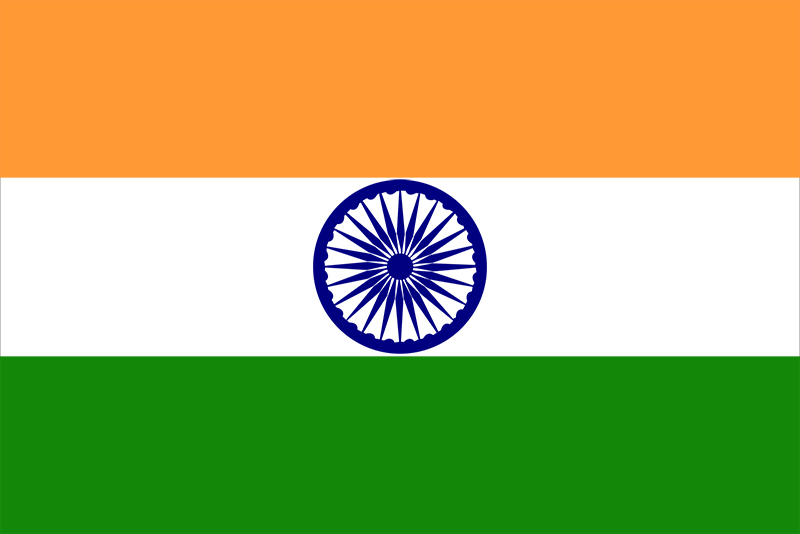
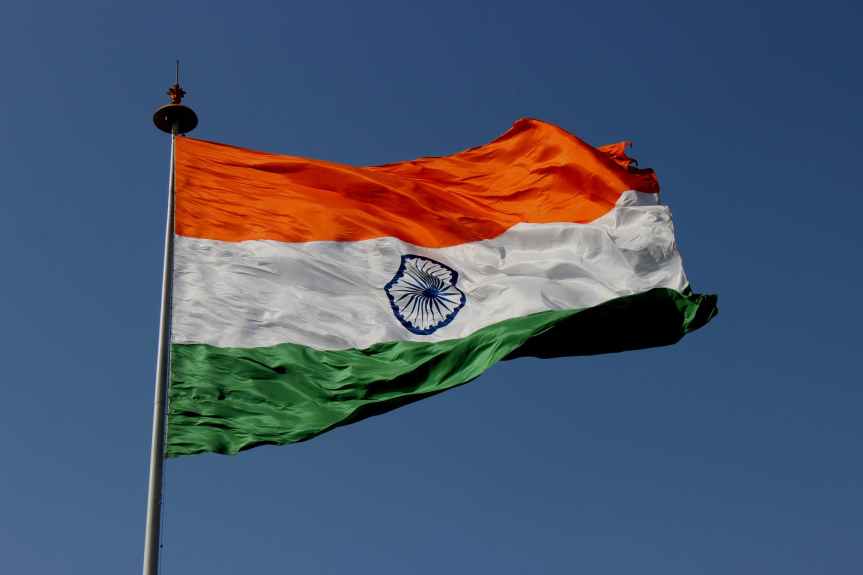
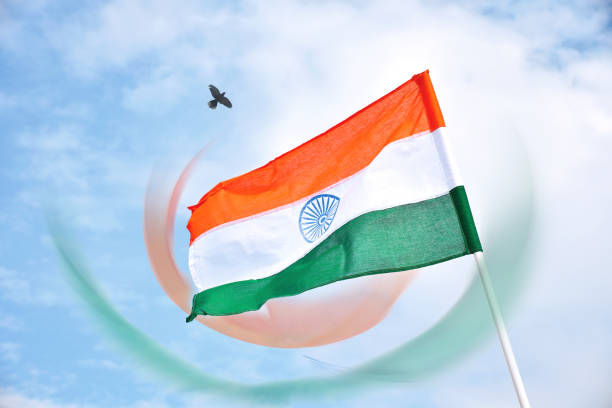
The National Flag is a horizontal tricolour of India saffron (kesaria) at the top, white in the middle and India green at the bottom in equal proportion. The ratio of width of the flag to its length is two to three. In the centre of the white band is a navy-blue wheel which represents the chakra.

The top saffron colour, indicates the strength and courage of the country. The white middle band indicates peace and truth with Dharma Chakra. The green shows the fertility, growth and auspiciousness of the land.

Its design is that of the wheel which appears on the abacus of the Sarnath Lion Capital of Ashoka. Its diameter approximates to the width of the white band and it has 24 spokes. The design of the National Flag was adopted by the Constituent Assembly of India on 22 July 1947.

National Bird

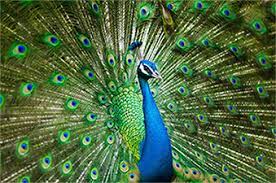
The Indian peacock, Pavo cristatus, the national bird of India, is a colourful, with a fan-shaped crest of feathers, a white patch under the eye and a long, slender neck. A bird with a glistening blue breast and neck and a spectacular bronze-green tail of around 200 elongated feathers. The elaborate courtship dance of the bird, fanning out the tail and preening its feathers is a gorgeous sight.

National Flower

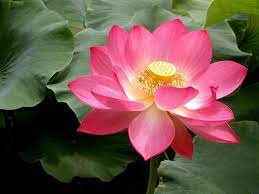
Lotus (Nelumbo Nucifera Gaertn) is the National Flower of India. It is a sacred flower and occupies a unique position in the art and mythology of ancient India and has been an auspicious symbol of Indian culture since time immemorial.

India is rich in flora. Currently available data places India in the tenth position in the world and fourth in Asia in plant diversity. From about 70 per cent geographical area surveyed so far, 47,000 species of plants have been described by the Botanical Survey of India (BSI).

National Tree

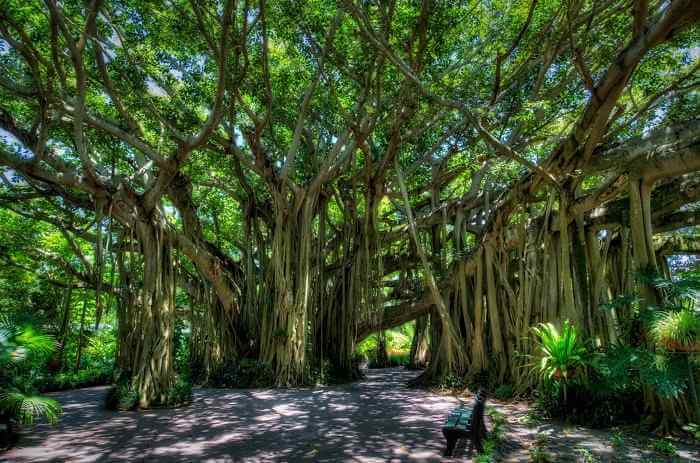
Indian fig tree, Ficus bengalensis, whose branches root themselves like new trees over a large area. The roots then give rise to more trunks and branches. Because of this characteristic and its longevity, this tree is considered immortal and is an integral part of the myths and legends of India. Even today, the banyan tree is the focal point of village life and the village council meets under the shade of this tree.

National Anthem

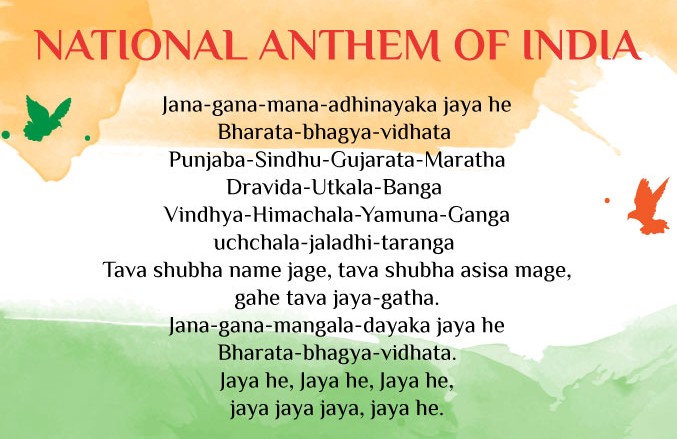
The “National Anthem of India” is played or song on various occasions. It represents the rich cultural heritage, geography, History, the courage and bravery of Indians.

Jana-gana-mana-adhinayaka jaya he
Bharata-bhagya-vidhata
Punjaba-Sindhu-Gujarata-Maratha
Dravida-Utkala-Banga
Vindhya-Himachala-Yamuna-Ganga
uchchala-jaladhi-taranga
Tava shubha name jage, tava shubha asisa mage,
gahe tava jaya-gatha.
Jana-gana-mangala-dayaka jaya he
Bharata-bhagya-vidhata.
Jaya he, Jaya he, Jaya he,
jaya jaya jaya, jaya he.

State Emblem

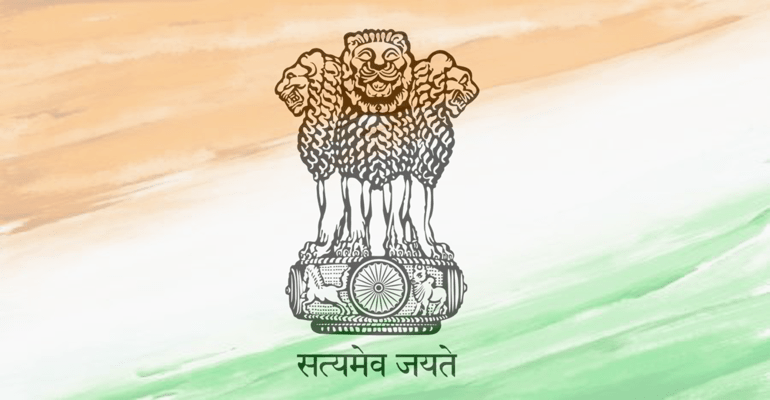
The state emblem is an adaptation from the Sarnath Lion Capital of Ashoka. In the original, there are four lions, standing back to back, mounted on an abacus with a frieze carrying sculptures in high relief of an elephant, a galloping horse, a bull and a lion separated by intervening wheels over a bell-shaped lotus. Carved out of a single block of polished sandstone, the Capital is crowned by the Wheel of the Law (Dharma Chakra)

In the state emblem, adopted by the Government of India on 26 January 1950, only three lions are visible, the fourth being hidden from view. The wheel appears in relief in the centre of the abacus with a bull on right and a horse on left and the outlines of other wheels on extreme right and left. The bell-shaped lotus has been omitted. The words Satyameva Jayate from Mundaka Upanishad, meaning ‘Truth Alone Triumphs‘, are inscribed below the abacus in Devanagari script.

National Animal

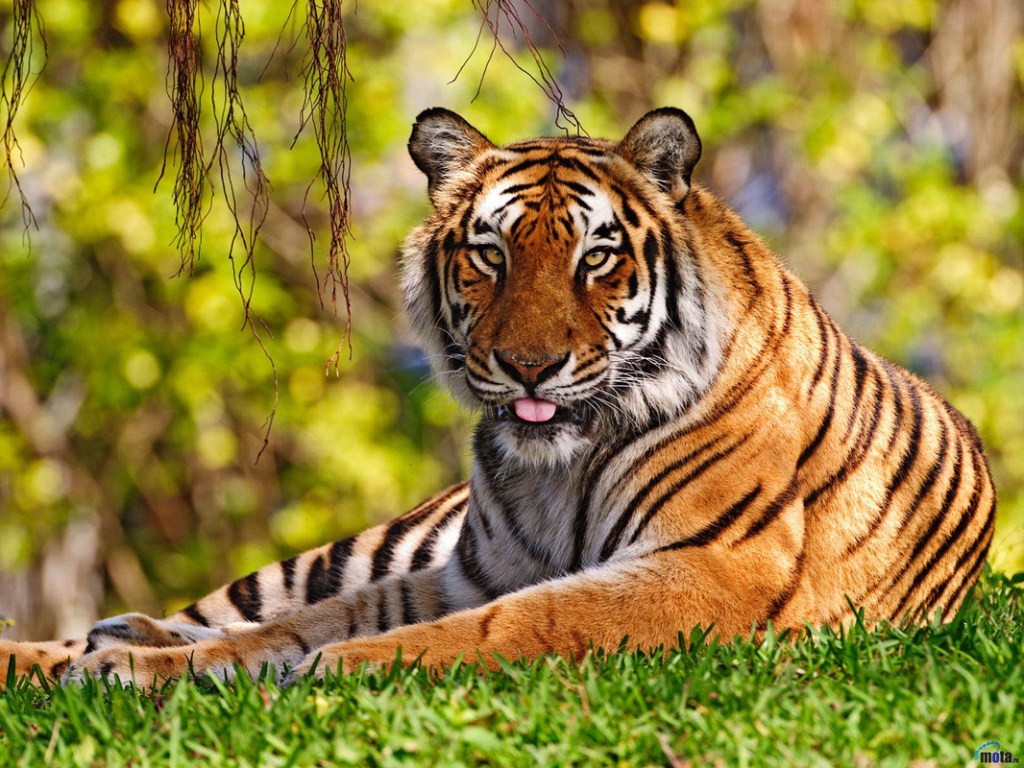
The magnificent tiger, Panthera tigris is a striped animal. It has a thick yellow coat of fur with dark stripes. The combination of grace, strength, agility and enormous power has earned the tiger its pride of place as the national animal of India. Out of eight races of the species known, the Indian race, the Royal Bengal Tiger, is found throughout the country except in the north-western region and also in the neighbouring countries, Nepal, Bhutan and Bangladesh.

Currency Symbol

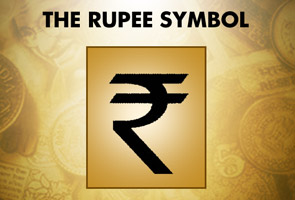
The symbol of Indian Rupee typifies India’s international identity for money transactions and economic strength. The Indian Rupee sign is an allegory of Indian ethos. The symbol is an amalgam of Devanagari “Ra” and the Roman Capital “R” with two parallel horizontal stripes running at the top representing the national flag and also the “equal to” sign. The Indian Rupee sign was adopted by the Government of India on 15th July, 2010.

The symbol, conceptualised and designed by Udaya Kumar, a post graduate in Design from Indian Institute of Technology Bombay.

National Calendar

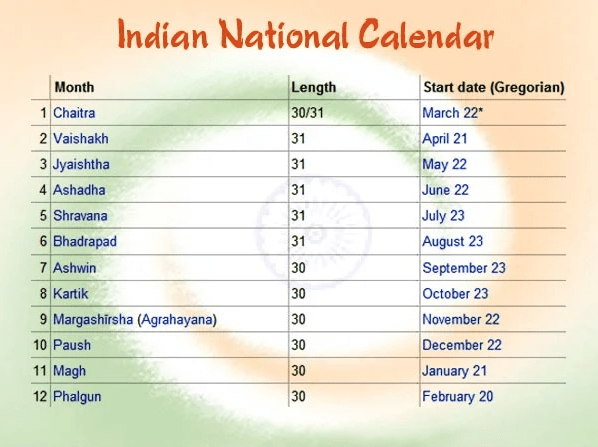
The national calendar based on the Saka Era, with Chaitra as its first month and a normal year of 365 days was adopted from 22 March 1957 along with the Gregorian calendar for the following official purposes:

  1. Gazette of India.
  2. News broadcast by All India Radio.
  3. Calendars issued by the Government of India.
  4. Government communications addressed to the members of the public.

Dates of the national calendar have a permanent correspondence with dates of the Gregorian calendar, 1 Chaitra falling on 22 March normally and on 21 March in leap year.

The National Symbols of India fill a sense of pride in our heart! It is very important that we give atmost respect to our National Identity Symbols! Jai Hind

References:

Know India – This is an official website of India, used and can be used to get authentic information.

Wikipedia

https://www.india.gov.in/

BOBBY (1973): The Game Changer of Teenage Romance.

Why is the movie considered as Hindi Cinema’s first teenage love story?

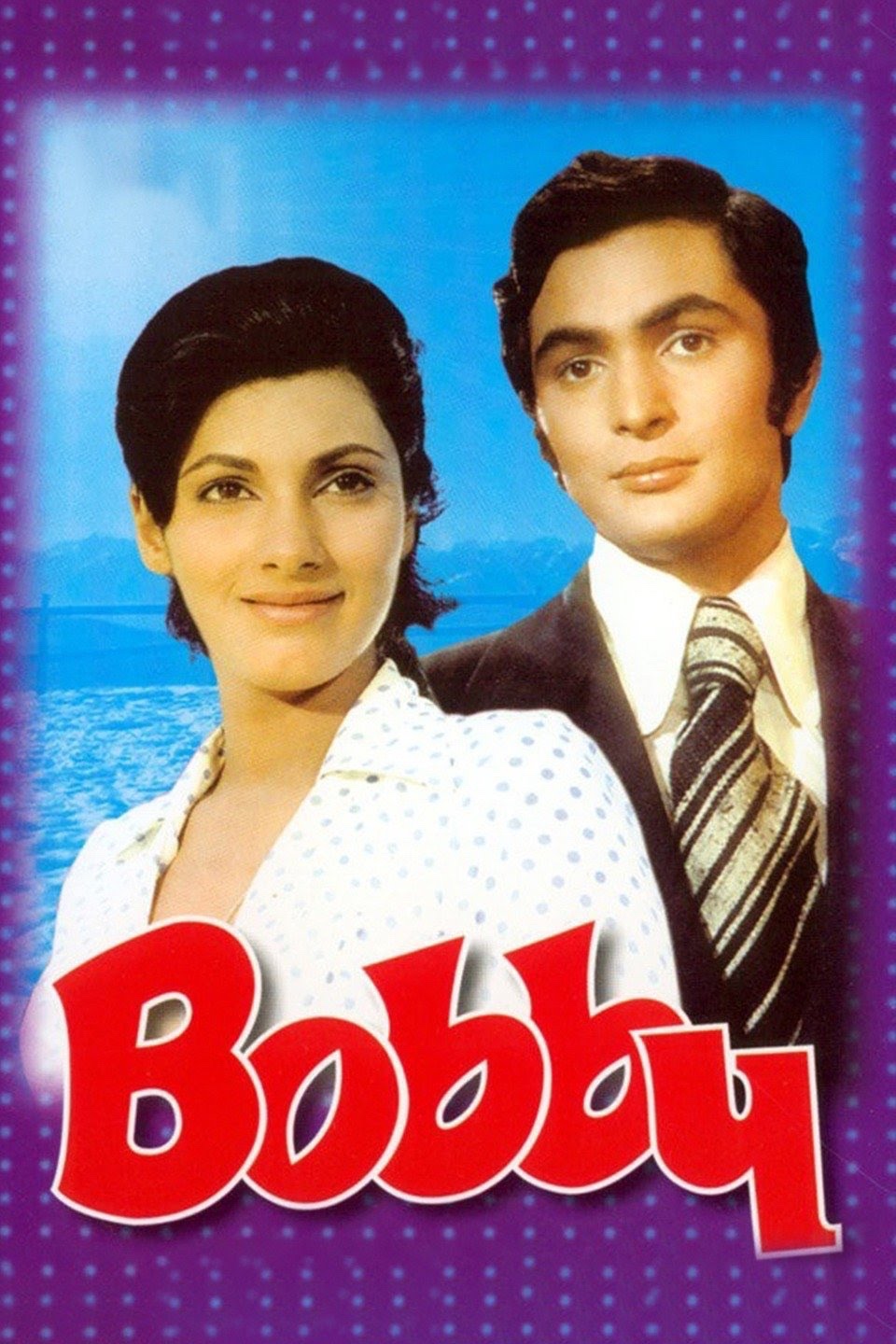
1970s ‘India’ witnessed lots of socio-economic happenings like unemployment, poverty and corruption and so were the plots of most of the movies of that era based on classism, social injustice, divide between rich and poor and so on. Although the genre “love story” was mostly ignored, the film “Bobby” in 1973 came out as an exception. Directed by Raj Kapoor and produced and distributed by R.K. Films with Rishi Kapoor and Dimple Kapadia in lead roles, the film is altogether a masterpiece. Not only is it considered as a benchmark of Hindi Romantic Cinema but it also completely redefined the genre, thus breaking the earlier notions of typical family drama love stories.

Film Poster of Bobby (1973).

The movie begins with six year old Raj, son of a rich business person who is sent to boarding school leaving behind his governess, Mrs Braganza in grief. After completing his studies in boarding school, Raj (played by Rishi Kapoor) returns for his 18th Birthday party where his eyes are stunned seeing a girl in a white gown, who’s apparently his governess’ granddaughter, Bobby Braganza (played by Dimple Kapadia). The next day, Raj visits Mrs.Braganza’s home, who’s in a better economic condition than before and gets to meet Bobby. The two subsequently develop a friendship and liking towards each other. Not very long before they had their first break up following a misunderstanding at Raj’s friend’s party which they sort out later during Bobby’s Kashmir school trip.

Slowly, both of their parents come to know about their affair and Braganzas are invited to Raj’s home for a dinner party by his father. However seeing the social condition of Braganzas, Raj’s father brutally mocks them leading Braganzas shattered. He doesn’t stop at that and visits Braganza’s residence to again insult them by providing them money to get rid of the Raj and Bobby’s relationship. He then fixes Raj’s marriage with another rich businessperson’s disabled daughter without telling Raj. Raj, however, runs away and this time Raj’s family along with police accuse Bobby’s father with ‘kidnapping’. Both Raj and Bobby’s family chase the couple and with no option left Raj and Bobby decide to jump in the river but are rescued by each other’s dad. The film has a “happy ending” with unification of two families.

How this film brought a change in the genre and why it remains a trendsetter?

It is probably Bobby, which introduced teenage romance in Hindi Cinema. Before this film, love story in the context of Hindi Cinema was only restricted to a grown up adult man and woman mostly in their late 20s who fall in love and marry or how typical Indian families indulge in arrange marriage and how the couple start loving each other after marriage. Bobby was one of the first Hindi films which showed teenage romance in a very entertaining and engaging way. There is an entire song in the movie titled “Hum tum ek kamre me band” (English: We both are locked in a room) where it is shown how the young couple (Bobby and Raj) accidentally get locked in a room, which proves that the movie was way ahead of its time. The film is also known for its exquisite closets varying from fairy tale gowns to dreamy jackets. Shot in spectacular locations of Goa, Mumbai and Kashmir, it was all soothing and added more to its glory.

The film was specifically made for the youth and Bobby being the debut film of both Dimple Kapadia and Rishi Kapoor added more to its freshness. The film had so much of impact on youth that during that time 14-15 year olds used to rebel against their parents to find true love and eventually the film became “template” for teen romances in India. The audience and Indian public were so fascinated with the movie’s character Bobby that many girls born in India during that time were named “Bobby”. Interestingly, this movie’s plot was replicated consequently in several other romantic Hindi films for over three decades.

The typical “happy ending” stories as mentioned earlier also became a trend ever since. Almost every popular love story in Hindi Cinema had a similar plot thereafter and that too in a proper sequence- first romance of a teen couple from different economic classes, followed by severe family restrictions and finally the climax- either happy or mournful. These narrative elements like family restrictions and classism became genre conventions ever since the release of Bobby.

‘INDEPENDENCE DAY’ Celebration

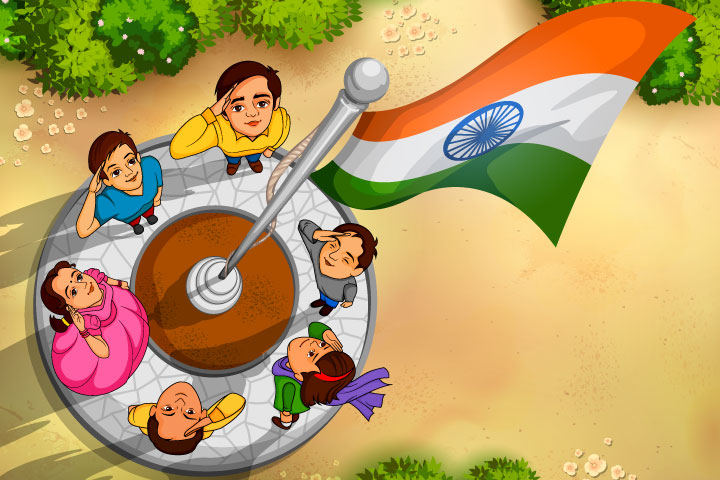
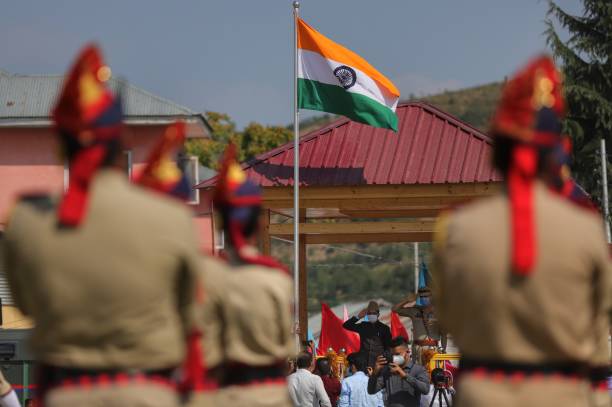
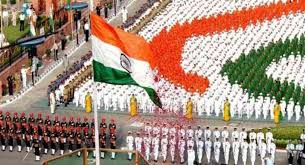
Mother India breathed the fragrance of freedom on 15 August, 1947. In the picture, we can see the hoisting of the national flag presumably by a senior and respected member of some community. This is a common sight in India where patriotic feelings are expressed at this time of the year. It is but natural that we should all feel strongly for our country, and what better time to express these feelings than on Independence Day!

However, the happy look on the faces of these people cannot hide the ugly truths that stare us in the face even after more than sixty years of independence. It is good that we celebrate our freedom with great enthusiasm as depicted in the picture. But mere smiles, celebrations and flag hoisting ceremonies are of no use unless we imbibe the spirit of Indianness in us. The spirit exhibited on this day should become a part of our very being.

CRPF and Jammu and Kashmir Police personnel takes part in the parade on India’s 74th Independence day in Baramulla, Jammu and Kashmir, India on 15 August 2020. (Photo by Nasir Kachroo/NurPhoto via Getty Images)

Generally we sing the national anthem with a lot of enthusiasm and then forget all about the relevance of the day as soon as the function is over. We throw sweet packets here and there and litter our surroundings. Moreover, in a country where more than fifty per cent of the population has a hand-to-mouth existence, the wastage of food is no less than sacrilege. If we do not respect the dignity of our people and surroundings, all the respect showered on the national anthem and the national song become meaningless

We must raise our voices in unison against the hypocritical phenomenon of paying lip-service to the concept of patriotism but stooping to grossly lackadaisical behaviour when it comes to performing our roles as Indians. Spitting or relieving ourselves in public places, not obeying the law while availing of transport facilities, disrespecting public property, joining mobs to create nuisance, calling strikes and bringing life to a halt on working days, remaining spectators to the corruption around us are all different patterns of behaviour that lower the prestige of our nation.

When we hoist the national flag, it is important that we feel clear in our conscience. One may argue that a small number of people setting the right example would not make much of a difference. This would indeed be a myopic interpretation of reality. The truth is that you may be a drop in the ocean, but the ocean is incomplete little gesture of respecting your country At least without in the true sense of the term would make a reasonable difference to the jawans on the border who risk their lives day and night to ensure that we can smile, secure in our knowledge of security when we look at the national flag fluttering high in the air.

History:

India was ruled by the Britishers for many years. The East India Company ruled India for about 100 years. It was in 1757 when the East India Company won the battle of Plassey. It was after the win went the Company started exerting power over India. Our nation had its rebellion against the foreign rule for the first time in 1957. The entire country united against British power. It was an unfortunate event as India was defeated back then but after that time. Indian rule was then passed to the British who ruled our country till India got its independence. Our nation faced a long campaign to gain independence. Britain then began to weaken after two world wars and India was finally free. India’s freedom struggle has always been an inspiration to the work as it was the most non-violent campaign in the world.

National Flag of India

Facts:

India has been independent for 73 years.

India is named after the river Indus.
India has had 14 Prime Ministers out of which one has been a female Prime Minister.
India has had 13 full-time Presidents out of which only one has been a woman.
The Indian National Flag was designed by Pingali Venkayya who was one of the freedom fighters and also an agricultural from Andhra Pradesh.
India’s national anthem was adopted three years of post-independence.
Mahatma Gandhi wasn’t able to celebrate the first Independence Day in Delhi.

Brief History of Hindi Cinema.

In the course of its long history, the Hindi Cinema has gone through constant evolutions and is still witnessing massive socio-cultural changes, however, from substantive and insular point of view; the Hindi Film Industry still retains its own unique and peculiar characteristics. Since the beginning, the Hindi Cinema has drawn its inspiration from the styles and aesthetics of the mega diverse Indian culture.

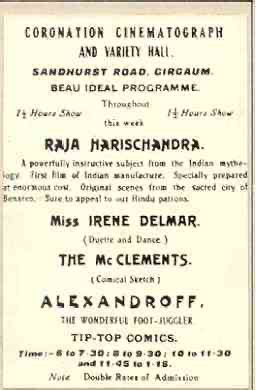
In general great emphasis has been put on classical Indian traditions over the years including Indian storytelling, epics, and poems and like. Although movies came to India in July 1896 as famous French Lumiere Brothers screened their short films in Watson Hotel, Mumbai, the first ever Indian film was ‘Raja Harishchandra’, a mythological film released in 1913 directed by Dada Saheb Phalke, who is often called as the father of Indian Cinema.

Film Poster of Raja Harishchandra, 1913.

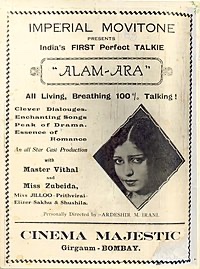
Raja Harishchandra being a silent film had Hindi, Marathi and English interfiles. In 1905, filmmaker Hiralal Sen documented “Swadeshi Movement of India” and screened it at Town Hall, Calcutta on 22nd of September which is considered as India’s first political film. H.S. Bhatavdekar’s first movie and the first film by an Indian Filmmaker was shot in 1899 in which he shot a Wrestling Match in Mumbai’s Hanging Gardens. By the 1930s, the industry was producing 200 films per year and it was in 1931, the industry had its first sound film named ‘Alam Ara’ by director Ardeshir Irani which had a mixture of both Hindi and Urdu.

Alam Ara, India’s first Sound Film. (1931)

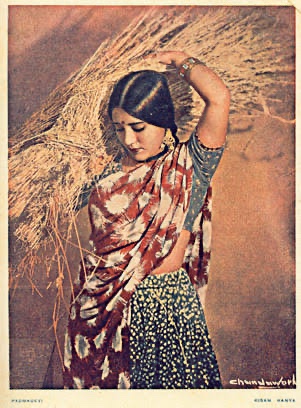
Since then the talkie films quickly were in high demand by the audience mostly in big cities and hence the industry permanently switched to sound films. The first ever Hindi color film was released in 1937 by Ardeshar Irani named “Kisan Kanya ”, however the colour films became popular among the audience only in late 1950s and early 1960s. The industry has also witnessed the breakdown of the studio system and complete on location shooting over the years. At present, Hindi Cinema produces over 1000 movies per year.

A still from Kisan Kanya (1937).

The Song and Dance Sequences

As mentioned earlier, the Hindi movies have always been a reflection of Indian culture and so hasn’t been any Hindi movie without a song till date. Two of the major characteristics of Hindi Cinema are songs and dance sequences. In fact, these two unique features are considered as the ‘peculiarities’ of Hindi Cinema which separates it from Hollywood or any other foreign film industry. In earlier times whenever there was a requirement of steamy scenes in movies, the protagonists, that is the hero and the heroine used to indulge into a song and dance sequel. The song and dance sequences pop up here and there according to necessary requirements and situations. The 1932 movie Indra Sabha was one of the first Indian movies with over 70 songs.

Film Poster of Indra Sabha (1932).

Truly, Hindi Cinema has entertained audiences worldwide for more than a century now. Informally and popularly known as Bollywood, Hindi Films will always have a special place in hearts of millions of Bollywood fans!