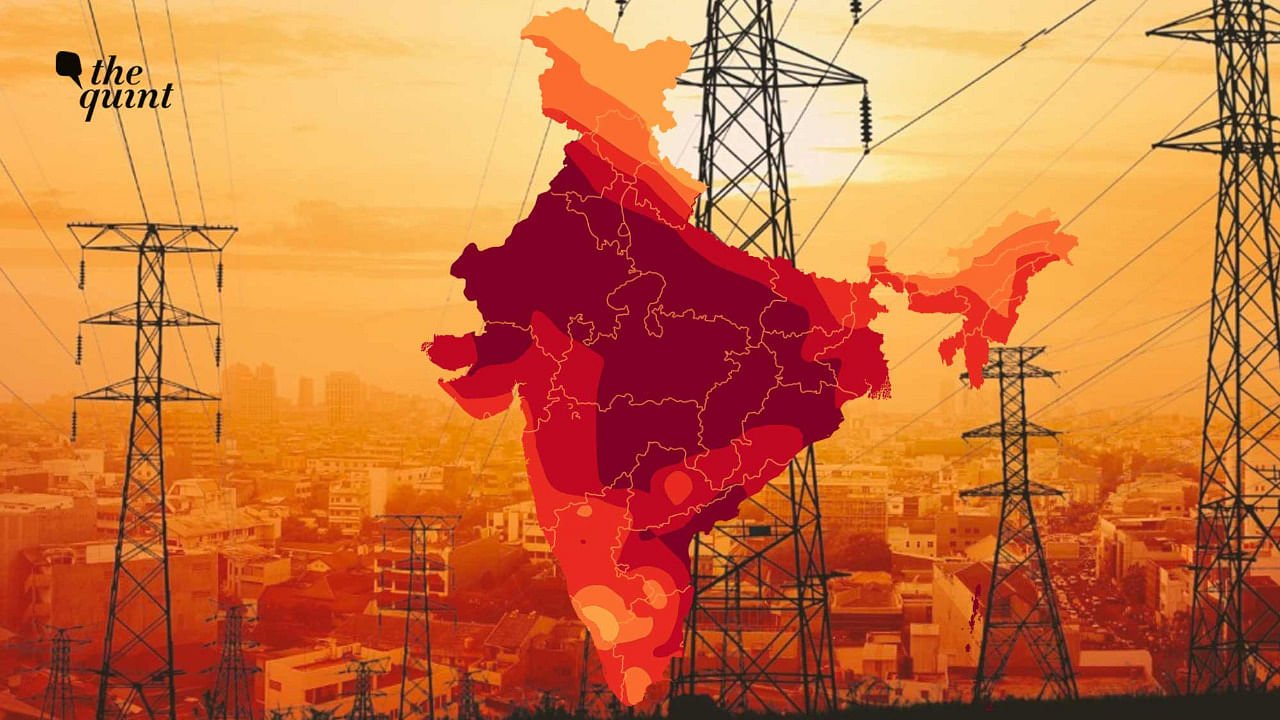
Shortage in Indias Power Supply.

India has the fourth largest coal deposit in the world. It is the second largest fossil fuel producer after China and is home to Coal India, the world’s largest coal mining mine, which accounts for 80% of domestic production. Already allocated coal block mining capacity exceeds expected demand in 2030 by approximately 15% to 20%.


So why are India’s power plants facing coal shortages each year, leading to widespread power outages, exposing parts of the country to darkness and endangering industry?
There are several factors. India has a long time policy of minimizing coal imports. In February 2020, Coal Minister Pralhad Joshi announced that the country would stop importing steam coal from 2023 to 2024.
Mr Joshi said the Ministry of Coal will work with the Ministry of Railways and the Ministry of Shipping to allow Coal India, prisoners and commercial miners to discharge more coal from their supply by 2030. And the coal supply at power plants is running out at an alarming rate. The Department of Energy is currently blaming the decline in coal imports due to the current crisis. In 2018-19, 21.4 million tonnes of coal were imported for mixing, down to 23.8 million tonnes in 2019-20 and 8.3 million tonnes in 2021-22.
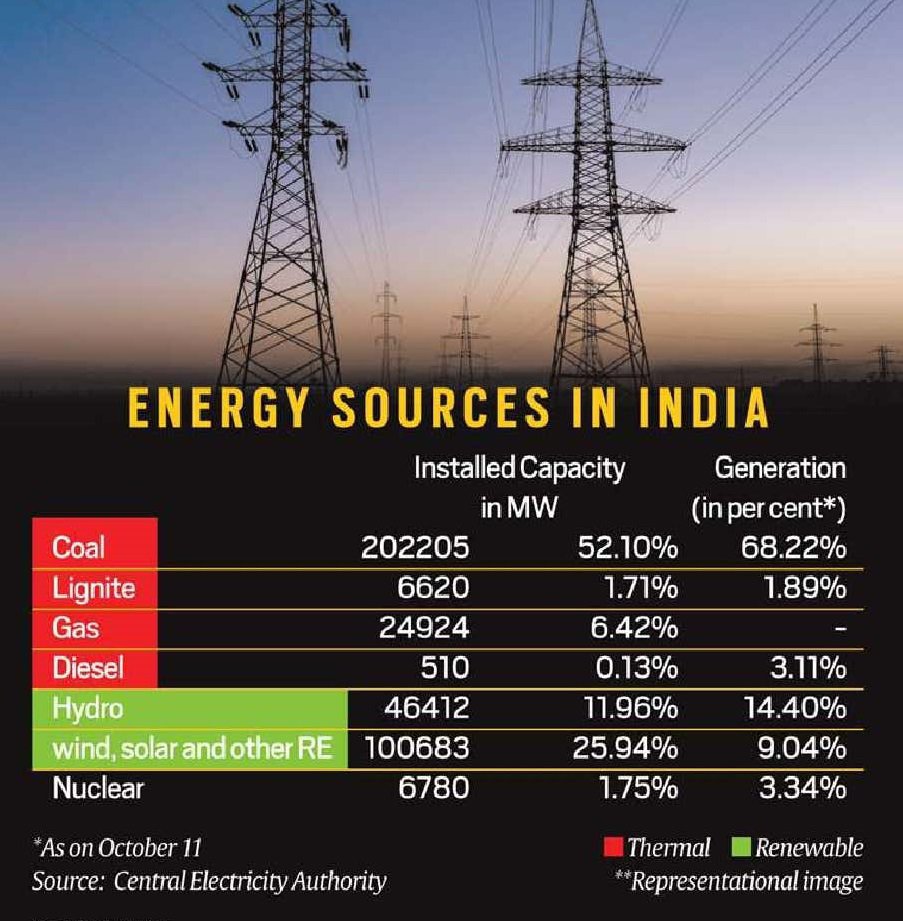


Power plant coal inventories have fallen by about 13% since April, reaching pre-summer lows. And for the first time since 2015, Coal India will import fuels used by state-owned and private power companies. The Ministry of Energy said almost all states showed that multiple state bids for coal imports would cause confusion and that the decision was made after calling for centralized procurement by Coal India.
Imported coal costs five times as much as domestic mining, so the center is being pushed back by the state.
Recently, the government has also pressured utilities to increase imports to mix with local coal. Last year, after a two-year break, three tranches of coal auctions were held and nine blocks were successfully awarded.

In September 2021, the Ministry of Coal issued a strict warning to owners of confined coal blocks, stating that their mines should increase production or face restrictions on coal supply by the CIL.
The ministry has discovered that these mines are producing below target.

Of the 43 coal mines outsourced to private companies in the energy, steel and metals sectors, none have met their annual production targets.
On May 6, Coal India announced that it would provide the private sector with 20 closed and abandoned underground coal mines and reopen and operate its revenue sharing model.

According to journalist Shreya Jai the current power supply chain does not seem ready to handle periods of high growth and state discos cannot pay gencos, but the power supply chain starts with state discos and needs repairs. Railroads, on the other hand, are struggling to align the thermal power industry’s demands for faster coal supply with those from other industries. Rakes must be prepared to meet the growing demand for almost all other bulk commodities, from cement and steel to sand and edible grains. By strengthening the value chain of the electric power sector, it is possible to resolve the coal supply-demand mismatch in the long run.


History of Television in India.

Television was founded by John Baird. The first television service was started in 1936 by British Broadcasting Corporation (BBC) of Britain . In 1939, television broadcasts began in the United States. In 1953 the first successful programme in colour was transmitted by Columbia Broadcasting System (CBS) in USA. In today՚s world, television has become one of the most powerful means of mass communication . It can impart education, information and entertainment . Television has end up becoming an necessary a part of our lives.


HISTORY
India’s first television station was established on October 24, 1951, in the Department of Electronics and telecommunications at Government Engineering College in Jabalpur. Television began in India as an experiment on September 15, 1959. It was first started as two hours programmes a week under the authority of AIR. Early programs of these experimental broadcasts were generally educational programs for children and farmers. By 1975, only seven Indian cities were using television services. The Satellite Instructional Television Experiment (SITE) was an important step by India for the use of television for the development of people and the country. Initially, the show was mainly produced by Doordarshan (DD), who was part of AIR at the time. Transmissions were made twice a day, morning and evening. In addition to information on agriculture, health and family planning, other important topics covered in these programs were audience education and awareness raising. Entertainment was also included in the form of dance, music and cinema. In 1976 Television services were separated from radio . Color television was introduced to the Indian market in 1982.

In the late 1980s, more and more people began to own televisions. There was only one channel, but the TV show was saturated. Therefore, the government opened another channel, partly broadcasting nationally and locally. This channel was called DD2 and was later renamed to DD Metro. Both channels were broadcast on the ground. In 1997, Prasar Bharati, was established.Doordarshan, along with AIR, was incorporated into a state-owned enterprise under Prasar Bharati. Transponders of the American satellites PAS-1 and PAS-4 assisted in the transmission and broadcasting of shows on DD. An international channel called DD International was launched in 1995 and broadcasts programs abroad 19 hours a day to Europe, Asia and Africa via PAS-4 and to North America via PAS-1.The 1980s were the prime time for DD, with shows like comedies such as Hum Log (1984-1985), Wagle Ki Duniya (1988), Buniyaad (1986-1987). Epics like Ramayan (1987–1988) and Mahabharat (1989–1990) brought millions to Doordarshan and later on Chandrakanta (1994–1996). Song-based programs for Hindi movies such as Chitrahaar and Rangoli, and crime thrillers such as Karamchand and Byomkesh Bakshi. Children’s shows such as Tenali Rama ,Vikram Betal and Malgudi Days .


Private Channels influence:
The introduction of communication channels was a revolutionary move to reach so many people. It became an opening for Private and Commercial broadcasters in our country. The emergence of private channels began in India in the 1990s after CNN aired the Gulf War. Hong Kong-based STAR (Satellite Telivision Asia Region ) enterned in a contract between an Indian company and Zee TV. It became the first Private Indian Hindi satellite channel. During this time, several local stations have emerged. Apart from local ones various international channels such as Channel, CNN, BBC, Discovery, etc were also available for Indian TV viewers. Their were various categories of channels available for viewers,such as the 24-hour news channel, Religious channels, cartoon channels, movie channels, something for everyone .


Changes and Evolution:
A significant change that has occurred is the use of different methods of delivering television programming. Just a while ago their were satellite-based antennas, but now the mode has converted to dishes. Other shipping methods are are delivery via cable network and direct satellite transmission. Now you can watch TV shows on your mobile phone , the technology behind it is called Internet Protocol Television. The emergence and spread of televisions and computers and the access to content anytime, anywhere, everyone has brought revolutionary change and access to the world of entertainment.

“I always say film is art, theater is life and television is furniture .”

Kenny Leon

Neutrogena Deep Clean face wash

Neutrogena Deep Clean Facial Cleanser For Normal To Oily Skin, 200ml https://www.amazon.in/dp/B006LXDQRY/ref=cm_sw_r_apan_glt_fabc_dl_0F1YKXWWE1NGE0KQYS20

 Neutrogena is notable for making face fens for fulsome, acne-prone skin. This is your most solid option in the event that you have fulsome, and acne-prone skin. Delicate on your skin yet extreme on skin inflammation, the specific canvas-free equation tenderly purifies your skin from deep out. This face fen for fulsome skin contains Salicylic acid which is known to dispose of skin break out and reduces coming bunks.

READING IN THREE KEYS: How to Write a READING RESPONSE

Active reading involves looking at the text in more than one way.  For your reading responses write using these three “keys,” or methods, of analyzing what you have read: 

Reading responses in this class generally vary from 250 – 400 words. The length required will be specified on the assignment.


 Sometimes you will be asked to post your reading response to the Discussion Board and then follow-up with a response to one of your classmate’s postings. You may respond in any of the three “keys.”  A sample response building on a previous posting might start off with a sentence like this: “I agree with David that advertising objectifies women by portraying them as dehumanized objects, but I wonder whether women benefit from that objectification in any way?”  You can build your ideas on comments others have made.  And feel free to keep chatting with each other.

Slowing Industrial Production : Reasons & Solutions

Industrial production declined at a 2.2 percent annualized pace through the first half of 2019. It’s tempting to interpret the slump as an early warning of a faltering economy, but a closer look at the headwinds facing the nation’s manufacturers reveals several idiosyncratic forces behind the slowdown. Tariffs are unlikely to have been a major factor in the decline, and the underlying support from consumer demand remains strong.

Industry’s slowdown has been concentrated in the energy, automotive and aerospace sectors due to unique forces that are likely to subside without causing broader economic disruption. Despite falling industrial production, the tightening labor market implies that the expansion still has momentum.

The Index of Industrial Production (IIP), considered as the representative of industrial growth in India witnessed the reduced growth of 2.7% in May 2015 making a dent on the tall claims of the government about the revival of high growth phase. The overall growth of the secondary sector for the month of April was also revised downward to 3.4% from the earlier estimated 4.1%.

The slowdown in the industrial growth was driven by the slow growth in manufacturing sector from 4.2% in April 2015 to 2.2% in May 2015. Among the sub-sectors of industry: mining and electricity sectors improved to 2.8% and 6% respectively but consumer good industry contracted by 1.6%.

The consumer durables and non-durables both saw the negative growth of -3.9% and -0.1% respectively. Capital goods also dragged the industrial growth as they saw a meagre 1.8% growth in May 2015 as compared to 6.8% in April 2015.

Despite the improvement in core sectors like electricity and mining, slower growth in capital goods indicate that business sentiments are still not strong enough to make companies add machinery to their production lines to increase the production.

Are Tariffs to Blame?

Escalating trade tensions are undoubtedly concerning for businesses that rely on international supply chains and sales to overseas markets. But the actual tariffs levied so far amount to a relatively small slice of the US economy.

Last year’s $35 billion worth of tariffs on Chinese imports amounted to only 0.18 percent of American GDP, and its impact was offset by devaluation of the Chinese renminbi, which discounted Chinese goods on the US market.

If trade tensions really were behind the industrial slump, high-tech manufacturers should have been the hardest hit. Yet this sector has been one of the brightest spots in US industrial production, expanding at a 9 percent annualized pace this year, almost triple last year’s growth rate. America’s high-tech manufacturers have had little trouble sourcing components from foreign suppliers and selling their products overseas.

The Bigger Picture

Industrial activity is still important to the economy, but as a share of GDP, manufacturing has shrunk considerably from past decades. Today, industrial production represents only 11.5 percent of the economy and accounts for about 8 percent of the workforce; it’s possible for manufacturers to make modest cutbacks without stalling overall GDP growth.

As the headwinds facing the nation’s energy, automotive and aerospace manufacturers subside, industrial production should return to alignment with consumer demand. As always, layoffs are providing a reliable indicator of whether a disappointing economic indicator is actually causing distress for businesses. So far, industry’s slump hasn’t created a surge in applications for unemployment benefits; this implies that manufacturers aren’t making permanent staff cuts, confident that their assembly lines should soon be operating at full capacity.

Reasons of Slowdown

The negative growth of consumer goods was a significant drag on the industrial growth in May 2015. The demand for consumer goods has contracted in May 2015 due to low demand from rural areas. The unseasonal rainfall during the harvesting season in April resulted in heavy loss of rabi crops in general and wheat in particular adversely affecting the income of the farmers. Loss of income resulted in reduced demand from rural areas and ultimately affecting the growth of consumer goods.

Slow growth in capital goods and manufacturing indicated that investment climate is still not positive enough to usher high growth and signals the need of urgent reforms. Though government has made some moves to reduce the hassles in doing business in India, country still ranks low in doing business. Slow growth indicates that there is still a lot of scope to improve the investment climate. Reduced demand, infrastructural bottlenecks and many archaic laws are putting impediments for the high growth. When it is easy to do business in low cost countries like Bangladesh, Vietnam why would an international manufacturer invest in India. The cyclical upswing in demand can definitely improve the growth but this would not be sustainable.

Possible Solutions

As far as consumer demand from the rural sector is considered, it is likely to improve due to better than expected monsoon and we can see better growth of consumer sector during the third quarter. Reserve Bank on its part may reduce the interest rates to improve the investment climate as inflation is likely to remain within safe limits. But major thrust had to come from the government. However, ad hoc measures would only give a temporary boost to the growth.

For permanent solution, government must ensure positive and enabling environment. For that matter comprehensive reforms are required in every sector including labour relations, policy solutions, infrastructure improvements, energy reforms, financial reforms, skill enhancements etc. Along with aforesaid measures, bureaucratic hassles must be reduced to minimum because in comparison to other nations, red tapism plays a significant role in delaying the assured investments while denying the possible investments.

Moreover, government cannot bank on any one measure to usher growth but a holistic approach is required for a diverse growth that can gainfully absorb the increasing Indian work force.