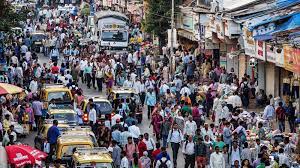
India's top 1 percent richest own 40 percent of total wealth.

The richest one per cent in India now own more than 40 per cent of the country’s total wealth, while the bottom half of the population together share just 3 per cent of wealth, a new study showed on 16th january.

Releasing the India supplement of its annual inequality report on the first day of the World Economic Forum Annual Meeting here, rights group Oxfam International said that taxing India’s ten-richest at 5 per cent can fetch entire money to bring children back to school.

On gender inequality, the report said that female workers earned only 63 paise for every 1 rupee a male worker earned. For Scheduled Castes and rural workers, the difference is even starker—the former earned 55 per cent of what the advantaged social groups earned, and the latter earned only half of the urban earnings between 2018 and 2019.

ISSUES RELATING TO POVERTY AND HUNGER

India is a country which suffers a lot due to hunger and poverty. Hunger is very closely related to poverty as poverty is one of the main reasons for hunger. 

Indian economist and philosopher Amartya Sen said that lack of ability to pay for food is obviously caused by poverty.

POVERTY

Poverty is a condition caused due to lack of basic needs of life such as water, health care, food, unemployment etc. It is described as the low income level of people which leads them to poor standard of living. Poverty means that the income level from employment is so low that even the basic human needs are not fulfilled. The impact of poverty on children is substantial. Children who grow up in poverty typically suffer from severe and frequent health problems; infants born into poverty have an increased chance of low birth weight, which can lead to physical and mental disabilities. Poverty is a difficult cycle to break and often passes from one generation to the next. Typical consequences of poverty include alcohol and substance abuse, limited access to education, poor housing and living conditions, and increased levels of disease. 

Hunger and food insecurity are the most serious forms of extreme poverty. To eradicate these issues from society is the prime concern of international organizations.

HUNGER

Hunger is a global problem and a lot of countries are facing this problem. Hunger is a condition where both the adults as well as children do not have access to food and there is a constant decrease in food intake, nutrients, no proper diet is there and some days are even gone without food which eventually leads to their death.

Climate change is also one of the reasons for world hunger. The amount of rain determines the production of crops. Droughts also affects agricultural production and extreme rain also causes flooding that leads to destruction of crops . Use of outdated products, not using better quality seeds also leads to shortage of food and those who are capable and have money buys food even at higher prices, the ones who have to suffer are poor people. They do not have money to buy food and hence they remain hungry. Hunger has a lot of serious problems such as insufficient economic systems, climate changes, misinformation but the most serious problem of all is poverty. Many poor nations such as Kenya, Uganda etc. are in desperate need of food. The growing population is one of the major causes of rising hunger and poverty. In Indian scenario Hunger and malnutrition are closely related. The main outcome of poverty is hunger. India is a home to the largest undernourished population in the world, 14℅ of our population is undernourished, 20℅ of children under 5 are underweight, 34.7℅ of children are stunned, 51.4℅ of women in the in the reproductive age i.e. 15-49 are anemic.

DIFFERENT ISSUES RELATING TO HUNGER AND POVERTY

Overpopulation is a major issue of rising poverty. There are not enough resources to satisfy your need. Demand is more and resources are limited and this leads to no proper distribution of resources and a large amount of people are left with no food. India is a country with a large population, and hence everyone’s demand is not full and people remain hungry.

Poor health service– the health sector of India is not as efficient as compared to other developed Nations, which leads to less access to good health and sanitization and hence causes ill health and maintains poverty.

Malnutrition- It is a phenomena that occurs in a human body when it receives little or no nutrition as a result of it people easily get sick and it causes death. it is responsible for the death of people, especially young children.

Insufficient education and lack of training- due to Rising poverty children are not able to get basic education and again since they are not educated, they don’t get employed and this vicious cycle of poverty is continued. Lack of money is reason for them not attending proper School and they have to indulge in labour to provide for a minimal living also causes rise for child labour. Parents send their children to work at a very young age.

Inequality– different gender, ethnic, group and social classes face inequality due to poverty. Low rate of economic development, If a country is poor then its development is also very slow.

Rise in crime – Often due to poverty and hunger, people indulge in criminal activities. To fill their empty stomach many young children opt for wrong ways and indulge in theft and loot and its disturbance in the society.

Way Forward

To eradicate poverty and hunger from the society, there is a need for the government to implement schemes and methods. The government should spend more in health, nutrition, and education. The government should invest more in agriculture and provide the farmers with better quality seeds and advanced machineries and modern techniques for more agricultural production, Also it is necessary to decrease rural poverty. Subsidies address only short-term issues. There is a need to develop technologies, with the help of which farmers can practice all-weather agriculture. Government should focus on increasing employment opportunities creating jobs in modern sectors and promote labor-intensive industries. Reduction in corruption will lead to an overall development of the economy. A country with low poverty level will only develop in a better manner.

Sources: civilservicesindia.com

Inequality

            We all are living in 2021, do you think the society treats men and women in a equal manner? No, many of us answer would be no. Don’t you think why? Take your house as an example, does everyone in house do the household chores? No, only the girls especially the mothers.

            It is totally not fair at all to make the women to getup in the middle of the meal to serve you. How cruel it is? She is also a human, she to have her own choices and she have all rights to enjoy her life.

            We all are hearing different stories each day about how the society treats the girl in the worst manner, the dowry cases, inter caste marriage, acid attack, rape, harassment, abuse these are all the evidence that how the women are struggling to live the common life in this world. As the world is modern the problems are modern, I’m saying about the social media platforms, where most of the women feels insecure,

            She is not your servant to fulfill your needs but a living human to fulfill her own needs. As the years passed there stood many peoples raising the voice for the equality of women but still we are fighting for the equality. A good point about that is the situation is not bad as that time but it is not ok to accept that.

            Fighting all these things we can see women in the higher points, think about the road she travelled to reach the goal it is not at all the easier one. It says how determine the women should be reach it.

            We should teach everyone in the society that men and women are equal, this should be done in the childhood itself so that it would create the better society in the future. This is not only with the men and women but with every human in this world should be treated equally, we all are a fellow human being who are responsible for the society, so it’s our responsibility to make the awareness, and make people understand about the equality.

            “Equality is the soul of liberty; there is, in fact, no liberty without it.” – Frances Wright

            “The word ‘equality’ shows up too much in our founding documents for anyone to pretend it’s not the American way.” – Martha Plimpton

“There’s nothing complicated about equality.” – Alice Paul

 “I would like to be known as a person who is concerned about freedom and justice and prosperity for all people.” – Rosa Parks

GENDER INEQUALITY

Gender is one of the major sources of inequality in the world today. Girls are usually deprived of their rights and are likely to suffer from abuse and violence.

Discrimination based on gender gives rise to food insecurity, health risks, and exclusion from several opportunities. The United Nations (UN) estimates that 70% of the 1.3 billion people in poverty globally are women. According to World Food Program USA, more than 60% of the world’s hungry are women and girls, in nearly 2/3rd of countries, women are more likely than men to report food insecurity and one in three women with anemia are left untreated.

In a lot of countries women are not allowed to pursue higher education and they are married off early. In addition, domestic violence is a major problem in many countries including India. The women get beaten up by their husbands as men think they are superior to their wife and many women stay in abusive relationships and don’t speak up because of the fear of society.

Sometimes women face discrimation even at work, women who do actually work get paid less than their male counterparts and are disproportionately impacted by poverty. It is just unfair to pay someone less for the same work because of their sex. Therefore, we see how women empowerment is the need of the hour. We need women empowerment so that these women can speak up for their rights and never be a victim of injustice.

Women have suffered a lot at the hands of men. In earlier times, women were treated as non-existent and as if all the rights belonged to men. With the passage of time, women realised their power and began the revolution for women empowerment. Women’s empowerment can be defined as empowering the women to make their own choices, to instil a sense of self-worth and to influence social change for themselves and others.

Promoting women’s empowerment has emerged as a major global movement and has been continuously gaining momentum. While the western countries are still making progress, third world countries still fall behind in empowering the women.  While there has been progress with the passage of time, even then women continue to face discrimination and exploitation in every part of the world.

Women can be empowered through government schemes as well as on an individual basis. The people of the society and government must both come together to make it happen.  At the societal level, we should start respecting women and encourage them to take up jobs, higher education,etc. Women should get equal opportunity in every field, irrespective of their gender. Various programs or schemes must be made available for women so they can be learn skills to fend for themselves in case they face financial crisis.

Today, more than ever, women enjoy their rights. However, there are many women who are still fighting to come out of the cluthes of patriarchy and there is a long way to go.

Population Explosion: The cause of poor living conditions of indians

India is a over-populated country. It is the second most populated country in the world, after China. However, researchers say that India is all set to surpass China in population density by 2024. That means India is about to become the country with the highest population density across the world.

The population of India is increasing at an alarming rate. India is not the country with the highest number of people. There are countries which has more number of people than India like Russia. But they are not overpopulated. Those countries have enough space to fit in the number of people. India has more people than the country could fit in. The number of people residing in per unit square of land in India is much higher than that of other countries. This makes India an over-crowded country.

The huge population of India makes a lot of people live in poverty. The country’s economy is not enough to sustain its population. Adding to the problem, the country’s wealth is not equally distributed. The economic gap between the rich and the poor is widening. The major chunk of the country’s wealth is held by the rich and the powerful who are quite few in number compared to the country’s huge population. A large chunk of the population live below poverty line who do not have enough money to afford their meals thrice a day.

Also, the country does not have enough employment opportunities for all its citizens. This leads to unemployment, economic distress, stress and mental health problems. Unemployment increases the amount of crimes, theft and illegal business practices.

Along with wealth and job opportunities, India’s natural resources are also limited and not enough for its huge population. Over-consumption of natural resources would exhaust them and leave none for our future generations. Overpopulation is also a threat to our environment. The air and water bodies are becoming more and more polluted day by day. Too much burning of fossil fuels, congested roads and too many vehicles are releasing toxic gases in the air.

Accommodation is also a problem in India. Thousands of people live in slums which are over-crowded with unhealthy living conditions. More houses and buildings are being constructed which leaves no place for plants and nature. Forests are cut down to make room for construction projects. The cutting down of trees leads to increase in the level of carbon dioxide in the atmosphere.

Population explosion is a serious problem which needs to be addressed at any cost. The Indian population should be controlled to improve the lives of the people. Awareness drives and contraceptive alternatives should be adopted with immediate effect.

Females in jobs(critical analysis)

How often do we see a woman on top official post? Women judges at the country courts?Women leaders of their countries?Female leads in movies?

You answer may be 1,10 or may be 100.

This proves exemptions cannot be treated as generalist examples.

Sustainable Goal by UN (goal-5)focuses   to Achieve gender equality and empower all women and girls..193 countries including India endorsed the goal.Still we witness a divide.

According to World Bank data (WB) women contributed 38.833% to the labor force in 2019.Less than 50%,not enough right? The same data shows that male labour force participation rate is 74.334%.

(As per ILO,Labour force participation rate is defined as the section of working population in the age group of 16-64 in the economy currently employed or seeking employment)

Where and why?

1.Judiciary

       Since Independence there have been only 8 female judges in the Supreme Court of India.While ,no Female CJI yet. High courts witness the same fate with 82 females as judges.In federal court of America,about 73% judges are male.UAE had their first female judge in 2019.Kenya recently appointed its first female Chief Justice

2. Films

There is a huge gender pay gal witnessed in film industry be it hollywood,bollywood.Many actors like Oscar winner Jennifer Lawrence,Emma watson have been vocal.National Award winner Priyanka Chopra said ,”Gender pay gap is a global problem”.

3. Private sector 

     Private sector particularly Service sector provides ample opportunity for women.Although they face problems as the employers want to avoid giving maternity benefits and leaves ,flexibility of night shifts ,transfers due to marriage etc.Women have proved their mettle by engaging in most challenging jobs in the modern times and broke the above myths.

4.Politics

 A 33% reservation for women in and legislative assembly and legislative council bill is still pending before the legislature. According to UN women Women serve as Heads of State or Government in only 22 countries, and 119 countries have never had a woman leader .

5.Education              

The literacy rate for females in India is 53.7% whereas in America it is 77%.No prizes for guessing,male literacy rate is higher in both the developing and developed country.

According to UIS data provided by UNESCO,only 30% women researchers in science.Still they have managed to fare well and won most noble prizes in physics,chemistry and medicine.

They are faced with societal,matrimonial,family pressure.Child marriage,trafficking undoubtedly illegal on paper but are still  practiced by villages.

6. Police

 According to data from Bureau of Police Research and Development (BPR&D) ,women constitute only 8.3% to the police personnel in India.It wasn’t until recently that women were allowed in territorial army.They are still not allowed in major combat roles.

Way forward:-

  1. Postive role of social media to spread awareness.
  2. Laying impetus on education,providing better research opportunities,creating more infrastructure in rural areas etc
  3. Employment generation for women,to make them better contributers in Country’s GDP.
  4. Support women entrepreneurs ,Shgs,make them aware about existing schemes and benefits.
  5. Increasing reservation of women wherever underrepresented,provision of training for required skills therein.
  6. Making workplace amicable by taking prompt action on their complaints.
  7. Creating avenues for her to explore,learn ,grow in any sector she desires.
  8. Ensuring no girl child suffers from child marriage,school drop outs,become victims of violence .
  9. Efforts to remove the taboo of menstrual cycle.

Dr.Ambedkar had once quoted,I measure the progress of any society by the condition of women in it.

Indeed ! Any country cannot flourish to it pinnacle by leaving the one gender behind.

POVERTY LEADS TO INEQUALITY.

Even though money won’t buy happiness in today’s era most people are willing to sacrifice their happiness for money and we cannot blame them because everyone judges you based on how much money you earn and spend. If you earn a lot then you hold a special place in society.Inequality has been surging sharply since the last three decades. The wealthiest have cornered an enormous portion of the assets built through cohort capitalism and legacy. They are becoming richer at a very faster speed while the underprivileged are still trying to earn a minimum wage and access standard education and healthcare services, which continue to suffer. People in poverty are those who are considerably worse-off than the majority of society. Their level of need means they are powerless to obtain gains and aids that most people hold necessary to an adequate measure of existing.The best example is inequality in healthcare facilities which has taken a serious.


Inequality, by distinction, is always a comparative term that relates to the disparity within levels of living standards, wages, etc. across the entire financial division. Poverty and inequality oftentimes up rise and befall collectively though this need not surely be the fact. Inequality can be high in a society without great levels of poverty due to a huge distinction within the top and the middle of the revenue spectrum. An important part of inequality is apparent because of the high numbers of labor organizations work in sectors with low productivity for example agriculture. To overcome inequality, low- productivity workers should be incentive to shift to more fecund sectors. Concurrently, structural improvements require to be fulfilled to improve the fecundity of these divisions.


Technology should not be made a substitute or deemed a rival. It should be seen as a means to address inadequacy and inequality. Enhanced technology can create more prominent demands. These next can enable more inclusive hiring of the low and the medium-skilled. Technology can enhance the potency of the agrarian sector. It can further promote versatility to sectors with tremendous productivity, as is apparent from the vast numbers of people foregoing farming for jobs in the help sector.


Education is the foundation for a fulfilling and leading a satisfactory life. For a nation to be packed with the understanding it has to adopt education as it is the solitary guarantee for a stable economy and a secure domain. Education shapes people into efficient and hardworking individuals. The importance of such an accomplished and knowledgeable society would help nurture a community that is operating as one for the economic advancement of the entire nation. The proficient workforce would be formed by education. Also of vital importance is the contribution of education towards the development of best economic policies. The government should break the cruel progress of poverty which makes inequality, which does not only negatively harms sustainable financial growth but also creates various socio-economic problems. The government should create job opportunities and employment that will be the key strategy to eradicate poverty and inequality.

Reasons for gender pay gap to exist and ways to overcome it :

Reasons for gender pay gap to exist :
According to a research, there are four reasons for gender pay gap to exist. First is, companies hire more men in senior management roles compared to women. Secondly, part-time roles and caring responsibilities are shared unequally in the society. Thirdly, women prefer working in low-paid sectors and roles and lastly, women are paid less when compared to men in the same roles.
Claudia Goldin and Henry Lee, Harvard University states that “When you look at the gap, it widens at the upper end. In fact, we see the largest differences at the very upper end, not at the lower end”. It might not seem like a big difference when a person who is supposed to earn 14 dollars per hour earns 10 dollars but it will make quite a big difference when a person who is supposed to make 300,000 dollars makes only 150,000 dollars. Companies are more comfortable and satisfied with hiring more men in senior management roles compared to women. A research found that it was likely for employers to hire men more than women in senior roles not because of prejudice but because they stereotype and rely on their perception that men are better performers at certain tasks. It was also stated that this can be divided as two faces of discrimination which is statistical discrimination which is because of beliefs about gender differences in skills, experience and abilities and taste discrimination which is a result of stereotypes or bias against certain group. Women find it very difficult to make it to the senior roles of their company and advance in their field. When compared to men women earn about 78 cents on the dollar. It is estimated that only 4.2% of women make it up-to being CEOs and only 19.2% of board members. A study suggests that women not being able to reach the top is because of the “broken rung”. It was found that for every 100 men promoted as manager only 72 women which accounts to men holding 62% of manager level roles whereas women hold only 38%. Therefore, this broken rung is an obstacle for the women even at the entry level. Also, this entry level inequality allows men to outnumber women in such roles and the number of women at the senior level roles decreases.
Part time roles and caring responsibilities are shared unequally in the society. Women are more in the “nurturing” roles than the men, which makes them look more concerned and commited to their home and family and not their jobs.Gender inequalities in part time and in caring works also lead to a gap in pay. A cross-country analysis also found that in countries where women who spend more time on unpaid care, it was likely to have a larger gap in pay. And in part time jobs women earn only 65% of what men earn when they spend twice as much time in caring activities and only 40% when it was full time jobs. Women devote almost 60% of their time to household and caring activities, irrespective of whether they are employed, educated or earning.
Another reason for this gap to exist is also because women prefer working on low wage sector and roles and employment of women in such roles are increasing day by day. An estimate of 7.6 million jobs were taken up by women in this low wage and female dominated sectors between the years 1994 and 2014 which almost a third of all new jobs in that period. The US Bureau of Labor statistics stated that the businesses which cater to provide care for the old and disabled, because the business increased almost four times between the years 1994 and 2014 . This shows that women prefer to work in low paid sectors and roles. The “women’s work” which involves cooking, cleaning,caring is always looked down and considered as something that does not require acknowledgement and this assumption has followed also to the marketplace. Though these jobs require energy, stamina , physical and mental strength, these jobs are never valued and women who play the most part in these jobs are often undercompensated . Therefore , it is not that the women who prefer low paid jobs but it is that these low paid jobs are undervalued. Also women are paid less compared to the men doing the same roles. Pay is decided based on gender and not on competence.

Ways to overcome the gender pay gap :
Continuous pressure on gender pay gap situation has resulted in formulating certain strategies to overcome it. Some of these include designing senior work roles for all employees, irrespective of gender bias; developing quality flexible jobs that allow men and women to balance caring responsibility with their ambition; opening up all industries to flexible working arrangement and part-time jobs and lastly paying same remuneration to women and men for the same roles. With these strategies and others gender pay gap in the world can be reduced. There should be a balance and equality in maternity and paternity leave like in the case of Sweden where there is an availability for paternal leave on the basis of ‘use it or lose it’ which will develop a sense of sharing the caring responsibilities. A family friendly working condition must be created so that it will help the man and woman of the house to balance work and family. This will also help them choose working hours accordingly and accommodate their caring responsibilities. Unpaid work must be recognized as the national policy level so that a change in the organizational structure can be established .Minimum wage should be raised since this minimum wage is decreasing from the 1960s which is leading these wage ages to live in poverty. “The unwillingness to raise the minimum wage is really hurting women, because they are disproportionately represented at that level” says Isabel V Sawhill, a senior fellow of Economic studies. Raising this minimum wage will serve as a step to improve low wage jobs which are majorly female dominated jobs. This will not only reduce the level of poverty but also bridge the pay gap. “States with Equal Minimum Wages for Tipped Workers Have Smaller Wage Gaps for Women Overall and Lower Poverty Rates for Tipped Workers”. Equal pay laws need to be strengthened so that potential pay discrimination can be tackled and there can be transparency of pay between Co workers. There are a lot of steps organisations can do to ensure gender wage parity which includes checking wage parity right from the time a person is employed. Market analysis must also be conducted to have a check on wage parity. The company should also look for unconscious biases when there is assessment.The most important obstacle to wage equality, however, lies in our attitudes. When women value themselves enough to fight for their due, and when society values all human beings equally, the gender wage gap will cease to be an issue.Claudia Goldin and Henry Lee from the Harvard University say that it is important to divide labour at home. Change must begin at home and the couple should decide and balance their home and career as to who is on call at home and who is the office. Paying same remuneration to women and men for the same roles can also serve as an effective strategy as this will also help the women not to feel less about themselves and to feel a contentment in what they are doing.

Gender pay gap – What it is and the factors resulting in the pay gap

For the most part of history, gender inequality is a heavily debated topic of discussion because from time immemorial it is always the men who have been the dominating force in the society which are reflected in the benefits they receive.
Gender pay gap is the difference between wages and salaries of men and women. It is the median yearly pay of women working full-time and throughout the year compared to the remuneration of men in the same category. Other estimates are based on hourly or weekly earnings or specific to a group of women.
The term ” equal pay ” came into spotlight in the year 1963 when Former President John F Kennedy amended the 1938 Fair Labor standard act which was a part of his New frontier program. But this did not put an end to the gender pay gap which has been existing from the time women came into the workforce during the industrial revolution. Even until the year 2017, women earned only about 81.8% of what men were earning.
The gender pay gap has become a major topic of research with women playing a big role in labour force facing alarming pay iniquities. A survey conducted on a company’s database with responses from around 2000 working women drew a conclusion that about 68.5% of the respondents said that the management does not want to take any necessary steps to bridge this gap even if gender parity is a priority resulting in zero change. The article further said ” it’s not just ‘glass ceilings’, but also ‘glass floors’, ‘glass doors’ and ‘glass walls’ at the workplace”.
Factors resulting in gender pay gap :
Gender pay gap is one of the gold mine area of research in labour market because it has an immense impact on wages. Wages is the primary motive of any labour force and this wage is distributed unequally to the labourers based on their gender due to a number of factors . Factors that result in the gender pay gap include occupations segregation, direct pay discrimination and bias against working mothers. In addition, factors like disability, racial bias, age and access to education also affect the gap in gender pay.
Occupational segregation :
Occupational segregation is most often based on gender where, women in female-dominated occupations face two different marginalisation based on wage. Firstly the average wage of their jobs is lower than that in comparable male-dominated jobs, and secondly they earn less relative to men in the same jobs .Occupational segregation is evident within occupation differences in earnings rather than differences in occupation itself. To put an end to all occupational segregation caused by gender more than half of the women in the labour force will have to go in search of a different occupation. It is said that it will almost take would take 150 – 320 years for occupational segregation to reach the point of integration. Occupational segregation occurs majorly because of preconceived notions and assumptions on which gender is best suited for best role rather than considering the efficiency of the person. This has an effect on the economy because it limits the participation of the labour group due to which they inevitably adopt to sectors which correspond to their gender and also lowers the aggregate demand in the economy causing a fall in female wages and leading to the gap in gender. It was also found that UK attributes to about 17% of pay gap with occupational segregation by gender. The female dominated jobs include about 22 occupations which is compressed into seven groups which are Office and administrative assistance,Health care and care support, Cashiers,Food preparation, Early childhood care and education, Beauty and personal services, Maids and housekeeping cleaners who earn less than 15 dollars per hour which is less than what men earn in the same occupation and contributes to only about 93.5% of what men earn.
Bias against working mothers :
Bias against working mothers is a kind of discrimination women who are pregnant or who just delivered a baby encounter in their working space due to which they don’t get the pay they deserve. Working Mothers particularly face more discrimination and in account for most gender gap in wages in comparison to the non mothers. This status of being a parent had a toll only on the female applicants because motherhood is seen as culturally incompatible with being an ideal worker whereas fatherhood or the paternal wall bias does not exist because the man is looked as the package deal of being a good

father and a great employee and are expected to work even if they have a new born at home. An economic study proved that the difference in pay gap between mothers aged less than 35 and non mothers is greater than the gap between men and women. The various factors for this wage gap for working mothers included reduced investment in human capital, lesser effort and efficiency compared with non mothers. The “work effort ” hypothesis by Becker in the year 1985 concludes that it might be possible that mothers are less competent, committed and are less productive at work because they have spent all their effort and energy caring for their children. This discrimination can be based on three factors, which is skill, trait and behaviour. A research also said that this wage gap is likely to be prevalent either because working mothers are assumed to be less productive or because employers stereotype working mothers and discriminate them or sometimes the reason maybe the combination of the two.
Direct pay segregation
Direct pay segregation is when women are paid comparatively lesser than men and women for the same job. A survey in India came up with the finding that male members on company boards earned about 1.22 crores annually and the women board members earned only about 60 lakh annually which is two times lesser than what men boars members earn die the same job. This is because the society has a great influence on what roles each gender should posses and therefore puts a level of pay for each gender. Women are often considered inferior and less competent than their male counterparts therefore they are often paid lesser for the same work. This was believed to be because women had lesser human capital than men in terms of knowledge, skills and experience. A major example for this direct pay segregation is the pay gap between the women’s and men’s soccer team of the US. According to reports, the U.S. women’s soccer team are paid only $2 million for winning the FIFA Women’s World Cup while the men’s soccer team players are paid $35 million. This discrimination extends even towards the salary where women receive between $6,842 and $37,800, while the men receive up-to $50,000.
Age:
Age is one of the primary factors that widens this gap. Women are paid only about 90% of what men are paid on weekly basis which stays the same until around the age of 35 and then through retirement, women are paid 74–82 percent of what men are paid, depending on age. By the time workers reach 55–64 years old women are paid only 74 percent of what their male counterparts are paid. The gender gap is narrower when the working women are younger in age which includes women below their 35’s. This gap widens the most when they reach their forties reaching its widest point for women in their forties. The various reasons include that older women are found to have a have a lower level of education than the younger women who are already undergoing this wage gap and also because of their shorter span of time in their job tenure when compared to their counterparts.
Disability
Dsabled people experience low employment opportunities and even if they get an employment ,they receive less pay. The causes of the disability pay gap are complex. The rate of employment for people with disabilities was only 35% ,with 63% men and 57% women in the year 2014. Another factor for this gender pay gap is disability. It is measured by answering questions related to these six disabilities: hearing, vision, ambulatory(related to walking) , cognitive(understanding), self care and independent living. The bias on women with disabilities is more than that of men with disabilities, because they tend to paid lesser than men with disabilities even though both are are prone to disability. This disability does not just cater to physical disability but also mental and progressive illness. In the 2015 ACS report, it was found that disabled people made only 68% compared to what people without disabilities made. And among people with disabilities also women made only 69% compared to men.
Racism :
Racism in today’s world is a longstanding phenomenan which constitutes to double marginalisation in women because they face oppression because firstly they are women and secondly because they belong to a particular race. Though men who belong to a certain race also face this oppression, women are doubly taken advantage of. Most companies generally pay lesser to the women who are so called “black” or “discriminated “. A research stated that non-white people earn lesser than the whites which is associated with discrimination because they are believed to have poor command of the particular language or because they exhibit qualities which do not match with the culture they are put in. Therefore they become overqualified and underpaid for the job which results in the pay gap.
The above factors give way to gender pay gap to exist.

The gender wage gap is real problem affecting women all over the world. This gap should not just be considered as an evidence of gender inequality and discrimination but rather as a statistical artifact of failing to adjust for factors that could drive earnings differences between men and women.

Battling COVID with stardom

Millions across the world, rich and poor, younger and older, does not matter where, we are always facing the lurking danger of coronavirus infection. It is causing a tumultuous effect on the day to day lives of people, with increasing healthcare costs, decreasing accessibility to the proper healthcare facilities, rising prices of commodities and the ever increasing number of deaths every day. Poverty has hit its record in India and with time, there is a rising inequality in the provision of treatment, thus leading to preferential treatment.  

But what is most astonishing is the fact that this diseases which was, at first, more common among the higher ranks of the society is spurring troubles among the lower ranks. Over the past few weeks, I could see a stark difference in the mode of treatment among the various ranks of the society. Consider the low wage or daily wage and the migrant workers. On the event of such a pandemic, they lost their sole earning potential, had to be transported back to their roots in ways that was unimaginable and even back at their home, poverty has reached the zenith of their lives. They basically had to pay their own fairs, which was multiple of the usual fares and they have to arrange for their own sanitation kit at the time, when they could not even afford the basic kit required for their survival. They are facing great uncertainties in their lives owing to stoppage of income, lost employment opportunities, educational hurdles of their children and many more. There were instances when the migrants tried to return to their homes walking on foot from the working locations and then losing their lives. It is very heart wrenching to see that how the lower sections of the society have to wait for uncountable hours just to get the basic treatment in the hospitals, and most of the times they succumb to their lives. Even for medical reasons other than COVID, they are being kept in isolation and the doctors do not even care to provide the basic treatment necessary to keep that patient alive. Such is the pathetic condition, not just for them but for all the common public.

And I am simply amazed to see how our own Bollywood is treating the entire pandemic. It seems like it’s a kind of spring break for them where they have been asked to do whatever they can. Many such pompous and self-centred Bollywood actors resorted to making videos such as washing the dishes when the bai is unable to come or when they are cooking some dish, which apparently we do it almost every day and then there are others who make their son playing an instrument while she teaches him how to do classical dance. And the worst part of it all is that, they all chant the same thing as to stay inside, wear mask, frequent sanitisation and doing things at home to keep mental stress at bay, but what they are forgetting is that they might have the opportunity to stay away at Disneyland, but others have to go out of their safe haven and do something to survive. Recently, a top notch Bollywood actor was tested positive for COVID and he and some of his ‘beloved’ family members had to be admitted to the hospital. He was tested on a regular basis for COVID and his family was getting the best medical care possible. The most surprising element of this news is that, first, it was broadcasted as a breaking news almost on all the national news channels and second, all the people were desperately praying for him and his family. Such is the disparity.

My only concern is in the fact that where is the praying when it comes to the ordinary people? People who are actually working for us, where are we when we need them? Why such disparity, even when the soul is not labelled?

Alas, our society still thinks actors are ‘heroes’.

Source: Self