Cabinet approves continuation of the Atal Innovation Mission

The Union Cabinet, chaired by the Prime Minister Shri Narendra Modi, has approved the continuation of its flagship initiative, the Atal Innovation Mission (AIM), under the aegis of NITI Aayog, with an enhanced scope of work and an allocated budget of Rs.2,750 crore for the period till March 31, 2028.

AIM 2.0 is a step towards Viksit Bharat that aims to expand, strengthen, and deepen India’s already vibrant innovation and entrepreneurship ecosystem.
The approval underscores the government’s commitment to fostering a robust innovation and entrepreneurship ecosystem in India. With India at rank 39 on the Global Innovation Index and home to world’s third-largest start-up ecosystem, the next phase of Atal Innovation Mission (AIM 2.0) is expected to further enhance India’s global competitiveness. The continuation of AIM will directly contribute to creating better jobs, innovative products, and high-impact services across sectors.

While building on the accomplishments of AIM 1.0, such as Atal Tinkering Labs (ATL) and Atal Incubation Centers (AIC), AIM 2.0 marks a qualitative shift in the mission’s approach. Whereas AIM 1.0 involved implementing programs that built new innovation infrastructure to strengthen India’s then nascent ecosystem, AIM 2.0 involves piloting new initiatives designed to fill gaps in the ecosystem and scaling successes through central and state governments, industry, academia and community. 

AIM 2.0 is designed to strengthen India’s innovation and entrepreneurship ecosystem in three ways: (a) by increasing input (i.e., ushering more innovators and entrepreneurs),  (b) by improving the success rate or ‘throughput’ (i.e., helping more startups succeed) and (c) by improving the quality of ‘output’ (i.e., producing better jobs, products and services).

Two programs target increasing input to the ecosystem:

  • The Language Inclusive Program of Innovation (LIPI) to build innovation and entrepreneurship ecosystems in India’s 22 scheduled languages for lowering entry barrier confronting innovators, entrepreneurs and investors who don’t speak English. 30 Vernacular Innovation Centers will be established in existing incubators.
  • The Frontier Program to create customized templates for the innovation and entrepreneurship ecosystems of Jammu and Kashmir (J&K), Ladakh, the North Eastern states (NE), Aspirational Districts and Blocks where 15% of India’s citizens live. 2500 new ATLs will be created for template development.

Four programs target improving the throughput of the ecosystem:

  • The Human Capital Development Program to create a system for producing professionals (managers, teachers, trainers) to build, operate, and maintain India’s innovation and entrepreneurship ecosystem. The pilot will produce 5500 such professionals.
  • The Deeptech Reactor to create a research sandbox for testing ways of commercializing research-based deep tech startups that require significantly longer time and deeper investment to get to market. Minimum 1 Deeptech Reactor will be piloted.
  • The State Innovation Mission (SIM) to assist states/UTs with building a strong innovation and entrepreneurship ecosystem that focuses on their areas of strength. SIM will be a component of the NITI Aayog’s State Support Mission.
  • The International Innovation Collaborations program to take India’s innovation and entrepreneurship ecosystem international. Four areas of intervention are identified: (a) an Annual Global Tinkering Olympiad (b) creation of 10 Bi-lateral, multilateral engagements with advanced nations (c) as a knowledge partner, helping the United Nation’s World Intellectual Property Organization (WIPO) spread the models of AIM and its programs (ATL, AIC) to the countries of the global south, and (d) anchoring the Startup20 Engagement Group of the G20 for India.

Two programs target improving the quality of output (jobs, products, and services):

  • The Industrial Accelerator program to increase industry involvement in scaling-up advanced startups. Minimum 10 Industry Accelerators in critical sectors will be created in Public Private Partnership (PPP) mode.
  • The Atal Sectoral Innovation Launchpads (ASIL) program to build iDEX-like platforms in central ministries for integrating and procuring from startups in key industry sectors. Minimum 10 launchpads will be built across key ministries.

*****
DST to Announce Quantum Start-ups under National Mission on Interdisciplinary Cyber Physical Systems and National Quantum Mission

Start-ups selected for support under the newly established guidelines in Quantum Technologies will be officially unveiled by the Union Minister of State (Independent Charge) for Science and Technology, Minister of State (Independent Charge) for Earth Sciences, MoS PMO, Department of Atomic Energy, Department of Space, Personnel, Public Grievances and Pensions, Dr. Jitendra Singh at an event, scheduled for 26th November 2024.

Department of Science and Technology (DST) has established detailed guidelines to support and nurture startups in the field of quantum technologies. These comprehensive guidelines provide a structured framework for startups to access essential resources, funding opportunities, mentorship, and infrastructure support, empowering them to accelerate innovation and contribute to India’s quantum ecosystem.

The unveiling of the startups by the Union Minister, who will be the Chief Guest for the occasion will showcase India’s growing prowess in quantum research, development, and commercialization.

A Call for Proposals was launched earlier this year by the I-HUB Quantum Technology Foundation, a Technology Innovation Hub (TIH) established at the Indian Institute of Science Education and Research (IISER), Pune, under the National Mission on Interdisciplinary Cyber-Physical Systems (NM-ICPS). The response from start-ups across the nation showcased the increasing interest in quantum technologies and the potential for ground-breaking advancements.

The selected start-ups, representing cutting-edge innovation across diverse domains such as quantum communication, computing, sensing, and materials, were chosen through a rigorous evaluation process. These pioneering ventures are poised to contribute significantly to India’s quantum ecosystem, addressing critical technological challenges and driving economic growth.

With the growing momentum in India’s start-up ecosystem, the National Quantum Mission is dedicated to nurturing ventures in quantum technology, and propelling the nation toward world-wide excellence in this transformative field.

***

Vibrant Gujarat Pre-Summit on ‘Biotechnology: The Path of Innovation & Wellness for Viksit Bharat’

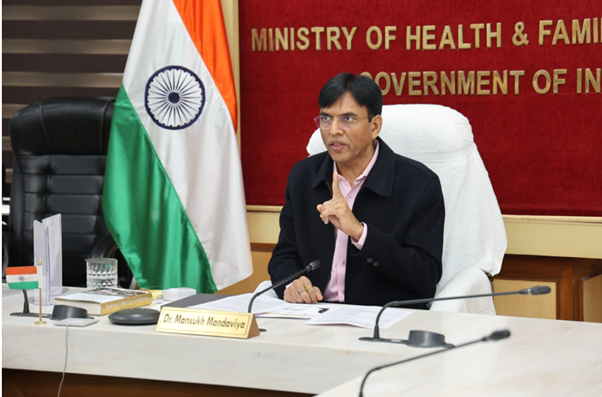
 “India’s ‘Bio Economy’ has grown eight times in the last eight years from $10 billion to $80 billion. In the coming times, biotechnology will become the biggest foundation for health treatment.” This was stated by Dr. Mansukh Mandaviya, Union Minister for Health & Family Welfare as he virtually addressed the pre-event summit “Biotechnology: The Path of Innovation & Wellness for Viksit Bharat” in the presence of Shri. Bhupendra Patel, Chief Minister, Gujarat at Vigyan Bhavan, Science City, Ahmedabad, Gujarat today. The summit is a preliminary event leading up to the 10th Vibrant Gujarat Global Summit that will take place on January 2024 at the Mahatma Gandhi Mandir, Gandhinagar under the theme of ‘Gateway to the Future’

Dr. Mandaviya noted that Indian Biotech Industry aiming to grow to $150 Billion by 2025 and $300 Billion by 2030, and India is currently among the top 12 destinations for Biotechnology in the world with approximately 3% share in the Global Biotechnology Industry. He stated “This industry will become a medium for finding solutions for complex problems in various spheres such as agriculture, environment, industrial production and many more. In light of this, in the future, the economy will become biotechnology based.” Quoting the Prime Minister, Shri Narendra Modi, Dr. Mandaviya stated “in the global biotechnology ecosystem, India will soon feature as one of the top ten nations.” Reiterating the Prime Minister’s vision of India achieving the status of a developed nation by 2047, Dr. Mandaviya cited that “this sector’s contribution will be instrumental in making India a developed nation.” 

Highlighting the growth and prowess of the industry, Dr. Mandaviya stated that the vaccination produced by India during the pandemic showcased India’s power in the field of biotechnology to the world. Underscoring the importance of this sector, the Union Minister stated “the National Biotechnology Development Strategy 2020-25 provides the government a platform to strengthen skill development, resource and innovation converging into one strong ecosystem for knowledge sharing.” He stated it further facilitates commercialization and market linkages by encouraging private-public partnership models in these sectors. 

Commending the progress of the nation and industry in this sphere, the Dr. Mandaviya praised the participation of startups, industries and industry associations, researchers and academicians across the nation for contributing to the development of this sector. The Union Health Minister lauded the efforts and contribution of Gujarat in their dedicated focus on biotechnology over two decades and its strong contribution in making India a healthcare and innovation ready country. The Union Health Minister reflected that Gujarat was the first state in the country to establish Biotech Mission 15-20 years ago. Dr. Mandaviya recalled that when Prime Minister Narendra Modi was the Chief Minister of Gujarat, he had established Biotech Mission and Biotech Park in the state. 

Acknowledging the crucial contribution of the Biotechnology sector will provide to the nation and economy Shri. Bhupendra Patel stated “aligning with the theme of ‘Gateway to the Future’ we will provide additional focus to futuristic sectors of which Biotechnology features as most important.” He further cited that “Biotechnology sector is known as the sector of hope. With its rapid growth, it will provide significant contributions to the world.” The Gujarat Chief Minister also inaugurated the ‘Start-Up Product Launch’.


The event was attended by Shri Raj Kumar, Chief Secretary, Gujarat, Ms. Mona Khandhar, Principal Secretary, Department of Science & Technology, Government of Gujarat, Dr. Rajesh Gokhale, Secretary, Department of Science & Technology, Ministry of Science and Technology, senior government officials, mission directors, as well as eminent dignitaries. 

****

Nationwide public outreach campaign to create awareness in science, technology, innovation enabling provisions introduced by the Modi government for StartUps and potential entrepreneurs

 Union Minister Dr Jitendra Singh has called upon scientific organisations and research institutions across the country to chalk out a roadmap for a nationwide public outreach campaign to create awareness in science, technology, innovation enabling provisions introduced by the Modi government for StartUps and potential entrepreneurs

The Union Minister said, after the Chandrayaan-3 landing on the Moon, there is a massive public interest generated in India’s Space exploration projects and the momentum needs to be sustained.

“This campaign will not only raise public awareness about our pioneering achievements by DST, CSIR, DBT, ISRO, DRDO & other scientific Departments during the more than nine years of the Government led by PM Modi, but also inspire and motivate the youth to contribute and be a part of this exciting journey,” he said.

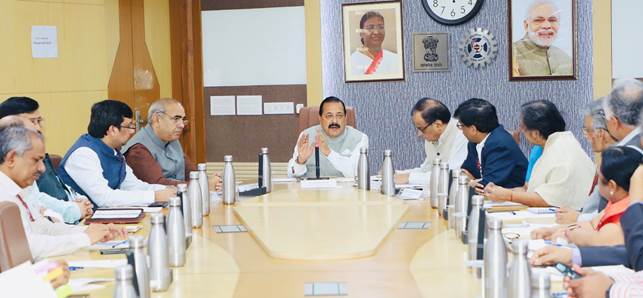
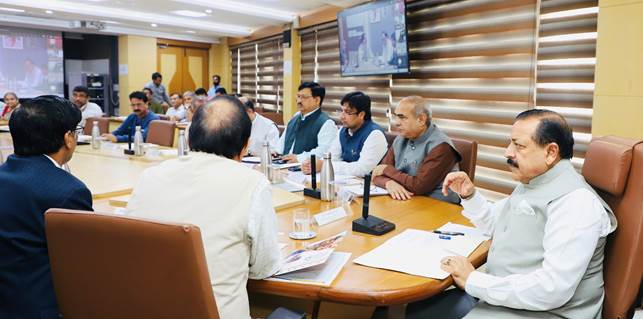
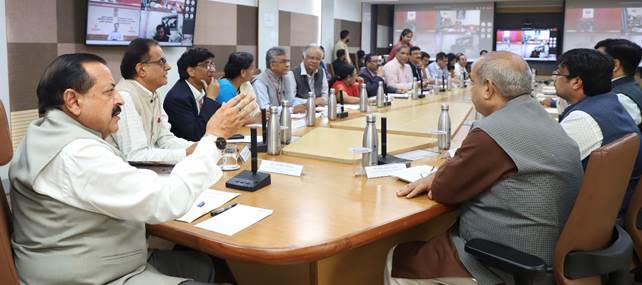
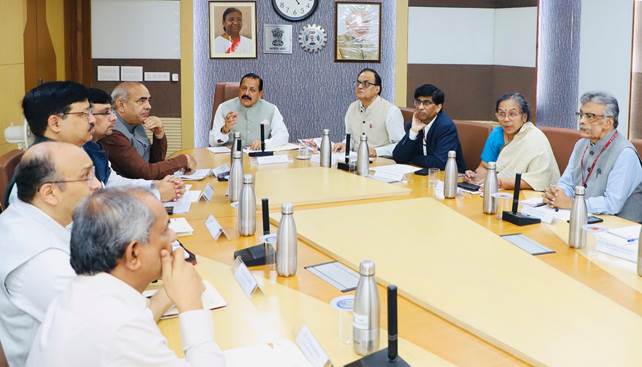
The Union Minister of State (Independent Charge) Science & Technology; MoS PMO, Personnel, Public Grievances, Pensions, Atomic Energy and Space, was chairing a meeting of all Science Secretaries in New Delhi. The meeting was attended by Principal Scientific Adviser (PSA) to the Government of India, Professor Ajay Kumar Sood; Secretary, DST, Prof. Abhay Karandikar; Secretary, CSIR, Dr (Mrs) N. Kalaiselvi; Secretary, DBT, Dr Rajesh S. Gokhale; Secretary, Department of Space and Chairman, ISRO, Shri. S. Somanath; Chairman, Atomic Energy Commission and Secretary, Department of Atomic Energy, Dr Ajit Kumar Mohanty, besides senior officers.

Lauding the ‘One Week One Lab’ student connect programme of CSIR-NIScPR conducted between Jan.1, 2023- Sep 24, 2023 by 37 CSIR Laboratories/Institutions during which their doors were thrown open to the students and public, Dr. Jitendra Singh called for grooming innovation aptitude in school children.

“Innovative learning will contribute to make India a $5 trillion economy goal and fulfil the vision of Prime Minister Shri Narendra Modi’s Aatmanirbhar Bharat,” he said.

The S&T Minister said the INSPIRE scheme is helping create a scientific temper as every year there is an increasing number of aspiring students competing for the awards. The first-ever Mentorship Programme for Young Innovators was launched in November 2021 to mark the 75th Year of India’s Independence, he said.

The INSPIRE Awards – MANAK is a flagship programme of the Government of India and is jointly implemented by Department of Science and Technology (DST), Government of India and the National Innovation Foundation (NIF) – India. INSPIRE Scheme caters to students in the age group 10-32 years with several components. So far, more than 1.3 lakh Higher secondary students have been offered INSPIRE scholarships to pursue a career in Natural and Basic Sciences.

Dr Jitendra Singh said that the DST supports a variety of infrastructure related schemes like FIST, PURSE, SAIF, etc. towards augmenting/ facilitating the R&D equipment for research activities at various Universities/ Institutes and other Academic organizations as well as promote industry-academia linkages.

Dr Jitendra Singh said that PM Modi’s vision is to step up the efforts in various fields to make the country ‘the most advanced laboratory for modern science’ in the ‘Amrit Kaal’-the next 25 years leading to a Viksit Bharat.

Working towards this vision, the Government has committed to invest heavily on building research infrastructure in the country. Under FIST Program, DST has supported 3,074 Departments and PG Colleges at a total budget of about Rs. 3,131 crores for Scientific Infrastructure Building in various STEM Departments.

Dr Jitendra Singh pointed out that flexible infrastructure grants are being provided to universities nationwide to keep up the vigour of conducting highly challenging R&D activities with an investment of Rs 950 Crores till date.

The Promotion of University Research and Scientific Excellence (PURSE) with a nationwide reach supports the universities’ research ecosystem by making high-end research equipment available to our academicians/scientists, enabling our universities to compete with global standards. A new scheme, SUPREME, has also been launched to provide financial support for repair/ upgradation/ maintenance/ retrofitting or acquiring additional attachments to increase functional capabilities of existing Analytical Instrumentation Facilities (AIFs).

Dr Jitendra Singh said that under PM Modi, the Government is taking a number of steps to promote scientific temper among the masses, particularly youngsters, by strengthening scientific research and innovation efforts in the country. He said, this is a pan-India Scheme that envisages Star College in every district of the country supported by the Department of Biotechnology.

A total of 278 undergraduate colleges across the country comprising more than 1.5 lakh students are supported under the DBT Star College Scheme. This includes 55 colleges from rural areas and 15 colleges in Aspirational districts.

Dr Jitendra Singh said, under the leadership of Prime Minister Shri Narendra Modi, India is now steering the world in innovative technologies. We are on course to our target of reducing Greenhouse gases emission, and achieve Net Zero by 2070.

India is today one of the leading users of non-conventional energy including electric automobiles, wind & solar energy and the world’s first Hydrogen powered bus has been made in India, said the Minister. “The world is looking up to us for leads,” he said.

Sharing some of the key achievements of India in S & T like India’s massive jump in its ranking of Global Innovation Index (GII) from 81st in the year 2015 to 40th in 2022 among 132 economies of the world, 3rd rank in terms of number of StartUps, Unicorns, scientific publications and PhDs awarded, the Minister said that India has in recent years made some unprecedented progress in S & T.

“During the Covid pandemic, India not only saved its own population but also helped the world by providing vaccines and we also delivered the world’s first DNA vaccine,” he said.

The Minister mentioned that in the recent past, the Government of India has launched several flagship initiatives such as the National Mission on Interdisciplinary Cyber Physical Systems (ICPS); Quantum Computing and Communication; National Mission on Supercomputing, Electric Mobility, Green Hydrogen etc.

Dr Jitendra Singh said, our Chandrayaan Mission was the first to discover evidence of water on the Moon and the Aditya-L1 solar mission is led by a woman Director. PM Modi has provided an enabling milieu to India’s endeavours in Space research, and S&T. PM Modi has emerged the tallest leader in the world after the G20 Summit.

“Today the world is ready to be led by India. The declaration of International Yoga Day and International Year of Millets by the UN is proof of our rising stature. Now is the time for all of us Indians to rise to the occasion and seize the opportunity,” he said.

Referring to PM Modi’s monthly radio address ‘Mann Ki Baat’, in May 2022, Dr Jitendra Singh said India’s Startup ecosystem is not limited to just big cities, but about 50% of Startups hail from Tier-2 and Tier-3 cities.

“Today there are over 3,000 Agritech Startups and are very successful in areas like Aroma Mission and Lavender cultivation, quite a few of them do not have high qualifications, but are very innovative. In 2014, there were just 4 Startups in the Space sector, now there are over 150 Space StartUps, some of the pioneering ones now worth hundreds of crore rupees,” he said.

A lot of this has been possible because of groundbreaking reforms brought by Prime Minister Modi, including StartUp policy, National Education Policy (NEP) 2020, Space sector and Drone deregulations, new geospatial policy, National Research Foundation etc, he said.

Dr Jitendra Singh said, PM Modi also brought in the new National Education Policy (NEP-2020) which supplements Start-Up ecosystem with the promise to open new career and entrepreneurship opportunities for students and youth in India.

Referring to the last more than 9 years of Government led by PM Modi, Dr Jitendra Singh pointed out that apart from formal jobs, lakhs of opportunities and avenues were created outside the government sector for the youth of the country, be it Start-ups, Mudra Scheme, PM SVANidhi.

During the meeting, the Union Minister reviewed preparations for the 9th India International Science Festival (IISF) – 2024 to be held at the NCR Biotech Science Cluster, Faridabad from January 17-20, 2024.

National-level innovation challenge aimed at motivating young individuals to create functional prototypes of innovative solutions

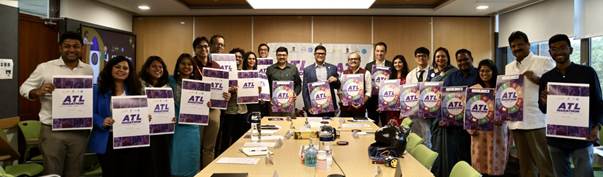
 Secretary, Department of School Education & Literacy, Shri Sanjay Kumar today inaugurated a national-level innovation challenge aimed at motivating young individuals to create functional prototypes of innovative solutions. The Ministry of Education collaborated with the ATL Marathon program, spearheaded by the Atal Innovation Mission, NITI Aayog, in partnership with UNICEF and YuWaah.

Dr. Chintan Vaishnav (Mission Director, AIM), Shri Vipin Kumar (Additional Secretary, Ministry of Education), Kevin Frey (CEO, Generation Unlimited), Dhuwarakha Sriram (Chief of YuWaah, Youth Development and Partnerships, UNICEF) and Abhishek Gupta (COO YuWaah, UNICEF) attended the event.

Department of School Education & Literacy has been committed to strengthening education in India through the National Education Policy (NEP) framework, with a focus on practical learning. Initiatives like the School Education Council and various programs have been instrumental in promoting this approach. The collaboration with the ATL Marathon has been a significant step in this direction, with over 32,000 innovations submitted by school students from across India over the last six years.

Speaking on the occasion, Shri Sanjay Kumar expressed that through this program, we aim to support students in working collectively, introducing them to best practices that nurture their innovation skills, and connecting them with role models. We are also committed to supporting the best innovators from the program under School Innovation Councils, by providing a seed fund of 1-lakh rupees for 200 innovators, with ATL Marathon finalists being considered, he added.

This year’s ATL Marathon is themed “India’s 75th Republic Day” and features problem statements in areas such as Space, Agriculture, Inclusivity, Disaster Management, Mobility, Health, Education, and Skill Development. Student teams are encouraged to build projects addressing these challenges.

The top-performing teams will have the opportunity to participate in the Student Innovator Program, which includes internships with leading corporates and incubation centers in India. They will also receive certificates from AIM, NITI Aayog, and various exciting opportunities.

The Ministry of Education is excited about the prospects of this collaboration and looks forward to witnessing the remarkable innovations that young students will contribute to the development of India and the world through the ATL Marathon program.

*****

ANRF signifies a higher level of priority & commitment to research and innovation

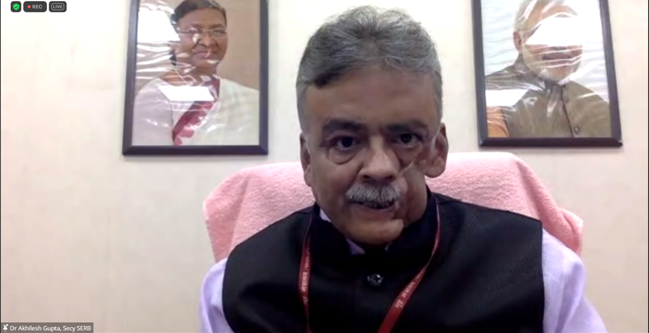
 Anusandhan National Research Foundation (ANRF) signifies a higher level of priority and commitment to research and innovation at the highest level in the government, said Dr Akhilesh Gupta, Secretary of SERB and Advisor, DST at a talk on Anusandhan National Research Foundation hosted by the National Centre for Biological Sciences.

“The challenge of ANRF is to introduce changes so that research makes a tangible impact on society and prioritise quality and relevance over quantity, rather than the current focus on generating research output,” Dr Gupta said at the online talk titled Changing Landscape of Research Funding in India: Anusandhan National Research Foundation: India’s vision to Achieve Global Leadership. 

He added that the foundation will encourage translation research in all universities beyond Technology Readiness Level (TRL) 3, indicating a commitment to taking research outcomes from the lab to practical applications. 


Dr Gupta pointed out that while the funds for NRF will be sourced from various avenues, including contributions from industry, philanthropic foundations, international organisations, and other stakeholders, a novel model has been proposed for the foundation which emphasises industry-led initiatives with government support. “The involvement of the industry is crucial in ensuring that research outcomes are aligned with real-world needs and can be effectively implemented,” he stressed.

He underlined that while Science and Engineering Research Board’s (SERB) transition to NRF represents a significant shift in priority of research funding in India, several significant initiatives like doubling private sector R&D investment, increasing the number of full-time researchers, promoting women’s participation, and National repository of STI Data are under consideration to foster innovation and research in the country.

Professor LS Shashidhara, Director, National Centre for Biological Sciences (NCBS) as well as several scientists from NCBS and other scientific institutions all over the country participated in the interactive session.

India and United States are committed to take the bilateral cooperation in Science, Technology and Innovation to next level

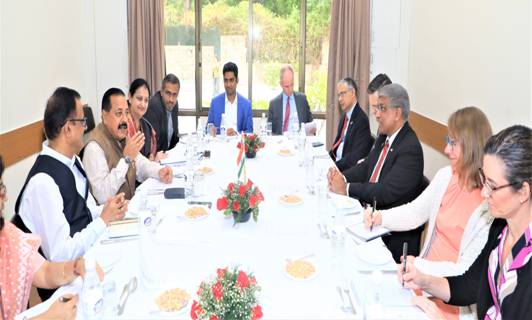
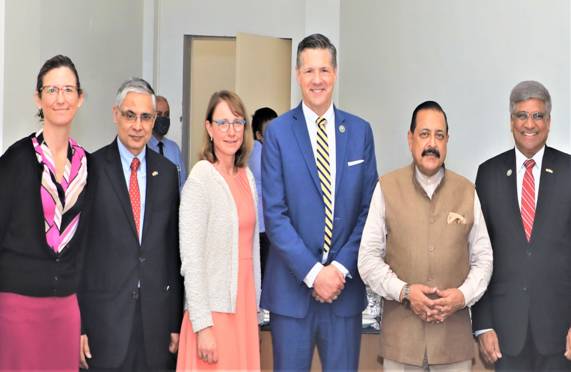
 A US delegation of the premier National Science Foundation (NRF), currently on visit to India, today called on Union Minister of State (Independent Charge) Science & Technology; Minister of State (Independent Charge) Earth Sciences; MoS PMO, Personnel, Public Grievances, Pensions, Atomic Energy and Space, Dr Jitendra Singh and discussed bilateral collaboration between the two countries as well as the ways to carry this collaboration to the next level.


Dr. Kendra Sharp, Head, Office of International Science and Engineering (OISE), National Science Foundation (NSF) of USA, Brian Stone, Chief of Staff, NSF, USA, Dr. Bridget Turaga Program Director, Office of International Science and Engineering (OISE), NSF, Drew Schufletowski, Minister Counselor for Economic, Environment, Science and Technology Affairs, United States Embassy in India, William Harford Chief of Environment, Science, and Technology Unit, United States Embassy and Dr. Sethuraman Panchanathan Director, National Science Foundation of United States, among others, were part of the delegation joined the meeting.

During the delegation level talks, Dr Jitendra Singh said, both the sides have already identified the sectors and collaboration is on in areas like healthcare, technology, Space, earth and ocean science, energy, emerging technologies and cooperation in Science & Technology education. The Minister underlined that India and the United States have a long-standing connection and shared interest when it comes to scientific discovery and technological innovations and time has come to strengthen and leverage these connects for larger global good.

Director, National Science Foundation (NSF) of United States and head of the delegation Dr. Sethuraman Panchanathan assured Dr Jitendra Singh that the subjects identified in the two-day brainstorming session would be taken to logical conclusion. He also promised to open new avenues of cooperation in areas like Artificial Intelligence, Biotechnology, Geosciences and Astrophysics.


Dr Jitendra Singh said, Prime Minister Narendra Modi has always accorded highest priority to scientific pursuits and takes keen personal interest in each of the subjects. He said, since 2014, in every Independence Day speech, PM Modi has flagged key scientific challenges and projects like Cleanliness, Hydrogen Mission, Digital Health Care system, clean energy, net zero emission and Start-ups.

Dr Jitendra Singh told the NSF delegation that both sides must focus on meaningful, targeted, deliverable-driven R&D partnerships in technology areas such Quantum, Metaverse, Clean Energy Technologies, Cyber-Physical Systems, Advanced Materials and Communications Technologies. The Minister pointed out that the Indian Scientific diaspora is one of the world’s largest and powerful diaspora communities in shaping global discourse, particularly in the technological innovation landscape. He said, both the countries must explore avenues for the US and India to jointly identify, nurture, and promote deep-tech start-ups in areas of mutual interest.

Dr Jitendra Singh also sought the support of NSF for the proposed Integrated Data System. He said, data collection at present is being done by various institutions in different ways, but the Integrated Data System will go a long way in data analytics and associated benefits. The Minister said, the knowledge partnership with NSF-National Centre for Science and Engineering Statistics will be of great value addition in terms of long-term capacity development in this area.

Dr Jitendra Singh also called for scaling up the cooperation in the Space sector and mainly in emerging areas like management of space debris. He also recalled that the NASA-ISRO Synthetic Aperture Radar satellite is expected to be launched in 2023. The Minister said, Science and technology education partnership has been another dimension of the outreach—to establish linkages between American and Indian institutions and students. Education Roundtable held last year with participation of a number of STEM-focused universities.

Prof. Ajay Kumar Sood, Principal Scientific Adviser (PSA) to the Government of India, Dr. Parvinder Maini, Scientific Secretary, Office of PSA, Dr. Preeti Banzal, Adviser, Office of PSA, Dr. Monoranjan Mohanty, Adviser, Office of PSA, Dr. Sindura Ganapathi, PSA Fellow, hri Shirish Panda, Scientist ‘D’, Office of PSA and Dr. B. Chagun Basha, Senior Specialist, Office of Principal Scientific Adviser to the Government of India joined the talks from Indian side.


National Initiative on Science, Technology and Innovation Statistics (NISTIS)

 The first meeting of the National Advisory Committee of the National Initiative on Science, Technology and Innovation Statistics (NISTIS) discussed the way forward for the initiative.

It was decided that the Detailed Project Report (DPR) for the Centre for Science, Technology and Innovation Statistics will be prepared by the Project Monitoring Unit (PMU) at the Indian Institute of Science (IISc) Bengaluru.

Principal Scientific Adviser to the Government of India, Professor Ajay K Sood, who chaired the meeting, underlined the importance of the initiative and the urgent need to establish the centre to start focused work on it.


https://static.pib.gov.in/WriteReadData/userfiles/image/image001ZWYH.jpg


“Data is critical for knowledge-based decisions. While data is being collected by the different ministries, its centralised management is essential for taking critical decisions in the future,” he pointed out.

Secretary, Department of Science and Technology (DST), Dr Srivari Chandrasekhar, welcomed the initiative, highlighting the range of data that is already available with the department and emphasized the need to add to it.

Senior Adviser, DST, Dr Akhilesh Gupta, stressed on the need for a one-stop coordinated effort to bring the various efforts of accumulation of data and presented the tentative structure of the centre. He gave examples of international best practices of such efforts in USA and Japan.

Director Indian Institute of Science (IISc), Professor Govindan Rangarajan, elaborated on the functioning of the future centre at IISc.


https://static.pib.gov.in/WriteReadData/userfiles/image/image0026TMV.jpg


Experts from scientific establishments discussed the governance, functioning and way forward for the center.


Realize the dream of activating India 2.0, fueled with the spirit of Atmanirbhar Bharat

 National Innovation week will inspire us to work collaboratively to realize the dream of activating India 2.0, fueled with the spirit of Atmanirbhar Bharat, said Shri Subhas Sarkar, Minister of State for Education while addressing the valedictory session of  E- Symposium on ‘Building Innovation Ecosystem in Educational Institutes’ here today.

In his concluding remarks Shri Sarkar said that our goal is to promote innovation, entrepreneurship, critical thinking, and out-of-the-box thinking in our educational system, which is also reflected in the New Education Policy 2020. He further said that Government is committed to enhance the Indian economy and working tirelessly to achieve India’s goal of becoming a 5 trillion-dollar economy by 2024-25. Facilitating investment, fostering innovation, building best-in-class infrastructure, and making India a hub for manufacturing, design, and innovation will help us achieve the Atmanirbhar Bharat in the true sense. 

Click here to see Closing Ceremony of e-Symposium on Building Innovation & Entrepreneurial Ecosystem

Shri Sarkar stressed that the time has come when every Ministry, Government Department, Industry leaders, and all key stakeholders work collaboratively and support our higher education institutions so that they work on creating a holistic culture of innovation, research, and help in nurturing young talent to pursue their dreams as an Innovators and solve the problems faced by society and address upcoming challenges. 

At the occasion, Professor K. Vijay Raghavan, Principal Scientific Advisor (PSA) to the Government of India, emphasized on need of innovation for economic change and sustainability. He said that we need to expand the funding of research and innovation eco-system to position India as a favoured destination for Research and Development. He highlighted on adoption of best global practices for establishing closer linkages with national R&D institutions and academia, talent development and sourcing, strategic partnerships to bolster R&D in India and integrating with the domestic start-up ecosystem. He further added that, innovation must be linked with economic change and market and in synchronization with ongoing policy measures including Swachh Bharat, Made in India etc. etc. He urged Indian youth to come forward in sharing the ideas for country and economic development.

The opening session was followed by two panel discussion titled, “Grey Hairs not mandatory to build greater enterprises” and “Attracting Big Investment for Innovative ideas from Educational Institution” which was well attended by eminent personalities. All the panelists were enthused with such platforms which are much needed for building up the R&D and innovation eco-systems in India.

Prof. M. P. Poonia, Vice Chairman of AICTE had delivered welcome address and appreciated for the overwhelming responses and participation from student and faculty fraternity from educational institutions. The sessions were viewed by more than1.2 lakh attendees online across the globe. All panelists were enthused with e-symposium platforms which is the need of hour for building the R&D and innovation eco-systems in India.

Prof. Rajive Kumar, Member Secretary, AICTE highlighted the role of AICTE in supporting the technical institutions to excel in the field of innovation and entrepreneurship. The event concluded with vote of thanks delivered by him.

******

MoE, AICTE and DPIIT organises ‘National Innovation Week’ from 10th – 16th January, 2022

 To commemorate 75th years of progressive India ‘Azadi Ka Amrit Mahotsav’, Ministry of Education (MoE), AICTE and Ministry of Commerce& Industry (DPIIT) are jointly organising ‘National Innovation Week’ from 10th – 16th Jan 2022. The innovation week is also the iconic week of Ministry of Education. This Innovation week will highlight various initiatives undertaken by these agencies to spread awareness to promote innovation and entrepreneurship in India. Renowned personalities gracing the occasion with there presence are Shri Sridhar Vembu, Founder, ZOHO Corporation, Dr. K. Radhakrishnan, Ex-Chairman, ISRO, Shri Ankit Agarwal, Founder & CEO, Phool, Smt. Arundhati Bhattacharya, Chairperson & CEO, Salesforce, Smt. Sri devi Pankajam, MD, Commonwealth Bank of Australia, Shri C V Raman, Chief Technology Officer, Maruti and many more

A 2 days long e- Symposium on ‘Building Innovation Ecosystem in Educational Institutions’ will be held on 11th and 12th January 2022 by the Ministry of Education. E-Symposium will be inaugurated by Shri Rajkumar Ranjan Singh Minister of State for Education on 11th Jan 2022 at 10.30 AM. Program will be held virtually and it will see huge participation from academic institutions, schools, industry, Start-up and investor community. 

From 10th January onwards, 75 innovative technologies selected from various programs such as National Innovation Contest, Smart India Hackathon, YUKTI2.0 and Toycathon conducted by the Ministry of Education will participate in e-exhibition and demonstrate their innovations. Alongside exhibition, there are full day activities scheduled for 11th and 12th Jan comprising of multiple key note sessions and panel discussions on emerging areas related to innovation and entrepreneurship in HEIs and schools.

Prof Anil D Sahasrabudhe, Chairman, All India Council for Technical Education (AICTE) said the Innovation week will inspire young innovators to solve the problems faced by society through constructive ideas and address upcoming challenges. Proposed symposium highlights key aspects for building innovation system like investment, mentoring etc. and we believe that this symposium will further encourage our educational institutes to focus on building innovation eco-system within their campuses. As India is witnessing an exponential growth in terms of number of Start-ups, concerted efforts to create holistic innovation culture will pave the way for making Atmanirbhar Bharat and a 5 trillion-dollar economy as envisioned by Prime Minister Shri Narendra Modi, he added.

Dr. Abhay Jere, Chief Innovation Officer, Innovation Cell, Ministry of Education said that the Innovation Week is an opportunity for all innovators to showcase their work and inspire the young minds to take their entrepreneurial journey more seriously so that India can emerge as a global Innovation and Start-ups hub. As Innovation Cell, we are under taking multiple Innovation, Entrepreneurship related initiative and through this symposium we would like to encourage our educational institutions to work closely with us so that a sustainable ecosystem is establish within the campus, he added.

Eminent industry leaders, emerging unicorn founder, investors and policy practitioners will join as key note speakers and panellists to share their views and perspective on different aspects of innovation and start-up. Special panel sessions consisting of panellists from early stage start-up founders, and student innovators will be held to motivate school kids and young minds to pursue innovation and entrepreneurship as career choice.

The program is aiming to sensitize and orient the stakeholders as part of innovation and Start-up ecosystem in academic institutions. 

*****


Technologies that have gone obsolete. 

This is an image about Technologies that have gone obsolete.

With rapid technological advancements, we witness several unique and innovative technologies that take the market by storm! They become the talk of the town, sometimes go out of stock, and build a foundation for newer and better technological ideas to formulate. Finally, no matter how advanced these technologies are, it goes obsolete as it paves way for newer technologies to storm the market. 

We have had the privilege of witnessing several such technologies that completely blew our minds. But sadly, some are no longer in use or have gone obsolete. 

Here is a list of some of the technologies that have gone obsolete. 

So let us reminisce about the past!

1.Telephones and wired landlines

This is an image of telephones and wireless landlines.

I am reminded of the classic monotonous ringtone of a telephone as I write about this! Although not often used today, telephones and landlines have had a long run as it’s origins can be traced back to the 1840s. It has gone through several advancements and iterations, such as the rotary dial phones and wired landlines. 

Rotary dial phones have gone obsolete and the wired landlines are waiting to be one as portable and handheld solutions are multiplying across the world. However, we would never forget the long conversations we have had while sitting close to a telephone and holding on to the receiver. 

2. Phone booths

This is an image of phone booths


Gone are the times when people queued up outside a phone booth to make a call. Now you might see people queuing up to buy the latest I-Phone before it goes out of stock for a while! With handheld devices and network services being made available and affordable, phone booths no longer serve the purpose for which it was originally intended. 

There have been rumours about Google planning to develop these telephone booths into Wifi spots. For now, it stands as a reminder of the telephone’s long history. 

3. Pagers and beeper

Pagers and beepers were used in the 1980s as portable alternatives to landline telephones. They were mainly used by emergency service workers and doctors for people to reach out and connect with them, even when they were away from a landline telephone. Users could send and receive messages with these pagers and beepers. 

The early 2000s witnessed it’s decline as smartphones emerged into the market. But due to their durability and better network coverage, they are still in use by a few numbers. However, among the vast majority, this technology has gone obsolete. 

4. DVD a.k.a Digital Versatile Disc

This is an image of DVD


DVD is an evolutionary and a very familiar video format for many of us. We all have had the pleasure of inserting the DVDs into our DVD Players to enjoy audio and video content. It had several advantages over its predecessors as it had more storage space and was more durable. 

Today, video streaming platforms and high speed internet have replaced the DVDs to become the most sought after medium of entertainment

5. Floppy disc

This is an image of a Floppy disc

In the modern ages, Floppy disc is the universal computer icon that indicates the function of saving files. However, with the auto-saving options made available in many softwares, these are disappearing even as an icon. Floppy discs were mainly in use during the 1970s. The initial ones were capable of storing upto 80 kilobytes of data. With further developments made to the floppy discs, it’s storage capacity was increased to hold upto 144MB of data. 

Due to low durability and vulnerability to corruption, it was soon replaced by CD-ROMs. Today, one can say that this technology has gone obsolete. 

Which of these inventions do you remember using and which are the ones that I have missed out? I am sure there are many. Put them in the comments below! 

#EDUCHAIN- BLOCKCHAIN IN EDUCATION

“If we teach today’s students as we taught yesterday’s then we rob them of tomorrow.” During the pandemic, technology facilitated education in the best way. Therefore the intertwining of blockchain and education #EdChain will certainly be really. Blockchain is an immutable, decentralised form of database that stores information. As the name suggests, it is a chain or a series of blocks that store data like the date, time and amount of transactions.

The most important feature associated with blockchains is security. Each block within a blockchain contains a hash of the previous block. Hashing makes it difficult to alter the blocks. Thus it ensures immutability. Incentivising miners ensures integrity as they disapprove malicious transactions. These mechanisms ensure the high security of data.

The intertwining of blockchain and education would help improve teaching and learning in various dimensions.

Decentralized control over data

Blockchain can store data related to students’ credentials. It can also store details like the skills or courses that students have learnt. Consequently, a centralized authority will not control this data. It would also enable the students to share this data with their prospective employers. Furthermore, students can store data related to both classroom learning and skill enhancement. It would ensure accuracy in the resumes. The security mechanisms of blockchain ensure the safety of the data. Students cannot alter past educational certificates stored on the blockchain so it would ensure accuracy. Blockchain also takes care of privacy. This is because blockchain would store the hash of the data rather than the data itself. Students can also encrypt data before storage at the option of the student. We already have many blockchain-powered applications that facilitate the record-keeping of digital credentials and intellectual property.

Ensuring accuracy

Students cannot alter their past educational certifications. Therefore, employers would get the most accurate information about their skills. This would also help find the perfect matches between employers and job seekers. A distributed ledger system like blockchain supports safe chronological academic records. By integrating transparency and accuracy blockchain can create a strong relationship between employers and job seekers.

Make learning engaging

Blockchain can also make learning more engaging. This would help us to move forward from the conventional tools of teaching and learning. Blockchain’s OpenSource framework is a tool that can enhance online teaching and learning. It would also facilitate the personal development of students. New technologies combined with blockchain can provide personalized learning. Consequently, we can customize the content to suit the needs of different students. We can also have gamified online education to make learning interesting.

Smart Contracts

Students can also enter into various Smart Contracts with the university through blockchain. These contracts can be related to various payments like tuition fees or examination fees. The contracts will provide convenience and safety of transactions at the same time. Smart Contracts in Blockchain can help automate administrative tasks. Additionally, this would also reduce overhead costs related to administrative tasks.

Efficacy in Selection

Blockchain would certainly reduce CV fraud by streamlining the data provided by the students. It can also make appropriate matches between employers and job seekers by suiting their requirements. Blockchain-based university diplomas would certainly be a good leap forward in the selection of job seekers

SUCCESSFUL INITIATIVES

Digital Credentials Consortium is an initiative that aims to enhance the record-keeping of digital academic credentials. The initiative started in 2018, intending to create a safe mechanism for storing digital academic credentials. It will enable the students to hold a lifelong record of their academic achievements. Students can easily share this data with the employer as well. The students will also get other benefits like safety, security and privacy. Moreover, they will not be required to pay fees to get copies of their credentials from the university. It would also benefit the educational institutions by managing records securely, eliminating the risk of identity fraud. Thence they can save the cost and time required in admin work. Subsequently, the employers would get the benefit of easy access to accurate records.

MIT is one of the leading institutions that has developed blockchain applications to streamline academic accreditation. It believes that the intertwining of blockchain in education can be used for various purposes.MIT Media Lab and Learning Machine’s Blockcerts is a platform. It allows educational institutions to incorporate blockchain accreditation in their programs. The University of Nicosia offers accredited courses through verified certificates on the blockchain. Southern New Hampshire University issues bachelor and diploma degrees in a digital format on the blockchain besides in a traditional paper format.

CONCLUSION

Educational technology has made good progress over the last 20 years but, there is a long way to go. Modern technologies like blockchain can facilitate progress effectively. According to the Gartner, 2019 CIO Survey around 2% of higher education respondents has already incorporated blockchain. On the other hand, 18% are planning to do so. However, 47% are not interested in incorporating blockchain in education. The possible reason behind this seems to be a wait and watch approach. Keeping in mind the hype and potential risks of blockchain respondents probably aim at playing safe. Record keeping is the most promising use of blockchain besides security and privacy. Overall we have numerous universities and enterprises aiming at enhancing education by intertwining blockchain with it. These universities use blockchain not only for record-keeping but also for teaching and learning purposes.

We need to have an accepting attitude towards change. Amalgamating technology in education may seem difficult. But it is the need of the hour. New technology can improve the existing methods by saving time and cost at the same time. Many universities have already explored this walk still we need more efforts in this regard. As they say, change is the only constant, so we need to be more receptive to this change.

WHY IS SOCIETY SCARED OF CONFIDENT WOMEN?

INTRODUCTION

Men often consider workplaces like offices and positions of power as their original territory. But unfortunately, a woman walking down the same corridor seems really hurting. Maybe, the patriarchal society does not dare to accept a woman’s success. Society has sadly conditioned men to see women as inferior. Society has suppressed women for the longest time. Men have gotten so used to seeing women as the weaker sex that they cannot see them prosper. The story does not belong to the present day. Society is writing it since ancient times. A legitimate example would be the terror in the hearts of men on seeing Razia Sultan’s regime.

CONSTANT FEAR OF SUCCESSFUL WOMEN

A woman with a solid and confident personality strikes terror in the hearts of men for no fault of hers. Suppose a woman questions a decision or expresses her point strongly. In that case, she is instantly stereotyped as a devil for violating the conventional code of conduct. As a retaliation, men usually title strong women as challenging to work with or get along or tough to handle. This is the most common solution men use when they cannot accept a confident and booming woman. The frustration is so deep that they even derogate the assumption that the woman must have done sexual favors to impress her boss.

The issue is not that superficial as it may seem to be. Instead, it is something much deeper rooted. More than a mere stereotypical gender face-off, it brings out the fickle-mindedness of society.  For long years the community has conditioned men to see themselves as superior and women tolerant of it. The television and film industry is the trendsetter for the country. But unfortunately, in the majority of cases, successful and confident working women are often portrayed as mean, cold-hearted, or harsh. If a man is career-driven, then he is praised for his determination. But if a woman does the same, she’s seen as selfish or irresponsible towards her family. Successful working women are rarely portrayed as affectionate mothers or wives. This brings out a bizarre assumption that a career deteriorates motherhood in a woman.

WHY ARE WE SO INSECURE?

Insecure people do pull down everyone, but when this pulling down does a gender bias, things get ugly. The whole proposition takes a dramatic turn because men often see it as a role reversal. They often look at this role reversal as a threat to their masculinity. Since the earliest times, a man is seen as the breadwinner for the family. This label further cements their superiority over women. This is because it is a certification of the fact that women are dependent upon men. In such a scenario, when women break their cocoons and move out, it scares men to the core. Men are in constant fear of losing their supposed superiority over women. Men cannot accept that women can break their shackles and be on an equal footing to them.

POSITION OF THE SOCIETY

This fear of losing power is so deeply rooted that it is visible even between a husband and a wife. If a wife starts earning equal to or more than her husband, she often hurts her husband’s ego and falls prey to numerous taunts. But this does not mean that only men are at fault, the society has an equal contribution. Very conveniently, society says that behind every successful man, there is a woman. Still, it cannot believe the vice versa. Community respectfully uses the term “working women” for females when they move out of their homes. But it mockingly uses the phrase “house husband” when a husband takes care of the household. This clearly highlights that despite shouting about equality at the rooftops, society is still uncomfortable for it at heart.

THE FINAL THOUGHT

Not liking a woman just because she is successful or confident brings out society’s own insecurities. If a husband supports his wife the same way his wife helps him, things will improve. It is certainly wrong to stereotype that all men are afraid of confident women. Husbands have started supporting their wives to fulfill their dreams. This precious support is unclipping their wings.

Men have begun respecting women at top management levels.  The traditional rigid roles of men being the protector provider and women being dependent ought to be challenged. Masculinity is no certificate of superiority. Equality comes where we judge a person on his merit and not his gender. Gender bias is certainly corrosive to society and progress as well. There is nothing wrong with healthy competition. In fact, it actually brings out the best in a person and helps him to flourish. But when this competition is a pure consequence of the power play between sexes, it does become problematic.

#MediChain- USING BLOCKCHAIN IN MEDICINE

INTRODUCTION TO THE IDEA

“Healthcare is yet to be transformed by technology.” The renowned American businessman, Joshua Koshner has very rightly given this statement. Developed countries like the USA plan to spend 20% of their GDP on healthcare in future. The Healthcare industry spends jarring costs due to data breaches and inefficient practices in data management. In this case, Blockchain comes to the rescue. It can certainly pop this spending bubble with great ease.

WHAT IS BLOCKCHAIN?

Blockchain is an immutable, decentralised form of database that stores information. As the name suggests, it is a chain or a series of blocks that store data like the date, time and amount of transactions. There are various types of blockchains like public, private and permissioned. A public blockchain allows anyone to contribute to the network. Hence public blockchains are both decentralised and democratic. Opposite to this, permissioned blockchains allow only verified participants to join the network. Private and permissioned blockchains are similar in function with one difference. The difference is that a particular organisation owns a Private blockchain.

The most important feature associated with blockchains is security. Each block within a blockchain contains a hash of the previous block. A hash is a cryptographic key. These keys are stored in the shared ledger. The keys are also connected by a mesh of nodes that join them. Each node contains a copy of the whole chain which is synchronised and updated constantly. Therefore hashing makes it difficult to alter the blocks. Thus it ensures immutability. Moreover, incentivising miners ensures integrity as they disapprove malicious transactions. These mechanisms ensure the high security of data

HOW DO WE USE BLOCKCHAIN IN MEDICINE?

Blockchain has a wide range of applications in the field of medicine.

STORING PATIENT DATA

Blockchain can keep a decentralised, incorruptible and transparent log of patient data. Since the Blockchain would be private, it would store the sensitive data safely with complex codes involved in it. Decentralisation of data would also allow patients and faculty to access the information, saving the time involved therein. Therefore, Blockchain can create a constantly updated single ledger of health records for rapid transfer by authorised parties.

SECURE DATA STORAGE

The safety and security of patient data have prime importance. Over 176 million patient records were leaked due to data breaches between 2009 and 2017. Important details like health and genomic testing records were stolen. In such a case blockchain provides safety of data through its security features. Each individual can have a private key that would unlock data only when required. Thence, blockchain can store data safely and securely.

SEAMLESS SHARING DATA TRANSFER

The data stored on the blockchain can be readily shared with healthcare providers. This can be done through a shareable private key. Hence blockchain can easily eliminate the time wasted in sharing information with health care providers. It would ensure speedy treatment without time lag. Therefore, Blockchain would improve Health Information Technology (HIT).

PREVENT INEFFICACIES

Surprisingly, a whopping amount of $11 billion is wasted annually due to inefficiencies in data management. The processes involved in obtaining data access related to medical records are very time-consuming. These processes not only exhaust the staff resources involved but also lead to delays in inpatient care. Decentralisation of medical records helps save the time wasted in providing data access to faculties. This way Blockchain would facilitate faster diagnosis and treatment.

SUPPLY CHAIN TRACEABILITY

Decentralisation has serious implications in terms of supply chain traceability. It ensures full transparent supply chain management. Patients can get appropriate answers to concerns related to the supply chain. The ledger once created, can record data at every step of the shipping journey. It would record important details like the information about the supplier.

TRACKING DISEASE OUTBREAKS

Blockchain can help in real-time disease reporting. It would also facilitate the recognition of disease patterns. This can in turn help in identifying transmission parameters.

SAFETY OF GENOMICS

In 2001, the cost to process a human genome was $1 billion. But today, it is just $1000. Hence, the ability of genomics to improve health has certainly become a financial and scientific reality. But these days genomics data theft has become a serious issue. A large number of companies bring individual DNA sequencing. Therefore the security of genomics data is a serious concern. Blockchain provides a potential solution to this. It can provide an online market, where scientists can buy encrypted data for research purposes. This would also eliminate the middlemen and time involved in the purpose earlier. So, blockchain is a perfect fit for this purpose as it can store precious genomics data safely.

A GLANCE AT SOME SUCCESS STORIES

Blockchain in healthcare is certainly not an unexplored arena. Several platforms have already reaped the benefits of blockchain and others are planning to do so. BurstIQ is a platform that helps companies manage patient data safely and securely. Factom has employed blockchain technology to store digital health records safely. Factom also received a grant of $200000 from the U.S. Department of Homeland Security to integrate data from Border Patrol cameras and sensors. MedicalChain maintains a record of the origin and patient identity. In May 2018 MedicalChain launched a telemedicine platform to consult doctors via video call. Guardtime which is located in California helps healthcare companies to implement blockchain technology in their operations. The company uses blockchain for cybersecurity applications. Robomed has combined AI and blockchain to offer patients better treatment. The company also uses chatbots to collect patient information and share it with the medical team. The Taipei Medical University has recently implemented blockchain technology including Robomed’s network. This was done to store and secure medical records more easily.

Most importantly, the government agency, the Centre for Disease Control and Prevention (CDC) uses blockchain to monitor diseases and report outbreaks. Additionally, IBM is working with CDC to develop a blockchain-based surveillance system. Subsequently, this would also help public health agencies to collect patient data effectively.

THE FINAL THOUGHT

Developed countries spend a good share of their Gross Domestic Product (GDP) in healthcare. The U.S government plans to spend 20% of its GDP on healthcare soon. Hospital costs are whopping and inefficient practices in data management further aggravate the. Blockchain can reduce these costs substantially. Estonia has been an initiative taker in this regard. It began harnessing the benefits of blockchain technology in healthcare in 2012. Today almost all of the healthcare billing in the country is processed through blockchain.  Almost 95% of patient data is ledger-based while 99% of prescription data is digital.

Today, blockchain is used in various fields like education, finance and data management. Blockchain has a wide variety of applications in healthcare. It facilitates the secure transfer of patient medical records, supply chain, management and handling of genetic code. Inculcating blockchain technology can improve the efficacy of operations in health care. Currently, we are in the initial phase of using blockchain. Therefore, we need extensive research in this field. We also need pilot surveys to understand the efficacy and limitations of the technology. Blockchain will not only reduce costs but would also improve the safety and security of data.

The significance of innovations is indispensable. Also, change is the only constant. Therefore, encouraging innovations and accepting changes is the need of the hour.

Brief steps for innovation in the era of E-commerce

As the Economist Joseph Schumpeter said Entrepreneurs can’t sit idle and try to innovate. They are the people who have an uncanny sense of using the resources from less productive use to more productive use. They are the ones who do Value creation, this is what we call innovation.

E-commerce belongs to this generation and Technology is irreversible; no one can hold it back and only curiosity won’t help us. Research activity is also needed. Scientific knowledge is essential (supported). Research is also supplemented by Developmental activities (R&D), closer to practical uses.

The Technological Innovation world involves product and process development activities (converted into manifestation forms). Then it transcends to the market/people with practical uses. Invention and discoveries constitute the technology world/innovation world- product process- market development activities (Administrative capabilities needed as well).

This all has to be assembled holistically and make the tech happen/forward driven with innovation. Business world needs tech entrepreneurship and administrative skills.

We have to question what value the tech will bring to our product. Simple innovation without value creation cannot create Blue Ocean/has no meaning.

Technological importance means the value that the technology brings to a product/potential product

We have to ensure not to bring value to other products in the competition. We need technological positioning. Frontier-ending R&D investment is needed to compete with the rival companies that are deeply entrenched in technology. Keep competitive parity is not an advantage.  

A technology portfolio consists of- Bet, Draw, Cash, and Fold

Regime of Appropriability

Is the effectiveness of legal mechanisms of protection of technology, Patents, copyrights, trade secrets, tacit knowledge, and codified knowledge.

Process innovation can’t be protected by patents.

Codified knowledge is very prone to industrial espionage, in other words, Hiring people from other companies. The regime of appropriability can be from high to low depending on the technology. E.g. KFC spice formula (easy to safeguard) or a new search algorithm (hard to seep safe).

Any innovation passes through two stages-

Pre Paradigm and Paradigm stage

Pre Paradigm is when a technology is in the process of innovation. Every innovation goes through this stage when it remains in the domain of the innovators and scientists.

In the Paradigm stage product designs are fluid and the manufacturing process is loosely organized whereas in the Paradigm stage less uncertainty for the design emerges and a final design emerges. The focus is now on process design.

Our objective is to transit from the pre paradigm stage to the paradigm stage as fast as possible. Successful transit of tech to practical use is called commercialization and has to be ensured with another set of capabilities called complementary assets.

The tinkering or invention needs to be followed by research and then a complimentary stage in development. Entrepreneurs have to ensure that complementary assets have to be built around innovation to be successful. Innovators need to have certain complementary assets which are not generic (highly specialized).

There is a third category of assets called Co specialized. These assets have a bilateral dependence. These assets have no other use other than their intended use. E.g.: A spacecraft manufacturing facility.

Many innovators fail and succumb and they don’t have the complementary assets. To counter that, entrepreneurs can do collaborative strategy by collaborating with partners with complementary assets. It should exclude the possibility of any other collaboration.  

Technology has to be adopted by people otherwise, it has no meaning. Early adopters need to leverage by patronizing the products. This gives way to the early majority who are more market-orientated. If they are satisfied they give way to the late majority. This transition will secure our position in the market.

But there is a catch, when technology falls between the transition space of early adopters and the early majority. This is known as ‘Chasm’. This change in emphasis poses a problem for innovating firms since incumbents are often much better equipped to meet the desire for complete products and low-risk purchases,and once you fall into this space. It gets really difficult to get out of it. A tornado (another group of people) is needed to take it out of the chasm and hit it into the mainstream.

E-commerce implementation can have two strategies:

Bottom-up approach and Top-down approach

Introduction of Ecommerce has complemented traditional business. This has also made traditional businesses more competitive.

Top-down approach implementation is preferred on a large scale and national level but when it comes to administrative (meeting the requirements of civil services), local trade and commerce services are suited to have a bottom-up approach.

Digital infrastructure is essential for making e-commerce successful. Cradle to grave digital identity is emerging as the new measure to the unique identification of people.

Common service center: Helps in providing e-Services to rural and remote locations where availability of computers and Internet is negligible or mostly absent. With the help of Interoperability and common information center data and information can be accessed at any location.

Mobile banking is another approach that is also increasing its proliferation.  But it’s still in its nascent stages.

Another concept that is emerging is Cashless transactions where all the POS and banking services can be attained remotely. Although the security issue remains which has to be taken care of by a central agency (Government).

One of the most important things to consider is Digital literacy. A certain amount of literacy is needed for availing all these digital infrastructure and access. For a widespread utilization of digital services, we have to ensure that more people are digitally literate.

We also have to keep in mind that common support ICT infrastructure and adequate private and public partnership will help to make these services more efficient and better.  With the help of aforementioned knowledge, an E-commerce can certainly endure in the realm of digital world.

References:

https://www.reed.edu/economics/parker/f10/201/cases/appropriability.html

https://smallbusiness.chron.com/stages-paradigm-shift-organization-78904.html