The Different Types of Car Insurance

 If you’re in the market for car insurance, it’s important to understand all of your options. There are several different types of car insurance available, all of which provide varying levels of coverage. In this article, we’ll look at the different types of car insurance, their advantages and disadvantages, and how to choose the right one for your needs. Keep reading to learn more, and be sure to check out https://www.iselect.com.au/car-insurance/comprehensive-insurance/ to compare rates and find the best deal.

Liability Insurance

Liability car insurance is a type of auto insurance that provides coverage for damages and injuries caused to other people or their property in an accident you are responsible for. This type of insurance is typically mandatory in most states in the United States, and it is meant to protect other drivers and passengers on the road from the financial burden of a car accident. Liability car insurance usually includes two types of coverage: bodily injury liability and property damage liability. Bodily injury liability covers medical expenses, lost wages, and other damages resulting from injuries to the other party, while property damage liability covers the cost of repairing or replacing the other party’s property that was damaged in the accident.

Collision Coverage

Photo by Jesse Zheng on Pexels.com

Collision coverage is a type of auto insurance that covers damages to your vehicle resulting from a collision with another object, such as a car, a tree, or a guardrail. Collision coverage is usually optional, but it may be required if you are financing or leasing a vehicle. With collision coverage, you can file a claim with your insurance company to cover the cost of repairs or replacement of your vehicle up to its actual cash value (ACV) minus your deductible.

The cost of collision coverage varies depending on several factors, such as the age and condition of your vehicle, your driving history, and the deductible you choose. Generally, higher deductibles will result in lower premiums, but you will have to pay more out of pocket if you file a claim.

Comprehensive Coverage

Comprehensive coverage is a type of insurance policy that provides protection against damages to your vehicle that are not the result of a collision. This may include incidents such as theft, vandalism, fire, or natural disasters. Comprehensive coverage is typically an optional add-on to your auto insurance policy, but it is often recommended for newer or high-value vehicles. Depending on your insurance provider, comprehensive coverage may also include coverage for broken windshields or other glass damage.

Comprehensive coverage can offer peace of mind by protecting you from unexpected and potentially expensive damages to your vehicle. While it is optional coverage, it is important to carefully consider your individual circumstances and the value of your vehicle before deciding whether to purchase comprehensive coverage.

Personal Injury Protection

Photo by Dominika Kwiatkowska on Pexels.com

Personal Injury Protection (PIP) is a type of car insurance that covers medical expenses and lost wages for drivers and passengers involved in an accident, regardless of who was at fault. PIP is often referred to as “no-fault” insurance, as it is designed to provide coverage without having to determine who was responsible for the accident. Depending on the country and province, PIP insurance may also cover expenses related to rehabilitation, funeral costs, and in some cases, childcare expenses. In some places, PIP insurance is mandatory, while in others, it is optional. The coverage limits and benefits of PIP insurance vary by state, so it is essential to understand the requirements and options available in your area.

Overall, car insurance is an important investment for drivers to protect themselves, their passengers, and their vehicles. Different types of car insurance can provide various levels of coverage and financial protection, so it is important to research and understand the different options available to make sure they are covered in the event of an accident or other unforeseen circumstances.

How to Pick the Best Health Insurance Plan for Parents?

  Purchasing adequate health insurance plans for parents is important to ensure that they have the best medical treatment without financial burden. Currently, the insurance market of India is flooded with health insurance plans for Insurance seekers who want to buy plans for parents. Moreover, many of these plans are specifically designed for elderly parents and senior citizens above the age of 60 years.

However, with an extensive range of plans available in the market, choosing the most appropriate plan can be a bit confusing. Thus, to help our readers know how to choose the best health insurance plan for parents, here we have discussed in detail the certain parameters to consider.

Factors to Consider While Purchasing Health Insurance for Parents

The following are the factors that one can consider while purchasing health insurance for parents:

Adequate Sum Insured Amount

Since parents are more vulnerable to health-related problems considering their age factor, an individual must choose a higher sum assured. Having adequate coverage will ensure that they get the best treatment in case of any medical emergency without getting worried about finances.

Health Insurance Coverage

Before zeroing in on a plan, it is very crucial to go through the benefits and coverage offered by the policy. Look for some important features like critical illness cover, pre and post-hospitalization cost, policy tenure, in-patient hospitalization, daycare procedure, domiciliary hospitalization, Ayush treatment, etc.

Co-Payment Clause

A co-payment clause in a health insurance policy means the percentage (%) of the amount that the insured will pay on his own. The remaining expenses of the medical treatment are paid by the health insurance company. Suppose, if a policy has a co-payment clause of 20%, then for a claim of Rs.20 lakh the policyholder will need to pay Rs.2 lakh on his own and the rest Rs.8 lakhs will be paid by the insurer. So, while purchasing the policy, make sure to check the co-payment clause. You can also choose for no co-pay clause.

Pre-existing Diseases Cover

In case the policyholder’s parent suffers from any pre-existing illness, then it is only covered after the completion of the waiting period of 2-4 years. However, the policy’s waiting period may vary from insurer to insurer as per the plan opted. Thus, make sure to check the time period after which the pre-existing diseases will be covered in the health insurance plan for parents.

Tax Benefit

The premium paid towards the health insurance policy is applicable for tax deduction under Section 80D of the Income Tax Act. If an individual is paying a premium for himself and his parents, then the maximum limit on health insurance premium is Rs. 50,000. If the parents are above the age of 60 years then the maximum limit on the premium that can be claimed for tax exemption is Rs. 75,000.

Compare Different Health Insurance Plans

To choose the best health insurance plan for parents make sure to compare the quotes of various plans online and choose the one that offers maximum coverage at a lower premium rate.

Network Hospitals

An individual must go through the list of network hospitals that are in collaboration with the insurance company they are picking. Make sure that the reputed hospitals in your surrounding are mentioned in the plan so that in case of emergency it is convenient to take them to the hospital.

What is Covered in a Health Insurance Policy for Parents?

Let’s take a look at what is covered under the health insurance plan for parents-

  • Hospitalization Expenses- Any eventuality or illness can lead to excessive hospitalization costs. With a comprehensive health insurance plan, the financial burden of hospitalization expenses is taken care of by the insurer up to the coverage limit
  • Daycare Procedure- Daycare treatments like a cataract operation and varicose veins surgery that does not need hospitalization for 24 hours are also covered by the insurer. The number of daycare procedures depends on the plan opted by an individual
  • Pre and Post Hospitalization Cost- The health insurance policy provides coverage for the expenses that occurred pre and post-hospitalization. Generally, it is 60 days and 30 days however, it may vary from insurer to insurer
  • Pre-existing Illnesses- The health insurance company covers the pre-existing illness after completion of the waiting period. However, one can choose a plan that comes with a lower waiting period and provides maximum coverage for critical illnesses like diabetes, heart ailment, etc.
  • Major Surgeries- Most medical insurance policies offer coverage for major surgeries, which involves high medical expenses like open-heart surgery, bariatric surgery, etc. In case of any such medical emergency, the policyholder can get their parents admitted to some of the best hospitals in India and get the operation done by renowned surgeons
  • Ayush Benefits- Nowadays, Ayush treatments are covered by almost all health insurance companies, which include Ayurveda, Homeopathy, Unani, Siddha, etc.
  • Renewability- Health insurance plan for parents generally comes with a lifetime renewal option.

Wrapping it Up!

You can consider the above-mentioned points while purchasing a health insurance plan for parents. However, make sure that you compare the benefits and features of various plans and choose the best plan as per your requirement and suitability.

Top 5 Tips to Choose Best Family Health Insurance Plans in India

  Everyone wants to have a health insurance plan that offers maximum coverage to them and their family. With an extensive range of health insurance policies available in the market, choosing the right policy can be a herculean task. As a result of this, many times people end up buying the wrong health insurance plans with inadequate coverage. Further in this article, we have discussed some simple tips to choose the best family health insurance plan elaborately.

Tips to Choose Best Family Health Insurance Plan

Here we have listed 5 simple tips to choose the best family health insurance plan in India:

Look for the right policy coverage

Choose a health insurance policy that provides coverage for pre and post-hospitalization, critical illness cover, ambulance charges, cashless treatment, maternity benefits, in-patient hospitalization, daily hospital cash benefit and covers an extensive range of medical problems. While purchasing a health plan for the family, an individual should make sure that the plan caters to the needs of each insured member.

Compare various plans, check for the limitations and features of policy and then choose the plan as per your requirement. Most of the time, the policy buyers tend to miss some features like the waiting period, sub-limits, etc. Thus, it is imperative to go through the policy brochure thoroughly to ensure that at the time of claim, the family does not have to face any trouble.

Check the waiting period clause

Usually, most of the health insurance policies cover maternity expenses, pre-existing diseases and specific treatments like varicose veins, hernia, etc. after a waiting period of 2-4 years. The waiting period of a plan varies from insurer to insurer. For example, maternity expenses are normally covered after a waiting period of 2-4 years from the date of policy initiation.

Many insurance companies also offer a lower waiting period. Thus, make sure to check the tenure after which the pre-existing illness will be covered in the family health insurance plan and choose the plan which comes with the minimum waiting period.

Check for flexibility to add new family members

While buying a family health insurance plan, the policy buyer should check for options to add new family members in a simple and hassle-free way. In case any senior member of the family is not eligible anymore for coverage or passes away, then other members of the family can continue with the same plan without compromising on the benefits of the plan.

Choose a lifetime renewability plan

This is one of the most important aspects to consider while purchasing the best family health insurance plan. It is important to check the tenure of the policy; whether the plan offers lifetime renewability or limited renewability.

This is because a health insurance policy is required most during the later stage of life. So, it is always advised to choose a health insurance policy that comes with the option of lifetime renewability. This will ensure that the family has the same coverage in the years to come even after crossing the age limit. Moreover, it also saves one from the hassle of buying a new policy. For instance, if one buys a health insurance plan which offers renewability till 45 years, then after the completion of 45 years, the policyholder will need to buy a new plan with a much higher premium rate. On the other hand, if one buys a lifetime renewability plan, then he/she can continue with the same plan without getting into the hassle of policy renewal.

Check the co-payment clause

Co-payment is a health insurance policy that refers to the percentage of the amount that the policyholder agrees to pay from his/her pocket. The remaining hospitalization expenses are taken care of by the insurance company. For example, if a policyholder has a health plan with a 10% co-payment clause, then while filing a claim of Rs. 1 lakh, the policyholder will need to pay Rs.10,000 from his/her pocket and the insurance company will pay the rest Rs. 90,000 as a part of the claim. One can choose the purchase policy without a co-payment clause.

Room rent limit

In case of any medical emergency, the insured will get a shared room, semi-private room, or private room based on the type of plan chosen by the policyholder. It is always advised to choose the policy that provides a higher room rent limit so that one does not need to pay extra from his pocket.

Wrapping it Up!

In this day and age, having a health insurance plan is a necessity more than a choice. To choose the best family health insurance plan, make sure you consider the above-mentioned points and make an informed decision.

Top 7 Benefits of Health Insurance Plan

  The outbreak of COVID-19 indeed has forced financial as well as medical security to the minds of individuals in an unprecedented way. In these times of uncertainty and with the skyrocketing cost of the health care sector, having a health insurance policy has become a necessity more than a choice. The health insurance policy not only takes care of the medical needs of the individual in case of any eventuality but also provides many different benefits. Read further to know the benefit of a health insurance plan.

Benefits of Health Insurance Policy

The following are some of the benefits of the health insurance plan:

Coverage against medical expenses

In case of any medical emergency, the last thing that a person would want to worry about is the cost of medical treatment. One of the major perks of having a medical insurance policy is that it offers coverage against any type of medical expenses that may/may not arise during an emergency.

Thus, a comprehensive health insurance policy covers all the medical costs like pre and post-hospitalization costs, ambulance charges, doctor’s fees, etc. are all covered. Many insurance companies offer rider options along with the base plan to enhance the coverage of the policy.

These riders offer the benefits that are not covered in the base policy like personal accident insurance, critical illness cover, maternity benefits, etc. With all these costs covered by a medical insurance policy, one does not need to worry about financial loss in case of any medical emergency.

Cashless Mediclaim Facility

In case of any medical emergency, if the insured undergoes any treatment in a hospital, then it might get difficult for the family members to immediately pay the hospital bills. To avoid such a situation, many insurers offer the facility of cashless mediclaim at network hospitals.

The cashless mediclaim facility ensures that the policyholder gets the best treatment without worrying about the finances. One just needs to fill the mediclaim form offered by the insurance company to avail of the benefit of cashless mediclaim at network hospitals.

Tax benefits

Another benefit of a health insurance policy is that it offers an opportunity to save on taxes. An individual can claim up to a maximum of Rs. 25,000 of tax exemption on the premium paid towards the policy under Section 80D of the Income Tax Act. 1961. Moreover, one can also claim an additional tax exemption of Rs. 25,000 for the premium paid for parents.

Financial protection against critical Illness

Most health insurers provide coverage against critical illnesses such as cancer, stroke, heart attack, kidney failure, etc. The critical illness cover either comes inbuilt in a plan or is offered as an add-on cover to the health insurance policy. In case the insured person is diagnosed with any critical illness as stated in the policy documents, a lump-sum amount is paid by the insurer so that the insured can fulfill their financial obligations.

Buying a comprehensive medical insurance policy helps an individual to be prepared for the worst. Moreover, buying the best health insurance plan at a young age not only provides the advantage of lower premiums along with comprehensive coverage but also helps to contribute towards savings in the long term.

No claim bonus

A No-Claim Bonus is a special incentive given by the health insurance company for every claim-free year. If the policyholder completes a year without making any claim for medical expenses then the insurance company offers a no-claim bonus to the policyholder in the form of premium discounts.

If a person does not file a claim for a consecutive tenure of the policy then he/she can enjoy up to a 50% discount on the premium amount. Moreover, some of the insurers also offer an increase in the base amount of the policy for every claim-free year. This not only benefits the insurance holder but also adds to their savings.

Protects the long-term savings

A health insurance plan acts as a safety net and protects the individual and his family against any type of financial crisis due to any medical eventualities. In case, a policyholder requires any medical treatment or a lifesaving surgery then he/she does not need to compromise on their children’s education fund or retirement savings. With a quality, health insurance policy one can ensure the right financial protection to themselves and their family without burning a hole in the pocket.

Free health checkup

After every 4-5 claim-free years, the facility of free health checkups is offered by the insurance companies to their policyholders. The insured can avail of the facility of free health checkups at any of the network hospitals.

The Bottom Point!

So, these are some of the benefits of health insurance plans. To choose the best health insurance policy for your family and yourself, make sure you compare the plans available and make an informed choice.

Why should you have health insurance?

Health Insurance 

Usually, the first thought that comes to mind when entering a hospital is how much lighter your wallet will be when you leave. In a high-tech world, medicine is at the forefront, and technology comes with a cost. It’s not uncommon for routine check-up bills to run into the thousands of dollars. A lengthy hospital stay will inevitably set you back hundreds of thousands of dollars. Having reliable comprehensive health insurance can save you a day and your wallet, at least if you’re in the hospital for treatment.

What is health insurance?

If you choose health insurance, your medical expenses will be covered by your insurance company and you will instead have to pay an annual membership fee called a “premium”. This can also be paid in monthly installments. Depending on which policy you choose and who provides it, health insurance protects your wallet by covering medical bills, hospital bills, ambulance bills, test bills, and other related costs. Some policies also cover lost earnings compensation.

Why should you have health insurance?

A WHO report outlines the need for expanded health insurance coverage in India, which is staggering as 68% of India’s healthcare costs are out-of-pocket (OOP). Also, only 18% of urban and 14% of rural India have health insurance. Getting health insurance at a young age is a wise decision as premiums are much lower. Please note that many policies do not cover pre-existing illnesses or illnesses that occur within 30 days of obtaining the policy, except for accidents.

If you do not yet have health insurance or are considering it, here is a list of reasons why you should recognize the importance of health insurance.

• Cashless treatment: All major health insurance companies have many popular hospitals in their networks, so-called network hospitals. When you get treatment at one of these hospitals, all you have to do is present your health insurance card (or just your insurance number), fill out a few forms if necessary, and then you’re all set. However, if you decide to go to an out-of-network hospital, you will have to pay for treatment and later apply for a refund. Cashless treatment is therefore one of the biggest benefits of health insurance. Because few people can arrange a large amount of money in a short period of time for medical purposes.

• Rising health care costs and illnesses: According to cancer statistics in India, there were 11,57,294 registered cancer patients in 2019. In the last 26 years, cancer incidence has almost doubled in India. Other life-threatening diseases such as tuberculosis and diabetes are also on the rise. With medical and treatment costs continuing to rise, look no further than why health insurance is a must.

• Free Health Checks and Additional Benefits: Many insurers offer their customers free health checks every year (but only if you haven’t filed a claim in the last few years). Some companies do). You are also eligible to receive a No Claim Bonus (NCB). H. If you do not have insurance other than outpatient insurance during the insurance period, the insurance amount will increase by a certain amount. In addition, ambulance costs, pre-hospital and post-hospital costs are some of the other benefits offered by insurance companies.

• Tax Incentives: Section 80D of the Income Tax Act provides tax incentives for health insurance premiums. Under the age of 60, INR 50,000 for parents under the age of 60 (INR 25,000 for self-employed persons, spouses and dependent children and INR 25,000 for parents), for parents over the age of 60 can claim a deduction of Rs 75,000. (Self-employed person, spouse and dependent children Rs 25,000 for her and Rs 50,000 for parents). In total he can claim a deduction of Rs 1,00,000 if both the individual and the parents are above her 60 years of age.

• Peace of Mind: Well-planned back insurance can be a great peace of mind, especially when life-threatening diseases have increased at an alarming rate in recent decades. It can save you and your family during a medical emergency, and most importantly, one less thing to worry about in your busy daily schedule.

Now that you understand the importance of health insurance, let’s take a look at what to consider when choosing health insurance.

Points to note when looking for health insurance 

• As mentioned above, it is better to get health insurance when you are young. Insurance premiums tend to increase with age, as does the risk of health problems.

• Look for insurance that covers terminal illness. These are the things that weigh most on our finances, so it makes no sense not to include them in the covered list.

• Do not choose insurance with expensive copay clauses. Your copay is the part of your bill that you have to pay out of your own pocket in the event of a claim. The insurance company will pay the rest according to the terms of the policy.

• You may select passenger/additional features related to health insurance to contribute to the overall insurance coverage network.

Types of Health Insurance

•Compensation Plan: In this case, the patient pays a fixed amount for hospital expenses and the insurance company pays the rest of the bill. You can choose the doctor you want to see, and your insurance company doesn’t have to decide which hospital or whether you need to see a doctor. But this autonomy is only up to a point. In an emergency, emergency room admission still requires insurance clearance unless you are incapacitated. If you choose a coverage plan, first pay the full amount out of your own pocket and then request a refund. is needed.

•Exclusive Provider Organization (EPO): Members of the EPO plan must use a defined network of physicians and primary care physicians (PCPs) who issue referrals to the network’s specialists for treatment. However, this condition does not apply in emergency situations. You will also be required to make a small donation yourself.

•Point of Service (POS): Similar to EPO Pan, POS also offers PCP with a choice of network providers. In such cases, higher compensation is available. However, if you choose to go to an out-of-network hospital, you may be subject to a deductible (out-of-pocket) and have less insurance coverage. You may also need to prepay and then request a refund.

In summary, the importance of health insurance cannot be overestimated. Get health insurance for yourself, your spouse, your children, and your parents early.

Insurance and it’s Types

N kavya

Insurance is a means of protection from financial loss. It is a form of risk management, primarily used to hedge against the risk of a contingent or uncertain loss. An entity that provides insurance is known as an insurer, an insurance company, an insurance carrier, or an underwriter. an arrangement with a company in which you pay them regular amounts of money and they agree to pay the costs if, for example, you die or are ill, or if you lose or damage something.

Insurance is a contract in which an insurer indemnifies another against losses from specific contingencies or perils. It helps to protect the insured person or their family against financial loss. There are many types of insurance policies. Life, health, homeowners, and auto are the most common forms of insurance. insurance is a contract, represented by a policy, in which a policyholder receives financial protection or reimbursement against losses from an insurance company. The company pools clients’ risks to make payments more affordable for the insured.

Insurance policies are used to hedge against the risk of financial losses, both big and small, that may result from damage to the insured or their property or liability for damage or injury caused to a third party.

Key Takeways :

1. Insurance is a contract (policy) in which an insurer indemnifies another against losses from specific contingencies or perils.

2. There are many types of insurance policies. Life, health, homeowners, and auto are the most common forms of insurance.

3. The core components that make up most insurance policies are the deductible, policy limit, and premium.

How Insurance Works :

A multitude of different types of insurance policies is available, and virtually any individual or business can find an insurance company willing to insure them—for a price. The most common types of personal insurance policies are auto, health, homeowners, and life. Most individuals in the United States have at least one of these types of insurance, and car insurance is required by law. Businesses require special types of insurance policies that insure against specific types of risks faced by a particular business. For example, a fast-food restaurant needs a policy that covers damage or injury that occurs as a result of cooking with a deep fryer. An auto dealer is not subject to this type of risk but does require coverage for damage or injury that could occur during test drives. There are also insurance policies available for very specific needs, such as kidnap and ransom (K&R), medical malpractice, and professional liability insurance, also known as errors and omissions insurance.

Insurance Policy Components:

A firm understanding of these concepts goes a long way in helping you choose the policy that best suits your needs. For instance, whole life insurance may or may not be the right type of life insurance for you. Three components of any type of insurance are crucial: premium, policy limit, and deductible.

1. Premium -:
A policy’s premium is its price, typically expressed as a monthly cost. The premium is determined by the insurer based on your or your business’s risk profile, which may include creditworthiness.

2. Policy Limit -:
The policy limit is the maximum amount that an insurer will pay under a policy for a covered loss. Maximums may be set per period (e.g., annual or policy term), per loss or injury, or over the life of the policy, also known as the lifetime maximum.

3. Deductible -:
The deductible is a specific amount that the policyholder must pay out of pocket before the insurer pays a claim. Deductibles serve as deterrents to large volumes of small and insignificant claims.

Types of Insurance :

There are many different types of insurance. Let’s look at the most important.

1.Health Insurance -:
Regarding health insurance, people who have chronic health issues or need regular medical attention should look for policies with lower deductibles. Though the annual premium is higher than a comparable policy with a higher deductible, less expensive access to medical care throughout the year may be worth the tradeoff.

2. Home Insurance -:
Homeowners insurance (also known as home insurance) protects your home and possessions against damage or theft. Virtually all mortgage companies require borrowers to have insurance coverage for the full or fair value of a property (usually the purchase price) and won’t make a loan or finance a residential real estate transaction without proof of it.

3. Auto Insurance -:
When you buy or lease a car, it’s important to protect that investment. Getting auto insurance can offer reassurance in case you’re involved in an accident or the vehicle is stolen, vandalized, or damaged by a natural disaster. Instead of paying out of pocket for auto accidents, people pay annual premiums to an auto insurance company; the company then pays all or most of the costs associated with an auto accident or other vehicle damage.


4. Life Insurance -:
Life insurance is a contract between an insurer and a policy owner. A life insurance policy guarantees that the insurer pays a sum of money to named beneficiaries when the insured dies in exchange for the premiums paid by the policyholder during their lifetime. Life insurance. life insurance provides for your family if you unexpectedly die. This is especially important if your family is dependent on your salary. Industry experts suggest a policy that pays out 10 times your yearly income. But not everyone can afford the cost. When estimating the amount of life insurance you need, factor in funeral expenses. Then calculate your family’s daily living expenses. These may include mortgage payments, outstanding loans, credit card debt, taxes, child care, and future college costs.


5. Travel Insurance -:
Travel insurance is a type of insurance that covers the costs and losses associated with traveling. It is useful protection for those traveling domestically or abroad.

6. Long-Term Disability Coverage -: Long-term disability insurance is the type of insurance most of us think we will never need. Yet, according to statistics from the Social Security Administration, one in four workers entering the workforce will become disabled and will be unable to work before they reach the age of retirement. Often, even workers who have great health insurance, a nice nest egg, and a good life insurance policy don’t prepare for the day when they might not be able to work for weeks, months, or ever again. While health insurance pays for hospitalization and medical bills, you’re still left with all of the expenses that your paycheck had covered.

Is insurance an asset?

Depending on the type of life insurance policy and how it is used, permanent life insurance can be considered a financial asset because of its ability to build cash value or be converted into cash. Simply put, most permanent life insurance policies can build cash value over time.

Conclusion:

Insurance plans will help you pay for medical emergencies, hospitalization, contraction of any illnesses and treatment, and medical care required in the future. The financial loss to the family due to the unfortunate death of the sole earner can be covered by insurance plans.


INSURANCE

Insurance is a legal agreement between the insurance company and the individual. When you buy Insurance it is a way you protect against unexpected financial losses. The insurance company pays your and your family, when some bad happens to you. When a person
pays a insurance company, the company promises to pay the money if the person becomes injured or passed away.The Insurance company pays the value of property lost damaged. If no insurance, then you might be the responsible for all related costs at hard time.

In India, the insurance types are classified to Life insurance, Health insurance, Educational insurance, Home insurance and Car insurance.

Health Insurance: Insurance is for
medical costs for expensive treatments. You can buy a generic health insurance policy. There are policies for specific diseases. The premium paid towards health insurance pay the hospital, treatment and medication costs.

Educational insurance: Educational insurance is specially designed as a save tool for children’s education. Education insurance provides a lump amount of money when your child reaches the age for higher education. The child’s life is assured under this is the insurance while the parent / legal guardian is the owner of the policy.

Home Insurance:Home insurance can help with covering the loss or damage of house by fire or other natural disasters like earthquake flood, and lighting

Car Insurance:Car insurance is important for every car owner.It protects you against any sudden incidents like accident.

Some policies compensate the damage towards your during natural disasters. It ensures your families financial stability. It reduces stress during our hard time of our life. Insurance are for safety and security. But apart from that there are also income tax benefits that are avail. It is our choice to choose the way to insurance.It is also our responsibility to keep our family in a safe guard even in a hard time.

What is Insurance: Definition, Benefits, and Types

 Insurance is a legal agreement between two parties – the insurer and the insured, also known as insurance coverage or insurance policy. The insurer provides financial coverage for the losses of the insured that s/he may bear under certain circumstances. Let’s discuss in detail what is insurance and how it works, the insurance benefits, and types.

Insurance – Definition and Meaning

Insurance coverage can be defined as a contract in the form of a financial protection policy. This policy covers the monetary risks of an individual due to unpredictable contingencies. The insured is the policyholder whereas the insurer is the insurance-providing company/the insurance carrier/the underwriter. The insurers provide financial coverage or reimbursement in many cases to the policyholder.

The policyholder pays a certain amount called ‘premium’ to the insurance company against which the latter provides insurance cover. The insurer assures that it shall cover the policyholder’s losses subject to certain terms and conditions. Premium payment decides the assured sum for insurance coverage or ‘policy limit’.

What is Deductible? Why Pay Deductible if Premium is Paid?

Sometimes when you make an insurance claim, the premium amount is less than what it should be. So, in that case, you first have to pay the remaining amount and then claim the insurance money. The extra amount to be paid under such circumstances is called ‘deductible’. You can pay lesser premiums and higher deductibles in an agreement with the insurer.

Features of Insurance Coverage

Insurance coverage has the below mentioned salient features:

  • It is a kind of risk management plan to use an insurance policy as a hedge against an uncertain loss
  • Insurance coverage does not mitigate the magnitude of loss one may face. It only assures that the loss is shared and distributed among multiple people
  • Various clients of an insurance company pool in their risks. Hence, they pay the premiums together. So when one or a few incur a financial loss, the claimed money is given out of this accumulated fund. This makes each client bear a nominal fee
  • Insurance coverage can be provided for medical expenses, vehicle damage, property loss/damage, etc. depending on the type of insurance
  • Premium, policy limit, and deductible are the main components of an insurance coverage policy. The policy buyer should check them thoroughly while buying an insurance policy

Benefits of Insurance Coverage

An insurance policy performs various functions and comes with multiple benefits. Below are some of its most fundamental advantages, along with some of the secondary and the rest are additional ones. The basic functions of insurance coverage are:

1. Provides Protection

Insurance coverage does reduce the impact of loss that one bears in perilous situations. It provides monetary reimbursement during financial crises. It not only protects the insured from financial woes but also helps in checking mental stress arising out of it.

2. Provides Certainty

Insurance coverage provides a feeling of assurance to the policyholders. The insured pays a small portion of the income for this certainty that will help in the future. So, there is a certainty of handsome financial aid against the premium. It will protect the policy buyer when met with accidents, hazards, or any vulnerabilities.

3. Risk Sharing

The very manner in which insurance policy functions makes it a cooperative scheme. An insurer would be unable to pay from one’s capital. An insurance company pools in collective risks and premiums because it covers a large number of risk-exposed people. The payout to the one who claims insurance coverage is out of this fund. Thereby, all policyholders share the risk of the one who actually suffered the loss.

4. Value of Risk

Insurance policy assesses the volume of risk and also anticipates the various causes of it. It evaluates the amount for insurance coverage and the premium payment amounts on a risk value basis. It safeguards against unforeseen events and consequential loss.

Above were the primary benefits of an insurance coverage policy. Apart from the above, it also has some additional benefits and secondary functions that it performs such as the ones mentioned below:

1. Capital Generation

The fund generated from the various premiums acts as a pooled investment for the insurance company. The insurers invest this lump sum into money market instruments. For instance, in stocks, mutual funds, and other productive channels. This helps in generating income and profit for the business. It guards against the loss of capital for the company.

2. Economic Growth

Insurance policies mobilize domestic savings into providing financial stability. It also directs towards loss mitigation due to damage or destruction for the insured community. It not only equivalently spreads the risks but also promotes trade and commerce by utilizing the fund.

3. Saving Habits

Insurance policies help inculcate saving habits among individuals. They keep a portion of income to pay premiums that will act as a guard for unknown future predicaments. Many insurance plans come as insurance-cum-savings or insurance-cum-investment schemes. This further encourages people to save and invest.

Types of Insurance Coverage

Insurance policies can cover up medical expenses, vehicle damage, loss in business or accidents while traveling, etc. Life Insurance and General Insurance are the two major types of insurance coverage. General Insurance can further be classified into sub-categories that clubs in various types of policies. These are:

1. Life Insurance

One can avail the life insurance in order to protect the family due to premature death or death during the tenure of the policy. It provides the family with a lump sum when the insured person meets with an untimely death. This helps the grieving family to battle with financial struggles that may occur in absence of a breadwinner.

Is Term Insurance the same as Life Insurance?

Term Insurance is the most common form of life insurance where you pay the premium for the pre-decided term. If you pass away within the term period, the money you are insured of is given to the family. But it remains with the insurance company if you survive through the term policy’s tenure. Unlike term plans, whole life insurance or endowment plans pay upon maturity as well if you outlive the term. Some Pension Plans, or post-retirement plans also carry insurance coverage. One is to pay the premium up to a certain time. You receive the promised amount upon maturity. The family gets the money upon the untimely death of the insured.

Hence, Term Insurance is one among many types of Life Insurance plans.

What is Unit Linked Insurance Plan?

Unit Linked Insurance Plan is an investment-cum-insurance plan. The premiums provide coverage as well as they are for the purchase of units of market-linked equity, debt, and other instruments. This has the potential to provide an opportunity for wealth creation apart from the life cover provision.

Life Insurance Coverage Plans also come with tax benefits under Section 80C.

2. General Insurance

Non-life insurance policies count as general insurance policies that include insurance coverages for home, auto, education, etc. as mentioned below:

1. Health Insurance

You can buy health insurance for yourself or for your family that may include your spouse, parents, siblings, and children. Some insurance companies have tie-ups with hospitals. So here you can use your policy number to avail of cashless services in-network hospitals. In other cases, you can claim reimbursement for hospitalization and treatments. Do check the coverage of the type of disease/illness/health issue. Also, verify what type of costs are covered.

2. Education Insurance

Education insurance can also serve as an investment scheme. You pay premiums by the time your child is 18 years of age or attains a certain age as decided by the insurance policy. You can have a lump sum with imposed regulations that you can use for a child’s educational purposes and not any other. Use an education calculator to estimate the amount you may need when the child grows up. Such calculators are often provided by insurance companies or insurance offering sites. The parent/ foster parent/legal guardian is the owner of the policy.

3. Home/Property Insurance

If man-made or natural calamities damage your valuable property then this policy can cover the financial loss and provide monetary aid. Losses due to theft, floods, or any other mishaps can be alleviated.

4. Motor/Auto/Vehicle Insurance

This is one of the mandatory policies in current times. First of all, it protects your valuable asset against road accidents or any other damage and covers the losses. Secondly, the traffic rules suggest you carry insurance papers while driving.

5. Travel Insurance

You may have seen that you get an option to buy insurance for minimal costs when booking a rail or air ticket. Alternatively, you can buy travel insurance if you are a frequent flyer and especially if you travel internationally. You can claim for baggage loss, trip cancellation, or delay in flight.

Apart from the types of insurances discussed above, there are miscellaneous insurance coverage policies for furniture, goods, machines, etc. There are other types of insurance such as Fire Insurance (damage due to fire), Marine Insurance (for cargo ships), Tenant Insurance, Landlord’s Insurance, and so on. Group Medical Insurance Policies often cover the employees of an organization if the latter has any.

Wrapping it up:

The benefit of having insurance is that it prevents burning a hole into your pocket in unprecedented times. It gives you financial assistance for your losses and damage. The basic function of all types of insurance coverages is to provide damage control to the insured by bringing in a lot of people who pay to cover their risks. The fund is further used for capital formation through investment in the markets. This helps the insurance companies to keep running and settle/adjust the claims of the insured people. It also boosts the economy.


What Is Insurance?

 Most people have some kind of insurance: for their car, their house, or even their life. Yet most of us don’t stop to think too much about what insurance is or how it works.

Put simply, insurance is a contract, represented by a policy, in which a policyholder receives financial protection or reimbursement against losses from an insurance company. The company pools clients’ risks to make payments more affordable for the insured.

Insurance policies are used to hedge against the risk of financial losses, both big and small, that may result from damage to the insured or their property, or from liability for damage or injury caused to a third party.


KEY TAKEAWAYS

  • Insurance is a contract (policy) in which an insurer indemnifies another against losses from specific contingencies or perils.


  • There are many types of insurance policies. Life, health, homeowners, and auto are the most common forms of insurance.


  • The core components that make up most insurance policies are the deductible, policy limit, and premium.

How Insurance Works

A multitude of different types of insurance policies is available, and virtually any individual or business can find an insurance company willing to insure them—for a price. The most common types of personal insurance policies are auto, health, homeowners, and life. Most individuals in the United States have at least one of these types of insurance, and car insurance is required by law.

Businesses require special types of insurance policies that insure against specific types of risks faced by a particular business. For example, a fast-food restaurant needs a policy that covers damage or injury that occurs as a result of cooking with a deep fryer. An auto dealer is not subject to this type of risk but does require coverage for damage or injury that could occur during test drives.


To select the best policy for you or your family, it is important to pay attention to the three critical components of most insurance policies: deductible, premium, and policy limit.

There are also insurance policies available for very specific needs, such as kidnap and ransom (K&R), medical malpractice, and professional liability insurance, also known as errors and omissions insurance.

Insurance Policy Components

When choosing a policy, it is important to understand how insurance works.

A firm understanding of these concepts goes a long way in helping you choose the policy that best suits your needs. For instance, whole life insurance may or may not be the right type of life insurance for you. Three components of any type of insurance are crucial: premium, policy limit, and deductible.

Premium

A policy’s premium is its price, typically expressed as a monthly cost. The premium is determined by the insurer based on your or your business’s risk profile, which may include creditworthiness.

For example, if you own several expensive automobiles and have a history of reckless driving, you will likely pay more for an auto policy than someone with a single midrange sedan and a perfect driving record. However, different insurers may charge different premiums for similar policies. So finding the price that is right for you requires some legwork.


Policy Limit

The policy limit is the maximum amount that an insurer will pay under a policy for a covered loss. Maximums may be set per period (e.g., annual or policy term), per loss or injury, or over the life of the policy, also known as the lifetime maximum.

Typically, higher limits carry higher premiums. For a general life insurance policy, the maximum amount that the insurer will pay is referred to as the face value, which is the amount paid to a beneficiary upon the death of the insured.

Deductible

The deductible is a specific amount that the policyholder must pay out of pocket before the insurer pays a claim. Deductibles serve as deterrents to large volumes of small and insignificant claims.

Deductibles can apply per policy or per claim, depending on the insurer and the type of policy. Policies with very high deductibles are typically less expensive because the high out-of-pocket expense generally results in fewer small claims.

Types of Insurance

There are many different types of insurance. Let’s look at the most important.

Health Insurance

With regard to health insurance, people who have chronic health issues or need regular medical attention should look for policies with lower deductibles. Though the annual premium is higher than a comparable policy with a higher deductible, less expensive access to medical care throughout the year may be worth the tradeoff.

Home Insurance

Homeowners insurance (also known as home insurance) protects your home and possessions against damage or theft. Virtually all mortgage companies require borrowers to have insurance coverage for the full or fair value of a property (usually the purchase price) and won’t make a loan or finance a residential real estate transaction without proof of it.

Auto Insurance

When you buy or lease a car, it’s important to protect that investment. Getting auto insurance can offer reassurance in case you’re involved in an accident or the vehicle is stolen, vandalized, or damaged by a natural disaster. Instead of paying out of pocket for auto accidents, people pay annual premiums to an auto insurance company; the company then pays all or most of the costs associated with an auto accident or other vehicle damage.


Life Insurance

Life insurance is a contract between an insurer and a policy owner. A life insurance policy guarantees that the insurer pays a sum of money to named beneficiaries when the insured dies in exchange for the premiums paid by the policyholder during their lifetime.

Travel Insurance

Travel insurance is a type of insurance that covers the costs and losses associated with traveling. It is useful protection for those traveling domestically or abroad. According to a 2021 survey by insurance company Battleface, almost half of Americans have faced fees or had to absorb the cost of losses when traveling without travel insurance.


What is insurance?

Insurance is a way to manage your risk. When you buy insurance, you purchase protection against unexpected financial losses. The insurance company pays you or someone you choose if something bad happens to you. If you have no insurance and an accident happens, you may be responsible for all related costs.


What are the four major types of insurance?

There are four types of insurance that most financial experts recommend everybody have: life, health, auto, and long-term disability.

Is insurance an asset?

Depending on the type of life insurance policy and how it is used, permanent life insurance can be considered a financial asset because of its ability to build cash value or be converted into cash. Simply put, most permanent life insurance policies have the ability to build cash value over time.

The Bottom Line

Insurance is a contract in which an insurer indemnifies another against losses from specific contingencies or perils. It helps to protect the insured person or their family against financial loss. There are many types of insurance policies. Life, health, homeowners, and auto are the most common forms of insurance.

Insurance

 What is insurance?

Insurance is generally a financial coverage for the losses which is beared by the person under certain circumstances or we can say that it is a legal agreement between two parties, the two parties include 1) insurer 2) insured.
Insured is defined as the person who is covered against risk while insurer is the company that is providing coverage.
In simple terms if any unfortunate things happen to the person at any time where he/ she is not aware about the situation and not having that much amount or we can say he or she was financially weak then this insurance will help them in her bad situation or mishappening.

What is the importance of insurance?

Insurance help the society for managing their economic growth. Insurance develop financial institutions and reduce uncertainties by improving financial resources.
1. It provide safety and security to the person in case of any sudden financial loss . It provide financial support to the person and reduce the uncertainties in business and human life. Let take example that if any accident happen in anyone’s life then this insurance will help to overcome from the financial loss.
2. Some insurance plans will help in protecting the dreams of your child in terms of his/her education. Insurance are make sure that your children are financially strong while pursuing their goals.
3. There is one type of insurance that is home insurance which help a person when there is any damage to your home then this insurance will help you to get coverage for damages and pay for the cost of repairs, whichever is needed.
4. It will help your family to maintain the stability of financial growth. If any unfortunate death to the sole earner will happen then the insurance will help to the other family members.
5. Insurance will help in encourage savings. Everyone need savings in this generation. They saved money for the future needs which help in our education and in other events.

Types of insurance 

1) Health insurance 

Health insurance are types of insurance that helps to cover the expenses done by the medical care.
We should always done our health insurance policy because no one knows when their health will be affected by the surroundings as we all know that the pollution level is increases and it also affect the human health.

2) Property insurance 

Property insurance gives you financial coverage against damage caused to your private property due to fire, earthquake and many other casualties.
If you have many properties then you have to done your insurance as it help to give you financial support if any unfortunate things happen to your properties.

3) Travel insurance 

This insurance covers the costs and losses which are incurred while traveling.
Facts – 36 percentage of Americans say they’re more likely to purchase travel insurance for trips abroad following the COVID-19 pandemic while 34 percentage said they’re more likely to do so for domestic trips.

The evolution in the Life Insurance industry post pandemic.

Photo by Kindel Media on Pexels.com

The global pandemic of covid-19 has created a atmosphere that have made humans realize the value of one’s life. Pandemic has made potential risks to human life and business starkly visible, forcing the entire civilization and economies to reorient their way of living. The life insurance sector has also seen this impact, the industry settled more claims in the year 2021 than in 2020 due to this global event. A sudden demand for life insurance policies and increased claims induced operational changes for the insurance industry.

The recent trend in the life insurance sector can been seen in below mentioned five points.

  • Increase in the policy holders.

There has been a noticeable shift in who and how life insurance solutions are being consumed. A particular increase was witness among the young insurer those in the age group of 20-30 years have become more conscious about life insurance.

  • Implementation of technology in operation.

Insurance advisors earlier engaged potential customers in face-to-face conversations due to the challenges posed due to social distancing. They had to change to online meetings quickly. The advantage of online video conversations is that they can be done at any convenient time or even on-the-go.

  • Offering of wider range of policies by insurance companies.

With the increase in the demand, it has made mandate for the insurance companies to offer a wide range of policies that can cater to the need of the groups of people. Introduction of specific policy for health care workers, for younger generations, for the one who have been got in the disease of covid are some of the different segment that have got been introduced amid pandemic.

  • Sustainability and Environment, Social and Governance.

Among financial services companies, life insurers are better positioned to invest based on Environment, Social and Governance (ESG) principles under the broader theme of sustainability. The long-term capital that they hold is an enabler. They can invest in businesses that commit to environmental goals, sustainability, and better governance.

  • Restoring customers faith by Insurers.

In 2022, insurers will have to make efforts to restore customers’ faith in the industry, as well as minimizing customer losses in the wake of premium rises. Insurers will no doubt focus on improving the customer experience by increasing transparency and simplifying the claims process in order to boost retention rates and strengthen consumer brand loyalty.

This year also like the preceding one will be a difficult year for many insurers, with some industries still predicting losses a year ahead. Hopefully, many of the changes insurers can make to automate and streamline their workflows in the coming years can mitigate these losses in the wake of the pandemic.

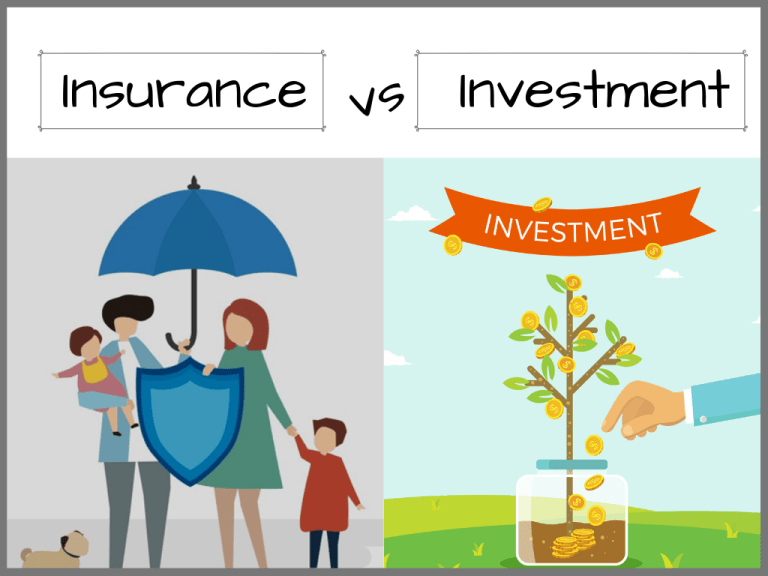
INSURANCE VS INVESTMENT

In today’s world, it is very easy to confuse Insurance with Investment. One might feel that he/she is investing in their future and decreasing their future financial burden because he/she purchased an insurance policy. Let’s take a look at the definition of insurance and investment.

Insurance refers to a contract or policy in which an individual or entity receives financial protection or reimbursement against losses. It protects the insured against risk of losses or damage.

Investment, on the other hand, refers to an asset or item acquired with the goal of generating income or appreciation. For example, real estate, mutual funds, shares etc.

With the increase in types of insurance policies and persuasive insurance sales representatives, people tend to think of insurance as investments. However, Insurance merely provides protection in the event of loss, which may or may not arise. In case of no loss or damage, sum total of all the insurance premium paid is profit for the insurance company.

On the other hand, the main purpose of an investment is to generate income by providing returns (dividends and interest) and/or capital gains (value appreciation; increase in price). Insurance does not provide any substantial returns. It merely provides reimbursement in the event of loss/damage and therefore, it is not an investment.

Do you need Insurance? If yes, what kind?

Insurance planning is essential to protect against different kinds of risks and to be financially prepared in case of loss or damage to life or property. However, it should not be used a means to invest.

There are different types of insurance which can be broadly classified into Personal, Property and Liability. There are three types of insurance that you must have to protect against risk, not as an investment: Health insurance, Term life insurance and Automobile insurance.

Health insurance is a must to ensure that in case of an accident or injury, hospital and medical bills don’t eat away your savings.

Term life insurance ensures that in case of death of the earning member of the family, the family has enough to survive for a substantial period of time. Term life insurance has a fixed period and hence, has a very low monthly premium with a decent coverage. However, if the policy expires and the insured is still alive, the insured does not get any amount back. So, this policy should only be taken by the earning member at the right life stage in case he/she does not own enough assets to leave behind for his/her family.

Automobile Insurance (third party) is mandated by the Government of India on the purchase of a vehicle and hence, every vehicle owner should have one.

Other types of insurances sold and bought in the name of ‘investment’ like Endowment plans, Money back policy and the new policy called Unit-linked insurance plans (ULIP) which allows you to invest in the stock market should be avoided at all costs.

It is much more profitable to invest in the market through mutual funds or investor’s Demat account than to do the same through insurance companies. The rate of return in the market is much higher and it doesn’t cost as much as Insurance.

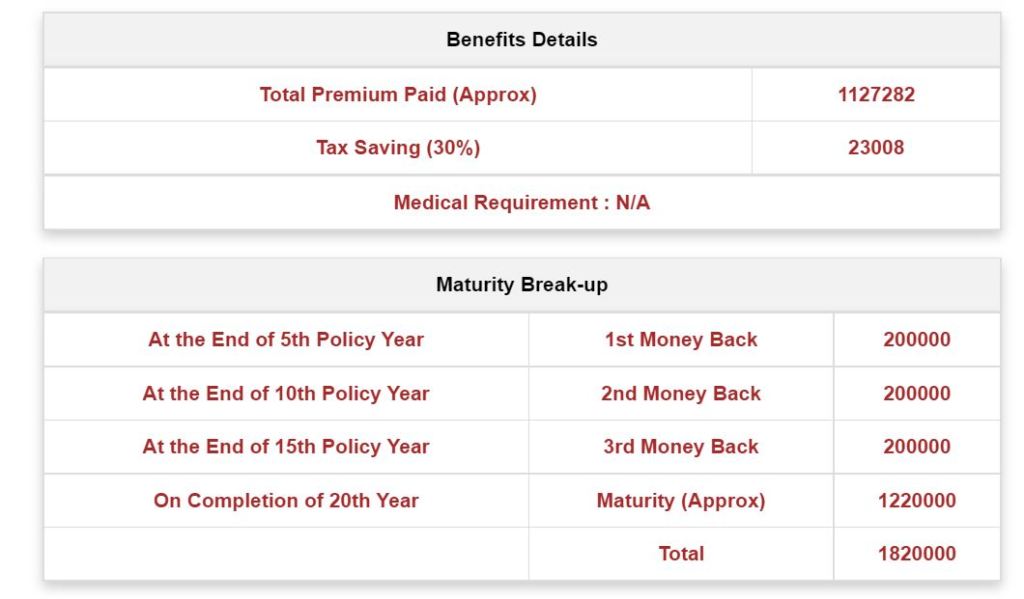
For example, if you buy Money Back insurance plan with a policy term of 20 years with ₹10,00,000 assured cover, the monthly premium calculated on LIC premium calculator comes out to be around ₹6300-6500 per month.

As calculated above, the total premium paid is ₹11,27,282 and the total amount received is ₹18,20,000. The total profit/return (approx.) is only ₹6,90,000 in 20 years. The return on investment (Return/Total Amount paid x 100) is only 61%.

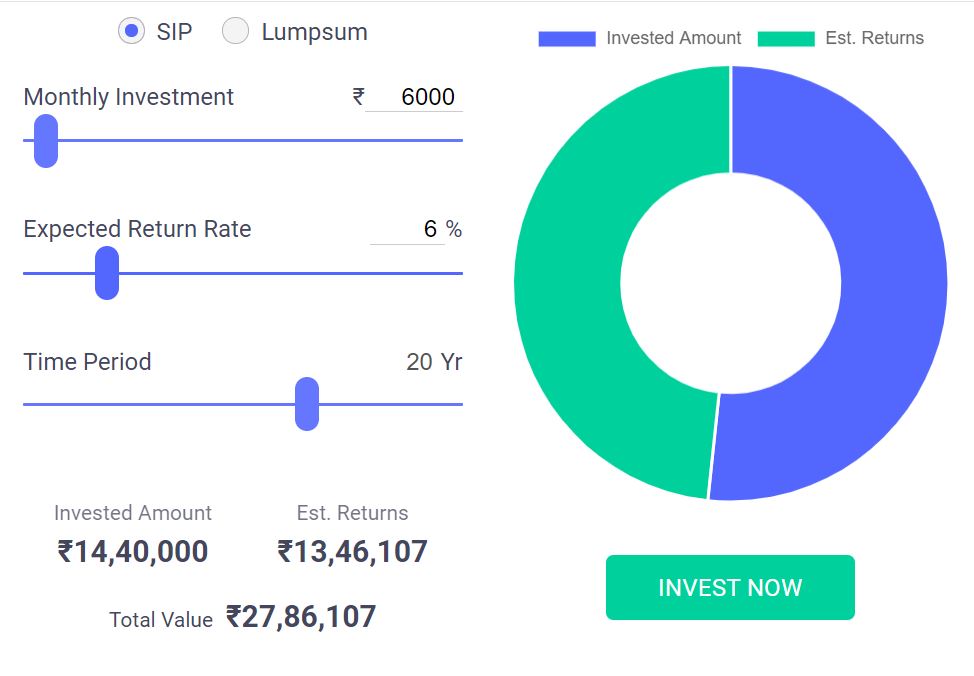
However, if the same amount is invested in SIP of any instrument with a return rate of just 6% for the same time period (20 years), the returns (calculated on Groww SIP calculator) are much higher.

₹6000 rupees invested monthly in any instrument with a return rate of only 6% for 20 years gives a return of ₹13,46,000 making the total value of the investment ₹27,86,000. The ROI (Return/Total Amount paid x 100) in this scenario is 93%.

Conclusion

Although Insurance is an essential part of Financial Planning to protect against different kinds of risks which varies from person to person, it should not be mixed with Investment. For greater returns and growth, investors should directly invest in the market or in any other instrument which suits their risk appetite and capacity.

What are Insurance Premiums and How do They Work?

  An insurance premium is an amount that the insurance policyholders have to pay to get the benefits of their insurance policy. Insurance premiums work as income for the insurance companies that they get from the policyholders, in return for which, they become liable to provide coverage for the claims made against the policy.

These premiums are paid for healthcare, auto, life insurance, home and a lot more. If an individual or the organisation fail to pay the insurance, they may risk the cancellation of their policy. The amount of the premium depends on many factors, which will be different in different cases. Let’s understand the factors that affect the premiums’ amount.

Factors affecting the Insurance Premium Amount

The insurance premium depends on various factors and the insurance companies use these factors to decide your insurance premium amount. Here are those factors:

  • The type of coverage or insurance policy
  • Your age
  • Previous claims
  • The area/region in which you live

The premium amount for different types of insurance policies will be different. It will also be different for different coverage amounts, i.e., in general, the higher the coverage amount, the higher will be the premium. The premium amount also depends on the policyholders’ age, the amount will be lower for the younger people than the elder ones.

Also, if you have claimed coverage against any of your insurance policies before, it can increase the premium amount for the current period. Also, the area/region in which a policyholder lives can also affect the premium amount. Generally, the insurance companies estimate the risk and increase the premium amount if the risk is higher. For example, in the case of vehicle insurance, the premiums may be higher in urban areas than the rural/suburban ones.

Types of Insurance Policies in India

As we have discussed what an insurance premium is and the factors that affect the premium amount, let’s look at different types of insurance policies in India. Mainly there are 8 different types of insurance policies in India, where some are more common than others.

  • Life Insurance- Life insurance provides coverage to the nominee/family members after the death of the policyholder
  • Health Insurance-
  • Motor Insurance- Motor insurance, on the other hand, provides coverage against the damage/theft of the vehicles. Property insurance provides coverage against the damage of houses, buildings, etc.
  • Property Insurance-
  • Travel Insurance- Travel insurance is a short-term coverage plan and offers claims against the losses/accidents that occur during a trip
  • Mobile Insurance- Mobile insurance provides coverage against damage/theft of the mobile phone
  • Cycle Insurance- Cycle insurance, on the other hand, provides the same for your bicycle and may also provide accidental death coverage to the family members of the policyholders
  • Bit-Size Insurance- Bit-size insurance minimises the financial liabilities of the policyholders for a very limited period

There can be other types of insurance policies, which would be different from the ones mentioned above, depending upon the insurance companies. Life insurance, Health insurance, Motor insurance and property insurance are preferred by most of the policyholders.

Finding the Best Insurance Policy

If you are looking to buy an insurance policy for yourself or any family member, and you want to find the policy that suits you the best, then you can do it easily online. There are many platforms like Paytm Insurance that allow you to check and compare the premium amounts against the coverage sum of different insurance companies.

All you have to do is enter details like your age or the age of the person you want to buy an insurance policy for, your relationship with them, type of insurance policy, area, etc. Compare different platforms by entering these details to check the premium amount and the coverage of different insurers and then choose the one that suits your needs the best.

Benefits of Having an Insurance Policy

Life is full of uncertainties and we do not know when we find ourselves in an unpredictable and disastrous situation. Having an insurance policy is the best way to manage the financial losses in such situations; however, there are a few more benefits of having an insurance policy. It helps the cash flow management in an uncertain event but it can also provide you with investment opportunities such as unit-linked investment plans. Plus, you can also get tax benefits with your insurance policy.

Conclusion

An insurance premium is an amount that every insurance policyholder has to pay; in return for which, the insurers provide coverage against the losses as per the policy. When an insurance policyholder stops paying his/her insurance premium, he/she indirectly risk the cancellation of the policy.

Impact of Insurance Bill

Insurance is a means of protection from financial loss. It is a form of risk management, primarily used to hedge against the risk of a contingent or uncertain loss.

An entity which provides insurance is known as an insurer, insurance company, insurance carrier or underwriter. A person or entity who buys insurance is known as an insured or as a policyholder. The insurance transaction involves the insured assuming a guaranteed and known relatively small loss in the form of payment to the insurer in exchange for the insurer’s promise to compensate the insured in the event of a covered loss. The loss may or may not be financial, but it must be reducible to financial terms, and usually involves something in which the insured has an insurable interest established by ownership, possession, or pre-existing relationship.

The insured receives a contract, called the insurance policy, which details the conditions and circumstances under which the insurer will compensate the insured. The amount of money charged by the insurer to the policyholder for the coverage set forth in the insurance policy is called the premium. If the insured experiences a loss which is potentially covered by the insurance policy, the insured submits a claim to the insurer for processing by a claims adjuster. The insurer may hegde its own risk by taking out reinsurance, whereby another insurance company agrees to carry some of the risks, especially if the primary insurer deems the risk too large for it to carry.

Insurance sector in India has seen instrumental change since the last two decades when there was only one player namely Life Insurance Cooperation (LIC) before it was opened up for the private and foreign players. Currently, there are 28 players in the non life insurance business and 24 players in life insurance thus infusing the competition in the sector. The Insurance Regulatory and Development Authority (IRDA), headquartered at Hyderabad, being the regulatory authority of the insurance sector in India is the sole authority which frames regulations for the sector, ranging from registration of insurance players to protection of policy holders’ interest, thus aiming to regulate and promote the growth of the insurance sector. 

The Insurance Laws (Amendment) Bill, 2015, which intended to increase the FDI limit in the insurance sector from 26% to 49% apart from introducing several other changes, got the nod of the parliament on March 12, 2015 after much deliberations. The bill is expected to provide a major fillip to growth of the sector. Some major changes introduced by the bill are as under –

Capital Infusion


Apart from increasing the foreign holding, the bill also provided various other avenues and flexibility in raising the capital for the cash strapped sector. The current insurance penetration is just 3.9% in India. The capital infusion would not only increase the penetration of insurance which is need of hour, but would also augment the product diversification.


Consumer Interests


In order to curb the miss-selling, heavy penalties have been imposed on intermediaries and insurance companies for misconduct. The penalty is increased to up to INR1.0 crore for the insurance companies and up to INR10,000 for agents depending upon the nature of violation. This would work as a deterrent to the companies and agents for any miss-selling. Further, if the policy is older than three years, no life insurance policy can now be rejected by the insurer on any ground. This will motivate insurers to strengthen their underwriting standards and increase faith amongst consumers and protect the policyholder’s interest. Ban is also imposed on multilevel marketing schemes.  

Commission and Pay Outs

The bill confers the power to determine the quantum of commission, pay outs and other expenses to the IRDA. From now onwards, IRDA would try to bring more transparency in the sector for the benefit of the end consumers. Meanwhile, agents and intermediaries have been banned from more than one company. 

Empowering IRDA

Empowering IRDA to frame operations related rules and regulations would provide it with the opportunity to adapt quickly with the changing environment while securing best interest of the policyholders. IRDAI is now empowered to regulate key aspects of operations including solvency, investments, expenses and commissions etc. It also empowers the Authority to regulate the functions, code of conduct, etc., of surveyors and loss assessors.

Changes in Health Insurance Sector

Under the revised regulations, minimum capital investment in health insurance sector has been increased to Rs 100 crore, to ensure that only serious players are present in the sector. The amendment Act has also expanded the definition of health insurance business by including travel and personal accident cover. This would result in further growth of the health sector, which is one of the most under-insured segments in India.

Thus the new amendments in the Insurance sector aims to bring a holistic improvement in the sector by augmenting competition, infusing capital, introducing product diversification as well as safeguarding the interests of the final consumer. In this way, insurance business can increase its depth and penetration in conformity to the developed world.

Check Insurance Premium Amount Online Instantly

  There used to be a time when people thought insurance was a luxury. However, with the times and people’s lifestyles changing, insurance is not a luxury anymore. Insurance policies help us in dealing with unforeseen circumstances and help us cover expenses in such cases. This is the reason that many of us already have one or another insurance policy.

Now, everyone who buys an insurance policy needs to pay their insurance premium online. If you are looking for a way to pay your insurance premiums or want to check the premium amount, you can do that easily online.

But how?

Let’s check the steps.

How to Check Insurance Premium Amount Online?

The process to check the insurance premium online is very simple, and you can do it by following a few simple steps. Visit Paytm, and follow these steps to check your insurance premiums online:

On Paytm Mobile Application:

  • Open Paytm application on your mobile phone
  • Click on ‘Recharge & Pay Bills’
  • Scroll down to the ‘Featured Services’ section and click on ‘LIC / Insurance’
  • Select your Insurer and enter the required details such as Policy Number, Date of Birth etc.
  • Click on ‘Get Premium’ to check your premium amount online

On Paytm’s Official Website

  • Go to the ‘Insurance Premium Payment’ page on Paytm
  • Select your Insurer
  • Enter the required details such as Policy Number, Date of Birth etc.
  • Click on ‘Get Premium’ to check your premium amount online

It is that simple to check your insurance premiums online on Paytm. You can also pay your insurance premium on Paytm after you have checked your insurance premium amount. 

Why should you have an Insurance Policy?

Insurance policies benefit us in many ways along with the coverage that they provide in the hour of uncertainty. Here are some of the most important perks for having an insurance policy:

  • Insurance Coverage: This is the primary benefit and reason for getting an insurance policy. If the uncertainty falls under the domain of the policy, then you can get coverage for the same as per the policy.
  • Cash Flow Management: This is rather an advantage that isn’t talked about a lot. In an hour of uncertainty, the burden of paying for the losses can put a lot of pressure on the individuals and the family. So, when the sum is being covered by the insurance policy then it takes the burden off their shoulders.
  • Tax Benefits: Apart from the coverage, having insurance policies tax benefits as well. You can get tax exemptions under sections 80C, 80D, and 10D.
Conclusion

Having an insurance policy is a must as it helps us in the hour of uncertainty as they provide coverage for such unforeseen situations. You can check your insurance premium amount online before you make payment on platforms like Paytm by following a few simple steps.