Union Health Secretary visits pharmaceutical Bilthoven Biologicals, Netherlands; has engaging meeting with CEO

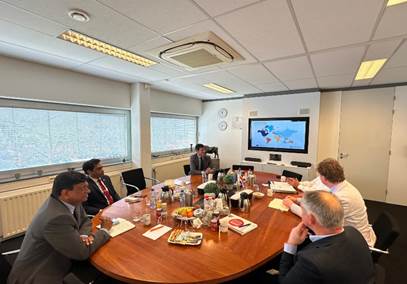
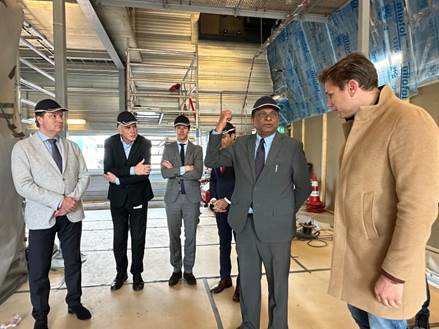
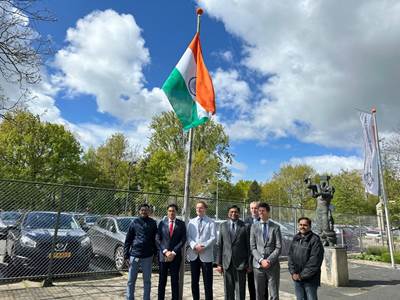
 Union Health Secretary Shri Apurva Chandra today visited the manufacturing unit of global pharmaceutical company Bilthoven Biologicals at Utrecht, Netherlands. He had an engaging meeting with CEO Mr. Juergen Kwik & CEO of Poonawalla Science Park (PSP) at Bilthoven Mr. Jef De Clercq on EU pandemic preparedness partnership and collaboration on production of vaccines. He met the senior management and was briefed on the various manufacturing units of the facility. A detailed presentation was made on their future manufacturing plans. Bilthoven Biologicals B.V. Co., manufactures pharmaceutical products such as vaccines for polio, diphtheria-tetanus-polio, and tetanus along with bacillus calmette-guerin (BCG).


The bioengineering and vaccine production firm Bilthoven Biologicals was purchased by Serum India Ltd., in 2012. This has strengthened its capacity of producing vaccines and also provided it with a valuable manufacturing base in Europe. Recently Serum and Bharat Biotech have announced collaboration for enhanced production of OPV. Bharat Biotech will collaborate with Netherlands-based Bilthoven Biologicals B.V, a wholly-owned arm of Serum Institute of India. An agreement has been signed under which Bharat Biotech will procure drug substances for manufacturing oral polio vaccines to be supplied within India and globally. This will contribute to supply security of oral polio vaccines. With this partnership, the capacity of BBIL to manufacture Oral Polio Vaccine (OPV) has increased to 500 million doses every year. 


Universal Immunisation Programme (UIP) of the Union Health Ministry is one of the key interventions for protection of children from life threatening conditions by providing vaccination, including vaccine against polio.  India has been certified free of Polio in March 2014. However, to maintain the polio-free status, polio vaccine is given to children as part of the high quality national and sub-national polio rounds across the country. A sustained supply of OPV is essential for keeping India polio free. The partnership between BBIL and Serum will contribute to providing a sustained supply of OPV in the country.

****

India’s G20 Presidency

 Principal Secretary to the Prime Minister, Dr P. K. Mishra chaired the 9th meeting of the G20 Coordination Committee on 30 August 2023. Principal Secretary took stock of arrangements for the G20 New Delhi Leaders’ Summit, including logistical, protocol, security and media-related arrangements. The meeting was attended by senior officers from G20 Secretariat and Ministries of External Affairs, Home, Culture, Information and Broadcasting and the Department of Telecom.

 It was noted that work on the ground and on site at Bharat Mandapam was proceeding satisfactorily. For a uniquely Indian experience, exhibitions on culture and ‘Mother of Democracy’ are being set up in Bharat Mandapam. Principal Secretary also reviewed progress in installation of the Nataraj statue at the venue and programme for Spouses of visiting leaders which has been especially curated for the guests.   

For the first time, a mobile App has been made for G20, called ‘G20 India’ which is now available for download, both on Android and iOS. G20 delegates and members of the media will also witness digital India first hand through the ‘Innovation Hub’ and ‘Digital India Experiential Hub’ which are being set up at Bharat Mandapam.

On logistics side, drills are being held and dress rehearsals are planned in the coming days. Principal Secretary was also briefed on security aspects by officers concerned. Traffic advisory has been issued for the public. Principal Secretary emphasised that though for security and protocol reasons, restrictions are being placed, efforts should be made so that least inconvenience is caused to public. He directed that essential services in the city should not be affected. Further, communications regarding traffic restrictions be made more user-friendly. 

Media arrangements for the Summit were also reviewed. So far, more than 3600 requests have been received including from foreign media and accreditation letters are being issued. Media Centre at Bharat Mandapam will be fully ready by the end of this week. 

Principal Secretary directed all concerned officers and heads of organisations to make every effort to host an impeccable Summit. For smooth coordination between various agencies, it was decided that a Multi-Agency Control Room will be set up at Bharat Mandapam. Principal Secretary will undertake field and site visits over next few days to check the state of readiness on the ground.  


***

G20 Summit a grand success

 The Prime Minister, Shri Narendra Modi arrived to a grand welcome in Delhi. The Prime Minister landed in Delhi from Bengaluru today  after interacting with the ISRO team in the aftermath of the successful landing of the Chandrayaan – 3 moon lander. The Prime Minister had gone to Bengaluru directly after his 4 day tour of South Africa and Greece. Shri JP Nadda welcomed the Prime Minister and felicitated him on the achievements of his successful visit and the momentous achievement of the Indian scientists.

Responding to the warm civic reception, the Prime Minister expressed his gratitude for the enthusiasm of the people for the success of the Chandrayaan-3. The Prime talked about his interaction with the ISRO team and informed  that “the point where the moon lander of Chandrayaan-3 landed will now be known as ‘Shiv Shakti’” He elaborated that Shiv denotes Shubh and Shakti exemplifies Nari Shakti. Shiv Shakti also stands for the connection of Himalaya and Kanyakymari. Similarly, the Prime Minister informed that the point where Chandrayaan 2 left its footprints in 2019 will now be called ‘Tiranga’. He said that there was a proposal at that time too, but somehow heart was not ready. He said that a quiet resolution was taken to name the point of Chandrayaan-2 only after a fully successful mission. “Tiranga gives strength to deal with every Challenge”, the Prime Minister said. He also informed about the decision to celebrate August 23 as National Space Day. The Prime Minister conveyed the greetings and congratulatory messages that the global community showered to India during his visit.

The Prime Minister said that India is creating a new impact on the basis of its achievement and successes and the world is taking note.

Mentioning his visit to Greece, first in the last 40 years by an Indian Prime Minister, PM Modi highlighted love and regard for India in Greece and said that in a way Greece will become India’s gateway to Europe and will be a strong medium for robust India EU relations.

The Prime Minister stressed the need to take the youth’s involvement in Science further. Therefore, he said there is a need to see how space science can be leveraged for good governance and ease of living for the common citizen. He reiterated his decisions to deploy government departments in finding out ways of leveraging space science in service delivery, transparency and perfection. For this Hackathons will be organized in the coming days. 

The Prime Minister said that the 21st century is technology driven. “We have to move on the path of science and technology more firmly in order to achieve a Viksit Bharat by 2047”, he said. In order to instil scientific temper among the new generation, the fervour generated by the Chandrayaan success needs to be channelled into Shakti. For this a quiz competition will be organized on MyGov from September 1. New National Education Policy also has ample provisions for science and technology, he said.

The upcoming G-20 Summit, the Prime Minister said, is an occasion where the entire nation is a host but the maximum responsibility falls on Delhi. “Delhi has the good fortune to get an opportunity of keeping the flag of nations’ prestige flying high”, Shri Modi said. He emphasized that Delhi needs to follow the tradition of ‘Atithi Devo Bhava’ as this is a critical occasion to show the hospitality of India. “There will be a lot of activities between 5-15 September. I apologise in advance for the inconvenience that may be caused to the people of Delhi. As a family, all the dignitaries are our guests and we have to make our G20 Summit grand with collective efforts.”

Talking about the upcoming Raksha Bandhan and Indian tradition of treating Moon as a brother of Mother Earth, the Prime Minister called for a happy Raksha Bandhan and hoped that the fun filled spirit of the festival introduces the world to our traditions. He said in the month of September, the people of Delhi will give new strength to the achievements of our scientists by making the G20 Summit  a grand success.

***

India-Israel Friendship – Beginning of a New Era of Industrial Research and Development Cooperation

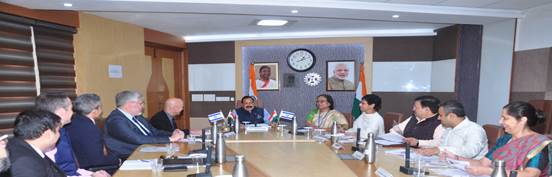
 In a momentous milestone in S&T cooperation between India and Israel, a Memorandum of Understanding (MoU) on Industrial Research and Development Cooperation was signed between the Council of Scientific and Industrial Research (CSIR) under the Ministry of Science and Technology (MoST) of the Republic of India and the Directorate of Defense Research and Development (DDR&D), under the Ministry of Defense of the State of Israel.
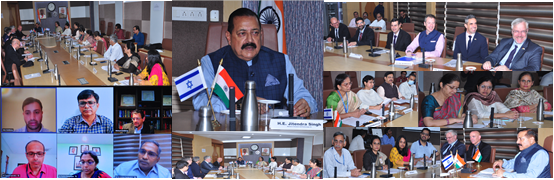
Dr N Kalaiselvi, DG, CSIR and Secretary, DSIR thanked the Hon’ble Minister of State(IC), Ministry of Science and Technology and Earth Sciences, GoI and Vice President, CSIR Society for gracing the meeting and his continued support to CSIR. She welcomed the dignitaries and gave an overview of CSIR, showcasing its technological and research prowess as also the ongoing collaboration discussions with DDR&D, Israel in Aerospace, Healthcare, Energy. Sharing CSIR’s priority topics she concurred to the interest of DDR&D for furthering collaboration with Israel in high technology areas such as Artificial Intelligence, Quantum and semiconductors, synthetic biology etc.

Acknowledging the ongoing cooperation efforts of CSIR and his team, Dr. Daniel Gold, Head, DDR&D envisioned that the CSIR-DDR&D cooperation would be beneficial for the welfare of both the countries. He added that DDR&D welcomes collaboration not only with R&D organizations but also with start-ups and companies, venture capitals on both sides. He apprised that AI and photonics are strengths of Israel and welcomed cooperation with CSIR in High Technology sectors which would pave the way for building a better future.

Stressing the successful completion of three decades of India-Israel successful diplomatic relations, Mr. Naor Gilon, Ambassador of Israel to India emphasised the close friendly relations between Israel and India, which have culminated into a strategic partnership after the complimentary visits of Prime Ministers of both the countries in 2018. The present CSIR-DDR&D cooperation would add another feather and be a milestone for India-Israel relations.

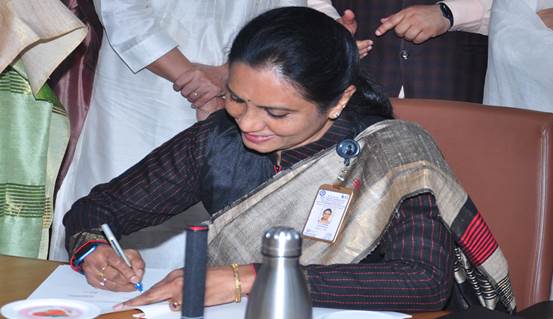
Dr N Kalaiselvi and Dr. Daniel Gold signed the CSIR-DDR&D MoU in the august presence of Hon’ble Minister of S&T, Government of India and Vice President, CSIR Society, Dr Jitendra Singh.
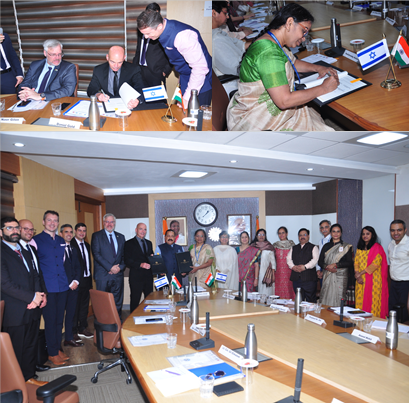
The MoU shall enable cooperation in the industrial R&D programs in mutually agreeable industrial technology fields through implementation of specific projects. The collaboration would encompass some of the key industrial sectors including Healthcare; Aerospace & Electronics Instrumentation; Civil, Infrastructure & Engineering; Chemicals and Petrochemicals, Sustainable Energy including Energy Devices; Ecology, Environment, Earth & Ocean Sciences and Water; Mining, Minerals, Metals & Materials; Agriculture, Nutrition & Biotechnology. The collaboration through the MoU would be steered and the execution monitored by a Joint Steering Committee led by the heads of the CSIR and DDR&D for taking forward mutually benefiting Industrial and technology cooperation.

Specific collaboration on Hydrogen and Aerospace currently under discussed between CSIR and DDR&D were briefed by Dr Abhay Pashilkar, Director, CSIR-National Aerospace Laboratories (CSIR-NAL), and Dr Ashish Lele, Director, CSIR-National Chemical Laboratory (CSIR-NCL); they welcomed collaboration on futuristic technologies in these domains, including in High Altitude Platform, Hydrogen Valley programs of CSIR, respectively.

Specific collaboration on Therapeutics between CSIR-Indian Institute of Chemical Technology (CSIR-IICT) and M/s 101 Therapeutics for conducting clinical trials of a COVID-19 drug having enormous therapeutic potential was briefed; if successful this would prove to be highly appropriate and effective for preparation of future pandemics. The cooperation MoU between CSIR-IICT and M/s 101 Therapeutics was also signed during the meeting.
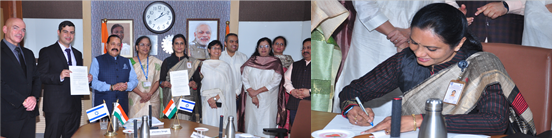
 

In his remarks, Dr Jitendra Singh said that it is a very important year in the S&T sphere of India under the leadership of  PM of India as India is holding G20 presidency, celebrating the International year of Millets, as also India and Israel completed 30 years of successful diplomatic relations.

He apprised that CSIR has specialized laboratories in almost all the identified priority sectors therefore assured appropriate competence for this cooperation. For e.g. indigenous Hydrogen Fuel Cell bus by CSIR-NCL, purple revolution (Lavender cultivation) by CSIR-IIIM. He welcomed technology partnership with Israel and congratulated both sides for for their efforts to strengthen the India-Israel relationship.
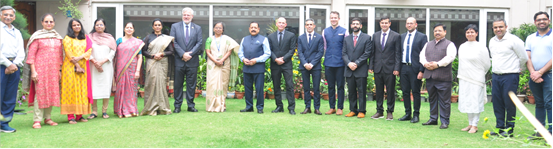
Dr. Rama Swami Bansal, Head, International S&T Affaris Directorate (ISTAD), CSIR thanked the Hon’ble Minister for his continued support to CSIR, the team from Israel for building and formalizing the cooperation and her colleagues from CSIR and MEA for their kind and gracious presence during the MoU signing meeting today.
**************************


India and Bangladesh on Farakha

 Despite the claims made by Indian leaders
and the hopes aroused by several rounds of talks on Farakka held in turn at
Dacca and Delhi, no accord has yet been reached. The earlier reports on an
“understanding’ and a package deal, circulated by Indian leaders, have been
denied by Bangladesh Spokesman.

A Bangladesh Government Spokesman said on
September 4, that a verbal understanding had been reached between Indian and
Bangladesh on the Quantum of the share of the Ganga waters at Farakka “only for
the dries period of the year.”

The Spokesman was explaining
the position when his attention was drawn to a reported statement by the Prime
Minister of India and Bangladesh had reached a short-term agreement on sharing
the Ganga waters between the two countries.

U.S.-India Strategic Clean Energy Partnership Ministerial Joint Statement

 Today, during a Ministerial meeting of the U.S.-India Strategic Clean Energy Partnership (SCEP), U.S. Energy Secretary Jennifer Granholm and Indian Minister of Petroleum and Natural Gas Hardeep S. Puri underscored the critical importance of bilateral clean energy engagement to strengthen energy security and to accelerate clean, secure, and just energy transition.

U.S.-India Strategic Clean Energy Partnership Ministerial Joint Statement:

Amidst volatility in global energy markets, continuing recovery from the COVID-19 pandemic, and increasingly frequent climate-related challenges, the United States and India reiterated their commitment to accelerating a just and sustainable energy transition. As climate and clean energy leaders, the United States and India share a common vision to deploy clean energy at scale during this critical decade to reduce emissions and achieve climate change mitigation goals, taking into account different national circumstances. Through regular consultations on global energy markets, efforts to strengthen collective energy security, and deepening technical engagement to support economy-wide decarbonization, the two countries are proactively addressing the multiple crises that the world faces through the U.S.-India Strategic Clean Energy Partnership.

During the engagements, the two Ministers reviewed progress across the entire spectrum of the energy sector partnership. They noted with appreciation the tremendous increase in bilateral energy trade achieved over the last few years. They also welcomed the increased clean energy collaboration between stakeholders of both countries which is facilitating expanded clean energy investment, including in emerging technologies.  

The Ministers also underscored the importance of ensuring reliable energy supplies to ensure balanced energy markets, including India’s support for the U.S. initiative to release crude oil from the strategic petroleum reserves, and the importance of diversifying to clean energy sources.   

The Ministers stressed that climate and clean energy collaboration should promote energy access, affordability, energy justice, while supporting sustainable economic growth and just energy transitions. The Ministers also recognized that ambitious national climate and clean energy goals require concerted action and implementation at all levels of government to ensure their viability and sustainability. Capacity building and exchanging best practices including with all stakeholders were also highlighted as critical components to achieving the countries’ climate and clean energy ambitions. 

India and the United States discussed progress on continued efforts to advance emerging fuels and technologies and electrification and decarbonization of end use sectors. The discussions covered hard-to-abate sectors, and the Ministers were informed about various initiatives, including joint research and development on smart grids and energy storage and new collaboration on carbon capture, utilization and storage (CCUS) technologies, and the potential to explore collaboration on other novel technologies under the U.S.-India Partnership to Advance Clean Energy-Research (PACE-R). 

The Ministers noted the Importance of facilitating increased energy investments to ensure sustainable, affordable, reliable, resilient and cleaner energy systems.

Enhanced bilateral efforts include: 

  • Strengthening the power grid to ensure reliable, affordable, and resilient clean energy supply including through smart grids and energy storage;
  • Assessing grid-integrated buildings, electric vehicles, and other distributed energy resources to support load management;
  • Advancing renewable energy development and deployment, including to support India’s goal of achieving approximately 50 percent cumulative electric power installed capacity from non-fossil fuel-based energy resources by 2030;
  • Advancing energy efficiency and conservation in appliances, buildings and the industrial sector;
  • Electrifying and decarbonizing the transportation sector including creating an enabling ecosystem through setting up an Electric Vehicle (EV) financing services facility in India;
  • Reducing emissions across the oil and gas value chain including efforts at deploying methane detection and abatement technologies;
  • Decarbonizing the industrial sector through efforts at electrification, carbon capture and storage, and deployment of other clean emerging energy technologies;
  • Deepening cooperation between Indian and U.S. Department of Energy labs and agencies, like the EIA, and on energy data management, modeling, low carbon technologies.

The Ministers also reiterated the importance of private sector engagement to facilitate investment, inform policy, and accelerate technology deployment. To that end, the United States and India continue to convene public-private tasks forces on hydrogen and biofuels, and announced the launch of a new Energy Storage Task Force to support large-scale integration of renewable energy needed to support the clean energy transition. The Ministers welcomed collaboration between Indian and U.S. companies through a Memorandum of Understanding to deploy methane abatement technologies in India’s city gas distribution sector under the Low Emissions Gas Task Force to help reduce emissions in the oil and gas sector.

Agencies from across the U.S. and Indian governments demonstrated a number of accomplishments across the five technical pillars of cooperation on: 1) Power & Energy Efficiency, 2) Renewable Energy, 3) Responsible Oil & Gas, 4) Sustainable Growth, and 5) Emerging Fuels and Technologies.

The Ministers welcomed expanded efforts under the U.S.-India Strategic Clean Energy Partnership to support a just energy transition to meet today’s unprecedented energy security and climate and energy challenges.

Realism

Realism has been the most important approach of international relations over the years. It has been the dominant way of explaining international behaviour. Realism emphasizes relations among nations, as they have been and as they are. It is not concerned with the ideal world. It is the international interpretation of human behaviour. Individuals are essentially selfish, and they seek power to serve their interests and to prevail over others. As Morgenthau wrote in the 20th century, power is the control of men over the minds and actions of other men. And, there is constant strife leading to conflicts and clashes between individuals having divergent interests and seeking to acquire power. Thus, there is an ever-present struggle for power in the society. The same is the tone of nations that are guided by the same considerations as individuals.

Political Realism

Realism, or political realism, as an approach of international relations has evolved over the centuries. Prominent among its earlier advocates were Indian scholar Kautilya, Chinese strategist Sun Tzu, and Greek scholar Thucydides. Much later, Italian scholar Nicolo Machiavelli and English philosopher Thomas Hobbes also contributed to the evolution of realism. Their ideas may be called classical realism, though Morgenthau is now considered the principal classical realist. However, according to the view expressed by Robert Jackson and George Sorensen (1999) and many others, Morgenthau’s theory may be described as neo-classical realism. But, Morgenthau was the most systematic advocate of realism. However, British Professor E.H. Carr, who wrote The Twenty Years’ Crisis (1919-39) had prepared the ground on which Morgenthau developed his theory of realism.

Carr criticized democracies like the UK and France for their failure in defeating the designs of dictators. He blamed the democratic countries for failing to recognize the power realities in the world. Carr divided the scholars of international relations into two groups. These were ‘utopians’, or ‘idealists’, and the ‘realists’. He described the utopians as optimists- children of enlightenment and liberalism. The liberals held the view that reason and morality could structure international behaviour of the states towards peace. Wilson and (his) League of Nations were cited as main examples of utopians. Carr, who himself was a a realist, described realists as pessimists, or children of darkness, who emphasize power and national interest. Commenting on Carr’s views on power, Michael G Roskin and Nicholas O Berry wrote, ‘This does not necessarily mean perpetual war, for if statesmen are clever and willing to build and apply power, both economic and military, they can make the aggressors back down…’

Political realism is a significant theory in the field of international relations that seeks to explain state behavior under a set of specific and rigid assumptions. At its core, political realism is guided by three S’s: statismsurvival, and self-help.

Statism asserts that states are the only entity on the international stage that matter and that they are unitary (acting alone) and rational (acting in its best interests) actors. Survival identifies the state’s primary goal is to survive in an international system characterized by anarchy. The final S, self-help, conveys the assumption that states cannot trust others in their pursuit of survival and must secure their security.

Political realism is further delineated into sub-theoretical frameworks, including:

  • Classical realism
  • Liberal realism
  • Neorealism
  • Neoclassical realism

While each sub-framework has its own nuance within the broader political realist theory, all forms of political realism fundamentally believe world politics is a field of conflict among states pursuing power.

Structural Realism

Structural realism, also referred to as neorealism in the academic community, is a major branch of political realism derived from classical realism. While the latter incorporates analysis of human behavior within state decision-making, structural realism focuses predominantly on the anarchic structure of the international system. In other words, structural realists see global conflict as inevitable because there is no supranational body that could prevent or mediate conflict between individual states. Therefore, structural realists assume that states must always be preparing for conflict because war could break out at any time.

Structural realists believe that understanding the international system is guided by the three S’s of political realism. However, they do incorporate analysis of inter-relationships between distinct state entities, particularly regarding power relationships. A key concept in structural realism is polarity, the balance of power within the international system. Today, international theorists often describe the world as unipolar, with the United States acting as the sole superpower endowed with the ability to dominate international relations via their economic, political, and military supremacy.

REFERENCES : International Relations By V.N. Khanna

Evolution Of The Cold War

Cold War After The Truman-Stalin Era

In early 1953, there was a change in the leadership of both the superpowers- the US and USSR. In the US, President Truman’s tenure ended in January 1953. He was succeeded by Dwight Eisenhower. an ex-army general who had commanded the Allied forces in Europe during the Second World War. Meanwhile. Soviet leader Stalin died in March 1953. He was succeeded as party chief by Nikita Khrushchev and by Georgy Malenkov as prime minister. The two Soviet leaders were not very comfortable with each other. Malenkov was replaced by Nikolai Bulganin in 1955. He was more acceptable to the party chief.

But in 1958 even Bulganin was dropped and Khrushchev assumed the prime ministership as well. President Eisenhower led US for eight years till he was succeeded by John F Kennedy in January 1961. Khrushchev remained at the helm of affairs till he was overthrown in 1964 by the troika of Leonid Brezhnev, Nikolai Podgorny and Alexei Kosygin. After the Truman-Stalin era, the US-Soviet relations eased considerably, but the Cold war showed no signs of ending. During 1953-64 several steps were taken by both the sides to improve relations, but at the same time tension got accelerated on different occasions.

CRISIS IN POLAND

Poland was the first to ignite. In June 1956, riots in the industrial city of Poznam were brutally suppressed, leaving dozens of people dead and hundreds wounded. A conflict occurred in the Polish Communist Party between two factions – one owing allegiance to Boleslaw Bierut, who had died earlier the same year, and the other led by Gomulka, who was a Nationalist Titoist communist, and had remained in jail since 1949, and was recently released. Gomulka faction succeeded.

In October, Polish Communist Party issued a proclamation that Poland would henceforth pursue a ‘national road to socialism’, and Gomulka was elected Secretary of the Polish Communist Party. The Soviet leaders decided not to use force against Gomulka. This was second set-back to USSR after Yugoslav decision in 1948 to follow Nationalist Communism.

REVOLT IN HUNGARY

Since the end of Second World War, Hungary was governed by an orthodox Communist leader, Matyas Rakosi, a nominee of Stalin. (He had been freed from jail before the War on Stalin’s initiative after the Soviet Union returned old Hungarian flags captured by the Czar in 1849.) The Rakosi regime was severe ‘even by Stalinist standards.’ In 1953, he was summoned to Moscow, reprimanded and replaced by a reformist communist Imre Nagy.

A more intangible effect of 1956 arises with the spread of its talented diaspora. Many thousands of gifted Hungarians left their country and settled as far afield as Australia, the United States, and across Western Europe. The contributions they made to their adopted countries were incalculably beneficial. Nowhere have I heard the kind of objections to Hungarian refugees that one regularly encounters in relation to other refugee and asylum-seeking groups. To some degree this is because everyone knew what the Hungarians had fled from; they received instinctive sympathy. But it also reflects the performance of the Hungarians in their adopted countries. They assimilated well and quickly, and were soon more than repaying their hosts.

Even though assimilated, however, they were eloquent voices critical of communism and the Soviet empire. The eminence many soon achieved in their fields of scholarship and enterprise added weight to their criticisms. And in the United States especially, they formed the influential “captive nations” lobby with other émigré groups, to press for a realistic foreign policy and, in time, to provide Reagan with intellectual heft.

REFERENCES : International Relations By V.N. Khanna

International Relations

Introduction

The term ‘international relations’ was first used by Jeremy Bentham in the 18th century, although its Latin equivalent, ‘intergentes‘, was used a century earlier by Rijehare Zouche. Both of them had used the term in the context of what later came to be known as international law. Today, nation states have become highly interdependent, and relations between them, political or economic, have developed into an essential area of knowledge.

The term ‘international relations’ (IR) may be used both for a ‘condition’ and a ‘discipline’ Quincy Wright, for example, makes such a distinction. The official relations between sovereign countries are described as international relations, though according to Wright, ‘… the word “interstate” would have been more accurate because in political science, the state came to be the term applied to such societies’. Viewed thus, international relations, as a condition, refers to the facts of international life, that is to say, the actual conduct of relations among nations through diplomacy based on foreign policy. It also includes actual areas of cooperation, conflict and war. According to Quincy Wright, IR should tell the ‘truth about the subject’, i.e., how such relations are conducted and, as a discipline, IR should treat them in a systematic and scientific manner.

Meaning Of International Relations

International relations as a subject is concerned with the relationships among the governments of various sovereign states. Many people may think that relations among nations are regulated and conducted by presidents, prime ministers, foreign ministers, officials of the foreign offices and diplomats. This is partially true. The scope of international relations is not merely political. Today, economic activities such as international trade, role of multinational corporations, terrorist activities and impact of environment are all embraced in the fold of relations among nations.

Most scholars agree that the term ‘international politics’ is used to describe official political relations between governments acting on behalf of their states. The term ‘international relations’ is broader. According to Stanley Hoffman, ‘The discipline of international relations is concerned with the factors and activities which affect the external policies and power of the basic units into which the world is divided.’

International Relations As A Field Of Study

As a field of study, international relations analyses a wide range of political activities. These include war, peace, diplomacy, trade relations, treaties, alliances, cultural, exchanges, participation in international organizations, etc. Each of these activities makes up distinct issue areas on which scholars and foreign policy makers focus attention.

The scope of international relations is often defined by subtitles, like ‘questions of war and peace’ as a subtitle of international security. Joshua S Goldstein wrote, ‘the movements of armies and of diplomats, the crafting of treaties and alliances, the development and deployment of military capabilities – these are the subjects that dominated the study of IR in the past… and they continue to hold central position in the field.’

Besides these, religious groups and movements working in two or more countries also act as non-state actors in the international relations. These may include large followers as the Catholic Church has, or a spread out population as sought to be represented by the Vishwa Hindu Parishad.

References

International Relations By V N KHANNA and LESLIE K KUMAR

The man who remembers everything

We all do different things in our daily life. There are a lot of things that we do and we forget abut it the next day, sometimes we don’t even remember what we had for breakfast as the day ends. But can you believe me when I say that here is a man who remembers every single second of his life.

Yes, he remembers where he was, what he did, what he eat and everything that he did for the past 50 tears. He is like a encyclopedia for his memories. You can give him any date and he can tell, where he was, with whom he was, what he did, what he felt and what the weather was like.

The man remembers the first time he voted, the date, the year and for the person he voted for as well. So, after reading all the above you must be wondering who is this guy and is this even scientifically proven?? Is this true or just a hoax cause obviously no one will know if he is lying or telling the truth.

The man’s name is Bob Patrella and he lives in Los Angeles, USA. The man claims to have the best memory in the world. The man have to say that he himself did not knew about it first but one day when his friends asked him about a birthday party he had 10 years ago, he was able to describe the whole day without missing a single detail. According o Bob, he was able to remember all his birthdays since he was 5 years old but he thought that everyone was able to do that and did not took it as something special.

The friends upon hearing the details started asking him about different dates and more events and about different things that he did. No matter the date, month or year he could tell them everything. What they wore, what they did and even how he felt on that specific day.Bob says that he remembers his birthday specifically of the year 1979 cause that was the birthday when he found out that his partner was cheating on him with his roommate.

Bob also says that the coolest thing about this is that he does not needs any social media platform to remember things and to remember birthdays.

There have been numerous studies taken place to find out the reason for this capability of Bob but it is still not found how he is able to do this.

But according to Bob it is not all good for him when it comes to remember things because not every single memory is not something you want to remember. He says that he cannot forget the bad experiences he had and everything something like that happens against all comes back to him and it is not easy to deal with. That’s why when his brother past away soon after his parents he has to face a strong depression.

Bob said,” It was really difficult. It was like I have to deal with the same grief all over again.”

So in order to get over this Bob decided to find a way to deal with this situation. He says that Whenever he feels low and sad he goes back to the happy memories of his family, puts a smile on his face.

Bob Said,” Just going back in time, now that my mother is gone. Just hearing the sound of my mother’s voice is very therapeutic for me.”

So what do you think about this man. Is t possible for someone to remember everything and is it a good think to as sharp memory as Bob Patrella. Because there might be things that you would like to forget and there might be the ones that you would never want to forget about.

Watch this video for more details.Source: https://youtu.be/yijur1KgrxM

Thank you so much for reading and I know you a sharp memory so Don’t forget to like and tell your thoughts in the comments.

Belarus: Escalating political tension and sanctions

Belarus is an overlooked country that is located east of Poland and south of Lithuania and Latvia. It is bordered by Russia in the East and also bordered by Ukraine in the South. The landlocked country has an area of 207,600 square kilometers (80,200 square mi) and a population of little over 9 million people. Belarus was one of the newest countries that were formed after the disintegration of the USSR in 1991.

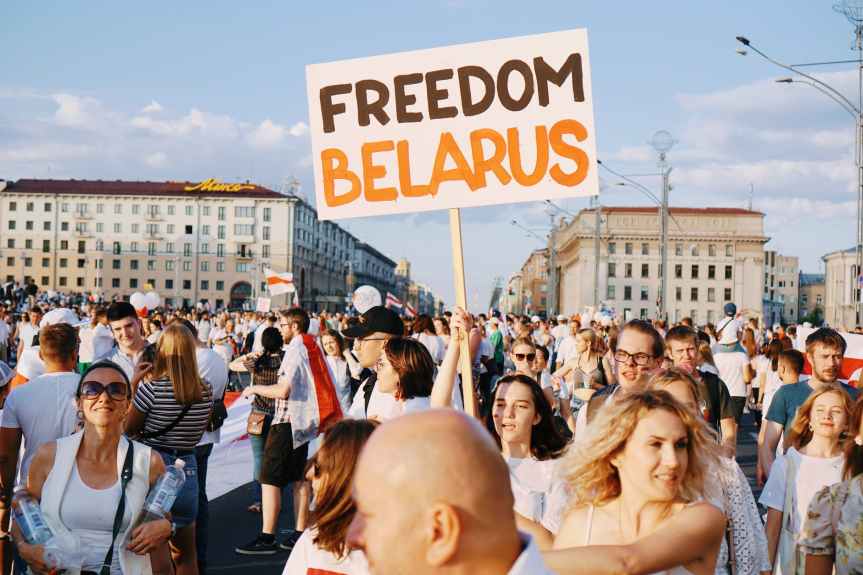
Alexander Lukashenko was elected Belarus’s first president of Belarus in 1994. Since then he has held the position and has been governing the country for more than 25 years. Lukashenko’s style of governance has been deemed as authoritative as there have been no free elections since he got elected. He has maintained many of the Pre-Soviet policies and Belarus’s Democracy Index rating is the lowest in Europe. In the 2020 Belarusian elections, Lukashenko was declared the winner against the opposition leader Sviatlana Tsikhanouskaya. The election was marred by allegations of widespread electoral fraud. Many western countries had demanded a re-run but that never happened. This also triggered mass protests across the major cities in Belarus. But to control the critics and protesters, the government reacted with brute force, arresting demonstrators and sending numerous protestors behind the bars.

In May 2021 the kidnapping of opposition journalist Roman Protasevich and his girlfriend, Sofia Sapega was another sign of the Belarusian government’s woes against any kind of critics. This was basically a state-sponsored hijacking of air piracy. This incident occurred on Ryanair Flight 4978 en route to Vilnius on May 23 when the plane was diverted to Minsk with a fake bomb threat from Belarusian air traffic control. After this violation of international aviation rules, both were arrested on questionable charges of organizing mass unrest.

Belarus has always swayed between Russia and the EU but recently European Union has imposed one of the toughest restrictions against Belarus. EU has blocked the sale or supply of major technology to Belarus, as well as restricted access to capital markets and trade in oil and potash. EU has also imposed airspace restrictions against Belarus. But any sanctions against Belarus must not target ordinary people. Because the land borders are already sealed off with Poland and Lithuania. The only viable option for Belarusian people was air travel. So this restriction will also affect the citizens of the country. To counter the problem of Potash sanctions, Lukashenko has struck a deal with his Russian business friend to create a new Potash mining and processing plant. But this will come at a cost of increased taxes for the individual citizens of Belarus amid the Covid-19 crisis and economic downturn. The United States has also imposed visa bans and other sanctions on 62 individuals who were identified as contributing to the Belarus crackdown.  

The citizens of Belarus deserve free Elections and a leader who can think about the citizens of the country instead of holding onto the power. With a progressive leader, Belarus could have been on par with the Baltic countries. The recent sanction might or might not work but in the end, the common citizens of the country suffer the most. 

References:

PRIME MINISTER WISHES THE DALAI LAMA ON HIS BIRTHDAY

Prime Minister Narendra Modi tweeted on Tuesday that he called spiritual leader Dalai Lama on his 86th birthday. 

This comes only the second time in PM Modi’s tenure that he greeted the Dalai Lama. The previous and current ruling governments have generally cornered themselves to make any remark on the Tibetan Leader who has been living in exile in India since 1959. 

The sudden change in India’s stance comes during the ongoing border tension between India and China. Furthermore, Chinese communist party is celebrating 100 years of its formation.

To appease China, Indian leaders and bureaucrats stumbled in the past to interact with the Dalai Lama and whenever they did China made a strong protest.

In 2017, when the Dalai Lama paid a visit to  Arunachal Pradesh, China showed its aggression through the 73 days long Doklam standoff. 

Other cabinet ministers, Nitin Gadkari, Hardeep Singh Puri and several chief ministers including Arunachal Pradesh CM wished the Dalai Lama

The persevering struggle for 62 years in exile speaks volumes about the spiritual leader His Holiness the Dalai Lama and Tibetans living around the world

India’s Afghanistan Challenge

As the United States of America continues to pull out its troops out of Afghanistan, there has been wide discussions as to who would fill that vacuum

Biden’s decision to remove all US soldiers from Afghanistan has fueled domestic unrest in the nation, where violence is on the rise as the Taliban scores more combat successes against the Afghan government and foreign forces disengage. However, Washington’s decision to withdraw has prompted a regional struggle for power, with many parties ranging from China to Turkey, Russia to India, trying to capitalise on the diplomatic power vacuum in Afghanistan.

India, which has long provided diplomatic and financial assistance to the Afghan government, has allegedly altered its long-held policy of not interacting with the Taliban and is now engaging in direct discussions with the rebel group’s leadership. However, India’s presence in Afghanistan has long been balanced by the presence of the one nation that, whether it wants to or not, will have to pick up the majority of the pieces America leaves behind: Pakistan. 

India is engaging with the Taliban because the Taliban are winning. Conservative, largely rural, and illiterate Afghans defeated the Soviet Union at its peak as the Mujahideen. They achieved it with enormous support from the United States, Pakistan, Saudi Arabia, China, and others. The same group has now vanquished the world’s sole superpower. They’ve done it with only Pakistan’s aid. 

Before delving into the risks and advantages of dealing with the Taliban, it is important to reaffirm the primary objective of India’s Afghanistan policy, which is to maintain a strategic balance between Kabul and Islamabad. Despite the disparity of strength between two nations, India wants to guarantee that nationalist Afghan thought, which is critical of Pakistan’s interventionism, stays active and aggressive. This is why New Delhi has maintained its support for a “Afghan-owned, Afghan-led” peace process. Engaging with the Taliban is an exercise in averting harm to India’s interests as it is in determining the extent of the group’s nationalism.

The advantages of this successful outreach are obvious. The Taliban recognises India’s beneficial role in Afghanistan and does not want its diplomatic presence to be reduced.The outreach in Doha has given Indian authorities cautious hope that the Taliban will not be openly antagonistic and may even want deeper ties in the medium term. 

However, the outreach is not without danger. One possibility is that the Taliban would break its pledges and, with a shove from Pakistan, will strike Indian interests. If this does not happen, the Taliban interlocutors with whom India is negotiating may be marginalised, or worse, replaced by pro-Pakistan supporters such as the Haqqanis. Second, reaching out to the Taliban might hasten the fall of Kabul while complicating India’s ties with existing allies.

Despite these concerns, India has solid reasons to engage the Taliban. For one thing, these worries would persist regardless of India’s approach. If nothing else, undoubtedly India’s absence from the Taliban’s calculus makes it much more vulnerable if the Islamic republic falls apart. For India, the only way to achieve long-term peace in Afghanistan is for there to be peace within Afghanistan and peace around Afghanistan, which will need aligning the interests of everybody, both inside and outside that country.

Geopolitics

Introduction

Geopolitics combines the the words Geo, referring Earth and Politics, is the study of the effects of Earth’s geography on politics and international relations. It can also be termed as the study of how political power is reinforced or undermined by geographical arrangements(boundaries, coalitions, spatial networks, natural resources etc.) At international relations level, geopolitics is a way of studying foreign policies, to understand, explain and predict the international political behaviours of the countries and their governments through various geographical variables. These variables include climate, topography, area studies, demographics and natural resources of the regions being evaluated.

Contents

Study of Geopolitics primarily focuses on political power linked to geographic space. Particularly, land territory and territorial waters in relation with diplomatic history. A branch of geopolitics, critical geopolitics, interprets different classical geopolitical theories by showing their political functions for the world’s great powers. There are even some works that follow the geopolitics of renewable energy. Finally, geopolitics clarifies the range of strategic choices, providing a guide for achieving strategic efficiency. While it places particular stress on geographic space as a critically important strategic factor and source of power, it recognizes that geography is only a part of the totality of global phenomena. There are many geopolitical case studies like the Kashmir conflict, Arctic Ocean disputes, China’s disputes in south China sea, US’s foreign policies, annexation of Crimea by Russia, ongoing conflicts in the Middle-East etc.

Future

In today’s world geopolitical studies are becoming more and more important in relations to international relations and diplomacy studies.

https://www.sciencedirect.com/topics/earth-and-planetary-sciences/geopolitics

https://en.wikipedia.org/wiki/Geopolitics

Book Review- A Rainbow in the Night. Author: Dominique Lapierre

Nelson Mandela is no stranger to Indians. India was in the forefront of support to the freedom struggle led by Mandela and the African National Congress (ANC). This struggle and the history of South Africa since the Dutch landed in 1652 has been vividly brought out by renowned author and biographer Dominique Lapierre in his book A Rainbow in the Night. The book is not just a historical account but it is an epic that captures the essence and romance of the birth of a nation and its people comprising whites, blacks and coloured races.

Dominique Lapierre is known to Indians as the author and co-author of two books on India: The City of Joy and & Freedom at Midnight, respectively. Both are highly acclaimed books and need no introduction.  Lapierre’s books on India and his philanthropic work with Mother Teresa in the slums of Calcutta earned him the civilian honour Padma Bhushan in 2008.

‘A Rainbow in the Night’ is Lapierre’s second book about a nation’s freedom struggle (after Freedom at Midnight about India’s freedom movement). He traces South Africa’s history, the first landings by the Dutch and their establishing a white supremacist regime, the liberation struggle and freedom for blacks from their tormentors. While Mandela plays a dominant role in the book, it is not entirely about him. South Africa’s colonial history and hoary past are covered in fairly good measure, which rightly provides the context and perspective to understand the history and modern times of the nation.  The premise, of course, is that to appreciate the present a correct understanding of the past is a must.

The book is structured into four parts or themes: In search of a promised land; The Prime Minister’s bulldozers; Helen and Chris: two lights in the darkness; and “God bless Africa”. The book will resonate well with Indians. The reasons are not far to seek. India’s interest in South Africa dates back to the time of the indentured labour that migrated to its shores. The surge in the freedom movement and its influence on Mahatma Gandhi, then a young and impressionable Mohandas Karamchand Gandhi, was an added impetus to the growing Indian interest in that nation.

The book does not delve in great detail to Gandhi’s travails in racist South Africa. Considering that it also has Indian readers in mind (the book’s publisher, Full Circle, is Indian), the book ought to have dealt with the effects of racism and South Africa’s initial pacifist struggle on young Gandhi’s mind, especially as it had made such an impression on him in later years as he led India’s freedom movement. The book does, however, cover race classification, the process of Indian, Malay and other races – including blacks – being grouped according to the colour of their skin.

The book is a fairly accurate – if not an academic or detailed – account of nearly 350 years of South Africa’s history. For students of politics and international relations, it provides a correct perspective on the tumultuous history, the birth of a new nation, segregation and apartheid. The book is eminently readable, racy and fast-paced.