Juvenile Justice System In India

Juvenile offending is the act of participating in some unlawful behavior against the society by the persons young in age. The term Juvenile Justice refers to fair and just treatment to youth or children in shaping their personality in the society. Juvenile Justice System means a procedure to tackle with the issues related to minors with respect to society. The main purpose of the system is to protect the minors by applying effective treatment and creating a positive human developing environment. The main aim of the system is to adopt measures that are rehabilitative in nature instead of being punitive. If any means a young individual commits or minor turns lawbreaker, then the Juvenile courts takes up the duty to foster delicate treatment and care through special institutions. Thus, it would encourage the Juvenile delinquents to find their path to lead a much better and decent life. The system of Juvenile Justice is considered as one of the most enlightening and developing system worldwide, focusing on the children’s growth. The central focus is to provide proper care to the unprotected child and the reformation of deviants.

Earlier there was no separate system for the juveniles. They were held into prison without trials and were even locked behind the bars accompanied by the desensitized criminals. It was prescribed by the penologists in the nineteenth century that punishment should be equal for both juveniles and adults. As per the history records, juveniles were treated similar to the adult criminals and were imprisoned, hanged and even transported.

In India, the Juvenile Justice System (JJS) aroused during the British rule. Prior the rule of the British, the juveniles were treated either by the family or society in general. Gradually, the Indian Constitution provided distinct treatment for children and women. The issue of juvenile lawbreakers were given separate treatment. The light was thrown on the Juvenile Justice System aftermath the Nirbhaya case, 2012 Delhi gang rape and murder when people expressed their hostile nature attitude and sentiments towards the court’s decision. The minor who was involved in the brutal case was demanded for death sentence by the public. There was chaos and roaring in the Indian parliament, as a result of which new law came into existence. The Juvenile Justice Care and Protection of Children 2015, was a provision of comprehensive nature for minors found and reported guilty of conflict with the law. The law also deals with minors in need of protection and care. This was implemented taking into considerations the conventions of the rights of the child along with other related international instruments. The conception that the children are not mature compared to adults and are not aware of the nature and post effects of their acts led to the development of the Juvenile Justice System worldwide. The idea is based on the principle of doli incapax i.e. children are off the capacity to form intentions of criminal nature. Hence, a minor cannot be held liable for any unlawful act. It should be noted that there is no general consensus about the definition of youth and child. In the matter of age or adultery, different statutes have different mandates. The new act is seemingly a progressive one and a policy shift is observed in the legislation of Juvenile Justice. It was mainly designed to adopt the parens patriae philosophy and prescribe institutionalized care and protection. Punishment of delinquents in case of serious offence is the only shift observed. The socialization and reformation policy of the young individuals with punishment as an exception is being adopted by the Juvenile Justice System. It can also be distinguished from the general criminal courts as in adopting informal hearing. In the existing Juvenile Justice act of 2015, significant amendments were made last year.

The principle on which Juvenile Justice System is based is rights of the child and welfare of the society. It’s main center of focus is rehabilitation and reformation. The aim is to maintain equality and opportunities available to the minors for their personality development. There should be personality transformation from negative to positive. However, taking into account the former experiences, it is necessary to bridge the broad gap between the practice and theory. In order to do so, we have to build an efficient and good infrastructure Juvenile Justice Administration. The dreams are carried by the new legislation and it is our duty to make those dreams reality.
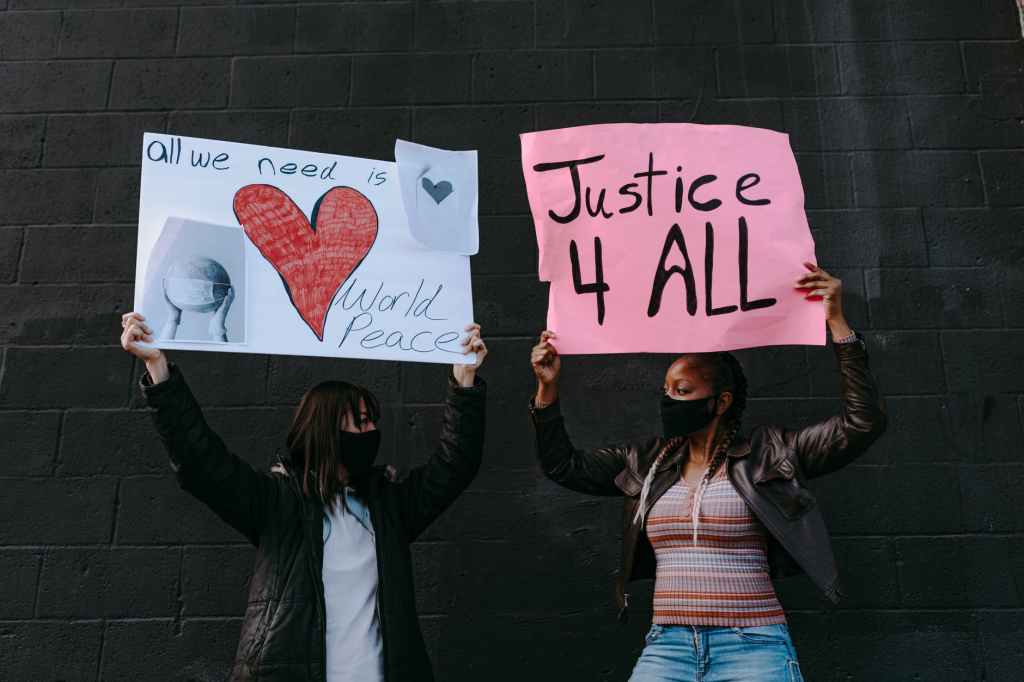
How we create equality

While surfing through linkdein I came across a post where a doctor sir Ganeshan, he was providing free medical deliveries to girl. Many people of community have distinct view of it as if it is a right way and right thing.

In my view, this is how we create equality,
there are two ways
first, we share everything we have equally and eventually with time everything gets equalize,
another way is we try balancing both sides like if people are not happy after having girl child we will free them from fee charge(its temporary solution of a big part of solution) and as societies are progressing they will learn and improve with time.
Example of first one is colonized countries they doesn’t got support from developed countries and they got bullied many time but we are slowly progressing toward equality,
Example of second one is solutions for girl equality by indian govt, it involves temporary(situation based) solution like dowry punishment to educating and reservation, the benefits of having second way is it’s fast, and it has lots of temporary solution to big problems like girl foeticide case.

You can see post here

https://www.linkedin.com/posts/ashwini-mahesh_activity-6846473782144630785-ZcoR

Connect me on LinkedIn here

https://www.linkedin.com/in/shivam-soni-a99a4a186

Plight of Victim in Criminal Justice System

                                                        (Photo: The Daily Guardian)

You want to report,
but that could get your family in danger… And if you snitch on a real gang
leader…. they can get you bad… [The] police don’t have your back unless
you’re like someone on the news or whatever, and they will kind of give you
witness protection. But that doesn’t happen in the real world. 

FEMALE,
SACRAMENTO

 The expression
‘victims of crime’ has been defined in section 2 of the code of criminal
procedure, 1973. Initially, the criminal justice system in India was focused on
punishment as part of the crime without much attention on the suffering of
victims of crime. The rights of prisoners were protected even after their
conviction whereas little concern was shown for the rights of victims of crime.
Though there is a wealth of data on victims of reported crime nationally, as
well as various services and programs intending to meet their needs, there
remains a dearth of clear information on how to interrupt cycles of violence
and the persistence vulnerability that keeps such an overwhelming percentage at
high risk of experiencing more crime.

 However, with the
emergence of public interest litigation, the higher courts’ attention was drawn
to this lacunae in the existing criminal justice system by social activists,
and the courts started granting compensatory relief to victims of crime, but
comprehensive legislation on this aspect of criminal justice was still awaited.
In recent times, among the many reforms canvassed for improving the criminal justice
system is the one that advocates a victim orientation to criminal justice
administration. Though there are some provisions under the Indian constitution
and some sections in the code of criminal procedure, 1973 to protect the rights
of the victims and for providing compensation, the criminal courts at the lower
level in India have ignored those provisions for a long time and not utilized
them during their sentencing processes.

 Victim plays an
important role in the criminal justice system but his or her welfare is not
given due regard by the state instrumentality. Thus, the role of high courts or
the supreme court in our country in affirming and establishing their rights
holds much importance. “
Tears shed for the accused are traditional
and trendy but has the law none for the victim of crime, the unknown martyrs
“?
This remark by the Hon’ble Justice VK Krishna Iyer aptly describes the plight
of victims in the criminal justice system in our country. The victim is almost
a forgotten entity in the criminal system rather the irony is that the victim
sets the wheel of justice moving by giving information to the state
instrumentalities without which the entire system would collapse.

 Victims
should come first
“…

 It is of
course an indisputable fact that victims of crime have long been a forgotten
group, a group that suffered for centuries not only from society’s neglect but
also from the exploration of their rightful dias by the state. It is also true
that they had their conflicts stolen by professionals and by the criminal
justice system. However, the exceptional speed with which they were
rediscovered and their cause adopted by the politicians, let alone the
political climate that prevailed at the time of their rediscovery, is bound to
raise questions about the real interests and motives behind what has been
portrayed as a genuinely humanitarian and disinterest cause.

 A comprehensive
legal code for victim compensation is a dire necessity. The time has come for
the legislature to stop shirking its duty. Hence, a comprehensive legal code
should be enacted providing for fair treatment, assistance, and adequate
compensation to victims of crime. Only on embarking on this step can justice in
its more altruistic forms be obtained. It should be made mandatory for the
state to pay compensation to the victims of the crime of not only the private
criminal wrongs but also for the criminal acts perpetrated by its agencies.
This mandatory duty of the state gains importance from two points of view
namely as a welfare state committed to the constitutional goal of social
justice and secondly, for its failure to protect the life, liberty, and
security of its citizens.

 Therefore, I would
like to conclude with this quote-

 “Too
much money…. often resulted in further crimes which were fatal to innocent
victims who need not have been victims if justice had been put first and mercy
second
.” 

Agatha Christie


LGBT RIGHTS IN INDIA


                                                                   (Photo: iPleaders Blog)

Every cloud has a silver lining.” This proverb goes well with the historic judgement passed by the Supreme court on 6th September 2018 in the favor of LGBT community rights. This has been much debated topic since a long time. Nothing could be more blessing than the enactment of Article 377 for the relief of LGBT community. The hearing of the petitions began with a bench consisting of Chief justice Dipak Misra and justices DY Chandrachud, AM Khanwilkar, Indu Malhotra, and Rohinton Fali Nariman. It was truly a landmark decision which struck down a 19th century law criminalizing homosexuality in India.


What role does the Indian Constitution play towards the emancipation of the society’s most marginalized and excluded? What vision does the Constitution espouse with respect to basic fundamental rights and freedoms? And what conception of inclusion and pluralism does the Constitution pursue in a society that remains deeply divided and disjointed? All these searching questions came to form a distinct part of the decision of the Indian Supreme Court (Court) when it was called upon to rule on the constitutional validly of Section 377 of the Indian Penal Code, 1860. It was not the first time however, that the Court was examining Section 377 on the touchstone of the Constitution, as the case previously travelled through several levels of judicial adjudication involving different jurisdictional procedures.


Embodying the ethos of Victorian morality, Section 377, a colonial-era law, criminalized ‘…carnal intercourse against the order of nature with any man, woman or animal…’. Anything that was not penal-vaginal sexual encounter was ‘against the order of nature’ and as a consequence ‘unnatural’. Through this provision, homosexual acts even between consenting adults was considered and proscribed as a criminal offense punishable with imprisonment. Thus, a significant section of the population comprising the LGBT+ community remained perpetually ostracized by the Indian society, persecuted by State authorities and marginalized in the discourse of constitutional rights. Therefore, when the Court decided in Navtej Johar v Union of India that Section 377 in so far as it criminalizes same sex acts between consenting adults, violates the constitutional mandate enshrined under the Fundamental Rights chapter, especially, Art. 21 (life and personal liberty), Art. 14 (equality and equal protection of laws), Art. 15 (non-discrimination) and Art. 19 (Freedom of expression), truly, it was a historic undoing of injustice towards the LGBT+ people. In other words, as a result of this decision, LGBT+ people who were historically and by default considered ‘criminals’ under the law, came a bit closer to acquiring an ‘equal moral membership’ of the society and the State. It was a tough as well as a long road but at the end everything seemed to be mightier.

Let us look back into the history of India from where the seeds of this discrimination were actually sown. India has a long tradition of tolerance for all kinds of beliefs, faiths, philosophies, and ways of living. This takes us back to the 1800s. Lord Macauley first created this law in 1860 when he was the President of the Indian Law Commission. The reason for this law was because the British WANTED TO “impose Victorian values” on the colony of India. Not only were such values trying to be inflicted on the Indian society but also the Constitution of India wanted to “…narrow constructions of patriarchal gender relations and heteronormativity” (Ramasubhan 91).

 What’s important and a reflection of the movement itself is that the support has come not just from the queer people, but across a range of actors, movements and institutions.  Progressive groups, state bodies like the National Human Rights Commission, teacher’s associations, professional associations including the medical and mental health establishments, women’s groups, student groups, trade unionists and private companies came out publicly against the judgement. Thousands across the country stood together, repeating the chant that brought together our resistance: ‘No Going Back’.


In declaring Section 377 to be unconstitutional, however, the Court was deeply reflective about the fact that for Constitutional rights to acquire a meaningful purpose for the marginalized communities, disciplining State action alone will not be sufficient. In this regard, the Court did not mince words when it stated that it is both, criminality of the law and the ‘silence and stigmatization’ of the society towards the LGBT+ community that orchestrates the marginalization and the exclusion of the former. Implicit in that claim was the understanding that inequality, hierarchy and prejudice transpires as much from State action as it does from societal sanctions, community conventions and private relationships. In the context of such social realities, what is the stated role of the Constitution and the laws? Is the mandate of the Constitution simply confined towards ordering the relationship between the State and the individual (vertical) or does the Constitution have an equal role to play in shaping normative values among individuals within the society?


The Court unequivocally embraced the latter narrative and found that the Indian Constitution envisions an expansive role for both the State and the individual to actively promote social change within the contours of the Constitution. It seeks transformative change ‘in the order of relations not just between the State and the individual, but also between individuals’. The transformative potential in Indian Constitution is a conscious ‘attempt to reverse the socializing of prejudice, discrimination, and power hegemony in a disjointed society’. Therefore, the Constitution, the Court surmises, obliges not only the State not to violate fundamental rights, but also individuals to ‘act in a manner that advances and promotes the Constitutional order of values’.


“Sexual orientation” is an essential attribute of privacy. Discrimination against an individual on the basis of sexual orientation is deeply offensive to the dignity and self-worth of the individual. This judgement can be considered as a revolutionary one in a society like India. But every judgement has two parts, one is written and other is its execution. The written part is progressive and reformist and its execution includes sensitizing the society and institutions in accepting what is written in this judgement. That may take time. Till then I would like to put forth some suggestions. The first step is sex education in schools and at homes. The second step is that the law enforcement agencies such as the police needs to be more sensitized towards the LGBT people. Similarly, our media and film fraternity can play a very important role in imparting knowledge and disseminating true information about LGBT people.


To conclude, we all are equal.  Nobody should be discriminated on whatsoever ground.  In the last few years LGBT are gaining acceptance in many parts of India. Many Bollywood films have dealt with homosexuality. They have also fair well at the box office. There’s a transformative constitutionalism which is happening and the real import of transformative constitutionalism lies in positive measures that the State ought to take in bringing the Constitution closer to the most deprived. Indian society needs to shrug off its old thinking and come out of the widely prevailing homophobia.


Morality in Rule of Law

                                                            (Photo: Thought and action)

Rule of Law is the fundamental principle which ensures good governance as well as individual rights and liberties. It says no one is above the law and every person living in a particular society is subject to the law of that society. All other notions associated with the rule of law must also be considered alongside it. It is a mechanism that encourage the equality of all citizens before the law. It also secures a non-arbitrary form of government, and specifically prevents the arbitrary use of power. In general, the rule of law implies that the creation of laws, their enforcement, and the relationships among legal rules are themselves legally regulated, so that no one including the most highly placed official is above the law.

Moralityis a concept that distinguishes right from wrong. It also talks about conduct that is considered acceptable or unacceptable in a particular society. The source of morality is usually considered to be natural law and God’s instructions through sacred documents.

Morals provide a basis for the development of law by virtue of justice, equity, good faith, and conscience. Morality plays an important role in making of law and its interpretation. Morals are an intrinsic part of the laws. In the ancient time morals and laws were considered as one and the same. In the current period though law and morality have several distinctions yet the same are not completely different or distinct. A relationship can be established between morality and law on three grounds: –

1)     morals as the basis of law

2)      morals as test of positive law

3)      morals as the end of law.

According to Stammer “jurisprudence depends much upon moral ideas as just law has a need of ethical doctrine for its complete realization. Positive law and just law correspond to positive morality and rationally grounded ethics. There’s no difference and if any, it is only the difference of manner in which the desire for justice present itself”.

H.L.A Hart believes that there are several relations between law and morals. He was of the view that a legal system must exhibit some specific conformity with morality or justice or must rest on a widely diffused conviction that there is a moral obligation to obey it.

Ronald Dworkin has argued that both laws and constitutions are unavoidably rooted in political and moral principles. The law is not derived logically from accepted true moral principles. Rather, it is established by legislatures that come to agreement on public rules that are shaped by a political consensus about right and wrong.

Rule of law prioritizes the supremacy of law whereas morality prioritizes the moral values and consciences of the subjects of the state. For instance, a man is under no duty to help a beggar or the distressed and can neglect his sick and old parents without the fear of any legal or penal consequences, but morality does not allow a person to do so as it amounted to undesirable conduct condemned by morals and ethics. There is a close relation between the rule of law and morality.  Morality complements the rule of law. But it is a casual relationship, as laws are not made out of moral principles, rather, they are established and shaped by a “legal consensus of right and wrong”. Even though morality is ultimately involved in making and modifying the law, it is never legally binding and does not have constitutional value.  Laws have a marginal origin from the morals and ethics derived in the society which initially monitored the conduct of people, but morality solely cannot be the basis on which law has been derived. An acceptable statement is that both morality as well as rule of law have adapted to the development of society. Sometimes what seems right from the morality point of view may be contrary when viewed from the point of rule of law.  For instance, when a person tries to feed a needy person, by means of theft solely for the purpose of feeding that needy person, morally the act may be justified yet the same may not be the case under rule of law. Because under the concept of rule of law, a person has committed. Therefore, morality has a marginal presence in rule of law whereas it is highly contradictory of the same.

Morality in Rule of Law with reference to H.L.A. Hart theory

Professor Herbert Lionel Adolphus Hart (H.L.A. Hart) is an influential legal professor. Hart revolutionized the methods of jurisprudence and the philosophy of law. He authored ‘The Concept of Law’ and made major contributions to political philosophy. Law can be analyzed in terms of rules which is largely based on Hart’s theory of law. According to him, rules are concerned not with what happens but with what is to be done. Rules are imperative or prescriptive rather than indicative or descriptive. Rules have a certain independence or self-legitimating character. Rules are different from commands. Commands normally call for one unique performance whereas rules have a general application and demands repeated activity. According to Hart, ‘Law consists of rules which are of broad application and non-optional character, but which are at the same time amenable to formalization, legislation and adjudication. According to Hart the law consists of primary and secondary rules. Primary rules are duty imposing rules on the citizens and have a legal sanction. Secondary rules are power conferring laws that describe how laws should be recognized, adjudicated or changed. Hart says these rules form the heart of the legal system.

Hart’s version of natural law is empirical. His position is based on a theory of human nature which believes in certain truisms. For example, Hart believes that one truism of human nature is that the overwhelming majority of human beings wish to survive. It means they would rather live than die. If one wish to survive, it is imperative that a society be developed which will help ensure survival. Hart believes there are five features of the human condition which sometimes work against survival, and the legal system must take these into account.  Hart believes that: –

  •      there is the feature of human vulnerability.
  • .     there is the Hobbesian notion of approximate equality.
  • .      human beings possess at best a limited altruism.
  • .      the concept of limited resources governs our actions.
  • .     the idea of limited understanding and strength of will is important to any society.
     Conclusion
    The fundamental principle which ensures good governance as well as individual rights and liberties is the rule of law under which no one is above the law and every person living in a particular society is subject to the law of that society.  Morality, on the other hand, is concept that distinguishes right from wrong and may refer to conduct that is considered acceptable or unacceptable in a particular society.  Coercion and sanction may be important considerations but not the basic elements to make law work. The law is meant to facilitate. It is mechanism that resolves conflicts of interest among individuals. This idea of law brings us to the concept of rule of law which aims to treat every individual equally, irrespective of social status. Under the rule of law, individuals are protected from the element of coercion. Another element of the rule of law is equality, which is often confused with generality. Laws are based on generality and bind everyone, not any singular group. But equality here means that every individual is subject to the same law and procedures and has the same rights. A close relation exists between the rule of law and morality, since morality complements the rule of law. But it should still be considered a casual relationship, as laws are not made out of moral principles, rather, they are established and shaped by a “legal consensus of right and wrong”

Plea for south bench of the Supreme Court

Bar Council heads of the southern States including Telangana, Andhra Pradesh, Tamil Nadu, Kerala, and Karnataka have appealed to Vice-President M. Venkaiah Naidu, and the Chief Justice of India N.V. Ramana to consider setting up the long pending demand of a Supreme Court bench in the south on Monday.

The delegation consisting of TS BC chairman A. Narasimha Reddy, AP BC chief G. Rama Rao, TN BC chief P.S. Amal Raj, Karnataka BC chief L. Srinivasa Babu, Kerala BC chief K.N Anil Kumar along with ex-MLC N. Ramchander Rao met both the dignitaries at Delhi where they presented a memorandum highlighting the need for such a step listing out the advantages. Pointing out that there were 65,000 cases pending in the SC, they argued for immediate reforms like establishing permanent regional centres of the Apex Court for the north, south, east and west at Delhi, Kolkata, Chennai and Mumbai as it was the need of the hour to ensure accessible and speedy justice to the people. Over the decades, several standing committees of the Parliament, Law Commissions, Bar Councils and several others have made several representations in this regard. In fact, the Law Commission in 2009 recommended setting up of a Constitution Bench with seven judges in Delhi and four Cessation Benches in Chennai/Hyderabad, Mumbai and Kolkata with four to six judges each. These were to work as appellate courts arising out of orders of the SC.

Though this was rejected in 2010 by SC the time has come to revisit this, they asserted. They also stated that Article 130 of the Constitution empowers the CJ to constitute with the consent of the President these regional benches. It would not only allow common people who cannot afford to make trips to Delhi to appeal to the highest courts but will also open up opportunities for the legal fraternity besides helping in reducing the pendency of cases in the courts.

“The present system of working of the SC needs to be changed if the delayed justice notion is to be changed,” they said and claimed in a press release later in the evening that both the VP and CJ had “responded positively”.

Words of the former law minister; Ravi Shankar Prasad

Law Minister Ravi Shankar Prasad, in a letter to Rajya Sabha member and Marumalarchi Dravida Munnetra Kazhagam (MDMK) chief Vaiko, said that though the matter of setting up a Southern Bench of the Supreme Court of India is pending in the top court, the issue has so far not found favour. The letter, dated February 12, responded to a query raised by Mr. Vaiko in Parliament, in which he asked if a Bench of the Supreme Court of India can be set up in south India.

“As as you must be aware, according to Article 130 of the Constitution, the Supreme Court shall sit in Delhi or in any other place or places as the Chief Justice of India may, with the approval of the President of India, from time to time, appoint. Representations have been received at various times from various quarters for the establishment of Benches of the Supreme Court in various parts of the country,” Mr. Prasad said in his letter.

The Proliferation of Undertrials in Indian Jails

The Indian prisons are overcrowded with prisoners. But does that means the rate of crimes committed in India is also increasing? The answer is no. The crime rate is not yet a major concern in the country unlike India’s judicial system. The majority of the inmates who languish in Indian prisons are not convicted of any crime or offence by any judicial court. In fact they are yet to be convicted and are under trial. The population of undertrials exceed the number of convicted prisoners in Indian jails.

It is against the laws of the constitution to detain an individual for long periods of time without trial. Free legal aid and speedy delivery of justice are the fundamental rights of all the citizens of India. However, most of the undertrial prisoners in Indian jails are unaware of their fundamental rights as they are poor and illiterate. The reports by National Crime Record Bureau (NCRB) says that the majority of the undertrials are from socio-economic backward classes of the society. Most of them belong to the SC, ST and OBC categories. They are so poor that they could not even afford their bail fees.

The hiking number of undertrial prisoners depicts the flaws of the Indian judicial system. An accused spend years in judicial custodies before their cases are heard in any judicial court. Their case remains pending and goes on for a period which often exceeds their period of imprisonment when they are convicted by law. It also happens that an accused is proven innocent by a court after being kept in imprisonment for years before their hearing commences.

People coming from socio-economically weaker sections of the society had to suffer for the slow and lethargic justice delivery system of India because they could neither afford their bail fees nor a good lawyer. Most of them are also young and falls in the age group of 18-20 years. They ruin some valuable years of their life in prison for minor offences or sometime without committing any offence. The damage to their life, career and reputation are irrevocable. The Indian legal and judicial system should be accountable and compensate these unfortunate specimen of humankind who are mere victims of India’s slow justice delivery system.

The Inherited Right- Human Rights

What are Human Rights?

The society operates on some moral principles and norms, which regulate human behavior. Human rights validate these principles and norms and protect the rights of humans internationally. 

Human rights follow the concept of ‘natural right’. These rights are inherited by birth just because he or she is a human being. Every human being is entitled to these rights irrespective of their place of birth, religion, age, or any other regard.

Human rights are universal i.e., it is applicable everywhere in the world, irrespective of which nation you are in. The rights are also said to be egalitarian, which means these rights are equal for every human being without any discrimination.

Origin of Human Rights

The roots of human rights can be dated back to 1215, when the first king of Persia, Cyrus the Great, conquered Babylon. Unlike other conquerors, he freed all the captive slaves and provided them with the freedom of right to choose, and the abolition of slavery by signing the ‘Magna Carta’, also known as the ‘Great Charter’. The Magna Carta significantly proved to be the start of the evolution of human rights. The Universal Declaration of Human Rights (UDHR) has taken the two rights mentioned in the Magna Carta.

The most important right human right is based on is ‘right to life. The right to life believes that every human being has the right to live, and should not be killed by anyone including the government. It does not merely mean to have a right to live, but have a life of dignity, which helps in laying down the rest of the human rights such as the right to equality and freedom from discrimination, right to equality before the law, freedom of belief and religion, and more such rights that affect the life of a human being.

What is the Universal Declaration of Human Rights (UDHR)?

Every law or right is drafted in a document. One such international document, comprising of 30 articles is the Universal Declaration of Human Rights (UDHR). The UDHR is the drafted document that has all the rights of human beings mentioned in it. The United Nations General Assembly ratified the document on 10th December 1948, in Palais de Chaillot, Paris.

The UDHR along with the International Covenant on Civil and Political Rights (ICCPR), AND International Covenant on Economic, Social, and Cultural Rights is called the International Bill of Human Rights.

Human Rights Governing Bodies

The Human Rights Council works for the protection and promotion of human rights around the world. It is an intergovernmental body made up of 47 United Nation member states. The former governing body, United Nations Commission on Human Rights was replaced by The Human Rights Council in 2006. 

Nationally, in India, the National Human Rights Commission (NHRC) operates as a statutory public body. It works for the protection and promotion of human rights in the state (nation).

Every state in India has a Human Rights Commission that works for the protection of human rights in that particular state. If any person finds his or her human rights are violated can file a complaint with the respective state commission.

Why Discuss Human Rights?

Human rights are not something that should be only known to a lawyer, judge, or any other individual working in the field of law, but by every human being. It is important to know one’s rights and duties. 

Inheriting the rights is not the end of it. It is important to know what is rightful and what is not. Unless we know our rights and duties there is no way to analyze what is right and what is wrong. 

If any violation of these rights takes place, it is important to be brought to the notice of the governing body for seeking justice. We often see in our surroundings discrimination taking place based on caste and colour most commonly, but often ignore it. Victims of such discrimination also don’t raise their voices against it due to a lack of knowledge about their rights. Awareness must be created among people regarding their rights, and they can seek justice not just for themselves but also help others facing such issues. Raising your voice against such issues is important to create and maintain a balance in society and making the world a better place to live

Domestic Violence; eating up someone’s pride, self respect and the willingness to live

Article by – Shishir Tripathi

Intern at Hariyali Foundation
In collaboration with
Educational News

In a country with such a huge population and so much of diversity in culture and nature, it is so common that there would surely be diversity among various types of violence too. Domestic violence includes any type of violence or torture basically against women in any form whether it is physical, emotional, sexual, verbal or economic abuse or torture.

India is poorly ranked in a total of 167 countries all across the world according to the data for cases of domestic violence. Domestic violence has always been a shame for the Indian society. A woman contributes a lot in the nurturing of a whole family and sacrifices her dreams (in most of the cases) for taking care of her husband and his parents and the children too.

A woman is the only person in the family who is always ready to sacrifice her health, her dreams and her happiness just for making the family happy. A woman is the one who turns a house into a home. A home built with the bricks of a woman’s dreams and her crushed desires. Everyone wants to go out, see the world and meet the people, enjoy their selves, but for making this happen somebody is always there at home for taking care of food and for arranging everything, it is always and always a Woman.

In spite of making all these sacrifices, it is the woman only who has to become the victim of the anger of her husband, her in-laws and her children too. Basically in India, it is generally assumed that the woman, the bride is a servant (when she’s jobless) and an ATM machine without any password (when she’s working). A woman is the one who is always expected to make sacrifices and take care of her family and home. Why? Because it is her work, this is the stuff why she was born?! If somebody gets angry, then she is the only river to pour down all the anger.

Moving ahead, everyone knows that from the past times and still at present most of the women at their place are going and suffering through a lot. According to a National Family and Health Survey in 2005, total lifetime prevalence of domestic violence was 33.5% and 8.5% for sexual violence among women aged 15–49. A survey carried out by Thomson Reuters Foundation said that India is the most dangerous country in the world for women.

In 2012 National Crime Records Bureau report of India states a reported crime rate of 46 per 100,000, rape rate of 2 per 100,000, dowry homicide rate of 0.7 per 100,000 and the rate of domestic cruelty by husband or his relatives as 5.9 per 100,000.

But every reader knows that these are just figures and data, too away from the reality. Yes, every reader is correct. Because of poverty and lack of awareness and education, at present many women don’t at all know that they can really complain about this suffering of theirs. Many women don’t tell the concerned authorities for saving the respect of their husband and their family and start making compromises; some fear of survival as they never went to school and couldn’t get a job after separation.

There is mental or psychological absue too. Psychological abuse can erode a woman’s sense of self-worth and can be incredibly harmful to overall mental and physical wellbeing. Emotional/psychological abuse can include harassment; threats; verbal abuse such as name-calling, degradation and blaming; stalking; and isolation.

Women who experience domestic violence overwhelmingly tend to have greater overall emotional distress, as well as disturbingly high occurrences of suicidal thoughts and attempts. According to a study by the National Centre for Biotechnology Information, suicide attempts in India are correlated with physical and psychological intimate partner violence. Of the Indian women who participated in the study, 7.5% reported attempting suicide. This correlation is supported by the high rates of domestic violence in India, although the rates differ greatly by region, individual socioeconomic status and other factors.

And it is shocking to listen that this lockdown period that occurred for stopping the rapid spread of Covid-19 was even more painful for women. As all the activities were banned and there was complete lockdown, men were continuously at home along with all other family members. Hence, many women were suffering domestic violence to far greater extent. The number of domestic violence complaints received by the National Commission for Women has doubled from 123 distress calls to 239 domestic violence complaints, from March 23, 2020, to April 16, 2020.

This so pathetic to read that the lockdown, ‘the so called national holiday when most of the people developed new skills, helped their wives at home’, there were some more monsters and demons who physically, emotionally and sexually assaulted their wives at home.

It actually never changed for women. Almost every Indian woman has to make compromises every day. A lot of women who can’t bear the physical and the emotional pain commit suicides. The report by the National Crime Records Bureau says that in 2018, the number of housewives killing themselves –22,937 – increased by 6.9% when compared to 21,453 women in 2017.

Cases of domestic violence occur either due to the demand of dowry or simply the ill mentality of the husband or the family or even both. Women need to stand against this. There are various laws in the constitution including Dowry Prohibition Act of 1961 and the other two new sections, Section 498A and Section 304B were introduced into the Indian Penal Code in 1983 and 1986. On 19 March 2013, the Indian Parliament passed a new law with the goal of more effectively protecting women from sexual violence in India. It came in the form of the Criminal Law (Amendment) Act, 2013, which further amends the Indian Penal Code, the Code of Criminal Procedure of 1973, the Indian Evidence Act of 1872, and the Protection of Children from Sexual Offences Act, 2012. The law makes stalking, voyeurism, acid attacks and forcibly disrobing a woman explicit crime for the first time, provides capital punishment for rapes leading to death, and raises to 20 years from 10 the minimum sentence for gang rape and rapes committed by a police officer. However, talking about the downside of the law, the new law doesn’t address marital rape, rape committed by the armed forces or rape against men.

Therefore, people should realize that domestic violence of any form is not at all acceptable by men and women both. Keeping into mind the mental health of the sufferer it should be realized that awareness should be spread amongst people and they should be told about their rights. Those who are able bodied and well aware, should take this responsibility into their hands. And whenever a woman or even a man (in some cases) is seen suffering from domestic violence, it should not go unreported.

Because those who stay silent after seeing everything are more wrong than those who commit such heinous acts.

Should writers and artists have an unrestricted right to expression?

Freedom of expression means the right to express one’s own conviction and opinions freely by word of mouth, by writing, through painting or any other mode. In modern times it is widely accepted that the right to freedom of expression is necessary in a democratic society and this right must be safeguarded at all times. Liberty to express opinions and ideas without hindrance and especially without fear of punishment plays a significant role in the development of society. It is one of the most important fundamental liberties guaranteed against state suppression or regulation. However, this freedom needs to be tempered so that it does not hurt the sentiments of others.

• ‘Freedom of expression’ originally guaranteed by the Indian constitution Prior to 1972, Article 19 (1) of the Indian constitution guaranteed this freedom of expression. However, after 1972, Indian politicians felt this should be restricted as they feared that they will be ridiculed or otherwise harmed politically if it remained unrestricted. So, they enacted laws to limit the freedom of expression on various grounds under the garb of law and order, national security and other noble objectives.

• Restriction to freedom of speech causes suffering Many writers, speakers, cartoonists etc. belonging to different castes, creeds and social positions have suffered and are suffering due to the restrictions imposed by law. On most occasions they have been charged and arrested, causing them mental anguish and physical/financial suffering.

• Freedom of expression should be protected Important justifications for freedom of expression and speech are that they assist in the discovery of truth, help an individual to attain self fulfilment etc. ultimately results in the welfare of society and state and strengthen the capacity of an individual in participating in decision making in a democracy.

However, no freedom is absolute and unrestricted. It is necessary to exercise freedoms in order to have a democratic society, but their limitations are also needed for the maintenance of the democratic society. So, the freedom has to have suitable restrictions.

Thank you for reading. Have a nice day!

Police Brutality: a socially accepted crime?

A “JUSTIFIED” CRIME :

Police brutality is depicted as a method promoting the idea of “instant justice”. However, the concept of Quo Warranto (latin maxim for “by what authority”) comes into picture, considering the fact that it oversteps on the fundamental roles of courts or quite literally known as the “justice system” of the country. Although, the latter doesn’t seem to be doing its duty quite efficiently as we are very well aware of the great history of the piled up cases and the never ending loopholes that sort of comes complimentary to any Government organisation. However, this in no way justifies the inhumane culture of police brutality, that has been so widely accepted by the people that it seems as an alternative dispute resolution to the long lasting court trials.

HYPOCRITICAL APPROACH:

There have been various protests against this rising injustice, especially during the worldwide lockdown period. However, I do feel there is some sense of hypocrisy attached to the opinions of the so called “woke” people who tend to have a different opinion when it comes to raising their voice on social media and a completely different reaction when the same concept is showcased and applauded in the entertainment sector, for example, in Bollywood movies like Singham, Simba, Dabbang etc. When the same concept is portrayed in an entertaining way, it is well praised. The protagonists of these movies are idealised and followed, since the encounters or torture that they succumb, is towards the “guilty”. But again, the police is not the deciding authority.

CONCEPT OF FAIR TRIAL:

There is a reason why, “statements given by the accused while under police custody are inadmissible in the court of law”. One of the principles of natural justice,” Audi Alteram Partem” which states that, no one should be condemned unheard. Irrespective of how strong evidence is there, against the accused, each party deserves a fair and formal trial with a proper legal representation. For example all the police encounters that take place may appear to be fair prima facie, however, these cannot only be used as a tool for “instant justice” but also for instant promotions or sudden increase in the credibility of the police department. We all lashed out at George Floyd’s case, but what about the recent Hyderabad rape case of Priyanka Reddy where the accused were shot dead in a “police encounter”. Most of us felt relieved saying “inke saath toh yeh hi hona chahiye”. Although, the “accused” were unarmed in that case, there was no threat to the police, so what was the need to kill them? The rage in a heinous crime like rape is justified, however, we forget the fact that they were the “accused” and not the “convicts”, again the basic principle of law saying “innocent until proven guilty”.

CONCLUSION:

The Priyanka Reddy rape case (encounter) is one such example, there are hundreds of such cases that occur every day. Fake encounter, torture while in custody ( Jairaj and fenix) or oppression based on race ( George Floyd) are daily occurring and only few make it to the limelight. One of the basic steps that has to be taken by us is to sensitise people about the lawlessness of this act and how power does not give you the right to misuse it and exploit the vulnerable. Stop promoting this inhumane behaviour by being aware of your rights and calling out these personnels on such acts.The essence of our constitution and the judiciary is “May the 100 guilty be free but one innocent should not be convicted or punished“.

Mistake Of Law In No Offence!

PERFECT EXAMPLE:

Even when we apply law ,it is not perfectly applied, when we will be left acquitted under the law, mistake of law is done by the convicted in Indian constitution where it is purely mention mistake of law is no defence. As our law is stratified ,superior always enjoys the power over inferior ,rule or any norms always passes through and superior to inferior even if Superior has a malaise intentions and inferior knows it, then also, superior will lead this always seems a major drawback of democracy, results, as we can see that politicians misleading their powers for their interest .

RESPONSIBILITY OF CITIZENS:

If people are on the lower hand and did it not follow The orders given by their superior ,eventually, they will get fired .Higher post in a major institutions is always filled by the public visit the present representative although ,evidently, as a democracy suggests that every citizen has the right of speech and expression suggested in article 19 of Indian constitution he or she can argue with these demagogue although this argument leads to the consequences Of suffering of the common man.

Magnificently it seems like they have no responsibility towards the public where on the other hand the same public shown their respect and faith towards this people and here comes out another drawback in which the educated people are left behind and here democracy denies this fact that educated people must be preferred as it violates article 14 of Indian Constitution right to equality education is left behind due to the leadership qualities in these people I do agree with the fact but probably will go with the educated people preferred over and educated one or the one having only leadership skills only.

Apparently it’s a fact which can easily be seen at many places these leaders don’t even know what development is, they are all over report of the secretaries and their subordinates.
there is a reason behind of aiming at goal and  achieving something which cannot be got in the absence of a  thoughtful personality which acknowledge me that this  elevates their credibility of free human hegemony by Play the religious code which often bring them better results as the card of caste always wins. These people are whole into corruption and political equivocal which ultimately resulting in the deprivation of the public development for their own deeds.

In the developing nation like India knowledge and innovative thoughts plays a very crucial requisites then some magniloquent behavior.

If we take this thing to the ancient time in the time of Mahabharata where Argon was a brilliant student of Dronacharya there also we can see that Arjun was having all the qualities to lead but their knowledge was the pro factor he taught the leadership skills but the knowledge to lead makes the odd work in the favour this can be a great lesson which can teach us how vulnerable are we if we are not going to educate people. This endangered the whole human civilization.

Indian Cinema: A Hostage to Controversies

Bollywood is a traditional Indian movie. Vector illustration with marquee lights

Bollywood never runs out of issues that capture the nation’s headlines. Anyone who is a Bollywood fan knows that controversies and cinemas go hand in hand. The issues can be related to anything to everything in a movie, be it, the cast of the film or their personal beliefs to their personal lives, everything revolves around it.

Every time there is a movie that will attract politicians, certain communal groups or even the Indian censor board and it is not easy for a film to go down the throat of the sensitive people.

Over 63 movies have faced controversies by different communities since 2008 according to an internet source. The reasons range from religious (PK gained criticism for the projection of Hindu God in a manner unacceptable to people), political (Ae Dil Hai Mushkil was in the fire for casting a Pakistani actor, Fawad Khan), historical (Bajirao Mastani was accused of distorting facts related to the ruler Peshwa Bajirao and his wives) and community (Ek Thi Daayan has a report filed against it for the projection of witches in a bad light).
Lately, filmmakers have been struggling to make movies, a smooth run but the protestors have it all. Be it blackmailing to burning down the school bus, nothing seems to be enough for the haters to calm down their ‘pride’ and ‘ego’.
Moreover, there was a threat to chop off Deepika Padukone’s nose referring to the epic Ramayana where chopping off nose was a punishment.
Madhur Bhandarkar, a filmmaker said “Let’s accept that making historical and political films is a problem in India,” who refers to an old experience with Indu Sarkar (July, 2017) as a nightmare.
Nonetheless, the truth remains that the real issues that need peoples’ concern are lacking behind and are considered shameful to talk about.
We show rejection, intolerance for a movie being released who casts a Pakistani actor. Why? Was this reaction to be made over the issues like dowry, poverty or even women protection?
The humor is getting lost and people are becoming a hard rock statue that reacts only when it opposes ‘their’ sentiments or beliefs.

The thought needs to change, let the 1.3 billion people decide whether the movie is worth it or not.
Chief Justice Dipak Misra says”Cinemas are an inseparable part of the right to free speech and expression, States cannot issue notifications prohibiting the screening of a film.”
A movie despite controversies and hatred of certain groups still remains purely INDIAN, purely BOLLYWOOD that has the hard work of lakhs of people who worked day and night to get good results not anger and anguish of people.
Let’s think whether the ”VIRODH PRADARSHAN” is fair enough on part of being an Indian and a responsible human being.