Feed your soul with some Astronomy….

Astronomy is a subject that produces a spark in everyone. Who doesn’t like gazing at the stars with awe or secretly trying to make a wish when looking at the falling stars or more precisely ‘meteors’ . As it is famously said-

You are not a human being looking at the Universe but the universe looking itself in human form .

Some say, time travel is impossible but often we don’t realise that when gazing at the night sky , you are literally looking millions of years into the past. This thought can make anyone’s heart dance and excite them to explore such a gigantic cosmos.

Astronomy takes your imagination to the next level. We are connected to this field since the arrival of human on this planet. From ancient times , farmers used sky to decide the sowing seasons of crops, astrologers for predicting fortune and astronomers for making calendars and navigation routes for ships. Our ancestors knew the significance of Sun and thus worshipped it. The ancient Mayan Civilisation and Egyptians constructed the pyramids in such a way that their location coincided with that of the positions of the Constellations above.

Certainly this suggests that Astronomy is in our blood . Renowned astronomer Carl Sagan quoted “ The Cosmos is within us. We are made up of star stuff. We are a way for the Universe to know itself.” By studying Astronomy , you understand there are no limitations to what we can achieve, you surrender yourself and your ego before this humongous Cosmos, you feel free and connected to the Nature. If one is interested in going to the depths of this field , one can follow these tips:

1) Be curious- Curiosity kills fear more than courage will ever do.

2) Be patient- Good things take time.

3) Seek knowledge and wisdom- Your soul is most happy when you are in a learning state.

4) Be truthful- A scientist must always be truthful to herself/himself and to the world. Truth is the ultimate thing that a being chases.

5) Be fearless- Know in your mind that you are as old as this Universe and there is nothing to be afraid of because we all are essentially same at the root level.

Always be hopeful because somewhere in this vast universe something incredible is waiting to be known.

FRI


By: Astha Raghav. 

The Forest Research Institute (FRI) is a Natural Resource Service training institute of the Indian Council of Forestry Research and Education and is an institution in the field of forestry research in India for Indian Forest Service cadres and all State Forest Service cadres. It is located at Dehradun in Uttarakhand, and is among the oldest institutions of its kind. In 1991, it was declared a deemed university by the University Grants Commission.

The Forest Research Institute campus hosts the Indira Gandhi National Forest Academy (IGNFA), the staff college that trains officers selected for the Indian Forest Service (IFS).

It was founded in 1878 as the British Imperial Forest School by Dietrich Brandis.

In 1906, it was reestablished as the Imperial Forest Research Institute, under the British Imperial Forestry Service.

Established as Imperial Forest Research Institute in 1906, the Forest Research Institute (FRI) Dehradun, was first situated at Chandhbagh (the present location of the Doon School) on the Mall Road. A much larger campus at the present location was acquired ca 1923. Construction of the new buildings commenced thereafter. Styled in Greco-Roman Architecture by C.G. Blomfield, the main building was inaugurated in 1929 by then Viceroy Freeman Freeman-Thomas, 1st Marquess of Willingdon. It is now a National Heritage site.

Forest Research Institute Dehradun is among the oldest institutions of its kind. The institute’s history is virtually synonymous with the evolution and development of scientific forestry, not only in India, but over the entire sub-continent. Built over 450 hectares, with the outer Himalaya forming its back drop, the institute’s main building combines Greco-Roman and Colonial styles of architecture, with a plinth area of 2.5 hectares. The building was listed for a time, in the Guinness Book of Records, as the largest purely brick structure in the world. The institute has a developed infrastructure of all equipped laboratories, library, herbarium, arboreta, printing press and experimental field areas for conducting forestry research. It is 7 km from Clock Tower, on the Dehradun-Chakrata motorable road. It is the biggest forest based training institute in India. Most of the forest officers are a part of this institute. The FRI’s building also houses a Botanical Museum and there are many different kind of trees from around the world.

Thank You!

NDA

 By: Astha Raghav. 

The National Defence Academy (NDA) is the joint defence service training institute of the Indian Armed Forces, where cadets of the three services i.e. the Indian Army, the Indian Navy and the Indian Air Force train together before they go on to respective service academy for further pre-commission training. The NDA is located in Khadakwasla, Pune, Maharashtra. It is the first tri-service academy in the world.

The alumni of NDA include 3 Param Vir Chakra recipients and 12 Ashoka Chakra recipients. NDA has also produced 27 service Chiefs of Staff till date. The current Chiefs of Staff of the Army, the Navy and the Air Force are all NDA alumni from the same course. The 137th course graduated on 30 November 2019, consisting of 188 Army cadets, 38 Naval cadets, 37 Air Force cadets and 20 cadets from friendly foreign countries. The Supreme Court of India passed an order in August 2021 that allowed female candidates to appear for the 5 September 2021 NDA enterance examination.

At the end of the World War II, Field Marshal Claude Auchinleck, then Commander-in-Chief of the Indian Army, drawing on experiences of the army during the war, led a committee around the world and submitted a report to the Government of India in December 1946. The committee recommended the establishment of a Joint Services Military Academy, with training modelled on the United States Military Academy at West Point.

After the independence of India in August 1947, the Chiefs of Staff Committee immediately implemented the recommendations of the Auchinleck report. The committee initiated an action plan in late 1947 to commission a permanent defence academy and began the search for a suitable site. It also decided to set up an interim training academy, known as the Joint Services Wing (JSW), which was commissioned on 1 January 1949 at the Armed Forces Academy (now known as the Indian Military Academy) in Dehradun. Initially, after two years of training at the JSW, Army cadets went on to the Military wing of the Armed Forces Academy for two years of further pre-commission training, while the Navy and Air Force cadets were sent to Britannia Royal Naval College Dartmouth and Royal Air Force College Cranwell in the United Kingdom for further training.

In 1941, Lord Linlithgow, the then Viceroy of India, received a gift of £100,000 from a grateful Sudanese Government towards building a war memorial in recognition of the sacrifices of Indian troops in the liberation of Sudan in the East African campaign during World War II. Following partition, India’s share amounted to £70,000 (Rs 14 Lakh at the time; the remaining £30,000 went to Pakistan).The Indian Army decided to use these funds to partly cover the cost of construction of the NDA.The foundation stone for the academy was laid by then Prime Minister of India, Jawaharlal Nehru on 6 October 1949. Construction started in October 1949. The revised estimated cost for the whole project was Rs 6.45 crores respectively. The National Defence Academy was formally commissioned on 7 December 1954, with an inauguration ceremony held on 16 January 1955. The 10th JSW program was transferred from Clement Town, Dehradun to NDA Khadakwasla.It is the first tri-service academy in the world.

Thank you!

WHY MENSTRUATION A TABOO IN INDIA?

Menstruation is a phenomenon unique to girls. Menstruation is the natural part of the reproductive cycle in which blood from the uterus exits through the vagina. It is a natural process that first occurs in girls usually between the age of 11 and 14 years and is one of the indicators of the onset of puberty among them.

Taboos surrounding menstruation exclude women and girls from many aspects of social and cultural life. Some of these are helpful, but others have potentially harmful implications.

In India especially, I found it extremely ironic for it to be still a taboo in this time and era, even before I don’t understand why it was called a taboo and the reason for that I guess was, India where a girl child recognised as boon ( as GODDESS LAKSHMI when born) and giving birth is also considered boon given only to women despite that this unique process that make it possible for a women to have a child is considered a TABOO. Even with many scientific clarification of the process of this unique phenomenon, even though being this 21st century there still continuous myth regarding this adapted within the society.

SOME OF THEM ARE:

  • Women who menstruate have long been taught to keep silent about their periods. Young girls are taught from a young age that they have to manage it privately and discreetly.
  •  In Indian households including the literate ones, women are constantly reminded of the old-age traditions where “you are not allowed to touch anything holy, visit temples, cook or touch pickle.”
  • The taboo is so ingrained that women often have the “walk of shame” while carrying their sanitary pads wrapped in black plastic bags in their hands. 
  • Strangely enough, in some cultures, celebrations are held on the commencement of menstruation. And in the same cultures, the already menstruating women are looked down upon as impure and filthy.
  • It is not uncommon for boys to giggle and laugh during biology class when the topic of menstruation comes up.
  • BUT NOT IN EVERY CULTURE IT OCCURS- In Kashmiri Hindu culture, menstruating women are given special care considering the belief that they become weak due to blood loss. They do not consider them to be impure and rules like, a woman on her period can’t visit temples or can’t work don’t apply.

#BREAKTHEBLOODYTABOO

It’s high time that we normalize menstruation as just a healthy and positive part of the female life cycle. Menstrual periods are nothing to be ashamed of. Just like digestion, blood circulation and respiration are considered as natural and biological processes, both men and women should work towards making menstruation an important topic to talk about openly. This is the only way to combat its silence and break the stigma.

some changes I notice toward breaking this taboo for women in this society

  • The greatest changed I noticed was for the changed working environment toward women as the sanitary environment facilities given to them as employment care like washroom provided with sanitary pads and tampons etc.
  • knowledge about the first period to young girls now given at their school is compulsory not only to girls but to boys too given knowledge for it be known as normal topic and not as a taboo topic.
  • Advertisement about sanitary pads and tampons starts to make this topic to talk openly about.
  • Men buying the sanitary pads and tampons make it comfortable for women during their periods so that they can express their thoughts, sorrows, angers, happiness with them.

Indian Military Academy

By: Astha Raghav. 

Indian Military Academy is yet another cradle of leadership. There are four main entries to get into IMA. In your final year of Graduation, you need to pass the Combined Defence Services Exams, clear the SSB, be medically fit and join IMA as a Direct Entry if you come in merit. The other entries are 10+2 Tech Entry where you apply after your 12th Exams. University Entry Scheme is for those of you who wish to apply for Army in Pre-Final/Final Year of Engineering. Those of you who have completed your BE/B Tech in notified streams can also join IMA in the Technical Graduate Course. The selection procedure is same as for IMA (Direct Entry) accepting that there are no written exams. The duration of training is 1 ½ years for IMA (DE), five years (one year at IMA and four year at Cadet Training Wings) for 10+2 TES (incl. one year after commissioning) and one year for all other entries.

The IMA trains you to lead from the front. You are trained in all aspects of combat and tactics using technology and other modern tools and technologies.

The IMA has excellent facilities for all-round development. You can go for adventure sports like river rafting, Para jumping, rock climbing, trekking and mountaineering.

From the IMA, you’re commissioned as a “Lieutenant” in the Indian Army, to go out into the world and live up to the  IMA motto – “Valour & Wisdom”.

The Indian Military Academy (IMA) trains officers for the Indian Army. Located in DehradunUttarakhand, it was established in 1932 following a recommendation by a military committee set up under the chairmanship of General (later Field MarshalSir Philip Chetwode. From a class of 40 male cadets in 1932, IMA now has a sanctioned capacity of 1,650. Cadets undergo a training course varying between 3 and 16 months depending on entry criteria. On completion of the course at IMA cadets are permanently commissioned into the army as Lieutenants.

The Academy, spread over 1,400 acres (5.7 km2), houses the Chetwode Hall, Khetarpal Auditorium, Somnath Stadium, Salaria Aquatic Centre, Hoshiar Singh Gymnasium and other facilities that facilitate the training of cadets. Cadets in IMA are organized into a regiment with four battalions of four companies each. The Academy’s mission, to train future military leaders of the Indian Army, goes hand in hand with the character building enshrined in the IMA honour code, warrior code and motto. Cadets take part in a variety of sports, adventure activities, physical training, drills, weapons training and leadership development activities.

The Academy’s alumni include six recipients of India’s highest military decoration, the Param Vir Chakra. Other achievements by alumni include 73 Military Crosses, 17 Ashoka Chakras, 84 Maha Vir Chakras and 41 Kirti Chakras. In 2017, Lieutenant Ummer Fayaz Parray was the 847th name to be engraved on the IMA War Memorial, which honours alumni of the Academy who have fallen in the course of action.

Up to 1 October 2019, the 87th Raising Day, over 61,000 gentleman cadets had graduated and over 3,000 foreign cadets from over 30 other states, including AfghanistanSingaporeZambia, and Malaysia, had attended IMA for pre-commission training. Alumni have gone on to become Chief and Vice-Chief of Army Staff, Olympians and politicians. Foreign alumni have also done well in their countries, going on to becomes chiefs of their respective militaries, prime ministers, presidents and politicians.

Thank You!

Prevention of drug abuse

 By: Astha Raghav. 

Drug prevention programs are designed to provide the education and support necessary to diminish drug dependency in communities, schools and the workplace. Drug abuse prevention has become an important first step in informing specific individuals about the dangers of addiction, prevention techniques and where to find recovery help if it should be deemed necessary.

DRUG ABUSE PREVENTION – EDUCATION IS KEY

Drug abuse prevention begins with education, spreading the word regarding the dangers of drugs to oneself and to the community. These programs are just the beginning. The information provided is most effective when it is followed up with continued support. Drug prevention programs seek to involve the family, community or workplace in the prevention process. To be effective, communities need to sustain the progress. This often requires continued leadership and financial support.

IMPORTANT FACTS

Drug abuse has a pervasive effect on an entire community. Understanding drug use risk factors and spreading the word through prevention programs is the best defense against drug abuse.

  • Parental monitoring has been the most effective way to slow the expansion of drugs in family situations.
  • School drug prevention programs serve a valuable purpose in first time users aged 12-17.
  • Schools with strict compliance rules and counseling support have been successful at reducing usage.
  • The National Institute Against Drug Abuse (NIDA) has found that gains resulting from community drug prevention programs far outweigh the financial investment by the community.
  • Programs should make sure to address all aspects of drug abuse. This includes underage use of legal drugs such as alcohol and tobacco, illicit street drugs, inhalants and the inappropriate use of legal drugs such as prescription and over the counter drugs.
  • These programs must also be tailored to the specific needs of the audience. Having specialized programs for different genders, ages, cultures and ethnicities only make the programs more effective.

PROGRAMS FOR DRUG PREVENTION

As previously mentioned, drug prevention begins with education. This education can take place at a number of levels including:

  • Family Based Drug Prevention. The prevention of drug abuse should start inside the family unit as early as possible. There are many obvious benefits of home based drug prevention education including self-awareness, and the enhancement of parent-child communication skills and family bonding. Parental supervision and involvement are critical in adolescents. Parents must not only have a plan to educate their children on the dangers of drug use and abuse, but they must also establish and enforce family rules. This includes creating an effective system of monitoring their children’s activities.
  • School Based Drug Abuse Prevention Programs. Drug abuse prevention should be addressed as early as preschool. Preschool children can benefit from learning how to handle aggression, solve problems, and communicate better so that they can avoid putting themselves at risk for drug abuse later in life. Middle and high school programs should focus on peer relationships, communication, assertiveness, drug resistance skills and developing anti-drug attitudes. School based prevention programs should be repeated often for the best level of success.
  • Community Based Drug Abuse Prevention Programs. Communities that make an effort to come together in the fight against drugs are sure to make an impact in the prevention of drug abuse. There are many places to establish these prevention programs including schools, churches and community based clubs.
  • Thank you!

Digital marketing

 By: Astha Raghav. 

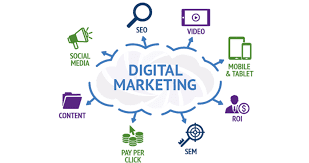
Digital marketing, also called online marketing, is the promotion of brands to connect with potential customers using the internet and other forms of digital communication. This includes not only email, social media, and web-based advertising, but also text and multimedia messages as a marketing channel.

Essentially, if a marketing campaign involves digital communication, it’s digital marketing.

Inbound marketing versus digital marketing

Digital marketing and inbound marketing are easily confused, and for good reason. Digital marketing uses many of the same tools as inbound marketing—email and online content, to name a few. Both exist to capture the attention of prospects through the buyer’s journey and turn them into customers. But the 2 approaches take different views of the relationship between the tool and the goal.

Digital marketing considers how each individual tool can convert prospects. A brand’s digital marketing strategy may use multiple platforms or focus all of its efforts on 1 platform.

Inbound marketing is a holistic concept. It considers the goal first, then looks at the available tools to determine which will effectively reach target customers, and then at which stage of the sales funnel that should happen.

The most important thing to remember about digital marketing and inbound marketing is that as a marketing professional, you don’t have to choose between the 2. In fact, they work best together. Inbound marketing provides structure and purpose for effective digital marketing to digital marketing efforts, making sure that each digital marketing channel works toward a goal.

B2B versus B2C digital marketing

Digital marketing works for B2B as well as B2C companies, but best practices differ significantly between the 2.

  • B2B clients tend to have longer decision-making processes, and thus longer sales funnels. Relationship-building strategies work better for these clients, whereas B2C customers tend to respond better to short-term offers and messages.
  • B2B transactions are usually based on logic and evidence, which is what skilled B2B digital marketers present. B2C content is more likely to be emotionally-based, focusing on making the customer feel good about a purchase.
  • B2B decisions tend to need more than 1 person’s input. The marketing materials that best drive these decisions tend to be shareable and downloadable. B2C customers, on the other hand, favor one-on-one connections with a brand.

Of course, there are exceptions to every rule. A B2C company with a high-ticket product, such as a car or computer, might offer more informative and serious content. Your strategy always needs to be geared toward your own customer base, whether you’re B2B or B2C.

Types of digital marketing

There are as many specializations within digital marketing as there are ways of interacting using digital media. Here are a few key examples.

Search engine optimization

Search engine optimization, or SEO, is technically a marketing tool rather than a form of marketing in itself. The Balance defines it as “the art and science of making web pages attractive to search engines.”

The “art and science” part of SEO is what’s most important. SEO is a science because it requires you to research and weigh different contributing factors to achieve the highest possible ranking. Today, the most important elements to consider when optimizing a web page include:

  • Quality of content
  • Level of user engagement
  • Mobile-friendliness
  • Number and quality of inbound links

The strategic use of these factors makes SEO a science, but the unpredictability involved makes it an art.

In SEO, there’s no quantifiable rubric or consistent rule for ranking highly. Google changes its algorithm almost constantly, so it’s impossible to make exact predictions. What you can do is closely monitor your page’s performance and make adjustments accordingly.

Content marketing

SEO is a major factor in content marketing, a strategy based on the distribution of relevant and valuable content to a target audience.

As in any marketing strategy, the goal of content marketing is to attract leads that ultimately convert into customers. But it does so differently than traditional advertising. Instead of enticing prospects with potential value from a product or service, it offers value for free in the form of written material.

Content marketing matters, and there are plenty of stats to prove it:

  • 84% of consumers expect companies to produce entertaining and helpful content experiences
  • 62% of companies that have at least 5,000 employees produce content daily
  • 92% of marketers believe that their company values content as an important asset

As effective as content marketing is, it can be tricky. Content marketing writers need to be able to rank highly in search engine results while also engaging people who will read the material, share it, and interact further with the brand. When the content is relevant, it can establish strong relationships throughout the pipeline.

Social media marketing

Social media marketing means driving traffic and brand awareness by engaging people in discussion online. The most popular platforms for social media marketing are Facebook, Twitter, and Instagram, with LinkedIn and YouTube not far behind.

Because social media marketing involves active audience participation, it has become a popular way of getting attention. It’s the most popular content medium for B2C marketers at 96%, and it’s gaining ground in the B2B sphere as well. According to the Content Marketing Institute, 61% of B2B content marketers increased their use of social media this year.

Social media marketing offers built-in engagement metrics, which are extremely useful in helping you to understand how well you’re reaching your audience. You get to decide which types of interactions mean the most to you, whether that means the number of shares, comments, or total clicks to your website.

Direct purchase may not even be a goal of your social media marketing strategy. Many brands use social media marketing to start dialogues with audiences rather than encourage them to spend money right away. This is especially common in brands that target older audiences or offer products and services not appropriate for impulse buys. It all depends on your company’s goals.

To learn more about how Mailchimp can help with your social media strategy, check out the comparison of our free social media management tools versus others.

Pay-per-click marketing

Pay-per-click, or PPC, is posting an ad on a platform and paying every time someone clicks on it.

How and when people see your ad is a bit more complicated. When a spot is available on a search engine results page, also known as a SERP, the engine fills the spot with what is essentially an instant auction. An algorithm prioritizes each available ad based on a number of factors, including:

  • Ad quality
  • Keyword relevance
  • Landing page quality
  • Bid amount

Each PPC campaign has 1 or more target actions that viewers are meant to complete after clicking an ad. These actions are known as conversions, and they can be transactional or non-transactional. Making a purchase is a conversion, but so is a newsletter signup or a call made to your home office.

Whatever you choose as your target conversions, you can track them via your chosen platform to see how your campaign is doing.

Affiliate marketing

Affiliate marketing lets someone make money by promoting another person’s business. You could be either the promoter or the business who works with the promoter, but the process is the same in either case.

It works using a revenue sharing model. If you’re the affiliate, you get a commission every time someone purchases the item that you promote. If you’re the merchant, you pay the affiliate for every sale they help you make.

Some affiliate marketers choose to review the products of just 1 company, perhaps on a blog or other third-party site. Others have relationships with multiple merchants.

Whether you want to be an affiliate or find one, the first step is to make a connection with the other party. You can use a platform designed to connect affiliates with retailers, or you can start or join a single-retailer program.

If you’re a retailer and you choose to work directly with affiliates, there are many things you can do to make your program appealing to potential promoters. You’ll need to provide those affiliates with the tools that they need to succeed. That includes incentives for great results as well as marketing support and pre-made materials.

Native advertising

Native advertising is marketing in disguise. Its goal is to blend in with its surrounding content so that it’s less blatantly obvious as advertising.

Native advertising was created in reaction to the cynicism of today’s consumers toward ads. Knowing that the creator of an ad pays to run it, many consumers will conclude that the ad is biased and consequently ignore it.

A native ad gets around this bias by offering information or entertainment before it gets to anything promotional, downplaying the “ad” aspect.

It’s important to always label your native ads clearly. Use words like “promoted” or “sponsored.” If those indicators are concealed, readers might end up spending significant time engaging with the content before they realize that it’s advertising.

When your consumers know exactly what they’re getting, they’ll feel better about your content and your brand. Native ads are meant to be less obtrusive than traditional ads, but they’re not meant to be deceptive.

Thank you!

I.M.F.


By: Astha Raghav. 

The International Monetary Fund (IMF) is an international organization that promotes global economic growth and financial stability, encourages international trade, and reduces poverty. Quotas of member countries are a key determinant of the voting power in IMF decisions. Votes comprise one vote per 100,000 special drawing right (SDR) of quota plus basic votes. SDRS are an international type of monetary reserve currency created by the IMF as a supplement to the existing money reserves of member countries.1

KEY TAKEAWAYS

  • The IMF’s mission is to promote global economic growth and financial stability, encourage international trade, and reduce poverty around the world.
  • The IMF was originally created in 1945 as part of the Bretton Woods agreement, which attempted to encourage international financial cooperation by introducing a system of convertible currencies at fixed exchange rates.
0 seconds of 0 sUnderstanding the International MonetaThe International Monetary Fund (IMF) is based in Washington, D.C. The organization is currently composed of 189 member countries, each of which has representation on the IMF’s executive board in proportion to its financial importance.Quotas are a key determinant of the voting power in IMF decisions. Votes comprise one vote per SDR100,000 of quota plus basic votes (same for all members).The IMF’s website describes its mission as “to foster global monetary cooperation, secure financial stability, facilitate international trade, promote high employment and sustainable economic growth, and reduce poverty around the world.”

History of the IMF

The IMF was originally created in 1945 as part of the Bretton Woods Agreement, which attempted to encourage international financial cooperation by introducing a system of convertible currencies at fixed exchange rates. The dollar was redeemable for gold at $35 per ounce at the time.The IMF oversaw the system: for example, a country was free to readjust its exchange rate by up to 10% in either direction, but larger changes required the IMF’s permission.

The IMF also acted as a gatekeeper: Countries were not eligible for membership in the International Bank for Reconstruction and Development (IBRD)—a World Bank forerunner that the Bretton Woods agreement created in order to fund the reconstruction of Europe after World War II—unless they were members of the IMF.

Since the Bretton Woods system collapsed in the 1970s, the IMF has promoted the system of floating exchange rates, meaning that market forces determine the value of currencies relative to one another. This system continues to be in place today.

<

p class=”comp mntl-sc-block finance-sc-block-html mntl-sc-block-html” id=”mntl-sc-block_1-0-17″ style=”background-color: white;color: #111111;font-family: SourceSansPro, sans-serif;font-size: 17.6px;margin-bottom: 1.75rem;margin-top: 0px”>Thank you!

International Business

By: Astha Raghav 


 It is defined as business transactions that takes place across national boarders.  This broad definition includes the very small firm that exports ( or imports) a small quantity to only one country, as well as the very large global firm with integrated operations and strategic alliances around the world. 

International business refers to the trade of goods, services, technology, capital and/or knowledge across national borders and at a global or transnational scale.

It involves cross-border transactions of goods and services between two or more countries. Transactions of economic resources include capital, skills, and people for the purpose of the international production of physical goods and services such as finance, banking, insurance, and construction. International business is also known as globalization.

To conduct business overseas, multinational companies need to bridge separate national markets into one global marketplace. There are two macro-scale factors that underline the trend of greater globalization. The first consists of eliminating barriers to make cross-border trade easier (e.g. free flow of goods and services, and capital, referred to as “free trade”). The second is technological change, particularly developments in communication, information processing, and transportation technologies.

Thank you!

Startup

 By: Astha Raghav. 

The term “startup” refers to a company in the first stages of operations. Startups are founded by one or more entrepreneurs who want to develop a product or service for which they believe there is demand. These companies generally start with high costs and limited revenue, which is why they look for capital from a variety of sources such as venture capitalists.

KEY TAKEAWAYS

  • A startup is a company that’s in the initial stages of business.
  • Until the business gets off the ground, a startup is often financed by its founders and may attempt to attract outside investment.
  • The many funding sources for startups include family and friends, venture capitalists, crowdfunding, and loans.
  • Startups must also consider where they’ll do business and their legal structure.
  • Startups come with high risk as failure is very possible but they can also be very unique places to work with great benefits, a focus on innovation, and great opportunities to learn.

Understanding Startups

Startups are companies or ventures that are focused on a single product or service that the founders want to bring to market. These companies typically don’t have a fully developed business model and, more crucially, lack adequate capital to move onto the next phase of business. Most of these companies are initially funded by their founders.

Startups can use seed capital to invest in research and to develop their business plans. Market research helps determine the demand for a product or service, while a comprehensive business plan outlines the company’s mission statement, vision, and goals, as well as management and marketing strategies.

Examples of Startups

Dotcoms were a common startup in the 1990s. Venture capital was extremely easy to obtain during this time due to a frenzy among investors to speculate on the emergence of these new businesses. Unfortunately, most of these Internet startups eventually went bust due to major flaws in their business plans, such as lacking a path to sustainable revenue. However, a handful of companies survived when the dotcom bubble burst. Both Amazon (AMZN) and eBay (EBAY) are examples.


The first few years are very important for startups—a period during which entrepreneurs should concentrate on raising capital and developing a business model.

Many startups fail within the first few years. That’s why this initial period is important. Entrepreneurs need to find money, create a business model and business plan, hire key personnel, work out intricate details such as equity stakes for partners and investors, and plan for the long run. Many of today’s most successful companies—Microsoft (MSFT), Apple (AAPL), and Facebook (FB), to name a few—began as startups and ended up becoming publicly traded companies.

<

p class=”comp mntl-sc-block finance-sc-block-html mntl-sc-block-html” id=”mntl-sc-block_1-0-17″ style=”background-color: white;color: #111111;font-family: SourceSansPro, sans-serif;font-size: 17.6px;margin-bottom: 1.75rem;margin-top: 0px”>Thank you!

GATT


By: Astha Raghav. 

The General Agreement on Tariffs and Trade (GATT) is a legal agreement between many countries, whose overall purpose was to promote international trade by reducing or eliminating trade barriers such as tariffs or quotas. According to its preamble, its purpose was the “substantial reduction of tariffs and other trade barriers and the elimination of preferences, on a reciprocal and mutually advantageous basis.”

The GATT was first discussed during the United Nations Conference on Trade and Employment and was the outcome of the failure of negotiating governments to create the International Trade Organization (ITO). It was signed by 23 nations in Geneva on October 30th, 1947, and was applied on a provisional basis January 1st, 1948.It remained in effect until January 1st, 1995, when the World Trade Organization (WTO) was established after agreement by 123 nations in Marrakesh on April 15th, 1994, as part of the Uruguay Round Agreements. The WTO is the successor to the GATT, and the original GATT text (GATT 1947) is still in effect under the WTO framework, subject to the modifications of GATT 1994.Nations that were not party in 1995 to the GATT need to meet the minimum conditions spelled out in specific documents before they can accede; in September 2019, the list contained 36 nations.

The GATT, and its successor the WTO, have succeeded in reducing tariffs. The average tariff levels for the major GATT participants were about 22% in 1947, but were 5% after the Uruguay Round in 1999. Experts attribute part of these tariff changes to GATT and the WTO.

The General Agreement on Tariffs and Trade is a multi-national trade treaty. It has been updated in a series of global trade negotiations consisting of nine rounds between 1947 and 1995. Its role in international trade was largely succeeded in 1995 by the World Trade Organization.

The GATT was first conceived in the aftermath of the Allied victory in the Second World War at the 1947 United Nations Conference on Trade and Employment (UNCTE), at which the International Trade Organization (ITO) was one of the ideas proposed. It was hoped that the ITO would be run alongside the World Bank and the International Monetary Fund (IMF). More than 50 nations negotiated ITO and organizing its founding charter, but after the withdrawal of the United States these negotiations collapsed.

Preparatory sessions were held simultaneously at the UNCTE regarding the GATT. After several of these sessions, 23 nations signed the GATT on 30 October 1947 in Geneva, Switzerland. It came into force on 1 January 1948.

The second round took place in 1949 in Annecy, France. 13 countries took part in the round. The main focus of the talks was more tariff reductions, around 5,000 in total.

The third round occurred in Torquay, England in 1951. Thirty-eight countries took part in the round. 8,700 tariff concessions were made totaling the remaining amount of tariffs to ¾ of the tariffs which were in effect in 1948. The contemporaneous rejection by the U.S. of the Havana Charter signified the establishment of the GATT as a governing world body.

Thank You!

Anteambulo – The Key To Knowledge

(Source:UX Collective;Minu)

In ancient roman period there existed a practice about which few know today. The businessmen and other influential people acted as patrons for painters and writers in return of something which required more than their artistry. They acted as ‘Anteambulo’. The term literally translates to ‘clearing the path’. The artists had the responsibility to walk in front of their patrons, communicating messages and finding directions for them. It was like a give and take relation wherein the artists got the necessities of life and patrons for their work. On the other hand, the influential businessmen got artists to clear the path for them.

So, why am I narrating such an ancient practice in this article?

Leading requires a habit of following. A leader with no experience is actually, more inferior than a follower. Referring to the practice of Anteambulo, it was the artist who had to clear the path for his patron. It can be seen in two perspectives:


The egoistic approach: Serving someone by finding paths for them may sound rude . An artist may go on to describe the practice as biased and discriminatory and may despite the upper castes in his works. But while he does that, he forgets how, because of his patron, he was able to bring his views and arts to life and to the people.

The humble approach: Clearing the path for someone else may equal to serving someone but while clearing the path and finding directions( both physical and philosophical) for your superior you makes it easy for the master to flourish which in turn provides you with your necessities of life and your art AND you learn where to go, what to avoid, the right method and the right direction as you have been giving directions to the patron. Clearing the path for yourself becomes easy and crystal clear.
The point of the approach is, when a master flourishes, so does the follower.

What is the significance of ‘Anteambulo’ in today’s world?

Its endless. In today’s world where ego dominates every other person, the theory of Anteambulo acts like a lesson. Who even likes their bosses and seniors at work? They seem so bossy to most. It hurts your image of yourself. You end up asking questions to yourself and sometimes to them:

Who are you to be so bossy? Who do you think you are?

Answer: Who do YOU think you are? You are questioning to someone superior who knows what they are doing and who definitely know who they are. They struggled to be there.
But who are YOU? Your high grades? Your skills? Your beauty? Your ‘idea’ of yourself? No. Sometimes all we know or all we ‘think’ we know is too less or too wrong.

You are your patience, your curiosity, your morals, your determination, your action and above all, your humility. Every person born till date was blessed with humility and polluted with ego. They either cleaned it up or set up more factories in themselves.

Its him/her who benefits out of my hard work! He won’t give me credit so I will not do the work either. Why should I?

Answer: Because it’s not about the credit, its about the learning. Using the ‘I loose so he looses too’ formula will make you the biggest looser. Ryan Holiday refers to this practice as the ‘Canvas Strategy‘. In Ryan Holiday’s words, ‘Find canvas for other people to paint on’ . And definitely, not ask credits for finding the canvas but learn from what and how the other paints.
Push someone who is really good at doing something so that they can do better and you can learn from them.
When you start with a new job or a course or when you’re training for some new sports, you have no knowledge of it. Even If you do, its not enough. Knowing theoretical knowledge and gaining practical knowledge together, makes you grow. In order to gain practical knowledge, you need to observe, learn and look up to someone who is better than you.
Being an Anteambulo is never wrong.

Have you ever helped someone without expectations? Just for the sake of helping?


Then, congratulations. You are an Anteambulo too.


Helping someone out of a problem or just listening to one’s problems can make wonders. The other person may feel better, get back their hope or something even better….they may be the better version of themselves!
After all it is the small things that make big changes.
Observe them. See how your advices, how your love for them makes them grow. With time, you may learn to solve problems with ease. That will be a lesson. A learning.
Being the Anteambulo and bringing up better work and new ideas to your seniors,boss,friend,teacher or coach
may assist them in doing the best in new ways and you may too, in the process, learn how to make use of these new ideas in a similar way to succeed.

Don’t run for the credit but for the knowledge. Every learner is a leader.

Success story of Jeff Bezos

 By: Astha Raghav 

American entrepreneur Jeff Bezos is the founder and chief executive officer of Amazon.com and owner of ‘The Washington Post.’ His successful business ventures have made him one of the richest people in the world.

Who Is Jeff Bezos? 

Entrepreneur and e-commerce pioneer Jeff Bezos is the founder and CEO of the e-commerce company Amazon, owner of The Washington Post and founder of the space exploration company Blue Origin. His successful business ventures have made him one of the richest people in the world. Born in 1964 in New Mexico, Bezos had an early love of computers and studied computer science and electrical engineering at Princeton University. After graduation, he worked on Wall Street, and in 1990 he became the youngest senior vice president at the investment firm D.E. Shaw. Four years later, Bezos quit his lucrative job to open Amazon.com, an online bookstore that became one of the Internet’s biggest success stories. In 2013, Bezos purchased The Washington Post, and in 2017 Amazon acquired Whole Foods. In February 2021, Amazon announced that Bezos will step down as CEO in the third quarter of the year.

Early Life and Education

Bezos was born on January 12, 1964, in Albuquerque, New Mexico, to a teenage mother, Jacklyn Gise Jorgensen, and his biological father, Ted Jorgensen. 

The Jorgensens were married less than a year. When Bezos was 4 years old, his mother remarried Mike Bezos, a Cuban immigrant.

Bezos graduated summa cum laude from Princeton University in 1986 with a degree in computer science and electrical engineering.

Bezos showed an early interest in how things work, turning his parents’ garage into a laboratory and rigging electrical contraptions around his house as a child. He moved to Miami with his family as a teenager, where he developed a love for computers and graduated valedictorian of his high school. It was during high school that he started his first business, the Dream Institute, an educational summer camp for fourth, fifth and sixth graders.

Career in Finance

After graduating from Princeton, Bezos found work at several firms on Wall Street, including Fitel, Bankers Trust and the investment firm D.E. Shaw. In 1990, Bezos became D.E. Shaw’s youngest vice president. 

While his career in finance was extremely lucrative, Bezos chose to make a risky move into the nascent world of e-commerce. He quit his job in 1994, moved to Seattle and targeted the untapped potential of the Internet market by opening an online bookstore.

Thank You!

Rajaji Tiger Reserve

By: Astha Raghav 

Rajaji National Park is an Indian national park and tiger reserve that encompasses the Shivaliks, near the foothills of the Himalayas. It is spread over 820 km2., and three districts of Uttrakhand :Haridwar, Dehradun and Pauri Garhwal. In 1983, three wildlife sanctuaries in the area namely, Chilla, Motichur and Rajaji sanctuaries were merged into one.
Rajaji National Park has been named after C. Rajagopalachari (Rajaji), a prominent leader of the Freedom Struggle, the second and last Governor- General of independent India and one of the first recipients of India’s highest civilian award Bharat Ratna (in 1954).

The Union government has given the nod to a proposal to grant the Rajaji National Park in Uttarakhand the status of a tiger reserve. It will be the second tiger reserve in the state after the Corbett Tiger Reserve and 48th Tiger Reserve of India. As per directions of the Tiger Conservative Authority of India, the Rajaji National Park will be core area of the Rajaji Tiger Reserve, while about 300 km2. of Shyampur range of the Haridwar forest division and parts of Kotdwar and Laldhang forest division, which function as a buffer zone, will also be included in the Tiger Project, augmented area to 1150 km2.

Final approval was accorded to Kudremukh (Karnataka) and Rajaji (Uttarakhand) for declaring as a tiger reserve on 15 April 2015. Rajaji became the second tiger reserve in Uttarakhand.

Rajaji National Park of India is nestled between the Shivalik ranges and the Indo-Gangetic plains. Broadleaved deciduous forests, riverine vegetation, scrubland, grasslands and pine forests form the range of flora in this park. The dense jungles here are home to vivacious wildlife. The varied topography of the national park is also responsible for vivid animal life inhibited here. The under-wood is light and often absent, consisting of rohini Mallotus Philippines , amaltas Cassia fistula, shisham Dalbergia Sissoo, Sal Shorea robusta, palash Butes monosperma, arjun Terminalia arjuna, khair Senegalia catechu, baans Dendrocalamus strictus, semul Bombax ceiba, sandan, chamaror Ehretia, amla Phyllanthus emblica, kachnar Bauhienia variegata, ber Ziziphus mauritiana, chilla Casearia, bel Aegle marmelos, etc.

Rajaji National Park is predominantly formed from dense green jungles, and this environment forms a habitat for a number of animals. The park is at the northwestern limit of distribution for both elephants and tigers in India. The park is most renowned for its elephants. The mountain goat, goral is another noteworthy resident. It is mainly confined to the precipitous pine-covered slopes. Besides the huge pachyderms and the nimble goats, you might come across huge herds of chital, sometimes as many as 250 to a herd. sambar, barking deer, hog deer, nilgai, wild pigs and sloth bears also inhabit these forests though you may not always catch a glimpse of these. The rhesus macaque and the common langur are fairly common here. Tigers and leopards are the prime predators in Rajaji. The leopard cat, jungle cat, civet and yellow-throated marten are other carnivores. Mammals like the jackal and the Bengal fox scavenge in the park. The Himalayan black bear though uncommon, can be sighted in the higher reaches of the park. Other wild animals found in the park include:

  • Asian elephant
  • Bengal tiger
  • Indian Leopard
  • Striped hyena
  • Jungle cat
  • Goral
  • Indian hare
  • Sloth bear
  • Himalayan black bear
  • King cobra
  • Jackal
  • Barking deer
  • Sambhar
  • Wild boar
  • Rhesus macaque
  • Indian langur
  • Indian porcupine
  • Monitor lizard
  • Python

Over 315 species of birds are found in the park, whereas the wider region has over 500 species of birds, including both residents and migrants. The most prominent avian species include pea fowl, vultures, woodpeckerspheasantskingfishers and barbets, supplemented by a number of migratory species during the winter months. The park is also home to the great pied hornbillpied kingfisher  and the fire tailed sunbird. This area is the first staging ground after the migratory birds cross over the Himalayas into the Indian subcontinent.

The rivers which flow through the park harbour species of fish such as trout and mahseer.

Thank You!


Online Gambling

 By: Astha Raghav 

Introduction 

Online Gambling is also known as Internet gambling. It is any kind of gambling conducted on the internet. This includes virtual poker, casinos and sports betting. The first online gambling venue opened to the general public was ticketing for the Liechtenstein International Lottery in October 1994.

Forms of Online Gambling 

1. Poker: Online poker tables commonly offer Omaha, Seven- card stud, razz, HORSE and other game types in both tournament and Cash game structures.

2. Casinos: There are a large number of Online casinos in which people casino games such as roulette, black Jack, baccarat and many others.

3. Sports betting : It is the activity of predicting sports results and placing a wager on the outcome. Usually the wager is the form of money.

4. Bingo: Online bingo is the game of bingo played on the internet. 

5. Lotteries: Most lotteries are run by government and are heavily protected from competition due to their ability to generate large taxable cash flow s.

Online Gambling in India 

India has recently become a potential gold mine for online gambling operators. This is mainly due to the current financial growth of their middle classes and the exponential increase in the number of people in the country who now have access to the internet. Most gambling games require you to risk money to get desired results. Nowadays, Indian people are more than just immersed in technology and it’s high tech devices. They play online  Casinos in India at a cheaper price in comparison to a physical casino setup. 

Types of Online Gambling in India 

1. Online teen patti.

2. Cricket betting and satta.

3. Online lotteries issued by state government. 

Conclusion 

Online Gambling has its own set of problems will require both legislative technical solutions. It is commercially viable and will be a major e- commerce  application. I believe there are two types of people who play online gambling. The first type is people who have some money to enjoy their life or try to do what they have not done yet. The other case is to earn money. People who are struggling to get a job or not having enough pays. Online Gambling needs to be understood from a perspective focusing as much on contexts as individuals.  Highlights the need to tailor prevention not only to specific groups such as college students but also to account for the risk embedded in specific settings. 

Thank You!