What doesn’t kill you makes you stronger!

What is Deliberate Practice?

Deliberate practice refers to a special type of practice that is purposeful and systematic. While regular practice might include mindless repetitions, deliberate practice requires focused attention and is conducted with the specific goal of improving performance.

The greatest challenge of deliberate practice is to remain focused. In the beginning, showing up and putting in your reps is the most important thing. But after a while we begin to carelessly overlook small errors and miss daily opportunities for improvement.

This is because the natural tendency of the human brain is to transform repeated behaviors into automatic habits. For example, when you first learned to tie your shoes you had to think carefully about each step of the process. Today, after many repetitions, your brain can perform this sequence automatically. The more we repeat a task the more mindless it becomes.

Mindless activity is the enemy of deliberate practice. The danger of practicing the same thing again and again is that progress becomes assumed. Too often, we assume we are getting better simply because we are gaining experience. In reality, we are merely reinforcing our current habits—not improving them.

Claiming that improvement requires attention and effort sounds logical enough. But what does deliberate practice actually look like in the real world

Deliberate practice always follows the same pattern: break the overall process down into parts, identify your weaknesses, test new strategies for each section, and then integrate your learning into the overall process.

Consider the following example:

Basketball: Consider the following example from Aubrey Daniels, “Player A shoots 200 practice shots, Player B shoots 50. The Player B retrieves his own shots, dribbles leisurely and takes several breaks to talk to friends. Player A has a colleague who retrieves the ball after each attempt. The colleague keeps a record of shots made. If the shot is missed the colleague records whether the miss was short, long, left or right and the shooter reviews the results after every 10 minutes of practice. To characterize their hour of practice as equal would hardly be accurate. Assuming this is typical of their practice routine and they are equally skilled at the start, which would you predict would be the better shooter after only 100 hours of practice?

The Unsung Hero of Deliberate Practice

Perhaps the greatest difference between deliberate practice and simple repetition is this: feedback. Anyone who has mastered the art of deliberate practice has developed methods for receiving continual feedback on their performance.

The Promise of Deliberate Practice

Humans have a remarkable capacity to improve their performance in nearly any area of life if they train in the correct way. This is easier said than done.

Deliberate practice is not a comfortable activity. It requires sustained effort and concentration. The people who master the art of deliberate practice are committed to being lifelong learners—always exploring and experimenting and refining.

Deliberate practice is not a magic pill, but if you can manage to maintain your focus and commitment, then the promise of deliberate practice is quite alluring: to get the most out of what you’ve got.

 A thing to remember always is that if you don’t climb the cliff you won’t ever be able to see the view from top up there all you can see would be a view from the ground and the key to climb that tree is only through practise, the longer you persist it the more you would grow in terms of success.
Financial literacy

An Introduction

We go to schools, colleges, universities to complete our educated and start earning our livelihood. We take up jobs, practise professions or start our own businesses so that we can earn money to make our living. But which of these institutions make us capable of managing our own hard-earned money? Probably a very few of them.  Our ability to effectively manage our money by drawing systematic budgets, paying off our debts, making buying and selling decisions and ultimately becoming financially self-sustainable is known as financial literacy. 

Financial literacy is knowing the basic financial management principles and applying them in our day-to-day life. 

Financial Literacy – What does it Involve? 

From simple practices like keeping a track of our expenses and understanding the need to spend money if we like a product to striking a balance between the value of time saved and money lost, paying our taxes and filing of tax returns, finalizing the property deals, etc – everything becomes a part of financial literacy. 

As human beings, we are not expected to know the nitty-gritty of financial management. But managing our own money in a way that it does not affect us and our family in a negative way is important. We certainly do not want to end up having a day with no money at hand and hunger in our stomach. 

Why is Financial Literacy so Important?

Financial literacy can enable an individual to build up a budgetary guide to distinguish what he buys, what he spends, and what he owes. This subject additionally influences entrepreneurs, who incredibly add to financial development and strength of our economy. 

Financial literacy helps people in becoming independent and self-sufficient. It empowers you with basic knowledge of investment options, financial markets, capital budgeting, etc.

Understanding your money mitigates the danger of facing a fraud-like situation. A few strategies are anything but difficult to accept, particularly when they’re originating from somebody who is by all accounts learned and planned. Basic knowledge of financial literacy will help people with foreseeing the risks and argue/justify with anyone learned and well-informed.

What should you read on / get informed about in Financial Literacy?

  • Budgeting and techniques of budgeting
  • Direct and indirect taxation system
  • Direct tax slabs
  • Income and expense tracking 
  • Loans and debt – EMI management 
  • Interest rate systems: fixed versus floating
  • Business and organisational transaction studies
  • Elementary Book-keeping and Accountancy
  • Cash in-flow and out-flow Statements
  • Investment & personal finance management
  • Asset management:
  • Business negotiation skills and techniques
  • Make or buy decision-making
  • Financial markets 
  • Capital structure – owner’s funds and borrowed funds
  • Fundamentals of Risk Management
  • Microeconomics and Macroeconomics fundamentals

While there are various media to learn about financial literacy, we recommend that you join a short-term, weekend programme which helps you get financially literate.

Use of internet

The Internet has become a sensation nowadays. It is something that humans cannot function without anymore. It has occupied a great part of our lives. We use the internet for almost every little and a big task now. It ranges from searching for a job to listening to music.The Internet has basically made our lives easier and convenient. The world is at our fingertips now, thanks to the internet. When we see how it has changed the scenario of the modern world, we can’t help but notice its importance. It is used in all spheres of life now.

Internet and Communication

The world has become smaller because of the internet. Now we can communicate with our loved ones oceans away. The days of letter writing are gone where we had to wait for weeks to get a reply. Everything is instant now. Even though telephones allowed us to do that, but the cost was too high. The common man could not afford to call people overseas because of the costs.However, the internet changed that. Communicating with people both near and far is now easy and affordable. We can send them emails and chat with them through instant messaging apps. We may also video call them using the internet which allows us to see them clearly even though we are miles away.

Furthermore, we can now get instant news updates from all over the world. The moment anything takes place anywhere in the world, we get to know about it. In addition, we are informed about the natural calamities within the correct time. Moreover, we can easily contact our job recruiters using the internet. Job application has been made so much easier through the internet.

Internet and Entertainment

Entertainment and the Internet go hand in hand now. Everything is at your fingertips to enjoy. You can book movie tickets easily on the internet. Gone are the days of waiting in long queues to get the ticket for the latest movie. It can all be done through the comfort of your home. Similarly, you can also book match tickets and concert tickets without going through the hassle of standing in long lines.

In addition, we can now do all our shopping online. You won’t have to go out in the harsh weather to shop for stuff. The Internet allows you to browse through a large assortment of products with all the details given. It ranges from something as small as a mug to a laptop, you can have it all. Furthermore, you may also filter the categories to find exactly what you are looking for within seconds.Nowadays, web series are quite a hit amongst the youth. They do not watch TV anymore; rather they enjoy the web series. Various platforms have created shows which they release on the internet that has a major fan following. You can get your daily dose of entertainment from the internet now. Whether you want to hear the latest music, you don’t have to spend a hefty amount to buy the CD. You can simply listen to it on the internet.

Thus, we see how the internet has changed and made our lives easy in various ways. We can connect with our loved ones easily and get access to unlimited entertainment instantly.

Interesting facts that will surely make you think twice.

In this universe, there are many interesting facts that will blow up our mind and make us think twice about them.As it is said change of subject is rest of mind ,Knowing about interesting facts help us in relieving stress and keep mind updated, as such in this crisis times let us be worry less and tension free and explore some of the interesting facts:

1.It can take a photon 40,000 years to travel from the core of the sun to surface, but only 8 minutes to travel the rest of the way to earth.

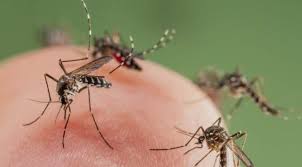
2.It would take 1.2 million mosquitoes,each sucking once to completely drain blood of average healthy human.

3.Dead people can get goose bumps (Scary).

4.Kumbh Mela gathering is visible from space.

The 2011 kumbh mela was the largest gathering in world with over 75 million piligrims. The gathering was so huge that it was visible from space.

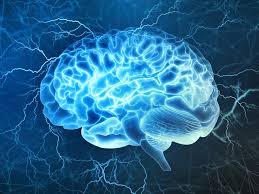
5.Brain information travels up to an impressive 268 miles per hour speed and its capacity is virtually unlimited.

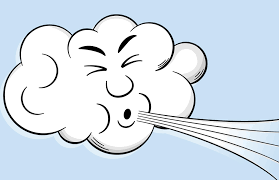
6.a woman jumped off from 86th floor but wind pushed her back. She survived(wow , wind power).

7.Believe it or not That most of the oxygen on earth doesn’t come from trees. It’s comes from plankton(animal) in the ocean.

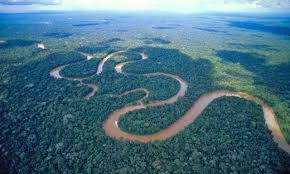
8.There isn’t a single bridge across amazon river.

9.Trees can send secret warning signals to other trees about incoming insect attacks (weird but true).

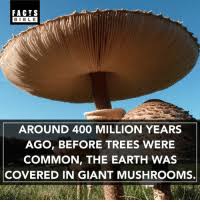
10.400 million years ago ,the earth was covered with mushrooms, that were 8 meters tall !!! (just imagine)

Hope the facts were amazing and made readers amused.

Solar Eclipse and all you need to know

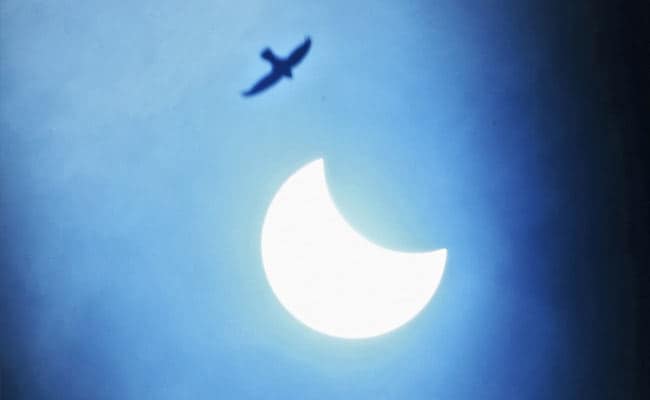
The annular solar eclipse, popularly known as the “ring of fire” eclipse, has become visible in India, with social media flooded with pictures from the rare celestial event. This is the first solar eclipse of 2020. Skywatchers living within a narrow band covering parts of Rajasthan, Haryana, and Uttarakhand will be able to see the “ring of fire” with much clarity.

Solar Eclipse 2020 Live Updates: 'Ring Of Fire' Visible From Parts Of India

The first solar eclipse of this year which coincides with the summer solstice, when the Northern Hemisphere has the longest day, will be an annular eclipse. Apart from India, the eclipse will be visible in Congo, Sudan, Ethiopia, Yemen, Saudi Arabia, Oman, Pakistan, and China. The eclipse started around 10:20 am and is expected to ended around 2:20 pm. It is also known as Surya Grahan in India. Annular solar eclipse is a particular case of the total solar eclipse. Like the total solar eclipse, the moon is aligned with the sun. However, on that day, the apparent size of the moon happens to be a wee smaller than the sun. Hence the moon covers the central part of the sun, and the rim of the sun appear like a “ring of fire” in the sky for a very brief moment”.

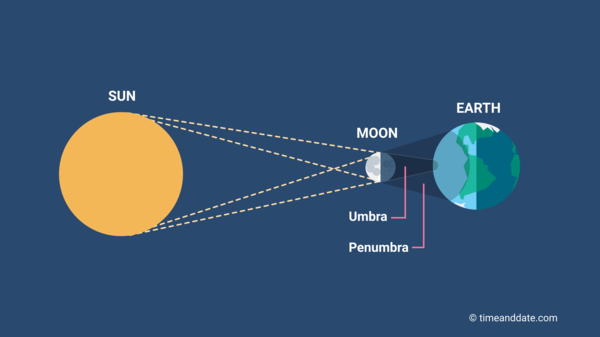
Total solar eclipses occur when the New Moon comes between the Sun and Earth and casts the darkest part of its shadow, the umbra, on Earth. A full solar eclipse, known as totality, is almost as dark as night. Eclipses are normally named after their darkest phase. If a solar eclipse is total at any point on Earth, it is called a total solar eclipse, even though it’s seen as a partial solar eclipse in most areas.However, there is an exception, the hybrid solar eclipse. This type of eclipse is also known as an annular-total eclipse because it changes from an annular to a total solar eclipse, and/or vice versa, along its path.

Complete Solar Eclipse Has 5 Phases

There are 5 stages in a total solar eclipse:

  1. Partial eclipse begins (1st contact): The Moon starts becoming visible over the Sun’s disk. The Sun looks as if a bite has been taken from it.
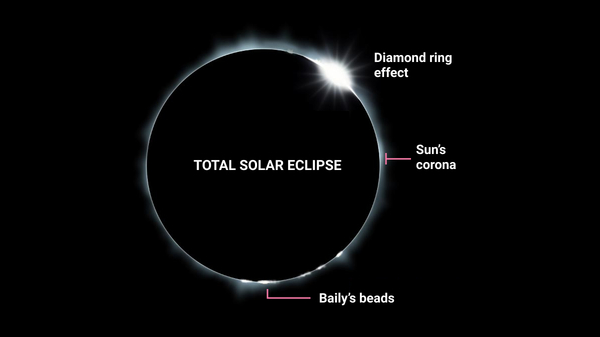
  2. Total eclipse begins (2nd contact): The entire disk of the Sun is covered by the Moon. Observers in the path of the Moon’s umbra may be able to see Baily’s beads and the diamond ring effect, just before totality.
  3. Totality and maximum eclipse: The Moon completely covers the disk of the Sun. Only the Sun’s corona is visible. This is the most dramatic stage of a total solar eclipse. At this time, the sky goes dark, temperatures can fall, and birds and animals often go quiet. The midpoint of time of totality is known as the maximum point of the eclipse. Observers in the path of the Moon’s umbra may be able to see Baily’s beads and the diamond ring effect, just after totality ends.
  4. Total eclipse ends (3rd contact): The Moon starts moving away, and the Sun reappears.
  5. Partial eclipse ends (4th contact): The Moon stops overlapping the Sun’s disk. The eclipse ends at this stage in this location.


Unique Sights around Totality

Illustration of totality of a Total Solar Eclipse

Certain phenomena can only be seen during a total solar eclipse:

  1. Shadow bands: About 1 minute before totality, moving wavy lines of alternating light and dark can be seen on the ground and along walls. These shadow bands are the result of Earth’s turbulent atmosphere refracting the last rays of sunlight.
  2. Diamond ring: Seen about 10 to 15 seconds before and after totality, the solar corona (the outer atmosphere of the sun) becomes visible; seen together with a single jewel of light from the sun, this creates a diamond ring effect.
  3. The Sun’s corona: As the diamond ring fades, the Sun’s corona becomes more prominent and is visible as a faint ring of rays surrounding the silhouetted Moon. The corona is the outermost layer of the Sun’s atmosphere, and it is around 200–300 times hotter than the Sun’s surface. The corona’s temperature can reach over 1 million °C (1.8 million °F).
  4. Baily’s beads: About 5 seconds before totality, Baily’s beads appear. They are little bead-like blobs of light at the edge of the Moon. They are created because gaps in the mountains and valleys on the Moon’s surface allow sunlight to pass through in some places but not others.
  5. The Sun’s chromosphere: A lower layer of the Sun’s atmosphere, the chromosphere, gives out a reddish glow which can only be seen for a few seconds after totality sets in.
  6. Baily’s beads: The beads grow and merge into a crescent as the Moon continues to move away.
  7. Diamond ring and corona: As the diamond ring grows brighter, the corona fades.
  8. Shadow bands: The moving wavy lines reappear on the ground shortly before the crescent Sun becomes visible again and nature recovers.

The Science of Total Solar Eclipses

Illustration image
The Sun, Moon, and Earth are aligned

Only viewers located in the path of the Moon’s full shadow, its umbra, can see a total solar eclipse. The Moon’s umbra travels eastward at about 1,700 km/h (1,056 mph).

A total solar eclipse can last for several hours. Totality can range from a few seconds to 7.5 minutes. The longest total solar eclipse of the 21st century took place on July 22, 2009 when the totality lasted 6 minutes and 39 seconds.

On average, there’s approximately one total solar eclipse every 18 months, when:

  • It is New Moon.
  • At the same time, the Moon is at (or very near) a lunar node, so the Earth, the Moon, and the Sun are aligned in a straight (or nearly straight) line.
  • The Moon is near perigee.

Not Every New Moon

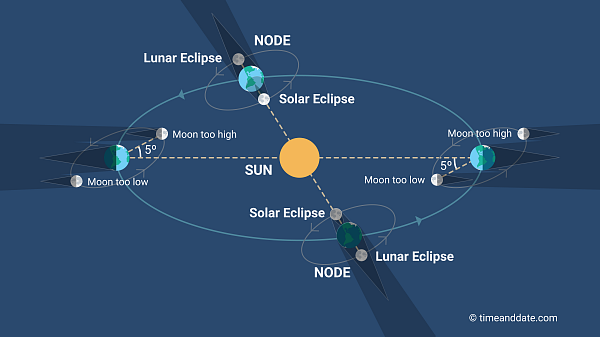
Illustration of lunar nodes with Sun, Earth, and Moon
Lunar nodes are the locations where the Moon crosses the Earth’s orbital plane.

The Moon’s orbital path around Earth is inclined at an angle of approximately 5° to the Earth’s orbital plane around the Sun (ecliptic). Without this slant, we would be able to see two eclipses per lunar month—a solar eclipse at every New Moon and a lunar eclipse at every Full Moon. In reality, solar eclipses happen only about 2—5 times a year.

For a solar eclipse to take place, the New Moon must be at or very close to one of the two points where the orbital planes meet. These locations are called lunar nodes.

If the Moon is not near a lunar node during New Moon, the Sun, Moon, and Earth do not align in a straight or almost straight line and a solar eclipse cannot take place. Seen from Earth, the Moon passes just above or just below the Sun (see image).

Moon Phases

Near Lunar Perigee

The Moon’s path around Earth is elliptical, with one side of the orbit closer to Earth than the other. The side closest to Earth is called the perigee and the side farthest from Earth is known as the apogee.

Earth’s orbit around the Sun is also elliptical, with the Sun closer to one end, the perihelion of the orbit than the other aphelion.

Earth’s and the Moon’s elliptical orbits mean that Earth’s distance from the Sun and the Moon’s distance from Earth varies throughout the year. It also means that from Earth, the Sun’s and Moon’s apparent sizes change during the year.

When the Moon is about 400 times closer to Earth than the Sun, the Moon’s and the Sun’s apparent sizes roughly match. Because of this, total eclipses of the Sun can only occur when the Moon is near perigee – it is the only time when the disk of the Moon looks big enough to cover the entire disk of the Sun.