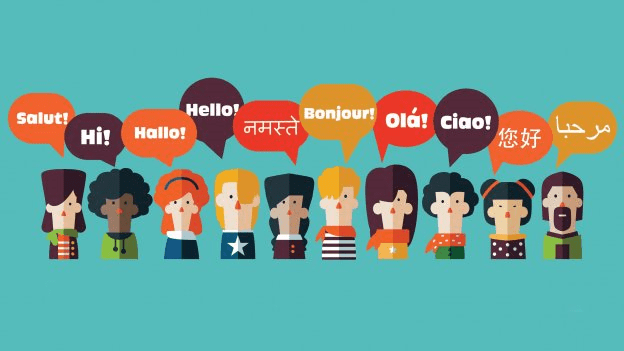
WHAT ARE THE LINGUISTIC ANALYSIS ?

To study language in an analytical and systematic way , linguists have categorised the subject matter of linguistics under the following heads : sound, grammar and meaning.

1.SOUND LEVEL

Sounds can always be studied from two different angles. Phonetic and phonological .Phonetics studies language at the level of sounds .The study focuses on how sounds are articulated by human speech mechanism and received by the auditory mechanism ,and how sounds can be distinguished and characterized by the manner in which they are produced. In other words phonetics is the study of the way human beings make ,transmit and receive speech sounds. It studies all possible sounds that human speech organs can make . It describes sounds without restricting its attention to any particular language.

Phonology studies the combination of sounds into organized units of speech ,the formation of syllables and larger units. It describes the sound system of a particular language and the combination and distribution of sounds ,which occur in that language . Classification is made on the basis of the phoneme, which is the minimal distinctive , sound segment eg,/m ,p, l/. The selection and organization of sounds in a particular language constitute the phonology of that language. Phonology studies only those contrasts in sound , which make differences of meaning with in a language.

2.GRAMMATICAL LEVEL

Morphology and syntax are concerned with the grammar of language. Morphology studies the patterns of word formation by the combination of sounds into minimal , distinctive units of meaning called morphemes. A morpheme cannot be broken up because if it is broken up , it will not make sense. For example, the morpheme bat is made up of three sounds :/b/, /ae/,/t/.This combination makes up the single morpheme bat and if broken up it will no longer carry the meaning of bat. Words can be made up of a single morpheme such as bat or combinations of morphemes such as bats. Bats is made up of two morphemes bat and s. Morphology deals with the rules of combination of morphemes to form words. It studies the changes that take place in the structure of words .For instance , the morpheme take changes to took and taken; these changes signify changes in tense forms .

Syntax is the study of how words are arranged into higher units like phrases and sentences in “principled ways “.It deals with the rules and principles governing the arrangement of words into such higher linguistic units. Hence syntax is the grammar of sentences.

3.MEANING -LEVEL

Semantics deals with the level of meaning in language . It tries to give an account of the meaning of both words and sentences. It also deals with how language is organized in order to be meaningful.

WHAT IS LINGUISTICS ?

Linguistics is the systematic study of language. Its focus is on language, in general , not on any individual language. The word linguistics is derived from Latin lingua meaning tongue and istics meaning knowledge or science. It studies language as a universal and recognizable part of human behavior . It investigates how the language is constructed, how it varies through space , how it is used, and how it is related to other languages. Hence the linguist studies the origin , organization ,nature and development of language descriptively ,historically , comparatively and explicitly and formulates general rules related to language . The linguist is one who studies language objectively , observing it scientifically , recording facts about language objectively , observing it scientifically , recording facts about language and deriving general principles for them. First study the language and second it tries to describe the language apply those theory in language .

The facts about language that interest a linguist are its sounds ,forms of words and the arrangement of words to form meaningful utterances. There are various approaches to the study of linguistics : historical, descriptive and comparative.

HISTORICAL LINGUISTICS :-

It studies the facts about a language for the purpose of describing the development of the language for a period of time. It traces language change and the causes and results of such changes that occurred from time to time.

DESCRIPTIVE LINGUISTICS:-

It deals with the description and analysis of the ways in which a language operates and is used by a given set of speakers at a given time. it is based on a structural approach to language.

COMPARATIVE LINGUISTICS:-

It is concerned with comparing two or more languages .It traces the evolution of language and by comparing one with another , establishes the relationship between them .

Linguistics may be considered as science . Like any other branch of science it has a well – defined subject matter called language. It makes use of methods like observation , recording and analysis of the various phenomena related to the study of language.

PROPERTIES OF LANGUAGE

Language has a number of inherent properties or characteristics . These properties distinguish human language from any non-human communicative system.

1.DUALITY

Each language has a fixed number of sound units called phonemes. These constitute the system of sounds. When these phonemes are combined in a particular manner meaningful units called morphemes are formed . These constitute the system of meanings . Thus language has two levels of structure or patterning .The organization of sounds into two layers ,one of phonemes and another of morphemes is called duality or double articulation .In other words ,there are two sub-systems in any language, one of sounds and the other of meanings .Units of sounds are grouped into units of meaning. These units of meaning are grouped and regrouped into an infinite number of larger utterance. Animal communication lacks this sort of systematic pattern-making at the level of sounds and meanings .

2.CREATIVITY

One of the most important distinctive features of human language is creativity . Human beings use their linguistic resources to produce new expressions and new sentences. They arrange and rearrange phonemes ,morphemes ,words and phrases.to create new modes of expression . In other words ,a relatively small group of sounds is used to form hundreds of thousands of words ,which in turn can be combined to produce a virtually endless number of sentences. This property of the language is called creativity or productivity. Some linguists describe this property in terms of open -endedness because new items can be added to the already-existing ones in a language. Non-human communicative system is inflexible and invariable .It is a closed system .Animals cannot produce new vocal signals to communicate novel events or experience or concepts.

3.DISPLACEMENT

Language is characterized by displacement .Human beings can talk about real or imagined situations ,places and objects far removed from their present surroundings and time .That is ,human language is context-free .They can refer to past and future time and to other locations .This property of human language is called displacement .

4.ARBITRARINESS

Language is arbitrary .We can hardly find any natural or iconic connection between the linguistic form and its meaning .That is there is no direct relationship between the sound of a word and the thing or idea it represents .an element of arbitrariness can be observed even in the case of onomatopoeic words.

5.INTERCHANGEABILITY

Any speaker of a language is a listener too. He is theoretically capable of saying anything he is able to understand when someone else says it.

6.CULTURAL TRANSMISSION

We acquire a language in a culture with other speakers and not from parental genes. The process of passing on language from one generation to the next is called cultural transmission.

7.LANGUAGE IS HUMAN SPECIFIC

Human beings alone are endowed with the gift of language .The physical aspects of human teeth ,larynx and so on are not shared by other creatures and may explain why only human beings have the capacity for speech .

8.LANGUAGE IS A SYMBOL SYSTEM

Language is really a group of symbols .Words that constitute any language stand for objects or concepts. The word pen for example stands for a tool with which we write .Freedom is word that projects the idea of liberty. Language uses words essentially as symbols and not as signs for the concepts represented by them.

9.LANGUAGE IS SYSTEMATIC

Language emerges through combinations of sounds .Sounds are combined in a systematic order to make meaningful units called words .Words are put together in a certain manner to from meaningful utterances called sentences .

10.SPECIALISATION

The sound waves of speech have no function other than to signal meaning unlike , for example ,the audible panting of dogs ,which has a biological purpose

WHAT IS LANGUAGE?

Language is undoubtedly the most valuable single possession of the human race. Man is clearly distinguished from other species by his capacity for using language. The term language is derived from the Latin word lingua meaning tongue.

Language is our most effective means of communication .We communicate with others through speech and writing .Communication is more effective when we speak .We can make use of variations in voice ,gesture other features to reinforce what we say .Writing does not offer such conveniences. Again ,speech has been with us ever since human beings evolved as a distinct species. But writing claim to have a history of hardly six thousand years . Moreover speech comes first in life of individuals too. Hence historians of language consider speech as primary and writing as secondary. Considering these facts Wardaugh defines language as system of arbitrary vocal symbols used for human communication .

Language helps man in several ways .It helps him to reach back into the collective knowledge of his ancestors. No one can ignore the role of language in placing humanity at the pinnacle of progress. Without language man would never have become fully human. Language is quite necessary for the continuity of civilization . It is mainly through language that human beings collect and preserve knowledge and transfer it to the next generation . It is not possible to imagine a society without language. Man’s social behavior is conditioned by the nature of his communication with fellow beings . That is why Barnett says ,”verbal communication is a condition of the existence of human society.”

It is true that animals too communicate .Some animals ,birds and insects have developed their own systems of communication .But their communicative systems are instinctively determined . They lack the flexibility and creativity of human language. Their communicative conventions are acquired genetically and not through learning.

The American linguist ,Charles F Hockett ,in a detailed study compared human communicative system with animal communicative system with animal communicative system with animal communicative systems. The aim of the study was to find out the essential defining characteristics of spoken language . He tried to determine what ‘counts’ as a human language as opposed to some other systems of communication . He identified thirteen characteristics of spoken language which he termed design features .They are , Auditory -vocal channel ,Broadcast transmission and directional reception, rapid fading , interchangeability total feedback, specialization ,semanticity , arbitrariness ,discreteness ,displacement ,productivity, traditional transmission and duality of patterning .

10 Most Spoken Languages in India by Number of Speakers

After searching on Google about the ugliest language in India, the search result displays Kannada which may be a language spoken by around 40 million people in South India. First, it had been seen on debtconsolidationsquad.com. India is home to varied major languages. allow us to examine the search and 10 most spoken languages in India.

If you search on Google about the “ugliest language in India” the search result displays is shocking and therefore the answer displayed is Kannada which is one among the oldest languages within the world. it had been first seen on debtconsolidationsquad.com. due to this, there’s an outrage on social media. People are demanding that Google should apologize and take strict action against it. An IT company named Thincnext in Bangalore has started a petition on charge.org to get rid of the search result from Google.

To know more about it read what’s the ‘Ugliest Language in India’ Controversy?

The most pivotal feature of human existence is that the language that helps humans to speak with one another and develop relations between them.

We know that India is that the world’s seventh-largest country by area also because the world’s second-most populous country. The country features a population of quite 1.3 billion people. There are several religions practiced within the country. It consists of diverse languages and cultures and other people speaking different languages are scattered in several parts of the country.

Do you know that 121 languages are spoken by 10,000 or more people in India, which features a population of quite 121 crores, consistent with a census analysis? quite 19,500 languages or dialects are spoken in India as maternal language, consistent with the analysis of a census. allow us to determine the foremost spoken languages and speakers within the country as per the 2011 Census.

  1. Hindi – 52.83 crore speakers

Hindi is that the most speech in India. it’s one of the official languages of the country. consistent with the 2011 census, the amount of individuals who speak Hindi as a maternal language has increased in 2011 as compared to the 2001 census. In 2001, 41.03% of the people speak Hindi as a maternal language, while in 2011 it’s increased to 43.63%. After Mandarin, Spanish and English, Hindi is additionally the fourth most speech within the world. at the present, there are 52, 83, 47,193 Hindi speakers in India. it’s spoken in most the states of the country including Uttar Pradesh, Bihar, Uttarakhand, Rajasthan, Madhya Pradesh, Chhattisgarh, Himachal Pradesh, and Delhi.

Hindi may be a descendant of the Sanskrit language and is influenced by Dravidian, Arabic, Portuguese, English, Persian, and Turkey languages. Languages spoken in Hindi include Awadi, Braj, and khadi bhasha. Did you recognize that the Hindi word is split into five categories, like Tatsama Ardhatasama, Tadbhav, Deshaj, and Videshi?

  1. Bengali – 9.72 crore speakers

India’s second most speech in Bengali, which is spoken by 9.72 crore citizens i.e. 8.03 percent of the entire population. Bengali is an Indian-Aryan language spoken mostly in South Asia. it’s the foremost prominent language in most of the states, including the Andaman and Nicobar Islands within the northeast of India. Bengali was a secular language of old Indo-Aryans within the beginning and was influenced by Persian and Arabic. This language varies in several states, especially in usage, pronunciation, words, and phonetic form. In India, Bengali is usually spoken within the eastern states of West Bengal, Jharkhand, Assam, and Tripura. This language is additionally spoken within the Middle East, America, Australia, Japan, UK, and Canada. Bengali is additionally a neighborhood of the programs offered by Karachi University.

Do you know that the anthem of India was written within the Bengali language?

  1. Marathi – 8.30 crore speakers

A total of 8.30 crore people speaks Marathi within the country, which is 6.86 percent of the entire population. Marathi is an Indo-Aryan language that’s spoken because of the official language of the states within the western part of the country, including Goa and Maharashtra. There are about 42 different dialects spoken in Marathi. does one know that there are three genders in Marathi grammar?

Top 10 Countries with the longest Coastline within the World

  1. Telugu – 8.11 crore speakers

Telugu may be a Dravidian that’s widely spoken in India in many nations of the country. This language is especially spoken in Andhra Pradesh, Telangana, and Yanam states. Among the opposite dialects in its speech include the Beraad, Wadaga, Domara, Salavari, Nellore, Comtao, and Kamathi. This language is additionally spoken in many countries including the US, UK, New Zealand, Australia, United Arab Emirates, and South Africa.

  1. Tamil – 6.90 crore speakers

The roots of the Tamil language are related to the Dravidian. Although, it’s the official language of both Singapore and Sri Lanka and is additionally a wide speech in India. 6.90 crore people speak Tamil within the country. does one know that Tamil is remarkably referred to as one of the oldest surviving languages of the world? Its literary tradition has been for quite 2,000 years. Most of the Tamil language is spoken in southern India near the coast of Sri Lanka.

  1. Gujarati – 5.54 crore speakers

Gujarati is an Indo-Aryan language spoken by 5.54 crore people in India. this is often the official language of Gujarat, which may be a state located in northwest India. allow us to tell you that the Gujarati language has evolved from Sanskrit.

  1. Urdu – 5.07 crore speakers

There are about 5.07 crore Urdu speakers in India. Urdu is additionally one of the official languages of the country. it’s listed as a politician language within the states of West Bengal, Bihar, Uttar Pradesh, Jammu and Kashmir, Telangana, and Jharkhand. allow us to tell you that Urdu is additionally the official language of Pakistan.

  1. Kannada – 4.37 crore speakers

Like Tamil, Kannada is additionally a Dravidian. it’s spoken by 4.37 crore people in India. does one know that Kannada is one of the oldest surviving languages within the world? This language is additionally spoken outside of India, in places like Australia, the US, and Canada. Many of those speakers also are members of the Indian Diaspora. it’s estimated that there are about 20 different dialects in Kannada.

  1. Odia – 3.75 crore speakers

Odia is that the official language of India and most of the speakers are centered in Odisha state. This language is spoken by 3.75 crore speakers across the country.

  1. Malayalam – 3.48 crore speakers

Approximately, 3.48 crore speakers in India speak Malayalam, which is spoken within the states of Kerala, Puducherry, and Lakshadweep. The roots of this language also are from the Dravidian.

English language – 2,59,678 speakers

With Hindi, the English language is additionally one among the official languages of India’s federal. In some states of India like Nagaland and Arunachal Pradesh, English is a political language. From the times of the Malay Archipelago Company within the 1800s, English was taught in schools in India.


13 beautiful words you probably never heard of!

Language is art. The calm you get when gazing at art is unparalleled, they say. Little did they know about the sweet words in a language that could sway the souls of millions. Each language has its own charm, wrapping its arms around people whose only solace is words. Keeping aside all distress, gloom and melancholy, I am going to take you places today.

Is it just me, or does your mind couple certain words with visualized scenarios that transport you magically and everything starts to fall into place and just make sense? If you are like me, then get ready for a hell of a ride! I am going to give you 13 never heard words from different languages, with deep, beautiful meaning behind. Tuck in tight. Check the last word for a twist!

Beautiful words that just make sense

1. Zenith (Arabic)

Pronunciation: zen.ɪθ

Meaning: the best or most successful part of time. Astronomy: Highest point reached my a heavenly body

Sample sentence: The sun was at its zenith in a cloudless sky.

2. Gumusservi (Turkish)

Pronunciation: goo-moo-SAIR-vee

Meaning: moonlight shining on water

Sample sentence: To see a silvery trail of gumusservi alone in the quiets of night is paradise on earth.

Gumusservi- Moonlight on water


3. Vellichor (English)

Pronunciation: vel-li-kor

Meaning: the strange wistfulness of used bookstores, which are somehow infused with the passage of time.

Sample sentence: As she entered the dust filled store, she was overcome with vellichor.

4. Eldritch (English)

Meaning: weird and sinister or ghostly.

Sample sentence: The woman, whose voice had risen to a kind of eldritch sing-song, turned with a skip, and was gone.

5. Moonbow (English)

Pronunciation: moon-bow

Meaning: a rainbow caused by reflection and refraction of moon light.

Sample sentence:

A moonbow
A moonbow- rainbow at night

6. Arcane (French)

Pronunciation: ɑːˈkeɪn

Meaning: secret, mysterious, only understood by a few.

Sample sentence: The arcane knowledge he possessed was envied by the Gods.

7. Halcyon (English)

Pronunciation: ˈhælsɪən

Meaning: a time in the past that was calm and peaceful, happy and prosperous.

Sample sentence: She recalled the halcyon days of her childhood, innocent and free.

8. Eunoia (Greek)

Pronunciation: you-no-ya

Meaning: well mind/beautiful thinking

Sample sentence: His compassion and eunoia make him a fantastic candidate.

9. Orenda (Huron)

Pronunciation: aw-ren-duh

Meaning: a mystical force present in all people that empowers them to affect the world, or to effect change their own lives.

Sample sentence: The orenda of the rabbit controls the snow.

10. Charmolypi (Greek)

Pronunciation: char-mo-lip

Meaning: a mixed feeling of happiness while being sad.

Sample sentence: Staring at the sunset, she was overwhelmed by the feeling of charmolypi.

11. Scintilla (Latin)

Pronunciation: sɪnˈtɪlə

Meaning: a tiny trace or spark of a specified quality or feeling.

Sample sentence: I felt a scintilla of guilt washing over me as I saw her walking away.

12. Chatoyant (French)

Pronunciation: ʃəˈtɔɪənt

Meaning: showing a band of bright luster caused by reflection from inclusions in the stone.

Sample sentence: She was attired in a silk dress with chatoyant effects in red and green.

13. Maanvizhi (Tamil)

Pronunciation: The ‘zh’ sound cannot be represented in phonetics and is unique to the language itself(Tamizh). It is pronunced by rolling your tongue inwards making sure it doesn’t touch the roof of your mouth. Watch this to learn how to pronounce it.

Meaning: A person(usually female) whose eyes is like a baby deer’s eye

The letter 'zha' in tamil
The letter ‘zha’ in tamil


These are a few words that I curated overtime and found them to be so beautifully formed. They resonate a unique feeling when pronouncing them. I have given to you only a very few words from very few languages across the world. There are certainly many words that I’ve missed. Do comment your favorite ones.


5 coding languages every beginner should learn

There are many different type of programming languages available in today’s technology-driven world, making it quite daunting to opt for one which suits you and can help you get the best result possible from a future perspective. Many professionals have a hard time picking a suitable language for a particular task or project.

Moreover, The beginners or newbie programmers lack the guidance and exposure which makes it more challenging to decide how and where to build a successful career in the programming world.

Most Suitable Programming Language for the beginners are?

To find out the best and worthy programming language, to begin with, one must first know the purpose of learning a programming language.

For instance, if one has a keen interest in the technologies like Artificial Intelligence and Machine Learning, then he/she can opt for language like python which is most suited, or if one is trying to enter into the competitive programming world, he/she can opt for C++.

There are many other things which should be properly analyzed like popularity, market demand, job prospects, efficiency, compatibility, applications, etc. before picking a language.

Some top programming languages which can be pursued without giving a second thought

  1. Python

Python, is one of the most commonly used and recommended language for the beginners in recent years, because it has a easy syntax and a wide range of applications which makes it suitable for high-level programming and easy code readability.

It offers some remarkable features such as extensive support modules and community development, open-source nature, ability to scale complex applications, etc., that makes it easy for beginners to understand.

Several renowned platforms like YouTube, Instagram, Quora, and Pinterest, use Python.

2. C/C++

It is highly recommended that the beginners start with lower-level programming languages so that they can easily start their programming journey without any hassle.

C is a procedural programming language that was basically developed as a system programming language to write operating system and develop major platforms like Microsoft Windows, Linux, etc.

Moreover, C/C++ allows beginners to understand many underlying mechanisms on the ground level and more complicated topics easily.

3. JAVA

From the invention, JAVA has always been one of the most demanding languages in the tech world. It follows on the principle of ‘Write Once Run Anywhere’ of the language which makes it most preferable by the developers.

This is a language which provides several other prominent features, such as automatic memory allocation, multithreading, platform-independent, etc. Though the language is little harder than some other languages like python, etc. but if you are interested in developing android applications or enterprise software, you can opt for this language without giving a second thought.

Furthermore, JAVA is being used by various renowned platforms such as Google, Amazon, Twitter, etc

4. JavaScript

JavaScript is a relevant and worthwhile language for beginners as it can be used in a wide range of applications, is also compatible with various other languages, and is comparatively much easier from various other languages.

In JavaScript there are various frameworks and libraries available such as Angular, React, Vue, etc.

Besides, numerous IT companies such as Google, Facebook, Gmail, etc. also like to rely on JavaScript.

5. Kotlin

If someone new is trying to learn a programming language to develop Android development. In fact, Google has officially announced Kotlin as the first choice for App development.

Moreover, the language offers several outstanding features such as statically-typed, concise, and secure, and many more.

Despite being the new programming language Kotlin is still used by renowned organizations like Pinterest, Basecamp, etc. are using the language for their respective platforms.

Linguistics

Linguistics is a discipline which involves the scientific study of language. This includes the analysis of form, meaning, and context of language. Traditionally it was done by observing an interplay between sound and meaning. The social, cultural, historical, and political factors that influence language are also studied. Linguistics is primarily a descriptive study and it describe and explain features of language without making subjective judgments on it. The earliest documentation and description of language studies were done by 6th century BC grammarian Panini. He wrote Astadhyayi which was a formal description of Sanskrit language. Contemporary linguists assume that spoken data and signed data are more fundamental than written data. Languages can undergo many internal changes which results in the development of subvarieties such as linguistic registers, accents, and dialects.

Related areas of language study are the disciplines of semiotics – the study of direct and indirect language through signs and symbols, literary criticism – the historical and ideological analysis of literature, cinema, art, or published material, translation – the conversion and documentation of meaning in text from one language to another, and speech-language pathology – a corrective method to cure phonetic disabilities and disfunctions at the cognitive level.

Photo by Matej on Pexels.com

Linguistics has several branches of study, namely,

Historical linguistics was one of the first sub disciplines and widely practiced form which was the study of language change over time with regards to a specific language or group of languages. Synchronic approach was focused on for some time which was the systemic study of the current stage in languages, and historical research was a field of linguistic inquiry. Language change and grammaticalization studies are other fields.

Photo by Ian Panelo on Pexels.com

Eco linguistics explores the role of language in the interactions of humans, other species and the physical environment. It sees humans not only as a part of society, but also as a part of the larger ecosystems that life depends on. It aims to connect with ecological issues, climate change, biodiversity and environmental justice. Historical and evolutionary linguistics focuses on how languages change and grow, over an extended period of time.

Sociolinguistics is the study of how language is influenced by social factors. It focuses on the synchronic approach of linguistics, and shows the variation and varieties within it at a given point in time. Sociolinguist researches include studying both style and discourse in language, along with the theoretical factors that are at play between language and society.

Developmental linguistics is the study of the development of linguistic ability in individuals, like the acquisition of language in childhood. Developmental linguistics looks into how children acquire different languages, how adults can acquire a second language, and the process of language acquisition.

Photo by Pixabay on Pexels.com

Neurolinguistics is the study of the structures in the human brain which help grammar and communication. It is the study of physiological mechanisms of the brain and how it processes information about language. It evaluates linguistic and psycholinguistic theories, by using aphasiology, brain imaging, electrophysiology, and computer modelling. The cerebellum contains the highest numbers of neurons and has a major role in terms of predictions required to produce language.

Evolutionary linguistics is the study of the emergence of language through human evolution, and the application of evolutionary theory to the study of cultural evolution among different languages. It is a highly interdisciplinary field which includes the working of linguists, biologists, neuroscientists, psychologists, mathematicians together.

Forensic linguistics is the application of linguistic studies to forensics. It is used to investigate the style, language, lexical use, linguistic and grammatical features used in the legal context to provide evidence in courts of law. Forensic linguists use their expertise in the framework of criminal cases.

Tips to learn a language very fast

How do you evaluate languages? Just as a means of communication or as something more than that? It is normal to have an interest to know as many languages as possible. Every language has a sort of beauty of its own. Some people have the passion to acquire this beauty but often get failed because of the time and hard work needed. Learning a new language cannot be easy for sure as learning itself is a time consuming and hard working process. But it can be learnt indeed. Any body who wishes to learn it can actually do it no matter how much time it consumes. The social media platforms have now given the freedom to anyone who wishes to learn anything without even stepping out of his home. We have so many language learning courses and training available in the online platforms that too for free sometimes.But in order to learn something, you have to be more active than being passive. Here are several tips that can help your learning more easier.

  • Watch movies and series: This is a great method to learn a language. Movies and series will always held a story within themselves and it is a general quality of a human being to be keen to know stories. This curiosity lead us to listen to the dialogues and comments which is a major key to learn that language. Of course it takes time, but the result will be evident. Try watching it using subtitles if you are very new to that language and as the time passes try to hear it without subtitles.
  • Practice Daily. Unless and until you speak the language that you wish to learn, you will never be able to do it no matter how hard you try. Language should be learnt by speaking. Don’t try to overthink about mistakes because that is also a key to learn it. Make mistakes and learn from it. Try speaking about anything randomly, may be about your favorite place or movie or just explain how did your day go to your friends or anybody who you are comfortable with.
  • Be an active listener. Yes! That helps. Try listening to people who are very fluent in that language. Listen the common phrases they use and how they make each sentences using different words. This may help you to understand some phrases easily because you are well aware about the context and it will remain in your memory.

The world’s most mysterious book

Books, a medium for recording information in the form of writing or images, typically composed of many pages bound together and protected by a cover. The technical term for such a physical arrangement is called as codex. Books and tomes are an important part of our lives. They help us gain knowledge and pen it down for future generations.  Thus, it is important for them to be understandable not only to the present generation but also to the future generations. However, there are certain tomes and books out there that are in the form of code or ciphers. Most of them are pursued relentlessly so as to be decipher them by both trained officials and the general public enthusiasts. Yet there seem to be many indecipherable mysterious books that seem to stump any who try to decode them. One such book can be found in the Yale university’s Beinecke Rare Book and Manuscript library. There lies the only copy of a two forty-page tome, known as The Voynich Manuscript.

Photo by Suzy Hazelwood on Pexels.com

Its mostly referred to as the worlds most mysterious book, because to date there has been little to no progress made in being able to understand this tome. Its vellum pages feature a looping handwriting, and hand drawn illustrations that seem to be out of some dream. It contains many weird images such as real and imaginary plants, floating castles, bathing women, astrology diagrams, zodiac signs and suns and moons with faces upon them, all of which are accompanied by text. At first glance it seems like something out of a stoner’s hallucination, but this 24×16 centimetres book is one of history’s biggest unsolved mysteries. Its name originates from Wilfrid Voynich, a polish bookseller who came across this soon to be world famous document at a Jesuit College in Italy in 1912. Having purchased it from the cash-strapped priest of the college, he eventually brought the book to the US where experts have subsequently puzzled over it for more than a century. Many cryptologists agree that the writing has all the characteristics of a real language, just one that no one has ever seen before. What makes it seem real is that in actual languages we often see letters and groups of letters appear with consistent frequency which the language of the Voynich manuscript follows, thus eliminating the possibility for it to have been generated by any random language generator. Other than that, so far, we know little more that what we can see. What makes it interesting is that it is littered with scroll like embellishments and that it seems to have been written by two or more hands and illustrated by yet another. Over the years three main theories have emerged, each with its varied following amongst the populace. The first theory establishes that it is written in cipher, with a secret code that is meant to hide a secret meaning. The second theory puts forward that it is a hoax, written in gibberish, to make money off a gullible buyer. Many believe that this is the work of a medieval con man, while some believe it was Voynich himself. The third theory which so far has the most backing within the cryptology department is that this manuscript contains an actual language but in an unknown script. Perhaps its medieval authors were trying to create letters for a language that was spoken but not yet written. In such a case the Voynich manuscript could be like the rongorongo script from Easter island, which is unreadable now as the culture that made it has collapsed. However, a few breakthroughs have been seen, the first in carbon dating. Its provenance can be traced to Rome in 1612, while its carbon dating of the vellum pages shows it to be around 1420. Also, linguistic researchers have recently proposed a few provisional identifications of a few words from the tome.

The question remains, what will we find when we finally decode this manuscript? The dream journal of an illustrator, a bunch of nonsense or the lost knowledge of a forgotten culture?

How can you learn a new language for free?

Who doesn’t wish to learn a new language, and be acquainted with the cultures and history related to the language? To discover an entirely new language requires a lot of hard work, patience, and effort. But, it might cost a hefty amount to join a foreign language course. Hence, here is a detailed list of ways you can follow to learn a foreign language, and that too, for free.

List of ways to learn a foreign language

There are several ways to learn a foreign language for free, and that’s why, here is a list of online apps through which you can sit at home, learn a language in detail, and at your own pace.

  • Duolingo: One of the most popular apps, to learn a foreign language, is none other than Duolingo. The app has multiple languages from which you can easily choose any number of languages you wish to learn. You would get the entire lesson for free. You can start with the beginner’s stage, or you can take an online test, and if you pass, you will get a chance to start from the advanced level.
  • Livemocha: Through Livemocha, you can learn 35 languages for free, but it also allows you to connect with people across the globe, and practice the language with the native speakers. In this way, you would know more about the language, culture, and make new friends.
  • Busuu: The app is known to have a wide range of users. The most beautiful way to learn an entirely new language is through communication with one another. You would be able to learn a foreign language. With more than 50 million users, you are going to learn the language in detail.
  • Mango Languages: One reason which makes Mango unique from the other applications is you can easily access it through the website as well as download the app. Mango has more than 60 languages, and with so many choices, you would be able to learn as many as you want, for free.
  • Surface Languages: If you wish to learn the basics of a language, and that, in a quicker way, Surface is the best app for you. It uses various methods to help you understand the basics of the new language, and is really helpful if you wish to learn it fast.

Hence, through the above-mentioned online applications, it would be extremely convenient for you to learn a new language, and not spend a lot of money on regular courses. In this way, you would be able to learn the language according to your schedule and not miss any lectures. Also, the applications provide you with various methods to make it easier for you to know about a new language better. Moreover, at the time of the pandemic, it is better to learn a language by staying at home, rather than looking for regular classroom lessons. So, what are you waiting for? Go, download the app, choose the language you want to learn, and tick off this wish from your bucket list.

COVID Times: New Terms Make Sound Entry

Language is intimately connected to our life. The linguists have always insisted that it is so. Now we the common people realise it amidst the pandemic. Any event with extremely powerful impact on society creates or generates some terms specific to it. These terms spread among people and become part of the lingo. At least for some time. The 2020 global pandemic has led to injection of some new terms in our everyday life. Some were already in circulation. But now they are being used with greater vigour and frequency. Some are ‘new’ in the sense that we the ordinary people have never known them before. In fact, the most frequently used term COVID-19 were invented only in February this year.

‘Epidemic’, the sudden and extensive outbreak of a disease was a known term. But not ‘pandemic’, which crosses geographical boundaries, greater possibility of infection and larger coverage of people than epidemic. ‘Lockdown’ was a known term but not to the extent it is being used now. ‘Unlockdown’ was much less known. ‘Isolation’ was a familiar term as it concerns putting affected or suspected patients of infectious diseases of any kind, and not just coronavirus. But ‘quarantine’ or ‘self-quarantine’ are relatively new items for the non-medical people. ‘Stay home’, connected to both ‘isolation’ and ‘quarantine’, has also found wide circulation as a governmental order asking us not to venture out of home except to meet essential needs like food and medicines. ‘Containment zone’ is another growingly familiar term to depict the worst affected areas or localities. It is further qualified by ‘red zone’, ‘orange zone’ and ‘green zone’, depicting various degrees of presence of the virus in the first two and the absence in the last one. There are some highly stylized but relatively less used terms like ‘covidient’— referring to one who follows the official advice and rules. Its opposite is a derogatory term, ‘covidiot’— one who does not follow any rules.   

One of the most frequently used new term is ‘social distancing’. It calls for prevention of mass gathering and maintenance of the ideal six feet and at least three feet distance. ‘Work from Home’ has been a relatively known one, mainly due to its use in the IT sector. But it has definitely become more popular thanks to the pandemic. ‘Infodemic’ is a newly circulated term. It refers to excess of available information— some real and some fake, some accurate and some inaccurate— resulting in confusion. There are some specialized terms in circulation among a select group of people— policymakers, epidemiologists, doctors, health workers and informed citizens. ‘Flattening the curve’— a slow but steady strategy to reduce projected number of people who may be prone to infection within a specific time frame— is one such term. In an elite league one finds ‘Quarantini’— a cocktail of quarantine and Martini— to be strictly consumed in the confines of home during lockdown.

Some interesting points can be found about the new vocabulary. First, all these terms are mostly used in English and not in any Indian language. It may be due to the technical nature of most of the terms. Second, there are certain acronyms, such as PPE, which most people use without even knowing its full form— Personal Protective Equipment. There is no problem in being ignorant as the acronym serves the purpose. Third, there are some confusing terms like ‘social distancing’. The way with which we actually need to fight the pandemic is physical distancing. Why do we need the prefix ‘social’? ‘Social’ and ‘distancing’ are odd couples— they do not fit together. The fight back on the contrary needs social bonding, rather than distancing. As the frightening virus spares none and makes no distinction while entering human body we must also be united in our fight against it. A term like ‘social distancing’ is a misfit. Both the World Health Organization (WHO) and the UNESCO have taken note of the problematic term. Some global newspapers like The Washington Post has published articles highlighting the issue. In India Rising Kashmir has raised this issue in feature. But as of now it seems that ‘social distancing’ has gained too deep publicity to be replaced any time soon.

In any case these terms are lending our day-to-day conversation a new look, even a new style. Whether they may cause a powerful linguistic turn depends on their continuation in the post-pandemic period. We have to wait for some time to know that.

Language- A key to enter in another world

In a world with 195 countries and every country separated with a border consisting of various human kind, culture, race, caste, and speaking different languages,makes me realise how vast our world is and what makes us different from the other people living in a different country or state. Language is the only key which helps us to express our feelings, desires and queries to the world around us. A language is a way of communicating with the others and it is the only thing which describes who we are,it defines our lifestyle and our culture. Though we live in the same house sharing the same blood relation,we speak differently, our tone always differs. I have also experimented a new language Japanese and have explored multiple and hidden treasures of this language. While I was learning I realised that it is not only a difficult language to learn but it teaches you enormous things of living a new life, adapting their gestures, their culture and also gives you the advantage to experience a unique cuisine and makes you aware of the fascinating facts about Japanese culture.

spaceotechnologies.com

Advantages of learning a foreign language

The advantages of learning foreign languages are mushrooming as the world is becoming increasingly globalized and learning a different language is a useful real world skill, hence you should make an effort to learn a foreign language, rather than becoming a couched potato.

1.Learning a new language will give you a new superhuman power and will give you the ability to step the ladder of success and embrace it’s knowledge.

2.Travelling will become easier. If you are travelling to a new country and it is difficult to navigate a place or to understand somethings, language will work as a tour guide for you because without the right lingo, you are limited to expensive or slower options.So you can save sometime, money and can travel easily.

3.Foreign language opens up a world to multiple opportunities but because of our dearly guest Corona Virus, it is difficult for us to find a job, but with the help of learning a foreign language it becomes easier for us to get job offers and we can also help in the teaching sector and the domestic sector.

4.Learning a foreign language helps you understand and respect your own language and culture this the most unexpected fact about learning a language.Just like we give much importance to English and in order of learning an speaking English, there is no existence of Hindi our own mother tongue, in our lives.

5.We can also interact with the others and make new friends.It helps us to express our feelings, desires and connect with other humans like us and form a relationship.Plus, speaking in a foreign tongue can be like speaking in a code language with your buddy.