Salient features of Indian Society, Diversity of India

Indian society is very unique and diverse. We have a lot of cultures, communities, religions, languages, etc

India is a plural society, characterized by its unity and diversity. A grand combination different cultures, religions and languages of the people belonging to different castes and communities has upheld its unity. This combination of different culture and ethnicities is what that has made India unique from other countries. Different events such as the foreign invasions, immigration from other parts of the world, and the existence of diverse languages, cultures and religions have made India’s culture open- minded , on the one hand, and a unique continuing and living culture, with its specificity and historicity, on the other. Not only we have diversity in racial compositions, religious and linguistic distinction but also in patterns of living, life styles, land tenure systems, occupational pursuits, inheritance and succession law, and practices and rites related to birth, marriage death etc. 

Post-Independent India is a nation united against several odds and obstacles. India is a secular state. It has one Constitution providing guarantees for people belonging to diverse regions, religions, cultures and languages. It covers people belonging to all socioeconomic strata. The Article 15 of the Indian Constitution talks about Prohibition of discrimination on grounds of religion, race, caste, sex or place of birth. Our Indian Constitution itself safeguards and protects the rights of every individual irrespective of their religion, race, caste sex or place of birth. It gives everyone opportunity and treats everyone equally.

DIFFERENT FEATURES OF INDIAN SOCIETY

MULTI RELIGIOUS SOCIETY

India consists of people from many different religions. Hinduism, Islam, Christianity, Buddhism, Jainism, Sikhism are some major religion in India, However there are other different religions as well. Hinduism is the most dominant religion in India.

As per the census 2021, there are approx. 110 crore people follow Hinduism in India. The Hindus are most numerous in 29 States/UTs except in Manipur, Arunachal Pradesh, Mizoram, Lakshadweep, Nagaland, Meghalaya, Jammu & Kashmir, and Punjab.

Approx.  20 crores of people are Muslims In India. The Muslims professing Islam are in majority in Lakshadweep and Jammu & Kashmir.

In 2021 approx. 3.20 Crores people are Christians in India. Christianity has emerged as the major religion in three North-eastern states, namely, Nagaland, Mizoram, and Meghalaya. 

In 2021 approx. 2.4 Crores people follow Sikhism in India.

In 2021 approx. 10 million or 1 Crore people are followers of Buddhism in India and In 2022 approx. 5 million or 50 Lakh people follow Jainism in India.

MULTI RACIAL SOCIETY

Race is a group of people with a set of distinctive physical features such as skin colour, type of nose, form of hair, etc. India is a country of people with different racial groups. The latest racial classification of the Indian people based on researches in this field has been given by B.S. Guha (1952). He has identified six racial types (1) the Negrito, (2) the Proto Australoid, (3) the Mongoloid, (4) the Mediterranean, (5) the Western Brachycephals, and (6) the Nordic.

MULTI LINGUAL SOCIETY

According to the latest analysis of a census more than 19,500 languages or dialects are spoken as mother tongue in India.

There are 121 languages which are spoken by 10,000 or more people in India, which has a population of 121 crore. Only 22 languages are listed in Schedule VIII of the Indian Constitution. The 96.71 per cent population in the country have one of the 22 scheduled languages as their mother tongue and the remaining 3.29 per cent is accounted for other languages. Not all these languages are, however, equally widespread. Many of them are tribal speeches and these are spoken by less than one percent of the total population so here we can clearly see see that in India there is a great deal of linguistic diversity as there are so many people of different languages and dialects.

MULTI CASTE SYSTEM

The term caste is generally used in two senses: sometimes in the sense of Varna and sometimes in the sense of Jati. In India, caste system is very much prevalent. The Varna system is basically a four fold system in the Hindu society based on their functional criteria, the four divisions are Brahmins, which is on the top of this system followed by kshatriya, Vaishyas and then shudra with their functions as learning or teaching, defense, trade and manual labour. We find castes among the Muslim, Christian, Sikh as well as other communities. One must have heard of the hierarchy of Shaikh, Saiyed, Mughal, Pathan among the Muslim. Similarly, caste consciousness among the Christian in India is not unknown. Since a vast majority of Christians in India are converted from Hindu fold, the converts have carried the caste system into Christianity. Among the Sikh again we have so many castes including Jat Sikh and Majahabi Sikh (lower castes).

In addition to the above described major forms of diversity, we have diversity of many other sorts like settlement patterns – tribal, rural, urban; marriage and kinship patterns along religious and regional lines; cultural patterns reflecting regional variations, and so on.

Some other of the salient features applicable to Indian Society are:

  1. Unity In Diversity
  2. Patriarchal Society
  3. Tribes
  4. Family
  5. Kinship System
  6. Balance between spiritualism and materialism
  7. Co-existence of traditionalism and modernity

India is a very diverse country and because of its unique feature it always attracts people from all parts of the world.

.

Webinar on ‘International Mother Language Day’

 Vice President of India, Shri M. Venkaiah Naidu today inaugurated the Webinar on the occasion of ‘International Mother Language Day’. The Webinar on ‘Fostering Multilingualism for Inclusion in Education and Society’ is being organised jointly by the Ministry of Education, Ministry of Culture and IGNCA. The Vice President also inaugurated the International Virtual Calligraphy Exhibition. Union Minister for Education, Shri Ramesh Pokhriyal ‘Nishank’’; Minister of State (Independent Charge) for Culture Shri Prahlad Singh Patel; Minister of State for Education Shri Sanjay Dhotre and Member Secretary, IGNCA, Dr. Sachidanand Joshi were also present through the virtual medium.  All the speakers spoke in length about the importance of the Mother tongue and the need for its preservation which will be a treasure for our future generations.

The Vice President, Shri M Venkaiah Naidu today called for making mother tongue the primary medium of instruction, at least until Grade 5. He suggested that educating a child in a language that is not spoken at home can be a big impediment to learning especially at the primary stage. Referring to multiple studies, Shri Naidu said that teaching through the mother tongue in the initial stages of education can boost a child’s self-esteem and enhance his or her creativity. Calling the New Education Policy a visionary and progressive document, he urged for implementing the Policy in letter and spirit.

Speaking at the inaugural session, the Vice President focused on five key sectors to promote the use of mother tongue. Apart from emphasizing the use of mother tongue in primary education, the other highlighted areas are the use of local languages in administration, court proceedings and to deliver judgments in them. He also wanted gradual increase in the use of indigenous languages in higher and technical education. The final emphasis was on everyone to proudly and preferably use their mother tongue in their homes.

Shri Venkaiah Naidu said that with hundreds of languages coexisting, linguistic diversity is one of the cornerstones of our ancient civilization. Observing how our mother tongues can evoke an emotional response in the people, Shri Naidu called them an ‘important link to our socio-cultural identity’, ‘a repository of our collective knowledge and wisdom’ and thus needs to be protected, preserved and promoted.

On this occasion, Shri Naidu appreciated various government initiatives for a multilingual society such as the National Translation Mission, the Bharatavani project and the proposed setting up of a Bharatiya Bhasha Vishwavidyalaya (BBV) and Indian Institute of Translation and Interpretation (IITT).

In conclusion, the Vice President reiterated that languages are nourished only by constant use and that every day must be a Matribhasha Diwas. He called for all-round commitment and efforts to reclaim mother tongues and to ‘feel proud to speak freely and confidently in one’s mother tongue’ in homes, community, meetings and administration.

Speaking on the occasion Shri Pokhriyal said that the importance of language lies not only in national unity but also in strengthening the culture of the country. Research has proved that 90% of a child’s brain develops by the age of 6 and for the holistic development of our children, it is necessary that the knowledge is acquired in the mother tongue, he added.

Shri Pokhriyal highlighted that National Education Policy- 2021 has given maximum attention to the development of mother tongues. The Government has emphasized on promoting multilingualism with our policy so that our children can get acquainted with the vast wealth of languages ​​of our country. He further said that it is the first education policy that empowers students with the subject and language of their choice. The policy recommends that as far as possible, the medium of instruction shall be, at least till class 5, (preferably up to grade 8 and beyond) mother tongue / vernacular / regional language. Shri Pokhriyal said that this education policy calls for many new initiatives that will help in building a truly multilingual society in India.

Shri Prahlad Patel said every mother tongue has a world of its own, has its own character, has its own expressions. While we have to learn other languages, the mother tongue on the other hand develops in us naturally. Everyone feels a sense of attachment and affinity while speaking their mother tongue. The way in which culture influences the development of our personality, in the similar manner one’s mother tongue also strengthens one’s personality.

Addressing the participants Shri Dhotre said that consequent to the declaration of 21st February as the International Mother Language Day, (Matribhasha Diwas) UNESCO in 1999, this day is being celebrated every year since 2015 in a grand manner by involving all the higher educational institutions/schools across the country to organize various activities like Debating, Singing, Essay Writing and Painting competitions, Music and Dramatic performances, Exhibitions etc. Shri Dhotre highlighted that the purpose of the celebrations is to promote the preservation and protection of all languages spoken by the people globally and also to promote awareness of linguistic and cultural diversity and multilingualism of the languages. He further said that the Government has adopted a proactive approach to promote all Indian languages and strengthen the mother tongue in the Indian education system.

****

National Webinar on ‘Indian Knowledge System, Languages, Art & Culture’

 As part of the celebration of one year of transformative reforms under National Education Policy, 2020, Government of India is organising a series of theme-based webinars on different aspects of National Education Policy, 2020. Indian Knowledge System, Language, Arts & Culture being one of the innovative thrust area of NEP, Indian Knowledge System at AICTE under Ministry of Education organised a National Webinar on Transforming Education in the Light of Indian Knowledge System, Language, Arts & Culture today.  Union Minister of Education and Skill Development and Employment Shri Dharmendra Pradhan was the Chief Guest on the occasion. Member of Parliament Shri Tejasvi Surya; Secretary, Higher Education Shri Amit Khare Senior officials from Ministry of Education and AICTE were also present.

Speaking on the occasion Shri Dharmendra Pradhan discussed the relevance of traditional knowledge systems & ancient wisdom in contemporary times and their role in the making of an Aatmanirbhar Bharat. He stated that there is a need to synergise knowledge with art, culture, language with a spirit of Bharatiyata.

The Minister said that no society can thrive without connecting to its roots. Our past is filled with examples of architectural grandeur, engineering marvel and artistic excellence, he further added. He called for conservation, promotion and dissemination of this cultural wealth of India should be the top priority of the country because it is crucial for the country’s identity. 

Shri Pradhan highlighted that the National Education Policy has laid down a roadmap for 21st century India and lays emphasis on our traditional knowledge systems. By taking Indian knowledge traditions forward, we can sow seeds for starting a new era. We must recreate our traditional knowledge with contemporary, contextual relevance to connect with the youth, he added. Shri Pradhan stated that solutions to many of contemporary challenges lie in our traditional knowledge systems

Shri Amit Khare, Secretary, Higher Education in his address shed light on the formulation and fundamentals of National Education Policy, 2020. Shri Khare said that NEP is the medium to fulfil the aspirations of New India and it will play an important role in realising the Prime Minister’s vision of attaining self-relaince. 

Shri Tejasvi Surya expressed his views on the need of new NEP 2020 with respect to Traditional Indian Knowledge in 21st century. He said that Science, Culture, Civilization, Art, various ancient learnings, History etc. are an important part of our glorious tradition and our young generation should we be aware and respect these traditions. He stressed upon value-based education to learners.

Shri Surya also highlighted different aspects of traditional Indian wisdom with respect to NEP 2020 which is being reintroduced in Indian Education. He added that through this NEP 2020, a strong effort is being made to strengthen the departments and institutions of various languages ​​across the country.

The theme wise sessions were conducted followed by the Inaugural Session where the first session of the Webinar was on the theme “Indian Knowledge System” and was addressed by Dr.Shailendra Raj Mehta,President and Director, MICA, Ahmedabad; Dr. A. S. Nene,Board Member, Civil Engg. Dept., Jagatguru Shri Devnath Institute of Vedic Science and Research, Nagpur;Prof. M. D Srinivas,Chairman, Centre for Policy Studies, Chennai.

The second session of the Webinar was on the theme “Languages” and was addressed byShri. Chamu Krishna Shastri, Secretary, Sanskrit Promotion Foundation; Prof. Santosh Kumar Shukla, Dean, School of Sanskrit and Indic Studies, JNU, New Delhi;Dr.Sudha Seshayyan,Vice- Chancellor, The Tamil Nadu Dr. M.G.R Medical University, Chennai.

The third session of the Webinar was on the theme “Arts & Culture” and was addressed by Dr.Sonal Mansingh, Member of Parliament, Rajya SabhaIndian classical dancer and Guru Bharatanatyam and Odissi dancing style; Dr. Anil Joshi, Environmentalist, Green Activist, and the Founder of Himalayan Environmental Studies and Conservation Organization, Dehradun; Dr.Shashibala,Dean, Centre of Indology, Bhartiya Vidya Bhavan, New Delhi.

The Valedictory session was conducted by the concluding remarks of Prof. Anil D. Sahasrabudhe, Chairman, AICTE. He motivated with the thought that the upcoming NEP 2020 by the Ministry of Education is the golden opportunity to awaken the self-respect and self-reliance for all the students.

Steps taken by the government to promote the Languages in Eighth Schedule

 The policy of the Government of India is to promote all Indian Languages.  Central Institute of Indian Languages (CIIL), Mysore works for the promotion of all Indian languages including Scheduled/Non-Scheduledand Classical languages. There are separate organisations for development and promotion of Hindi, Urdu, Sindhi and Sanskrit languages.  Sanskrit Language is promoted through three Central Universities viz, Central Sanskrit University, New Delhi, Shri Lal Bhahdur Shastri National Sanskrit University, New Delhi and National Sanskrit University, Tirupati. Hindi is promoted byKendriya Hindi Sansthan     (KHS) Agra, Central Hindi Directorate (CHD), New Delhi and Commission for Scientific and Technical Terminology (CSTT), New Delhi. 

Sindhi is promoted through National Council for Promotion of Sindhi Language (NCPSL), New Delhi and Urdu is promoted through National Council for Promotion of Urdu Language (NCPUL), New Delhi. In addition to promote all Indian languages, Central Institute of Indian Languages (CIIL), Mysore also works for the promotion of four Classical Languages namely Kannada, Telugu, Malayalam and Odia.  Development and promotion of Classical Tamil is done by Central Institute of Classical Tamil (CICT), Chennai.   CIIL works and collaborates with   various     stakeholders      including    Universities, Institutes, State Governments, etc for development of languages through its various schemes like National Translation Mission, Linguistic Data Consortium of Indian Languages, Bharatavani, etc for development and promotion of languages.

Universities should promote learning in Indian languages & popularise the cultural heritage of India

 Union Education and Skill Development Minister Shri Dharmendra Pradhan today held a meeting with Vice Chancellors of Central Universities through video conferencing. Minister of State for Education Shri Subhash Sarkar, Secretary, Higher Education, ShriAmitKhare, Chairman UGC, Prof D P Singh and senior officials of the Ministry and UGC attended the meeting.

Addressing the participants, Shri Pradhan said that our universities are cradles of creativity, innovation and opportunities. The New Education Policy- 2020 will play a crucial role in placing India at the top of the emerging new world order and, as custodians of India’s destiny, our universities should fulfil their responsibilities outlined in the NEP.He stressed on making education a lot more vibrant & holistic and establishing India as a knowledge superpower through NEP.

The Minister said that our higher education institutions are key catalysts for promoting socio-economic development and for realising aspirations and national goals. The Minister appealed that universities should popularise and promote learning in Indian languages & cultural heritage of India.

Shri Pradhan encouraged Central Universities to work on mission-mode to fill-up the 6,000 vacant posts by October, 2021. He urged them to create a framework for alumni endowment.

Shri Pradhan expressed his happiness to learn about the best practices of Central Universities and on several matters of importance, including filling up of general and reserved vacancies, education during Covid19, online learning and status of NEP implementation.

The Minister exhorted the Universities to come with the strategies for making India fully literate, as well as to contribute helping the country to meet its Nutrition Challenge during ‘Poshan Month’ as a mark of AzadiKaAmrutMahotsav.

The VCs were also requested to encourage Sports in their Universities, thereby promoting a sporting culture in the country. The VCs were encouraged to make their students Job Creators by promoting innovation and research in their campuses.

The Minister thanked the VCs for their insights and valuable suggestions. He urged that as thought leaders, our central universities should assume pioneering roles in building capacities, initiating frameworks for implementation of Academic Bank of Credit, Multiple Entry & Exit, virtual universities and several other facets of the NEP from this academic year itself.

*****

National webinar on Strengthening Indian Languages for Holistic Educational Attainment

 Ministry of Education and University Grants Commission organised a national webinar on Strengthening Indian Languages for Holistic Educational Attainment today, as part of the webinar series on Good Governance being held from 17th September, 2021 to 7th October, 2021. Minister of State for Education Smt. Annapurna Devi was the Chief Guest for the webinar.

Addressing the inaugural session, Smt. Annapurna Devi talked about the vision of Prime Minister towards Atmanirbhar Bharat. She stressed that preservation and promotion of Indian languages is crucial for the unity and integrity of nation. She highlighted that Indian languages have not received their due attention and care, with the country losing over 220 languages in last 50 years alone. The Minister said that teaching and learning of Indian languages need to be integrated with school and higher education at every level.

Smt Annapurna Devi stated that the National Education Policy will act as a medium of connectivity between local to global by creating an opportunity for teaching-learning in regional dialects and Indian languages. Further, she mentioned that the nation’s development is possible only by strengthening and preserving our Indian languages. Smt Devi emphasised the importance to extend academic and social support to strengthen Indian languages for holistic development of the education sector including learners and teachers.

Shri Amit Khare, Secretary, Higher Education while addressing the webinar touched upon the benefits of learning in our own mother languages such as developing critical thinking, building better understanding of knowledge system, etc. Shri Khare elaborated the role of NEP to revive Indian languages that are being extinct..

The Webinar Strengthening Indian Languages for Holistic Educational Attainment provided a platform for eminent academicians, educationalists, administrators to explore future ways of providing deserving attention and efforts to Indian languages, dialects to holistic development of the learners.

Prof. Sachhidananda Joshi, Member Secretary, Indian Gandhi national Centre for the Arts in his keynote address urged upon changing our perception of Indian languages. Majority of the knowledge is conceived from the age of 0-6 years and this is a crucial period of educating the young minds in their mother languages, he added. He talked about the linkages between culture and education as the two being inseparable yet independent. He urged to accommodate different words from different languages to enrich our dictionaries and vocabularies.

Secretary (HE), Shri Amit Khare, Chairman, UGC Prof. D.P. Singh, senior officials from Ministry of Education and University Grants Commission attended the webinar.

The technical session was chaired by Prof. Balwant Jani, Chancellor, Dr. Hari Singh Gour University, Sagar. Prof. Sanjay Dwivedi, Director General, Indian Institute of Mass Communication, New Delhi; Prof. Hanuman Prasad Shukla, Pro-Vice Chancellor, Mahatma Gandhi Antarrashtriya Hindi Vishwavidyalaya, Wardha and Prof. R K.Pandey, Vice-Chancellor, Shri Lal Bahadur Shastri National Sanskrit University addressed various aspects of Indian languages at the session as experts.

*****

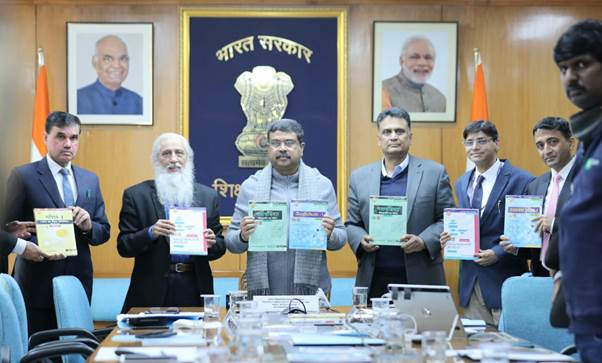
NEAT 3.0 and AICTE prescribed technical books in regional languages

 Union Education Minister and Skill Development Minister Shri Dharmendra Pradhan launched NEAT 3.0, a single platform to provide the best-developed ed-tech solutions and courses to students of the country. The Minister also launched AICTE prescribed technical books in regional languages.

11c4c756-47a6-4f6a-8ee7-efa1bf06f7ee.jpg

c487de0f-7471-481c-ae1a-8ff5030aeafe.jpg

Speaking on the occasion Shri Pradhan said that NEAT will be a game-changer in bridging the digital divide, especially among the economically disadvantaged students and also in fulfilling the knowledge-based requirement of India and the world. The Minister informed that 58 global and Indian start-up ed-tech companies are onboard NEAT and are offering 100 courses & e-resources for bettering learning outcomes, developing employable skills and overcoming learning loss. He hoped that the e-content & resources and Digital frameworks like NEAT are a step in the right direction in minimising learning loss.

The Minister encouraged AICTE to integrate courses in NEAT with skill India to tap the opportunities in emerging areas of skill to boost employability and prepare our youth for the future. He urged that AICTE and ed-tech companies to offer e-resources in the least possible cost. Shri Pradhan complimented the global ed-tech companies and Indian start-ups who are a part of NEAT 3.0. He said that all ed-techs are welcome to work with a collaborative approach for making education accessible & affordable. But, ed-techs must remember that there is no place for monopoly and exploitation, he added.

The Minister expressed his happiness that today, more than 12 lakh socially and economically disadvantaged students have received free ed-tech course coupons worth over ₹253 crore under NEAT 3.0. This is one of the biggest gift to the student community from Prime Minister Shri Narendra Modi in the new year 2022, he added. He stated that India will lead the global economy in the 21st century and will be the most preferred market for trade & economy.

On technical books in regional languages, Shri Pradhan said that our diverse languages are our strength and harnessing them key to building an innovative society. He further said that learning in regional languages will further develop the critical thinking capacity & enable our youth to become global citizens.

NEAT:

National Educational Alliance for Technology (NEAT) is an initiative to provide the use of best-developed technological solutions in the education sector to enhance the employability of the youth on a single platform for learners’ convenience. These solutions use Artificial Intelligence for a personalized and customized learning experience for better learning outcomes and skill development in the niche areas. AICTE, MoE is acting as the facilitator in the process while ensuring that the solutions are freely available to a large number of socially and economically backward students. NEAT has 58 Education Technology Companies with 100 products that help to develop employable skills, capacity building, and bridge learning gaps.

Secretary, Higher Education Shri Sanjay Murthy; Chairman, AICTE Prof. Anil Sahasrabudhe; Vice Chairman, AICTE, Prof. M P Poonia, Prof. Rajiv Kumar, Member Secretary, AICTE and senior officials of the Ministry were present on the occasion.

*****

FOREIGN LANGUAGE INFLUENCE ON ENGLISH

The fact. English is not a pure language is accepted by everyone. It has borrowed many words from different foreign languages and it enriched the English vocabulary. The words borrowed from other languages are known as loan words. According to F T Wood a foreign languages influenced English in three ways. First is by the foreign invaders, who settled in England brought in their words like Scandinavian words after Scandinavian invasion. Next is by foreign contacts through trade, voyages, explorations etc. The example of words borrowed by trade are Italian and Spanish words.And the third one is through scholarship, learning and culture like the Latin and Greek words borrowed during Renaissance. Apart from these ways, various reasons like religious and political movements,colonial invasion also influenced English language. This paper deals with the influence of seven languages on English. They are Celtic, French, Latin, Greek, Norman, Dutch and Spanish. Celtic influence is the first one. The Celts are believed to have been arriving in 600 BC.

The Celtic people who invaded Britain are believed to have integrated with the people who previously inhabited the island. The land that remained dominantly Celtic are divided linguistically into two – Gaelic or Goidelic and Brythonic. The Goidelic languages are Irish, Highland Scottish and Manx. Brythonic is made up of Welsh, Cornish and Briton , of these Welsh is the one to survive most strongly in the present day. Words borrowed from Gaelic are “slogan” which was used in Gaelic as “slaugh- gharim” means “battle cry”. “Bog” is another example from Gaelic “bogach” meaning “soft” and “moist”. Some other examples are trousers, beat, clan, smashing, pet etc. Examples of words borrowed from Welsh vocabulary is “Penguin” from welsh “pen guyn” meaning white head. Celtic influence on English is apparent through the place names. The language of Celts was referred to as the British the language of the Brithons the native inhabitants of the land. Surviving names are Thames and Yare names of river and names of Roman town like
London, York and Lincoln.


The words borrowed from French constitutes twenty nine percentage of English language. The French influence can be categorized into lexical, morphological, orthographic and miscellaneous. According to Albert c Baugh and Thomas Cable the influence “. . . began slowly and continued with varying tempo for a long time”. The French influence began with the Norman conquest. There are different categories of borrowed words. They are related to Government and social class like “revenue”,”authority”, “duke”, words related to Church like “religion”, “sermon” “prayer” related to Law “justice”, “crime”, “jury”, “pardon” War related “army”, “battle”, Fashion related “gown”, “ frock”, etc Food related “feast” , “plate”, “fry” and Learning related “ paper”, “preface” “logic” etc. Next borrowing is the food pairs. In many cases French word might have existed with a German word. In this the two words use in different senses. In such pairs the first English word is about the living animal in a farm and the French word signifies the meat of the animal, as in the case of cow and beef, sheep and mutton. Next french influence in lexical level is doublets. Doublets are the same word borrowed twice, one from Norman dialect and another from Parisian dialect, like catch v/s chase, warranty v/s guarantee, etc. On a morphological level french influence had a great impact on English. The decline in the use of English singular pronouns like “thou’ and “ thee” and replacement with “ ye” and “you” have been linked to the parallel French use of “vous” in formal settings. The use of “s” to plurals in English is also attributed to French influence. Possessive phrases such as the use of “ ’s ” , constructions that places adjectives after the noun like “attorney general”, and use of certain prefixes and suffix morphemes like pre, -ous, -ily, -tion are also the result of french influence. In orthographic category the used of “qu” instead of “cw”, “gh” instead of “h”, “ou” instead of “u” are examples of french influence. The doubling of vowels tho represent long vowel sounds like “see” , doubling of consonants after short vowels like “sitting” amd more use of ‘k’, ‘z’, ‘y’ are in this category. Normans had a strong influence on English personal names. English names such as Alfred, Harold, Godwin and Athelstan largely fell out of fashion and replaced by names like John, Peter, Simon, William, Richard and Henry.

Latin influence is considered the earliest of all the influence on English. First Latin influence on English language was when England contacted with the Roman Civilization The Latin words borrowed during this phase belongs to agriculture, war and domestic life. The loan words are wine, mint, mill, kitchen, cup, dish, pepper, cheese, butter, milk etc. There are place names came during this phase like places ending with ceaster like Lancaster, Gloucester, Winchester, Manchester etc. Next phase of influence happened with the introduction of Christianity. The introduction of Christianity was on 59AD . The loan words came during this time is related to new conceptions, religion, and faith. Words related to education,plant, domestic life were also borrowed. The words are Angel, anthem, hymn, minister, monk, disciple, silk, pea, pine, poppy, beet, pine, grammar, master,grammar, lobster etc. In the middle English period Latin came through translation of holy bible. Words related to law (conspiracy, custody, legal, prosecute), theology (scripture, incarnate,limbo), literature (allegory, genius,intellect,prosody) and science (mechanical,solar,zenith) came during this phase. In the 15 th century during Renaissance great revival of learning influenced English immensely. The words borrowed during this phase are Nouns,Adjectives and verb. Examples for nouns are radius,allusion, circus, atmosphere, bonus etc, Adjectives are appropriate, domestic, perfect etc and Verbs are assassinate, benefit, affidavit, exit etc. As a result of Latin influence, native nouns had got Latin adjectives like paternal for father, maternal for mother, royal for king etc.

Greek language influenced English immensely. Even before Renaissance English language contained a few Greek words, like geography, theology, logic through Latin. But most of Greek words passed into English during Renaissance period. Revival of Greek learning in Western Europe at the beginning of sixteenth century was the reason for borrowing from Greek. Examples for such words are irony, alphabet, drama, elegy etc. The Greek words borrowed during seventeenth century are orchestra, pandemonium, museum,clinic etc. Bathos and philander are the examples of words borrowed during eighteenth century. During nineteenth and twentieth century scientific and technical terms came from German.Those words are psychology, neurology, oxygen, halogen, telephone, microscope etc.The modern medical science is full of Greek terms because of the works of Hypocrites. Greek also contributed some suffixes and prefixes like anti-, di-, hyper-, poly-.

Norman contribution is one of the major influences on English language. Normans came into England during 1066AD . The words borrowed from Norman French can be grouped into several types like legal terms( adultery, slander), military words( surrender, occupy), names of meats( bacon) royal court ( chivalry, majesty). The use of legal and military terms are because of the influence of William the Conquerors works. Other examples of Norman loan words are accuse, archer, assault, curfew, fashion, judge, marriage etc. Dutch had a great influence in English during renaissance period and through commerce. In the renaissance period many loan words from low German from which we have dutch, Flemish and the dialects of Northern Germany came to England. These regions had close commercial contacts with England ever since the Norman conquest and many of the loan words are related to sea faring and trade. Examples are skipper, clock, cruise, smuggle, trek, smack etc.

During the middle English period quite a number of words borrowed from Spanish. Most of the Spanish words came through trade, commerce and war. Examples for such words are armada, cargo, spade, siesta, cocoa, potato, cafeteria etc. The bulk of Spanish words came into English from the middle of sixteenth century to the middle seventeenth century. These are some examples of words borrowed to English from foreign language and their influences. While analyzing these contributions, it can be concluded that , these words and usages enriched the English vocabulary.

MOST APPRECIATED DRAMA OF DIFFERENT LANGUAGES IN INDIA

Being one of the most viewed programmes on Indian channel and getting good TRP with desi viewers many different dubbed shows were appreciated from pakistan, turkey, korean, ukranian etc.

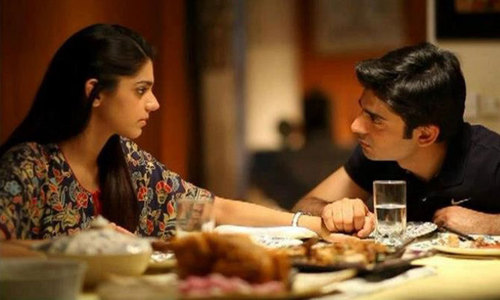
1. ZINDAGI GULZAR HAI(PAKISTANI)

This serial was a phenomenon that made its stars insanely popular in both Pakistan and India, boosting the steady trickle of cultural exchange into a river of cross-border friendship. Powerful performances from Sanam Saeed, Samina Peerzada and Fawad Khan made this serial an international favourite.

ZINDAGI GULZAR HAI (2012)(2014 in India)

This was the show that made Pakistani actor Fawad Khan a popular face in India. The show that premiered in 2012 on Hum TV in Pakistan was based on a novel by Umera Ahmad and was also inspired from Jane Austen’s Pride and Prejudice. It was a love story of Kashaf played by Sanam Saeed and Zaroon played by Fawad Khan. It was a classic poor girl and a rich boy love story and focussed on women’s struggle in the orthodox Pakistani society. The show instantly became a hit in Pakistan. And when the show travelled to India two years later, it re-created the history. The charms of the male protagonists, played by Fawad Khan floored TV Ji and many Indian female fans.

2. DESENDENT OF THE SUN(KOREAN)

 Korean heartthrob Song Joong Ki plays the role of a Special Force Officer. He is considered to be one of Korea’s hottest actors with a huge fan following across South East Asia. The series will premiere on Indian television on 8 February 2017 and became one of the first K-dramas to be available on a widely known Indian cable network.

DESENDENT OF THE SUN(2016)(2017 in India)

‘Descendants of the Sun’ is the story of Special Force Officer and a surgeon who fall in love at first sight. Their contrasting ideologies and values (as one kills to protect lives while the other one saves lives to protect them) makes them shy away from one another. Destiny plays an interesting role and after almost a year of having parted ways, they meet at a warzone ‘Uruk’, a land far from Seoul. Now, circumstances bring them face to face where they must work closely together driven by their principles.

3. FERIHA(TURKISH)

The first Turkish drama on Indian television was aired on 15th September 2015, Adını Feriha Koydum (Feriha) which had become a huge success. And from that time the Turkish TV Series has been very popular in India.

FERIHA(2011)(2015 in India)

It is a story of a young ambitious girl, who belongs to a poor family. But with the dreams of making it big out in the world. Beautiful, intelligent, and young, and with the thirst to see and travel the world, Feriha works hard to secure a scholarship to a private university.

But the new life at the university, where she goes to study on a scholarship, which awaits Feriha, about which she has no clues, wraps its arms around her and spins her around. Coming from a poor family and intimidated by the riches of the people around her at the university, Feriha soon entangles herself in a whirlwind of lies and made up stories. Emir Sarrafoglu, a rich son of a rich dad soon becomes the center of attraction of Feriha’s world, and telling lies, her new lifestyle.

4. SNOWDROP(UKRAINIAN)

“Snowdrop” was premiere in India on January 16 , 2017. This captivating story of love and revenge from the heart of Ukraine will not only enchant viewers with its superlative content but also give the audience an experience of a global palate.

SNOWDROP(2015)(2017 in India)

The show revolves around Nadya, an innocent, good hearted and hard working girl, who gets wrongly framed for an accident. Irina, her beautiful, spoilt and manipulative step sister and the man that both of them are in love with is Igor. He is the heir to a cosmetics empire. A tragic accident kills Igor’s beloved sister. Igor, who loved Nadya loses all his trust in her after the ill-fated incident. Irina, takes advantage of the situation and convinces Igor to marry her. The drama starts with a very exciting jail break. In first episode, Nadya will be seen escaping prison and rushing to a hotel where she confronts Irina as she is getting engaged to Igor. The confrontation ends with the stepsisters handcuffed to each other, falling off a roof. As they fall, Nadya wonders how they came to this juncture in life and remembers her past. The show depicts Nadya’s fight to prove her innocence and get the real culprit punished.

5. BOYS OVER FLOWER

This is the most popular K-Drama that dubbed in Hindi and become famous in the whole subcontinent. This drama didn’t only get popularity but the whole cast get popularity from this drama. This is another High school story with rich boy and the poor girl but intense triangle love story.

BOYS OVER FLOWER( 2009)(2017 in India)

Geum Jan Di comes from a poor family who owns a dry-cleaning shop. One day, she visits Shinhwa High School, a prestigious school for the wealthy, and saves a student trying to commit suicide because of bullying. For her heroic act, Jan Di receives a swimming scholarship and starts attending the school. In school, she meets the notorious F4, the most popular and powerful group of boys at the school, consisting of Gu Jun Pyo; the leader of F4 and heir to the Shinhwa Group, Yoon Ji Hu; the grandson of a former president of Korea, So Yi Jung; a skilled potter who comes from a family that owns the country’s biggest art museum, and Song Woo Bin; whose family runs the country’s largest construction company. Her life at school starts out miserable, as she doesn’t fit in with other students because of her status, and later becomes worse when she is labeled as the new bullying target of the F4.

these are the some international shows which was well appreciated with the Indian desi viewers and become hit and was trend setter for the other drama of different countries.

Why are there different languages?

Researchers can only guess when humans first began forming sounds into words to communicate thoughts (there certainly weren’t any books to record the invention of language). Ancestors of the humans species possessed the mouth and throat parts necessary to pronounce words nearly two million years ago, but they likely didn’t have much to talk about until they started creating complex tools and building fires more than a milliom years later. The first system of words might have described tools and fire-making techniques. “Carl blow on fire, fire grow big,” Carl the Homo erectus – our immediate evolutionary ancestor – may have explained to this campfire pals 500,000 years ago.

No doubt the earliest members of our species – Homo sapiens – added to the conversation when they appeared around 200,000 years ago. But as they started leaving Africa to explore Asia, Europe, and eventually the rest of the world around 600,000 years ago, our human ancestors began to develop more complicated tools – and probably words to describe them – within their own tribes.Their vocabularies grew and splitt off from the languages spoken by more far-flung groups. The farther these pockets of humanity moved from southwestern Africa – the point of origin for both Homo sapiens and language – the more their languages changed. And that’s why we have nearly 7000 languages spoken around the world today.

What are the five most commonly spoken languages in the world?

And how do you say hello in them?

– CHINESE “ní hâo” (nee-how)

– SPANISH “Hola” (OH-lah)

– ENGLISH “Hello” (hell-OH)

– HINDI “Namaste” (nah-MA-stay)

#5 – ARABIC “Salaam” (sah-LOM)

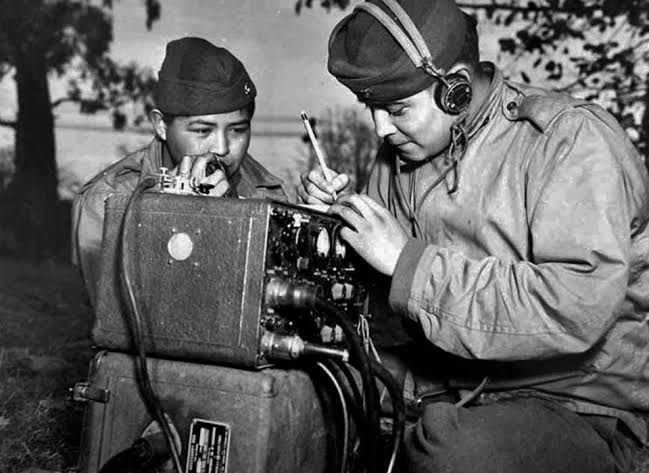
Why did the U.S military deploy Native American code talkers in World War II?

Although it’s crucial in battle, communication is worthless – even dangerous – if it’s intercepted by the enemy. Even messages created by complex ‘encryption machines”, which convert plain words into secret codes, can be hacked given enough time. Native Americans, however, speak complex languages that are virtually unknown outside their tribes . Since the First World War, they have used their unique linguistic abilities in the U.S military’s signal corps as “code talkers,” translating sensitive communications into their language and transmitting them much faster than any machine. Even if enemies learned to decode Cherokee, Comanche, Navajo, Choctaw, or any of the other code-talker languages, they would still need to figure out the secret terms for words that didn’t exist in those languages. The Navajo word for “iron fish,” for instance, was used to describe submarines. A tank became “turtle” in Comanche.

The code talkers’ mission was so top secret they weren’t even allowed to share details with their loved ones. Their existence was finally made public in 1968 ( 23 years after the close of the war ), but it took several decades before they were recognised for their crucial role in winning World War II.

THE FRENCH ARMY DISCOVERED a short of “universal translator” – at least for ancient Egypt’s written language – in 1799. Uncovered near the Egyptian village of Rosetta, this slab of granite was engraved with a royal announcement from 196 B.C. written in both Greek and hieroglyphics, an ancient Egyptian script composed of pictures that represented sounds, Egyptian words, and by 1822 a French genius named Jean – François Champollion had cracked the code. Suddenly, archaeologists could make sense of the symbols scattered across Egypt. Tombs, temples, and monuments became open books.

Why do Eskimos have a hundred different words for snow?

This question has a flaw from the get go. Eskimos – a broad term for people native to frigid subarctic region in the United States, Canada,Greenland, and Russia – don’t speak a single language. They actually speak five of them, none of which has a hundred words for snow. The myth of their ice – obsessed vocabulary comes from the way their languages work. Eskimos create larger words (and full sentences) out of smaller “root” words. Their languages have only a few root terms for snow, but to those small terms they add other words to create long one-word descriptions of the snow’s conditions and uses (“the snow is icy and dangerous, “for instance, or “this wet snow is excellent for making a snowman “). The structure of Eskimo languages makes it seem like they have hundreds of words for everything, not just snow.

4 reasons to learn multiple programming languages

ARTICLE


4 Reasons To Learn Multiple Programming Languages

Learning your first programming language is a huge step in your journey to becoming a developer, but if the learning stops there it can dramatically impact your career prospects and income potential.

Technology is emerging at an unprecedented pace, with new coding languages created every year to keep up with this rapid innovation. Believe it or not, there are currently more than 500 programming languages, and that number continues to rise!

Companies like Shutterstock that used to be dedicated to only one language (Perl) are now multi-lingual with a developer team that programs in Node.js, Ruby, Java, Python, PHP, and Objective-C. A company using multiple programming languages isn’t the exception, it’s the norm.

So, here’s the million dollar question: Can someone really become a successful developer only knowing a single programming language? While there are specialized roles in single languages, including JavaScript, the majority of companies and jobs do, in fact, require knowledge of multiple programming languages.

Whether you already have one programming language under your belt, or are deciding where to start, here are a 4 reasons to learn multiple programming languages.

1. More Tools To Get The Job Done

As a developer, the end goal isn’t learning as many languages as you can, or even learning how to code. Instead, it’s about being able to look at a problem and figure out what tools (read: programming languages), you can bring in to get the job done. Naturally, the more tools you have under your belt the more ways you’ll be able to tackle different problems.

Just as there are hammers, screwdrivers, sanders, and an array of other tools for different tasks, there are countless programming languages, with each serving a unique purpose.

2. Pick and Choose the Jobs You Love

Knowing a variety of programming languages, especially in this day and age, helps open up the job market tremendously.

Let’s say you recently graduated from a coding bootcamp and are ready to dive headfirst into the field of programming. There are dozens of companies looking for junior developers, although you find only a fraction of them are hiring for the language you learned while attending a coding bootcamp. By default, only knowing one programming language automatically limits you to fewer roles.

Take a look at the market demand for each of these 9 programming languages:

programming-languages-ranked-by-number-of-jobs-graph-infographic

Having a solid grasp of multiple programming languages, on the other hand, means you have an edge in the job market and qualify for a wider range of job opportunities. You can pick the role and company you love, rather than settle with the limited options you’re dealt with after graduation.

3. Increase Your Salary Potential

More languages equals more money. Don’t believe me? Here’s a recent blog post that highlights the increasing number of companies looking for developers who can work across a number of different functions (and what they’re willing to dish out in return):

And while companies are often [cross-functional developers] to keep costs down, they’re also prepared to pay more to get someone who can switch between projects and has three or four programming languages at their fingertips. In fact, they’re prepared to pay up to a year more for developers who can work in multiple languages.

Facebook is another example of a company that uses a mashup of languages. Facebook.com’s front-end is built on JavaScript, back-end built on Hack, PHP, C++, Java, Python, Erlang, D, Xhp and Haskell, and its database on MySQL, HBase and Cassandra.

Additionally, there are several contributing factors when it comes to determining a developer’s salary. One being whether or not someone is a front-end, back-end or full-stack developer. Full-stack developers know all aspects of the development process, and can use both front-end and back-end technologies, making them more valuable to a company. Because of this, companies are willing to pay an average salary that tops out at roughly $20,000 higher than that of a front-end or back-end developer.

4. Don’t Get Left Behind: Become A More Versatile Developer

Learning a programming language isn’t all that different from learning a foreign language. Once you learn your first foreign language, it becomes progressively easier to learn your second,  third or even forth. The reason for this is because while learning your first foreign language you were essentially “learning how to learn.” You can also start recognizing similarities across languages, which accelerates the learning process. The same principle goes for learning additional programming languages.  

One of Coding Dojo’s lead instructors has been in the industry for 25 years. During that time, he’s learned more than 20 different programming languages! Throughout his career he applied for jobs not knowing any of the languages they used, but was still hired because he showed that he was able to quickly learn, and run with, new languages and technologies.

Being a versatile developer and knowing multiple programming languages means your skills will never become outdated, and you can quickly adapt to industry trends. You can use your vast knowledge of software and web development to keep your job opportunities varied and fresh. Even if you get hired on to work as a programmer for a specific programming language, it’s not unusual for companies to switch course and decide to move to or bring in new technologies. In this day and age, you really can’t afford not to know more than one programming language!

The International Day of Indigenous people

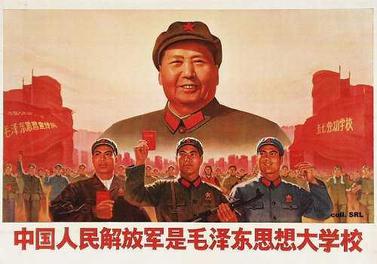
One of the most tragic instances in history would be that of the holocaust – a word that in itself is a definition of six years of European geopolitics. In Russia, Palestine and China, the expulsion of the White Army, the expulsion of the Arabs and the brutual suppression of cultures across China in the name of cultural revolution respectively bring to picture the way in which states and not just people can sometimes be the enemy of people. However, there have been several such instances in history, most of them hidden because they were carried out by the more ancestors of the ones who ended up being economically and intellectually influential communities.

Cultural Revolution - Wikipedia
A poster calling out for Chinese Cultural Revolution

Human history is a record of forced displacements both internal and external, ethnic cleaning and genocides and murders both to the dismay and sponsored by states. When Captain Cook discovered the down under, it led a massive import of British criminals on the continent. With them came officers, scientists and explorers. The businessmen and civilians searching for more opportunities came in later. The people of the continent – the Australian arboginals, the Maoris from Oceania and many more tribes were reduced to a mere holder of small patches of lands and often no land at all by the British who had a superior military.

When the first Irish and British settlers landed in the new World of America, the red Indians offered them food and shelter which soon became a situation where the Red Indians had to fight for the survival of their lives and their cultures which was systematically and quite institutionally taken away by the New World settlers. Similarly, when the Spanish invaded Latin America, it meant a complete and absolute dissolution of their traditions and a genocide that would annihilate their population to an extent where even after 400 years, they would not attain the same.

The Last Days Of The Incas - HistoryExtra
Machu Pichu stands as a testimony to the Grand Incan Empire in the Andes before the Spanish arrived.

To add to all these miseries are the tales of the Rohingya community from Myanmar, the Tamils in Sri Lanka, the Kashmiri Pandits in Indian state of Jammu and Kashmir, the now diminishing sea faring communities in Philippines and Malaysia and many more. Japanese and Italian unifications were also carried out at the cost of the local traditions, cultures and ways that the communities living there had been practicing for a millennia. In India, the use of English and Hindi have slowly gobbled up on the rich culture of local languages that the communities had. In fact, many communities from the state of Bihar and Uttar Pradesh have completely given up on their languages. Bihar – a state where only 6% people had Hindi as their mother tongue now has a minority of about 20%!!

World loses about 1 language every 15 days!!!

Wikipedia defines Indigenous people as – “Indigenous peoples, also referred to as first peopleaboriginal peoplenative people, or autochthonous people, are culturally distinct ethnic groups who are native to a place which has been colonised and settled by another ethnic group. ” But, a broader definition is the fact that indigenous people are defined by their cultures which is at a steady loss across the globe. The most important thing is to treasure the fragments of their traditions that still remain. Because a rainbow is better a rainbow.

COVID-19 and Indigenous peoples | United Nations For Indigenous Peoples

Happy International Day for the Indigenous communites.

Benefits of learning different languages. [Part 1]

[Bhoomika Saini]

Knowing more than one language is nearly vital in today’s world. Companies are all global, and the demand for multilingual applicants is high. But not all languages are created equal; some will get you further than others.

What Makes A Language Useful To Learn?

Feed Your Brain

The many cognitive benefits of learning languages are undeniable. People who speak more than one language have improved memory, problem-solving and critical-thinking skills, enhanced concentration, ability to multitask, and better listening skills. They switch between competing tasks and monitor changes in their environment more easily than monolinguals, as well as display signs of greater creativity and flexibility. If that weren’t enough, as we age, being bilingual or multilingual also helps to stave off mental aging and cognitive decline.

Number Of Speakers

Unsurprisingly, it is very important to know how many speakers there are of a language before you set your heart on learning it. Most people opt to learn languages spoken by the largest number of people. You should also consider how many people speak the language as a second language. With this information, you will open more doors to global communication.

Geographic Region

This is where your goals and interests come into play. Do you plan to travel in one particular region for a while? If so, look into what languages are commonly spoken there. If you want to learn a language that is widely spoken throughout the world, you may want to opt for English, French, or Spanish, which are spoken on all continents.

Usability And Versatility

When choosing a language, you may want to look at versatility. Mainly, can you use this language both at home and abroad? What about in both business and social contexts? Ask yourself, “How much will I use this language?” It takes time and effort to learn a language, and you will want to learn the one with the most usability for you!

Career Opportunities

Think of your current or future field, and location of business. If you are working in the United States, Spanish is a very useful language to learn. If you expect your industry or company will do a lot of international business, learn languages that will be useful in your field. It could be Chinese, Japanese, Italian, or German.

Languages in India

Language can be defined as Communication of thoughts and feelings through a system of arbitrary signals, such as voice sounds, gestures, or written symbols India is known for its diversity; diversity of religion, culture, tradition, languages, dialect etc.

Eighth schedule of the constitution of India recognizes as many as 22 languages. G A Grierson made the first linguistic survey of India and made a list of 544 dialects and 179 languages, despite of the fact that many linguists don’t accepted Grierson’s survey. But by any estimate, more than 500 dialects are spoken in India and out of them; around 25 languages are spoken by around 97 of Indian population.

All the languages are classified into four main language families :

• Austro-Asiatic or Nishad

• Sino-Tibetan or Kirat

• Dravidian or Dravid

• Indo-Aryan or Aryan

Among the above mentioned language, Nishad and Kirat are almost entirely tribal languages. Aryan family is the largest one constituting 73 percent of the languages spoken in India. Khasi, Santhali, Nicobari etc are part of Nishad family. Ladakhi, Manipuri and Ahom belong to the Kirat group. Dravidian family includes Telugu, Tamil, Kannad and Malayalam. Aryan is the largest family and includes Punjabi, Sindhi, Awadhi, Chhattisgarhi, Marathi, Konkani, Garhwali, Rajasthani, Guajarati, Bhojpuri, Maithili, Bengali, Assamese, and Oriya etc. 

Even before the independence, reorganization of provinces on the basis of language was one of the Congress demand and after independence, Andhra Pradesh was the first state created on linguistic basis and Telugu was its official language and later many states were carved on linguistic basis like almost all North Eastern states, Gujarat, Kerala etc. The linguistic diversity noticed in the macro-structure of the country is also reflected in its regional and micro-structure, i.e. in the constituent States. Even though the State boundaries are carved on the basis of dominant languages, the States are multi-lingual. 

The minority languages in the States of course vary from province to province. When one surveys the linguistic scenario of the country it appears India is a country of linguistic minorities. All the States have their dominant languages, yet they also have certain numbers of minority languages. Even States, like Arunanchal Pradesh, Himachal Pradesh, Nagaland and Mizoram etc. have minority languages. 

The Indian constitution binds the whole country irrespective of linguistic and cultural variations. Articles 343 to 351 of the Constitution deal with the language situation in India. Articles 29 and 30 and 347 have been devised to safeguard the interest of speakers of minority languages. Article 350 (B) envisages the appointment of a Special Officer for linguistic minorities Languages in India occupy an important place in country’s social, cultural and political identity.

In fact many cultures are known by their language only for instance, Punjabi, Tamil, Bengali, Gujrati, Assamese, Marathi, Kannada and many more. Most distinguished feature of these cultures, apart from dance, music, dress is language and script. Languages are an important instrument in establishing identity of an individual, state and Nation. For that matter when India was conceiving an idea of making Hindi the National language of the country, Dravidian family vehemently opposed the idea and no national language was chosen. During pre as well as post independence years, country has witnessed many linguistic movements in the country few of them demanding reorganization of states on linguistic basis. 

Among the linguistic movements witnessed by independent India, Pure Tamil Movement was most successful to agitate the nation at large. Here nation realized that whenever a linguistic movement starts due to some specific reason, it put forth the religious, social, political and caste divisions prevalent in the society. 

In 1986, Indian Prime minister Rajiv Gandhi introduced the “National Education Policy”. This education policy provided for setting up Navodaya Schools, where the DMK claimed teaching of Hindi would be compulsory. The Anna Dravida Munnetra Kazhagam (ADMK) led by M. G. Ramachandran (which had split from the DMK in 1972), was in power in Tamil Nadu and the DMK was the main opposition party. Karunanidhi announced an agitation against the opening of Navodaya Schools in Tamil Nadu. 

In Bengal and other non-Hindi agitation was not as vehement as in Tamil Nadu but even there the perceived attempt to impose Hindi is strongly resented. In Maharashtra, although the issues were much simpler, again an agitation had to be carried out to achieve the division of the province into Gujarat and Maharashtra on linguistic basis. Even there, the problem of a Marathi-speaking area, Belgium, being left in Karnataka rather than being merged into Maharashtra still continues. In other parts of the country too, there are still ‘boundary’ disputes and other problems relating to linguistic issues. 

Recently, after much agitation on the issue and in order to mollify the Muslim electorate, Urdu has been accorded the status of secondary official language, in Bihar and Uttar Pradesh. It is recognized as a regional language in Andhra Pradesh also. Language is primarily the business of the people and linguistic integration has to be achieved at the popular rather than official level. Indeed this is one of the significant findings of the monumental ‘Peoples of India’ study carried out by the Anthropological Survey of India. 

The study of nearly 4000 communities that constitute India has found that, traditionally as well as now a very large number for them is bilingual, using one language for internal communication and the other for interacting with neighboring ‘communities’. In fact this could have been the only way of survival in the multi-ethnic plurality of India.

In India, it has been seen that languages are not merely the modes of communalism but are also systems of misunderstanding and therefore the linguistic problem has to be addressed at various levels : inters-group, inter-group; as elements of discourse and as barriers in social-cultural interaction.