The expression “LGBT” represents lesbian, gay, bisexual and trans gender. A lesbian is lady drawn to another ladies. Gay is a man drawn to another man. Bisexual individuals are drawn to more than one gender. A transgender individual is somebody whose sex personality varies from the one they were appointed upon entering the world. Individuals in the LGBT people group are battling for equivalent rights and acknowledgment. Trans individuals, particularly, face a ton of trouble in discovering acknowledgment. Individuals in the LGBT people group are peered downward on constantly. While lesbians, gay and bisexual individuals are reluctant to inform their families about their sexuality.
They are not acknowledged in the public eye. Others ridicule them. “LGBT” terms are regularly used to affront somebody. “Gay” is frequently utilized as a revile/curse term which isn’t right. Somebody’s identity shouldn’t be utilized as reviling/cursing word.
Consistently, an enormous number of LGBT individuals face gigantic issues identified with brutality, joblessness, separation, destitution and absence of medical care. Biased individuals have issues with the manner in which individuals from the LGBT people group lead their lives. These individuals, I accept, are being juvenile. There are a few group who claims themselves as LGBT ally however the extremely next second they crack lame and sexiest jokes on them.
However, there are individuals who genuinely support LGBT people group. Be that as it may, of individuals have ill-conceived notion about them. They accept that LGBT individuals shouldn’t be permitted in home. I believe If school make their understudies mindful about the LGBT people group, we would not deal with such issues.
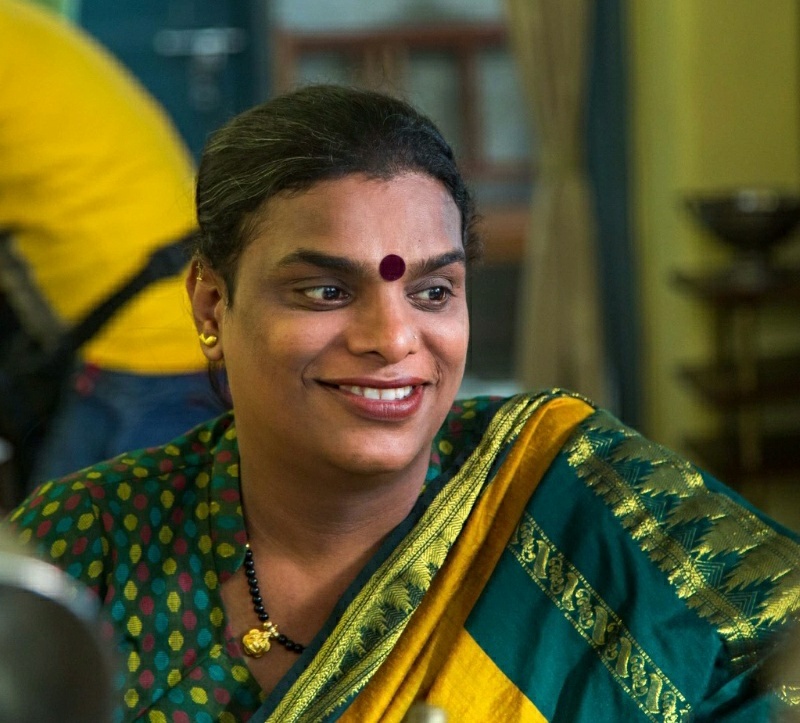
Born as Angad Gummaraju, Trinetra grew up always feeling alienated from her own body and plagued by society’s norms of gender identity. Having faced immense scrutiny and provocation from both society and her peers over the years for being different, finally, at the age of 20 she made the brave decision to come out as queer.
She put up a post on Facebook that read ‘Call Me Trinetra’, officially coming out as a woman, and it was from here on that her journey of self-love and self-discovery became inconceivably more difficult. The ensuing onslaught of harassment, judgement was nothing like she’d ever experienced in her life, because this time, she wasn’t the confused and unsure teenager anymore, this time, she was the self-assured, informed and more confident version of herself.
Since then, her openness about her gender identity made her the lightning rod for a lot of slander, transphobia and hate. But that didn’t stop her from chasing her dreams, she channelized her anguish into her studies and decided to go to med school. Being a med student exposed her to another plethora of challenges, from being thrown out of a lecture for wearing a nose pin, to not being allotted a room in the girl’s hostel because she didn’t have the ‘organs’ for it. It soon made her understand that the very flag-bearers of the field she pursued suffered from transphobia.
She is now a YouTube vlogger who has been consistently documenting her transition journey on her channel ‘The Trinetra Method’. She underwent a gender confirmation surgery (GCS) abroad in February last year, after which she adopted the name Trinetra after the goddess Kali. Presently a surgical intern at KMC Manipal, and a well-known social-media figure, Dr Trinetra isn’t just a beacon of hope for others like her, she’s also an inspiration to anyone seeking to find happiness and self-love. Her once arduous but now buoyant journey warrants no emotion short of admiration and respect.
Transsexual individuals come from varying backgrounds, and HRC Foundation has assessed that there are multiple million of us across the United States. We are guardians, kin, and children. We are your collaborators, your neighbors, and your companions. We are 7-year-old children and 70-year-old grandparents. We are a different local area, addressing all racial and ethnic foundations, just as all confidence customs.
“Transsexual” – or trans – is an umbrella term for individuals whose sexual orientation character is not quite the same as the sex allocated to us upon entering the world. Albeit “transsexual” and our cutting edge meaning of it just came into utilization in the late twentieth century, individuals who might fit under this definition have existed in each culture all through written history.
Close by the expanded perceivability of trans big names like Laverne Cox, Jazz Jennings or the stars of the hit Netflix series “Posture,” three out of each ten grown-ups in the U.S. actually knows somebody who is trans. As trans individuals become more noticeable, we mean to expand comprehension of our local area among our companions, families, and society.
What’s the significance here to be trans?
The trans local area is staggeringly different. Some trans individuals distinguish as trans men or trans women, while others might depict themselves as non-twofold, genderqueer, sexual orientation non-adjusting, agender, bigender or different characters that mirror their own insight. A few of us take chemicals or have a medical procedure as a feature of our progress, while others might change our pronouns or appearance. About 3/4 of trans youth that reacted to a HRC Foundation and University of Connecticut overview related to terms other than stringently “kid” or “young lady.” This recommends that a bigger segment of this present age’s childhood are recognizing some place on the expansive trans range.
What difficulties do trans individuals confront?
While trans individuals are progressively apparent in both mainstream society and in every day life, we actually face serious segregation, shame and fundamental imbalance. A portion of the particular issues confronting the trans local area are:
Absence of lawful assurance Trans individuals face a general set of laws that regularly doesn’t shield us from separation dependent on our sexual orientation character. Regardless of a new U.S. High Court Decision that clarifies that trans individuals are lawfully shielded from segregation in the working environment, there is still no complete government non-separation law that incorporates sex character – which implies trans individuals might in any case need response on the off chance that we face separation when we’re looking for lodging or eating in an eatery. Besides, state assemblies the nation over are discussing – and sometimes passing – enactment explicitly intended to deny trans individuals from getting to public restrooms that compare with our sexual orientation personality, or making exclusions dependent on strict convictions that would permit oppression LGBTQ individuals.
Destitution Trans individuals live in neediness at raised rates, and for trans minorities, these rates are much higher. Around 29% of trans grown-ups live in destitution, also 39% of Black trans grown-ups, 48% of Latinx trans grown-ups and 35% of Alaska Native, Asian, Native Americans and Native Hawaiian or Pacific Islander trans grown-ups.
Shame, Harassment and Discrimination – About a large portion of 10 years prior, just one-fourth of individuals in the United States upheld trans rights, and backing expanded to 62% continuously 2019. Regardless of this advancement, the trans local area actually faces extensive shame due to over a hundred years of being described as mentally sick, socially degenerate and physically savage. While these bigoted perspectives have blurred lately for lesbians and gay men, trans individuals are regularly still criticized by a general public that doesn’t get us. This disgrace works out in an assortment of settings – from administrators who influence hostile to trans shame to score modest political focuses; to family, companions or associates who reject trans individuals after finding out about our trans characters; and to individuals who pester, menace and submit genuine brutality against trans individuals. This incorporates disgrace that keeps them from getting to fundamental administrations for their endurance and prosperity. Just 30% of women’s havens will house trans women. While ongoing lawful advancement has been made, 27% of trans individuals have been terminated, not recruited or denied an advancement because of their trans personality. Time after time, harassment has driven trans individuals to try not to practice their most essential rights to cast a ballot. HRC Foundation’s exploration shows that 49% of trans grown-ups, and 55% of trans grown-ups of shading said they couldn’t cast a ballot in something like one political decision in their life due to dread of or encountering separation at the surveys.
Savagery Against Trans People–Trans individuals experience viciousness at rates far more noteworthy than the normal individual. More than a larger part (54%) of trans individuals have encountered some type of cozy accomplice brutality, 47% have been physically attacked in the course of their life and almost one of every ten were actually attacked in the middle 2014 and 2015. This sort of viciousness can be lethal. No less than 27 trans and sexual orientation non-adjusting individuals have been viciously killed in 2020 hitherto, similar number of fatalities saw in 2019.
1. The government of India has already pushed and continues to push the Transgender Persons (Protection of Rights) Act, 2019 and Rules, 2020 as an extraordinarily progressive thing. However, that’s not true.
2. The Rules describing how the Act would be implemented were rolled out for consultation in the middle of a nationwide lockdown, when the trans community was extraordinarily vulnerable and continues to be. Draft Rules were published thrice, the third time being on 25th September, 2020.
3. The community has protested the Act ever since it was a Bill in 2016 for several reasons – poor definition of trans people, reduced sentencing for our rape, no horizontal reservation, criminalizing begging (major income source) and most starkly, the complete absence of the right to self determine your own gender as guaranteed by NALSA vs UoI, a Supreme Court Judgement.
4. The 2016 Bill proposed a District Screening Committee that would screen trans bodies (degree of invasiveness not specified) before allowing them to self identify. This committee was done away with in later versions of the Bill, but the spirit of screening via District Magistrate remains even today, just less invasively. ONLY AFTER sex reassignment surgery, regardless, would you be entitled to the markers ‘male’ or ‘female’, completely disregarding that surgery is expensive and inaccessible to most of the community. Further, surgery doesn’t determine gender. Surgery is a personal choice.
Conclusive Points
5. Over the years, the community protested vehemently against all of the above. No one gets to denude and degrade us to “check” or “screen” our genders for us. Gender identity can be determined by no one but yourself.
6. Extensive, tireless feedback from the community has FINALLY been taken seriously to undo a lot of the damage the Act and Rules could have done. You’ll no longer need surgery before being entitled to binary markers, but you’ll have to provide some proof of medical intervention (includes anything from counselling to surgery). Better than before, but still, nothing to celebrate.
How will you feel when you’ll be made fun of based on your gender? or How will you feel when your family will abandon you because of your gender? These are the most basic challenges faced by transgenders in India. They’re insulted for their appearance knowing that it’s natural and not their choice. They also face other problems such as physical and sexual violence, false arrest. They also face difficulties in getting their share in ancestral property. Due to lack of proper education, begging on the streets and sex work was their only option for survival. After years of hard work and struggle, they’ve got their stand in society. Many transgender across the country have made their own identity and have inspired many.
Here are some well-known transgenders all over India
Manabi Bandopadhyay
Isn’t she charming? She is Manabi Bandopadhyay, the first transgender college principal. She is the first transgender who has completed a Ph.D. She adopted a son too. She has inspired many transgenders by taking a stand for herself and completing her studies and becoming successful.
Laxmi Narayan Tripathi
Laxmi Narayan Tripathi is a transgender rights activist. She is also seen in various movies and is also a Bharatnatyam dancer, choreographer, and also motivational speaker. She is the first transgender individual to represent Asia – Pacific at a UN task meeting in 2008. She has also worked for many NGOs including Astitva Trust.
Joyita Mondal
Joyita Mondal is a first transgender judge of a civil court. She is also a social worker in West Bengal, India. She suffered a lot during her childhood but despite the difficulties, she finished her studies. She also started an organization, Dinajpur Notun Alo.
Gauri Sawant
Gauri Sawant is a transgender activist from Mumbai, India. She left her house when she was 18 and started her journey from there. She is the director of Sakhi Char Chowghi who supports transgender people and also helps people who have AIDS/HIV. She also has an adopted daughter.
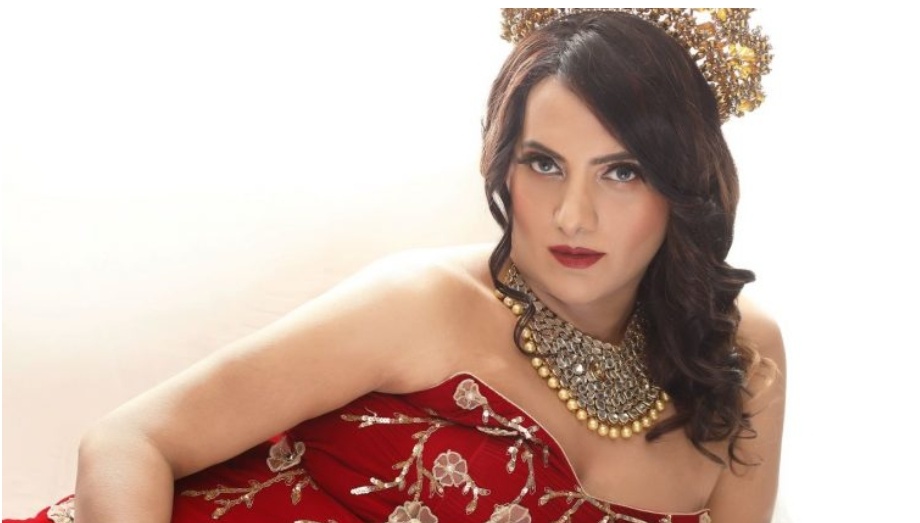
Naaz Joshi
Naaz Joshi is India’s first transgender beauty queen. She is as beautiful as any other woman on this planet.
Transgenders have never failed to impress us. They shine in their way and it’s time for us to accept them and give them the respect they deserve because, in the end, we all are human beings.
What did this POSH Act refer to ? So it commonly referred to, an Indian law enactment with the objective of making workplaces safer for women by preventing, prohibiting and redressing acts of sexual harassment against them in the workplace.
Why this act was needed ?The need for such legislation was observed first time by the Supreme Court, in Vishaka v State of Rajasthan. Sexual harassment at a workplace is considered violation of women’s right to equality( article 14 and 15) , life ( article 21) and liberty ( article 19(1)g) . It creates an insecure and hostile work environment, which discourage women’s participation in work, thereby adversely affecting their social and economic empowerment and the goal of inclusive growth. So there was much need for legislation against this sexual harassment at working place.
What is the objective behind POSH 2013 ? The Sexual Harassment of Women at Workplace (Prevention, Prohibition and Redressal) Act 2013 (“the Act”) was enacted with the objective to provide protection against sexual harassment of women at workplace and for the prevention and redressal of complaints of sexual harassment and for matter connected therewith or incidental thereto , that was mentioned under section 2(o) of the act .
What is sexual harrassment? Section 2(n) discribe a sexual harassment as unwelcome acts or behavior (whether directly or by implication) namely, physical contact and advances, a demand or request for sexual favors, making sexually colored remarks, showing pornography, any other unwelcome physical, verbal or non-verbal conduct of sexual nature .
Can a touch to women amount to sexual harrament ?
a women can commit sexual harrassment on another women ?
So both the question were answered in Shanta Kumar vs CSIR , where Delhi high court held that “undoubtedly, physical contact or advances would constitute sexual harassment provided such physical contact is a part of the sexually determined behaviour. a physical contact which has no undertone of a sexual nature and is not occasioned by the gender of the complainant may not necessarily amount to sexual harassment.
What are the offensive circumstances in which sexual harassment is done ?
The Act also provides the circumstances under which an act may amount to sexual harassment under section 6(2) . These are:
(i) implied or explicit promise of preferential treatment in her employment; or
(ii) implied or explicit threat of detrimental treatment in her employment ; or
(iii) implied or explicit threat about her present or future employment status; or environment for her; or
(iv) interference with her work or creating an intimidating or offensive or hostile work
(v) humiliating treatment likely to affect her health or safety.
Where the problem would be redressed under POSH : so section 4 provides for setting up of Internal Complaints Committee at every office of the organisation or institution, having more than 10 employees, to hear and redress complaints pertaining to sexual harassment. Section 11 reads that , The committee has to complete the inquiry within a period of 90 days. As per section 12, The committee can give certain interim reliefs to the aggrieved woman during the pendency of the inquiry.
What if the complaint by said victim is Mala fide ? case of filing of false or malicious complaint or false evidence the committee may recommend to the employer or District Officer to take action in accordance with the provisions of service rules or where no such service rules exist, in such manner as prescribed in Rule 10 of the Rules
Is identity of a women victim disclose ? No according to section 16 of posh 2013 , There is a prohibition on publication of identity of the aggrieved woman, respondent, witnesses, contents of the complaint, inquiry proceedings or recommendations of the committee, except information regarding the justice secured to any victim of sexual harassment.
In last what would be the punishment for accused ? When the employer fails to constitute an Internal Committee or breaches provisions of this Act or any rules made thereunder, they shall be punishable with fine of fifty thousand rupees (INR 50,000).
Indian society has usually lacked gender awareness, and the same is reflected in the mindset of the society. The tale of people who are generally referred to as transgender is a story of pain, misery, and agony.
They have not only face deprivation of rights, but also abuse and violence just because they do not fit within the “norms” that society has generally accepted. They are shunned and defamed by society and are considered to be outcasts and kept far away from participation in various societal activities.
Background
In 2012, the National Legal Services Authority, an Indian statutory body which is constituted under the Legal Services Authority Act, filed a writ petition (writ petition no. 400 of 2012) with the Supreme Court of India. It was followed by another writ petition (No. 604 of 2013) which was filed by Poojya Mata Nasib Kaur Ji Women Welfare Society, a non-governmental organization representing the Kinnar transgender community. Laxmi Narayan Tripathi, an individual who identified himself as a Hijra also approached the court and was also impleaded in the present case.
Issues involved
The petitions mainly raised an issue of “Gender Identity”. It has two facets, viz.:
Whether a person who is born male but has female orientation has the right to be identified as a female as per his choice ; the same question arises when an individual uses surgery to change his/her sex.
Whether a person who does not identify either as a male or a female has the right to be categorized in a “third gender”.
Arguments
The argument was made that the recognition of only the binary genders of male and female and the lack of legal measures to cater for the needs of the represented groups violates Right to Equality (Article 14), Freedom of Expression (Article 19), Right to Life and Personal Liberty (Article 21).
The transgender community urged that their inability to express themselves in terms of a binary gender denies them their rights and social welfare schemes.
Judgment
The judgement was delivered by a 2-judge bench comprising of Justice K.S. Radhakrishnan and Justice A.K. Sikri on 15th April 2014. The Court had to decide whether persons who fall outside binary gender can be legally recognised as “third gender” persons.
The Supreme Court in this case relied on various judgements from foreign courts like New Zealand, Australia, and England and took into consideration different foreign judgements like Corbett v. Corbett with its complete emphasis on biological sex, Attorney-General v. Otahuhu Family Court in which Justice Ellis noted that once a transsexual person has undergone surgery, he or she is no longer able to operate in his or her original sex.
The Court ruled that all provisions in the international conventions including the Yogyakarta Principles must be followed provided they align with the fundamental rights guaranteed under Part III of the Constitution.
In this landmark judgement Supreme Court legally recognised “third gender” for the first time and discussed “gender identity” at length. Further, it declared that eunuchs and hijras can legally identify as “third gender”.
The Court recognised that third gender persons were entitled to fundamental rights guaranteed under Part III of the Constitution and under International law.
The Court declared that the State and Central governments must grant transgenders full recognition in the eyes of the law so that they can avail education and healthcare without being subjected to any kind of discrimination.
Conclusion
Well, we cannot ignore the fact that the transgender community for long have suffered torture, humiliation, and pain. This judgement came as a fresh ray of hope for the transgender community who have faced discrimination and social injustice. This is a landmark judgement because it is the first to legally recognise non-binary gender identities and uphold the fundamental rights of transgender people in India. However, the transgender community still has a long way to go.
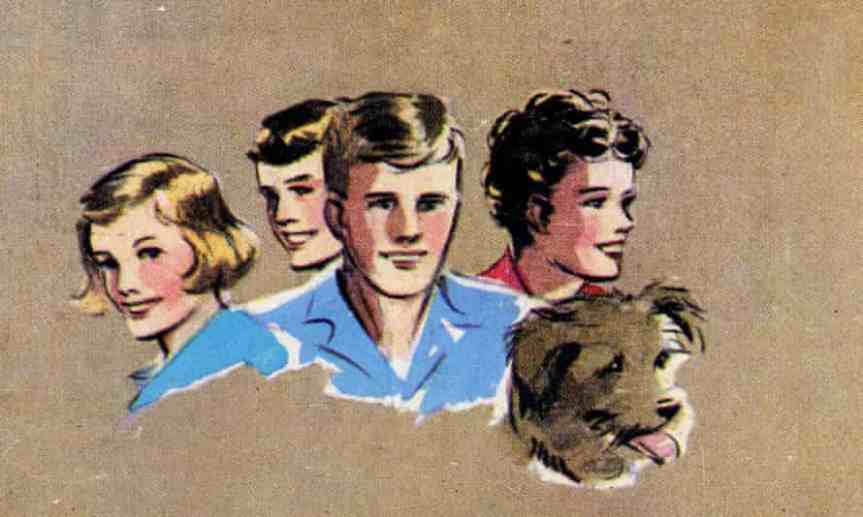
The Famous Five is a children’s adventure series written by the British author Enid Blyton. The first book The Five on a Treasure Island was published in the year (1942) after which 20 more books followed. With the sales totaling over a 100 million, it is considered to be an all-time best-seller in children’s literature. The series revolves around the lives of four children: Julian, Dick, Anne, Georgina (George), and her dog Timothy. Blyton’s portrayal of their carefree summers and adventures have always gained popularity among children. More often, Enid Blyton books are usually responsible for getting children interested in literature. Her use of simple language helps children easily understand the story. Her vibrant descriptions appeal to the readers in such a way that we long for adventures, matching the enthusiasm of the characters portrayed in her stories. Her storylines are intriguing and her peculiar way of dropping hints throughout the book which finally connects up as a shocking climax is always interesting.
“Far from being a set of fixed and stable values and roles assigned/imposed by society, gender is a performance or a role enacted by the individuals. This performance of gender is, of course, social in the sense that it is enacted, validated and accepted by the society.”
-Judith Butler (Gender Trouble)
In most cases, Blyton adheres to the dominant gender norms of her times; which is the Middle-class heteronormative British views which regulated the behaviour of women with respect to their appropriate domestic roles and activities for women like raising children and managing the household instead of careers. Blyton presents rather contradictory representation of gender roles. Mostly, she follows the dominant submissive roles of females but on the other hand, she also shows that there are alternatives where women have agency and freedom of choice. Her writing of ‘sexist’ characters are probably a result of suiting the story to the audiences of her time.
“Anne had a very happy morning. She arranged everything beautifully on the shelf… IT really was a splendid larder and dresser!… Then the little girl set to work to make the beds. She decided to make two nice big ones, one on each side of the cave.”
– Five Run Away Together (1944)
Anne is described as someone who is shy and timid. She’s not as adventurous as her brothers Julian and Dick or like her cousin George. She does all the domestic chores and is often in charge their food and other domestic needs. She is referred to by her brothers as a “Very good little house keeper”. She likes playing ‘house’ and thus, voluntarily does all the chores during their quests and she likes doing it. And she is extremely happy when she’s praised for her work. She takes pride being referred to a good housekeeper. Despite being the youngest of the four, she is often portrayed as the nurturer and care-giver. She selflessly takes care of everyone’s needs and plays a mother-like figure to the rest of the group. George’s mother, Fanny is portrayed in a similar such way and serves as a role-model figure for Anne. It is a given that she’s the youngest and perhaps that’s one of the reasons why she is babied. But there’s a clear hint of patronisation when her brothers address her. Through Anne, Blyton firmly reinforces the typical female gender stereotype that women are supposed to be gentle, caring, nurturing and subservient housekeepers who are not fit for a career-based life.
“Don’t you simply hate being a girl?” asked George.
“No, of course not,” said Anne.“You see – I like pretty frocks – and I love my dolls – and you can’t do that if you’re a boy.”
“Pooh! Fancy bothering about pretty frocks,” said George, in a scornful voice. “And dolls! Well you are a baby, that’s all I can say.”
Anne felt offended.
-Five on a Treasure Island (1942)
Blyton was a career woman, so her portrayal of George can be seen as her personal resistance to the dominant gender stereotype of her time. Georgina prefers to be called George, and is good at everything that is traditionally masculine like climbing trees, swimming, rowing boat, drawing carriages etc. She tries very hard to not be ‘girly’ and dresses up like a ‘boy’. In anyway, she wishes to be a boy as she prefers being called ‘Master’ instead of miss, loves it when people mistake her for a boy etc. It is evident that boys were valued more in the society than girls. And her desperate need to imitate a man can be seen a cry for help in an overtly patriarchal society. She wants to be treated with the same respect and dignity that her male cousins enjoy and so, she feels that the only means to achieve that is by imitating a man. On a separate note, many readers have read into George’s tomboyishness as signs of gender dysphoria. (Gender dysphoria involves a conflict between a person’s physical gender and the gender with which he, she or they identify with.) So, the idea of a tomboy fails to take into account the more contemporary idea of gender as a spectrum rather than a rigid binary. Considering the time that this was written in, it is unlikely that this is what Blyton meant. But nevertheless, it is empowering to interpret that perhaps George is a transman; a boy trapped in a girl’s body.
George despises any characteristic of weakness that is usually associated with women. She seeks power and respect while Anne is contented with whatever the society is willing to give her. There is an instance where George gives into something and the boys praise her for giving in gracefully or decently like a boy. At this, George becomes extremely happy for being identified as a boy and she feels that “She didn’t want to be petty and catty and bear malice as so many girls did.” This can be seen as a perfect example of gender hierarchy where having a “decent” behaviour is normal only for boys and that it’s an exception for girls. George is admired by the rest for being good at physical activities. She excels to the point that she even threatens the authority of the dominant male leader by being better. There are several instances where she’s better at swimming or rowing than the boys. This skilled behaviour empowers Anne and in those instances; she longs and hopes to be as skilled as George. George is a successful, independent girl who can do anything that a boy can do, and do it better. This can be seen as Blyton’s attempt at empowering little girls.
While Anne takes pride in fulfilling her duties as the default nurturing housekeeper, George is expected to help her out and engage in these domestic chores as well. And this internalised social norm creates a feeling of guilt within George while no such guilt exists in the minds of the boys. Now even if the boys do offer help, Anne dismisses it off as “No. That’s my job and George’s.” Anne is easily scared and is seen as a cry-baby. The group takes it for granted that she’s emotional and weak and is in need of protection. George on the other hand, suppresses all of her emotions in fear that it’d show her as a ‘girl’ which was considered inferior. She hates crying as crying is seen as something that only girls do – a sign of weakness if expressed by a boy. Aside from effecting George, this also imposes an unrealistic and unhealthy emotional and mental standard on the boys. For instance, Dick is shamed for crying or expressing any emotions that are not ‘manly’. This also reinforces toxic masculine traits on young boys.
George thus imitates traditional masculinity as an attempt to receive equal treatments. She over-compensates in this aspect to desperately hide any traces of being a girl. To an extent, it does grant her more privileges than the feminine Anne but this comes out as a positive reinforcement on her, and it proves the masculine authority over women of the time. Despite all her attempts, the fact remains that she is still ‘just a girl’ and that she only receives the freedom that her male peers allow her to enjoy. No matter how much she tries to imitate men, she’s still othered by them.
We see a contradictory portrayal of gender roles by Blyton. All the criticisms aside, we can also interpret this as her way of showing that girls can choose to be either Anne or George or a mix of both. Anne might have been typecast as the stereotypical girly girl, but even if it’s because of the inherent social norms, she loves it. She unapologetically takes pride in being herself and doing things that she enjoys, even if the others ridicule her and tease her for being ‘too weak’. On the other hand, even though it reinforces male superiority, George’s unique character proves that girls can do anything that boys can and actually be better at it. For the time that it was written in, it is clear that Blyton intended George’s character as someone who breaks away from tradition. Thus, we see that Blyton offers different perspectives on how girls can choose to be.
“The Indian Supreme Court’s determination that transgender people constitute a Third Gender under the constitution, as well as recent laws, has considerably increased transgender people’s recognition and rights.”
Who is a transgender person?
Simply put, transgender people are individuals whose gender does not correspond to the gender assigned at birth. It encompasses transmen and transwomen, as well as those who identify as eunuchs because of their social culture.
In the Ancient Period, there were transgender people.Since the dawn of civilization, the eunuch has been a part of this subcontinent. Between 400 BCE and 400 CE, a treatise on human sexual behaviour was written. Hijras play a significant role in Hinduism, particularly during the Mahabharata and Ramayana periods.
By merging his bride into himself, Lord Shiva became half-woman, which is known as ardhanareshwar. In the eunuchs’ community, this storey is extremely important. Arjun took on the forms of eunuch as Viharnala and Shiikhandi during the Mahabharata and Ramayana periods, and they played major roles in the Mahabharata and Ramayana. When Lord Shri Ram returned from Vanvas, he bestowed a blessing to the Hijras. They are also said to be lucky for blessings.
In India, what is the status of transgender people?
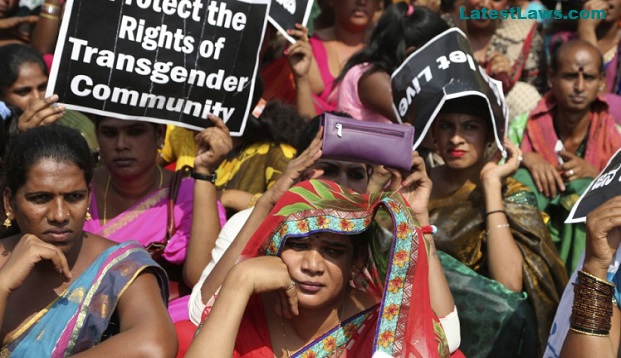
Although transgender people have many rights, they are having trouble extending those basic civil rights. They are also human beings with the right to exist in a society rather than be ridiculed by their family and society. Their parents would disgrace them, and society would mock them. Our society restricts them to study, schools, health services, and access to parks and gardens, and retailers engage in unfair commercial practises with them, depriving them of respect and employment opportunities. If a eunuch is born in a person’s home, they must immediately hand over to the eunuchs’ community. If a family retains their eunuch child in the house and attempts to educate them, the entire society begins to boycott their family, and people do not keep their eunuch in their family and shame them for the same reason.
One of those stories about movement among the people is that they are considered highly auspicious for a blessing since it is stated that when Shri Ram came from Vanvas, he granted a boon to the hijras, and it also appears that evil eyes of the eunuch are also considered very unfortunate. Instructions to both the federal and state governments.
The court has issued the following directives to the federal and state governments:
1. In order to protect their fundamental rights, hijras and eunuchs should be recognised as third gender. 2. Recognizes the need for a person to recognise his or her own gender. 3. As a socially and educationally inferior class of citizens, reservations are made in public education and employment. 4. Making particular measures for transgender people in terms of HIV sero-surveillance and providing suitable health services. 5. Face their fears, gender dysporia, humiliation, sadness, suicidal impulses, and other issues. 6. Measures should be taken to give transgender persons with health treatment in hospitals, such as creating separate wards and providing them with separate public restrooms. 7. To increase public awareness so that transgender people feel that they are a part of society and are not considered as outcasts, implement social welfare programmes for their overall development.
Conclusion These new regulations will not eliminate the discrimination that many transgender individuals (also known as hijra in India) face: many are shut out of mainstream jobs and society – to the point that certain hospitals have refused to treat them – and are frequently harassed by police. It is, nonetheless, a significant step forward, as legal recognition can help to foster better social acceptance and communal integration. The Supreme Court is also considering quotas to improve transgender people’s representation in work and education. As a result, we must adjust our attitude toward this community and show them respect and space.







 Eduindex
You must be logged in to post a comment.