Cigarette smoking is one of the major killers in the world .When a person smokes he simply invites all kind of lung diseases and cancer towards its way . When people smoke they don’t realize how harmful smoking is for their lungs .Not only adults but also a lot of teenagers have started smoking . smoking cigarette is considered a boom and has become very popular amoung youngster.They get influenced by their peers and don’t realize how much effect it can cause on their system .Smokers are at an increased risk for cancer of the larynx , oral cavity , bladder , oesophagus , kidney and pancreas. Smoking causes five times increase in the risk of dying.
Several studies over the years say that’s the risk of lukaemia increases by 30% in active smokers . In todays time smokers who also get affected by corona virus are at higher risk as the virus also affects the lungs . Smoking decreases a persons immunity to fight disessea which is very harmful in todays times .Hence a person should realize the harm of smoking and think of being healthy and immune .
She was just a 15 year old girl . A girl , full of life . But what happened to her .
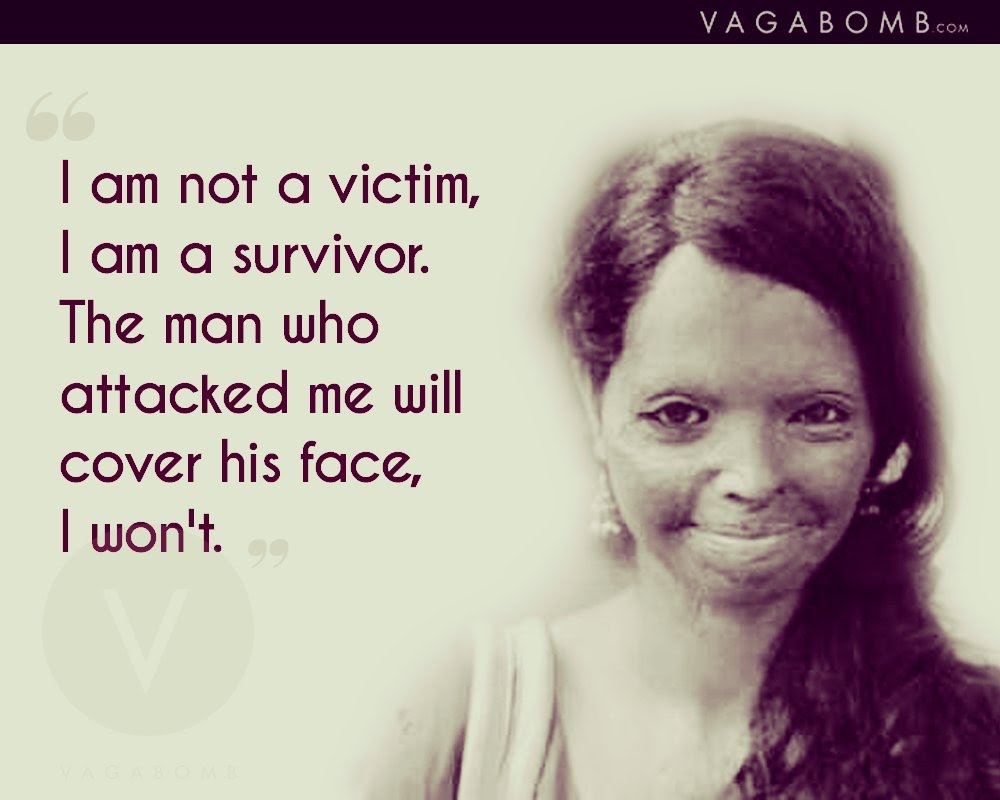
It’s her story . A story of a survivor.
She was powerful not because she wasn’t scared but because she went on so strongly, despite the fear.”
– Atticus
At the age of 15 , when a girl or a boy makes happy memories and learn about life . She was attacked in the market full of people . She was attacked because she rejected an old jerk of 32 years old.
A 32 year old proposed a marriage proposal to a 15 year old girl , who lives near the neighborhood. She ignored and rejected him and he planned an acid attack .
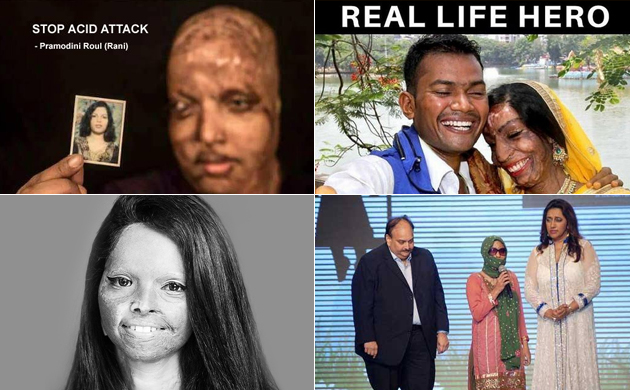
Her name is Lakshmi Agarwal , she was attacked at the age of 15 in 2005 in New Delhi after rejecting the romantic advances of Naeem Khan . She didn’t inform anyone about the scenario because she believed her parents and society would have blamed her and stopped her study .
After 10 months , Lakshmi was in the market and Naeem asked her again through message about the marriage proposal but she didn’t respond . And in no time , Kamran (Naeem’s older brother ) and his girlfriend attacked her with acid . He was in the motorcycle and his girlfriend Rakhi threw acid on Lakshmi , when Kamran called her name and she looked behind for response.
She fainted on the road and when she regain consciousness she went middle of the road asked for help and met with multiple accidents but no one stopped to help her . She was burning in fire and her skin was melting.
A man named Arun Singh called PCR and told police about the situation . Someone threw water to help her but it turned out opposite and the acid burnt her neck . Arun think it might be late , so he helped her on the backseat of his car , later the seat cover turned into black hole due to the acid .
Arun admitted her in the hospital , called police and her family . Lakshmi went through many surgeries and operations including eye surgery. Four days later Naeem Khan got arrested but was bailed after a month later .
Protests and media attention.
After many protests and media attention Naeem got life imprisonment .
Lakshmi’s story was one of the series in the Hindustan Times. Lakshmi was scared after the attack because most of her face and body parts were not same as before . But she didn’t loose hope ,she fought for justice , asked for help for the victims of acid attacks and pleaded the law for the ban on sale of acid.
Meanwhile government failed to frame policies on acid sale and chemical attacks .
“ Seriousness is not seen on the part of the government in handling the issue,” the bench headed by Justice RM Lodha.
In 2013 , the plea of Agarwal was heard and later claims that “ Acid is freely available in shops. Our own volunteers have gone and purchased acid easily. In fact, I have myself purchased acid,” she said. “We have launched a new initiative called ‘Shoot Acid’.
After , the law passed by Supreme court . Lakshmi founded NGO named Chhanv Foundation to help acid attack survivors in India.
In 2019, she was honored with the International Women Empowerment Award from the Ministry of Women and Child Development, the Ministry of Drinking Water and Sanitation and UNICEF for her campaign of Stop Acid Sale. In 2014, she received the International Women of Courage award at the hands of First Lady Michelle Obama.
And the movie Chhapaak is based on her life and stars Deepika Padukone in her role.
“And one day she discovered that she was fierce, and strong, and full of fire, and that not even she could hold herself back because her passion burned brighter than her fears.”
Judicial activism must re-emerge as guardians, finally rescuing the populace and reminding/pressuring the authorities to carry out their duties. There is no disputing that we are living in unprecedented times, but it is equally true that extraordinary circumstances necessitate extraordinary answers, or at the very least a genuine attempt to deliver extraordinary remedies. The inhabitants are not upset because the standards are not being met due to a lack of resources; rather, the actual issue is a lack of complete will. The second wave appears to have been abandoned by all authorities, or at least policymakers. They have accepted defeat in front of the court. Separation of powers, judicial review, judicial activism, and the role of the judiciary across time are discussed in the sections that follow.
Many people and in various locations have defined the term “separation of powers,” including multiple judicial rulings. However, the meaning of power separation can be divided into three categories:
A person who is a part of one organ should not be a part of another.
1.The functioning of one organ should not be hampered by the functioning of the others.
2. It is not appropriate for one organ to perform the functions of another. 3. It was admittedly done since none of the organs could possibly conduct all of the functions in a systematic and suitable manner.
As a result, the powers are divided among the legislative, executive, and judiciary in order for them to work properly. Let us now look into the specifics of each organ’s operation.
The legislature’s primary role is to enact legislation. Enacting a law conveys the state’s will and also serves as a waiver of the state’s autonomy. It is the foundation upon which the executive and judicial branches of government operate. Executives are in charge of carrying out, carrying out, or enforcing the state’s will as expressed by the constituent assembly and the legislature.
1) Legislative Action Reviews,
2) Judicial Decision Reviews, and
3) Administrative Action Reviews
are the three types of judicial review. As a result, judges have a responsibility to maintain the balance of power, protect human rights, fundamental rights, and people’ rights to life and liberty.
The Evolution of Judicial Activism For the first decade after independence, judicial activism was essentially non-existent; the government’s executive and legislative institutions actively dominated and intervened in the judiciary’s operations. The Supreme Court began to consider the judicial and structural aspects of the constitution in the 1970s.
The Golaknath case, the nationalisation of banks case, the elimination of privy purses case, and the Minerva mills case are all examples of judicial review. When it comes to judicial activism, one of the most common criticisms we hear is that it is done in the guise of interpreting constitutional provisions. The claims are that the judiciary frequently rewrites them without saying so. Some of the judges’ personal beliefs become legal principles and constitutional values as a result of this process.
Another critique is that, in the name of judicial activism, the principle of separation of powers is thrown out the window, and the judiciary is undermining the legislative and executive branches of government by intruding into their domains.
Conclusion In summary, I believe that judicial activism has both positive and harmful aspects. If the court meddles too much in the operations of other government institutions and attempts to overstep its constitutional authority, the concept of judicial activism loses its significance and meaning. Power separation theory is being undermined in the name of activism, and the judiciary frequently rewrites personal opinions in the name of activism.








 Eduindex
You must be logged in to post a comment.