Learning is the process of acquiring new understanding, knowledge, behaviors, skills, values, attitudes, and preferences. The ability to learn is possessed by humans, animals, and some machines; there is also evidence for some kind of learning in certain plants.
Ranking the top universities globally can vary based on different criteria and methodologies used by various ranking organizations. However, here’s a list, not necessarily in any order, that often features among the top-ranked universities:
Harvard University (USA): Renowned for its academic excellence across various disciplines, Harvard consistently secures top positions globally. It’s known for its research, influential alumni, and world-class faculty.
Massachusetts Institute of Technology (MIT) (USA): Highly regarded for its emphasis on science, technology, engineering, and mathematics (STEM) disciplines, MIT is a hub of innovation and groundbreaking research.
Stanford University (USA): A leader in entrepreneurship and technology, Stanford excels in diverse fields, boasting a strong academic reputation and a dynamic learning environment.
University of Oxford (UK): One of the oldest universities globally, Oxford has a stellar reputation for its academic rigour, research contributions, and its tutorial-based teaching methodology.
University of Cambridge (UK): Renowned for its contributions to research and academia, Cambridge excels in various disciplines, emphasizing innovation and intellectual pursuit.
California Institute of Technology (Caltech) (USA): A small yet prestigious institution, Caltech is known for its scientific and technological breakthroughs, fostering a highly specialized academic environment.
ETH Zurich – Swiss Federal Institute of Technology (Switzerland): Internationally acclaimed for its focus on science, technology, engineering, and mathematics, ETH Zurich consistently ranks among the top in Europe.
University College London (UCL) (UK): UCL is renowned for its interdisciplinary approach, research contributions, and a diverse student body, offering a range of academic programs.
University of Chicago (USA): Known for its academic rigor and emphasis on critical thinking, the University of Chicago boasts influential research and a strong intellectual community.
Princeton University (USA): Renowned for its undergraduate teaching and research programs, Princeton is recognized for its academic excellence in various fields.
These universities often rank high due to their exceptional faculty, research contributions, resources, and the quality of education they offer across a wide spectrum of disciplines. Keep in mind that rankings can vary based on different factors and methodologies used by different ranking bodies.
Attending college offers a multitude of benefits that extend beyond acquiring knowledge within a specialized field. Here are several key advantages:
Higher Earning Potential: College graduates typically earn higher salaries than those with only a high school diploma. A degree can significantly enhance career opportunities and earning potential over a lifetime.
Expanded Career Opportunities: A college education opens doors to a broader array of career paths. Many professions require specialized knowledge and skills that are obtained through higher education.
Personal Growth and Development: College fosters personal growth by encouraging critical thinking, problem-solving, and decision-making skills. It’s an environment that promotes independence, responsibility, and self-discovery.
Networking and Social Connections: College provides an invaluable opportunity to connect with a diverse range of people, including professors, peers, and professionals. These connections often translate into lifelong friendships and professional networks.
Enhanced Skill Set: Beyond subject-specific knowledge, college hones various skills like communication, teamwork, time management, and research abilities that are invaluable in both professional and personal spheres.
Access to Resources and Facilities: Colleges offer access to libraries, laboratories, research facilities, and expert faculty, providing resources essential for in-depth learning and skill development.
Cultural Exposure and Diversity: Colleges are melting pots of cultures, beliefs, and perspectives. Exposure to this diversity enriches one’s understanding of the world and fosters a global mindset.
Opportunities for Innovation and Entrepreneurship: Colleges often encourage innovation and entrepreneurship through research programs, startup incubators, and partnerships, fostering a culture of creativity and problem-solving.
Higher Job Stability: College graduates tend to have more job stability and are often better equipped to adapt to changing job markets due to their diverse skill set and adaptability.
Personal Fulfillment and Confidence: Achieving a college degree instills a sense of accomplishment and confidence. It often leads to increased satisfaction and a sense of fulfillment in one’s personal and professional life.
While the benefits of attending college are vast, the experience and outcomes can vary for each individual. Nonetheless, higher education remains a transformative journey that equips individuals with skills, knowledge, and opportunities that can shape their futures in numerous positive ways.
Educational videos have become an integral part of modern learning methodologies, offering a myriad of benefits that significantly enhance the educational experience:
Visual Learning Aid: Videos engage visual and auditory senses simultaneously, making complex concepts more understandable and memorable. They cater to various learning styles, aiding visual learners by illustrating concepts in a tangible, relatable manner.
Enhanced Comprehension: Abstract or intricate topics are simplified through animations, demonstrations, and real-life examples, fostering deeper understanding and comprehension among learners.
Accessibility and Convenience: Educational videos can be accessed anytime, anywhere, making learning more convenient and flexible. Learners can revisit content, pause, rewind, or fast-forward at their own pace, facilitating self-paced learning.
Engagement and Retention: Videos captivate attention and maintain engagement, reducing boredom and fatigue commonly associated with traditional lectures. Dynamic visuals, storytelling, and interactive elements help in retaining information more effectively.
Global Reach and Diversity: They provide access to diverse perspectives, global experts, and resources that might not be readily available in a local setting. This exposure broadens horizons and enriches learning experiences.
Adaptability and Personalization: Educational videos can be tailored to different proficiency levels, allowing educators to cater to individual learning needs. They offer the flexibility to modify content, language, and pace to suit diverse audiences.
Facilitate Conceptualization and Application: Complex theories or practical subjects are made tangible through visual representations, aiding in the application of knowledge to real-world scenarios.
Improved Collaboration and Interaction: Videos can be used as a catalyst for discussions, collaborative projects, or interactive activities among students, fostering a more engaging and participative learning environment.
Cost-Effective and Sustainable: Compared to traditional teaching materials, educational videos can be a cost-effective solution for educational institutions. They can be reused, updated, and shared without significant additional expenses.
Technological Integration: As technology advances, educational videos evolve with interactive elements, virtual reality, augmented reality, and gamification, making learning more immersive and interactive.
In essence, educational videos revolutionize learning by offering a dynamic, engaging, and versatile medium that empowers learners, educators, and institutions alike in the pursuit of knowledge acquisition and skill development.
1 HIDDEN SKILL WITHIN, it is the art of giving power to words to influence, inspire and transform the lives of the people which is none other that “PUBLIC SPEAKING”. Public speaking is where if one can speak then one can definitely influence and when they can influence they can change the lives of the entire world. The speech is power and it is the power to persuade as the skill of public speaking is highly based on the quality of their thoughts and perception.
” THEY MAY FORGET WHAT YOU SAID BUT THEY WILL DEFINETLY REMEMBER HOW YOU MADE THEM FEEL!”
One of the best skill we develop inside apart from listening, reading and writing is the skill to speak. The skill of speaking in the public is the natural fundamental skill to express our inner feelings and perception on any topic. It is the beautiful ability of people to distinguish the sounds in form of alphabets. Public speaking as the name suggests it is the skill of speaking in front of a group of people for persuasive, informative and most importantly expository purposes. Public speaking’s main objective is to stress on a idea and assert it so as to make the audience think and react over it.
1 HIDDEN SKILL WITHIN: HOW TO OVERCOME ITS FEAR
Face Everything And Rise or Forget Everything and Run , the definition of fear is completely dependent on one’s own perspective. It is often said that the fear of public speaking is a fear greater than the death for most of the people. According to research and psychiatrists the fear of this public speaking is caused by the fear of standing out, fear of ostracism, the fear of criticism, the fear of riddle and last but not the least the fear of being an outcast.
It is very true that we need not be pro while starting any task but we need to start to be pro in that task and also all speakers were not so good at the beginning. The best way to overcome the fear of public speaking is to speak looking at your audience straight in to their eyes with boldness and confidence. Self confidence is the key role playing and the way you express and with the ease the every single member in crowd understands tells how comfortable you are. When you speak about something you are passionate about you will be more comfortable and confident.
If you are willing to work at it you can rapidly improve the quality of every part of your life. According to research listening to music before taking can not just elevate your mood but also calms your mind do check out my previous article on MAN’S GREATEST CREATION: MUSIC
1 SKILL FOR INFINITE INTELLIGENCE, the great secret possessed by the great men of all the ages was their ability to contact and release the power of their subconscious mind. Subconscious mind is the true infinite intelligence which can make you or break you in your life. It has a wonderful capacity to reveal everything you need to know at the moment of time. Through the wisdom of your subconscious mind you can receive the new thoughts and discoveries. Moreover, the infinite intelligence in your subconscious mind can impart the amazing kinds of knowledge.
“95% OF YOUR LIFE IS DRIVEN BY SUBCONSCIOUS MIND”
The subconscious mind is the infinite riches all around you which can bring more health, more wealth and complete happiness (do check out my previous article on IKIGAI-JAPANESE SECRET 4 HAPPY LIFE)in your life. Within our subconscious mind there is marvelous and miracle working power. It is the one stop solution to all our questions. The subconscious mind is the builder of your body which can completely heal you. There are two levels of mind one is the conscious and the other is the subconscious or also known as the irrational level.
Conscious mind is that level of mind which is the reasoning mind on the other hand subconscious mind is the seat for emotions and is the creative mind. The process of digestion, circulation and breathing are carried by our subconscious mind. It always accepts the perceptions believed in your conscious mind. The subconscious mind is same as a soil which accepts any kind of seed no matter whether it is good or bad because it really can’t differentiate between the good or bad it blindly accepts what you believe.
1 SKILL FOR INFINITE INTELLIGENCE: HOW SCIENTISTS MADE USE OF?
Nikola tesla was a brilliant scientist who worked in the field of electricals and brought forth the most amazing innovations. When an idea for a new invention came to his mind he would always build it up in his imagination because he was very much aware of the power of this subconscious mind. He would reconstruct and reveal to his conscious mind about all the parts needed for the invention’s manufacture in a very concrete manner.
1 SKILL FOR INFINITE INTELLIGENCE: HOW TO RECEIVE THE BEST GUIDANCE
When you have the term a difficult situation or decision to make or even when you fail to see the solution to your problem begin at once to think constructively about it. Here is an absolutely easy technique which one can use to make or receive the best path on any subject. Quiet the mind and still your body. instruct your body to get relaxed it must obey you. Mobilize your attention and focus on the solution to your problem. do check out the 10 best ways to use your subconscious mind https://www.artofliving.org/in-en/lifestyle/success/power-of-subconscious-mind
Rate this:
Loneliness – Not a depression
We feel happy when we are surrounded by our loved one and that makes us comfortable around them and sometimes we get used to that comfort zone. Imagine being get used to it and suddenly they’re not near you or with you. You’ll not feel yourself and you get lonely all by yourself. This can make you to think different things and there may be multiple thoughts. As it is said “An idol mind is the devil’s workshop”.
Especially in these pandemic times there have been many cases of suicide due to depression and loneliness. Inspite of the death due to covid, people have died unable to control their emotions. This made us to think if loneliness is more dangerous than the disease. Recently there was a case where a 45 year old man and 42 year Old women lived in a village. They don’t have any child and lived all by themselves. Recently her husband was suffering from Covid and the wife couldn’t take that thinking what will she do when he died. Thinking about all the loneliness that’s gonna happen future the wife died committing suicide. However husband lived but after knowing about his Wife death he drank poison and died.
This made me devoted for their love but made me sad for their death. They could’ve waited but loneliness made them to do the drastic step. Not every loneliness can lead to death but some can change a person’s life. Loneliness is not a dangerous thing but a life changing thing where one can analyse themselves. If you don’t have anyone to talk, it is better to talk to yourself rather than depend on someone. Loneliness can make a person self-independent and self- survivor. It can improve a individual skill where one can explore and develop their talents. Everything doesn’t come easy to everyone. One has to struggle to get things done.
Yes! This lockdown and pandemic can be tough and separate everyone from their loved one but it doesn’t mean that you have to feel lonely. May be it is time to explore yourself and develop your skills.
How to prepare for a technical interview which will help you to get placed? The syllabus of computer science is very vast in that case Preparation tips for Technical Interviews will definitely help you to focus on the target topics. It is impossible to cover every topic in depth especially when you have less time left for the interview. If you start covering everything little by little and with the correct strategy, you can gain what most students can lack.
Qualifying technical round is not tough and if done with proper planning, everything can be achieved. Let us look at the most important topics:
6 Topics to prepare for your Interview:
C- Programming:
C-Programming is a very basic programming language to start coding. Mostly it is taught in 1st year of your college. It can be an advantage if you have already covered this language during your schooling and then college provides you enough time to revise the topics. But if you are doing it for that first time do not worry it is still not late to get started with C programming.
Where should you start learning C programming:
I myself started learning C programming when I took admission in an engineering college, and this is how I started:
C programming tutorials on Naresh IT channel with instructor Shriniwas on Youtube.
C programming with Sourabh Shukla on Youtube.
Many practice question sites are better, to begin with.
Online portals like Sololearn, Geekforgeek are awesome with their educational material.
These resources really helped me, and I will be glad if you too can be helped with these.
C Programming Interview questions:
Chances of mostly tricky questions to check how and what logic will you apply for the real-world problem.
Don’t forget to revise basic concepts and all the definitions, the inventor name, loop, if-else, pointers, strings, recursion, and application along with Tower of Hanoi problems.
This is the most important area where you can expect a guaranteed question,
Algorithms like Sorting, Time and Space Complexities of algorithms.
Dynamic Allocation of Memoryusing malloc( ) and calloc( ) functions.
Tree traversals
Stacks and Queues and their operations and applications.
Linked lists and their Operations performed(ex: insertion, deletion, searching).
Algorithms:
Dynamic Programming and usage of it in various problem statements. (ex: Travelling salesperson,0/1 Knapsack, etc).
Calculation of Time and Space Complexitiesof algorithms.
Sorting
Databases:
Mainly DBMS is taught in the 2nd year or after they cover C Programming & Data Structure. SQL (or Oracle) will help you to generate a large database along with queries.
What topics are important in DBMS:
DDL, DML, DCL, and TCL commands.
SQL constraints like JOIN, NOT NULL, UNIQUE, CHECK.
NORMALIZATION (1 NF, 2NF, 3NF, BCNF, 4NF, 5NF)
All the keys: primary key, candidate key, super key, and foreign key.
Transaction and its types i.e ACID properties.
Also, don’t forget to cover the basic interview question of DBMS from google and you can cover them from the trusted education websites.
Computer Networks:
Also called Data Communications. Pure theoretical topics which discuss many networking techniques.
This could increase your confidence as most of the Operating system topics are theoretical and you can easily cover them all by hand in less than a week.
The basic definition of OS, advantages, application, types, etc.
All scheduling algorithms PROCESS and CPU scheduling algorithms.
Exception Handling and Multi-tasking (Multiprocessing & Multi-Threading).
Collection framework.
Servlets and JSP’s.
Applet
Revise these all topics as mentioned also check the resources through youtube and many helpful education sites which are doing great in giving students ease to easily read the topics online without notes.
Preparation tips for Technical Interview
These tips helped me so much and I will want you to follow these steps to get well with your topics:
Don’t wait for last-minute study for placement rather cover the topic together with your university.
Make notes, this is key to success point, how you understand your handwritten notes, you can never understand the same way from any other resource.
Keep revising topics in your semester break that will build your concepts more and will make it easy for you in your 4th year of college.
If you are unclear with any topic, don’t wait for the instructor to teach you or visit many sites offering you all the materials for free. They are: Geeksforgeeks, Sololearn, Tutorialspoint, Javapoint, etc
If still you remain unclear then watch tutorials from youtube on the topic you are interested in. I hope this helps you, comment below for any further queries/doubt will be happy to help you.
KOPPACT is an acronym that stands for Kinesics, Oculesics, Paralanguage, proteomics, Chromatics, Tactics. These all are the variations of different kinds of nonverbal language.
Kinesics
Kinesics discusses different kinds of body language, gestures, postures, facial expressions, and so on. In nonverbal, there are many things like voice quality, adapters, regulators, and many which impact communication. Its say facial expressions are the most important as it takes the impression of 55% of total communication. The postures reflect people’s emotions, quality of thoughts, and personality. Research says postures reflect one’s confidence, receptivity, status to the listener. Gestures are very much related to our daily life. It supports our opinions like moving hands, giving nods, etc. It is very important to take care of the body language while you are representing yourself because it tells half of your personality.
Oculesics
Oculesics include eye contact. Proper eye contact is very important during any conversation. It not only proves your confidence level but helps you to connect with your audience. It helps to bring engagements, interest attention, and so on. It has three basic purposes to serve. Firstly it helps to get feedback. During a conversation or presentation if you look to someone you can easily understand by their eye movements what the are feeling. Secondly, it helps to indicate without uttering a word of address. For instance, if you are talking with some time and when the turn of the next person comes you just look at the person and give a signal of his/her turn. Thirdly it gives a vivid indication if you are liking a person or not. Usually, when we don’t like a person, we try to avoid eye contact.
Proxemics
Proxemics tells about spatial distance. The space distance between two people can reflect the dimension of their relationship. An intimate relation, closeness, group, or society, all can be reflected by their spatial distance. There are zones in the space language, which is called spatial distance. The intimate zone is 0’-18″, Personal Zone is 18”-4′, the social zone is 4’-12′ and the public zone is 12’- rest.
Paralanguage
Paralanguage includes the pitch and tone of the verbal message. Voice is very important because it collects the attention of the people. Not only that it carries the mood of the words, if its sarcastic, anger, happy and more. It highlights the message’s importance. It refers to how something is said, not what is said”.
Artifacts
Artifacts are the artificial things that one carries. For instance, the dressing of a person or some kind of stuff can refer to the personality of the person. It also helps to impress people, drag attention. It helps to analyze better and it also impacts the nonverbal communication.
Chronemics
It indicates a sense of timing. The beginning of the event and the end is very important. It helps to sync between verbal and nonverbal communication. During a presentation, if someone continuously checks the time, it can distract people from listening and also hamper the attention with the presentation quality. So, interval time, temporal processing, cognition all are very important.
Tactilics
It helps to judge the people and their intentions. It helps to understand the positive and negative signals. Some touch can make you feel comfortable some are not. A weak handshake, a timid tap on the shoulder, and a tight hug or slap on the back can reassure the relationship. You can’t get into someone’s territory without knowing. You should know, whom you can touch, when you can touch and how you can touch.
These languages which impact our daily conversation and make it better.
It’s an era of digitisation that is transforming the education sector beyond conventional perceptions. E-Learning is the new trend that offers high-quality tutoring, intuitive courses, and remarkable convenience.
In fact, by 2024, the Indian online education market is projected to reach the staggering INR 360 billion mark. This growing market presents a golden opportunity for you to explore a wide array of digital courses. Amidst the plethora of options, you should follow specific tips to make the most of this hi-tech learning mode.
To help you with this, this blog aims at offering valuable advice to overcome the practical challenges in eLearning. Read on to discover how you can capitalise on the present and future of education.
Top 9 Tips to Consider
Some top tips to consider for effective online learning include the following.
1. Allocate a Fixed Time Schedule
Online courses offer a wide level of flexibility. You can watch a lecture or attend a seminar as per convenience.
But despite this benefit, you might procrastinate and delay attending an online lecture. You end up watching multiple videos, only to reduce the effectiveness of the course. So, to maximise the output from eLearning courses, create a set timetable.
Here are general pointers to simplify this process:
Allocate a time slot to pursue the online course
Maintain consistency in your routine
Treat these courses as in-person learning sessions
Reward yourself after completing an assignment
This technique of time allocation will instil discipline in your daily routine. Consequently, you can stand a good chance of learning the concepts in an effective way.
2. Create an Uncluttered Study Space
You may prefer the convenience of studying an online course from your laptop or smartphone. In such cases, how do you study exactly?
The bed or couch might be your go-to space to study. However, these habits might impact your concentration.
In order to understand the content of online courses in-depth, dedicate a separate study space. This area should be devoid of any distractions. Also, try sitting on a chair that helps maintain your posture and focus.
Here are some additional points that can help you create an ideal eLearning study space:
Clear the table area from any possible distractions
Place the chair and table in a well-ventilated space
Arrange sufficient lighting to reduce eye strain
Keep the space in close proximity to an electric panel
Following these tips will help you create an ergonomic study space.
3. Invest in a Stable Internet Connection
It is a cliché that effective online learning requires a good internet connection. Still, you might neglect this fact altogether.
Investing in a stable Wi-Fi router can prevent issues like getting disconnected frequently. Also, fast internet connectivity helps swiftly load the visual content of online courses.
Signal boosters are another practical device that can improve your household internet speed. Consider these gadgets as long-term investments.
4. Virtual Study Groups
Online learning can make you feel a tad disconnected from the feeling of studying with classmates. To overcome this challenge, virtual groups can be a viable solution.
You might have friends who also study a common online eLearning course. In such a case, you can connect with them and plan sessions through video conferencing.
Furthermore, your group can contribute to forum discussions on prominent digital education platforms. A virtual study group also gives you the feeling that you are studying with a colleague in the room.
So overall you won’t feel disconnected from the outside world through technology.
5. Note Taking is Vital
What is the one thing you absolutely adore about online classes?
Well, it might be the benefit of going paperless. You can go back online and read a specific section of the course as per requirement.
While this advantage can seem convenient, it can reduce the impact of grasping knowledge. As such, you need to treat online classes as live lectures to solve this problem.
So, sit in front of your laptop with a notebook and pen in hand. Jot down the essential points similar to an in-person lecture. This way, you engage better with the content of the teaching module.
Not to forget, keeping notes during online courses helps you boost the following aspects:
Retention
Comprehension
6. Avoid Multitasking
To eliminate stress during eLearning, you need to focus on limited activities.
It is especially tempting to scroll through your smartphone during an online lecture. After all, nobody’s keeping a check on you, right?
But such multitasking can hamper your productivity in grasping the necessary content. So, to absorb more information and complete the online tasks, focus only on a maximum of two things:
Listen and watch the online content
Take notes simultaneously
These two activities often run in tandem. Hence, it’s better to keep all other distractions away from the study space. This includes keeping your phone away in a different room perhaps.
7. Adhere to Strict Deadlines
Some online courses have deadlines for assignments. The creators plan these deadlines to match the course structure and content. As such, following them promptly will keep you in the loop with the syllabus. Moreover, timely submissions of these assignments will help with high scoring.
Additionally, follow these tips in planning your routine according to course deadlines:
Read the overall online course structure at the beginning
Create a calendar to simplify your schedule
Follow each activity as per the defined deadlines
Look out for any task changes regularly
8. Take Frequent Breaks
Too much time in front of a digital screen can hamper your focus and increase eye strain. So, it is crucial to take frequent breaks to improve your online learning efficiency.
The side effects of prolonged screen time can also impact your productivity. So, it is essential to take a 10-minute break after an hour. During this time, do not scroll through your smartphone.
Instead, here’s what you can do during break time:
Go for a stroll
Listen to some music
Indulge in stretching exercises
Talk to a friend or family member
These activities will refresh your mind to restart the online course. You will notice a considerable boost in your grasping ability after taking adequate breaks.
9. Do not Overcomplicate
Using technology can often lead you to utilise various features and tools. While these tools can help manage eLearning better, they are not always necessary.
In fact, you can simplify your online learning schedule according to your requirements. For instance, do not invest in too many courses or fancy software as you might end up facing academic burnout.
Taking the help of advisors or expert online teaching academies can also streamline your schedule. This simplicity will help you study only the most required courses and extract sufficient knowledge.
In a Nutshell
The education sector will keep on transforming continuously. Soon, you can witness the increased implementation of artificial intelligence in online courses.
As such, you need to keep a disciplined schedule to extract the best output from this speedy transformation. Treat eLearning classes and modules seriously. Visualise that you are sitting in a classroom. For this purpose, creating an uncluttered study space works well.
Furthermore, simplifying your schedule, adhering to the given deadlines, and taking breaks impact your efficiency positively. Finally, you can request the guidance of specialised online course institutes to make the most of this learning mode.
ESG investing also called socially responsible investing and impact investing is a type of investment made by large corporates which prioritizes environmental, social, and governance outcomes. This type of investment is the need of the hour, which highlights sustainable investment. The investment is based on the universal fact that organizational growth and financial performance is due to environmental and social factors.
ESG investing has started to gain popularity in India. This is a way of investing in companies based on their commitment to the ESG factors.
ESG (Environmental, Social, and Governance) investing is an approach that considers not only financial returns but also the impact of investments on society, the environment, and corporate behavior. Here’s a breakdown of each component:
Environmental Factors (E): This includes considerations related to a company’s impact on the environment. ESG investors look at how a company manages its carbon footprint, energy efficiency, waste management, water usage, and its overall environmental sustainability practices.
Social Factors (S): Social considerations involve how a company manages relationships with its employees, communities, customers, and suppliers. It includes aspects like labor standards, diversity and inclusion, human rights, employee relations, and the company’s impact on local communities.
Governance Factors (G): Governance focuses on the leadership, structure, and policies that guide a company. It includes issues such as board diversity, executive compensation, transparency, ethical business practices, and the presence of anti-corruption measures.
ESG investing aims to align investments with ethical and sustainability goals while seeking competitive financial returns. Investors choose companies or funds based on their ESG performance, seeking those with strong sustainability practices, ethical business conduct, and positive societal impacts.
The growth of ESG investing reflects a shift in investor preferences, with more individuals and institutions seeking to support companies that align with their values and contribute positively to society and the environment.
However, challenges exist, including the lack of standardized ESG metrics, varying definitions and interpretations of ESG factors, and the need for more comprehensive and transparent reporting by companies regarding their ESG practices.
Overall, ESG investing represents a growing trend where financial decisions are influenced not just by potential returns, but also by a company’s impact on the world around it.
Google Scholar, launched by Google in 2004, is a freely accessible web search engine designed to index scholarly articles, theses, books, conference papers, and other academic resources. It stands as a valuable tool for researchers, academics, students, and anyone seeking credible and scholarly information. This article delves into the key features, benefits, and impact of Google Scholar in the realm of academia and research.
1. Wide Academic Coverage
Google Scholar indexes a vast array of academic content, including peer-reviewed papers, theses, conference papers, preprints, technical reports, and more. It provides access to scholarly literature across various disciplines, making it a comprehensive platform for researchers seeking a wide range of academic resources.
2. User-Friendly Interface
Google Scholar offers a simple and intuitive interface, making it accessible to both seasoned researchers and newcomers to academic research. Users can easily search for specific articles, authors, keywords, or topics, and the results are displayed in a clear and organized manner, enabling efficient navigation through the scholarly landscape.
3. Citation Analysis and Metrics
One of the notable features of Google Scholar is its ability to track citations. Researchers can see who has cited their work, providing insight into the impact and influence of their research. Additionally, Google Scholar calculates metrics like h-index, i10-index, and citation counts, helping researchers gauge their scholarly productivity and influence within their field.
4. Integration with Libraries and Institutions
Google Scholar seamlessly integrates with academic libraries and institutions. It allows users to connect to their library’s subscription services, enabling access to full-text articles that may otherwise be behind paywalls. This integration enhances accessibility to a broader range of academic literature.
5. Alerts and Personalization
Researchers can set up alerts based on keywords, authors, or specific articles to stay updated on the latest research in their field. These email alerts notify users of new publications matching their criteria, ensuring they remain informed about recent developments and advancements.
6. Enhanced Discoverability
Google Scholar employs a robust search algorithm that enhances the discoverability of relevant research. The engine utilizes factors like relevance, citations, and authorship to rank search results, making it easier for users to find high-quality, pertinent academic material.
7. Global Accessibility and Open Access Advocacy
Google Scholar aligns with the ethos of open access by providing access to a substantial amount of freely available scholarly content. It emphasizes the importance of making research openly accessible, thereby contributing to the global dissemination of knowledge and fostering collaboration across geographic boundaries.
8. Limitations and Considerations
While Google Scholar is a powerful tool, it is important to acknowledge its limitations, including potential biases in indexing, varying quality of sources, and limited advanced search functionalities. Users should exercise critical evaluation and cross-verification of information obtained through Google Scholar.
Conclusion:
Google Scholar has emerged as an indispensable tool for researchers and academics, empowering them with easy access to a vast repository of scholarly knowledge. Its intuitive interface, comprehensive coverage, citation analysis capabilities, and dedication to open access underscore its significance in advancing the dissemination of knowledge. As Google Scholar continues to evolve and innovate, it is poised to play an even more critical role in shaping the landscape of academic research and collaboration.
General science is a field of study that encompasses a wide range of scientific disciplines, including biology, chemistry, physics, and earth sciences. It is the foundation upon which many scientific discoveries and advancements are made. In this article, we will explore some of the key concepts and branches of general science.
Biology: Biology is the study of living organisms and their interactions with each other and the environment. It covers a wide range of topics, from the structure and function of cells to the behavior and ecology of entire ecosystems. Biology plays a crucial role in many areas of our lives, including medicine, agriculture, and environmental management.
Chemistry: Chemistry is the study of matter and its properties. It covers topics such as the structure of atoms and molecules, chemical reactions, and the properties of different elements and compounds. Chemistry is a key discipline in many fields, including materials science, medicine, and engineering.
Physics: Physics is the study of matter and energy and their interactions with each other. It covers topics such as mechanics, thermodynamics, electromagnetism, and quantum mechanics. Physics is essential to many areas of modern technology, including telecommunications, electronics, and aerospace.
Earth Sciences: Earth sciences cover a wide range of topics related to the planet we live on, including geology, meteorology, and oceanography. These fields of study help us understand the physical processes that shape the earth’s surface and climate. They are also important in managing natural resources, predicting and mitigating natural disasters, and understanding the impact of human activity on the environment.
Scientific Method: The scientific method is a systematic approach to scientific inquiry. It involves observing phenomena, formulating hypotheses, testing those hypotheses through experiments, and drawing conclusions based on the results. The scientific method is a key tool for scientists in all fields, allowing them to gather reliable data and draw meaningful conclusions.
Scientific Discoveries: Science has led to many important discoveries throughout history. Some of the most notable include the discovery of penicillin, the development of the theory of evolution, and the discovery of the structure of DNA. These discoveries have had far-reaching impacts on our understanding of the world and have led to many important advancements in medicine, agriculture, and technology.
Science Education: Science education is crucial in developing scientific literacy and promoting scientific thinking. It helps individuals understand the natural world and the scientific principles that govern it. Science education is also essential in preparing individuals for careers in science, technology, engineering, and mathematics (STEM) fields.
Conclusion: In conclusion, general science is a vast field that encompasses many different scientific disciplines. It is the foundation upon which many scientific advancements are made, and it plays a crucial role in our lives. Through the scientific method, scientists are able to make important discoveries and advancements that help us understand the world around us. Science education is also critical in developing scientific literacy and promoting scientific thinking, which is essential in preparing individuals for careers in STEM fields.
A very simple family of Modern era living with their life old fashioned limitations like not allowing the phone to their children even if they jumped in higher class, they do not have permitted to attend any party with their friends,Not allowed to go out in late night.Their mother a housewife made these rules But we all know that there is always reasons of restrictions, the same are here with those two siblings of this exciting family.Both are studying in a same school and everyday their father use to receive and drop them,eating foodings made by dad bakery, play video games and sometimes spend times in sleepover.Cavin the little boy has sharp mind and he enjoy the imaginary world more than real.
One day a neighbour’s parents come with his child to leave him for the night. That boy also has some list by his mother about what to do or what to don’t.But as he is in another house with another rule and restrictions nothing from the list could be done right from his list.In loan area Cavin’s dad fixed a tent for their sleepover and left them to sleep. And in the same night her daughter tries to escape from home with her friend for one night to attend the party invited by her senior.
At late night tiem to sleep ,Ninjas enter in the house and attack on her housewife mother to take her with themselves for a mission.They took up both husband and wife with them for a robbery. After knowing their mother’s real identification that her mother was the head robber many years before her marriage in the bachelors age;their children decided to find their parents and went out for an overnight adventure.
Their mother was a witness protection lady who was caught by the police but allowed to be free with a new identification by letting no one know her real identity.
Following the signs Including their dog’s neck belt left by her mother at every steps they followed and in not finally but at end of getting signs they met her mother’s younger sister who is also a robber; she gave them the direction to reach their mother and they followed.Finally they reached the destination and saw their simple housewife mother extraordinary actions and looks that were never been seen before.And also they saw her mother’s fiance who was a robber man,charm and dashing.
But there and then her mother become with a new identification and living her life as a normal person with family this mission was not her choice.They escape brilliantly from this leaving behind all this stuff if past and came back to home safely creating this adventurous night.And the boy who has very quite talent to make stories of imagination,he does the same in front of police too,reached all back to home safely.
Next morning, the neighbour came to take their child who was left for a sleepover and found the child safe and that child went home too.
Everything happened, the restrictions,the limitations came across with a very valid reason why kids of this family faced too many rules and regulations other than others.Now they understand and respect the situations and their family especially her mother.
So,The conclusion comes here with a brief mentality of parents and children.
Parents never want to grab or tie their own children with restrictions. If they do there must be the reason for their safety that’s important more than anything for any parents.
Children like that boy who live in his imagination are brilliant so to make success and happiness in their life it’s necessary to promote and support your child according to their way of interests.
And the last but not least ,the priority matter a lot for a family person no matter who you are,mother or father or sister or you are a brother,if you are in a family you must put your priorities first for them other than anyone no matter how complications has started ,how it is difficult to deal or to resolve it but things will become smoother as soon as one put family on prior.Stay tied to the family is one of the best weapon to fight against any circumstances, situations,or any difficulty.
If you’re reading this, then chances are that you are looking for some way to improve your life. Maybe you need help with personal development or maybe you’ve been thinking about starting a new job or volunteering at an organization. Whatever your reason for wanting to make changes in your life, it’s important that we keep our eyes open and try new things so we can be successful in achieving our goals.
Without encouragement, it is difficult to change.
Without encouragement, it is difficult to change. You need to believe in yourself and think that you can improve your life by making positive changes. The first step is believing that you can improve for the better—that’s because it will make all the difference. If you do not believe that things can get better, then no one else will either.
If someone says they are going through hard times or struggling with something difficult right now, try giving them some words of encouragement as a way of showing them how much strength there is inside themselves despite their circumstances (or lack thereof). This could mean saying something like “I know what it’s like when things keep getting worse instead of better.” Or maybe even just “I’m sorry about everything happening right now.” These small gestures go a long way towards helping those around us feel supported during times when we feel isolated from others’ understanding due to our own struggles.
You are most likely to succeed if you focus on one change at a time.
The key to success is to focus on one change at a time. This can be as easy as focusing on improving your diet, or it may be more complex—it depends on what you’re trying to accomplish and how long it will take for you to reach your goal.
For example: If you want to lose weight, then focus on eating healthier food and making more exercise a part of your daily routine. Once that’s accomplished and needs adjusting (such as adding more fruits or vegetables), move onto the next step by increasing the amount of exercise in your schedule again until all of these changes have been completed successfully.
Changing your life takes time and daily effort.
Changing your life takes time and daily effort. You can’t change a habit overnight, nor can you expect to change your lifestyle or attitude overnight.
You have to commit to making positive changes in the way you think and act for them to stick. This includes changing negative beliefs about yourself and others, as well as changing other people’s perceptions of you—for example, by doing something nice for someone else instead of taking advantage of them.
The changes you make will have an impact on other people, so talk to them about what you are doing.
Make sure you have a support network:
You can’t do it alone! You need people who believe in you and want to help support your goals.
Be honest with yourself:
Don’t let yourself get discouraged by results because they won’t always be immediate or easy to achieve; this is just another step in the process of self-improvement.
You are more likely to change your behavior if you write down your goals and track your progress toward them.
If you want to make changes in the way that you live your life, it’s important to write down your goals. The more specific and detailed they are, the easier it will be for you to stay focused on achieving them.
You can use a notebook or spreadsheet as a place where you put down all of the things that matter most to you—including what motivates each goal and any additional details about how long until completion or other deadlines associated with achieving each goal (if applicable). Then once per month or so (depending on how often progress is made toward those goals), go back through this list of ideas and see where there are still opportunities for improvement or new additions which may help bring about change faster than otherwise would be possible otherwise.”
Sometimes people need a second or third try before they can achieve their goals.
Change is a process that can happen gradually if we give ourselves permission to not be perfect.
It’s okay to fail. You don’t have to make every mistake in the world, but you do need to take risks and learn from them. If you’re going through a difficult time, it may feel like everything is stacked against you, but remember: You’re stronger than that! Don’t let anyone else dictate what your limits are; set boundaries for yourself so that everyone around you knows where they stand with respect toward how much weight/pressure/stressors they bring into your life (and vice versa).
You can’t change everything at once! Change takes time and effort—you might not see results right away on day one of starting something new at work; sometimes there are things we need practice doing before learning how good our new skills actually feel like coming out of our mouths (or fingers). Make sure whatever goal(s) this month has been focused on has been well-thought out beforehand so as not waste valuable resources unnecessarily trying out half-baked ideas prematurely – because even though change doesn’t happen overnight…it does happen eventually
Conclusion
If you are ready to start changing your life and make some changes in your life, then this is the right time. Start now.
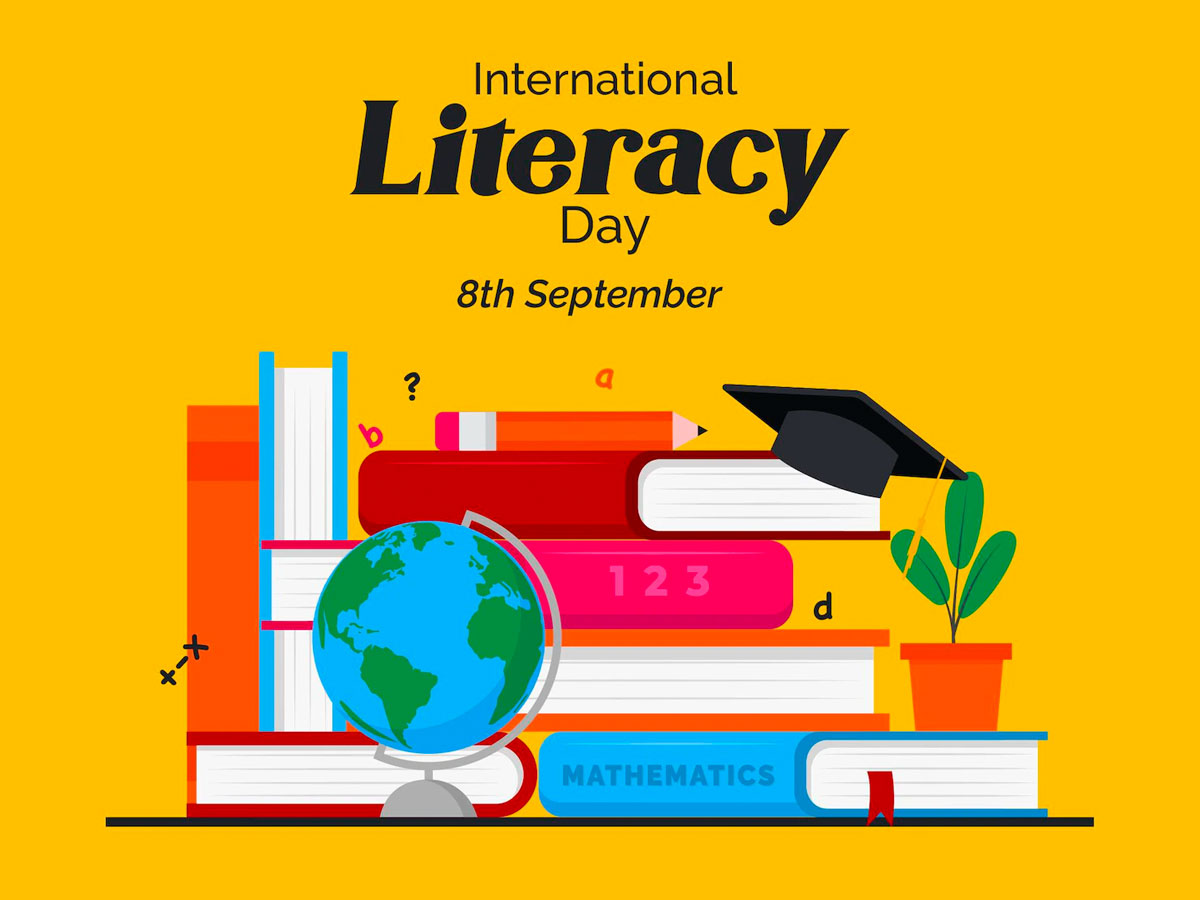
Every year on September 8, International Literacy Day is
celebrated to bring attention to and concern for literacy issues that exist
both locally and globally. The United Nations Educational, Scientific and
Cultural Organization, or UNESCO, established International Literacy Day in
1966 “to remind the public of the importance of literacy as a matter of
dignity and human rights,” and it returns responsibility for the problems
of illiteracy to local communities where literacy begins, one person at a time.
HISTORY OF INTERNATIONAL LITERACY DAY
Despite significant improvements in literacy rates during
the more than 50 years since the first International Literacy Day, illiteracy
is still a major issue on a global scale. It is estimated that more than 750
million adults worldwide are illiterate. No country or culture on earth is
immune to the affliction of illiteracy, including the United States, where an
estimated 32 million Americans lack basic literacy skills.
What is literacy, exactly?
Literacy is described as
“the quality or state of being literate: educated…able to read and
write” in the Miriam-Webster Dictionary. You probably spend a lot of time
reading online, so it may come as a surprise to hear that there are people
living and working in your area who are unable to read not
only this post but also books, menus at restaurants, traffic signs, voting
ballots, instructions, prescription bottle labels, and cereal boxes.
Can you picture surviving in today’s world without the
fundamental skills of reading and writing? The goal of International Literacy
Day is to eradicate illiteracy in every local community around the globe.
The idea for International Literacy Day was initially
proposed during the Tehran, Iran-hosted “World Conference of Ministers of
Education for the Eradication of Illiteracy” in 1965. In the year that
followed, UNESCO took the initiative and established September 8 as
International Literacy Day, with the main objective being “…to remind
the international community of the importance of literacy for individuals,
communities, and societies, and the need for intensified efforts towards more
literate societies.” One year later, the world community took up the
challenge of eradicating illiteracy by taking part in the first International
Literacy Day.
TRADITIONS
OF THE DAY
A gift that is frequently taken for granted is literacy. In
our daily lives, reading is crucial. Being unable to read or write makes it
difficult to get around and prevents you from enjoying a wide variety of
things.
On International Literacy Day, groups and people step up
and use their literacy to support and encourage those who are having
trouble reading and writing. Volunteers from the community, including students
and working adults, tutor local children, donate books to local libraries, and
sponsor a student’s tuition and education to help them succeed in life.
To plan and carry out the best strategies for the abolition
of illiteracy, institutions, government- and international organizations hold
think tanks and debate forums in addition to organizing grassroots literacy
campaigns. They additionally hold fundraising events. Every year, a theme is
chosen for International Literacy Day as a means of raising public awareness of
a particular subject.











 Eduindex
You must be logged in to post a comment.