OLDEST LANGUAGES OF THE WORLD

World’s Oldest Language
It is not possible to answer exactly how many languages ​​of the world are there. According to an estimate, the total number of languages ​​in the world is about 6809, out of which the number of speakers of 90 per cent of the languages ​​is less than 100000. There are about 200 to 150 languages ​​that are spoken by more than 1 million people. There are about 357 languages ​​that only 50 people speak. Not only this, but there are also 46 languages ​​whose number of speakers is only one.

But do you know which is the oldest language in the world? If you are not aware of the answer to this question then after reading this article you will know which is the oldest language in the world, because in this article we are giving the details of the 10 oldest languages ​​of the world according to the origin.

World’s 10 oldest languages

10. Armenian Language
The Armenian language is also part of the Indo-European linguistic group, which is spoken by the Armenians. Bibles written in the fifth century exist as its earliest appearance. The Armenian language originated in 450 BC. At present, about 5 per cent of people speak this language. This language is spoken in Mesopotamia and the intermediate valleys of the caucus and in the southeastern region of the Black Sea. The region falls in Armenia, Georgia and Azerbaijan (northwestern Iran). It is the official language of the Republic of Armenia.

9. Korean language
The Korean language is spoken from around 600 BC. At present, about 80 million people speak the Korean language. The script of this language is Hangul. In ancient times, the Chinese settled in Korea, so the Korean language is strongly influenced by the Chinese language.

8. Arabic language
This language is found in Hebrew and Arabic languages ​​today. It was once the official language of the Armenian Republic. There is evidence of its presence even 1,000 years before Christ. Even today the Arabic language is spoken in Iraq, Iran, Syria, Israel, Lebanon and modern Rome.

7. Chinese Language
Chinese is the most spoken language in the world. It is spoken in China and some countries of East Asia. The Chinese language belongs to the Chinese-Tibetan language-family and is actually a group of languages ​​and dialects. Standardized Chinese is actually a language called “mandarin”. This language is 1200 years old even before the arrival of Jesus. Currently, about 1.2 billion people speak Chinese.

6. Greek Language
The Greek language is the oldest language in Europe, spoken since 1450 years before Christ. Currently Greek is spoken in Greece, Albania and Cyprus. About 13 million people still speak Greek today.

5. Egyptian Language
The Egyptian language is the oldest known language in Egypt. This language belongs to the Afro-Asian linguistic family. it is 2600–2000 years old from Christ. This language is still keeping its nature alive.

4. Hebrew Language
Hebrew is the language falling under the Semitic branch of the Sami-Hami language-family. The Hebrew language is about 3000 years old. It is currently the official language of Israel, after its extinction, the Israeli people revived it. The Jewish community considers it to be ‘holy language’ and the Old Testament of the Bible was written in it. The Hebrew language is written in the Hebrew script, read and written from right to left. Studies of Hebrew are relatively popular nowadays in Western universities. The official language of Palestine after the First World War is also modern Hebrew.

3. Latin Language
Greek is the third oldest language in the world. Latin was the official language of the ancient Roman Empire and ancient Roman religion. It is currently the official language of the Roman Catholic Church and the official language of the Vatican City. Like Sanskrit, it is a classical language. Latin comes in the romance branch of the Indo-European language family. From this, French, Italian, Spanish, Romanian, Portuguese and the most popular language of the present time, English has originated. Due to the dominance of Christianity in Europe, Latin language in medieval and pre-modern times was the international language of almost all Europe, in which books of all religions, science, higher literature, philosophy and mathematics were written.

2. Tamil Language
The Tamil language is recognized as the oldest language in the world and it is the oldest language of the Dravidian family. This language had a presence even around 5,000 years ago. According to a survey, 1863 newspapers are published in the Tamil language only every day. At present, the number of speakers of Tamil language is around 7.7 crores. This language is spoken in India, Sri Lanka, Singapore and Malaysia.

1. Sanskrit Language
World’s oldest language is Sanskrit. The Sanskrit language is called Devbhasha. All European languages ​​seem inspired by Sanskrit. All the universities and educational institutions spread across the world consider Sanskrit as the most ancient language. It is believed that all the languages ​​of the world have originated from Sanskrit somewhere. The Sanskrit language has been spoken since 5,000 years before Christ. Sanskrit is still the official language of India. However, in the present time, Sanskrit has become a language of worship and ritual instead of the language of speech. All the auspicious works performed in Hindu religion are recited by Veda Mantra, whose language is Sanskrit.


Dystopian Genre: Analysis and its Significance

The dystopian genre can be categorized into a wide group of literary works of speculative fiction. It usually involves a vision of the future, or an alternate world, which is used by an author to comment on and explore ideas about their own society. It’s has been a popular genre for quite some time. Lets analyze why dystopian literature, in particular, is so important.  

Dystopian literature makes important commentary on the world, societies, and our governments. Humans, since the beginning of the organized society, have always been fascinated by a perfect society which is ‘Utopia’. Since Humans are flawed and our societies mirror that, but it’s also in our nature to strive for better, similar to philosophers who focused on political theory. 

During the medieval age, utopia seemed to be a noble idea among the European authors and philosophers. While its main aim was to depict an ideal society, Dystopia on the other hand was a response where authors argued with the Utopian literature. Dystopias are utopias in the real world as these visionary ideas work well, as ideas. When placed in reality they quickly turn into dystopias.

In order to have an ideal society, humans should be devoid of humanistic values. Writers Depict societies that strive for perfection but ultimately fail as they ignore some vital part of humanity, which makes a convincing dystopian world.

Writers look for flaws that exist in our societies today, grounded in truth, and amplify them. A similar reflection of flaws can be seen in Orwell’s 1984 where it paralleled the problems that were ongoing in that period with the depiction of the overt dictatorial elements present in the Soviet Union and Third Reich. He critically pointed out the Government Surveillance, thought police, the constant change of history, and banning of books, which may seem exaggerated. These elements parallel our society albeit in a more subdued manner. Nevertheless, the parallels are present there, hence 1984 is still a very relevant piece of literature today.    

Similarly in Brave new world, Huxley pointed out that there would be no need for banning books as people will be bombarded with too much information and would be critically incapable to decipher reality with information overload. Where pleasure receptors hijack people’s critical thinking    

Within these two instances, we can interpret that one man’s heaven (Utopia) is another man’s hell (Dystopia). And dystopian writers don’t shy away from being political or radical when they try to describe these phenomena to warn readers.

It has also given rise to many similar genres like science fiction and cyberpunk, dystopian literature can share elements with these themes. In recent times, dystopian literature has also been popularized with the help of Movies, TV shows, and Video Games. 

With the advent of the 20th-century dystopian literature evolved and flourished, many of the revered classic literature in the past century has been a part of this genre. Technology and science progressed and new means of government and bureaucratic institutions were established. This gave writers a new method to introspect the societal trend.   

There is a critical need to academically evaluate these literary writings as its getting more relevant in our present society.

References:

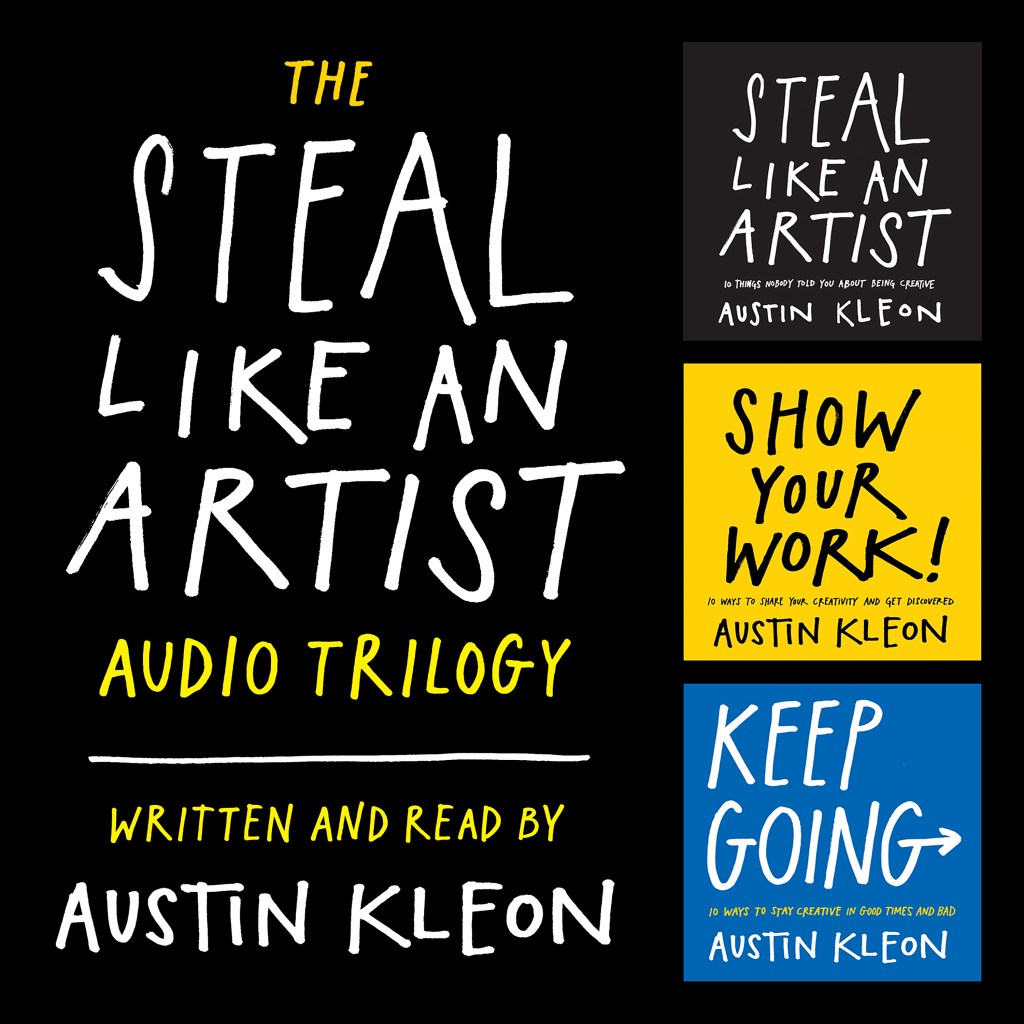
4 MAJOR LEARNINGS FROM THE BOOK: STEAL LIKE AN ARTIST.

1. NOTHING IS ORIGINAL

What a good artist understands is that nothing comes from nowhere. All creative work builds on what came before. Nothing is completely original.

If we are free from the burden of trying to be completely original, we can stop trying to make something out of nothing, and we can embrace influence instead of running away from it.

2. PRODUCTIVE PROCRASTINATION.

Creative people need time to sit around and do nothing. You get some of your wonderful ideas when you seat and do nothing. So take time to do nothing and just sit.

If you are running out of ideas, go for a long walk. Por stare at something as long as you can. As artist Maira Kalman says, “Avoiding work is the way to focus my mind”.

3.KEEP YOUR DAY JOB.

A day job gives you a daily routine in which you can schedule a regular time for your creative pursuits. Establishing and keeping a routine can be even more important than having a lot of time.

4. SCHOOL YOURSELF.

School is one thing. Education is another. The two don’t always overlap. Whether you are in school or not its always your job to get yourself an education.

You have to be curious about the world in which you live. Look things up. Chase down every reference. Go deeper than anybody else – that’s how you will get ahead.

Unpopular Opinion: Devdas was toxic, not a lover. (Book Review)

Book Cover of Novel, Devdas. (Photo Credits: Goodreads)

There’s a certain notion among Indians that every sad lover in the country is a real life Devdas. But deep down, let’s analyse, was Devdas really a lover or yet another male chauvinist?

Plot:

The story starts with two childhood family friends Devdas and Paro, both belonging to rich households and immediate neighbours. Both of their families are well connected to the each other as well. The story revolves around Indian state of Bengal.

Slowly, Devdas and Paro grow up and start developing love for each other. However, Devdas was a spoilt rich brat and this is the reason his father sends him to London for higher studies. Paro becomes sad on knowing this and waits for his return. Devdas returns home after 10 years of studies and is now a well grown up. Paro, on the other hand, exceptionally beautiful, fantasises about her childhood love Devdas.

On his return to Bengal, Devdas and Paro meet and resume their fairy tale love story. However, Dev’s family isn’t happy with their relationship as Paro was from a lower caste background. Things go worse when Devdas’s mother insults Paro’s mother for offering her daughter as a bride to Devdas’s family. This was followed my Paro getting insulted by Devdas’s father who calls her “characterless” as she went on to meet Dev at late night. Devdas seeing all this, refused to accept Paro as his family was against the relationship.

Paro’s mother, unable to bear the insult, vows to get Paro married in a family which would be lot more rich and influential than Devdas. And she does so! A week later Paro marries a rich old man from a nearby village. However, just before her marriage, Devdas suddenly arrives and offers his hand to Devdas to which Paro refuses. Devdas gets angry at the refusal and hurts Paro with a gold necklace and thus Paro suffers from an injury.

Months later Paro’s marriage to the old man, Paro pays a visit to Devdas where it’s revealed he’s completely alcoholic and lonely. Paro requests him to come with him but Devdas doesn’t agree but promises her that he would come to Paro once before his death. Devdas also meets a courtesan, Chandramukhi with whom he develops loves but leaves her yet again.

Finally, the story ends with Devdas fulfilling his promise of coming to Paro but Paro’s husband refuses to let her meet Devdas. At the end, an alcoholic Devdas passes away leaving Paro sobbing.

Character of Devdas.

1) Devdas was never a lover.

I wonder, how people have beautifully whitewashed the ignorant and abusive nature of Devdas. When Paro went to meet Devdas late at night putting her dignity at stake, Devdas refused to go with her fearing about his own family honour. If this is the case, how can he be called a lover? If family and society was more important to him, it shows he never actually loved Paro.

2) Devdas was a male chauvinist.

Devdas suddenly offered his hands to Paro when Paro was just about to marry. Paro taking into consideration her self respect questioned Devdas that why is he so late and why didn’t he come when Paro went out to meet him at his home the week before. She also asked Devdas about the reasons why her parents and she were insulted by Dev’s family. Devdas couldn’t tolerate a woman questioning him and instead of apologising to her, he shouted at her for being “too arrogant”. Devdas cared about his family honour but didn’t care about Paro’s family honour: This shows his ingrained patriarchy.

3) Devdas tries to justifies abuse!

Perhaps one of the most problematic chapters of the book was when Paro refuses Dev’s offer of running away with him on her wedding night with the old man. On getting a rejection from Paro, Dev goes intolerant and beats Paro with a gold necklace. Paro suffers from an injury and her head starts bleeding. Devdas asks Paro to keep this injury with her for life as it would always remind her of Devdas. Paro agrees to this and throughout the book she is shown to love that injury. This also shows how much the book has normalised and romanticised a brutal abuse and also definitely brutal abusers!

A Comparative Analysis on the Movie “Haider” and the Play “Hamlet”

An Introduction:

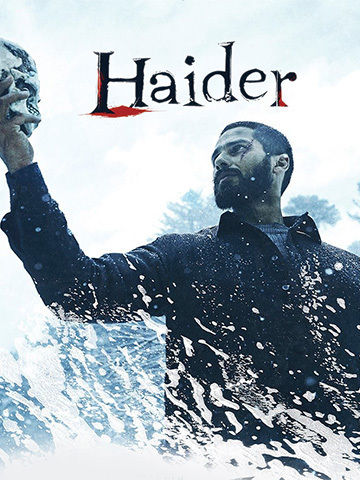
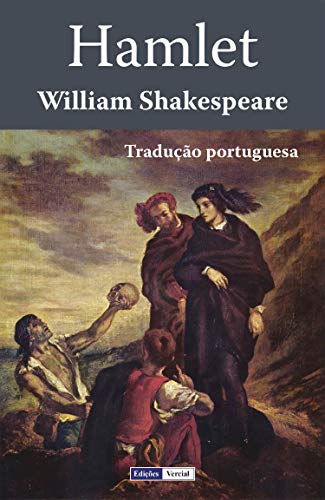
“Haider” is a movie based on the setting of the insurgency-torn Kashmir of 1995, where there was a massive dispute between India and Pakistan. This movie is an adaptation of one of the classic plays of Shakespeare’s “Hamlet”. Although the director Vishal Bhardwaj tried to portray the original play as it is with excellent cinematography but there are several incidents which contrast with the play, but many instances make this movie worth being called an adaption of the Shakespearean play.

The contrast in setting:

If we begin with the setting of Hamlet, we see it begins in the ancient fortress of Denmark in the late middle ages of the 14th and 15th centuries. Whereas in the Movie Haider, Set in Srinagar in 1995, during militancy and a brutal Indian counter-insurgency. The setting itself changes a lot of cultural and linguistic widegap that made the play and movie different.

The contrast in Cultural, linguistic, and Religion:

Since Haider is a Bollywood movie and the director tried to make this movie in favor of the Indian audience to make it more likable and hit it was essential to be relatable to the Indian context. When we investigate Hamlet, it has all those autocratic lives of kings and queens and has a lavish livelihood.

Linguistically also there is a widening between the 2 as one is in Hindi with a mixture of Urdu dialects, whereas Hamlet is in old English which also shows that the movie is culturally different in all terms.

Hamlet has been portrayed through the Reflection of Christianity, on the other hand, Haider portrays the political mishappen with Islamic reflection.

At certain times when there is a contrast in culture and norms the effects are often visible and here there are certain differences in the plot whereas the relationship is portrayed in both.

In context to Plot:

There are several events that have been edited in the movie from the play. Such as the major ones counted as: The play shows us the King of Denmark is already dead and the ghost of King Hamlet tells the truth to Prince Hamlet about his murder, as when we investigate the movie it is the character Roohdaar who tells Haider about the culprit of his father’s murder.

Also, the relationship between Gertrude and hamlet is not much affectionate as the way it is shown in the movie about Haider and Ghazala.

All Shakespearean Tragedy Plays has this element of all the characters die in the end. But in the movie, we see that some of the characters like Roohdaar, Khurram, and Haider himself were alive in the end.

If we compare the Themes then substantially all the themes like Revenge, Corruption, Religion, Politics, women, Madness Vs. Sanity is the major theme portrayed in the movie exactly like the play.

One of the most striking scenes is the equivalent of the “to be or not to be” scene in Shakespeare. Haider turns the “to be or not to be” soliloquy into a confessional and motivational speech in front of a crowd in the market square. It is decidedly more public and more political. He uses the hangman’s rope around his neck as an imaginary microphone. Haider also carries a boom box with a cassette player. The first question he poses points to an existentialist inquiry: “Hello, mike testing 1, 2, 3. Hello. Can you hear me?” Like Hamlet, Haider has longed to be heard. He urges the crowd to reflect on Kashmir’s political crisis: “Do we exist or do we not? Chutzpah is our problem.”

Haider Vs Hamlet – A contrast to the Characters:  

  1. Hamlet Vs. Haider: looking into the character analysis of the play Hamlet, prince hamlet is an idealistic knowledgeable person who is very Melancholy, cynical in nature and is having a huge amount of Hatred for his own uncle Claudius who has married his mother Gertrude and hamlet has a repulsion towards his mother’s sexuality.

                     A similar portrayal is in the movie where Haider is a student of “Revolutionary poets of British India” who studies at Aligarh University comes to find his Missing Father (Doctor Hilaal Meer), there he comes to know about his Mother Ghazala having illegitimate affair with his own uncle Khurram.

We can bring to a point that both Haider and Hamlet are closely similar in their character whereas due to some contrast in the context both the characters differ in some situations, but one thing is certain is about both characters becoming insane and the theme of sanity vs madness gives highlight due to the death of king hamlet/Dr.Hilaal Meer.

  • Ophelia Vs. Arshia: Since the play/movie is also about the tender love story of Haider- Arshia/hamlet- Ophelia, this portrays the role of love which leads to the death of people due to the brutal conspiracies done by Polonius and Claudius for taking an avenge from prince hamlet. Love is taken as a key to a dark plot of killing hamlet by making Ophelia as a medium/ messenger of hamlet.

The same plot goes into Haider too where Arshia was a journalist and was in love with Haider, but her love became a tragedy where her own father Parvez used her daughter to keep a track of her whereabouts of Haider when he was trying to find his father’s murderer.

Both Arshia/Ophelia can be a contrast because Arshia on the one side was a stern woman who took her own stand despite all the barriers of her being a woman in a patriarchal world, whereas Ophelia was very sensitive, and a woman suppressed by other men and did what her father told her to do.

In the end, both die out of the madness of losing their father and love at the same time and commits suicide.

  •  Claudius Vs. Khurram: The evil of the play who dies in the end, whereas in the movie he does not, as Haider changes his ideology for not killing his uncle due to his mother notions that “Intekaam se Intekaam Paida hoti Hai!” In the play and the movie Claudius/Khurram is the one with all sinister mind and political ambitions who wanted to kill his own Nephew and wanted to have full rights on Ghazala/Gertrude. His lust for women and power goes in the end when he was in the verge to die.
  •  Polonius Vs. Parvaze: Father of Ophelia/Arshia who was good close friend of Claudius/ Khurram and was giving a prominent contribution in the dark conspiracy made by Claudius, but later gets mistakenly killed by Hamlet when hamlet losses his sanity. Polonius had the greed of power and money and was as sinful as his friend Claudius.

Parvez in the movie was the police inspector which was helping Khurram with his own daughter Arshia who was in extreme love with Haider.

  • Gertrude Vs. Ghazala: Married to the new king of Denmark who was hamlet’s uncle. Often as a woman there where many questions raised on her married and love life as she remarried a man which was against the ethics and she had a very fragile relationship with her own son Hamlet, and they did not have an ideal mother son relationship.

In the movie, we see that Ghazala and Haider had an affectionate relationship despite all the hatred between them in the end Ghazala even sacrificed her life for Haider by killing herself with a bomb explosion.

  • Roohadaar: He was an ISI agent but considered to be the ghost of hamlet and in the play, we do not have any character related to Roohdaar as the ghost of king hamlet himself tells the truth to prince hamlet about his brutal murder, whereas in the movie Roohdaar and the militant group himself tells the murder of the doctor.

Indeed, he was a good friend of the doctor and was in the prison with the doctor and he was the messenger to stimulate an urge of hatred in Haider’s mind towards his own uncle.

  • Horatio (A good friend of Hamlet): This character is missing in the movie as he was a good friend and played a positive supportive role for hamlet. Also, a reason why the movie and play are somewhat out of context from each other due to some change in the character appearance.
  • Fortinas: A close acquaintance of hamlet who had faced the same pain of losing father just like hamlet, but we do not know which character will fit the best for this. so, we can consider that this character is not available in the movie as Haider in the movie was often a loner in the movie and beacme distant from his close ones in the later part of the movie.

Conclusion:

Though the tale is somewhat similar in the movie and play but also certain characters and stories are invisible as this makes the movie or the play incomplete. Since it is an adaption so we cannot expect to be the twin of each other.

From in critic’s point of view, this movie can be rated 7.5/10 as it has all those elements of Shakespearean plays and the cinematography of Vishal Bhardwaj which is perfectly splendid!

Taken all the consideration the story is well portrayed in the movie in spite of all the cultural and religious differences with all those political contexts.

Themes of Revenge, women, corruption, religion, politics, madness are common in both the movie and play.

Books Written By Women For Women

Women are capable of accomplishing anything. Create great ideas, build businesses, and make a great difference in the world. Nonetheless, we don’t see enough of this message in mainstream media. However, the realm of literature has provided us with many incredible stories of women’s perseverance, knowledge, wit, boldness, and drive.As such, here are some excellent novels written by women authors for women.

I Know Why the Caged Bird Sings by Maya Angelou

The caged bird attempting to escape has long been a symbol of resistance to injustice. Maya Angelou employs this sign to express her desire to leave a life of strife, racism, and misogyny. I Know Why the Caged Bird Sings is an autobiographical novel about Angelou’s childhood in the 1930s. 

We encounter prejudice, rape, and rejection from her community, even from her own mother, as we follow this impoverished, disenfranchised black girl. Maya Angelou discovers as an adult how her own strong spirit, compassion, and generosity to others is the greatest way to be free. The book is a strong and beautiful storey of courage and breaking free from one’s captivity.

We Should All Be Feminists by Chimamanda Ngozi Adichie

We Should All Be Feminists is an interesting piece on women’s rights and equality. This book-length article discusses how the term “feminism” is sometimes connected with misunderstandings and prejudices like brainwashing.

To counterbalance this, Chimamanda Ngozi Aidchie provides the reader with a simplistic yet compelling description of feminism: equality for women in social, political, and economic terms. She confronts common feminist misconceptions front on. Even after her own friends called her a terrorist supporter, Aidchie continued to clarify that the term “feminist” has little to do with hostile, resentful, and men-hating women. The central theme of this novel is a narrative of a life-long battle to achieve equality between the sexes. 

According to the author, feminism is important since it helps to tackle women’s silence and exploitation.By how successive generations educate their children, the concepts of gender equality and feminism continue to struggle with all these terms.

The Terrible by Yrsa Daley-Ward

The Terrible is a novel about a lady attempting to manage her life on her own. Yrsa Daley-Ward recounts personal aspects of her childhood without her father and the terrible facts she had to discover in this stunning piece of painfully honest prose.

These realities are referred to as “the terrible.” As a young lady, the writer couldn’t comprehend the mental strain of having encountered tremendous pessimism and tribulations so early on in life. Having grown up as the only kid of colour in a white area, she was educated by a family of radical Christians, and witnessed her mother being devastated by several bad relationships.

Later in the book, the book relates Daley-Ward’s life as an adult, when she, too, had to deal with “the terrible.” She discovered it was continually expanding and having a much more huge psychological strain on her as she became hooked to narcotics and experienced repeated mental breakdowns.

The author reaches the climax and confronts “the terrible” after suffering all of the negative stuff that has occurred to her. She can only break free and recover if she recognises the consequences of her trauma and embraces her self-sustaining positivity.

The Girl with the Louding Voice by Abi Daré

The title of this novel hints at the main character. The tale of Adunni, a young Nigerian girl who aspires to acquire an education but ends up in an arranged marriage, is told in “The Girl with the Loud Voice.” As she escapes her violent husband and her native town, her resolve to attend school, which her mother encouraged Adunni to accomplish, triumphs.

The plot follows Adunni on her trip, which is packed with perilous, life-changing, and remarkable experiences. On her journey, she gains access to literature such as English dictionaries when she finds herself working as a maid in Lagos. Eventually, she comes upon an opportunity to learn. Her irrepressible attitude and perseverance drive her on the path to the “louding voice,” making this book a fantastic piece of how battling for your ambitions will be rewarded.

Notwithstanding the many difficulties in her journey, she never quits on her aim of escaping poverty. The end result reminds readers of the author’s message: pursue your goals, and you might just bring about change.

Wow, No Thank you: Essays by Samantha Irby

Wow, No Thank You is an essay collection in which Samanth Irby describes her life as a married woman in her forties. She compiles a fantastic series of stories in which she finds herself in situations that many people can relate to. All throughout the novel, humour is a recurring motif, as Irby makes amusing comments on her own behaviour and life choices.

The author’s inner voice, however, is at the heart of the book, pushing us to be more sensitive to things. That discourse also enables us to notice these things that no one else notices, which frequently results in pretty funny circumstances. Irby demonstrates how her internal thoughts influences her clothing and footwear, food preferences, cleansing items, and so much more.

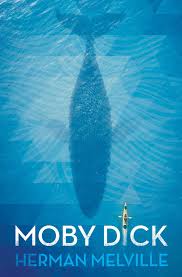
Melville and his Moby dick

About the author

Herman Melville (1819-1891), the author of Moby Dick, is recognized today as one of America’s greatest writers, although there was a time when critics as well as readers rejected his writings. He wrote more than ten major novels, based on experiences that he had gone through himself. Some of his adventures in real life were more exciting than the ones he describes in his novels, but none was as strange and thrilling as the story he tells in Moby Dick.
Melville was born in 1819 in New York City. His parents, like many other Americans, were of mixed nationality, being partly English and partly Dutch. The Melville family was a well known one, but had become poor at the time of Herman’s birth. He was forced to give up school at the age of fifteen in order to earn his living. He tried his hand at various jobs: farming, teaching at schools, working in offices-in fact, any work that he could find. Finally, in 1839, he went to sea as a common sailor. His first voyage took him to the port of Liverpool, in England. He found life at sea so attractive that he decided to remain in this profession.


In December 1840, Melville joined the crew of a whaling-ship, the Acushnet, and went on a long voyage to the Pacific. After sixteen months on board, he and a shipmate ran away from the ship when it stopped at Nukhera, an island in the group of islands in the Pacific known as the Marquesas. They spent several weeks on this island, where they were in danger of being killed and eaten by cannibal tribes, before returning to America on another ship. Melville described these adventures in two of his novels which became instant hits-Typee and Omoo.


Between 1840 and 1843, Melville worked on two other whaling ships, the Lucy Ann, and the Charles and Henry. His experiences on these ships were used by him in writing Moby Dick. He gave up his sea-going life in 1844 and devoted himself completely to writing. In 1850, he met the great American writer, Nathaniel Hawthorne, who encouraged him to write Moby Dick, and to whom this novel was dedicated.


About the book


Moby Dick is a book with several layers of meaning and can be read at different levels. At one level, it is an exciting tale of adventure. There are many other well known stories of adventures at sea, but what makes Moby Dick special is the fact that it provides a rare glimpse into a particular kind of life-life on a whaling-ship, or whaler, which Melville knew at first hand.


This is the story of Captain Ahab, the captain of a whaling-ship, the Pequod, and his unending battle against a white whale, to which sailors had given the name Moby Dick. Because of its unusual colour and its great size, Moby Dick had become a valued prize for all whale-hunters. But in the case of Captain Ahab, there was an element of personal enmity and a desire for revenge as well. In an earlier meeting with Moby Dick, Ahab had lost one of his legs, which was bitten off by the whale. Thereafter, he had only one goal in life-to kill the white whale. After months of pursuit through the oceans, the man and the whale came together at last; the battle is resumed.
The story is narrated by a sailor called Ishmael, who becomes a witness to the battle between Ahab and Moby Dick.


MOBY DICK as an Allegory


It becomes clear from the beginning that the author wants us to read his story as an allegory-a story with hidden spiritual meaning. Almost everything in the book has symbolic value and represents something abstract. The names of the major characters in the story are taken from the Bible, which was a source of inspiration for Puritans, a religious group.


Moby Dick can be read, at one level, as a tale of adventure. However, the fame of this book rests chiefly on the complex spiritual and religious elements that Melville wove into the story. Moby Dick is regarded as an epic, like our own Mahabharat or Ramayan, or the Iliad and the Odyssey, which were written by the Greek poet Homer, thousands of years ago.


An epic is a long tale which presents before us a vast, many-sided picture of human life and nature. Everything in an epic is on a grand scale there may be hundreds of characters, engaged over a long period of time in numerous exciting adventures. Most epics are stories of great battles, in which human beings perform heroic, almost superhuman deeds. These battles often represent wars between the forces of good and those of evil, with the former becoming victorious in the end.


Moby Dick is also an allegory in which ordinary objects, characters and events become ‘symbols’, representing abstract qualities or emotions. In poetry, for example, the rose is often used as a symbol to represent beauty and love, both of which are abstract things. Another common example of a symbol is the national flag of a country-though only a piece of cloth, it can give rise to the powerful but abstract emotion of patriotism. Many men and women have sacrificed their lives to protect the honor of their national flag.


The early American writers were mostly Puritans from New England. The Puritans, who became powerful in England in the sixteenth and seventeenth centuries, belonged to a Christian group which believed that God had created man only to serve and obey Him and that it was the duty of every human being to lead a pure and strict life, avoiding all forms of temptation. For a Puritan, life was a constant struggle against Evil. They believed that they were the only true Christians. In the sixteenth century, a group of Puritans left England and sailed to America, because they felt they did not have the freedom to lead the kind of religious life which they wanted. The part of America where they settled was known as New England.


Herman Melville was brought up as a Puritan and was deeply influenced by other Puritan writers. It was natural for him, therefore, to see life as a struggle between the forces of good and evil.
Moby Dick is a powerful expression of this Puritan view of life, although there are other elements in it as well, taken from other cultures and religions that Melville became interested in.
When we read Moby Dick as an allegory, symbolizing the battle between good and evil, it is not always easy to decide which qualities a character represents. Is Ahab a symbol of Goodness, and does Moby Dick symbolize Evil? This is what one might think at the beginning of the novel, since Ahab is shown as a heroic character, possessing superhuman courage and determination, while Moby Dick, the whale, is described as a killer. But gradually, we begin to see that there are many sides to both Ahab and Moby Dick. The whale turns into a mysterious supernatural power, which is beyond human understanding, while Ahab appears to become inhuman in the way he ignores the pain and suffering of others in his thirst for revenge. The line separating good from evil is not clear; both good and evil are seen to be parts of a larger design, balancing each other. Here, Melville seems to move away from a Puritan view of life and may have been influenced by other religions such as Zoroastrianism (the religion of the Parsis) as well as Buddhism and Hinduism.

NEW DIMENSIONS TO DEATH- GRAY,BROWNING AND DICKINSON

If Winter comes, can Spring be far behind?
                               -Percy Bysshe Shelley (Ode to the West Wind)

Such spirited start, isn’t it? Poets literally can change our thoughts with mere lines. So are the poems that deal with Death.

“Elegy Written in a Country Churchyard”, “Prospice” and “Because I could not stop for Death” are on top of the list when it comes to overcome the fear of death. In the three years of my graduation I read these poems in the respective order and I must say there was an orderly development in my thought which I would like to share with you. Some of you might even connect with it.

Our generation is dealing with Death more closely than any other. With the help of advanced technology and advanced mutants of novel corona virus, the world is ‘connecting’ rapidly! It’s a time where no one is untouched by the feeling of anxiety or depression. Therefore it is crucial to keep the mind afresh. Why not to give a kick start to brain by reading through the lines of poetry instead of covid news every morning.

Gray and his Elegy

The boast of heraldry, the pomp of pow’r,
         And all that beauty, all that wealth e’er gave,
Awaits alike th’ inevitable hour.
         The paths of glory lead but to the grave.

In his poem Elegy Written in a Country Churchyard(1757), Thomas Gray talks about inevitability of death. While the traditional elegy form memorializes an individual’s death, but Gray expands the form to encompass death as a phenomenon that all of humankind inevitably experiences. He talks of big ambitious people who look with contempt at the poor people, they all are lying buried in the ground. Thus giving the message that death is blind to mankind’s social constructs such as class distinction. Death is the ultimate leveler.

Reading this poem makes one realise how futile is living; living by boasting of all the achievements, all the wealth; because one day when the end comes one will have to leave all these behind. Here come the reality check.

Browning’s Prospice

Written after his wife’s death whom he loved dearly, Robert Browning describes his idea of combating Death in his 1861 poem Prospice.

I was ever a fighter, so—one fight more,
The best and the last!
I would hate that death bandaged my eyes and forbore,
And bade me creep past.
No! let me taste the whole of it, fare like my peers..”

Browning treats Death as his enemy. The poet is not at all afraid of the physical troubles that come at the time of death. The symptoms of death does not deter him. Browning says that even the heroes of antiquity had to face death and fight it bravely. Common man should derive inspiration from them and be prepared to meet death bravely and cheerfully like them. If we do so, we can overcome it in one minute. Death is scary only when we are afraid of it. As a matter of fact, even the worst moment of death becomes enjoyable and appears to be the best for those who have got courage in them. After all, through death, we pass into another life and pass into Heaven if we are brave.  

This verse is an absolute necessity. It radiates optimism- the need of the hour. And also the power to fight the fear.

Because I could not stop for Death by Emily Dickinson

Because I could not stop for Death —

He kindly stopped for me —

The Carriage held but just Ourselves —

And Immortality.

Emily Dickinson is one of the giants of American literature. She was little known during her life time but became immensely popular after the posthumous publication of her works. Dickinson’s poems reflect her “early and lifelong fascination” with illness, dying and death. The poem contains a gentlemanly appearance of personified Death. The use of words such as ‘kindly’, ‘civility’ create a positive image of usually feared Death in our mind. There are many guesses over the poem’s actual meaning. Some interpret it as the Christian belief in the afterlife. According to the Christian faith, that first life stops and following death we encounter immortality through our existence in the after life.

My personal interpretation was related to the thought “We are born to die”; such that since the birth Death waits for us and in the whole journey of life Death is the only constant companion. Nevertheless, the whole poem gave a soothing feel and therefore evolved my perspective about death.

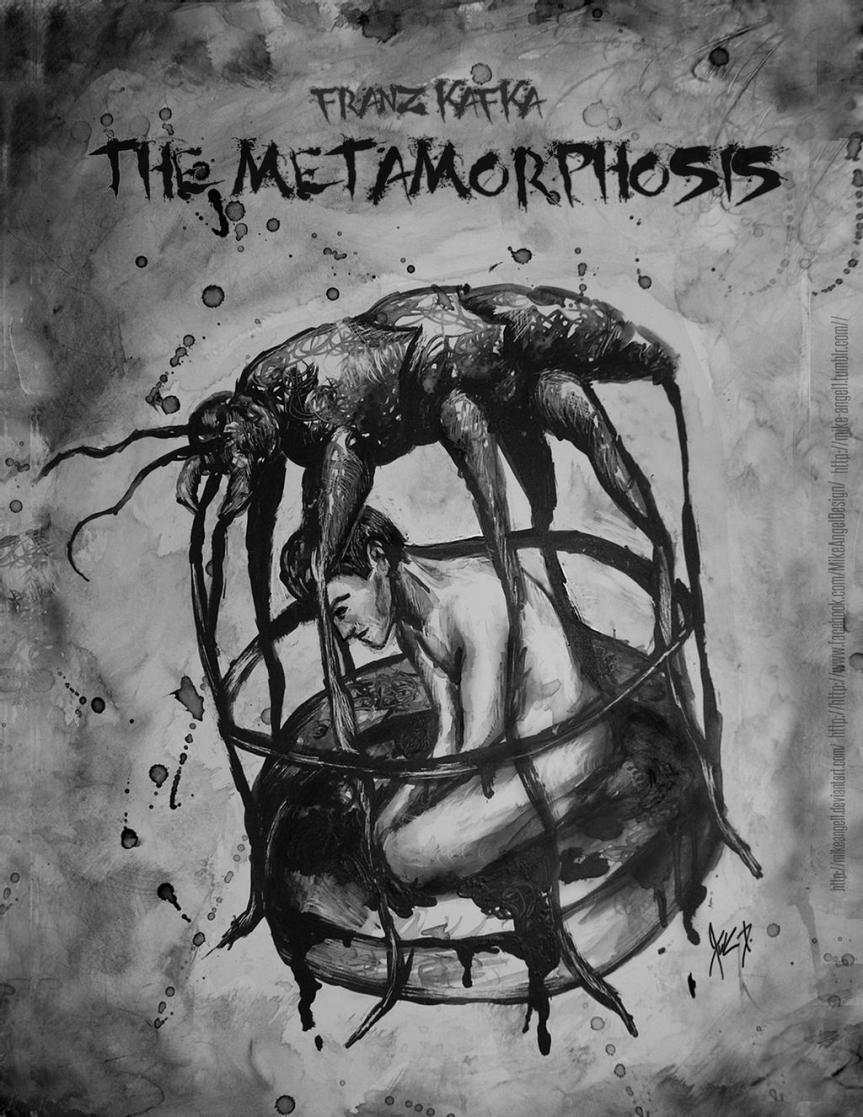
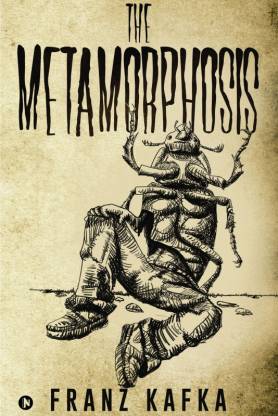
Abandonment of Human and onset of Fractured family in the Novel: “The Metamorphosis”- By Franz Kafka

Devastation in a life of a Human being comes in various versions which ultimately hollows a person psychologically, emotionally, and sometimes physically too. Kafka’s one of the most popular novellas to date is  “Metamorphosis”, which is the best example of Human abandonment from their own society. This novella portrays how a human is outcasted by their own family and left to die.

A Tragic Story of Gregor Samsa –

The Novella begins with a setting of a bedroom where the protagonist is first introduced to the readers, as “Gregor Samsa”, who wakes up from his bed and sees himself transformed into a bug which brings him into a state of perplexing situation of his sudden body changes. He started to anticipate many assumptions of what had really happened to his body in one night but he failed in vain with the running thoughts.

Gregor Samsa was a salesman and a sole breadwinner who had a bunch of family responsibilities piled upon him. Even in the state of his physical transformation, he was concerned about his job and how would he be able to go to his office and catch his train at 7am.

Shock to the family –

When Gregor’s family members came to know about his physical transformation there were abashed and terrified by his transformation and avoided him mostly due to his nasty appearance. They were least bothered about Gregor, rather they were trying to avoid him by looking in this room and treating him like a real bug. Gregor’s father who never had any emotion and concern for his son only treated Gregor as someone who is paying off his debts. Gregor’s mother who loved Samsa dearly couldn’t be able to see his own son’s face as he looked disgusting and she was horrified with his appearance.

The only member who had a little bit of concern was Grete ( Sister of Gregor), who used to feed food to Samsa, but later on, in the story, she also loses interest in taking care of his own brother.

Family becomes Rebellious and Abandons Gregor :

This novella highlights the Fractured Family Relationships and the ill consequences which happened to Gregor after his transformation. His family, in particular, treated him like a disgusting insect which they wanted to get rid of, as the days were passing, Gregor who was once taking the responsibility for every member of his family now became a burden to them.

His father, Mr. Samsa even tried to kill Gregor with an apple, as he hated his own son so much. His mother though loved his son so much but never tried to visit him due to his condition.

The transformation was just a physical pain to Gregor, but the emotional and mental pain he received from his own family who was betraying him every day and alienated him in the end.

Tragic death Of Gregor:  

“He thought back of his family with emotion and love. If it was possible, he felt that he must go away even more strongly than his sister. He remained in this state of empty and peaceful rumination until he heard the clock tower strike three in the morning. He watched as it slowly began to get light everywhere outside the window too. Then, without his willing it, his head sank down completely, and his last breath flowed weakly from his nostrils.”

This quote mainly reflects the tragic death of Gregor which created a  sense of happiness for his family members. Profoundly, Grete is portrayed as responsible for Gregor’s death, but as we look into the story, we can’t blame only one character as responsible for his death, it is the whole family which should be blamed. Gregor was suffering from a state of identity crisis which brought his suicidal thoughts.

If we look into the story from a critical point of view, we can find that Gregor was depressed and was suffering from a breakdown. Unlike, other men of his age, he was different, he never enjoyed his life and never went to hang out with his friends, rather he was a workaholic and loner who used to be distant from socializing.

As we look into the story, Gregor died in his own room due to the burdensome of his own existence. His family made him feel like an outcast who should be dead and that made him demotivated to even live in this world.

His death was tragic because he died emotionally, mentally and when he was dead from inside his physical state couldn’t bear his body and left him abandoned, so he died tragically.

The ill fate of Gregor – An Alienated living being.

Gregor as a young salesman and even as a  son, brother played all of his responsibility in an admirable way, he never disappointed anyone but rather always worked hard in spite of any situations.

When his life became upside down when he became a bug and his transformation made him realize that he has no one in this real world. His family was a mirage of happiness that abandoned him in the end. All his family urged was the money. They were happy with Gregor till he was capable of earning, the day he was of no use his family changed their attitudes towards him which made Gregor feel alone.

The author tried to make understand through the situation of Gregor to his readers that, when a person is physically able, they are treated as a prominent part of the society, but when they have any flaws or deficits in their body, they are discriminated against by there looks and appearances and left alone by criticizing and judging them, which makes the person hollow from inside.

A fractured family basically lives a materialistic life where emotions and understanding are not prominent instead there is always a motive of taking advantage of each other. Gregor’s family were money-oriented people who only urged for money and not didn’t worried about Gregor’s crisis he was going through.

Metamorphosis is the best work Novella which tells about Humans and their family relationships that, if a person is dead their life doesn’t stop as like the flowing water their life moves on and people forget there past like the dawn of other days.

LITERATURE

Literature broadly is any collection of written work, but it is also used more narrowly for writings specifically considered to be an art form, especially prose fiction, drama, and poetry. In recent centuries, the definition has expanded to include oral literature, much of which has been transcribed.

Literature can be classified according to whether it is fiction or non fiction and whether it is poetry or pose ; it can be further distinguished according to major forms such as the novel, short story or drama ;and works are often categorised according to historical periods or their adherence to certain aesthetic features or expectations (genre)

Development in print technology have allowed an ever-growing distribution and proliferation of written works, culminating in electronic literature

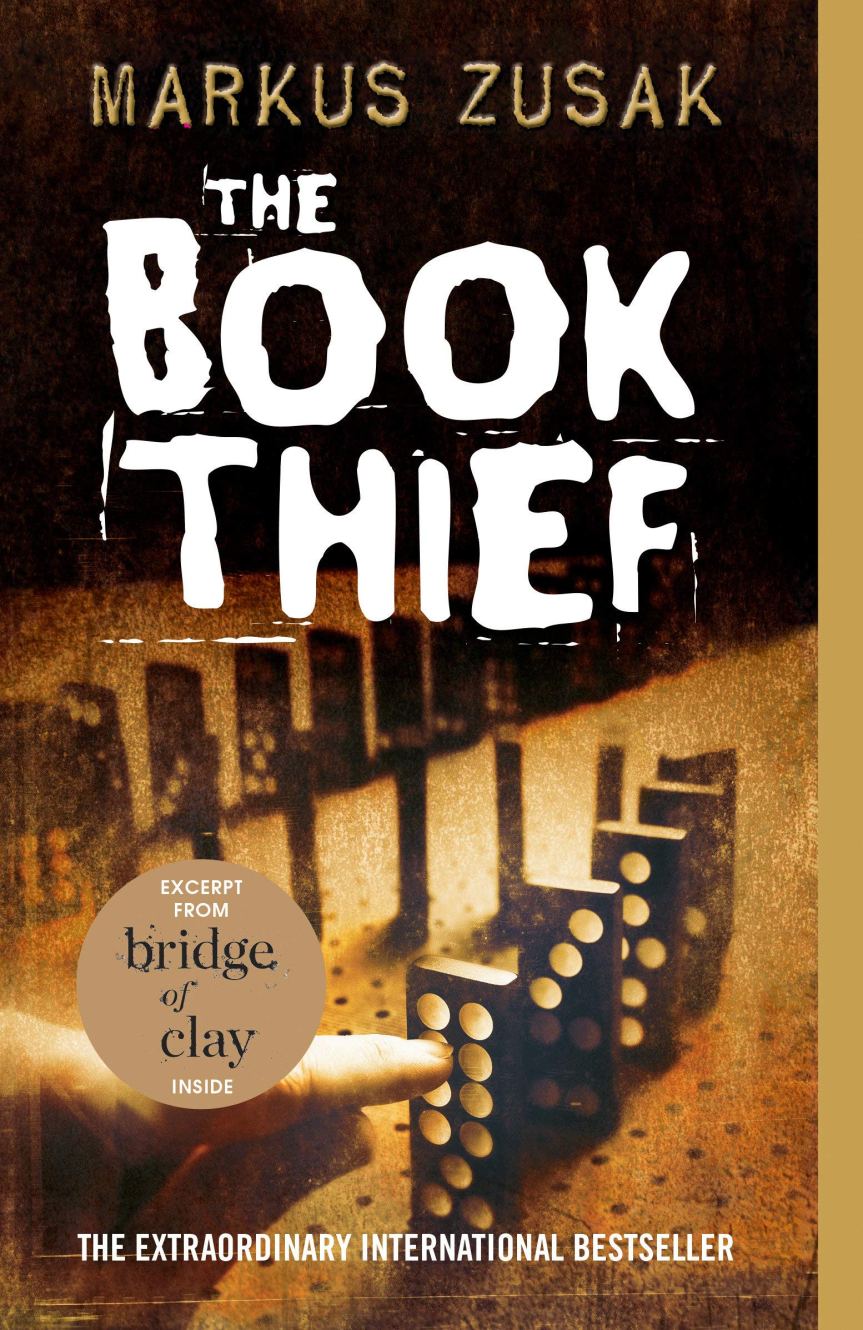
Holocaust in children’s Literature in the Novel – The Book Thief

“It was a place nobody wanted to stay and look at, but almost everyone did. Shaped like a long, broken arm, the road contained several houses with lacerated windows and bruised walls. The Star of David was painted on their doors. Those houses were almost like lepers. At the very least, they were infected sores on the injured German terrain.”
― Markus Zusak, 
The Book Thief

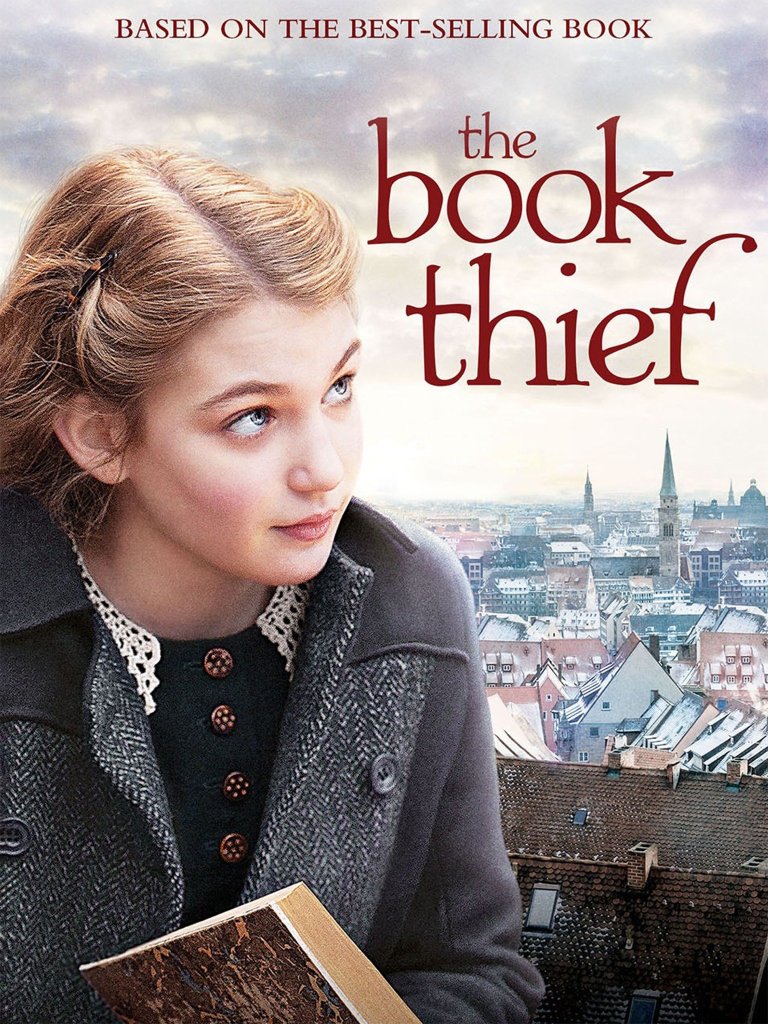
In reference to the novel, The Book Thief written by Markus Zusak which is a Young Adult Fiction and Historical Fiction by Genre gives us a clear image of the best classical works found in the literature. Markus has portrayed a beautiful story about a girl named Liesel Meminger, which is also the protagonist of the story. In which “Death” himself is the narrator and portrays us the beautiful relationship of a Foster Father and daughter.

Foster parenting is most fragile and negative but living in an environment where the background shows us the Nazi Germany War and the Autocratic power of Hitler and suppression of the Jews and the incidents of the holocaust, war and Violence may often haunt and be Depressing for the young Readers.

Why holocaust in children’s Literature?

Here the question raises about Markus is why he used Holocaust in children’s Literature?

The reason can be numerous, but the fine line of choosing the holocaust and Hitler was the prominent and best option because of the reason that Adolf Hitler himself targeted young minds to brainwash them by all political conspiracies against the Jewish people. This fact should be considered prominent, and the young generation of contemporary society should well know about holocaust literature.

Markus Zusak has explained the story of the book thief(Liesel Meminger) who was 10 years old girl living in Nazi Germany with her foster parents. Markus specifically took Liesel as a girl character to explain the scenario of children living in Nazi Germany.

The book Thief novel presents us the elements of contemporary issues in which a girl develops her emotional, physical, mental, cognitive skills and IQ skills with a presence of an ideal father.

Most Prominently, the novel is a complete package of love, friendship, hate, war, suppression under Hitler are the major themes found among them.

Holocaust – A deadly topic among children

Although, Holocaust is one of those terrible historical events which is still a heated topic and gives us goosebumps even to the adult readers. So the question that arises is how Markus have been able to make this as a children’s knowledge and bring the serious topic as an interesting genre among young readers . The answer is simple, as the book is enough to tell anyone why it’s been one of the classic books in the field of literature with a perfect balance of Emotional and feel-good genres.

The Book Thief –

The story is about a 10 yr. an old girl named Liesel Meminger, whose life was always a series of miserable life as she lost his brother at the beginning of the story and her own mother abandoned her and was kept under foster care.

Unlike other foster parents, rosa, her foster mother was always a rude mother who was always strict with her, but definitely her life was beautiful and contended because she had a foster father named; Hans Huberman, who always motivated her to read books and learn new vocabulary.

The whole book is set under the regime of Nazi Germany where it is all about children and their lives out there, where Liesel met many people like; Max ( A Jew, who was hidden in the attic), Rudy( His best friend), Illa ( The commander wife, who used to be good companion of Liesel in her reading time).

Liesel’s  life has always been tragic because she was always welcomed by grief, remorse and death. She lost many close people in her life due to death, and that is the reason death as a narrator quotes that: “I’ve touched Liesel many times, but her soul always lets me allow her to live more”. Liesel in the end becomes a successful writer and her journey as a writer explains to us how tragic her whole life was.

Elements of Nazi Germany-

The whole Book portray us the background of which the whole novel was based, as Jewish were beaten, the burring of books, max as a Jewish hiding in the attic, Hans going to war, Young boys enthusiastic and idolising Hitler these are elements in the book portray us the condition of Nazi Germany.

The ending of the book is bit tragic as though she becomes a famous writer , but she lossses everyone in the end of the war. Her foster parents, best friend Rudy all dies and she is left alone. The Book Thief is a perfect blend of War and fragility of a little girl who suffered so much because of a war. This also shows us how death plays a major roles in a way and is always terrible with mortal humans.

Getting New Tempo of Life from Nanak Singh

Nanak Singh 1998 stamp of India.jpg
Nanak Singh (Source: Wikipedia)

Looking Back to inmost salient lion from North-west corner of India:

The milieu where we are going through, reminds us of such a beacon whose life was out of the world of ceramic painting. In the prevailing situation in where myriad of youths are gloomy and distracted, all the deluge of depression and ‘break-up’ with our soul & courage, that poet-cum-author pillages our interest towards his escapade in the worrit situation he passed through, not lying on fortune’s lap.

“It seems to imply that in the lifeblood of our society, red corpuscles have disappeared.”

From Novel Chitta Lahu (White Blood), by Nanak Singh

Yes, we are talking about that very Panjabi author — Nanak Singh. This Indian poet, songwriter & novelist of Panjabi language made a royal entry to this world on the 4th July, 1897 through a poor Punjabi Hindu family. His literature produced crackles in the period of India’s Independence movement. If we take a magnificent lens on the pages of Modern Indian History, Nanak Singh was more prominent of them who wanted to eliminate the dual mentality of that ‘babu’ who went soft on the fierce deeds of the British.

The revolutionary identity got influenced and involved in the Jallianwala Bagh Massacre. On that auspicious day (April 13, 1919), of Punjabi New Year, Singh saw a lot of kin shot to death by the British troops, even two of his friends drooped on his lap for their last time. Then the author entity of Singh’s inner mind erupted in anger — invented an epic poem, mocking colonial rule — “Khomeini Visayans” (Bloody Baisakhi) from native heart. While conducting ‘Akali Movement’, in charge of the editor of ‘Akali’ papers, he became the subject of crimson eyes of the British — that resulted in the imprisonment of that new leader. In the meanwhile, he converted himself into Sikh. Hence, he portrayed the savagery and ‘legal violence’ of the British on peaceful Sikhs — and published his second anthology called “Zakhmi Dil ” (1923), which got banned within a fortnight of its publication, as expected.

Implementation of Singh’s Views in Present time:

This legend’s natural inclination towards protest against coercion, unjust & inequitable feud, as well as bluffing at every step, pulled him to pick-up ink as well as the flag of Mother India. Under Singh’s tenure, both the fallacy of British & dogmatism of Literature (specially in regional languages) got curtained. Yes, we agree delightfully that the British are no longer in power in India. But the orthodoxy, bigotry & undesired fanaticism has prepared a lot of arrest warrants for Indians. This situation reminds us of that nonesuch person:

Who escaped the boundary of patriarchy — implemented the quote of Lalan Fakir in reality —

“Everyone Sees Male & Female/ But, I see Only Humans” 

“সবাই দেখে নারী পুরুষ, আমি দেখি শুধুই মানুষ”

Lalan Fakir

We get a lot of views in his novels.

Nanak Singh (Source: ‘The Watchmaker‘ book written by Singh & translated by Navdeep Suri)

He’s Nanak Singh, whose voice was full of courage & pluck that successfully punctured British’s confidence, gives a message to us to belabor the deception of socio-political hand-cuffs. In his writing, always one thing got itself highlighted — the search for celestial happiness through fraternity, integrity & Liberty. 

However, all Indians, not only Panjabis draw inspiration from this icon who gives birth to every Indian from the previous fluffy life of usual inertia — that erects pillars to build a Happier nation for Future.


So, don’t delay to come forward to blow the conch of Humanity with the previously chanted hymns of Nanak Singh.

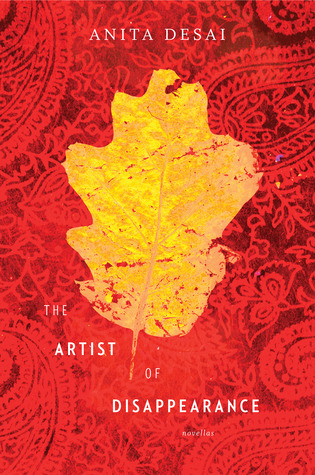
Desertion of Lost artists in the Novella – The Artists of Disappearance by Anita Desai

Artists who create the magnificent form of artwork usually portray their inner personality in there all forms of art. They represent who they are, and how their psyche is. The creators of extraordinary art live a life of incompleteness, dullness, and hollowness within themselves.

Their creativity glorifies their inner self and how miserable their life is. All legendary wizards of art contribute incredible work despite having and living a horrible life. Whether it is Shakespeare who lost her 8yr old daughter, or whether it is Franz Kafka who had a fractured/failed relationship with his own father, or whether it is J.K. Rowling who had lived a miserable life striving between her failed career and failed family life while being a single mother, these all examples are basically the real lives of these great writers who imprinted their skills and printed their hands in the history of literature forever.

There are serval times when artists fail living in a complicated society when they are being judged and due to several cultural mishaps, which affect their lives. Likewise, The Novella “Artists of Disappearance” is one among them.

Artists of Disappearance – A Novella about unsuccessful Artists

This is a Novella, which is only one of its kind in its own way because this novel which has 3 novellas within it talks about what happens when the artists fail to satisfy their piece of art?  How can an artist fail in his forte? For a writer/ or an artist the art is the reason why they survive in this uncanny world where there is a bridge between the writer and the injustices held against them, which ultimately oppose a writer to create their art! Readers will experience some kind of queries in their heads if they read these stories written by Anita Desai.

The writer had beautifully written these stories especially for the contemporary readers who are bustling their life and don’t have much time to read. But this Novella is amazing as all the 3 stories are somewhere relatable to readers of all ages.

“The Museum of Final Journey” –

This is the first novella of this book which is narrated by an unnamed Government bureaucrat who wanted to be a writer but unfortunately had to suppress his long writing career due to his father’s dream and expectation of his son to follow his footsteps and become a govt bureaucrat. As the story moves forward, we see that in the later years of the life of the narrator when he was a junior official and was posted into one of the remote areas, he describes his past experience as a flashback to the readers.

His experience was something which brought him in a state of apathy when one day an old man who was the caretaker of the “Mukherjee estates”  came to the office for a favor to rescue the treasures of the states as some people were stealing it and disrespecting those precious things by exporting it to other countries. The Museum, which was now an abandoned museum for the residents living there, still had authentic elements present in it.

As the narrator quotes that: “While others dreamt dreams and lived lives of imagination and adventure, my role was only to take care of the mess left by them.” When the official comes in counter with the museum, he realizes the art and his life, his life is rusty and mundane like the dust-covered on the treasure’s museum, even if he tries to save the estate the art will be auctioned by other greedy people. When the artist dies, the art is never protected rather it becomes a means for greedy people to fulfill their needs.

The narrator finds himself and the Museum similar and ended his story by having this grief that he should have followed his dream, yet he was a failed writer whose life was hollowed and gloomy.

“Translator, Translated”

Another story of a journey of a Failed writer, who is the protagonist of the story, named “Prema”, whose life was miserable and uncertain. She lived a mundane life as an English professor in a girl’s school where her own students mocked her and criticized her due to her appearance and her age. She didn’t have any goal and she always compared and envied her life with others, especially with one of her school acquaintances “Tara” who was now an editor head in a feminist publishing company.

When these 2 characters collide in one of the school programs, Tara allowed her to do a translating job. Initially, Prema’s journey as a translator was like a “Carousel”, but things fall apart when she tried to translate an Oriya book written by Suvarna Devi into English which later on ended her writer career ultimately.

Translating is a form of art that depends on how the translator deals with the language and brings the best piece of all. It becomes a sentimental concern if the translated work is not satisfied by the readers. This is what happened in the end, as her translated book didn’t receive much appreciation and in the end, Prema lost her dream to become an eminent writer and went back to her mundane life of being an English professor.

Her failure proves to us that, as the art fairs, the artists die! As the artist in Prema was dead when the art didn’t flourish. Her ability to write was dead when she drained by her own skills and failed with her own existence as an artist.

“The Artist of Disappearance” –

This is the title story of the novella with a protagonist named “Ravi” who had an unfortunate life who had been adopted at a very young age by a very wealthy couple. Even living in a mansion which was located at the foothills of the Himalayas, he never loved his life as his life was not peaceful like the other kids of his age. He had neglected parents who used to beat him up and used to leave him and traveled to Europe without having any concern for their son.

He was always caged in the house and what he always wanted is “Freedom”. This is what every artist wants to be free from the clutches of society, to think freely and exploring themselves.

In a fire accident when he lost his parents, he became to be with himself away from the social life and created much great artwork in his own house. His artwork was so much amazing that people who were filming near the village wanted to expose his work but he denied it and wanted to live an isolated life with his art.

The last story of Ravi proves that an artist is always attached to his work and never wants to leave it. Whether they fail or flourish, art is the reason which keeps them alive.

Though unnamed official, Prema and Ravi failed, their failures in there art form kept them alive from this undeserving world where they are not accepted for their art and yet these artists choose a life living in uncertainty with a certainty of hope hidden in their hearts and that surely one day they will reach their destination.

DIFFICULT ROADS OFTEN LEADS TO BEAUTIFUL DESTINATION…

Photo by Erik Jermaniu0161 on Pexels.com

“When Everything seems against you, remember that the airplane takes off against the wind, not with it” – Indeed, there’s isn’t a life where difficulties and struggles don’t come.

Someone rightly said, ‘‘If you don’t face any problem in a day, that means you are on a wrong path’’ We often say this proverb about struggles of life. Life is like a roller-coaster, it excites with all those fun frolic jovial moments to distressing moments in our life. Life is incomplete without failure and struggles.

Be a man with honesty and hard work, as it will give us a fruitful life ahead. “A man who struggles will always be the most ideal person in his life”. Life is full of opportunities and risks. In the process of achieving something we all have to sacrifice something, either it is your friends, family, or your loved ones.

Life is a tree, the more you give efforts by watering your knowledge, skills, talent, and hard work, the more successful we will be in our life.

There’s isn’t anything in the whole universe that we are not capable of! We will surely meet people in this process of our life who will let us demoralize or maybe manipulate us from our originality.

Always remember at the end of the day, it only you! There is no we, no us, and no everyone. Either it is a professional or personal life, never let yourself down, in the meantime never lose yourself! The most precious thing in the whole world is yourself, we all are unique in our own ways, our originality is the reason why we are existing.

To reach the destinations, one should pull off, all the hurdles by keeping faith in themselves. Life is really beautiful if you are strong enough to face the harsh reality. It’s not a fairy tale, where we are dependent on someone, there is no “The one”. It is you and your hard work!

Your endurance and your perseverance will make you a man of strength.

“Hope” is one of the most crucial elements presents in everyone which will always make you feel alive. To ponder or to achieve any kind of destination a hope is really important one should have within themselves.

Following your dreams and career doesn’t mean that one should be egocentric or selfish! Taking care of yourselves and your loved ones is really important. because we should make a world full of love and belongingness. Loving yourself is the foremost thing which is needed in any kind of dream to conquer! If one doesn’t have any self-confidence in themselves then, no goal can be achieved!

In the space of the difficult roads (i.e.; tour struggles, sufferings, breakdowns) and beautiful destination (your end goal), there is always a transparent line where your happiness is invisible. It is visible to only one who wants to enjoy their lives.

Any Path of life becomes more Fascinating if it has all emotions amalgamated in this beautiful journey of struggle and sacrifices. At the end of the destination, one should always be true to themselves because self-honesty will make us a man of worth. Remember we all are humans with imperfectness inscribed within us since we are born, so we all have certain faults that sometimes affect our struggling life, but one should always remember that the perfect life will never be as great if life has imperfectness in it. So, live your life according to yourself, because ultimately it is you and your beautiful destination!

On Translation

Translation is defined as the rendering of something into another language from another language.

The purpose of translation, as opposed to the general conception, is not to make it accessible to a new reader base or cater it to the people of a different region. It must not limit itself to a mere identification of the substitute words. The purpose is not to translate the literal meaning to the targeted language but to convey the intention. The purpose of translation is to express the commonalities that connects the original language and the targeted language. It’s purpose is to express the relationship between languages. Translation has the potential to convey a ‘pure language’ and to harmonize the languages. The languages are interrelated in what they want to express and the translation has to identify it. Language, like all things, is affected by time and translation helps it evolve from time to time. The perfect translation is like a tangent, it has to touch the original text and move away from it infinitely. Translation has to broaden the targeted language by coming in contact with the original language. Translation is an artistic revival of the mode of intention that the original text intends to convey.

Translation is widely misinterpreted as a straightforward process of substituting words in the original text with equivalent words in the targeted language. It is often seen as an imitative process lacking creativity and a process incapable of conveying the intention of the original text. However, it is to be understood that literal translation of a text (especially literary text) renders the translation useless. The role of a translator is not just substituting words but involves creativity and creative decision making. A good translator has to identify the correct intention of the original text and has to rewrite accurately in the targeted language. A proper process of translation has to find the effect the mode of intention has on the targeted language. Thus, it becomes an echo of the original. Literal translation is not effective as literal words might convey a different meaning. A good translator reveals what is hidden in the languages in his language or translation. The process of translation is derivative, ideational and ultimate and the process is unique. The translator must allow the targeted language to be affected by the original language and broaden his own language. Hence, it can be concluded that translation is a creative activity and not a linguistic imitation.

Equivalence in translation means that the targeted text has to recreate the same effect of the source text. It has to try to achieve optimal equivalence. The problem of equivalence arises because of differences between the original language and the targeted language(especially cultural differences). If a translation ignores equivalence, it can lead to misinterpretation and might not convey the intention of the original text. Equivalence should been seen as an important criteria to evaluate a translation. Ignoring equivalence might result in spoiling the essence of the original text and creating the same effect is sometimes as important as conveying the meaning. Since a language represents its people, history, culture etc… it is important to achieve equivalence. Considering equivalence as a parameter will result in retaining the originality of the source language and helps in better communication. It helps in understanding the contextual meaning of a text. So, equivalence is an important factor in translation.