Industrial Ice Equipment: Key Considerations for Buying Used Machines

Daily writing prompt
List your top 5 grocery store items.

When it comes to acquiring industrial ice-making equipment, businesses have to balance cost with functionality and reliability. Buying new machines guarantees the latest technology and warranties but comes with a steep price. On the other hand, used industrial ice equipment presents an opportunity for significant savings, provided you do your homework. It’s essential to assess various factors such as machine condition, maintenance history, and compliance with industry standards. Below, we delve into the key considerations to keep in mind when buying pre-owned industrial ice machines.
Assessing the Quality and Condition of Pre-Owned Industrial Ice Machines

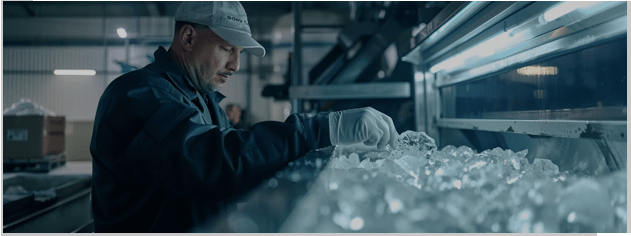
Determining the condition of used industrial ice equipment is paramount. Start with a visual inspection to look for signs of wear or damage, which may indicate how well the machine has been maintained. Pay attention to rust, dents, and any other irregularities that could affect the machine’s performance.
It’s also important to inquire about any recent repairs or parts replacements. These could either be a sign of good upkeep or indicate potential future problems. Requesting a demonstration of the machine’s operation can provide insights into its functionality and output efficiency.
When assessing the quality of used ice equipment, don’t forget to consider the brand and model. Renowned brands often have a reputation for durability and longevity, which can be a promising factor when looking at second-hand options.

Evaluating the Cost-Benefit Ratio: When Does Buying Used Make Sense?

Buying used industrial ice equipment can be cost-effective, but it’s crucial to weigh the immediate savings against long-term costs. Compare the price of the used machine with new models, considering the remaining lifespan and potential needs for repairs or upgrades.
Consider the warranty and service agreements available for new versus used equipment. While used ice machines come with a lower upfront cost, the lack of a warranty could result in higher expenses if the machine malfunctions.
Examine your business’s operational demands. A used machine might suffice if your ice production requirements are modest or you have backup options. However, if ice production is central to your operations, the reliability of a new machine might justify the extra cost.

Key Features to Look for in Used Industrial Ice Equipment

When searching for second-hand ice equipment, certain features are critical to consider. Capacity should align with your business’s needs, ensuring that you can meet demand without overextending the machine’s capabilities.
Efficiency is another key feature. Older ice machines may use more energy and water than newer models, so calculate potential increases in utility costs when evaluating different options.
The type of ice produced is just as important. Different industries require specific ice types, like flake, cube, or nugget. Ensure the used machine you’re considering produces the appropriate ice for your purposes.

Regulatory and Safety Compliance of Second-Hand Ice Machinery

Compliance with health and safety standards is essential when purchasing used ice equipment. Check that the machine meets current Food and Drug Administration (FDA) regulations, as non-compliance can pose health risks and lead to penalties.
Look for machines that also adhere to energy standards set by organizations like ENERGY STAR. Compliance not only ensures better efficiency but can also signify that the machine is up to date with current industry standards.
It’s advisable to have a qualified technician evaluate the machine for safety hazards such as electrical issues or malfunctioning safety features.
Overall, purchasing used industrial ice equipment can offer significant financial benefits if due diligence is taken to ensure quality, longevity, and compliance. By thoroughly examining the machine’s condition, maintenance history, cost-effectiveness, and feature set while keeping regulatory standards in mind, businesses can make a well-informed decision that aligns with their operational needs and budgetary constraints.
India Manufacturing Show’ in Bengaluru

 Raksha Mantri Shri Rajnath Singh inaugurated the three-day ‘India Manufacturing Show’ in Bengaluru, Karnataka on November 02, 2023. The show has been jointly organised by Laghu Udhyog Bharti & IMS Foundation and supported by Department of Defence Production, Ministry of Defence. The central theme of the event is ‘Make in India, Make for the World’.

Addressing the industry captains & young entrepreneurs present at the inaugural function, the Raksha Mantri described the small-scale industries as the backbone of India’s economy that contribute immensely to the development of the nation. “Small industries are the motor of the Indian economy. The faster the motor runs, the quicker the vehicle of the economy moves,” he said, also crediting the small industries for maintaining stability in the economy.

Shri Rajnath Singh highlighted the important contribution of these industries to the socio-economic development of the country. “Compared to investment made, small industries create more employment opportunities than large industries. They also ensure a more even dispersion of wealth in society. Many MSMEs are doing well in exports and are becoming a part of the global supply chain of the world’s biggest companies. Heavy industries, too, play a big role in the nation’s development, but the country cannot fully progress by ignoring small industries,” he said.

The Raksha Mantri remembered the time when India was called ‘golden bird’ and a big reason was that there were many small industries in villages and towns, which provided employment to the people. “In ancient times, there were no large-scale industries in India; they were only small industries. Textile, iron and shipbuilding were the three industries for which India was known all over the world. They showcased our industrial capability,” he said.

Shri Rajnath Singh also underlined the ability of small industries to adapt to the changes more easily than large industries. “It is the adaptability of small industries which increases the possibilities of innovation. Many times, small industries bring more innovation than large industries in terms of new products, services and business models,” he said.

The Raksha Mantri recalled Father of the Nation Mahatma Gandhi’s philosophy on economy, wherein he encouraged to focus on small industries rather than heavy industries. This is due to stronger connections of small industries with local communities. Even though their production scale is small, they are better tuned to local needs, he said.

Shri Rajnath Singh added that big industries, which have a turnover of thousands of crores, were once small industries, which reflects their importance. He termed the small-scale industries as the youth of industrial development; which possesses more energy, innovation and the ability to create something new. He emphasised that drawing focus towards small industries does not mean undermining the importance of heavy industries. He termed the relationship between the two as symbiotic, with both depending on each other for their profitability.

Referring to the opinion of a section of people who believe that private industries operate on selfish motives, the Raksha Mantri said, “There is a need to understand the concept of economy; the fine line between selfish motive and profit motive. The profits of private industries reach crores of families in India, due to which the economy of this country is running. If private industries do not work on a profit motive, they will not be able to contribute to the economy. ‘Profit is not selfish, Profit is legitimate benefit’”.

Shri Rajnath Singh voiced the importance the Government attaches to the small-scale industries and listed out a number of decisions taken to ensure their welfare. These include MUDRA scheme, launched in 2015, under which a provision was made to provide collateral-free loans to MSMEs. The government also provided additional credit worth crores of rupees for MSMEs during the COVID-19 pandemic.

The Raksha Mantri also enumerated the unprecedented steps taken for MSMEs in the defence sector. “We are the first government which imposed restrictions on itself for the import of weapons. We released five positive indigenisation lists, under which 509 equipment have been identified, the manufacturing of which will now take place in India. In addition, four positive indigenisation lists for Defence Public Sector Undertakings (DPSUs) were also promulgated, under which 4,666 items were identified, that will be manufactured within the country. To ensure adequate demand assurance for our domestic industries, we reserved 75% of the defence capital acquisition budget, which amounts to approximately Rs one lakh crore, for purchases from local companies. These steps will strengthen our MSMEs and make them ‘Aatmanirbhar’,” he said.

Shri Rajnath Singh also referred to the Innovations for Defence Excellence (iDEX) initiative, which was launched to invite new ideas in defence manufacturing through start-ups and innovators. He added that iDEX Prime was launched to support projects, requiring support beyond Rs 1.5 crore up to Rs 10 crore, to help the start-ups in the defence sector.

The Raksha Mantri termed Laghu Udyog Bharti as a bridge between the government and the industry. “As an institution, Laghu Udyog Bharti should make the government aware of the problems of small industries. We will find solutions as soon as possible. It has another important role. The government and society have some expectations from industries. As an industry association, it should work in line with those expectations. As much responsibility as the industry has towards its balance sheet and profit & loss statements, it also has the same responsibility towards the nation. You should ensure that you provide top-quality and cost-effective products. You should take care of the interests of all the stakeholders. Keeping the environment in mind, the use of clean technologies must be promoted,” he said.

Shri Rajnath Singh appreciated the fact that small industries of the country are progressing well through Laghu Udyog Bharti. He exuded confidence that India will become self-reliant and a global manufacturing hub in the times to come, if the industries continue to move forward with hard work and dedication.

Members of Parliament Dr Sudhanshu Trivedi & Shri Tejasvi Surya, Chairman & Managing Director, Bharat Forge Limited Shri Baba Kalyani and Executive Vice President & Head, L&T Defence Shri Arun Ramchandani were among those present on the occasion.

The sixth edition of ‘India Manufacturing Show’ will provide a platform to the exhibitors to showcase their technologies, equipment and R&D in different sectors, such as aerospace & defence engineering, automation, robotics & drones to the participants. The aim is to bring together best minds, best technologies and best practices while providing business and knowledge sharing opportunities for its participants.

*******

ABB/Savvy

Toycathon aims to position India at 100 billion USD global toy manufacturing market

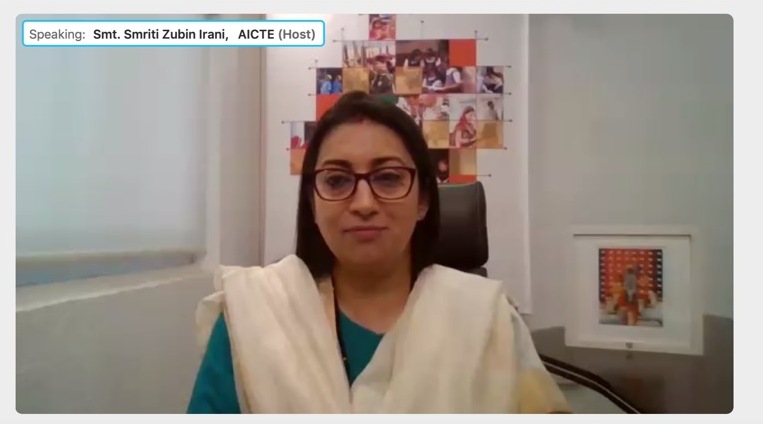
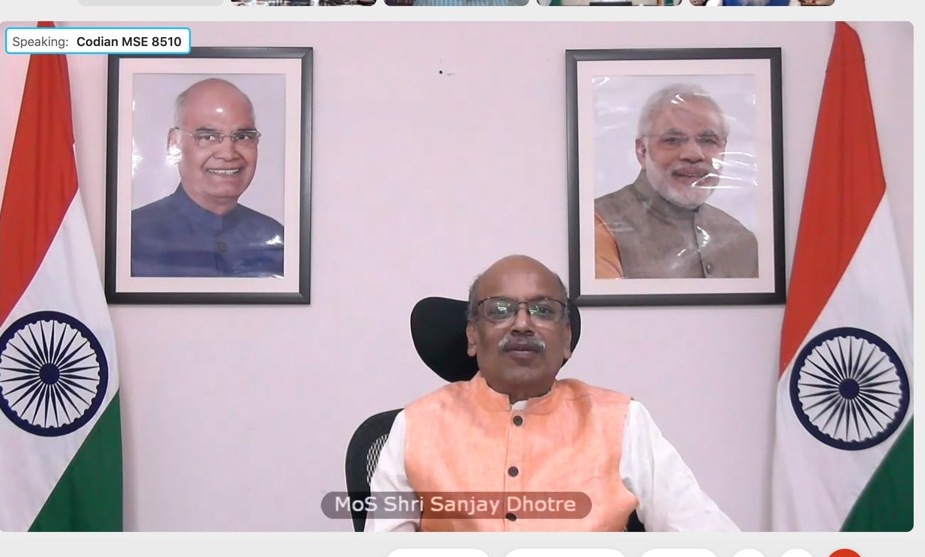
 Union Minister Women and Child Development and Textiles Smt. Smriti Zubin Irani and Minister of State for Education Shri Sanjay Dhotre virtually inaugurated Toycathon 2021 grand finale today. Shri Amit Khare, Secretary, Higher Education, Ministry of Education; Shri Upendra Prasad Singh, Secretary, Ministry of Textiles; Prof. Anil D. Sahasrabudhe, Chairman, AICTE; Dr. Abhay Jere, Chief Innovation Officer, Ministry of Educations Innovation Cell; Dr. M.P. Poonia, Vice Chairman, AICTE and Dr. Mohit Gambhir, Director, MoEs Innovation Cell were present at the inauguration session.

The Toycathon 2021 is being organized jointly by Ministry of Education in coordination with five other Ministries viz: Ministry of Women and Child Development, Ministry of Information and Broadcasting, Ministry of Commerce &Industry, Ministry of Small and Medium Enterprises, and Ministry of Textiles. This inter-ministerial Toycathon focuses on conceptualizing new and innovative toys using local materials which are economical, affordable, safe, environment friendly, with exceptional high quality for both Indian and global markets.

Speaking on the occasion, Smt. Smriti Zubin Irani marked the moment as historical where the nations first toy hackathon is being dedicated to the world. The Minister complimented 17749 individual teams that submitted the ideas at Toycathon 2021. She hoped that many more ideas from this toycathon grand finale be commercialized. She emphasized that the toys have huge impact on psychomotor abilities of children, impact their memory skill and generate huge responsibility towards ensuring future autonomy of the child.

She expressed her concerns that 85% toys that our children are playing with are imported and are predominantly made of plastic. Drawing inspiration from Prime Ministers global commitment for sustainable development, Minister invited research bodies and toy manufacturers to make sustainable toys. She also advised that India is known for its engineering potential and our technologists should equip toy sector with adequate and innovative technologies for electronic toys.

Shri Dhotre said Indian toy market stands at around $1.5 billion USD and currently we are importing a major chunk from outside. The global toy market is estimated to be more than 100 billion USD, we must channelize our creative, innovative and manufacturing power to have our share in these areas. This toycathon will provide opportunity to our young innovative minds to lead the path to manufacture toys in India for the world.He suggested that the use of toys could ease the burden of rote learning science and other subjects.

Speaking on the occasion, Shri Upendra Prasad Singh  highlighted the commercial as well as pedagogical importance of toys in inculcating the values, ethos and awareness about our history and culture. He said we have a very large number of clusters and very good artisans, but one thing which is required is to innovate, innovate as per the changing requirement of not only our country but for abroad as well. He hoped that the ideas generated in this toycathon will be very useful for the said purpose. 

Shri Amit Khare expressed his concerns that economical value of imported toys is huge and it is a roadblock for atmanirbhar Bharat. He said, The curb on import of toys will generate new opportunities for our artisans. He added that the National Education Policy 2020 advocates for 5+3+3+4 system and it asks for activity-based learning for children through toys and games, here the importance of regional Indian toys is very significant in connecting young minds with our history and culture.

On Inaugural occasion Prof. Anil D. Sahasrabudhe, Chairman, AICTE said that early child education should not be stressful and it should be fun based learning through toys, stories and games. He added, Edutainment, which is entertainment and education at the same time,  is required.He praised the organizing team for developing a robust digital platform which could bring the participants, evaluators and organizers on one platform to facilitate this toycathon.

Dr. Abhay Jere, Chief Innovation Officer, Ministry of Educations Innovation Cell, welcomed the dignitaries and motivated the participants to do best as per their abilities.

Dr. Mohit Gambhir, Director, MoEs Innovation Cell, who mastered the inaugural ceremony emphasized the importance of grassroot innovation. He said In todays time it is well understood that the future innovations will spring from the base of pyramid – where common men-women will innovate for their needs. This base of pyramid is very critical for holistic development of society and needs to be trained.

The hackathon was initially conceptualized in physical as well as digital mode. Due to the prevailing Covid 19 pandemic and owing to the safety of participants the physical edition has been deferred and now only digital edition is being conducted from 22ndJune to 24thJune 2021. Toycathon 2021 majorly focuses on conceptualizing new and innovative toys using local materials which are economical, affordable, safe, and environment friendly, of exceptionally high quality for Indian as well as global market.

The ongoing Toy Hackathon have 3 tracks:

Track 1for Junior Level Participants i.e., primarily SCHOOL STUDENTS. They mainly focus on designing toys for kids of age group 0-3 years and 4-10 years. 

Track 2 for Senior Level Participants i.e., students and faculty from Higher education institutions. This group focus on developing concepts for 0-3 years, 4-10 and 11 years and above. This segment primarily focused on Electronics, Sensors, Mechatronics, and toys based on AI and ML approaches, AR-VR-XR and Robotics.

Track 3 for Startup-Professional Level that incudes overall innovation and development of prototypes. These prototypes are expected to enable toy industry in boosting up the production along with improving the quality of toys in Indian market.

During three-day Toycathon 2021 grand finale, participating teams of all tracks will be mentored through specialized mentoring session in morning half of the day and then they will be evaluated in later half of the day for initial two days and then there will be a power judging round for participating teams to declare winners for Toycathon 2021 Digital Edition. For this purpose, Ministry of Education Innovation Cell has engaged 645 mentors and evaluators for 1567participating teams. 85 Nodal centers have been selected to support Ministry of Educations Innovation Cell and All India Council for Technical Education, which are the organizing agencies for this Inter-ministerial Toycathon.

***

MEASURES UNDERTAKEN TO BOOST MANUFACTURING SECTOR IN INDIA

 The Government has undertaken the following major reforms/measures to boost manufacturing sector in the country and to make India a favoured manufacturing and investment destination:

  1. Production-Linked Incentive (PLI) Scheme in 14 key sectors, under the aegis of Aatma Nirbhar Bharat for enhancing India’s manufacturing capabilities and exports;
  2. PM Gati Shakti- National Master Plan (NMP) was launched by Hon’ble Prime Minister on 13th October, 2021.It is an integrated GIS based plan depicting the economic zones and the multimodal connectivity infrastructure with an objective to holistically integrate the interventions of various Ministries / Departments and address missing gaps to ensure seamless movement of people, goods & services.
  3. In order to facilitate and promote investment, Government has set up Empowered Group of Secretaries (EGoS) and Project Development Cells (PDCs) in the Ministries/Departments.
  4. National Single Window System involving clearances by Ministries /Departments and States Governments to provide end-to-end facilitation support. This national portal integrates the existing clearance systems of the various Ministries/ Departments of Govt. of India and State Governments without disruption to the existing IT portals of Ministries/ Departments. 
  5. DPIIT is also working to reduce compliance burden on citizen and business and the aim of this exercise is to simplify, decriminalize & remove redundant laws. 
  6. For Creating world class infrastructure through developing nodes, Government of India is developing various Industrial Corridor Projects as part of National Industrial Corridor programme which is aimed at development of futuristic industrial cities in India which can compete with the best manufacturing and investment destinations in the world. The program is aimed at providing multi modal connectivity with complete “plug and play” infrastructure till the plot level along with building resilient and sustainable future ready cities. 
  7. Start-up India is a flagship initiative of the Government of India, intended to build a strong eco-system for nurturing innovation and Startups in the country that will drive sustainable economic growth and generate large scale employment opportunities. 
  8. DPIIT has developed an India Industrial Land Bank (earlier known as Industrial Information System) which provides a GIS-enabled database of industrial areas including clusters, parks, nodes, zones, etc. across the country to help investors identify their preferred location for investment.
  9. Implementation of Industrial development schemes for North-East States, Himachal Pradesh, Uttarakhand and Union Territory of Jammu & Kashmir to boost  industrialization in the industrially backward and hilly States.
  10. DPIIT is working closely on 24 Sub-sectors which have been chosen keeping in mind the Indian industries strengths and competitive edge, need for import substitution, potential for export and increased employability. These 24 subsectors are – furniture, air- conditioners, leather and footwear, ready to eat, fisheries, agri-produce, auto components, aluminium, electronics, agrochemicals, steel, textiles, EV components and integrated circuits, ethanol, ceramics, set top boxes, robotics, televisions, close circuit cameras, toys, drones, medical devices, sporting goods, gym equipment.  Efforts are on    to boost the growth of the sub-sectors in a holistic and coordinated manner.

Further, to promote Foreign Direct Investment (FDI), the Government has put in place an investor-friendly policy, wherein most sectors/activities are open for 100% FDI under the Automatic route. The policy on FDI is reviewed on an ongoing basis, to ensure that India remains attractive & investor friendly destination. Government has recently undertaken a number of reforms across sectors. In the last one year alone, reforms in the FDI Policy have been undertaken in sectors such as Insurance, Defence, Petroleum & Natural Gas, Telecom, etc. Subject to provisions of the FDI policy, foreign investment in ‘manufacturing’ sector is under automatic route. Manufacturing activities may be either self-manufacturing by the investee entity or contract manufacturing in India through a legally tenable contract, whether on Principal to Principal or Principal to Agent basis. Further, a manufacturer is permitted to sell its products manufactured in India through wholesale and/or retail, including through e-commerce, without Government approval.

WOODEN CHESS BOARD


                                                                        (Photo: Wikipedia)

One of the india’s enterprises is amongst the world’s largest chess manufacturing company. originated in india by the name ashtapad, this ancient game has historical references in india where chess was used as a tool to teach military strategy to indian princes. chessboards have been made from numerous materials over the years, such as ebony, ivory, marble, metal, glass, and plastic.

 let’s discuss in detail about the states and the leading companies in wooden chess board manufacturing in india. THE WOODEN CHESSBOARD MANUFACTURING IS EXTENSIVELY DISTRIBUTED IN INDIA. HOWEVER, THE TOP MANUFACTURING CITIES ARE:

  •    AMRITSAR
  •      GUJARAT
  •      MOHALI
  •      DELHI
  •      MUMBAI

WE WILL DEAL WITH THE FOLLOWING CITIES ONE BY ONE IN AN ILLUSTRATIVE WAY.

1.   AMRITSAR

AMRITSAR IS THE LARGEST MANUFACTURER OF CHESSBOARD IN INIDA. INFACT, THE WORLD’S LARGEST CHESS COMPANY IS BASED IN AMRITSAR, PUNJAB. IT MANUFACTURES CHESSBOARDS IN VARYING SIZES USING DIFFERENT MATERIALS. IT ALSO EXPORTS WORLDWIDE.

THE TOP THREE MANUFACTURING CHESS COMPANIES IN AMRITSAR ARE:

  •   CHESS BY INDIA (VIJAYA ENTERPRISES)
  •       SHRI GANESH
  •       THE CHESS EMPIRE

 CHESS BY INDIA (VIJAYA ENTERPRISES)

IT IS THE WORLD’S LARGEST CHESS COMPANY, BASED IN AMRITSAR, PUNJAB. THEY PRODUCE WOODEN CHESSBOARDS, CHESS PIECES, MAGNETIC CHESS SETS, FOLDING CHESS SETS, ANTIQUE CHESS SETS, TRAVEL CHESS SETS AND ALL TYPE OF PUZZLE GAMES. THEY EXPORT WORLDWIDE FROM NEW ZEALAND TO USA, ITALY, FRANCE, RUSSIA, GERMANY, NETHERLANDS IS THEIR BEST-SELLING MARKET.

A.     SHRI GANESH

IT IS THE SECOND LARGEST MANUFACTURER OF WOODEN CHESS BOARD IN AMRITSAR. THEY EXPERTISE IN MANUFACTURING WOODEN, STAUNTON, BONE, MAGNETIC AND TRAVEL CHESS SETS. THEY MANUFACTURE AND EXPORT THE MOST EXOTIC CHESS SETS ACROSS THE WORLD. THEY CURRENTLY EXPORT TO COUNTRIES LIKE UK, JAPAN, RUSSIA, SINGAPORE, NEW ZEALAND, USA, AUSTRALIA AND MOST OF EUROPE.

 THE CHESS EMPIRE

IT IS THE THIRD LARGEST MANUFACTURER OF WOODEN CHESS BOARD. IT GUARANTEES WORLD’S BEST QUALITY. THEY HAVE EXQUISITE CRAFTSMANSHIP AND THEY PROVIDE WORLDWIDE SHIPPING.

2. GUJARAT

GUJARAT IS THE SECOND LARGEST MANUFACTURER OF WOODEN CHESS BOARD IN INDIA. THERE MIGHT BE FEW SMALL-SCALE MANUFACTURING COMPANIES IN GUJARAT, BUT THE MOST FAMOUS MANUFACTURER IS ONLY ONE WHICH OPERATES ON A LARGE SCALE.

·       PARAMOUNT DEALZ

PARAMOUNT DEALZ

THEY MAKE WOODEN SETS FROM EXOTIC AND LUXURIOUS WOODS LIKE SHEESHAM, EBONY, BUD ROSEWOOD TO GIVE ROYAL FEEL TO THE CHESS SET AND MAKE IT LOOK A DISTINCTIVE ONE.

3. DELHI

DELHI IS THE THIRD LARGEST CITY WHEN IT COMES TO THE WOODEN CHESS BOARD MANUFACTURING. DELHI IS THE LARGEST COMMERCIAL CENTRE IN THE NORTHERN INDIA. STILL WHEN IT COMES TO CHESS BOARD MANUFACTURING, THERE IS ONLY A HANDFUL OF MANUFACTURERS IN THE CITY. AMONGST THEM, THERE’S ONLY ONE THAT HAS BEEN MANUFACTURING AND EXPORTING SUPERIOR QUALITY CHESS SETS FOR LAST 3-4 DECADES.

·       CHESSNCRAFTS

   CHESSNCRAFTS

THEY MANUFACTURE AND EXPORT SUPERIOR QUALITY CHESS SETS OF VARYING MATERIALS AND SIZES. THEY OFFER THE DISTINCTIVE AND EXCELLENT CHESS BOARDS.

4.  MUMBAI

IF YOU WANT TO FIND THE CHESS BOARD MANUFACTURER IN MUMBAI, THEN YOU DON’T HAVE TO STRUGGLE A LOT. JUST HEAD STRAIGHT FORWARD TO DOMBIVLI, BECAUSE THAT IS THE MAIN AREA OF IT’S MANUFACTURING. THERE ARE TWO CHESS BOARD MANUFACTURERS IN MUMBAI WHICH ARE WELL KNOWN.

·       INDIAN CHESS MANUFACTURERS

·       BRAVECHESS

 INDIAN CHESS MANUFACTURERS

IT IS INDIA’S WELL- KNOWN MANUFACTURER OF CHESS EQUIPMENTS AND GIANT BOARD GAMES. THEY SUPPLY IT WORLDWIDE. THEY CATER TO THE NEEDS OF THE PEOPLE.

A.     BRAVECHESS

THE BRAVECHESS IS THE SECOND KNOWN CHESS BOARD MANUFACTURER IN MUMBAI. THEY DESIGN PRODUCTS WITH THE AIM OF MAKING IT LAST A LIFETIME. THEY ALSO MANUFACTURE A SPECIAL CHESS SET FOR BLIND PEOPLE WHICH IS UNIQUE IN ITS OWN WAY.

 HENCE, A DETAILED ANALYSIS HAS BEEN MADE OF THE INDIA’S BEST CHESS BOARD MANUFACTURERS. EACH ONE OF THESE IS DISTINCT IN ITS OWN WAY. THE CRAFTSMANSHIP IS HIGHLY EXQUISITE. THE AMOUNT OF HARDWORK THEY PUT IN SHOWS THEIR DEDICATION TOWARDS FULFILLING THE WANTS OF CHESS LOVERS. INDIA IS NO WAY BEHIND IN TERMS OF CHESS BOARD MANUFACTURING. ALTHOUGH THERE ARE MANY COUNTRIES AHEAD OF INDIA, STILL INDIA STANDS AT A GOOD POSITION IN TERMS OF EXPORT.

Right to repair

Right to repair is a proposed legislation/movement that allows consumers the ability to modify and repair their own electronic devices.  

Planned obsolescence is the practice when goods are manufactured with a pre-determined expiry date aimed at forcing consumers into repeat purchases. The term was first termed in the 1950s by American industrial designer Brooks Stevens. This practice was introduced in the advent of mass-produced manufacturing at the start of the 20th century. But the practice was not as severe and prevalent as it is in recent years. One of the recent changes in the product design has been to make the goods very hard for end consumers to repair.

For instance smartphones, a couple of years back had a user-replaceable battery but with more features crammed into the chassis of a phone. Manufacturers have not only made it unnecessarily difficult to replace the battery but also to even open the panels of smartphones. With the recent MacBook Pro releases, Apple has soldered the SSD (Solid State Drive) on the motherboard. The reasoning for justifying the soldering by Apple is better reliability and the thinness of the laptops. But there is also another aspect. Apple’s business model is about selling laptops and not upgrading the systems. Upgrading an SSD can be a potential loss for them and to counter that Apple might have decided to make the laptop non-upgradable. The problem is that even SSDs are definitely much more reliable than mechanical hard disks but SSDs still fail and combining them with the motherboard means that if one of the two fails, the whole system fails. This also makes it much more difficult for end-user to repair their laptop. It also becomes a problem for the third-party repair business to access the repairing of these devices. This is just one of the instances of how access to repair is being restricted by the manufacturers but various companies are attempting to follow similar practices with varying degrees.          

With the introduction of newer and sophisticated technological components in electronic devices, it has become much more complicated to operate these modern devices. To reduce the access to repair these devices, manufacturers state that repairing the devices might violate their “Proprietary” rights. These repair limitations are a critical problem for not just the first owners but also for the second-hand/ used market. Due to proprietary information and diagnostics tools while evaluating a device. It has become difficult for third parties and end-user to even attempt the repair their own devices that they own. It took Apple the lawsuit to introduce the battery replacement program after the fiasco of the performance throttling issue on older iPhones. It clearly indicates that companies do not like it when consumers try to fix their products and companies deliberately try to reduce the user experience of older devices so that they can sell the newer models to maximize profits. With a monopoly on repair manufacturer’s intent is to lock down the user to the official service centers which can be significantly expensive than third-party service shops.

The right to repair movement intends to enact power into the consumer’s hands for the devices that they own. This means that consumers can open and modify everything they own. Also to root, unlock or jailbreak the software in their devices.

References:

Longest running light bulb since 1901: The case of Planned Obsolescence

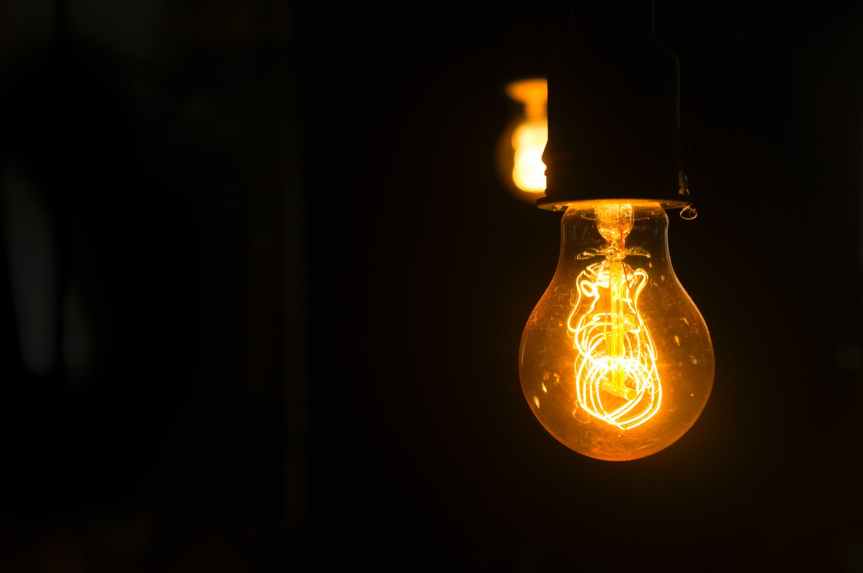
Centennial Light is the longest-running electric light bulb on record. It has been running continuously since 1901 and it has never been switched off. It is located in Fire Station 6 in Livermore, California. The ordinary dim light bulb looks like any other bulb and there is also a camera that live-streams the light bulb onto the internet.

Link for the official website and live webcam of the light bulb.

http://www.centennialbulb.org/photos.htm

It was manufactured in the late 1890s by the Shelby Electric Company, of Ohio, using a design by the French-American inventor Adolphe Chaillet. It has operated for over 100 years with very few interruptions. In 2011, it passed a milestone: One million hours of near-continuous operation. In 2015 it was recognized by Guinness World Records as the world’s longest-burning bulb.

The 60-watt bulb uses a carbon filament. One of the reasons for its longevity is that it seems to have an incredibly durable vacuum seal. There have been some researches done on bulbs manufactured by Shelby Electric Company of that era. But no one really exactly knows how these eternal bulbs were made as they were experimenting with various but the company was experimenting with a variety of designs at the time.

The electric model was quite different when first homes in The U.S had electricity. The servicing was the responsibility of the electric companies and customers would purchase entire electrical systems manufactured by a regional electricity supplier. The companies would also take care of the installation and servicing of any burned out electric bulbs would be replaced for free.

It made more logic for the suppliers to manufacture bulbs that would last longer and would burn out as least as possible. But this business model was later replaced and homeowners were responsible to change the light bulbs. It was soon realized that it would be more profitable to make cheaper bulbs that burned out faster. Since the mid-1900s goods were manufactured with a pre-determined expiry date aimed at forcing consumers into repeat purchases. This phenomenon has only been exacerbated in recent years. This can also be called planned obsolescence.

In 1924, the life span of the light bulbs was at least 2,500 hours. Phoebus cartel was formed in 1925 in Geneva. It comprised of the major incandescent light bulbs manufacturers at that time: Osram, General Electric, Associated Electrical Industries, and Philips. The cartel had directed their engineers to cut the life of the bulbs to 1,000 hours, which the engineers did by adjusting voltage and current. The cartel was intended to operate for 30 years but it was starting to fall apart in the early 1930s after General Electric patents expired and as the cartel faced competition from non-member manufactures from other regions. The cartel ceased its operations after the outbreak of World War II in 1939.

Planned obsolescence is a very critical area it does not only decrease the lifespan of the good but as a consequence, it is also wasteful. It is not sustainable for the environment and the main focus of this practice is to maximize profits. It also reminds us that technological innovations are often not accessible in favor of corporate greed.

References:

Main Functions of a New Town

 Towns and villages differ from each other where their functions are concerned. Villages are mainly associated with production related to agricultural activities. The surplus is used by the villages in exchange for other commodities, which they themselves do not produce, from other villages or towns. The village, accessible to all others, generally becomes the focal point for exchange of commodities. This village generally develops into a town. Once a town comes up, it acquires one or more of the functions depending on a number of factors. 

1) Processing 

Processing is one of the most basic functions of a town and involves processing of agricultural products, for instance, wheat into wheat flour and oil seeds into oil. The most easily accessible village generally becomes the processing centre. This may have been the reason for the emergence of the earliest towns. 

2) Trade 

After processing, the next level of towns are associated with trade. The towns act as the centres for exchange of processed items or manufactured goods between two or more places. These markets may operate on a daily or weekly basis. Weekly markets are a common feature throughout India. These centres may also specialize in one or more items such as fruits and vegetables, cattle and food grains. 

3) Wholesale Trade in Agricultural Products 

Towns engaging in wholesale trade in agricultural products for the next high level in functional pattern of towns. Transport facility is a crucial factor in such towns. These towns generally fulfill processing functions also. Later, they may develop manufacturing and other services also. They are generally small in size and dispersed, often specializing in one commodity or the other. For instance, Hapur is a wholesale centre for food-grains, Ahmedabad and Tiruppur for cotton, Sangli and Erode for turmeric, Bangalore for silk and Guntur for tobacco. 

4) Services 

In towns, services like education, health, administration and communication, not adequately available in villages, are well developed. Of all these functions, administration is the most important one. A town may be the headquarters of a panchayat union, a state cooperative or a district. Administrative towns also have law courts, police stations, government departments associated with developmental works, etc. Chandigarh is a good example of an administrative town. 

5) Manufacturing and Mining 

Such activities give rise to large towns because manufacturing and mining activities generate large scale employment and give rise to other useful economic activities like trade, services, transport, ancillary industry etc. These activities attract large scale migrations from adjoining regions. Jamshedpur came up around the Tata Iron and Steel Works while Raniganj and Kolar are examples of towns which have come up around mining activities. 

6) Transport 

Transport is a basic necessity for all types of economic activities and for the evolution and further expansion of a town. Many of the towns, therefore, have come up around railway stations or port towns. Railway stations act as the centres for change from road to rail traffic and vice versa and for purposes of trans-shipment, collection, sorting and despatch. Jolarpettai in south India is a good example of a town which has come up at a railway junction. Similarly, the ports act as the centres for change from road or rail to sea traffic. Ports may also develop manufacturing and administrative functions. Kolkata, Mumbai, Chennai, Kandla, Paradip etc., are examples of towns which have come up around ports. 

7) Pilgrimage/Tourism 

Pilgrimage is an important activity associated with travelling and lodging. Thus, at such places transport and lodging facilities also come up. The towns adapt themselves to support a large floating population. Tirupati, Hardiwar, Varanasi, Rameshwaram are some examples of pilgrimage centres while Shimla, Darjeeling, Udagamandalam (Ooty) are some examples of tourist centres.

8) Residential 

Towns with residential functions often come up around big cities where land prices are lower, basic services are cheaper and fast transport links with the main city are available. Sonepat, Faridabad and Gaziabad are examples of such towns around Delhi. These towns have also developed manufacturing functions in recent times. Generally, a town has more than one function, but one or two of these dominate. The functions of a town depend on its location, its infrastructural facilities, and historical and economic factors. The dominant function may be identified on the basis of number of persons involved in that particular activity.