

All about gold nanoparticles
Precious metals like silver, gold, and platinum are all used in medicine to aid treatments as diverse as wound healing and cancer therapies. Gold nanoparticles (AuNPs) are small gold particles with a diameter of 1 to 100 nm which, once dispersed in water, are also known as colloidal gold.
How did gold get to earth?
Gold, the shiny yellow metal prized for its beauty, malleability and used in many different industries, is actually created inside massive stars when they explode into a supernova. Here lies the history-
- Gold, like most heavy metals, are forged inside stars through a process called nuclear fusion. In the beginning, following the Big Bang, only two elements were formed: hydrogen and helium. A few hundred million years after the Big Bang, the first stars were blazing away with their nuclear fires. These nuclear fires forced lighter elements together to make slightly heavier elements, and these nuclear reactions released a huge amount of energy.
- Gradually, these early stars began making elements such as carbon, nitrogen, oxygen — working their way up through the periodic table towards iron. But there was still no gold in the Universe. Once these earlier stars ran out of light elements to burn, they kicked in on the heavier ones.
- Finally, as they burnt silicon to make iron, they exploded as a supernova, and for a few short moments, each star would release as much energy as all the regular stars in that galaxy put together. In that cataclysmic explosion, for the first time, atoms of gold were manufactured — and then hurled out into the Universe, along with the other debris from that explosion.
- On Earth, gold finally reached us some 200 million years after the formation of the planet when meteorites packed with gold and other metals bombarded its surface. During the formation of Earth, molten iron sank to its centre to make the core. This took with it the vast majority of the planet’s precious metals — such as gold and platinum. In fact, there are enough precious metals in the core to cover the entire surface of Earth with a four-metre thick layer.
Cancer treatment
Colloidal gold, the suspension of gold nanoparticles in liquid, has been used for hundreds of years, from staining glass in the Middle Ages to early experiments with photography in the Victorian era. But it was only 160 years ago that gold nanoparticles were given any serious scientific examination, when scientist Michael Faraday created the first pure sample of colloidal gold in his basement laboratory at the Royal Institute in London. Faraday’s early experiments were forays into what would ultimately become the fields of nanoscience and nanotechnology.
“Scientists have pioneered a revolutionary approach in the use of gold nanoparticles that could lead to the development of a new generation of broad-spectrum antiviral drugs.”
- Targeted drug delivery is better than conventional drug therapy because these drugs target the main effected area, so it minimizes the side effects caused..
- Gold nanoparticles have the ability of bio-imaging of the effected cancerous cells for therapy. Cancer DNA has a special 3D structure that has an affinity for gold, according to one study, and nanoparticles change color when that DNA is present. Simple, fast tests could detect cancer in 10 minutes.
- Gold nanoparticles have unique physical, chemical properties and strong binding attraction for thiols, proteins, carboxylic acid and disulfides, so they have been extensively used in drug delivery for cancer therapy.

Alzheimer’s-
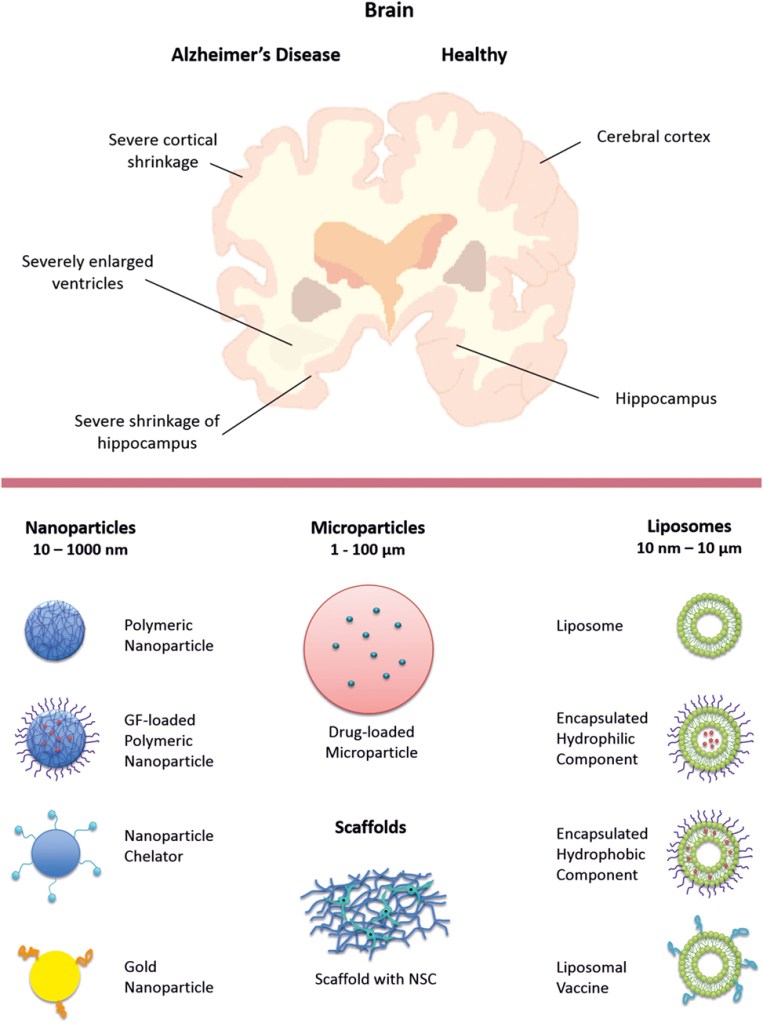
- Illnesses associated with ageing are under the microscope too. Scientists are using gold nanoparticles to see the knot-like structures in the brain that cause Alzheimer’s and other neurodegenerative diseases. By labelling these structures–called amyloid fibrils–with gold they can see the knots more clearly and identify their weak spots for treatment.
- Another global health problem shows promise for gold use in medicine. Tropical disease malaria, transmitted by mosquitoes, infected 219 million people in 2017 and killed 435,000. Nanoparticles used in rapid diagnostic tests are cheap to use, can give results in 15 minutes, and help doctors target treatment for malaria where it is most needed.
Immunity
- Immunotherapists are also harnessing the special properties of spherical nanoparticles to deliver a boost to the body’s immune system. Polymer-coated spheres of gold interact with B lymphocyte immune cells and can deliver drugs or vaccine to where it is most needed. In this way they hope to treat hard-to-reach brain tumors.
- Going forward there is exciting potential for nanoparticles to help combat HIV and blood diseases. Medics use the gene editing tool CRISPR to deliver new genetic information to cells, but current methods can damage or even kill cells. Gold nanoparticles mounted with CRISPR can quickly cross the cell membrane into the nucleus to edit genes.
Thankfully, even though gold is a rare commodity compared to other metals, in microscopic quantities it can improve our lives immeasurably. Nanoparticles measuring billionths of a meter are used as tiny detectors to develop the most sensitive chemical tests.
Thank you!






 Eduindex
You must be logged in to post a comment.