
HUMAN MICROFLORA

BY DAKSHITA NAITHANI

INTRODUCTION

Microorganisms that survive on another living thing (human or animal) or inanimate item without producing disease are referred to as normal flora. The human body, like most other ecosystems on the planet, provides a vital habitat for millions of microorganisms such as bacteria, fungus, protozoa, and viruses. 

From shortly after birth until death, every human being’s skin and mucous membranes are home to a varied microbial flora. The human body, which has around 1013 cells, is home to about 1014 microorganisms on a regular basis. The typical microbial flora is made up of this bacterial population. The typical microbial flora is very stable, with certain genera occupying different bodily areas at different times in a person’s life. Microorganisms from the typical flora may help, damage, or exist as commensals with the host. Despite the fact that most members of the natural microbial flora found on human skin, nails, eyes, oropharynx, genitalia, and gastrointestinal system are innocuous in healthy people, these organisms commonly cause disease in sick people. Most researchers do not consider viruses and parasites to be part of the normal microbial flora since they are not commensals and do not help the host.

The Human Microbiome Project takes on the task of sequencing the human microbiota’s genome, with an emphasis on the microbes that live in the skin, mouth, nose, digestive system, and vaginal area. When it released its early results in 2012, it marked a watershed moment in the project’s history.

SIGNIFICANCE

The host’s anatomy, physiology, susceptibility to infections, and morbidity are all influenced by the normal flora.

Until germ-free animals became accessible, it was not generally known that the normal flora has a significant impact on the host’s well-being. The investigator got germ-free animals by caesarean delivery and kept them in special isolators, allowing him to raise them in an environment devoid of detectable viruses, bacteria, and other organisms. Two intriguing discoveries regarding animals grown in germ-free environments were made. First, the animals which were free of germs survived nearly twice as long as their traditionally kept counterparts, and second, the principal reasons of mortality in the two groups were different. Infection commonly killed traditional animals, whereas intestinal atonia killed germ-free animals regularly.

Despite the fact that the bacterial flora may be unfavourable, research on antibiotic-treated animals show that the flora protects people against infections. Streptomycin was used to decrease the normal flora, and subsequently animals were infected with streptomycin-resistant Salmonella. Normally, around 106 organisms are required to develop a gastrointestinal infection, however infectious illness was caused by less than 10 organisms in streptomycin-treated mice with altered flora. After birth, humans’ typical flora normally develops in an orderly sequence, or succession, leading to stable populations of bacteria that make up the normal adult flora. The nature of the local environment, which is influenced by pH, temperature, redox potential, and oxygen, water, and nutrient levels, is the most important element influencing the makeup of the typical flora in a body area. The local setting is similar to a concerto in which one main instrument generally takes centre stage.

So, what does the regular flora have to do with anything? The flora appears to impact human anatomy, physiology, longevity, and, ultimately, cause of death, according to animal and human research. Although the causal link between flora and mortality and illness in humans is well established, the human microflora’s participation in these processes requires additional investigation.

FLORA PRESENT ON SKIN

The nature of the microenvironment influences the makeup of the dermal microflora, which differs from site to site. Each of the three areas of skin has its own bacterial flora: (1) axilla, perineum, and toe webs; (2) hand, face, and trunk; and (3) upper arms and legs. Partially occluded skin sites (axilla, perineum, and toe webs) contain more germs than non-occluded skin sites (legs, arms, and trunk). Gram-negative bacteria populate the axilla, perineum, and toe webs more commonly than dry skin regions.

The quantity of germs on a person’s skin remains essentially constant; bacterial survival and colonisation depend on a combination of factors, including skin exposure to a specific environment and innate and species-specific bactericidal action. Bacterial adhesion to epithelial surfaces also requires a high degree of specificity. Staphylococci, which make up the majority of the nasal flora, have a clear advantage over Viridans streptococci when it comes to colonising the nasal mucosa. Viridans streptococci, on the other hand, are rarely found in significant quantities on the skin or in the nose, but they dominate the oral flora.

The density of bacteria on the skin is inconsistent in the microbiology literature; one explanation for this is the diversity of techniques used to collect skin germs. For a particular skin area, the scrub technique produces the highest and most accurate counts. The majority of microorganisms dwell in the Stratum corneum surface layers and the higher portions of hair follicles. Some microbes, on the other hand, live in the deeper parts of the hair follicles and are immune to standard disinfection methods.

FLORA PRESENT IN NAIL

A typical nail’s microbiology is quite similar to that of the skin. Depending on what the nail comes into touch with, dust particles and other foreign things may become trapped behind it. These dust particles may contain fungus and bacilli in addition to existing skin flora. The most common fungus found beneath the nails are Aspergillus, Penicillium, Cladosporium, and Mucor.

FLORA IN ORAL AND UPPER RESPIRATORY TRACT

Dental caries and periodontal disease, which afflict roughly 80% of the people in the Western world, are caused by the oral flora. Many brain, face, and respiratory problems are caused by anaerobes in the oral flora, which are commonly characterised by abscess development.

Anaerobes, Staphylococci, Neisseriae, Diphtheroids, and other bacteria are found in the pharynx and trachea, as well as those found in the normal oral cavity. The pharynx may also include pathogenic organisms such as Haemophilus, mycoplasmas, and pneumococci. Anaerobic microbes are also commonly reported. Pathogens (Neisseria meningitides, C. diphtheriae, Bordetella pertussis, and others) frequently colonise the upper respiratory tract, and it may be regarded the primary point of assault for such organisms.

FLORA OF THE GASTROINTESTINAL TRACT

Bacteria find the stomach to be a hostile habitat. It comprises of germs that have been ingested with food as well as those that have been expelled from the mouth. Helicobacter species that may colonise the stomach are linked to gastritis type B and peptic ulcer disease. In most people, aspirates of duodenal or jejunal fluid contain around 103 organisms per millilitre. The majority of the bacteria cultivated (streptococci, lactobacilli, Bacteroides) are considered transients. The lack of organisms in the upper GI system may be explained in part by rapid peristalsis and the existence of bile. Bacterial populations begin to rise farther up the jejunum and into the ileum, reaching 106 to 108 organisms/ml at the ileocecal junction, with Streptococci, Lactobacilli, Bacteroides, and bifidobacteria predominating.

Although infections are inhibited by the natural flora, several of its members can cause disease in humans. Intra-abdominal abscesses and peritonitis are caused by anaerobes in the digestive system. Appendicitis, cancer, infarction, surgery, or gunshot wounds all cause bowel perforation, which nearly invariably seed the peritoneal space and surrounding organs with the normal flora. Anaerobes can also wreak havoc on the gastrointestinal tract.

The animal microbiota has more information than the human microbiome. According to animal studies, unique filamentous bacteria adhere to ileal epithelial cells and alter host membranes with few or no negative consequences. Microbes have been found on gastrointestinal surfaces and in the Lieberkuhn crypts in dense layers. Other research suggests that the gut flora might influence immune response.

FLORA IN THE UROGENITAL AREA 

Flora which is prevalent in the vaginal area is determined by the host’s age, pH, and hormone levels. During the first month of life, Lactobacillus spp. is predominant in female newborns (vaginal pH, about 5). Glycogen release appears to stop around the age of one month and continues till puberty. Diphtheroids, S. epidermidis, Streptococci, and E. coli prevail at a higher pH during this time (approximately pH 7). Glycogen secretion restarts at puberty, the pH decreases, and women develop an adult flora dominated by Lactobacillus acidophilus, Corynebacteria, Peptostreptococci, Staphylococci, Streptococci, and Bacteroides. The pH increases again after menopause and the flora recovers to that of prepubescent females due to less secretion of glycogen. Yeasts (Torulopsis and Candida) are present in the vaginal area on a regular basis (10 to 30% of women); they can grow and can induce vaginitis.

FLORA IN CONJUNCTIVAL AREA

Flora of the Conjunctiva is limited. Around 17 to 49% of culture specimens are found to be negligible. Lysozyme, which is produced in tears, may have a role in bacterial control by disrupting with the development of their cell walls. Corynebacteria, Neisseriae, and Moraxellae are cultivated when positive samples indicate bacteria. Staphylococci and streptococci are also prevalent, and Haemophilus parainfluenzae has been found in 25 percent of the total of Conjunctival samples, according to latest findings.

INFECTIONS IN THE HOST CAUSED BY NORMAL FLORA

The normal human flora has been briefly described; however, the infectious processes of a species and the clinical syndromes in which they have been implicated have not yet been explored. A breach in mucosal surface frequently leads to the host becoming infected by various members of the natural flora. Infections with species of the regular human flora include caries, periodontal disease, abscesses, foul-smelling discharges, and endocarditis. Furthermore, host impairment or host defences might cause the normal flora to fail to inhibit transitory infections or for members of the normal flora to infiltrate the host. Both the cases may result into the death of the host.
ANTI-CELL WALL ANTIBACTERIAL DRUGS

Selective toxicity is the important characteristic of antimicrobial drugs which means that any drug is selective against a particular microorganism and also selectively act on a particular site. Not all drugs can act on every site. There are many sites at which any drug acts such as cell wall, cell membrane of the bacterial cell. Basically selective toxicity explains that any drug will only act on the pathogen and not on the host.
ANTI-CELL WALL DRUGS
Anti-cell drugs are those drugs which act on the cell wall of the bacterial pathogen and not the host. There are variety of drugs which fall under this category. The major class is of beta-lactam antibiotics among which penicillin is the drug which is studied the most. The drugs can be administered into the patient’s body by different ways like intramuscular, intravenous, or can be applied as topical preparations. But mostly, these drugs are intramuscular or intravenous drugs. The following points explain the further different mechanisms of anti-cell wall drugs.
There are 3 different mechanisms by which anti-cell wall drugs work and thus they are also classified as following:

  1. First classification involves the drugs that directly interact with Penicillin-Binding-Proteins (PBPs) and inhibit the transpeptidase activity which in turn inhibits the attachment of newly formed peptidoglycan subunit to the pre-existing one.
    This is the main mechanism of β-lactam antibiotics. These antibiotics include Penicillin (penams), cephalosporins, Penems, Carbapenems, and monobactams.
    These antibiotics bind to the penicillin-binding proteins which are enzymes present in the bacterial cell wall. Different β-lactam antibiotics bind in a different way. After the antibiotics bind to the enzyme, it changes the morphological response of the bacteria to the antibiotic.
  2. Second classification involves the drugs that bind to the peptidoglycan subunit, blocking different processes.
    The important class of compounds called as glycopeptides are mainly involved in this mechanism of anti-cell wall antibiotics.
    Vancomycin and Teicoplanin are the major examples of glycopeptide antibiotics.
    Vancomycin kills only gram-poitive bacteria whereas Teicoplanin is active against both. The overall mode of action of glycopeptides antibiotics is blocking transpeptidation i.e. similar to β-lactam antibiotics, they also inhibit the transpeptidase activity, and transglycosylation i.e. they being large in size attach to the peptidoglycan subunits thus creating a blockage which does not allow the cell wall subunits to attach to the growing peptidoglycan backbone.
  3. Third classification involves the drugs that block the transport of peptidoglycan subunits across cytoplasmic membrane.
    The main example of such type of drugs is bacitracin, which is a simple peptide antibiotic originally isolated from Bacillus subtilis.
    The mode of action of these class of drugs is blocking the activity of specific cell membrane lipid carriers which act as the attachment surface for peptidoglycan precursors and help in their movement from cell cytoplasm to exterior of the cell. This activity of lipid carriers is inhibited by bacitracin like drugs and they finally prevent the incoroporation of those precursors into cell wall thus inhibiting its biosynthesis.

Although, its route of administration is mostly oral or intramuscular, bacitracin is also known to show its effects when used as topical ointments like Neosporin.

VIRUS AND ITS TRANSMISSION

WHAT IS A VIRUS?????
A virus is referred as an infectious agent that can only replicate inside the living cells of an organism i.e. a virus is something which can not at all grow or replicate by its own. It always needs a living cell for its replication process. It is a microorganism which cannot be seen by naked eyes and can infect any life form. It can be infectious for humans, plants and even for other microorganisms like bacteria and archea. Viruses infecting bacteria are known as bacteriophage. Viruses are not restricted to a place and they can be found everywhere at every place of ecosystem whether land, or water or in air. They can cause various infections including air-borne, water-borne or even food-borne. The science dealing with the study of viruses is known as Virology and it is a branch of microbiology. A complete virus particle ranges in size from about 10-400nm in its diameter.
Viruses are near to dead when outside the living cell but once entered any living cell of an organism, they are forced to replicate using the life machinery of that particular organism and thus they produce thousands of their multiple copies and in this way infect the organism. Outside the living cells they are present in the free, independent form which may also be known as a virion.
There are 3 main parts in the structure of a virus i.e. –

  1. Genetic core which is also known as nucleic acid core containing all the genetic material whether DNA or RNA, but not both. It is known as genome.
  2. A protein coat, which is also known as capsid which surrounds the genome of a virus particle.
  3. An envelope which is made of lipid. It is an external coat surrounding the genome as well as capsid.

VIRUS TRANSMISSION
Transmission of virus particles is important for them to survive because as discussed above they can only replicate themselves inside a host living organism. The virus transmits from one organism to another in order to survive, reproduce and continue their species. The effectiveness of the transmission of viral particle depends on 2 main factors i.e. the concentration of virus and its route of transmission. More concentration of virus leads to more transmission.
There are several ways by which a virus particle may get transmitted from one organism to another.

  1. Blood – Virus particles can get transmitted through the blood. The one way is direct viral infection in blood and the other way is by arthropods like dengue or malaria is transmitted. Arthropods bite one organism and collect viral particles from them and then when they bite other organism, the same viral particles are being transmitted to the next organism and this way transmission and infection occurs. Another way is direct viral infection in blood which can be via direct infected blood exposure to a healthy individual. It may be transmitted via sexual contacts with infected person like HIV is transmitted.
  2. Saliva – It is the most commonly seen in kissing the infected individual. The saliva contains the viral particles and thus they are transmitted to healthy individual.
  3. Respiratory secretions – If any infected individual sneezes, or coughs or in any other way its respiratory secretions come in contact with the healthy individual, he may get infected by the same. It may also occur by singing or even breathing.
  4. Feces – This is not a very common method in developed countries but can infect those who do not take sanitary actions after using toilets. The virus particles secreted in feces can infect other healthy individuals if they come in contact with them.

Intrinsic factors affecting the growth of microorganisms in food

There are various types of interactions between microorganisms and other living organisms. These interactions are natural, constant and also play a significant role in maintaining the ecological balance and stability of the biogeochemical cycle of the nature. Mostly, the food products we consume are obtained from plants and animals and also these foods are rich in variety of microorganisms which may or may not be pathogenic to humans. Growth of microorganisms in food depends on various different parameters which can be broadly classified as INTRINSIC and EXTRINSIC factors.
INTRINSIC FACTORS –
These are the factors that are present in the food substance in which the microorganism is growing, or it may be said as the internal factors of that particular food substrate. Various intrinsic factors are-

  1. Hydrogen Ion Concentration – All the microorganisms have minimal, maximal, or optimal pH for their growth and survival. Thus, the growth of microorganisms in food is affected by the pH of the food material. Foods may be classified as low pH or high pH foods. Most fruits, fermented foods come under high acid foods whereas most vegetables, meat, fish and milk are low acid foods. pH range of different microorganisms are :
    • Molds – 1.5-9.0
    • Yeasts – 2.0-8.5
    • Gram-positive bacteria – 4.0-8.5
    • Gram-negative bacteria – 4.5-9.0
  2. Water activity or moisture content – Water activity can be defined as the measure of availability of water present in any substance which can be used for biological functions and it also gives an idea of free water present in any food product. Water is an excellent requirement for microorganism for their growth. It has been observed and noted that the water activity of fresh food substances is 0.99. Also bacteria require more water activity i.e. free water in any food substrate for their growth than molds and yeasts. If specifically studied, it will be observed that gram-negative bacteria have relatively higher water requirements than gram-positive bacteria. Free water in any food substance is an essential requirement for the growth of microorganisms. Water activity of any food can be reduced by various absorption techniques to reduce the affect of spoilage by microorganisms.
  3. Redox Potential – Redox potential can be defined as the reducing and oxidizing power of food and it also greatly influences the growth of microorganisms in food. The concentration of oxygen present in any food sample determines the type of microorganism that will grow in it. Like, aerobic microbes require the oxygen whereas anaerobic microbes can also grow in lack of oxygen. So, it can be said aerobes grow at positive O-R potential whereas anaerobes grow at negative O-R potential.
  4. Composition of nutrients – Food composition is also an another intrinsic factor which influences the growth of microorganisms in food. There are 5 major nutrients group which are counted i.e. carbohydrates, proteins, lipids, vitamins and minerals, amount of each varies with the type of food and so the type and growth of microorganisms. Bacteria require the most nutrient requirement than yeasts and molds. Microorganisms utilize large complex nutrient molecules and convert them into smaller molecules. For e.g. there are some proteolytic bacteria which acts on proteins and hydrolyze it. Also some microbes convert lipids into glycerol with the help of an enzyme lipase. Some microorganisms which require vitamins for their growth are called as fastidious microorganisms.
  5. Inhibitory substances – There are a number of inhibitory substances that are present in foods by their origin which naturally prevent the growth of microorganisms in them. For e.g. some plants contain essential oils possessing antimicrobial properties. Milk also contains several antimicrobials like lactoferrin, conglutinin, etc.
  6. Biological structures – The natural structure of some foods have the remarkable excellence in controlling the entry as well as the growth of microorganisms in or on them. It can be noted as the natural covering of some foods which prevents the entry of microbes. So, the inner parts of the healthy tissues are sterile and possess very less microbial count. For e.g. skin of egg, rind on fruits, etc.

CHEESE- introduction and production

Cheese is a most commonly used dairy product which is a product derived from milk. Cheese is available in the market in various textures, forms and flavors. It is basically the product of coagulation of milk protein, casein. Cheese is said to be a concentrated form of two major products i.e. Milk protein (casein) and Milk fat. Combination of these two results in the production of cheese which is very much liked by everyone nowadays.
The other ingredients of cheese besides milk are a particular, selective strain of a bacterium, a milk clotting agent and some amount of sodium chloride (to give a salty flavor).
Various types of cheese are present in the market which is basically due to the variation in its basic constituents. No new ingredient is actually added in forming the new type of cheese. Just a basic variation in the already present ingredients can help. Sometimes there is a need to add new additional ingredients which give rise to completely different variety of cheese. It has also been observed and noted that the change in any environmental conditions surrounding the manufacture and subsequent ripening of cheese also affects its manufacturing and thus type.
BASIC CHEESE MANUFACTURING PROCESS –
The basic cheese manufacturing process consists of 3 main stages – Curdling, Curd processing and ripening. All different varieties of cheese can be manufactured at different levels of manufacturing means some cheese can be made in the first step while some needs all the 3 steps to completely occur.

  1. CURDLING –
    It is the first and the most important step in the production of cheese. In this step, there is a separation of milk into solid curds and liquid whey. Usually, this step is achieved by the addition of acidifying (souring) agent in milk and adding the enzyme RENNET. The acidification can also be achieved by directly adding some acidic agent such as vinegar. But most commonly for this acidification purpose, a starter bacteria is used which converts milk sugars into lactic acid and without even the addition of any acidic substance, the acidification is achieved. The common starter bacteria which are used are from Lactococcus, Lactobacillus, or Streptococcus families. Swiss cheese requires the addition of Propionibacter Sherman, which is used to produce Carbon dioxide bubbles during ageing resulting in the hole like structure of Swiss cheese.
    Some fresh cheeses are curdled only the acidification process, but most cheeses require the addition of enzyme, rennet which sets the cheese as strong and rubbery. It also allows the curdling step at low acidity.
  2. CURD PROCESSING
    Till this step, the cheese has now set into a very moist gel. Some soft types of cheeses are essentially complete in the first step. They are just drained, salted and packaged. But from other cheeses, which are not been prepared in the single step, the curd is cut into small cubes which allows the remaining water to drain off from the individual pieces of curd itself.
    Some harder cheeses are then heated at a normal temperature which deliberately forces out the whey from the cut curds. This step changes the taste and flavor of the cheese. Apart from providing a salty flavor to cheese, salting has some other benefits also like it prevents cheese from spoiling, it drains out moisture and also it is used in firming he cheese’s texture in an interaction with its proteins. Different cheeses have different processes of getting texture.
  3. RIPENING
    Most of the cheeses are already prepared in the last step, some of which are not prepared yet are of harder varieties and more rubbery in texture which is completely attained in this step. In this step, the cheeses are left to rest under controlled conditions. This step is also known as AGING. This step may take several years to complete. As a cheese ages, the microbes and the enzymes secreted by them transform its texture and also intensify the flavor. This transformation is more of a result of the breakdown of casein proteins and milk fat into a complex mixture of amino acids, amines and fatty acids.

YOGURT- a fermented milk product

Yogurt is a basic fermented milk product that usually contains the basic bacterial starter cultures of Lactobacillus bulgaricus and Streptococcus thermophillus.
Although the composition of different types of yogurts changes but there is some fixed composition of fats present in them. It is important to note that all yogurts must contain at least 8.25% of solid which is not fat. The fat composition changes with the type of yogurt like full fat yogurt must contain not less than 3.25% of milk fat whereas low fat yogurt must not contain more than 2% milk fat. Also there is a category of non fat yogurt where the fat composition is even less than 0.5%.
The yogurt is basically a mixture of milk and cream which is then fermented by using a culture of Lactic acid producing bacteria. The types of milk which can be used are whole, reduced-fat, low-fat or non-fat depending on which the type of yogurt is decided. The lactic acid produced by the starter culture bacteria is basically responsible for lowering the pH of the yogurt making it acidic and tart. This finally causes the milk protein to thicken. These bacteria ferment the milk which results in the production of yogurt leads to partial digestion of the milk making it more easily digestible. In addition, these bacteria also act as a beneficial microorganisms for the human body as they act as oral-antibiotic therapy and helps in eliminating the pathogenic-bacteria from the gut and replenishing the non-pathogenic bacteria.


Ingredients of yogurt
Milk
Cream
Sweeteners (e.g. sugar, honey, aspartame, etc)
Flavorings (e.g. vanilla, coffee, etc)
Other ingredients (e.g. fruits, preserves, stabilizers such as gelatin)

Types of yogurt –

  1. Set yogurt – This type of yogurt has a jelly-like structure and texture and is incubated and cooled in a final package.
  2. Stirred yogurt – This type is less firm than set yogurt. It is incubated in a tank and final coagulum is broken by stirring before cooling.
  3. Drinking yogurt – It also has coagulum broken before cooling though very little reformation of coagulum will occur.
  4. Frozen yogurt – This type of yogurt is incubated in the same way the stirred yogurt is incubated. It has an ice-cream like texture.
  5. Flavored yogurt – In this type of yogurt, flavors are added just before yogurt is poured into pots and the sugar content present in this type of yogurt is about 50%.

General processing of yogurt

  1. Adjusting milk composition and blending all the ingredients
  2. Pasteurization of milk (at 85 degrees celcius for 85 minutes)
  3. Homogenization of milk (2000-2500psi)
  4. Cooling of milk to 42 degree celcius
  5. Inoculation with bacterial starter cultures into the cooled milk
  6. pH reduction by waiting for sometime
  7. Again cooling to 7 degree celcius
  8. Addition of fruits and flavors
  9. Packaging of prepared yogurt.

Health benefits of yogurt:
• Yogurt is comparably easier to digest than milk.
• It is rich in variety of vitamins.
• It is a rich source of protein.
• As it is source of protein, it may help in losing weight and gain muscles.
• It acts as a booster for immune system
• It is also important and useful for digestive system. It destroys the pathogenic microorganisms from the gut.
• It is good for bones especially for kids and elderly
• It may also be useful in lowering the blood pressure.

FOOD SPOILAGE

Food is considered contaminated when unwanted microorganisms are present. Most of the time, the contamination is natural, but sometimes it can be artificial too.
NATURAL CONTAMINATION occurs when microorganisms attach themselves to foods while the foods are in growing stages.
ARTIFICIAL CONTAMINATION occurs when the food is handled or processed such as when fecal bacteria enter food through improper handling procedures.
CAUSES OF FOOD SPOILAGE:

  1. Growth and Activity of microorganisms – Bacteria, yeasts and molds are microorganisms that cause food spoilage. They produce various enzymes that decompose various constituents of food.
  2. Enzyme activity – Action of enzymes start the decomposition of various food components after death of plants and animals.
  3. Chemical reactions – These are the reactions that are not catalyzed by any enzyme. E.g. Oxidation of fats
  4. Vermin – It includes weevils, ants, rats, mice, birds, larval stage of some insects. Vermin are important due to asthetic aspect of their presence, possible transmission of pathogenic agents and consumption of food.
  5. Physical changes – These include changes caused by freezing, burning, drying, pressure etc.
    SOURCES OF FOOD CONTAMINATION. PHYSICAL SPOILAGE is due to physical damage to food during harvesting, processing or distribution. The damage increases the chance of chemical or microbial spoilage and contamination because the protective outer layer of food is broken and microorganisms can enter through it. CHEMICAL SPOILAGE in food are responsible for changes in the color and flavor of foods during processing and storage. After harvesting, chemical changes begin automatically within foods and lead to deterioration. Every living organism uses specialized proteins called enzymes to drive the chemical reactions in its cell. After death, enzymes play an important role in the decomposition of living tissues in a process called as autolysis (self-destruction) or ENZYMATIC SPOILAGE. MICROBIAL SPOILAGE is due to bacteria, yeasts or molds. They produce various enzymes that decompose various constituents of food. • Besides natural microorganisms, foods can be contaminated with different types of microbes coming from outside sources such as air, soil, sewage water, humans, food ingredients, equipments, packages, insects, etc.

The primary sources of microorganisms in food may include –

  1. Soil and Water – Soil grows agricultural produce and raise animals and birds which might contain several microorganisms. Also, these microbes can multiply in soil and their numbers can be even very high as expected. Fecal materials may also contaminate soils which can act as a source of microorganisms. Sewage water can also contaminate crops with variety of microorganisms when sewage water is used as a fertilizer. So, Sewage must be always treated before using as a fertilizer.
  2. Plants and plant products – The inside tissue of food from plant sources are essentially sterile except for few porous vegetables such as radish, onion and cabbage. Also it has been observed that some plants produce natural metabolites that can limit the presence of microorganisms in those particular foods. Fruits and vegetables contain a variety of microorganisms on their surface and their presence and number depends on various factors such as disease of the plant, storage, etc.
  3. Food utensils – Many different microorganisms can contaminate food utensils from which they can transmit to human body and make them ill if pathogenic. Proper cleansing and sanitization of food utensils is required before serving food in them.
  4. Food handlers – Food handler is a person who touches or handles food. The microorganism may be transmitted from his hand to the food and may be harmful for the person consuming that particular food. The microbes can come from animals or from the environment.
  5. Animal hides and skins – Food animals and birds normally carry various indigenous microorganisms some of which are pathogens and are responsible for food-borne diseases in humans. The number of these microorganisms is less than10/g.
  6. Air and dust – Microorganisms may be present in dust and moisture droplets in the air. The microorganisms which are present in air may be transient or variable depending on the environment. Some pathogenic microorganisms may cause air-borne diseases.

GOOD LABORATORY PRACTICES AND BIO-SAFETY METHODS

  1. When you arrive the laboratory, the first thing is that you must wash your hands with a disinfectant soap for your immediate sanitization.
  2. Eating anything in the laboratory area and smoking is strictly prohibited. Do not put anything in your mouth such as pencils, labels, or fingers. Do not store food in areas where microorganisms are stored.
  3. Purchase a lab coat and safety glasses and use them. Leave protective clothing in lab and do not wear it in non-lab areas.
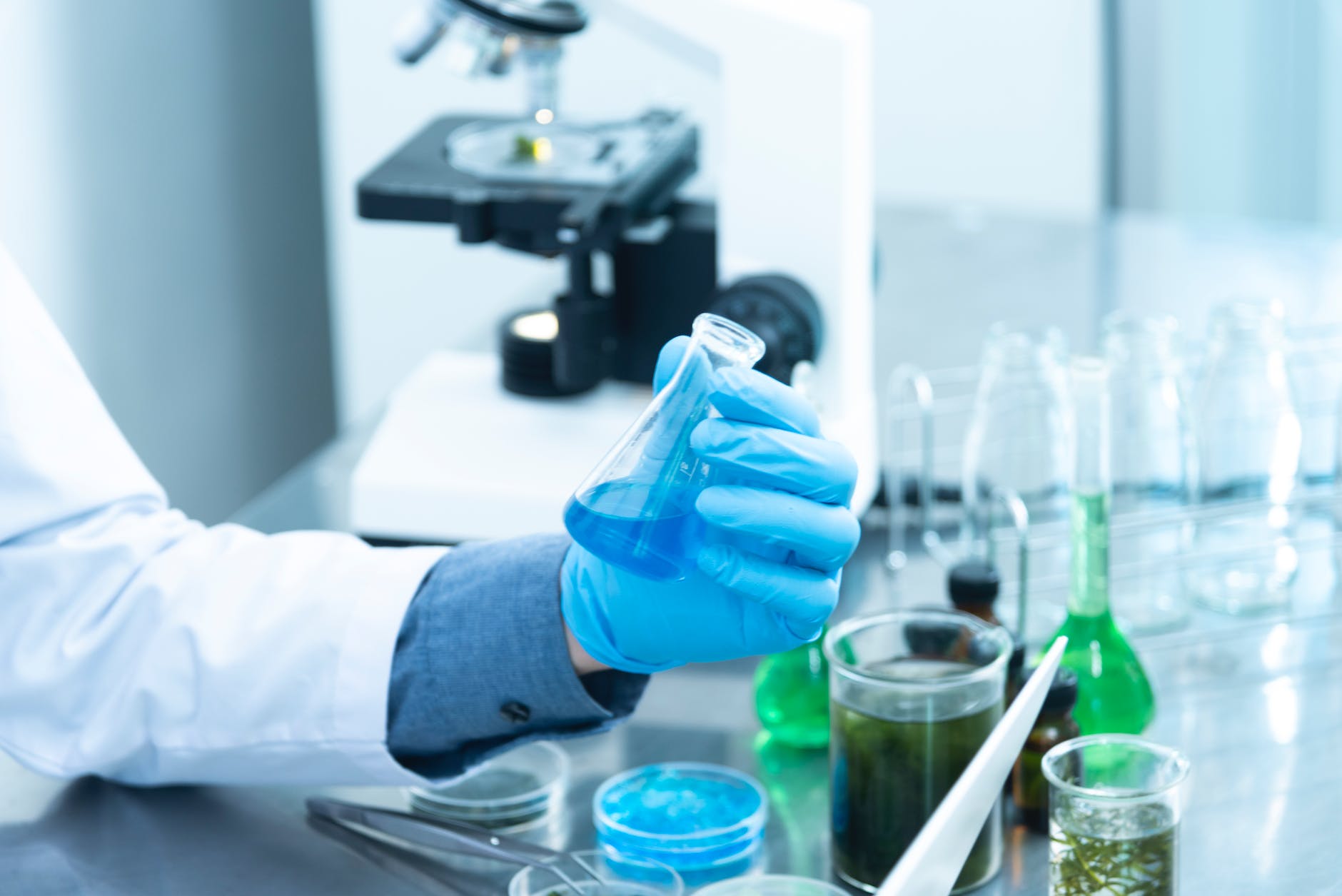
Photo by Chokniti Khongchum on Pexels.com
  1. Avoid loose fitting items of clothing. Wear appropriate shoes (sandals not allowed) in the laboratory.
  2. Backpacks, purses and quotes should be placed in the cubbyhole by the front door of the lab. Place needed items on the floor near your feet, but not in the aisle.
  3. Disinfect work areas before and after use with 70% ethanol and fresh 10% bleach. The regular disinfection of the laboratory surfaces must be done using appropriate disinfectants like hypochlorite solution which kills almost pathogenic microorganisms.
  4. Label everything clearly.
  5. Caps and lids of reagents, solution bottles, and bacterial must be replaced properly in order to prevent contamination and petri dishes must not be opened directly in the lab unless absolutely necessary.
  6. Inoculating loops and needles should be flame sterilize in a bunsen burner before you lay them down.
  7. Turn of bunsen burner when not in use. Long hair must be restrained if bunsen burner are in use.
  8. Flame sterilization using alcohol must be done so carefully and it must be kept in mind that no papers or similar materials that can catch fire easily are nearby.
  9. Treat all microorganisms as potential pathogens and culturing of microorganisms must be done inside a special sterilized laminar flow hood and not outside it because many air-borne microorganisms can be spread.
  10. Wear disposable gloves when working with potentially infectious microbes and samples. If you are surely working with a pathogenic sample, you must handle it with extra care so that it doesn’t spill out on you or on any surface of the laboratory.
  11. Sterilize equipment and materials.
  12. Never pipette by mouth.
  13. Consider everything a bio hazard. Do not pour anything down the sink. Autoclave liquids and brought cultures to sterilize them before discarding.
  14. Dispose off all solid waste material in a biohazard bag and autoclave it before discarding in the regular trash.
  15. There are a special column of safety equipment in the laboratory which you must be aware of so that in case of any emergency you can make use of those safety equipments.
  16. Dispose of broken glass in the broken glass container.
  17. Dispose of razor blades, syringes, and sharp metal object in the “sharps” container.
  18. If by any chance, there is any type of spill of sample or culture or any media, you must immediately contact your instructor or mentor so that he/she can help you and find a solution to remove it from the surface. If you’re able to clean the spill by yourself do it immediately.
  19. In the same way, in case of any mishappening or sudden accident, you must immediately report to your instructor for the immediate help.

MECHANISM OF DIFFERENT TYPES OF ANTIBIOTICS

Antibacterial Drugs are classified according to their site of action which are as follows :

CELL WALL SYNTHESIS INHIBITORS
There are 3 different mechanisms by which anti-cell wall drugs work and thus they are also classified as following:

  1. First classification involves the drugs that directly interact with Penicillin-Binding-Proteins (PBPs) and inhibit the transpeptidase activity which in turn inhibits the attachment of newly formed peptidoglycan subunit to the pre-existing one.
    This is the main mechanism of β-lactam antibiotics. These antibiotics include Penicillin (penams), cephalosporins, Penems, Carbapenems, and monobactams.
    These antibiotics bind to the penicillin-binding proteins which are enzymes present in the bacterial cell wall. Different β-lactam antibiotics bind in a different way. After the antibiotics bind to the enzyme, it changes the morphological response of the bacteria to the antibiotic.
  2. Second classification involves the drugs that bind to the peptidoglycan subunit, blocking different processes.
    The important class of compounds called as glycopeptides are mainly involved in this mechanism of anti-cell wall antibiotics.
    Vancomycin and Teicoplanin are the major examples of glycopeptide antibiotics.
    Vancomycin kills only gram-poitive bacteria whereas Teicoplanin is active against both. The overall mode of action of glycopeptides antibiotics is blocking transpeptidation i.e. similar to β-lactam antibiotics, they also inhibit the transpeptidase activity, and transglycosylation i.e. they being large in size attach to the peptidoglycan subunits thus creating a blockage which does not allow the cell wall subunits to attach to the growing peptidoglycan backbone.
  3. Third classification involves the drugs that block the transport of peptidoglycan subunits across cytoplasmic membrane.
    The main example of such type of drugs is bacitracin, which is a simple peptide antibiotic originally isolated from Bacillus subtilis.
    The mode of action of these class of drugs is blocking the activity of specific cell membrane lipid carriers which act as the attachment surface for peptidoglycan precursors and help in their movement from cell cytoplasm to exterior of the cell. This activity of lipid carriers is inhibited by bacitracin like drugs and they finally prevent the incoroporation of those precursors into cell wall thus inhibiting its biosynthesis.

Although, its route of administration is mostly oral or intramuscular, bacitracin is also known to show its effects when used as topical ointments like Neosporin.

INHIBITORS OF PROTEIN SYNTHESIS
Protein Inhibitors can be divided into 2 parts:

  1. Inhibitors binding to 30S subunits
    • Aminoglycosides bind to the bacterial ribosome, after which they cause tRNA mismatching and thus protein mistranslation.
    This occurs by mismatching between codons and anticodons, which synthesize proteins with incorrect amino acid. This mistranslated protein, along with correctly translated proteins move into move into the periplasm where most of the mistranslated proteins are degraded and some of them are inserted into cytoplasmic membrane. This causes disruption of the membrane, ultimately killing the bacterial cells.
    • Tetracyclines are bacteriostatic and block the binding of tRNAs with the ribosome during translation thus inhibiting protein synthesis. Most of the tetracycline class of drugs are broad spectrum and are active against wide range of bacteria.
  2. Inhibitors binding to the 50S subunit
    • Macrolides are the large class of naturally produced secondary antibiotics. They are basically broad spectrum, bacteriostatic antibiotics. Their main mode of action is blocking peptide chain elongation and they inhibit the formation of peptide bond.
    Patients allergic to penicillins are recommended erythromycin which is a macrolide.
    • Lincosamides include lincomycin and clindamycin. Though they are structurally different but functionally similar to macrolides. They are specifically known to inhibit streptococcal and staphylococcal infections.
    • Chloramphenicol also inhibits peptidyl transferase reaction inhibiting peptide bond formation. It was the first broad spectrum antibiotic and is very much active against a broad range of bacterial pathogens but is very toxic and can cause side.

INHIBITORS OF MEMBRANE FUNCTION
Biological cytoplasmic membranes are basically composed of lipids, proteins and lipoproteins. The cytoplasmic membrane acts as a selective barrier which allows the transport of materials between inside the cell and the environment.
A number of antibacterial agents work by targeting the bacterial cell membrane. They basically are involved in the disorganization of the membrane. Polymyxins and Lipopeptides are the main anti- cell membrane agents.

NUCLEIC ACID SYNTHESIS INHIBITORS
These drugs inhibit nucleic acid synthesis function by either of the following:

  1. Interfere with RNA of bacterial cell
    Antibacterial drugs of this mechanism are selective against bacterial pathogenic cells.
    For example: The drug rifampin, belonging to the drug class rifamycin blocks the bacterial RNA polymerase activity. It is also active against Mycobacterium tuberculosis and thus id used in the treatment of tuberculosis infection. It also shows side effects.
  2. Interfere with DNA of bacterial cell
    There are some antibacterial agents that interfere with the activity of DNA gyrase.
    The drug class fluoroquinolones show this mechanism. They are borad spectrum antibacterial agents. Some examples of drugs in fluoroquinolone family are Ciprofloxacin, Ofloxacin, Moxifloxacin, etc

INHIBITORS OF METABOLIC PATHWAYS
There are some antibacterial drugs which act as ANTIMETABOLITES and inhibits the metabolic pathways of bacteria.
• The sulfonamides block the production of dihydrofolic acid.
This blocks the production of purines and pyrimidines required for nucleic acid synthesis by blocking the biosynthesis of folic acid. Their mechanism of action is bacteriostatic and they are broad spectrum antibacterial agents. Though humans also obtain folic acid but these drugs are selective against bacteria.
Sulfones are also structurally and functionally similar to sulfonamides.
• Trimethoprim is used in the same folic acid synthesis pathway but at a different phase, in the production of tetrahydrofolic acid.
• There is another drug, Isoniazid which is an antimetabolite only selective against mycobacteria. It can also be used to treat tuberculosis when used in combination with rifampin and streptomycin.

INHIBITORS OF ATP SYNTHASE
There is a class of drug compounds called as Diarylquinolones that are specifically active against mycobacterial growth. They block the oxidative phosphorylation process and finally leading to reduced ATP production which either kill or inhibit the growth of mycobacterial species.

CHEMICAL AGENTS IN MICROBIAL CONTROL

The chemical agents are mostly employed in disinfection and antisepsis. The proper use of these agents is essential to laboratory and hospital safety. Many disinfectants are available and each has its own advantages and disadvantages, but ideally the disinfectant must be effective against a wide variety of infectious agents. The disinfectant must be stable upon storage, odorless, or with pleasant order, soluble in water and lipids for penetration into microorganisms, and have a low surface tension through that it can enter cracks in surfaces.

  1. Phenols
    In 1867, Joseph Lister employed it to reduce the risk of infection during operations and phenol was the first widely used antiseptic and disinfectant. Today phenol and phenolics such as cresols, xylenols, and orthophenylphenol are used as disinfectants in laboratories and hospitals. Lysol is made of a mixture of phenolics which is commercially available disinfectant. They act by denaturing proteins and disrupting cell membranes.
  2. Alcohols
    Alcohols are the most widely used disinfectant and antiseptic. They are bactericidal and fungicidal but not sporicidal. Ethanol and isopropanol are the two most popular alcohol germicides. Small instruments like thermometers can be disinfected by soaking them for 10 to 15 minutes in alcohol solutions. 70% ethanol is more effective than 95% as water is needed for proteins to coagulate.
  3. Halogens
    Halogens exist as diatomic molecules in the free state and form salt like compounds with sodium and most other metals. Iodine and chlorine are the most important antimicrobial agents. Spores can be destroyed at higher concentration. Iodine is often applied as tincture of iodine, 2% or more iodine in a water-ethanol solution of potassium iodide. Skin scars result and sometimes iodine allergies can result.
    Chlorine is mostly used as a disinfectant for municipal water supplies and swimming pools and also employed in dairy and food industry. It may be applied as chlorine gas, sodium hypochlorite or calcium hypochlorite, all of which yield hypochlorous acid and then atomic oxygen.
  4. Heavy metals
    Heavy metals such as mercury, silver, arsenic, zinc and copper were used as germicides and these have nit been most recently superseded by other less toxic and more effective germicides. A 1% solution of silver nitrate if often added to the eyes of infants to prevent ophthalmic gonorrhea but now erythromycin is used instead of silver nitrate because it is more effective. Silver sulfadiazine is used on burns. Copper sulphate is an effective algicide in lakes and swimming pools. The action of these heavy metals is mostly on the proteins, and they combine often with their sulfhydryl groups, and inactivate them. They may also precipitate cell proteins.
  5. Quaternary ammonium compounds
    Detergents are organic molecules that serve as wetting agents and emulsifiers and are amphipathic in nature and hence solubilize otherwise insoluble residues and are very effective cleansing agents and are efficient from soaps, which are derived from fats.
    Only cationic detergent are effective disinfectants characterized by positively charged quaternary nitrogen and a long hydrophobic aliphatic chain. They are mostly used as disinfectants for food utensils and small instruments and as skin antiseptics.
  6. Sterilizing gases
    Gases may also be used as sterilizing agents in order to sterilize many heat-sensitive items such as disposable petri dishes and many syringes, heat-lung machine components, sutures, etc. Ethylene oxide gas is used for this purpose as it readily penetrates packing materials, even plastic wraps and is both microbicidal and sporicidal and kills by combining with cell proteins.
  7. Hydrogen peroxide
    Hydrogen peroxide effects our direct and indirect actions of oxygen as it forms hydroxyl free radical which is highly toxic and reactive to cells. As an antiseptic, 3% hydrogen peroxide serves a variety of needs including skin and wound cleansing, bedsore care and mouth washing. When it is applied to a wound, the enzyme catalase in the tissue decomposes the hydrogen peroxide into water and free oxygen. The oxygen causes the wound tissues to bubble and the bubbling removes microorganism mechanically.
  8. Acids and alkalis
    Aqueous solutions of ammonium hydroxide remain a common component of detergent, cleanser and deodorizers. Organic acids are widely used in food preservatives because they prevent spore germination and bacterial and fungal growth. Acetic acid in the form of vinegar is a picking agents that inhibits bacterial growth, propionic acid is commonly incorporated into breads and cakes to retard molds, benzoic acid and sorbic acids are added to beverages, syrups to inhibit yeasts.

BASICS OF A MICROBIOLOGY LAB

Microbiology is the study of microbes i.e. the organisms which we can’t see with the naked eyes. Although many microorganisms are beneficial for the human use, some are pathogenic also which causes diseases. Clinical Microbiological Laboratory is concerned with finding of those infectious, pathogenic microbes.

MATERIALS USED IN MICROBIOLOGY LAB
Laminar flow hood, Incubator, Autoclave, Refrigerator, Bunsen Burner, Wire loop, Petri plates, Glass slides, Weighing balance, Media plates, Sensitivity disks, Staining rack, Microscope, Bio safety Cabinet, Centrifuge etc.

INTRODUCTION TO DIFFERENT MEDIA
Some of the media used in the microbiology lab are :

  1. MacCONKEY AGAR : It is the selective and differential media used for the isolation of Gram-negative Bacteria. This media can be used for differentiating Lactose fermenting and Non-lactose fermenting bacteria.
  2. BLOOD AGAR : It is the enriched media for the growth of bacteria such as streptococci.
  3. CHOCOLATE AGAR : It is the lysed Blood Agar. The only difference in blood agar and chocolate agar is that in blood agar RBCs are lysed. This enriched media is suitable for the growth of bacteria that are unable to grow on Blood Agar.
  4. THIOSULFATE CITRATE BILE SALT AGAR (TCBS) : It is the selective as well as differential media for the growth of vibrio cholerae , a causative organism for cholera.

GRAM STAINING
Gram staining is the process for differentiating Gram positive and Gram negative bacteria. When the whole procedure of gram stain is followed and the slide is observed under the microscope, Gram positive bacteria appear Violet in color and Gram negative bacteria appear Pink in color.
For the gram staining we need Glass slide, Normal Saline, Inoculating loop, Bunsen burner, Crystal Violet, Gram’s Iodine, Acetone, Safranine.

PROCESS :

  1. The isolated colony of the microorganism is taken and in the drop of normal saline on the glass slide the colony is mixed with the help of inoculating loop to make a smear. The prepared smear is heat fixed.
  2. A staining rack is taken and on the smear, Crystal Violet is added. After 1 minute, the stain was removed by washing the slide in running water.
  3. After that, Gram’s Iodine is added on the smear as a decolorizing agent which is again washed after 1 minute under the running tap water.
  4. The next step is to add Acetone on the smear which is added in the hand to hand process.
  5. After the decolorisation is done, Safranine is added on the smear which is also washed after 1 minute.
  6. The glass slide is then air dried and observed under the microscope.

RESULTS :
It was observed under the microscope that the Gram positive bacteria appear Violet in color due to Crystal Violet stain whereas Gram negative bacteria appear Pink in color due to safranine.

TESTS ANALYZED
The tests analyzed in the microbiology section of the laboratory are basically the culture and sensitivities tests of urine, stool, sputum, pus swab etc.
The basic procedure of performing all the tests are :

  1. First of all, all the tests are performed inside the laminar flow hood.
  2. The samples collected from the patients and the media plates are kept inside the laminar flow.
  3. The inoculating wire loop is heat sterilized and with the help of it, the samples are cultured or streaked on the media plates.
  4. After inoculation, the cultured media plates are incubated for 24 hours (48 hours if necessary) for allowing the growth of bacteria.
  5. After the growth, staining is done or sensitivities are checked according to the requirement by the doctor.
  6. The report is prepared for the patient.