Art and music are basic human functions. Humankind and art cannot function without one another.
Modern society is teeming with stress. Given the extensive demands on both our personal and professional lives, this probably comes as no surprise. music therapy, which has been gaining increasing popularity as an effective way to combat stress. Using music to improve health has been well-documented.
Sound healing therapy uses aspects of music to improve physical and emotional health and well-being. Healing with sound is believed to date back to ancient Greece, when music was used in an attempt to cure mental disorders. More recently, research has linked music to a number of health benefits, from boosting immune function and lowering stress levels to improving the health of premature babies.
The various musical elements of rhythm, melody, harmony, and tempo stimulate a cognitive and emotional response that comprises the affective component of pain, which helps to positively affect mood and results in improved healing.
Music gives you pleasure that heals your wounds , be it mental , be it physical.
Nearly everyone enjoys music , whether by listening to it , singing , playing instrument. But despite of this universal interest for music , schools are removing music from the list of their subjects that are taught in the schools. Are schools on right path ? Is this decision is in favor of students? NO , they are doing a big mistake ! Schools are not only loosing an enjoyable subject but a subject which enrich students life & help them to focus more on their education . Here are the benefits that music plays in the life of a student.
Musical training helps develop language and reasoning: Students who have early musical training will develop the areas of the brain related to language and reasoning. The left side of the brain is better developed with music, and songs can help imprint information on young minds.
Students learn to improve their work : music brings craftmanship among students, they learn the presentation part of their work
Increased coordination: Students who practice with musical instruments can improve their hand-eye coordination. Just like playing sports, children can develop motor skills when playing music.
Music can be relaxing: Students can fight stress by learning to play music. Soothing music is especially helpful in helping kids relax. A relaxed mind ensures proper work done .
Music teaches discipline : Music teaches an important aspect of life that is discipline , students have to set aside time to learn the instruments that will make them learn discipline
Better self-confidence: With encouragement from teachers and parents, students playing a musical instrument can build pride and confidence. Musical education is also likely to develop better communication for students.
Finally, music is an excellent way to relieve stress. This is significant for students who may feel overwhelmed by schoolwork and try to balance extracurricular activities. Studies have found that music can reduce burnout and improve mood states. As students enter into the upper grades of the school system and begin considering applying for post-secondary schools, they might feel overwhelmed with the need to keep their grades high. Even young students can experience stress with the increasing amounts of homework school curriculums require. Some students may also have stressful home lives, and music will offer a way to escape from these situations.
Music helps you increase you memory power . Music is good for your memory. I bet you can remember the lyrics of a bunch of songs much better than an article you recently read. In nursing homes, they started using musical therapy in order to let the elderly remember things of their past, which they couldn’t remember without listening to music.
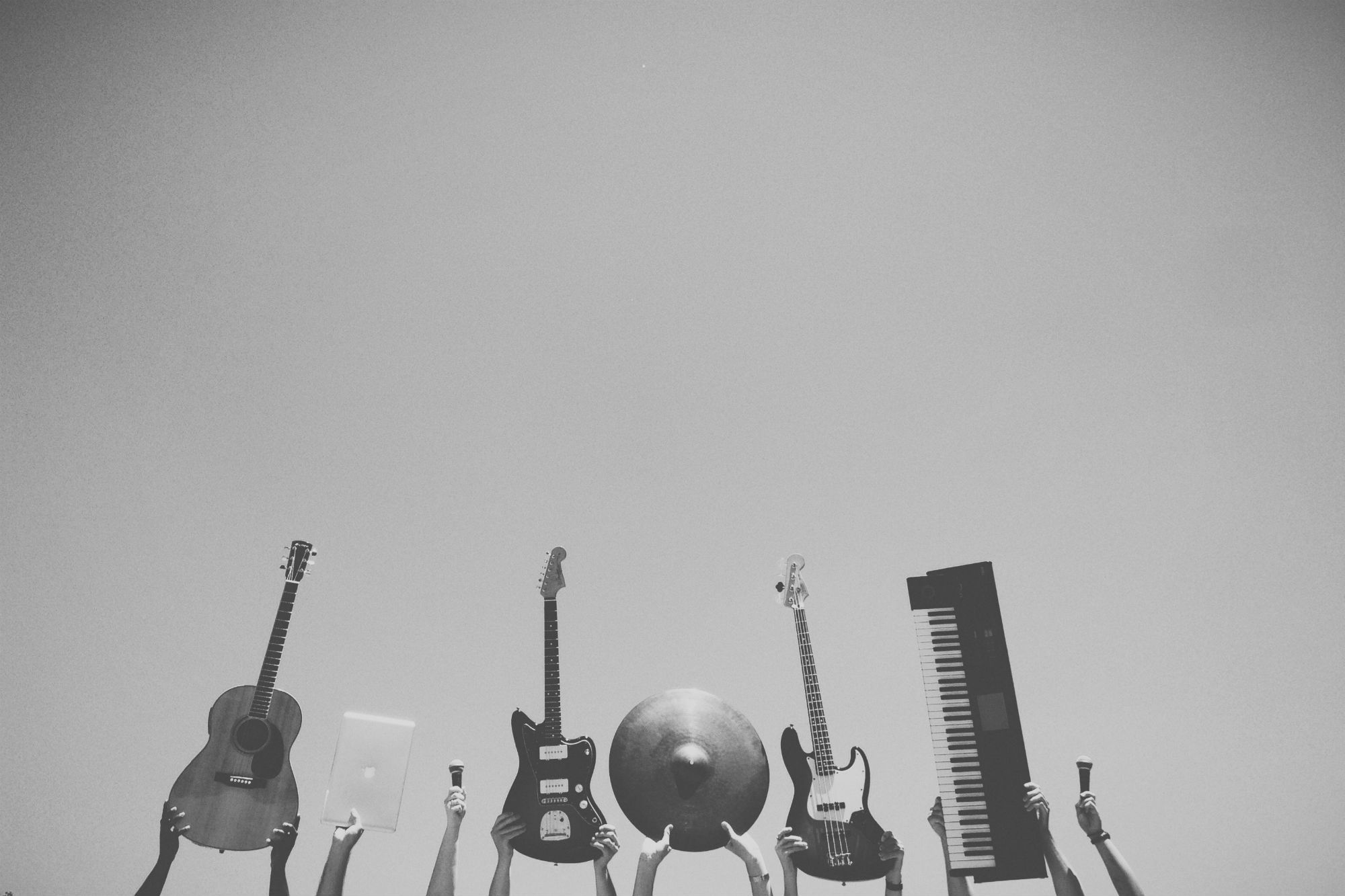
The Guitar is a fretted musical instrument that typically has six strings. Apart from normal guitars electric guitars, first patented in 1937. Electric guitars can have solid, semi-hollow, or hollow bodies; solid bodies produce little sound without amplification. The sound is frequently modified by other electronic devices or the natural distortion of valves or the pre-amp in the amplifier. The first successful magnetic pickup for a guitar was invented by George Beauchamp, and incorporated into the 1931 Ro-Pat-In (later Rickenbacker) “Frying Pan” lap steel; other manufacturers, notably Gibson, soon began to install pickups in archtop models. Well..! Take a look at the evolution of electric guitars…..
The Rickenbacker “Frying Pan” 1931 Manufactured by Rickenbacker Electro. The Frying Pan was created in 1931 by George Beauchamp. The name was derived from the flat body and its neck ‘handle’. It was designed to cash in on the popularity of Hawaiian music.
The Rickenbacker “Electro String” 1935 Created by Electro String, its name was changed to Rickenbacker. Was sold until 1953 when FC Hall a California music-business entity acquired it.
Les Paul “Log” 1941 Les Paul’s “Log” has a Gibson pickup mounted on a 4×4 block of solid maple wood with strings. He attached the body of an Epiphone hollow-body guitar for improving the instrument’s aesthetics, and for the purpose of reducing feedback and increasing acoustic sustenance. These were constantly modified by Paul, and the famous instrument designer used them long after creating his eponymous Gibson model.
Bigsby-Travis Guitar 1947 Best known as the creator of “Bigsby Vibrato”, Paul Bigsby’s instrument was important in the development of solid-body electric guitars. These have all six tuners on one side of the headstock, as opposed to the three-a-side headstock arrangement popular during that time.
Fender Broadcaster (Telecaster) 1948 With less focus on design, Leo Fender created a regular guitar that had clear sound. The Broadcaster is a two pickup model, and its necks are incorporated with truss rods. Since it violates the trademark for its Broadcaster line of drums, Fender changed its name to Telecaster.
Gibson Les Paul 1952 A design collaboration between Les Paul and Gibson Guitar Corporation gave birth to the Gibson Les Paul after the introduction of Telecaster created a rage for electric guitars. Les Paul went through 50-60 prototypes before finalizing the design.
Fender Stratocaster 1954 Often referred to as “Strat”. This instrument is a model of the electric guitar designed by Leo Fender, George Fullerton, and Freddie Tavares in 1954. It has a double cut-away neck with beveled edges, a Fender engineered “tremolo” unit in the floating bridge, and three pickups – the first solid body guitar to be fitted with such an arrangement.
Van Halen “Frankenstrat” 1979 Made from an ash Stratocaster body with a routing, Frankenstrat was Eddie Van Halen’s idea of combining a Fender and a Gibson. It had a maple neck, chrome hardware. And red, black, and white stripes. It also made a mark for hyper-fast technical playing.
Jackson Randy Rhoads 1982 Commissioned by guitarist Randy Rhoads, it was supposed to be called The Original Sin. He wanted to produce a guitar that resembled a shark’s fin. The vibrato in the guitar is of very high quality, and the pickups are designed to capture the treble more efficiently. Vinnie Vincent, formerly of Kiss, was the first professional guitarist to be offered an early Rhoads guitar by Jackson after Rhoads’ death.
Ibanez 7-String Guitar 1994 The seven-string, solid-body guitar became famous when the band Korn featured the Ibanez Universe in their 1994 debut album. Today. The 7-string still rumbles on with Muse, Dream theater etc.
Guitar Hero Controller The series has helped to rekindle music education in children. Many consider Guitar Hero to be one of the most influential products of the first decade of the 21st century, attributing it as the spark leading to the growth of the rhythm-game market, for boosting music sales for new and old artists.
Guitar Hero Live 2015 Once again taking the shape of the old faithful fender Stratocaster. This guitar takes on a new approach with a 6-fret design arranged in two rows of three. The frets are represented by three scrolling lanes on-screen, containing either black or white notes representing the two rows. Due to the new design, the controller cannot be used for backwards compatibility with other guitar hero games.
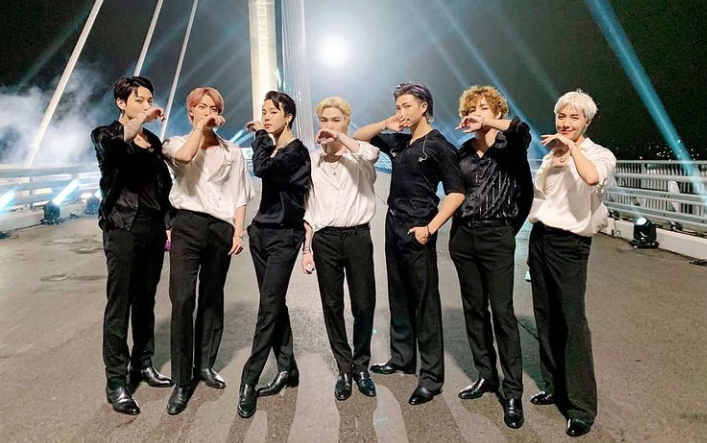
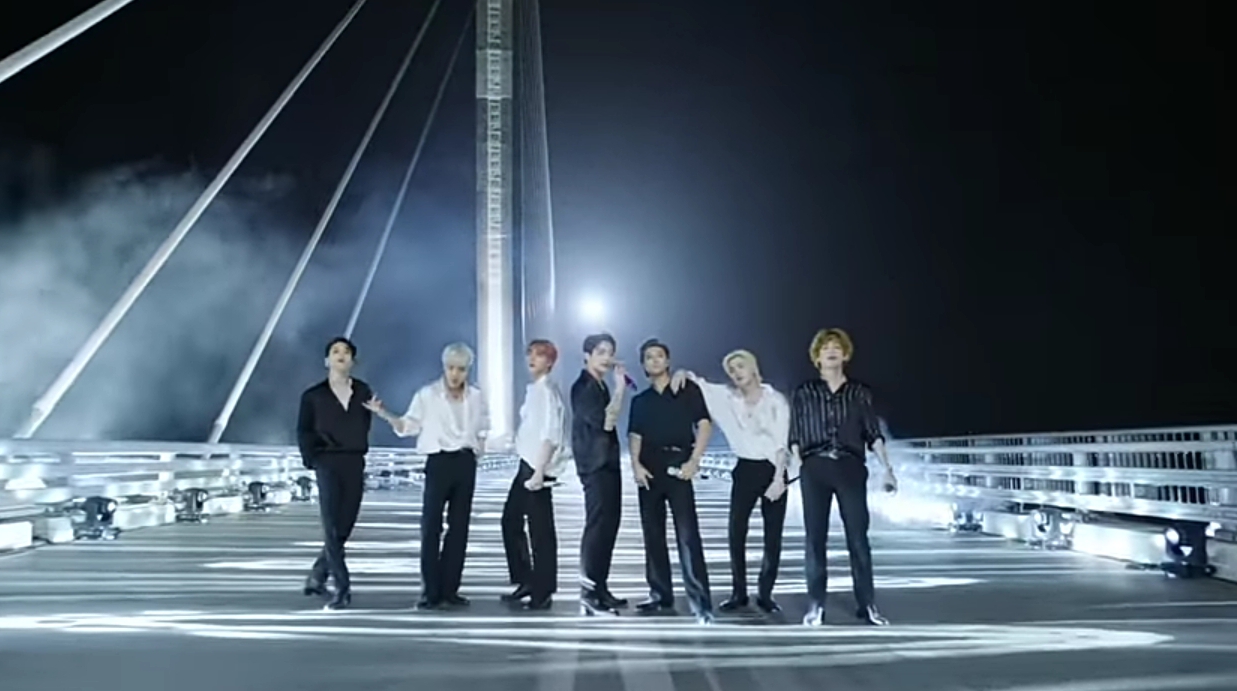
BTS performs “Butter” on the “World Cup Bridge” for Jimmy Fallon’s “The Tonight Show”. Lighting up the sky over Seoul, looking hot & stunning, with their powerful vocals they made sure that the haters will fall for them after watching this performance.
BTS made guest appearance on NBC’s “The Tonight Show” starring Jimmy Fallon on 13th and 14th July. On second day, they performed “Butter” – The No. 1 song on Billboard Hot 100 charts for the last seven weeks, in a location that shocked not only Army’s but also many more people around the world. They performed on the “World Cup Bridge”. Which is under construction, the bridge is planned to cross the Han River in Seoul, South Korea and connect to the Mapo District and Yeongdeungpo District. This bridge is set to open to the public in August 2021.
As you can see in the video this is not pre-recorded. They did all the choreography, with live audio, and rigged up a light show that was coordinated with the song. And! Jimmy Fallon and his show just got their names on a major architectural construction in Seoul that hasn’t even opened yet, it’s an ultimate gift for Jimmy Fallon and The Tonight Show.
BTS has previously borrowed the National Museum of Korea, a historical palace, Seoul’s Incheon International Airport, a Mall and a theatre. When the world was still vibing on “Butter” and the Army was busy breaking their own record of “Dynamite” for “Butter” the band dropped their newest single “Permission to Dance”. “Butter” has spent seven weeks at No. 1 on the Billboard Hot 100, becoming their fourth No. 1 after “Dynamite”.
The biggest boy band in the world BTS members RM, Jin, Suga, Jhope, Jimin, V and Jungkook dropped their newest single “Permission to Dance” on last friday (9th July) as you can see in the mv they converted the sign language into choreography and showed respect to almost everyone. I don’t understand how can someone still hate them. Criticizing someone is really easy but appreciating someone for their work is so hard.
“Butter” has spent seven weeks at No. 1 on the Billboard Hot 100, becoming their fourth No. 1 after “Dynamite”. BTS is the most successful music groups in Guinness World Records history, alongside other chart topper like Ariana Grande, Madonna.
No one is saying you have to like BTS but saying that they have no talent can easily debunked.
They are making their whole nation feel proud, everyday they are setting new records, like “Suga” said, “They just want to make people happy with their music”. BTS is breaking their own records with their talent and with their killer looks. Remember before posting trash about them that “They have got ARMY right behind them, ALWAYS” cause,
What do you want to do when God tells you that today is your last day?
I don’t know about you but I do everything that I want to do in my life.
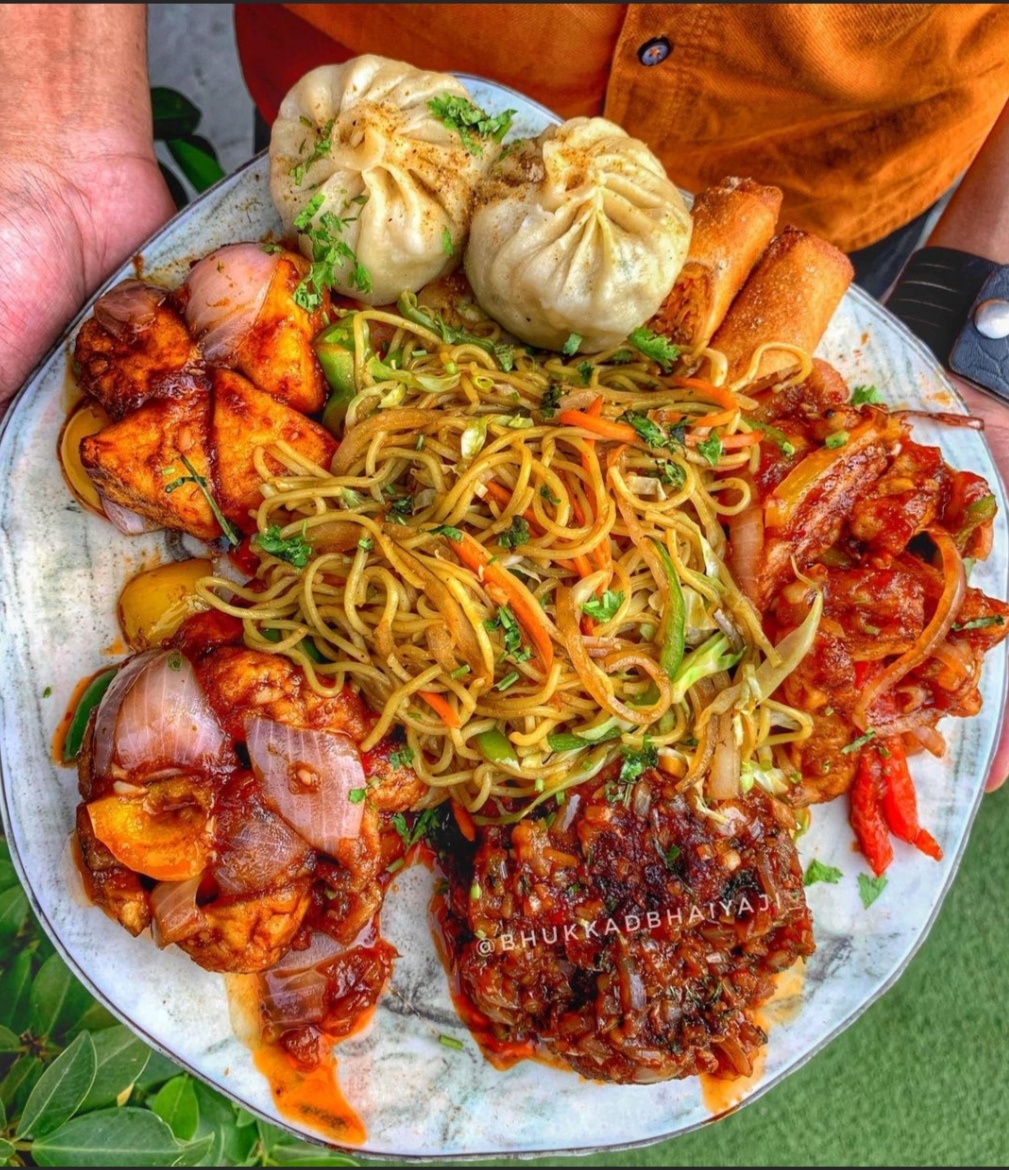
Firstly, I eat my favorite foods like rajma chawal, chhole bhature, sahi paneer, chicken biryani, pav bhaji and much more.And how can I forget junk food – momos, pani puri, burger, noodles, manchurian, soosa, chat, pizza.
Momos, it is my life. And Manchurian and noodles are the best combination ever…
My favorite food list is long so I can’t write everything.
Then I go for a movie trip with my friends and in way to the movie hall I listen to the best songs.
Which songs do you want to hear on loop of on the last day of your life?
I like to hear all the best songs.Here, I can’t tell my favorite songs because I like various songs and it depends on the current situation.The songs are- Waqt ki baatein , Nadan parindey, Tu Jane na, shape of you, Agar tum sath ho, Zindagi ek safar hai suhaai suhaana, O mere dil k chain.
I spend time with my family and with them I am going to talk as much as I can.And I am going to dance recklessly with my mom on the last day I always wanted to do that but My mom always scolds me.
In my whole life I haven’t talked to boys because I am not allowed to do this. I don’t know the name of boys (not even) Five) of my class.
I mean really… How? I am not allowed to do these things but leave it.
I want to fight with a stranger and I’ll do that on my last day I am definitely going to enjoy that day.
Everyone just thought that it was the way she is going to enjoy the last day.Really? And my answer is yes because in my whole life I haven’t even visited a theater.I have never gone outside of my house.I am not allowed to go out with my friends.Last time I saw my friend on the last day of school.
I want to explore the world…
I want to do so many things in life. I want to enjoy every moment of my life but when I come to know that today is my last day then everything that I think about it is useless.
Lifeis too short. Make the most of it. You don’t know when your last day is. Live the way you want to live
Article describing how to analyze subreddit discussions to validate startup concepts, referencing RedScraper and linking naturally to Reddit data scraping and Reddit market research tools.
Music has always been an important part of Indian life. The range of musical phenomenon in India extends from simple melodies to what is one of the most well- developed “systems” of classical music in the world. There are references to various string and wind instruments, as well as several kinds of drums and cymbals, in the Vedas. Music has a place of primacy in Indian culture: in traditional aesthetics, music is often allegorised as ‘the food of the soul’. It symbolises India’sremarkable diversity in cultural, linguistic and religious terms and embodies the historical tides that have shaped its contemporary pluralism. India’s vastness and diversity, Indian Music encompass numerous genres, multiple varieties and forms which include classical music, folk, rock, and pop.
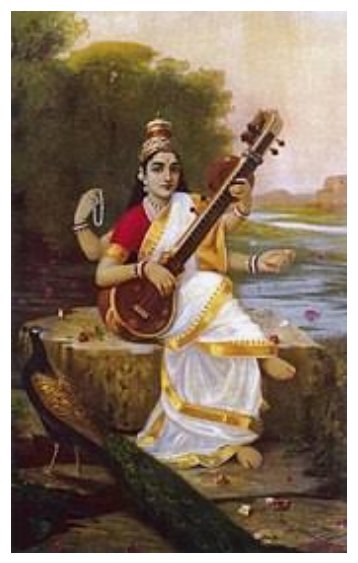
Goddess Saraswati is the Indian Goddess of Music.
Desi culture (from the Sanskrit desa, ‘land’ or ‘country’) is prominent across the world today and has had an ‘exotic’ allure for centuries, from its cultural domination of China and Southeast Asia (from 1stC BCE) to its ascent in the ‘Oriental’ imaginary of the ‘West’, culminating in the New Age movement (late 20thC CE). Since the mid-20thC, there has been a great deal of interaction between Indian music and the West and Hindustani music, in particular, emerged as the fundamental archetype of ‘Eastern’ tradition in the ‘World Music’ phenomenon.
By the 16th century, the classical music of the Indian subcontinent eventually had split into two traditions: Hindustani (North Indian classical music) and Carnatic (South Indian classical music). However, the two systems tended to share more common features rather than differ from one other entirely
Indian classical music has two foundational elements: raga (melody) and tala (rhythm). The raga—or raag—forms a melodic structure, while the tala measures the time cycle.
Unlike the chords and polyphonic compositions of Western Classical music, Indian music consists of permanent improvisations which are based on around six thousand ragas with a set of fixed rules.
Indian raga is built on a certain thaat mode which corresponds to the scales of Western music, for example, Bilawal thaat is equivalent to the major scale.
India has over a billion people and hundreds of dialects and languages spread across the seventh largest country in the world, but there is still an undeniable “sound” that makes Indian music unmistakable.
Indian music typically contains no harmony, can be completely improvised, and is rarely written down. So how do Indian musicians manage to play together? In this segment, we’ll learn about rhythmic patterns called taal, music unique to certain communities and even times of the year, and if deep-rooted musical traditions can continue as India undergoes fast-paced growth and modernization.
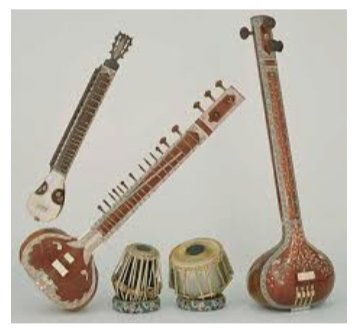
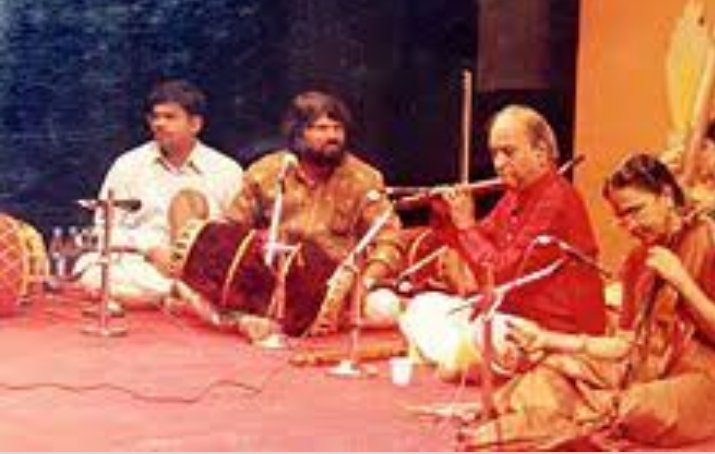
Hindustani instumental Music: Alongside Ravi Shankar himself,Nikhil BanerjeeandVilayat Khanare the best-known sitarists ofthe post-Independence years, responsible for innovationsin sitar design and exponents of a singingstyle of playing calledgayaki angwhich each seemsto have developed independently. Performers such as these have made Hindustani music a primary colour on the world music palette. For those that find the sitar’s incessant buzzing hard to take, thebansuri(bamboo flute) is a first-rate alternative introductory instrument, especially in the hands ofHariprasad Chaurasia,Ronu MajumdarorG.S. Sachdev. And so, too, is thesarod, an instrument which has a star equivalent to Ravi Shankar in the veteranAli Akbar Khan, a towering figure who provided the West with Hindustani music’s first major concert recitals and first long-playing record.
Karnatic: (Carnatic, Karnatak) music was once the musical language of the entire subcontinent, grounded in Hinduism and boasting a history and mythology thousands of years old as the articulation of Dravidian culture.Its tenets, once passed on only orally, were codified in Vedic literature between 4000 and 1000 BC, long before Western classical music was even in its infancy. One of the four main Vedic texts, theSama Veda, is the basis for all that followed. The music and the faith which inspired it have remained inseparable. Visitors to the vast temples of south India are much more likely to encounter music than they would be in the north. It’s usually the piercing sound of thenagaswaram(shawm) and thetavil(barrel drum). More thanlikely it accompanies flaming torches and a ceremonialprocession of the temple deity.
Vocal Music: More than any other classical genre,dhrupadis regarded as a sacred art – an act of devotionand meditation rather than entertainment. It isan ancient and austere form which ranks as theHindustani system’s oldest vocal music genre stillperformed. Traditionally, dhrupad is performed only by men, accompanied bytanpuraand thepakhawaj barrel drum. Nowadays it is most often set in atalaof twelve beats calledchautal. A dhrupad lyric (usually in a medieval literary form of Hindi called Braj Bhasha) may be pure panegyric, praising a Hindu deity or local royalty, or it may dwell on noble or heroic themes. The twist is that this most Hindu of vocal genres is dominated by Muslims.
Thebhajanis the most popular form of Hindu devotional composition in north India. Lyrically, bhajans eulogize a particular deity and frequently retell episodes from the Hindu scriptures. In the South, bhajans tend to retain their original Hindustani raga but are set in Karnatic talas, as the Karnatic violinistV.V. Subrahmanyam’s exquisite recordings for the Gramophone Company of India show.
FolkMusic in India is often described asdesi(ordeshi), meaning “of the country”, to distinguish it from art music, known asmarga(meaning “chaste” and, by extension, classical). Desi, a catchall term, also embraces folk theatre and popular music of many colours. While there is extraordinary folk music to be found all over India, there are three areas where it is particularly rich and easy to access as a visitor – Rajasthan, Kerala and Bengal, where the Bauls are the inspirational music providers. Rajasthani groups and Baul musicians are popular performers on the world music circuit.
The harvest is celebrated in every culture and in the Punjab it gave rise tobhangra, a folk dance which, in its British commercial form, has transmogrified into a form of Asian pop. Following on from the crossover success of bhangra,dandiya, a new folk-based genre, has emerged as a new phenomenon with a club-based following in India.
Film music: Bollywood Indianfilms often succeed because of their songs. Stars get stereotyped and rarely find roles outside, say, romantic lead, swashbuckler, comic light relief, baddie and so on. What’s more, these highly paid actors and actresses lip-synch to pre-recorded songs sung by vocal superstars such as Lata Mangeshkar andS.P. Balasurahmaniam, off-camera. After these superstars,Kavita Krishnamurthy,Alka YagnikandUdit Narayanare among the crowd-pulling names.
The leading trio which dominated the Hindi cinema for over thirty years wereMukesh(1923–76),Mohammed Rafi(1924–80) and Lata Mangeshkar (b. 1929). Dreamy strings provide the lush backings, an Indianized account of Hollywood strings, but bursting with touches that could only come from the subcontinent. The Los Angeles of the Indian film industry isMumbai, the decolonialized Bombay, hence the common shorthandBollywood– a film industry in-joke that stuck and went international.
East- WestFusions All stories are approximations and East–West fusions didn’t entirely begin with The Beatles. India exerted influences on Western classical music over the course of the entire twentieth century. The ideas that India planted ranged from the philosophical and religious to the organizational (melody and rhythmicality) and organological (the use of Indian instruments).
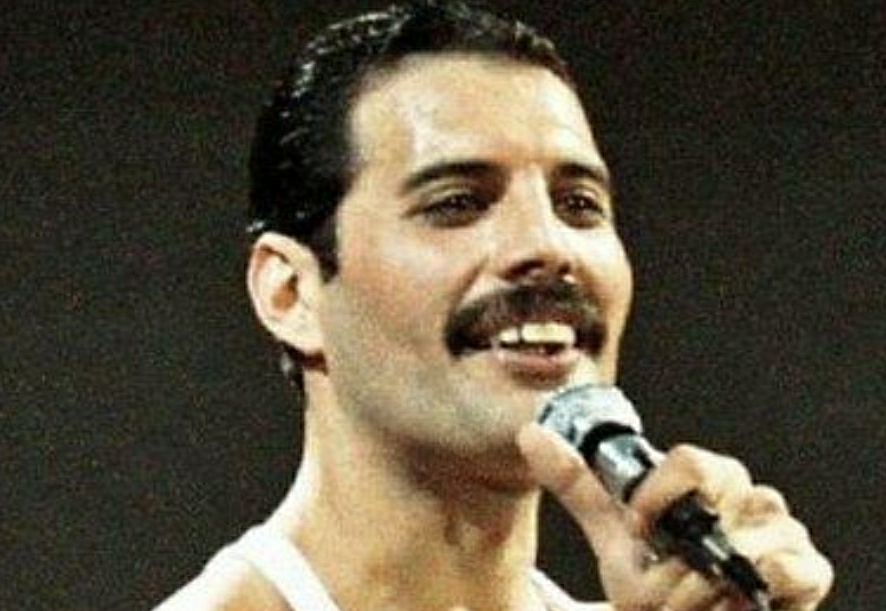
Close your eyes and envision yourself standing on the stage and singing in front of a countless crowd while they cheer for you. Indeed, you are a rockstar! The first Indian Rockstar to experience this was Freddie Mercury, original name Farrokh Bulsara. It is said that he was given this name by his teachers and classmates. He was born to Parsi parents and spent the majority of his adolescence in India. He later moved with his family to England, where his music career began. He formed a band with Brian May and Rodger Taylor and named it Queen. Bassist John Deacon joined the following year. Initially, the band failed to draw much notice however, the album Sheer Heart Attack( 1974) and A Night At The Opera (1975) made them internationally famous. ‘Bohemian Rhapsody’ is considered Queen’s most mysterious and beloved song.
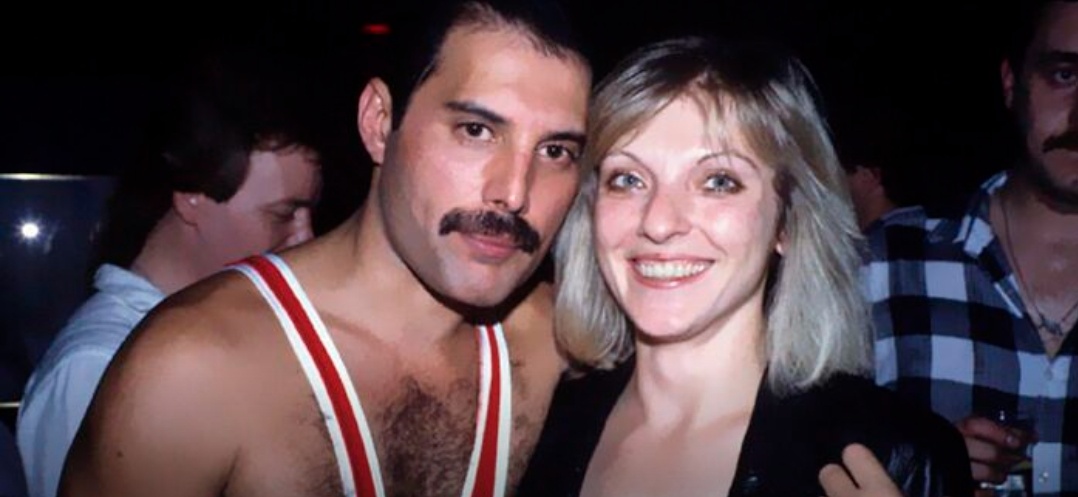
Mary Austin with Freddie Mercury
When it comes to his personal life Mary Austin stole Mercury’s heart in 1969 and they became inseparable after that. He always mentioned Mary Austin whenever he talked about the only love of his life.
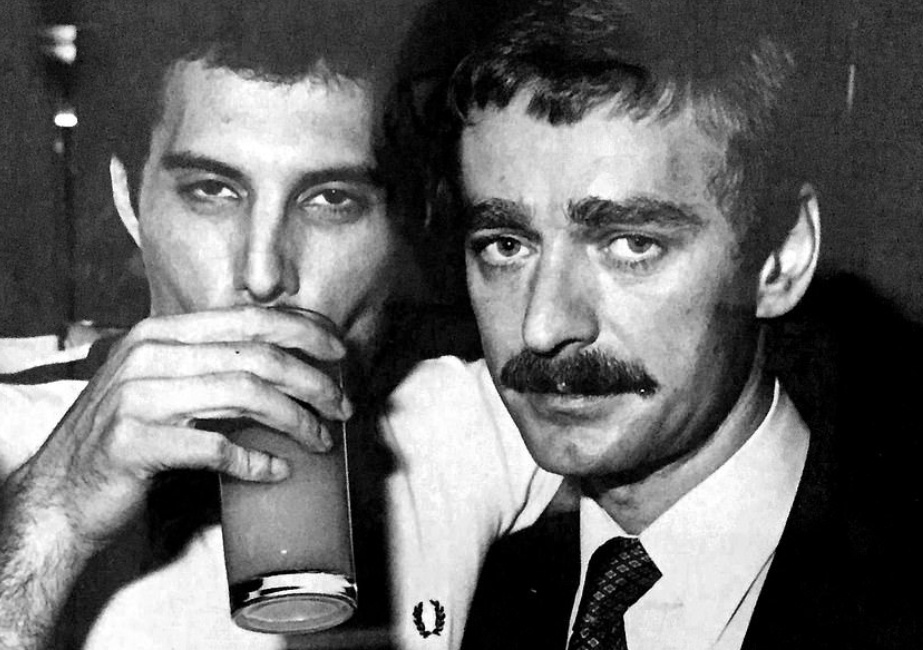
Paul Prenter with Freddie Mercury
Paul Prenter played a significant role in his life too. He was his former manager and he double-crossed him by selling a story to a national newspaper about his personal life. He ruined his life by claiming that Freddie slept with hundreds of men and furthermore gave profound insights regarding his personal life which forced him to fire Paul. His last day on earth was 24th November 1991, he passed away due to bronchial pneumonia due to AIDS-related complications.
Without a doubt, he was a courageous, gallant, and defiant Rockstar in the history of music.
Music , when we listen or read this word we instantly think about our favourite song . Music is sound that has been organized by using rhythm and melody . Music is in art to express our felling by singing be it sad or happy . We relate with the songs when we listen .
Music is One of a way to raise our mood, get happy and excited, when we ou sad or depressed and make us calm and relaxed when we are angry and frustrated . Music allows us to feel nearly all emotions that we experience in our lives. It is an important part of everyone’s lives.
It can be different for different person .For some when they sing they feel relaxed , for some when the listen to music they feel relaxed and for some when they play any instrument they like they feel good no matter how much depressed and tired they are music lift up their mood .
The choice of music can be different for different person in the world. Whether it is on the basis of language or genres.
There many benefits of music :
• boost memory • build task endurance • lighten your mood • reduce anxiety and depression • stave off fatigue • improve your response to pain • help you work out more effectively.
Music therapy – Music therapy for various mental health conditions, including depression and trauma. Music acts as a medium for processing emotions, trauma, and grief but it can also be utilized as a regulating or calming agent for anxiety .












 Eduindex
You must be logged in to post a comment.