Horticulture

The science and art of growing, producing, marketing, and utilizing high-value, intensively grown food, and ornamental plants in a sustainable manner is known as Horticulture.Annual and perennial plants, fruits and vegetables, decorative indoor plants, and landscape plants are all examples of horticulture crops.

Horticulture farming also aims to enhance the quality of life, as well as the beauty, sustainability, and recovery of our ecosystem and the human condition.
Horticulture is divided into the cultivation of plants for food (pomology and olericulture) and plants for ornament (floriculture and landscape horticulture). Pomology deals with fruit and nut crops. Olericulture deals with herbaceous plants for the kitchen, including, for example, carrots (edible root), asparagus (edible stem), lettuce (edible leaf), cauliflower (edible flower buds), tomatoes (edible fruit), and peas (edible seed). Floriculture deals with the production of flowers and ornamental plants; generally, cut flowers, pot plants, and greenery. Landscape horticulture is a broad category that includes plants for the landscape, including lawn turf but particularly nursery crops such as shrubs, trees, and vines.

Temperate zones for horticulture cannot be defined exactly by lines of latitude or longitude but are usually regarded as including those areas where frost in winter occurs, even though rarely. Thus, most parts of Europe, North America, and northern Asia are included, though some parts of the United States, such as southern Florida, are considered subtropical. A few parts of the north coast of the Mediterranean and the Mediterranean islands are also subtropical. In the Southern Hemisphere, practically all of New Zealand, a few parts of Australia, and the southern part of South America have temperate climates. For horticultural purposes altitude is also a factor; the lower slopes of great mountain ranges, such as the Himalayas and the Andes, are included. Thus, the temperate zones are very wide and the range of plants that can be grown in them is enormous, probably greater than in either the subtropical or tropical zones. In the temperate zones are the great coniferous and deciduous forests: pine, spruce, fir, most of the cypresses, the deciduous oaks (but excluding many of the evergreen ones), ash, birch, and linden.

There is no sharp line of demarcation between the tropics and the subtropics. Just as many tropical plants can be cultivated in the subtropics, so also many subtropical and even temperate plants can be grown satisfactorily in the tropics. Elevation is a determining factor. For example, the scarlet runner bean, a common plant in temperate regions, grows, flowers, and develops pods normally on the high slopes of Mount Meru in Africa near the Equator, but it will not set pods in Hong Kong, a subtropical situation a little south of the Tropic of Cancer but at a low elevation.In addition to elevation, another determinant is the annual distribution of rainfall. Plants that grow and flower in the monsoon areas, as in India, will not succeed where the climate is uniformly wet, as in Bougainville in the Solomon Islands. Another factor is the length of day, the number of hours the Sun is above the horizon; some plants flower only if the day is long, but others make their growth during the long days and flower when the day is short. Certain strains of the cosmos plant are so sensitive to light that where the day is always about 12 hours, as near the Equator, they flower when only a few inches high; if grown near the Tropic of Cancer or the Tropic of Capricorn, they attain a height of several feet, if the seeds are sown in the spring, before flowering in the short days of autumn and winter. Poinsettia is a short-day plant that may be seen in flower in Singapore on any day of the year, while in Trinidad it is a blaze of glory only in late December.
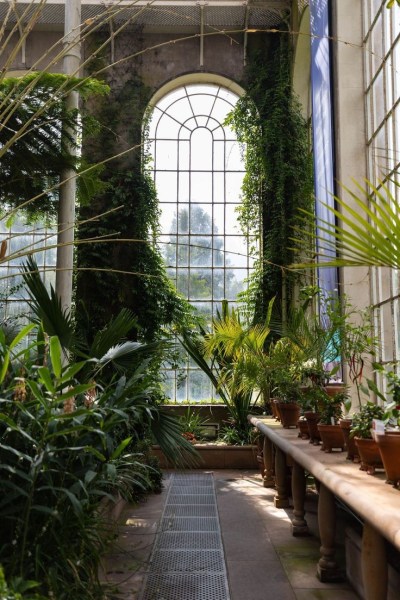


The glory of gardening: hands in the dirt, head in the sun, heart with nature.

To nurture a garden is to feed not just on the body, but the soul.
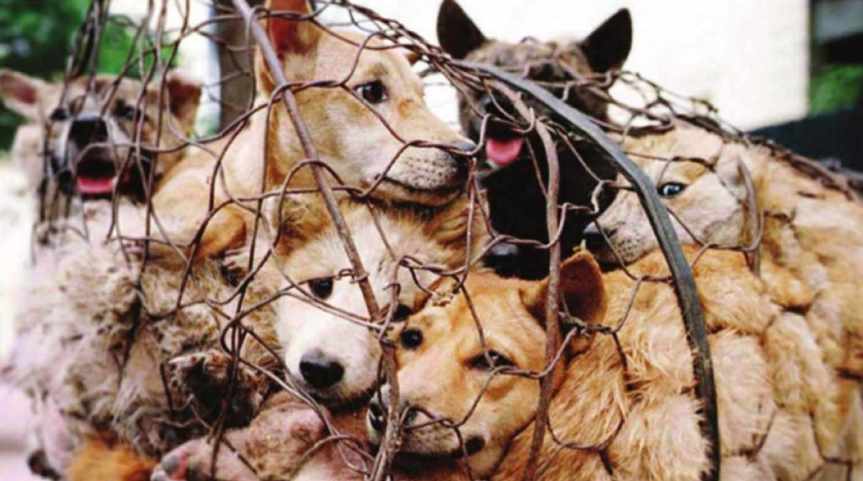
Animal Cruelty is a heinous crime which should be stop .

Animal Cruelty :
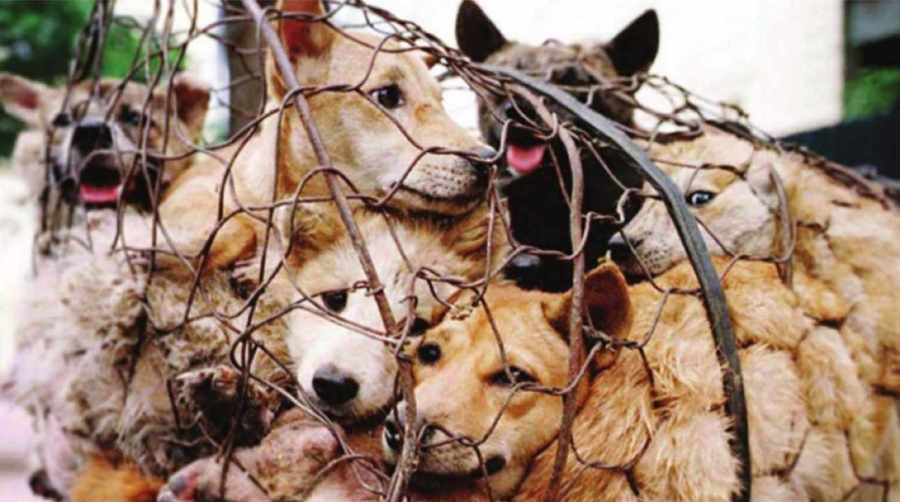
Simply put, animal cruelty harms animals, whether intentional or negligent. While certain activities  such as animal cruelty are generally perceived as cruel, the specific actions that make up animal cruelty vary from person to person and from places to places or different countries. Many  argue that docking a piglet’s tail without anesthesia is cruel, while others say it is common in meat production to prevent injuries later  in the pig’s life.  Animal cruelty defination is different in different areas due to countries laws.
Animal abuse is an pervasive problem which often  is difficult to detect. No species or community is spared from experiencing animal cruelty and neglect. Understanding what animal cruelty means and what it doesn’t mean is one of the first steps to  prevent it from happening again. Animals, whether it’s the food, cosmetics, entertainment, or  pet industry, don’t deserve to suffer.

Is Animal Cruelty Illegal:
The legality of  animal cruelty depends largely  on where the activity takes place . For example,  cruelty to farms and laboratory animals that is illegal in some countries may not be considered banned animal cruelty in some countries, due to differences in national law. In the United States, the best-known legislation to prevent animal cruelty excludes both livestock and laboratory animals from registration.

Animal cruelty in India:
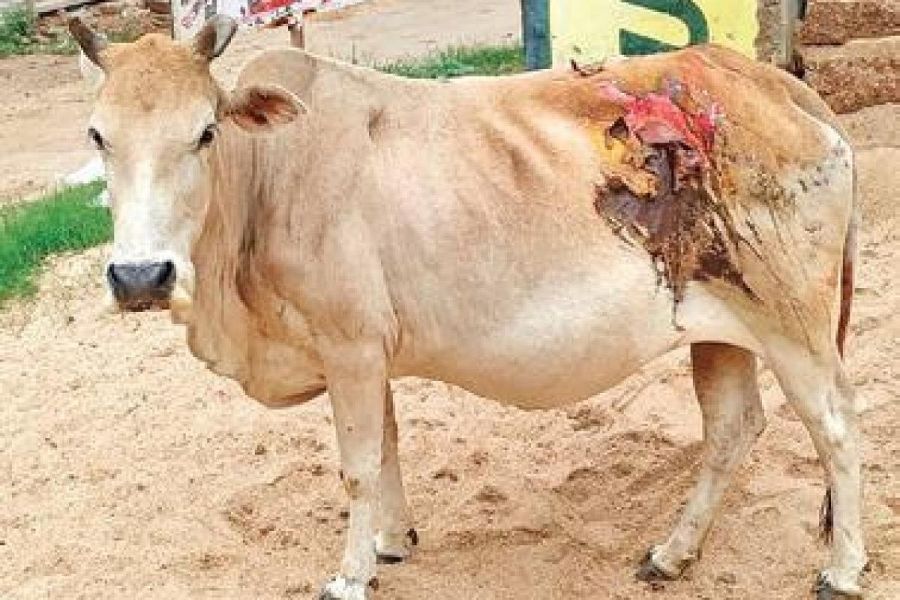
Recently, cases of animal cruelty are increasing in India. The same began to discuss animal rights and the extent of legal protection that  current law provides to animals. The problem is that most of these crimes are either unreported or face disappointing legal responses, as some of the 1960 Animal Cruelty Prevention  Act  and  the Indian Criminal Code are obsolete.
SS Rithika an social activist in context to animal writes about common scenarios of animal cruelty and current laws, procedures, and court decisions dealing with animal cruelty in India. Rithika is also pushing for amendments to these laws to curb the rise in atrocities against animals.

Law related to animal cruelty in India:
The Animal Cruelty Prevention Act of  1960 was amended in 1982. Under India’s newly amended 2011 Animal Welfare Act, animal abuse is a criminal offense  with a fine of at least 10,000 rupees, a fine of up to 25,000 rupees for the first violation, or upto two years of imprisonment. For the second and subsequent violations, a fine of 50,000 rupees or more  and imprisonment of 1 year or more upto 3 years or less. This amendment is currently awaiting approval by the Government of India.  The 1962 law is the law currently in force. The maximum fine under the 1962 Act is  50 rupees (less than $ 1). Many organizations, including  local SPCA, PF, A, Fosterdopt, etc., are actively involved in reporting cases of atrocities to police and assisting the general public in bringing perpetrators to justice. For this reason, there are many changes in the subcontinent.
Under IPC sections 428 and 429, causing mischief by killing or amputating an animal worth more than 10 rupees  is a recognizable crime punishable by two years’ imprisonment, a fine, or both.

Some of the campaign toward animal cruelty:#NoMore50 , #RespectForAnimals , #FarmedAnimals etc.

Let’s get lost in this moment

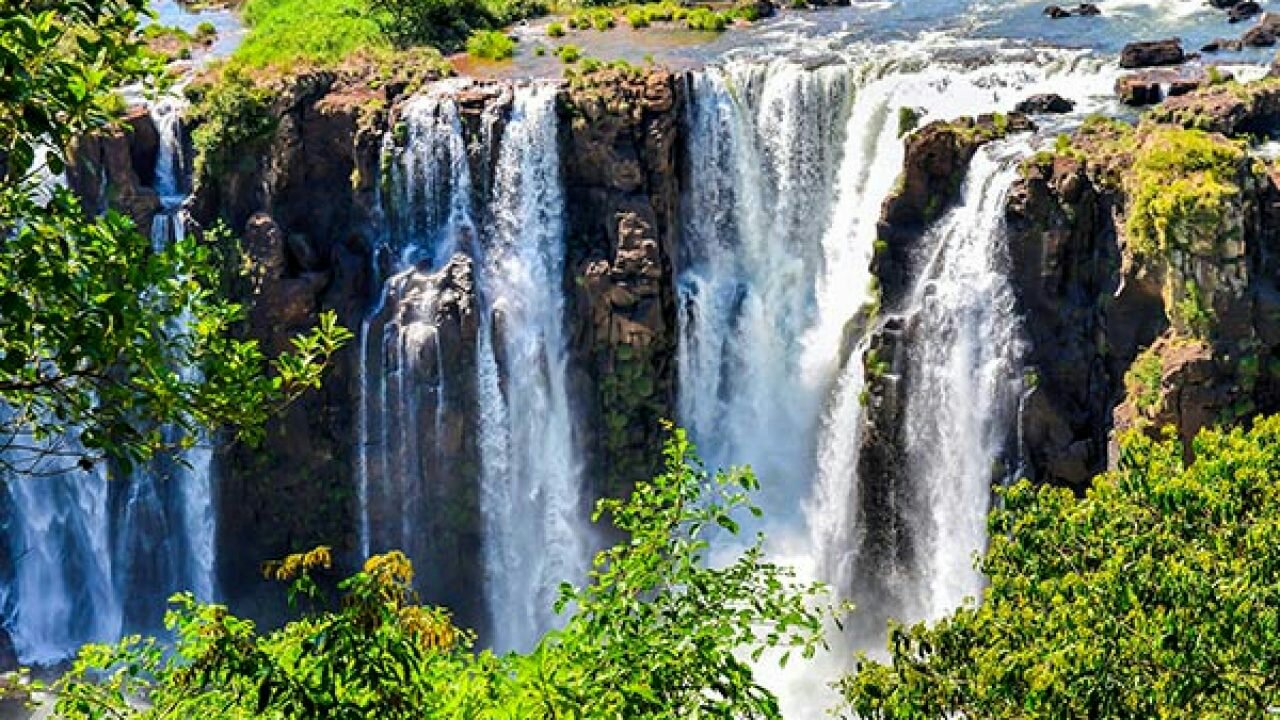
Loneliness sometimes feels very pleasant in itself, often it connects us with nature spontaneously. Many times you must have felt as if you go miles away, with the rustle of the wind, you become adrift on hearing the clash of the leaves. And suddenly find yourself only with nature.

Nature is indeed the true companion of humans. When no one is with you, you are with nature or maybe it is with you. No one can fulfil the shortage that nature can do in human life. We may forget to think about nature in the catastrophe of our physical life, but it always makes us feel our own.

Nature just like our mother gives us everything in its invisible form. When we get scorched by the strong sunshine and hot winds of May-June, suddenly the cloud covers us and takes all the heat from the first spray of rain. 

We are very lucky that we are able to see this wonderful, so beautiful nature in our human form, we can experience it, we can enjoy it. On the other hand, there is also regret on the destiny of those who cannot see it, only feel it.

The relationship between nature and civilization is considered to be unbreakable and authentic. Many poets, writers and authors wrote their classic compositions in harmony with nature. Poets like Jaishankar Prasad, Mahadevi Verma, Suryakant Tripathi ‘Nirala’, Sumitranandan Pant and Ramkumar Verma are called poets of nature. Nature has made people poets and painters.

Usually, we call nature as a spring, a bird’s tweet, a variety of grains, the fragrance of flowers, raindrops, cool winds and the swing of trees. But in reality, nature exists among us with its undivided forms. While on one hand, it displays it’s motherly love in all the above forms, on the other hand, it also comes before us in dire forms like electricity, storm, typhoon, tornado, earthquake, cyclone and volcano. Just like a mother gets fed up with the impishness of her child and gets over her patience, she burst out on them.

Poets are on the other side, they can also make a cool breeze as the subject of their poems and also the invasive volcano. But, an ordinary man expects everything in his life to be simple, easy and calm. He likes to see the sounding waves moving in the ocean.

Nature is situated in human sensibilities. Whenever we are unhappy, we take shelter of nature and when we are happy, we want the support of nature. We must ever feel that nature cries and also laughs with us.