Lok Sabha Passes the Code on Wages Bill, 2019

The
Lok Sabha today passed The Code on Wages Bill, 2019. While opening the
discussion for consideration and passing of the Bill,  Minister of State
(I/C) for Labour and Employment Shri Santosh Kumar Gangwar said that it
is a historic Bill which aims to transform the old and obsolete labour
laws into more accountable and transparent ones which is need of the
hour. As many as 17 present labour laws are more than 50 years old and
some of them even belong to pre-independence era.

Among
the four Acts being subsumed in The Code on Wages Bill, The Payment of
Wages Act, 1936 belongs to pre-independence era and The Minimum Wages
Act 1948 is also 71 years old. The Payment of Bonus Act, 1965 and The
Equal Remuneration Act, 1976 are also being subsumed in the Code. 
He
further said that wide consultations were held with trade unions,
employers and State governments and tripartite consultations were held
on 10th March, 2015 and 13th April, 2015. A draft
of Wage Code was made available in public domain through Ministry’s
website. Many persons gave their valuable suggestions. The Bill was
introduced in last Lok Sabha on 10 August, 2017 and was referred to
Parliamentary Standing Committee which submitted its Report on 18th December 2018. Out of 24 recommendations made by standing committee, 17 were accepted by government.
He
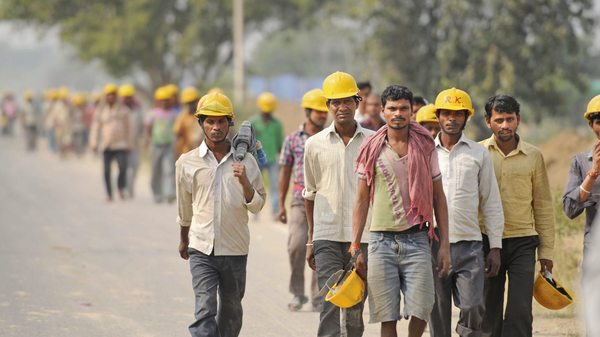
further said that the Code ensures minimum wages along with timely
payment of wages to all the employees and workers. Many unorganized
sector workers like agricultural workers, painters, persons working in
restaurants and dhabas, chowkidars etc. who were out of the ambit of
minimum wages will get legislative protection of minimum wages after the
bill becomes an Act. It has been ensured in the bill that employees
getting monthly salary shall get the salary by 7th of next
month, those working on weekly basis shall get the salary on last day of
the week and daily wagers should get it on the same day.
He
expressed hope that The Code on Wages will prove to be a milestone and
give respectable life to 50 crore unorganized sector workers. The
Minister responded to the debate in detail and thanked all the respected
members for cooperation in passing the Bill.
The salient features of the Code are as following:
The
Code on Wage universalizes the provisions of minimum wages and timely
payment of wages to all employees irrespective of the sector and wage
ceiling. At present, the provisions of both Minimum Wages Act and
Payment of Wages Act apply on workers below a particular wage ceiling
working in Scheduled
Employments only. This would ensure “Right
to Sustenance” for every worker and intends to increase the legislative
protection of minimum wage from existing about 40% to 100% workforce.
This would ensure that every worker gets minimum wage which will also be
accompanied by increase in the purchasing power of the worker thereby
giving fillip to growth in the economy. Introduction of statutory Floor
Wage to be computed based on minimum living conditions, will extend
qualitative living conditions across the country to about 50 crore
workers. It is envisaged that the states to notify payment of wages to
the workers through digital mode.

There are 12 definitions of wages in the different Labour Laws leading
to litigation besides difficulty in its implementation. The definition
has been simplified and is expected to reduce litigation and will entail
at lesser cost of compliance for an employer. An establishment will
also be benefited as the number of registers, returns, forms etc., not
only can be electronically filed and maintained, but it is envisaged
that through rules, not more than one template will be prescribed.

At present, many of the states have multiple minimum wages. Through
Code on Wages, the methodology to fix the minimum wages has been
simplified and rationalised by doing away with type of employment as one
of the criteria for fixation of minimum wage. The minimum wage fixation
would primarily based on geography and skills. It will substantially
reduce the number of minimum wages in the country from existing more
than 2000 rates of minimum wages.

Many changes have been introduced in the inspection regimes including
web based randomised computerised inspection scheme, jurisdiction-free
inspections, calling of information electronically for inspection,
composition of fines etc. All these changes will be conducive for
enforcement of labour laws with transparency and accountability.
 •
There were instances that due to smaller limitation period, the claims
of the workers could not be raised. To protect the interest of the
workers, the limitation period has been raised to 3 years and made
uniform for filing claims for minimum wages, bonus, equal remuneration
etc., as against existing varying period between 6 months to 2 years.

It can be said that a historical step for ensuring statutory protection
for minimum wage and timely payment of wage to 50 crore worker in the
country has been taken through the Code on Wages besides promoting ease
of living and ease of doing business.

How to Write a Press Release?

So, how to write a press release? That’s a million dollar question.
If done right, it can indeed bring you a million dollars in revenue.
Let’s get started by answering what a press release is.
“A press release is simply a statement prepared for distribution to the news media
announcing something claimed as having news value with the intent of gaining media coverage.”
A press release consists of following elements:
  • Headline

    The headline is the first single line of text in the press release and
    tells what the press release is about. It can be a very effective tool
    to grab the attention of the journalists, so writing it from a
    journalists perspective is very important. Think what headlines catch
    your eyes in the newspaper.

    The headline should be descriptive but not too long. For the
    later reason, Eduindex News limits it to 100 characters.

    The headline should be formatted in title case, that is, each word in
    the sentence should have first letter capitalized, and rest of the
    letters in lowercase. Acronyms can be in uppercase.

  • Summary

    The summary lets you build up your chance to sell your press release to
    the journalist.
    It is generally a requirement of online press release services. Identify
    a unique feature about your product or service and then write how it is
    going to revolutionize the world.

    The summary should be a single paragraph with about three to
    five lines. Beyond 250 characters is too long, so this is the limit for
    PRLog.

    All sentences in the summary should be in sentence case, that is, only
    first letter of a sentence should be capital, and all others should be
    lowercase. Again, acronyms can be all capital letters.

  • Body

    1. Dateline

      The dateline contains the release date of the press release and usually
      also the originating city of the press release. For online press release
      services like PRLog, the date stamp is automatic and should not be
      entered.

    2. Introduction

      The introduction is where the press release body starts.
      It is the first paragraph in a press release,
      that generally gives basic answers to the questions of who, what, when, where and why.

    3. Details

      The details come after the introduction.
      It gives further explanation, statistics, background, or other details relevant to the news
      and also serves to back up whatever claims were made in the introductory paragraph.

    The body should be around 3000 characters or 450 words. The body should
    have a minimum of two paragraphs. All paragraphs should be ideally
    between 5 to 8 lines each. There should be a blank line after each
    paragraph for good visibility.

  • About

    The about section is also called the “boilerplate” as it used over and
    over again. It is generally a short section providing background
    information on the press release issuing company or organization.

  • Media Contact Information

    This section contains the contact information like name, phone number,
    email address, mailing address, etc for the media relations contact
    person. For good credibility, the email address should be the same as
    the organization the press release is about. For example, if the press
    release is about an organization with a website called abcd.com, then
    the email address should be email_address@abcd.com.

General Tips

  • A press release should be written in third person. Instead of using we, us and ours, your should be using they, them and theirs.
  • It is very useful to look at other people’s press releases. Feel
    free to take a look at the most viewed press releases, as it usually
    gives a lot of insight into how to write a press release.
  • Submit press release to Eduindex News at news@eduindex.org

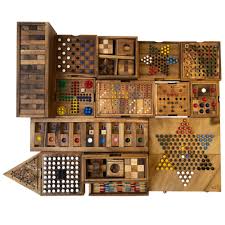
Play the classic brain teaser games to enhance your mental ability!!!

If
you are a player (in the gaming world) then you might always be eager to play
challenging games and here, you can get ideas about some of those. Playing challenging games such as
the impossible quiz
is always a great option because these kinds of games will enhance your mental
ability in numerous ways. 
Whether
your wallet lack some green or not, a “free” is a word that attracts all the
people towards it. Nowadays, various reputed websites have video games where
you can play the best video games for free. These websites do this to attract
customers towards themselves and to offer the best experience to their customers.
But the thing is that why people should play these games? Are not these just a
waste of time? Well about to know by yourself.
The
Strategy Games
are always the finest offering to us by our personal computers. There are a lot
of games that are not just the waste of time while others may be. Usually, the
games that are challenging make offers you enhanced mental ability. Playing these
games will be helpful to confuse you until your head gets hurt. It is very
challenging to play these games.
There
are also the games full of twists and turns that you would not only enjoy
playing but as well as offers you various benefits. These are the best way of
mental exercising and give your brain a run for its money.
These kind of gamesaffects
differently to different peoples. Like some people want to unwind their enemies
one after the other while others love to have an action in their games one
after the other.
Overall,
these games have a lot to offer
to their players, if observed closely. It is up to you what kind of game do you
want to play. You won’t believe as how many people love playing games which
puts them on edge and are challenging in more than one way. Now, these are one
of the most popular games in the world.
After
playing games which requires
strategizing
, you would not only find it fun to play but as well as the learn
the art of planning and creating strategies to complete the tasks and win the
game. These kinds of games can keep you entertained for a very long time.
You
will experience the situations that will take you into an imaginative world.
The blend of realization and thrill offers in these games makes it very
enjoyable and addictive. 
Things you will learn while playing
strategy games!!!
All
real-time video games are focused on realism. Human loves to play these games
since many years ago. These games are so enjoyable at various psychological
levels. These games offer an exhilarating group experience and a very enjoyable
individual experience. No one in the entire world does not like to beat his
opponent in a game by out-smarting.
These help you to understand your
friends
If
you want to learn something about the real- time situations like with friends and
family, then playing these games
is one of the best ways to understand the concepts in hypothetical sense.
Knowing their strategies how they defeat their opponent will let you know their
behavior. Throughout the whole process, there are interesting insights that you
will get to know about these. Sometimes these are very revealing.
It
is always a great way to play games with your fiancée whom you are going to get
married, you will get to know a lot about your fiancée. This will be helpful
for you and your partner to understand each other.
Enhances your mental ability
There
are a lot of things that are similar to the real situations of the world. You
need to make strategies against opponents; therefore, you will get to know the
problems of the world and on the other hand, you will enhance your mental
ability by creating the best strategies. It is always a great way to enhance
your reading skills. You will go through the situations as well as take instant
decisions based on the scenario to defeat your opponent. Additionally, you will
get your results at the same time therefore, you will know what the best
strategy and whatnot is.

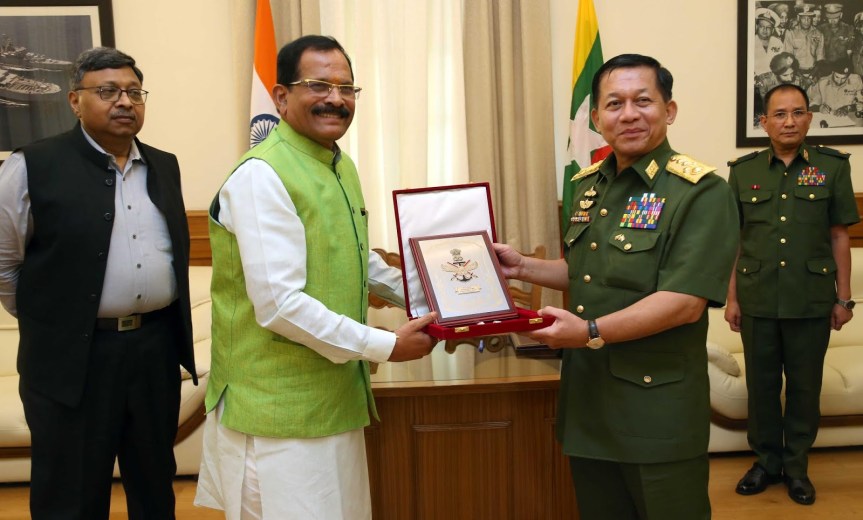
India and Myanmar Sign Mou on Defence Co-Operation

Senior
General Min Aung Hlaing (MAH), Commander-in-Chief of Defence Services
(CDS) of the Republic of Union of Myanmar, is currently on an official
visit to India from 25th July – 2nd August, 2019.

Raksha
Rajya Mantri Shri Shripad Yesso Naik held talks with Senior General Min
Aung Hlaing, Commander-in-Chief of Defence Services (CDS) of the
Republic of Union of Myanmar. Both sides were accompanied by senior
officials. The talks were aimed at enhancing defence co-operation,
review joint exercises and training provided to Myanmar Defence
Services, strengthen maritime security by joint surveillance and
capacity building, medical co-operation, pollution response and for
developing new infrastructure.
On conclusion of the talks, India and Myanmar signed a Memorandum of Understanding on defence co-operation.
Earlier,
the visiting dignitary, accompanied by a high-level delegation from the
Myanmar Defence Services, called on Chairman Chiefs of Staff Committee
and Chief of Air Staff, Air Chief Marshal BS Dhanoa, Chief of Army Staff
General Bipin Rawat and Chief of Naval Staff Admiral Karambir Singh.
Senior
General Min Aung Hlaing, Commander-in-Chief of Defence Services (CDS)
of the Republic of Union of Myanmar was accorded a Tri-Services Guard of
Honour. He also paid homage at the National War Memorial.
Myanmar
is a key pillar of India’s Act East Policy towards prioritising
relations with its East Asian neighbours. India has steadily increased
defence co-operation with Myanmar in recent years.

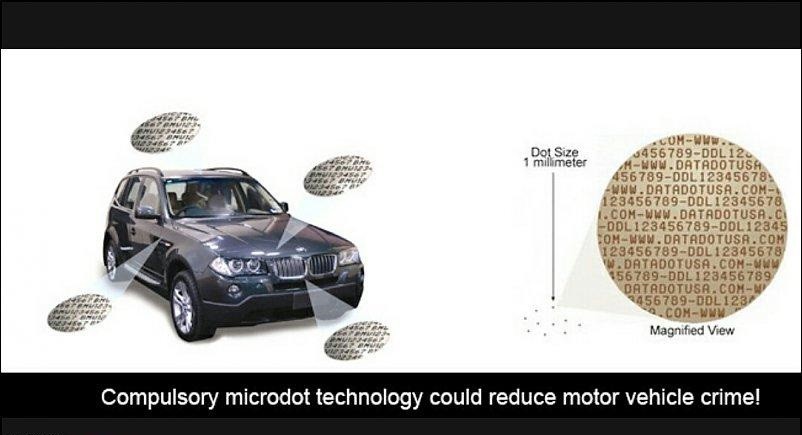
Draft Notification Issued Allowing Motor Vehicles and their Parts to be Affixed with Microdots

The Ministry of Road Transport & Highways has issued a draft notification GSR 521(E) dated 24thJuly
2019, amending Central Motor Vehicle Rules,allowing motor vehicles and
their parts, components, assemblies, sub-assemblies to be affixed with
permanent and nearly invisible microdots that can be read physically
with a microscope and identified with ultra violet light source.
Microdot
technology involves spraying the body and parts of the vehicle or any
other machine with microscopic dots, which give a unique identification.
Use of this technology will help check theft of vehicles and also use
of fake spare parts.   
The
microdots and adhesive will become permanent fixtures/affixationwhich
cannot be removed without damaging the asset, that is the vehicle
itself. The notification says that the microdots, if affixed,will have
to comply with AIS 155 requirements.

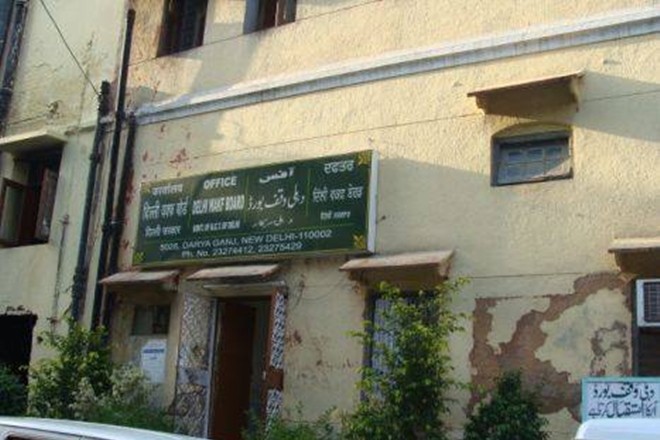
Central government has set a target to achieve 100 per cent digitisation of Waqf properties

Union
Minority Affairs Minister Shri Mukhtar Abbas Naqvi today inaugurated a
national conference of Central Waqf Council (CWC), organised at NDMC
Convention Centre in New Delhi. Shri Mukhtar Abbas Naqvi said here that
the Central Government has set a target to achieve 100 per cent
digitisation of Waqf properties across the country in its first 100
days. There are more than 6 lakh registered Waqf properties across the
country.

         
Shri
Naqvi awarded 8 Mutawalis under “Qaumi Waqf Board Taraqqiati Scheme”
for better management of Waqf properties in their respective state Waqf
boards. This is for the first time that Mutawalis have been encouraged
and awarded for better utilisation of Waqf properties especially for
socio-economic-educational empowerment of needy.
Shri
Naqvi said that Mutawalis are “Custodian” of the Waqf properties and
it’s their responsibility to ensure safety and better utilisation of
Waqf properties.
Secretary,
Ministry of Minority Affairs Shri Shailesh, other senior officials,
Central Waqf Council Secretary, CWC Members, senior officials of the
council, Chairmen/CEOs of state Waqf boards attended this national
conference. 
Shri
Naqvi said that a programme on war footing has been launched for 100
per cent Geo tagging and digitalisation of Waqf properties across the
country to ensure these properties can be utilised for welfare of the
society. Central Waqf Council is providing financial help and technical
assistance to state Waqf boards for digitalisation, GI Mapping/Geo
Tagging of Waqf properties so that state Waqf boards can complete
digitalisation work within decided timeframe.
GIS/GPS
mapping of the Waqf properties has been initiated with the help of IIT
Roorkee and Aligarh Muslim University. The Central Waqf Council has
provided video conferencing facilities to 20 state Waqf boards and it
would be provided in the remaining state Waqf boards by the end of this
year. 
Shri
Naqvi said that for the first time since Independence, Prime Minister
Shri Narendra Modi led Government is providing 100 per cent funding to
develop schools, colleges, ITIs, polytechnics, hospitals, multi-purpose
community hall “Sadbhav Mandap”, “Hunar Hub”, common service centres,
employment oriented skill development centres and other basic
infrastructure on Waqf land under Pradhanmantri Jan Vikas Karykram
(PMJVK) for weaker sections and needy especially girls in those backward
areas which had been deprived of these basic facilities. 
Shri
Naqvi said that while only 90 districts of the country had been
identified for Minority communities’ development earlier; Prime Minister
Shri Narendra Modi led Government has expanded development programmes
for Minorities in 308 districts, 870 blocks, 331 towns and thousands of
the villages of the country.
Shri
Naqvi said that the report of a five-member committee, constituted to
review Waqf properties lease rule, headed by Justice (Retd) Zakiullah
Khan, has been submitted. The recommendations of the committee will
ensure that Waqf rules are made easy and effective for better
utilisation of Waqf properties and to free these properties, several of
these entangled in disputes for several decades, from disputes.  The
Central Government, in consultation with the state governments, is
taking necessary action on the recommendations of the committee.

Subsidy under the Amended Technology Upgradation Fund Scheme (A-TUFS)

The
Office of Textile Commissioner has been providing subsidy under the
Amended Technology Upgradation Fund Scheme (A-TUFS) to the investors
(including the State of Assam) and is also processing new proposals for
availing subsidy for upgradation of machines from the investors.
In
the Mega Handloom Cluster at Sivasagar in the State of Assam, private
investments are encouraged in projects which are sanctioned in the PPP
mode in 80:20 ratio, wherein Government provides 80% funding and 20%
funding is done by the investor, i.e. Special Purpose Vehicle (SPV),
which also provides the land for the project. Since 2017, Govt. of India
has released Rs. 6.91 crores for such projects in Assam with the
investor participation at Rs. 1.91 Crores. The
Office of Development Commissioner (Handicrafts) has taken up 39
clusters under AmbedkarHastshilpVikasYojna (AHVY) for the overall
development of artisans in Assam which has benefitted 4970 artisans
during the last two years.
Following two composite jute mills are enlisted in the State of Assam:
S. No.
Name of the Jute Mill
Address of the Mill
1
Assam Co-operative Jute Mills Ltd.
P.O. Silighat-782143, District- Nagaon, Assam
2
Atlanta Modular Pvt. Ltd.
NH-37, BihandNezone Tubes, West Boragaon, Guwahati, Assam.
                       
Under
North East Region Textile Promotion Scheme (NERTPS), a proposal to
establish two Eri Spun Silk Mills in Assam and Bodoland Territorial
Council (BTC) under Government Sector has been approved during 2018-19.
The Government has set up a Board for Industrial & Financial
Reconstruction (BIFR) under Sick Industrial Companies (Special
Provisions) Act with a view to timely detect sick and potentially sick
companies and for taking remedial measures.
Under
NERTPS Govt. of India, through Central Silk Board have taken measures
to increase silk production in Assam by implementing sericulture
projects in four categories viz., Integrated Sericulture Development
Project (ISDP) and Intensive Bivoltine Sericulture Development Project
(IBSDP), Eri Spun Silk Mills (ESSM) and Aspirational District (AD).  The
details of funds sectioned and released is given below:
[Rs. in crore]
Project Name
Project Cost
GoI share
Funds released Till June-19
ISDP
186.99
153.17
113.06
IBSDP
59.61
53.03
50.37
ESSP
43.06
38.18
AD
41.31
38.19
Total
330.96
282.56
163.43
A
Regional office at Guwahati is functioning to monitor the Central
Sector schemes and to address the issues related to development of
sericulture in NE region in association with the all NE States.
As
on date, no proposal to grant special packages to the Assam Cooperative
Jute Mills Ltd., Silghat, Nagaon (Assam) is under consideration.
However, preferential treatment is given in allocation of Production cum
Supply Orders (PCSOs) as per its capacity under the Jute Packaging
Materials (Compulsory Use in Packing Commodities) [JPM Act], 1987
because of its disadvantageous geographical location and limited options
for local markets.

Mega handloom cluster under Comprehensive Handloom Development Scheme

Mega
handloom cluster is taken up under Comprehensive Handloom Development
Scheme as announced by the Union Finance Minister in the respective
budget with  the financial provision. At present, there is no proposal
for inclusion of Balaramapuram in Thiruvananthapuram district of Kerala
under Comprehensive Handloom Development Scheme.


Details
of assistance provided to the weavers in Thiruvananthapuram   under
various schemes implemented by Government of India since 2014-15 are as
under:
  1. 22 Mudra loans with amount of Rs 9.00 lakh sanctioned and disbursed to the Handloom weavers.
  1. Under
    National Handloom Development Programme, one Block Level Cluster with
    total cost of Rs 185.169 lakh consisting Government of India share of Rs
    179.599 lakh sanctioned in Kollaylin covering 500 weavers.
  1. 6.736 lakh kg of yarn worth Rs 21.52 crore has been supplied to the handloom weavers of Balaramapuram at Mill gate price.
  1. Balaramapuram Saree has been registered under Geographical Indication Act.
  1. Balaramapuram
    Saree and Balaramapur Dhoti have been registered under product list of
    India Handloom Brand (IHB).  28 agencies for Balaramapuram Sarees and 30
    agencies for Balaramapuram Dhoti have been registered for production
    under IHB.
Three Block Level Clusters have been sanctioned in Gujarat under National Handloom Development Programme:
(Rs. in lakh)
Sl. No
Name of the Block/District
Total Project cost
Government of India share
Beneficiaries covered
1
Bhachau, Kutch
133.640
131.740
65
2
Wadhwan, Surendranagar
170.550
165.685
206
3
Lakhtar, Surendranagar
143.410
140.961
86
Total
447.600
438.386
357
This information was given by the Union Minister of Textiles, Smriti Zubin Irani, in a written reply in the Lok Sabha today.

Sericulture Farmers in Kolar

An
exclusive Cluster Development Project covering around 3500 farmers is
under implementation in Kolar Districtfor the development of Bivoltine
sericulture.Besides,Central Silk Board (CSB) is implementinga Central
Sector Scheme (CSS) viz. Silk Samagra “Integrated Scheme for Development
of Silk Industry (ISDSI)” for development of silk industry in the
country including Karnataka with a total outlay of Rs. 2161.68 crore for
the period of three years (2017-20).

Under
the scheme, assistance is extended to sericulture farmers for raising
of Kissan Nursery, plantation with improved incubation facility,
construction of rearing houses, rearing equipment, door to door service
agents for disinfection and input supply, support for improved reeling
units like automatic reeling units, multi-end reeling machines, improved
twisting machines and support for post yarn facilities for qualify silk
and fabric production. The State Governmentcan avail the support under
Silk Samagrafor development of sericulture in Karnataka including Kolar
district.
This information was given by the Union Minister of Textiles, Smriti Zubin Irani, in a written reply in the Lok Sabha today.

Ministry of mines organises a workshop on Effective utilization of Red Mud

In a step towards productive utilisation of bauxite residue, commonly known as the ‘Red Mud’, an interactive workshopcalled ‘Waste To Wealth’
was organized by Ministry of Mines in the capital today. The present
status regarding the generation of Red Mud and its safe disposal and
utilization were discussed. The workshop, which was presided over by Dr
K. Rajeswara Rao, Additional Secretary, Ministry of Mines,was organised
in association with theJawaharlal Nehru Aluminium Research Development
and Design Centre (JNARDDC) Nagpur.
Red
Mud is a solid waste generated during the aluminium production process.
This is an environmental concern due to presence of impurities such as
caustic soda and others minerals. Global generation of red mud is more
than 150 million tons and there exists a global inventory of more than 3
billion tons. Red mud generation in India is around 9 million tons per
year.
The
meet was widely attended by representatives from organisations like
Ministry of Environment and Climate Change, CPCB, Odisha state Pollution
Control Board, BARC, Indian Bureau of Mines, Ministry of Road
Transport, NHAI and BIS, Engineer-in-Chief of Army, top executives from
all three primary aluminium producing companies viz- NALCO, VEDANTA
& HINDALCO as well as from user industries like cement and ceramic
industry. Interacting with the stakeholders, Mr. Anil Mukim, Secretary,
Ministry of Mines asked all the stake holders to work in synergy to find
a lasting solution for productive utilisation of red mud.
The
day long deliberations were held to focus all efforts for effective
bulk utilization of red mud with necessary government support, which
will be a win-win situation for all the stakeholders. Based on the
deliberations, a roadmap will be prepared for the productive utilization
of red mud.

Integrated Scheme for Development of Silk Industry

Under
the Central Sector Scheme Silk Samagra an Integrated Scheme for
Development of Silk Industry (ISDSI) implemented by Government of India
through Central Silk Board (CSB) with a total outlay of Rs. 2161.68
crore for three years (2017-18 to 2019-20) for the overall development
of silk industry in the Country with an objective to scale up production
by improving the quality and productivity.  The scheme comprises four
major components viz. (i) Research & Development, Training, Transfer
of Technology and Information Technology Initiatives, (ii) Seed
Organizations, (iii) Coordination and Market Development and (iv)
Quality Certification Systems (QCS) / Export Brand Promotion and
Technology Up-gradation.
Features of the Scheme  
All
the four major components of Silk Samagra are interlinked with each
other and aimed at a common goal. The main objective of the scheme is to
maintain Breeders stock, Breed improvement through R&D Projects,
Development of mechanized practices, Technology translation through
Sericulture Information Linkages and Knowledge System (SILKS) Portal,
Mobile Application for Stakeholders and for seed quality monitoring,
develop technology packages, impart training on improved technology
programmes to Stakeholders, and transfer technology to the field through
front line demonstration, produce Basic & Commercial Seed of the
improved Silkworm breeds developed by the Research Institutes, encourage
Private Partnership  in Seed sector, and Maintain & Certify the
quality standards set by the R&D units for Silkworm Seed, Cocoon,
Raw Silk and Silk products covering the entire Silk value chain.
Major Interventions:
1.
Research & Development: Race improvement through development of
improved host plant varieties and improved disease resistant Silkworm
breeds through collaborative research with reputed National Research
organizations like IITs, CSIR, IISc and International research
institutes on Sericulture.
     
2.
Seed organisation: Seed production units will be strengthened to bring
in quality standards in production network, besides increasing the
production capacity to cater to the increased silk production target,
promote adopted seed rearers to generate quality seed cocoons, Private
Graineurs to produce quality seed and Chawki Rearing Centres (CRCs) with
Incubation facilities to produce and supply chawki worms,     
3.
Quality Certification /Brand Promotion: Promote Indian silk through
quality certification by Silk Mark not only in the domestic market but
also in the Export market. Besides, emphasis has been given for use of
Silkworm by-products (pupa) for Poultry feed, Sericin for Cosmetic
Applications and Product Diversification into non-woven fabrics, Silk
Denim, Silk Knit etc. for value addition.
                          
The
scheme also comprises of various beneficiary oriented components to
support Mulberry, Vanya and Post Cocoon Sectors. These interventions
cover the major areas viz. (a) Development and expansion of host plant,
(b) Strengthening and creation of Silkworm seed Multiplication
infrastructure, (c) Development of farm and post-cocoon infrastructure,
(d) Up-gradation of reeling and processing technologies in Silk, and (e)
Capacity Building through Skill development / Enterprise Development
Programme. 
The
above scheme interventions are expected to increase /improve the
production and productivity of silk. The details of expected outcome of
the scheme are as under:
      • Increase the Silk production from the level of 30,348 MTs (Metric Tonne) during 2016-    17 to 38,500 MTs by end of 2019-20,

      • Increase the production of Bivoltine Import Substitute Silk to 8500 MTs from 5266          MTs in 2016-17

      • Increasing Vanya Raw Silk production to 11,500 MTs from 9075 in 2016-17 MTs.

      • To produce International Grade Silk of 4A and above to minimize the import to bare  minimum.

      • To
        generate additional employment to about 15 lakh person by reaching 100
        lakh persons by end of March,2020 from the level of 85.10 lakh persons
        in 2016-17.

Ecological Association of Languages

Introduction

 It
says once upon a time everyone on earth spoke the same language. There was
harmony and peace. As they were settling down in a city, they decided to build
a tower which could reach the heavens. God saw man’s city and the tower and
decided to interrupt. He mixed the language of men and scattered them around
the world so they could no longer understand each other.
Though, Tower of Babel may be a
mythological story it has puzzled humans for long. When we acquired language
and when we started to write this- we all used similar sign languages. Today
there are thousands of languages and hundreds of script for those languages. So
a question naturally arises, were these languages same at some point of time?


Today many languages share few words from
each other like Trigonometry and Geometry are borrowed from Indian languages.
Scientific and technical words like Computer and Mobile are used across
languages. But these minor overlaps here and there are relatively new and can
be attributed to the interaction among humans.

Lingo and its origin

A common observation that one can make is how similar
languages in same geographical area are. For example, North Indian languages
like Bengali, Gujarati, Punjabi are very similar to Hindi. Even South Indian
languages are very similar to Hindi in terms of grammar, alphabets,
pronunciations. One may therefore infer that these languages would have a
common ancestor. Most Indian languages seem to have descended from Sanskrit.
Similar observation can be made in case of European languages as well where
most of the languages seem to have descended from Latin.


Another source of language spread has been colonization.
Most European countries were very aggressive in expanding their hold on the
world- and they pushed for their products, forced colonies to work for them. In
this process they also carried their language with them.  


Relationship of Languages beyond Geography

To see a relationship between languages
which are geographically distant, takes more work than the similar common
sense. Similarities that provide solid evidence of common ancestry may not even
look like similarities at all at first glance. However, a closer look at the
phonetics, structure and usage of words reveal the secret. For example, compare
the English words father, foot, far, and five with the Ancient Greek words
meaning the same thing: pater, podos, per (“forward”), and pente
. Notice a pattern here? The English replaced “p” in Greek with and
“f”. Determination of common ancestry is based on such careful observations and
analysis.

 With
careful analysis, it has been established that both these group of language has
same ancestor. This group of languages is called Indo-European languages.
The common ancestor of Indo-European
languages like- English, Latin, Greek, Russian, Hindi, and many others spoken
in India and Europe is known as Proto-Indo-European, whereas the more recent
common ancestor of just English, German, Dutch, Norwegian and the other
Germanic languages is known as Proto-Germanic . 
We can compare the base-level of languages
including words, grammar and pronunciations to establish a relationship between
the languages. However, lack of written evidences again kicks when we try to
go back further to determine  the
original language.


National Retail Trading e-Commerce System

The
‘National Retail Trade Policy’ is under formulation in the Department
for Promotion of Industry and Internal Trade (DPIIT). Comprehensive
stakeholder consultation in all the States through FICCI, CII, ASSOCHAM,
PHDCCI and other trade and commerce associations are being conducted to
get feedback on the needs and demand of small traders.
A
Video Conference of Minister of Commerce and Industry with
representatives of Industry Associations, Export Organizations and
Traders Organizations was held on 18.02.2019, which was attended by more
than 10,000 participants from 42 NIC Centers and 29 other locations
across the country.

Stakeholder
consultations were also held under the Chairmanship of Secretary,
Department for Promotion of Industry & Internal Trade, on 25.06.2019
to consider issues facing the retail sector and possible solutions for
resolving them.
           
As
regards e-Commerce, the Government of India in the Department of
Commerce established a Think Tank on “Framework for National Policy on
E-commerce” and a Task Force under it, which deliberated on the
challenges confronting India in the arena of the digital economy and
e-commerce. The Think Tank was further divided into various sub-groups,
comprising representation from technical experts in the Government and
from industry members with domain knowledge.
A
draft National e-Commerce policy has been prepared and placed in public
domain. Comments from various stakeholders (companies, Industry
associations, think tanks, foreign governments) have been received.
Meetings have been held under the chairmanship of Minister for Commerce
& Industry with industry stakeholders, e-Commerce companies,
associations of kirana stores, traders and retailers to discuss matters
relating to e-commerce.
This information was given by the Minister of Commerce and Industry, Piyush Goyal, in a written reply in the Rajya Sabha today.

Digitisation of Anganwadi Centres

The
ICDS Scheme has an in-built monitoring system since its inception to
track the physical progress of the scheme in respect of various input
process, output and impact indicators through a standardized Management
Information System (MIS) through regular reports on monthly, quarterly
and half yearly basis. To strengthen the monitoring of Anganwadi
Services Scheme revised MIS known as ICDS-Rapid Reporting System (RRS)
has also been introduced for capturing the data of AWCs online. Under
the ICDS-RRS each Anganwadi Centre is assigned a 11digit unique code and
login password is allotted at the supervisor level to submit the
monthly progress report. As on 31st March 2019, out of
13,72,872 operational AWCs 13,61,714 AWCs have been assigned the 11digit
unique code. The State-wise detail is given at Annexure-I.   Assigning the 11 digit unique code to the remaining AWCs is already on.
In addition, the digitization of physical registers has been taken up with roll-out of ICDS-CAS Software Application under POSHAN Abhiyaan
Mission of Ministry of Women and Child Development.  The ICDS-CAS
mobile based software enables the identification of underweight children
based on auto-plotting of Growth Charts. The drill-down dashboard
available at National, State, District, Block level contributes towards
identifying and addressing the problem of nutrition. Thus, improve
overall service delivery. As on 30th June, 2019 more than
3,55,000 Anganwadi Workers are using ICDS-CAS Application across 21
States/UTs. The State-wise details are at Annexure -II.
Under
POSHAN Abhiyaan Smart Phones are provided to Supervisors and Anganwadi
workers to provide online data. The mechanism to implement the project
in State/UTs include regular review through Video Conferencing, meetings
and visits by officers to the States/UTs. The timeline to implement the
activities under POSHAN Abhiyaan is March 2020 for all State/UTs.
The
child beneficiaries under the Anganwadi Services Scheme are provided
Supplementary Nutrition as per the guidelines. Monthly Village Health
and Sanitation Day and Community Based Events are organised by
States/UTs to improve status of nutrition of children. Pre-school
Education is another service provided under the Anganwadi Services
scheme.This covers non-formal education to the children in the age group
of 3-6 years.  State/UTs are provided with the funds for Pre-School
Education Kits for each Anganwadi Centre at Rs. 5,000/- per annum.
Training is imparted to Anganwadi Workers so that they can improve the
literacy and numeracy skills of children of their respective AWC.

Improving Milking Capacity of Cows

n
order to complement and supplement the efforts made by the States and
Union Territories for enhancing milk production and productivity of
bovines Government has been implementing following schemes:


(i)        
Rashtriya Gokul Mission has been implemented throughout the country
including Uttar Pradesh for development and conservation of bovine
population thereby enhancing their production and productivity.
(ii)       
National Dairy Plan-I has been implemented in 18 major dairy states
including Uttar Pradesh for enhancing milk production and productivity
of dairy animals in order to meet demand of the milk in the country.
(iii)      
Breed Improvement Institutes comprises of seven Central Cattle Breeding
Farms, four Central Registration Units and Central Frozen Semen
Production and Training Institutes. These institutes are playing crucial
role in supply of breeding inputs in the form of High Genetic merit
bulls for Artificial Insemination and semen doses of bulls with high
genetic potential in all the States including Uttar Pradesh.
Unproductive
animals with intact reproductive efficiency can be used as recipient
(surrogate mothers) under Embryo Transfer Technology (ETT) and IVF.   In
Uttar Pradesh projects for establishment of two ETT labs with IVF
facility have been sanctioned.
    
This
information was given in a written reply by the Minister of State for
Fisheries, Animal Husbandry and Dairying, Shri Sanjeev Balyan in Rajya
Sabha today.