Investing in Value ETFs: How to Invest in a Basket of Value Stocks

 Introduction

Investing in value stocks has long been considered a prudent approach for investors seeking steady long-term returns. One effective way to gain exposure to a diversified portfolio of value stocks is through Value ETFs (Exchange-Traded Funds). These investment vehicles offer a cost-effective and convenient way to capitalize on the potential of undervalued companies. In this article, we will explore what Value ETFs are, their advantages, and how investors can benefit from them. Additionally, if you are starting to invest in crypto, you may consider knowing about strengthening communication.

What are Value ETFs?

Photo by Leeloo Thefirst on Pexels.com

Value ETFs are a type of exchange-traded fund that primarily focuses on investing in stocks deemed undervalued by the market. These funds typically follow an index that selects companies based on fundamental factors such as low price-to-earnings ratios, low price-to-book ratios, and high dividend yields. By investing in a basket of value stocks, investors can diversify their holdings and potentially achieve better risk-adjusted returns over time.

The Advantages of Value ETFs

Diversification: One of the key advantages of investing in Value ETFs is the instant diversification it offers. By owning shares in a single Value ETF, an investor gains exposure to a wide range of undervalued companies across different industries. This diversification can help reduce the risk associated with individual stock investments.

Lower Costs: Value ETFs are known for their cost-effectiveness. Compared to actively managed funds, which often charge higher management fees, Value ETFs typically have lower expense ratios. This means that investors can keep more of their returns, enhancing their long-term gains.

Less Active Management: Value ETFs are passively managed, meaning they aim to replicate the performance of a specific index. As a result, investors don’t have to worry about the fund manager’s active decisions, reducing the risk of human error and potential bias.

Long-Term Focus: Value investing is based on the premise that undervalued stocks will eventually realize their true worth over time. Therefore, Value ETFs tend to have a long-term investment horizon, aligning well with investors who are seeking sustainable growth rather than short-term speculation.

Considerations Before Investing

Before diving into Value ETFs, investors should conduct thorough research and consider the following factors:

Investment Goals: Assess your investment goals and risk tolerance. While Value ETFs are generally considered less volatile than growth stocks, they are still subject to market fluctuations. Investors should align their investment strategy with their financial objectives.

Expense Ratios: Compare the expense ratios of different Value ETFs. Lower expenses can significantly impact overall returns, especially in the long run.

Track Record: Review the historical performance of the Value ETFs you are considering. Past performance does not guarantee future results, but it can provide insights into how the fund has performed in various market conditions.

Fund Holdings: Examine the fund’s holdings to ensure it aligns with your investment preferences. Different Value ETFs may have varying concentrations in specific sectors or industries.

Diversification: Although Value ETFs provide broad diversification, consider how it complements your existing portfolio. Avoid over-concentrating in a single investment strategy.

Investing in Value ETFs with Online Platforms

For investors seeking to invest in Value ETFs, platforms offer a user-friendly and efficient way to access these investment vehicles. Through the platform, investors can easily research different Value ETF options, analyze their performance, and execute trades with just a few clicks.

Creating a Portfolio of Value ETFs

Selecting Multiple Funds: Diversification within Value ETFs can further reduce risk. Consider allocating funds across multiple Value ETFs to gain exposure to different value strategies.

Rebalancing: Regularly review and rebalance your portfolio to maintain the desired asset allocation. Rebalancing ensures that your investments remain aligned with your financial goals and risk tolerance.

Monitoring Performance: Keep an eye on the performance of your Value ETFs and the underlying holdings. While long-term investing is the primary focus, periodic evaluations help ensure your investments are on track.

Conclusion

Investing in Value ETFs can be a smart approach for investors seeking exposure to a basket of undervalued stocks. The benefits of diversification, lower costs, and long-term focus make Value ETFs an attractive addition to any well-rounded investment portfolio. Before investing, it is essential to conduct thorough research and consider factors such as investment goals and expense ratios. Online platforms provide a convenient way to access and invest in Value ETFs, making it easier for investors to implement their investment strategies effectively. By carefully crafting a portfolio of Value ETFs and monitoring its performance, investors can potentially unlock the rewards of value investing while managing their risk in a well-structured manner.


Customized T-Shirts: A Business That’s All About Individuality

 BShashikant Nishant Sharma | Oct. 17, 2023  | Publication: Eduindex

Customized T-shirts are more than just pieces of clothing; they are a canvas for self-expression. This thriving business allows people to wear their personalities, beliefs, and creativity on their sleeves, quite literally. Custom T-shirt businesses have exploded in recent years, capitalizing on the desire for personalized clothing. Here, we explore what it takes to start and run a successful customized T-shirt business. Dongphucdongdo.com is doing a great business in Customised T Shirts. 

Photo by Leticia Ribeiro on Pexels.com

The Art of Personalization

Customized T-shirts are much more than simple apparel. They are a reflection of individuality, used to commemorate special events, express unique opinions, promote businesses, or simply showcase creativity. From witty one-liners and vibrant artwork to meaningful slogans and photos, these shirts tell a story about the person wearing them. With the rise of online shopping and e-commerce, it has never been easier to create and order personalized T-shirts.

Starting a Customized T-Shirt Business

  1. Market Research: Begin with thorough market research to identify your niche and target audience. Understand the demand for customized T-shirts in your area and your potential competition.
  2. Business Plan: Develop a solid business plan outlining your goals, budget, pricing, and marketing strategies. Determine your niche, such as custom event shirts, corporate merchandise, or personalized fashion.
  3. Legal and Regulatory Requirements: Register your business, obtain any necessary licenses, and comply with local and national regulations. Ensure you have the rights to use any copyrighted materials for your designs.
  4. Sourcing Materials: Find reliable suppliers for quality T-shirts and printing materials. The choice of fabric and print quality greatly affects the final product.
  5. Designs and Printing: Invest in the equipment and software necessary for creating and printing designs. This could range from screen printing and heat transfers to direct-to-garment (DTG) printing or sublimation.
  6. Website and Online Presence: In the digital age, having a strong online presence is vital. Create an appealing website or e-commerce platform for customers to design and order shirts. Include an easy-to-use design tool.
  7. Marketing and Promotion: Develop a marketing strategy that might include social media advertising, email marketing, and partnerships with local businesses or event planners. Encourage satisfied customers to leave reviews and provide testimonials.
  8. Customer Service: Excellent customer service is crucial. Be responsive to inquiries, offer customization guidance, and ensure timely order fulfillment.
  9. Quality Control: Inspect each product for quality before shipping to maintain your brand’s reputation.
  10. Pricing: Determine competitive yet profitable pricing. Consider factors such as material costs, labor, and overhead expenses.

Unique Selling Points

To stand out in the competitive world of customized T-shirts, consider these unique selling points:

  1. Quality: Emphasize the quality of your T-shirts and printing. High-quality materials and craftsmanship can set you apart.
  2. Fast Turnaround: Offer quick production and shipping times to meet tight deadlines for events or special occasions.
  3. Eco-Friendly Options: Consider environmentally friendly printing and sourcing options to appeal to eco-conscious customers.
  4. Range of Customization: Allow customers to customize every aspect of their T-shirts, from colors and styles to the choice of artwork or text.
  5. Bulk Discounts: Offer discounts for larger orders, appealing to organizations and businesses.
  6. Unique Designs: Develop a library of unique and eye-catching design templates for customers to personalize.

Challenges and Opportunities

Running a customized T-shirt business can be highly rewarding, but it’s not without challenges. Competing with large print-on-demand platforms can be tough. However, focusing on local, personalized services and building a loyal customer base can be an opportunity for success. Stay adaptable and up-to-date with industry trends and technology to keep your business thriving.

In conclusion, a customized T-shirt business is a versatile and creative venture that caters to the individuality and self-expression of customers. With the right strategies, a commitment to quality, and a focus on customer satisfaction, this business can be a canvas for both artistic and financial success.

References

Sharma, Shashikant Nishant, Shankar Chatterjee, and Kavita Dehalwar. “Mahatma Gandhi National Rural Employment Guarantee Scheme: Challenges and Opportunities.” Think India Journal 26.1 (2023): 7-15.

Sharma, Shashikant Nishant. “A Review of Swarna Jayanti Shahari Rozgar Yojana.” Think India Journal 23.1 (2020): 26-32.

Sharma, Shashikant Nishant. “Evaluation of the JnNURM Programme of Government of India for Urban Renewal.” Think India Journal 8.2 (2005): 1-7.

Counter-Strike: A First-Person Shooter Classic

 Counter-Strike, often abbreviated as CS, is a renowned and influential first-person shooter (FPS) video game series that has left an indelible mark on the world of gaming. Developed by Minh “Gooseman” Le and Jess Cliffe, the first version of the game was released as a mod for Half-Life in 1999. Since then, Counter-Strike has evolved into a highly competitive and widely beloved franchise, with several iterations and an active global player base.

Photo by RDNE Stock project on Pexels.com

Gameplay and Objectives

The core gameplay of Counter-Strike is built on the concept of counter-terrorism versus terrorism. Players are divided into two teams: the Counter-Terrorists (CTs) and the Terrorists (Ts). The main game modes include Bomb Defusal and Hostage Rescue.

In Bomb Defusal, the Terrorists must plant a bomb at a designated site, while the Counter-Terrorists aim to prevent the bomb from being planted or defuse it if it is. This mode requires strategic planning, teamwork, and precise gunplay.

In Hostage Rescue, the Terrorists are tasked with capturing and guarding hostages, while the Counter-Terrorists must rescue them. The game promotes cooperation, communication, and tactical thinking.

Global Success and Professional Esports

Counter-Strike quickly gained popularity and became a major title in the emerging esports scene. The competitive aspect of the game led to the establishment of numerous professional tournaments and leagues, including the iconic ESL One and the Valve-sponsored Major Championships.

Counter-Strike: Global Offensive (CS:GO), the latest installment of the series released in 2012, remains one of the most popular esports titles. With millions of players, CS:GO features a sophisticated matchmaking system and a bustling market for weapon skins, adding depth to its competitive environment.

Professional players and teams from all over the world compete for substantial prize money, and CS:GO tournaments draw millions of viewers. The game’s competitive nature has led to the formation of dedicated esports organizations and the rise of famous players.

Maps and Strategies

Maps play a pivotal role in Counter-Strike. Iconic locations like Dust II, Mirage, and Nuke have become legendary battlegrounds. Each map presents unique challenges and opportunities, emphasizing different aspects of gameplay, such as long-range sniping, close-quarters combat, or tactical maneuvering.

Players develop strategies that involve map control, economy management (buying weapons and equipment), and coordinated team tactics. Communication is essential for planning attacks, holding positions, and adapting to the ever-evolving game dynamics.

Community and Customization

Counter-Strike has a passionate and dedicated player community. Gamers create custom maps, game modes, and mods, adding to the game’s longevity and diversity. The Steam Workshop provides a platform for players to share and access user-generated content.

In addition, the introduction of weapon skins in CS:GO allowed players to personalize their weapons and trade them in a virtual market, fostering a sense of ownership and investment in the game.

Conclusion

Counter-Strike stands as a hallmark in the world of first-person shooters. Its addictive gameplay, competitive spirit, and dedication to tactical team-based combat have led to its enduring popularity. As one of the pioneers of the esports movement, Counter-Strike continues to attract a dedicated player base, both casual and professional, making it an enduring classic in the gaming industry. With the potential for new iterations and updates, the legacy of Counter-Strike is far from over, promising to captivate the hearts and minds of gamers for years to come.

Sweets: A Delightful Journey into Culinary Bliss

 Sweets, also known as desserts or confections, hold a special place in culinary traditions worldwide. From a simple piece of chocolate to elaborate multi-layered cakes, sweets come in a dazzling array of flavors, textures, and forms, making them a universally beloved treat. The history of sweets is as diverse as the sweets themselves, often rooted in cultural and regional traditions, showcasing the creativity and craftsmanship of generations of confectioners.

Photo by Igor Ovsyannykov on Pexels.com

A History of Sweetness

The love for sweets is not a recent phenomenon. Sweets have been an integral part of human culinary history for centuries. Ancient civilizations such as the Egyptians, Greeks, and Romans were known to indulge in various forms of sweet treats made from ingredients like honey, dates, and nuts. These early desserts laid the foundation for the diverse range of sweets we enjoy today.

In the Indian subcontinent, sweets have an incredibly rich history, with a plethora of traditional sweets known as “mithai.” Sweets like Gulab Jamun, Jalebi, and Rasgulla have been enjoyed for generations and are an essential part of festivals, celebrations, and daily life.

Types of Sweets

The variety of sweets available around the world is astounding, but they can be broadly categorized into several types:

  1. Chocolate: Chocolate, made from cocoa beans, has a universal appeal. Whether in the form of creamy bars, truffles, or hot cocoa, chocolate satisfies cravings for both sweetness and a hint of bitterness.
  2. Baked Sweets: This category includes cakes, pastries, pies, and cookies. The world of baking offers an endless array of textures and flavors, from the buttery layers of a croissant to the fluffy tenderness of a sponge cake.
  3. Candies: Candies encompass everything from hard, fruit-flavored sweets to chewy caramels and gummies. They often come in a dazzling array of colors and shapes.
  4. Fruit-Based Sweets: Many sweets are made from fruits, either dried or fresh. Think of fruit jams, fruit preserves, or candied fruit peels.
  5. Ice Cream and Frozen Desserts: Cold, creamy, and available in countless flavors, ice cream is a go-to sweet treat. Frozen desserts also include sorbets, gelato, and frozen yogurt.
  6. Traditional Sweets: Every culture has its traditional sweets that are deeply rooted in their history and traditions. These sweets can be made from a wide variety of ingredients, including milk, grains, and spices.

The Art of Making Sweets

Crafting sweets is often an intricate and labor-intensive process. Skilled artisans, such as pastry chefs and confectioners, dedicate themselves to perfecting the art of sweet-making. The process can involve precision, patience, and an innate understanding of flavors and textures.

Sweets in Celebration and Culture

Sweets are an integral part of cultural celebrations and rituals around the world. In India, for example, sweets are exchanged during festivals and special occasions as a symbol of love and good fortune. Similarly, weddings often feature a grand display of elaborate sweets, showcasing the culinary traditions of the region.

Health Considerations

While sweets are a source of immense pleasure, it’s important to consume them in moderation. High sugar and calorie content can lead to health issues if consumed excessively. However, the enjoyment of sweets in moderation is a delightful aspect of life that connects people through the simple pleasure of sharing a sweet treat.

In conclusion, sweets are a testament to the diverse and creative world of culinary arts. Their history is a journey through time, their flavors a delight to the senses, and their cultural significance a bond that transcends borders. Whether you’re indulging in a simple piece of dark chocolate or savoring an intricately crafted dessert, sweets are a reminder of the sweetness of life itself.

India will soon have 2nd largest metro network of the world

 Shri Hardeep Singh Puri, the Minister for Housing & Urban Affairs and Petroleum & Natural Gas has emphasized on government’s unwavering commitment to strengthening the Urban Transport network across the country. He was addressing the Consultative Committee Members of Parliament attached to the Ministry of Housing & Urban Affairs (MoHUA) here yesterday.  The agenda item for the meeting was Urban Transport.

Shri Kaushal Kishore, Minister of State for Housing & Urban Affairs, Shri Thiru A.K.P. Chinraj, Member of Parliament (Lok Sabha), Shri M.V.V. Satyanarayana, Member of Parliament (Lok Sabha), Dr. Shrikant Eknath Shinde, Member of Parliament (Lok Sabha), Shri Ramesh Bidhuri, Member of Parliament (Lok Sabha), Shri Abir Ranjan Biswas, Member of Parliament (Rajya Sabha), Smt Vandana Chavan, Member of Parliament (Rajya Sabha), Shri Manoj Joshi, Secretary, MoHUA and other officials of Ministry of Housing & Urban Affairs, attended the meeting.

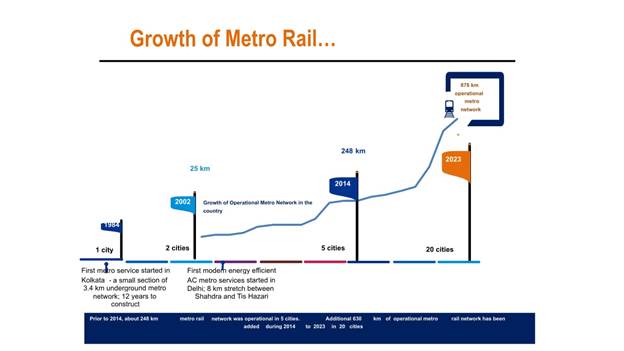
Shri Jaideep, Joint Secretary & OSD, Urban Transport, MoHUA, made an elaborated presentation on Urban Transport before the members at the meeting. In the presentation details were shared on growth of metro network across the country.

The participants were briefed about ‘One Nation One Card’, an indigenously developed National Common Mobility Card ( NCMC), launched by Prime Minister Shri Narendra Modi in March, 2019 to enable seamless travel through Metro, Rail, Bus and other Public Transport Operators (PTO) and for use in Retail Shops/Restaurants/ATM/Kiosk/Fuel filling/Parking/ Retail Outlets by single card. NCMC card is based on qSPARC (quick Specification for Payment Application of Rupay Chip) developed by National Payments Corporation of India ( NPCI). Presently, the Metro Rails Cos. Live on NCMC are:

  • Delhi Metro (DMRC)
  • Bengaluru Metro (BMRCL)
  • Mumbai Metro
  • Chennai Metro (CMRL)
  • Ahmedabad Metro (GMRCL)
  • Kanpur Metro (UPMRCL)

Further, State Road Transport Undertakings (SRTUs) adopting the NCMC ecosystem include Kadamba Transport Corporation Limited, Goa, B.E.S.T. Undertaking, Mumbai and Haryana Roadways.

During the meeting, the Members of Parliament raised issues pertaining to Urban Mobility which included the matters related to metro connectivity in their respective constituencies/ states, scaling up of metro operations in the country, last mile connectivity, enhancement of amenities, ease of travel and passenger comfort etc.

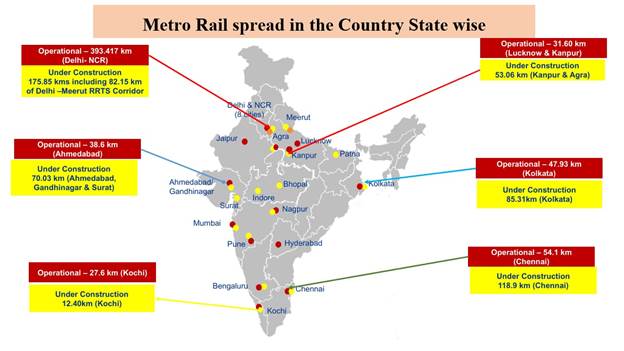
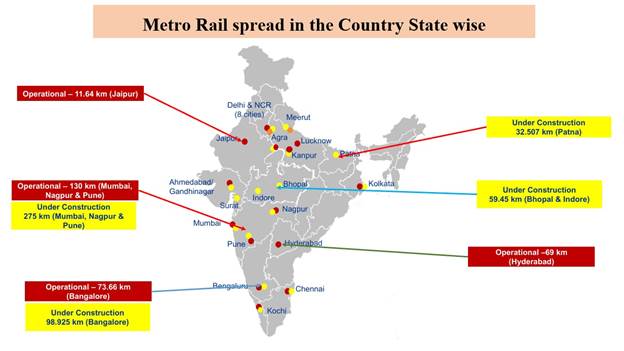
In response to the queries of MPs, the Union Minister Shri Puri informed that at present, around 874 kilometers of metro rail is operational in 20 cities across the country and about 986 kilometers is under construction in various cities. He informed that India is well on its way to have the 2nd largest metro network of the world.

Spread of metro network across the country:

The Minister Shri Hardeep Singj Puri also mentioned about “PM-eBus Sewa”, a scheme recently approved by the cabinet for augmenting city bus operations by deploying 10,000 e-buses on the Public Private Partnership (PPP) model. Salient features of this scheme are:

  • Deployment of 10,000 e- Buses on PPP Model
  • Bus operations support for 10 years
  • Support for development/upgradation of bus depot
  • Support for behind-the-meter power infrastructure
  • Coverage of cities with 3lakh+ population
  • Selection of cities through a challenge method

****

The Roadmap to Success: A Look at Axioma Token's Future Plans

In this comprehensive article, we will delve into the exciting future plans of Axioma Token, a leading blockchain project that aims to revolutionize the financial industry. Axioma Token has been making significant strides in the world of decentralized finance (DeFi) and is on a mission to redefine the way people interact with financial systems. This article will provide a detailed roadmap of the upcoming developments and initiatives that Axioma Token has in store, showcasing its potential for future growth and success. In the evolving landscape of digital assets, platforms like AltrixEdge offer valuable insights and tools for traders. As we dive into the future plans of Axioma Token, understanding the broader market dynamics becomes essential.

Photo by Pavel Danilyuk on Pexels.com

Understanding Axioma Token

Before we dive into the future plans of Axioma Token, let’s briefly understand what it stands for and the technology behind it. Axioma Token is a decentralized blockchain platform. It serves as a financial ecosystem that enables users to access a wide range of financial products and services in a decentralized manner. The platform’s native cryptocurrency, Axioma (AXT), powers the entire ecosystem and is the backbone of its operations.

Expanding the Ecosystem

One of the primary goals of Axioma Token’s future plans is to expand its ecosystem and bring more financial services under its umbrella. Currently, Axioma Token offers various DeFi applications, such as decentralized lending and borrowing, yield farming, and staking. However, the team behind Axioma Token aims to introduce new features and functionalities to cater to a broader audience.

Launching a Decentralized Exchange (DEX)

One of the most anticipated developments is the launch of Axioma Swap, a decentralized exchange that allows users to trade various cryptocurrencies securely and efficiently. Axioma Swap will leverage the latest blockchain technology to provide liquidity and a seamless trading experience for its users. By creating a DEX within its ecosystem, Axioma Token aims to eliminate the need for third-party intermediaries and enhance the overall DeFi experience.

Integrating Cross-Chain Support

To foster interoperability and expand its reach, Axioma Token plans to integrate cross-chain support. This means that users will be able to interact with other blockchain networks directly from the Axioma Token platform. By bridging the gap between different blockchains, Axioma Token aims to create a more interconnected and accessible DeFi ecosystem.

Enhancing Security and Scalability

As Axioma Token continues to grow, ensuring the security and scalability of its platform becomes paramount. The team is committed to implementing cutting-edge security measures and improving the scalability of its blockchain to handle a higher volume of transactions efficiently.

Implementing Layer 2 Solutions

Layer 2 solutions, such as rollups and sidechains, will play a significant role in enhancing the scalability of the Axioma Token blockchain. By moving some of the transaction processing off-chain, the platform can achieve higher throughput without compromising security. This move will also result in lower transaction fees, making DeFi accessible to a wider audience.

Strengthening the Governance Model

Decentralized governance is a fundamental aspect of any successful DeFi project. Axioma Token plans to empower its community members by allowing them to participate in the decision-making process. By implementing a decentralized governance model, users can propose and vote on various protocol upgrades, ensuring the platform evolves based on the collective wisdom of its community.

NFT Marketplace and Beyond

In addition to the expansion of its financial ecosystem, Axioma Token is exploring the potential of Non-Fungible Tokens (NFTs). NFTs have gained immense popularity in recent times, and Axioma Token sees an opportunity to integrate NFTs into its platform.

Launching an NFT Marketplace

Axioma Token plans to create an NFT marketplace that allows artists, creators, and collectors to mint, buy, and sell NFTs seamlessly. By leveraging blockchain technology, the platform will ensure the authenticity and ownership of digital assets, opening up new possibilities in the world of art, and intellectual property.

Exploring Real-World Asset Tokenization

Beyond the world of digital art and collectibles, Axioma Token aims to explore the tokenization of real-world assets. By converting physical assets into digital tokens, Axioma Token can facilitate fractional ownership and streamline the process of investing in traditionally illiquid assets, such as real estate and fine art.

Collaborations and Partnerships

Axioma Token recognizes the power of collaborations and partnerships in achieving its vision. The team is actively seeking strategic partnerships with other DeFi projects, blockchain platforms, and financial institutions to foster innovation and create a more interconnected DeFi ecosystem.

Conclusion

Axioma Token’s future plans are ambitious and promising, aiming to redefine the future of decentralized finance. With its expanding ecosystem, enhanced security, and innovative features like NFT marketplace and cross-chain support, Axioma Token is positioning itself as a major player in the DeFi space.As an investor and enthusiast, keeping an eye on Axioma Token’s progress is crucial. Its commitment to continuous improvement, community-driven governance, and cutting-edge technology makes it a strong contender for success in the ever-evolving blockchain landscape. By staying true to its roadmap and vision, Axioma Token has the potential to leave other projects behind and emerge as a frontrunner in the decentralized finance industry.

Counter Strike First Person Shooter

Since its inception in the late 1990s, Counter-Strike has remained a cornerstone in the world of first-person shooters (FPS). Its impact on gaming culture, esports, and the broader gaming community is nothing short of profound. Developed by Minh “Gooseman” Le and Jess “Cliffe” Cliffe as a Half-Life modification, Counter-Strike emerged as a pioneer in team-based multiplayer gaming, reshaping the FPS landscape forever.

Birth of a Legend

The year was 1999 when the first iteration, Counter-Strike&nbsp, was released. Its premise was simple yet compelling: two teams, Terrorists and Counter-Terrorists, engaged in tactical combat across various maps. Players could buy weapons and equipment, encouraging strategic gameplay and teamwork. The formula struck a chord with gamers worldwide, captivating audiences with its intense gameplay and skill-based mechanics.

A Community-Driven Phenomenon

What truly distinguished Counter-Strike was its grassroots evolution. As the gaming community embraced it, a fervent modding scene emerged. Countless custom maps, game modes, and modifications flooded the internet, breathing new life into an already addictive experience. This collaborative effort not only sustained the game’s popularity but also nurtured an engaged and passionate player base.

Competitive Foundations

The competitive aspect of Counter-Strike laid the groundwork for what would become a thriving esports ecosystem. LAN parties and local tournaments served as the breeding grounds for aspiring pro players, fostering a competitive spirit that transcended casual gaming. The birth of leagues and events like the Cyberathlete Professional League (CPL) and the Electronic Sports World Cup (ESWC) catapulted Counter-Strike into the realm of professional esports.

Evolution and Global Domination

Counter-Strike underwent multiple iterations, with each version introducing new mechanics, maps, and updated visuals. The release of Counter-Strike: Source and later, Counter-Strike: Global Offensive (CS:GO) in 2012, marked significant milestones. CS:GO, in particular, not only retained the essence of its predecessors but also introduced improved graphics, refined gameplay mechanics, and a more accessible interface, captivating both veterans and newcomers.

Cultural Impact

Beyond its gaming prowess, Counter-Strike has left an indelible mark on popular culture. Its influence extends to movies, television, and even traditional sports. References to the game are widespread, showcasing its penetration into mainstream consciousness. The game’s iconic maps like Dust II and gameplay mechanics like bomb defusal have become synonymous with gaming itself.

The Future of Counter-Strike

As of my last update in 2022, Counter-Strike remains a force in the gaming industry. Valve Corporation, the game’s developer, continues to support CS:GO with updates, tournaments, and a thriving esports scene. However, the gaming landscape is dynamic, and new challenges and opportunities will undoubtedly arise.

Conclusion

Counter-Strike’s journey from a humble mod to a global phenomenon is a testament to its enduring appeal. Its impact on the gaming industry, esports, and popular culture is profound, shaping the way we play and experience games. As it continues to evolve, one thing remains certain: Counter-Strike’s legacy as an FPS icon is firmly cemented in gaming history.

Profitable Paradise: Analyzing Investment Opportunities in Reptoid Coins

 The world of cryptocurrencies has grown exponentially, and with it, the emergence of various investment opportunities. In this article, we will delve into the potential of Reptoid coins as an investment option and explore the reasons why they might be worth considering in your investment portfolio. While analyzing the nuances of Reptoid Coins in ‘Profitable Paradise’, it’s essential to have the right tools at your disposal. Using platforms like FBC Edge can offer deeper insights into these investment opportunities.

What are Reptoid Coins?

Reptoid coins represent a novel category of cryptocurrency, drawing inspiration from reptilian-themed art, mythology, and cultural symbolism. Similar to well-established cryptocurrencies like Bitcoin, these coins are built upon blockchain technology. The unique reptilian theme has generated significant interest among both crypto enthusiasts and investors, resulting in a surge in popularity in recent times. As with other cryptocurrencies, Reptoid coins offer potential opportunities for financial transactions and investments within this distinct and evolving digital asset landscape.

Photo by Alesia Kozik on Pexels.com

Understanding the Appeal of Reptoid Coins

Unique Branding and Design

One of the primary reasons behind the growing interest in Reptoid coins is their unique branding and design. These coins feature captivating artwork and themes related to reptiles, which sets them apart from other cryptocurrencies. The creative and imaginative branding has attracted a niche community of investors who resonate with the reptilian symbolism.

Potential for High Returns

As with any investment, the potential for high returns is always a driving factor for investors. Reptoid coins have experienced significant price fluctuations, presenting opportunities for traders to capitalize on short-term price movements. However, it’s essential to remember that high returns come with higher risks, and investing in cryptocurrencies should always be approached with caution.

Community and Social Media Engagement

The success of any cryptocurrency project often relies on its community. Reptoid coins have fostered a vibrant and engaged community on social media platforms. This active community not only supports the project but also contributes to its growth and adoption.

Risks and Challenges

While the potential for high returns is enticing, it’s crucial to recognize the risks associated with investing in Reptoid coins.

Market Volatility

Cryptocurrency markets are well-known for their considerable volatility, with prices capable of experiencing sharp surges one day and sudden drops the next, which exposes investors to substantial risks. Reptoid coins, like other cryptocurrencies, are not immune to these market fluctuations. Therefore, investors should be well-prepared to handle such ups and downs to safeguard their investments effectively.

Lack of Regulation

The cryptocurrency industry is relatively new, and its regulatory landscape is continuously developing. As a result, Reptoid coins, similar to other alternative cryptocurrencies (altcoins), face limited regulatory oversight. This situation could potentially put investors at risk, as it may create opportunities for scams and fraudulent projects to emerge within the market. Thus, investors should exercise caution and conduct thorough research before investing in Reptoid coins or any other altcoins.

Limited Adoption

The success of cryptocurrencies often depends on their adoption and real-world use cases. While Reptoid coins have gained some traction, widespread adoption remains a challenge. As a result, their long-term potential may be uncertain.

Evaluating Reptoid Coins as an Investment

When considering Reptoid coins as an investment, it’s essential to conduct thorough research and due diligence.

Project Fundamentals

Examine the project’s fundamentals, including its whitepaper, development team, and road map. A transparent and well-documented project is more likely to inspire confidence among investors.

Community Sentiment

Monitor the sentiment within the Reptoid coins community and broader cryptocurrency forums. A positive and supportive community can indicate a healthy and thriving project.

Risk Management

Diversification is a key aspect of managing risks in any investment portfolio. Avoid putting all your funds into a single cryptocurrency, including Reptoid coins, and allocate your investments across different assets to mitigate potential losses.

Conclusion

Reptoid coins offer a unique and imaginative approach to the cryptocurrency market, attracting investors with their captivating themes and potential for high returns. However, investors must be cautious and fully aware of the risks associated with investing in this volatile and speculative market.As with any investment decision, thorough research and a balanced approach are crucial. The cryptocurrency market is dynamic and subject to constant change, making it essential for investors to stay informed and updated on developments in the space.

WOJINU Unleashed: Exploring the Viral Phenomenon Shaking Up Cryptocurrency

 Amidst the ever-evolving landscape of cryptocurrency, characterized by its constant influx of innovation, a particular phenomenon has emerged that is causing ripples of excitement. WOJINU, a prominent name that has swiftly seized the interest of investors, enthusiasts, and skeptics. Through its viral prominence and avant-garde strategies, WOJINU is redefining the conventional norms, prompting us to embark on an exploration of the captivating narrative that underlies WOJINU’s journey and its pivotal role in shaping the intricate tapestry of the digital financial domain. While the buzz around WOJINU continues to gain traction, those looking for a deeper dive into online trading can explore platforms like quantum-fbc.org for comprehensive insights.

The Genesis of WOJINU: A Breakthrough Concept

Central to every revolution is a transformative concept, and WOJINU encapsulates precisely that. It emerges from the imperative to connect conventional financial systems with the digital epoch, exemplifying a pioneering notion that fuses tangible real-world assets’ reliability with the boundless capabilities of blockchain technology. This ingenious methodology has not only attracted substantial spotlight but also prompted inquisitive reactions throughout the entire spectrum of cryptocurrency.

Photo by Anna Tarazevich on Pexels.com

The Mechanics Behind WOJINU: Bridging Real and Digital Assets

WOJINU’s uniqueness lies in its ability to tokenize real-world assets on the blockchain. This process involves converting physical assets such as real estate, precious metals, and even artworks into digital tokens, representing ownership rights. These tokens are then traded on a decentralized platform, providing investors with exposure to tangible assets without the traditional barriers of entry.

The underlying technology, often referred to as “asset tokenization,” revolutionizes how investments are made, democratizing access to a broader range of assets and fostering financial inclusion on a global scale.

The Viral Surge: Unleashing the Power of Social Media

What sets WOJINU apart from its counterparts is its rapid and widespread adoption, largely driven by an ingenious social media strategy. Harnessing the power of viral marketing, WOJINU’s team strategically leveraged social media platforms to create a buzz around the concept. This strategic move ignited a wave of curiosity and FOMO (fear of missing out), prompting individuals from all walks of life to dive into the cryptocurrency world through WOJINU.

Navigating Challenges: Regulators and Skeptics

As with any disruptive innovation, WOJINU faced its fair share of challenges. Regulatory bodies worldwide grappled with how to classify and regulate these novel asset-backed tokens. The complexity of bridging real-world regulations with the borderless nature of blockchain technology raised eyebrows and initiated crucial discussions around the future of decentralized finance.

Moreover, skeptics voiced concerns about the sustainability and stability of a system built on the intersection of physical and digital assets. However, WOJINU’s proponents argue that the meticulous asset backing and transparency inherent in its structure address these concerns head-on.

The Road Ahead: Shaping the Future of Cryptocurrency

Navigating a terrain characterized by its propensity for volatility, relentless innovation, and sporadic upheavals, WOJINU emerges as a resounding affirmation of humanity’s limitless inventiveness. Its trajectory has ignited profound dialogues, upended established conventions, and ushered in uncharted avenues of opportunity. As WOJINU’s evolution persists, its influence on our perspectives, investment strategies, and interaction with assets holds the potential to fundamentally reshape the underpinnings of the financial landscape as we know it.

Embracing the Evolution: Adapting to a Paradigm Shift

As the cryptocurrency realm continues to evolve, it becomes increasingly apparent that WOJINU’s influence extends beyond the digital tokens it represents. Its disruptive concept of merging real and digital assets serves as a reminder that innovation knows no bounds. From art galleries tokenizing masterpieces to fractional ownership of landmark properties, the boundaries of what can be tokenized and traded are continuously expanding.

Conclusion: WOJINU’s Enduring Legacy

In the grand tapestry of the cryptocurrency universe, WOJINU has etched a chapter that resonates with innovation, audacity, and a relentless pursuit of redefining possibilities. Its viral journey from obscurity to ubiquity stands as a testament to the power of a well-crafted idea backed by a strong vision.

The story of WOJINU is a reminder that within the vast expanse of the digital age, revolutions can sprout from the convergence of seemingly disparate realms. As we witness its impact unfold, one thing is certain: WOJINU has unleashed a viral phenomenon that will continue to reverberate through the corridors of cryptocurrency for years to come.

The Role of Ethereum in the Crypto Market Ecosystem

 In the ever-evolving landscape of cryptocurrencies, Ethereum has emerged as a pioneering force that has significantly shaped the entire crypto market ecosystem. Its innovative technology, smart contracts, and decentralized applications have not only revolutionized the way we perceive blockchain but have also established Ethereum as a driving force behind the broader adoption and acceptance of digital currencies. In this comprehensive article, we delve into the multifaceted role of Ethereum within the crypto market and its far-reaching implications. If Ethereum trading is your daily practice, make sure you don’t miss to check out Ethereum Code (Official App) and start trading using it. 

Introduction to Ethereum: Unveiling the Foundation

Ethereum, often referred to as the “world computer,” was conceptualized by Vitalik Buterin in 2013 and later introduced to the world in 2015. Unlike Bitcoin, which primarily functions as a digital currency, Ethereum serves as a decentralized platform for building and deploying smart contracts and decentralized applications (DApps). This fundamental difference positions Ethereum as a catalyst for a diverse range of applications beyond traditional financial transactions.

Photo by RDNE Stock project on Pexels.com

Ethereum’s Impact on Decentralized Finance (DeFi)

One of the most significant contributions of Ethereum to the crypto market ecosystem is its role in driving the growth of Decentralized Finance, or DeFi. DeFi encompasses a wide array of financial services and applications built on blockchain technology, including lending, borrowing, yield farming, decentralized exchanges, and more. Ethereum’s smart contract functionality provides the backbone for these DeFi protocols, enabling users to engage in financial activities without intermediaries.

The rise of DeFi has democratized access to financial services, allowing individuals from around the world to participate in a global, permissionless financial system. Ethereum’s openness and programmability have facilitated the creation of various DeFi projects that continue to innovate and reshape the traditional financial landscape.

Smart Contracts: Redefining Digital Agreements

Ethereum’s introduction of smart contracts revolutionized the way agreements are formulated and executed in the digital realm. Smart contracts are self-executing contracts with the terms of the agreement directly written into code. These contracts automatically enforce the terms without the need for intermediaries, reducing the risk of fraud and increasing efficiency.

Industries beyond finance are exploring the potential of smart contracts. Sectors like supply chain management, real estate, and healthcare are integrating Ethereum’s smart contracts to enhance transparency, traceability, and automation.

Ethereum’s Role in NFTs and Digital Ownership

Non-Fungible Tokens (NFTs) have taken the art and entertainment world by storm, and Ethereum lies at the heart of this cultural and technological shift. NFTs represent ownership of unique digital assets, such as art, music, and collectibles. These tokens are indivisible and tamper-proof, making them ideal for proving ownership and authenticity.

Ethereum’s ERC-721 standard paved the way for the NFT explosion, allowing creators to tokenize their work and connect directly with audiences. This innovation has redefined the concept of ownership in the digital age, empowering creators and collectors alike.

Scalability and Ethereum 2.0: Addressing Challenges

As Ethereum gained popularity, it faced scalability and energy-efficiency challenges. Ethereum 2.0, an upgrade currently underway, aims to address these concerns by transitioning from a Proof of Work (PoW) to a Proof of Stake (PoS) consensus mechanism. This upgrade will improve transaction throughput, reduce energy consumption, and pave the way for a more sustainable and scalable Ethereum network.

Interoperability and Future Prospects

Ethereum’s influence extends beyond its native ecosystem. The concept of interoperability, which allows different blockchain networks to communicate and share information seamlessly, has gained prominence. Ethereum’s compatibility with other blockchain networks enhances collaboration, opening doors for cross-chain DeFi and the development of a connected blockchain universe.

Looking ahead, Ethereum’s continued growth and development hold the potential to reshape various industries and contribute to the establishment of a decentralized internet.

Conclusion: Ethereum’s Enduring Legacy

In conclusion, emphasizing the pivotal role of Ethereum in the crypto market ecosystem is essential. This code serves as a valuable tool that simplifies interactions within the network, enhancing user experience and efficiency. Beyond this navigation enhancement, Ethereum has spearheaded a profound technological and financial revolution, catalyzing the creation of decentralized finance (DeFi) platforms that redefine traditional financial services. The introduction of smart contracts has further revolutionized the way agreements are executed and verified, while Ethereum’s contribution to the explosive growth of non-fungible tokens (NFTs) has reshaped digital ownership and artistic expression. Amid all these achievements, Ethereum remains committed to addressing scalability and sustainability challenges, striving to forge a more efficient and environmentally conscious future for blockchain technology.

MoneyToken (IMT) Adoption: Transforming the Way We Manage Money

 In a world where digitalization is rapidly becoming the norm, managing money has evolved beyond traditional means. Cryptocurrencies have emerged as a new and innovative way to handle finances, and among them, MoneyToken (IMT) stands out as a leading player. However, amidst the growing interest in digital currencies, it’s essential to be cautious about the platforms we choose. In this article, we delve into the adoption of MoneyToken (IMT) and explore how it is transforming the way we manage money. An Online trading platform, astral-edge.com is one such platform that has gained attention in the cryptocurrency space. 

Photo by RDNE Stock project on Pexels.com

Understanding MoneyToken (IMT)

MoneyToken (IMT) is a decentralized financial platform that facilitates loans and lending in the crypto space. Founded on the principles of blockchain technology, MoneyToken offers users the ability to leverage their digital assets while still maintaining ownership. The platform’s native token, IMT, plays a crucial role in ensuring seamless transactions and unlocks various benefits for its holders.

The Advantages of MoneyToken (IMT)

Collateralized Loans

One of the standout features of MoneyToken is its provision of collateralized loans. Unlike traditional lending systems that demand credit checks and extensive paperwork, MoneyToken accepts various cryptocurrencies as collateral, enabling users to borrow funds without undergoing the hassles of credit assessments.

No Credit Score Impact

In conventional financial settings, borrowing often affects the borrower’s credit score. However, with MoneyToken, this concern becomes a thing of the past. Since loans are backed by collateral, credit scores do not play a role in the borrowing process, making it an inclusive platform for individuals with limited or no credit history.

Cross-Border Transactions Made Easy

Sending money internationally can be expensive and time-consuming due to various intermediaries involved in the process. MoneyToken leverages the power of blockchain to enable instant and cost-effective cross-border transactions, regardless of geographical boundaries.

Earn Passive Income with Staking

IMT token holders have the opportunity to earn passive income by staking their tokens on the MoneyToken platform. Staking rewards participants with interest, creating an avenue for investors to generate additional income with their holdings.

Decentralization and Security

MoneyToken operates on a decentralized blockchain network, making it less susceptible to hacking and fraud. The blockchain’s immutability ensures transparency and security, providing users with peace of mind when managing their digital assets.

The Rising Popularity of MoneyToken (IMT)

The adoption of MoneyToken (IMT) has been on a steady rise, attracting users from various sectors of the financial world. Let’s explore the factors contributing to its growing popularity.

Trust and Reliability

MoneyToken has established a reputation for being a trustworthy platform. Its transparent and secure blockchain infrastructure has garnered the trust of both individual users and institutional investors alike.

Financial Inclusivity

Traditional financial systems often exclude individuals with limited access to credit. MoneyToken’s collateralized loan system opens up financial opportunities for a broader user base, enabling financial inclusivity on a global scale.

Lower Transaction Costs

Sending money across borders can incur significant fees through conventional channels. MoneyToken’s blockchain-based platform reduces transaction costs, making it an attractive choice for remittances and international transactions.

Growing Crypto Community

As the cryptocurrency community continues to expand, so does the demand for versatile financial tools. MoneyToken’s services cater to this growing community, providing a user-friendly gateway to leverage crypto assets.

Integration with DeFi Ecosystem

MoneyToken’s integration with the decentralized finance (DeFi) ecosystem has further enhanced its utility. Users can access a wide range of DeFi applications while benefiting from MoneyToken’s features, creating a symbiotic relationship within the blockchain space.

Use Cases of MoneyToken (IMT)

Instant Cash Flow Management

For entrepreneurs and businesses, managing cash flow is crucial. MoneyToken provides quick and easy access to funds through collateralized loans, allowing businesses to meet their financial requirements promptly.

Diversified Investment Opportunities

Investors can leverage their crypto holdings to access capital for diversifying their investment portfolio. By staking IMT tokens, they can also enjoy passive income, further enhancing their financial gains.

Cross-Border Remittances

Immigrants and expatriates can use MoneyToken to send money back home without incurring hefty fees. The platform’s fast and cost-effective cross-border transactions make it an ideal choice for remittances.

Cryptocurrency Arbitrage

Traders can take advantage of price differences between various cryptocurrency exchanges by using MoneyToken to access liquidity and execute arbitrage strategies.

Conclusion

MoneyToken (IMT) has undeniably transformed the way we manage money in the digital era. Through its innovative platform and blockchain-based approach, it offers financial inclusivity, lower transaction costs, and new investment opportunities to users worldwide. As cryptocurrencies continue to gain traction, MoneyToken’s adoption is expected to soar even higher, driving the shift towards a more decentralized and efficient financial landscape.

Numeraire (NMR) and Machine Learning: Revolutionizing Financial Prediction

 In today’s rapidly evolving financial landscape, maintaining a competitive edge is paramount for achieving success. The ongoing advancements in technology have ushered in a transformative era, with the integration of machine learning into financial prediction standing out as a significant game-changer. Numeraire (NMR), a cryptocurrency, leads this financial revolution by pioneering innovative approaches to predictive analytics. This article aims to provide an in-depth exploration of how Numeraire and the power of machine learning are reshaping the financial industry, offering traders and investors invaluable data-driven insights to enhance their decision-making processes and achieve more informed financial outcomes. For those seeking a platform to navigate the online trading landscape, consider exploring immediate-growth.com. Their resources and insights can provide a deeper understanding of topics like Numeraire (NMR) and the role of machine learning in financial predictions.

Photo by Worldspectrum on Pexels.com

The Rise of Numeraire (NMR)

What is Numeraire (NMR)?

Numeraire (NMR) is a unique and groundbreaking cryptocurrency introduced in 2017. Created by Numerai, a hedge fund based in San Francisco, NMR serves as a utility token that incentivizes data scientists to participate in their machine learning competition. The competition allows data scientists from around the world to develop predictive models on financial data.

How does the Numeraire Competition Work?

Numerai releases encrypted financial data to data scientists who compete to create the most accurate predictive models. Unlike traditional data competitions, Numerai does not know the real identities of its participants, fostering a trustless and decentralized environment. Participants use NMR to stake their predictions, and if their models perform well, they are rewarded with additional NMR tokens. This unique structure aligns the interests of data scientists with those of the hedge fund, creating a symbiotic relationship between the two.

Machine Learning and Its Role in Financial Prediction

Machine learning has transformed numerous industries, and the financial sector is no exception. Its ability to analyze vast amounts of data and identify patterns enables more accurate predictions. Financial institutions are increasingly integrating machine learning algorithms into their decision-making processes, and the results are promising.

Data-Driven Insights

Machine learning models can analyze historical market data, economic indicators, and even social sentiment to generate insights and predictions. These data-driven insights provide a significant advantage to traders and investors, allowing them to make well-informed decisions.

Risk Management

Managing risk is a critical aspect of financial trading and investment. Machine learning algorithms can assess risk more effectively than traditional methods, identifying potential pitfalls and mitigating losses.

Trading Algorithms

Automated trading algorithms driven by machine learning are gaining popularity. These algorithms can execute trades at lightning speed, reacting to market changes and opportunities instantly. They eliminate human emotions from the trading equation, leading to more rational and disciplined decision-making.

The Synergy of Numeraire and Machine Learning

Empowering Data Scientists

Numeraire’s unique approach empowers data scientists to build better predictive models. By providing them with encrypted financial data and rewarding successful predictions with NMR tokens, Numerai attracts top talent from around the world. The competition cultivates a community of data-driven enthusiasts who collaborate and push the boundaries of financial prediction.

Enhanced Accuracy and Performance

Combining machine learning with the Numeraire competition creates a dynamic environment where participants continuously improve their models. This leads to enhanced prediction accuracy over time. As the pool of talent and data grows, the predictions become more robust, enabling better financial decision-making.

Democratizing Financial Prediction

Numeraire and machine learning have the potential to democratize financial prediction. Traditionally, sophisticated financial forecasting tools were limited to large institutions with substantial resources. However, Numeraire’s decentralized model opens the door for anyone with data science expertise to contribute and be rewarded for their skills.

Real-World Applications

Asset Management

The integration of Numeraire and machine learning has significant implications for asset management firms. Hedge funds, mutual funds, and other investment institutions can leverage these technologies to generate alpha and improve portfolio performance.

Quantitative Trading

Quantitative trading, or algorithmic trading, relies heavily on data and mathematical models to identify trading opportunities. Numeraire’s competition and machine learning algorithms can enhance quantitative trading strategies, making them more effective and profitable.

Risk Assessment and Fraud Detection

The financial industry faces various risks, including credit risk, market risk, and fraud. Machine learning models can analyze historical data and patterns to assess risks accurately and detect fraudulent activities in real-time.

Conclusion

Numeraire (NMR) and machine learning are a formidable duo that is reshaping the financial landscape. The integration of these technologies empowers data scientists, improves prediction accuracy, and democratizes financial forecasting. As the financial industry continues to evolve, embracing innovation will be crucial for staying competitive. Numeraire and machine learning offer a glimpse into the future of finance, where data-driven insights drive smart decision-making, and the boundaries of possibility are continually pushed.

Redesigning Token Economics with Lunar Wisdom: LUNARBURN (LUNAR) Revolution

 Amidst the rapidly evolving realm of cryptocurrency and blockchain technology, pioneering initiatives persistently redefine the limits of what can be achieved. Among these, the LUNARBURN (LUNAR) Revolution stands out as a particularly innovative venture, striving to overhaul the very foundations of token economics with a fresh and distinctive strategy that draws inspiration from lunar wisdom. By shedding light on its fundamental principles, potential ramifications, and its role in reshaping the landscape of cryptocurrencies, this piece offers a comprehensive understanding of the significant contributions made by the LUNARBURN Revolution. Another project buzzing amongst the traders is Digital Yuan! Learn about the risks of Digital Yuan and the 51% attack. 

Photo by David McBee on Pexels.com

Understanding Token Economics

Prior to delving into the intricacies of the LUNARBURN Revolution, it is crucial to gain a comprehensive understanding of the pivotal role that token economics occupies within the realm of cryptocurrency. Token economics encompasses the intricate orchestration and oversight of a token’s essential characteristics, encompassing its supply dynamics, equitable distribution mechanisms, and the diverse range of functions it serves within its designated ecosystem. These interwoven elements wield a profound influence in shaping a token’s valuation trajectory and its overall embracement within the broader digital landscape.

The Birth of LUNARBURN

Central to the essence of the LUNARBURN Revolution is a deeply rooted philosophy intricately intertwined with the rhythmic cadence of lunar phases and their inherent cyclical patterns. In a display of visionary foresight, the project’s founders astutely identified the imperative for cultivating a token ecosystem characterized by sustainability and equitable dynamics. Drawing wisdom from the moon’s ever-changing journey across the sky, they harnessed its timeless guidance as a source of inspiration to forge a new path in the realm of cryptocurrency.

Lunar Wisdom: A Paradigm Shift

LUNARBURN introduces a unique concept inspired by the lunar phases: token burning cycles. Just as the moon waxes and wanes in a predictable cycle, LUNARBURN employs a systematic approach to token burning. This innovative strategy involves periodic token burns, effectively reducing the circulating supply over time.

Reinventing Scarcity and Value

Scarcity has always been a fundamental driver of value. By implementing a consistent token burn mechanism, LUNARBURN enhances scarcity, thereby potentially increasing the token’s intrinsic value. This novel approach challenges traditional inflationary models and offers a deflationary alternative that could have profound implications for the broader cryptocurrency market.

Community Engagement and Governance

LUNARBURN places a strong emphasis on community engagement and decentralized governance. Token holders are actively involved in shaping the project’s direction through voting mechanisms that determine aspects like the frequency of token burns and allocation of resources. This democratized approach fosters a sense of ownership and empowerment among stakeholders.

Redefining Utility

In addition to its tokenomics, LUNARBURN redefines token utility. The burnt tokens are not merely destroyed; they are transformed into a new form of utility within the ecosystem. This innovative approach bolsters the overall utility of the LUNAR token, potentially attracting a wider user base and driving increased adoption.

Navigating Challenges

Amidst its promising potential, the LUNARBURN Revolution stands poised at the intersection of possibility and challenges. Navigating the intricate landscape of its journey, the project encounters a mosaic of factors ranging from the complexities of regulatory frameworks and the ever-evolving technological terrain to the nuanced shifts in market dynamics that collectively influence its path forward. Yet, a steadfast dedication to principles of transparency, relentless innovation, and a robust foundation of community engagement instills the project’s endeavors with the resilience needed to adeptly navigate and surmount these challenges on its quest for transformative impact.

Conclusion

The LUNARBURN (LUNAR) Revolution represents a groundbreaking shift in token economics, driven by lunar wisdom and a commitment to redefining value, utility, and sustainability. With its unique token burning cycles, community-driven governance, and innovative approach to scarcity, LUNARBURN has the potential to reshape the cryptocurrency landscape.

As the blockchain ecosystem continues to evolve, projects like LUNARBURN inspire us to explore new avenues and challenge existing paradigms. By harnessing the wisdom of the moon and translating it into a revolutionary token model, LUNARBURN paves the way for a more balanced and prosperous digital economy.

In a space characterized by rapid change and innovation, LUNARBURN stands as a beacon of transformative potential, inviting us to reimagine the future of token economics. The journey of the LUNARBURN Revolution has just begun, and its impact on the crypto world is poised to be nothing short of revolutionary.

Book Promotion Services at Edupedia Publications Pvt Ltd

Pen2Print is a unique service in the book marketing industry, offering promotions to garner Kindle book reviews, ranking, and book sales with proven and trackable results.

It has become increasingly difficult to promote books on Amazon and Goodreads over the last year. Amazon’s algorithm favors high-selling titles from Big Five publishers, and although there are many services offering the potential for sales, it is harder to deliver on that promise because the market has become oversaturated.

At Edupedia Publications Pvt Ltd, we have worked on hundreds of launches for a wide range of publishers and authors from all over the world. Unlike other services, you will never have to guess what a promotion will achieve because we will not stop working on your promotion until the range of sales/reviews shown on our site have been reached, normally within four to six weeks.

We have an extremely well-maintained list started in 2008, featuring qualified US and UK customers who review on Amazon, marketed entirely within Amazon’s guidelines. We are unique because of the speed at which we can deliver a promotion, and the reliability of our mailers, resulting in verified reviews and sales. 

Book promotion services that a publishing company like Edupedia Publications Pvt Ltd offer:

  1. Online Marketing and Promotion:
    • Utilizing various online platforms to promote books, including social media marketing, email marketing, and online advertisements.
  2. Author Website and Blogging:
    • Helping authors set up personal websites or blogs to showcase their books, provide author information, and engage with readers.
  3. Book Reviews and Blog Tours:
    • Organizing book reviews by reputable reviewers or arranging blog tours where different bloggers review the book and share their thoughts.
  4. Author Interviews:
    • Arranging interviews with authors, either written or video, to discuss their book, writing process, and experiences.
  5. Press Releases:
    • Creating and distributing press releases to announce the book’s launch or any significant events related to the book.
  6. Book Signings and Events:
    • Coordinating book signing events or other public appearances to promote the book and connect authors with readers.
  7. Book Awards and Competitions:
    • Submitting books to various literary awards or competitions to gain recognition and exposure.
  8. Collaborations and Partnerships:
    • Collaborating with other authors, publishers, or organizations to cross-promote books and extend the reach of the promotional efforts.

Write a mail to editor@pen2print.org

Unveiling the Power of Knowledge: A Comprehensive Guide to Google Scholar

 Google Scholar, launched by Google in 2004, is a freely accessible web search engine designed to index scholarly articles, theses, books, conference papers, and other academic resources. It stands as a valuable tool for researchers, academics, students, and anyone seeking credible and scholarly information. This article delves into the key features, benefits, and impact of Google Scholar in the realm of academia and research.

1. Wide Academic Coverage

Google Scholar indexes a vast array of academic content, including peer-reviewed papers, theses, conference papers, preprints, technical reports, and more. It provides access to scholarly literature across various disciplines, making it a comprehensive platform for researchers seeking a wide range of academic resources.

2. User-Friendly Interface

Google Scholar offers a simple and intuitive interface, making it accessible to both seasoned researchers and newcomers to academic research. Users can easily search for specific articles, authors, keywords, or topics, and the results are displayed in a clear and organized manner, enabling efficient navigation through the scholarly landscape.

3. Citation Analysis and Metrics

One of the notable features of Google Scholar is its ability to track citations. Researchers can see who has cited their work, providing insight into the impact and influence of their research. Additionally, Google Scholar calculates metrics like h-index, i10-index, and citation counts, helping researchers gauge their scholarly productivity and influence within their field.

4. Integration with Libraries and Institutions

Google Scholar seamlessly integrates with academic libraries and institutions. It allows users to connect to their library’s subscription services, enabling access to full-text articles that may otherwise be behind paywalls. This integration enhances accessibility to a broader range of academic literature.

5. Alerts and Personalization

Researchers can set up alerts based on keywords, authors, or specific articles to stay updated on the latest research in their field. These email alerts notify users of new publications matching their criteria, ensuring they remain informed about recent developments and advancements.

6. Enhanced Discoverability

Google Scholar employs a robust search algorithm that enhances the discoverability of relevant research. The engine utilizes factors like relevance, citations, and authorship to rank search results, making it easier for users to find high-quality, pertinent academic material.

7. Global Accessibility and Open Access Advocacy

Google Scholar aligns with the ethos of open access by providing access to a substantial amount of freely available scholarly content. It emphasizes the importance of making research openly accessible, thereby contributing to the global dissemination of knowledge and fostering collaboration across geographic boundaries.

8. Limitations and Considerations

While Google Scholar is a powerful tool, it is important to acknowledge its limitations, including potential biases in indexing, varying quality of sources, and limited advanced search functionalities. Users should exercise critical evaluation and cross-verification of information obtained through Google Scholar.

Conclusion:

Google Scholar has emerged as an indispensable tool for researchers and academics, empowering them with easy access to a vast repository of scholarly knowledge. Its intuitive interface, comprehensive coverage, citation analysis capabilities, and dedication to open access underscore its significance in advancing the dissemination of knowledge. As Google Scholar continues to evolve and innovate, it is poised to play an even more critical role in shaping the landscape of academic research and collaboration.