How waves differ from tides? why do they occur?

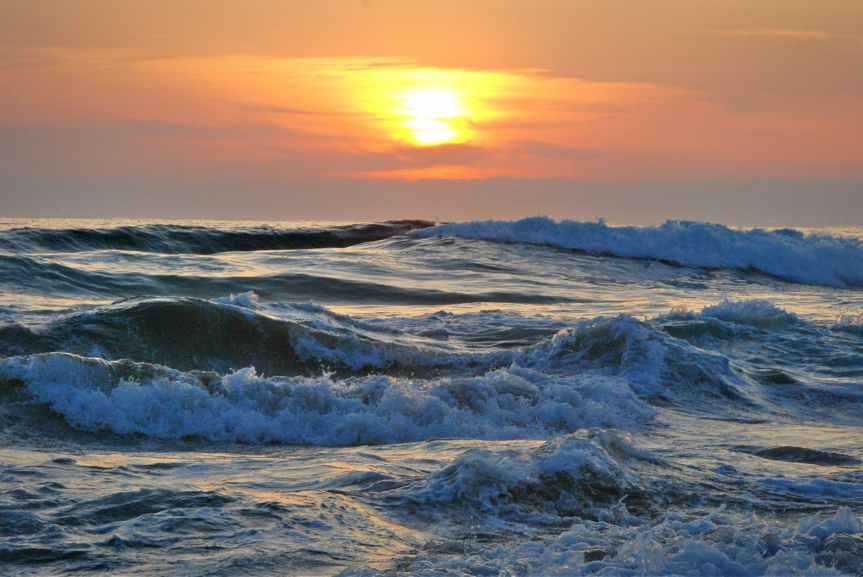
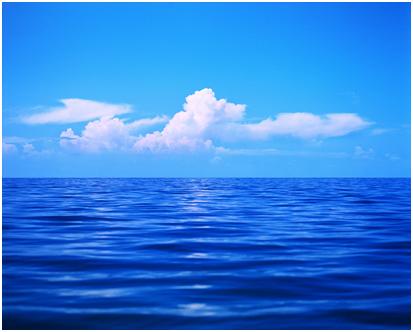
A wave begins as the wind ruffles the surface of the ocean. When the ocean is calm and glass like, even the mildest breeze forms ripples, the smallest type of wave. Ripples provide surfaces for wind to act on, which produces larger waves. Stronger winds push the nascent waves into steeper and higher hills of water. The size a wave reaches depends on the speed and strength of the wind. The length of time it takes for the wave to form, and the distance over which it blows in the open ocean is known as the fetch. A long fetch accompanied by strong and study winds can produce enormous waves. The highest point of a wave is called the crest and the lowest point the trough. The distance from one crest to another is known as the wavelength.

Although water appears to move forward with the waves, for the most part water particles travel in circles within the waves. The visible movement is the wave’s form and energy moving through the water, courtesy of energy provided by the wind. Wave speed also varies; on average waves travel about 20 to 50 Mph. Ocean waves vary greatly in height from crest to trough, averaging 5 to 10 feet. Storm waves may tower 50 to 70 feet or more. The biggest wave that was ever recorded by humans was in Lituya bay on July 9th, 1958. Lituya bay sits on the southeast side of Alaska. A massive earthquake during the time would trigger a mega tsunami and the tallest tsunami in modern times. As a wave enters shallow water and nears the shore, it’s up and down movement is disrupted and it slows down. The crest grows higher and be gins to surge ahead of  the rest of the wave, eventually toppling over and breaking apart. The energy released by a breaking wave can be explosive. Breakers can wear down rocky coast and also build up sandy beaches.
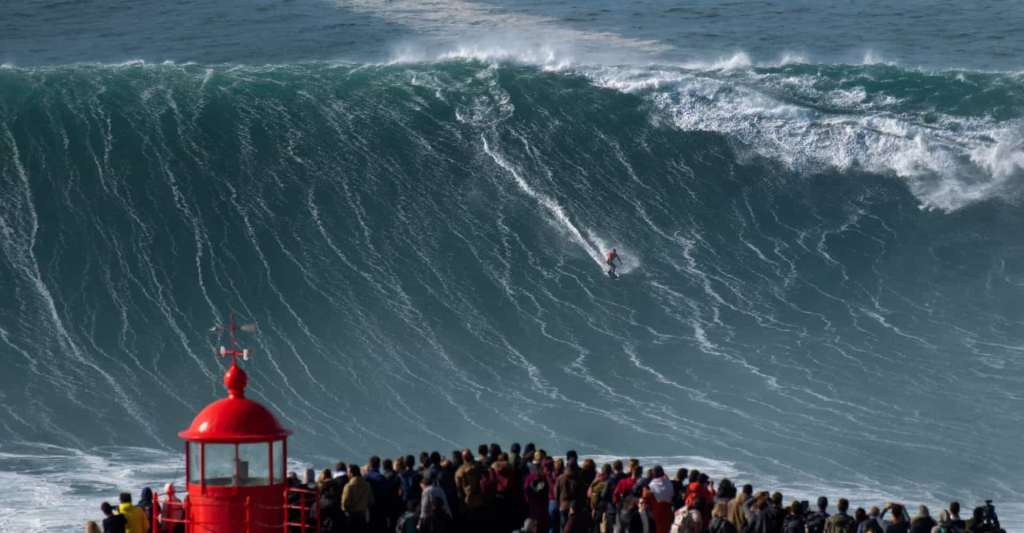
At Nazare ,the Brazilian Rodrigo Koxa holds the record for the biggest wave ever surfed (80ft).

Why does a tide occur?

Tides are the regular daily rise and fall of ocean waters. Twice each day in most locations, water rises up over the shore until it reaches its highest level, or high tide. In between, the water recedes from the shore until it reaches its lowest level, or low tide. Tides respond to the gravitational pull of the moon and sun. Gravitational pull has little effect on the solid and inflexible land, but the fluid oceans react strongly. Because the moon is closer, its pull is greater, making it the dominant force in tide formation.

Gravitational pull is greatest on the side of earth facing the moon and weakest on the side opposite to the moon. Nonetheless, the difference in these forces, in combination with earth’s rotation and other factors, allows the oceans to bulge outward on each side, creating high tides. The sides of earth that are not in alignment with the moon experience low tides at this time. Tides follow different patterns, depending on the shape of the seacoast and the ocean floor.  In Nova Scotia, water at high tide can rise more than 50 feet higher than the low tide level. They tend to roll in gently on wide, open beaches in confined spaces, such as a narrow inlet or bay, the water may rise to very high levels at high tide.
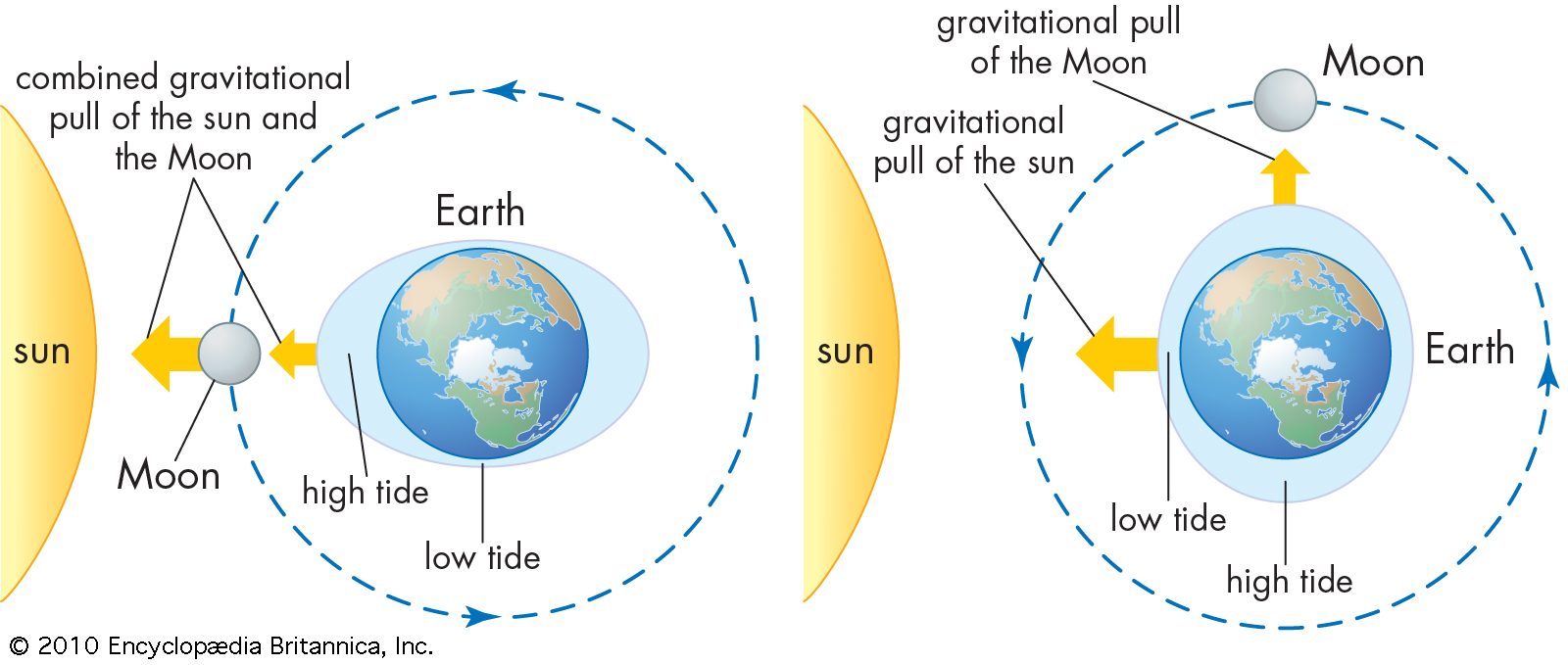
There are typically two spring tides and two narrow tides each month. Spring tide of great range than the mean range, the water level rises and falls to the greatest extend from the mean tide level. Spring tides occur about every two weeks, when the moon is full or new. Tides are at their maximum when the moon and the sun are in the same place as the earth. In a semi-diurnal cycle the high and low tides occur around 6 hours and 12.5 minutes apart. The same tidal forces that cause tides in the oceans affect the solid earth causing it to change shape by a few inches.
Knowing the Atlantic

Continuing from the last article on Pacific, let’s move on to the next ocean- the Atlantic.

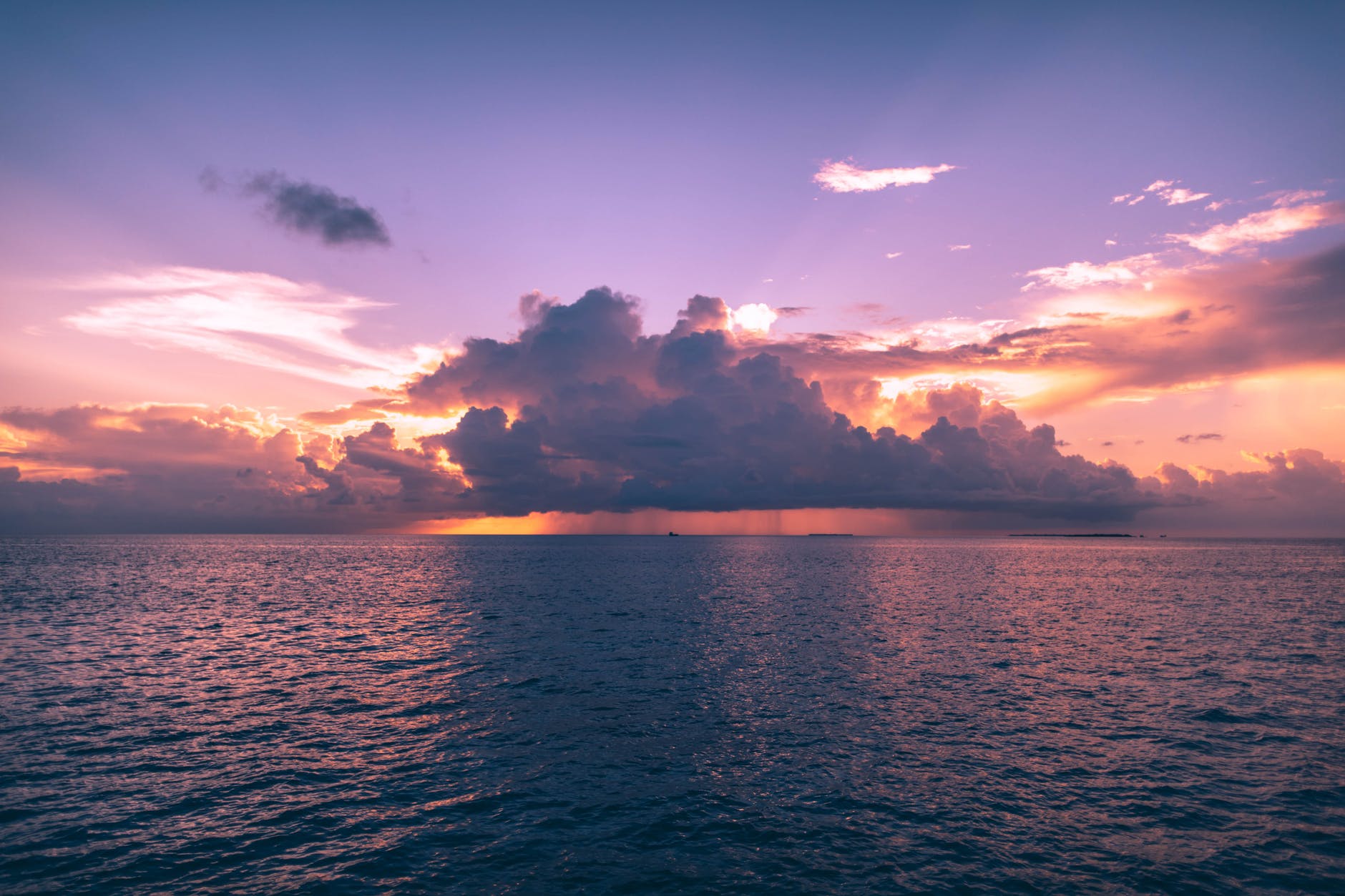
Photo by Roberto Nickson on Pexels.com

Hope you remember the acronym- PAISA

  1. Pacific
  2. Atlantic
  3. Indian
  4. Southern
  5. Antarctic

These oceans are arranged in the decreasing order of their sizes.

The Atlantic is the second largest ocean in the whole world with an area of about 106,460,000 km2(source: Wikipedia). It lies between the Americas in the west and Europe and Africa in the east. The equatorial counter current divides the ocean into two equal parts latitudinally and the Mid Atlantic Ridge divides the ocean into two parts longitudinally(It is how the Mid Oceanic Ridge gets its name). The ocean has very few trenches and it is why the ocean is expanding(at a rate of 2-5 cm/year). Continental shelves are found in the areas of Newfoundland, southernmost South America, and north-eastern Europe. Though continental shelves are, in themselves, wonderful fishing grounds and petroleum and gas reserves, the coast off Newfoundland and Bahia Blanca(off the coast of Southern America- Brazil) are meeting points of warm and cold currents. It makes them even better fishing grounds as the amount of Phytoplankton increases in the ocean. It also leads to the formation of fog in the area that makes navigation difficult.

The Atlantic ocean is the saltiest major ocean with a salinity of 33-37 parts per million. Maximum salinity occurs in the subtropical regions. Though the heavy rainfall makes the salinity of the region around the equator lowest, in general salinity decreases as one moves to the poles. The poles also experience higher salinity though, because of the fresh water being occupied in the form of glaciers, decreasing the overall amount of fresh water. The Northern Atlantic clockwise ocean circle and the counter-clockwise South Atlantic ocean circle are the two gyres in the ocean. The flow of ocean currents in the northern hemisphere form Sargasso sea(the world’s only sea without any continental coast). The sea is surrounded by Gulf Stream, North Atlantic drift (and by extension the Canaries Current) and North Equatorial currents. Earthquakes and a few active volcanoes are found along the Mid Atlantic Ridge. The temperature decreases as we move towards the poles (generally) but is influenced by warm ocean currents in some places. Eg. The Norwegian sea ports are functional throughout the whole year as the ocean doesn’t freeze (the warm ocean current – The North Atlantic drift).

This is all about the Atlantic Ocean. I have included all that I label off as important for our general knowledge. But do let me know in the comments if I missed something. Next in the series, as you can all guess, is our Indian ocean-the only ocean to be named after a country.

Global warming- The ever increasing threat

Photo by Brent Olson on Pexels.com

Global warming yet again comes to news as it has been for the past soo many years and there’s gonna be nothing we are going to do about it once again. Even then, as a moral duty, I feel this compelling desire to inform all of my fellow malefactors of the supplementary and thoroughly under-appreciated results of our activities.

Let’s bestow upon them our much needed, though short term, attention. Today, I read on the newspaper about how the Ladakh glaciers are retreating due to global warming and decreased winter precipitation and that the Atlantic Meridional Overturning Circulation (AMOC)- a prominent warm ocean current belt particularly important for Europe and by extension, the whole earth has weakened over the centuries and reached a tipping point.

Lets start with the issue of the Ladakh Glacier. “The Pensilungpa Glacier located in Ladakh’s Zanskar Valley is retreating due to an increase in temperature and a decrease in precipitation during winters”, a recent study conducted by a team of scientists from the Wadia Institute of Himalayan Geology(Dehradun) revealed. Now with the increasing temperatures and retreating glaciers, it might be very well possible for the current snowfall in those areas to be replaced with rainfall: the snowfall that is responsible for balancing temperature of the lower altitude zones. It is now very much a possibility that the summer and winter patterns of surrounding regions are very much likely to be changed. We might very well be having winter rains real soon people, and floods.

And now, lets move towards the AMOC- The Atlantic Meridional Overturning Circulation-a result of difference in the water’s density(caused due to temperature and salinity difference). Well, that plus the combined effort of continental boundaries and Coriolis force(due to gravity). A large system of ocean currents, it is quite prominent in the Atlantic ocean. It is quite easily recognizable with the northward flow of warm, salty(salt dissolving capability increases with temperature. In colder regions, after being provided a sufficient time to cool off, these waters descend as denser and cold waters) water in the upper layers and a southward flow of colder, deep waters. Global warming is one of the main reasons of the slowing down of this current, contributing by causing the Arctic circle to warm, Greenland(a prominent ice sheet zone) to melt, rainfall to increase and the flow of fresh water to the Northern sea to intensify(It initially had high salinity due to no fresh water river drainage and less intermixing caused by ocean currents). Though, it is being said the rising temperature of the Indian ocean will keep the current going. The increased precipitation in the Indian ocean will draw winds from other parts of the world, lowering the amount of rainfall in the Atlantic ocean. It will increase the salinity of the AMOC current waters and increase the strength of the flow of current.

Seems like the global warming is creating a problem and further creating another one with the purpose of solving the first one and somehow completely increasing both the problems together. Wait, replace the global warming with humans. Quite amusing, how we managed to create a string of issues and now they are finding more and more beads to stitch, and we sit by and watch it all unfold. Well, not all of us, obviously. Most of us don’t even know of these unique products of our everyday activities. But, now that we are at it, we will let them know and invite, or rather force them all to join us in the midst of the unfolding of a future disaster, as we all sit by and do nothing.

I have started this chain, would be later adding more to it. You all share it. After all, the more the merrier. Right?

Knowing the Pacific

Photo by Daria Shevtsova on Pexels.com

Pacific ocean is the largest ocean in the whole world, covering 32 % of the Earth’s total surface area and about 46% of the Earth’s water. It also has the largest number of coral species. It stretches to the Bering Sea in the north and the Southern ocean to the South, in the west are the continents of Australia and Asia and on the east the Americas. The world’s deepest point, The Challenger deep in the Mariana Trench (eastern boundary of the Filipine tectonic plate), reaching a depth of 35,850 feet is located in the Pacific ocean. It also has the southern hemisphere’s deepest point- The Horizon deep in the Tonga Trench at a depth of 35,509 feet. It also has many marginal seas-

  1. South China sea
  2. East China sea
  3. Sea of Japan
  4. Sea of Okhotsk
  5. The Philippine sea
  6. Coral sea
  7. Solomon sea
  8. Tasman sea
  9. Yellow sea

The word Pacific means ‘Peaceful’ though the ocean is anything but peaceful. The Pacific ocean has the ‘Pacific Ring of fire’, the largest ring of active volcanoes and earthquake zone in the world. The Japanese Islands and The Philippines islands are a result of volcanic activity. The Pacific ocean has the largest number of islands (around 25,000) including the island groups of Micronesia, Melanesia and Polynesia (he largest- stretching from Hawaii to New Zealand) and the world’s largest archipalego- The Indonesian islands, an island groups of around 17,500 islands. It also has the Great Barrier Reef, the largest coral reef(2,300 km) along the eastern coast of Australia and The Coral Sea islands, atolls present to the west of the barrier reef. The temperature decreases longitudinally going towards the poles, though the temperate region has the highest temperature. There also exist latitudinal variations depending upon the oceanic currents. Salinity also varies latitudinally as well as longitudinally with temperature. High temperature zone have high salinity. Addition of fresh water lowers the salinity. The ocean currents also lead to intermixing of currents thereby lowering the salinity. The highest surface salinity occurs in the southeastern zone and the lowest salinity occurs in the extreme northern zone of the Pacific.

This is something about the largest and one of the most majestic oceans in the world.

Kindly note: Use the acronym PAISA to remember names of the 5 type of oceans:

  1. Pacific
  2. Atlantic
  3. Indian
  4. Southern/Antarctic
  5. Arctic

Mariana Trench

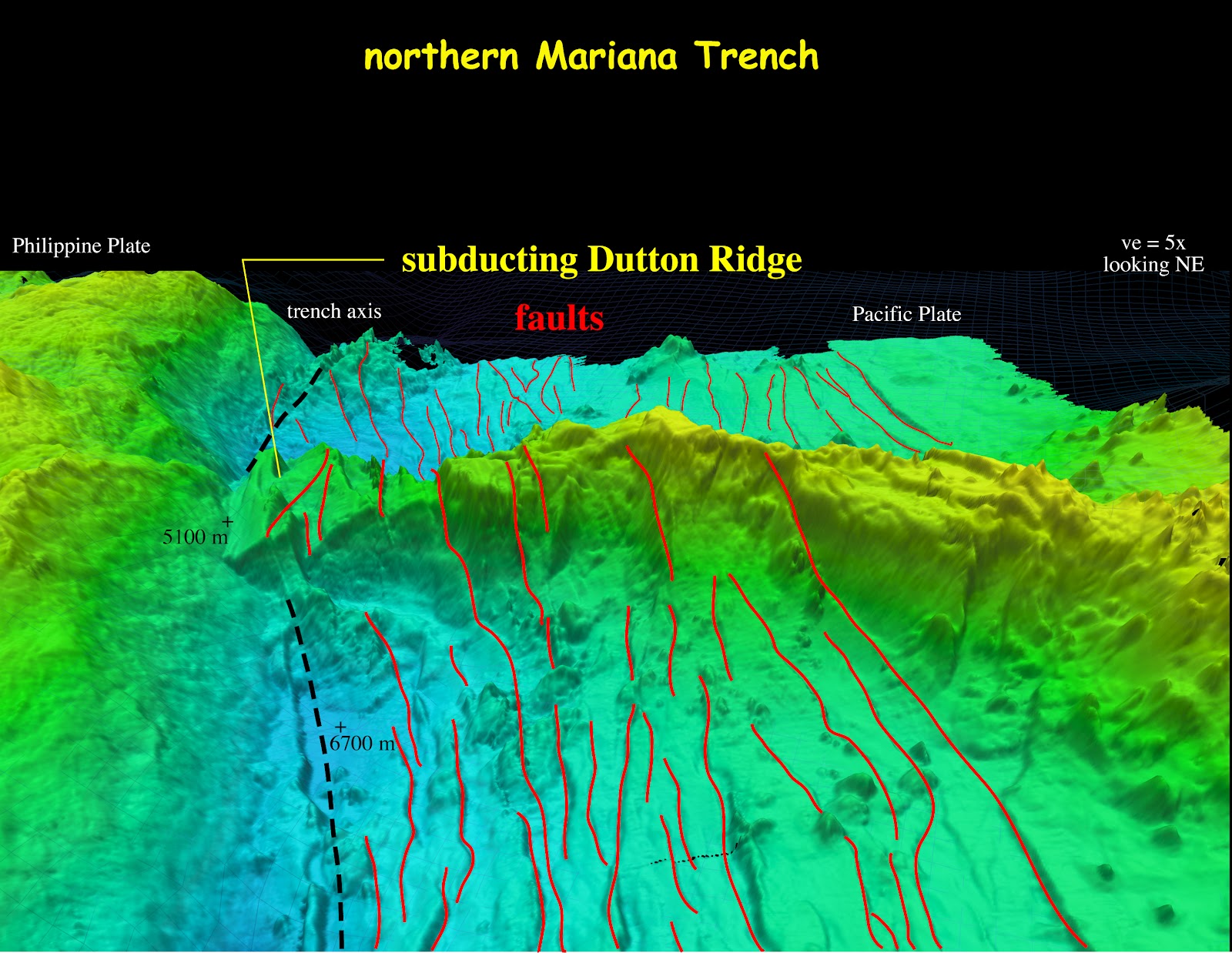
The Mariana Trench is a crescent-shaped trench located in the western Pacific, just east of the Mariana Islands near Guam. The region surrounding the trench is very remarkable and is the cradle for many unique environments. The Mariana Trench contains the deepest points on Earth, bubbling vents of liquid sulfur and carbon dioxide, active mud volcanoes, and marine life adapted to pressures a thousand times greater than sea level. The Mariana Trench is the deepest place you can find in the ocean. Its depth is difficult to measure from the surface, but modern estimates vary by less than 1,000 feet.

Discovery

In 1860, Charles Wyville Thomson, wanted to make a boat trip to conduct oceanographic studies. On December 21, 1872, he sailed on the HMS Challenger, a modified warship for the voyage carrying everything from fishing gear to microscopes. The main objective was to travel the oceans to measure depth, temperature and salinity. On March 23, 1875, while the team was conducting studies near the Mariana Islands, the sea literally swallowed 8 kilometers of a measuring line they were carrying. It was at that moment that the researchers had managed to discover the abyss. In the nineteenth century, it was discovered that there was a place where no one had yet arrived, the deepest place that existed in the ocean, known as the black hole or the Mariana Trench. In 2012, the first expedition was made by James Cameron, who was the first person in charge of continuing studies on the grave.

Characteristics

The main characteristics of the Mariana Trench are as follows:

  • It is considered to be the deepest area in the oceans.
  • It is located in the Pacific Ocean, east of the Mariana Islands.
  • They coincide with a subduction zone, a place where two tectonic plates collide.
  • It is approximately 2,550 kilometers long and 69 kilometers wide.
  • The deepest part of the pit is known as the Challenger Abyss.
  • They have an amount of water equivalent to 1000 times more than the earth has.
  • It lacks illumination.

Location

The Mariana Trench is located in the Pacific Ocean, east of the well-known Mariana Islands. It lies at the bottom of the Pacific Ocean, on the north western side, east and south of the islands. It has 11° 21´ north latitude and 142° 12´de east longitude, near Guam, a place located between the coast of Indonesia and China.

Fauna & Fauna

Image taken by James Cameron’s Odyssey

In 2016, the U.S. National Oceanic and Atmospheric Administration carried out an expedition with the aim of trying to gather information on the area. Some of the creatures they found are:

  • Bellota worms: it is a mollusk with a snail shell. It is considered as a new species, although there is no idea about its geology, habitat or origin.
  • Elf Shark: Its color is pink, and its consistency is very viscous. They are capable of growing several meters.
  • Dumbo Octopus: The most eye-catching thing are their jumped eyes and their furrowed mouth. It can swallow its prey whole.
  • Dragon Fish: Its teeth are large, and it is a hunter by nature. It has no scales and its skin is slippery, very similar to an eel.
  • Eel Shark: Its body is rounded, and its head flattened, it is very similar to a dinosaur. Apparently it has been living for 80 million years. It has 20 rows of teeth and gills in its body.

Challenger’s Abyss

At 10,994 meters deep, it is considered the deepest point in the ocean. Its name was given in 1872. Only one man has managed to reach 10,898 meters in the submarine Deepsea ChallengerJames Cameron. He described the trench as an environment very much like a lunar desert. The only thing he could see were blind worms that had adapted to the situation. In 2013, scientists discovered that the abyss was full of life. onar beams sent to the ocean floor are updated many times per second, and verified by Global Positioning Satellites. These maps clearly indicate the Mariana Trench as the deepest of its kind, and so far the Challenger Deep is its lowest measured point.

The need to save the ocean

To paraphrase a line from Ron Burgundy, the ocean is a big thing. Big enough for scientists to point out that the term “Earth” is a misnomer. Water may be a more accurate name for a world that is nearly 3/4 covered in water, with marine plants contributing a whopping 50 percent or more of the oxygen we breathe. With all of that stated, it’s past time (high tide?) for us to band together to save the resource that has been depleted.

Photo by Kellie Churchman on Pexels.com

The state of the ocean is not good

The bad news is that human activity is wreaking havoc on the environment. The good news is that there are several things we can do to help stop (and even reverse!) those detrimental behaviors, which is why this is a message about hope and empowerment rather than doom and gloom.

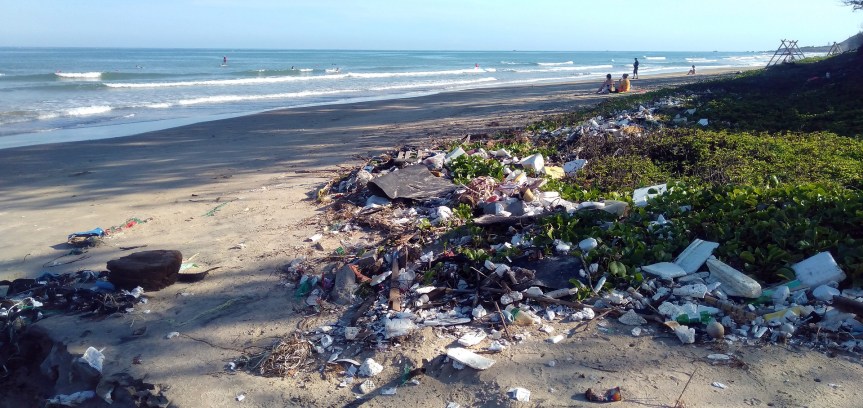
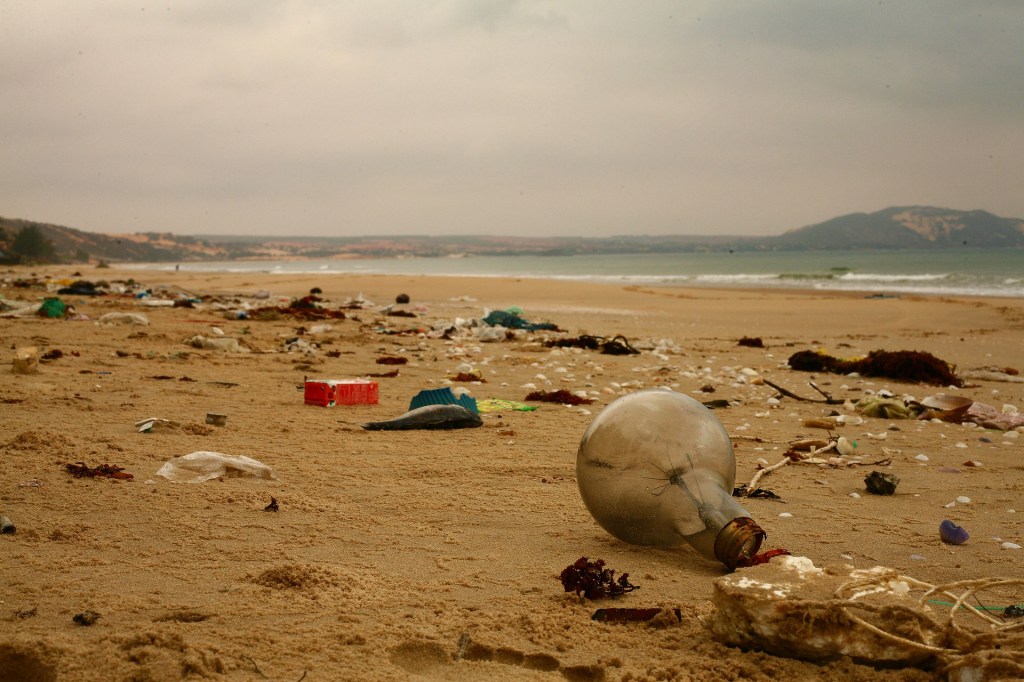
Plastic pollution is destroying the ocean

A non-profit that works to protect the ocean Every year, 17.6 billion pounds of plastic is estimated to escape into the ocean from land-based sources, according to Oceana. Every 60 seconds, a garbage truck full of plastic is dumped into our waterways. The world’s most renowned (and largest) rubbish dump is located in the ocean.

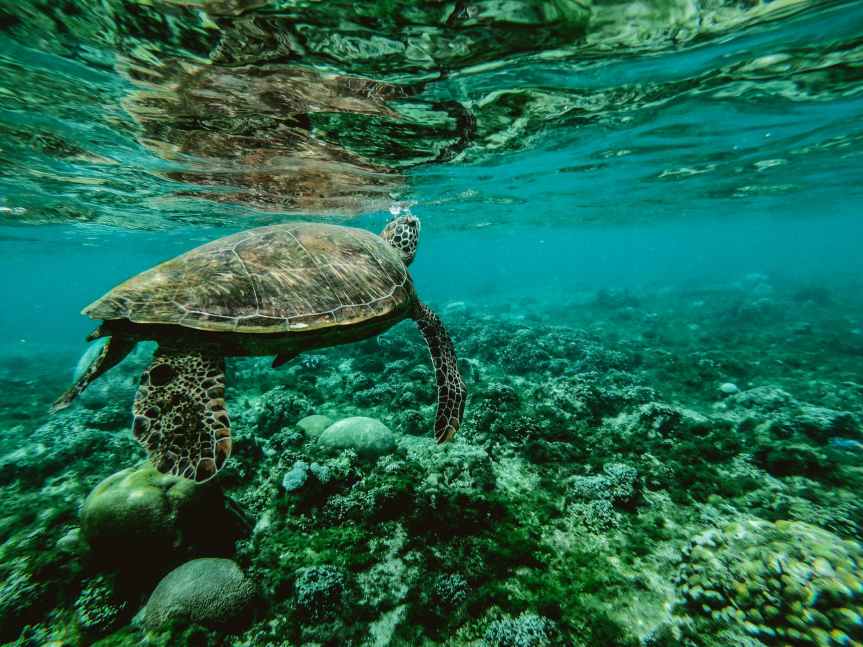
The Great Pacific Garbage Patch covers 1.6 million square kilometres and contains 1.8 trillion bits of plastic in an estimated 80,000 metric tonne landfill. Plastic garbage in the ocean is believed to kill over one million sea animals each year, including sea turtles, sharks, and coral reef (yes, coral reef is an animal!).

Plastics in the ocean will surpass fish in the ocean (!?) by 2050, according to research, and 99 percent of seabirds will have plastics in their GI tract. Plastic pollution is not only destructive to the ocean; there is also evidence that it is harmful to humans.

Acidification in the ocean

Carbon dioxide emissions absorbed by the oceans over decades have changed the underlying chemistry of our ocean, resulting in an increase in acidity. Acidification causes small decreases in shell density in small creatures, which support entire ecosystems despite their small size.

As the world’s seas warm, species are moving in large numbers to new locations, posing new challenges or simply failing to develop as they should, while millions of people rely on fish as their primary source of nutrition. It’s also causing the Great Barrier Reef to perish. Coral reefs require all of the protection we can provide, given the disastrous effects of climate change.

Because it has the potential to cause the most apparent and immediate human misery, sea-level rise may be the most well-known of these concerns. Low-lying areas such as Miami and the South Pacific islands are growing increasingly vulnerable; 10% of the world’s population lives on the low-lying coast.

Meanwhile, deoxygenation, which is most typically caused by algal blooms fed by nutrient-rich fertilizer run-off, is causing enormous dead zones and suffocating marine life.

Overfishing

Fishing techniques that are illegal, uncontrolled, and unreported are common. Humans have already brought the giant grouper, several skates and rays, and a dozen or more other sturgeon species to the brink of extinction through fishing.

Bluefin tuna is one of the fish species whose populations may never recover as a result of unsustainable fishing techniques. Other apex predators, such as sharks, are among the most endangered.

Places like Monterey Bay National Marine Sanctuary have shown how impactful policy changes can be in helping species rebound.

Ocean conservation isn’t just a hobby for those who enjoy the water. You might not be a scuba diver, a fisherman, or a seaside dweller. Perhaps you have a seafood allergy and despise surfers! Even so, chances are you still breathe air and enjoy life when there is less human suffering.

Plants and trees are oxygen-producing powerhouses. But wait till you see what oceanic greens can accomplish! (Hint: it’s not just trees.)  More than half of the oxygen on the earth is produced by marine plants. 

Thoughts famous people have about ocean

Jacques Cousteau: “The sea, once it casts its spell, holds one in its net of wonder forever.”

Beyoncé Knowles: “I’m always happy when I’m surrounded by water, I think I’m a mermaid or I was a mermaid. The ocean makes me feel really small and it makes me put my whole life into perspective… it humbles you and makes you feel almost like you’ve been baptized. I feel born again when I get out of the ocean.”

William Wordsworth: “The ocean is a mighty harmonist.”

John F. Kennedy: “We are tied to the ocean. And when we go back to the sea, whether it is to sail or to watch, we are going back from whence we came.”

Photo by Emiliano Arano on Pexels.com

Ways in which you can help save the ocean

  1. EDUCATE YOURSELF

Step 1: Land and sea are far more intertwined than most people think, and activities taken on land have substantial consequences in the ocean. The good news is that there are a plethora of tools available—Pinterest offers a plethora of ocean-saving categorieS.

2. Opt for Ocean and Earth-Friendly Products

Oceana’s is to demand plastic-free alternatives to items such as plastic water bottles, straws, plastic cutlery, coffee cups, bags, balloons, plastic-wrapped produce, and take-out food containers.

References

http://www.growensemble.com

http://www.wikipedia.com

Microplastic-A new global concern

Pollution from plastics have always ranked in the top for being a global problem. Now microplastic pollution is joining the club. Microplastics, as the name suggests are the minute particles of plastic. The size of a particle is less than 5mm. They occur from the larger plastics which degrades into small pieces as expected, they are also added as exfoliants to beauty and health products. Microbeads which are intentionally designed to be small can be added to this list of sources. Microplastic fragments are also found in single use plastic bottles and everyday usage plastic products like containers also one of the sources. As the macroplastic waste is omnipresent but prominent in marine bodies, microplastic also is a major pollutant of the oceans and large lakes. They get accumulated in soil as well.

Microplastics is a quite new to the pollutants list. But they are a serious threat as they can not be removed by water filtration systems. Aquatic life and birds will feed this microplastics mistaking them as food. There is no complete information available about the pollution because of less research in the area. But slowly the research is increasing in the field.

hazards of microplastics

Microplastics are made of polypropylene, polystyrene and polyethylene. UV light fragments large plastic litter into micro and nanoparticles of plastic. As mentioned above, the capacity of the to microplastics escape the filtration process poses a serious threat. We all know plastic can not be digested. If these microparticles enter the body they may get accumulated. Because of their small size they might posses the capacity to pass through cells and tissues. Their segregation in aquatic animals will be a threat indirectly to humans because we feed on them. It is estimated that humans consume 11,000 microplastic particles per annum.

If these microplastics enter cells, they may cause irritation as they are foreign bodies. They are chemically toxic to the body as well. But it is the biggest threat to marine animals. They affect the reproducing capacity of the marine animals. The number of larvae were less and size of the offspring was small. They got physical inabilities, problems in swimming. They block gastrointestinal tracts of the animals.

some solutions to reduce microplastic pollution

The main solution is the 3R, reuse reduce and recycle. Any pollution related to plastic can be reduced if we reduce the usage of the plastic. Mainly the single usage plastics should be reduced. Products containing microbeads should be avoided. people should be aware about the problems and should support bans on plastic. Conducting beach cleanups will reduce the amount of plastic that reaches the ocean. Ocean cleanup projects will also do maximum help. Finding the major sources of the problem and starting to solve the problem at its origin. People should try to have zero waste life, at least mini waste life so that there will be less contributions towards pollution. Taking the help of technologies to check the pollution and developing perfect filter systems which will filter off 100% microplastics.

Ocean acidification

Ocean acidification is a serious environmental problem, it is equivalent to the problem of climate change or much bigger. As there are many changes happening around in the environment, some of which we can hardly see. Ocean acidification is related to the water bodies and the aquatic life as a result, the ultimate impact is faced by the aquatic creatures and indirectly by the humans.
Ocean acidification is associated with natural process, the carbon dioxide present in atmosphere is absorbed by the ocean bodies. It is a natural process that is actually beneficial for the environment as the extra amount of carbon dioxide gases present in the environment are absorbed this leads to reduction in the temperature. But the problem started when the absorption amount increased over the years and it keeps on increasing by every passing year. This might seem fine initially but, it is a matter of concern for scientists and researchers, just like any other major environmental problem this is not good for aquatic biodiversity.
There are multiple causes of ocean acidification and why ocean acidification can become a big challenge in future –
The raise in atmospheric carbon dioxide, due to excessive pollution, emission of harmful gases and other activities has increased the absorption level in the oceans as well.
Fossil fuels is another top reason for ocean acidification as the burning of fossil fuels like coal, petroleum produces carbon dioxide gas, which indirectly contributes to ocean acidification.
The waste that is disposed off in the ocean contaminates the water bodies and increases the level of acidity of water. This waste includes agricultural waste, industrial waste etc.
These are the main causes of ocean acidification, they directly or indirectly become hazardous sooner or later. The changes occurring in the ocean is not visible to us but, it can not be ignored in long run.
The process of acidification increases the PH level of water, this acidity can actually be determined by tests. The chemical composition of water is destroyed slowly and gradually. The effect can be seen on the aquatic life and aquatic organism, the corals can detoriate at a higher rate, the shells of animals can not form and the tiny organism which plays a significant role in the aquatic world can not adapt to this acidic level and thus can not survive. Basically, different aspects are targeted, which can create hurdles in the balance of aqua diversity.
This issue is widely discussed in international conferences and some countries have already started monitoring the condition. They are further working to take steps to answer the problem many people are dependent on ocean a fisherman earns his livelihood, a sailor sails in ocean and if not, profession wise; but we all are drinking water which come from these water bodies only. If not today then in future we will be drinking this acidic water. The fact that with development came higher amount of waste generation, pollution, deforestation, climate change, global warming, and new problems. If all the problems are not resolved responsibly at global level the earth and its people are going to suffer a lot in near future. We can already experience the impact in the form of frequent droughts, tsunami, earthquake, landslide, forest fires etc.

THE World under the OCEAN

Hellooo guys!!!

Today I am writing about a very interesting topic

We the humans are creatures of land, but there is totally a different world under the ocean.

Its as if the colours in the whole world can be seen under the ocean not only colours the different

aquatic beings are of different kind, they have their own designs patterns.

Its like a whole new ecosystem out there.

once you dive into this beautiful and colourful world under the ocean you can see a whole new unique world.

yes guys I am emphasising on the word “world” cause they have their own environment, their own living beings

I would like to tell you all about some of the intEresting facts and terminoligies i have heard about.

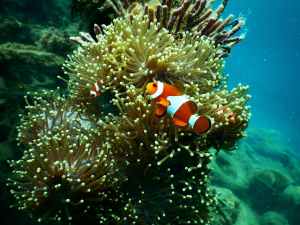
  • 1.CLOWN FISHES :- I am sure you all know about the famous fish nemo but do you guys know that its real name is clown fish. These kind of fishes are found in warm waters such as Red sea, pacific ocean. They are found in shallow waters.

Photo by Tom Fisk on Pexels.com
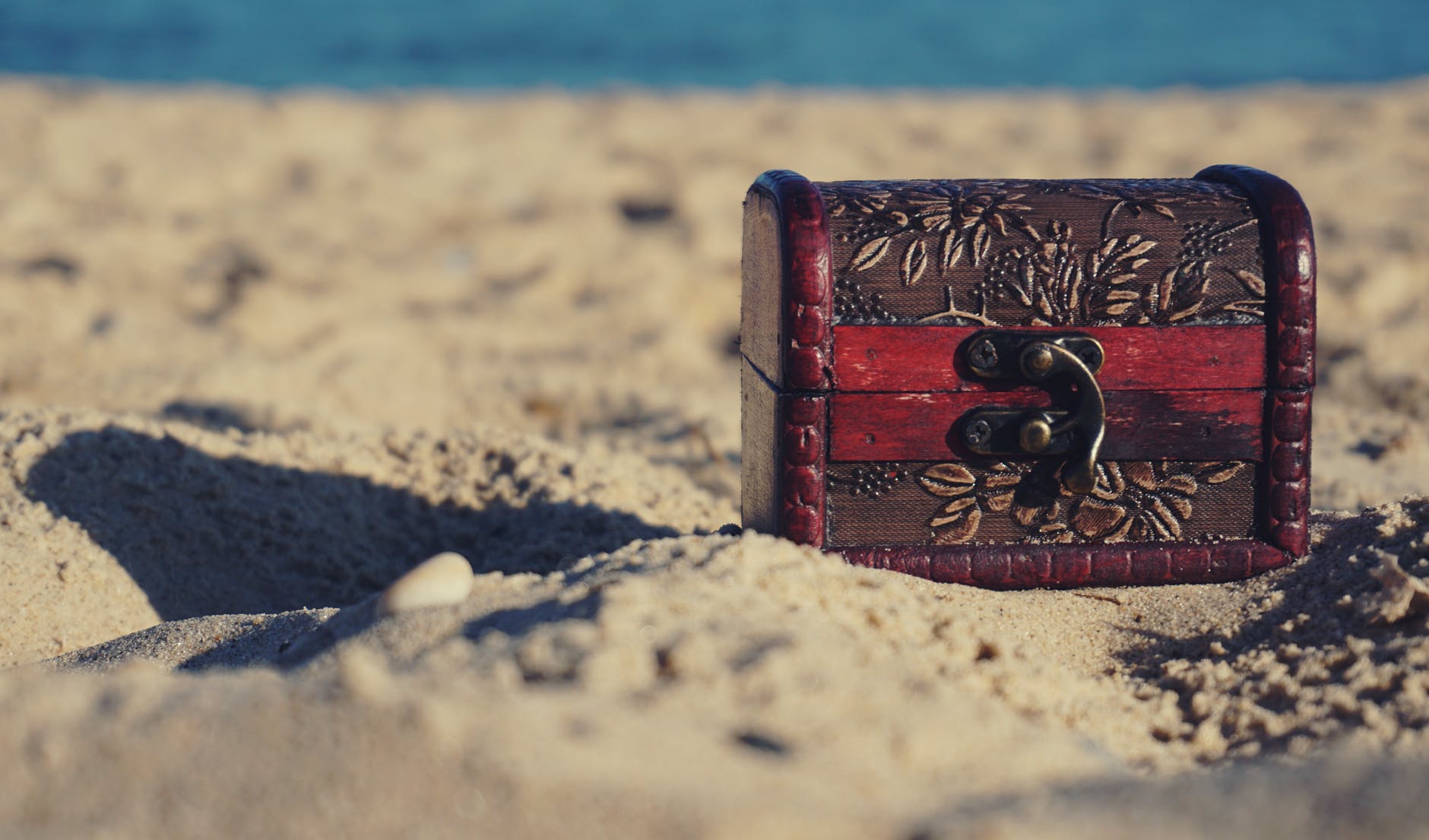
  • 2. TREASURES: I don’t know if the pirates really hunt for treasures or not but deep under the ocean the treasures really exist. you may get the doubt about how the treasures are under the sea these are caused to the shipwrecks.
  • Before you go on a journey to find the treasures please do not forget the treasure maps.
Photo by Suzy Hazelwood on Pexels.com
  • 3.Whale falls: THE WHALES live under the ocean but do you guys know there is term associated with the whales that is the whale falls
  • A whale fall occurs when the carcass of a whale has fallen onto the ocean floor at a depth greater than 1,000 m, in the bathyal or abyssal zones. On the sea floor, these carcasses can create complex localized ecosystems that supply sustenance to deep-sea organisms for decades.

  • 4. Blind fishes: The Mexican blind cavefish (Astyanax mexicanus), which no longer has eyes. Now scientists may have solved the riddle of why the fish lost their eyes in the dark.They live deep in the ocean.

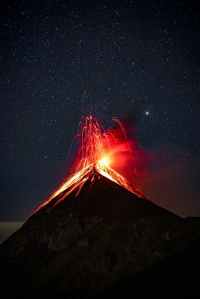
  • 5.Volcanic eruptions: we all know about the volcanoes and volcanic eruptions on land , but do you know most of the volcanic eruptions take place under the sea .
  • The active volcanoes are less than dormant volcanoes under the ocean but still they ratio of volcanic eruptions in the ocean is more compared to that on land.
Photo by Clive Kim on Pexels.com
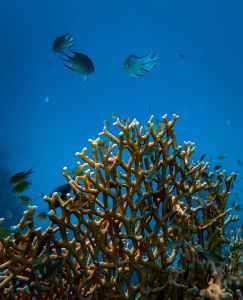
  • 6. As I mentioned earlier I call it as the marine world , They have their own environment, they even have lakes , waterfalls, forests, corals.
  • Even aquatic animals get attracted to them and even sometimes new species form there due to the environment.
Photo by Francesco Ungaro on Pexels.com

The above facts are just a sneak peak into the

” world under the OCEAN”

Thankyou^^