Indian men and women Hockey teams reaches semi finals, creates history

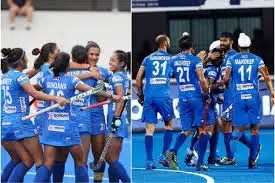
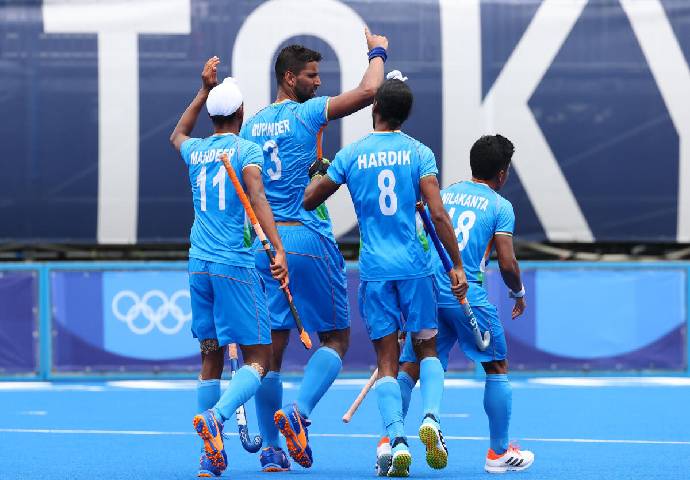
Both Indian men and women Hockey teams are having a wonderful Olympics so far as the both teams has reached semifinals . Yesterday Indian men’s team defeated great Britain by 3-1 and will play semifinal match on a Wednesday 7:00 AM (IST). they have reached semifinals after 49 years. On the other hand , Indian women team stunned Olympic favorites today and beat Australia 1-0.

After these two emphatic wins , the medal hopes are very high from our hockey team. Indian men were very confident against great Britain . India scored 3 field goals in the match, first goal was scored by Dilpreet Singh(7 th minute), 2nd goal from (16th minute) and Hardik Singh’s goal was the final goal from India. Great Britain tried there best but India managed to keep them away from comeback. only one goal was scored by great Britain and that was from Sam Ward.(source of the information 😦 https://timesofindia.indiatimes.com/sports/tokyo-olympics/indiatokyo/india-beat-great-britain-3-1-to-enter-semis-of-olympics-mens-hockey-after-49-years/articleshow/84947034.cms)

But the results which was totally unexpected was from today’s women team match, where our women hockey team defeated world champion Australian team. Indian women team was not totally in good touch from starting . They were defeated badly in there first few matches badly and no one in country would have believed at that time, that this team will be in semi finals. They defeated Ireland and South Africa in group matches from where they found a momentum. that is some unbelievable achievement from women’s team. and the way they played today and handled the pressure shows what an remarkable team it is.

Talking about today’ s match, Gurjit Kaur scored the lone goal of the match in 22nd minute through penalty corner. after that both teams tried to score goal but India did very well and Australia was not able to score a goal .Australia got many penalty corners but India did very well to counter that.

Indian men team was in very good touch from starting, they defeated New Zealand in there first match of Tokyo Olympic by 3-2, but then came the match against Australia, where they were blown away with a heavy 1-7 defeat. but the thing to appreciate was India’s comeback. After that match ,they didn’t lose any match and won matches against Argentina, Spain and Japan. This is not an easy thing to do because these type of loses like that against Australia can easily demotivate and and affect your confidence for upcoming matches.

Indian hockey has seen different phases from winning 8 gold medals till 1980 to not able to qualify in Beijing Olympics in 2008.In Rio Olympics 2016, India managed to enter quarter final but was defeated in next round. For a country like India who gave many great hockey players like Major Dhyan Chand , it is very difficult to believe that we were not not able to win an Olympic medal since 1980. But this Indian hockey team has that capability to win a medal for country and they have shown that again and again. If Indian hockey team(either men or women) manages to win a medal in hockey that will be a very huge boost to Hockey in India. it will revive again, India ‘s golden days in hockey will be back.

Mirabai Chanu:India's Sensation


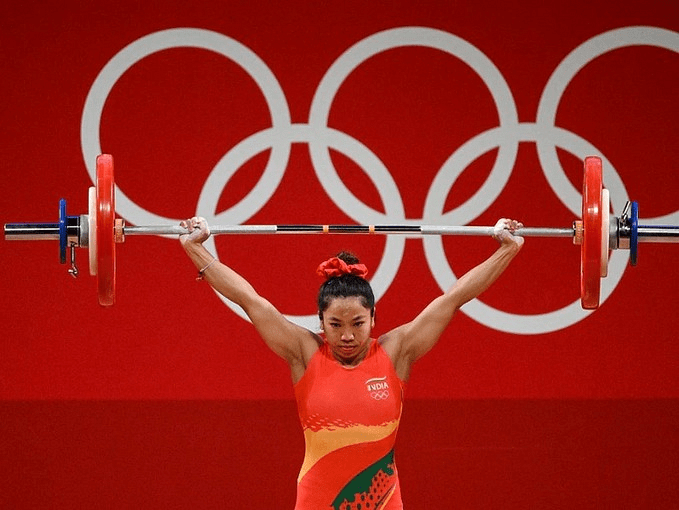
Chanu Saikhom Mirabai is a name that is on every Indian’s lips these days. The weightlifting star has made India proud at the Tokyo Olympics 2020

Let’s have glimpse of her life and achievement 

Born on 8 August 1994 in Nongpok Kakching, near Imphal, Manipur from early life she was interested in weightlifting as she can handle heavy weight very easily as her brother struggled with the same weight, Her family supported her and her passion

CAREER AS HEAVYWEIGHT LIFTER

Chanu Mirabai’s career began with the Glasgow Commonwealth games where she won the silver medal in the 48 kg category. She also qualified for the Rio Olympics but could not finish with any successful lifts. 

In 2017 she won the Gold Medal in the women’s category weightlifting in World Weightlifting Championships at Anaheim, CA, USA. She created a record by lifting the 194 kg weight in total and 109 kg clean and jerk. 

She also won the first gold medal for India in the 2018 Commonwealth Games. 

In the 2019 World Weightlifting Championships, Mirabai lifted a total of 201kgs but finished 4th. 

In 2021, she won the bronze medal at the 2020 Asian Weightlifting Championships in Tashkent 

At 2020 Summer Olympics in Tokyo Chanu won a silver medal with a total lift of 202 kg in the 49 kg section. 


AWARDS-

National[edit]

Other[edit]

  • ₹20 lakh (US$28,000) from the Government of Manipur for the gold medal in the 2017 World Weightlifting Championships.[27]
  • ₹10 lakh (US$14,000) from the Government of Manipur for qualifying for the 2020 Tokyo Summer Olympics.[28]
  • ₹25 lakh (US$35,000) from the Government of Manipur for participating in the 2020 Tokyo Summer Olympics.[29]

For winning the silver medal at the 2020 Tokyo Summer Olympics


MIRABAI CHANU


MIRABAI CHANU

Saikhom Mirabai Chanu was born on 8th August 1994. She was born in Nongpok, Manipur. She won the silver medal at 2020 Olymics in the women’s 49kg. Mirabai had won several medals under Common wealth games. 

She was qualified for the 2016 Rio Olympics, unfortunately she was able to finish it. However, her first three attempts ended in failure. In 2017, she won Gold in 48 kg women category which was held at the US. Chanu make a breakthrough  by winning Gold for India in 2018 Common Wealth games. In 2019, She lifted a 201 kgs which created a new record under 49 kgs category.

In 2020, she won Gold in 49kg category under 2020 Senior national weightlifting Championships. In 2021, Chanu became the only woman weight lifter to win Second position on 49kg category.

CASH PRIZES

Manipur Chief Minister N. Biren Singh announced an award of Rs. 1 Croce

Indian Railway Minister Ashwini Vaishnaw announced an award of Rs. 2 Croce along with the promotion.

MIRABI OLYMPICS

MirabaiChanu’s  won the decoration for India within the 2014 metropolis Commonwealth Games. This was the primary time individuals detected MirabaiChanu’s name for the primary time. The special issue is that the gold of this class conjointly came into India’s account. She defeated jock Kunjrani within the 2016 city Olympic Games qualifying match to secure her place at the city Olympic Games. 

This made special for her as she thought of jock Kunjrani as her leader.However, she couldn’t do a lot within the city Olympic Games and had to face defeat altogether her 3 clean and jerk tries. Thanks to this he conjointly Janus-faced several criticisms.

 Mirabai has not been ready to do something special within the city Olympiad, she has brought laurels to the country by winning the trophy within the forty eight kilo class within the 2017 World bodybuilding Championships. 

She won the trophy within the 2018 Commonwealth Games. She was awarded Rs twenty hundred chief Ministers of Manipur. Together with her performance, she has invariably brought laurels to Manipur and therefore the country.

INDIA HOPES FOR LAURELS

The largest event of the Games, the Edo Olympic Games can run from twenty three July to eight August. These games were to be commanded within the year 2020 itself, however, thanks to the corona epidemic, the games were deferred until 2021. Allow us to tell you that this point within the Edo Olympic Games, India’s largest team of 126 players goes to participate within the Games. Of these players can participate in sixty nine events of eighteen sports. The team can leave for Edo on seventeen July 2021. India has high hopes of medals from all the players as well as MirabaiChanu.

INDIA HAS WON SEVERAL MEDALS 

28 medals from 1900-2016 (9 Gold, 7 Silver, 12 bronze medals)

A game in which India has won most medals is Hockey. It contributes about 8 Gold, 1 Silver.

THE REAL PRIDE TO INDIA

Our Prime minister Narendra Modi congratulated on her success. Many stars  tweeted and congratulated her. It is really a pride moment for India on winning at Olympics. 

India’s performance in Tokyo Olympics so far

We are in day 5 of Olympics and toady I will discuss about the performances of Indian athletes so far. India had sent 127 athletes in Tokyo Olympics 2021. but performance so far is as usual its not been up to the mark and according to expectations of fans.

India got a perfect start on day 1 of the Tokyo Olympics as weightlifter Mirabhai chanu won Silver medal and created history of become just 2nd women weightlifter to win a medal in Olympics for India after Karnam Malleswari. there were many events but some of them were as:- After winning qualification round easily, Saurabh Chaudhary finished seventh in the 10m air pistol final. In archery, the pair of Deepika Kumari and Pravin Jadhav qualified for the finals but lost the next round from south korean archers. Our Mens hockey team won the first match of Olympics and defeated New Zealand by 3-2.

On day 2, India could not improve their medal tally. However, it was a good day for the Indian rowing team of Arjun Lal and Arvind Singh that were qualified for the semifinals. Shuttler PV Sindhu won her opener in a perfect start to better Rio campaign. Paddler Manika Batra moved to the third round.later, Mary Kom opened her Tokyo 2020 campaign with a round of 32 win in the 51kg category but all o us were shocked by India’s disappointment in shooting as Manu Bhaker, Yashaswini Deswal and Deepak Kumar, Divyansh Panwar failed to qualify for 10m air pistol in their respective categories. senior tennis player Sania Mirza and Ankita Raina were knocked out of the women’s doubles after losing 6-0, 6-7(0), 8-10 to the Kichenok twins of Ukraine. and India’s lone gymnast Pranati Nayak also failed to qualify.

Day 3 also didn’t bought any smile on Indian fans as Indian shooters dissapointed again and the hockey team were hammered by australia 1-7 but badminton star player P V Sindhu, boxing great M C Mary Kom and table tennis star Manika Batra won their respective matches. The 38-year-old Mary Kom, who is already an 2012 Olympic bronze-medallist, prevailed 4-1 against a rival who is 15 years her junior to start her pursuit of a second medal but apart from these 2-3 small success other athletes dissappointed.

on day 4,Team India had a heartbreaking day in Badminton and Shooting on Tuesday. Initially the day was good for India as Indian shooters Manu Bhaker, Saurabh Chaudhary topped their mixed team air pistol qualification Stage 1 but were unable to go ahead after that. The day then continued to worsen for Indian shooting as Divyansh/Elavenil and Anjum/Deepak also failed to make it to rifle final. but it was not enough as Divyansh/Elavenil and Anjum/Deepak also failed to make it to rifle final. Indian men hockey team made a terrific comeback and defeated Spain 3-0 after getting hammered by Australia. Meanwhile, boxer Lovlina Borgohain made indian fans smile was qualified to quarterfinals and is a step away from winning a medal. She will face Nien-Chin Chen of Chinese Taipei in the quarterfinal on Friday (July 30). (Stats source: https://indianexpress.com/article/olympics/tokyo-olympics-2020-day-4-live-updates-7423748/)

Apart from weightlifter Mirabhai chanu, India had really disappointed so far but we will continue to support our athletes and will expect a medal very soon. as many events our still remaining.

Who Holds the Highest Number of Olympic medal??

Olympic is one of the most prestigious game event. To secure even one Olympic is a matter of pride for sports men. Imagine how a athlete would feel , if he/ she have the highest number of Olympic medal. Michael Phelps have the privilege of knowing this feeling, with 28 medals in total.

Michael Fred Phelps born on 30th June 1985 is a former competitive swimmer of America. He holds the maximum number of medals in the history of Olympic games. In Beijing Games he won eight gold medals breaking Mark Spitz’s 1972 record of seven first place finishes at any single Olympic games. At 2004 summer Athens Olympics he won 8 medals — 6 gold and 2 bronze. At 2012 summer Olympics in London , Phelps won four gold medal and 2 silver and at Rio De Janeiro he won 5 gold medals and 1 silver. This made him the most successful athletes of the Games for fourth Olympics in row.

Phelps announced retirement after 2012 Olympics but made a come back in April 2014. In 2016 Olympics he was selected as flag bearer of United States. He announced his second retirement on August 2016 and has never participated ever since then. He is regarded as the greatest swimmer as well as athlete of the time.

Phelps began swimming at the age of 7 because of influence of his sister and to provide him outlet for his energy. He liked swimming since then. Following his retirement in 2016 , he said,”The only reason I got in the water was my mom wanted me to just learn how to swim . My sister and myself fell in love with the sport, and we decided to swim”.

Is Russia Banned From Olympics??

If you are following Tokyo Olympics 2020 closely, you might notice that there is no name of Russia instead you will find acronym ROC ( Russian Olympic Committee) . Even at the inauguration ceremony Russian flag was slightly modified and represented. Why is this so?? Is Russia banned from Olympics?? Here’s what to know—

In December 2019 World Anti Doping Agency (WADA) banned Russia from participating in any international events for four years. It was after the new revelation came up about a doping programme that Russia had been accused of. Many whistleblower and investigator reported that Russia had been running dope programme for many years in order to reach new heights. This investigation was going on for many years and in September 2018 WADA promised to lift the sanction only at the condition that Russia will hand over the data of athletes , so that thorough check could be done on them. Later Russia had been found tempering with the data, which led to the banning of Russia for 4 years.

It all started when in 2014 , 800 m runner of Russia ,Yolia Stepanova and her husband , who was the former employee of Russian Anti Doping Agency revealed that sophisticated doping programmes had been running in sports history of Russia. Two years later , another whistle blower – Grigory Rodchaenkov , a former head of RUSADA revealed the same.

This is the reason why ,though 335 sportsmen from Russia are participating in Olympics this year, they are refrained from using country’s name , flag and even national anthem. These are only the athletes that have been found having no relation with doping programmes. Russia is not only banned from Olympics but also from Fifa World Cup 2022 and Winter Olympics that will be held in 2022.

India’s Record At Summer Olympics.

India holds total of 29 medal in Olympic , 8 of which is secured by India National Field Hockey Team. India has always been dominant in hockey. India first stepped at Olympics games in 1900 which was held in Paris. India then was represented by only athlete Norman Richard who secured two silver medals both in athletics. He was a British Indian and he also became first ever Asian to secure medal at Olympics

After 1900 India participated at Summer Olympics in 1920 and has been participating ever since then. It was due to Sir Dorabji Tata and Governor of Bombay Geaorge Llyod that India had privilege to participate in 1920. They secured 4 athletes who could represent India . In 1923 All India Olympic Committee was formed and ever since then they are responsible for selecting athletes to participate at Olympics and any other games.

KD Jadhav was the first individual to win medal for independent India in 1952. Indian Hockey Team has always been dominating in securing medal, they hold 11 medals — 8 gold, 1 silver and 2 bronze. After hockey , shooting dominates the position, it accounts for 4 medals — 1 gold , 2 silver and 1 bronze

Karman Malleshwar was the first Indian woman to bag a medal in 2000 Sydney Olympics. Saina Nehwal was first Indian women to secure medal in badminton in 2012 summer Olympics. Pugilist Mary Kom became the first Indian woman to win medal at boxing. In 2016 Summer Olympics Sakhshi Malik became the first Indian woman wrestler to win Olympic medal in wrestling. Shuttler PV Sindhu became the first Indian women to win a silver medal in Olympics and also the youngest Indian Olympics medalist.

India has participated in many winter Olympics game, no medals have been secured yet!!

THE REAL STORY OF THE ANCIENT OLYMPIC GAMES

A short history of the winter olympic games | Sutori

The Olympic Games, which originated in ancient Greece as many as 3,000 years ago, were revived in the late 19th century and have become the world’s preeminent sporting competition. From the 8th century B.C. to the 4th century A.D., the Games were held every four years in Olympia, located in the western Peloponnese peninsula, in honor of the god Zeus. The first modern Olympics took place in 1896 in Athens, and featured 280 participants from 12 nations, competing in 43 events. Since 1994, the Summer and Winter Olympic Games have been held separately and have alternated every two years. The 2020 Summer Olympics, delayed one year because of the COVID-19 pandemic, will be held from July 23 to August 8, 2021 in Tokyo, Japan.

The Olympics Begin in Ancient Greece

The first written records of the ancient Olympic Games date to 776 B.C., when a cook named Coroebus won the only event—a 192-meter footrace called the stade (the origin of the modern “stadium”)—to become the first Olympic champion. However, it is generally believed that the Games had been going on for many years by that time. Legend has it that Heracles (the Roman Hercules), son of Zeus and the mortal woman Alcmene, founded the Games, which by the end of the 6th century B.C had become the most famous of all Greek sporting festivals. 

The ancient Olympics were held every four years between August 6 and September 19 during a religious festival honoring Zeus. The Games were named for their location at Olympia, a sacred site located near the western coast of the Peloponnese peninsula in southern Greece. Their influence was so great that ancient historians began to measure time by the four-year increments in between Olympic Games, which were known as Olympiads.

After 13 Olympiads, two more races joined the stade as Olympic events: the diaulos (roughly equal to today’s 400-meter race), and the dolichos (a longer-distance race, possibly comparable to the 1,500-meter or 5,000-meter event). The pentathlon (consisting of five events: a foot race, a long jump, discus and javelin throws and a wrestling match) was introduced in 708 B.C., boxing in 688 B.C. and chariot racing in 680 B.C. In 648 B.C., pankration, a combination of boxing and wrestling with virtually no rules, debuted as an Olympic event. Participation in the ancient Olympic Games was initially limited to freeborn male citizens of Greece; there were no women’s events, and married women were prohibited from attending the competition.

Tokyo Olympic Torch to be powered by hydrogen

Decline and Revival of the Olympic Tradition

After the Roman Empire conquered Greece in the mid-2nd century B.C., the Games continued, but their standards and quality declined. In one notorious example from A.D. 67, the decadent Emperor Nero entered an Olympic chariot race, only to disgrace himself by declaring himself the winner even after he fell off his chariot during the event. In A.D. 393, Emperor Theodosius I, a Christian, called for a ban on all “pagan” festivals, ending the ancient Olympic tradition after nearly 12 centuries.

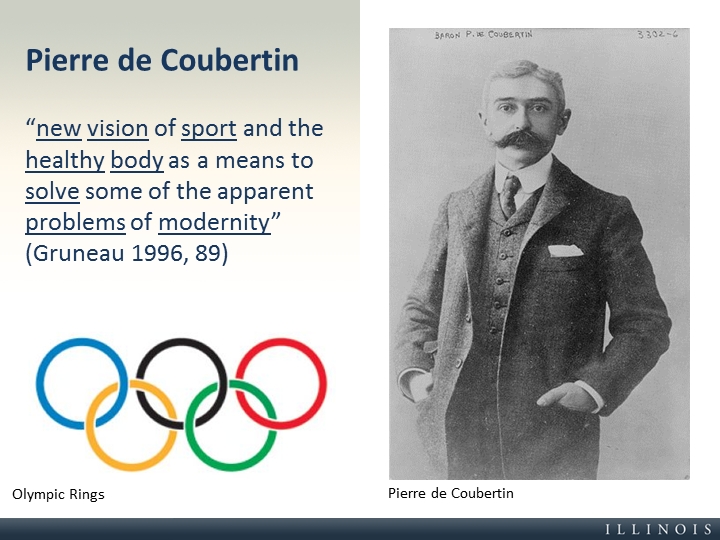
It would be another 1,500 years before the Games would rise again, largely thanks to the efforts of Baron Pierre de Coubertin (1863-1937) of France. Dedicated to the promotion of physical education, the young baron became inspired by the idea of creating a modern Olympic Games after visiting the ancient Olympic site. In November 1892, at a meeting of the Union des Sports Athlétiques in Paris, Coubertin proposed the idea of reviving the Olympics as an international athletic competition held every four years. Two years later, he got the approval he needed to found the International Olympic Committee (IOC), which would become the governing body of the modern Olympic Games.

The Olympics Through the Years

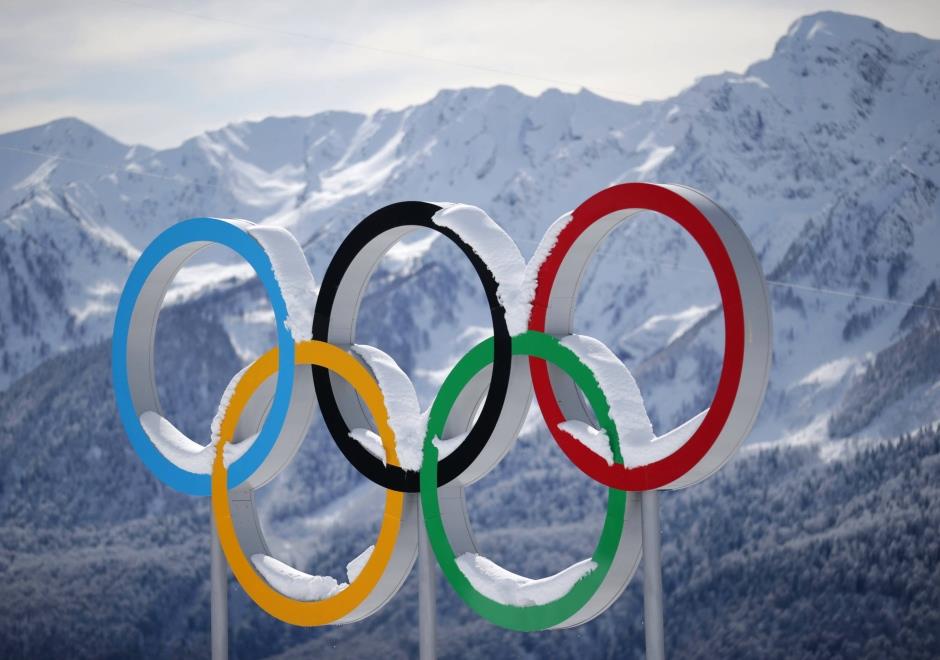
The first modern Olympics were held in Athens, Greece, in 1896. In the opening ceremony, King Georgios I and a crowd of 60,000 spectators welcomed 280 participants from 12 nations (all male), who would compete in 43 events, including track and field, gymnastics, swimming, wrestling, cycling, tennis, weightlifting, shooting and fencing. All subsequent Olympiads have been numbered even when no Games take place (as in 1916, during World War I, and in 1940 and 1944, during World War II). The official symbol of the modern Games is five interlocking colored rings, representing the continents of North and South America, Asia, Africa, Europe and Australia. The Olympic flag, featuring this symbol on a white background, flew for the first time at the Antwerp Games in 1920.

The Olympics truly took off as an international sporting event after 1924, when the VIII Games were held in Paris. Some 3,000 athletes (with more than 100 women among them) from 44 nations competed that year, and for the first time the Games featured a closing ceremony. The Winter Olympics debuted that year, including such events as figure skating, ice hockey, bobsledding and the biathlon. Eighty years later, when the 2004 Summer Olympics returned to Athens for the first time in more than a century, nearly 11,000 athletes from a record 201 countries competed. In a gesture that joined both ancient and modern Olympic traditions, the shotput competition that year was held at the site of the classical Games in Olympia.

First Olympic Gold Medal for Bermuda

Olympics is a leading international sports event held every four years. With more than 200 participant nations.
Each year hundreds of athletes from all over the world gather at the host country and rival each other for first place in different events.
This year Bermuda,  a British island territory in North Atlantic which first participated in the games in the year 1936.
Witnessed a major development as Flora Duffy wins first-ever gold for the country in triathlon.
Who is Flora Duffy?
Duffy, a 33-year-old female athlete who was diagnosed with anemia in 2013. But still, she managed to bounce back. She is also a two-time former world triathlon series champion.
What is Triathlon?
Triathlon is a grueling race made up of a one-mile open water swim, 25 miles of biking, and a run of 4.6 miles.
The 33-year-old finished with a time of 1hour55:36 minutes. Her opponent, Georgia Taylor-Brown ended in second place took a minute more than her.
Third place was secured by the Katie Zaferes of the United States.

Youngest Skateboarder at Olympics.

Skateboarding is one of the four newly added sports in Tokyo Olympic 2020, other three being Surfing, Karate and Sport Climbing. This new sport is dominated by the host ie Japan. Gold medal in skateboarding both in men’s and women’s category is won by Japan.

Japan’s 13-year-old Momiji Nishiya became one of the youngest gold medalist in the history of Olympics. She is only months older than current female record holder Majone Gestring who won gold in diving at the age of 13 years and 267 days, at Berlin Olympics 1936. Nishiya is also now the youngest gold medalist of Japan , it was previously held by Kyoko Iwaski , who at the age of 14 won gold for swimming at Barcelona Olympic 1992.

This 13 year old Champion also participated at Summer X Games in the women’s street event where she scored 90.00 and achieved a silver . She also secured a silver at 2021 street Skateboarding World Championship with a score of 14.17. She is truly a rising star of Japan and has more to come.

Horigame Yuto is equally impressive as Nishiya. He rocked the Olympics by securing gold at skateboarding in its debut. His all tricks scored 9.5 in the final round and made him the winner.

Lovelina Borgohain Saves the Day!!!

Lovelina Borgohain lifted the day of India as whole nation was disappointed by shooters. Lovelina Borgohain defeated German Boxer N. Apetz on women’s welterweight Round of 16 at Tokyo Olympics 2020.She is only one match away to bring a medal home. Here’s the detail to know her—

Lovelina Borgohain was born on 2nd October 1997 Golaghat ,Assam. At first she started as kickboxer , following the example of her twin sisters Licha and Lima. Later she shifted to boxing after seeing an opportunity. Her parents were never financially stable and did a lot of struggle to raise the kids.

When Lovelina participated at trials done by Sport Authority of India, held at her school Barpathar Girls High school, she was noticed by renown coach Padum Boro. That’s how she started her career as Boxer.

She won bronze medal at 2018 AIBA women’s World Boxing Championship and 2019 AIBA Women’s World Boxing Championship. She won her first gold at Open International Boxing held in New Delhi and Silver medal at 2nd Open International Boxing held in Guwahati, India. She was also ranked as 3rd in the 69kg welterweight category.

She became pride of Assam at the age of 23 by qualifying for Olympics and she is the first woman from the state to do so. She is also the 6th person from Assam to receive Arjuna Award. She is second boxer from the state to represent the country after Shiva Thapa.

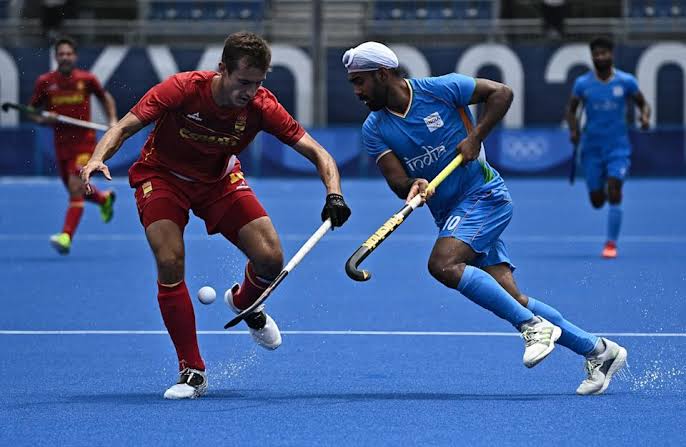
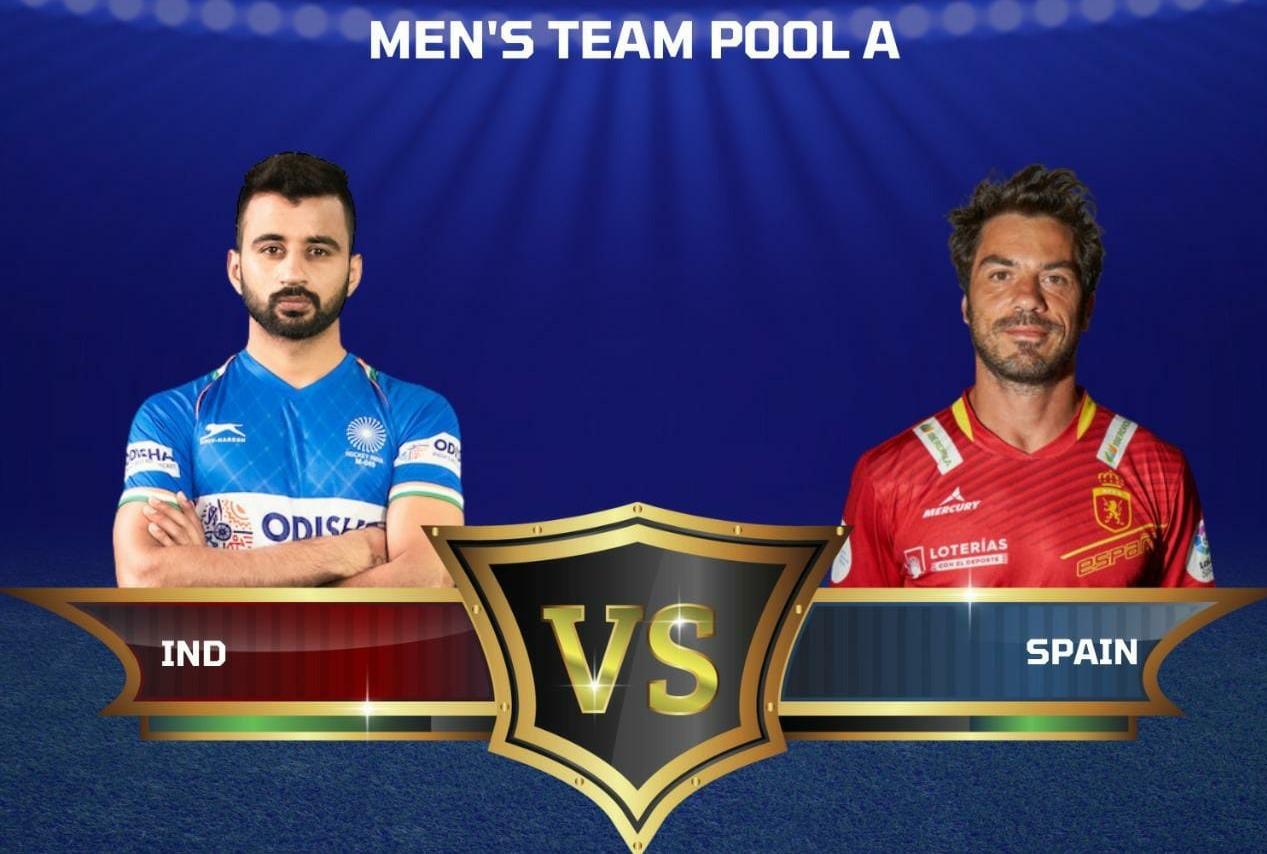
Men in blue beats Spain 3-0,to progress into next round of Tokyo Olympics

Spain in their first match leveled 1-1 against defending champions Argentina. In their next match they lost 4-3 to New Zealand. They conceded 2 goals in the last quarter and eventually lost their lead and match too.

India on the other hand started their campaign with defeating New Zealand 3-2, vice-captain Harmanpreet singh scored 2 goals and Rupinder pal singh scored 1 goal. In their next match, India encountered the number 1 team Australia. Australia defeated India by a margin of 7-1 and it’s one of the worst defeat for the Indian Hockey team in Olympics.

Rupinder pal and simranjeet singh handed Spain a 3-0 defeat

Today morning in OI Hockey Stadium, India and Spain locked horns and India dominated throughout the game and handed Spain a 3-0 defeat.

Simranjeet Singh scored in 14th minute and Rupinder Pal Singh was hero of the match and he striked twice in 15th and 51st minute.

Spain side got many chances but they failed to convert them into goals. With this win India have inched closer to a quarterfinal berth. India have moved to the second spot in Pool A of the Tokyo Olympics. India will face Olympic champion Argentina on Thursday. Spain are yet to register their first win.

Magnificent Mary

Born in the Khangati Village of Manipur,where very girl only wished for marriage, Mary Kom dared to dream. It is her dream that keeps her still going. Nicknamed as Magnificent Mary, Mary Kom was born on 24th November 1982

As a kid Mary Kom was always interested in all kind of sports. She played football , volleyball and athletics. She was very fond of marathon and volleyball. But when Dingko Singh, a fellow Manipuri returned with a gold medal from 1998 Bangkok Asian Games, Mary kom took inspiration from him. She was so enthralled that she decided to learn boxing.

At the age of 15, she left her hometown to study at Sports Academy in the state capital , Imphal. After that she won the state level boxing championship. She hid her love for boxing from her father. Her father never supported her for boxing as he was afraid that she might hurt her face and would not find a man to marry. When her father show the picture of Mary Kom on newspaper in 2000 after her win, he was furious. It was only after 3 years later, that he grew to accept Mary Kom’s love for boxing.

Today, Mary Kom is the only female to win the World Amateur Boxing Championship for six times. She is also the only boxer ( male or female) with eight World Championship. She has many titles in her name and has also been ranked no. 1 female light – flyweight by International Boxing Association. She also represented India in Olympics in 2012 and bagged a bronze home . Her list of achievements goes on and on.

Mary Kom was married in 2005 and has 3 children. She is currently representing India in Tokyo Olympics 2020. Many Indian women after being married leave all the dreams behind, but Mary was never one of those. She is inspiration for many, especially women. She is the definition of “Will Power”.

History of the Olympic Games

Introduction

The Olympic Games are an international sports festival which is held every four years. The goal of these games is to cultivate human beings through sports and contribute to world peace. The Summer and Winter Games are held separately. The last Olympics was held in Brazil. After that, it was supposed to be held in 2020 but because of the pandemic, it got postponed to 2021 and is being held in Japan from 23rd July to 8th August 2021.

History

The Olympic games originated in ancient Greece which would make it as old as 3,000 years. From then it was revived in the late 19th century. The Games were held every four years in Olympia from the 8th century B.C. to the 4th century A.D. Olympia was located in the western Peloponnese peninsula, honouring the god Zeus. They used to be held from August 6 to September 19. It became such an important part of the culture that people start measuring time by the interval between the Olympics, this measurement of time is called the “Olympiad”. These games were an intrinsic part of a religious festival in honour of Zeus and the first recorded champion is known to be Coroebus of Elis, who was a cook. He won the sprint race in 776 BCE.

In 776 BCE, there was just one event, that of a footrace which was known as “stade”. This very word is the origin of the modern English word “stadium”. Other competitions were added over the decades. Wrestling and pentathlon were introduced in 708 BCE, boxing was introduced in 688 BCE.

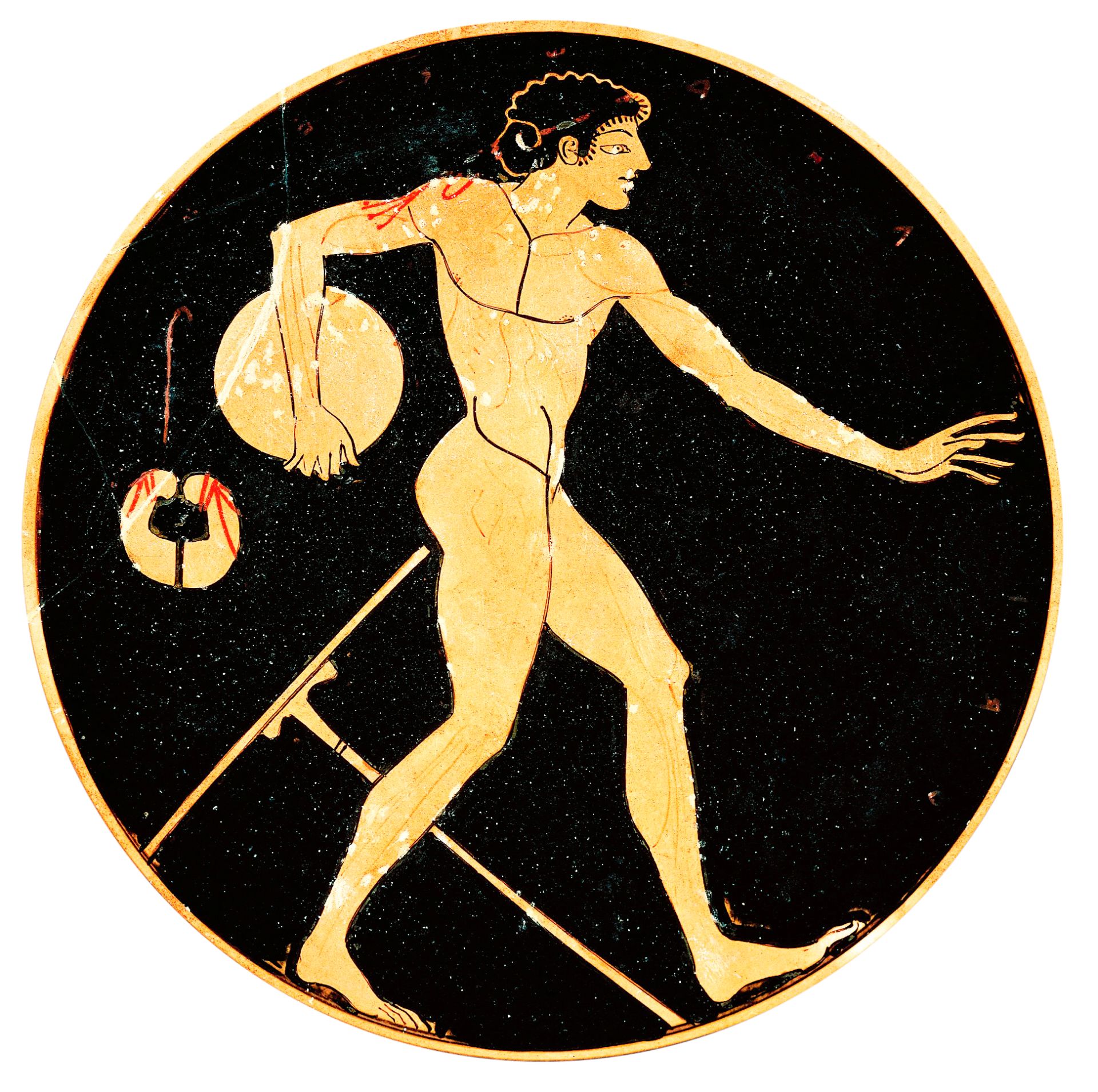
In ancient Olympics, all events were held on one day, from that they later shifted to covering all events in four days. It is also said that the participants followed the practice of participating in the nude. This practice has been tried to explain and the top explanations are that nudity bespoke a rite of passage, nudity was a holdover from the days of hunting and gathering, the Greeks believed that nudity had a special power to ward off any harm, public nudity used to be a costume of the upper class and to be nude in public without erection showed a high level of self-control.

Women in Olympic Games

There were no women participants in the ancient Olympics, although some names of women can be seen on the official list of Olympics victors as the owners of the stables for the chariot entries.

Demise of Olympics

In the middle of the 2nd century BCE, Greece had lost its independence to Rome. The Romans did not think kindly of athletics. They thought that stripping naked and competing in public was a degrading act.

Modern Olympic Movement

The architect of the modern Games was Pierre, baron de Coubertin who was born in Paris. In 1890, he traveled to England where he met Dr. William Penny Brookes who had been trying to revive the ancient Olympic Games for decades. He got the idea from a series of modern Greek Olympiads held in Athens since 1859. Brookes first attempt at British Olympiad in 1866 was successful but the subsequent attempts were unsuccessful. In the 1880s Brookes started arguing to begin an international Olympics in Athens. But Coubertin stole Brookes’ idea and proposed the same in 1892 at a meeting of the Union des Sports Athletiques in Paris. Coubertin faced a lot of problems in the establishment of this, like refusal by the Greek Prime Minister but when a new Prime Minister took place, Coubertin and his colleague were able to convince him and the Games were held in the first week of April 1896.

Conclusion

Coubertin said the spirit of the Olympic Games is “The elevation of the mind and soul, overcoming differences between nationalities and cultures, embracing friendship, a sense of solidarity, and fair play; ultimately leading to the contribution towards world peace and betterment of the world.”

References

Olympics

The modern Olympic Games or Olympics (French: Jeux olympiques) are leading international sporting events featuring summer and winter sports competitions in which thousands of athletes from around the world participate in a variety of competitions. The Olympic Games are considered the world’s foremost sports competition with more than 200 nations participating. The Olympic Games are normally held every four years, alternating between the Summer and Winter Olympics every two years in the four-year period.

Their creation was inspired by the ancient Olympic Games (Ancient Greek: Ὀλυμπιακοί Ἀγῶνες), held in Olympia, Greece from the 8th century BC to the 4th century AD. Baron Pierre de Coubertin founded the International Olympic Committee (IOC) in 1894, leading to the first modern Games in Athens in 1896. The IOC is the governing body of the Olympic Movement , with the Olympic Charter defining its structure and authority.

The evolution of the Olympic Movement during the 20th and 21st centuries has resulted in several changes to the Olympic Games. Some of these adjustments include the creation of the Winter Olympic Games for snow and ice sports, the Paralympic Games for athletes with disabilities, the Youth Olympic Games for athletes aged 14 to 18, the five Continental games (Pan American, African, Asian, European, and Pacific), and the World Games for sports that are not contested in the Olympic Games. The IOC also endorses the Deaflympics and the Special Olympics. The IOC has needed to adapt to a variety of economic, political, and technological advancements. The abuse of amateur rules by the Eastern Bloc nations prompted the IOC to shift away from pure amateurism, as envisioned by Coubertin, to the acceptance of professional athletes participating at the Games. The growing importance of mass media has created the issue of corporate sponsorship and general commercialisation of the Games. World wars led to the cancellation of the 1916, 1940, and 1944 Olympics; large-scale boycotts during the Cold War limited participation in the 1980 and 1984 Olympics; and the 2020 Olympics were postponed until 2021 as a result of the COVID-19 pandemic.

The Olympic Movement consists of international sports federations (IFs), National Olympic Committees (NOCs), and organising committees for each specific Olympic Games. As the decision-making body, the IOC is responsible for choosing the host city for each Games, and organises and funds the Games according to the Olympic Charter. The IOC also determines the Olympic programme, consisting of the sports to be contested at the Games. There are several Olympic rituals and symbols, such as the Olympic flag and torch, as well as the opening and closing ceremonies. Over 14,000 athletes competed at the 2016 Summer Olympics and 2018 Winter Olympics combined, in 35 different sports and over 400 events. The first, second, and third-place finishers in each event receive Olympic medals: gold, silver, and bronze, respectively.

The Games have grown so much that nearly every nation is now represented. This growth has created numerous challenges and controversies, including boycotts, doping, bribery, and a terrorist attack in 1972. Every two years the Olympics and its media exposure provide athletes with the chance to attain national and sometimes international fame. The Games also provide an opportunity for the host city and country to showcase themselves to the world

Ancient Olympics

The Ancient Olympic Games were religious and athletic festivals held every four years at the sanctuary of Zeus in Olympia, Greece. Competition was among representatives of several city-states and kingdoms of Ancient Greece. These Games featured mainly athletic but also combat sports such as wrestling and the pankration, horse and chariot racing events. It has been widely written that during the Games, all conflicts among the participating city-states were postponed until the Games were finished. This cessation of hostilities was known as the Olympic peace or truce.[7] This idea is a modern myth because the Greeks never suspended their wars. The truce did allow those religious pilgrims who were travelling to Olympia to pass through warring territories unmolested because they were protected by Zeus.[8] The origin of the Olympics is shrouded in mystery and legend; one of the most popular myths identifies Heracles and his father Zeus as the progenitors of the Games.According to legend, it was Heracles who first called the Games “Olympic” and established the custom of holding them every four years. The myth continues that after Heracles completed his twelve labours, he built the Olympic Stadium as an honour to Zeus. Following its completion, he walked in a straight line for 200 steps and called this distance a “stadion” (Greek: στάδιον, Latin: stadium, “stage”), which later became a unit of distance. The most widely accepted inception date for the Ancient Olympics is 776 BC; this is based on inscriptions, found at Olympia, listing the winners of a footrace held every four years starting in 776 BC.[14] The Ancient Games featured running events, a pentathlon (consisting of a jumping event, discus and javelin throws, a foot race, and wrestling), boxing, wrestling, pankration, and equestrian events. Tradition has it that Coroebus, a cook from the city of Elis, was the first Olympic champion.

The Olympics were of fundamental religious importance, featuring sporting events alongside ritual sacrifices honouring both Zeus (whose famous statue by Phidias stood in his temple at Olympia) and Pelops, divine hero and mythical king of Olympia. Pelops was famous for his chariot race with King Oenomaus of Pisatis. The winners of the events were admired and immortalised in poems and statues. The Games were held every four years, and this period, known as an Olympiad, was used by Greeks as one of their units of time measurement. The Games were part of a cycle known as the Panhellenic Games, which included the Pythian Games, the Nemean Games, and the Isthmian Games.

The Olympic Games reached the height of their success in the 6th and 5th centuries BC, but then gradually declined in importance as the Romans gained power and influence in Greece. While there is no scholarly consensus as to when the Games officially ended, the most commonly held date is 393 AD, when the emperor Theodosius I decreed that all pagan cults and practices be eliminated Another date commonly cited is 426 AD, when his successor, Theodosius II, ordered the destruction of all Greek temples.

Modern Games

Forerunners

Baron Pierre de Coubertin

Various uses of the term “Olympic” to describe athletic events in the modern era have been documented since the 17th century. The first such event was the Cotswold Games or “Cotswold Olimpick Games”, an annual meeting near Chipping Campden, England, involving various sports. It was first organised by the lawyer Robert Dover between 1612 and 1642, with several later celebrations leading up to the present day. The British Olympic Association, in its bid for the 2012 Olympic Games in London, mentioned these games as “the first stirrings of Britain’s Olympic beginnings”.

L’Olympiade de la République, a national Olympic festival held annually from 1796 to 1798 in Revolutionary France also attempted to emulate the ancient Olympic Games. The competition included several disciplines from the ancient Greek Olympics. The 1796 Games also marked the introduction of the metric system into sport.

In 1834 and 1836, Olympic games were held in Ramlösa (Olympiska spelen i Ramlösa), and an additional in Stockholm, Sweden in 1843, all organised by Gustaf Johan Schartau and others. At most 25,000 spectators saw the games.

In 1850, an Olympian Class was started by William Penny Brookes at Much Wenlock, in Shropshire, England. In 1859, Brookes changed the name to the Wenlock Olympian Games. This annual sports festival continues to this day. The Wenlock Olympian Society was founded by Brookes on 15 November 1860.

Between 1862 and 1867, Liverpool held an annual Grand Olympic Festival. Devised by John Hulley and Charles Melly, these games were the first to be wholly amateur in nature and international in outlook, although only ‘gentlemen amateurs’ could compete.The programme of the first modern Olympiad in Athens in 1896 was almost identical to that of the Liverpool Olympics. In 1865 Hulley, Brookes and E.G. Ravenstein founded the National Olympian Association in Liverpool, a forerunner of the British Olympic Association. Its articles of foundation provided the framework for the International Olympic Charter. In 1866, a national Olympic Games in Great Britain was organised at London’s Crystal Palace.