PURPOSE OF EDUCATION

The persisting scenario of pandemic and prolonged lockdown has proven the fact that education can be done online. The learners aren’t required to be physically present but still they can complete the entire course through a virtual platform. This condition might have influence on the post pandemic period or even the present methodology can be adopted. Such things leaves us thinking, WHAT IS THE REAL PURPOSE OF EDUCATION ? WHAT IS THE ROLE OF SCHOOLING IN AN INDIVIDUAL’S LIFE ? Though we can’t come up with a solution for the problems still we have answers for the mentioned questions. Hence we can form a better system.

Going through the history of schooling a certain idea can be derived, the purpose being preaching religious values, morality and knowledge of life or which can be called as art of living a life in a righteous way. Through years it slowly evolved with various theories ending up in the system that exist today which entirely focuses on developing their knowledge in particular field. This system enables the learners to pursue a job and make earning but it fails to teach the person to survive in the society. It denys them from giving a picture of social life thus forgetting the ultimate aim of education. Also in the contemporary world where children confined to their rooms without any other source of entertainment are left to rely on their mobile phones and electrical gadgets. Without supervision of their parents there are lots of chance for them getting mislead with negative influence which promotes violent behaviour in them. This can be seen through the increasing number of crimes which are being committed by the graduates who are being mislead and manipulated  to follow wrong beliefs.
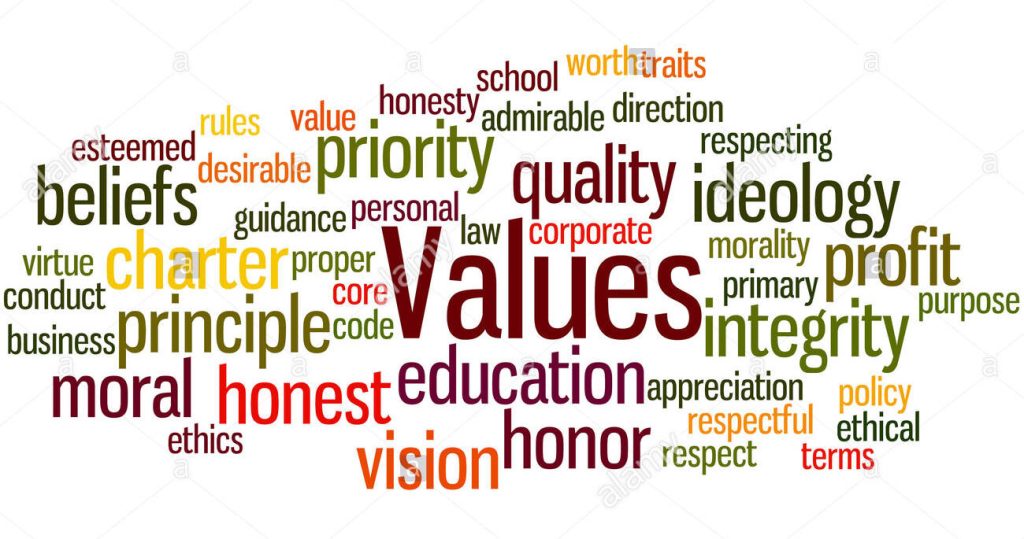
To contradict this we need a social form of education where they learn moral values. The student must be open to social crisis through regular discussion by which they get a idea of the current scenario of world, providing them a real picture and thus allows them to share thier view towards it. This method develops their communication skills and ensures a positive form of interaction. The range of success differs,it changes place to place and between individuals, so one cannot define whether you lived a  successful life but can definitely tell whether you lived in courteous way. Thus inorder to form a well built society for future we need to teach the young generation with moral values.
Video games and Education : How to bridge the two

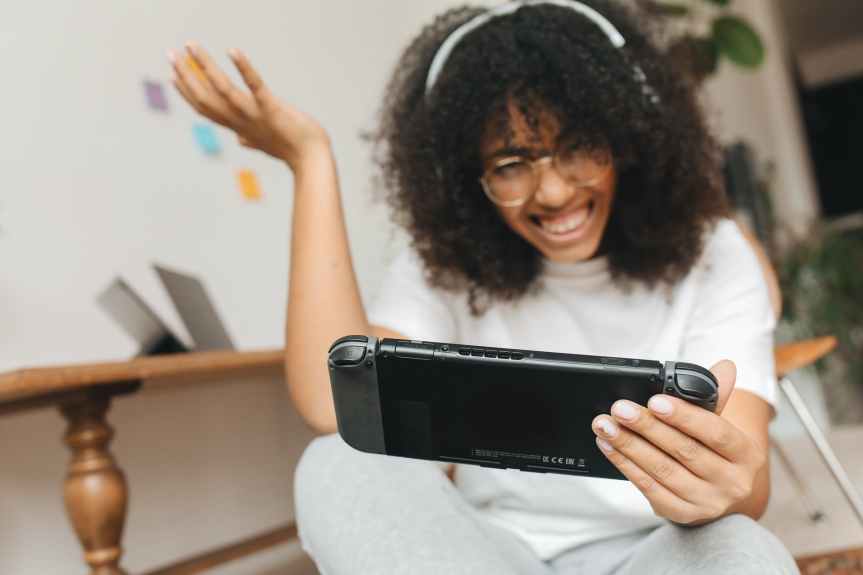
Videos games have become a significant part of our culture for over half the century. They have also lead to many leading artistic and technical endeavors including many innovations in all these years. People have started to recognize the importance of these games as culturally important and the need to curate and store them properly. 

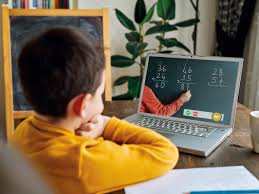
Education is one of the areas that have gone through a transformational change in 2020 and forward. The learning space has transitioned from a physical space to a space that has gone digital. The convergence of various technologies and modalities has given birth to a new space in the education system.

When it comes to Computer games, many used to scoff at them as a mere product for brief entertainment, but the increased proliferation of digital in every individual’s life means that Video games have a more significant role to play than ever before. The increased visual fidelity with better computing power has signified more immersion in the digital world. Online education has been given a push from governments around the globe. The majority of the higher institutions are teaching remotely with the help of different online tools. One of the major challenges that many educators face is the problem of engagement on par with the physical class.

Instead of just looking at online education as an alternative for the physical classes, we have to look at online education as a means of learning that can enhance the experience and engagement of the students than the physical classes as well. The technologies in 2021 clearly indicate that various tools and measures can be added into the experience of not just online learning and but also in the space of cultural heritage and digital tourism. Video games are an important tool that educators can leverage to fulfill these requirements.

Engagement and immersion can be the key factors that can drive the education system forward. There are many instances where students skip a certain subject even before attempting to learn it. This can be due to a poor and unfavorable experience with a certain instructor or wrong assumptions about the difficulty of that subject. Engaging interfaces in the form of creative games, virtual reality, augmented reality, mixed reality can help alleviate these types of issues.

Human-Computer-Interaction is an important field where the aspect of design and technology converge. This area not just deals with technological issues but also with the psychological and socio-cultural problems while designing/building a product or an interface. The interface is an important area that is often overlooked on many platforms. Many Educational platforms don’t offer the freedom that can help students, but they rather use the stingy design philosophy and force the users to a particular behavior while using it. Therefore the interface of games becomes equally important. Games can be used to create a more participatory environment for both the teachers and students alike while increasing the experimentation and systematic thinking in the class.

Video games are usually played to win or accomplish a level. Players are motivated by winning these challenges and this is the key to stay engaged. Games motivate through fun, which is part of the natural learning process in human development with instant and visual feedback.

We can conclude that the implementation of video games in the realm of education can make online learning more engaging and intuitive for learners. This is still a novel field of research and we have a long way to go but we cannot dismiss the numerous possibilities that games can provide us in this area.  

Online Learning During the Pandemic

Online education is a flexible instructional delivery method that encompasses any learning that occurs through the internet. Online learning allows educators to communicate with students who may not be able to enrol in a regular classroom course, as well as students who need to work on their own time and pace.

Every subject is experiencing a rapid increase in the amount of distant learning and the awarding of online degrees. The number of schools and institutions that provide online education is likewise increasing. Students pursuing degrees online must be diligent in ensure that their curriculum is completed by a reputable and credentialed university.

Synergy is a well-known benefit of online education. The style used here allows for interactive contact between students and professors. Sources are shared through these exchanges, and an open-ended synergy emerges as a result of the learning process. It aids the student to learn better when each person bestows a view or opinion through conversations and comments on others’ work. This distinct benefit is exhibited in a virtual learning environment that is student-centered, something that the online learning format alone cannot provide.
We don’t have to travel to another location or commute large distances to take online lessons. We can stay where we are and keep our current job while we work toward improving our career with an online degree. Online education also helps digital nomads—someone who espouses a technology-enabled or location-independent lifestyle. We can watch lectures and complete our coursework wherever we are.

Whether we are full-time or part-time online students, we have a lot more reasonable schedule. Because of its low cost, online education has gained a lot of popularity. As a result, online courses are less expensive than those offered in schools or universities. While we may have to spend money on things like transportation, lodging, and meals while attending university, online education may not.
The enormous flexibility of online learning is one of its most appealing features; nevertheless, there is a catch: one must be exceptionally self-motivated. With the online platform, students devise a variety of strategies for keeping up with their studies. The simplest things like setting aside time every week to study and create a workspace with minimal distractions can help immensely.

Advantages of Online Learning:

Online education allows us to learn from a variety of mentors and teachers in a variety of fields, broadening our knowledge and expanding our horizons. It lessens student anxiety since many students are able to communicate more effectively through online education than in traditional classes. Anyone can learn from anywhere as long as they have access to the internet.
Because there is no rush with online education, we may study at our own pace. When compared to traditional classes, most online courses are frequently more fun and comfortable. It relieves you of the hassle of needing to travel to a specific location every day.

Online schooling is frequently less expensive. Furthermore, when compared to traditional educational methods, online education is less expensive. Students in typical university programmes must pay for transportation, textbooks, institutional facilities such as gyms, libraries, and swimming pools, as well as other expenses that drive up the cost of university education. Online education, on the other hand, solely costs for tuition and other necessary expenses. As a result, both the wealthy and the poor can benefit from virtual education.

It enables one to discover novel ways via the internet and therefore improve one’s skills. When compared to traditional education, if there are any changes in the syllabus, adjustments may be made promptly with online education.
Because one can learn at any time, even at midnight, online education is flexible and adaptive. When compared to traditional education, it can assist some people improve their grades. Some people benefit from online schooling more than others.

Disadvantages of online learning

The benefits of online education to students are numerous and undeniable. Taking an online course is a fantastic educational alternative, especially when traditional learning conditions provide many challenges, such as transportation or distance. However, like with everything, there are certain fundamental limitations to online schooling that can be uncomfortable.
Students who spend too much time on the computer are more likely to plagiarise. It can also create eyesight difficulties because we spend practically all of our time in front of the computer. Physical growth may be hampered by online education. Without someone to guide you through your online education, it might be difficult to be responsible for your own learning.

You are cut off from your classmates while you study online. In some circumstances, extra time may be required to comprehend the learning process. It’s easier to cheat on an online exam than it is in a classroom, thus it’s probably not a good idea to do so during exams. Online education also provides a great deal of autonomy, which is important for our learning. Advertisements on the internet can provide a multitude of distractions, which can disrupt our learning. Self-assessment is also substantially lower in online education.

Online education offers both benefits and drawbacks, but it is a wonderful technique of learning that can aid in the development of a student’s abilities. To be successful in online education, one must select the best institution and course to avoid enrolling in one of the many suspect universities that employers may reject. The other most important item is to ensure that communication with the school faculty and fellow pupils is maintained. The main element is proper time management, which allows us to manage our time and finish and submit assigned tasks on time.

HOW WELL ARE STUDENTS TAKING ONLINE EDUCATION?

The outbreak of the COVID-19 pandemic in 2020 brought many dramatic changes in our social as well as personal lives. Our routines are changed, our habits and majorly our system of education.

Source: Google

Though the work from home culture is in its second year, the schools and universities are still trying to adapt themselves to the online mode of education. The introduction to digital classes was first seen as a major setback for the aged teachers who are not gadget-friendly or prefers an interactive physical class as the sole place for good teaching.

Over the course of time, these teachers have become quite familiar with the online teachings, yet, that special gap that will always tend to loom and show the differences of physical classes over the virtual ones.

Yes, it is quite true and agreeable that digital classrooms pave the way for the education of the future when most of the world has turned online in every sphere. But, how truly does it help students, especially the pre-primary or the primary ones? They are the ones who are most dependent on the ‘touches’ of the teachers, or be in a classroom- their first step to the world beyond home, socializing with others.

Major drawbacks online education brings:

Not affordable for all families in India:

Money stands a major factor here, in India. It is not a hidden fact to us that India is home to people of different social strata and financial standing. A handful of people across the nation cannot afford schools for their children. The Hindu in 2019 reported that 30 out of 100 children complete their school. The reasons may vary but we can’t deny the reality. The monetary conditions of families can be counted as a major reason. Well, this is the calculation done before the pandemic happened. As we see many children cannot afford proper schooling, we can predict how tough would it be for them to do classes “online”.

Online education could not serve to educate a major part of India because the poor folks cannot afford a smartphone in many parts of the country- leave alone a laptop or personal computer.

Network Accessibility:

India is a country of diversities, even geographically. Thus some groups of the population tend to live in extremely remote places like forests, or foothills of the Himalayas, or deltas of the Sundarbans. Such remote villages lack basic amenities to survive like proper water supply or electricity. To make a phone call one has to travel miles. So, this leaves us with the question, how can the children attend online classes?

This makes us think, is education moving from a basic right to a privilege?

Less personal interaction:

The virtual classes, how much fun it seemed at the beginning, could not hide its one of the major drawback for long. The lack of personal touch makes us the students detached from the school/ university vibe.

Yes, we hated the monotony of attending regular classes, but can’t deny the fact the monotony, the disciplined life, the constant monitoring of our mentors helped us in our studies. Secondly, school/university isn’t only about what we learn from books, we met real people, made friends and learn to live. But, beginning a session with online classes has made this quite impossible, we are making friends, but a part of the puzzle is missing.

Practicals:

Some of the subjects of the curriculum cannot be done with the help of online classes. In schools, physics, chemistry, biology practicals, or when we move up to the higher education subjects which require the teaching of gadget handlings like cinematography, engineering, or medical field is quite difficult on the students’ part.

The strain on eyes:

Since childhood, we came across our parents warning us not to watch too much television or going close to it, as it would harm our eyes. So, 2020 brought us to the days where most of our time is being spent staring at our mobile or laptop screens, not just adults but nursery children as well. This extended screen-time is causing eye strains, headaches and sometimes migraines to many.


Though throughout our school and college lives, we used to brood, What if we can attend our classes staying at home and not miss the attendance( tbh after passing school, it’s the attendance we mostly care about). But now, the one year of being in a virtual class, a part of us do miss the hustle and bustle of college life. We crave being back in those classrooms, feel those benches, or plan mass bunking our classes. Yes, though being a necessity now, online classes seem to take away a major part of our student life.