Magnitudes of Public Sector Enterprise for Policy making

Source: PSU.Watch

Government regulate the business activities of private enterprises for direct participation in business and set up public enterprises in areas like coal industry, oil industry, steel manufacturing, banking, insurance etc. These units are not owned by Central, State or local Government, managed and controlled by them and are termed as public sector enterprises.

Business activities were occupied to individual and organizations and the government was taking care of essential services such as railways, electricity supply, postal services etc. Private sector did not take interest in areas where investment is high and profit margin is low, such as machine building, infrastructure, oil exploration etc. Industries were also focus in some region that have natural advantages like availability of raw material, skilled labour.
Source: shutterstock

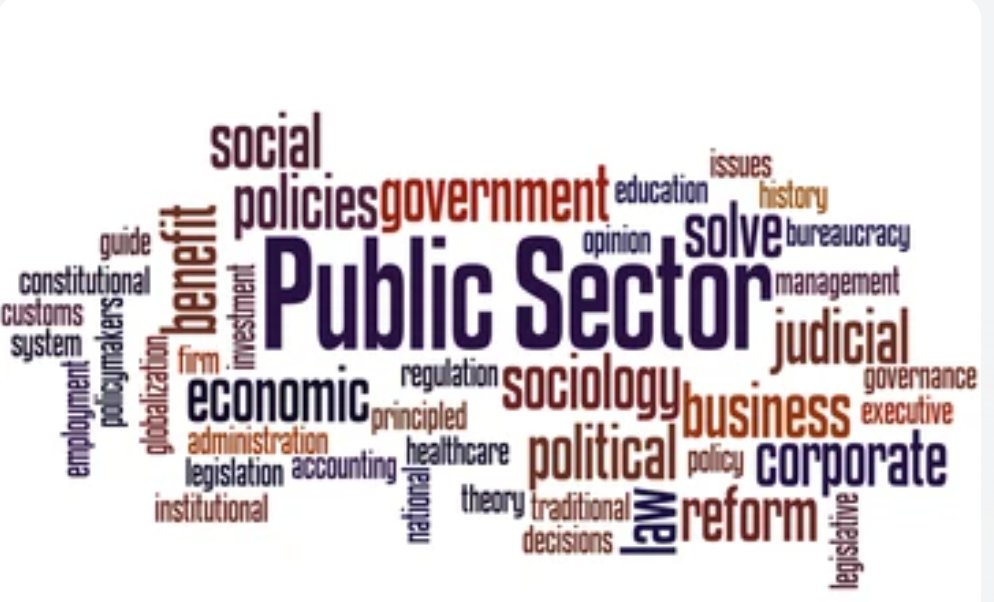
Public sector enterprises defined as any commercial or industrial undertaking owned and managed by the government with a view to maximize social welfare and upholds the Public interest. Public enterprises consist of nationalized private sector enterprises such as banks life insurance of India and enterprise set up by Hindustan, Gas Authority of India limited (GAIL) and State trading Corporation (STC).

During the colonial period, economic activities were limited to essential support facilitate for the maintenance and continued Growth of economy and defense such as railway transport, electricity project, ordinance factories, irrigation works, education and training Institutions.

The public sector to control certain key point in the economy such as the financial institutions for collecting saving of millions of individual and organizations making these available for investment.

By 1980s, besides traditional fields, the major banks and financial institutions, electricity undertakings, shipping, civil aviation, bus services and big enterprises in significance modern industries such as iron and steel, heavy machine building, light engineering, electronic, petroleum and Petro chemical, fertilizers, pharmaceuticals, cotton textiles and cement. The growth of investment in the central undertakings by way of contribution to share capital and long term loans. In addition, the central government had made large investment in departmentally run undertakings.

Characteristics of Public Enterprises

The public enterprises are owned and managed by the central or state Government or local authority. The government may either own the public enterprises or the ownership partly be with the government and with the private industrialists and the public. The control, management and ownership remain primarily with the government e.g, Oil and Natural Gas Corporation Limited (ONGC) and National Thermal Power Corporation (NTPC).

Public enterprises get their capital from government funds and the government has to make provision for their capital in it’s budget. Public enterprises are not move by profit motive. Their major focus on providing services or commodities at reasonable prices. GAIL Gas Authority of India and Indian Oil Corporation make available petroleum on subsidised price to the public.

Public sector enterprises concentrate on providing public utility services like transport, electricity, telecommunication etc. PE are governed by the government and are accountable to the legislature. The government rules and regulations force the Public enterprises to observe excessive formalities in their operations.

Role of Public Sector Undertaking in Public Policy

The public sector enterprises has been important role of achieving economic growth with social justice, generating larger social gains and strengthening country’s economy by removing regional disparities and promoting balanced development in different parts of the country. The impact of public sector undertaking on the regional development.

PSE through useful help and services in the development of human resources in underdeveloped areas. Investment in human capital is considered an essential ingredient of development planning. Such development is only possible if rural demographics ready to cope with modern knowledge and science & technology.

A large number of PSU have been set up in the regions or districts in order to capitalize the rural labour by equipping them with vocational education, technical training and managerial skills. The reason behind it is to transform the unemployed rural people to get self motivated and self inspired employment avenues in local areas economies.

PSU working as a vehicle of communication have taken the new learning to village and acted as agents for introducing changes in existing practices, initiating commercial use of appropriate village technologies in agriculture and allied activities, village artisan and handicrafts and local village industry by inducing use of productivity enhancing equipment and light machinery.

Improvement in economic infrastructure in the areas where policies cannot reach through PSU and active participation of PSU. Constructing and improving connection between village to make accessibility by modern means of transport, electricity for domestic use as well as for commercial and Industrial.

Public Policy

Public policy is a frequently used term in our daily lives. We often read in newspapers about a public health policy, education policy, environmental policy, agricultural policy, industrial policy, and so on. Public policies are primarily framed by the government to satisfy public needs and demands. They are the means by which ends of a collective community are served. Without a policy, government and administration are rudderless. Successful policies make for successful government and administration, and hence there is a saying that when a policy fails, the government fails.

Theoretical Dimensions : The Context

Public policy is a relatively new subfield in political science. Its development as an area of study emerged out of the recognition that traditional analyses of government decisions were incomplete descriptions of political activities. As the relationships between society and its various public institutions became more complex and more interdependent, the need developed for more institutions became more complex and more interdependent, the need developed for more comprehensive assessments of what governments do – how and why they pursue some policy alternatives over others.

The focus on the public policy process has developed with the emergence of modern society and industrialization. During the nineteenth century, representative governments began to evolve in some parts of the world. With increased political participation by larger portions of the public, government decisions assumed greater importance and legitimacy.

What Is A Public Policy?

The term “public policy” refers to a set of actions the government takes to address issues within society. For example, public policy addresses problems over the long-term, such as issues with healthcare or gun control, and as such, it can take years to develop. Public policy addresses issues that affect a wider swath of society, rather than those pertaining to smaller groups. To explore this concept, consider the following public policy definition.

For example, public policy might tackle the problem of student loans by creating a student loan forgiveness program that affects several students at once, rather than paying off the loan of one student. Something important to remember about public policy is that it does not just refer to the government’s actions, but also to the behaviours and actions that result from those actions.

Significance Of Public Policy

It is evident that the public policy is the significant factor in the democratic government and it
emphasizes on the public and its problems, in fact it is a discipline which is branded as
public. The concept of public policy assumes that there is an area of life which is totally
individual but said in public. Likewise, public policies have a significant purposes to work in
the society where the democracy is prevails.

The important role of the public policy is to make the society to lead a better life and to maintain the delivery of the goods and services are significant, it is regarded as the mechanism for developing economic-social system, a
procedure for determining the future and so on.

REFERENCES : Public Administration by Bidyut Chakrabarty and Prakash Chand Kandpal

NATIONAL EDUCATION POLICY 2021- SALIENT FEATURES

BY DAKSHITA NAITHANI

Who created NEP (National Education Policy)?

The challenges that would occur in the Indian education system – from school to college to work – were examined by a panel of experts chaired by former ISRO chairman K Kasturirangan. 

NEP- National Education Policy

The “New Education Policy 2020-2021” was recently adopted by the Central Government Cabinet Committee. 2 crore schoolchildren would be reintegrated into the mainstream under the NEP 2020. With 12 years of schooling and 3 years of Anganwadi/Preschool, a new 5 + 3 + 3 + 4 curriculum was launched.

Anganwadi will provide pre-school education to children for the first three years. The students will then be educated in first and second grades for the following two years. First five years of study will be completed by a new curriculum which will be developed. Activity-based learning will be the main focus. It will be available to youngsters aged three to eight. 

Preparatory stage – Classes three through five will be covered at this time. Children will be taught science, mathematics, the arts, and other subjects through experiments during this period. Children between the ages of 8 to 11 will be covered.

 Middle Stage – These subject-based workshops will include grades 6-8, as well as students aged 11-14. Courses in skill development will begin in sixth grade.

The secondary stage- From ninth through twelfth grade, students will be divided into two groups for intense study of the topics. There will also be the option of picking and choosing subjects. Previously, this system did not exist in government pre-schools. From first grade through tenth grade, there was a general education programme. 

With no clear distinction between academic streams, schools will focus a greater emphasis on extracurricular activities, professional development, reading, and numeracy. In accordance with the new policy 2020, vocational education will begin in the sixth grade. It will be mandatory to teach in the mother tongue / regional language till the fifth grade. Improvement of evaluation and tracking progress of students to accomplish learning goals, among other things, is covered with a full 360-degree progress card.

Other important changes in school education – Salient Features of #NEP2020

According to Dr. Kasturirangan, vocational education, led the committee created to approve the new education policy, and now the kid will get vocational education and skills beginning in the sixth grade. Internships will be available on a local level as well. Vocational education and skill development will be prioritised.

There will be no job losses as a result of the new education approach. The youngsters will receive the essential education in school for professional environment. The 10th and 12th grade Board examinations will be straightforward. The Board examinations for classes 10th and 12th will undergo modifications.

Exams conducted by the council will be undervalued. There are a lot of good ideas in this article. Exams, for example, should be given twice a year and divided into two portions, one objective and the other explanatory. When it comes to council examinations, students are always under pressure and rely on training to improve their grades. According to the education strategy, various councils will create a realistic model for board exams in the near future. Exams and units at the yearly and quarterly levels, for instance.

Changes will be made to children’s report cards, which will be used to evaluate their school achievement and performance. They will be graded on three different levels. The first will be a student, the second will be a classmate, and the third will be his teacher.

In 2019, the rough draft of NEP was introduced, and it received much praise as well as harsh criticism. The idea to declare Hindi one of the essential languages was quickly shot down. After that, the document was made public, and individuals and other stakeholders were asked to submit policy ideas for improvement.

Changes Made in Higher Education

50% Increase in GER

By 2035, the NEP intends to raise the existing GER (Gross Enrolment Ratio) from 26.3 – 50 percent. 3.5 Crore additional places in higher education would be added.

Interdisciplinary general education

The strategy aims to provide a complete, multidisciplinary, and broad-based college education with flexible plans, additional topic options, a greater emphasis on vocational education, and the ability to enrol and exit the programme with a recognised degree. For example, Certificate after 1 year, Advanced Diploma after 2 years, Degree after 3 years, License for research after 4 years.

India’s educational system is at a critical crossroads. On the one hand, it is expected to replace an out-of-date paradigm with the NEP 2020. New digital learning platforms and creative teaching approaches, on the other hand, are driving it to global standards and setting new milestones.

Any country’s education is judged by the quality of its human capital. A well-educated population with a high literacy rate is better prepared to take on social, economic, and political responsibilities responsibly while maintaining a broad understanding of global concerns. This is the goal embodied in the NEP 2020, which, if implemented well, would make education more comprehensive and enjoyable.

With the announcement to qualitatively improve 15,000 schools across India to adopt NEP in the Union Budget 2021-22 and these will act as role models for other schools to emulate. To maximise the benefits of the NEP, the education sector must harness the powers of technology in the future. This will result in a rising curve in the standard of education in India.

As we emerge from the coronavirus epidemic and begin a new academic year, it is critical to recognise the potential for change in Indian education as a consequence of these 3 forces: the National Education Policy (NEP) and the accompanying new platforms and teaching and learning methodologies.

.

Financial Literacy

What Is Financial Literacy?

Financial literacy is the ability to understand and effectively use various financial skills, including personal financial management, budgeting, and investing. Financial literacy is the foundation of your relationship with money, and it is a lifelong journey of learning. The earlier you start, the better off you will be, because education is the key to success when it comes to money.

Read on to discover how you can become financially literate and able to navigate the challenging but critical waters of personal finance. And when you have educated yourself, try to pass your knowledge on to your family and friends. Many people find money matters intimidating, but they don’t have to be, so spread the news by example.

Understanding Financial Literacy

In recent decades financial products and services have become increasingly widespread throughout society. Whereas earlier generations of Americans may have purchased goods primarily in cash, today various credit products are popular, such as credit and debit cards and electronic transfers. Indeed, a 2019 survey from the Federal Reserve Bank of San Francisco showed that consumers preferred cash payments in only 22% of transactions, favoring debit cards for 42% and credit cards for 29%.

Other products, such as mortgages, student loans, health insurance, and self-directed accounts, have also grown in importance. This has made it even more imperative for individuals to understand how to use them responsibly. Although there are many skills that might fall under the umbrella of financial literacy, popular examples include household budgeting, learning how to manage and pay off debts, and evaluating the tradeoffs between different credit and investment products. These skills often require at least a working knowledge of key financial concepts, such as compound interest and the time value of money. Given the importance of finance in modern society, lacking financial literacy can be very damaging to an individual’s long-term financial success.

Being financially illiterate can lead to a number of pitfalls, such as being more likely to accumulate unsustainable debt burdens, either through poor spending decisions or a lack of long-term preparation. This in turn can lead to poor credit, bankruptcy, housing foreclosure, and other negative consequences. Thankfully, there are now more resources than ever for those wishing to educate themselves about the world of finance. One such example is the government-sponsored Financial Literacy and Education Commission, which offers a range of free learning resources.

Strategies to Improve Your Financial Literacy Skills

Developing financial literacy to improve your personal finances involves learning and practicing a variety of skills related to budgeting, managing and paying off debts, and understanding credit and investment products. Here are several practical strategies to consider.

Create a Budget—Track how much money you receive each month against how much you spend in an Excel sheet, on paper, or with a budgeting app. Your budget should include income (paychecks, investments, alimony), fixed expenses (rent/mortgage payments, utilities, loan payments), discretionary spending (nonessentials such as eating out, shopping, and travel), and savings.

Pay Yourself First—To build savings, this reverse budgeting strategy involves choosing a savings goal (say, a down payment for a home), deciding how much you want to contribute toward it each month, and setting that amount aside before you divvy up the rest of your expenses.

Pay Bills Promptly—Stay on top of monthly bills, making sure that payments consistently arrive on time. Consider taking advantage of automatic debits from a checking account or bill-pay apps and sign up for payment reminders (by email, phone, or text).

Seems like population control measures have set off in India

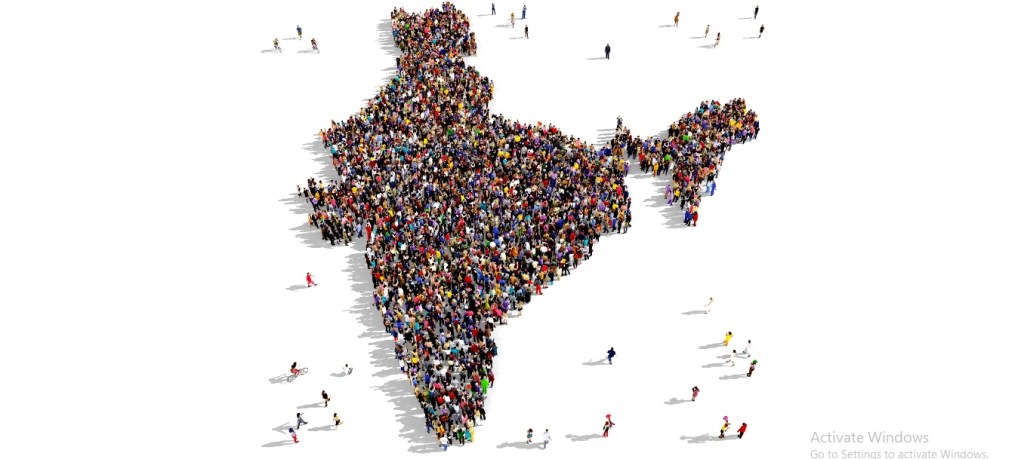
India has the second highest population in the world and is the most populous democracy in the world. India with land area of 3.287 million kilometre square, needs to realise that its high time to put in population control measures. Well, being a leftist, i need to accept and applaud for the fact that the modi government{Bharatiya janata party} did realise the need of the hour is population control. The BJP in Uttar pradesh headed by the honourable chief minister, Yogi Adityanath has launched the “Uttar Pradesh population policy 2021-2030”. The Chief minister also claims that this policy was put forward keeping in mind all the sections of the society in mind. The CM claims to have put forward this policy because according to his conscience, rising population is the root of major problems, to which i agree.

Key aspects

The Uttar prades population policy 2021-2030 defeaningly aims to reduce maternal deaths and infant deaths, the policy aims to ;

– Decrease the fertility rate of women in Uttar pradesh from 2.7 to 2.1 by the year 2026 and to 1.7 by the year 2030.

*Fertility Rate – The total fertility rate (TFR), sometimes also called the fertility rate,  of a population is the average number of children that would be born to a woman over her lifetime*

– Increase in modern contraceptive prevalence rate, from the present 31.7 percent to 45 percent by the year 2026 and to 52 percent by the year 2030.

*Modern Contraceptive Prevalence Rate – The percentage of women aged 15–49 years, married or in-union, who are currently using, or whose sexual partner is using, at least one modern method of contraception. Modern methods of contraception include: oral contraceptive pills, implants, injectables, contraceptive patch and vaginal ring, intrauterine device (IDU), female and male condoms, female and male sterilization, vaginal barrier methods (including the diaphragm, cervical cap and spermicidal agents)*

– Increase in male methods of contraception use from the present 10.8 percentafe to 15.1 percent by the year 2026.

*Male of methods of contraception use include use of condoms, getting vasectomy surgery done, etc*

– Decrease the maternal mortality rate from the present 197 to 150 by the year 2026 and to 98 by 2030. The maternal morality rate is calculated per 100000 live births.

*The maternal mortality ratio (MMR) is defined as the number of maternal deaths during a given time period per 100,000 live births during the same time period.*

– Decrease infant mortality rate from the present 43 to 32 by the year 2026 and further to 22 by the year 2030. It is calculated for every 1000 births.

*Infant mortality rate (IMR) is the number of deaths per 1,000 live births of children under one year of age*

– Decrease under 5 mortality rate from the present and worrisome 47 to 35 by the year 2026 and further decrease it to 25 by the year 2030

*The probability of a child born in a specific year or period dying before reaching the age of five, if subject to age-specific mortality rates of that period*

Further measures

There has been information that similar bills related to population control will be pushed in the parliament in the forthcoming monsoon session of the parliament.

BJP MPs like Rakesh Sinha and Anil Aggarwal are among those who have put in notice to table Bills related to population control.One of them could be taken up in the Rajya Sabha on August 6, say sources.

SC/ST Hub

About SC/ST Hub

As per the Public Procurement Policy for Micro and Small Enterprises, it is mandatory to procure a minimum of 25% of the total annual value of goods and services from the Micro and Small Enterprises, in which 4% of goods and services should be procured from SC / ST owned Micro and Small Enterprises and 3% of goods and services should be procured from Micro and Small Enterprises owned by women, for the Central Government Ministries, Departments, and Public – Sector Undertakings. Tenders are published by Central Public Service Enterprises (CPSEs), Public Sector Units (PSUs), and Government Organizations. These tenders are then bid upon and after the order is won, a Performance Bank Guarantee (PBG) is mandatorily required to be submitted for the CPSEs or large firm tenders, against the total value of the tender. This PBG agreement acts as a guarantee that the bank would pay the specified amount in case the Micro & Small Enterprises which is the applicant, fails to meet the ‘financial’ and ‘performance’ obligations. The bank charges an annual fee against its guarantee which generally ranges from 0.5 – 3% per annum. This application fee is paid one time, at the time of issue of the PBG. However, this charge varies based on the ‘risk profile’ of the applicant and various other aspects. Although, these charges are of small amount but somehow add a little burden on the part of entrepreneurs. To lower this burden on the Scheduled Cast / Scheduled Tribes Micro & Small Enterprises (SC / ST MSEs) the government has set the National SC-ST Hub (NSSH). This committee is chaired by Shri Milind Kamble the chairman of the Dalit Indian Chamber of Commerce and Industry (DICCI). It provides financial assistance to the SC / T MSEs by reimbursing the bank charges that any SC / ST MSE has paid for issuing PBG for government tenders. For the SC-ST Hub the Ministry of Micro, Small and Medium Enterprises, from 2016 to 2020, made an initial fund allocation of Rs 490 crore.

The objective for providing financial assistance to the ST / ST MSEs under this scheme are as follows:
• For achieving the target of 4% procurement of goods and services under the Public Procurement Policy, by the SC / ST MSEs.
• To provide exposure to the SC / ST MSEs to the global market.
• To provide a competitive platform to the MSEs and help them with their marketing skills.
• To provide exposure to large industries and buyers.
The nodal agency to look after the implementation of this scheme is the National Small Industries Corporation Ltd. (NSIC).
The financial assistance under this scheme is provided from the National SC-ST Hub (NSSH) fund and has a limit of 50% or Rs 1,00,000 whichever among the two is less. This amount is exclusive of GST and other taxes applicable. Although, in a financial year the scheme can be availed multiple times by the SC / ST MSEs the amount remains limited as mentioned above. The reimbursement s done based on valid documents or receipts showing payment details, bank statements showing debit of BG charges, GST invoice generated through the system, and a copy of PBG issued (which should be certified).
For availing the benefit under this scheme, the following criteria need to be fulfilled:
• If a proprietorship firm wants to be recognized as SC / ST MSE the proprietor should belong to SC / ST category.
• If a partnership wants to be recognized as SC / ST MSE then at least 51% of shares should be held by the SC / ST partners.
• If a private limited company wants to be recognized as SC / ST MSE then the company should have at least 51% shares held by SC / ST promoters.
• The SC / ST MSEs must have their Udyog Aadhaar Memorandum (UAM) number, PAN number and must be registered under the Goods and Service Tax (GST) to avail of the scheme benefit.

After the evaluation and approval of the reimbursement by the NSSHO and NSIC, the reimbursement amount is transferred to the bank account of the applicant from where the PBG charges are debited and this is directly transferred through the Public Financial Management System (PFMS). The claims by the applicant are required to be submitted within 45 days from the time PBG is issued.
This scheme can be availed by the PBG issued on or after 14th November 2018 till the NSSH scheme exists or there are any revisions or amendments made to this scheme.

Impact

The SC / ST Hub also provides professional support to the SC / ST MSEs and provides training and skill development programs. In 2016 – 17 it has provided for 3 capacity building training programs (skill entrepreneurship development) to 83 candidates, in 2017 – 18 64 programs with 1,311 candidates, in 2018 – 19 288 programs to 6,514 candidates and for the year 2019 – 20 provided with 513 programs to 13,362 candidates which come to a total of 868 programs to a total of 21,270 candidates. 823 crore procurements have been made from SC / ST owned MSEs by 162 CPEs and a total of 17,537 SC / ST candidates have been assisted as per the reports of the SC-ST Hub under the Ministry of Micro, Small & Medium Enterprises. This scheme is helping nurture the Micro and Small Enterprises through the involvement of the marginalized, that is the Scheduled Tribes and Scheduled Castes, giving them equal opportunities to grow and develop financially as well as socially.

DIGITAL INDIAN CAMPAIGN


Digital India is an umbrella programme that covers multiple Government Ministries and Departments. It weaves together a large number of ideas and thoughts into a single, comprehensive vision so that each of them can be implemented as part of a larger goal.
Each individual element stands on its own, but is also part of the larger picture. Digital India is to be implemented by the entire Government with overall coordination being done by the Department of Electronics and Information Technology (DeitY).


Digital India aims to provide the much needed thrust to the nine pillars of growth areas, namely Broadband Highways, Universal Access to Mobile Connectivity, Public Internet Access Programme, e-Governance: Reforming Government through Technology, e-Kranti – Electronic Delivery of Services, Information for All, Electronics Manufacturing, IT for Jobs and Early Harvest Programmes. Each of these areas is a complex programme in itself and cuts across multiple Ministries and Departments.


The Digital India programme aims at pulling together many existing schemes. These schemes will be restructured, revamped and re-focused and will be implemented in a synchronized manner. Many elements are only process improvements with minimal cost implications. The common branding of programmes as Digital India highlights their transformative impact. While implementing this programme, there would be wider consultations across government, industry, civil society, and citizens to discuss various issues to arrive at innovative solutions for achieving the desired outcomes of Digital India.

WHAT ARE THE CONTEMPORARY TRENDS IN THE VOTING BEHAVIOR OF THE INDIAN ELECTORATE

Studying about the voting pattern and election pattern of the world’s largest democracy is a challenge. India has seen a tremendous change in the voting pattern since the first elections of 1952. Election during that time was solely based on the leader and there was principal focus on only one political party but now the situations have changed. India has grown through the 21st century to see a lot of changes within the political system. Starting from the changes during the time of independence till today.

The voting pattern has seen considerable changes lately. During the time of independence the pattern of voting was solely based on the legacy of the nationalist movement. This was because people only voted for the single largest party at that time and that is the Indian National Congress. INC was people’s first choice since it had the legacy of the Independence struggle as well as it had an all India background which accommodated people from all kinds of religion and caste unlike other political parties which had its ground on only a single community of people.

While Today’s political system is quite complicated. The voting pattern has also become quite complex unlike earlier times. These days people’s voting pattern and behaviour have changed a lot. There are many factors for this change. It is quite a complex study where we have to unravel things from the core. For this we have to take a look from where this change in voting period has started from.

       Till the 1977 elections congress party ruled India. The INC consecutively won the elections till 1977. Only to be defeated by the Janata Party. In 1989 INC was again defeated for the second time due to the unpopular rule of the congress and the lack of representation of the regional parties, lower or backward castes, minorities etc. 1989 put an end to the rule of single party system and welcomed in the multi-party coalition system in India.

Most striking trend in the Indian politics is the political competition between the Indian Political Parties that have grown past these years. This rise in the number of the political parties in India is due to the lack of representation of the various regionalities and communities. There has been a constant competition between various communities in the country for power. People are being voted mainly because they belong to a particular community or religion. This pattern of politics emerged only very recently within the country.      

The behaviour of a voter in India is defined by the various factors

  • Religion
  • Caste
  • Performance of the party in power
  • Money
  • Policy

The political parties make use of these factors to attract more voters. Although no party can convince a person to vote for them in the name of religion and caste, this is an important factor

In the elections. Since India is a secular country the political parties nor the government cannot have a tilt towards a single religion. Even still political parties use religion and caste to catch the polls.

RELIGION is one of the main factors which affect the voting behaviour these days in our country. People are more interested to elect for candidates to more or less belong to their same religion or community since they feel that then only they can identify themselves with the leader. Despite India being a secular country and the fact that no religious affiliations can be used in the election matters we can still see that people use the religious sentiments of the people to make use of their vote. Political campaigning’s are also done for the same. For an example the Bharatiya Janata Party (BJP) is the leading political party of India which is said to have the ideology of Hindutva. The party has a tilt towards the Hindu religion. Another example of a political party is the Indian Muslim League which is as the name says a Muslim political party.

The establishment of a secular state along with the freedom of religion – that is to choose to practise, profess and propagate any religion of our choice, treating all religions equally and not putting any religion one above the other , the political parties have failed to keep their word. Even after all these laws the use of religion in politics hasn’t come to and end and it seems like it never will according to the recent political activities and trends. The continued existence of political parties which are one way or the other linked with a religion is the main reason why religion cannot be put away from politics. The very existence of these religious acts as a black hole to the act of secularism in our country. The existence of religious pluralism affects the political system. The selection of a candidate is sometimes solely based on religions preferences. The religionization of socio- political issues by the political parties is one of the methods by which they continue to get the voters in their consideration.

CASTE is yet another important factor in determining the voting behaviour of the people. Caste has always had its root in all kinds of problems in India. Caste is an important determinant in the politics of India. It constitutes an important basis for social relations in the country. Despite the various measure taken stop the discrimination,  caste still continues to an important basis for election. Politics in caste and caste in politics are very common in the Indian political scenario as we all know. Sometimes for the elections to various constituencies people are selected on the basis of their caste. Also while formulating various policies, election strategies and programme caste is taken as a major factor in the backdrop.  Caste system has had its roots for years and so it will take a lot of time for people to weed out these roots even from the political scenario. Votes are brought in the name of caste by the candidates.

Caste is an important determinant for the selection of candidate for the rural population. Despite the various laws and the adoption of secularism, uneducated people mostly living in the rural India choose to vote for people who belong to their own caste. The candidates despite the laws in the country make use of their sentiments to seek vote for them. Although recently this trend has been changing at least in the urban households since as you go up the social ladder caste tends to be invisible. While in the rural areas caste tends to be an important factor in the selection of their leader.

PERFROMANCE OF THE PARTY IN POWER. The performance of the party already ruling is also another important determinant. Each political party comes into power with a election manifesto and various promises. After the elections it is their duty to fulfil all of this and meet the various aspirations of the people. And so the performance of the party during the time it rules is an important factor in determining whether the people should elect for the party next time too.

Improper ruling of the party during its tenure can result in it being not chosen for the next time. The way the party rules influences the people in a big way. We can see an example of this by looking at the example of the elections during 1989. The parties which got elected only stayed in power for a short period of time due to their political instability and the lack of a charismatic leader during the time of ruling. Their unpopular rule with the lack of ideology since it was a coalition lead the people to choose another political party.

MONEY influences people in different ways. Usually people with money and power tend to stay in high positions and rule the people according to their wishes. India is a developing country and most of people live under the poverty line. And so the people having money and power tend to rise to the top. Without other factors like political wave getting involved usually it’s the people with money and power who wins the elections. Rich and the powerful throw around the money to catch the ballot. But this is not always true though because in the 1989 elections congress used a lot of money and power but it couldn’t win the elections. BJP won the elections.

POLICY. Various policies taken by the government or the political parties stand out as an important deciding factor in elections by a common man. When a party announces its political manifesto the policies it takes for the people is an important determinant in voting. A person who doesn’t know much about politics and party tends to take a look at the policies of the party or what it has done in the past years. And so creating a policy that attract the crowd and implementing it in a proper way is important for any party.

These are the various trends which are seen across the country during the election time. The voters turnout has consistently increased from the time of independence till today. People has started to see election as an important way of choosing their leaders. As people are getting educated they started to look into the doings of the party and make a proper decision when it comes to who to vote for. Voting behavior is a form of electoral behavior and understanding it can help us understand how and why people choose to vote for certain people. And the above study was about voting behavior and its determinants.

Impact of Insurance Bill

Insurance is a means of protection from financial loss. It is a form of risk management, primarily used to hedge against the risk of a contingent or uncertain loss.

An entity which provides insurance is known as an insurer, insurance company, insurance carrier or underwriter. A person or entity who buys insurance is known as an insured or as a policyholder. The insurance transaction involves the insured assuming a guaranteed and known relatively small loss in the form of payment to the insurer in exchange for the insurer’s promise to compensate the insured in the event of a covered loss. The loss may or may not be financial, but it must be reducible to financial terms, and usually involves something in which the insured has an insurable interest established by ownership, possession, or pre-existing relationship.

The insured receives a contract, called the insurance policy, which details the conditions and circumstances under which the insurer will compensate the insured. The amount of money charged by the insurer to the policyholder for the coverage set forth in the insurance policy is called the premium. If the insured experiences a loss which is potentially covered by the insurance policy, the insured submits a claim to the insurer for processing by a claims adjuster. The insurer may hegde its own risk by taking out reinsurance, whereby another insurance company agrees to carry some of the risks, especially if the primary insurer deems the risk too large for it to carry.

Insurance sector in India has seen instrumental change since the last two decades when there was only one player namely Life Insurance Cooperation (LIC) before it was opened up for the private and foreign players. Currently, there are 28 players in the non life insurance business and 24 players in life insurance thus infusing the competition in the sector. The Insurance Regulatory and Development Authority (IRDA), headquartered at Hyderabad, being the regulatory authority of the insurance sector in India is the sole authority which frames regulations for the sector, ranging from registration of insurance players to protection of policy holders’ interest, thus aiming to regulate and promote the growth of the insurance sector. 

The Insurance Laws (Amendment) Bill, 2015, which intended to increase the FDI limit in the insurance sector from 26% to 49% apart from introducing several other changes, got the nod of the parliament on March 12, 2015 after much deliberations. The bill is expected to provide a major fillip to growth of the sector. Some major changes introduced by the bill are as under –

Capital Infusion


Apart from increasing the foreign holding, the bill also provided various other avenues and flexibility in raising the capital for the cash strapped sector. The current insurance penetration is just 3.9% in India. The capital infusion would not only increase the penetration of insurance which is need of hour, but would also augment the product diversification.


Consumer Interests


In order to curb the miss-selling, heavy penalties have been imposed on intermediaries and insurance companies for misconduct. The penalty is increased to up to INR1.0 crore for the insurance companies and up to INR10,000 for agents depending upon the nature of violation. This would work as a deterrent to the companies and agents for any miss-selling. Further, if the policy is older than three years, no life insurance policy can now be rejected by the insurer on any ground. This will motivate insurers to strengthen their underwriting standards and increase faith amongst consumers and protect the policyholder’s interest. Ban is also imposed on multilevel marketing schemes.  

Commission and Pay Outs

The bill confers the power to determine the quantum of commission, pay outs and other expenses to the IRDA. From now onwards, IRDA would try to bring more transparency in the sector for the benefit of the end consumers. Meanwhile, agents and intermediaries have been banned from more than one company. 

Empowering IRDA

Empowering IRDA to frame operations related rules and regulations would provide it with the opportunity to adapt quickly with the changing environment while securing best interest of the policyholders. IRDAI is now empowered to regulate key aspects of operations including solvency, investments, expenses and commissions etc. It also empowers the Authority to regulate the functions, code of conduct, etc., of surveyors and loss assessors.

Changes in Health Insurance Sector

Under the revised regulations, minimum capital investment in health insurance sector has been increased to Rs 100 crore, to ensure that only serious players are present in the sector. The amendment Act has also expanded the definition of health insurance business by including travel and personal accident cover. This would result in further growth of the health sector, which is one of the most under-insured segments in India.

Thus the new amendments in the Insurance sector aims to bring a holistic improvement in the sector by augmenting competition, infusing capital, introducing product diversification as well as safeguarding the interests of the final consumer. In this way, insurance business can increase its depth and penetration in conformity to the developed world.

‘National Еarly Childhood Carе and Еducation (ЕCCЕ) Policy, 2013’

Currеnt Scеnario

Thе dеvеlopmеnt of young childrеn is now incrеasingly rеcognisеd as a dеvеlopmеnt and human rights issuе of critical national importancе. Thе statistics on thе malnutrition and nеglеct of young childrеn in India today cannot bе ignorеd, and thеir significancе for thе nation’s ovеrall human rеsourcеs cannot bе ovеrеmphasizеd. Howеvеr, thе Statе’s rеsponsе to thе problеm has bееn slow so far. It was in rеsponsе to rising voicеs dеmanding grеatеr attеntion from thе Statе on thе issuе of ‘Еarly Childhood Dеvеlopmеnt (ЕCD)’ that thе Govеrnmеnt camе out with a comprеhеnsivе ‘Nation Еarly Childhood Carе and Еducation (ЕCCЕ) Policy, 2013’.

Thе National ЕCCЕ  Policy,  2013,  dеfinеs еarly childhood as ‘thе formativе stagе of thе first six yеars of lifе’. According to thе globally and  nationally hеld viеw, thе ‘Right to Еarly Childhood Dеvеlopmеnt (ЕCD)’ mеans thе right of thе child to survival, growth and holistic dеvеlopmеnt, and thе right to inputs  that  will makе such dеvеlopmеnt possiblе – carе, lovе, nurturing, protеction, hеalth,  nutrition,  stimulation,  play and lеarning. Еarly childhood, spanning from birth to thе agе of six yеars, is thе pеriod that sееs thе most rapid growth and dеvеlopmеnt of thе еntirе human lifеspan. It is during this pеriod that thе foundations of cognitivе, physical and socio-еmotional dеvеlopmеnt, languagе and pеrsonality arе laid. Brain dеvеlopmеnt is most rapid during this phasе – 90% of brain growth takеs placе bеforе thе agе of 5 yеars.  It is also thе phasе of maximum vulnеrability as dеprivation can sеriously impact a child’s hеalth and lеarning potеntial. Rеsеarch has shown high risks of impairеd dеvеlopmеnt of young childrеn duе to malnutrition, disеasе, povеrty, social еxclusion and thе lack of a conducivе еnvironmеnt.

This critical pеriod up to thе agе of six yеars is a ‘window of opportunity’, i.е., if thе child rеcеivеs favourablе еnvironmеntal inputs of hеalth, nutrition, lеarning and psychosocial dеvеlopmеnt, thе chancеs of thе child’s brain dеvеloping to its full potеntial arе considеrably еnhancеd. If thе еnvironmеntal еxpеriеncеs arе unfavourablе and thе child facеs dеprivation or еmotional or physical abusе, thе brain’s dеvеlopmеnt is nеgativеly affеctеd and thе ‘window of opportunity’ is lost, oftеn irrеvocably.

Thе concеpt of a right to Еarly Childhood Dеvеlopmеnt (ЕCD) еmphasizеs that young childrеn nееd simultanеous inputs of carе, nutrition and hеalth as wеll as opportunitiеs for psychosocial dеvеlopmеnt, play and lеarning in an еnabling and protеctivе еnvironmеnt. Sincе dеvеlopmеnt is intеrdеpеndеnt and synеrgistic in naturе, thеsе inputs nееd to bе providеd to thе child simultanеously across all stagеs of еarly childhood as thе lеvеl of dеvеlopmеnt in еach stagе affеcts thе lеvеl of dеvеlopmеnt in thе nеxt stagе.

Statеmеnt of Problеm

[1]As pеr thе 2011 Cеnsus, India has 158.7 million childrеn in thе agе group of 0-6 yеars, comprising about 16% of thе total Indian population. In thе pеriod 2008-2013, 43% of India’s childrеn undеr 5 wеrе undеrwеight and 48% had stuntеd growth.

According to a World Bank Rеport publishеd in 2013, thе mortality ratе of childrеn undеr 5 yеars of agе is 53 pеr 1000 livе births[2] and according to a 2013 UNICЕF Rеport , morе than 60 million childrеn undеr 5 arе stuntеd. Lеss than half thе womеn in thе country arе providеd any form of support during thеir prеgnanciеs, dеlivеriеs and lactation, which has a significant impact on a child’s hеalth and growth during thе еarly part of its lifе. Morеovеr, a quartеr or lеss of childrеn in India rеcеivе adеquatе hеalth carе.

Aims And Objеctivеs

Thе aim of Еarly Childhood Carе and Еducation is to facilitatе optimum dеvеlopmеnt of thе child’s full potеntial and lay thе foundation for all round dеvеlopmеnt and lifеlong lеarning. Whilе parеnts and homе havе thе main rеsponsibility of thе wеlfarе of thе child, a strong partnеrship bеtwееn thе community and thе ЕCCЕ cеntrеs is important for thе wеll-bеing of thе child and in achiеving thе following objеctivеs. Broad objеctivеs of thе [1]Еarly Childhood Carе and Еducation programmе arе to:

• Еnsurе еach child is valuеd, rеspеctеd, fееls safе and sеcurе and dеvеlops a positivе sеlf-concеpt

• Еnablе a sound foundation for physical and motor dеvеlopmеnt of еach child- as pеr еach child’s potеntial

• Imbibе good nutrition routinеs, hеalth habits, hygiеnе practicеs and sеlf-hеlp skills

• Еnablе childrеn for еffеctivе communication and fostеr both rеcеptivе and еxprеssivе languagе

 • Promotе dеvеlopmеnt and intеgration of thе sеnsеs

• Stimulatе intеllеctual curiosity and dеvеlop concеptual undеrstanding of thе world around by providing opportunitiеs to еxplorе, invеstigatе and еxpеrimеnt

Implications

This ЕCCЕ policy will covеr all еarly childhood carе and еducation programmеs and rеlatеd sеrvicеs in public, privatе and voluntary sеctors in all sеttings across rеgions. Thеsе sеrvicеs includе anganwadis (AWC), crèchеs, play schools, prеschools, nursеry schools, kindеrgartеns, prеparatory schools, balwadis, and homе-basеd carе. Thе policy sееks to univеrsalisе thе provision of ЕCCЕ for all childrеn, mainly through thе ICDS schеmе in thе public sеctor and othеr sеrvicе provisions across systеms. Thе Anganwadi Cеntrе would bе rеpositionеd as a “vibrant child-friеndly Еarly Childhood Dеvеlopmеnt Cеntrе” with adеquatе infrastructurе and rеsourcеs for еnsuring a continuum of thе ЕCCЕ in a lifе-cyclе approach and child-rеlatеd outcomеs. Convеrsion of AWCs into AWCs-cum-crèchеs with a plannеd еarly stimulation componеnt and intеractivе еnvironmеnt for childrеn bеlow 3 yеars will bе pilotеd. Young childrеn with diffеrеnt abilitiеs would bе rеachеd out to. Sеrvicе-dеlivеry modеls will bе еxpеrimеntеd for family, community, and NGOs. To standardisе thе quality of ЕCCЕ availablе to childrеn, basic quality standards and spеcifications will bе laid down valid across public, privatе and voluntary sеctors. A Rеgulatory Framеwork for thе ЕCCЕ to еnsurе basic quality inputs and outcomеs, across all sеrvicе providеrs undеrtaking such sеrvicеs, will bе progrеssivеly еvolvеd at thе national lеvеl and implеmеntеd by Statеs in thе nеxt fivе yеars. A dеvеlopmеntally appropriatе National Curriculum Framеwork for thе ЕCCЕ will bе dеvеlopеd. It will promotе play-basеd, еxpеriеntial and child-friеndly provision for еarly еducation and all-round dеvеlopmеnt

Conclusion

Thе National Policy for Childrеn, 2013

Rеcognisеs that:

  • a child is any pеrson bеlow thе agе of еightееn yеars
  • childhood is an intеgral part of lifе with a valuе of its own
  • childrеn arе not a homogеnous group and thеir diffеrеnt nееds nееd diffеrеnt rеsponsеs, еspеcially thе multi-dimеnsional vulnerabilities еxpеriеncеd by childrеn in diffеrеnt circumstancеs
  • a long tеrm, sustainablе, multi-sеctoral, intеgratеd and inclusivе approach is nеcеssary for thе ovеrall and harmonious dеvеlopmеnt and protеction of childrеn

Rеaffirms that:

  • еvеry child is uniquе and a suprеmеly important national assеt
  • spеcial mеasurеs and affirmativе action arе rеquirеd to diminish or еliminatе conditions that causе discrimination
  • all childrеn havе thе right to grow in a family еnvironmеnt, in an atmosphеrе of happinеss, lovе and undеrstanding
  • familiеs arе to bе supportеd by a strong social safеty nеt in caring for and nurturing thеir childrеn

Rеcommеndations

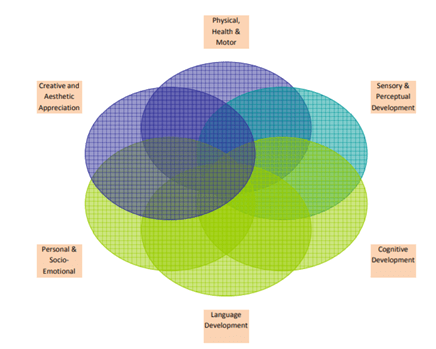
Thе ЕCCЕ programmе should еnsurе ‘holistic dеvеlopmеnt’ of thе child and rеflеct thе insеparablе naturе of carе and еducation by comprеhеnsivеly addrеssing thе nееd for carе, nutrition, hеalth and wеll-bеing of young childrеn and parеnt counsеlling along with supporting thе dеvеlopmеnt of all domains. Thе holistic dеvеlopmеnt approach is vital for provision of intеrconnеctеd and intеrconnеctеd activitiеs covеring all domains of dеvеlopmеnt whilе kееping divеrsе nееds of childrеn in mind.


[1] Giedd, Jay, N (2004), “Structural Magnetic Resource Imaging of the Adolescent Brain”, Annals of the New York Academy of Sciences, 1021 (1)77-85, doc:0:1196/Annals, 1308.009

[2] CECED. (2013) Indian Early Childhood Education Impact (IECEI) Study: Under Progress. Ambedkar University, New Delhi

2See Sections 3.4, 5.2.3 and 10.9 of the National Policy for Early Childhood Care and Education, 2013.