Australian International Education Conference

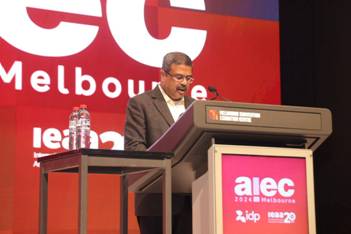
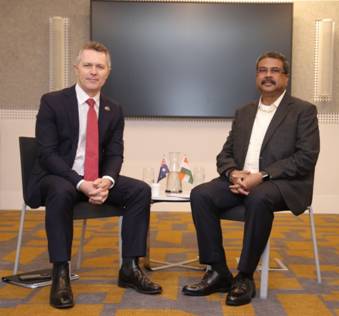
Union Minister for Education, Shri Dharmendra Pradhan, delivered the plenary speech at the Australian International Education Conference in Melbourne, Australia, today. Shri Pradhan also held a Bilateral Meeting with his counterpart Minister for Education, Government of Australia, Mr. Jason Clare MP. Members of the Indian delegation, heads of the universities of both countries, and other dignitaries were also present at the event.
Image

Shri Pradhan in his speech commended the strong and evolving partnership between India and Australia that ties the history of the two countries and will also pave the way for a brighter future together. He also reaffirmed the further strengthening of these ties under the visionary leadership of Prime Minister Shri Narendra Modi and Prime Minister of Australia Mr. Anthony Albanese.
Shri Pradhan also highlighted that in the 4th Industrial Revolution, education must prepare students to be creators and managers of technology. India’s National Education Policy provides a framework emphasising digital literacy, soft skills, critical thinking, and interdisciplinary studies to adapt to evolving job markets, he added.

Shri Pradhan emphasized that cooperation in education is the fulcrum of the India-Australia relationship. He stated that the main objective is to enhance India’s education system into a competency-based framework, focusing on skills-based education as outlined in India’s National Education Policy (NEP).
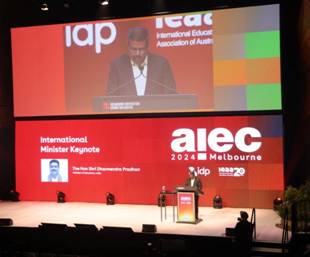
The Minister spoke about how NEP 2020 has transformed India’s learning landscape into a powerhouse of possibilities, the enduring India-Australia ties and the remarkable strides made in education cooperation powered by NEP 2020. The establishment of Australian university campuses in India is just the beginning, with much more potential to be realized, he added.

He also added that together, the countries can advance knowledge, leverage technology for global challenges, and create endless opportunities for innovation and entrepreneurship for the students.

The Minister also expressed that as a ‘Vishwa-Bandhu’, India is committed to being a trusted partner in human-centric development. The idea is to build and nurture global citizens, contributing to a brighter future for the next generation, he said.

Mr. Jason Clare MP, in his speech, emphasised the importance of a good education system that can change more than just lives. It can change nations, he added. Commending India’s education systems, he said that by 2035 one in four people around the world who get a university degree will get it in India. He mentioned how Australian universities like Deakin had been in India for 30 years and now Wollongong has one campus. He expressed his gratitude to Shri Pradhan for encouraging these initiatives. He also praised the work the six Innovative Research Universities are doing by exploring options for a consortium campus in India.
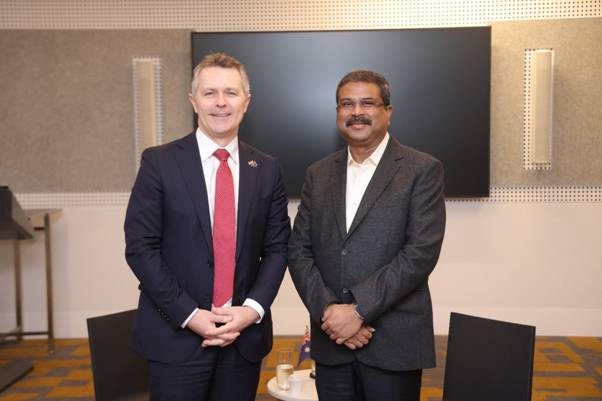
Earlier in the day, Shri Pradhan also met Mr. Jason Clare MP for a discussion regarding shared priorities of India and Australia in early childhood care, capacity building of teachers, and the potential for school twinning initiatives. Building on the strong institutional linkages between Indian and Australian higher education institutions, they agreed to further strengthen the partnership in critical and emerging technologies. They also explored the possibility of establishing branch campuses of Australian universities in India.

During these discussions, Shri Pradhan also met the Assistant Minister of Foreign Affairs, Mr. Tim Watts MP.

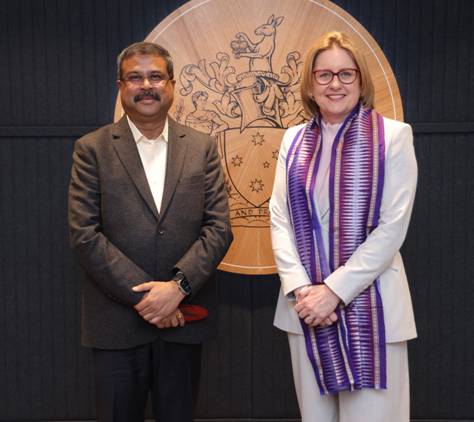
Shri Pradhan met Mrs. Jacinta Allan MP, Premier of Victoria, Australia. He highlighted that Victoria is home to the largest Indian diaspora in Australia. They had engaging conversations on ways to strengthen institutional linkages of schools and universities in Victoria with India.
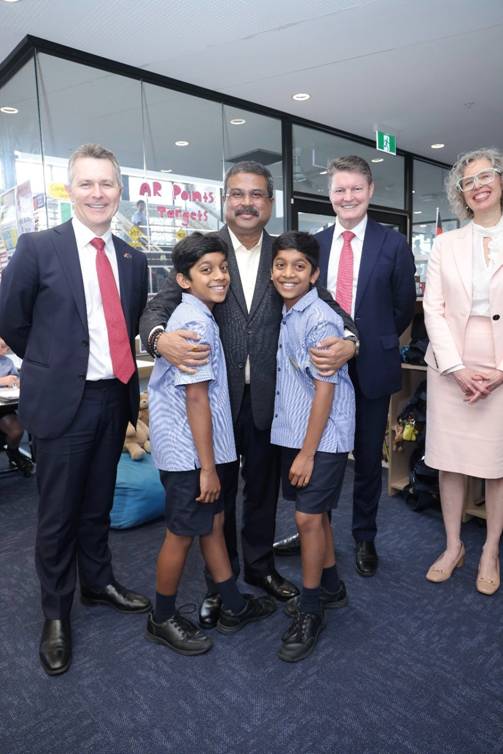
Shri Pradhan also visited South Melbourne Primary School and engaged with young learners. He explored the school’s innovative approaches to early childhood education. He emphasized how NEP 2020 in India places a strong focus on Early Childhood Care and Education (ECCE), which is essential for a child’s holistic development. He reaffirmed his commitment to adopting global best practices to make early learning universal, enjoyable, and stress-free.
Shri Dharmendra Pradhan visited the Royal Melbourne Institute of Technology (RMIT), a hub for technology, design, and enterprise. He explored their ‘Discovery to Device’ med-tech facility, fast-tracking ideas to products. He also appreciated the university’s emphasis on industry experience, hands-on skills, and focus on transforming ideas into products. Shri Pradhan explored how RMIT can partner and work with top Indian HEIs to equip Indian students with future skills and jobs.
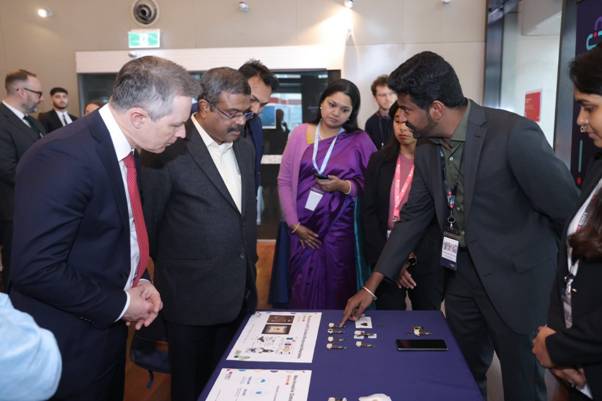
Discovery to Device transforms ideas into products, through prototyping and scale-up manufacture, to create real-world impact.
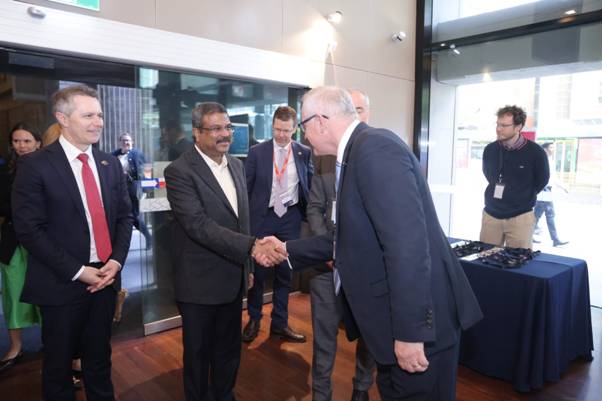
Shri Pradhan also visited Monash University, which has notably welcomed Indian students since the late 1960s. Shri Pradhan received key insights into the university’s research & innovation ecosystem and their plans to strengthen educational ties with Indian institutions through its New India Plan. He also toured the Innovation Lab & Center for Nanofabrication— commending their impressive facilities supporting talent in driving ideas into impactful innovations.
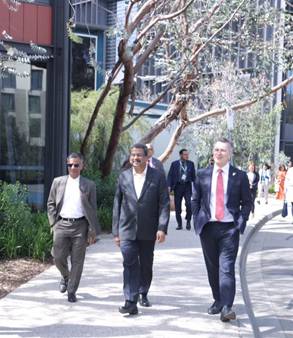
In a significant move to enhance bilateral cooperation in the education sector, Shri Pradhan is visiting Australia from 22 to 26 October 2024. The visit is expected to foster collaboration, participation, and synergy in critical areas of mutual interest in education. Earlier this week from 20-21 October, Shri Pradhan visited Singapore and met the Prime Minister, Deputy Prime Minister, Education Minister and other dignitaries to expand bilateral cooperation in skill-based education and research.

*****

DPIIT celebrates 8th Anniversary of 4 industrial Corridors

Department for Promotion of Industry and Internal Trade (DPIIT) today celebrated the 8th anniversary of 4 new industrial corridors namely Amritsar-Kolkata Industrial Corridor (AKIC), Chennai-Bengaluru Industrial Corridor (CBIC), East Coast Economic Corridor (ECEC), and Bengaluru-Mumbai Industrial Corridor (BMIC) being added to India’s Industrial landscape— that have accelerated India’s journey towards becoming a global manufacturing powerhouse.

Earlier, India’s first corridor Delhi Mumbai Industrial Corridor (DMIC) spanning Uttar Pradesh, Haryana, Rajasthan, Madhya Pradesh, Gujarat and Maharashtra was solely leading the Silent Industrial revolution in the country.

Approved on 20 November 2019, these corridors represent the Government of India’s pioneering vision to boost manufacturing and drive planned urbanization nationwide, creating significant socio-economic benefits.

The establishment of these corridors has been a critical step toward transforming India’s industrial landscape. Spread across key regions in India, each corridor was strategically designed to integrate industry and infrastructure, establishing world-class connectivity that supports rapid industrialization. With high-speed rail networks, modern ports, dedicated logistics hubs, and advanced airports, these corridors are setting new standards in infrastructure development.

Each of the five corridors has played a distinctive role in shaping India’s economic narrative:

Delhi-Mumbai Industrial Corridor (DMIC) has emerged as a flagship of industrial and urban development. Anchored by advanced infrastructure, DMIC’s Dholera Special Investment Region in Gujarat, Shendra-Bidkin Industrial Area in Maharashtra, Integrated Industrial Townships- Greater Noida and Vikram Udyogpuri have created a benchmark in high-tech manufacturing, offering ‘plug-and-play’ infrastructure that facilitates ease of doing business. As a joint initiative between Japan and India, DMIC also exemplifies international collaboration for industrial growth.

Amritsar-Kolkata Industrial Corridor (AKIC) connects Delhi, Amritsar, and Kolkata, spanning over 1,800 km and impacting 20 cities. This corridor benefits 40% of India’s population, supporting regional industrial development in one of the world’s most densely populated areas. Regions like Khurpia in Uttarakhand and Rajpura-Patiala in Punjab have seen a surge in industry interest, driven by tailored investment incentives and robust connectivity.

Chennai-Bengaluru Industrial Corridor (CBIC) is planned to achieve accelerated development and regional industry agglomeration in the states of Tamil Nadu, Karnataka and Andhra Pradesh. It is enhancing trade between East Asia and Southern India, with nodes stretching from Chennai to Bengaluru, and planned extensions to Mangalore.

East Coast Economic Corridor (ECEC), India’s first coastal corridor, has amplified the nation’s trade and export capacities. Several ports located across the corridor not only serve as international gateways but, more importantly, act as critical links in the supply chain. By supporting logistics, packaging, and other services for production clusters and distribution centers, they are a valuable source of economic activity and development. The Vizag-Chennai Industrial Corridor (VCIC) has been designated as the first phase of the ECEC.

Bengaluru-Mumbai Industrial Corridor (BMIC) has prioritized regions with high industrial potential, such as Dharwad in Karnataka and Satara in Maharashtra. As one of the latest corridors, BMIC is establishing high-tech, multi-modal logistics and manufacturing hubs that complement existing industrial zones, ensuring balanced regional development and bridging the north-south economic axis.

On 28 August, 2024, the Cabinet Committee on Economic Affairs chaired by the Prime Minister Shri Narendra Modi approved 12 new project proposals under the National Industrial Corridor Development Programme (NICDP) with an estimated investment of Rs. 28,602 crore. Spanning across 10 states and strategically planned along 6 major corridors, these projects represent a significant leap forward in India’s quest to enhance its manufacturing capabilities and economic growth.

Some of these new projects are situated directly on the five corridors.

On DMIC, the Dighi node in Maharashtra and Jodhpur-Pali node in Rajasthan will amplify the corridor’s capacity for high-tech manufacturing and logistics.

On AKIC, Khurpia in Uttarakhand, Rajpura-Patiala in Punjab, Agra and Prayagraj in UP, Gaya in Bihar will further integrate northern states into the nation’s industrial landscape, leading to inclusive regional economic growth.

On CBIC, Palakkad in Kerala will enhance connectivity with southern manufacturing hubs, promoting trade and export potential.

On ECEC, The nodes of Kopparthy and Orvakal in Andhra Pradesh will strengthen coastal supply chains, bridging export-driven industries with inland clusters.

These industrial smart cities, like jewels in India’s economic necklace, represent the next generation of connected, self-sustaining hubs that will support local communities and elevate India’s global standing. As the nation marks five years of significant industrial progress, the recent approval of 12 new nodes signals a strong future for India’s industrial landscape, strengthening the country’s capacity for innovation, self-reliance, and sustainable economic development.

As India celebrates this milestone, the significance of the industrial corridors becomes ever more evident. These corridors are not just roads and factories; they are arteries of growth, pumping life into the nation’s industrial ambitions. They are a testament to India’s potential and its commitment to innovation, resilience, and progress. As the nation steps into the future, the corridors stand as both a foundation and a promise of what lies ahead.

**************

Hamara Samvidhan – Hamara Samman Campaign

The third regional event of the ‘Hamara Samvidhan Hamara Samman’ campaign is being organised to commemorate 75th anniversary of the adoption of the Indian Constitution and India’s establishment as a Republic whichwas successfully held today at IIT Guwahati from 4:30 PM to 5:30 PM. In the series of regional events as a part of a year-long nationwide campaign, this third regional event was organized under the aegis of the Designing Innovative Solutions for Holistic Access to Justice (DISHA) scheme[1], implemented by the Department of Justice, Ministry of Law and Justice, Government of India.

The event was graced by Shri Arjun Ram Meghwal, the Minister of State for Law and Justice (Independent Charge) and Minister of State for Parliamentary Affairs, who delivered the keynote address. Hon’ble Minister emphasized the importance of Constitutional awareness and legal empowerment. Shri Justice Vijay Bishnoi, the Hon’ble Chief Justice of the High Court of Gauhati, attended the event as the Guest of HonourHon’ble Justice Shri Lanusungkum Jamir attended the program as an esteemed guest and shared the dais.

The event began with a significant and symbolic gesture of planting of saplings to honor the 15 women members of the Constituent Assembly, who played a crucial role in the creation of India’s Constitution. This tribute under the campaign of ‘Ek Ped Maa Ke Nam’ was an attempt to highlightthe pivotal yet often overlooked role of women in shaping the country’s democratic foundation.

Welcoming the dignitaries on the dais and the audience, Secretary (Justice) DoJ, shared the various elements of the Hamara Samvidhan Hamara Samman Campaign and the releasesof three products which were launched during the event namely Samvidhan Katta, Comic Book and Podcasts.

The Samvidhan Katta magazine, which showcases 75 stories that illustrate the impact of the Indian Constitution in everyday life. These stories, shared by stakeholders and field functionaries from the Tele Law and Nyaya Bandhu programs, provided insightful perspectives on how the Constitution continues to safeguard the rights of Indian citizens.

Comic Bookwas unveiled during the event, featuring the real-life stories of 10 beneficiaries who have used the Tele Law and Nyaya Bandhu programs to protect their Constitutional rights. Presented in an engaging comic format, the book aims to make legal rights more accessible and relatable to the general public.

In addition, eight podcasts were released, focusing on the role of the Tele Law and Nyaya Bandhu programs in helping citizens safeguard their rights. These podcasts, aimed at reaching a broader audience, provide practical insights into the significance of the Constitution and how it can be used to defend legal rights.

Highlighting the significance of the Hamara Samvidhan Hamara Samman campaign, Guest of Honor, Hon’ble Chief Justice of Gauhati High Court, Shri Vijay Bishnoi reflected he Constitution of India, as the fundamental law of the land, embodies the values, principles, and governance framework of our country. All the organs of the State owe their origin and derive their authority from the Constitution and discharge their respective functions within its framework. The Constitution of India is the supreme legal authority which binds the legislative, executive, and judicial organs of our country, and guides the State’s functioning, while ensuring citizen’s rights and responsibilities. He further mentioned that this awareness is necessary so that all of us, irrespective of our social, political, Ideological, religious, linguistic and economic differences, can lead dignified life in a just society.

Addressing the audience Hon’ble Minister reflected that the Constitution of India protects the citizens of India.  Hon’ble Minister mentioned that the planting of sapling is a special tribute in honor of 15 women members of the Constituent Assembly. These remarkable women, who worked tirelessly and selflessly, have often remained unsung heroes in the narrative of India’s democratic journey.  Hon’ble Minister mentioned that as we planted these saplings, we symbolize not only the deep roots of our Constitution but also the growth of values such as justice, equality, and freedom, which continue to nurture our society today. He also mentions about the drafting Committee member who belonged from Assam,Syed Muhammad Saadulla was the only member from Assam to serve on the Drafting Committee of the Constitution of India. He also mentions about the female member of the Constituent assembly which was Late Smt. Leela Roy. Hon’ble Minister made the participants aware about the contributors in the making of the Constitution. The purpose behind organizing third regional event in Assam was to remember the contributions made by the people of Assam in the making of the Constitution as it’s the 75th year of its adoption.He paid tribute to Dr. B.R. Ambedkar to his contribution in the making of the Constitution of  India. He also elaborated His last speech before the adoption of the Constitution. He further mentioned about the importance of Ashoka chakra in our National Flag where 24 spokes which have its own relevance and importance to the daily lives of the citizens. Furthermore, he elaborated on the core values of the Constitution, with a particular focus on equality, liberty and fraternity and encouraged attendees to remain aware of their rights and perform their respective duties as citizens by elaborating an example from daily life.

Dignitaries were presented with special mementoin the form of Preamble of the constitution of India.Shri Niraj Kumar Gayagi, Joint Secretary, Department of Justice.Presented a vote of thanks at the end of the event.

Approximately 1400 participants attended the event, including Hon’ble Judges of the Gauhati High Courtofficials from the High Court Registryofficials from the Assam State Legal Services Authorityadvocates from the Guwahati Bar Associationjudicial officersVillage-Level Entrepreneurs (VLEs) from the Common Service Centers (CSCs)students and faculty from National Law University, Guwahati, and senior officials from IIT Guwahati, along with Central and State government representatives. In addition, several stakeholders of the Department of Justice joined the event virtually, contributing to the event’s outreach and inclusivity.

The ‘Hamara Samvidhan Hamara Samman’ campaign, which was officially launched by the Hon’ble Vice President of India on 24th January 2024 at the Dr. B.R. Ambedkar International Centre in New Delhi, has aimed to promote the understanding of the Indian Constitution and raise awareness about legal rights among citizens. As part of its efforts, regional events have been organized across the country, with Bikaner and Prayagraj already hosting successful events in the past year. The Guwahati event marks a significant step in furthering the campaign’s goals, reaching diverse communities in the Northeast.

****

Success of ‘Sagarmanthan’ to Build Consensus for Partnerships of a Prosperous Future of Humanity

Daily writing prompt
Who are your current most favorite people?

The Prime Minister Shri Narendra Modi shared his message on the successful organising of the maiden maritime event – Sagarmanthan, The Ocean’s Dialogue – being held at the national capital. PM Modi called for success of Sagarmanthan to build consensus for partnerships of a prosperous future of humanity.

In his message sent from Camp Office in Nigeria, the PM Modi shared, “Our vision for a free, open and secure maritime network – be it the Indian Ocean or the Indo Pacific region – is finding resonance across the world. The ‘Indo Pacific Oceans Initiative’ envisions marine resources as a key pillar for growth for nations. This dialogue on oceans further strengthen the rules-based world order and enhance peace, trust and friendship between nations. As we strive to realise the vision of a Viksit Bharat by 2047, dialogues such as Sagarmanthan are invaluable to build consensus, partnerships and most importantly, a prosperous future. With the collective efforts of all stakeholders, I am confident that these discussions will resonate far and wide, paving the way toward a brighter, more connected future.”

Highlighting India’s rich maritime legacy & steps to build the sector, the PM Modi shared, “India’s maritime tradition goes back several millennia and is among the richest in the world. The thriving port cities of Lothal and Dholavira, the fleets of the Chola dynasty, the exploits of Chhatrapati Shivaji Maharaj are great inspirations. Oceans are a shared heritage for nations and societies, as well as the lifeline for international trade. Today, the security and prosperity of nations is intimately connected to oceans. Recognising the potential of oceans, several transformative steps have been taken to bolster India’s maritime capabilities. Over the last decade, guided by the vision of ‘Ports of Prosperity,’ ‘Ports for Progress’ and ‘Ports for Productivity,’ we have doubled the capacity of our ports. By enhancing port efficiency, reducing turnaround times and strengthening last-mile connectivity through expressways, reducing turnaround times and strengthening last mile connectivity through expressways, railways and riverine networks, we have transformed India’s shoreline.”

Acknowledging the pioneering role for transformation of maritime sector, the Union Minister of Ports, Shipping & Waterways, Shri Sarbananda Sonowal thanked the Prime Minister for his generous words for the success of the maiden edition of Sagarmanthan – The Oceans Dialogue. On PM Modi’s message, the Union Minister Sarbananda Sonowal said, “Under the dynamic leadership of Prime Minister Shri Narendra Modi ji, India has been witnessing a transformational experience in the maritime sector. The message by the Prime Minister Modi ji encapsulates the very essence that this maiden maritime thought leadership forum – Sagarmanthan – aims to achieve. In his own words, Modi ji shared the framework to a ‘Viksit Bharat’ based on how ‘collaboration and effort can yield the tools and direction we need to ensure prosperity.’ I, on behalf of all whose tireless effort has led to this wonderful forum, want to extend deepest appreciation to the most popular leader of the world, Narendra Modi ji, for his visionary message of rich wisdom, insight & sense for the success of ‘Sagarmanthan – The Oceans Dialogue’.”

****

India-Australia Cooperation in field of Public Administration and Governance Reforms

Daily writing prompt
Name your top three pet peeves.

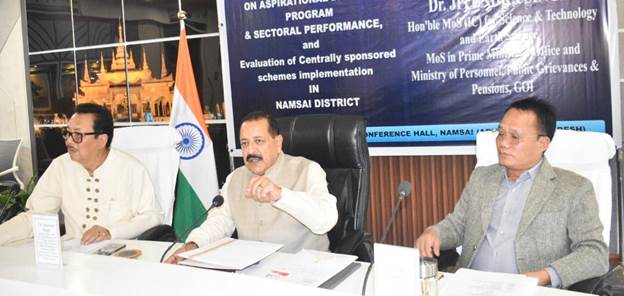
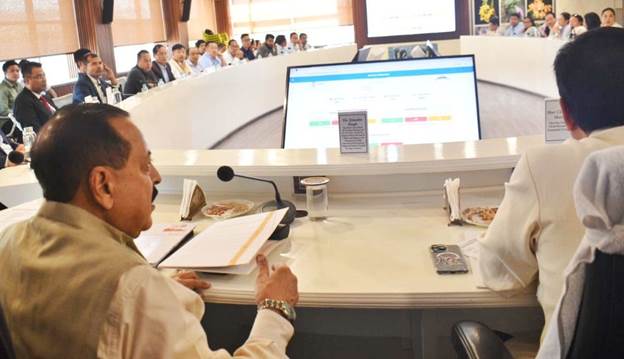
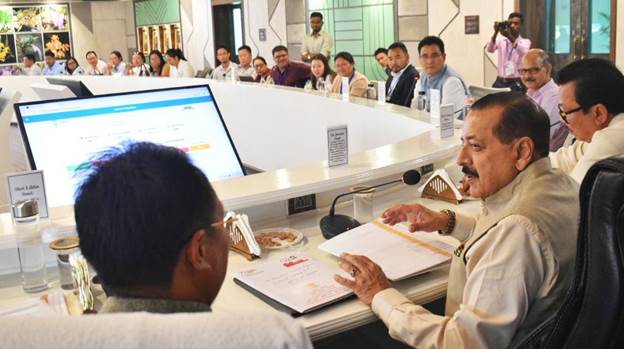
On the second day of his visit to Namsai district, Union Minister Dr. Jitendra Singh reviewed the district’s performance under the Aspirational District Programme (ADP). Emphasizing collaboration, convergence, and competition, he underscored the transformative impact of Prime Minister Narendra Modi’s vision and said, PM Modi has made Northeast an essential part of India’s mainstream growth story.

The Minister noted that before 2014, the region often felt alienated from the rest of the country. Today, it stands as an integral part of India’s cultural and developmental landscape. Citing examples such as youth from the North East excelling in the tourism and aviation industries, Dr. Jitendra Singh stressed the strides made in fostering a sense of belonging and national integration.

Highlighting good practices in Namsai, he pointed out initiatives such as integrating Anganwadi Centres with schools to improve early childhood education and health outcomes and the innovative “Pehli Sawari” ambulance service for newborns. Such ideas, he said, are worth replicating across other aspirational districts.

Dr Jitendra Singh appreciated the fact that the Namsai district has emerged as a beacon of progress under the Aspirational District Program (ADP), showcasing remarkable improvements across various sectors, including health, education, and infrastructure. The district’s composite score has surged from 35.8 in April 2018 to 54.0 in March 2024, reflecting a 37.64% improvement. This leap has propelled Namsai from the 97th position to the 12th among 112 districts, earning it accolades and substantial rewards under the Sustainable Development Goals – Empowered Action Group (SDG-EAP).

WhatsApp Image 2024-11-18 at 4.03.18 PM.jpeg

The health sector in Namsai has witnessed transformative changes. The district has achieved a 100% conversion of sub-centres and Primary Health Centres (PHCs) into Health and Wellness Centres (HWCs). Additionally75% of PHCs now comply with Indian Public Health Standards (IPHS), and 70% of specialist services are available in district hospitals. However, challenges remain, such as the acute shortage of General Duty Medical Officers (GDMOs) and nurses, and the absence of radiologists in the district hospital.

Maternal and child health indicators have also shown significant progress. The percentage of pregnant women receiving four or more antenatal care check-ups has increased from 35.46% in April 2018 to 81.3% in March 2024, and institutional deliveries have surged from 46.7% to 117%. The district has also achieved a remarkable 119% immunization rate for children aged 9-11 months.

Namsai’s education sector has made strides in improving literacy and school infrastructure. The district, which has a predominantly rural population with 76% dependent on agriculture, has focused on enhancing government schools, which cater to 67% of the student population. The literacy rate has improved, but it still lags behind state and national averages.

Key initiatives include the renovation of 27 old school buildings, construction of additional classrooms, and provision of computer labs in five government higher secondary schools. The district has also addressed basic amenities, ensuring functional toilets in 81% of schools and drinking water facilities in 98% of schools. The innovative e-fencing software has been implemented to monitor attendance and reduce absenteeism.

The district’s progress is a result of collaborative efforts involving various stakeholders. Significant projects include the construction of a laboratory building and an OPD building under Corporate Social Responsibility (CSR) initiatives, the establishment of model Anganwadi Centres, and the provision of modern diagnostic equipment for district hospitals and Community Health Centres (CHCs). The “Pehli Sawari” initiative, funded by Indian Oil Corporation Limited (IOCL), provides free ambulance services for institutional deliveries, further enhancing maternal health outcomes.

Agriculture and Infrastructure: Addressing Challenges and Leveraging Potential

Agriculture remains a critical sector for Namsai, with 74% of the population engaged in farming. The district faces challenges such as inadequate irrigation facilities, exploitation by middlemen, and low productivity of local livestock. However, the fertile plains and excellent road connectivity offer significant potential for agricultural diversification and agro-based industries.

WhatsApp Image 2024-11-18 at 4.03.19 PM.jpeg

Infrastructure development has also been a priority, with 100% household electrification, improved road connectivity under the Pradhan Mantri Gram Sadak Yojana (PMGSY), and enhanced access to potable water and sanitation facilities.

Namsai’s journey under the ADP serves as a model for other aspirational districts. The district’s comprehensive approach, focusing on health, education, and infrastructure, coupled with collaborative efforts, has yielded significant improvements. As Namsai continues to address its challenges and leverage its potential, it stands as a testament to the transformative power of targeted development programs.

WhatsApp Image 2024-11-18 at 4.03.17 PM.jpeg

Dr. Jitendra Singh’s visit not only showcased the achievements of Namsai but also highlighted its potential as a model for other districts. The Minister emphasized that such targeted developmental efforts demonstrate how collaboration and innovative practices can overcome challenges and drive inclusive growth.

As Namsai continues its journey of progress, its story serves as an inspiration for aspirational districts across India. The Minister’s visit has reignited focus on leveraging local potential and ensuring equitable development, aligning with the government’s vision of a self-reliant and inclusive India.

***

Ease of Living for the Pensioners through Digital Empowerment: DLC (Digital Life Certificate) Campaign 3.0

Daily writing prompt
Name your top three pet peeves.

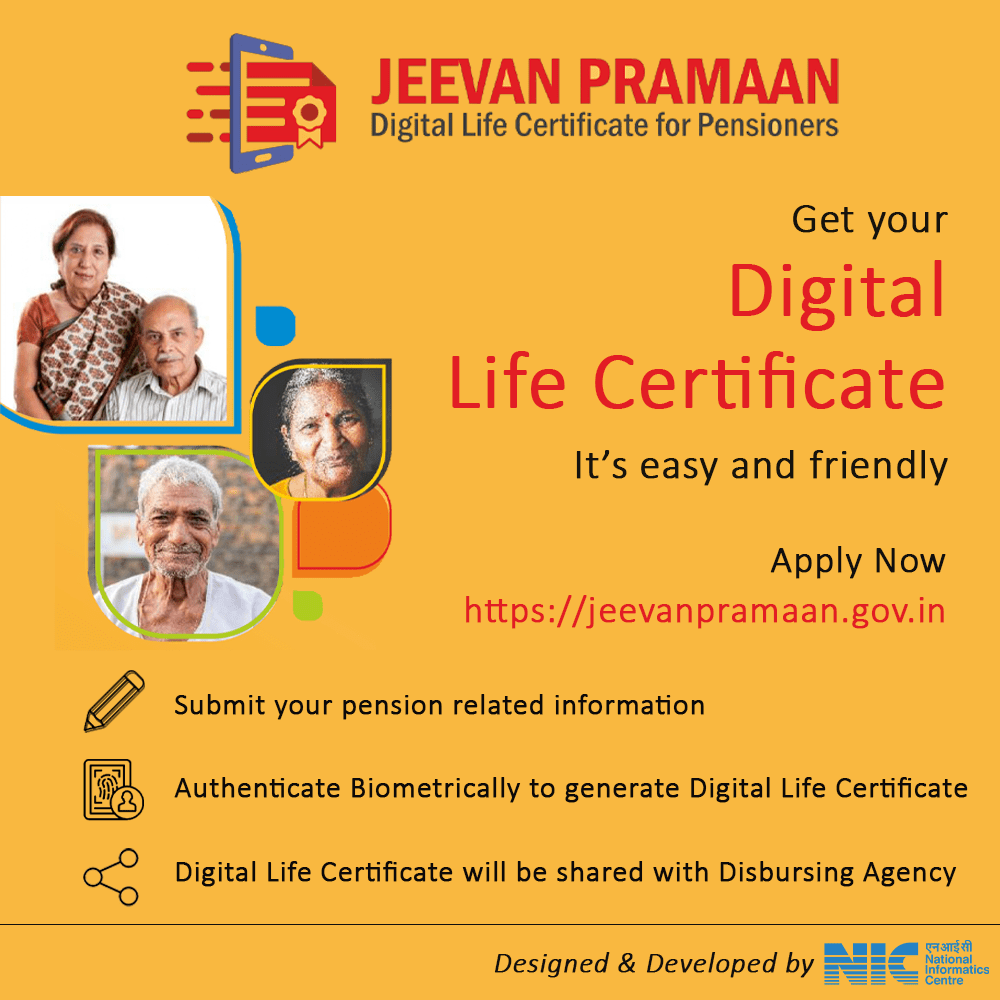
Jeevan Pramaan is the vision of the Prime Minister, Shri Narendra Modi for Digital Empowerment of Pensioners. All key stakeholders – Pension disbursing banks, Department of Pensions and Pensioners Welfare, Controller General of Defence Accounts, Ministry of Railways, Department of Telecom, Department of Posts, IIPB, UIDAI and Pensioners Welfare Associations are working with whole of government approach to realise the vision of Digital Empowerment of Pensioners.

Department of Pensions and Pensioners Welfare launched the Nation-wide Digital Life Certificate Campaign 3.0 for Digital Empowerment of Pensioners at National Media Center, New Delhi on 6th November 2024. The DLC Campaign 3.0 is being held in 800 cities/ towns of India from November 1-30, 2024. 1575 camps have been held from November 1-17, 2024 in 800 cities/districts, 1.8 lac postmen deployed across the country.

In this campaign, the Department of Pension & Pensioners’ Welfare is putting all efforts to create awareness amongst all pensioners regarding DLC-Face Authentication technique by way of banners / posters placed strategically in offices and all Bank Branches / ATMs. All Banks have created a team of dedicated staff at their branches having downloaded the desired apps in their smart phones who are using this technology extensively for submission of Life Certificates by the pensioners. In case, the pensioners are not able to visit the Branches due to old age/illness/weakness, the Bank officials are also visiting their homes/hospitals for the above purpose.

The Pensioners’ Welfare Associations are extending their full support to the Campaign. Their representatives are motivating the pensioners to visit the nearby Camp locations and submit their DLCs. The officials from Department of Pension & Pensioners’ Welfare are also visited major locations through-out the Country to assist pensioners in use of various digital modes to submit their Life Certificates and monitoring the progress very closely.

As a result, Digital Life Certificate (DLC) Campaign 3.0 has made remarkable progress by the end of 2nd second week, achieving significant milestones in its mission to bring convenience and accessibility to pensioners across the nation. The campaign has successfully generated over 77 lacs Digital Life Certificates by the end of 2nd week of launch of the 3.0 Campaign, out of which about 1,77,153 pensioners above 90 years old and 17,212 pensioners between 80 – 90 years category could submit their DLCs from the comfort of their home/locations/offices/branches. This incredible momentum underscores the commitment of our pensioners, banking institutions, and government agencies towards a digitally empowered India. A lot of excitement has been observed amongst all the stakeholders, particularly sick / very old pensioners at all the locations.

Key highlights of the campaign include:

  • Mega Camps: As part of the Campaign, 4 Mega camps have been organized, 2 in Delhi (4-5 November), 1 in Bengaluru (8 November) and 1 in Hyderabad (12 November) involving all stakeholders. Secretary PPW participated in all these camps and encouraged pensioners to adopt digital modes of submission of LCs.
  • Bank-wise Achievements: SBI and PNB are leading the Campaign by generating more than 9 lacs DLCs by the end of 2nd week of the month-long Campaign, while Canara Bank and Central Bank of India registered impressive performances by generating 1 lacs and 57,000 DLCs respectively.
  • State-Wise Progress: Maharashtra led the way with over 10 lacs certificates generated, followed by Tamilnadu and West Bengal 6 lacs each. Uttar Pradesh has also done well with more than 5 lacs DLCs.
  • Departmental Contributions: The Defence Department stood out with a 21 lacs DLCs, while the Telecom Department generated an impressive 3.1 lacs DLCs. Civil Departments also contributed significantly with over 3.4 lacs certificates generated.
  • IPPBs Performance: IPPB generated 4.4 lacs DLCs by the end of 2nd week of the campaign. IPPB has played key role in delivering doorstep delivery of services.
  • Face Authentication: Advanced authentication methods such as Face Recognition contributed to 24 lacs certificates, making up 34% of the total DLCs generated. There is 204 times increase in DLCs submitted through Face Authentication under DLC Campaign 3.0.

This campaign is a testament to DoPPW’s unwavering commitment to harnessing digital tools for the benefit of every pensioner. All stakeholders extended their full support to this campaign. This momentum shall continue to make DLC Campaign 3.0 a historic success.

***

NHRC, India organizes a three-day capacity building programme on human rights for the State Human Rights Commission, Arunachal Pradesh

Daily writing prompt
Who are your current most favorite people?

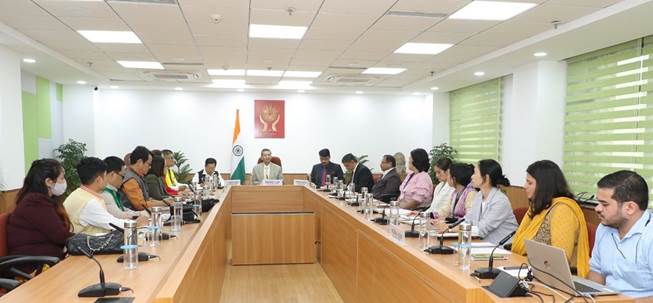
The National Human Rights Commission (NHRC), India is organizing a three-day Capacity Building Programme on human rights for the officials of State Human Rights Commission, Arunachal Pradesh, at New Delhi. The programme is a part of the ongoing initiative of the Commission to reach out and help in the capacity building of the State Human Rights Commissions (SHRCs) for protection and promotion of human rights of all. The NHRC works in tandem with SHRCs and other such bodies to protect and promote human rights in the country.

alt

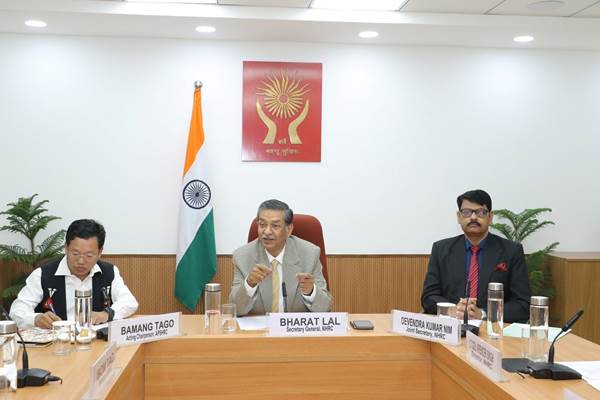
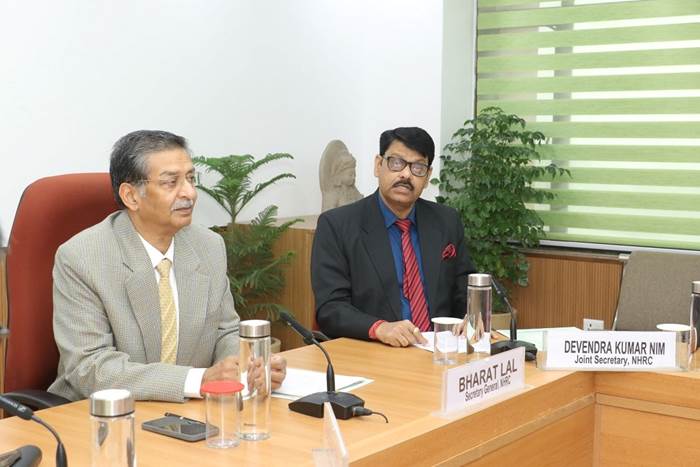
In his opening remarks, Mr Bharat Lal, Secretary General, NHRC emphasized that sensitivity, promptness and responsiveness are important traits to dealing with human rights issues and violations. The NHRC and SHRCs are part of a framework in the country to ameliorate the cause of human rights. The programme has been designed for having interactive sessions.

alt

Mr Lal underscored the importance of proactive and speedy redressal of complaints to provide relief to the victims of human rights violations. This would help people to develop faith in the system. The three-day programme would enable the officers to understand how the system should be functioning. He expressed the hope that the exposure to the structured functioning of the NHRC, within the ambit of the Protection of Human Rights Act, 1993 would be useful for the officers of the APSHRC.

alt

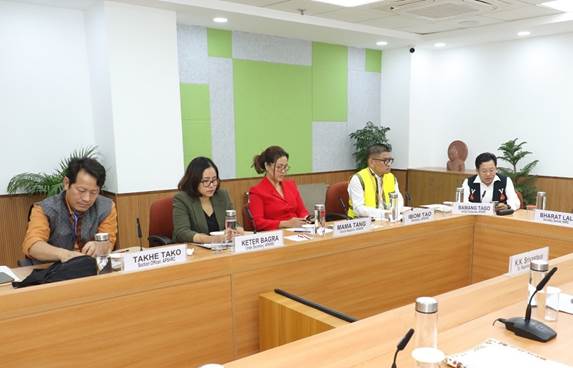
Earlier, the APSHRC Acting Chairperson, Mr Bamang Tago thanked the NHRC, India for organizing this programme. He said that the APSHRC is relatively a new SHRC, therefore, this capacity building programme is crucial for its officers, particularly in terms of learning the handling, registration and disposal of cases from the NHRC given its experience over the past three decades. He expressed the hope that the training would help not only the SHRC as an organization but also each participant individually in deepening their understanding of human values and the rights in the country.

alt

At the start of the 3-day programme, Shri Devendra Kumar Nim, Joint Secretary, NHRC said that it would equip the officers towards promoting and protecting the rights of the people. Their exposure to the functioning of the NHRC which inter alia includes registration and processing of complaints, enquiries, training, research, international mechanism, outreach activities, media and communication, publications, etc. may support them in carrying out their work more efficiently and effectively, to build a shared vision of protecting and promoting human rights in the country.

alt

*****

Grievance Redressal Assessment And Index (GRAI) 2023 Launched On 18 November 2024

Daily writing prompt
Who are your current most favorite people?

Union Minister of State (Independent Charge) Science & Technology; Minister of State (Independent Charge) Earth Sciences; MoS PMO, Personnel, Public Grievances, Pensions, Atomic Energy and Space, Dr Jitendra Singh has launched Grievance Redressal Assessment and Index (GRAI) 2023 in the presence of Shri V. Srinivas, Secretary, Department of Administrative Reforms and Public Grievances (DARPG), Govt. of India.

Grievance Redressal Assessment and Index (GRAI) was conceptualized and designed by the DARPG, Govt. of India based on the recommendation of Parliamentary Standing Committee of Ministry of Personnel, Public Grievances and Pensions with an objective to present organigation-wise comparative picture and provide valuable insights about strengths and areas of improvement regarding grievance redressal mechanism. The first edition of GRAI 2022 was released on 21 June 2023.

Eighty-nine Central Ministries and Departments were assessed and ranked based on a comprehensive index in the dimensions of (1) Efficiency, (2) Feedback, (3) Domain and (4) Organisational Commitment and corresponding 11 indicators. To compute the index, data between January and December 2023was used from the Centralised Public Grievance Redressal and Management System (CPGRAMS).

As part of GRAI, Ministries and Departments are grouped in three groups based on the number of grievances registered in calendar year 2023 at CPGRAMS viz.

GroupsRegistered Grievance RangeNo. of Ministries/Departments
Aregistered grievances > 10,00028
Bregistered grievances 2,000 to 9,99933
Cregistered grievances < 2,00028

Department of Agriculture and Farmers Welfare, O/o the Comptroller & Auditor General of India and Department of Investment & Public Asset Management have topped the rankings in Group A, B and C respectively. A detailed list with top three Ministries and Departments in composite and dimension-wise ranking is as follows:

#Rank 1Rank 2Rank 3
Group A:Grievances > 10,000CompositeDepartment of Agriculture and Farmers WelfareDepartment of PostsMinistry of Cooperation
EfficiencyMinistry of CooperationDepartment of TelecommunicationsMinistry of Labour and Employment
FeedbackDepartment of Agriculture and Farmers WelfareCentral Board of Direct Taxes (Income Tax)Department of Defence
DomainUnique Identification Authority of IndiaMinistry of Home AffairsMinistry of Cooperation
Organisational CommitmentDepartment of PostsDepartment of TelecommunicationsMinistry of Corporate Affairs
Group B:Grievances 2,000 – 9,999CompositeO/o the Comptroller & Auditor General of IndiaDepartment of Land ResourcesNITI Aayog
EfficiencyDepartment of Legal AffairsDepartment of Land ResourcesNITI Aayog
FeedbackO/o the Comptroller & Auditor General of IndiaDepartment of ExpenditureDepartment of Financial Services (Pension Reforms)
DomainDepartment of Land ResourcesMinistry of Parliamentary AffairsMinistry of Drinking Water and Sanitation
Organisational CommitmentDepartment of Empowerment of Persons with DisabilitiesDepartment of Land ResourcesMinistry of Ayush
Group C:Grievances < 2,000CompositeDepartment of Investment & Public Asset ManagementMinistry of Development of North Eastern RegionDepartment of Pharmaceuticals
EfficiencyDepartment of Investment & Public Asset ManagementMinistry of Development of North Eastern RegionMinistry of Mines
FeedbackDepartment of PharmaceuticalsDepartment of Public EnterprisesDepartment of Investment & Public Asset Management
DomainMinistry of Development of North Eastern RegionDepartment of Youth AffairsDepartment of Bio Technology
Organisational CommitmentDepartment of Official LanguageDepartment of Chemicals and PetrochemicalsLegislative Department

In the GRAI 2023report released by DARPG, detailed Root-Cause Analysis has been included with specific inputs on areas of further improvement. This report presents a two-dimensional (vertical and horizontal) analysis of the root causes of effective redressal of grievances of each Ministries and Departments in an easily discernible colour coded analysis. The report also presents brief description of technical partners DARPG has engaged to facilitate the Ministries and Departments to optimally utilize CPGRAMS as a means of effective grievance redressal media.

Over the years, CPGRAMS has become a key tool for enhancing government accountability and transparency by enabling citizens to file and track grievances online. The Commonwealth Secretariat has recognised CPGRAMSas a best practice in Commonwealth Secretaries of Public Service / Secretaries to Cabinet meeting in April 2024.

The GRAI 2023 report presents a clear roadmap with an advisory for the Ministries and Departments to leverage CPGRAMS and its features like IGMS 2.0, TreeDashboard, etc., to enhance grievance redressal. The roadmap for improvement emphasizes integrating advanced technologies like AI and ML for data analysis, predictive analytics and preventive measures while revising ATR formats for better reporting. Capacity building for GROs, enhancing accountability through audits and extending CPGRAMS integration to the third-tier of government are key recommendations.

***

President Election in USA

The election of the President in the United States is a complex process rooted in the Constitution, involving both the popular vote and a unique mechanism known as the Electoral College. Every four years, Americans go to the polls to select their President and Vice President, with the next election set to occur on November 5, 2024.

1. Primary Elections and Nominations

The presidential election process begins with primary elections and caucuses, which are organized by political parties across the 50 states. These elections determine each party’s nominee, allowing voters to select their preferred candidate within their party. Primaries may be closed (only registered party members can vote) or open (allowing any voter to participate). Candidates compete for delegates who will officially support them at the party’s national convention.

During the National Conventions, the chosen delegates from each party formally nominate their candidate for President. The candidate then selects a running mate for Vice President, and the party platform is finalized.

2. The General Election Campaign

After the conventions, the focus shifts to the general election campaign. Presidential candidates campaign nationwide, debating and addressing issues to appeal to a broad voter base. The general election campaign lasts several months and includes televised debates, town hall meetings, rallies, and advertisements.

3. The General Election and Popular Vote

On Election Day, citizens cast their ballots for their preferred candidate. While many people believe they are directly voting for the President, they are actually voting for a slate of electors pledged to their candidate. This vote, called the popular vote, determines which candidate will receive the electoral votes from each state.

4. The Electoral College

The Electoral College is a unique feature of the U.S. presidential election process. Established in the Constitution, it allocates a certain number of electors to each state, equal to its total number of senators and representatives in Congress (with Washington D.C. receiving three electors). In total, there are 538 electors, and a candidate needs at least 270 electoral votes to win the presidency.

In most states, the candidate who wins the popular vote receives all the state’s electoral votes. However, Maine and Nebraska use a district-based system, where two votes go to the statewide winner, and the remaining votes are awarded based on each congressional district’s results.

5. Electoral College Vote and Certification

After the general election, electors meet in their respective state capitals in December to cast their votes. These votes are then sent to Congress, where they are formally counted in early January. If a candidate receives at least 270 electoral votes, they are certified as the President-elect.

In rare cases, if no candidate achieves the required majority, the decision is made by the House of Representatives. The House elects the President from the top three candidates, with each state delegation having one vote, while the Senate elects the Vice President from the top two candidates.

6. Inauguration Day

The new President and Vice President are inaugurated on January 20, formally marking the transition of power. The President takes the oath of office administered by the Chief Justice of the United States, followed by an inaugural address, symbolizing the beginning of a new administration.

Conclusion

The U.S. presidential election process, involving both direct and indirect voting mechanisms, reflects a blend of democratic values and unique historical considerations. The system emphasizes both popular input through direct voting and federal principles through the Electoral College, providing a distinctive approach to electing the nation’s highest office.

Workshop on Building Quality Infrastructure and Enhancing Academic Aspects for Tribal Education Held by NESTS

Daily writing prompt
What historical event fascinates you the most?

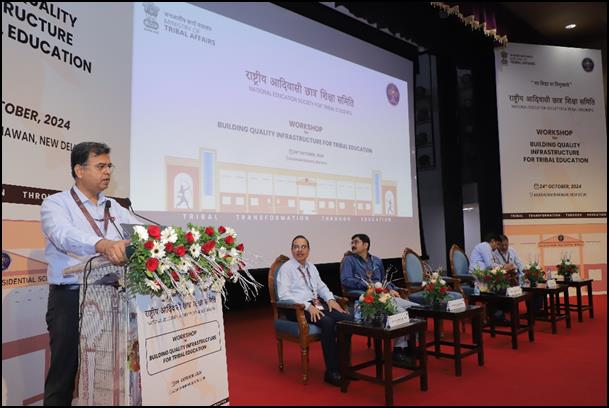
National Education Society for Tribal Students (NESTS) successfully organized a workshop on “Building Quality Infrastructure for Tribal Education” on 24th October 2024 at Akashvani Bhawan, New Delhi. This event is part of the government’s ongoing efforts to provide quality educational infrastructure for tribal communities through Eklavya Model Residential Schools (EMRSs), ensuring sustainable and effective learning environments.

Shri Ajeet K. Srivastava, Commissioner of NESTS, inaugurated the workshop, emphasizing the critical need for completing EMRS construction on time with emphasis on quality of construction. He stated, “Non completion of good quality EMRS on time means tribal children not going to school which is unacceptable.” He exhorted the participants to take pledge that they would construct EMRS before time by ensuring best quality of construction. Commitment to multifaceted development is evident in NESTS’ initiatives, including modern educational programs like the Amazon Future Engineering program and the organization of a Principal’s Conclave focused on academic and administrative excellence. This holistic approach underscores the importance of providing both high-quality infrastructure and advanced educational opportunities for tribal students.

Shri Ajeet K. Srivastava, Commissioner, NESTS addressing the gathering.

The workshop covered essential technical aspects such as geotechnical investigations, material testing, earthwork, and the reinforcement of construction practices in tribal areas. Participants included civil engineers, project managers, and architects, all eager to share best practices and insights from the newly launched handbook titled “Building Quality Infrastructure for Tribal Education.”

Interactive sessions focused on project planning, architectural layouts, and specific reinforcement issues related to tribal education infrastructure. Participants emphasized the importance of aligning construction practices with the unique geographical and cultural contexts of tribal regions for sustainable development.

Throughout the day, expert speakers provided valuable insights, fostering collaboration and innovative solutions to infrastructure challenges.

Topics included quality assurance during the construction process, effective material testing methodologies, and strategies for successful project planning. Interactive Q&A sessions allowed participants to address specific issues related to EMRS development, facilitating knowledge exchange and practical problem-solving.

This pioneering workshop represents a significant step forward in NESTS’ mission to enhance educational access and quality for tribal communities, reaffirming its vision of providing equal opportunities for all tribal students.

****

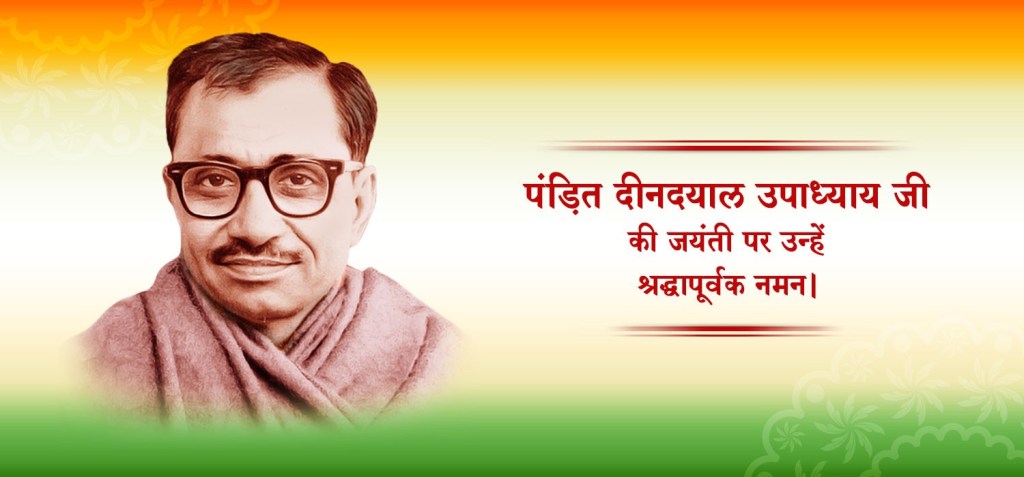
Pandit Deendayal Upadhyaya (1916–1968)

Daily writing prompt
What details of your life could you pay more attention to?

Pandit Deendayal Upadhyaya (1916–1968) was an Indian politician, philosopher, economist, and thinker, who played a significant role in shaping the political and ideological framework of modern India. He was a key leader in the Bharatiya Jana Sangh (the precursor to the Bharatiya Janata Party, or BJP) and is best known for his formulation of the concept of “Integral Humanism”—a philosophy that sought to define India’s political and socio-economic direction post-independence.

Early Life and Education

Deendayal Upadhyaya was born on September 25, 1916, in the small town of Chandrabhan (now renamed Deendayal Dham) in Mathura district, Uttar Pradesh. His early life was marked by tragedy, as he lost his parents at a young age, and he was raised by his maternal uncle. Despite financial hardships, Upadhyaya was an excellent student, excelling academically. He attended high school in Sikar, Rajasthan, where he earned a scholarship, and later completed his graduation from Sanatan Dharma College, Kanpur. He pursued further studies at St. John’s College, Agra.

However, despite excelling academically, Upadhyaya was drawn towards nationalist politics and social work, influenced by the ideas of Rashtriya Swayamsevak Sangh (RSS), a Hindu nationalist volunteer organization that focused on nation-building and social welfare.

Political Career

Pandit Deendayal Upadhyaya’s formal political journey began when he joined the RSS in the late 1930s. Deeply committed to the cause of Hindutva (Hindu nationalism), he worked as a full-time “pracharak” (propagator) for the RSS. His dedication to nationalist ideals was evident as he worked tirelessly to expand the influence of the organization in different parts of India.

In 1951, when Syama Prasad Mookerjee founded the Bharatiya Jana Sangh (BJS), Deendayal Upadhyaya was one of its key founding members. He became the party’s General Secretary, a post he held for nearly two decades, contributing to the growth of the party. He was instrumental in defining the ideological framework of the Jana Sangh, emphasizing a vision of India rooted in its indigenous culture, values, and self-reliance.

Integral Humanism

The most important contribution of Pandit Deendayal Upadhyaya to Indian political thought is his doctrine of “Integral Humanism” (Ekatma Manav Darshan). Delivered as a series of lectures in 1965, Integral Humanism was proposed as an alternative to both Western capitalism and socialism. According to Upadhyaya, both these systems were incompatible with Indian culture and failed to meet the holistic needs of human beings.

Core principles of Integral Humanism:

  1. Holistic Development of Human Beings: Upadhyaya believed that human development must address both material and spiritual needs. Western ideologies focused too much on material prosperity, neglecting the spiritual and cultural aspects of human life.
  2. Socio-Economic Model Based on Indian Traditions: Upadhyaya advocated for an economic model rooted in Indian values, emphasizing decentralized governance and self-reliance (Swadeshi). He was against the blind adoption of Western economic policies and called for a system that balanced economic growth with ethical living.
  3. Harmony between Individual and Society: He stressed that individual aspirations should align with the well-being of society as a whole. He argued for a balance between individual rights and societal duties, avoiding both excessive state control and extreme individualism.
  4. Focus on Indigenous Solutions: Upadhyaya’s vision was fundamentally based on the cultural and spiritual ethos of India. He believed that India must evolve a political and economic system that is not an imitation of the West but instead arises from its own traditions, culture, and spiritual heritage.

Integral Humanism continues to serve as the ideological foundation of the BJP today, which sees it as a guiding principle for national development and governance.

Political Leadership and Influence

Deendayal Upadhyaya’s leadership in the Bharatiya Jana Sangh was marked by his focus on organizational discipline and ideological clarity. Although he was not a mass leader like some of his contemporaries, his influence lay in his intellectual contributions and behind-the-scenes work in strengthening the party structure. He became the President of the Bharatiya Jana Sangh in 1967, but his tenure was tragically short-lived due to his untimely death.

Despite the challenges faced by the Jana Sangh in competing with larger political entities like the Congress, Upadhyaya’s vision helped solidify the party’s role as the voice of Hindu nationalism and cultural conservatism in Indian politics. His emphasis on a politics of ethics, discipline, and indigenous values resonated with many, laying the groundwork for the later rise of the BJP.

Mysterious Death

Pandit Deendayal Upadhyaya’s life was cut short under mysterious circumstances. On February 11, 1968, his body was found near the railway tracks in Mughal Sarai (now Deendayal Upadhyaya Junction) under suspicious circumstances. The circumstances of his death remain unclear to this day, leading to various theories and speculations. His untimely death was a great loss to Indian politics, as many believe he had much more to offer in terms of thought leadership and political guidance.

Legacy

Pandit Deendayal Upadhyaya’s legacy lives on through the political ideology he helped shape. The Bharatiya Janata Party (BJP), which emerged from the Bharatiya Jana Sangh, regards him as a key figure in its ideological foundation. His thoughts on Integral Humanism continue to influence Indian politics, particularly in the realm of governance, self-reliance, and national identity.

Several institutions, programs, and initiatives have been named in his honor, reflecting the continued relevance of his ideas. The government of India, especially under the leadership of BJP, has launched numerous schemes bearing his name, including Deen Dayal Antyodaya Yojana (for poverty alleviation) and Deen Dayal Upadhyaya Grameen Kaushalya Yojana (for rural employment).

Conclusion

Pandit Deendayal Upadhyaya was a thinker and politician who left an indelible mark on Indian political thought through his advocacy of a distinctive Indian philosophy, Integral Humanism. His ideas continue to inspire contemporary political discourse in India, especially within the Hindutva movement and the broader framework of Indian governance. His focus on the integration of material and spiritual development, as well as the promotion of an indigenous economic and political system, makes him a key figure in the intellectual history of modern India.

Understanding the Dynamics of Caste and Creed: A Societal Examination

Daily writing prompt
What is one question you hate to be asked? Explain.

Caste and creed are two intricately intertwined concepts that have deeply influenced societies across the globe for centuries. Both terms carry significant weight in shaping social structures, cultural identities, and individual experiences. While often discussed separately, understanding their interplay is crucial for comprehending the complexities of societal dynamics.

Photo by Life Matters on Pexels.com

Caste: An Ancient Social Hierarchy

Caste refers to a hereditary social class system prevalent in many societies, notably in South Asia. Originating from ancient Hindu scriptures, caste delineates societal stratification based on birth, occupation, and social status. Traditionally, society was divided into four main castes, namely Brahmins (priests and scholars), Kshatriyas (warriors and rulers), Vaishyas (merchants and traders), and Shudras (laborers and artisans), with Dalits (formerly known as “untouchables”) marginalized outside this system.

Caste dictates various aspects of life, including occupation, marriage, and social interactions, often determining an individual’s opportunities and privileges. Despite legal abolishment and efforts towards social reform, caste-based discrimination and prejudice persist, perpetuating inequalities and hindering social mobility.

Creed: The Essence of Belief

Creed encompasses a set of beliefs or principles that guide an individual’s religious, spiritual, or philosophical convictions. It transcends mere religious affiliation, encompassing ideologies, values, and worldviews that shape one’s identity and interactions with the world. Creed influences moral conduct, societal norms, and cultural practices, providing a framework for individual and collective behavior.

Religious creed, in particular, holds immense significance in shaping communities and societies worldwide. It fosters solidarity among adherents, serving as a source of comfort, guidance, and communal identity. However, creed can also be a source of division, leading to sectarianism, intolerance, and conflict when differences are perceived as threats to established norms or power structures.

Interplay of Caste and Creed

The intersection of caste and creed profoundly influences social dynamics, particularly in regions where both concepts are deeply ingrained in the fabric of society. Religious communities often align with specific caste groups, intertwining religious identity with social status and cultural practices. This intersectionality manifests in various ways:

  1. Caste-Based Exclusivity within Religious Communities: In some societies, caste serves as a determinant of access and participation within religious institutions and rituals. Certain castes may be marginalized or excluded from full participation in religious activities, reinforcing social hierarchies within religious frameworks.
  2. Inter-Caste Marriage and Social Stigma: Inter-caste marriages challenge traditional social norms and face resistance from families and communities adhering to strict caste boundaries. Religious creed may exacerbate these tensions, as marriage is not only a union of individuals but also a merging of social identities and cultural practices.
  3. Political Mobilization and Identity Politics: Caste and religious identities often intersect in the political arena, with leaders mobilizing support based on shared caste or religious affiliations. This exploitation of identity politics can deepen divisions and perpetuate social inequalities, hindering efforts towards inclusive governance and social cohesion.
  4. Resistance and Reform Movements: Despite the entrenched nature of caste-based discrimination, religious creed has also been a catalyst for social reform movements advocating for equality and justice. Leaders from marginalized caste groups have drawn inspiration from religious teachings to challenge oppressive systems and promote social change.

Challenges and Pathways Forward

Addressing the complexities of caste and creed requires a multifaceted approach that acknowledges historical injustices, respects cultural diversity, and promotes inclusive social policies. Key considerations include:

  1. Legal Protections and Enforcement: Robust legal frameworks are essential for combating caste-based discrimination and ensuring the rights of marginalized communities. Efforts to enforce anti-discrimination laws must be accompanied by awareness campaigns and capacity-building initiatives to foster social inclusion.
  2. Education and Awareness: Education plays a vital role in challenging entrenched beliefs and fostering empathy and understanding across caste and religious divides. Incorporating diverse perspectives into curricula and promoting interfaith dialogue can contribute to building more tolerant and cohesive societies.
  3. Community Empowerment and Dialogue: Grassroots initiatives that empower marginalized communities and facilitate dialogue between different caste and religious groups are crucial for fostering social cohesion. By promoting mutual understanding and cooperation, communities can work towards dismantling barriers and building inclusive societies.
  4. Promotion of Intersectional Approaches: Recognizing the intersectionality of caste, creed, gender, and other forms of identity is essential for developing holistic solutions to social inequalities. Policies and programs should address multiple dimensions of discrimination to ensure that no individual or community is left behind.

In conclusion, the interplay of caste and creed shapes the social, cultural, and political landscapes of many societies, presenting both challenges and opportunities for social cohesion and justice. By addressing entrenched prejudices, promoting inclusive policies, and fostering dialogue and solidarity, societies can strive towards a more equitable and harmonious future.

Journalism and Politics

 The relationship between journalism and politics is intricate and significant, with each having a profound impact on the other.


  1. Information Dissemination: Journalism plays a vital role in informing the public about political events, policies, and decisions. It serves as a bridge between the government and the people by providing accurate and timely information.

  2. Watchdog Function: Journalists act as watchdogs, holding political leaders and institutions accountable. Investigative journalism uncovers corruption, malpractice, and misuse of power, fostering transparency and accountability in governance.

  3. Shaping Public Opinion: Media coverage can influence public opinion on political matters. The way news is framed, presented, and emphasized can sway public perceptions of politicians, policies, and current events.

  4. Access to Information: Journalists rely on access to information from political sources to report accurately. Governments and politicians control the flow of information, and conflicts often arise over transparency and the right to access certain information.

  5. Media Bias and Objectivity: Political biases can influence media coverage. Some outlets may have inherent biases based on their ownership, funding sources, or political affiliations, impacting the objectivity of their reporting.

  6. Press Freedom: The relationship between journalism and politics can be contentious in regions where press freedom is restricted. Governments may attempt to control or censor the media, suppressing critical reporting and limiting journalistic freedoms.

  7. Political Communication: Politicians use media outlets to communicate their agendas, policies, and messages to the public. They often engage in media strategies to shape their public image and gain support.

  8. Ethical Considerations: Journalistic ethics come into play when reporting on political matters. Issues such as accuracy, fairness, and the balance between public interest and privacy need to be carefully navigated.

The dynamics between journalism and politics are complex, with both playing pivotal roles in shaping societies. A free and responsible press is essential for democracy, as it ensures an informed citizenry capable of making well-informed decisions and holding leaders accountable. However, the relationship can also be fraught with challenges, including issues of bias, manipulation, and the struggle for control over information dissemination.

Rishi sunak: Prime minister of UK

Rishi Sunak born on May 12, 1980, is a British politician who has served as Prime minister designated the United Kingdom and Leader of the conservative party since 24 October 2022. He previously served as Chancellor of the Exchequer from 2020 to 2022 and chief secretary to the treasure from 2019 to 2020. He has been a member of Parliament and MP for Richmond York since 2015.

    Rishi Sunak was born in Southampton to parents of Punjabi-Indian descent who migrated to Britain from East Africa in the 1960s. He was educated at Winchester College read philosophy politics and economics PP at Lincoln College Oxford and gained an MBA from Stanford University in California. As a Fulbright scholar while studying at Stanford, he met his future wife shitamorti, the daughter of Inar Narayana Morty the Indian Billionaire businessman who founded Infosys. Sunak and Morty are the 2022 richest people in Britain with a combined fortune of 730 metres as of 2022. After graduating Sunak worked for Goldman Sachs and later as a partner at the huge fund firms the Children’s investment fund management and Saleem Partner. Sonic was elected to the House of Commons for Richmond in North Yorkshire. Its the 2015 general election succeeding William Hague sonic supported Brexit in the 2016 reference on EU membership he was appointed to Thresha Mays’s second government as the parliamentary government in the 2018 reshuffle he voted three times in favor of Mays’s Brexit withdrawal agreement after May resigned, Sonak supported Boris Johnson campaign to become a conservative leader. After Johnson was elected and appointed prime minister he appointed Sunak as Chief secretary to the treasury Sonak replaced Saja David as Chancellor of ex check after his resignation in February 2020 Cabinetry shuffle as Chancellor sunak was prominent in the government’s financial response to the Covid 19 pandemic and it’s economic impact including the coronavirus job retention and reaches to help out schemes. He resigned as Chancellor on July 2022 followed by Johnson’s resignation amid a government crisis. Sunak stood in the Conservative party leadership election to replace Johnson and last the members vote for Liz Dress following Truss’s resignation amid another government crisis. Sunak was elected unopposed as a leader of the conservative party and is set to become the next British prime minister.  

He is the eldest of three siblings. His father was born and raised in the colony and protectorate of Kenya present-day Kenya while his mother was born in Tanganyika which later became part of Tanzania. His grandfather was born in Punjab province British India and migrated from East Africa with their families to the UK in the 1960s. His paternal grandfather Ramdas Sunak was from Gujranwala in presence Pakistan and moved to Nairobi in 1936 to work as a clerk where he was joined by his wife Suhagwani sunk from Delhi

Sunak’s maternal grandfather rub reason berry MBE worked in Tanganyika as a tax officer and had arranged a marriage with 16-year-old Tanganyika born srksha with whom he had three children the family moved to the UK in 1966 funded by Srksha sold her wedding jewelry Sunk attended school in Romsey Hampshire and Winchester college a boy’s independent boarding school where he was head boy.

Assassination Of Former Prime Minister Rajiv Gandhi .

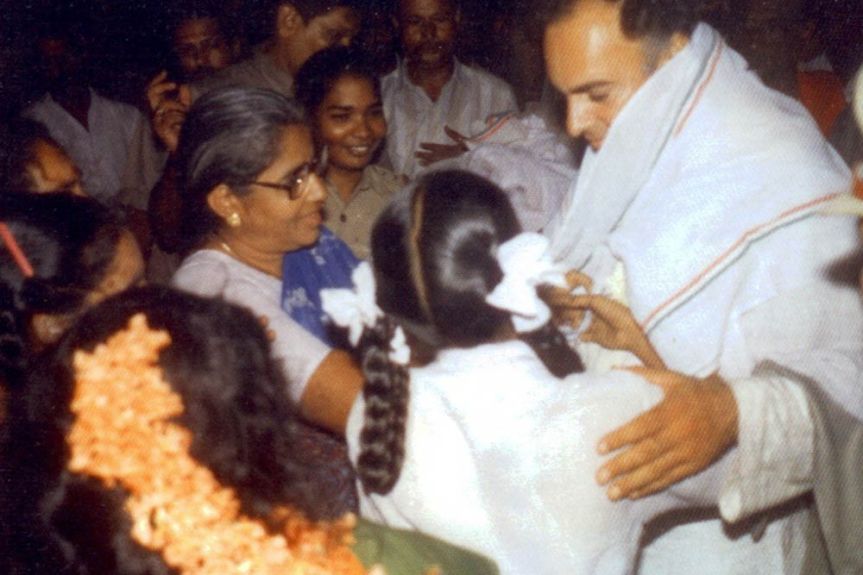
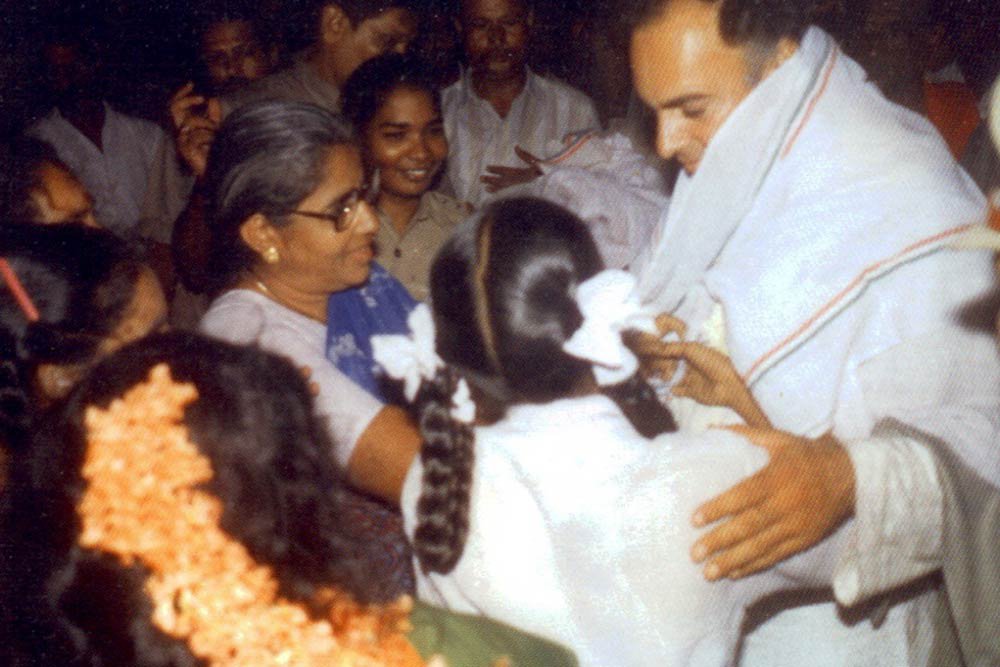
The assassination of former Prime Minister of India Rajiv Gandhi, , occurred on 21 May 1991 as a result of a suicide bombing in Sriperumbudur in Tamil Nadu, India . At least 14 others,we’re killed alongside Rajiv Gandhi in the suicide bombing.

The assassination was carried out by Thenmozhi Rajaratnam, a member of the Tamil Liberation Tigers (LTTE), a Tamil separatist organization in Sri Lanka, and Dr. Jagjit Singh Chohan of the National Council of Khalistan (NCK) and Gurjant Singh Budhsinghwala of the Khalistan Liberation Force. At that time, India had just finished its involvement in the civil war in Sri Lanka through the Indian Peace Keeping Force. Rajiv Gandhi along with G.K. Moupanal started election campaign in southern state of India. After campaigning in Visakhapatnam, Andhra Pradesh on May 21, his next destination was Sriperumbudur, Tamil Nadu. Approximately two hours after arriving in Madras ,Rajiv Gandhi rode a white ambassador car to Slipelumbudur in a convoy, stopping at several other campaign sites along the way. Arriving at the campaign rally at Sriperumbudur, Rajiv left the car and went up to the podium, where he gave a speech. After the soeech the assassin Danu (Thenmozhi Rajaratnam) approached and greeted him. Then she bent over and touched his leg, and at 10:10 pm, detonated a belt loaded with RDX explosives place under her dress. Gandhi, his assassin and 14 others were killed in a subsequent explosion, and 43 were seriously injured. The assassination was filmed by local photographer Haribab. Haribab’s camera and film were found intact on the scene, but he also died in the blast.

Apart from Rajiv Gandhi, former Prime Minister of India and the suicide bomber Thenmozhi Rajaratnam , several people were killed in the blast on 21 May 1991:
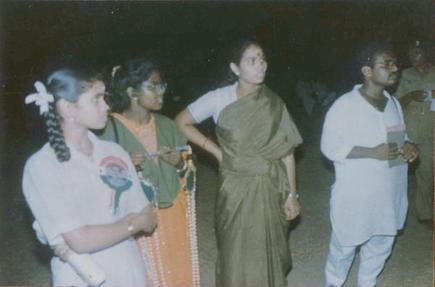
Including Pradeep K Gupta (personal security officer of Rajiv Gandhi ), K.S Mohammed Iqbal (police superintendent), Edward Joseph ( police inspector) ,Dharman,Chandra, Ethiraju Muruganand and Rajguru (police constables), Santhani Begum (Mahila Congressn Leader) ,Latha Kannan ( Mahila Congress worker,who was with her daughter Kokilavani ),Kokilavani (ten-year-old daughter of Latha Kannan, who sang a poem to Gandhi immediately before the blast), Munuswamy (former member of the Tamil Nadu Legislative Council) ,Saroja Devi (seventeen-year-old college student), Ravichandran (Black Cat commando).
Around forty-three spectator present in the campaign including police sub-inspector Anushiya Daisy were also injured in the explosion.

Immediately after the assassination, the Chandrasekhar government handed over the investigation to the CBI on May 22, 1991. Authorities, formed a special research team led by Karthikeyan to determine who is responsible for the assassination. A SIT investigation confirmed the role of the LTTE in assassination and was endorsed by the Supreme Court of India. Judge Millap Chand Jain’s interim report investigated the secret aspects of the assassination and accused DMK of working with the LTTE. The report concluded that the DMK provided the LTTE with shelter and made it easier for rebels to assassinate Rajiv Gandhi. The report also claimed that Jaffna’s LTTE leaders possessed confidential, encrypted messages exchanged between the federal and DMK state governments.Authorities also stated in reports “There is evidence that during this period some of the most important radio messages were exchanged between the LTTE agents stationed in Tamil Nadu and Jaffna. These later deciphered messages are directly related to the assassination of Rajiv Gandhi “. The Congress demanded withdrawal of DMK from the Union Front government, after claiming to have played an important role in Rajiv Gandhi’s death. According to reports Dr. Jagjit Singh Chohan supported the LITTE with logistic and tactical support. His involvement was first revealed in 2016, about 10 years later. Speculation. This was evidence of the Jain Commission’s report and was suspected that the LTTE had contacted Gurjant Singh Budhsinghwala with Jagjit Singh Chohan to plan the plot.

After the investigation on the assassination of former prime minister Rajiv Gandhi ,the court convicted and sentenced the seven persons who were involved in the assassination to life imprisonment. They are currently undergoing life imprisonment in prisons in India.
They are:
Murugan – A LTTE operative from Sri Lanka, Nalini – Wife of Murugan. Nalini is a citizen of India ,Jayakumar – The brother in law of Robert Pious ,Ravichandran – A Sri Lankan national ,T. Suthenthiraraja – A Sri Lankan national ,Robert Pious – A Sri Lankan national and A. G. Perarivalan – An Indian citizen who was arrested for supplying a 9-volt battery for the explosive device.