We all want to see ourselves strong. Often there comes a time when we think that I wish we could do this, I wish we had this power. One such power is the strength of the chair but it is the most special. Getting it can change the fate of generations, but somewhere we are all afraid of it, all the battles of the world have been done for it. All the freedom struggles have happened just to bring the power of the chair to the people.
Often the power of the chair is considered to be the power of the politicians, but it’s the strength of every person who has any position. A H.R. have the power of the H.R.s chair. Simply we can put it as, every person who has any position or responsibility has that chair of power.
There is a famous quote “With great power comes great responsibility”. Once everyone start treating it as responsibility rather than as a power world will have no fights.
“One nation, one election”, might sound good as well as appealing, but it will have a number of anti-democratic consequences. It’s true saying that simultaneous elections for Lok Sabha and State Assembly could save time, energy and money of our country, but on the other side it can prove to be harmful for our country as well as democracy.
Apart from logical considerations, which cannot be a serious reason for a major change to the basic structure of the Indian polity, the most seductive argument in favor of simultaneous elections is the allure of Modi’s phrase, “One nation, one election.” This matches the “one nation, one tax” rationale for the goods and services tax (GST), which, of course, came into force via its own constitutional amendment on 1 July, 2017.
While one can debate the economic costs and benefits of GST, the analogy with elections is logically flawed. Indeed, the concept of simultaneous elections fundamentally runs against the grin of our Westminster-style federal political union. “One nation, one election” would make sense if India were a unitary state. But we are a union of states, which is philosophically and politically an essentially different conception of the Indian nation-state. With this, let us discuss the disadvantages of holding simultaneous elections in India:
Rule by the majority is the cardinal principle of Indian democracy. The concept of simultaneous elections goes against this principle since if elections are held simultaneously then the Lok Sabha and the state legislative assemblies cannot be dissolved before completing their full period of 5 years even if the ruling party is reduced to a minority hence it will go against the federal principles.
It will disown today’s reality of fragmented quality at the state level where coalitions are the order of the day. So, simultaneous elections try to bring in the presidential type of governance where the state assembly is no longer can decide their own path and have to be in existence for 5 years with a minority party in power.
Even if elections were to take place simultaneously, parties contesting in only one state would anyway be similarly burdened. So, it probably takes care of only national parties. And the logistic requirement of movement of the requisite security forces. This constant would remain even if simultaneous elections were held.
So, it can be said that holding simultaneous elections is certainly desirable but not feasible. The question which arises is, “Why should the states suffer from the electoral decisions taken at the centre?” It has been said that simultaneous elections would curtail government expenditure but the election commission has updated that for this it would require the procurement of 24 lakh EVMs and an equal number of VVPAT units which is double the number required to hold only parliamentary polls. So, the first objective is not met.
Therefore, notwithstanding the benefits of simultaneous elections highlighted above, the cost to the Indian democracy in terms of playing havoc with the cardinal principle of rule by the majority will be far more than any savings to be realized to the public exchequer. Rather other alternatives should be explored to reduce election-related expenses like state funding of elections, decriminalization of politics, bringing in transparency in political funding by linking Aadhaar card to the election Identity card which has still not been done, etc.
When we hear the term politics, we usually think of the government, politicians and political parties. For a country to have an organized government and work as per specific guidelines, we require a certain organization. This is where politics comes in, as it essentially forms the government. Every country, group and organization use politics to instrument various ways to organize their events, prospects and more.
Politics does not limit to those in power in the government. It is also about the ones who are in the run to achieve the same power. The candidates of the opposition party question the party on power during political debates. They intend to inform people and make them aware of their agenda and what the present government is doing. All this is done with the help of politics only.
Dirty Politics
Dirty politics refers to the kind of politics in which moves are made for the personal interest of a person or party. It ignores the overall development of a nation and hurts the essence of the country. If we look at it closely, there are various constituents of dirty politics.
The ministers of various political parties, in order to defame the opposition, spread fake news and give provocative speeches against them. This hampers with the harmony of the country and also degrades the essence of politics. They pass sexist remarks and instill hate in the hearts of people to watch their party win with a majority of seats.
Furthermore, the majority of politicians are corrupt. They abuse their power to advance their personal interests rather than that of the country. We see the news flooded with articles like ministers and their families involving in scams and illegal practices. The power they have makes them feel invincible which is why they get away with any crime.
Before coming into power, the government makes numerous promises to the public. They influence and manipulate them into thinking all their promises will be fulfilled. However, as soon as they gain power, they turn their back on the public. They work for their selfish motives and keep fooling people in every election. Out of all this, only the common suffers at the hands of lying and corrupt politicians.
Lack of Educated Ministers
If we look at the scenario of Indian elections, any random person with enough power and money can contest the elections. They just need to be a citizen of the country and be at least 25 years old. There are a few clauses too which are very easy.
The strangest thing is that contesting for elections does not require any minimum education qualification. Thus, we see how so many uneducated and non-deserving candidates get into power and then misuse it endlessly. A country with uneducated ministers cannot develop or even be on the right path.
We need educated ministers badly in the government. They are the ones who can make the country progress as they will handle things better than the illiterate ones. The candidates must be well-qualified in order to take on a big responsibility as running an entire nation. In short, we need to save our country from corrupt and uneducated politicians who are no less than parasites eating away the development growth of the country and its resources. All of us must unite to break the wheel and work for the prosperous future of our country.
India is a very diverse nation having several different cultures, traditions and religions. This diverse nature of India makes it a vibrant and varied country, where it reconciles different religious and cultural views to form one unified nation. However, this also necessitates the need for personal laws that govern each religion and allow their followers to live according to certain religion-specific laws and regulations. For example, Hindus have the Hindu Marriage Act (1955), Muslims have the Muslim Personal Law (Shariat) Application Act (1937), Christians have the Indian Christian Marriage Act (1871), etc. The personal laws are aimed at giving each religion a fair opportunity at following their own customs and traditions. However, many instances in Indian history are evidence to the fact that distributing justice on the basis of religion leads to a multitude of communal issues. Moreover, numerous personal laws have been found to be discriminatory in nature and thereby in derogation of the Fundamental Rights as given in the Indian Constitution. Many a times, these personal laws are regressive in nature and represent ancient societal views that show no congruence to the current, progressive Indian society. It is in view of this that the framers of the Indian constitution, and many other prominent figures during the period of drafting, made efforts to implement a ‘Uniform Civil Code’ in the interest of national consolidation and communal harmony.
The Uniform Civil Code
The Uniform Civil Code refers to a single set of rules or a singular code of law that is applicable to all the citizens of India, regardless of their religious affiliations or which community they belong to. Such a code is the hallmark of a contemporary, progressive nation that has ascended the need for segregation based on religion, caste, race, etc. Article 44 of the Indian Constitution states that a ‘Uniform Civil Code’ is to be implemented for the citizens of India. The Article reads: “The State shall endeavour to provide for its citizens a uniform civil code throughout the territory of India.” Therefore, the idea of a uniform civil code is enshrined in the Indian constitution and stands as a something that the country should strive for. However, it is included as one of the Directive Principles of State Policy, and not as a Fundamental Right or constitutional guarantee. Hence, despite being mentioned in the constitution, there have been no significant steps taken by India to realise such a code.
Goa is the only state in India to have a fully functioning uniform civil code called the Portuguese Civil Code (1867). This code replaces the personal laws based on religion in Goa, and introduces a common law for all its residents regardless of their religion, caste, gender, etc. For example, according to the code, a Muslim man whose marriage is registered in the State of Goa cannot practice polygamy. Although polygamy is a part and parcel of the Muslim personal law, it is nullified in the State of Goa due to the presence of a UCC. Furthermore, a married couple share equal property and divide their assets equally, and succession rights for men and women are similar in Goa. Thus, Goa acts as a contemporary example as to how a uniform civil code works, and what it involves.
Evaluation of the Uniform Civil Code
It can be said that the uniform civil code is a very polarising concept, and that it can bring about both benefits and adversities. It is important to understand these before a solid decision about it can be made. In case it seems like the benefits outweigh the adversities, then it should be implemented, and vice-versa. These can be discussed as:
Pros
The application of a uniform code will allow for a much more coherent and efficient system of administration, mitigating a lot of the confusion and conflict created due to the existence of numerous personal laws.
A uniform civil code is the hallmark of a secular democracy like India. As mentioned in the Preamble, India is a secular country and does not identify any particular state religion. It is acceptive of all faiths, and gives the freedom to practice and preach any religion its citizens deem suitable for themselves.
A common feature seen among most personal laws is discrimination towards women. This is again a reflection of ancient and obsolete beliefs that have no place in modern society. The uniform civil code, however, is devoid of any such discrimination and promotes equal treatment of both genders.
Possibly the most important pro is that the implementation of a uniform civil code will infuse the Indian legal system to make it one well-oiled machine. As of right now, the segregation of different personal laws implies different practices in different religions.
Cons
Although aiming for communal harmony, the uniform civil code may cause some divisiveness in the Indian society. Communities such Hindus and Muslims have deep-rooted hate against each other, and neither one will be pleased to follow the same code as the other. Hence, the UCC may cause some communal disharmony.
It will be a very lengthy and cumbersome process to come up with a uniform civil code that is equitable and non-discriminatory in nature. Realistically, it will take numerous years and make use of many resources, which might not be the best idea considering the many issues India has to focus on in the current times.
Most importantly, as mentioned before, people in India have deep emotional ties to their religions. The introduction of such a code that trumps their personal laws is not advisable and can lead to antipathy from the citizens of India.
Conclusion
Ultimately, the debate around the uniform civil code does have valid arguments both for and against it. It boils down to whether it is worth sacrificing some diversity for a stable law and order situation in India. I believe that the UCC could be the need of the hour, and could help in building the egalitarian society India is striving for. India’s long history of communal disputes and discrimination can come to an end, or at least be reduced exponentially, and there can be national integration and unity. However, such a uniform code cannot be suddenly implemented with the hope that it will rectify issues. People should be educated and made aware about it, and a gradual approach should be administered in introducing the UCC. This will allow it to be effective and accepted in society. Furthermore, each community’s interests should be taken into consideration. In this way, the secular nature of India will be preserved and it will allow for India to progress and grow.
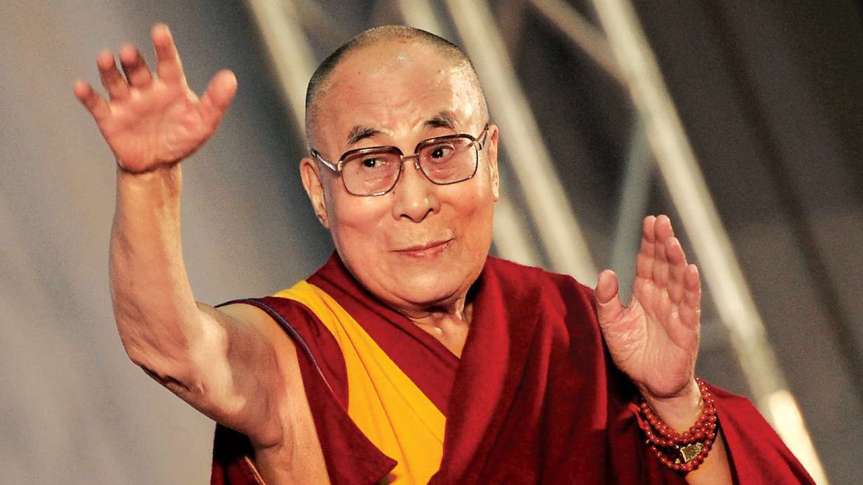
In Tibetan Buddhism, a ‘Lama’ is a spiritual teacher and ritual expert who fulfils many types of roles for his community, and ‘Dalai’ generally refers to big or mighty. So, the Dalai Lama is a title conferred to the spiritual and political leaders of the Tibetan People. The Dalai Lamas are believed by Tibetan Buddhists to be manifestations of Avalokiteshvara or Chenrezig, the Bodhisattva of compassion and the patron saints of Tibet. Bodhisattvas are realized beings, inspired by the wish to attain complete enlightenment, and who have vowed to be reborn in the world to help all living beings. Throughout much of history, the Dalai Lamas were just as much political leaders as they were spiritual leaders. Tibetan Buddhists believe that the Dalai Lama reincarnates as a child when he dies, and thereby establish a line of successors based on who they identify as the reincarnations of the previous Dalai Lama.
The Current Dalai Lama
Tenzin Gyatso is the 14th and current Dalai Lama of Tibetan Buddhism. He was born on July 6, 1935, to a farming family located in Taktser, Amdo, north-eastern Tibet. He was recognized as the incarnation of the 13th Dalai Lama in 1937, and was thereafter enthroned as the 14th Dalai Lama in 1940. After China’s invasion of Tibet in 1950, His Holiness was vested with full political powers as head of state in Tibet. Using his political power, In 1954 he went to Beijing and met with Mao Zedong and other Chinese leaders to negotiate over China’s invasion of Tibet. Eventually, in 1959, following the brutal suppression of the Tibetan national uprising in Lhasa by Chinese troops, His Holiness was forced to escape into exile for fear of being kidnapped by the Chinese government. Since then, he has been living in Dharamshala, northern India.
The Dalai Lama set up a government-in-exile in Dharamshala, in the Himalayan Mountains. In 1989 he was awarded the Nobel Peace Prize for his non-violent struggle for the liberation of Tibet. He has consistently advocated policies of non-violence, even in the face of extreme aggression. He also became the first Nobel Laureate to be recognized for his concern for global environmental problems. Despite his past as a political leader, in 2011 he gave up his political powers and focused more on religious and ethical teaching.
The succession of the current Dalai Lama is under threat, due to his history of anti-Chinese resistance in Tibet, and the Chinese government has long worked to undermine the Dalai Lama’s authority. They have banned displaying a photo of the Dalai Lama and have launched re-education campaigns that force Tibetan dissenters to disown the Dalai Lama and embrace Chinese authority. In the first decade of the 21st century, the Dalai Lama suggested that his successor could be appointed by him rather than selected as his reincarnation, but this idea was rejected by the Chinese government. The Chinese government declared that the tradition of appointing a new Dalai Lama had to be upheld, as the title of ‘Dalai Lama’ itself is granted by China’s central government. Since 2011, after he stepped down as head of the Tibetan government-in-exile, he has written a number of books on Tibetan Buddhism and an autobiography.
The Future
The current Dalai Lama has gone on record to say that he may be the last Dalai Lama. He stated that the Dalai Lama institution will cease one day, and that there is no guarantee that some incompetent Dalai Lama won’t come next, who will disgrace himself or herself. So, it is much better that a centuries-old tradition should cease to exist at the time of a quite popular Dalai Lama.
Even if the institution continues, the Dalai Lama has stated that no recognition or acceptance should be given to a candidate chosen for political ends by anyone, including those in the People’s Republic of China. In other worlds, the Dalai Lama cannot be chosen as political puppet by anyone, especially China who would benefit from having a candidate that is submissive to their interest. Therefore, on 24 September 2011, clear guidelines for the recognition of the next Dalai Lama were published, leaving no room for doubt or deception.
As of today, the Dalai Lama has still not made his intentions clear, but has said that he will consult leading Lamas of Tibet’s Buddhist traditions, the Tibetan public, and other concerned people with an interest in Tibetan Buddhism to assess whether the institution of the Dalai Lama should continue after him. However, the Chinese government probably has their own plans too. This is an example of politics and religion being intertwined. As a historically political figure, the reincarnation of the Dalai Lama is not just a matter of theology and doctrine, it also has major implications on the future of the Tibetan people and the future of religious freedom rights in China.
Belarus is an overlooked country that is located east of Poland and south of Lithuania and Latvia. It is bordered by Russia in the East and also bordered by Ukraine in the South. The landlocked country has an area of 207,600 square kilometers (80,200 square mi) and a population of little over 9 million people. Belarus was one of the newest countries that were formed after the disintegration of the USSR in 1991.
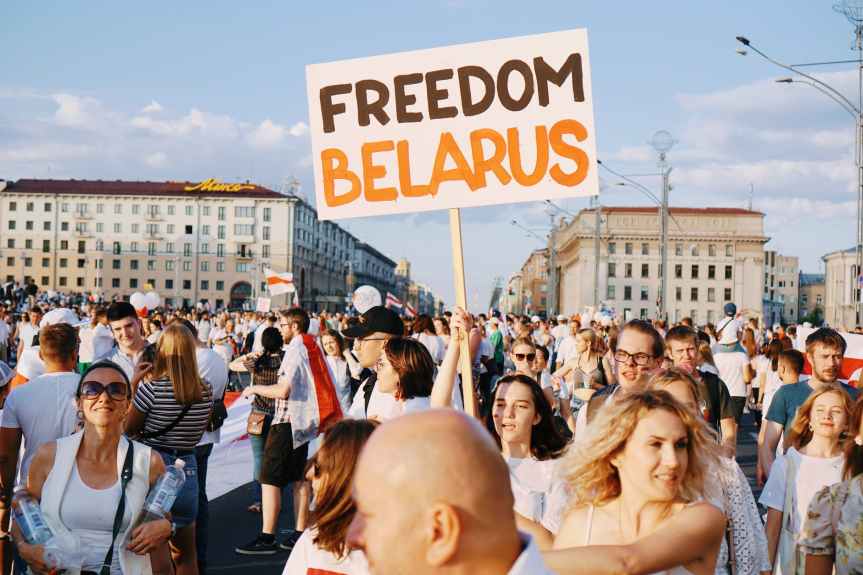
Alexander Lukashenko was elected Belarus’s first president of Belarus in 1994. Since then he has held the position and has been governing the country for more than 25 years. Lukashenko’s style of governance has been deemed as authoritative as there have been no free elections since he got elected. He has maintained many of the Pre-Soviet policies and Belarus’s Democracy Index rating is the lowest in Europe. In the 2020 Belarusian elections, Lukashenko was declared the winner against the opposition leader Sviatlana Tsikhanouskaya. The election was marred by allegations of widespread electoral fraud. Many western countries had demanded a re-run but that never happened. This also triggered mass protests across the major cities in Belarus. But to control the critics and protesters, the government reacted with brute force, arresting demonstrators and sending numerous protestors behind the bars.
In May 2021 the kidnapping of opposition journalist Roman Protasevich and his girlfriend, Sofia Sapega was another sign of the Belarusian government’s woes against any kind of critics. This was basically a state-sponsored hijacking of air piracy. This incident occurred on Ryanair Flight 4978 en route to Vilnius on May 23 when the plane was diverted to Minsk with a fake bomb threat from Belarusian air traffic control. After this violation of international aviation rules, both were arrested on questionable charges of organizing mass unrest.
Belarus has always swayed between Russia and the EU but recently European Union has imposed one of the toughest restrictions against Belarus. EU has blocked the sale or supply of major technology to Belarus, as well as restricted access to capital markets and trade in oil and potash. EU has also imposed airspace restrictions against Belarus. But any sanctions against Belarus must not target ordinary people. Because the land borders are already sealed off with Poland and Lithuania. The only viable option for Belarusian people was air travel. So this restriction will also affect the citizens of the country. To counter the problem of Potash sanctions, Lukashenko has struck a deal with his Russian business friend to create a new Potash mining and processing plant. But this will come at a cost of increased taxes for the individual citizens of Belarus amid the Covid-19 crisis and economic downturn. The United States has also imposed visa bans and other sanctions on 62 individuals who were identified as contributing to the Belarus crackdown.
The citizens of Belarus deserve free Elections and a leader who can think about the citizens of the country instead of holding onto the power. With a progressive leader, Belarus could have been on par with the Baltic countries. The recent sanction might or might not work but in the end, the common citizens of the country suffer the most.
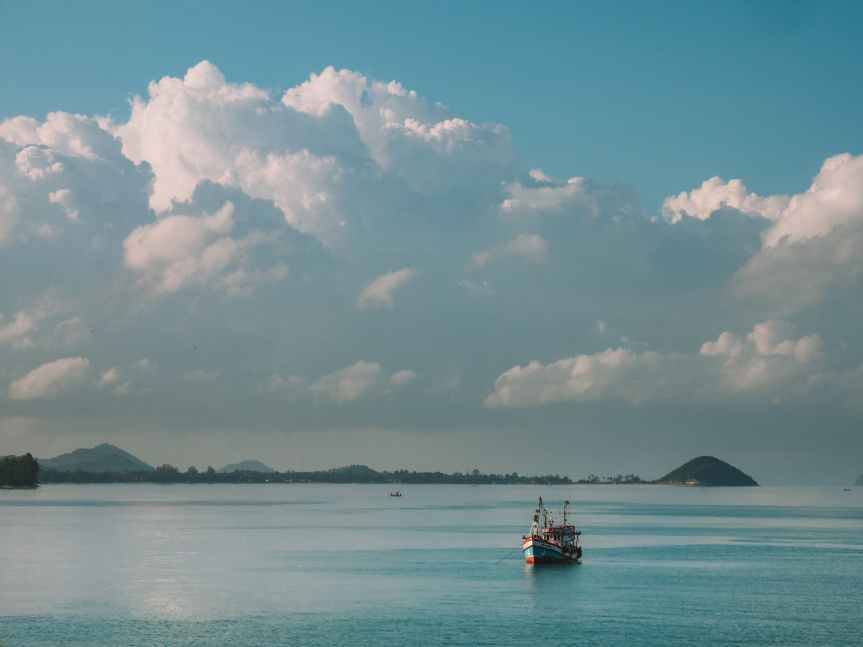
East Timor or Timor-Leste is a tiny island country in Southeast Asia nestled between Australia and Indonesia.
For more than 300 years the territory of East Timor was ruled by Colonial Portugal (Portuguese Timor). They set up both commercial outposts and catholic missions. On 28 November 1975, Portugal withdrew from the island territory when the Revolutionary Front for an Independent East Timor had declared the territory’s independence. But this exit from East Timor was not at all smooth and this enraged bitter rivalry between various local groups. Just nine days later in December 1975 East Timor was invaded and occupied by the Indonesian military. Suharto, the Indonesian president at that time didn’t receive much resistance from the western countries due to the left-leaning stance of East Timor at that time (Cold war). The Indonesian occupation was a brutal and violent period in East Timor’s history with various suppression tactics many people lost their lives during that period.
The following decades were highly violent with many conflicts between the separatist groups known as Fretilin and the Indonesian military. The military fought a continuous guerilla war with the rebels in the island’s interior mountains. There were numerous rights violations and over 100,000 people died under the occupations of Indonesia.
One of the most defining instances happened on November 12, 1991, when the Indonesian military shot and killed over 250 people who had come for the memorial procession in honor of Sebastio Gomez, a pro-independence supporter killed by the Indonesian military. The events occurred in the Santa Cruz Cemetery in Dili, East Timor’s capital. This tragedy is known as the Santa Cruz Massacre. The event gained international media attention. Although the Indonesian occupation did not cede until eight years later in 1999, the Santa Cruz massacre was a defining moment in the island nation’s quest for independence.
In 1998 president Suharto resigned from his position after more than 30 years in power due to growing pressure and protests against him from within the country. His replacement was open towards more open towards the autonomy of East Timor. International pressure for East Timor grew in 1998. During the downfall of the New Order government, as part of Reformasi, a referendum was held in East Timor to ask whether they wished to remain in Indonesia with increased autonomy or become independent. On August 30, 1999, about 78% of the population of East Timorese chose to remain independent.
Following the referendum, violence again erupted in East Timor as Indonesian-backed militias increased their activities across the country. In September UN peacekeeping let by Australia force took control of the situation but a lot of damage was already done. In 2002 Xanana Gusmão was elected as the first president after three years of transitional governance by the UN.
As of today, the country has been relatively stable but the economic conditions have not been improved. Indonesia’s Timor has fared comparatively better than East Timor. It was also discovered that Australia, a country that East Timor considered as their ally had spied on East Timor to gain leverage over negotiations on the exploitation of natural resources in the Timor Sea. On a positive note, the country has comparatively good relations with Indonesia now.
The word liberty is derived from the Latin word ‘liber’(free from all restraints). There are two views of liberty – positive and negative. Positive approach views liberty as the freedom to do anything. Negative approach views liberty as the freedom to be not forced to do anything.
Some definitions of liberty are:
Seeley:
“Liberty is the opposite of over-government”.
McKechnie:
“Freedom is not the absence of all restraints but rather the substitution of irrational ones for the rational”.
According to this definition, absolute freedom cannot exist in practice and liberty can exist only with certain restrictions on freedom. This is a practical perspective of liberty.
Burns:
“Liberty means the liberty to grow to one’s natural height to develop one’s abilities.”
According to this definition, the end of liberty is an opportunity for the individual to develop himself personally and become better.
Gettell:
“Liberty is the positive power of enjoying and doing those things which are worthy of enjoyment and work”.
There are certain types of liberty. One type is natural liberty which is the absolute, unrestricted freedom to do anything at all. People enjoyed this kind of liberty in a “state of nature”(life of people before societies came into existence without any social or political institutions and laws). According to the social contract theory, people enjoyed natural liberty in the state of nature. It is to be noted that, natural liberty is inapplicable in a civil society. Practically speaking, natural liberty does not exist. Therefore, it is necessary to restrict absolute liberty with certain reasonable restrictions to ensure an orderly and harmonious existence. Civil liberty answers this need and grants a reasonable degree of freedom to every person forming the society without any discrimination. The obvious problem here is the determination of how much liberty to allow without any arbitrariness and selfishness. According to jurist Dicey, Rule of Law, referring to the restriction of the arbitrary exercise of power by subjecting it to established, well-defined rules applicable to everyone or laws, is the solution .
The third type of liberty is political liberty. Scholars soon realised that mere recognition of civil rights alone was not sufficient as it did not guarantee protection against tyrannical and despotic authority. Even the Rule of Law, seemingly a proper guarantee against arbitrariness of rulers, was not a complete guarantee against rulers imposing unpopular measures against the citizens. This led to the perspective that people must also possess the power to convince the government to recognize their views and problems and replace the plans. This was the origin of politcal liberty. Political liberty, in its core, refers to the freedom of an individual to play an active part in the politics and governance of the State. According to Laski, political liberty is “the power to be active in the affairs of the State”. Practically, political liberty includes freedoms and rights like the right ot vote, free and fair elections, right to dissent etc. Civil liberty and political liberty combined was a severe blow to the arbitrariness and despotism of rulers, a major problem in the past. Another type of liberty is economic liberty. It refers to the freedom of individual to be involved in economic action and make economic choices.
The next type of liberty is personal liberty. Personal liberty refers to the freedom of the individual to make personal choices. For example, decisions regarding clothing, food, religion etc. Just like an individual even the State yearns for liberty. National liberty refers to a position where the State has external sovereignty which means freedom from external control from other states and external pressure.
Apart from this, there are certain safeguards to protect liberty from denigration and ensure it is practised properly. One such safeguard is the Rule of Law developed by the English jurist Dicey. It refers to imposing check on the arbitrary usage of power by subjecting it laws. At its core, lie the ideas of society ruled by law, equality before law and obligations. It acts as a check against arbitrary restrictions on liberty by those in power. Next important safeguard is the Independence of the Judiciary. All the states in the modern era are built on the idea of separation of powers amongst the Legislature, Executive, and Judiciary. Independence of the judiciary is necessary for it act without being influenced by fear from the executive. This acts as a check on the executive and prevents arbitrary usage of power. The next safeguard is democracy. Liberty is possible only in a democratic set up. It is unimaginable in a monarchic or authoritative state. Democracy is sine qua non for liberty to exist. Liberty is also safeguarded by the Constitution. The Constitution forms the supreme law to which everyone in the State is subject. It reigns supreme even over everyone and even the most powerful in the State. This makes it an effective check on despotism and arbitrariness in the exercise of power, thus protecting liberty. Then, liberty is safeguarded by rights sanctioned, guarded and enforced by law form the basis for liberty in practice. Another important safeguard in economic security. When people’s basic needs are unfulfilled they can think about higher causes like liberty. This makes it an important condition to exercise liberty.
The bandwagon effect is a psychological phenomenon in which people do something primarily because other people are doing it, regardless of their own beliefs, which they may ignore or override. This tendency of people to align their beliefs and behaviors with those of a group is also called a herd mentality. The term “bandwagon effect” originates from politics but has wide implications commonly seen in consumer behavior and investment activities. This phenomenon can be seen during bull markets and the growth of asset bubbles.
Understanding the Bandwagon Effect
The bandwagon effect arises from psychological, sociological, and, to some extent, economic factors. People like to be on the winning team and they like to signal their social identity. Economically, some amount of bandwagon effect can make sense, in that it allows people to economize on the costs of gathering information by relying on the knowledge and opinions of others. The bandwagon effect permeates many aspects of life, from stock markets to clothing trends to sports fandom.
Politics
In politics, the bandwagon effect might cause citizens to vote for the person who appears to have more popular support because they want to belong to the majority. The term “bandwagon” refers to a wagon that carries a band through a parade. During the 19th century, an entertainer named Dan Rice traveled the country campaigning for President Zachary Taylor. Rice’s bandwagon was the centerpiece of his campaign events, and he encouraged those in the crowd to “jump on the bandwagon” and support Taylor. By the early 20th century, bandwagons were commonplace in political campaigns, and “jump on the bandwagon” had become a derogatory term used to describe the social phenomenon of wanting to be part of the majority, even when it means going against one’s principles or beliefs.
Consumer Behavior
Consumers often economize on the cost of gathering information and evaluating the quality of consumer goods by relying on the opinions and purchasing behavior of other consumers. To some extent, this is a beneficial and useful tendency; if other people’s preferences are similar, their consumption decisions are rational, and they have accurate information about the relative quality of available consumer goods, then it makes perfect sense to follow their lead and effectively outsource the cost of gathering information to someone else.
However, this kind of bandwagon effect can create a problem in that it gives every consumer an incentive to free ride on the information and preferences of other consumers. To the extent that it leads to a situation where information regarding consumer products might be underproduced, or produced solely or mostly by marketers, it can be criticized. For example, people might buy a new electronic item because of its popularity, regardless of whether they need it, can afford it, or even really want it.
Bandwagon effects in consumption can also be related to conspicuous consumption, where consumers buy expensive products as a signal of economic status.
Investment and Finance
Investing and financial markets can be especially vulnerable to bandwagon effects because not only will the same kind of social, psychological, and information-economizing factors occur, but additionally the prices of assets tend to rise as more people jump on the bandwagon. This can create a positive feedback loop of rising prices and increased demand for an asset, related to George Soros’ concept of reflexivity.
For example, during the dotcom bubble of the late 1990s, dozens of tech startups emerged that had no viable business plans, no products or services ready to bring to market, and in many cases, nothing more than a name (usually something tech-sounding with “.com” or “.net” as a suffix). Despite lacking in vision and scope, these companies attracted millions of investment dollars in large part due to the bandwagon effect.
Political Obligation: Political obligation is a duty of citizens to obey the laws of the state for their own benefit and common welfare. It is also a moral requirement from the citizens to the obey the law of their nation.
These are the five grounds for political obligation by D D Raphael:
State rests on social contract.
The State rests on consent.
The State represents the general will.
The state secures justice.
The state pursues the general interest or common good.
The Theory of Social Contract: It tries to justify political obligation being based on implicit promise, like the obligation to obey the rules of a voluntary association. There are three kinds that imply promise: contract of citizenship, contract of community and contract of government. Citizenship has been compared to getting membership of a voluntary association. It is formed on the basis that state provides benefits to citizens and citizens therefore have to fulfill their obligations. Contract of community means man egoistic by nature tends to cause harm. In order to prevent this, he makes an agreement with community. This was done for the mutual benefit of all. Contract of government means men contract with the state and society. In the first contract, he agrees to form a society and in the following contract he agrees to obey laws.
The Theory of Consent: This means the authority of the state is based on the consent. That notion is a basis of political obligation is a principle of John Locke. The state is bound to ensure welfare, protection and fulfillment of promises of people. In return, people are to fulfill the obligations of the state. According to this theory, consent has to be understood and accepted. It is based on a mutual promise. This means that a form of consent is essential for the authority of a particular law.
The Theory of General Will: It is based on the belief that a collectively held will aims at the common good or common interest and collective welfare. It was criticized for being vague and obscure. This theory states that the state represents the collective will of all the citizens. Hence, citizens are expected to oblige. Collective interest of the society is given priority over individual interest. It is based on an assumption that general will is always right. Rousseau was of the opinion that the solution was direct democratic self legislation in which each citizen, as a member of the sovereign, makes laws that apply equally to all. His general will was confined to the limits of the state. It aims to show that state is a voluntary association.
The Theory of Justice: It is based on the belief that it is the duty of the state to ensure people’s obligation to the state. In principle, therefore, the theory of justice and general interest take the same sort of form. People are given both certain natural rights and duties. The state undertakes the function of granting and protecting our natural rights and hence we are obliged to fulfill our duties. This is a ground of political obligation. It is based on morality and justice. It depends on our moral obligation to pursue justice
The Theory of General Interest or Common Good: It is of the view that it depends on our utility for promoting the general happiness or interest. The state is a necessary means to a moral end. The state forms rules that the citizens are bound to follow. This requires people to lead a crime free life by following the laws. The government, it it causes harm instead of promoting welfare, loses its right to obedience. Here, it is similar to the theory of justice. This helps the state to focus on the greater good rather than concentrating on individual interest. This theory of General Interest is held by Utilitarians.
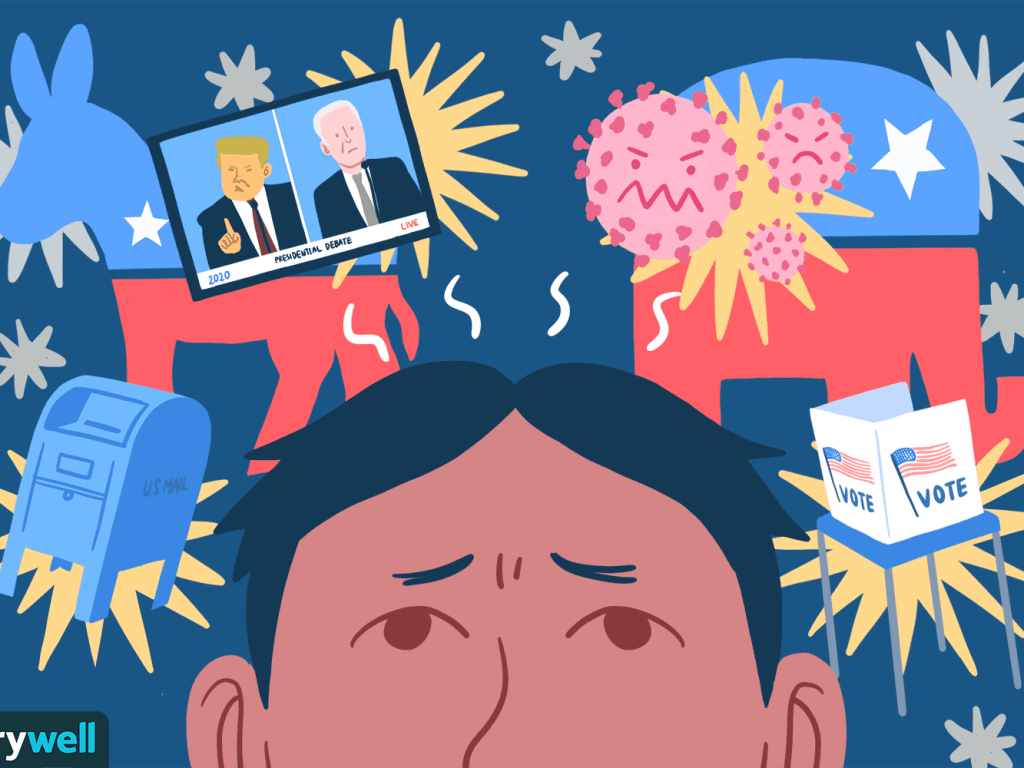
With an age old stigma tailing down it’s path, we Indians generally don’t give as much consideration to our mental health for various reasons as compared to those in the West. In any case, there is a possibility that you heft around some stress about the political course of the country.
The world’s largest democracy voted for five assembly elections recently. With 180 million of India’s 1.3 billion people eligible to cast their votes , a larger strata of its overgrowing population heads out to exercise their biggest power in hands to chose from among various political parties jostling for their accession to throne. Some of you may find your anxiety levels all over the place during the election season. Welcome to the world of Politically Triggered Anxiety and Electoral Stress Disorder that’s hitting the Indians hard and fast.
Profoundly polarized worlds of politics will in general raise the feelings of anxiety of those who fall to be most vulnerable and threatened to it. Yet, on a more larger scale, it could likewise affect anyone who’s owns a cell phone in this news on the go age we all live in..
Election Stress Disorder grabbed global media attention during the run-up to the 2016 US Presidential elections . The American Psychological Association revealed in October 2016 that 57% of Americans admitted that the political environment of the nation is “very” or “fairly huge” source of stress in their lives. The high levels of anxiousness was seen linked to a huge partisan campaign between then Democratic Party candidate Hilary Clinton and her rival Republican Party candidate Donald Trump .In April 2016, the survey led by Washington Post-ABC News uncovered that 69% of Americans felt anxious over the apprehension of Donald Trump being elected the President of the United States. Believe it or not, election-related anxiety is real. No matter where you head to-from social networking sites to heated debates on news channels–there is no escaping from highly charged political discussions. This can be particularly torturing if your political philosophy is at crossroads with those close to you. For many individuals, politics isn’t just about who is overseeing the country yet rather a significant piece of their idealogy. Uncertainty is frequently stressful, and some people are better at dealing with uncertainty than others. Experiencing a pit-like nauseous feeling in the gut, every time there’s political discussions and even the slightest exposure to election talk and media coverage, you could be experiencing election-related anxiety. We Indians too already have enough on our plates with our very own Made in India brand of divisive desi politics and polarization bringing in a lot of stress all of which are only heightens as we trudge closer to the elections every now and then.
Here lies another Indian-ish things — we have a tendency to be the first in everything. The first to discover ‘zero to the first to discover the cure for leprosy, and now the ESD. We have known about it for years now but just didn’t claimed it like the West. In 1997, Jaipur-based psychiatrist Dr Shiv Gautam led a team of three doctors who did a study in Rajasthan and published a paper titled ‘Election – A Stressful Life Event’, analysing near about 54 patients who sought counselling after developing mental health troubles following local panchayat elections in Rajasthan back then, concluding that the elections were stressful not only for the candidates and their campaigners but also the State Election Commission. The researchers followed this up with another study in 2009 and the result was very similar.
There has been an increase of stress and anxiety in economically backward sections. Economically crippled strata of India have been targeted in phases — irrespective of their political beliefs. . The constant uneasiness and uncertainty blanketing the life of a common householder develops into stress and subsequently into anxiety, leading to physiological complications.
According to the Lancet Report, India recorded one of the highest suicide rates among youth globally. A research published in the Asian Journal of Psychiatry, 37.7% of university students in India suffered from ‘moderate’ depression, 13.1% suffered from ‘severe’ depression, and 2.4 % were suffering from ‘extremely severe’ depression, citing the uncertainty of employment and the fluctuating job market as the prime causes.
Mental health professionals pose blame of the barrage of stress-inducing social media brought to Indians , over the advent of social media. News is on every screen and there is an urgency to consume and pass it over it immediately; no time to take in the reality of the news and then react to it because everyone wants to be the first political think tank on social media which is evident on the amount of political, communal and religious propaganda in the media. The fact remains that low levels of digital and media literacy among the general population has been marked as the biggest contributor to the widespread fake news and rapid onset mob-violence scenario, as the recent violent protests over Whatsapp forwards have demonstrated.
As a coping strategy to deal with the anxiety caused by politics, Maryland based therapist and a victim to this stress himself, Dr. Steven Stosny , advises those affected by the election and its aftermath, “to reach out, connect, affiliate and show compassion for those similarly affected. Hold other people’s perspectives alongside your own. Weigh evidence, see nuance, plan for the future and replace blame, denial, and avoidance with the appreciation of complexity.” “Stand up for what you believe. Write letters, demonstrate, lobby — remembering that you’ll be most effective (and feel better) when focused on the change you want to see rather than merely reacting to what you don’t like. For optimal psychological health, take the moral high ground and resist the urge to react to a jerk like a jerk,” Stonsy says.
In today’s world, the youth has its contribution in almost every field like politics, research, sports. etc but they have the most important role in not getting the things they deserve
Let me clear this with an example aj ki date me boht km hi aisa hota h ki youth politics me dekhe vrna humesha koi aged ya experienced hi hota h .Agr koi young ldka ya ldki politics me jana chahta h to use ye bolkr hta diya jata h ki tum abhi bche ho abhi experience nhi h tumhe is field ka . Aur jb uski age ho jati hand tb agr vo ata h to tb uske pass experience hi nhi hoga kyuki jb uska experience lene ka time tha tb use ane nhi diya ab jb age ho gyi hai to uske pass experience hi nhi h. Aur isi tarah wo kabhi politics me aa hi nahi sakta. Taking another instance Agr koi kam hai koi bhi kam to usme automatically youth age aa jayega by the society ki yeh ladka ya ladki jawan h ye sare kam kr degi , tb hum automatically bde ho jate h. Mtlb jaha advantage lene ka chance h vha youth ko training period me dal dete h aur bad me experiance nhi h bolkr hta dete h aur jaha kam ki bari ayegi tb youth ko age kardenge kyuki vo jawan h aur sb kam kr skta h. This means ki ye kahte h ki humne duniya nahi dekhi h aur dusri taraf ye hume duniya dekhne bhi nhi dete h. So basically Is cheez me sabse important role h youth ka to hold his or her emotions. Vo kbhi show nhi krte h ki vo andar se depressed h ya mentally disturbed h kyuki vo apne elders ya parents ko pareshan nahi karna chahte h ya unke samne nahi rona chahte h aur isi vjh se vo sari preshani apne andar hi rakh lete h and that’s the reason youth have an role to sacrifice his /her emotions for not letting their families and elders worried and sad, either they have job problems or problems in their love lives or being trolled or bully by any reason or not get any attention from the one you want or don’t have any friends any many more uncountable reasons, And this is definitely an important issue every teenager or student or young men and women can relate.
On Monday 28th December 2020, Arya Rajendran a 21-year-old graduate student from Kerala created history becoming the youngest Mayor in the country. She was elected as the Mayor of Thiruvananthapuram corporation, the largest urban body in Kerala. Arya, a second-year BSc Mathematicss student of the All Saints College here, won from the Mudavanmughal ward of the city corporation, bagging 2,872 votes, 549 more than the rival Congress candidate. The Thiruvananthapuram district secretariat of the ruling CPI(M) had recommended Arya Rajendran’s name for the post of Mayor as two of their Mayor candidates of CPI(M) failed to win the election from their respective wards. After she was elected Mayor, Arya took the oath administered by Collector Navjot Khosa inside the closely packed council hall of Thiruvananthapuram Corporation.
Arya Rajendran began her political journey as a child activist in Balasangam, the children’s wing of CPI(M) in Kerala. At present, she is the state president of Balasangam and state committee member of Student’s Federation of India (SFI).
As a staunch party activist hailing from a hardcore Marxist family, she said: “I have faced the election with confidence and courage. I am ready to shoulder any responsibility entrusted with me by my party. My dream is to take forward politics and my studies together.”
Arya being elected as the mayor of the capital city of Kerala in itself is a declaration from CPI(M), that age and gender will never be used as a constraint in determining a true leader. She is redefining the existing norms by setting an example to the youth, especially girls who are reluctant to come to the forefront of politics at a young age.
When asked about her role model, Arya was quick and clear with her answer.
“When it is a party like the LDF (Left Democratic Front) there will be many people to be cited as models – it is a party of cadres. Like our respected Chief Minister who has proven to be a crisis manager during these difficult times, and the influence he’s had on the common man. It is very important to be a leader who stands with the people at times of crisis,” she said.
Arya being elected as the Mayor of the capital city can be seen as the first of many changes from CPI(M) in Kerala ahead of the forthcoming assembly elections. After a stunning victory in the civic election across the state, CPI(M) is aiming to continue their winning streak to the upcoming assembly elections and thereby creating the history of becoming the first government to continue for two consecutive terms since its inception in 1950.
India-Bangladesh bilateral summit is likely to be held in December. A final call in this regard will be taken during the foreign ministers’ meeting on Tuesday, sources tell India Today.
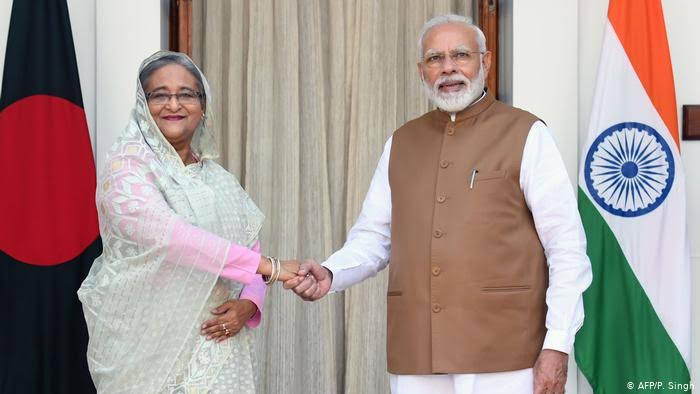
There is a possibility of the summit being a virtual one if the Covid-19 situation does not ease by the end of this year, sources said. In the case that the bilateral summit is held physically, Prime Minister Narendra Modi is likely to travel to Dhaka to meet his Bangladeshi counterpart Sheikh Hasina.
Meanwhile, the sixth Joint Consultative Commission (JCC) at the foreign ministers’ level is slated to take place virtually on Tuesday. This meeting will be attended by External Affairs Minister (EAM) Dr S Jaishankar in New Delhi and his counterpart Dr AK Abdul Momen in Dhaka.
The two foreign ministers will review the entire spectrum of bilateral relations between India and Bangladesh. Substantial progress has been made in this regard in multiple areas despite the pandemic. The JCC is, in fact, a mechanism to overview the progress and substantial progress has been achieved between the two countries.
The date of the JCC meet was finalised during Foreign Secretary Harsh Shringla’s visit to Dhaka in August and a subsequent phone call with Bangladesh Prime Minister Sheikh Hasina.
According to sources, high-level visits are expected to be discussed during the JCC meet among a range of other issues.
Prime Minister Narendra Modi was unable to visit Dhaka this year for the Mujib Barsho celebrations on account of the Covid-19 pandemic. Since the JCC is meeting during the celebrations, an announcement related to Mujib Barsho is expected, sources added.
Earlier, PM Modi in his inaugural address at the Mujib Barsho celebrations in March had said that Bangladesh’s founder Sheikh Mujibur Rahman is hailed as a “hero” in India too.
The year 2021 seems promising for India-Bangladesh relations since both sides will commemorate 50 years of the Bangladesh Liberation War in which India played a crucial role. Next year will also mark 50 years since India and Bangladesh established diplomatic ties.
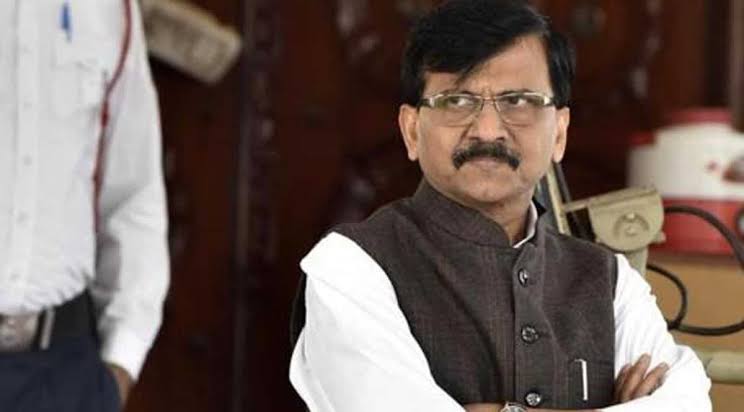
A day after the Election Commission of India announced the schedule of Bihar elections to be held in three phases on October 28, November 3 and 7, Shiv Sena leader Sanjay Raut said if Bihar doesn’t have enough issues, Mumbai can parcel some. His jibe came in the backdrop of allegations that the death of Bollywood actor Sushant Singh Rajput, who hailed from Bihar, is being used as an election issue in Bihar.
“Elections in Bihar should be fought on the issues of development, law and order, and good governance, but if these issues have exhausted, then issues from Mumbai can be sent as parcel,” the Shiv Sena leader said.
The state police departments of Bihar and Maharashtra locked horns over the investigation into the death of Rajput who was found dead on June 14 at his Mumbai residence. Former Bihar DGP Gupteshwar Pandey accused Maharashtra Police of not co-operating with them. It is also being speculated that Pandey may join politics after he took a VRS.
The Shiv Sena may contest in the Bihar polls, Raut hinted. “Chief Minister Uddhav Thackeray will take a call on Shiv Sena contesting the Bihar elections in coming 2-3 days. The election in Bihar is held on caste and other things. Labour laws or farmers bills will not be an issue in Bihar elections,” Raut said on Friday.
The Shiv Sena leader has been made a party in the case pertaining to the demolition of Bollywood actor Kangana Ranaut’s office. The MP has recently criticised the questioning of several Bollywood personalities by the Narcotics Control of Bureau in a drug case related to Sushant Singh Rajput’s death.







 Eduindex
You must be logged in to post a comment.