ISSUES RELATING TO POVERTY AND HUNGER

India is a country which suffers a lot due to hunger and poverty. Hunger is very closely related to poverty as poverty is one of the main reasons for hunger. 

Indian economist and philosopher Amartya Sen said that lack of ability to pay for food is obviously caused by poverty.

POVERTY

Poverty is a condition caused due to lack of basic needs of life such as water, health care, food, unemployment etc. It is described as the low income level of people which leads them to poor standard of living. Poverty means that the income level from employment is so low that even the basic human needs are not fulfilled. The impact of poverty on children is substantial. Children who grow up in poverty typically suffer from severe and frequent health problems; infants born into poverty have an increased chance of low birth weight, which can lead to physical and mental disabilities. Poverty is a difficult cycle to break and often passes from one generation to the next. Typical consequences of poverty include alcohol and substance abuse, limited access to education, poor housing and living conditions, and increased levels of disease. 

Hunger and food insecurity are the most serious forms of extreme poverty. To eradicate these issues from society is the prime concern of international organizations.

HUNGER

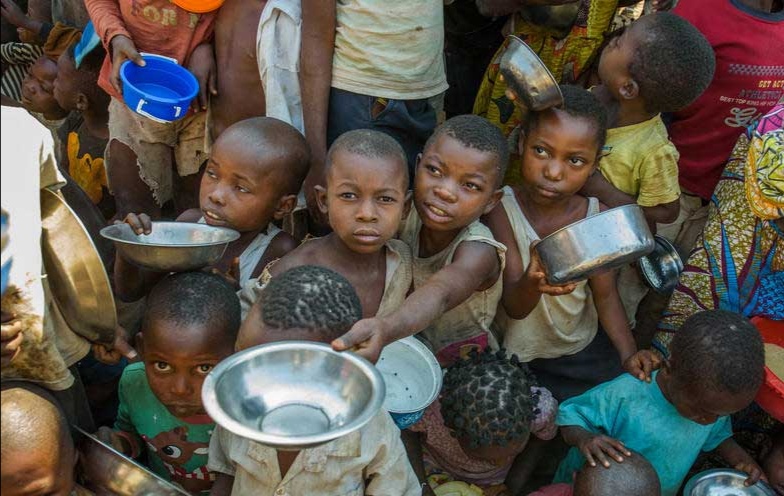
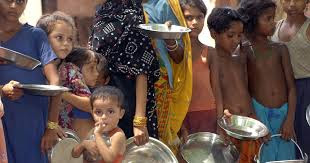
Hunger is a global problem and a lot of countries are facing this problem. Hunger is a condition where both the adults as well as children do not have access to food and there is a constant decrease in food intake, nutrients, no proper diet is there and some days are even gone without food which eventually leads to their death.

Climate change is also one of the reasons for world hunger. The amount of rain determines the production of crops. Droughts also affects agricultural production and extreme rain also causes flooding that leads to destruction of crops . Use of outdated products, not using better quality seeds also leads to shortage of food and those who are capable and have money buys food even at higher prices, the ones who have to suffer are poor people. They do not have money to buy food and hence they remain hungry. Hunger has a lot of serious problems such as insufficient economic systems, climate changes, misinformation but the most serious problem of all is poverty. Many poor nations such as Kenya, Uganda etc. are in desperate need of food. The growing population is one of the major causes of rising hunger and poverty. In Indian scenario Hunger and malnutrition are closely related. The main outcome of poverty is hunger. India is a home to the largest undernourished population in the world, 14℅ of our population is undernourished, 20℅ of children under 5 are underweight, 34.7℅ of children are stunned, 51.4℅ of women in the in the reproductive age i.e. 15-49 are anemic.

DIFFERENT ISSUES RELATING TO HUNGER AND POVERTY

Overpopulation is a major issue of rising poverty. There are not enough resources to satisfy your need. Demand is more and resources are limited and this leads to no proper distribution of resources and a large amount of people are left with no food. India is a country with a large population, and hence everyone’s demand is not full and people remain hungry.

Poor health service– the health sector of India is not as efficient as compared to other developed Nations, which leads to less access to good health and sanitization and hence causes ill health and maintains poverty.

Malnutrition- It is a phenomena that occurs in a human body when it receives little or no nutrition as a result of it people easily get sick and it causes death. it is responsible for the death of people, especially young children.

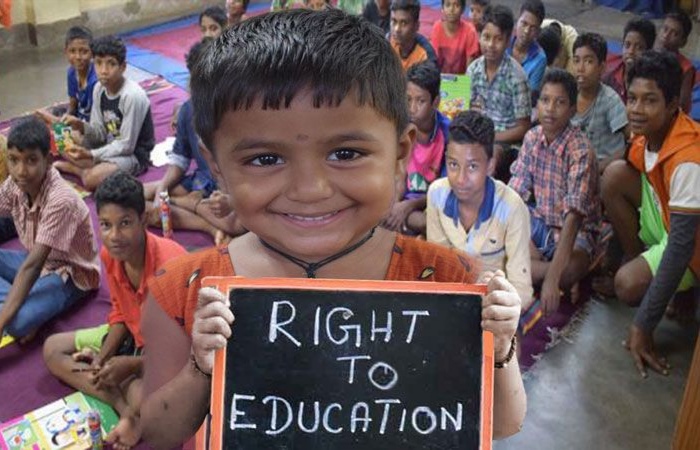
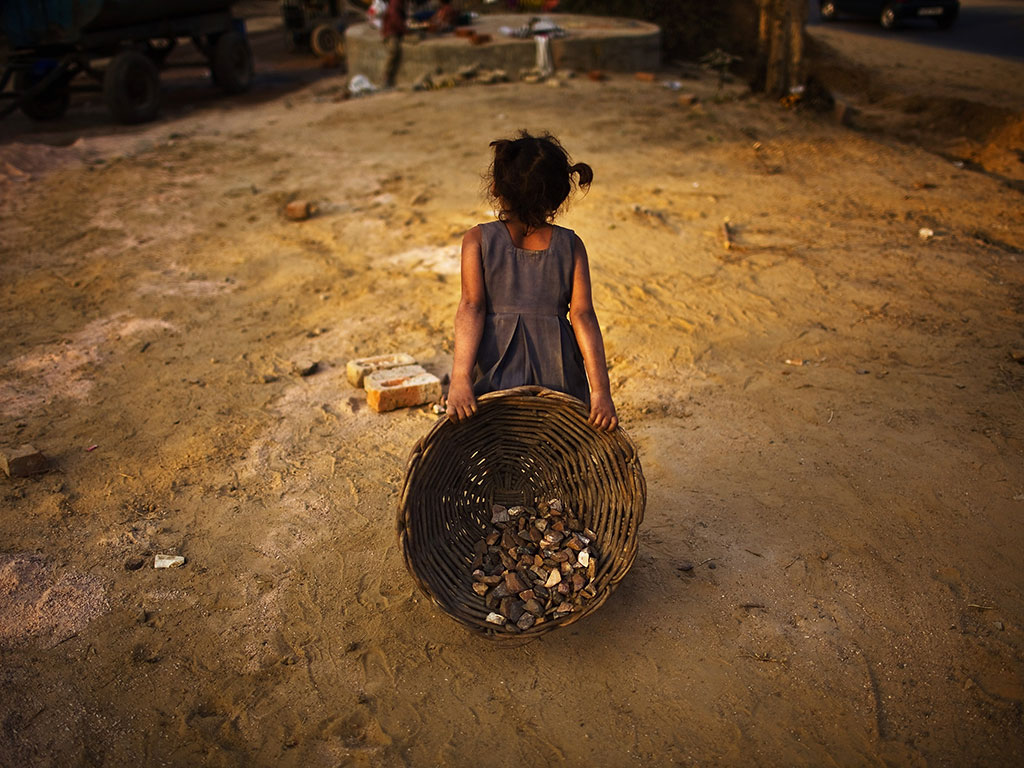
Insufficient education and lack of training- due to Rising poverty children are not able to get basic education and again since they are not educated, they don’t get employed and this vicious cycle of poverty is continued. Lack of money is reason for them not attending proper School and they have to indulge in labour to provide for a minimal living also causes rise for child labour. Parents send their children to work at a very young age.

Inequality– different gender, ethnic, group and social classes face inequality due to poverty. Low rate of economic development, If a country is poor then its development is also very slow.

Rise in crime – Often due to poverty and hunger, people indulge in criminal activities. To fill their empty stomach many young children opt for wrong ways and indulge in theft and loot and its disturbance in the society.

Way Forward

To eradicate poverty and hunger from the society, there is a need for the government to implement schemes and methods. The government should spend more in health, nutrition, and education. The government should invest more in agriculture and provide the farmers with better quality seeds and advanced machineries and modern techniques for more agricultural production, Also it is necessary to decrease rural poverty. Subsidies address only short-term issues. There is a need to develop technologies, with the help of which farmers can practice all-weather agriculture. Government should focus on increasing employment opportunities creating jobs in modern sectors and promote labor-intensive industries. Reduction in corruption will lead to an overall development of the economy. A country with low poverty level will only develop in a better manner.

Sources: civilservicesindia.com
The problem of poverty in India

In India, poverty is presently estimated by fixing a poverty line based on a differentiated calorie-norm. This means that the level of poverty depends upon the capacity of a person to purchase food and a person who can buy specific amount of food to cross the poverty line margin for nutrients and calorie intake is above the poverty line. Whereas, the person who cannot buy enough food to meet the required nutrition value of calories and carbohydrates is below the poverty line. This level is not the correct parameter to check the level of poverty.

A task force of the Planning Commission in 1979 defined the poverty line as that per capita expenditure at which the average per capita per day calorie intake was 2400 calories in rural areas and 2100 calories in urban areas. Average per capita expenditures incurred by that population group in each State which consumed these quantities of calories, as per the 1973-74 survey of NSSO, were used as the poverty lines.

The debate on the extent of poverty in India has been a matter of global interest in the recent years. The primary reason for the global interest in the debate is that the levels of poverty in India and China have come to exert significant influence over the trends in world poverty itself.

Within India too, there has been growing contestation around poverty estimates, particularly in the period of economic reforms. First, there are persistent disagreements among economists on whether the rate of poverty decline after economic reforms was slower than in the preceding period. Secondly, the shift to targeted, rather than universal, welfare schemes has witnessed the use of poverty estimates to decide on the number of households eligible to access these schemes. The report of the Expert Group on the estimation of poverty, chaired by Suresh Tendulkar, is the latest input to the “Great Indian Poverty Debate.”

It is to be noted here that many subsidies and programs are launched by the government but these additional increments do not reach the actual people that are in need of them. Instead it is sent back to the businessman and thus a lot of profit is earned on these subsidized goods. Thus, to lower the level of poverty in India, schemes have to be launched in order to directly benefit the people in need.

The Hindu states that, “A final issue with the report, of much long-term consequence, relates to the wisdom of abandoning the calorie norm. It is indeed true that the levels of calorie intakes are not well correlated with nutritional outcomes. However, abandoning the calorie norm altogether and taking solace from the fortuitous fact that calorie intakes appear adequate at the new poverty lines is an arbitrary proposition. It is unclear whether there is any basis, theoretical or empirical, for this relationship to hold true across time.”

the Tendulkar Committee has pitched for a policy position that is stranded between the harsh realities of poverty in India and the fiscal conservativeness of a neo-liberal framework. The real challenge lies in preserving the positives from the report, and strongly persisting with the demand for a universal social security system.

– Ananya Kaushal

The problem of poverty in India

In India, poverty is presently estimated by fixing a poverty line based on a differentiated calorie-norm. This means that the level of poverty depends upon the capacity of a person to purchase food and a person who can buy specific amount of food to cross the poverty line margin for nutrients and calorie intake is above the poverty line. Whereas, the person who cannot buy enough food to meet the required nutrition value of calories and carbohydrates is below the poverty line. This level is not the correct parameter to check the level of poverty.

A task force of the Planning Commission in 1979 defined the poverty line as that per capita expenditure at which the average per capita per day calorie intake was 2400 calories in rural areas and 2100 calories in urban areas. Average per capita expenditures incurred by that population group in each State which consumed these quantities of calories, as per the 1973-74 survey of NSSO, were used as the poverty lines.

The debate on the extent of poverty in India has been a matter of global interest in the recent years. The primary reason for the global interest in the debate is that the levels of poverty in India and China have come to exert significant influence over the trends in world poverty itself.

Within India too, there has been growing contestation around poverty estimates, particularly in the period of economic reforms. First, there are persistent disagreements among economists on whether the rate of poverty decline after economic reforms was slower than in the preceding period. Secondly, the shift to targeted, rather than universal, welfare schemes has witnessed the use of poverty estimates to decide on the number of households eligible to access these schemes. The report of the Expert Group on the estimation of poverty, chaired by Suresh Tendulkar, is the latest input to the “Great Indian Poverty Debate.”

It is to be noted here that many subsidies and programs are launched by the government but these additional increments do not reach the actual people that are in need of them. Instead it is sent back to the businessman and thus a lot of profit is earned on these subsidized goods. Thus, to lower the level of poverty in India, schemes have to be launched in order to directly benefit the people in need.

The Hindu states that, “A final issue with the report, of much long-term consequence, relates to the wisdom of abandoning the calorie norm. It is indeed true that the levels of calorie intakes are not well correlated with nutritional outcomes. However, abandoning the calorie norm altogether and taking solace from the fortuitous fact that calorie intakes appear adequate at the new poverty lines is an arbitrary proposition. It is unclear whether there is any basis, theoretical or empirical, for this relationship to hold true across time.”

The Tendulkar Committee has pitched for a policy position that is stranded between the harsh realities of poverty in India and the fiscal conservativeness of a neo-liberal framework. The real challenge lies in preserving the positives from the report, and strongly persisting with the demand for a universal social security system.


Written by: Ananya Kaushal

Global Citizen Live 2021

Global Citizen Live is a charity concert organized by the Global Citizen Organization founded in 2008. It hosts an annual music festival, one of the main objectives of the event is to raise awareness of global poverty and climate change.

Broadcasting from sites on six continents, including New York’s Central Park and in front of the Eiffel Tower in Paris, Global Citizen also secured pledges from France for 60 million COVID-19 vaccine doses for developing countries and corporate pledges for planting 157 million trees around the world.

This year’s festival held across six continents, was the largest, part of global citizen’s 2021 Recovery Plan For The World Program. Added to the festival mission was an aim to help bring an end to the COVID-19 pandemic. The main focus was on equity.


Artists and politicians alike from around the world had converged for the cause of the festival. International artists like Shawn and Camilla Mendes, Ed Sheeran, Doja Cat, Billie Eilish, BTS, Metallika, Coldplay, Lizzo, One Republic, Jennifer Lopez, Paul Simon, Demi Lovato, H.E.R., among many others.

Personalities from India included Priyanka Chopra as the host. Others like Amitabh Bacchan, Anil Kapoor, Amit Trivedi, Farhan Akhtar, Badshah, Tanishk Bagchi, Ayushmann Khuranna, Dia Mirza, Hritik Roshan, Sonakshi Sinha also played their considerable part in the event.

Vaccine pledges, which also came from the governments of Croatia and Ireland, followed numerous pleas, including from Prince Harry and Meghan, the Duke and Duchess of Sussex, onstage at Central Park on Saturday afternoon.

“This year, the world is expected to produce enough doses to meet the target of vaccinating 70per cent of people in every single country,” Meghan, the Duchess of Sussex, said to cheers from the Central Park crowd. “But it is wrong that so much of the vaccine supply has only gone to just 10 wealthy nations so far, and not everyone else.”

Written by : Ananya Kaushal

POVERTY

POVERTY IS THE WORST FORM OF VIOLENCE – MAHATAMA GANDHI.

Poverty can be defined as the condition where an individuals basic necessities are not fulfilled like; shelter, clothing, education. Today world is heading towards globalization, but still poverty remains a prime issue in many countries. Poverty has become a complex problem. It leads to other problems. A poor person is not able to get education which causes increase in illiteracy. An illiterate person is not qualified for jobs roles which leads to unemployment and in many cases humans exploitation and child labour. An unemployed person is not able get proper nutrition diet leading to power health and no energy for work. Most of the underprivileged class lives in slum areas. They lack in proper sanitation and drinking water, eventually leading to an early death. We can say that poverty is the root cause of other problems in society. There are various causes of poverty and one of the chief cause is population explosion. Rising population is putting load over the resources and budgeting of the country. In some countries past civil war had made poverty widespread. Natural disaster has also contributed to countries poverty. Today the rich are getting richer and poor are getting more poor. Government has come up with many plans to eradicate poverty but we can get better by joint efforts of government and people.

Poverty – The massive trap

  • Almost half the world- over 3 billion people live on less than $2.5 a day
  • More than 80 % of humanity lives on less than $10 a day.
  • Around 27-28 percent of all children in developing countries are estimated to be underweight.
  • According to UNICEF 22000 children die each day due to poverty.
  • Infectious diseases continue to blight the lives of the poor across the world.

and we can pile up many such pathetic situations faced by the folks all over the world by getting trapped in poverty. Poverty is a state in which a person or a community  lacks the financial resources( like the income level of people will be very low to meet the daily human needs) and essentials to lead a minimum standard of living. What could be more disadvantaging of a factor than ruining people’s life ? This also contributes as a loophole in the Indian economy. Development of a country has a lot to deal with the effect of poverty. It is interrelated to many problems of underdevelopment. Both the rural and the urban communities tend to face this issue but they can be different. In rural areas people may not have much access to education, health and many such factors but people are exposed to a healthier and natural environment whereas in urban places people are provided with adequate education and health but many of the problems caused by poverty are made worse by things like overcrowding, rising expenses, pollution, unhygienic conditions etc. There may be some serious economic decline due to poverty. Reduces productivity and economic output by about 1.3 % of GDP. Raises the costs of crime by 1.3% of GDP. Raises health expenditures and reduces the value of health by 1.2 %. This can also make the developing countries to hang back from emerging into a developed country.

Impact of poverty in the environment

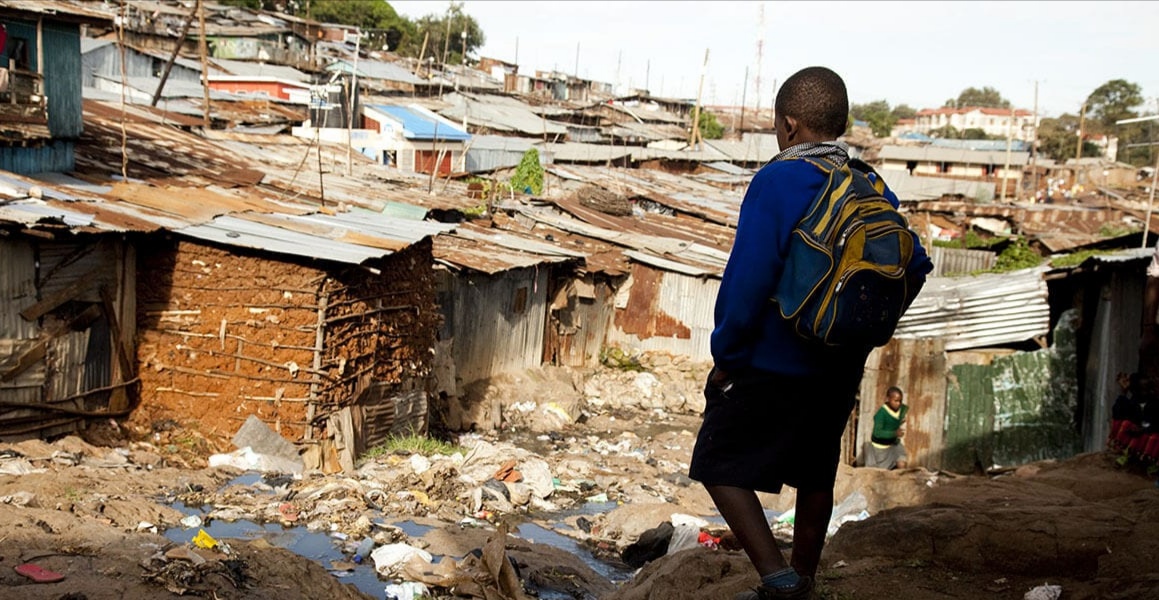
In addition to the effects on economic development of a country, Poverty also has an adverse impact on the environment leading to pollution, such a lifestyle leads to unnecessary depletion of resources. It encompasses a combination of factors. The first reason is people hit by poverty create an unhealthy lifestyle around them because most of the houses of such people are located in the slum areas. The houses would be devoid of a proper drainage system and sewage disposal, lack of sanitation and would let all the effluents and filthy water on the road. Such waters would be flowing rapidly in between houses, which to a drastic level will pollute the environment.

Every house may not hold the service of individual toilets and there would be a common one among them, and that would increase the risks of infectious diseases because there would be lack of proper maintenance. People over there use flex banners for house roofing and have them as a sleeping mat but the fact is flex banners are made of poly vinyl chloride( they are made of plastics which do not degrade biologically and it causes a serious threat to the environment as it is not bio degradable. It may have serious effects on the health and can even cause cancer and infertility problems. There are high chances of polluting the water resources due to lack of knowledge and poor water management. Humans who are lesser educated live shorter lives than who are educated more, such intangible gaps are a huge loss for people and the country.

What could be the promising measures to alleviate poverty?

  • Many people are pushed into such a state due to the lack of employment and education opportunities so it would be an important measure to generate such opportunities for the poor and to raise their productivity is the speedy development of infrastructure.
  • Further for the mitigation of poverty growth of non farm employment in the rural areas holds a special importance. Non farm employment is created in marketing, transportation, handicrafts, dairying and forestry, food processing and other agricultural products.
  • Educating a girl child is very prominent for the society. Educated girls can grow into skilled workers and get well paying jobs. Working women can earn and support the families and lead to sustainable development.
  • The public distribution system should be strengthened to remove poverty. Poor section should get food grains at subsidized rates and in adequate quantity.
  • Even a common man are not able to afford things these days due to the constant escalation of prices and just imagine the plight of the impoverished. Stability in prices helps to remove poverty. If the prices increases constantly the poor becomes poorer. So the Government should render the best to keep the prices under control.
  • Development in agriculture can aid the eradication of poverty. Rapid rate of growth of agriculture production will help to remove urban as well as rural poverty. Agriculture should be mechanized and modernized.

Poverty in India

Poverty one of the major problem in India. India is the second most populous country after China with 1.2 billion people and it is the seventh largest country in the world in terms of area.

Around ⅔rd of people in India live in poverty in which 68.9 % of Indian population lives on less than 2 dollar a day and over 30% even have less than 1.25 dollar per day. And thus they are considered extremely poor.

India subcontinent is one of the poorest country in the world.

The most poor section of our country is children and Womens. They are considered as the weakest member of Indian society and that’s why they suffer the most.

In India womens are not considered as the strongest member of the society because of a patriarchy.

Education and job for womens are not considered important in our society.

By preventing education for Childrens and womens leads to the poverty and poverty is also preventing children from getting an education

Poverty in India impacts children and families in a variety of different ways:-

  • High infant mortality
  • Child labour
  • Malnutrition
  • Lack of education
  • Child marriage

High infant mortality rate

  • India is one of the country with highest child mortality rate.
  • Around 1.4 million children die each year in India their fifth birthday.
  • Major causes of death are due to pneumonia, malaria, diarrhoeal diseases as well as chronic Malnutrition.

Child labour

  • Child labour for children under the age of 14 in India is prohibited by law.
  • According to official figures 12.5 nilganj children between the age of 5 to 14 are working.
  • It is believed that Indian children’s contribute to the living wood of their poor family.
  • Children’s work in the field in factories, in quarries, private households .

Malnutrition

  • India is one of the world’s top countries when it comes to Malnutrition.
  • 7.8 infants were found to have birth weight less than 2.5Kg
  • More than 200 million people don’t have sufficient access food.

Lack of Education

  • Most of childrens have no access to education in India.
  • Girls are excluded from the school in higher numbers with respect to boys.
  • We should have to treat them equally but it is believed to be inferior on lower caste.
  • Without education, chances of finding living from employment in India is impossible.
  • If educated peoples start teaching childrens at free of cost then it also be very useful in making a better world.
  • Like If 30 college students are studying in 1 course and they start teaching poor childrens only 1 day per month then the childrens study 1 month at free of costs.
  • We also have to put some efforts in making better world not for others, but for ourselves as well.

Child marriage

  • As we know Child marriage is crime according to Child marriage Restraint Act, 1929.
  • But it is still widespread in many regions of India.
  • Poverty is also the main reason behind this.

Overpopulation

  • Overpopulation leads to high competition in every aspects of life.
  • We see lack of job opportunities, education.
  • Food production is not as much to fulfill the need of this higher population.
  • Due to overpopulation, and not doing work after having such high population in India is main reason behind poverty.
  • If we utilise this overpopulation as the opportunity to increase country’s financial condition then it actually going to worth it.

POVERTY


Poverty, the state of one who lacks a usual or socially acceptable amount of money or material possessions. Poverty is said to exist when people lack the means to satisfy their basic needs. In this context, the identification of poor people first requires a determination of what constitutes basic needs. These may be defined as narrowly as “those necessary for survival” or as broadly as “those reflecting the prevailing standard of living in the community.” The first criterion would cover only those people near the borderline of starvation or death from exposure; the second would extend to people whose nutrition, housing, and clothing, though adequate to preserve life, do not measure up to those of the population as a whole. The problem of definition is further compounded by the noneconomic connotations that the word poverty has acquired. Poverty has been associated, for example, with poor health, low levels of education or skills, an inability or an unwillingness to work, high rates of disruptive or disorderly behavior, and improvidence. While these attributes have often been found to exist with poverty, their inclusion in a definition of poverty would tend to obscure the relation between them and the inability to provide for one’s basic needs. Whatever definition one uses, authorities and laypersons alike commonly assume that the effects of poverty are harmful to both individuals and society.

Although poverty is a phenomenon as old as human history, its significance has changed over time. Under traditional (i.e., nonindustrial zed) modes of economic production, widespread poverty had been accepted as inevitable. The total output of goods and services, even if equally distributed, would still have been insufficient to give the entire population a comfortable standard of living by prevailing standards. With the economic productivity that resulted from industrialization, however, this ceased to be the case—especially in the world’s most industrialized countries, where national outputs were sufficient to raise the entire population to a comfortable level if the necessary redistribution could be arranged without adversely affecting output.


 How does poverty affect children?
Children usually depend on their parents or guardians. They don’t have the resources to pull themselves out of poverty. This makes them more likely to experience the problems common to poverty, including:

  • Illness due to unsafe water and poor sanitation
  • Malnutrition (for example, leading to stunted growth)
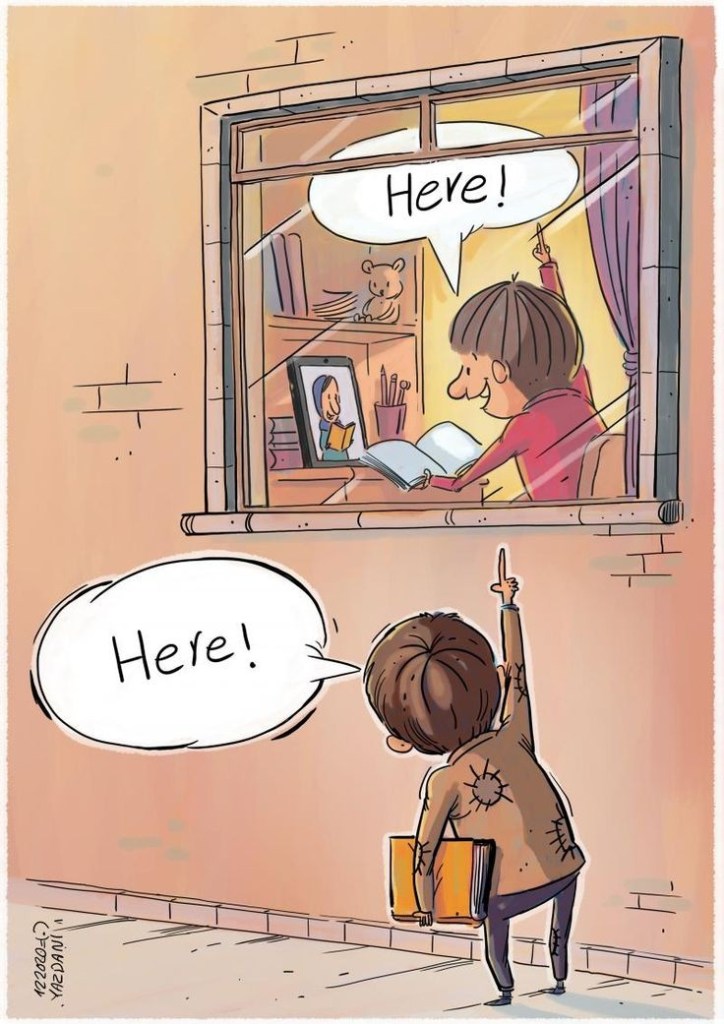
  • Lack of access to education (for example, leading to depressed future productivity)
  • Inadequate health care

Child poverty has other negative effects. It can trigger a cycle of poverty that lasts generations, increase the incidence of early marriage and raise psychological issues of stress and shame. However, with the right response, starting with education, the cycle of poverty can be broken.


 What can I do to reduce poverty?
You can find and support creditable organizations that are working to reduce poverty in the world’s poorest communities. There are a variety of organizations focused on different aspects of poverty. These can include access to health care and education services, labor rights and conditions, or by demographic such as women and children.

Supporting these organizations can involve everything from making financial donations, to volunteering, to advocacy work. With World Vision, there are several ways that you can get involved in the fight against poverty. You can donate through our Gift Cataloguebecome a child ambassadorsupport a community and more.

Poverty

Poverty! Poverty is lack of food, Poverty is lack of shelter, Poverty is being sick and can not afford medicines, Poverty is knowing how to read but can’t afford going to School, Poverty is being unemployed. And Poverty is lack of representation and freedom.Poverty has so many faces, and can describe in different ways. Most often, poverty is a situation people want to escape.

We have to take the step to reduce poverty so that many more may have enough food to eat, adequate shelter to cover their head, access to education and health.Overpopulation and underdevelopment in the country is the main cause for poverty. The birth rate in India is very high and the former has taken the measure of the ‘one child policy’ to change the situation, but the latter has not made any effort yet.

Underdevelopment is another reason, the country do not have enough economic growth to support their growing populations.Poverty in India can eradicate with some effective programmes, just need a joint effort from everyone not only from the government. Government of India should make effective policies aiming to develop rural areas through the key components like primary education, population control policies, family welfare, job creation and many more.

We can define poverty as the condition where the basic needs of a family, like food, shelter, clothing, and education are not fulfilled. It can lead to other problems like poor literacy, unemployment, malnutrition, etc. A poor person is not able to get education due to lack of money and therefore remains unemployed. An unemployed person is not able to buy enough & nutritious food for his family and their health decline. A weak person lacks the energy required for the job. A jobless person remains poor only. Thus we can say that poverty is the root cause of other problems.

How Poverty is Measured?

For measuring poverty United nations have devised two measures of poverty – Absolute & relative poverty.  Absolute poverty is used to measure poverty in developing countries like India. Relative poverty is used to measure poverty in developed countries like the USA. In absolute poverty, a line based on the minimum level of income has been created & is called a poverty line.  If per day income of a family is below this level, then it is poor or below the poverty line. If per day income of a family is above this level, then it is non-poor or above the poverty line. In India, the new poverty line is  Rs 32 in rural areas and Rs 47 in urban areas.

Causes of Poverty

According to the Noble prize winner South African leader, Nelson Mandela – “Poverty is not natural, it is manmade”. The above statement is true as the causes of poverty are generally man-made. There are various causes of poverty but the most important is population. Rising population is putting the burden on the resources & budget of countries. Governments are finding difficult to provide food, shelter & employment to the rising population.

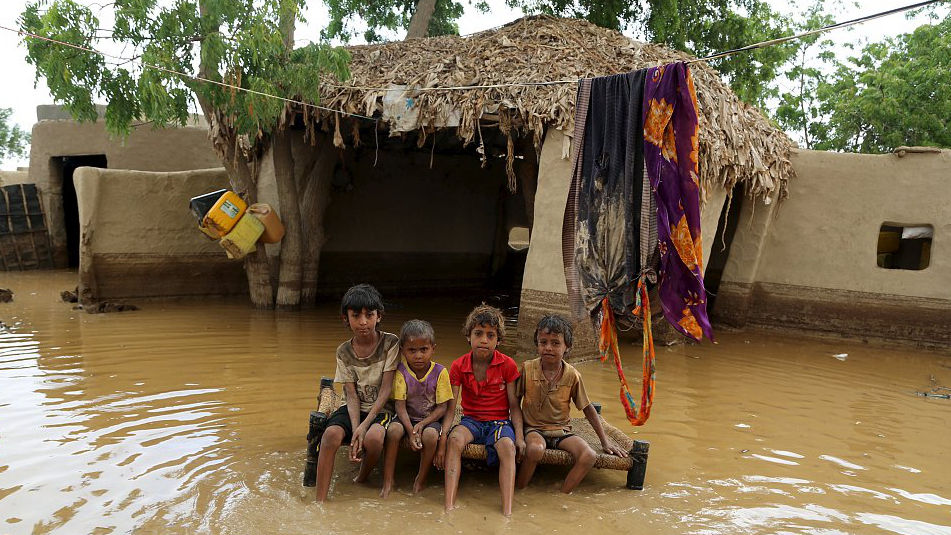
The other causes are- lack of education, war, natural disaster, lack of employment, lack of infrastructure, political instability, etc. For instance- lack of employment opportunities makes a person jobless & he is not able to earn enough to fulfill the basic necessities of his family & becomes poor. Lack of education compels a person for less paying jobs & it makes him poorer. Lack of infrastructure means there are no industries, banks, etc. in a country resulting in lack of employment opportunities. Natural disasters like flood, earthquake also contribute to poverty.

In some countries, especially African countries like Somalia, a long period of civil war has made poverty widespread. This is because all the resources & money is being spent in war instead of public welfare. Countries like India, Pakistan, Bangladesh, etc. are prone to natural disasters like cyclone, etc. These disasters occur every year causing poverty to rise.

Ill Effects of Poverty

Poverty affects the life of a poor family. A poor person is not able to take proper food & nutrition &his capacity to work reduces. Reduced capacity to work further reduces his income, making him poorer. Children from poor family never get proper schooling & proper nutrition. They have to work to support their family & this destroys their childhood. Some of them may also involve in crimes like theft, murder, robbery, etc. A poor person remains uneducated & is forced to live under unhygienic conditions in slums. There are no proper sanitation & drinking water facility in slums & he falls ill often &  his health deteriorates. A poor person generally dies an early death. So, all social evils are related to poverty.

Government Schemes to Remove Poverty

The government of India also took several measures to eradicate poverty from India. Some of them are – creating employment opportunities, controlling population, etc. In India, about 60% of the population is still dependent on agriculture for its livelihood. Government has taken certain measures to promote agriculture in India. The government constructed certain dams & canals in our country to provide easy availability of water for irrigation. Government has also taken steps for the cheap availability of seeds & farming equipment to promote agriculture. Government is also promoting farming of cash crops like cotton, instead of food crops. In cities, the government is promoting industrialization to create more jobs. Government has also opened  ‘Ration shops’. Other measures include providing free & compulsory education for children up to 14 years of age, scholarship to deserving students from a poor background, providing subsidized houses to poor people, etc.

Poverty is a social evil, we can also contribute to control it. For example- we can simply donate old clothes to poor people, we can also sponsor the education of a poor child or we can utilize our free time by teaching poor students. Remember before wasting food, somebody is still sleeping hungry.

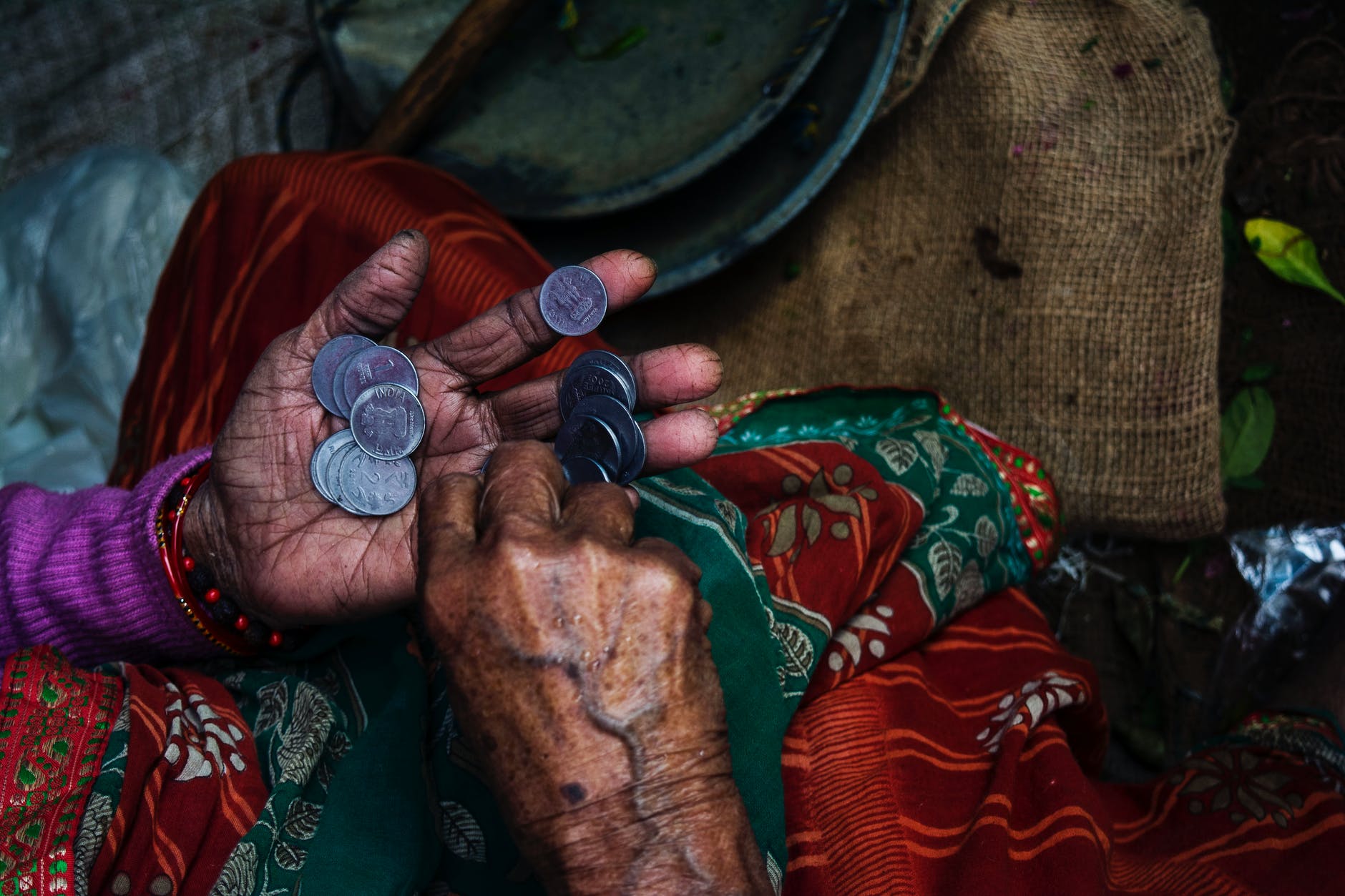
Photo by namo deet on Pexels.com

Poverty In India

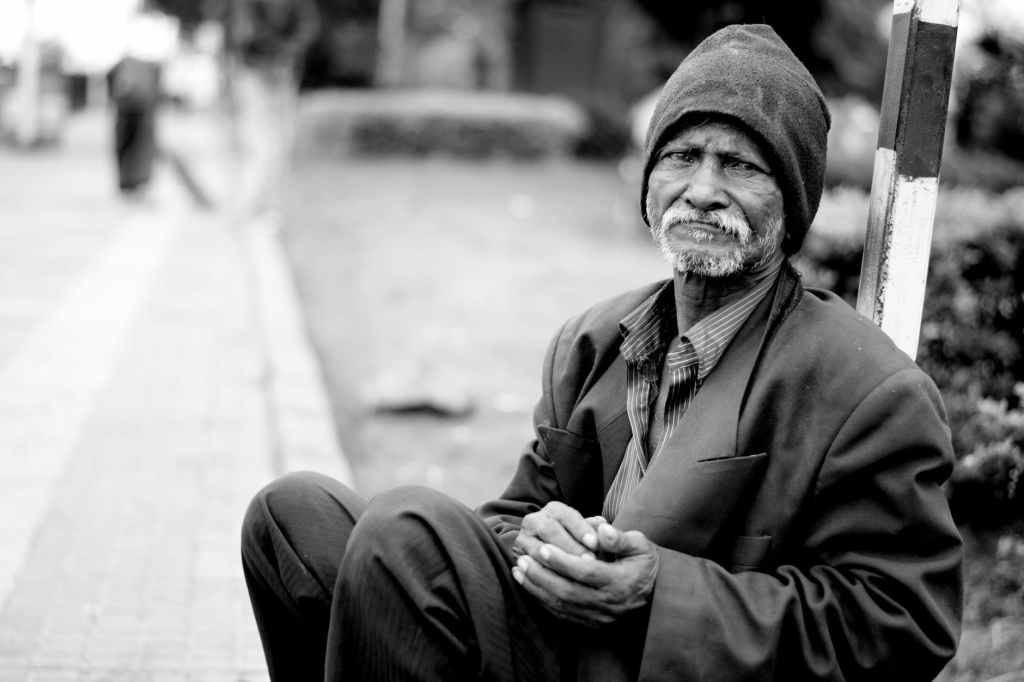
Poverty is defined as a condition in which a person is deprived of fundamental needs of existence. Furthermore, the individual does not have an insufficient amount of food, housing, or clothing. In India, the majority of the poor cannot afford to pay for a single meal each day. They also sleep on the side of the road and dress in filthy old clothing. Furthermore, they do not receive appropriate healthy and nutritious food, as well as medicine or any other required item.

Causes of Poverty:-

Poverty in India is growing due to a rise in the urban population. People from rural areas are flocking to cities in search of better opportunities. The majority of these individuals find a low-wage employment or an activity that just pays for their meals. Most significantly, lakhs of urban residents live below the poverty line, with many more on the verge of destitution.

Furthermore, a large number of people live in slums or low-lying regions. These individuals are generally uneducated, and despite their best efforts, their situation stays unchanged and there is no satisfying outcome.

Furthermore, there are several factors that may be identified as important causes of poverty in India. Corruption, increasing population, poor agriculture, a huge disparity between wealthy and poor, ancient customs, illiteracy, unemployment, and a few more factors are among these causes. A significant number of people work in agriculture, yet the compensation is relatively low in relation to the labour done by employees.

Furthermore, as the population rises, so does the need for food, housing, and money, and in the absence of these resources, poverty spreads rapidly. Furthermore, being extremely poor or extra affluent widens the divide between rich and poor.

Furthermore, the affluent are getting richer while the poor are increasing poorer, creating an economic divide that will be difficult to close.

Effects of Poverty:-

It has a wide range of effects on people’s lives. It also has a variety of impacts, such as illiteracy, bad nutrition and food, inadequate housing, child labour, unemployment, poor hygiene and lifestyle, and feminization of poverty, among others. Furthermore, impoverished people cannot afford a good and balanced diet, attractive clothing, appropriate education, a stable and clean housing, and so on since all of these amenities cost money, and if they can’t afford to eat two meals a day, how can they afford to pay for these amenities?

The Solutions for Ending Poverty:-

It is critical that we act swiftly and appropriately to address the issue of poverty. One approach to addressing these issues is to equip farmers with enough infrastructure. So that they can make agriculture lucrative rather than migrating to cities in search of work.

Illiterate individuals should also be provided the necessary instruction in order to live a better life. Family planning should be practised in order to control the growing population. Furthermore, steps should be done to eliminate corruption so that we can address the wealth disparity.

List of Indian states and union territories by poverty rate:-

India’s GDP per capita income is around $2241 (or 168,075). This is a list of Indian states and union territories rated in terms of poverty as of 2021. Number and Population – The rank is determined by the percentage of persons living below the poverty line and is based on MRP consumption.

State/U.T.Percentage of population living below the national poverty line
Goa5.09
Kerala7.05
Himachal Pradesh8.06
Sikkim8.19
Punjab8.26
Andhra Pradesh9.2
Haryana11.16
Uttarakhand 11.26
Tamil Nadu11.28
Meghalaya11.87
Tripura14.05
Rajasthan14.71
Gujarat16.63
Maharashtra17.35
Nagaland18.88
West Bengal19.98
Mizoram20.4
Karnataka20.91
Uttar Pradesh29.43
Madhya Pradesh31.65
Assam31.98
Odisha32.59
Bihar33.74
Arunachal Pradesh34.67
Manipur36.89
Jharkhand36.96
Chhattisgarh39.93
TelanganaN/A
Andaman And Nicobar Islands1
Lakshadweep2.77
Puducherry9.69
Daman and Diu9.86
Delhi9.91
Jammu and Kashmir and Ladakh10.35
Chandigarh21.81
Dadra and Nagar haveli39.31

Conclusion

To summarize, poverty is a national problem, not a personal one. It should also be addressed as soon as possible by the deployment of appropriate solutions. Furthermore, poverty eradication has become critical for the long-term and inclusive progress of individuals, society, country, and economy.

PANDEMIC POVERTY AND ITS CAUSES IN INDIA

The word poverty itself kind of making me feel poor. Because that one word alone hold so much pain, sympathy, empathy and so on. Then think about the people who are suffering from poverty. The country we live in is known to be well developing nation with respectable economic growth. But at the same time the poverty is still a major problem.

Especially during this pandemic poverty has hit people in different ways. Middle and lower class people who has managed to survive at the start of the pandemic have completely lost their will to survive in the end. We even heard of some sensitive news that people died of covid not being able to get treated without any access to money. Still some people couldnt able to get food and shelter.

WHAT IS POVERTY?

Poverty refers to a situation when people are deprived of basic needs of life. It is often characterized by inadequacy of food, shelter and clothes. A state of situation when there is a lack of essential needs of subsistence. The study of poverty is a complex one because there is no easy way, or standard definition of who is poor or who is not. The living conditions of people has been widely used to get an idea of their situation. It is situation when someone experience a fundamental loss in well being.

According to Human Rights Commission’s Report, Poverty is seen “As a failure to meet the basic needs or to remain deprived from such needs is a state of poverty. The basic human need include not only food, clothing and dwelling, but also health and education’.

CAUSES:

The continuous problem of poverty in the country is the results of many factors and need to be identified in order to be addressed properly.

1. POPULATION BURDEN:

The growth of population in the country has till now exceeded the growth of economy and also ended up in poverty. India is known to be second most populated country in the world. But this Covid-19 has taken many lives that even may be our loved ones. In this pandemic, in rural areas, size of the family is bigger and that means in lowering the per capita income values and ultimately lowering of standard of living. Still the population is one of the major causes of poverty.

2. POOR AGRICULTURAL INFRASTRUCTURE:

Agriculture is the backbone of India and Indian economy. But old farming practices, lack of proper irrigation infrastructure, lack of knowledge of crop handling has affected the productivity. Sometimes lack of working lead to decreased wages become the reason for attaining daily needs of the labourers family pushing them into poverty. Pandemic have locked us all inside the home. But for the farmers they are being seperated from their soul, their farming land which feeds them and also us.

3. UNEQUAL DISTRIBUTION OF ASSETS:

This occurs with the economy changing directions rapidly. Upper and middle income groups sees a faster increase in earnings than lower income groups. Also assets like cattle, land are distributed disproportionately among the population. In India it is said that 80% of the wealth is controlled by 20% of the population.

4. UNEMPLOYMENT: 

Another big factor which is the cause of poverty in the country. Many youngsters without the job become the major cause of the poverty. Work from home for the people with jobs sounds good to earn and feed their family but what about the people who are unemployed. Even before the covid there were no proper jobs for youngster in the nation.

5. INFLATION:

Inflation is an increase in prices of goods overlapping with the fall in the purchasing value of money. After the long lockdown, the Government has permitted to open the particular stores. This made the consumers to sell the products with a little higher price. Upper and middle class people have survived the situation but lower class people have suffered a lot.

5. EDUCATION AND LITERACY:

Online classes have  become the normal classes. In rural areas, families have managed to provide their child or children the proper education. But not all have enough money to provide their kids education some only have enough resources to feed their children. They have to prefer food than education. Children started to contribute to families by taking up the jobs. On the other hand, lack of education and illiteracy prevent individuals from getting better paying jobs and they get stuck at jobs offering minimum wages.

7. LACK OF SKILLED LABOURS:

Lack of adequate vocational training makes the huge labour force available in India largely unskilled. Lack of education, much lesser higher education is also a factor.

8.GENDER INEQUALITY:

The weak status attached with women, deep rooted social criticism and force fitting, being dominated renders about 50% of the country’s population unable to work. The women of the family as a dependent that needs to be fed instead of contributing to the family income. There is no need to talk about their equality during this situation.

The pandemic also brought out many good wills to help the people suffering from poverty. Its all in the hands of future generation to create a poverty less nation. We are not talking about to give away all your money to poor but just one hand helping another hand. Stay away from corruption.

CHILD LABOUR

See the source image

Child labor — a social ill that continues to plague Indian society

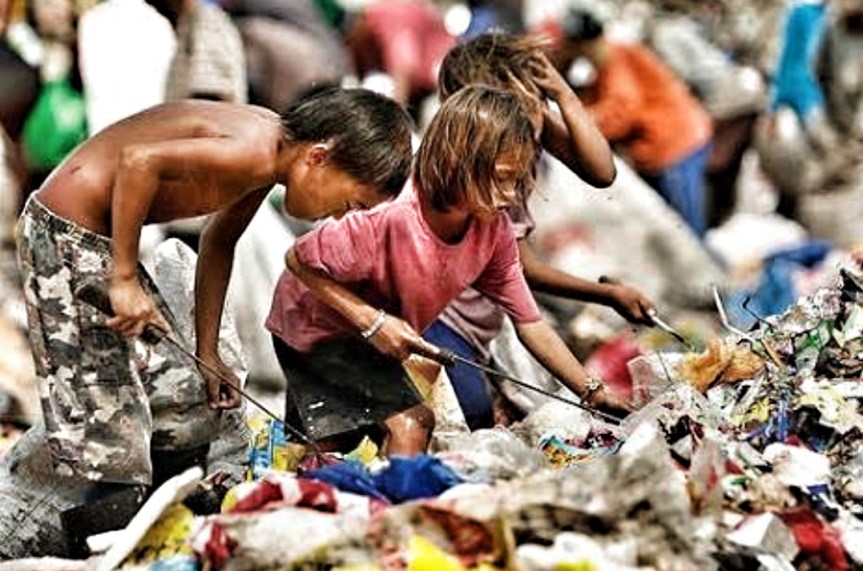
We live in 21st century which is an era of a modern and advanced society. There are some dark truths that run deep in our roots, Child Labour being one of them. While some of us are aware about it, many others deny to acknowledge this truth. Child Labour occurs when children are forced to take up work at an age they need to study and enjoy the phase of innocence. Child Labour leads to the loss of childhood and escalates the exploitation of children in various forms. India faces situations where children are forced to work under adverse conditions. Despite Laws against Child Labour, many children remain exploited as cheap Labour as the authorities are unable to implement strict laws and actions to protect children.

Laws in India

The Child Labour (Prohibition and Regulation) Act, 1986, was the only enacted provision by the Indian Constitution against child Labour and its atrocities. Other provisions stated by the Indian Constitution are: Article 24 of the Indian Constitution states that no child below the age of fourteen shall employ in any hazardous employment or factory but not in non-hazardous industries. Article 39(f)) of the Indian Constitution states that children and young adults are to be protected against moral and material abandonment or any forms of exploitation. Unfortunately, these laws and regulations lack active and proper implementation and enforcement.

Root of child labour

The leading cause of child Labour is extreme poverty in India. To supplement their parents income or being the only wage earners in the family, children end up as Labourers in various industries. Hence, enforcement alone cannot help solve it. The Government has been laying a lot of emphasis on the rehabilitation of these children and on improving the economic conditions of their families. Child Labour is quite relevant in India due to poor schooling opportunities and the country’s high poverty rate. The other major factor is that children provide cheap labour, the person who wants labour has to pay less to them than adult labour. The child can be commanded more than an adult. The pull factor of the child labour is the profit maximization. The causes to failure to control the child labour are poverty, low wages than adult, unemployment, absence of schemes for family allowance, migration to urban areas, large family size, children being cheaply available, non existence of strict provisions for compulsory education, illiteracy, ignorance of parents and traditional attitudes13.

CONCLUSION

Child labour is a significant problem in India. The prevalence of it is shown by the child work participation rates which are higher in Indian than in other developing countries. Equal opportunities for development to all children during the period of growth should be our aim. For this purpose even we citizen should join hands with government and other institutions which are set up for this purpose. Educating the child can be a solution for solving the problem of child labour. To provide compulsory primary education and in order to reduce the burden on parents to meet the expenditure for their children’s education, while they are struggling for a day’s meal, our Government had allotted funds. But due to the lack of awareness most of the poor families are not availing these facilities. So, proper steps have to be taken to create awareness.

India’s Poverty Challenge

The virus struck India at a time when the country was experiencing its worst economic development in over a decade. The weakening economy had adversely harmed rural areas, which house the bulk of the country’s citizens.

Even in the lack of official data, one might detect an increase in rural poverty. High unemployment, consumption expenditure was continually decreasing, and public development investment was stagnating. These three variables, taken combined, determine an economy’s health.

For more than a year, rural Indians — mainly an informal workforce and impoverished by any recognised measure — have been living with sporadic work. Anecdotal reports of risky survival are coming in. People are cutting back on food purchases; many have ceased eating staples such as lentils as food prices have risen.

The Mahatma Gandhi National Rural Employment Guarantee Scheme is no longer sufficient to hold employment expectations. Most people are depleting their small savings. Mostly with the pandemic’s second wave wreaking havoc, it’s a desperate scenario. One may say that the economy for the poorest and the moderately well-off has come to an end.

A pre-Covid economic downturn, coupled with the pandemic’s economic shock, is believed to have reversed any poverty-reduction advances, resulting in a significant increase in poverty.

Using World Bank statistics, Pew Research Center projected that the number of poor in India (those with an earnings of $2 a day or below in purchasing power parity) has increased to 134 million from 60 million within only a year as a result of the pandemic-induced recession. It means that, after 45 years, India has once again become  a “country of widespread poverty.”

Since 2011, India has not counted the impoverished. However, the United Nations projected that 364 million people were impoverished in the nation in 2019, accounting for 28% of the population. This does not include the projected new impoverished as a result of the outbreak. According to estimates, millions of people in major cities have also fallen below the poverty line. According to the Pew Center, the middle class has decreased by one-third. Despite population and geographical divisions, millions of Indians have gotten worse, remained poor, or are on the verge of becoming impoverished.

For a huge population like India, where millions of lives are at stake, the need to create a system that maps the areas and homes that are in desperate need for some help from the government. Public services are seen as the most realistic means of lifting the most vulnerable people from poverty.

To bring about change in anti-poverty initiatives, the government should use scientific methods and analyses. Moreover, there is a need for a long-term plan to combat poverty, which may be accomplished by enabling the most disadvantaged section of society self-sufficient by providing them with some type of skill set.

Local authorities can play a significant role in this issue because they are more familiar with the underlying causes of the crises. Strengthening them via technical and technological support as well as an enhanced monitoring system will help to reduce poverty at the grass roots. It is critical to provide food assistance and enough cash to such families in order to keep them from falling further into impoverishment.

When compared to the time it was at its peak, the number of Covid 19 cases has decreased, but many individuals have been trapped in a vicious circle of exacerbating the situation, economic decline, and unemployment. There is still some hope that along with long-term solutions, we can not only overcome the crisis, but also use it to raise people out of poverty, which is feasible for a nation that has decreased poverty at the highest pace in history.

Children and Lack of Education

There are many circumstances of children around the world who experience a lack of education, resulting in them having a below average level of knowledge. Lack of education is a significant barrier for underprivileged children around the world.

Today, education remains an inaccessible right for millions of children around the world. More than 72 million children of primary education age are not in school and 759 million adults are illiterate and do not have the awareness necessary to improve both their living conditions and those of their children.

What Is Lack of Education?

  • A lack of education can be described by a state where people have lower than average common knowledge and basic skills to support them in their daily life.
  • This includes the ability to read, write, spell, speak, and do simple math.

What Causes Lack of Education?

  • A lack of education is a significant concern due to lack of funding for education, having untrained teachers, limited or no classroom space, limited resources (e.g., paper, pencil, etc.), living far away from school, and living in countries of conflict.
  • This concern is a leading issue in underdeveloped countries as an education system is highly dependent on region’s economic status.

People Who Are Less Likely To Receive Education

Females

  • Girls are commonly left uneducated because many countries believe there is more value in educating boys in comparison to girls.
  • Additionally, girls are forced to marry as early as eighteen years old which prevent them for continuing their education.

Children With Disabilities

  • Children with disabilities most regularly do not regularly receive education because teachers do not receive adequate training to work with these kids.
  • In addition, these children face a lot of discrimination in terms of accessibility to a safe learning environment, as well as communication with their surroundings.

Outcomes From a Lack of Education

  • Lack of education can prevent a person from having a sound voice in society, as they face communication barriers and are looked down upon
  • Not having enough education is a leading cause of unemployment, as many industries require well informed and educated individuals to step into an employment position
  • Being uneducated puts people at a higher risk of falling into the poverty trap, which is defined by being unable to escape poverty due to a lack of resources. This is because education provides people with the means to make a sustainable living; however, without it, the chances of having a sufficient income is low
  • Lacking education promotes exploitation, as many people without a proper education take on unsafe positions. Some of these positions include becoming a prostitute, sweatshop laborer, and can even result in child marriages.

Prevalence Rates

  • 34.3 million girls around the world do not attend primary school.
  • 97.4 million girls around the world do not attend secondary school.
  • In countries of conflict, girls are twice as likely to receive education in comparison to countries without conflict.
  • In developing countries, up to 95% of disabled children are not enrolled in school.
  • 51% of the uneducated population comes from South Asia.

Population Explosion: The cause of poor living conditions of indians

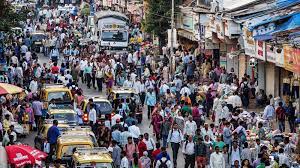
India is a over-populated country. It is the second most populated country in the world, after China. However, researchers say that India is all set to surpass China in population density by 2024. That means India is about to become the country with the highest population density across the world.

The population of India is increasing at an alarming rate. India is not the country with the highest number of people. There are countries which has more number of people than India like Russia. But they are not overpopulated. Those countries have enough space to fit in the number of people. India has more people than the country could fit in. The number of people residing in per unit square of land in India is much higher than that of other countries. This makes India an over-crowded country.

The huge population of India makes a lot of people live in poverty. The country’s economy is not enough to sustain its population. Adding to the problem, the country’s wealth is not equally distributed. The economic gap between the rich and the poor is widening. The major chunk of the country’s wealth is held by the rich and the powerful who are quite few in number compared to the country’s huge population. A large chunk of the population live below poverty line who do not have enough money to afford their meals thrice a day.

Also, the country does not have enough employment opportunities for all its citizens. This leads to unemployment, economic distress, stress and mental health problems. Unemployment increases the amount of crimes, theft and illegal business practices.

Along with wealth and job opportunities, India’s natural resources are also limited and not enough for its huge population. Over-consumption of natural resources would exhaust them and leave none for our future generations. Overpopulation is also a threat to our environment. The air and water bodies are becoming more and more polluted day by day. Too much burning of fossil fuels, congested roads and too many vehicles are releasing toxic gases in the air.

Accommodation is also a problem in India. Thousands of people live in slums which are over-crowded with unhealthy living conditions. More houses and buildings are being constructed which leaves no place for plants and nature. Forests are cut down to make room for construction projects. The cutting down of trees leads to increase in the level of carbon dioxide in the atmosphere.

Population explosion is a serious problem which needs to be addressed at any cost. The Indian population should be controlled to improve the lives of the people. Awareness drives and contraceptive alternatives should be adopted with immediate effect.