Teachings from the Life of Guru Teg Bahadur

Guru Teg Bahadur, the 9th guru or apostle of the Sikh religion, is renowned for the extreme valor with which he advocated for the masses’ right to profess their religion of choice. Even in the face of the enemy’s prowess, he staunchly refused to be coerced into conversion ultimately leading to his own execution. He pioneered community wells and langars which provided food to people of all stations. It served to demolish in one simple act of dining together the oppressive caste system prevalent in India. His hymns were appended in the Guru Granth Sahib and provide humbling insight into human life. 

 
 Being a man of faith, one recurring theme in his teachings is devotion to God. The transient nature of oneself in contrast to the Almighty is especially highlighted. A human existence ends in the blink of an eye; snuffed out of the spring of life. The one true reality is God who persists even when all else has been destroyed. According to Guru, this revelation is an indispensable one to have. The feeling and eventual understanding of God’s eternal omnipresence in the bones will surely lead to liberation from the cycle of life and attainment of salvation. 

 Humans spend the entirety of their lifetimes in the pursuit of happiness. Whilst some search for the elusive serotonin in wealth and fame, others immerse themselves amongst people. This frantic hunt for external contentment, nevertheless, results in dead ends all too often. Guru Teg Bahadur claimed that this dissatisfaction is caused due to unbridled attachment to material possessions. Impartiality to adulation as well as critiques is of immense importance for the stability of the mind. Blessed is the one who can adopt true fearlessness stemming from non-attachment. The conquest of fear allows for people to live true to their principles in dire situations. 

 Apropos of the way of living, he left us a cornucopia of adages to be the voice of reason for when a dilemma presents itself. People tend to dismiss humility with the steady accretion of socio-economic status. It is then that these aphorisms serve as a reminder to rid ourselves of arrogance and the never-ending lust for more. He stated that indulging in ostentatious acts of fidelity to God amount to nothing. Construction of resplendent shrines or ceremonial baths equates to naught in the long run. A religion is redundant if the mind of the devotee is given free reigns to languish as it pleases. 

 Throughout the course of his life, Guru Teg Bahadur spread the message of Sikhism with the common denominator being leading an austere and chaste life devoted to God. He considered spirituality as a path of freedom from the physical shackles of the human body and eventual salvation. Assuming the role of a mentor, he aided in guiding aimless vagrants to self-actualization and transcendence. Special emphasis was put on a life free from malice, apathy, rancor and focused on self-reflection. Most importantly, Guru Teg Bahadur told us to look into ourselves for God rather than some long-forgotten woods.  


WHAT ARE THE CONTEMPORARY TRENDS IN THE VOTING BEHAVIOR OF THE INDIAN ELECTORATE

Studying about the voting pattern and election pattern of the world’s largest democracy is a challenge. India has seen a tremendous change in the voting pattern since the first elections of 1952. Election during that time was solely based on the leader and there was principal focus on only one political party but now the situations have changed. India has grown through the 21st century to see a lot of changes within the political system. Starting from the changes during the time of independence till today.

The voting pattern has seen considerable changes lately. During the time of independence the pattern of voting was solely based on the legacy of the nationalist movement. This was because people only voted for the single largest party at that time and that is the Indian National Congress. INC was people’s first choice since it had the legacy of the Independence struggle as well as it had an all India background which accommodated people from all kinds of religion and caste unlike other political parties which had its ground on only a single community of people.

While Today’s political system is quite complicated. The voting pattern has also become quite complex unlike earlier times. These days people’s voting pattern and behaviour have changed a lot. There are many factors for this change. It is quite a complex study where we have to unravel things from the core. For this we have to take a look from where this change in voting period has started from.

       Till the 1977 elections congress party ruled India. The INC consecutively won the elections till 1977. Only to be defeated by the Janata Party. In 1989 INC was again defeated for the second time due to the unpopular rule of the congress and the lack of representation of the regional parties, lower or backward castes, minorities etc. 1989 put an end to the rule of single party system and welcomed in the multi-party coalition system in India.

Most striking trend in the Indian politics is the political competition between the Indian Political Parties that have grown past these years. This rise in the number of the political parties in India is due to the lack of representation of the various regionalities and communities. There has been a constant competition between various communities in the country for power. People are being voted mainly because they belong to a particular community or religion. This pattern of politics emerged only very recently within the country.      

The behaviour of a voter in India is defined by the various factors

  • Religion
  • Caste
  • Performance of the party in power
  • Money
  • Policy

The political parties make use of these factors to attract more voters. Although no party can convince a person to vote for them in the name of religion and caste, this is an important factor

In the elections. Since India is a secular country the political parties nor the government cannot have a tilt towards a single religion. Even still political parties use religion and caste to catch the polls.

RELIGION is one of the main factors which affect the voting behaviour these days in our country. People are more interested to elect for candidates to more or less belong to their same religion or community since they feel that then only they can identify themselves with the leader. Despite India being a secular country and the fact that no religious affiliations can be used in the election matters we can still see that people use the religious sentiments of the people to make use of their vote. Political campaigning’s are also done for the same. For an example the Bharatiya Janata Party (BJP) is the leading political party of India which is said to have the ideology of Hindutva. The party has a tilt towards the Hindu religion. Another example of a political party is the Indian Muslim League which is as the name says a Muslim political party.

The establishment of a secular state along with the freedom of religion – that is to choose to practise, profess and propagate any religion of our choice, treating all religions equally and not putting any religion one above the other , the political parties have failed to keep their word. Even after all these laws the use of religion in politics hasn’t come to and end and it seems like it never will according to the recent political activities and trends. The continued existence of political parties which are one way or the other linked with a religion is the main reason why religion cannot be put away from politics. The very existence of these religious acts as a black hole to the act of secularism in our country. The existence of religious pluralism affects the political system. The selection of a candidate is sometimes solely based on religions preferences. The religionization of socio- political issues by the political parties is one of the methods by which they continue to get the voters in their consideration.

CASTE is yet another important factor in determining the voting behaviour of the people. Caste has always had its root in all kinds of problems in India. Caste is an important determinant in the politics of India. It constitutes an important basis for social relations in the country. Despite the various measure taken stop the discrimination,  caste still continues to an important basis for election. Politics in caste and caste in politics are very common in the Indian political scenario as we all know. Sometimes for the elections to various constituencies people are selected on the basis of their caste. Also while formulating various policies, election strategies and programme caste is taken as a major factor in the backdrop.  Caste system has had its roots for years and so it will take a lot of time for people to weed out these roots even from the political scenario. Votes are brought in the name of caste by the candidates.

Caste is an important determinant for the selection of candidate for the rural population. Despite the various laws and the adoption of secularism, uneducated people mostly living in the rural India choose to vote for people who belong to their own caste. The candidates despite the laws in the country make use of their sentiments to seek vote for them. Although recently this trend has been changing at least in the urban households since as you go up the social ladder caste tends to be invisible. While in the rural areas caste tends to be an important factor in the selection of their leader.

PERFROMANCE OF THE PARTY IN POWER. The performance of the party already ruling is also another important determinant. Each political party comes into power with a election manifesto and various promises. After the elections it is their duty to fulfil all of this and meet the various aspirations of the people. And so the performance of the party during the time it rules is an important factor in determining whether the people should elect for the party next time too.

Improper ruling of the party during its tenure can result in it being not chosen for the next time. The way the party rules influences the people in a big way. We can see an example of this by looking at the example of the elections during 1989. The parties which got elected only stayed in power for a short period of time due to their political instability and the lack of a charismatic leader during the time of ruling. Their unpopular rule with the lack of ideology since it was a coalition lead the people to choose another political party.

MONEY influences people in different ways. Usually people with money and power tend to stay in high positions and rule the people according to their wishes. India is a developing country and most of people live under the poverty line. And so the people having money and power tend to rise to the top. Without other factors like political wave getting involved usually it’s the people with money and power who wins the elections. Rich and the powerful throw around the money to catch the ballot. But this is not always true though because in the 1989 elections congress used a lot of money and power but it couldn’t win the elections. BJP won the elections.

POLICY. Various policies taken by the government or the political parties stand out as an important deciding factor in elections by a common man. When a party announces its political manifesto the policies it takes for the people is an important determinant in voting. A person who doesn’t know much about politics and party tends to take a look at the policies of the party or what it has done in the past years. And so creating a policy that attract the crowd and implementing it in a proper way is important for any party.

These are the various trends which are seen across the country during the election time. The voters turnout has consistently increased from the time of independence till today. People has started to see election as an important way of choosing their leaders. As people are getting educated they started to look into the doings of the party and make a proper decision when it comes to who to vote for. Voting behavior is a form of electoral behavior and understanding it can help us understand how and why people choose to vote for certain people. And the above study was about voting behavior and its determinants.

The perpetual war between the two countries

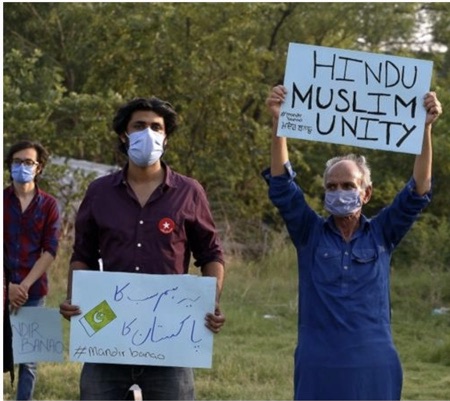
You must have seen a video which got viral few days back where a boy was seen damaging the walls of a temple that is currently being built in Islamabad(Pakistan). Another example like this was where a five year old boy was seen warning the Pakistani Prime Minister Imran Khan that if he will allow the the temples to be built, he will “kill all the Hindus”. Imagine a five year child speaking in his childish voice and warning such higher authority which may seem funny, but on the other hand this is a very important matter for the society that some people of Pakistan are filling up their children’s mind with filth and not showing them the right way where they should treat everyone as equal irrespective of caste, colour, gender plus nationality. I do agree with some of the things that the conflict between India and Pakistan is never ending but at least we can try to change the minds of the youth who will take the country forward.

Let me begin with the actual story where the Pakistani Government has decided to release funds for the Hindu temple to be built in Islamabad. This decision was made for the Minority class- the Hindu’s in Pakistan who also have the right to worship God in the temples. This plan was committed in the year 2017 by Nawaz Sharif’s government but it got delayed due to some issues. This is not the first time where the government has taken such step, before this the government took many initiatives for Hindu pilgrimage like they renovated Katas Raj Temple– a buddhist temple for the Hindus to worship. The Government has also helped the Sikh community with building gurudwaras for them like The Peshawar Gurudwara and the Nankana Sahib in Sailkot which was renovated for the sikhs.

aljazeera.com

Well, all of these things are small stepping stones by the Government for the minority so that they can also live like normal people without the barriers of religion. But on the other hand some projects have been backlashed by the Muslims of Pakistan where in a recent example the Pakistani government was planning to celebrate the legacy of Maharaja Ranjit Singh with statue, but it ended up causing a controversy on social media and in less than two months the statue was vandalised by the people. How will the country progress like this where the people are still not agreeing to some basic terms of accepting their fellow citizens as equal, building a temple or a gurudwara will never harm the other religion in fact all of these initiatives will bring the conflicts to an end. I am not saying that we Indians are the best and we don’t do such things, we are still facing major conflicts between Hindu and Muslim and there is no other solution to bring an end to this but there are Gurudwaras, Temples, Mosque and Church which are built together on the same lane and people respect that.

But why are these issues still arising, why can’t the soldiers just guard the country peacefully? The major reason for this is ‘Education‘ where the children are taught some facts which are against Hindus and Muslims, the facts which are putting them apart instead of living in tranquility and in harmony. The youth is being taught the wrong subjects with wrong facts and the society is also playing a major role in this, where they term minority people with funny names, where they are always referred to as a ‘minority class‘ instead of terming them as equal citizens.

All these examples and statements are not to hurt anyone be it from any religion or country. Building a temple or a gurudwara or even a mosque will never help the people to understand and have respect for the other religious sentiments, but education is and will be the only factor to bring everyone together and to treat everyone as equal, not becoming religion bias.

“My religion is ver simple, my religion is Kindness.” -Dalai Lama

FINITE SECULARISM?

INTRODUCTION

The word ‘secular’ is derived from the Latin word ‘saeculum’ which means a generation or an age or span of a century. The term arose from the European context of politics and derived from the attempt to prohibit the State and its property from the control of Church. A religious element was embedded in the meaning of word secular. In the Europe and other regions, secularism was closely related to the theory of progress. Over time the meaning of secularism has evolved and now the term secular means being ‘separate’ from religion, or having no religious bias. For many years the word ‘secular’ or ‘secularism’ was nowhere to be found in India (even though all the religions co-existed in harmony since ancient times). The foundation of Indian morality has been core unity, forbearance and even inter-weaving of religion. It is a definite fact that large population of Indians is associated to diverse religion lived in compassion. Slogans like – “Hindu Muslim Sikh Isaai, aapas mein hai bhai bhai(Hindus Muslims Sikhs and Christians all are brothers) are resonated down on the streets of India and binds us to moments of fraternity. This slogan expresses the essence of ‘secularism’. In year 1976 (after independence) the word ‘secular’ was added in the Preamble of the Constitution by 42nd Amendment Act. When the hon’ble Supreme Court declared the preamble as the basic structure of the Constitution of India, the word ‘secularism’ acquired a whole new status. Hence the Indian constitution stands for a secular state (there is no official religion of our country).

What is Secularism?                                                         

Secularism is a normative doctrine which seeks to realise a secular society. It is free from inter-religious and intra religious domination. It promotes freedom to practice their religion and equality between religions as well as within religions. As secularism is opposed to all forms of institutionalized religious domination, it challenges not merely interreligious but also intra-religious domination. The idea of secularism possesses a normative doctrine which seeks to realise a secular society, i.e., one devoid of either inter-religious or intra-religious domination. Put positively, it promotes freedom within religions, and equality between, as well as within, religions.[1]

CONTEMPORARY SECULARISM

Secularism is something which is argued since past and persist. Due to its direct relation with religion it is prevalent, pervasive and persuasive in community and human life. Society and culture of country evolves creating new issues and

Current Situation in India

The idea of Secularism assumes an essential job in India. Secularism here binds every one of the nexus following religion. Indian secularism remarks the connotation of godly and devout sentiment in life of human. It expects and hopes that no other religion has the confining or constraining framework of reflective knowledge; it allows all religions to discharge their scope under their true words.

The Constitution of India explicitly recognized Hindus, Muslims, Christians, Sikhs, and Parsis as different societies each with individual and free culture, pious activities and special laws. Treating the acknowledged religious societies as equals meant that they would enjoy more or less the same level of religious liberty. While religious practices and activities of religious societies were subject to few limits, it was said that the religious liberty of each of these societies would be equally conserved and defended.

India is known for its multiculturality as for its language and religion. The Indian subcontinent is the birthplace of four major world religions—Hinduism, Buddhism, Sikhism, and Jainism. According to reported 2011 census data, 79.80% of the population of India is Hindu, 14.23% Muslim, 2.30% Christian, 1.72% Sikh, 0.70% Buddhist, and 0.37% Jain.[2] Hereby, Hindus (inclusive of Sikhs, Jains and Buddhists) establish the majority and Muslims create a minority.

IS SECULARISM LIMITED TO HINDU-MUSLIM!?

Hindu- Muslim fights has taken place during historic period in India and are still continuing (Communal riots due to Aurangzeb’s religious policy in 17th Century and now the riots and protests against Citizenship Ammendment Act). Some major ones such as Bombay riots of 1993 and Gujarat riots of 2002 has led to death of 1500+ people across the country. 

Extensive issue between both the religions has always been Babri Masjid in Ayodhya, in 1992 which was claimed by Hindus that the mosque was erected over the birthplace of the archaic god Rama. Tens of Thousands people were evicted from their homes and there was tremendous annihilation of lives and casualties in the country due to this before the Supreme Court passed a neutral and satisfactory judgement in November 2019 in the case: M. Siddiq (D) Thr Lrs v. Mahant Suresh Das & Ors.

Today, considerable controversy on secularism is Anti CAA protests and riots in several states of the country. This Act seeks to grant Indian Citizenship to persons affiliated to Hindu, Sikh, Buddhist, Jain, Parsi and Christian communities on the ground of religious minorities persecution in states of Pakistan, Afghanistan and Bangladesh. As these countries have Muslim majority, they weren’t given citizenship under the Act. The enactment of such law of government was criticised by many and led to bisection of society on the basis of religion. Also the protests have led to the deaths of quite a few rioters, casualty to protesters and police personnel, harm and loss to public and private property, the confinement of hundreds of people, and termination of local internet and phone connectivity in specified areas. The Central Government in a preliminary affidavit point by-point replied to the criticism against the Citizenship Amendment Act (CAA) and pronounced India is constitutionally secular, and also notified the Supreme Court that the CAA does not infringe any fundamental right and provisions of the constitution and therefore, the query of infringement of constitutional morality does not have to originate.

Both of these religions has been and are engaged in a vicious cycle of gaining advantage or predominance over the other. In other words, both Hindus and Muslims have developed animosity and hostility against each other which is leading to antagonistic behaviour of people. Therefore, in order to maintain better circumstances in the religion based society of ours, further steps are taken such as proscription of practices of both the religions (untouchability, triple talaq, beef ban, proselytization etc.) which is a hefty secular normative attack on both the religions.

Indian secularism has two distinct and conflicting aspects, one is complete detachment between government and religion and the other that strongly appeal government to treat each religion without discrimination. Rajeev Bhargava has explained what secularism in the Indian setting calls for is the maintenance of a “principled distance” between state and religion. This does not mean that the state cannot intervene in religion and its affairs, but that any intervention should be within the limitations prescribed by the Constitution. Sometimes this might even call for differential treatment across religions, which would be valid so long as such differentiation, as Mr. Bhargava explains, can be justified on the grounds that it “promotes freedom, equality, or any other value integral to secularism.” But Indian state i.e. government has total intervention into the matters of religion through communal politics. In other words, vote bank politics is followed by the government and the political parties in the race to form the government. Even this has led to inundation of discrete political bodies for Hindu and Muslim community, be it Bhartiya Janta Party, Aam Aadmi Party, Indian National Congress etc. whoever is instigating the idea of ‘hindutva’ and so on.

CONCLUSION

Indian secularism is the by-product of a whole civilization, as a senior literary figure, Nayantara Sahgal, remarked recently: “We are unique in the world that we are enriched by so many cultures, religions. Now they want to squash us into one culture. So it is a dangerous time. We do not want to lose our richness. We do not want to lose anything . . . all that Islam has brought us, what Christianity has brought us, what Sikhism has brought us. Why should we lose all this? We are not all Hindus but we are all Hindustani.” As mentioned above it is important for us to understand that we all are Indians and not just only a Hindu, Muslim or Christian. A sense of brotherhood is important to ensure development and growth of our country. Otherwise if religious violence continues then for sure our country will be doomed.


[1]https://indianexpress.com/article/cities/mumbai/nayantara-sahgal-we-should-not-lose-our-hindustaniyat-5560427/


[1] https://www.thehindu.com/opinion/lead/the-secular-condition/article22347527.ece


The good and The bad

We often judge or categorise people on the basis of there caste, colour, creed, gender and nowadays even on the basis of their region. Since the ancient times people have categorised the society into multiple categories and worked according to it, it’s 2020 and people are still not able to identify who are the good and the bad people. Let me be specific with this thing, I am talking about religion or caste, for instance: These days half of the society is against Muslims, because of some facts that I cannot mention, but why can’t they understand that a coin has two faces, and war always takes place between two people so this means that you cannot blame only one group, you can also be wrong, at least look at yourself before blaming someone else. Let me tell you some unknown facts in which Muslims have also set an example of humanity.

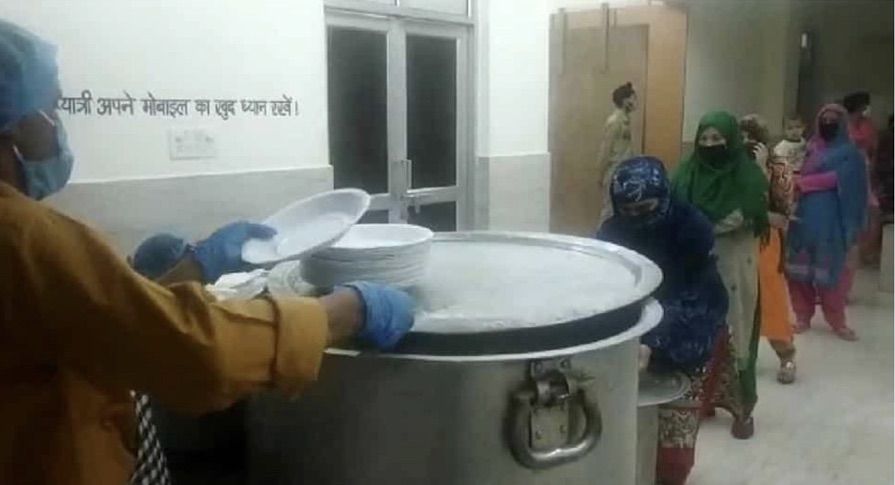
In Mumbai “Food- ek choti si asha” is a community led by Nikhat Mohamedy, who took an initiative to help the needy people in this pandemic and several others from different religion joined hands and came forward to help each other. Today the kitchen is serving 15,000 meals per day.

“This is about recognising the fact that we are all children of Adam and Eve, and feeding those brothers and sisters who are hungry and deprived is fundamental to expressing our humanity”, says Mohamedy.

Facebook.com

Another example of this is when Vaishno Devi Shrine Board served recipes to Muslims housed in quarantine centres on the occasion of Eid, March 25th. The Shrine Board said that they have been providing Sehri and Iftari meals to the Muslims after changing their schedule to meet the requirement of food for those fasting early morning and in the evening.

Hindustan times

Instances like these help me to understand that we should never judge people specially on the basis of religion or caste, we should always look upon them either as a good person or a bad person. If the world is good with you, be good to the world, if it is bad just turn your back, learn a lesson and focus on yourself, just don’t be like them. It is 2020 stop judging people, stop discriminating them, stop calling them with unwanted names, God has created people but it us who have separated ourselves into various divisions and factors. Just treat everyone equally and respect everyone. Smile and greet them be it a sweeper or a rich man. Play your part and leave the rest upon them. Change your sight of looking at the world, world will change itself automatically.

How do Teenagers perceive Religion???

When you think of teens today, “religious” might not be the first word that comes to mind. A common perception might be that teens are too shallow to embrace something as complex and introspective as spirituality. But why is this? The teen years are a time for self discovery on a deeper level. Shouldn’t religion be a part of the discussion?

We have known for years that parents are key influences on teens religious lives. Despite the tendency of parents to say they are helpless in this area, three out of four religious teens consider their own beliefs somewhat or very similar to those of their parents (they are more similar to their mothers’ beliefs than to their fathers’). In choosing friends, teens tend to surround themselves with people who reinforce the shaping influence (religious or nonreligious) of their parents. Here are two important messages: First, peers may be important to teens, but parents are still primary when it comes to religion. Second, “teenagers are not a people apart, an alien race about whom adults can only shake their heads and look forward to their growing up.”

Religious traditions understand themselves as presenting a truth revealed by a holy and almighty God who calls human beings from a self-centered focus to a life of serving God and neighbor. Adherents are understood to be reared or inducted into a historically rooted matrix of identity, practices and ethics that define selfhood, loyalties and commitments. Main central points regarding religion:-

1. A God exists who created and orders the world and watches over human life on earth.

2. God wants people to be good, nice and fair to each other, as taught in the Bible and by most world religions.

3. The central goal of life is to be happy and to feel good about oneself.

4. God does not need to be particularly involved in one’s life except when God is needed to resolve a problem.

5. Good people go to heaven when they die.

Teens made few references to traditional religious concepts such as justice, grace or resurrection. “When teenagers talked in their interviews about grace, they were usually talking about the television show Will and Grace, not about God’s grace.” This shows that teenagers are not that much into religion, it is there age of exploration.

The connections between religion and family life are receiving renewed attention from scholars. Recent work has examined the role religious practices and beliefs play in parenting behavior, marriage, intergenerational ties, and demographic behavior. Scholars are finally turning their attention to the role of religion in the lives of adolescents and young adults. Religious practices and beliefs also have been shown to powerfully shape adolescent sexual values and practices. Finally, some recent work has begun to address the role of religion in the post-teenage years, when youth are laying the foundations for their subsequent adult lives by making decisions about romantic relationships, cohabitation, and marriage.

Although religious practices differ by culture, political boundary, local community, and individual, some form of religion is influential, even central, in the lives of many people across the globe. Religion is an important context for development because it provides a means of socialization in areas such as moral behavior and offers emotional support to individuals from the cradle to the grave. Given cognitive advances during adolescence including increased abilities to think abstractly and understand symbolism, it is important to study the impact of religion during this stage. 

Part of being a teen is exploring different aspects of identity for the first time. Religion is one aspect of that, and while it might not be as important to teens now as it was a few decades ago, it definitely still plays a role. Though teens hold many different beliefs on the subject of religion, many agreed that simply experiencing the world around them and respecting others are the most important values.

Refrences:

  1. http://www.huffpost.com
  2. http://www.religion-online.org