
Evolution of Panchayati Raj System in India.

Since the beginning of India’s foundation, Panchayats have been the pillar of Indian rural set up. According to Mahatma Gandhi, development and governance in India should not be in big cities and towns but in rural areas and small villages because majority of Indian population resides in villages.
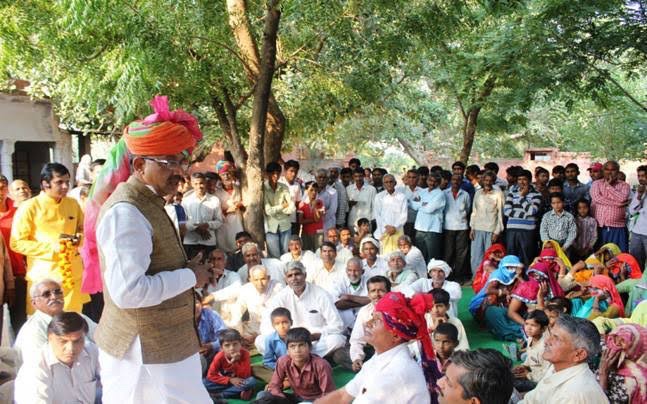
A Panchayati Raj meeting in India. Picture Credits: India Today.

The Panchayati Raj system in India derives its existence from Indian Constitution under Part IX under the head The Panchayats. When power is taken away from Central and State Governments and given to local government, it is called decentralisation.

Most of our Indian states like Uttar Pradesh, Maharashtra are internally very diverse. There is thus a need for power sharing within these states. Federal power sharing in India needs another tier of government, below that of the State governments. This is the rationale for decentralisation of power. Thus, this resulted in a third-tier of government, called local government. People have better knowledge of problems in their localities.

The need for decentralisation was recognised in our constitution. Since then there have been several attempts to decentralise power to the level of villages and towns. Panchayats in villages were set up in all states. An independent institution called the State Election Commission has been created in each state to conduct Panchayat elections.

A major step towards decentralisation was taken in 1992. The Constitution was amended to make the third-tier of democracy more powerful and effective. Now it is constitutionally mandatory to hold regular elections to local government bodies.

Now it is constitutionally mandatory to hold regular elections to local government bodies. Seats are reserved in the elected bodies and the executive heads of these institutions for the Scheduled Castes, Scheduled Tribes and Other Backward Classes. At least one-third of all positions are reserved for women. The State governments are required to share some powers and revenue with local government bodies. The nature of sharing varies from State to State.

Rural Local Governments is popularly known by the name panchayati raj. Each village or a group of villages in some states have a gram panchayat. This is a council consisting of several ward members often called panch, and a president or sarpanch. They are directly elected by all the adult population living in that ward or village. It is the decision making body of the entire village. The Panchayat works under the overall supervision of the gram sabha. All the voters in the village are its members. It has to meet at least twice or thrice in a year to approve the annual budget of the gram panchayat and to review the performance of the gram panchayat.

The local government structure goes right up to the district level. A few gram panchayats are grouped together to form what we call as a panchayat samiti or block or mandal. The members of this representative body are elected by all the panchayat members in that area. All the panchayat samitis in a district together constitute the zilla parishad.

Despite of the many flaws, Panchayats have contributed a lot maintaining the rule of law inside villages and educating the rural population about various different matters pertaining to their interests.

Agricultural Marketing; a boost for Agro-Products and their contribution towards G.D.P.

Article by – Shishir Tripathi
Intern at Hariyali Foundation
In collaboration with
Educational News

For an Agrarian Economy like India, the agricultural sector should contribute more than any other sector in the Gross Domestic Product (G.D.P) but even after being an occupation of almost 55 -60% of people, agriculture is contributing just 15 – 20% in the G.D.P. Being an occupation of such a large group of people and still minimal share in the G.D.P. of the economy means that there are certain limitations which are needed to be overcome.


The biggest limitation is that the agricultural products right from the simple wheat to a produced wheat bread, there is absence of proper agricultural marketing.

Now, when one uses this terms agricultural marketing, he or she is simply referring to an organized process of planning, organizing, directing and handling of agricultural produce in such a way as to satisfy the farmers, intermediaries and consumers. It involves numerous inter connected activities like planning production, growing and harvesting, grading, packing and packaging, transport, storage, agro and food processing, provision of market information, distribution, advertising and sale.

Agricultural marketing is based upon the idea of reducing the distance between the farmers (producers) and the consumers. It is a broader concept not just limited to villages and small towns but across the International borders too. Planned agriculture which comes under agricultural marketing is important so that whatever crop is produced it meets the demand of the consumers in the form of finished products. It aims in such a way that there is neither a situation of excess supply or excess production (that is just left uncared without good storage facilities) nor a situation of excess demand.

It also includes growing and harvesting of crops paying extra attention towards the techniques followed in the production process and efficient use of land and human resource along with technological resources too.

Grading is also done amongst different types of harvested crops and other agricultural products so that different types of products are available to different types of consumers with different requirements and available financial resources.

After Grading, the product is needed to be packaged in such way that it must be appealing to the consumers including use of different images and colors, and involving the details of the ingredients and the nutritional value of the product. Packaging the products in such a way that they must last longer and can be stored as well at the stockrooms and at consumers’ place as well.

Storage facilities are needed to developed by the government and other concerned authorities so that whichever good is produced in ample amounts, it can be stored for future without any degradation in the quality of the product due to insects, rats and other factors like moisture, rain, heat, etc.

Various researchers are trying to study markets and find the idealistic market structure for people living in villages and small town. The emphasis to markets is given in such a way that they meet the requirements of all the people living in that particular area.

Also, the transportation facilities are needed to be facilitated properly and should be made available to the producers in the remote areas of the country. The transportation costs must be affordable so that every producer willing to transport his produce or product should not stop himself or herself in being a part of this long chain and enjoying the benefits after the final sale of the produce or other agricultural products.


Now the most important of all is branding and advertising. Even if any other foreign firm or domestic firm is willing to sell the product under its label then also proper advertising should be there for the given product through Television ads and promotions through social media on various Apps. Advertising should be done in such a way that the product should look so appealing to the consumer and an urgent feel of purchasing the concerned product should be felt by the consumer after watching the advertisement. The buyers must feel that how important the product is to them in their daily lives after watching the product’s advertisement.

And the market for the product is again very important whether the product is sold online through e-commerce sites or is sold by various outlets in the cities and towns. A well managed system is needed so that the good that is sold to consumer is of the best quality and a justified price and the producers along with the intermediaries involved in this long chain are satisfied and get their share after the sale of a good.

Agro products not only include crop produce and other products manufactured from those crops but also the products produced by the people at local level such as milk from cattle, honey from bee-keeping, etc.

Such mechanisms will increase the share of primary sector in the G.D.P. The state and the central governments should make provisions and provide incentives to the producers and the intermediaries for developing such a fruitful mechanism that will be giving good returns to the country as well in the form of overall growth of people in remote areas and prosperity of the nation too.

Empowering the Rural India : A step closer towards building “The New INDIA”

Article by – Shishir Tripathi
Intern at Hariyali Foundation
In collaboration with
Educational News

It is generally said that behind a properly functioning, powerful system there is another support system i.e. the base on which the system is set up. There are many such examples to support the above statement. In case of Computer, it’s the motherboard that serves as the backbone of the system connecting all the major parts in it. Another example is the human body itself, the spinal cord or simply the backbone serves as the medium to support the whole body.


Similarly in case of a Nation, there are different fields and sectors together forming a support system for the nation. Particularly talking about Indian Economy, her it is all about the rural India which forms the backbone of the Indian Economy. It is generally said that a tree can stay straight for years, only if its roots are strong. In the same fashion, a nation will survive and prosper if its roots are so strong.


The condition of Rural India at present is not so good. There is the problem where the system gets stuck. The service sector and the manufacturing sectors are performing at their best level they could operate. Some technological upgradations will work. But what about the agriculture sector which is basically in the rural India.


The condition of farmers in India is not so good. Being an agrarian economy, India has to take a lot of steps for performing at the optimum level in the agricultural sector and other small sectors too which come from Rural India.


There are several problems in the villages of India. The primary problem for the people living in Rural Indian is the problem of proper sanitation and drainage system. In rains, water logging is the main problem in general with almost every village. Under the Swachh Bharat Mission, toilets are built in villages but more attention is needed to be paid there too. Sometimes, the contractors use poor quality material for building the toilets and as a result of which the toilets don’t stand for so long. Secondly, not only toilets, but a proper drainage system should be there for exit of water from the villages to avoid drenching of streets in villages.


Moving ahead towards the agricultural sector that fulfills the requirements of food for the Nation and even exports the agricultural products. Firstly, there should be development of proper irrigation techniques. Promoting inventions in such fields or sectors should be encouraged by the means of advertising so that others could also use those techniques in their fields. Due to unavailability of financial resources, farmers in India depend entirely upon rain and hence are at loss due to uneven rainfall. Big farmers afford techniques like tube wells and other such techniques but the small farmers with no such resources have to entirely depend upon rains.


Also, availability of efficient harvesting techniques at cheaper rates to small farmers will eventually lead to better harvest and proper collection of yield within lesser time too.


When it comes to selling of agricultural products farmers are again at loss because their products even after being of superior quality do not get proper advertising and attractive packaging. Other cheaper products from foreign firms dominate the Indian Market and as a result of which the local products and producers suffer.


When it comes to the matter of Finance, there too Farmers suffer. Banks say farmers are unable to pay the loans back when sudden loss occurs due to floods, fires, pest attacks, etc. Government should encourage the Insurance and other policies covering the crops of different seasons at lesser premiums. Also, from the side of farmers it is generally heard that they didn’t get the loan because of the long documentation process.


A proper mechanism is needed to be developed here again which will help the agriculture sector flourish and also minimizing the loss of banks.
Moving further, setting up of small manufacturing units for women there in villages only is again very important for making the core of the Indian Economy. Though, the governments have done a lot in the field of small scale industries in the form of allowing the loan availability through Self Help Groups but still some medications, some alterations in the policies for the local manufacturers should be considered by the government.

A farmer working happily on his farm, a woman working with pride in the small scale industry of her village will succeed the dream of New India in true sense and will bring wholesome prosperity to the Nation.

Women in Politics

Compared to the past, we now witness that there has been strengthening of women’s participation in all spheres of life as a major discourse of economic and social development in the last few decades. Many international and bilateral development agencies have proclaimed policies to integrate women better into social and economic processes. However, in spite of this, we see that they share a low presence in elected political bodies. This points to the fact that the universal adult franchise is inadequate to overcome the overwhelming structural constraints that impede female presence in political office. Some reasons for this include the traditional recruiting practices of political parties, the differential time budget of women, furthermore, in developing countries women have lower educational achievements due to social norms that restrict their freedom of movement.

A range of thinkers have opined that quotas for women have proved to be viable to overcome such structural obstacles. Countries that managed to enlarge the number of female representatives is because of the reservation of seats either through self-imposed party regulations or through legal action by the state. But there are critics who say that quotas are discriminatory in nature and it is also criticized by those who don’t view women as the political category in themselves.

India has a women’s quota of 33% at the local level. This happened via the 73rd Amendment to the Indian Constitution. It laid down new rules for the establishment and design of rural local government i.e. Panchayati Raj. This stipulates that at least 33% of seats and positions have to be filled by women. The proponents believe this quota will lead to their empowerment but critics claim that women will act merely as proxies for influential men and they also say that women in rural India lack basic qualifications that are required for such positions of power. What becomes important in this regard is that power defines politics and power is needed for the empowerment of women who have been marginalized historically and hence, proponents assume that through quotas women would transform politics by introducing new issues and different ways of doing politics.

Political Scientist Evelin Hust conducted a field research in Balipatna Block of Khordha district and Block Gania in Nayagarh district in Odisha where she identified a couple of problems. One such issue that she identified was that the female legislators may or may not work for the benefit of women. Therefore, quotas can be an enabling condition for women empowerment but it is not sufficient by itself. Another issue being that by and large women lacked knowledge about politics due to being less educated. Moreover, the dominant discourse is still opposed to women’s political role in rural politics. Women also lacked actual political presence of the representatives as it was noted that women signed up for the panchayat records at home while it was their husbands who participated in such meetings. 

However, there are also many positive gains in regard to the process of empowerment of the female representatives. They gained new knowledge about politics and local issues. Women have achieved higher visibility in village community which is a very important development for rural India. But women empowerment cannot be guaranteed by quotas alone, we need additional strategies in place to promote self-reliance of women as well as remove the structural obstacles.

Can mid day meals solve the school education crisis in rural India ?

The roots of the mid day meal program can be traced back to the pre-independence era, when the British administration decided to come up with ways to help disadvantaged children. Today, this scheme seeks to address the following issues – food security, lack of nutritional food in rural areas, and access to education. It is hoped that by providing hot meals to children in lower primary and upper primary classes, more children will be encouraged to attend school regularly.    

Today, in India, 4 percent of the children do not attend school, and 58 percent of the children have not completed primary school. In fact, only 10 percent of the children in India make it to college. This is the education crisis that India is facing today. According to the government, the mid may meal program reaches out to more than 120 million children in over 1 million schools nationwide. However, has the number of children attending school increased over the past few years because of this scheme ?   

In fact, according to a government report, in Bihar, the attendance of children dropped by 9 percent in the last five years and in Madhya Pradesh, the attendance of children dropped from 67 percent to 54.5 percent between 2008 and 2011. And in other states such as Andhra Pradesh, Kerala and Uttar Pradesh, there is an increase in private school enrollment in rural areas over the past five years. This proves that the mid day meal program has not been effective in solving the school education crisis. Despite providing healthy meals for children, there is a significant decline in the enrollment of students in schools in rural areas. On paper, the government has urged schools to provide meals with a minimum of 300 calories for those studying in lower primary classes and meals with a minimum of 700 calories for those studying in upper primary classes.   

The Mid Day Meal is a significant part of the diet of Indian children. The meal is available to all primary and upper primary children (classes 1 to 8) in government schools, government-aided schools and Education Guarantee Scheme (EGS) schools. Two out of three Indian children go to government schools alone (according to the 2011-12 India Human Development Survey). Not every child entitled to the mid-day meal receives it; the survey shows that 82% of children in government schools reported getting a mid-day meal. In all, at least half of all children in classes 1-8 in India get a mid-day meal.

How many children get a mid-day meal ?

For many, the mid-day meal is invaluable. The 2011-12 National Sample Survey (NSS) data shows, 10% of the meals that all primary school-age children (5-9) in rural India receive in a month are from school. The Mid Day Meal’s self-selection works; the poorest children in both rural and urban India get more meals per head from school than richer children, the NSS data shows.

There is evidence that the Mid Day Meal has contributed to the gradual improvement in child malnutrition indicators. The Mid Day Meal scheme explained at least one-tenth of the total reduction in stunting in India in between 206 and 2016, researchers at the International Food Policy Research Institute found. Adolescent girls, now 12-17, who got meals under the Mid Day Meal Scheme in 2004 were taller, they found. The effects on health were multi-generational; children born to young women who had received school meals in 2004 were less likely to be stunted.

Yet, the nutritional value of the meal is far from perfect. On paper, each hot cooked meal is meant to provide a primary school child with 450 calories and 12 grams of protein, and an upper primary child with at least 700 calories and 20 grams of protein. This is often not the case; earlier this year, journalist Pawan Jaisal recorded a government school in Uttar Pradesh’s Mirzapur serving the children rotis and salt only. In 2012-13, 90% of school lunches served to primary school students in Delhi did not meet the energy and protein norms.

This becomes important in the context of general under-nourishment among school-going children. The CNNS shows that the diets of school-age children are highly deficient, and they consume lower than recommended amounts of most healthy foods.

School-age children have deficient diets

The outcomes are evident. 22% of children 5-9 were stunted (low height for age), and 23% were thin (low Body Mass Index for age). 24% of adolescents (age 10-14) were thin. The prevalence of stunting was higher among children who were out of school.

School-going children have significant rates of malnutrition and micronutrient deficiency

For those from richer families, availability of healthy foods is a lesser problem (though it exists) compared to obesity and related non-communicable diseases, which stem from poor nutritional awareness.

However, there is no government body to monitor these schools and ensure that nutritious meals are reaching the students. A survey conducted by the Department of Economic and Statistical Analysis shows that 72 percent of schools do not have kitchens and facilities to cook. So, food would be cooked miles away and transported to the schools. By the time the food reaches these poor children, it would have turned cold. Also, 69 percent of the schools that were surveyed did not have proper eating utensils.     

So, the mid day meal scheme is not a solution to the school education crisis in India. Steps have to be taken by the government to ensure that schools have the proper facilities for cooking. In the last few weeks, there have been incidents of a dead lizard and insecticide being detected in mid day meals. This shows that the government has no mechanism in place to check the quality of food before it is consumed by children. Government schools lack the proper infrastructure for teaching, which is why students prefer to study in private schools. Those who are unable to afford an education in private schools prefer to work because of the horrific conditions of government schools. So, it is time for the government to take responsibility of the education system and provide proper facilities for the welfare of the children in India.