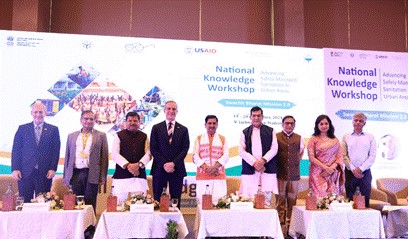
The challenges posed by rapid urbanization are vast, and safe sanitation in urban India remains one of the most pressing concerns. Under the Swachh Bharat Mission-Urban 2.0, the shift from Open Defecation Free (ODF) to ODF++ is gaining significant momentum, with cities increasingly prioritizing the advancement of safely managed sanitation systems. In line with this objective, the Ministry of Housing and Urban Affairs (MoHUA), in collaboration with the Government of Uttar Pradesh, USAID, BMGF and the WASH Institute, is organizing a two-day workshop on ‘Advancing Safe Sanitation in Urban Areas’ on November 19-20, 2024, in Lucknow.
The theme for World Toilet Day 2024, “Toilets – A Place for Peace,” highlights the importance of sanitation and sustainable solutions. MoHUA is hosting a two-day national workshop on “Advancing Safely Managed Sanitation in Urban Areas,” bringing together experts in sanitation, toilet infrastructure, and Used Water Management.
At the National Knowledge Workshop in Lucknow, Shri Manohar Lal, Minister of Housing and Urban Affairs, highlighted SBM’s achievements over the past decade. He emphasized PM Modi’s remarks on toilets improving public health, reducing infant mortality, and empowering women and girls. While acknowledging progress, he noted challenges due to rapid urbanization and called for diverse solutions. Launching the Clean Toilet Campaign 2024, he stressed that cleanliness is ongoing and urged stakeholders to maintain and repair toilets for safe sanitation.
Shri Tokhan Sahu, MoS, MoHUA, spoke on the Swachh Bharat Mission’s sanitation journey that has become a part of our Sanskar and the importance of progressing towards ODF++. Speaking on the Clean Toilet Campaign 2024, Swachh Shauchalaya Humari Zimmedari initiative, he urged the States to ensure clean, safe, and accessible toilets. He acknowledged progress but emphasized the journey is ongoing, encouraging participants to share insights and learn from challenges.
On World Toilet Day, U.S. Ambassador Eric Garcetti lauded SBM’s impact on safe sanitation and empowerment of girls. Shri Arvind Kumar Sharma and Shri Amrit Abhijat highlighted India’s sanitation shift, worker safety, and UP’s progress with mechanization and daily toilet monitoring. While addressing the delegates at the National Workshop, Ms. Roopa Mishra, JS & MD, SBM, MoHUA, stressed on journey from access to safe sanitation to sustaining & strengthening the ODF journey and prioritizing cleanliness and maintenance of urban Toilets.
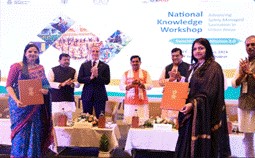
The Knowledge Workshop focused on safe sanitation access, with leaders from Swachh Bharat Mission-Urban, USAID, BMGF, and the US Embassy discussing their partnership. Experts from Sulabh International, Toilet Board Coalition, and others addressed urban migration, community toilets, and sustainable sanitation. Sessions on “Manhole to Machine Hole” explored mechanization, empowering sanitation workers. MoUs were signed with HUL for a PPP model in community toilets and with Sulabh International for toilets in high-footfall areas. Design guidelines for STPs, faecal sludge management, multi-storey STPs, and PT architecture were also released. The dignitaries also toured the exhibition highlighting key initiatives of SBM-U 2.0, including Toilet 2.0, UWM, and Manhole to Machine Hole.
SBM-U rolled out a 5-week long ‘Clean Toilets Campaign 2024’Swachh Shauchalaya- Humari Zimmedari from 19th November (World Toilet Day) to 25th December (Good Governance Day) 2024 aiming to transform over 70,000 Community and Public Toilets across the country, focusing on cleaning, maintenance, and beautification. The initiative promises to transform all public and community toilets in Urban India.
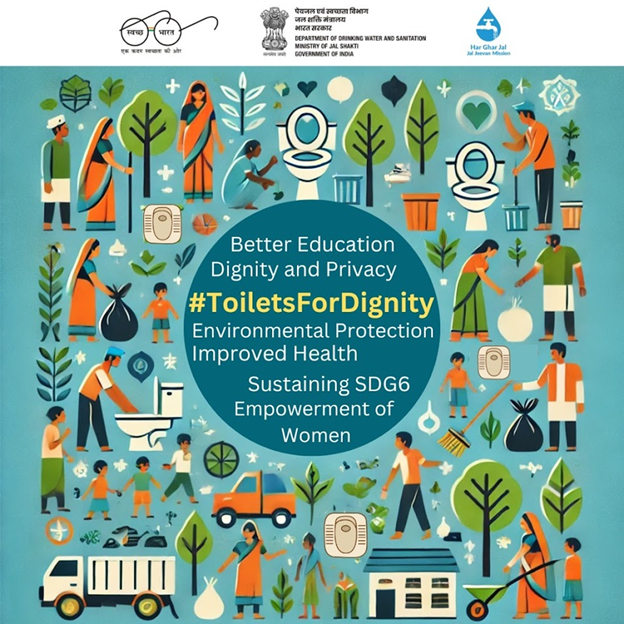
The Department of Drinking Water and Sanitation launched the nationwide campaign “Hamara Shauchalay: Hamara Samman” (HSHS) (हमारा शौचालय: हमारा सम्मान). November 19, World Toilet Day and the campaign will culminate on Human Rights Day, December 10, 2024, emphasizing the critical link between sanitation, human rights and dignity.
The campaign reaffirms India’s commitment to maintaining its Open Defecation Free (ODF) status while promoting behavioral change for cleaner, healthier communities. While India achieved ODF status in 2019, the Phase II of the Swachh Bharat Mission (Grameen) was launched to focus on the creation of ODF Plus Model villages, where the first criterion is sustaining ODF achievements. This aligns with the spirit of World Toilet Day, reminding and ensuring continued toilet usage and maintenance is as important as achieving initial milestones. The HSHS campaign serves as a timely call to action to sustain and build on these efforts.
With a strong focus on vulnerable groups, particularly women and girls, this initiative underlines that toilets are more than infrastructure, they are foundational to dignity, equality, and public health aligned with the campaign tagline “शौचालय संवारें, जीवन निखारें” Speaking of this campaign, Secretary, DDWS, Ashok KK Meena, emphasized the importance of a bottom-up approach in ensuring sustained behavioral change. “Sanitation is a cornerstone of dignity and development. The ‘Hamara Shauchalay: Hamara Samman’ campaign is designed to empower communities, with responsibilities allocated across every level, Gram Panchayats, blocks, districts, and states. This ensures that every stakeholder contributes to sustaining sanitation practices, building pride, and driving long-term impact.” He further added, “On World Toilet Day, as we align with global efforts to achieve SDG 6, India renews its commitment to creating equitable access to sanitation and ensuring no one is left behind.”
Key Campaign Activities
The campaign involves a variety of activities aimed at reinforcing sanitation practices and fostering pride in clean and functional toilets.
Competitions will be held to identify and reward the best-maintained household toilets (IHHLs) and community sanitary complexes (CSCs) at every administrative level. These events will recognize efforts in both functionality and aesthetics, encouraging others to follow suit.
Community outreach will play a vital role, with initiatives like “Ratri Chaupals”and WASH clubs that will bring together people and inspire change.
Sanitation workers will be celebrated through special dignity camps, ensuring their inclusion in welfare programs, and honoring their role in maintaining cleanliness.
Citizens will be encouraged to share their sanitation success stories through social media platforms including MyGov using hashtags #ToiletsForDignity and #MyToiletMyPride.
Participation from all levels of governance, with Chief Ministers and State Ministers leading state-level events, while District Magistrates and elected representatives overseeing district-level programs.
The campaign aims to improve sanitation infrastructure, foster behavior change, and strengthen community pride by enhancing the functionality and aesthetics of toilets across the country. By promoting ODF sustainability, it emphasizes that sanitation is not a one-time achievement but a continuous journey toward a healthier and more dignified India.
Department of Drinking Water & Sanitation (DDWS) under the Ministry of Jal Shakti, appealed everyone to make HSHS a success. DDWS requested the citizen to work together for building sustainable sanitation solutions whilst the nation take forward the legacy of Swachh Bharat Mission.
Satyanarayanamma’s Sanitation Success in Ponnapalli
A fisherwoman’s efforts transformed her community in line with Swachh Bharat’s vision
(Ministry of Housing & Urban Affairs)
September 24, 2024
In the heart of Narsapur town, Andhra Pradesh, lies Ponnapalli ward, a community once defined
by vulnerability and the prevalence of open defecation. A large slum population with limited
access to basic sanitation services had accepted open defecation as the norm. Yet, amidst this
environment, one woman, Satyanarayanamma, refused to accept the status quo. A fisherwoman
and mother of two, Satyanarayanamma, who is differently abled due to polio, became a force
of change in her community. Her personal experience with the illness made her deeply aware
of the importance of sanitation, driving her to make a difference not only for her family but for
the entire ward.
Satyanarayanamma’s journey
started when she joined the
Gender Forum, a local NGO
dedicated to raising awareness
about sanitation and hygiene
among women.
Alongside
other Forum members, she led
discussions on menstrual
hygiene, toilet usage, and
hand washing, working
tirelessly to engage her
neighbours in the battle for a
cleaner, healthier
environment. Initially, it was
very difficult to convince the
local community to adopt safe
sanitation practices and
maintain personal hygiene.
However, with local women
like Satyanarayanamma
leading the charge, the effort
slowly began to gain
momentum. Their sanitation audits and discussions on faecal sludge management and genderfriendly services helped address specific concerns, empowering the community to take charge.
Thanks to their tireless work, Ponnapalli ward achieved Open Defecation Free (ODF) status, a
milestone for the town and an enduring testament to the power of grassroots mobilization.
This transformation coincides with the national Swabhav Swachhata Sanskaar Swachhata
(4S) campaign, launched to mark the 10th anniversary of the Swachh Bharat Mission. Running
from September 17 to October 2, 2024, the campaign highlights India’s ongoing efforts to foster
a culture of cleanliness and sanitation, echoing the goals of the annual Swachhata Hi Seva
movement. As the country builds up to Swachh Bharat Diwas on Mahatma Gandhi’s birth
anniversary, the stories of communities like Ponnapalli stand as powerful symbols of what can
be achieved when citizens unite for a common cause. The 4S campaign is not just about
maintaining cleanliness but instilling a sense of responsibility and pride in sanitation practices,
much like what Satyanarayanamma and her fellow women achieved in their ward.
The broader impact of the Swachh Bharat Mission is evident in its tiered achievements. As of
September 24, 2024, 4,576 cities across India are Open Defecation Free (ODF), meaning they
have successfully eliminated the practice of open defecation. Additionally, 3,913 cities have
achieved ODF+ status, indicating not only the elimination of open defecation but also sustained
toilet usage and proper maintenance of public and community toilets. Furthermore, 1,429 cities
have reached ODF++ status, showcasing advanced management of faecal sludge and septage,
ensuring efficient waste treatment.
In rural areas, the mission has also made significant strides, with 5,54,150 villages achieving
ODF Plus status, which indicates improved sanitation facilities and practices. Among these,
3,00,368 villages have been recognized as ODF Plus Model Villages, setting benchmarks for
others. Additionally, 1,30,238 villages have been verified as ODF Plus Model Verified Villages,
ensuring that they meet the stringent criteria for sustainable sanitation practices.
These numbers are more than just statistics; they represent lives transformed, healthier
communities, and the collective determination of individuals like Satyanarayanamma. Her
work in Ponnapalli ward mirrors the mission’s vision of a cleaner, healthier India, a vision that
continues to inspire change across the nation.
As the Swachh Bharat Mission enters its second decade, the success of the 4S campaign
promises to build on these achievements, ensuring that communities like Ponnapalli are not
just ODF but also equipped with the knowledge and resources to maintain their cleanliness and
hygiene for generations to come. Behind these impressive statistics are stories like
Satyanarayanamma’s—individual efforts that ignite collective action. The Swachh Bharat
Mission didn’t just build toilets; it reshaped mindsets. Satyanarayanamma’s journey shows that
true transformation goes beyond infrastructure—it’s about changing how people perceive and
practice sanitation. Her story is a reminder that sustainable change happens when communities
take ownership, fostering not only cleanliness but also a lasting sense of responsibility for their
health and environment.
References:
• https://sbmurban.org/storage/app/media/stories-of-change.pdf
• https://sbmurban.org/
• https://sbm.gov.in/sbmgdashboard/statesdashboard.aspx
Santosh Kumar/ Sarla Meena/ Sheetal Angral/ Ritu Kataria/ Saurabh Kalia
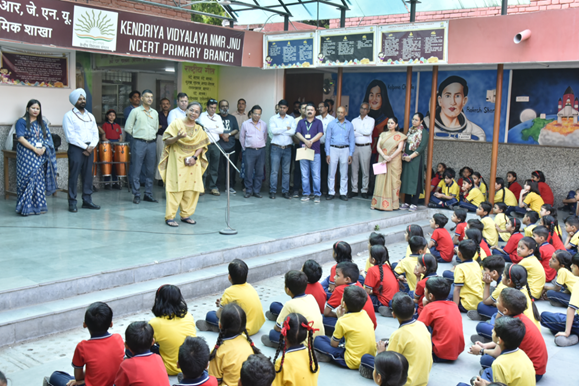
Under the auspices of the Ministry of Science & Technology, Government of India, the Department of Scientific and Industrial Research (DSIR) commemorates Swacchta Pakhwada from May 1 to May 15, 2024, in an effort to raise awareness of cleanliness and hygiene. The first Swachhta drive was organized today at PM SHRI Kendriya Vidyalaya, Jawaharlal Nehru University (JNU), NCERT Campus, New Delhi.
Dr. N. Kalaiselvi, Secretary, DSIR and DG CSIR addressing the campaign
The Swachhta drive began with an address of Dr. N. Kalaiselvi, Secretary, DSIR and DG CSIR where she motivated the children to become the future leaders in different walks of life. She also emphasized the significance of cleanliness in fostering a healthy and vibrant society. Shri Surinder Pal Singh, Joint Secretary, DSIR also encouraged the children to maintain for personal hygiene and cleanliness of their surroundings. Thereafter the DSIR team conducted cleanliness drive and motivated the children for keeping their surroundings clean.
Swachhta Pledge taken by entire DSIR family focused on individual’s commitment towards cleanliness, devoting hundred hours per year for cleanliness and propagating the message of Swachh Bharat Mission. Pledge encourages every individual to promote 100 other persons to take this pledge and make them devote their 100 hours for cleanliness. The Swacchta Pakhwada initiative aims to instill a sense of responsibility towards cleanliness and hygiene among individuals, particularly the younger generation.
The atmosphere is brimming with excitement and celebration as the festive mood sets in. Diwali is being welcomed with great fervour and delight by all, who have adorned their homes, streets, neighbourhoods, and market places with decorations and lighting. This time of the year also highlights the importance of swachhata, not only in households but also in public areas that witness heavy footfall. The citizens are participating in maintaining cleanliness and hygiene in their surroundings, making the festival even more special and meaningful. The onus also comes on the front-liners, who are conducting special cleanliness drives, managing heavy influx of waste and managing the sanitation and waste sector.
Taking forward the journey of Swachhata , the Ministry of Housing and Urban Affairs (MoHUA) launched the Swachh Diwali Shubh Diwali campaign to instil a sense of collective responsibility of celebrating a clean and eco-friendly Diwali, use local products and donate old and unused items in the RRR centres. It also aims to address the health and safety aspect in the sanitation and waste management sector during the festive season The citizens, local bodies, RWAs, Market Associations, SHGs, NGOs, office complexes, schools, institutions should ensure that the street cleaning timings be changed to early mornings when the pollution and the crowd visiting the busy markets and streets is not as much. Misting and water sprinkling activities should be done more often to keep the dust down. Appropriate face masks, protective eye and safety gears should be distributed by the local bodies.
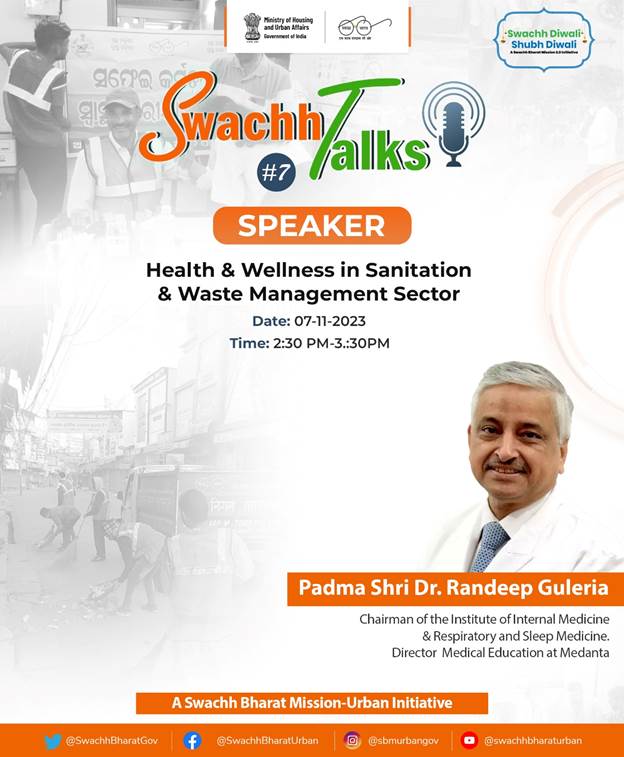
As a part of this campaign and a as a run up to the upcoming festival season, MoHUA organized the 7th edition of the Swachh Talks Webinar Series on the theme of ‘Health & Wellness in Sanitation & Waste Management Sector’. Chaired by Secretary, MoHUA, Shri Manoj Joshi & JS & MD, SBM-U, Ms. Roopa Mishra, the 7th episode highlighted the importance of health and wellness in the sanitation sector.The session was addressed by Padma Shri Dr. Randeep Guleria, Chairman of lnstitute of lnternal Medicine & Respiratory & Sleep Medicine, Director Medical Education at Medanta. Dr. Guleria suggested on SOPs and protocols to be made for the work force to practice and follow while being exposed to the air pollution.
Speaking at the forum, the Padma Shri awardee focused on a need for mitigation action and the need to strengthen the healthcare services. Highlighting the need for immediate measures, Dr. Guleria emphasized curbing the use of firecrackers, occupational health and safety measures like protective eye gears, safety gears, N95 masks, caps, reducing exposure, picking visible waste instead of manual sweeping, pollution abatement for sanitation / outdoor workers. Ms. Bharti Chaturvedi, Founder and Director of Chintan Environmental Research and Action Group, shared the findings of the study ‘Unfair Quality- The lmpact of Air Pollution on Three Occupation’. She highlighted on the possible health impacts of poor air quality on waste pickers, SafaiMitras and Security Guards and discussed the protocols to follow. Padma Shri Dr. Indira Chakraborty, Public Health Specialist, Scholar& Environmentalist, shared her observations on how critical it is to link WASH to food and health. She emphasized on the pollution that results from street food. She highlighted the need to focus on Garbage Management in Food sector and how it is important to streamline health & hygiene.
Speaking on the occasion, Secretary, MoHUA, Shri Manoj Joshi highlighted the need to focus on the SOPs and protocols to be practiced during the alarming air pollution. He mentioned that it is important for the Sanitation workers, especially in the waste management sector to use safety and protective gears. He also highlighted the need for Cities to ensure that the task force exposed to the polluted air is taking preventive measures. The virtual event was attended by State & city officials, sector partners, NGOs working in the sector and representatives of sanitation workers. The Swachh Talks concluded with an interactive session with Cities, wherein they shared their experiences and challenges in health and wellness.
“India is the youngest country in the world. A nation whose 65% population is less than 35 years old, a nation whose youth is incredibly tough, whose fingers have the deftness to be connected with the world via computers, a nation whose youth is determined to create its own future, that nation now does not need to look back,” said PM Shri Narendra Modi.
Gen Z has been showing a remarkable and innovative stance in addressing waste management in the modern era. Their proactive initiatives and creative solutions reflect a dedication to environmental preservation. Swiftly progressing on the path of “swachhata”, Gen Z’s agile mindset and tech-savvy nature empower them to drive positive change and shape a more sustainable future. Whereas Gen Alpha exhibits a remarkable consciousness for swachhata and eagerly fuses innovation with technology. They seek toys crafted from recycled materials, ingeniously reimagined to align with their eco-conscious perspective.
In line with this vision, the Ministry of Housing and Urban Affairs has taken initiatives like the Indian Swachhata League, Swachhata ke Do Rang, aimed at engaging India’s youthful populace in the Jan Andolan for cleanliness. In addition to this, MoHUA launched the ‘Swachh Toycathon’ in 2022, which revolved around the ‘Rethinking of Indian toy industry’. The national competition for individuals from all ages as well as groups and start-ups, aimed to bring forth innovation and circularity in design and packaging of games and toys. The competition witnessed entries for eco-friendly toy prototypes, waste-material toys, and inventive concepts reimagining the industry. Organizations like ToyBank are re-purposing old and discarded toys to ensure the ‘Right to Play’ of children of marginalized communities. Household waste items are being turned into toys that teach children about basic principles of science & sustainability. To encourage these crusaders of swachhata, in July 2023, numerous ULBs in Karnataka engaged schools via eco-clubs and started diverse initiatives on plastic waste management as part of the State’s “Plastic Free Campaign.” One notable effort was the introduction of the Reduce, Reuse, Recycle (RRR) concept, coupled with training sessions to underscore the significance of proper waste segregation and the SUP Plastic Muktha Abhiyana at Hebbagodi CMC.
Uttarakhand-based NGO ‘Waste Warriors’ launched ‘Green Gurukul’ program to involve youth in city sanitation. Operating in 100+ schools, the initiative impacted 39,000+ students, engaging them in sustainable waste management. Integrated into education, it drives behavioral change among students and educators, ensuring compliance with 2016 SWM Rules, emphasizing source segregation and proper disposal. Interactive sessions, movies, games, quizzes, and creative workshops teach waste management to grades 6-12 in Himachal Pradesh and Uttarakhand.
Since its launch in 2014, Youth For Parivarthan started “Clean Bengaluru,” program revitalizing over 400 black-spots, garnering recognition from PM Shri Narendra Modi in the 93rd episode of Mann Ki Baat. Their “Recyclothon” campaign collects used notebooks during summers, recycling unused sheets into new books for rural Karnataka’s government school students. Youth For Parivarthan’s multifaceted endeavors have brought positive changes to Bengaluru’s environment and education system, embodying a commitment to sustainable change.
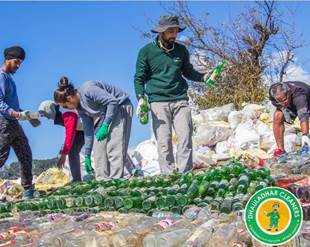
Since 2014, Satya Foundation, a youth group in Byataranapura, Yelahanka Zone, have introduced a course named, “Trashonomics,” teaching waste management as a resource in schools via young ambassadors bridging generations. Kids learn composting, upcycling, and the 3Rs (Reduce-Reuse-Recycle) to convert waste into resources. Since 2019, the Himachal-based ‘Dhauladhar Cleaners’ have been collecting trash from Dharamshala’s tourist spots every Sunday. Their goal is to educate and inspire youth towards a healthier, sustainable future. Through ‘cleanup picnics’, volunteers converge at scenic sites, combining cleanup drives with enjoyable outings. Their impact includes 40,000+ KG of waste collected from Himachal’s tourist destinations. items.
Since 2020, a young man from Gujarat, Dr. Binish Desai has initiated recycling of COVID-related bio-medical waste, by transforming them into advanced P-block bricks. His latest innovation, P-block 2.0, is lighter, stronger, and more versatile. During his tenure as Gujarat’s CM, PM Narendra Modi invited Binish to an event, commending his initiative’s efforts. His initiative, Eco Eclectic Tech, has repurposed 45 tons of PPE waste, diverting over 6700 metric tons from landfills and producing 150+ products from various wastes. It’s also facilitated the construction of 10,000+ toilets and 500+ structures.The eco-conscious Gen Z of India is shaping a future where responsible waste management is central to the society.
As part of Special Campaign 2.0 being conducted by all the Ministries across Government of India between 2nd October and 31st October, the activities for the Ministry Mines was launched by Secretary, Ministry of Mines, Shri Vivek Bharadwaj on 2nd October at Khanij Kaksh where all the organizations under the Ministry joined through V.C. The Ministry has identified 84 site offices throughout India for implementing 116 swachhta campaigns.
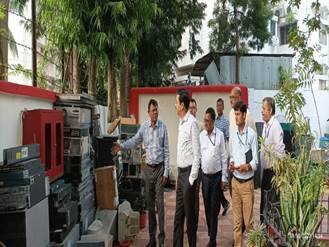
During the preparation phase from 15th to 30th September Secretary and Additional Secretary of Mines ministry visited field offices of GSI and IBM to inspect and guide these offices for the Campaign.
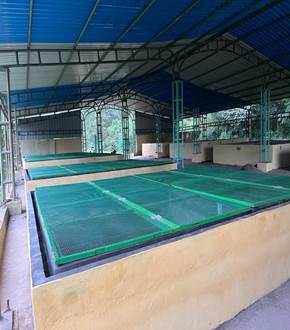
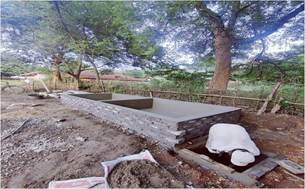
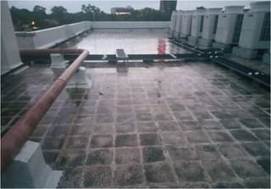
The goal set by the Ministry this year is “giving back to the environment in the form of rainwater harvesting, compost pits, cleaning lakes/ponds and eco-disposal of waste.” As part of best practices the buildings owned by the offices of Ministry of Mines is setting up rainwater harvesting structures. Three sites have been identified for Compost Pit projects.
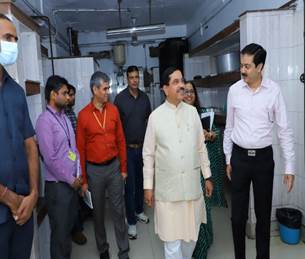
Secretary, Ministry of Mines, Shri Vivek Bharadwaj recently visited GSI Headquarter office in Kolkata and inspected the work being done under Special Campaign 2.0 and instructed the employees to take up the campaign with utmost sincerity to make it a grand success.
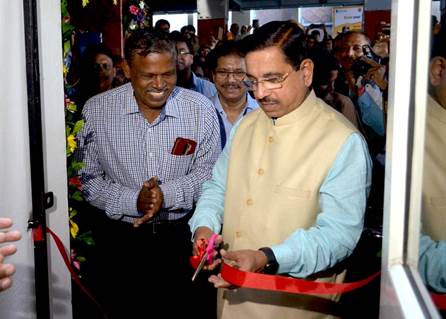
Union Minister of Coal, Mines and Parliamentary Affairs Shri Pralhad Joshi and Secretary, Ministry of Mines, Shri Vivek Bharadwaj visited the site identified by the Ministry for conversion of space into Wellness Café and encouraged the employees for taking full benefits of the same. Minister Shri Pralhad Joshi also visited GSI headquarters in Kolkata and inaugurated the Wellness Cafeteria there under the special campaign 2.0.
The Ministry utilized the campaign for better record management by identifying pending MP references, references from the State Governments, Inter Ministerial references, Parliamentary Assurances, PMO references, Public Grievance and PG appeals.
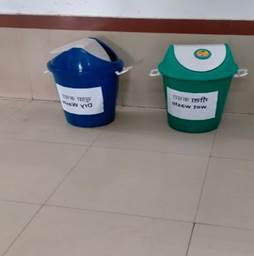
While reviewing the works done under special campaign, Minister Shri Pralhad Joshi suggested segregation of waste in departmental canteen which is being implemented by the Ministry of Mines. Ministry of Education which is the nodal ministry is also requested to issue similar guidelines for the departmental canteen and they have taken up the matter with all the departmental canteens based in Shastri Bhawan for waste segregation and using the bio waste for making compost pits.
GSITI, Hyderabad also as a best practise started waste segregation in its hostel canteen and using bio waste for making compost. Compost Pit has been created in GSITI, Hyderabad.
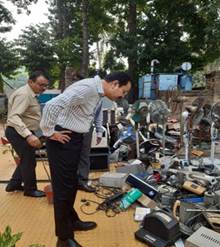
Ministry of Mines in special campaign 1.0 has weeded out around one lakh files. This year as the emphasis is on field offices, through its attached and subordinate offices M/o Mines has kept the target of reviewing 3.32 lakhs files under record management. During the campaign the field offices are removing scrap as old as 20 years from their offices spread across India.
So far, Ministry of Mines and its field organizations have achieved 90.51% of the cleanliness campaign and generated revenue of Rs. 1,58,40,266/- from scrap disposal. About 92,199 square feet space has been freed through efficient records management. It is expected that the Ministry would achieve 100% of the target set for the Special Swachhta Campaign 2.0 by 31st October, 2022.
Public health engineering helps people to satisfy their humanitarian needs. Today’s crises occur often in urban areas. They usually last longer and have a wider regional effect. They cause widespread human misery, threaten basic services such as water supply and sanitation.
In this blog, I will show what is Public Health Engineering, its learning objectives and the role of a Public Health Engineer.
What is Public Health Engineering?
A clean and balanced Earth is a good place where everyone owns and bears responsibility for ensuring a good quality of life. It can be made possible through several ways.
Some of them are safe drinking water, proper sanitation, and best hygiene practices. This is what Public Health Engineering envisions for our society. It is a specialisation in civil engineering.
Engineers and technical specialists in the fields of water, sanitation, electricity and other related fields are critical in meeting the challenges and rising demands. They are known as public health engineers.
Water processing, purification, transmission, and distribution are all handled by the Public Health Engineering industry. Thus “Sanitary Engineering” is now referred to as “Public Health Engineering.”
Role of a Public Health Engineer
Public Health Engineers
A Public Health Engineer must calculate design flow, design population, design area, and population density in order to do his job. They will play an important role in the present and future scenarios for tackling the following issues:
Water, air, and soil contamination
Environmental crises
Industrial solid and liquid waste management
Industrial and occupational safety hazardous
Chemical hazards
REPORT THIS AD
A Public Health Engineer’s position today includes a wide range of responsibilities. This includes:
Ensuring that water levels are controlled and managed
Rivers are built to function with increasing populations
Water and wastewater treatment systems are planned to meet growing demands
Evaluating and reducing water use in domestic and industrial applications.
Now let’s move on to the learning objectives of this amazing course.
Now let’s dive deeper into each of the objectives.
Fundamentals of Public Health Engineering:
The first section explores the fundamentals of public health engineering.
It shows how engineers can help reduce mortality and morbidity in a variety of humanitarian situations.
Engineers must have a thorough understanding of how infectious diseases spread in order to do so.
You will be exposed to various disease transmission routes in the area.
You will gain awareness about steps that can be taken to prevent the spread of such diseases.
To aid comprehension, real-life case studies will be presented.
Humanitarian contexts:
The humanitarian background in which public health engineering activities take place is presented in this section. How long-running disputes impact urban basic services like water supply and sanitation, causing public health problems are dealt in this section.
Water Supply Systems:
This section takes a look at some of the most popular water technologies used from the source to the distribution point. We address the benefits and drawbacks of various water distribution systems that can be used.
Sanitation:
The section covers an analysis of sanitation technology and excreta management. Some of the humanitarian sector’s problems and activities are highlighted with the help of case studies.
Waste management & Hygiene promotion:
Waste Management
The section focuses on medical waste. It is a form of solid waste that public health engineers often encounter in humanitarian crises. Finally, in humanitarian emergencies, we address the crucial problem of behaviour modification and hygiene promotion.
A career in Civil Engineering with a specialisation in Public Health offers promising prospects. Some career choices that students can explore after their specialisation include:
Building Engineering & Services
Water Resources Engineering
Renewable Water Resources Management
Facility Management
Operations Management
Sustainable Design & Solutions
Clean Energy
Research & Development
Entrepreneurship
This Civil Engineering specialisation will place you on the right track if you want to make a difference in combating the global issues. Hope you found this article insightful.
The Secretary, Department of Drinking water and Sanitation (DDWS) Smt. Vini Mahajan today reviewed the progress of Jal Jeevan Mission and Swachh Bharat Mission with Chief Secretary of Assam, Shri Jishnu Barua. Smt. Mahajan appreciated the progress made by Assam in providing tap water supply to rural homes during the review meeting on implementation of the two key missions in the State. She said “the State of Assam is well on track to achieve the target of providing clean tap water supply to every home by 2024 and the Centre is providing full assistance to the State to achieve the goal.” Shri Arun Baroka, Additional Secretary, DDWS, Shri S Abbasi, ACS in-charge SBM and JJM, Assam, Shri Samir Sinha, Finance Secretary, Assam and officers of DDWS were also present during the online review.
Smt. Mahajan in her opening remarks said, “Jal Jeevan Mission is a decentralized, demand-driven, community-managed water supply scheme which aims to improve the lives of rural people by providing clean tap water supply to every home. She appreciated the work carried out by the State in the past six months.”
Speaking on the implementation of Swachh Bharat Mission, Smt. Mahajan said, “While the districts have self-declared themselves Open Defecation Free, but this is not a one-time effort. Efforts under the programme are being made to bring about social and behaviour change for sustainability of the ODF status of villages at all times.” She also emphasized on urgent need to prioritize supply of tap water in all schools and anganwadi centres of the State.
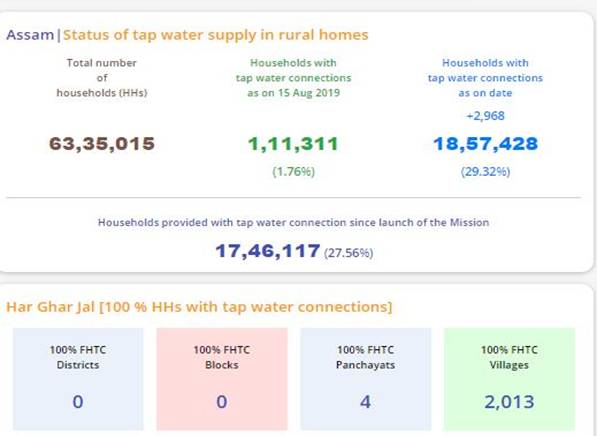
At the announcement of Jal Jeevan Mission on 15th August, 2019, only 1.11 lakh (1.76%) households out of total 63.35 lakh households in the State had access to tap water supply. In about 28 months, 17.46 lakh households have been provided with clean tap water. In last six months alone, clean tap water supply has been provided to more than 8.5 lakh households.
Shri Jishnu Barua, Chief Secretary, Assam while presenting the state performance said, “good progress has been made if we look at the point from where we started with just 1% tap water coverage in the biggest north-eastern state. We progressed well in the last six months. As the State started on a low base it took time to streamline the procedure for implementation of the programme. Now the remaining work will be carried out expeditiously.”
Working in line with ‘Sabka Sath, Sabka Vikas, Sabka Vishwas and Sabka Prayas’, Jal Jeevan Mission’s motto is ‘no one is left out’ and it aims at universal access to potable tap water supply. At the start of the mission in 2019, out of a total of 19.20 Crore rural households in the country, only 3.23 Crore (17%) had tap water supply. Despite Covid-19 pandemic and lockdowns disruptions, Jal Jeevan Mission has been implemented with speed and during the last 28 months, 5.59 Crore rural households have been provided with tap water supply. Presently, 8.83 Crore (45.88%) rural homes across the country have tap water supply. States of Goa, Telangana, Haryana and UTs of Andaman & Nicobar Islands and Puducherry, D&NH and D&D have ensured 100% household tap connection in rural areas. At present, every household in 90 districts and more than 1.31 lakh villages are receiving tap water supply in their homes.
To ensure transparency and accountability in implementation of Jal Jeevan Mission, all information about Jal Jeevan Mission is in public domain and the JJM dashboard can be accessed at https://ejalshakti.gov.in/jjmreport/JJMIndia.aspx
“A journey of a thousand miles begins with a single step. “
Indore has been awarded as the “Cleanest City” of India for fourth time in a row and the most important reason behind this success is the combined efforts of the public, public representatives, government officials and other stakeholders engaged in this process. The journey made by the city is inspiring and as of now there are many other cities of the country and globe who are following the strategies for becoming cleanest city.
INDIAN SCENARIO: TRASH EMERGENCY
According to the Annual Report of the Ministry of Housing and Urban Affairs, in year 2016-17, India generated approximately 1,50,000 tones of solid waste per day. According to World Bank by 2050, it is estimated that India will generate nearly 3.5 times (over 5,43,200 tones) of solid waste per day. It has also been estimated that local bodies collect nearly 90% of this waste, out of which nearly 80% is dumped in dumping sites or landfill site without getting treated. Under Article 21, it is provided that Clean Environment is (the) Fundamental Right of every citizen and it is the responsibility of the urban local bodies and the State to ensure that clean and hygienic environment is provided to the citizens which preserves their health. In case of Indian cities, it is very important to learn from the best practices and techniques applied in different urban areas for efficiently dealing with the solid wastes.
THE JOURNEY TO CLEANEST CITY
HOW IT STARTED
The journey of Indore for becoming the cleanest city started from 2016 and it faced many challenges.
Some of technical challenges were:
Inefficient infrastructures, systems and processes for Municipal Waste Management.
Absence of infrastructures for material recovery, transfer stations and processing unites and non – operational composting facilities.
Inefficient door to door waste collection system with no scope of source segregation practice.
Unorganized trenching grounds with nearly 13 lakh tons of waste which caused methane induced fire, bad odor and increased the chances of diseases.
Unorganized and inefficient waste collection, transportation and dumping.
In addition to all these technical issues, there were various non – technical challenges like:
Cooperation and support of citizens,
Unorganized municipal workers
Lack of mechanism to monitor and reviews all the processes being involved
Inefficient citizen grievance redressal system.
Lack of political awareness to achieve the cleanliness goals
Lack of awareness about solid waste management process among citizens, local media, administrations and Resident Welfare Associations (RWA).
THE PROCESS
Indore had to implement many strategies in each and every step associated with solid waste management. Along with these strategies the Indore Municipal Corporation (IMC) had partnered with private bodies, NGOs etc. for boosting the entire [process and empowered the citizens regarding their roles and responsibilities as citizens of the city for making Indore a clean city.
Waste Collection, Segregation and Transportation :
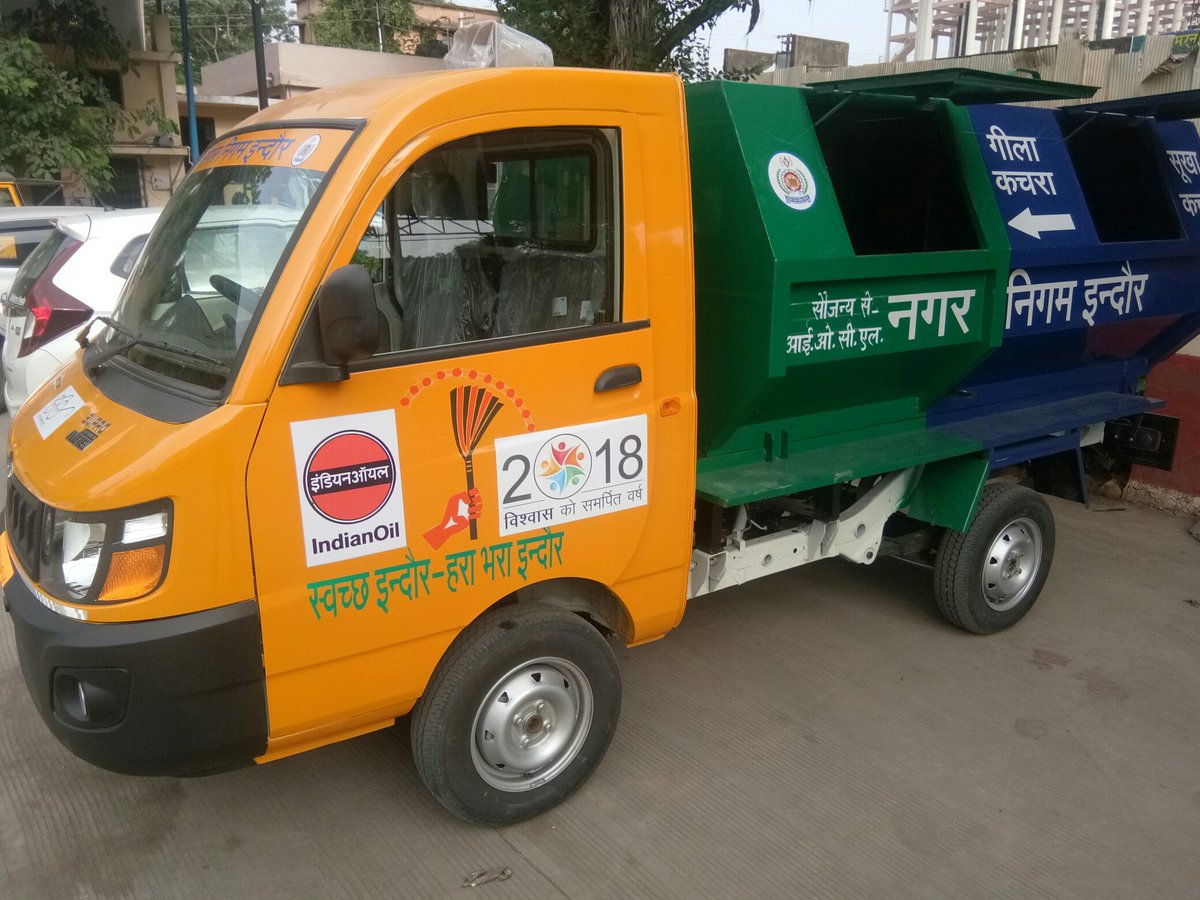
Vehicles having different compartments for waste collection
IMC started the process of waste collection from households on daily basis from 2016 and at the same time it also started asking and motivating the citizens to segregate their waste. Some of the strategies undertaken for increasing the efficiency of waste collection were :
Collecting the wastes from household on regular basis and studying the lifestyle of different localities to finding the most suitable for waste collection.
Explaining the people about the need of waste segregation and on repeated disposal of unsegregated wastes, households had to pay the fine as decided by the Supervisors of IMC.
Tracking the routes of the garbage vans and vehicles that collect the wastes from door to door and monitoring it.
Some of the steps undertaken for creating awareness among citizens were :
Visiting of different localities and colonies by Municipal officials to persuade and create awareness among citizens regarding waste segregation.
Providing common platforms were religious leaders created awareness among people, on the basis of importance of cleanliness as mentioned in the religious texts, schools etc. and organizing oath taking ceremonies for children pledging a clean city and conduction of mass road sweeping exercise at different areas of the city.
Involving 850 Self Help Groups, comprising almost 8500 women for spreading awareness for waste segregation and conducting mass campaigns.
Campaigns for zero waste localities and markets.
Creating awareness regarding home composting, as a result of which nearly 50,000 households started doing home composting.
Involvement of Private Bodies and NGOs for Boosting the process
The IMC partnered with non-governmental organizations for creating awareness campaigns to change the attitude and behavior of citizens, to facilitate the functioning of solid waste management systems, use of proper technologies for increasing efficiency and improved capacity for ensuring proper implementation of all strategies and actions decided for being clean.
Waste Management System
The city adopted the strategy of processing the waste near the source. For example: All food outlets separate food waste and transport it to the small garden inside a traffic triangle at one end of the street. This strategy is more cheaper, hygienic and sustainable way for processing the wastes. The responsibility of waste composting is given to an NGO named Swaha and this organization uses a machine which simple and easy to handle. Most the waste generated from Indian cities contain higher proportion of organic wastes and are generally wet, which makes the waste more difficult to handle. These machines work efficiently even if the material is not organic with minimum spillage, minimum human contact with waste and has mechanism which can easily lift heavy trash cans.
Waste to Fuel
For processing of organic wastes, a Biomethanation facility is provided which converts the organic waste into methane. The city produces nearly 20 tones of waste everyday and this waste is converted into 750 – 800 kg of bio compressed natural gas (bioCNG). This task is assigned Mahindra Waste to Energy Solutions Ltd. The gas produced is used to run city buses, and sold as cooking fuel to hotels and the Indian Institute of Management, at a subsidized rate. Waste from the flower market is kept separately (1-2 tons a day), and mixed with slurry to produce compost.
Street Sweeping
For the purpose of street sweeping machines are used. Every night 800 km of main roads are swept using machines and water mist are used for cleaning footpaths and road dividers. For the cleanliness of roads nearly 400 liters of water is used every night and most of these are recycled water which are derived from the three sewage treatment plants. In case of internal roads which are 2200 km, the wastes are swept and are collected in gunny bags, collected by vans and transported to waste processing facility.
Clean Streets of Indore
CURRENT SCENARIO
Before and After images of Indore
As of now, 100% of household wastes are segregated at source and are processed. Ten ultra modern mechanized transfer stations are used for final processing and disposal. The city makes use of ICT based devices and Weighbridge mechanism for sustainable integrated solid waste management systems. For road sweeping purpose, Ultra modern mechanized road sweeping machines are used, which clean the bypasses, super corridors and bridges.
The city uses a collection and transportation app which is fully digital in nature for monitoring entire process, from door to door segregation to final disposal of waste. The wat wastes are processed and are used in public transports and today 15 city buses operate on this bioCNG gas. Similarly, construction and demolition wastes are reused for making non-structural concrete, paving blocks, lower layers of road pavements etc.
Through the process of bio-remediation, 100% of wastes has been remediated and 100 acres of land has been reclaimed. The dumping yard or landfill site had been converted into green belt. There is a proposal to develop this land into a golf course and city forest.
The entire journey of Indore has been based on more that 3Rs- reduce, reuse and recycle. These include Food Bank, disposable free events, Bartan Bank, art and crafts made out of wastes etc. All these initiative have ensured sustainability of the city.
Other than all these technical strategies, the city also took many social media initiatives and Information, Education and Communication (IEC) techniques for ensuring community Engagement. The song, “HO Halla” by Indian singer Shann became the Swachhta Anthem of the city in 2017 and motivated the citizens to keep doing their part of work towards this Swacchta mission. The song also has many new versions.
CONCLUSION
Since 2016, Indore went through a commendable journey for providing its citizen the urban environment which will protect their health. The IMC took strategies which are the most efficient and using them, it eliminated garbage dumps, 100% household waste collection and segregation, reusing all the wastes etc. The success of Indore’s solid waste management shows that other Indian cities can also clean the entire area and make it more hygienic and sanitized for the people by engaging NGOs, private bodies and citizens.
Thus, trust between all the stakeholders being involved in the process is the major pre-requisite for achieving the goal.
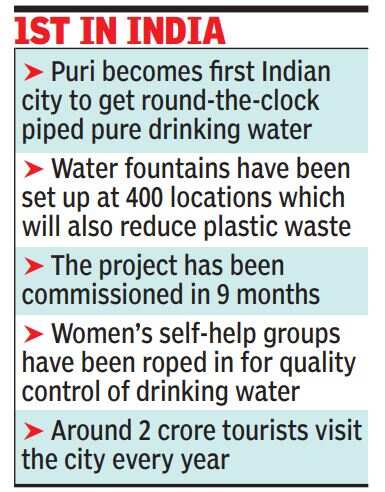
Puri is one of the major heritage cities of the country and every year more than 2 crore tourists visit every year. And this month the city earned an unique distinction of becoming the first Indian city to provide 24X7 pure drinking water. This is the landmark achievement for the city and state and is one of the major contributors for enhancing the status of sanitation and hygiene in Puri, Odisha. The city has become the first city to offer safe drinking water directly from taps to the residents and the tourists visiting the city every year and now has joined the group of global metropolitans like London and New York for providing safe drinking water.
The government launches “Sujal: Drink from Tap Mission” which has the goal of providing all time safe drinking water to all the residents and people visiting the cities directly through taps. The city has fulfilled and achieved the credentials of the ambitious mission and has achieved the goal of the mission. The 24 hour drink from tap facility provides water which can be used directly without filtration for different purposes such as drinking, cooking etc. This move is beneficial for the 2.5 lakh people residing in the city and the 2 crore tourists visiting the city every year. And the people don’t need to carry water bottles with them and can directly rely on the taps. This type of facility is present in very limited number of cities globally and Puri has established its place. Furthermore, the state government had installed 400 water fountains in different locations of the city with the aim of reducing the reliance and usage of plastic bottles in Puri. This will eventually reduce the amount of plastic wastes being can be reduced.
The government uses 5T initiative for increasing the efficiency and effectivity of the services being delivered across the city. The Chief Minister of the state emphasized on the linkage between safe drinking water with health, living standards and the economy, thereby, urging the people not to waste or pollute water. Transparency, teamwork, technology, time-frame and transformation form the 5Ts which has been adopted by the government for improving its governance. The budget for drinking water has been doubled in 5 years from Rs 200 crore to Rs 4000 crore thereby making the city the first heritage town in the country to get this facility. It is expected that the initiative will have great contribution in reducing the amount of plastic wastes generated. It is estimated that the amount of plastic waste being generated by the city will reduce by 400 tonne per annum. 1100 Stand posts were already present in the city and the state government has established additional 110 modern public stand posts along the Grand Road (Badadanda) and nine by the sea beach area have been installed. Old stand posts are being replaced with steel pipes and taps and at present 36 MLD clean water is being supplied everyday in the city. About 135 – 140 liters of drinking water per head per day is being provided to the residents everyday.
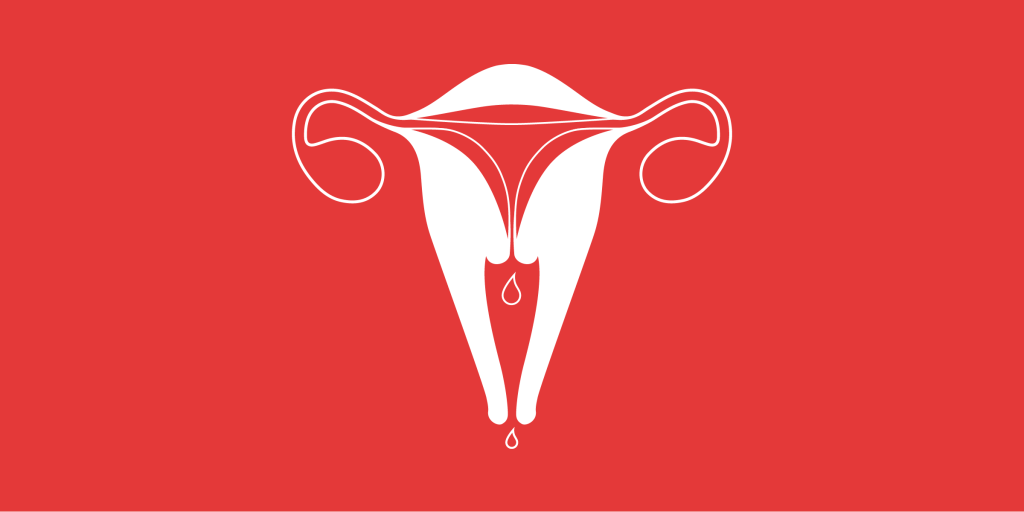
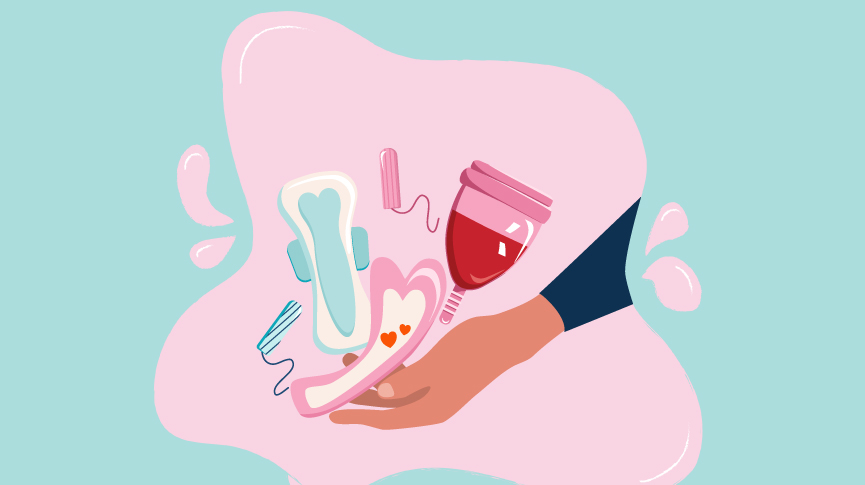
The level of estrogen and progesterone, reproductive hormones, climbs every month as the uterus prepares for pregnancy. The uterine lining becomes dense and spongy as a result of these hormones. This lining is made up of tissue and blood, much like everything else inside our bodies. It provides a variety of nutrients that help pregnancy progress. If there isn’t a pregnancy, progesterone levels drop, and the thick endometrial lining sheds and leaks out of the vaginal orifice. And Menstruation is the result.
Red Wedding . shark week . Time of the week . code red. A slew of terms for one utterance – Menstruation. And not just human beings; Other mammals, such as Old World monkeys and apes, 3-5 kinds of bats, and the elephant shrew, have periods as well.
Only 121 million (roughly only 36% of the women) of India’s 336 million menstruating women use sanitary pads, according to the National Family Health Survey 2015-2016. Many women still refuse to use sanitary pads for a variety of reasons, including personal preference and familiarity, a lack of access to or affordability for high-quality commercial sanitary pads, and a lack of adequate knowledge regarding pads.
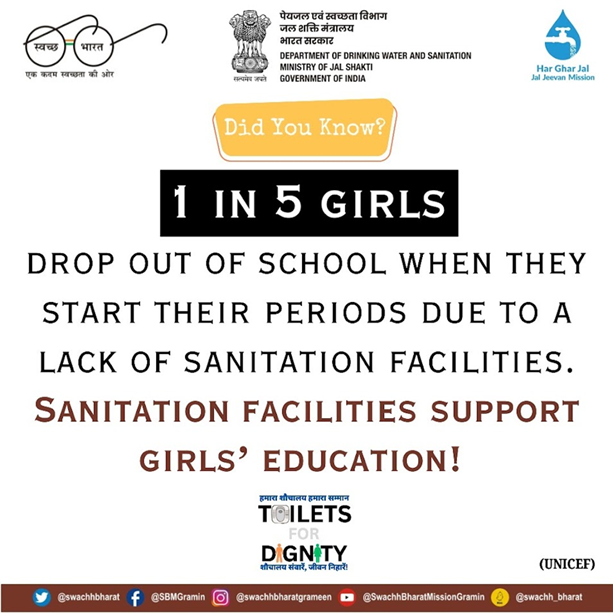
“More than a third of girls in South Asia miss school during their periods, as they lack access to toilets or pads, and many receive no education about menstruation before reaching puberty,”- A recent report by charity WaterAid and UNICEF revealed.
Because they cannot afford these expensive sanitary goods, many girls and women utilize a new soft cloth or some homemade product. Women may also use hay, ash sand, ash, wood shavings, newspapers, dried leaves, or plastic in extreme circumstances.
In both urban and rural India, qualitative investigations and surveys have revealed the most common reason for not using a sanitary pad is its high price. Pads from high-end commercial manufacturers can cost up to 1.5 times as much as pads from low-cost vendors. Quality sanitary pads are desirable, but the majority of girls from low-income homes cannot afford them.
TAX-FREE SANITARY PRODUCTS
“I am sure all mothers and sisters will be very happy to hear that sanitary pads are now 100 percent exempt from tax,” India’s interim finance minister, Piyush Goyal, at a news conference in New Delhi.
In 2018, India abolished its 12% tariff on all sanitary items, declaring tampons and sanitary napkins tax-free.
But is it enough?
A bundle of ten sanitary napkins, which used to cost roughly 100 rupees, will now cost around 88 rupees when the 12 percent GST is abolished. This could be a woman’s monthly outlay on menstrual products. However, given that 65.07% of India’s population lives in rural regions and relies on manual labor, with many of them subsisting on less than 120 rupees per day, the price of 88 rupees for a packet of sanitary napkins remains exorbitant.
Recently, The Period Products (Free Provision) (Scotland) Act 2021 was approved by the Scottish Government, making sanitary products free for all women and making Scotland the first country in the world to do so in the battle against “period poverty.” It is also the world’s first regulation requiring all public institutions to distribute menstrual sanitary goods, such as tampons and pads.
But why only in Scotland? Periods are not a choice for women. They occur monthly and are a natural phenomenon. Therefore, every woman or girl who is menstruating deserves access to adequate sanitary products, regardless of her family’s income bracket.
It is high time for India and other countries to follow Scotland’s lead and make sanitary products free & accessible for their women.
Sanitation and hygiene are crucial aspects of living; especially when it comes to the masses. India has a huge population. The majority of its population resides in rural areas. These rural areas lack basic amenities of living and hygiene. Lack of basic amenities hampers the quality of living. Especially, when it comes to sanitation, the rural people lack toilets and thus, have to defecate in the open grounds. Open defecation proves to be a breeding ground for many infections and diseases, which can even prove to be fatal.
Habits play an important role in keeping the surroundings clean. It is not just the lack of toilets, but also the habits of the people. people in the rural areas have become habituated to open defecation, and even when provided with toilets to use, they chose to defecate in the open. It is also because of a lack of knowledge and awareness. Hence, it becomes important to not just build toilets, but also to aware people about the health issues related to improper sanitation due to open defecation.
To maintain sanitation and prevent any health issues due to lack of sanitation, the government proposed the Swachh Bharat Abhiyan.
What is Swachh Bharat Abhiyan?
The Swachh Bharat Abhiyan or the Swachh Bharat Mission was launched on 2nd October 2014, on the birth anniversary of Mahatma Gandhi, by the Prime Minister of India Narendra Modi. It focuses on the achievement of universal sanitation. This campaign or janandolan had a nationwide approach and also aimed at open defecation-free India, focusing especially on the rural. From 2014 to 2019, the focus was on the construction of household-owned and community-owned toilets. Monitoring of construction and usage of these toilets was also taken care of. The birth anniversary of Mahatma Gandhi was chosen as the day to launch the mission, as Mahatma Gandhi was concerned and conscious about India’s sanitation. He even once said, “Sanitation is more important than independence.” The idea of a clean India with a proper sanitation system took its initial shape from there, and hence, 2nd October makes the best day for the mission launch.
By 2nd October 2019, in India, all the villages, gram panchayats, districts, states, and union territories declared themselves as “open defecation free”, by constructing over 100 million toilets in the rural parts of India, under the Swachh Bharat Mission.
The mission then upgraded to its next phase ‘Phase II’ of Swachh Bharat Mission (Grameen) i.e., ODP-Plus. This phase was upgraded to ensure that the open defecation-free habit sustains and there is proper access to safe liquid and solid waste management in villages.
Impact
Since 2nd October 2014, more than 10,20,00, household toilets have been constructed; there are 6,03,175 open defecation free villages; 706 open defecation free villages 36 open defecation free states and union territories, and about 63.3% of the rural population is practicing Solid and Liquid Waste Management (SLWM) under Open Defecation Free (OPD) Plus. There has also been an increase in household toilets since 2nd October 2014 and 2,62,734 gram panchayats were declared open defecation free. The construction of toilets not only provided the people especially of rural areas with proper sanitation but also an equal level of basic social amenities.
Sanitation and a clean environment are every human being’s right. The ones who keep the environment clean for us are often not recognized. The sanitation workers or the garbage man collect the garbage generated by us just so that we can have a tidy and healthy surroundings.
Imagine living in a stinky and littered world. It won’t be just gross but unhealthy too; breeding ground for so many germs, viruses, and diseases. Fortunately, we have sanitation workers who are dedicated and available to regularly collect and dispose of the garbage generated by us.
The garbage men play a vital role in maintaining a hygienic civilization. Not just garbage from homes, but different sectors generate different sorts of waste or garbage. These waste products can be hazardous. To safely get rid of it and to maintain public health the garbage men step ahead to collect and dispose of such waste products. However, these people are not always appreciated for the tenacious work that they do for their local community.
History of Garbage Man Day
The owner of JDA (special waste management and sanitation firm), John D. Arwood first recognized the exceptional work of his waste disposal staff and celebrated Garbage Man Day. It was initially celebrated nationally, and John D. Arwood in 2011, funded the first Garbage Man Day. Since then, every year 17th June is recognized as Global Garbage Man Day to recognize the efforts and appreciate the work of sanitation workers.
The day got renamed officially in 2019, as Waste & Recycling Workers Week as sanitation workers don’t just consist of garbage men but many other people, like the waste recyclers.
Why Garbage Man Day?
The garbage men work in a hazardous environment. The garbage or waste they deal with has many elements that can cause them physical harm. The surroundings are also odorous which can make them fall sick, and inhaling foreign particles can even cause respiratory issues.
Medical wastes can be very harmful. Broken glass bottles can not only cause injury but the chemicals or bleaches pouring out or a little bit left in those bottles can cause burns or injuries if came to skin contact. Garbage collection and disposal are not easy tasks. Severe injuries often lead the workers to end up in hospitals, in some cases causing disabilities and even death due to severe injuries or infections.
The day should not just be celebrated to appreciate the extraordinary work of the sanitary workers but also to spread awareness about the risk and severity of the job. Every job has its importance and need. Every job and the one doing it should be applauded for their efforts and dedication.
Globally more and more organizations, companies, and communities are coming together to recognize the efforts of the sanitization workers. Even as individuals we can celebrate this day to appreciate them and contribute to keeping the environment clean by not littering in our surroundings. Participation can be marked in various awareness programs, educating the public about the sanitation workers’ work, and awarding the workers in whatever way possible.



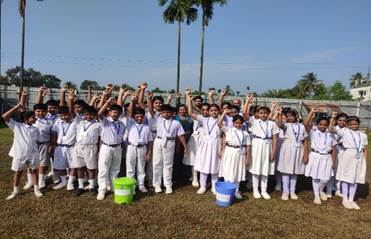 Gen Z has been showing a remarkable and innovative stance in addressing waste management in the modern era. Their proactive initiatives and creative solutions reflect a dedication to environmental preservation. Swiftly progressing on the path of “swachhata”, Gen Z’s agile mindset and tech-savvy nature empower them to drive positive change and shape a more sustainable future. Whereas Gen Alpha exhibits a remarkable consciousness for swachhata and eagerly fuses innovation with technology. They seek toys crafted from recycled materials, ingeniously reimagined to align with their eco-conscious perspective.
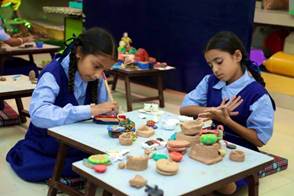 In line with this vision, the Ministry of Housing and Urban Affairs has taken initiatives like the Indian Swachhata League, Swachhata ke Do Rang, aimed at engaging India’s youthful populace in the Jan Andolan for cleanliness. In addition to this, MoHUA launched the ‘Swachh Toycathon’ in 2022, which revolved around the ‘Rethinking of Indian toy industry’. The national competition for individuals from all ages as well as groups and start-ups, aimed to bring forth innovation and circularity in design and packaging of games and toys. The competition witnessed entries for eco-friendly toy prototypes, waste-material toys, and inventive concepts reimagining the industry. Organizations like ToyBank are re-purposing old and discarded toys to ensure the ‘Right to Play’ of children of marginalized communities. Household waste items are being turned into toys that teach children about basic principles of science & sustainability.
 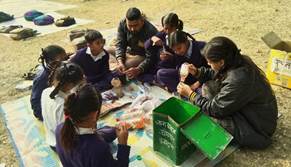 Uttarakhand-based NGO ‘Waste Warriors’ launched ‘Green Gurukul’ program to involve youth in city sanitation. Operating in 100+ schools, the initiative impacted 39,000+ students, engaging them in sustainable waste management. Integrated into education, it drives behavioral change among students and educators, ensuring compliance with 2016 SWM Rules, emphasizing source segregation and proper disposal. Interactive sessions, movies, games, quizzes, and creative workshops teach waste management to grades 6-12 in Himachal Pradesh and Uttarakhand.
 Since 2014, Satya Foundation, a youth group in Byataranapura, Yelahanka Zone, have introduced a course named, “Trashonomics,” teaching waste management as a resource in schools via young ambassadors bridging generations. Kids learn composting, upcycling, and the 3Rs (Reduce-Reuse-Recycle) to convert waste into resources.
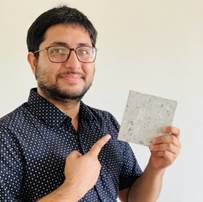 Since 2020, a young man from Gujarat, Dr. Binish Desai has initiated recycling of COVID-related bio-medical waste, by transforming them into advanced P-block bricks. His latest innovation, P-block 2.0, is lighter, stronger, and more versatile. During his tenure as Gujarat’s CM, PM Narendra Modi invited Binish to an event, commending his initiative’s efforts. His initiative, Eco Eclectic Tech, has repurposed 45 tons of PPE waste, diverting over 6700 metric tons from landfills and producing 150+ products from various wastes. It’s also facilitated the construction of 10,000+ toilets and 500+ structures.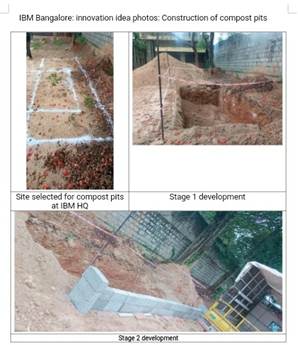






 Eduindex
You must be logged in to post a comment.