SPACE DEBRIS

Space debris is the combination of natural(meteoroid) and artificial(man-made) particles. Natural debris orbits around the sun and artificial debris orbits around the earth. Hence they are called Orbital Debris. This can be any man-made object in the orbit moving in the earth’s orbit. Such debris includes nonfunctional spacecraft, abandoned launch vehicle stages, mission-related debris, and fragmentation debris.

In this article, we are going to focus on Artificial Debris, the Reason for its cause, and its prevention.
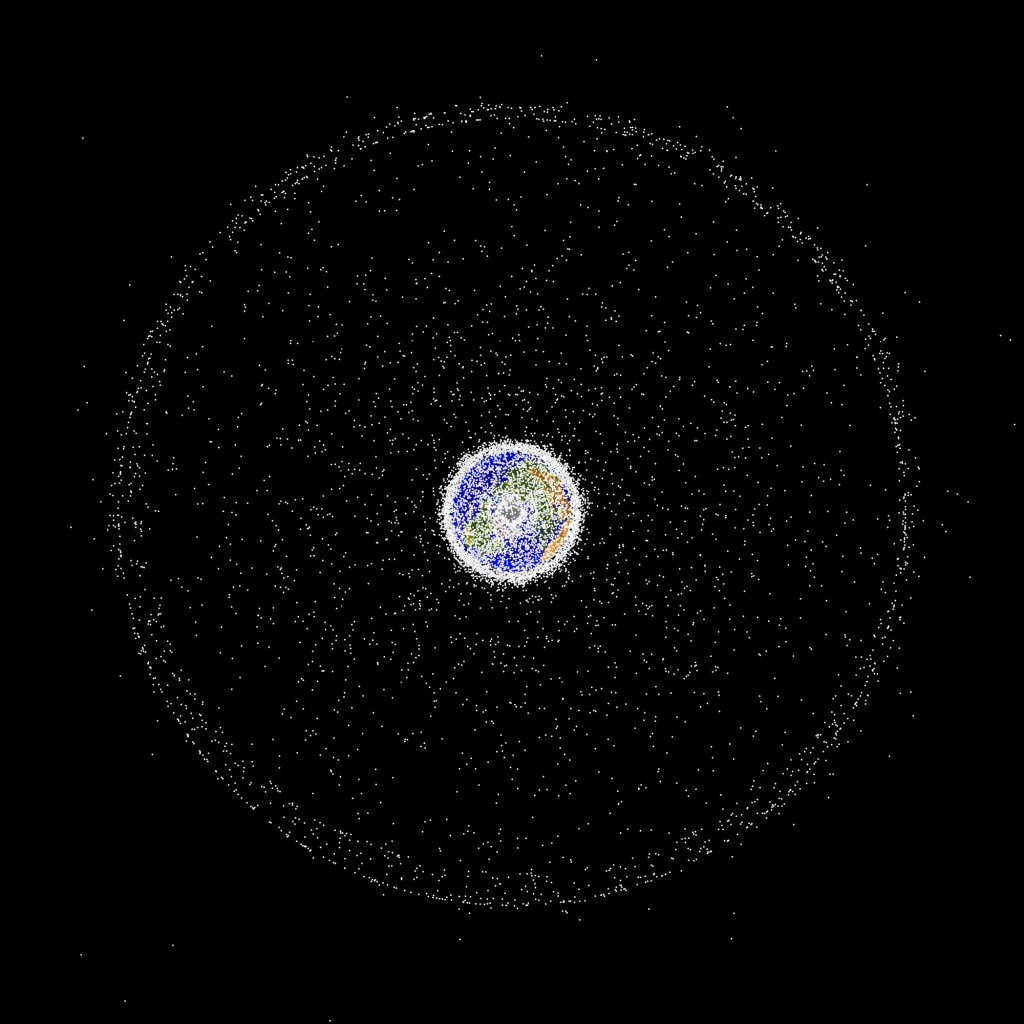
Space debris

What is Artificial space debris?

Any non-functional man-made object in space is called Artificial debris. 

They come from 

  • Satellites and spacecraft which are failed.
  • Satellites whose life has ended.
  • Rocket dismantle stages during the launch.
  • Hardware like nuts, bolts, payload covers, etc.
  • Solid propellant slag.
  • Cast aways during space activities like human wastes.
  • Fragments due to battery explosions, collisions, etc.

When two satellites collide they produce thousands of particles that are dangerous and can cause further destruction which makes Earth’s orbit unfit for satellite launches.

Artificial means man-made satellites

The number of satellite and rocket launches as of April 2021 is given below:

Number of rockets launched(excluding failures) since 19575560
Number of satellites carried by rockets launched11139
Number of satellites still in space7389
Number of satellites still functioning3170

Let’s have a look at the number of satellites launched only in 2020 and 2021(April)

Satellites launched in 20201283
Satellites launched in 2021 (April)853(65% of 2020)

History

In the year 2009, 19,000 debris over 5 cm in size were tracked. 

In July 2013, more than 170 million debris smaller than 1 cm(0.4), around 670,000 debris of 1 to 10 cm in size, and approximately 29,000 larger debris were detected.

By July 2016, nearly 18,000 artificial debris were orbiting the earth.

In October 2019, nearly 20,000 artificial objects including 2,218 were tracked.

The speed with which the debris travel is more than 28,000 kph(23 times the speed of sound).
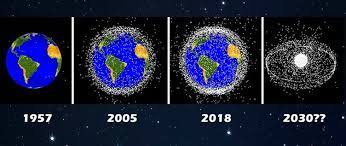
Have you heard of Kessler syndrome?

NASA scientist Donald Kessler in 1978, proposed that more launches could increase the junk around the earth which results in the chain reaction of collision of objects in space and further making the earth’s orbit unfit for satellites.

This situation would be extreme, but some experts worry that a variant of this could be a problem one day, and precautionary steps should be taken to avoid the problem.

How do they track space debris?

The USA and Russia have set up tracking networks to monitor the orbital space object population. The European Union is also starting to develop its ways to track debris.

Powerful lasers are used to measure the distance of these objects, like radar or sonar. When a laser beam hits the debris and bounces back to Earth, ground crews can measure how long it takes to figure out where they are and where they are going it alerts the ground stations in case of collisions. But usually, laser technology is used to detect the movement of satellites and if the same technique is used to detect the debris then continuous monitoring should be there since debris are found randomly in space.

Detection of objects through laser technology

India’s status on tracking debris

NETRA(Network for space Objects, Tracking, and Analysis)

Till now, ISRO was dependent on NORAD(North America Aerospace Defense Command) data,

which is available in the public domain, to keep track of space debris and monitor our active and passive satellites. However, this global data is not accurate but NORAD keeps accurate data available for those who are members of its network. Therefore, ISRO cannot access the data.

But now, ISRO has decided to set up telescopes and radars in four corners of the country to get accurate data and avoid unwanted collisions of the satellites.

In September 2019, India launched the early warning system NETRA to secure satellites and other assets in space.

Can satellites be protected from space debris?

There are two ways in which the satellites and spacecraft can be protected:

  • Computer programs can search for possible collisions between large debris. This system is used in the International Space Station to detect. These operations are expensive and can disturb delicate experiments. Space tracking networks can only track objects more than 100 mm in size. Even a 10 mm object can cause big trouble this cannot be called 100% effective.
  • A debris shield can be designed to provide additional protection for a spacecraft. One way is to increase the thickness of the craft but that can increase the mass of the craft/satellite. Hence, a specially designed shield called the Wipple shield was used. It was made of two thin walls separated by some space. It was observed that this wall was more resistant to debris. The outer layer absorbs a lot of debris energy so that the inner wall is not punctured.
Protection of satellites through shields

Space debris Removal

Removing space junk, especially larger pieces before they fragment is not easy. The best way to do this is retarding the force and deorbiting the junk. When it drops in altitude less than 400 km above the earth it is burnt.

For years NASA, ESA, and other space agencies are studying debris removal technologies. Some of the ideas include the usage of nets to gather junk and robotic arm. Japanese are now developing a type of satellite that uses magnets to catch and destroy the debris. Last year, UK has successfully cast a net around a dummy satellite.

Clearspace one

Clearspace-1 will be the first space mission to remove debris from the Earth orbit, it was planned to launch in 2025. The technology demonstration satellite was first developed by the Swiss Federal Institute of Technology in Lausanne. 

Clearspace one

Many countries are trying to invent new technologies to reduce the threat of debris. Russia invented a Self Destroying Satellite. Australian researchers are developing the Hunter-Killer satellite to neutralize space junk. Finland has developed a Wooden Satellite and planning to launch this year.

credits to the right owners of the pictures used.

Evolution of Computers

As of now 2021, Computers become very important for our daily life. Computers are in each of every sector like banking, gaming, health care sectors. 20 years back, computers were just used in some purposes only. But now computers become very important for each of every sector. In this blog we are going to discuss the following topics. What is a computer? Why computers are important? Evolution of Computers, and at last Is Computer Science the future of the world?

Photo by Tranmautritam from Pexels

WHAT IS A COMPUTER?

A Computer is machine that can be programmed to carry out sequences of arithmetic or logical operations automatically. Computer consist of two things, one is Hardware and the other is Software. The all physical components of computer like keyboard, CPU, mouse, monitors etc. Comes under the Hardware. The programs, files and programming languages comes under the Software.

EVOLUTION OF COMPUTERS

  1. In 1882, the first computer was invented by Charles Babbage.
  2. In 1880, Herman Hollirith developed in computer which can record and store information in it.
  3. In 1936, the first programmable computer was developed by Konrad Zuse.
  4. In 1947, Bell Telephone Company invented transistors which were the key component of the computer.
  5. In 1953, IBM(International Business Management) came out with there first computer.
  6. In 1962, the first computer video game was invented.
  7. In 1963, Douglas Engelbart invented the computer mouse.
  8. In 1974, IBM and Apple were the companies to sold personal computer(pc) to the people.
  9. In 1991, the first laptop computer came out.

WHY COMPUTERS ARE SO IMPORTANT?

Communication

Due to the use of computers, the communication become much more easier with the help of internet. Now you contact any person in the corner of the world. We can send messages to every person in the world within seconds, all this happen because of computers.

Business

With the help of computers, Huge transactions can be made within seconds. Computers are used to store details about there product in business. Computers are used to keep of record of profit and loses of the company.

Education

Due to the covid-19 pandemic, all schools shifted there education in online mode. Teachers use computers to teach children online. Due to computer, a student can learn anything which he wants from his home itself.

Hospital

Computers are used in hospitals to keep the track record of the patients admitted to the hospital. They are used to detect diseases. They help doctors to perform an operation.

And there are many more reasons why computers become so important in this world.

IS COMPUTER SCIENCE THE FUTURE OF THE WORLD?

Now we came to the most interesting topic in this blog. Nowadays, people are showing more interest towards computer science. Computer science is the most famous branch of education. New emerged careers such Artificial intelligence, Data science and full stack Developer are highest paying jobs in the world, all these are the parts of computer science. Due to the covid-19 pandemic the opportunities of other careers are some what decreased. But the opportunities in Computer science was tend to grow double. There are many career options in computer science. Experts suggest that the growth rate of computer science is 16 percent through 2028. With this we can say that Computer science is the future of the world.

I hope you like this blog, If you like this blog kindly like and rate it. It gives me motivation.

Turning heat into electricity.

Study finds topological materials could boost the efficiency of thermoelectric devices.

MIT researchers, looking for ways to turn heat into electricity, find efficient possibilities in certain topological materials.

What if you could run your air conditioner not on conventional electricity, but on the sun’s heat during a warm summer’s day? With advancements in thermoelectric technology, this sustainable solution might one day become a reality.

Thermoelectric devices are made from materials that can convert a temperature difference into electricity, without requiring any moving parts — a quality that makes thermoelectrics a potentially appealing source of electricity. The phenomenon is reversible: If electricity is applied to a thermoelectric device, it can produce a temperature difference. Today, thermoelectric devices are used for relatively low-power applications, such as powering small sensors along oil pipelines, backing up batteries on space probes, and cooling minifridges.

But scientists are hoping to design more powerful thermoelectric devices that will harvest heat — produced as a byproduct of industrial processes and combustion engines — and turn that otherwise wasted heat into electricity. However, the efficiency of thermoelectric devices, or the amount of energy they are able to produce, is currently limited.

Now researchers at MIT have discovered a way to increase that efficiency threefold, using “topological” materials, which have unique electronic properties. While past work has suggested that topological materials may serve as efficient thermoelectric systems, there has been little understanding as to how electrons in such topological materials would travel in response to temperature differences in order to produce a thermoelectric effect.

In a paper published this week in the Proceedings of the National Academy of Sciences, the MIT researchers identify the underlying property that makes certain topological materials a potentially more efficient thermoelectric material, compared to existing devices.

“We’ve found we can push the boundaries of this nanostructured material in a way that makes topological materials a good thermoelectric material, more so than conventional semiconductors like silicon,” says Te-Huan Liu, a postdoc in MIT’s Department of Mechanical Engineering. “In the end, this could be a clean-energy way to help us use a heat source to generate electricity, which will lessen our release of carbon dioxide.”

A path freely traveled

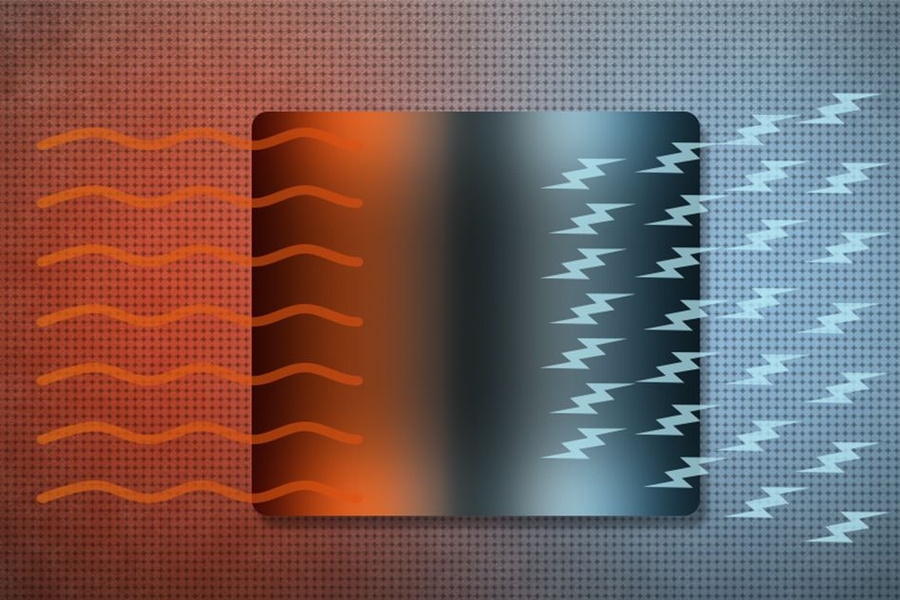
When a thermoelectric material is exposed to a temperature gradient — for example, one end is heated, while the other is cooled — electrons in that material start to flow from the hot end to the cold end, generating an electric current. The larger the temperature difference, the more electric current is produced, and the more power is generated. The amount of energy that can be generated depends on the particular transport properties of the electrons in a given material.

Scientists have observed that some topological materials can be made into efficient thermoelectric devices through nanostructuring, a technique scientists use to synthesize a material by patterning its features at the scale of nanometers. Scientists have thought that topological materials’ thermoelectric advantage comes from a reduced thermal conductivity in their nanostructures. But it is unclear how this enhancement in efficiency connects with the material’s inherent, topological properties.

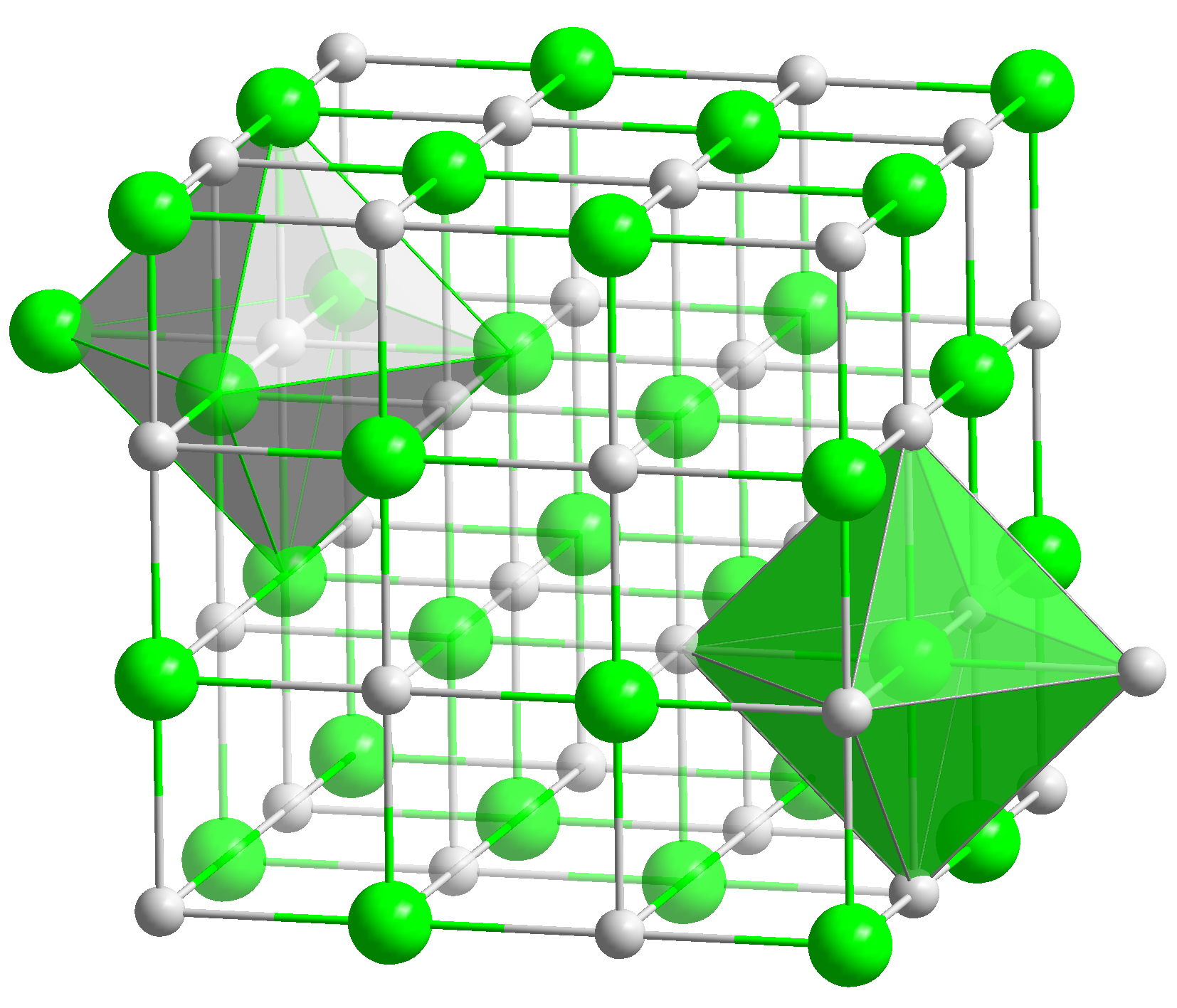
To try and answer this question, Liu and his colleagues studied the thermoelectric performance of tin telluride, a topological material that is known to be a good thermoelectric material. The electrons in tin telluride also exhibit peculiar properties that mimic a class of topological materials known as Dirac materials.

The team aimed to understand the effect of nanostructuring on tin telluride’s thermoelectric performance, by simulating the way electrons travel through the material. To characterize electron transport, scientists often use a measurement called the “mean free path,” or the average distance an electron with a given energy would freely travel within a material before being scattered by various objects or defects in that material.

Nanostructured materials resemble a patchwork of tiny crystals, each with borders, known as grain boundaries, that separate one crystal from another. When electrons encounter these boundaries, they tend to scatter in various ways. Electrons with long mean free paths will scatter strongly, like bullets ricocheting off a wall, while electrons with shorter mean free paths are much less affected.

In their simulations, the researchers found that tin telluride’s electron characteristics have a significant impact on their mean free paths. They plotted tin telluride’s range of electron energies against the associated mean free paths, and found the resulting graph looked very different than those for most conventional semiconductors. Specifically, for tin telluride and possibly other topological materials, the results suggest that electrons with higher energy have a shorter mean free path, while lower-energy electrons usually possess a longer mean free path.

The team then looked at how these electron properties affect tin telluride’s thermoelectric performance, by essentially summing up the thermoelectric contributions from electrons with different energies and mean free paths. It turns out that the material’s ability to conduct electricity, or generate a flow of electrons, under a temperature gradient, is largely dependent on the electron energy.

Specifically, they found that lower-energy electrons tend to have a negative impact on the generation of a voltage difference, and therefore electric current. These low-energy electrons also have longer mean free paths, meaning they can be scattered by grain boundaries more intensively than higher-energy electrons.

Tin telluride - Wikipedia

Sizing down

Going one step further in their simulations, the team played with the size of tin telluride’s individual grains to see whether this had any effect on the flow of electrons under a temperature gradient. They found that when they decreased the diameter of an average grain to about 10 nanometers, bringing its boundaries closer together, they observed an increased contribution from higher-energy electrons.

That is, with smaller grain sizes, higher-energy electrons contribute much more to the material’s electrical conduction than lower-energy electrons, as they have shorter mean free paths and are less likely to scatter against grain boundaries. This results in a larger voltage difference that can be generated.

What’s more, the researchers found that decreasing tin telluride’s average grain size to about 10 nanometers produced three times the amount of electricity that the material would have produced with larger grains.

Liu says that while the results are based on simulations, researchers can achieve similar performance by synthesizing tin telluride and other topological materials, and adjusting their grain size using a nanostructuring technique. Other researchers have suggested that shrinking a material’s grain size might increase its thermoelectric performance, but Liu says they have mostly assumed that the ideal size would be much larger than 10 nanometers.

“In our simulations, we found we can shrink a topological material’s grain size much more than previously thought, and based on this concept, we can increase its efficiency,” Liu says.

Tin telluride is just one example of many topological materials that have yet to be explored. If researchers can determine the ideal grain size for each of these materials, Liu says topological materials may soon be a viable, more efficient alternative to producing clean energy.

“I think topological materials are very good for thermoelectric materials, and our results show this is a very promising material for future applications,” Liu says.

This research was supported in part by the Solid-State Solar Thermal Energy Conversion Center, an Energy Frontier Research Center of U.S. Department of Energy; and the Defense Advanced Research Projects Agency (DARPA).

ELON MUSK

Musk is a physicist, entrepreneur, philanthropist and a great deal of an investor. he was born on 28th June, 1971 in Pretoria, South Africa to an African father and a Canadian mother. His childhood was not a bit happy. After his parents divorced he chose to live with his father. the relation of dad and son was eventually embittered; he called it the worst decision of his life. as a child he was bullied also. This rather turned him towards book. He was an avid reader and an independent learner. At the mere age of 12, he created a video game “Blastar” which he sold to a computer magazine.

He completed his bachelor’s in Economics and then again in Physics from University of Pennyslyvania. He left his Master’s in Applied Physics from Standford University just after 2 days to become an entrepreneur.

Foundations

  • ZIP2
  • X.com and PayPal
  • SpaceX

In 1995, Elon and Kimbal (brother) founded web software company. Zip2  provided and licensed an Internet city guide for the newspaper publishing industry, with maps, directions, and yellow pages. It allowed a two-way communication between users and advertisers.

X.com, which was later named as PayPal is one of the oldest online payment company. It was co-founded by Musk in March 1999.  In March 2000, X.com merged with Confinity Inc., a software company based in Silicon Valley. Musk was attracted to Confinity because of its easy payment system. The name was changed to PayPal. eBay bought the company for  US$1.5 billion in 2002.

Towards the coming of 2001, Musk was deeply inclined towards settling life in Mars. He traveled to Moscow to buy refurbished Intercontinental Ballistic missiles (ICBMs) that could send the greenhouse payloads into space. But he was overlooked as a novice. This put the founding stone of SpaceX in 2002. Musk decided to start a company that could build affordable rockets. The company holds expertise in it’s production of reusable thrusters (a small rocket attached to a spacecraft and used to control its attitude or translational motion).

This private company holds enormous achievements; from being the first private company to launch fully liquid-fueled rocket that reached orbit to becoming the largest commercial satellite constellation operator in the world. SpaceX has definitely distinguished itself with the reusable thrusters. On June 17, 2021, it launched GPS III-05 on Flacon 9 which was the second flight of booster B1062, for a ‘national security‘ mission (National security missions had previously only used new boosters).

Investments

“When something is important enough, you do it even if the odds are not in your favour.”

Elon Musk in an interview

An independent learner as he is, he has never believed in degree. He always gives importance to potential. With the same potential he could achieve such milestones, nevertheless having no former degree. Let us take a look at some eye-catching investments of the CEO of SpaceX and Tesla.

TESLA

Tesla is an American based company. it was originally founded by Martin Ebberhard and Marc Tarpenning as Tesla Motors. It is majorly based on electric vehicle and clean energy. Elon came up as an investor when the company was facing crisis in 2008. Later the board decided to appoint him the as CEO, noting his potential. Tesla first built an electric sports car, the Roadster, in 2008. With sales of about 2,500 vehicles, it was the first  serial production of all-electric car to use lithium iron battery cells. This innovation was an instant success. Tesla stock has risen significantly; it became the most valuable carmaker in summer 2020.

HYPERLOOP

In 2013, Musk assigned a dozen engineers from Tesla and SpaceX to establish the conceptual foundations and initial designs of an airplane without wings. It is a concept for ultra-fast inter-city travel using travel pods inside metallic tubes.

THE BORING COMPANY

With an aim to enable rapid point-to-point transportation, Elon’s hopes that Boring Co. Tunnels will revolutionise transport by carrying people in giant, electric underground sleds.

On being asked about the number of tunnels that would fit, he replied “The deepest mines are much deeper than the tallest buildings are tall, so you can..”.

NEURALINK

In 2016, Musk co-founded Neuralink, a neurotechnology startup company to integrate the human brain with AI. Neuralink’s purpose is to create devices that are implanted in the human brain surgically, and with it, one will be able to communicate with machines. Musk has predicted that it would one day give people telepathy, cure paralysis, and enable vision.

STARLINK

Starlink is a low latency, high speed broadband intternet system aimed at providing free internet across the globe. The starlink satellites are a link of 12,000 satellites circling the earth. Starlink satellites are over 60 times closer to Earth than traditional satellites, resulting in lower latency and the ability to support services typically not possible with traditional satellite internet.

Musk’s thoughts are really beyond the world!

OPEN AI

This is a not-for-profit AI system. It aims to develop artificial general intelligence in a way that it is safe and beneficial to humanity. Musk is really concerned about the artificial intelligence technology as the field has not been studied fully yet. He therefore, always emphasizes on proper knowledge before application.


To conclude with the article, we learn an important lesson from Elon Musk’s life up till now;

Execution is greater than innovation.

Elon is just so fearless, even after facing numerous obstacles, he has overcome each of them. He never hesitates in taking risks. This boldness is serving us with unimaginable inventions.

Green nanotechnology and Sustainability

Everybody knows what is nanotechnology, it is the study and control of matter at the nano-scale, rearranging atoms and molecules. Nanotechnology has made marvelous contributions in the world of science especially in computer science and medical science.

But have you heard of green nanotechnology? The name itself suggests that it has something to do with greenery. It is the study of how nanotechnology can benefit the environment, such as by using less energy during the manufacturing process, the ability to recycle products after use and using Eco-friendly materials.

It builds on the principles of green chemistry and green engineering, and focuses on using the unique effects that occur in nano-scale materials.

Green nanotechnology can help to provide clean water to billions of people via novel filtration techniques, and has the ability to decontaminate dirty water. It can help in increasing the use of renewable energy and help in waste management too.

It can also influence the design of nano-materials and products by eliminating or minimizing pollution from the production of these materials.

It is all about making green nano-products and using them in support of sustainability. Sustainable development refers to a development that meets the needs of the present of the present, without compromising the ability of future generations to meet their own needs. It will aim at producing nano-materials without harming environmental or human health.

Nanotechnology can help reduce agricultural waste and bring down pollution levels. Scientists are working on nano-engineered enzymes that will allow simple and cost-effective conversion of cellulose from waste plant parts into ethanol.

Another example is rice husk that can become a source of renewable energy with nanotechnology. When rice husk is burned into thermal energy or bio-fuel a large amount of high quality nano-silica is produced, which can be further utilized to make other materials such as glass or concrete.

Nano sensors dispersed in the field can also detect presence of plant viruses and the level of soil nutrients.

Nanotechnology can reduce manufacturing costs for solar cells as a result of using a low temperature process.

Nanotechnology is being hailed as the next sunrise industry for India. The Department of Science and Technology of the Central Government has announced a national initiative in nano-materials, while the Jawaharlal Nehru Center for Advanced Scientific Research, Bangalore, has pioneered the study of nanotechnology in India. Prof. C.N.R Rao and the center has done world class research in nanotechnology using state of the art equipment.

A stream of nanotechnology-based products is beginning to emerge in India, with applications in the security realm. Besides D.R.D.O. (Defense Research & Development Organization) serious researches are also taking place in institutions like IIT, and Madras University.

Hopefully, in the near future as we advance further in the field of green nanotechnology, it will help us in replacing existing products with Nano-products that are more environment friendly.

Gradescope: Assessment Platform by Turnitin

 To cope up with the increasing reliability of technology we have a new and advanced tool for grading & assessment which will reduce the manual workload of assessing papers and will provide valuable feedback to the students which will have a learning curve for them. The time saved by the instructors in checking papers manually will help them utilize their time more productively & this will also help the institute to keep records for easier accessing with intuitive reports & analysis.


Gradescope  is  a  leading remote assessment  and feedback platform that will be a step forward in this new digital world.
Leveraging the digital rubrics and AI in Gradescope will help instructors cut grading times by up to 80%, increase grading consistency and quality of feedback, and dramatically improve instructor/TA workflow vs. traditional grading.

Gradescope provides actionable feedback to both the students & the instructors.Here are 10 ways Gradescope can help your institute turn grading into learning:
 
1. Gradescope Modernizes Traditional Grading
Gradescope was founded with the belief that there has to be a better way to evaluate student work. By combining deep instructor expertise with the latest machine learning (ML) and artificial intelligence (AI), Gradescope leverages modern technology to dramatically reduce the pain and time associated with traditional grading.
 
2. Gradescope Streamlines the Workflow
By creating a digital record of student work, Gradescope restructures the traditional grading workflow. Gone are the logistical nightmares associated with transporting and returning stacks of paper, marathon grading parties, and lost in-class time; gains are efficiencies that enable high-quality assessment from anywhere at any time.
 
3. Gradescope Promotes Student Equity
Gradescope helps mitigate opportunities for unconscious bias in two key areas:
By helping graders focus exclusively on the content of an individual answer rather than the students’ overall submission or identity.
By helping teams of graders to build, maintain, and apply one aligned grading standard for all students
The result is a fairer learning experience for students and greater consistency across graders.
 
4. Gradescope Enhances Scoring Flexibility
Built in advance or created on the fly, Gradescope’s Dynamic Rubrics can be constructed collaboratively and adjusted at any time, automatically applying changes to previously graded work and creating a reliable real-time standard for all students. Keyboard shortcuts can help speed up the workflow, helping cut grading time even further.
5. Gradescope Promotes Meaningful Feedback
In addition to quick and consistent feedback, Dynamic Rubrics ensure students receive detailed insight into how points were awarded or deducted. With a richer understanding of evaluation criteria and guidelines around concept mastery, instructors can direct students to the best resources for their individual needs.
 
6. Gradescope Systematizes Grading Patterns
Answer groups and AI-Assisted Grading deliver a more methodical approach to reviewing student work. Gradescope helps instructors digitize student submissions and identify patterns, subsequently arranging them in assessable groups. This process helps eliminate redundancies, saves time, and produces higher quality and consistent feedback at scale.
 
7. Gradescope Accelerates Feedback Loops
Once assessment is complete, graders can immediately publish and notify students with a single click, either directly via Gradescope, emailed, or exported to their institutions’ LMS. Students can then review the feedback and quickly manage confusion or disagreement by initiating a Regrade Request. With the Gradescope workflow, feedback can be timely, detailed, and developmental.
 
8. Gradescope Supports Existing Assessments
The breadth of compatible assignment types is wide-ranging – from paper-based exams, quizzes, and homework, to online assignments, programming assignments, and multiple-choice. Gradescope can accommodate assessment preferences, existing assignments without adjustment, and a variety of disciplines, from humanities to the sciences.
 
9. Gradescope Highlights Student Learning
Gradescope produces meaningful and detailed student performance data to help identify knowledge gaps. Per-question and per-rubric item analytics deliver insight into which concepts were mastered and which were misunderstood. Graders can also measure course-level progress and align to key learning objectives with assignment statistics.
10. Gradescope Helps Refine Instruction
The Gradescope data can also inform improvements to assessment and course content. With targeted visibility into students’ areas of strength and weakness, instructors can address potential roadblocks in real-time and scaffold new concepts appropriately. Gradescope also surfaces insights that can guide long-term curricular improvements and refined lessons that ensure critical learning objectives are truly understood.

New Domestic Cleaning Technologies That Help Save Water

Technology has always aimed in making our lives better – be it the automatic machines or smart devices- appliances have long brought convenience to our lives. 

But in the World of Climate Change and Environment preservation, we need technology to focus on Sustainability in order to save resources for the future generations.

CLEAN WASHING, LESS WATER

Washing Machines and Dish Washers have gained popularity across various parts the country due to their efficiency and convenience. But are they also water efficient?

The advertisements for various washing machines now have started to show how one can save more than two buckets of water when the clothes are washed in the machine as compared to when they are washed by hand. Dishwashers nowadays use ultrasonic technology to reduce consumption of water while making sure there is no reduction in the efficiency of cleaning. Due to technology we have been able to invent appliances that help in deeper cleaning and use less water.

DAILY ROUTINE, WATER WASTAGE

Right from brushing our teeth to taking a shower we use water that very conveniently reaches our house in pipes and showerheads

But not to worry about saving water anymore as the latest achievement in the field of technology is OPTIMIZED showerheads designed to maintain the flow pressure while drastically reducing the water consumption. One can research and purchase the one which best suits your showering needs and also saves water.

FLUSHING ACTION, SMART SOLUTION

Technologists have been continuously working towards designing a flush system to produce an alternative which is more hygienic and water-efficient in its operation. 

Apart from standard improvements, there are new water treatment systems being developed which could help recycle sink water to flush toilets in Indian homes in the near future. Such a system would save gallons of water, while making the required amount available for comprehensive and hygienic flushing action.

SUSTAINABILITY BEGINS AT HOME

The simplest method for conserving water is to turn off the tap whenever possible.

Running the water when you’re brushing your teeth, for example, wastes at least a quart of water. That may not seem like much, but it can really add up over time: a family of four could save at least 60 gallons of water a month by simply turning off the faucet.

FLOWING FAUCETS

New faucets utilize several different kinds of aerators, but all conserve water without sacrificing pressure. Older faucets use three to seven gallons of water per minute, while newer ones can cut that to around two gallons per minute, or even less.

WASTING WATER FOR WASHING WASTE

New low-flow toilets use 1.6 gallons per flush. They work as well as the older types but use considerably less water. Homeowners can also consider using dual-flush toilets, which offer two settings, depending on the type of waste in the bowl.

WATER HEATER, PRESERVE DROPS

A small pump that runs on minimal electricity can be attached to your hot water system and can help keep hot water circulating when it’s not in use. This prevents waste of up to 10 gallons of water while waiting for the shower to heat up. Tank less water heaters offer the same convenience, but cost more; a recirculation system can be sometimes be installed for as little as $300.

FIX LEAKS, SAVE GALLONS

Have water leaks in your home fixed right away. Even a tiny leak can quickly add up to a huge amount of wasted water. A faucet leak of just one drip per second can waste more than 2,000 gallons of water in a year, according to the U.S. Geological Survey.

These are some of the latest technologies that have brought the twin objectives of more hygienic homes and water conservations to the fore. As more manufacturers innovate, such technologies are projected to become standard in all Indian homes. Helping create cleaner homes at the cost of less water is also a mission of MODERN TECHNOLOGY AND SCIENCE, a movement dedicated to creating a more sustainable future for our water resources. You can also support such initiatives they’ve undertaken and join in to help conserve water for a healthier tomorrow.

IQ tests and their history

Intelligence, it is what set us apart from our primate ancestors. Human evolution led to the emergence of anatomically modern humans, beginning with the evolutionary history of primates—in particular genus Homo—and leading to the emergence of Homo sapiens as a distinct species of the hominid family, the great apes. Now since intelligence is a major factor in the distinction of humans from all other animals, we must understand what intelligence is. Intelligence has been defined in many ways: the capacity for logic, understanding, self-awareness, learning, emotional knowledge, reasoning, planning, creativity, critical thinking, and problem-solving. And in order to measure a person’s intelligence we need a method to scientifically determine the amount of intelligence factor a person has which is usually measured in terms of IQ.

Photo by Startup Stock Photos on Pexels.com

In 1905, psychologists Alfred Binet and Théodore Simon designed a test for children who were struggling in school in France. Designed to determine which children required individualized attention, their method formed the basis of the modern IQ test. Beginning in the late 19th century, researchers hypothesized that cognitive abilities like verbal reasoning, working memory and visual-spatial skills reflected an underlying general intelligence or g factor. So, Simone and Binet designed a battery of tests to measure each of these abilities, and combine the results for a single score. Questions were made for each age group and a child’s score reflected how they performed relative to others in the same age group. Today a score of 100 is the average of a sample population, with 68% scoring within a 15-point radius. However, both then and now there is no single agreed upon definition of general intelligence. Which left the door open for people to use the test in service of their own preconceived assumptions about intelligence. What started as a way to identify those who needed academic help, soon became a tool to sort people in other ways, often in service of deeply flawed ideologies. One of the first large scale implementations occurred in the US during WWI when the military used IQ tests to sort recruits and screen them for officer training. However, that time people believed in Eugenics, the idea that desirable and undesirable genetic traits could and should be controlled in humans through selective breeding. This was a deeply flawed idea as it linked intelligence as not only fixed and inherited but linked to a certain race. This belief and results from IQ tests gave forth a wrong theory that certain races were superior than others, thus creating an erroneous intelligence hierarchy of ethnic groups. This not only influenced science but also policies in many countries. In 1924 Virginia ordered forced sterilization of anyone with low IQ scores, a decision that the supreme court of US upheld. We all know what happened in Nazi Germany due to such prevalent ideals, authorization of murder of children based on low IQ scores. Following the Holocaust and the Civil rights movement, the discriminatory usage of IQ tests was questioned on moral and scientific grounds. Scientists began gathering evidence as to how our environment impacts our IQ.

Today, IQ tests employ many similar design elements and types of questions as the early tests, though there are better techniques to identify potential bias in the tests. And due to many failed applications in the past they are no longer used to diagnose psychiatric conditions. And psychologists still use IQ tests to identify intellectual disability which can be used to determine educational support, job training and assisted living. As Alan Alda said “Be as smart as you can, but remember that it is always better to be wise than to be smart”.

Scientist developed a glove which can translate sign language with 99 percent precision

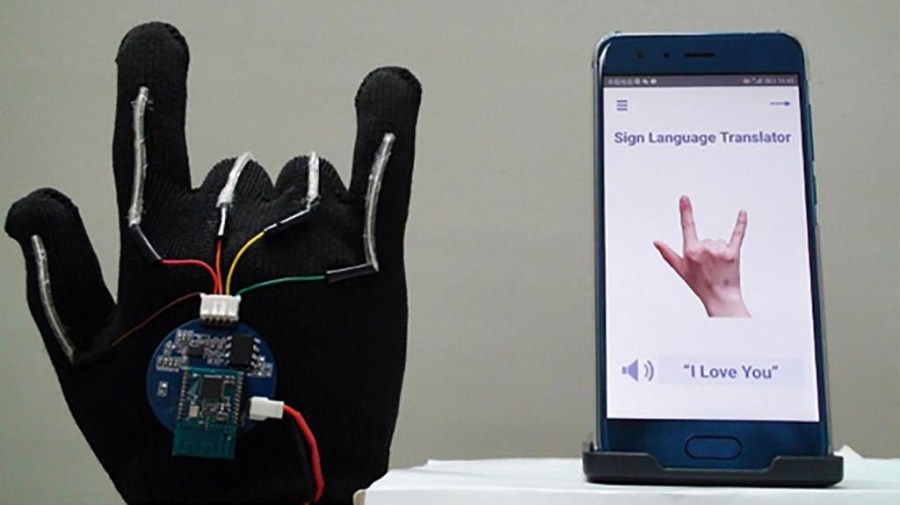
Scientists at UCLA have developed an innovative real-time system – a glove that translates the sign language into written and spoke words on smartphones via an app. It potentially aids deaf people to communicate directly without any intervention of translators.

The inexpensive high tech glove is developed by researchers in UCLA that works in real-time that interpret the 660 American Sign language to spoken words with 98.63 percent of precision.

The high tech glove comprises of stretchable sensors formed of electrically sensing yarn that drives along with the four fingers and thumb, then the signal travels via the miniature circuit board at the back of signal which transmits the signal wirelessly to the smartphone. The app converts these signals into the spoken word at a rate of word per second I.e 60 words per minute. The researcher team at UCLA also set the adhesive sensors so it can catch the face facial expressions which is an important part of American Sign language. Since about one million people use American sign language in the United States. The device doesn’t support the British sign language as per the current scenario.

According to the researchers at UCLA, the team behind the innovation acknowledge that innovation will make communication much easier for deaf people. The purpose of innovation is to aid deaf people. Hopefully one day they one can learn sign language and it becomes very easier for the signers to talk with none signers without taking the heal of external human translators said by the lead researcher Jun Chen an assistant professor of bioengineering at the UCLA Samueli School of Engineering and the principal investigator on the research.

The researcher Jun Chen said that the expense of the parts of glove cost them only $50 and could even cost them at a much reasonable price with a large scale production. He further talked about the concept which is not new. The purpose of the team is to make it more comfortable and less bulky than other designs.

In addition, he talked about that the glove is yet a prototype and it needs to be much faster and able to understand more signs that could possibly help the deaf person in the best possible way.”Our hope is that this opens up an easy way for people who use sign language to communicate directly with non-signers without needing someone else to translate for them,” told lead researcher Jun Chen.

In addition to it he a further said that ” We hope it can help more people learn sign language themselves”.

Surplus of 300 sign languages is used by more than 70 million deaf people across the globe. If we talk about the critics view on the invention. They are not actually impressed with the invention since there are many tools available in the market to help deaf people communicate. As far as the report the deaf post-doctoral researcher Gabrielle Hodge told CNN that it would be better and so much easier if tech focused on user-driven and user-centred design.

The research is published in the journal Nature Electronics on 29 June.

“Site of Unlimited Possibilities-If Humans Could Breathe Under Water?”

Adventures and new experiences have always fascinated humans, thus have been a part of our cultures as soon as we came to live on this planet. The moment from one place to another in search of water, food, climbing mountains and diving deep inside the sea and many more activities have been performed by humans since ages. We have been visiting under the sea quite frequently in search of seafood and new discoveries about aqua life. But we humans can’t breath under water, we can but not for quite a while. Thus we have developed such an artificial system for us to stay under water  and enjoy the peace and silence under it. 

But what could be the scenario if humans could easily breath inside water and require no artificial equipment for the same?  This could surely help us solve many if the problem which surely include:

  1. The availability of land to serve for the upcoming generation as per the rate of population growth.We could shift building of much needed infrastructure in and under water without difficulty to  breathe initially.
  2. It would allow our knowledge about the sea and creatures living in it to increase and wider the area and time to spend underwater. 
  3. It could help us remain fit and obesity would not be an issue in humans.
  4. Also provide the experience of swimming with other creatures like fish and dolphins.
  5.  it would help us make our underground construction possible.
  6.  This would lead us to generate much of the natural resources hidden under the sea and also bring up the possibilities of discoveries if some new elements.
  7.  This would surely help these resources to be safe from the waste we humans throw in it as we would be able to  notice it more closely and no one would like to be surrounded with waste and unhygienic components.
  8.  New adventures of under water sea through  water subway would be possible and we could travel to vast distances which are hidden from us. 

It seems much of a great adventure and easy but on a serious note it is not that easy. If we were able to breathe underwater, still our body is not meant for that. Sea and ocean water could be  much colder and also as we go down and down, this would surely lead us to Hypothermia which is a condition when our body loses much of heat than it can produce, thus slowly our body organs would fail to work and thus could even cause death . Also our eyes are not much adapted to see cleaner under water. If we do buy glasses, it does not provide much if clearity. Also as we go down, the brightness goes on decreasing, which is not a great sign, since our eyes are not so much adaptive to create visible prints of objects under water, thus we wouldn’t be able to see much. We would not be able to talk, for obvious reasons which would definitely have an effect on our vocals thus frequent visits to sea would make them weak. 

It all seems a dream until it turns into reality. Maybe in the future we will be able to develop systems that would enable us to breathe underwater and thus construct much of our needs under them with water not entering the building and harming humans. Maybe we could genetically evolve, which thus brings us the opportunity to behave like reptiles and be able to control our breath for much period of time. Future is full of new possibilities and these possibilities for humans to stay and perform activities under water would definitely be a change maker and would help us to understand our earth closely by looking at its resources hidden deep under the sea, pure and untouched. 

Facial recognition technology and how its affecting us.

Technology, evolving everyday getting smarter and smarter in order to ease our daily lives. One such technology is the facial recognition technology. It is the not only a hot brand on the tech market but also on the television front, it has been showcased in Tv shows and movies for years. Like any other technology it grows sophisticatedly and its usage has also expanded accordingly. These sensors have been upgraded to such a level that they can uniquely identify not just faces or animals but every individual fish that it can scans. That is the level of sophistication the facial recognition technology has achieved, but with its expanse it also brings about numerous privacy and civil liberty issues that need to be addressed. The biggest users of this technology worldwide are the Law enforcement departments. The use of this is so blatant that in an estimate around one in every two American has had their photos searched in this manner. Whenever this issue is raised not just in America but in any of the countries that this is so widely used, the authorities use the “we want to prevent atrocities” line, which would be sufficient if it did not come at the price of personal freedom.

Photo by Andrea Piacquadio on Pexels.com

 Many countries have used this extensively but none other than china, the leading brand for infringing people’s right. They use a project called “Skynet” to monitor nearly every person’s movement, which includes whom you meet, where you go and even track all your movement for the past week. What makes this technology even worse is that even though it is still being used it is still a work in progress, which means its error rate is very high with only a measly 20% success rate. Even though this has such a large failure rate, nations worldwide continue to use it. Just a few years back Sri Lankan authorities mistakenly linked a Brown university student to a terrorist attack. With all of these concerns, a public domain company Clearview.ai has launched its services. To put this into perspective, Clearview.ai has collected data from nearly 3 billion images, which to this date is larger than any other facial recognition database on this planet. The founder Hoan Ton-That has scrapped photos from nearly all publicly available domains, and has become a front runner in the worst possible way. With their below the belt techniques and illegal means of acquiring photos of people, the company has also received cease-and-desist order from Facebook, YouTube and twitter this year. However, they have refused to do so and in fact even going so far as to claim that they have a first amendment right to harvest data, which is completely false. What is of a greater concern is that Hoan has previously developed apps like ViddyHo which tricked its users into sharing their emails and then spammed their contacts. Not only this but since its emergence Clearview.ai has tried to pitch itself to white supremacist candidates to ensure their victory. They have even quietly tried to offer their services to entities in Saudi Arabia and the United Arab Emirates who have had a history of human rights violations. With such a large freehand to companies like Clearview.ai we seem to be headed to some dark times indeed.

What could be done to limit these companies are stringent laws to be placed so that companies are required to acquire permission from the person they are collecting data from. We individually cannot do much for this however with a comprehensive nation-wide policy some measure can be taken to ease the illegal flow of information that companies like Clearview.ai seem to obtain.

What happens next is for all of us to see.

Block chain Technology- Implementations

You must have heard a lot about the emergence of blockchain, isin’t? But here in this article, we will focus on the practical issues for blockchain implementation.

Introduction

In the tech world, blockchain technology is still the leading buzzword. Its ability to work in a distributed environment without getting tampered is the core source behind all the hypes.

As the technology is still in its developing phase, despite various possibilities in almost every sector, it will still take some course of time to get over all the challenges it is facing right now. Let’s explore what the practical blockchain implementation issues are.

As blockchain is revolutionizing rapidly, its scope and career opportunities are beyond imagination. If you are looking to start a profession in blockchain space and want to become a blockchain expert or a blockchain developer, favorable chances are on its way.

Practical Blockchain Implementation Issues

Blockchain technology is an algorithmic immutable ledger that presents a future-ready architecture for organizations to transact and exchange business-related information securely.

Does it mean it has no challenges? Of course not. There are various challenges associated when it comes to implementation. So let’s get started.

Lack of Internal Blockchain Knowledge

The first and foremost challenge while implementing blockchain is that most organizations have insufficient knowledge about technology. Companies do not have Blockchain experts and professionals who clearly understand the core concept of technology.

Thus organizations find it challenging to choose and adopt the best enterprise blockchain platform. Moreover, the companies are not aware of blockchain implementation steps that should guarantee the best outcome.

High Implementation Cost

Although popular enterprise blockchain platforms such as Hyperledger Fabric have made great strides in terms of the transaction speeds( just about twice the rate over VISA platform), most of the existing platforms such as Bitcoin(transacts 3 to 5 transactions per second ) and Ethereum (up to 15 transactions per second ) are inefficient in terms of speed of transactions and the energy consumption. Thus we can infer that the most convenient blockchain platforms come at a vast implementation and energy costs.

Backup and Recovery

Backup and recovery of data for blockchain networks are also one of the significant implementation issues. Although theoretically, creating a new node is easy, but it’s not practical spending several hours for a new node to sync with existing blockchain nodes and transfer configuration metadata. The recovery becomes even more critical when there is a requirement to migrate a node across datacenters.

Data privacy

Data privacy is a crucial bottleneck problem in blockchain as most enterprises do not appreciate the case where anyone can view their sensitive data, which might be delicate to their core business. Those who plan to share confidential business data are worried about confidentiality between several participants and shielding this data from access by other companions.

But, when blockchain nodes are run as a managed cloud service with users only able to access them through the APIs and event subscriptions, data privacy can be maintained to a great extend.

Blockchain Interoperability

Although they are various enterprise blockchain platforms, interoperability is a pertinent issue to which Blockchain developers are looking for mass adoption. The basic idea is to join one particular platform and to utilize the service on another enterprise platform if required without any severe compatibility problems.

Therefore, developers are finding a way through which users of different software can interact and conduct meaningful business.

Performance

In the blockchain network, the performance requirement is never the same. It varies from one scenario to the other. Like for example, the performance metrics include throughput and latency, and outcomes will vary in terms of network size and hardware configurations, and the tradeoffs between higher throughput versus lower latency.

Thus, based on the deep understanding of the business demands and platform architecture, a reasonable performance optimization solution needs to be adopted.

This is not the end of the list. Moreover, a lack of regulatory clarity is one of the significant implementation issues. Many governments are still unsure about how they consider this technology from a legal standpoint, and this leads to complexity.

Conclusion

Enterprise blockchain is gaining popularity and adoption in almost all sectors and for different use cases. Although blockchain might seem to be offering several advantages to the industries, it needs to be re-architected depending on various use cases for greater acceptance of enterprise blockchain in the mainstream.

The buzz around blockchain probably won’t subside, so hurry up and upgrade your skills now with the best online Blockchain certification courses.

To get instant updates about Blockchain Technology and to learn more about online blockchain certifications and become a blockchain expert, check the online opportunities which deals with all levels – beginner, intermediate and professional learning.

DST initiates COVID-19 India National Supermodel for monitoring infection

The Department of Science and Technology (DST) has initiated a COVID -19 Indian National Supermodel to help monitor the future transmission of infection, thus aiding decisions involving health system readiness and other mitigation measures.

While the Government is keeping a close watch on infectivity and mortality, it is imperative to bring in a robust forecasting model for predicting the spread and enhancing disease surveillance. Numerous mathematical models for Covid-19 forecasting and surveillance are being worked out by investigators funded by DST-SERB (Science and Engineering Research Board) and other agencies.

Inspired by India’s history of using mathematical models for disaster management planning of metrological events, DST has initiated this exercise to pool in expertise in the field and create one model for the entire country that will be subjected to rigorous tests required for evidence-based forecasting, routinely practiced in weather forecasting communities.

The model will entirely rely only on the data that is relevant to COVID-19, and also have an adaptive built-in component to learn from the newer trends in the data. It will aggregate successful evidence-based mathematical and statistical forecasting models and include the best predictive analytics for robust forecasting of infectious disease spread. The supermodel could be used by the policymakers in India and around the world to overcome difficulties in predicting the rate of spread of infection and how it would burden the healthcare sector, thereby curbing the epidemic.

As part of this initiative, Jawaharlal Nehru Centre for Advanced Scientific Research (JNCASR) and IISc, Bangalore will co-ordinate to connect and work with all COVID-19 modeling projects and programs in the country. This will help develop a set of benchmarks to assess various models and to finally deliver the COVID-19 India National Supermodel. The Coordination team will consult and work with the research groups active in modeling, various software developers, and reputed companies to ensure delivery of a suitable user interface and software.

A consultative committee will work closely with DST and SERB and coordinators (JNCASR and IISc Bangalore) and modellers of this initiative to provide critical inputs on technical aggregation, guidance, and final delivery of a robust Supermodel.

“Mathematical modeling and simulations for the spread of COVID-19 virus and its impact are not mere academic exercises but are critical needs for rational decision making, planning, and resource management. It is thus of vital importance that a robust National Model which is vetted by a large cross-section of scientific community working in the area is developed,” said Prof Ashutosh Sharma, Secretary, DST.

IASST scientists develop herbal medicine loaded smart bandage for wounds

Scientists from Institute of Advanced Study in Science and Technology (IASST) an autonomous institute of the Department of Science & Technology,Govt. of India have developed a pH-responsive smart bandage that can deliver the medicine applied in the wound at the pH that is suitable for the wound. The scientists have developed the delivery system by fabricating a nanotechnology-based cotton patch that uses cheap and sustainable materials like cotton and jute.

In the research by Dr Devasish Chowdhury, Associate Professor IASST,a nanocomposite hydrogel bound compact cotton patch incorporated with jute carbon dots was fabricated to carry out the drug release. Jute has been used for the first time as a precursor in synthesizing fluorescent carbon dots, and water was used as the dispersion medium. Herbal formulation neem leaf (Azadirachtaindica) extract was taken as the model drug to exemplify the release study.

This study published in the journal ACS Sustainable Chem. Eng. demonstrated the stimuli-responsive drug delivery system using natural products – jute and neem leaf extract. The jute carbon dots were immobilized in the hydrogel matrix-bound cotton patch and could effectively exemplify different drug release pattern at two different pH levels –lower at pH 5 than at higher at pH 7.

The stimuli-responsive nature of the fabricated hybrid cotton patch acts as an advantage as in case of growth of bacterial infections in a wound, and this induces release of drug at lower pH which is favourable under these conditions. This pH-responsive behaviour of the fabricated cotton patch lies in the unique behaviour of the jute carbon dots incorporated in the system because of the different molecular linkages formed during the carbon dot preparation.

DrDevasish Chowdhury’s group had earlier fabricated a compact cotton patch that showed excellent wound healing ability but posed a disadvantage because of uncontrolled release when drug was loaded to it. In the present work, they controlled the drug release of the cotton patch, thereby making it a smart wound dressing material.

Around any wound, pH changes due to bacterial infections. Hence they developed a pH-responsive drug delivery system with the cotton patch. Carbon dots which are zero-dimensional nanomaterials, due to their unique carbon core and surface functional groups can be designed to exhibit different behaviour towards different pH. They are also known for their low toxicity and great biocompatibility. Therefore, different carbon dots were used as a nano-filler in fabricating hybrid cotton patches to check the drug release behaviour.

The development of such a stimuli-responsive behavior of hybrid cotton patch paves the way for utilizing it as smart wound-dressing or bandage material. Use of cheap and sustainable material like cotton and jute to fabricate the patch makes the whole process biocompatible, non-toxic, low cost and sustainable. 

The scheme depicting the fabrication of pH responsive cotton patch

(For more details, Dr Devasish Chowdhury (devasish@iasst.gov.in) can be contacted.)