Pana Sankranti – Beginning of Odia New Year

Pana Sankranti, also known as Maha Vishuba Sankranti, is a festival celebrated in the Indian state of Odisha to mark the beginning of the Odia New Year. The festival falls on the first day of the Hindu month of Baisakh (usually around April 14th). The festival is celebrated with great enthusiasm and zeal across the state. The main highlight of the festival is the preparation and consumption of a traditional drink called ‘Pana’. Pana is made from ingredients like water, milk, curd, sugar, and crushed fruits. It is believed to have cooling properties and is offered to Lord Jagannath in the Jagannath temple in Puri.

On the day of Pana Sankranti, people wake up early in the morning and take a bath before heading to the temple to offer prayers to Lord Jagannath. They then return home and prepare the Pana drink. The drink is then distributed to family members, friends, and neighbors as a sign of goodwill and brotherhood. Another important aspect of the festival is the decoration of houses and streets with colorful Rangolis and Alpanas. Women dress up in traditional sarees and adorn themselves with jewelry. They also participate in community activities like singing and dancing.

In rural areas, the festival is celebrated with the worship of the village deity. The village headman, known as the Sarpanch, leads the villagers in offering prayers to the deity. This is followed by community feasting and cultural programs.

In some parts of Odisha, a unique tradition called ‘Chariot pulling’ is observed on Pana Sankranti. A small wooden chariot is constructed and decorated with flowers and leaves. The chariot is then pulled through the streets by the villagers. It is believed that pulling the chariot brings good luck and prosperity.

The festival of Pana Sankranti is also a time for introspection and reflection. People take stock of their past year and make resolutions for the new year. It is a time to forgive and forget past grievances and start afresh. Pana Sankranti is an important festival for the people of Odisha. It is a time to celebrate the new year, offers prayers to the deities, and come together as a community. The festival is characterized by the consumption of the Pana drink, the decoration of houses and streets, community feasting, and cultural programs. It is a time to renew bonds and start anew.
Ashadi Ekadashi; Its Significance & Celebrations

Ashadi Ekadashi is a significant Hindu festival celebrated every year on the eleventh day of the waxing phase (Shukla Paksha) of the Hindu month of Ashadha. It usually falls in the month of July or August in the Gregorian calendar. This festival is celebrated with great enthusiasm and devotion in Maharashtra, Karnataka, and some parts of Gujarat.

The word ‘Ekadashi’ is derived from the Sanskrit language, which means ‘eleven’. It is believed that Lord Vishnu goes into a deep slumber or ‘Yoga Nidra’ on this day, and wakes up after four months on the day of Prabodhini Ekadashi, which falls in the month of Kartik. Hence, Ashadi Ekadashi is also known as ‘Devashayani Ekadashi’ or ‘Hari Shayani Ekadashi’, which means the day on which Lord Vishnu goes to sleep.


Significance of Ashadi Ekadashi:

Ashadi Ekadashi holds great significance in Hindu mythology. It is believed that by observing a fast and performing puja on this day, one can seek the blessings of Lord Vishnu and be free from all sins and negative energy. It is also believed that by observing this fast, one can attain Moksha or liberation from the cycle of birth and death.

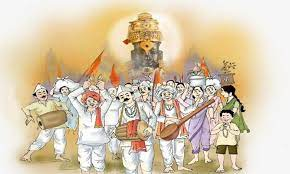
In Maharashtra, Ashadi Ekadashi marks the beginning of the ‘Wari Yatra’, a pilgrimage to the holy town of Pandharpur. The Wari Yatra is a tradition that has been followed for over 700 years, and thousands of devotees undertake this journey every year to seek the blessings of Lord Vithoba, a form of Lord Vishnu. The journey on foot starts from various towns and villages, and the devotees walk for several days to reach Pandharpur, where they offer prayers and seek blessings.

Celebrations:

On the day of Ashadi Ekadashi, devotees wake up early in the morning and take a bath before performing puja to Lord Vishnu. They observe a fast, abstain from food and water, and spend the day in prayer and meditation. The fast is broken the next day after performing puja in the morning. Devotees also visit temples dedicated to Lord Vishnu and offer prayers.

In Maharashtra, the day is celebrated with great fervor and devotion. Processions are taken out with devotees carrying the ‘Palkhis’ (palanquins) of Lord Vithoba and his consort Rukmini. The streets are filled with the sounds of bhajans and kirtans, and devotees offer food and water to the pilgrims on their way to Pandharpur. The Warkaris (devotees of Lord Vithoba) wear traditional attire and carry a flag with the image of Lord Vithoba.

Western Ghats of India

The Western Ghats, also known as the Sahyadri Mountain Range is a UNESCO World Heritage Site and a biodiversity hotspot located along the western coast of India. It spans over 1,600 km and covers six Indian states, including Maharashtra, Karnataka, Tamil Nadu, Kerala, Goa, and Gujarat. The Western Ghats are one of the oldest mountain ranges in the world and have significant ecological, cultural, and economic importance. In this article, we will discuss the significance of the Western Ghats and the conservation efforts undertaken to protect this important ecosystem.

Source – Shutterstock

Significance of the Western Ghats

Ecological Significance:

The Western Ghats are home to a diverse range of flora and fauna, with over 5,000 species of flowering plants, 139 mammal species, 508 bird species, 179 amphibian species, and 290 freshwater fish species. The region is also home to numerous endemic species, which are found nowhere else in the world. The Western Ghats also serve as a catchment area for several major rivers in India, including the Godavari, Krishna, and Cauvery.

Cultural Significance:

The Western Ghats have been inhabited by numerous indigenous communities for thousands of years. These communities have a rich culture and tradition that is closely linked to the natural environment. The Western Ghats are also home to several important pilgrimage sites, including the famous Sabarimala temple in Kerala.

Economic Significance:

The Western Ghats are an important source of timber, fuelwood, and non-timber forest products. The region is also home to several important industries, including agriculture, fisheries, and tourism. The Western Ghats also provide numerous ecosystem services, such as regulating the water cycle, carbon sequestration, and soil conservation.

Conservation Efforts

The Western Ghats face numerous threats, including deforestation, mining, hydroelectric projects, and climate change. To protect this important ecosystem, several conservation efforts have been undertaken by the Indian government, non-governmental organizations, and local communities. Some of the key conservation efforts are:

  1. Protected Areas:
    Several protected areas have been established in the Western Ghats to conserve the region’s biodiversity. These include national parks, wildlife sanctuaries, and biosphere reserves. Some of the notable protected areas in the Western Ghats include the Silent Valley National Park, Periyar National Park, Bhadra Wildlife Sanctuary, and Nilgiri Biosphere Reserve.

  2. Forest Conservation:
    Several initiatives have been undertaken to conserve the forests of the Western Ghats. These include community-based forest management programs, afforestation, and reforestation efforts. The Indian government has also launched several programs, such as the Green India Mission and the National Afforestation Program, to increase forest cover in the region.

  3. Biodiversity Conservation:
    Several initiatives have been undertaken to conserve the biodiversity of the Western Ghats. These include species conservation programs, habitat restoration, and research and monitoring programs. The Indian government has also launched several initiatives, such as the National Biodiversity Act and the National Wildlife Action Plan, to conserve the biodiversity of the Western Ghats.

  4. Community-based Conservation:
    Several community-based conservation programs have been launched in the Western Ghats. These programs involve local communities in the conservation of natural resources and provide them with livelihood opportunities. Some of the notable community-based conservation programs in the Western Ghats include the Malnad Mela, the Bhadra Nethravathi River Valley Community Conserved Area, and the Kerala Conservation Alliance.

WHAT MAKES 18 JULY A SIGNIFICANT DAY ?

18th July marks the birth of an iconic figure who vanquished South Africa’s apartheid system. The great personality who fought for human rights and was an international peacemaker. This person who played a very vital role in shaping the society and conserving the human rights was Nelson Rolihlahla Mandela.

 “It is easy to break down and destroy.
The heroes are those who make peace and build.” 

 – Nelson Mandela

ABOUT NELSON MANDELA

Nelson Rolihlahla Mandela (18 July 1918 – 5 December 2013) was a South African anti-apartheid revolutionary, who served as President of South Africa from 1994 to 1999. The main focus of his government was on knocking down the apartheid regime by fostering racial reconciliation and tackling institutionalized racism. Nelson Mandela is an iconic figure who was an human rights lawyer, a prisoner of conscience and an international peacemaker. He is that great personality who vanquished South Africa’s apartheid system and was the first democratically elected president of free South Africa. Nelson Mandela was born Nelson Rolihlahla Mandela in Transkei, South Africa on 18 July, 1918. His strategy was to bring change through Legal Revolution but not through actual violence. He began his journey towards by following the path of non-violence, later embracing violence, and then adopting a non-violent approach for negotiation and reconciliation.

ABOUT NELSON MANDELA INTERNATIONAL DAY

Nelson Mandela International Day (or Mandela Day) is celebrated in honor of Nelson Mandela, the former South African President, on his birthday, that is on 18 July. This day was declared officially by the United Nations in November 2009 and the first Mandela Day was thus held on 18 July 2010. There are many other groups who celebrated this day before 2010 also, that is from 18 July 2009.

The UN General Assembly (UNGA) declared 18th July as “Nelson Mandela International Day” for paying tribute and for recognizing his contributions for achieving and promoting peace and freedom. Mandela Day reminds us that “Each individual has the potential and power to bring a positive change, transform and ability to make an impact.”

MESSAGE OF MANDELA DAY CAMPAIGN

Nelson Mandela fought for peace and harmony. He fought for bringing social justice for over 67 years. This day urges the people of Mother Earth to fight poverty and promote peace, reconciliation and cultural diversity.

While establishing this international day, UNGA recognized the values and dedication of Nelson Mandela for serving the humanity. He constantly fought for democracy and for promoting cultural peace throughout the world. Some other values for which he fought are:

  1. Conflict Resolution
  2. Race Relations
  3. Promotion and Protection of Human Rights
  4. Reconciliation
  5. Gender Equality
  6. Rights of Children and other vulnerable groups
  7. Fight against Poverty
  8. Promotion of Social Justice

The contribution of Nelson Mandela to the society can never be measured and his works remind us that “Everyone has the ability and the responsibility to change the world for the better!” Mandela Day is one such occasion which urges all to take action and inspire change.

WHY DO WE CELEBRATE NELSON MANDELA DAY ?

Nelson Mandela International Day is celebrated every year to remember the legacy of a man who shaped the present with his fight for 67 years and provided a better world and society for the future generation. Nelson Mandela changed the 20th century and helped shape the 21st century and future of the world. This day exhorts us to renew the values and principles of Nelson Mandela and to take actions for building a better society.

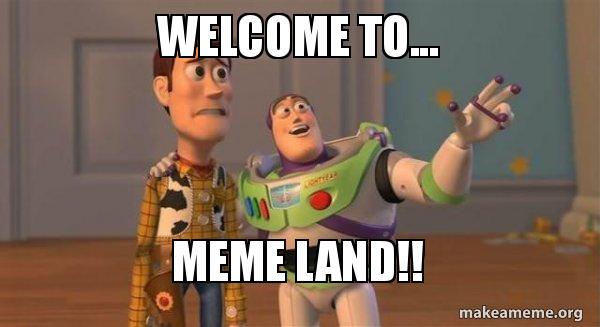
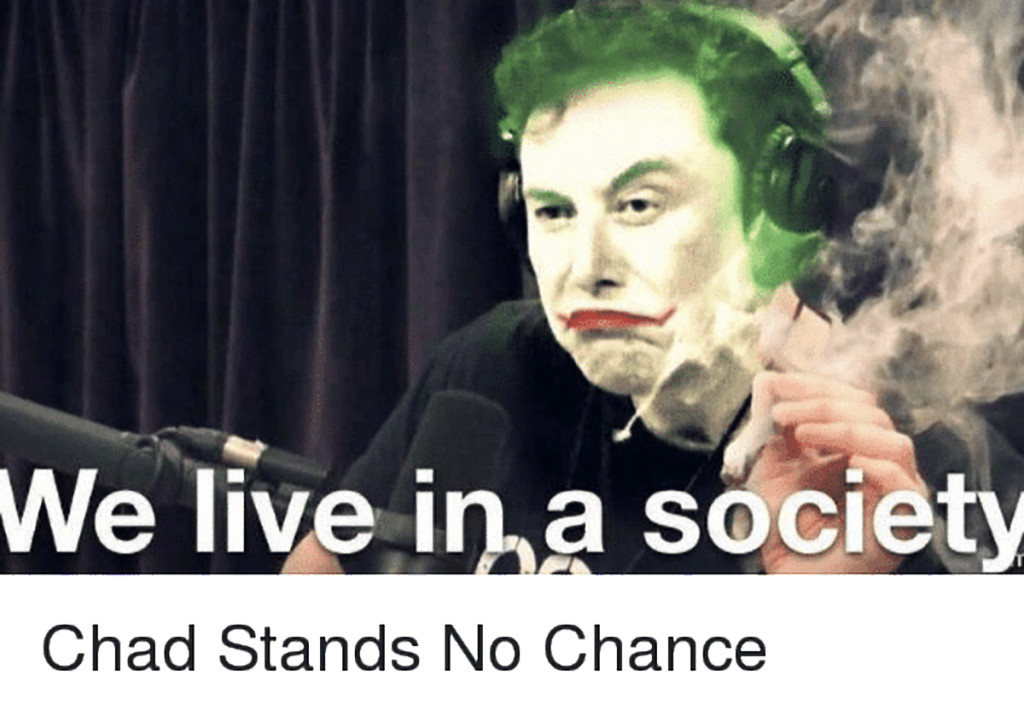
Yes, our connection with “Memes” is significant.

“If you got exceptional humor be my friend”

In a wide variety of contexts, we employ memes nowadays.
They help us connect and feel we are part of, can be the beginning of a conversation, and even assist you to manage a problem or make an observation.
Memes also allow us to relax while we surf and dwell in distressing news. They are free entertainment, a choice always even if you don’t have time to spend more time. It’s even easier to have them penetrate a large variety of specialist circles, being so great mixing cultures and touches of humor, to generate viral content.

The introduction of Meme Studies, an actual academic course on memes, at Northwestern University in the US state of Illinois in 2011 has long been cited as a barometer of the internet’s impact on society, from language to culture to beliefs.

Memes have a variety of goals and functions, but at their most basic level, they serve as a means of expressing people’s thoughts and feelings. Memes are created by appropriating sequences of words from television shows and films, which are then taken out of context, remixed with other content, and given new meanings in a humorous and relevant way. Meme content might range from whining about the difficulties of being a college student to expressing shame experienced during a daily encounter – something that everyone can relate to.

Memes, on the other hand, can have an impact on how we connect with others. Some aspects of meme culture have caused ripples in our social fields outside of the internet. After all, every meme has a creator who created it intending to spread a viral message, whether for enjoyment or to persuade others.

What exactly are memes? And how does it matter to our society?

Memes are statements that are clear, brief, and explicit, and this cultural paradigm reflects current society’s mentality – one that loves entertainment, celebrates materialism, and reinforces people’s need to stay relevant.
Memes can be used as propaganda tactics because of their accessibility and capacity to reach a large audience in minutes (and become part of the online vernacular in days), which means they can readily instill and cement opinions that fast become popular among cybernauts (a habitual user of the internet).

The working of memes that make them interestingly catchy to the readers allows them to further cultivate their humor and let them become a new mark or a strong speaker of the society. As we know memes are not only for entertainment but also imprint a deep message for society.

Memes allow people to communicate with one another. Knowing the correct memes can assist you in joining a group. They give a sensation of belonging to a group.
Memes are an excellent approach to get influence online because they are based on social media today. People can gain more followers by creating and reblogging popular memes, and these social ties can be used in both positive and negative ways.

Memes don’t merely bridge languages; their relatability fosters a sense of community among specific internet users of a certain age range. Memes are a simple and amusing way for youngsters to communicate with their pals, whether they’re used to express their opinions about certain socio-political concerns or to reinforce their fascination with famous people. Indeed, the process of spreading memes, sharing them on social media platforms, and tagging their friends within specific meme pages has improved global communication and made a significant contribution to globalization’s success.

But memes, just like many other parts of online culture, are easily misrepresented by those who aren’t familiar with them. Some people believe they are unimportant. Others believe memes are destructive and damaging to our communication, others in some sectors believe that memes, which have become the vernacular language of many a teen, have had a detrimental influence.

They suggest that memes obstruct communication in more ways than just reducing things to one-liners and visuals. They can be utilized to exacerbate hostile and discriminatory sentiments against various races, genders, religions, and sexualities, therefore expanding rather than closing the gap between people.

Memes, on the other hand, are a medium of communication that may be utilized for a variety of objectives. They can help to bring about constructive societal changes, but they can also be exploited to cause harm to others. It’s critical to establish a realistic understanding of memes’ potency as a communication medium, both today and in the future.