How to manage separation anxiety in children.

As a parent, it’s sometimes hard to be away from your kids. But it’s an indescribable, heartwarming feeling when you return – their smiles, the running to you with open arms, their tiny arms squeezing your neck. Whether you’ve been gone ten minutes or two days, that moment, this sweet reward, is everything.But what if reunions aren’t possible because the goodbyes are too much for your child to bear? If goodbyes are full of tears and fits, your little one might have separation anxiety.

Separation anxiety is a normal part of development that occurs when toddlers begin to grow more aware and develop stronger relationships with their caregivers. This awareness can make them more apprehensive and possibly feel unsafe without their parent or caregiver.Whether it’s dropping your child off at day-care or leaving your child at home as you head out to work, farewells can be difficult. Your child may understand that mommy and daddy didn’t vanish, but they might not know for how long. All they know is that they feel safest when you’re around.

When does it begin?

Separation anxiety typically develops before age 1 and peters out around age 3, but it can be experienced by older children and young adults as well—particularly during major life changes like transitioning to high school or leaving for college. Certain life stressors can trigger feelings of anxiety about being separated, such as divorce, loss of a pet, new caregiver, a new sibling, a new school or moving to a new place.

Separation anxiety can be normal and temporary. Although it can be difficult for your child, and for you as their parent, remember this indicates a strong attachment between you and your child.However, if you notice your child’s anxiety starts affecting their daily life and academics, talk to their doctor. Things like stomach aches, vomiting, headaches, constant worry about losing you or a loved one to a disease or illness or a reluctance to sleep away from you may be a sign of a more serious emotional problem called separation anxiety disorder (SAD. The main difference between the two is that with SAD their fears keep them from normal activities. Adult separation anxiety can have an onset in childhood or adulthood. Similar to other anxiety disorders, adult separation anxiety can affect your quality of life, but the condition can be managed with treatment. Talk to a medical professional if you suspect you or someone you love is living with this disorder.

Common causes of separation anxiety disorder

Separation anxiety disorder occurs because a child feels unsafe in some way. Take a look at anything that may have thrown your child’s world off balance, made them feel threatened, or upset their normal routine. If you can pinpoint the root cause—or causes—you’ll be one step closer to helping your child through their struggles.Common causes of separation anxiety disorder in children include:

  • Change in environment. Changes in surroundings, such as a new house, school, or day care situation, can trigger separation anxiety disorder.
  • Stress. Stressful situations like switching schools, divorce, or the loss of a loved one—including a pet—can trigger separation anxiety problems.
  • Insecure attachment. The attachment bond is the emotional connection formed between an infant and their primary caretaker. While a secure attachment bond ensures that your child will feel secure, understood and calm enough for optimal development, an insecure attachment bond can contribute to childhood problems such as separation anxiety.

Tips to reduce separation anxiety

Separation anxiety may come and go, but there’s plenty you can do to help ease your child’s symptoms. These tips can help them through this difficult period.

  • Talk to your child in a calm, positive tone. Let your child know what will happen while you are gone, who they will be with and all the fun things they get to do. Even if you feel your child is too young to understand, your positive tone and attitude will send a reassuring message. It may even be helpful to find and read picture books that talk about separation and that goodbyes aren’t forever.
  • Practice separating. Practice leaving your child at home with a caregiver for a short period of time. As time goes on, you can extend the time you are away before returning home.
  • Ease the separation. Leave your child with their favorite stuffed animal or toy.
  • Prepare an activity. Engage your child in a fun activity when the caregiver arrives or ask the daycare teacher to have an activity ready as soon as you drop your child off.
  • Make your goodbye short. Whenever you leave your child or drop them off, keep the goodbye brief. If you act anxious or keep returning for just one more hug or kiss, you may unnecessarily worry your child
  • Follow through on your promise. It’s important that you return when you promised to return as this helps your child build confidence and trust.
  • Aim for consistency. Kids like consistency, so try to schedule the same caregiver whenever possible, so your child feels more comfortable when you leave. Develop a brief, consistent routine for when you leave to create a familiar transition from being with you to being without you.
  • Attention: When separating, give your child full attention, be loving, and provide affection. Then say good-bye quickly despite their antics or cries for you to stay.

Additional tips for older children

Although separation anxiety tends to lower during adolescence, teens can experience it too. it is necessary to make sure an older child still feels safe and emotionally well to start being independent or it can resurface in untimely situations. . Here are some additional tips to help your adolescent child:

  • Acknowledge their fears. Let them know you’re there for them and that uneasy feelings are natural parts of adolescence.
  • Praise them for doing something they are anxious about.
  • Gently encourage, don’t force, them to do things that make them anxious.
  • Wait until your child is anxious before stepping in to help.
  • Remind your child of times when they were initially afraid but still managed to do something.

What a filibuster is.

Traditionally, the Senate filibuster was reserved for only the most controversial issues, but its use has escalated in recent years, often slowing business in the chamber to a halt. Some lawmakers acknowledge that the filibuster, which has effectively set a 60-vote super­majority requirement for passing legis­la­tion in the Senate, could doom many of the propos­als they have cham­pioned, including meaningful reforms on issues ranging from health care to climate change to gun control. Behind this dysfunc­tion, the filibuster also has a troubling legacy: it has often been used to block civil rights legislation intended to combat racial discrimination.

As advocates push for pro-democracy legislation, calls for eliminating the filibuster have grown louder. In his remarks at the funeral of civil rights hero and congressman John Lewis in July 2020, former President Barack Obama called the filibuster a “Jim Crow relic,” arguing that the procedure should be eliminated if it is used to block voting reforms. Others note that certain types of legislation are already exempt from the fili­buster’s super­majority require­ment and argue that a similar exemp­tion should be made for voting rights.The stakes were raised in March 2021, when the For the People Act — a comprehensive democracy reform bill — was passed by the House of Representatives and introduced in the Senate, where the filibuster may determine its fate. Whether through elimination or reform, the filibuster cannot be allowed to impede the expansion of Ameican democracy or the rights of all eligible voters.

What is the filibuster?

The filibuster is a 19th-century procedural rule in the Senate that allows any one senator to block or delay action on a bill or other matter by extending debate. While a final vote in the Senate requires a simple majority of 51 votes, a supermajority, or 60 votes, is needed to start or end debate on legislation so it can proceed to a final vote. Therefore, even if a party has a slim majority in the Senate, it still needs a supermajority to even move forward with legislation a tall task for a hyper-partisan Washington. The House of Representatives does not use the filibuster. Instead, a simple majority can end debate.

How can the filibuster rule be changed?

Senators have carved out exceptions to the filibuster rule before.One option to do so is called “going nuclear” — when senators override an existing rule, such as the number of votes needed to end debate. This is usually done by lowering the threshold needed to end a filibuster to 50 votes.In 2017, then-Senate Majority Leader Mitch McConnell, R-Ky., eliminated the filibuster for Supreme Court nominees, clearing the way for then-President Donald Trump’s first nominee to be confirmed.

Why a call for change now?

In the last 50 years, the filibuster has been used more and more to kill major legislation. And with Biden’s agenda stalled, Democrats are calling for a carve out to pass voting rights legislation. In the last year, at least 19 states passed 34 laws restricting access to voting, according to the Brennan Center for Justice. If the threshold to end debate on a bill is lowered to 50 votes, for instance, Democrats could end debate on their voting reform bill and eventually move to a final vote, with Vice President Kamala Harris serving as a tie-breaking vote in the 50-50 Senate to pass the legislation. Incidentally, Harris, as president of the Senate, would play a key role in any potential rules change. She would be expected to occupy the chair and preside over any rule change action.

What’s the differ­ence between “talking” and “silent” fili­busters?

Filibusters traditionally involved long speeches in which a senator attempted to block a vote from proceeding by refusing to yield the floor. To stage such a “talking” fili­buster, a senator would hold the floor by stand­ing and talking for as long as they could, sometimes overnight. This was popularized in the 1939 film Mr. Smith Goes to Wash­ing­ton. The longest filibuster ever recor­ded, by South Caro­lina Sen. Strom Thur­mond in opposition to the Civil Rights Act of 1957, lasted for more than 24 hours. But since the early 1970s, senators have been able to use a “silent” filibuster. Anytime a group of 41 or more senators simply threatens a filibuster, the Senate majority leader can refuse to call a vote.

How has the fili­buster changed over time?

The use of the filibuster, once reserved for only the most controversial issues, has increased dramat­ic­ally in recent years along­side grow­ing polar­iz­a­tion in Wash­ing­ton. There have been more than 2,000 fili­busters since 1917; about half have been in just the last 12 years. Crit­ics argue that this increased use has slowed busi­ness in the Senate to a halt, often entangling the cham­ber in proced­ural maneuv­er­ing instead of substant­ive debate and, ulti­mately, lawmak­ing.

9 World war movies that are a must watch

For decades, filmmakers have tackled the sensitive and emotionally-driven theme of World War II in an array of noteworthy and poignant pictures. These moving and oftentimes brutal depictions of the horrors, shocking realities, and devastating impacts of the violent war seem to deeply touch audiences across the world. Production studios continuously harness tales of this frightening and monumental period of history with gripping and heartbreaking stories, and moviegoers can’t help but be drawn to them. The most shocking stories are showed in light, reminding us that world wars were truly the most horrifying times, a person could live through.  Some of Hollywood’s most talented and esteemed visionaries have ventured into the touching and difficult subject, crafting memorable and thought-provoking results, and frequently winning Best Picture Oscars as a result. Here is a list of brilliantly made war movies you mustn’t miss out on

The Pianist

The Pianist is based on the Holocaust memoir of Polish-Jewish pianist and composer Władysław Szpilman, depicting his struggles to survive the destruction of the Warsaw ghetto of World War II. The emotionally-moving picture has a deep connection with Polanski, as he escaped from the Kraków Ghetto after the death of his mother and ended up living in a Polish farmer’s barn until the war’s end.

Hacksaw Ridge

Hacksaw Ridge focuses on the World War II experiences of pacifist combat medic Desmond Doss who, as a Seventh-day Adventist Christian refused to use or carry a weapon or firearm of any kind. The film was based on the 2004 documentary The Conscientious Objector, and after initially turning down the project twice, Gibson finally agreed and was tasked with creating a concoction of violence and faith. Andrew Garfield powerfully portrays Doss, and the biopic features the additional talents of stars like Sam Worthington, Teresa Palmer and Vince Vaughn. Upon reading the screenplay for the first time, Garfield revealed he was moved to tears. The Oscar-nominated drama garnered universal acclaim upon its release, earning praise for both Gibson’s directing and Garfield’s moving performance.

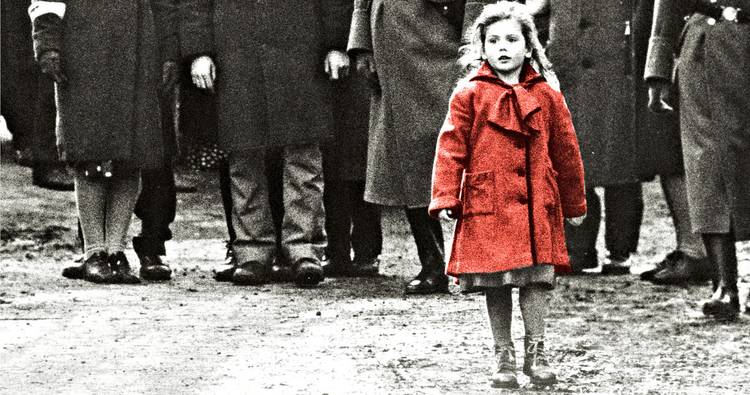
Schindler’s List

Spielberg’s deeply personal masterpiece is perhaps the most moving war film ever made. All the more so with the knowledge that it was based on the true story of Oskar Schindler, who originally set out to make his fortune by exploiting cheap Jewish labour in Krakow.However, as Schindler witnesses the unfolding horror of the Holocaust, his motivation changes and he bribes Nazi leaders to keep his employees out of the extermination camps, saving more than 1,100 lives. The winner of seven Oscars, Schindler’s List does full justice to Thomas Keneally’s source novel and remains just as powerful and relevant today.. Liam Neeson delivers the performance of a lifetime as Schindler, and appears alongside the gifted Ralph Fiennes and Ben Kingsley.

Dunkirk

Dunkirk, which depicts the Dunkirk evacuation of World War II through the perspectives of the land, sea, and air. The outstanding ensemble cast features some of cinema’s finest performers like Kenneth Branagh, Cillian Murphy, and Tom Hardy, and the drama was portrayed with very little dialogue, as Nolan wanted to create suspense with the stunning cinematography and music. The filmmaker conceived the premise of the war flick in the mid-1990s, when he and his wife sailed across the English Channel, following the path of many small boats in the Dunkirk evacuation.

Saving Private Ryan,

 Saving Private Ryan, which is set during the Invasion of Normandy and follows a group of U.S. soldiers who go behind enemy lines to retrieve a paratrooper whose brothers have been killed in action. The gripping film stars a myriad of distinguished leads including Tom Hanks, Edward Burns and Matt Damon and was partially inspired by the Niland brothers, four American brothers from New York who served in WWII, with only two surviving. On why he repeatedly returns to the subject, Spielberg revealed, “I think that World War II is the most significant event of the last 100 years; the fate of the Baby Boomers and even Generation X was linked to the outcome. Beyond that, I’ve just always been interested in World War II.” The Oscar-winning Saving Private Ryan is frequently cited as influential in the war and action film genre, and is credited with renewing World War II interest in the media.

Casablanca

Classic Hollywood movie is considered one of the finest films ever created. The 1942 romantic drama Casablanca famously features Hollywood icons Humphrey Bogart and Ingrid Bergman, centring on a cynical American expatriate who must decide whether he wants to help his former lover and her fugitive boyfriend escape the Nazis in French Morocco. The iconic picture was based on an original play by writer Murray Burnett, who drew inspiration after traveling to Vienna in 1938.Since Casablanca’s premiere, its popularity has only continued to grow, with Burnett once calling it, “true yesterday, true today, true tomorrow.”

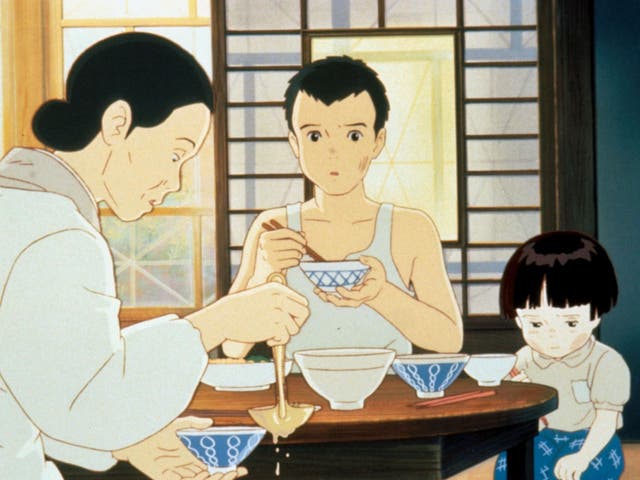
Grave of the Fireflies

Heartbreaking and thought-provoking anime from Studio Ghibli about brother and sister Japanese orphans desperately trying to survive in the dying days of the war. A haunting anti-war statement almost without peer, adapted from the story by Akiyuki Nosaka and based on his own experiences in the firebombed city of Kobe.

Inglourious Basterds,

Inglourious Basterds, telling an alternate history story of two plots to assassinate Nazi Germany’s leadership: one planned by a group of Jewish U.S. soldiers and the other by a French Jewish theater owner. Tarantino spent over a decade creating the script, and viewed the project as his masterpiece-in-the making and his best work thus far. He described the men of the picture as “not your normal hero types that are thrown into a big deal in the Second World War.” The famed director wanted the character of Hans Landa portrayed by a native German-speaking actor and cast Austrian Christoph. Tarantino was worried the part was unplayable, but Waltz delivered an Oscar-winning knockout performance as the ruthless SS officer

Letters From Iwo Jima

A companion piece to Eastwood’s Flags of Our Fathers, which told the story of the battle for Iwo Jima from the American perspective, this is the better of the two films, told from the viewpoint of the Japanese. The film marks the culmination of Eastwood’s growth as an artist, as he eloquently and movingly humanises the Japanese soldiers fighting against near impossible odds.Letters from Iwo Jima is stunning, depicting a group of soldiers even more bound by tradition and honour than their American counterparts, trapped in an unwinnable war and dreaming only of home.

The lights that don’t lie- The case of the radium girls

With war declared, hundreds of working-class women flocked to the studio where they were employed to paint watches and military dials with the new element radium, which had been discovered by Marie Curie a little less than 20 years before. Dial painting was “the elite job for the poor working girls”; it paid more than three times the average factory job, and those lucky enough to land a position ranked in the top 5% of female workers nationally, giving the women financial freedom in a time of burgeoning female empowerment. Radium’s luminosity was part of its allure, and the dial painters soon became known as the “ghost girls” — because by the time they finished their shifts, they themselves would glow in the dark. They made the most of the perk, wearing their good dresses to the plant so they’d shine in the dance halls at night, and even painting radium onto their teeth for a smile that would knock their suitors dead.

What’s more, the painters ingested the radioactive substance as part of their job. Because some of the watch dials on which they worked were extremely small, they were instructed to use their lips to bring their paint brushes to a fine point. When they asked about radium’s safety, they were assured by their managers that they had nothing to worry about.Of course, that wasn’t true. Radium can be extremely dangerous, especially with repeated exposure. Marie Curie suffered radiation burns while handling it, and she eventually died from radiation exposure.

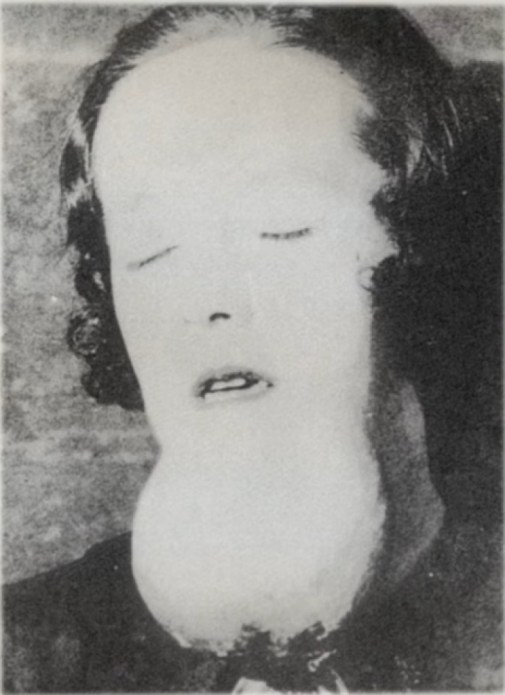
It wasn’t long before the “Radium Girls” began to experience the physical ravages of their exposure. Among the first was Amelia (“Mollie”) Maggia, who painted watches for the Radium Luminous Materials Corp. Maggia’s first symptom was a toothache, which required the removal of the tooth. Soon the tooth next to it also had to be extracted. Painful ulcers, bleeding and full of pus, developed where the teeth had been. Maggia died on September 12, 1922, of a massive hemorrhage. Doctors were puzzled as to the cause of her condition. In growing numbers, other Radium Girls became deathly ill, experiencing many of the same agonizing symptoms as Maggia. For two years their employer vociferously denied any connection between the girls’ deaths and their work. Facing a downturn in business because of the growing controversy, the company finally commissioned an independent study of the matter, which concluded that the painters had died from the effects of radium exposure.

In 1925 a pathologist named Harrison Martland developed a test that proved conclusively that radium had poisoned the watch painters by destroying their bodies from the inside. The radium industry tried to discredit Martland’s findings, but the Radium Girls themselves fought back. Many knew that their days were numbered, but they wanted to do something to help their colleagues still working with the deadly substance. Ingested radium had subsequently settled in the women’s bodies and was now emitting constant, destructive radiation that “honeycombed” their bones. It was literally boring holes inside them while they were alive. It attacked the women all over their bodies.

In 1927, a smart young lawyer named Raymond Berry accepted their case, and Grace (along with four colleagues) found herself at the canter of an internationally famous courtroom drama. The women had been given just four months to live, and the company seemed intent on dragging out the legal proceedings. The New Jersey radium girls’ case was front-page news, and it sent shockwaves across America.

It was the mid-1930s: America was in the grip of the Great Depression. Catherine and her friends , victims of this heinous poisoning, were shunned by their community for suing one of the few firms left standing. Though close to death when her case went to court in 1938, Catherine ignored her doctors’ advice and instead gave evidence from her deathbed. In doing so, and with the help of her lawyer, Leonard Grossman, she finally won justice not only for herself, but for workers everywhere.

The radium girls’ case was one of the first in which an employer was made responsible for the health of the company’s employees. It led to life-saving regulations and, ultimately, to the establishment of the Occupational Safety and Health Administration, which now operates nationally in the United States to protect workers. . The women also left a legacy to science that has been termed “invaluable.”

The women’s suffrage movement

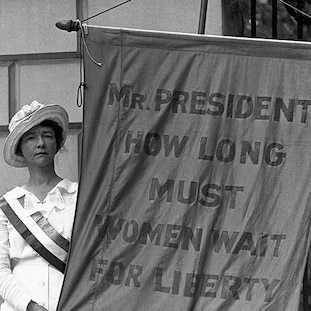
The Nineteenth Amendment to the US Constitution was ratified on August 18, 1920. It declares that “The right of citizens of the United States to vote shall not be denied or abridged by the United States or by any State on account of sex. Congress shall have power to enforce this article by appropriate legislation. “The amendment, which granted women the right to vote, represented the pinnacle of the women’s suffrage movement, which was led by the National American Woman Suffrage Association (NAWSA).In their decades-long struggle for female enfranchisement, women’s rights advocates met with strong opposition from anti-suffrage activists.

The women’s suffrage movement has its origins in the Seneca Falls Convention of 1848, the first women’s rights convention ever held in the United States. Approximately three hundred activists, female and male, gathered to discuss the condition of women and to devise strategies for achieving social and political rights for women. Though women’s suffrage was a topic of debate at the convention, it was not the main goal of the movement at this early stage, and the convention’s resolution demanding women’s suffrage was the only resolution that was not passed unanimously.

The first women’s suffrage organizations were created in 1869. Susan B. Anthony and Elizabeth Cady Stanton founded the National Woman Suffrage Association (NWSA), while Lucy Stone, Julia Ward Howe, and Henry Blackwell founded the American Woman Suffrage Association (AWSA). These two rival groups were divided over the Fifteenth Amendment, which guaranteed African American men the right to vote. The AWSA supported the Fifteenth Amendment, while the NWSA opposed it because it did not include suffrage for women. In 1890, the two competing organizations were merged into the National American Woman Suffrage Association (NAWSA).

During the 1870s, suffragists (women’s suffrage activists) began attempting to vote at polling places and filing lawsuits when their attempts were rejected. This drew attention to the women’s rights movement, particularly after Susan B. Anthony was arrested and put on trial for voting in the 1872 presidential election. Suffragists hoped that the lawsuits would work their way up to the Supreme Court, and that the justices would declare that women had a constitutional right to vote. In 1875, the Supreme Court, rejected women’s suffrage, ruling that the US Constitution did not confer the right of suffrage to anyone.

After the Supreme Court ruling, leaders of the women’s rights movement adopted other strategies for securing universal suffrage. Activists began organizing a drive to pass a constitutional amendment guaranteeing women the right to vote. The National American Woman Suffrage Association launched a campaign to achieve victories at the state level, in the hopes that if enough states allowed women the right to vote, federal legislation would follow. These efforts were so successful that by the time of the ratification of the Nineteenth Amendment, over half of all states had already granted limited voting rights to women.

The Nineteenth Amendment

In January, 1878, Republican Senator Aaron A. Sargent of California formally introduced in the Senate a constitutional amendment to guarantee women the vote. The bill languished in committee until 1887, when it finally went up to a vote, and was defeated. Not until 1914 was another constitutional amendment for women’s rights considered, and again rejected, by the Senate.

Though the movement for women’s suffrage was well-organized and gaining momentum by the early twentieth century, it met with strong opposition from some sectors of US society. Brewers and distillers were opposed to female enfranchisement because they assumed that women would vote for the prohibition of alcoholic beverages, while businesses that employed children feared that women would vote to eliminate child labour. Anti-suffrage organizations sprang up all over the country to oppose the drive for female enfranchisement. Anti-suffrage activists were not just men; indeed, many upper class women joined the movement, arguing that politics was a dirty business that would sully the moral and spiritual authority of women

The National American Woman Suffrage Association in 1900, launched an effort to link the drive for female suffrage to the US war effort in the First World War. Though many of her fellow suffragists were anti-war pacifists, Catt made the controversial decision to support the war and to thereby portray the women’s suffrage movement as patriotic. The effort was a success; in his 1918 State of the Union address, President Woodrow Wilson declared his support for female enfranchisement.

On August 18, 1920, Congress ratified the Nineteenth Amendment, which guaranteed the right to vote to all US citizens regardless of sex. The Nineteenth Amendment represented a major victory and a turning point in the women’s rights movement.

Microfinance as a tool for financial inclusion

Traditional microfinance and borrower welfare - IGC Growth Brief

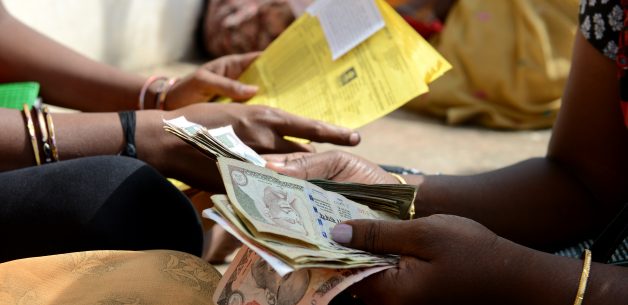
Indian economy is one of the developing economies in the world and is expected to reach new heights in the coming decades. But a sizeable population of this economy particularly the poor, underprivileged, disadvantaged and vulnerable group of people does not have access to most basic financial services. Formal lending agencies often left the poor unbanked on account of high levels of transaction cost incurred in lending to the poor. Their access to formal banking channels was constrained to their resource base as well as the nature of formal credit institutions. The demand for collateral security that a micro- borrower did not possess, the credit worthiness of the poor, high transaction cost due to difficulties in screening, and unattractive business proposition due to tiny savings and loans, were the deterrents faced by the formal lending institutions in loaning to the poor. Consequently, the poor continued to be dependent on informal sector lending, paying exorbitant rates of interest or underselling the product and their labor power to the creditor. Formal financial system was less accommodative to women.

The realization that this sort of unequitable development could not lead to the well -being of the society raised the need for financial inclusion. Financial inclusion is delivery of financial services like bank accounts, savings product, remittances and payment services, insurance, financial advisory services and micro credit to weaker sections in rural and urban areas at an affordable cost. It also involves actions to provide access to formal financial system like nationalized banks. Government of India and Reserve bank of India have taken series of measures and have experimented various alternatives to take financial services to the masses, but the task is stupendous, hence the pace of work should be accelerated and sustained. Since the formal banking system was limited to collateral based lending, there arose a need for developing a new system for financing the marginalized sections.

Microfinance by providing small loans and facilities to those who have been excluded from commercial financial services, has wider scope in the area of financial inclusion. The basic idea of microfinance is that poor people are ready and willing to pull themselves out of poverty if given access to economic inputs. The need for informality in credit delivery and easy access is denoted by the fast growth of microfinance providers in reaching out to small borrowers. The major microfinance providers in India are SHG-Bank linkage model, Non- Banking Financial Institutions and some trusts. Among these initiatives Self Help Groups have emerged out as an efficient alternative as they are uniquely positioned among the beneficiaries. Many of them operate over a limited geographical area, have a greater understanding among the rural poor, enjoy greater acceptability among the people and have flexibility in operations providing a level of comfort to their clientele. This fills the existing gap between formal financial networks and unfinanced poor weaker sections which is the intention of financial inclusion.

The SHG-bank linkage program gained extensive acceptance amongst NGO community and bankers. Establishing one million SHGs, the NABARD envisioned covering one third of the rural population in India. By the year 2002–03, promulgations were made for linking 200,000 SHGs. Visually perceiving SHG-bank linkage program emerging as a major way of banking with the poor in the ensuing years, the task force on microfinance estimated that at least 25,000 bank branches, 4000 NGOs, and 2000 federations of SHGs involving 0.10 million personnel of these institutions would scale up microfinance to a great magnitude.

For example, in Kerala, Kudumbashree Mission has emerged as one of the renowned Self-help group initiatives on a worldwide basis. Even though it was incorporated with the mission of women empowerment, it has grown out as source for economic empowerment for the marginalized sections of the society. It has outnumbered several other financial institutions in the case of provision of microfinance and has emerged out as a reliable tool for financial inclusion.

Narmada  Bachao Andolan

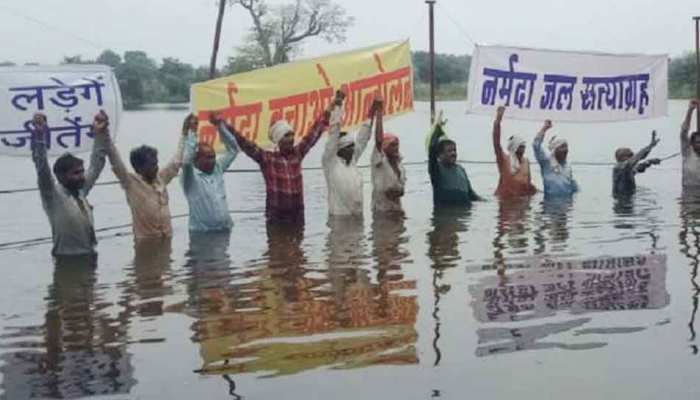
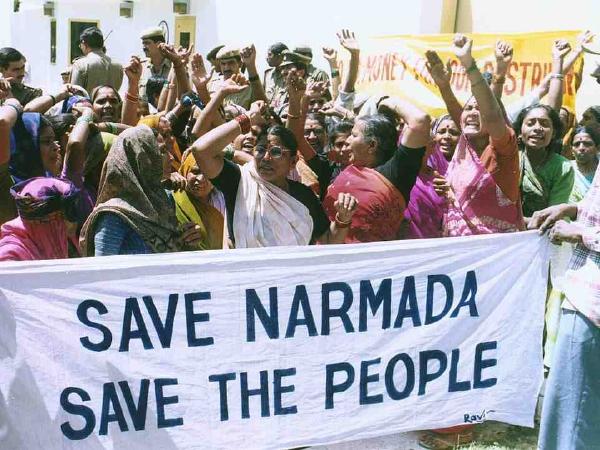
In 1985, Narmada  bachao andolan became an Indian social ,and environmental movement. Narmada Bachao Andolan is the most powerful mass movement, started in 1985, against the construction of huge dam on the Narmada river. Narmada is the India’s largest west flowing river, which supports a large variety of people with distinguished culture and tradition ranging from the indigenous (tribal) people inhabited in the jungles here to the large number of rural population. The proposed Sardar Sarovar Dam and Narmada Sagar will displace more than 250,000 people. Narmada bachao andolan was led by native tribals, farmers environmentalists and Human Rights activist. Narmada bachao andolan was against and number of large Dam projects across the river Narmada, which to the states of Gujarat Madhya Pradesh and Maharashtra. The big fight is over the resettlement or the rehabilitation of these people. The two proposals are already under construction, supported by US$550 million loan by the World Bank. There are plans to build over 3000 big and small dams along the river. This protest, to express the views against a large number of dams being contrasted near Narmada river, brought a large number of adivasis, farmers, environmentalists, and human rights activists together. The movement involved prominent celebrities and people went on hunger strikes to show their support for the cause. The decision is still pending, though the court initially ruled the decision in the Andolan’s favor, thereby effecting an immediate stoppage of work at the dam and directing the concerned states to first complete the rehabilitation and replacement process. Later the court allowed the construction to proceed.

It is a multi crore project that will generate a big revenue for the government. The Narmada Valley Development plan is the the most promised and most challenging plan in the history of India. The proponents are of the view that it will produce 1450 MW of electricity and pure drinking water to 40 million people covering thousand of villages and towns. Some of the dams have been already been completed such as Tawa and Bargi Dams. But the opponents says that this hydro project will devastate human lives and bio diversity by destroying thousand of acres of forests and agricultural land. On the other hand it will overall deprive thousands of people of their livelihood. They believe that the water and energy could be provided to the people through alternative technological means that would be ecologically beneficial.

Medha Patkar and Baba Amte together let a series of protests, some of which failed while the others achieved success. In September 1989, Amte led a 60,000-person anti-dam NBA rally in Harsud—a town of 20,000 people in Madhya Pradesh that faced submersion. In May 1990, a massive NBA five-daydharna (sit-in) at then-Prime Minister V. P. Singh’s residence in New Delhi forced the Prime Minister to agree to ‘‘reconsider’’ the project. In December 1990, Amte, along with 5,000 protestors, began the Narmada Jan Vikas Sangharsh Yatra (Narmada people’s progress struggle march), marching over a hundred kilometers from Amte’s headquarters near Barwani in Madhya Pradesh to Ferkuva on the Madhya Pradesh–Gujarat border. The government reacted by deploying the Gujarati police force and by bussing in thousands of governmentsupported pro-dam demonstrators from urban centers in Gujarat. Following the government’s announcement that rising waters from the dam would begin to submerge villages, domestic protest intensified and with it the resulting backlash from the state. On January 5, 1991, Amte began a ‘‘dharna [sit-in] unto death.’’

The most popular slogans of the NBA were Vikas Chahiye, vinash nahin! (‘‘We want development, not destruction’’) and Koi nahi hatega, bandh nahi banega! (‘‘No one will move, the dam will not be built’’).Led by one of the prominent leader Medha Patkar, it has now been turned into the International protest, gaining support from NGO’S all around the globe. Protestors are agitating the issue through the mass media, hunger strikes, massive marches, rallies and the through the on screen of several documentary films. Although they have been protesting peacefully, but they been harassed, arrested and beaten up by the police several times. The Narmada Bachao Andolan has been pressurizing the world bank to withdraw its loan from the project through media .The strong protests throughout the country not only made impact on the local people but has also influenced the several famous celebrities like film star Aamir Khan , who has made open efforts to support Narmada Bachao Andolan. He said he only want that those who have been rendered homeless should be given a roof. He pleaded to the common people to take part in the moment and come up with the best possible solutions. .

 In october 2010 Supreme Court approved construction in decided that the height of the Dam to be raised 90m. This is much higher than 88m which anti Dam activist demanded but it is definitely lower than the proposed height of 130 m. As the World Bank withdrew its financing in 1933 the project is now largely financed by the state governments and market borrowings ,now the project is expected to be fully completed by 2025.

Narmada Bachao Andolan

In 1985, Narmada  bachao andolan became an Indian social ,and environmental movement. Narmada Bachao Andolan is the most powerful mass movement, started in 1985, against the construction of huge dam on the Narmada river. Narmada is the India’s largest west flowing river, which supports a large variety of people with distinguished culture and tradition ranging from the indigenous (tribal) people inhabited in the jungles here to the large number of rural population. The proposed Sardar Sarovar Dam and Narmada Sagar will displace more than 250,000 people. Narmada bachao andolan was led by native tribals, farmers environmentalists and Human Rights activist. Narmada bachao andolan was against and number of large Dam projects across the river Narmada, which to the states of Gujarat Madhya Pradesh and Maharashtra. The big fight is over the resettlement or the rehabilitation of these people. The two proposals are already under construction, supported by US$550 million loan by the World Bank. There are plans to build over 3000 big and small dams along the river. This protest, to express the views against a large number of dams being contrasted near Narmada river, brought a large number of adivasis, farmers, environmentalists, and human rights activists together. The movement involved prominent celebrities and people went on hunger strikes to show their support for the cause. The decision is still pending, though the court initially ruled the decision in the Andolan’s favor, thereby effecting an immediate stoppage of work at the dam and directing the concerned states to first complete the rehabilitation and replacement process. Later the court allowed the construction to proceed.

It is a multi crore project that will generate a big revenue for the government. The Narmada Valley Development plan is the the most promised and most challenging plan in the history of India. The proponents are of the view that it will produce 1450 MW of electricity and pure drinking water to 40 million people covering thousand of villages and towns. Some of the dams have been already been completed such as Tawa and Bargi Dams. But the opponents says that this hydro project will devastate human lives and bio diversity by destroying thousand of acres of forests and agricultural land. On the other hand it will overall deprive thousands of people of their livelihood. They believe that the water and energy could be provided to the people through alternative technological means that would be ecologically beneficial.

Medha Patkar and Baba Amte together let a series of protests, some of which failed while the others achieved success. In September 1989, Amte led a 60,000-person anti-dam NBA rally in Harsud—a town of 20,000 people in Madhya Pradesh that faced submersion. In May 1990, a massive NBA five-daydharna (sit-in) at then-Prime Minister V. P. Singh’s residence in New Delhi forced the Prime Minister to agree to ‘‘reconsider’’ the project. In December 1990, Amte, along with 5,000 protestors, began the Narmada Jan Vikas Sangharsh Yatra (Narmada people’s progress struggle march), marching over a hundred kilometers from Amte’s headquarters near Barwani in Madhya Pradesh to Ferkuva on the Madhya Pradesh–Gujarat border. The government reacted by deploying the Gujarati police force and by bussing in thousands of governmentsupported pro-dam demonstrators from urban centers in Gujarat. Following the government’s announcement that rising waters from the dam would begin to submerge villages, domestic protest intensified and with it the resulting backlash from the state. On January 5, 1991, Amte began a ‘‘dharna [sit-in] unto death.’’

The most popular slogans of the NBA were Vikas Chahiye, vinash nahin! (‘‘We want development, not destruction’’) and Koi nahi hatega, bandh nahi banega! (‘‘No one will move, the dam will not be built’’).Led by one of the prominent leader Medha Patkar, it has now been turned into the International protest, gaining support from NGO’S all around the globe. Protestors are agitating the issue through the mass media, hunger strikes, massive marches, rallies and the through the on screen of several documentary films. Although they have been protesting peacefully, but they been harassed, arrested and beaten up by the police several times. The Narmada Bachao Andolan has been pressurizing the world bank to withdraw its loan from the project through media .The strong protests throughout the country not only made impact on the local people but has also influenced the several famous celebrities like film star Aamir Khan , who has made open efforts to support Narmada Bachao Andolan. He said he only want that those who have been rendered homeless should be given a roof. He pleaded to the common people to take part in the moment and come up with the best possible solutions. .

 In october 2010 Supreme Court approved construction in decided that the height of the Dam to be raised 90m. This is much higher than 88m which anti Dam activist demanded but it is definitely lower than the proposed height of 130 m. As the World Bank withdrew its financing in 1933 the project is now largely financed by the state governments and market borrowings ,now the project is expected to be fully completed by 2025.

Political correctness in movies

Have you ever got disturbed while watching movie? Have you ever thought about the absurdity of some scenes in movies? Have you ever wondered about the need of a so called “item dance” in movies? If yes, then this article will help you in your way ahead.

Films are always considered as a medium of entertainment and stating this argument many of the film makers have taken the liberty to do whatever they like, ignoring the great impact it could have on the society. By putting forth the shallow argument that people are looking for commercial movies, they have shut the doors of political correctness.

All of you would have found some scene or the other incorrect in most of the so-called “mass movies”. Objectification of women as well as men, denial of choice, body shaming, sexist jokes, establishment of caste supremacy and several other disturbing trends are being normalised in movies these days.

The filmmakers should realise the impact these could have on the society, particularly the younger population, as the heroes themselves are endorsing these practices.

Most of the commercial movies these days will have the central character from a high caste family, with his friends always being inferior to him. The hero could love any woman based on her looks and she is obliged to love him back without any freedom to choose or else the hero could adopt any means from stalking to making suicide threats. Also, the hero is always glorified by pointing out the inefficiencies of his friends. Most of the songs would also be means for objectification.

This do not signify that all movies are wrong. There are several movies which uphold political correctness. Let us look into some such movies:

The great Indian Kitchen

The Great Indian Kitchen is a 2021 Indian Malayalam-language drama film written and directed by Jeo Baby. The film tells the story of a newlywed woman who struggles to be the submissive wife that her husband and his family expect her to be. The central characters are not given names, which is the biggest political idea. Just like the name signifies, it mainly happens inside the kitchen and clearly shows the monotonous lives of Indian wives and finally ends with the wife breaking the chains of marriage.

Thappad

Thappad is a 2020 Indian Hindi-language drama film directed by Anubhav Sinha, which he also co-produced with Bhushan Kumar of T-Series. The film, starring Taapsee Pannu, was released in theatres on 28 February 2020.Amrita Sandhu and Vikram Sabharwal are happily married. Amrita is a sparkling woman and a homemaker, who is shown to spend her days looking after Vikram and the house. As the story progresses, she comes to some realizations and gradually breaks the marriage which had cost her self-respect and passion.

Pink

Pink is a 2016 Indian Hindi-language legal thriller film directed by Aniruddha Roy Chowdhury and written by Shoojit Sircar, Ritesh Shah and Aniruddha Roy Chowdhury. Pink features an ensemble cast, which includes Taapsee Pannu, Kirti Kulhari, Andrea Tariang, Amitabh Bachchan, Angad Bedi, Tushar Pandey, Piyush Mishra, and Dhritiman Chatterjee. It clearly put forwards the statement, “no means no, whoever says it”.

Visaranai

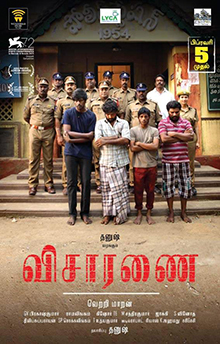
Visaranai is a 2015 Indian Tamil-language crime drama film written and directed by Vetrimaaran. The film deals with lives of two men before and after thrown into a Kafkaesque scenario in which they get tortured for confession. The film strongly stands against the encounter. The story is an eye opener for all those who blindly supports encounter.

Ishq

Ishq is a 2019 Indian Malayalam language thriller film written by Ratheesh Ravi and directed by Anuraj Manohar. The film revolves around the life of a man from Kochi, named Sachi and his girlfriend, Vasudha. The story mainly revolves around the moral policing that they had to face. But the more than that it ends with the message that virginity is not the ultimate measure of a woman’s worth.

The great success of these movies clearly explains the acceptance for these movies. It shows that audience are ready to accept movies which deals with serious topics.

The advent of OTT platforms and the receptive audience have encouraged filmmakers to experiment with their creations. The extent of criticism in the era of social media has also instilled fear in many. Even though it is the case, the film industry needs a revamp. It should be updated

India’s Freedom struggle and Different school of thoughts

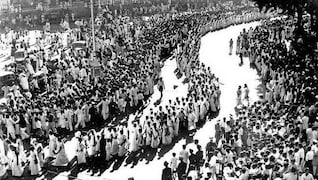
Quit India Movement: How August Movement became a watershed moment in India's  freedom struggle-India News , Firstpost

As commoners say every action can be viewed from more then one perspective. Similarly, India’s struggle for independence was interpreted in different ways by many historians who lived during that period. For some it was a worthless act by jobless people whereas for others it was their prime motive of life. Many viewed British rule over India as a means for civilising the uncivilised, poor people in India and for some others British rule was the symbol of exploitation.

In this seventy fifth year of independence, we could Look back to these thoughts and could identify the reality from the facts available before us. Let us look into some of these school of thoughts:

  1. Colonial Approach is influenced by the colonial ideology of domination. It focuses on criticism of indigenous society and culture, and praises the Western culture and values. James Mill, Vincent Smith etc., followed this approach.
  • Nationalist Approach evolved as a response to and in confrontation with the colonial approach. Before independence, this school dealt with the ancient and medieval periods of Indian history, and not the modern period. After independence this school focused on modern India. R.C. Majumdar and Tara Chand belonged to this school.
  • Marxist Approach focuses on the primary contradiction between the interests of the colonial masters and the native subjects. It also takes notice of the inner contradictions between the different sections of Indian society. R.P. Dutt and A.R. Desai were noted Marxist historians of India.
  • Subaltern Approach takes the position that the entire tradition of Indian historiography has an elitist bias and the role of the common masses has been neglected. Ranajit Guha belonged to this school.
  • Communalist Approach views Hindus and Muslims as permanently hostile groups whose interests are mutually different and antagonistic to each other.
  • Cambridge School envisages Indian nationalism as a product of conflicts among the Indians themselves for getting the benefits from the British rulers. For them Indian nationalist leaders were inspired by the greed of power and material benefits.
  • Liberal and Neo-liberal Interpretations imply that the economic exploitation of the colonies was not beneficial to the people of Britain as it delayed the development of the ‘new’ industries in Britain.
  • Feminist Historiography focuses on areas of research that analyse colonial structures, such as the legal structure, which affected women’s lives. It also focuses on women’s vulnerability due to the denial of ownership of productive resources.

When we closely examine these thoughts, we could find some of these extremely different from reality. It also symbolizes different ideologies that prevailed during the period. Even if bring it to discussion today, people may find it difficult to reach to an opinion accepted by all the people. It is because even today many stands with colonial thinkers and many are with nationalists.

Even though it is the case when we closely examine the historical text from ancient and medieval ages India was a civilised nation with rich historical background rooted in Indus valley civilisation and such golden ages. The present position of India as the torch bearer of world democracy also makes it clear that India never required an external intervention to be civilised. The people of India were capable of building a strong nation then, now and in future.

So, we could conclude that most of the thinkers who tried to give a communalist, colonial or any such face to this great struggle were mistaken. It was India’s struggle to reach its uncontrollable destiny and on fifteenth of august in 1947, it made its tryst with destiny.

ELECTIONS AND COMMON MAN

Kerala Assembly Election 2021: Voting begins, fate of 957 candidates to be  decided today

“The elections are the greatest symbol of participation and political reform”

                                                -Mohammad Khatami (former president of Iran)

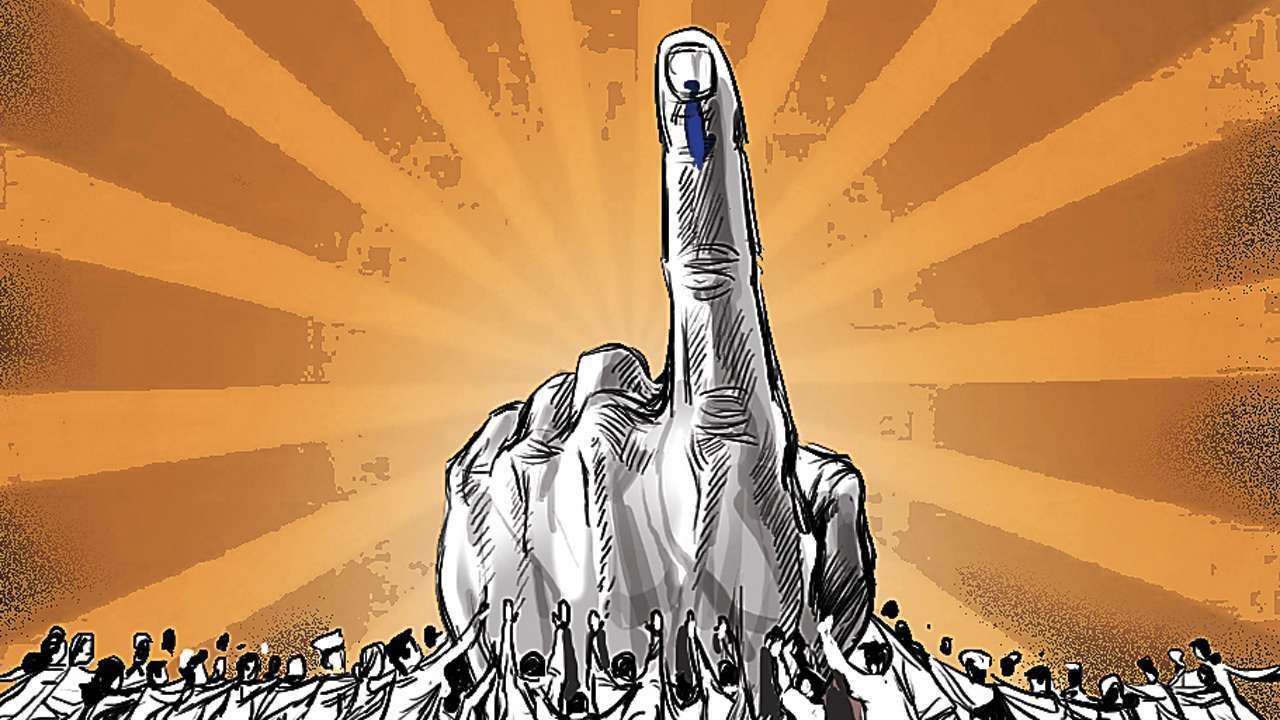
An election is a process by which the citizens of a democratic nation, irrespective of their caste and creed, decide who should take decisions on behalf of them. These have been the common mechanism for the functioning of representative democracies since the seventeenth century. The elections could be either direct elections or indirect elections. In direct elections, people could directly take part in the election process, whereas in indirect elections one individual is entitled to vote on behalf of a representative group. India being the largest democracy in the world considers elections as the “festivals of democracy” in which we celebrate the powers of common man.

            In India elections held once in five years normally. Representatives are elected on the basis of universal adult franchise. As per the conditions laid down by the makers of Indian constitution any citizen who has attained the age of 18 could cast their vote irrespective of their religion, economic and social status. Similarly, Indian constitution also enables any citizen to contest in elections without any discrimination. In order to monitor the equal participation in elections the constitution has also setup an independent body named “election commission”. Thus, elections in India are an inclusive process where common man is pivotal point.

            Indian democracy is the one in which all voters are considered equal thus, the contestants in elections are forced to treat each and every voter of his constituency with same importance at least at the time of elections. The truth is that, it is only during elections that the politicians will listen to the demands of common man. The elections instill a special power in the common man, who constitute a major portion of the society. Even the richest contestant is at the mercy of common man at times of election. It provides each and every individual an opportunity to shape the future of their nation regardless of their socio- economic conditions. Elections are the easiest way in which a citizen can express their discontent towards an existing government. Apart from this electoral system also lay down certain provisions by which common man could contest in elections and thereby contribute towards nation building directly. But many citizens are still unaware of this immense power.

            The voting percentages of elections make it evident that people are still reluctant towards casting their vote. Despite of providing holidays and several other measures to encourage people to vote, many people are not ready to play their role in nation building. Low literacy rates, apathy, unprincipled politics, lack of concrete effort on the part of the political parties in motivating the voters and local conditions in some part of the country can also be sited as the reason for lower public participation in elections. The corrupt, divisive, dishonest and exploitative practices might have decreased the confidence of people in this process. Increase in the use of money power, reliance on money power during elections, inciting communal and caste prejudice in the voters and the misuse of official machinery have shaken the foundations of the electoral process. The only remedy in these circumstances lies in bringing about systematic changes in the polity and elections.

 As John f Kennedy rightly quoted, “The ignorance of one voter in a democracy impairs the security of all”. It is necessary to make the voters aware of their rights and duties. The voters should be encouraged to cast their votes in an informed manner. The political system should take efforts to educate voters and bring back the trust in democratic system. The children should be taught about the need and worth of elections from a younger age. Above all, people should develop a feeling of obligation towards voting and should keep in mind that voting is their duty towards their nation.

By making proper use of the right to vote a common man could contribute immensely towards building their nation. On the whole as Roald Dahl said “Somewhere inside all of us is the power to change the world”. Elections are one the easiest way for a common man to contribute towards this change.

FINANCIAL INCLUSION

Financial inclusion may be defined as the process of ensuring access to financial services and timely and adequate credit where needed by vulnerable groups such as weaker sections and lower income groups at an affordable cost. Financial inclusion, broadly defined, refers to universal access to a wide range of financial services at reasonable cost. These not only include banking products, but also other financial services such as insurance and equity products.

INDICATORS OF FINANCIAL INCLUSION

As per the general laid down standards following are the key indicators of financial inclusion:

 · Formal banking system

This refers to the existence and usage of banking services which are regulated by formal mechanism.

· Formal credit

The usage of formal or recognized credit providers indicates the presence of an inclusive financial system.

· Insurance

Apart from formal lending and depositing the citizens will also have access to proper insurance providers in a well inclusive financial system.

· Savings options

 An inclusive financial system should provide attractive options to deposit the saved funds irrespective of the customer background.

 · Modern banking

Each and every user should have access to modern banking services like electronic banking, mobile banking, internet banking, etc.

FACTORS AFFECTING FINANCIAL INCLUSION

Access to financial services have been recognized as an important aspect of development and more emphasis is given to extending financial services to low-income households. The lack of financial services limits the range of financial services and 7 credits for households. There are multiple factors which have affected the access to financial services, like

· Place of living

 The area of operation of banks are limited to some specific geographical areas which leaves a significant portion of the rural population unbanked.

 · Absence of legal identity and gender biasness

 Due to lack of financial independence and unemployment there exists a bias on the basis of gender in having access to formal financial services.

· Limited knowledge of financial services

 Illiteracy and lack of proper knowledge about banking system has led to reluctance towards formal banking practices among deprived classes.

· Level of income and bank charges

 The charges and fines levied by banks make them less attractive for some classes of society.

 · Rigid terms and conditions

Since formal banking system is subject to strict rules and regulations, many finds it difficult.

 NEED FOR FINANCIAL INCLUSION

 Financial inclusion broadens the resource base of the financial system by developing a culture of savings among large segment of rural population and plays its own role in the process of economic development. Further by bringing low -income groups within the perimeter of formal banking sector, financial inclusion protects their financial wealth and other resources. Financial inclusion also mitigates the exploitation of vulnerable sections by the usurious money lenders by facilitating easy access to formal credit.

India is a nation with a major chunk of the population living under vulnerable conditions. So, it is the duty each and every privileged section to lift the conditions of the underprivileged. Financial inclusion will pave a path of uplifting the society and empowering the people.

Green consumerism: New way of life

Green Consumerism: Importance, Examples and Strategies - Conserve Energy  Future

We all are consumers in some way or the other. Even before we are born, we are consumers and this cycle completes only after our death. In this era of consumerism, it is extremely difficult for one to not be a consumer and being a consumer is something to be ashamed of.

Even though being a consumer is not bad, exploitation by consumer is something to worry about. Unlike a socialist economy in a capitalist world, the producers produce what the consumers demand. So, the responsibility vested with the consumer is rising day by day. When a consumer makes an irresponsible choice, he is encouraging the producer to be exploitative. Realising this power of consumers, a new term has originated, green consumer.

Who is a green consumer?

A green consumer is a person who makes a wise choice. They buy a product or avail a service after considering the environmental impact. They check the components of the product, the environmental effects of the product and such aspects in detail.

Economic, social, and cultural forces have set the framework for green consumerism. This is because it is a social attitude and movement in the modern era, especially aimed at encouraging people to be more aware of the firms’ production processes and only to buy or use products and services that do not harm the environment. For this reason, green consumerism has created a balance between the buyers’ behaviours and the organizations’ profit objectives as it mostly based on the sustainable and pro-environmental behaviour of consumers.

Why is it important to be a green consumer?

From second half of the twentieth century, world has started its efforts for environment conservation. Even though commerce and industries are one of the largest contributors to environment degradation, they were the last to act for environment protection. One such arena is green consumerism. In a world which spins on the axis of consumerism it is important for a consumer to make environment friendly choices. Also, there is shift in the mindset of the businesses from seller centric to consumer centric approach. Recognizing this immense power vested with them consumers could influence the market to produce environment friendly goods. Also, the fact that environment degradation could lead even to the extinction of humankind has opened the eyes of general public.

How to be a green consumer?

  • Use paraben free products.
  • Use cloth bags and don’t demand plastic carry bags.
  • Promote organic goods.
  • Avoid using synthetic materials that could harm the world
  • Avoid pollutants while choosing products.
  • Use recycled products.
  • Avoid the practice of use and throw.
  • Give importance to energy efficiency.
  • Practice modern methods of environment protection.
  • Shop according to the need.
  • Minimize paper usage
  • Check energy labels in daily utility products
  • Avoid using bottled water
  • Reduce electricity consumption
  • Reduce your carbon footprint
  • Check for environment friendly certification.

Ultimately change of mindset is the most significant factor in green consumerism. It requires people to avoid certain comforts and embrace the difficult but fruitful path. It is the duty of consumers to influence the producers to shift towards a greener path. The consumer is the king in the present scenario. They should use their power for the good of the world.

Let us all strive to act green for a better future. We should lead a sustainable living and preserve what inherited for the coming generations.

India’s democracy and the social reformers of India

Enough is enough: Take a stand for equality and inclusiveness - Tricentis

India is the largest democracy in the world. The country is known for the multiplicity of culture. In the words of Jawaharlal Nehru, India is the land of unity in diversity. But when we look back, we could identify several aspects were Indian culture lacked humanity and compassion.

People around the world are coming to India to experience and study the rich culture of the nation. But when we look back, we could identify several aspects which faced severe criticisms from humanitarians around the globe. So, how did this change happen?

The paradigm shift in the culture and practices are a result of combined efforts of the social reformers in the pre independent India.

Let us check some social reform movements during the independence struggle:

  • Prathana samaj

Prarthana Samaj or “Prayer Society” in Sanskrit, was a movement for religious and social reform in Bombay, India, based on earlier reform movements. Prarthana Samaj was founded by Atmaram Pandurang in 31 March 1867. The movement was started as a movement for religious and social reform in Maharashtra and can be seen much more alike Brahmo Samaj.

  • Brahmo samaj

It was one of the most influential religious movements in India and made a significant contribution to the making of modern India.[2] It was started at Calcutta on 20 August 1828 by Raja Ram Mohan Roy and Dwarkanath Tagore as reformation of the prevailing Brahmanism of the time (specifically Kulin practices) and began the Bengal Renaissance of the 19th century pioneering all religious, social and educational advance of the Hindu community in the 19th century.

  • Atmiya sabha

Atmiya Sabha was a philosophical discussion circle in India. The association was started by Ram Mohan Roy in 1815 in Kolkata (then Calcutta). They used to conduct debate and discussion sessions on philosophical topics, and also used to promote free and collective thinking and social reform. The foundation of Atmiya Sabha in 1815 is considered as the beginning of the modern age in Kolkata. In 1823, the association became defunct.

  • Satyashodhak Samaj

Satyashodhak Samaj (Truth-seekers’ Society) was a social reform society founded by Jyotiba Phule in Pune, Maharashtra, on 24 September 1873. It espoused a mission of education and increased social rights and political access for underprivileged groups, focused especially on women, Shudras, and Dalits, in Maharashtra. Jyotirao’s wife Savitribai was the head of women’s section of the society.

  • Young Bengal movement

The Young Bengal was a group of Bengali free thinkers emerging from Hindu College, Calcutta. They were also known as Derozians, after their firebrand teacher at Hindu College, Henry Louis Vivian Derozio.

  • Tattwabodhini sabha

The Tattwabodhini sabha was a group founded in Calcutta on 6 October 1839 as a splinter group of the Brahmo Samaj, reformers of Hinduism and Indian Society. The founding member was Debendranath Tagore, previously of the Brahmo Samaj, eldest son of influential entrepreneur Dwarkanath Tagore, and eventually father to renowned polymath Rabindranath Tagore. In 1859, the Tattwabodhini sabha were dissolved back into the Brahmo samaj by Debendranath Tagore.

As a result of the concerted efforts, there were several changes in Indian society. The abolishment of Sati, promotion of widow remarriage, education of women several other changes were the result of these activities.

Last two centuries were not only the period of independence struggle but was also the phase of Indian renaissance. There were many reformers who fought against the social evils and acted as the eye openers for the general public. These values have also contributed towards the framing of constitution.

Let us uphold the values shared by these great people.

How to spot a pyramid scheme.

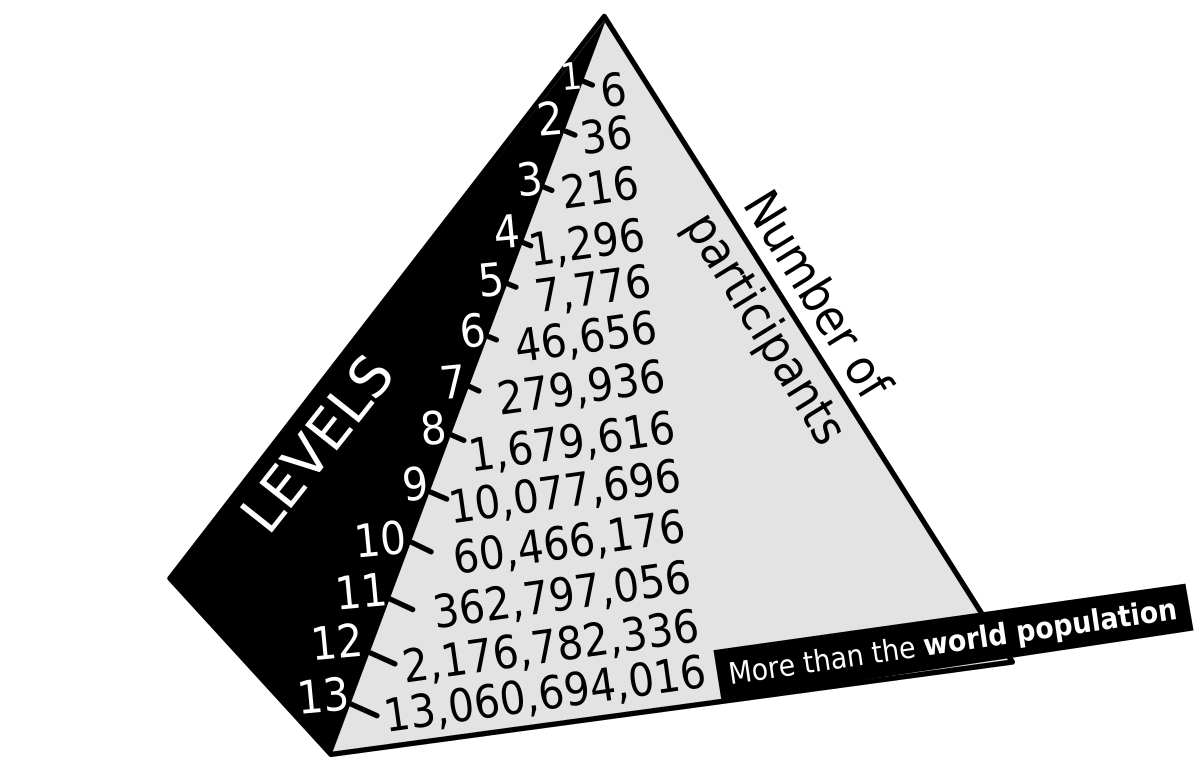
A pyramid scheme is a fraudulent system of making money based on recruiting an ever-increasing number of “investors.”  The initial promoters recruit investors, who in turn recruit more investors, and so on. The scheme is called a “pyramid” because at each level, the number of investors increases. The small group of initial promoters at the top require a large base of later investors to support the scheme by providing profits to the earlier investors.

Let’s assume the following: Founder Mike sits alone at the top of the heap, represented by the number “one.” Assume Mike recruits 10 second-tier people to the level directly below him, where each newbie must issue him a cash payment for the privilege of joining. Not only do those buy-in fees funnel directly into Mike’s pocket, but each of the 10 new members must then recruit 10 tier-three members of their own (totaling 100), who must pay fees to the tier-two recruiters, who must send a percentage of their takes back up to Mike. According to the hard-sell pitches made at recruitment events, those bold enough to take the pyramid plunge will theoretically receive substantial cash from the recruits below them. But in practice, the prospective member pools tend to dry up over time. And by the time a pyramid scheme invariably shuts down, the top-level operatives walk away with loads of cash, while the majority of lower-level members leave empty-handed. It should be noted that because pyramid schemes heavily rely on fees from new recruits, the vast majority do not involve the sale of actual products or services with any intrinsic value.

Unfortunately, these types of scams sometimes prey on people who need income quickly. For example, if you lost your job and are having a hard time finding a new job, you might be more willing to look into an opportunity that offers a fast return. But avoid the temptation to overlook the feeling that something is too good to be true. Instead, take a moment to calm yourself so you can make a legitimate plan after losing your job. Go over your budget—or create one for the first time—so you can manage your money in the best way possible while you try to increase your income.

How to Spot a Pyramid Scheme

Pyramid schemes and MLM sound a bit alike, don’t they? Here are some signs of a pyramid scheme, provided by the US Securities and Exchange Commission, to help you understand whether you’re considering a scam or a legitimate MLM opportunity:

  • You’re not selling something real. Legitimate MLMs sell tangible goods—many times there’s a ready-made market for them.
  • Get-rich-quick promises. If you’re being offered overnight success, get-rich-quick guarantees, or passive income promises, it’s probably too good to be true. People who make money with legitimate MLMs put a lot of time and effort into their businesses.
  • The company can’t prove it generates retail income. If the business can’t show you financial statements that demonstrate income from the sale of product, it could be generating all its income from recruiting people into the pyramid.
  • Strange or unnecessarily complex commission processes. Legitimate MLMs have easy-to-understand, product-based commissions.

The Bottom Line

Pyramid schemes are illegal in many countries. The model of profiting by using the network effect often traps individuals into recruiting their acquaintances, which can feel slimy for everyone involved and can ultimately strain relationships. Some people may shoot their shot each time and invest in multiple schemes losing money each time. Victims of pyramid schemes are often embrassed into silence and keep blaming themselves for not being tenacious enough to earn the promised returns, when in truth it’s the system that is faulty. Get rich quick schmes never work and will allways have some strings attached to it that can put people into legal trouble. Vigilance and knowledge about where your money goes are important factors that people must know, preventing them from falling pray for traps like the pyramid scheme.

sources – https://www.investopedia.com/insights/what-is-a-pyramid-scheme/ https://www.credit.com/blog/what-is-a-pyramid-scheme/