Analyzing Mid-day Meal: India’s School Lunch System

Official Logo of Mid-day Meal Scheme

Introduction

Food is a basic need of life.  And Education is important to make the life affluent. A hungry stomach cannot grasp the teachings of Education at school, there to provide better Education, schools all around the world, offer lunch to the students. In India, the system of school lunch is referred to as Mid-day Meal. In today’s editorial, we’re going to share insights about the system of Mid-day Meal in India.
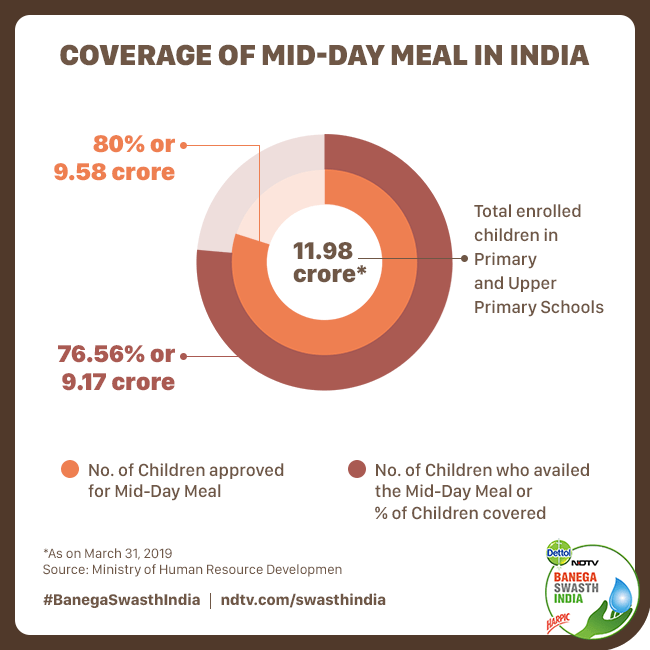
Coverage of Mid-day Meal Scheme in India

Brief Idea of What Mid-day Meal Is

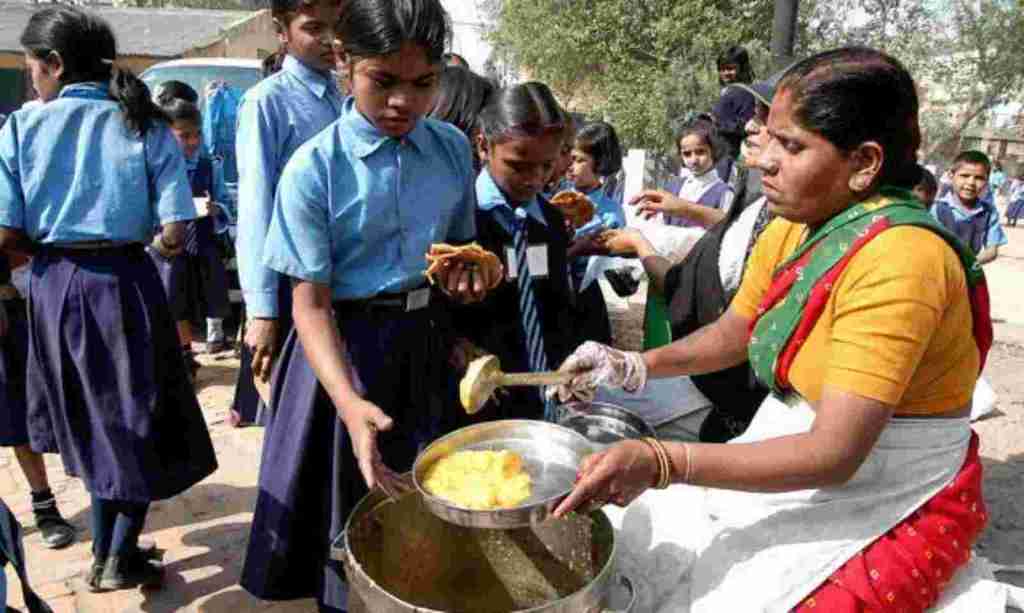
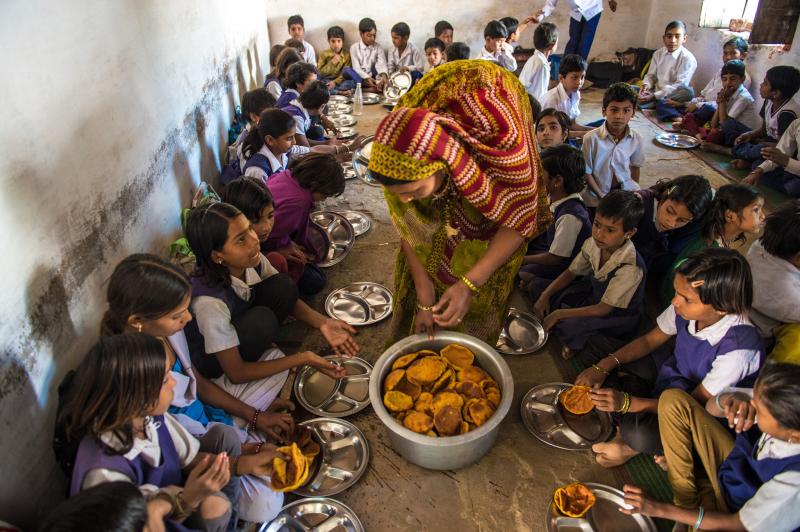
The Midday Meal Scheme, launched in 1995  by former Prime Minister of India, P.V. Narsimha Rao, under the Ministry of Education, is a school meal programme in India designed to better the nutritional  standing of school-age children nationwide. The programme supplies free lunches on working days for children in primary and upper primary classes in government, government aided, local body, Education Guarantee Scheme, and alternate innovative education centres, Madarsa  and Maqtabs  supported under Sarva Shiksha Abhiyan , and National Child Labour Project schools run by the Ministry of Labour. Serving 120 million children in over 1.27 million schools and Education Guarantee Scheme centres, the Midday Meal Scheme is the largest of its kind in the world.
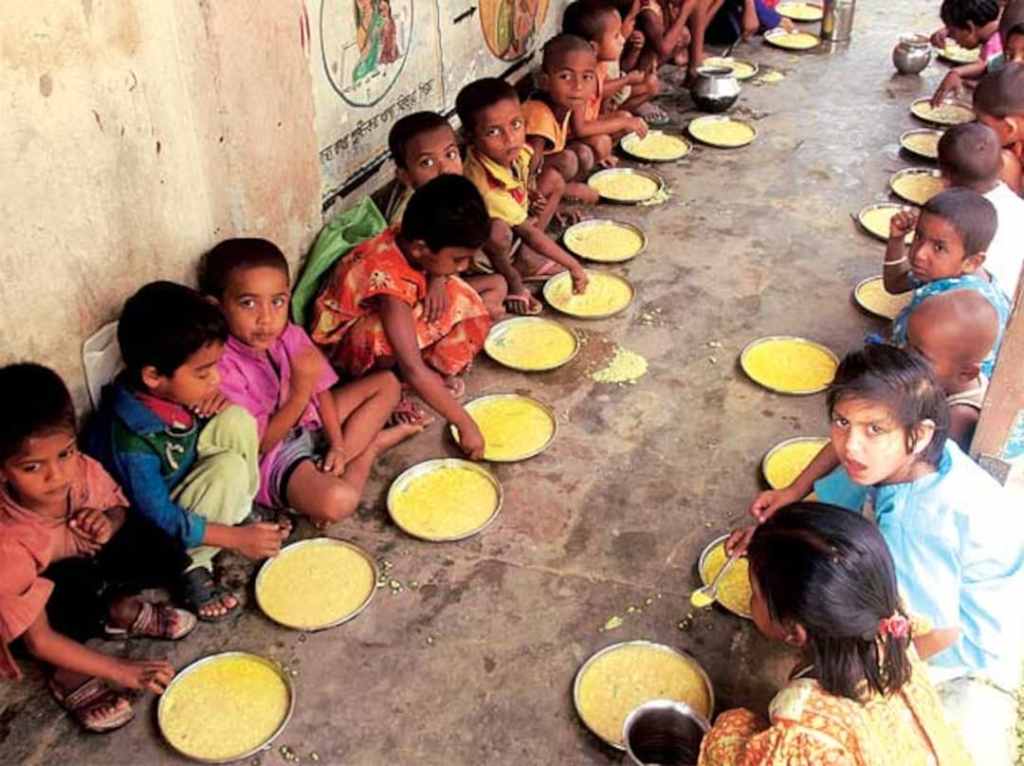
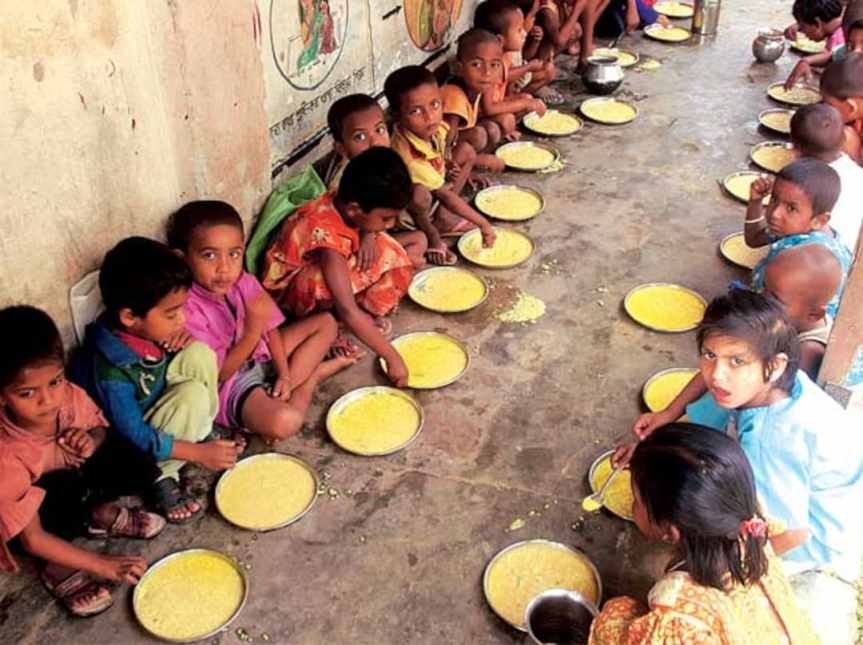
Students having Mid-day Meal at a School in India

Objectives of Mid-day Meal Scheme

  • To increase the enrolment in the schools of children who belong to disadvantaged sections of the society .
  • To increase attendance of students in Government and Government aided schools.
  • To retain the children studying in class I to VIII.
  • To give nutritional support to the children studying in the elementary level, specially in drought-prone areas.
  • To address hunger and malnutrition and increase socialization among the castes.

Mid-day Meal Scheme Timeline in India

Features of Mid-day Meal Scheme

  • It is one of the world’s largest school meal programs intended to achieve the goal of universalization of primary education.
  • For the implementation of the scheme, the Ministry of Human Resources and Development is the authorized body to implement the scheme.
  • It is a centre-sponsored scheme, so, the cost is shared between the states and the centre. Where the share of the centre is 60 percent.
  • The first state to implement the midday meal scheme was Kerala in 1984.
  • Till 2002, the scheme is designed especially for the government, government-aided and local body schools. But later on, the benefit of the mid-day meal scheme is extended to those children who were studying in educational guaranteed scheme centres or Alternative & Educational Centres.
  • In 2004, the scheme is again revised, and central assistance is offered for the cooking cost.  Apart from that, the transport subsidy included for all states, maximum of Rs 100 per quintal is provided to the special category states and Rs 75 per quintal for other states.
  • The provision of serving mid-day meals during summer vacation to the children in drought-affected areas was also added.
  • In 2006, the cooking cost was enhanced to Rs 1.80 per child/ school day for states in North Eastern Region and Rs 1.50 per child/ school day for other states and UTs.
  • In 2007, the scheme benefit is also extended to the children studying in the educationally Backwards Blocks.
  • Apart from the calories and food intake, for micronutrients (tablets and deworming medicines), each child is entitled to receive the amount provided for in the school health program of the National Rural Health Mission.
  • Meals provided under the Mid-day Meal Scheme

Food Norms under Mid-day Meal Scheme
  • The quantity of food items provided under this scheme per child per school day is as follows:
Food itemsPrimary level (Class I-V)Upper level (Class VI-VIII)
Food Grains100 gms150 gms
Pulses20 gms30 gms
Vegetables (leafy also)50 gms75 gms
Oil & fat5 gms7.5 gms
Salt & condimentsAs per needAs per need
Calories IntakePrimaryUpper Primary
Energy450 calories700 calories
Protein12 grams20 grams
Serving of Mid-day Meal

Advantages of Mid-day Meal

  • It satisfies the hunger of many children.
  • Supplying nutrition to children of the poor section helps them in concentrating on their studies better.
  • Students come to government schools daily and won’t be asked to do labour work.
  • Addresses the issue of malnutrition.
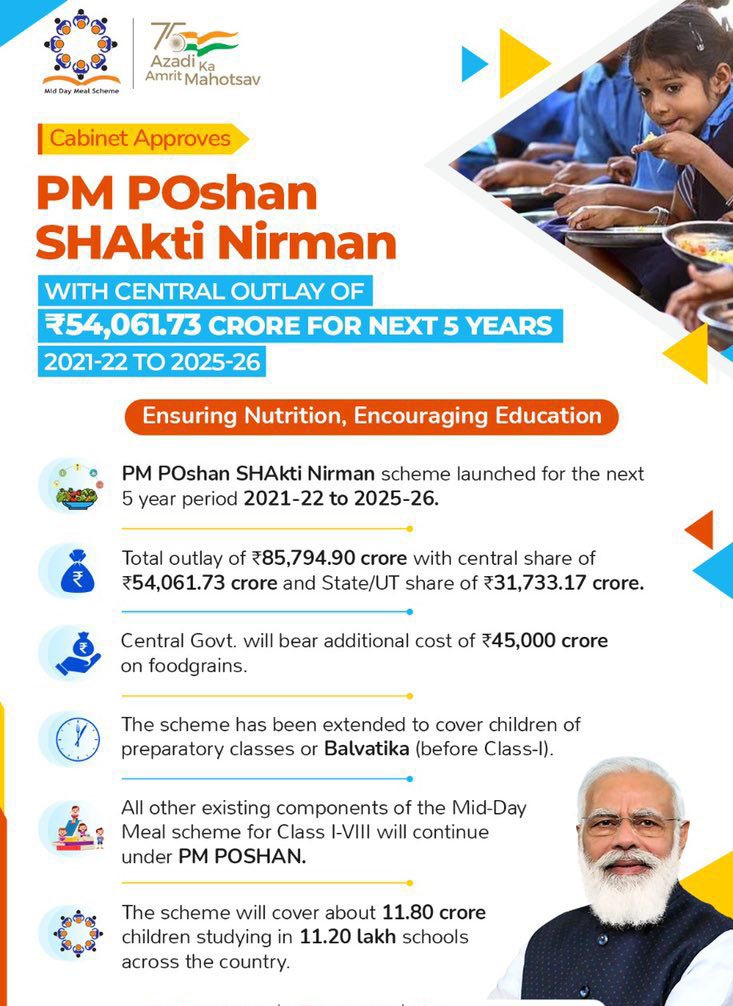
PM POSHAN SHAKTI NIRMAN

Recent Improvisation of Mid-day Meal Scheme

During the celebration of India’s 75th Independence Day as Azadi Ka Amrit Mahotsav, the Cabinet approved for the implementation of PM POSHAN SHAKTI NIRMAN for next 5 years i.e. 2021-22 to 2025-26.

Conclusion

There is no doubt that school is the only place that contributes to the socio-economic development of society. Here children from various backgrounds come together for promoting the culture of unity and brotherhood. The education they receive at school prepares them to achieve their goals and lead a successful life. When we talk about government schools, here children mostly come from economically challenged backgrounds. So, even though education schemes like Sarva Shiksha Abhiyaan are being implemented, the difficult financial conditions force these children to skip school and go on work. In such kind of circumstances,  the real potential of mid-day meal surfaces. Mid-day meal acts as an attractive incentive for parents to send their children to school with the sole hope that the young ones will receive at least one plate full of the meal for the day. 
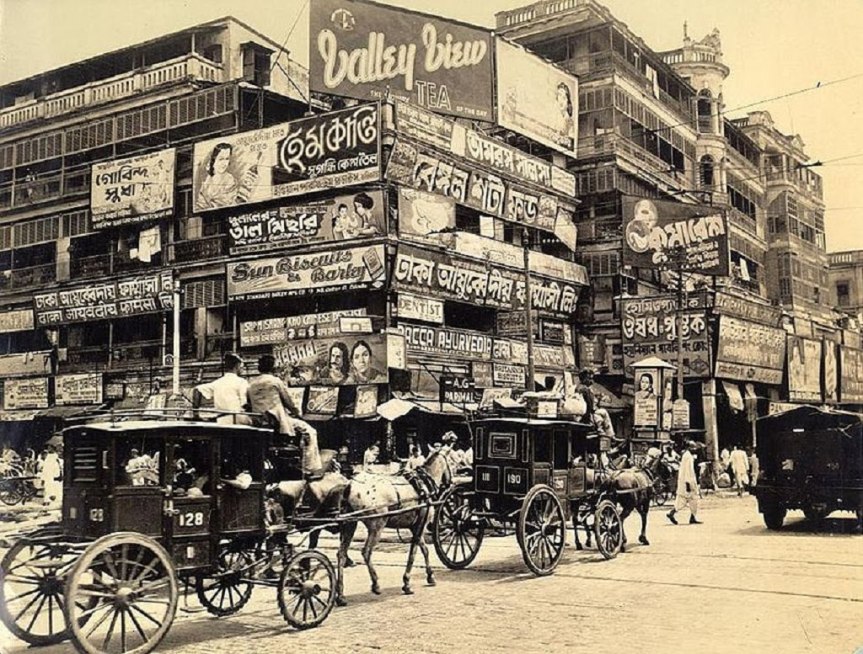
Looking Back to Past: Vintage Kolkata in Photos

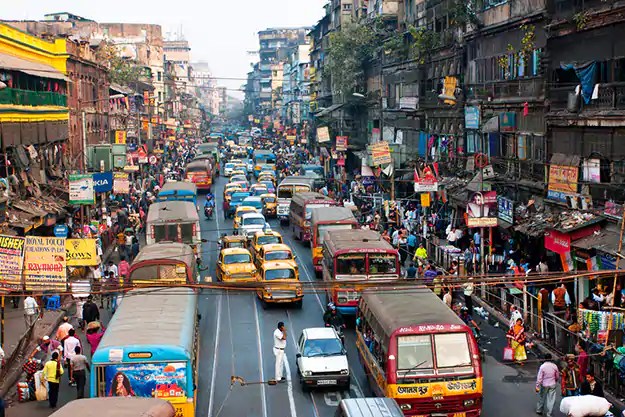
A busy street of Today’s Kolkata

Introduction

Kolkata, also fondly know as “The City of Joy”, never ceases to amaze generations with its breathtaking beauty, not only with its metro city status of today’s India, but also in the days of past. In today’s editorial, we’re going to take glance at glimpses of Vintage Kolkata from the past.

Brief History and Importance

Kolkata’s recorded history began in 1690 with the arrival of the English East India Company, which was consolidating its trade business in Bengal. Job Charnock, an administrator who worked for the company, was formerly credited as the founder of the city; In response to a public petition, the Calcutta High Court  ruled in 2003 that the city does not have a founder. The area occupied by the present-day city encompassed three villagesKalikataGobindapur  and Sutanuti

Kolkata , also known as Calcutta (official name until 2001) is the capital of the Indian state of West Bengal. Located on the eastern bank of the Hooghly river, the city is approximately 80 kilometres (50 mi) west of the border with Bangladesh. It is the primary business, commercial, and financial hub of Eastern India  and the main port of communication for North-East India .According to the 2011 Indian census, Kolkata is the 7th most populous  city in India, with a population of 45 lakh (4.5 million) residents within the city limits, and a population of over 1.41 crore  (14.1 million) residents in the Kolkata Metropolitan Area. The Port of Kolkata  is India’s oldest operating port and its sole major riverine port. Kolkata is regarded as the Cultural Capital of India.

Vintage Kolkata Album

Here we take a look at the vintage snaps of Kolkata’s most iconic places

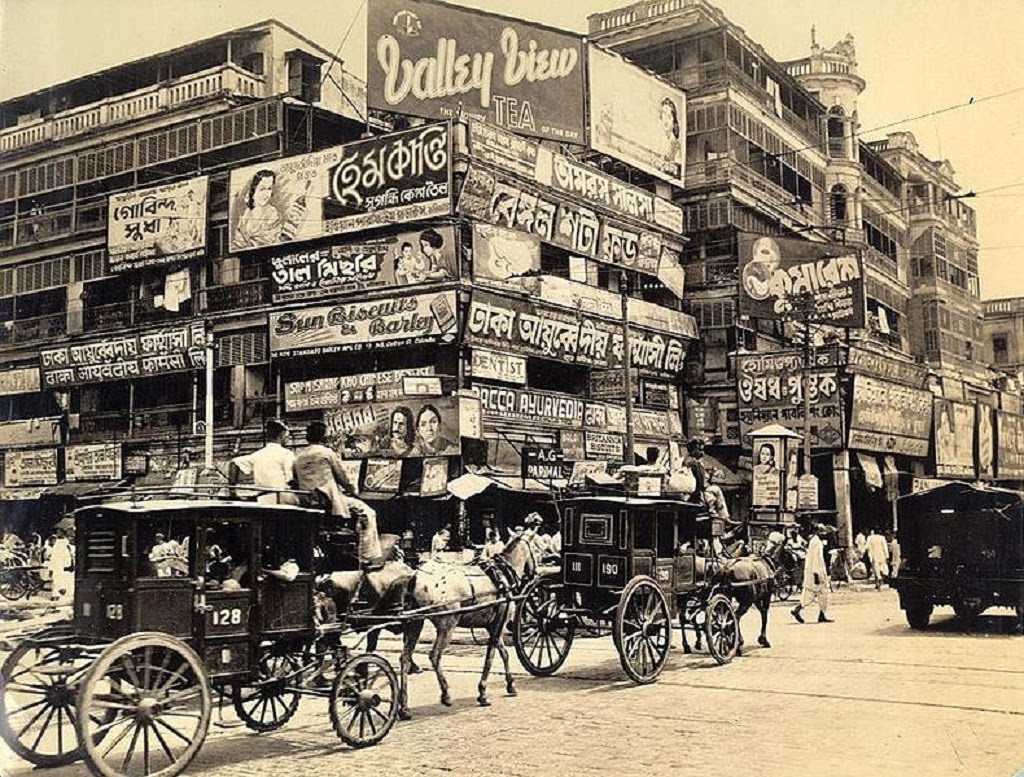
Crossing of Harrison Street, Strand Road and Burra Bazaar Area
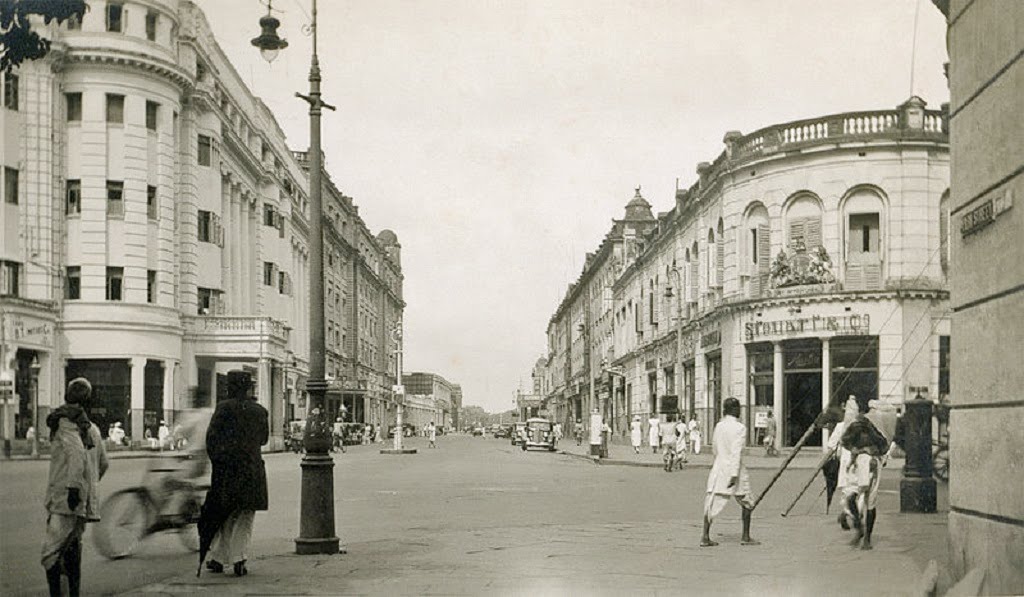
Park Street
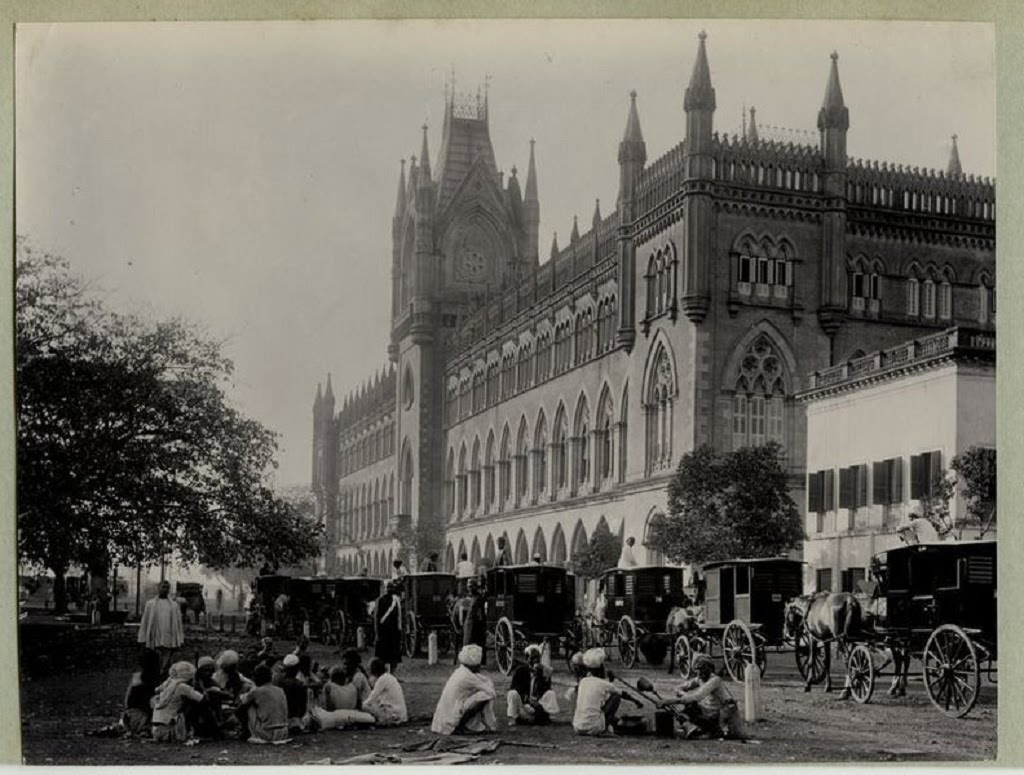
Calcutta High Court
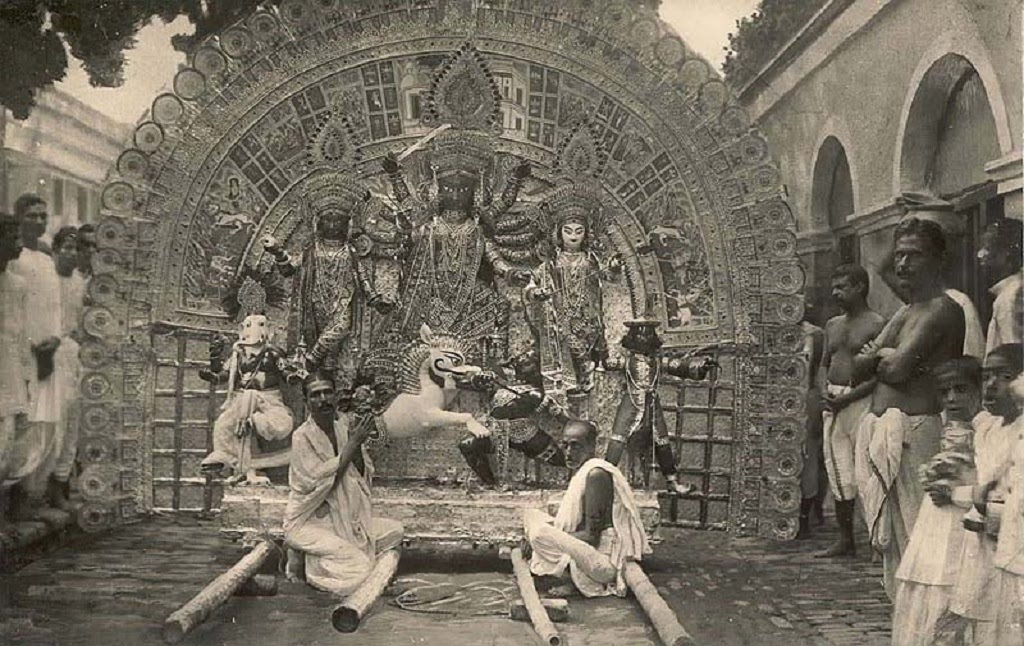
Traditional Goddess Durga Idol
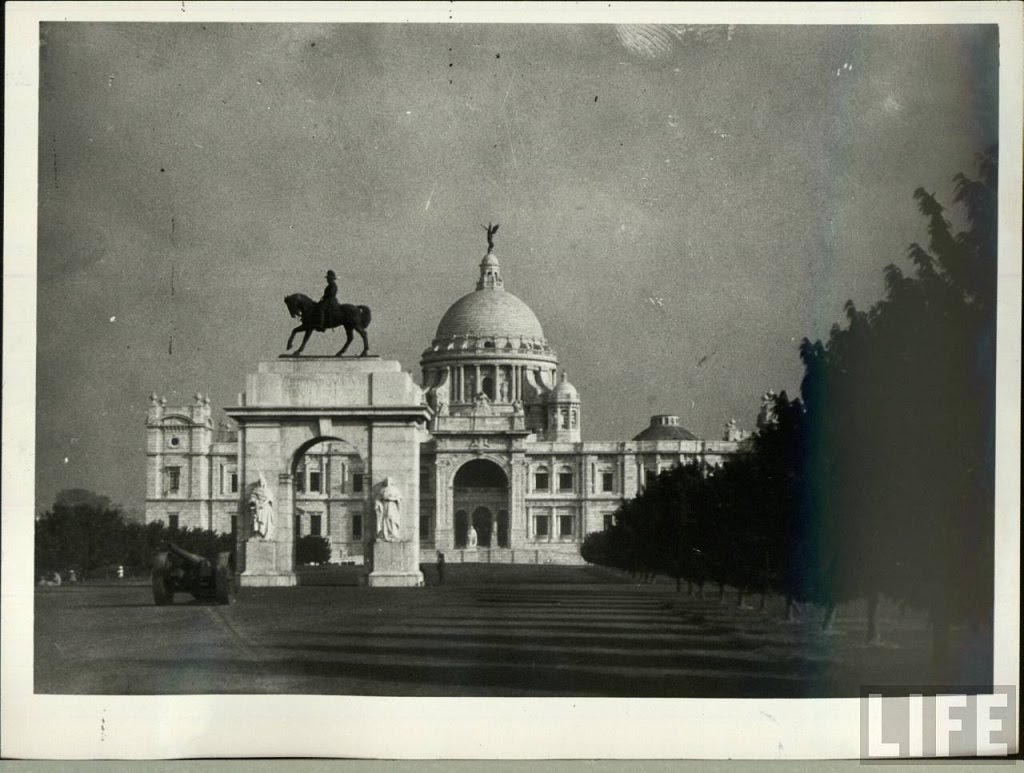
Victoria Memorial Hall
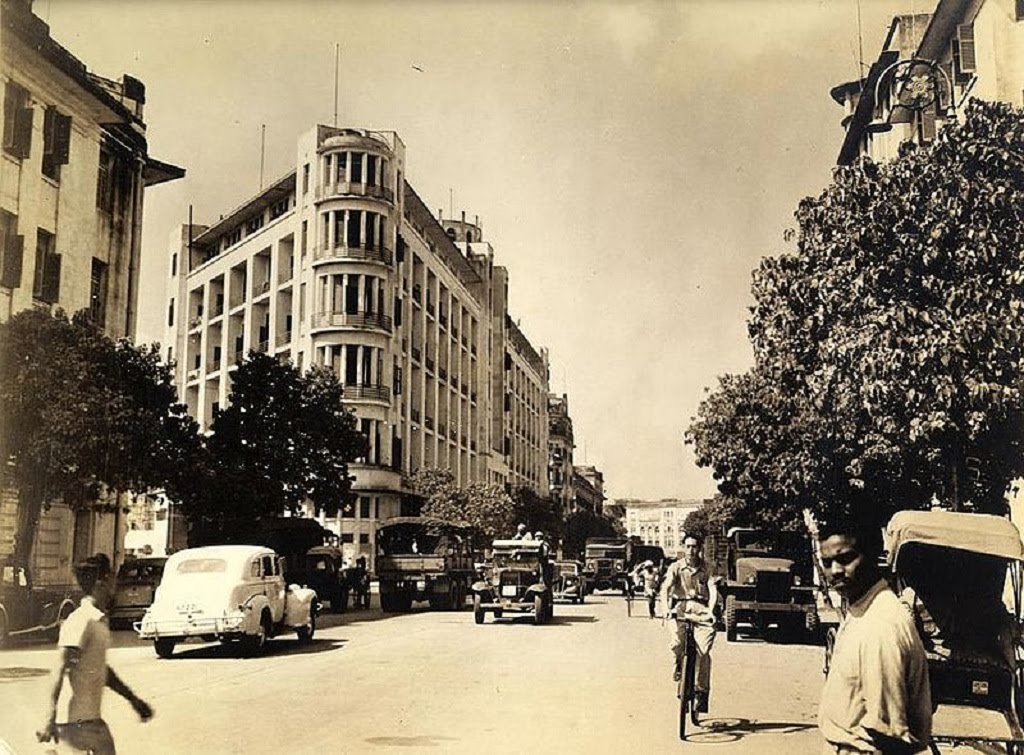
The Hindustan Building on Central Avenue once served as the office of US Army
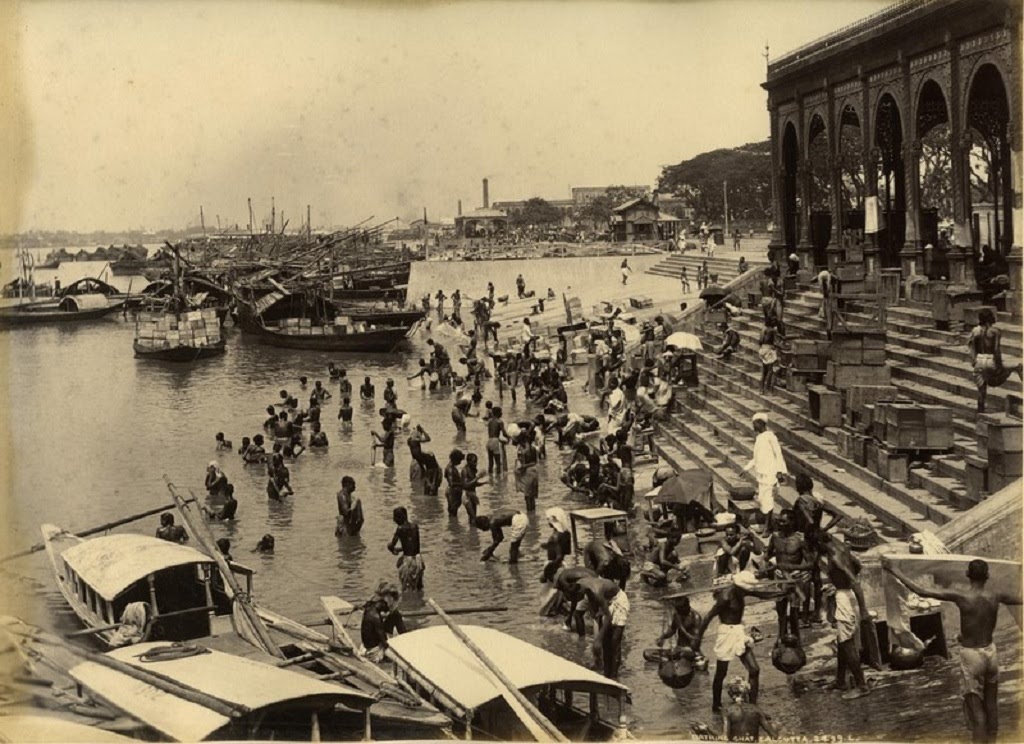
The Bathing Ghat of Hooghly River
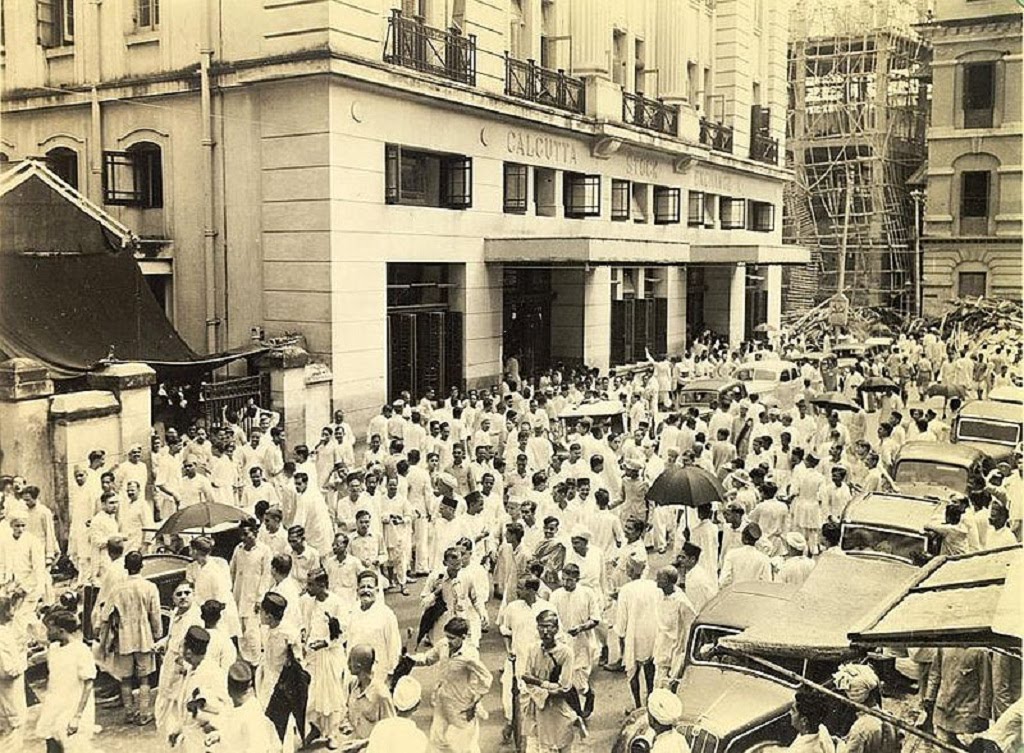
Hustle in front of Calcutta Stock Exchange
Early days of Howrah Bridge
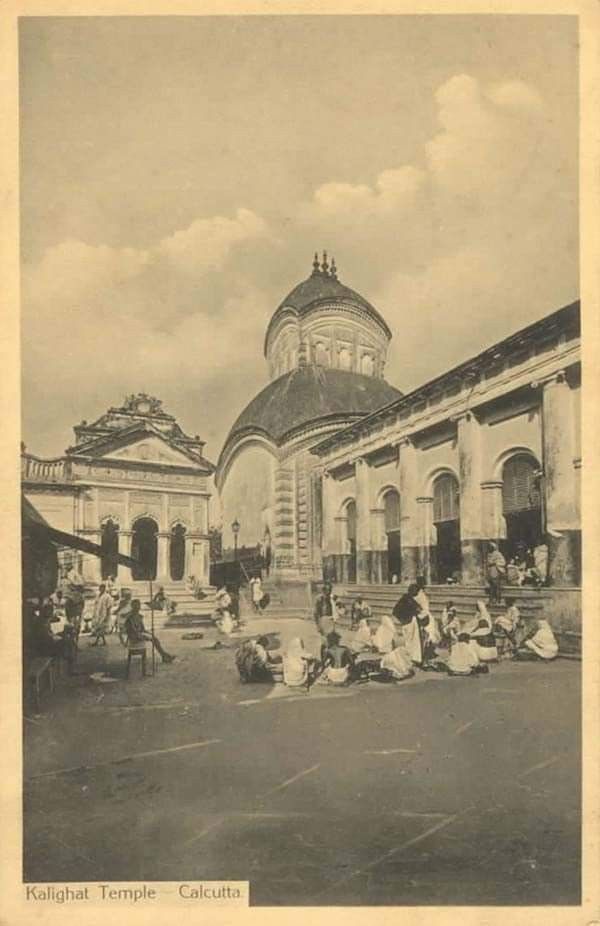
The auspicious Kalighat Temple of Goddess Kali
St. Paul’s Cathedral Church
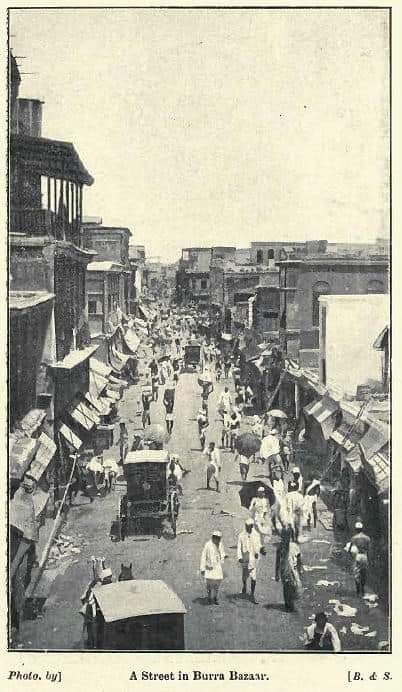
Burra Bazaar Area
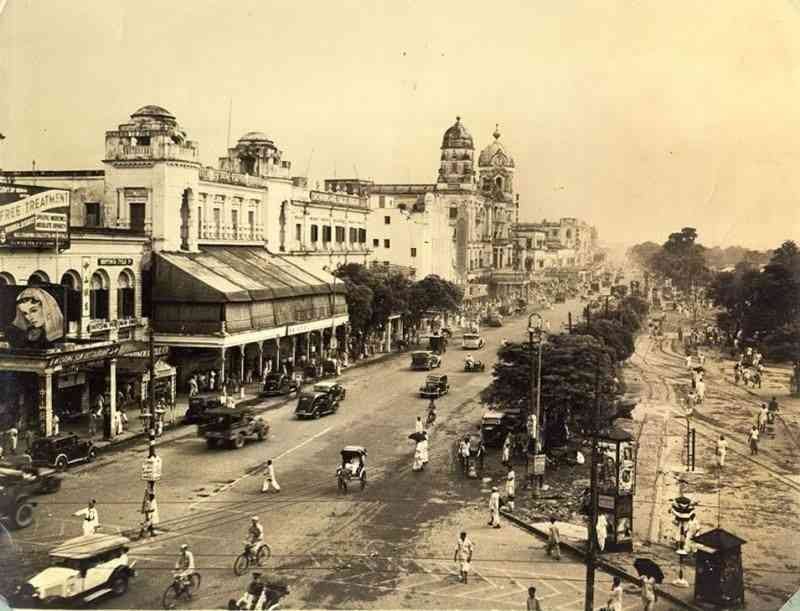
Esplanade Area
Calcutta Town Hall

Conclusion

Though the time has changed, and history has taken many turns but the essence of Kolkata, has remained the same over ages. The Government has come forward to preserve the heritages of Kolkata, that have made the Bengal and Bengalis proud through decades. People are hopeful that this tradition follows down with the upcoming generations by passing love and the celebration of the beauty of Kolkata.

Hand-Rickshaw Pullers of Kolkata: The Legacies Left Behind

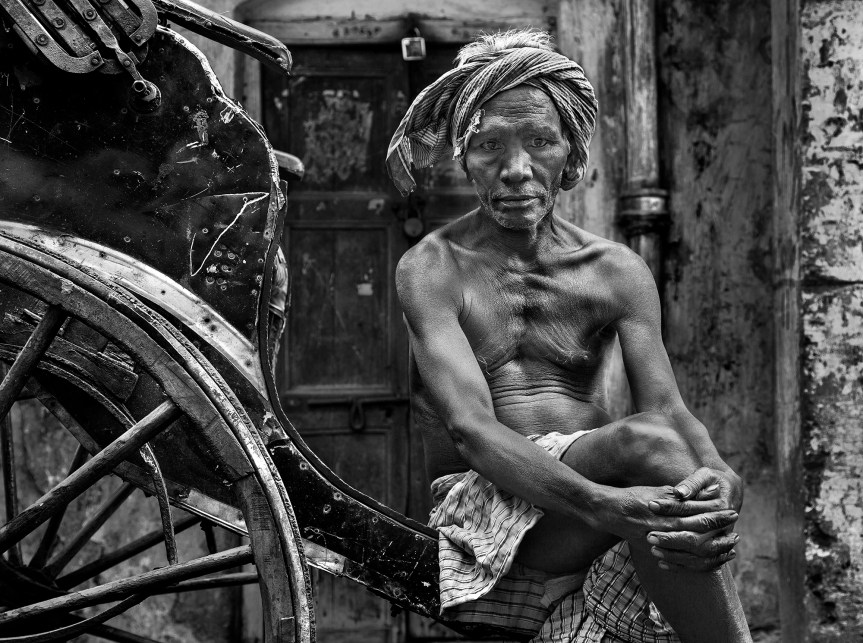
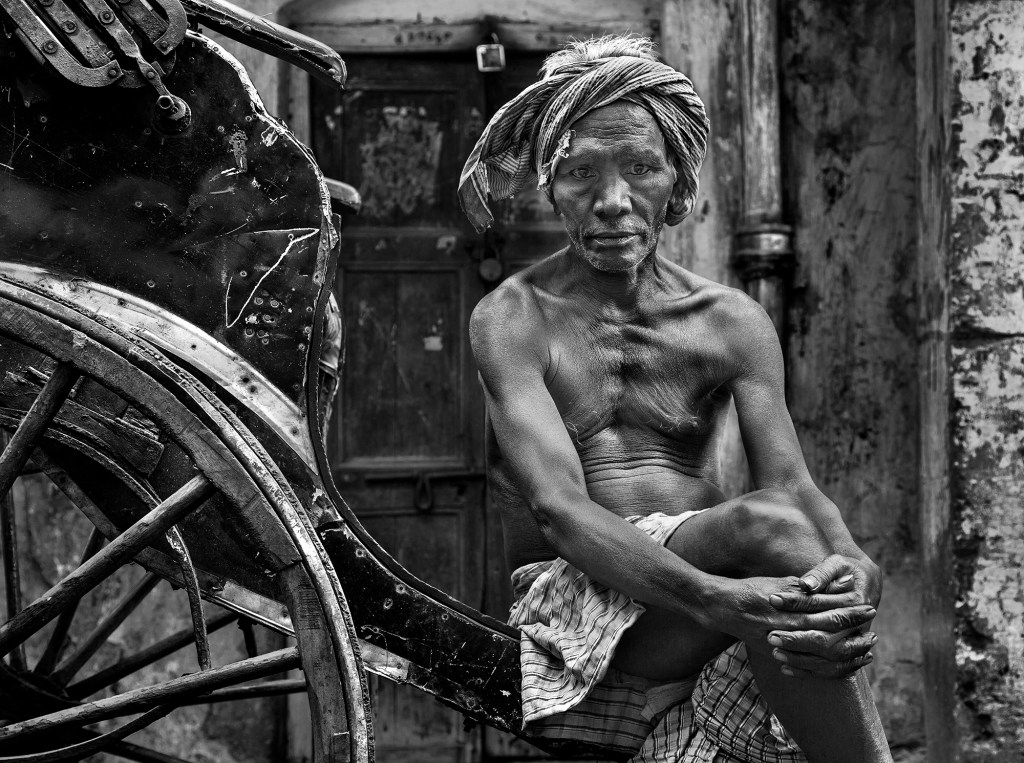
Hand-Rickshaw puller of Kolkata

Introduction

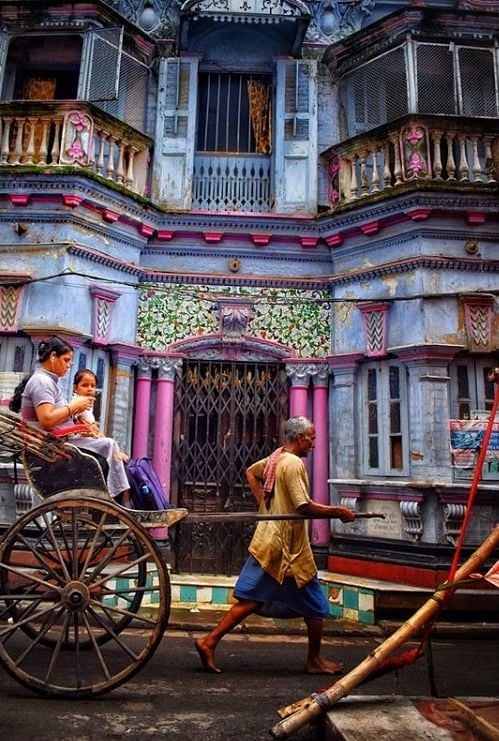
Kolkata is a city that is an amalgamation of the old and new. A city that is being modernised everyday but still manages to hold on to the old charm vibe. It is the only city in India to have various modes of transportation, dating back to the British era. The first city in India to construct a metro rail, it is now the only city in the world that continues to operate licensed hand-pulled rickshaws (called tana rickshawin Bengali) as a mode of public transport. One can still see the tram cars and hand-pulled rickshaws plying on the narrow bylanes of Kolkata.

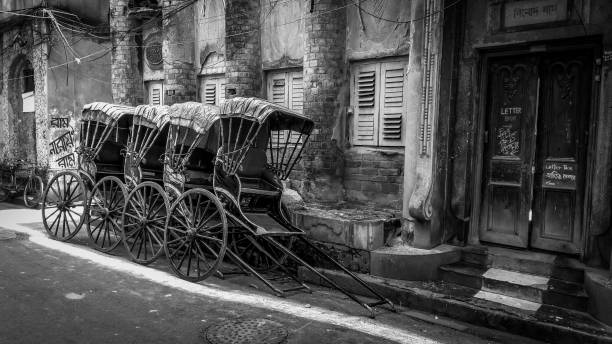
Hand Rickshaw in Kolkata

Histrionic Background

The word ‘rickshaw’ originates from the Japanese word ‘Jin-riki-sha’ (jin meaning human, riki meaning power, and sha meaning vehicle; which translates to human-powered vehicle). The hand-pulled rickshaw was invented in Japan in 1869 and was introduced in China by 1874. Unlike previous modes of transport, like kago, sedan chairs, etc. which needed two persons to carry, the rickshaw had the significant advantage of being driven by a single person. The following decades witnessed a boom of hand-pulled rickshaws in Japan, China, Singapore, India, Indonesia and Malaysia. They served as cheap means of transportation and provided employment to millions of poor working-class families living in cities. 

The British were the dominant colonial power in Asia and the usage of a human to pull another human definitely served in reinforcing the master-slave power hierarchy. Post World War II, colonialism declined in Asia and the hand-pulled rickshaw faded out of use from erstwhile British colonies. Strangely, the legacy of rickshaws continued in Calcutta long after the British Empire was gone (1947), and long after the communist government in China banned (1949) the use of rickshaws. Not only did it survive in Calcutta but the tenacious hand-pulled rickshaw has become an icon of the metropolis

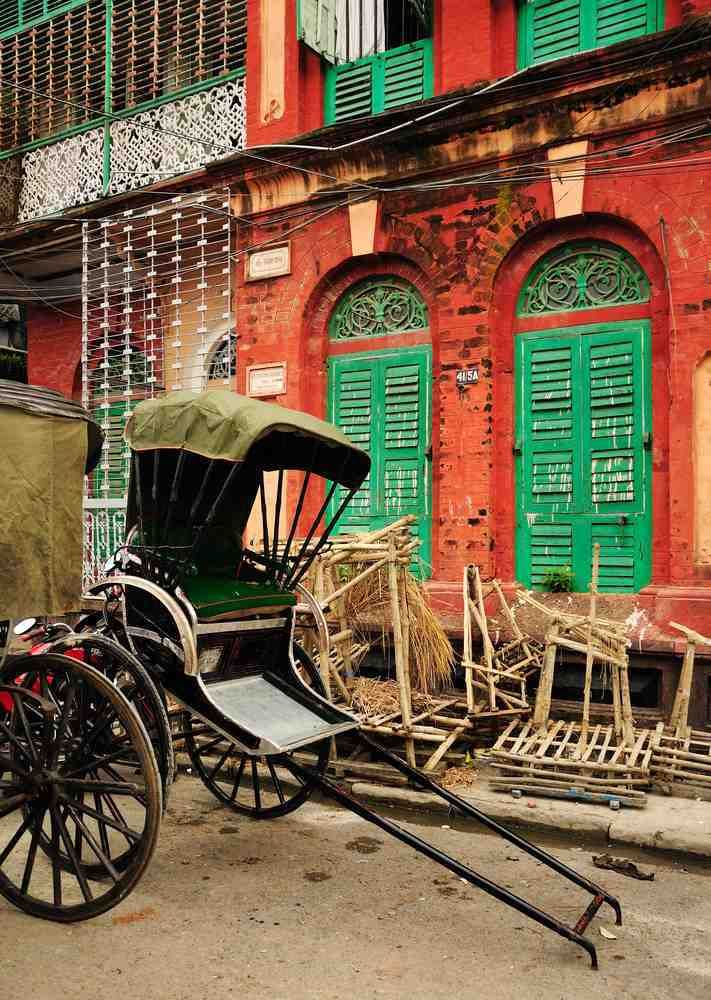
A Hand-Rickshaw in an alley of Kolkata City

A Staple to Kolkata’s Culture

Kolkata’s hand-pulled rickshaws are mentioned in many literary books and featured in films of different languages. It plays the protagonist in Rudyard Kipling’s ‘The Phantom Rickshaw’. The story is set in Shimla of the 1980s. Greg Vore, an international travel photographer, researched on the life, role and history of hand-pulled rickshaws in Kolkata and Bangladesh. Bimal Roy’s classic Do Bigha Zamin (released in 1953) tells the story of a farmer who becomes a rickshaw wallah in the then Calcutta.

Present Situation of Rickshaw: How They Are Doing

The hand-pulled rickshaw survives due to a number of socio-economic reasons peculiar to Kolkata. Firstly, pulling a rickshaw does not require skill; it requires hard physical labour. Unemployed and unskilled labourers find employment as rickshaw pullers in Kolkata. They do not undergo any training or require a driver’s license to operate. Most rickshaw pullers do not even know the names of the roads they ply their trade on, nor do they understand the various traffic symbols. This is because they are mostly illiterate and speak Hindi instead of the local Bengali. Many rickshaw pullers do not even own the vehicles themselves, but rent them from sardars (rickshaw owners) who own khatals (rickshaw garages). This arrangement evolved because many rickshaw pullers are either too poor or seasonal migrants, plying the rickshaws only for a few months when their fields back home lie fallow. 

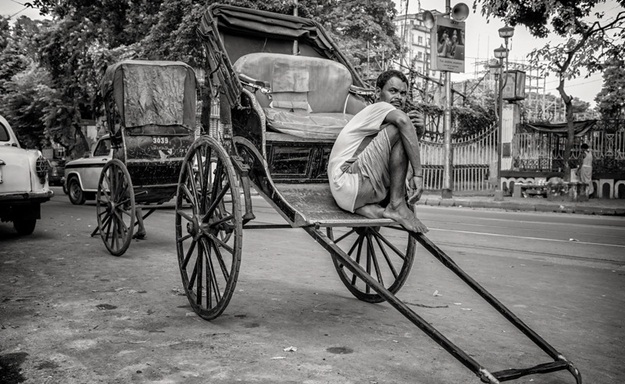
Leisure between the fare trips

Today, due to declining popularity and availability of other modes of transport, rickshaw pullers earn a meagre amount and mostly live on the streets, saving every rupee to send to their families. Added to this are costs for food and rent paid to sardars, after which they are left with very little money for themselves. Many turn to alcohol and suffer from various diseases and medical problems associated with old age and the physical stress of the job.

Kolkata does currently have 18,000 rickshaw pullers and 6000 rickshaws, though not all of them are licensed by the municipality

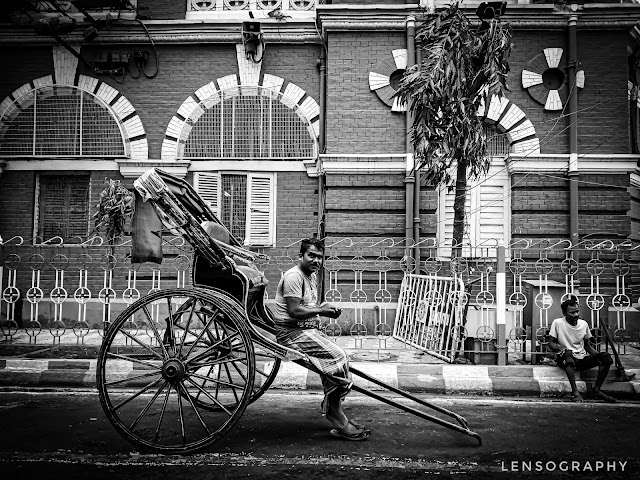
Queued up for passengers

The “Ban” for Rickshaws: The Efforts to Demolish The Rickshaw Transportation

Kolkata has faced much flak due to the existence of this colonial relic. In 2006, the state government tried permanently banning these rickshaws by the passing of the Calcutta Hackney-Carriage (Amendment) Bill, but it was never implemented. Nothing has changed after the change of government in 2011, though promises were made about replacing the licensed hand-pulled rickshaws with electric or cycle rickshaws. If these rickshaws need to be permanently removed from the streets, a justifiable solution needs to be worked out to ensure proper rehabilitation for all the people directly and indirectly attached to the trade.

On the streets of Kolkata

The Positive Side: Why Hand-pulled Rickshaws Are Relevant To Kolkata

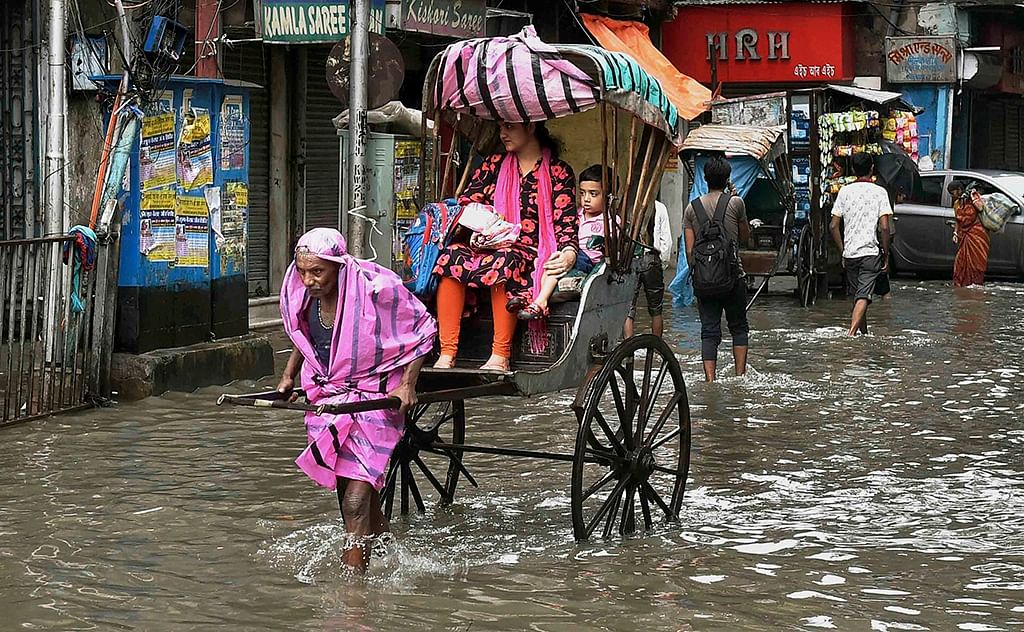
The narrowed urban planning of Kolkata has also played a part in the continuance of this mode of transportation. Due to poor drainage, streets in low-lying areas get flooded frequently. During heavy monsoons, the hand-pulled rickshaw is the only form of transport which can navigate flooded streets. Its non-reliance on fossil fuels makes it less expensive and non-polluting, and its compact size allows easy navigation through the narrow lanes of Kolkata

Carrying passengers in flooded road

Conclusion

Hand-pulled Rickshaws are the legacies of Kolkata’s British colonial past. The demolition of these mannual carts and their replacement with electric mode of carrier carts, would slightly dim the spirit the of the old city. But with time’s stand, it is on the behalf of saving the human labour in a more cost-effective and eco-friendlier way. Although, Kolkata will always cherish its beautiful past garnered with these wooden carts, that served the city and its citizens for ages.

Dhakis of West Bengal: Where They Come From and Where They Go

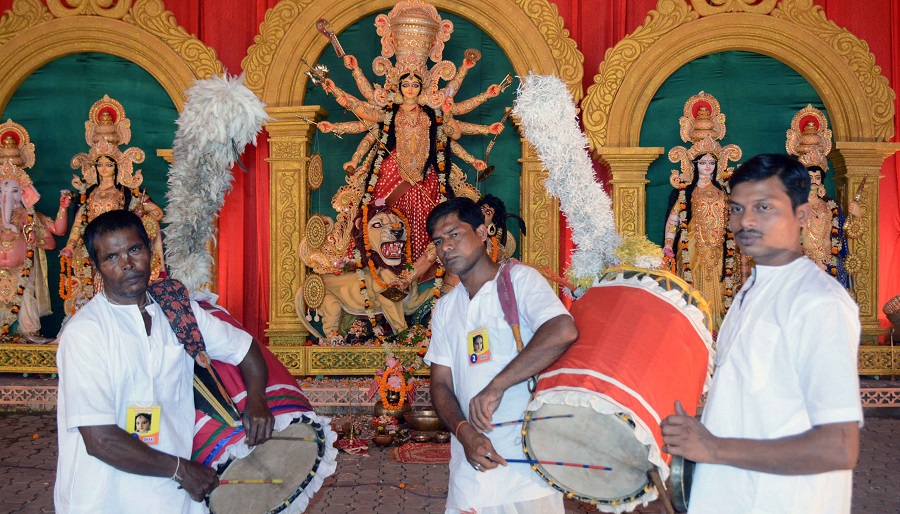
Dhakis playing dhaks in a Durga Puja pandal

Introduction

India is a country of rich cultural diversity and the essence of festivity for each Indian state is unique on its own. The main festival of the Indian state of West Bengal is Durga Puja, which is held during the auspicious Aashwin Durga Navtras in the months of September-October. During the festival the Mother Goddess is welcomed to her home on Earth with 9 long days of celebrations and joy. As a ritual of the festivity both her arrival and departure are rung by hundreds of thousands of “Dhaks” played by the professional drummers, locally called as “Dhakis”.

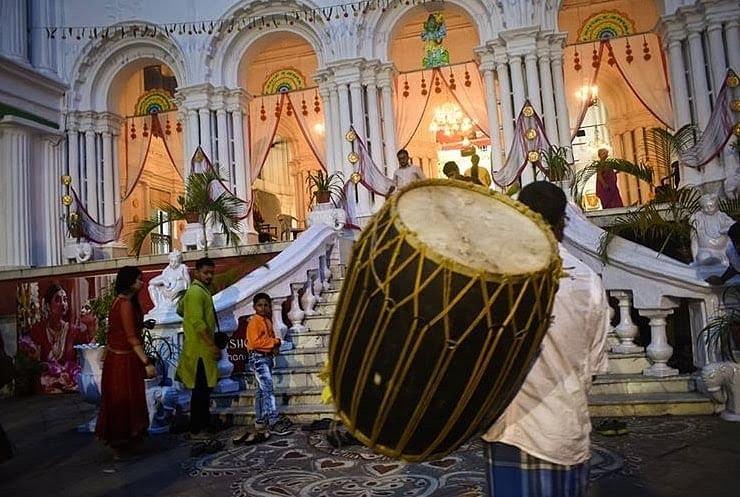
Dhak at a Puja Bari

What “Dhaks” Are: How They Are Made

The word “Dhak” comes from the Austric word “Dhaka” included in the Sanskrit language. The word later became a part of the Bengali script. The dhak is a big membranophone instrument that originally belongs to South Asia. The dhak has become an integral aspect of the widely loved Bengali festival of Durga Puja, other Bengali rituals and festivities. It would have no festive aura if not for the maddening rhythm of the dhak. The dhak is beaten with two sticks loudly to infuse the frenzied beats into the listeners. These beats are enough to raise the spirits and conjure up the feel of the Durga Puja. Without the instrument, the heavily celebrated festival would have felt sombre.

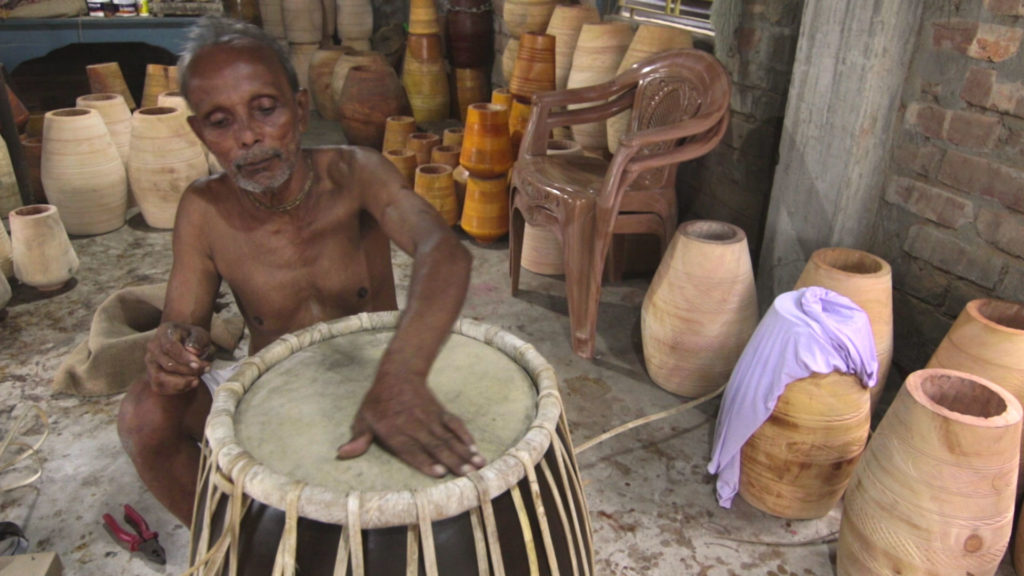
The sound of the dhak depends on a lot of factors like the shape. The shape varies from almost cylindrical to barrel-like. On one hand, the outer portion of the wood is shaved off and carved to create the barrel shaped instrument. On the other hand, the inner side of it is made to be absolutely hollow.The two ends of the dhak are wrapped up with goat skin on the top and calf skin at the bottom. It is said that using these two types of hides bring out the perfect sound texture of the dhak. The manner of stretching the skin over the mouth of the dhak and lacing it is also an important factor in the kind of sound that will be produced. The more the strings on the side of the dhak are pulled the higher the pitch of the dhak gets. The two sticks that are used to beat the dhak are carefully chiseled and formed out of thin cane or bamboo. Because of the drying session of the wooden structure and the intricate handwork and decoration, it takes around one month to reach the perfection in making the instrument.

Making of Dhaks

Who “Dhakis” Are: The Heritage follows

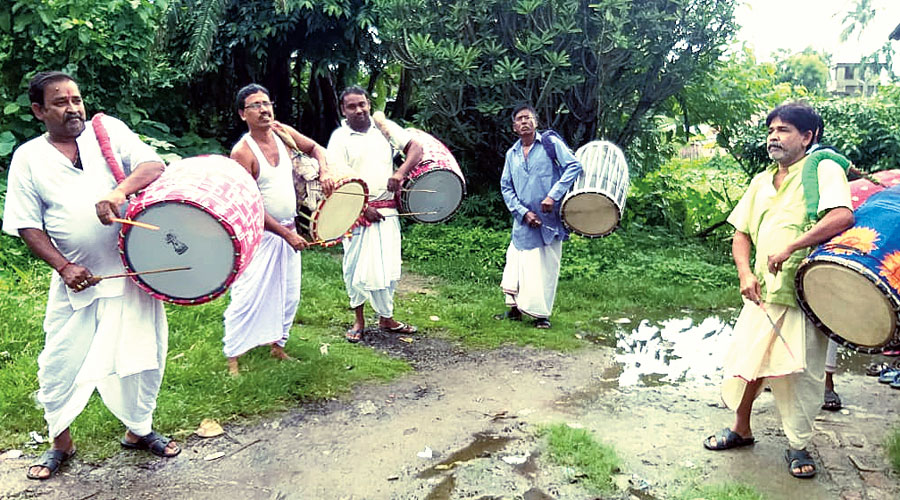
‘‘Dhakis’’ are integral to almost all festivities in Bengal but the art of playing the huge barrel-shaped membranophone instrument is considered as a staple of Bengal’s most celebrated Durga Puja. Most of the ‘dhakis’ or men who play the ‘dhak’ hail from humble rural backgrounds of Murshidabad, Hooghly, Malda, Bankura and Purulia districts of the state. Just like playing any other instrument that is highly associated with a centuries-old cultural heritage, the art of playing dhak, or the business of dhakis are often found to be ancestral and moving in the families since ages. The art of playing such instrument is considered as a living witness, bearing the tradition of the state of West Bengal. The art of playing dhak is passed on from one generation to the next though this art is gradually dying out and losing its focus. One of the reasons for this is the uncertain informal nature of this profession. They still teach the children to play the dhak is to preserve the culture and heritage.

Each part of Durga Puja rituals has a different and unique tune and beat of the dhak right from the arrival of the idols till their immersion. It is played when the idol enters the pandal and even when it exits the pandal on the last day of puja, Dashami. In fact, it is the deafening sound of the dhak that fills the air of immense celebration during the ‘Sandhya Arati’ on Ashtami. This ceremony is absolutely incomplete without the beats of the dhak. Along with that, the ‘Dhunuchi Nach’ is also an essential part where the dhak provides the musical rhythm to which people dance with the ‘dhunuchi’. Another popular tradition is the ‘Dhaker Lorai’ or ‘Fight between Dhaks’ where the grandeur is revealed the best when dhakis play in groups. It is usually a fascinating experience for the audience to see the feathered drums being played by the dhakis dancing to the music produced. Finally, on Dashami, the majestic beats of the dhak helps lift the air of sadness and gloom during the vermilion ritual and ultimately, the immersion.

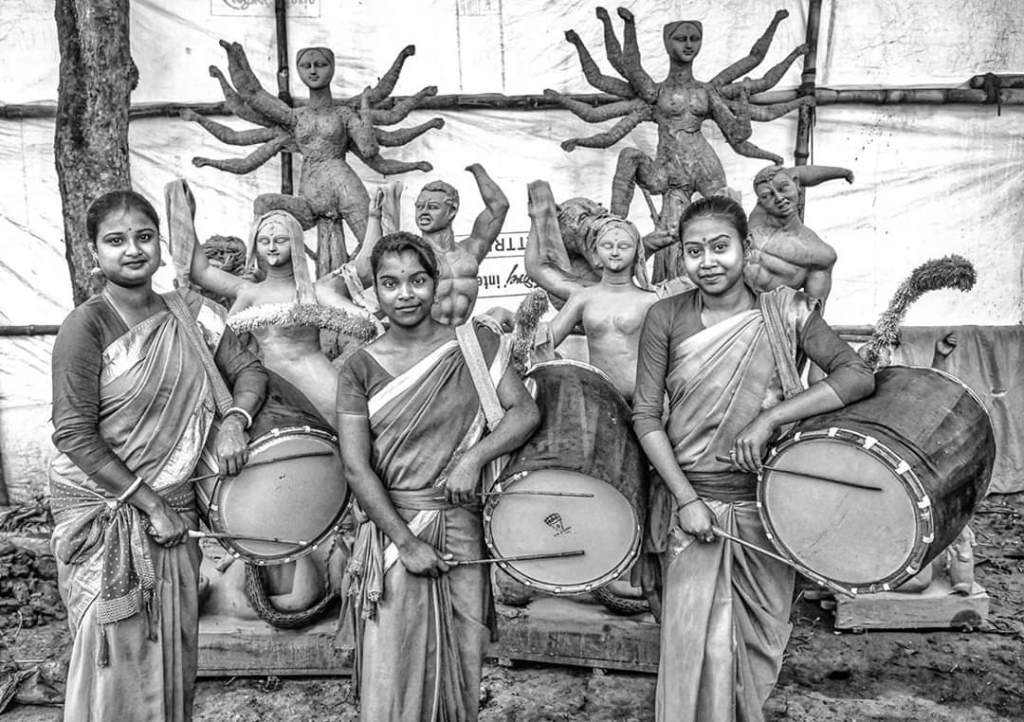
Female artists too have now taken up the responsibility to revive the age old art of playing the dhak. In such a male-dominated profession where carrying the dhak is a major issue, women have proved themselves to be no less than their male counterparts. Teams of women dhakis are finding fame and getting established slowly in their fields.

Dhakis of Bengal

COVID-19 and The Livelihood of Dhakis

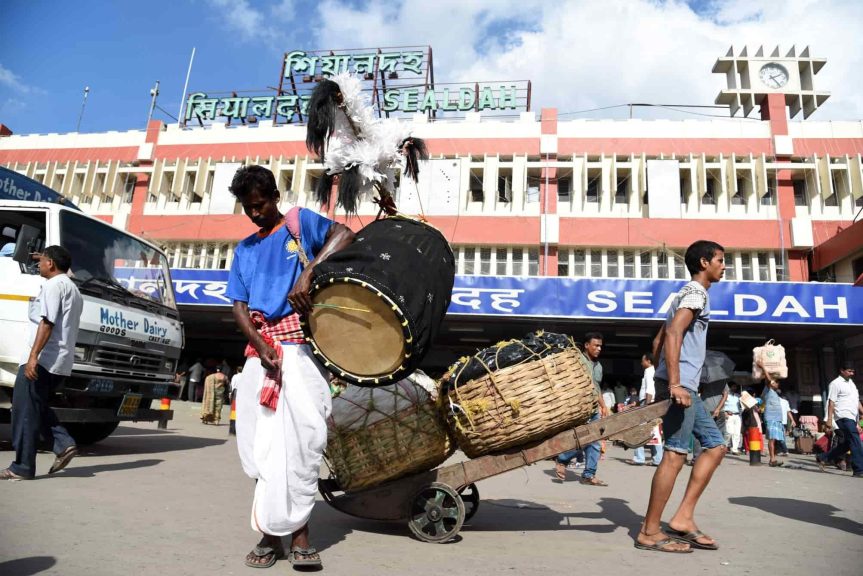
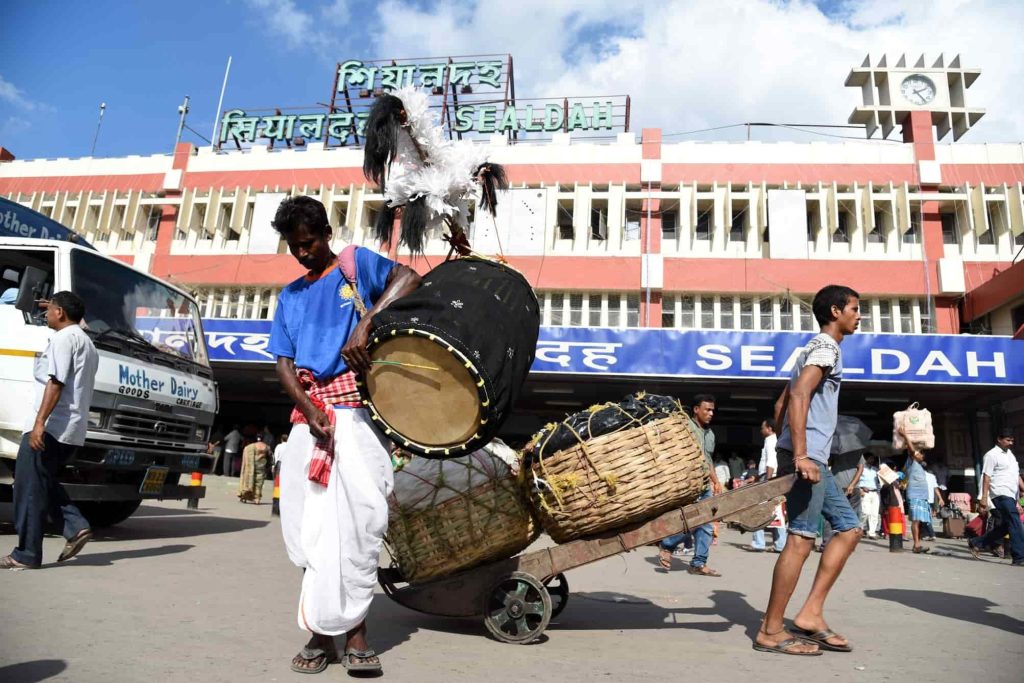
The Impact The drop in the number of Durga Pujas in and outside Bengal amid the novel coronavirus outbreak has taken the rhythm out of the lives of many dhakis (traditional drummers) who look forward to this festive season as their main source of earnings in the year. Every year, the dhakis from different districts and villages of Bengal use to appear at Sealdah station premises before Durga puja. The dhakis used to play the drums in front of Sealdah station every year before puja. From there, various puja committees used to take them in the puja pandals to play the ‘dhak’. But for the past two years the situation is very different, as Puja Committees and Organizers are tight in budget and have to follow a lot of restrictions . Moreover, thousands of dhakis from Bengal districts like East Burdwan, Birbhum, Purulia, Bankura and Hooghly would in other years travel to states such as Assam, Maharashtra, Delhi, Uttar Pradesh to perform at Durga Puja pandals and get higher pay than what they would have got in their home state. But, COVID-19 has restricted that option too for these drummers in past years.

Dhakis at Sealdah station, Kolkata

Where Are They At Now: How We Can Help

Acknowledging the fact that, playing dhak couldn’t be considered as a stable profession and is more inclined to be an occasional source of performing art and earning money, most of the dhakis are often associated with other rural jobs like farming, weaving, fishing to support their livelihood. During Pandemic, the dhakis hope that though they could not travel outside Bengal, they were still lucky if they got calls from Bengal puja organisers. When budgets are low, organisers play recorded beats of the dhaki in pandals. However, several organisers in Bengal have decided to go ahead with dhakis to add the traditional fervour to festivities with the state government offering a dole of Rs 50,000 to each puja committee.

A group of Women Dhakis in front of Goddess Durga idols

Conclusion

Just like of everyday’s, MachhBhaat, Bengal ’s essence of festivity is incomplete without the rhythmic beats of Dhaks. Along with everyone one of us, they are also looking forward for a better situation in the upcoming years, while we can celebrate together the joys of life without fearing for the safety of our health . With the constant effort of the Government and the citizens together , hope we are going to reach that phase very soon.

Child Marriage in India: The Problem and The Cure

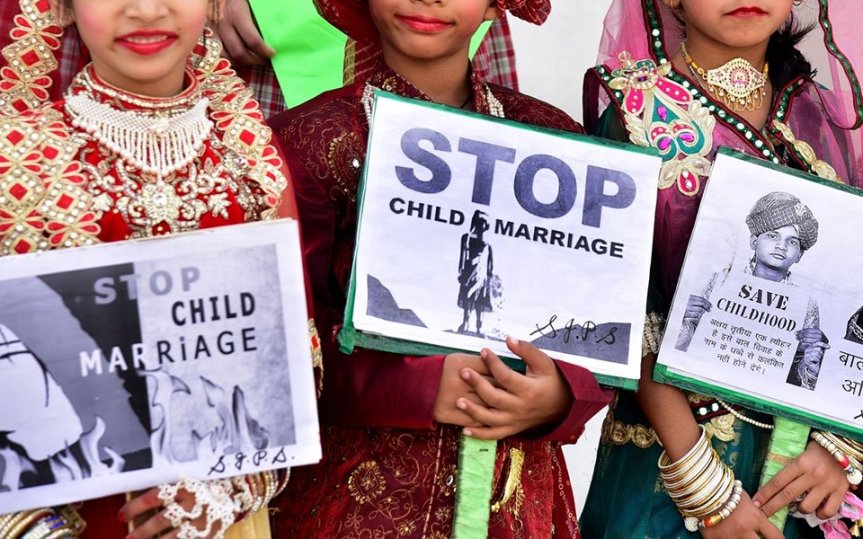
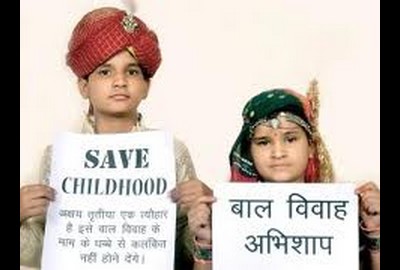
Child Marriage in India

Introduction

Our country India has always been known to the world for its diverse cultural enrichments. But, the legacies from our past beliefs also bore with it some evil practices to the society that we are still dealing with. And one of those practices is the child marriage. The seeds of the problem are still buried so deep in the society and the mind of its people, that it stands alone as a huge socio-cultural challenge till today.

Historic Background

The Vedic history of India dated back to from 200 BC to 700 AD, scribes the marriage as a freedom of choosing desired partner for both men and women. But, with the formation of Government and political modification due to multiple invasions in Medieval India, the women lost their rights to education and choosing their partner and rather were subjected to obey rules and the code of behaviour. Though, age at which the girl was to be married differed and it was rare for girls younger than 12 to be married in antiquity however it became increasingly common for girls as young as six or eight to be married as young brides or “Valika Vadhu”. The parents decided on the marriages of their children at a very early age although the daughter stayed with her parents until she attained the age of puberty. Reaching to which she was bid off to her in-laws through ‘Gehna’ ceremony, in Rajasthan. While in Bengal, this practice was known as ‘Koulinya Pratha’ where a girl child was often married off to an old ‘Kulin Brahmin’ which later on led her to be ‘Sati’ after his husband’s death.

Laws against Child Marriage

The Child Marriage problem in India was first addressed during the British Era. The Child Marriage Restraint act was established in 1929 and come to force in 1930, which defined the minimum ages of marriage for men and women as 18 and 14 years respectively. However, after India’s independence, the minimum age of marriage for women was increased to 15 years. In 1978, the ages of both men and women were revised again to 21 and 18 years. In 2006, the Prohibition of Child Marriage Act came in force, though it was Inapplicable to the Muslim community. Recently in December 2021, Union Cabinet approved to raise the minimum age of marriage for women to 21 years.

The plea is getting stronger.

The Situation in Current Times and the Consequences

Though there are active laws against Child Marriage, but this practice is still ghostly being performed in various parts of India. According to a survey by UNICEF in 1998, the Child Marriage rate in India is 47%, while by UN reports it to be 30% in 2005. Jharkhand has been found to hold the highest rate while Kerala possess the lowest rate in India. Rural Child Marriage cases were found 3 times higher than Urban ares in India in 2009. The consequences of the evil practice, leave many young women shattered for their entire life. Child Marriages have reported a large number of non-consensual marital rapes, physical abuse and domestic violence, low rates of women literary, deaths during childbirth and post natal problems of both underage mothers and newborns.

Our Take: Fighting for a Social Cause

In this modern Era, India is emerging fast as an United country, with largely powered new age youths. And the present generation can give a tremendous change from the society. The situation is already getting better with more to children and giving equal opportunity to both in order to eradicate the practice completely citizens showing their responsibility male and female children. Bachao,Beti Padhao” movement The Government’s “Beti has stirred up the thoughts of young Indian people With many small initiatives, in every state, for a better future. the idea of going along with everyone with equal opportunities are being accepted by Indian parents for marrying their sons and daughters age. The priorities are being given to qualify for a good education and career build up at a matured before getting married.

The youths’ take is most important.

Conclusion

The citizens are the pillars of society and the future lies on the hand responsibility to work together to effort gets counted when we should try our best to improve of every citizen. It is our make our society even better and free from any evil practices. Every work together for a larger cause. more for a better India. The progress so far is appreciable and we

MODERN SOCIETY- HOUSE HUSBANDS AND WORKING WOMEN

INTRODUCTION

The idea of working wife and househusband is getting popular. Househusbands, otherwise called stay-at-home husbands, are men who stay at home while their companions are working spouses. They take up all the family obligations that are generally done by a housewife while the life partner assumes the part of the provider. They go about as the primary guardians of the family-a job that was just taken up by ladies till now. Ladies today are presently not bound to the home space as prior. They work side by side with men in each field of work-life expressions, science, music, innovation, organization, news-casting, and so on. Step by step, we are moving forward towards sex correspondence. However, the advancement is slow. It is occurring in any case.

CHANGE IN THE MINDSET

The main change in the general public identified with sexual orientation balance is a house spouse. Men taking up jobs generally accepted to be finished by ladies is an incredible advance for equity of genders. At the point when we talk about correspondence, it needs to occur from the two sides. This implies that assuming we need ladies to have equivalent rights, then they should have equivalent obligations as well. We can’t say yes to one and no to another. The mark of distinction here is that men will, in general, have various abilities to ladies with regards to running a family – that has kids in or something else. This can help us move towards equity. For example, both the functioning spouse and househusband can see the value in one another’s work. It would set a genuine model in their youngsters’ eyes.

House spouses essentially need to rehearse, similar to what ladies have been accomplishing for quite a while, to guarantee that they complete every one of the obligations that are offered to them. It varies from one family to another. However, house spouses would attempt to adjust to whatever they need to do to keep their family cheerful. The best point about house spouses is that we get which job ladies acted in the public eye till now. It takes us further toward the balance of genders. Numerous men have in the past questioned and messed with the measure of time and exertion it takes to adapt. This subverting of the housework is being broken as an ever-increasing number of men are picking to become stay-at-home spouses.

POSITION OF SOCIETY

The circumstance is undeniably challenging for stay-at-home fathers. As indicated by the cultural jobs, men should be the providers, and ladies should be parental figures. This is the most prominent attitude assumption. All types of people working is another less famous yet acknowledged conclusion. Notwithstanding, ladies working and men assuming the part of parental figures are peered downward on.

Our general public has set extremely brutal guidelines for what ought to be finished by men. In the event that anybody dares to go against them, they are despised. Also, when men work at home as parental figures, they are ridiculed by others who have customary mentalities. Such deriding may make them feel terrible about themselves. It can even bring about limits like gloom. It is because of such uncontrolled jokes that men think that it’s hard to be parental figures while their life partner works. We need to quit taking a gander at men attempting to assume the part of guardians. It might happen that they might be demotivated subsequent to paying attention to every one of the insults. I accept that assuming an individual truly needs to accomplish something great, he should not be halted or reprimanded.

MONETARY STANCE

Throughout recent years, it has been the provider of the family who settles on every one of the significant choices. It has been inserted in our general public since the days of yore. We have frequently seen situations where ladies don’t have a say in family matters since they don’t contribute monetarily. The contention I need to introduce here is that there is no guarantee that a similar situation will not occur when men accept the job of guardians.

We don’t need the circumstance going from one limit to the next. There can be no fairness if that occurs. Thus, it is important that we attempt to adjust the two things. The choice ought to be totally emotional. In other words, if a couple commonly chooses which one should remain at home or, on the other hand, assuming both should work, we as a general public reserve no privilege to pass judgment.

DOES PATRIARCHY AFFECT MEN?

INTRODUCTION

To see how Man centric society capacities, get what Male centric society really is? We need to dive further and comprehend its parts like ‘Patrilineal’ society and ‘Patrilocal’ society. See how men themselves become the casualties in a general public overwhelmed by them. The term ‘Man controlled society’ begins from the Greek Word “Patriarkhēs,” which in a real sense signifies “father or boss.” The words “Patria” signifying “genealogy” and “arkhē” representing “control,” “authority,” and “sway” are the separate segments of man-controlled society. Man-centric society is a framework or a philosophy that gives men the advantage to be the ‘Top of the family.’

It alludes to the qualification offered on men to overwhelm and have control over ladies. In this manner, male-centric society stresses male mastery as normal and prudent. It gives men the option to lead through powers ladies to serve men and multiply. “The Male is commonly unrivaled and the female substandard, the Male the ruler and the female the subject.

Patrilineal Society

Patrilineal alludes to the male heredity framework. In this framework, an individual determines his/her privileges to property, family name, and abundance from the dad. The majority of the social orders and societies on the planet follow this arrangement of Patrilineal society. Men are regular inheritors of these advantages, from their introduction to the world. Genealogy is effectively open to them. Accordingly, the patrilineal society gives inconsistent rights dependent on sex, exceptionally to ladies.

Patrilocal Society

Patrilocal society or patrilocality is a sociological term that alludes to the social framework where a wedded couple lives with or close to the in-laws. It likewise alludes to a “virilocal home.” In such a framework, the Male is the super durable inhabitant of his family. Though, the female is a brief occupant in her family. Ladies are simple products or articles moved from one family to the next

Constrained Generalizations

We live in a general public where everybody anticipates that we should act with a specific goal in mind. Or on the other hand, to say it all the more unequivocally, the general public has fixed what is ordinary and strange. The manner in which we talk, act, walk, or even sit chooses our personality. It is a summed-up conviction and idea that applies to all sexual orientations. An individual who acts in a strange way is a casualty of consistent judgment and analysis.

Assumptions for how a male youngster ought to act?

Since the beginning, little fellows accept that they must be emphatic, predominant, and forceful. Though ladies must be agreeable, resigned, supporting, and submissive. Young men need to act all the more skillfully and be free from their youth. For example, the vast majority of the occasions we have seen young men play with balls/toy vehicles/robots/automatic rifles as opposed to with dolls/teddy bears. This is on the grounds that the general public chooses how a male youngster ought to act in a manner so that individuals treat them as typical.

In this way, even the toys that we play with are sexually explicit. It is a result of this sex particularity, men accept that they should act in an ‘ordinary’ way. Consequently, from early on, the general public powers men to conceal their actual selves. As their conduct and the items, they manage to choose their personality and sexuality Indeed, even the idea of shading is sexual orientation explicit. The blue tone consistently addresses the manly element. While pink addresses the ladylike angles. For example, a man who wears a pink shirt goes through a great deal of analysis since it is ladylike and henceforth inadmissible. Such convictions deride men and weights them to act in an ‘ordinary’ way. This further leads them to act all the more forcefully and be predominant.

Harmful manliness is an overstated idea of how men ought to act. It propagates mastery, strength, homophobia, sexism, and hostility. This thought powers men to act intensely in a manner that eats up them, all things considered. It includes the possibility that men should dismiss all that is female. It celebrates unfortunate propensities. For example, a man constrains himself to went through hours in an exercise center to get the ideal body. As it gives the feeling that they are not powerless. Rather, they are solid.

Harmful manliness additionally causes extreme despondency and tension in men. It likewise draws in them to enjoy hazardous propensities like substantial drinking, smoking, or utilizing drugs. These propensities underscore “masculinity.” Notwithstanding, it likewise keeps them from getting clinical assistance. Also, mental issues like discouragement, tension, and psychological wellness issues address ladylike perspectives. As they manage our feelings, psyche, and sentiments. Thus, men accept that being genuinely impressive is a higher priority than being intellectually well.

SEXISM

Sexism is another poisonous characteristic of overstated manliness. It alludes to the disdain for ladies. Since men must be all the more masculine and amazing, poisonous manliness powers men to have hatred for ladies. It drives them to regard ladies as substandard creatures and simultaneously qualifies them to be prevalent. Additionally, male advantage and privilege likewise become an integral factor.

Expressions like “Young men don’t cry” or “Man up” can be hurtful. As young men accept that crying or being compassionate is an indication of a shortcoming. Indeed, even our feelings are sexually explicit. Hostility and strength is an indication of manliness. Compassion, compassion, consideration, and tenderness are indications of gentility. Since the general public anticipates that men should act in a specific way, they will, in general, shroud their essential human feelings. This is another way that supports harmful manliness and male hawkishness. Hence, men accept that being forceful and predominant is the best way to declare their manliness.

The general public weights men with cultural assumptions as well as with familial assumptions. They must be autonomous, legitimate, and insightful. Men need to have generously compensated work and be the sole worker of their families. Men need to take care of the monetary necessities of the family. Though ladies have a place in the kitchen. Men ought to abstain from taking “customary” ladylike jobs, for example, housekeeping and kid raising. They ought to go out and work while ladies should remain inside and take care of the family.

Dealing with the family, kids, and in any event, cooking is an errand and tremendous obligations underneath manliness. Such basic thoughts power men to feel predominant. Likewise, a male who chooses to embrace these “customary female” jobs ‘henpecked spouses’. Accordingly, the general public causes them to accept that specific exercises and jobs are underneath them.

WHY ARE INDIANS AFRAID OF DIVORCE?

PROLOGUE TO THE THOUGHT

Our general public has been man centric and man-driven for quite a while. It gives men the opportunity to be their own lords yet denies ladies the equivalent. Culture completely concurs with men continually ruling and ladies continually being ruled. A man can stop a marriage at whatever point he wishes to, however society questions and derides her if a lady wishes to do likewise. It in a real sense anticipates that women should endure quietly, even get suffocated yet not get a separation.

SOCIETY’S PERSPECTIVE

Tragically a man needn’t bother with authorization for anything, while a lady needs it for everything. We gladly declare that we are instructed and making the world a superior spot to live. We yell trademarks about opportunity for ladies as loud as possible yet, actually, neglect to walk the discussion. It plainly draws out the false reverence of our general public. We gladly announce ourselves to be ‘present day. ‘For what reason can’t a lady decide to carry on with her own life according to her own preferences? We forcefully go against abusive behavior at home and the customary traditionalist mentality about ladies. In any case, do we really follow it at our homes?
They say ‘Good cause starts at home. Be that as it may, shockingly, separate is as yet a no-no in our general public. We show our kids that marriage is a sacrosanct establishment. Yet, that doesn’t imply that it is a declaration of joy. For what reason wouldn’t we be able to comprehend if marriage as an establishment isn’t working any longer? Most families consider separation to be the apocalypse. They don’t attempt to put themselves in the spot of individuals who are in that despondent marriage. Separation can have a good implication. Assuming a dead relationship is finished, it doesn’t mean everything is broken. All things considered, it is a new beginning. On the off chance that the two players arrive at a shared agreement that separation is the best hotel for them to be content in their particular lives, for what reason do individuals have an issue?

WHY IS DIVORCE VIEWED AS A SOCIAL STIGMA?

Another misinterpretation is that assuming individuals get separated, they become fierce foes to one another. In our country, ladies can’t consider leave a relationship rapidly. This is on the grounds that they are ladies. Society regularly fails to remember that before ladies, they are people. In the event that a man has the option to be the expert of his own life, then, at that point so does a lady. Much of the time, because of family pressure, ladies can’t tolerate upping for themselves and move out of a poisonous relationship.

We need to comprehend that solitary the spouse and the wife go through detachment after separate. The detachment doesn’t happen among youngsters and guardians. The guardians’ condition with their youngsters stays as before. It is only that the guardians play out their obligations independently. Subsequently, the two players improve life. Created nations like the USA are substantially more OK with separate. They comprehend the issue and backing the reason. In the event that we can take on their dressing sense and style of food, for what reason wouldn’t we be able to accept their expansive mindedness?

Marriage can give a conviction that all is good, yet separate from gives another desire to have a glad existence. Likewise, being a solitary parent is any day better than displaying a poisonous relationship. We need to comprehend that separation is surely not the most exceedingly terrible thing for youngsters, but rather undesirable everyday life is. It can likewise empower the two accomplices to fill in life once they feel glad intellectually.

POSITION OF LAW

The Seventy-First Law Commission Report of 1978 methodicallly contended the meaning of defining which perceived unrecoverable breakdown of marriage as a firm ground for separate. As per this, great separation law has twofold articles. Right off the bat to safeguard, and not subvert, the soundness of the relationship. Then, if the couple, through shared agreement, concludes that their marriage has hopelessly separated, then, at that point they ought to be liberated of it. This should be finished with complete equity and the base harshness.

TOWARDS THE END

A few cases have offered strong help to this contention. Henceforth it plainly addresses a social reality. Society has changed drastically, thus has our manner of thinking towards marriage. In this way, if a marriage has gotten suffocating and broken past all prospects of fix, then, at that point it should be finished.

Separation, in India, is as yet a sociocultural disgrace. Separation rates for Indian people are 0.3 percent and 0.2 percent, separately. Incidentally, this is in spite of that spousal viciousness is the most normal type of aggressive behavior at home in India. Thus, separation ought to be viewed as an answer and the way to independence from a poisonous relationship. It ought to positively not be a social shame.

Eventually, advancement is reflected in one’s thoughts.

WORKING WOMEN AND THE GLASS CEILING

PROLOGUE

The discriminatory limitation is certainly not a commonplace roof made of glass! All things being equal, it is a representation addressing the upper-level labor force openings that are impervious to most ladies. It represents the theoretical hindrance that keeps ladies from making high level proficient progress. The term was first utilized during the 1980s to portray ladies’ difficulties when arriving at higher initiative or chief jobs. Albeit imperceptible and immaterial, the discriminatory limitation is valid.

A GLANCE AT SIMILAR TERMS

PINK-COLLAR GHETTO

During the 1970s, more broad conversations emerged around the compensation inconsistency among people for comparative jobs. Thereupon, the expression “pink-collar ghetto” was authored. Pink-collar occupations were paid not exactly white and blue-nabbed occupations, which were ordinarily held by men.

MATERNAL WALL

Pregnant ladies and working moms might confront a “maternal divider.” Various generalizations identified with going on vacation after kid origination ladies at a disadvantageous situation in their professions.

BAMBOO CEILING

The term Bamboo roof was instituted by Jane Hyun. It was utilized to depict the obstructions Asians and Asian Americans looked in making upper-level proficient progress.

Substantial CEILING

The term discriminatory limitation alludes to all ladies overall. Interestingly, the substantial roof portrays the more imposing obstacles ladies of shading face in getting an upper-level or top administration job. This term was begat by Jasmine Babers.

WHAT DO THE STATS SAY?

The discriminatory limitation isn’t only an illustration. It is a tragic reality.

Different insights back this reality. Chiefs are twice as prone to enlist men over ladies while selecting representatives. Incidentally, at organizations where 90% of administration is men, a big part of the men feel that the initiative well addresses ladies. Unfortunately, just 38.6% of top chief positions are held by ladies. Shockingly, ladies address just 10% of administration in the working environment. Accordingly, 34% of individuals consider male to be as better danger assessors with no rationale to back something very similar. Additionally, ladies make up just 23% of C-Suites. Ladies make up only 4.1% of Fortune 500 CEOs. Subsequently, ladies get increases in salary 5% less frequently than men.

WHAT CEMENTS THE GLASS CEILING?

GENDER ROLES

Gender jobs are extraordinary to various societies. They are characterized the second a kid is conceived.The average generalizations anticipate that girls should be ladylike, respectful and sustaining, though young men are relied upon to be manly, serious, forceful, and valiant. In the work environment, administrators and pioneers should be serious and striking to settle on imperative choices. Such contrasts in sexual orientation jobs limit ladies and take away their freedom. Moreover, ladies are characteristically expected to bring up kids and take care of family errands. Having this heap of assumptions doesn’t allow them to find some kind of harmony at a vocation, construct a family and have an individual life.

GENDER BIAS

Gender predisposition alludes to the inclination given to one sex over another. In the work environment, this predisposition influences ladies actually contrarily. As referenced before, people are twice as liable to recruit a man over a lady. The inclination doesn’t stop after the meeting. All things considered, it heightens further. As indicated by an examination, over 42% of ladies experience separation in the work environment. Those demonstrations of segregation come as inconsistent compensation for a similar obligation, ladies being treated as bumbling, passing up sufficient freedoms, not getting an advancement. Shockingly, on normal for each 100 men advanced just 79 ladies are elevated to similar levels. As referred to previously, at organizations where ladies make up 10% of authority, half men see ladies as being very much addressed.

Sexual Harassment

The U.S. Equivalent Employment Opportunity Commission (EEOC) characterizes inappropriate behavior as: “Unwanted sexual solicitations and verbal or actual behaviors of sexual nature establish inappropriate behavior when this direct influences a person’s business.” While all kinds of people experience lewd behavior, almost 75% of cases are capable by ladies. Unfortunately, practically 68% of ladies experience the ill effects of inappropriate behavior. Out of the ones who experience lewd behavior, 70% of them share it at their working environment. Shockingly, 47% of female respondents accepted that lewd behavior is endured at their working environment.

Moreover, 45% of ladies aren’t certain that administration at their association will resolve the issue. To add to the troubles, 3 out of 4 inappropriate behavior casualties experience counter in the wake of announcing the issue. Subsequently ladies secure stopping their positions simpler than announcing the provocation. 80% of ladies who experience inappropriate behavior inside the initial two years at a new position quit their positions. These frightening encounters make it practically inconceivable for ladies to arrive at more significant level jobs in their professions.

THE FINAL THOUGHT

The unreasonable impediment may not be noticeable through the unaided eye, however it is unquestionably apparent through a sympathetic brain. People are equivalent, so the chances they persuade should be indistinguishable. It is about time to comprehend that sex balance can be accomplished whenever we allow people an equivalent opportunity to vanquish their fantasies.

IS SOCIAL MEDIA POLARIZING SOCIETY?

PROLOGUE

Today, society isn’t just the buyer of data however the maker too. Practically 1.49 billion individuals sign into Facebook day by day. All things considered, around 6,000 tweets are tweeted on Twitter each second. From the hour of its commencement, more than 40 billion photos have been posted on Instagram. Web-based media should turn into an extension between far off individuals, yet it has become a divider between close individuals.

Tragically, counterfeit news has become an industry today and is common all over. Its development, thus, prompts a developing doubt in the traditional press. Counterfeit news has contributed drastically to the reverberation chamber wonder. “Reverberation chamber” alludes to a circumstance where explicit thoughts, convictions, or information focuses are solidified through reiteration of a shut framework that doesn’t permit elective or contending thoughts or ideas.

A PEEP INTO ASCH CONFORMITY EXPERIMENTS

Incredible social analyst Solomon Asch had led a progression of mental trials called the Asch Conformity Experiments during the 1950s. These trials expected to comprehend the degree to which an individual’s perspectives are affected by a gathering. Through the series of investigations, Asch, amazingly, tracked down that an individual was able to try and offer an off-base response just to adjust to the larger part see. The respondents furnished wrong responses for various reasons. Some of them were hesitant to be derided or considered as exceptional. Others dreaded judgment or shame. Some of them likewise accepted that the gathering should be preferred educated over them, so they ought to go with their viewpoint. Method for correspondence and commitment have fostered a great deal since the 1950s, yet the human intuition to fit in stays as before. This clarifies the effect of phony news on the web, which adds to a spellbound society.

HOW IS SOCIAL MEDIA POLARIZES SOCIETY?

Clients in a social framework bond more with ones who are like them in assessment than with ones who are divergent. This is called client homophily. An investigation did by Aalto University on expanding polarization via online media found that elements like client homophily and algorithmic sifting lead to upholding and supporting conviction frameworks. This frequently guarantees that we don’t open our psyches to assorted feelings. Individuals look for educated and reliable thoughts through channels just from individuals they trust. They even search for news that affirms their perspective to mollify themselves. This outcomes in individuals developing inflexible assessments of issues and not the appropriate range to the issues. For instance, Twitter regularly prompts individuals to follow individuals holding a comparative perspective.

Most web-based media destinations are more than able to play abettors. The provisions of receptiveness, lack of definition, and anonymity that were intended to invigorate underestimated networks are currently giving trawlers the qualification to discourteous remarks. This additionally makes space for mean expectations to develop. Also, there has been a developing pattern of deception principally because of predispositions or human mistakes. A steadily developing society of phony records is likewise noticeable. It is fundamentally accomplished for pushing a political plan or annoying individuals. These days there is disinformation also. Disinformation alludes to counterfeit news made deliberately.

OTHER FACTORS OF POLARIZATION

In the early occasions, the print machine was viewed as inconvenience by the Ottomans. The speed at which books were printed and conveyed led to doubt. The principal Greek printing house set up in 1627 distributed a booklet focusing on Jews. Books were just a medium, actually like web-based media is today. Forbidding books and accusing web-based media are the outcomes of comparable wrong rationale. On the off chance that web-based media had an inclination towards evil, stories couldn’t ever have discovered a method of articulation. Web-based media likewise houses numerous accounts of lost kids being discovered, canines being embraced, cash being raised for different causes, and comparative great deeds and human cases.

As indicated by the BI-2018 review, the quantity of people with admittance to TV has is 835 million. Cell phone entrance has developed to around 300 million. The quantity of every day dynamic clients on WhatsApp and Facebook are 200 million and 194 million, individually. The details plainly feature that online media in India is as yet a specialty marvel. Web-based media stages are multilingual, multicultural, and are comprehensive. These stages permit equivalent freedoms for all, independent of class, belief, race, religion, sex, age, or monetary assets. Consequently faulting web-based media for each online wrongdoing doesn’t appear to be persuading.


TOWARDS THE END

Online media is catching society in thin, uneven, and ordinarily counterfeit perspectives. This is disturbing. There isn’t anything amiss with being stubborn. In any case, being inflexible in suppositions is without a doubt wrong. There are consistently different sides to a similar coin. It isn’t care for online media has unfriendly impacts as it were. Online media has a few efficacies also. It interfaces far off individuals and works with the fast scattering of data.

While web-based media faces the worldwide difficulties of data barrage, which is verifiable and counterfeit, it likewise empowers underestimated networks to get to their privileges and voice their viewpoints. So it relies upon the client how he chooses to utilize online media as an instrument or as a weapon. Ideally, individuals will figure out how to be more liable for what they offer, and web-based media stages will recover their tragically missing trust.

INDIA’S OBSESSION WITH LONG HAIR

INTRODUCTION

In India, long hair and femininity are synonymous with each other. The television and film industries are the trendsetters in our country. Their activities play a significant role in the trending fashion from clothes to hairstyles to everything. Unfortunately, these role models are still stuck up in the conventional long hair fashion. Sadly, they haven’t made many efforts to broaden this understanding of femininity. The fashion collections of famous designers usually feature women in long, demure hairstyles. This cements the obsession for long hair harder.

A LOOK AT THE STEREOTYPES

Society has a wide range of stereotypes associated with hair. These stereotypes are prevalent across the countries. Since ancient times goddesses are always portrayed with extra-long hair. Bengali culture has many references to feminine beauty ideals in literature, song, and poetry. Long hair has been hyped up so much as if it is a certification of femininity. Curly brides seldom wear their natural hair at their weddings. They are forced to adhere to a stereotypical beauty standard of long straight hair. The brides often have to adhere to the; mainstream bridal fashions that simply don’t factor in curls. All of this highlights a cultural obsession with long, straight, “proper” hair.

Society often tends to have a really narrow view of beauty. Fair skin, tall height, and long hair are often seen as the yardsticks of beauty. People usually link femininity to having long hair and beauty. Surprisingly women themselves are quick to judge other women based on hair stereotypes. A bizarre assumption in society is that you will not take your work seriously if your hair is fun. Another funny assumption is that you’re aggressive, butch, unfeminine if you have short hair. Besides curly or short hair, colored hair hurt society’s eyes even more. Coloring hair is often seen as the characteristic of an irresponsible or selfish girl. Surprisingly a girl still has to seek permission from her parents or her husband to color her hair. Colored hair is looked upon as highly unprofessional. Especially when women have short colored hair, they often fall victim to the judgmental behavior of society. Sadly this behavior often comes from their own family and friends. Other women themselves are the forerunners in this series of comments and judgments.

WHY DO THE STEREOTYPES GET STRONGER?

The television and film industry tends to stick to them and make them even more prevalent. Advertisements, movies, and daily soaps further cement these stereotypes. Short-haired women are cinematized as mouthy tomboys, athletes, or staunch careerists. They are never picturized as affectionate mothers or wives. Short or colored hair is stereotyped as a shrill, cold archetype devoid of softness and femininity. Long straight hair is shown as the typical main lead thing. Big banner movies and commercials usually feature the heroine with super long hair. They rarely feature curly-haired leads. 

In hair oil or shampoo advertisements, super long straight hair is always glorified. These advertisements mislead us that long straight hair is a beauty standard or that every girl wants them. Even songs celebrate long hair only. We can never think of a song that praises a woman’s short hair, but we can remember hundreds that do this for long hair. The obsession is deeply rooted in the country, especially in the visual profession. Visual professions like modeling or acting expect people to adhere to their usual beauty standards, long hair being one of them. 

Sadly workplaces aren’t hair-inclusive. Surprisingly many companies have a policy about the types of colors allowed on women’s hair. Straight long hair that is not frizzy or colored is considered professional. A majority of Indian corporations believe buzz cuts as unprofessional.

THE CURRENT SCENARIO

Women are trying to free themselves of these suffocating beauty standards. But sadly, due to this, they often face trolling and lose comments from society. From being compared to noodles or broom, their hair often becomes a subject of words. Some women have even decided to go bald. Although we very conveniently say that “bald is beautiful,” but we fail to believe that. If a woman goes bald, she is assumed to be diseased or mourning for someone’s death. Society must stop weaponizing hair to judge women. 

The scenario is undoubtedly changing. Women have become more accepting of themselves. They are making efforts to free themselves of the societal shackles associated with beauty and femininity. We have Indian actors like Kangana Ranaut and Tapsee Pannu, breaking stereotypes related to curly hair. Change is visible in animated children’s heroines as well. Earlier, we had Disney princesses with super long hair. But now we have famous characters like Merida and Moana with curly hair. Women must have the right to decide how they want to look. This decision is a matter of personal choice. It should not be a consequence of societal pressure or stereotypes. Beauty is indeed not derived from skin or hair. There is no benchmark for beauty as “Beauty lies in the eyes of the beholder.”

A GLANCE AT CORPORATE SUSTAINABILITY

INTRODUCTION

“Creating strong business and building a better world are the essential ingredients for long term success.”Corporate Sustainability is an evolving management paradigm for companies. While the concept understands the significance of profitability, it also reiterates the need for environmental protection and social equity.

FOUNDATION OF THE CONCEPT

Corporate Sustainability borrows elements from four main concepts.

Sustainable development

It is a broad concept that aims to balance economic growth and environmental protection. We cannot leave efforts for achieving sustainable development to the government only. Companies are the engines of economic growth. Therefore, they ought to be proactive in making consistent efforts towards achieving sustainable development. 

Corporate Social Responsibility (CSR)

CSR is a self-regulating business model. According to this concept, companies have an ethical obligation to respond to the needs of society. CSR is based on four theories-

Social Contract Theory

The theory revolves around the fact that individuals and organisations enter into various implicit and explicit contracts. When a company extracts resources from the environment, it enters into a contract. The contract is to be socially responsible towards the environment.

Social Justice Theory

This theory argues that in a fair society, all members hold equal importance. It also highlights the significance of social equity and justice. Hence companies must respond to the needs of all the people in a society.

Rights Theory

According to this theory, a company should respect the human rights of their employees and the local communities around them. It must behave ethically with them and ensure a safe working environment.

Deontological theory

The theory throws light on the golden rule that companies have a moral duty towards society. They should therefore listen, consider and respond to the needs of the society while framing strategies.

Stakeholder theory

A stakeholder is an individual or organisation that can affect or is affected by an organisation’s goals. This theory emphasizes that the stronger the relationship a company has with the external parties, the easier it is to achieve its business goals. Consequently, good external relationships help gain a competitive edge.

Corporate Accountability

There is a fiduciary relationship between a stakeholder and a company. Hence a company must be accountable for its actions to the stakeholders. Accountability refers to the legal or ethical responsibility to justify one’s actions. The ambit of Corporate Accountability extends to society as well. A company enters into various implicit and explicit contracts with society. Since a company gets its resources from society, therefore, it must be accountable for its actions. 

THE PILLARS OF CORPORATE SUSTAINABILITY

Three main pillars lay the foundation of Corporate Sustainability.

Environment pillar

Companies rely on society for getting resources. Some of these resources are non-renewable, some are renewable. Companies need to instill an understanding that renewable resources need time to get replenished or renewed. Therefore they should respect these natural cycles and should reform extraction processes. It would ensure that the resources get plenty of time for renewal. 

Social Pillar

Corporate Sustainability requires companies to recognize their impact on the people. This recognition can be in terms of committing to fair wages, showcasing ethical behavior and a safe working environment for employees. The Social Pillar promotes practices that help prosper the health, safety and well-being of the employees.

Economic Pillar

Each company faces intense pressure to earn immediate profits. But Corporate Sustainability encourages investment in technology for the future even if financial benefits show up later. The economic pillar is all about investment in creating technologies for the future. 

WHAT’S THE DIFFERENCE BETWEEN CSR AND CORPORATE SUSTAINABILITY?

CSR is a broader term than Corporate Sustainability. CSR often looks backwards to reflect on what the company has done in the past to contribute to society. On the other hand, Corporate Sustainability looks forward and aims to make efforts in the present to create future opportunities. CSR initiatives mainly target the opinion-forming groups like media while Corporate Sustainability targets the various stakeholders.

A PEEP INTO CORPORATE SUSTAINABILITY REPORTING

We have a concept called Green GDP to measure the economic growth of the countries. Green GDP is an accounting system that considers the environmental loss incurred during the process of economic growth. Thence countries can measure the environmental deterioration caused and can take measures to reduce it. Similar to this is the concept of Corporate Sustainability Reporting. It represents a potential mechanism to generate data and measure the contribution of companies towards achieving sustainable development.

THE FINAL THOUGHT

The vision of doing business is certainly changing over time. The government and stakeholders expect companies to make efforts for people and the environment. According to Global Risks 2020, climate change ranks first as a global risk. Societal risks like water crises and infectious diseases are also threatening. It expects air pollution to become a major cause of environmental mortality by 2050.
These facts highlight the urgent need for action. Corporate Sustainability provides a prospective solution to this. Therefore we need consistent efforts from the end of companies as they are the engines of economic development in a society.

IS BEING AN INTROVERT AWFUL ?

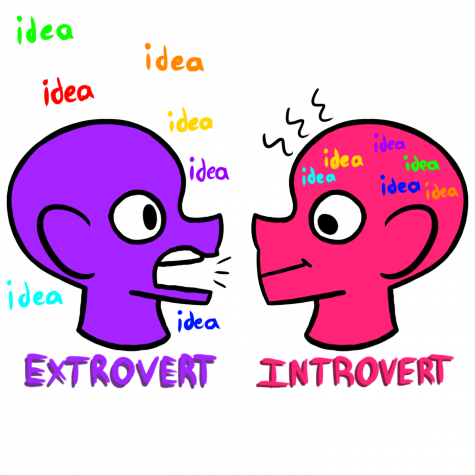
Above all else, let me clear out that one ought not get befuddled between the words “introvert” and “being shy”. An outgoing/ extrovert person can likewise feel timid here and there and that doesn’t imply that he/she is an introvert. An Introvert is a tranquil individual that doesn’t prefer to talk definitely and likes to remain quiet about their contemplations for the most part. They are somewhat individual that returns home just to unwind and have the opportunity to think. However, that doesn’t imply that a friendly individual can’t be a contemplative/introvert person. Similarly as they partake in the calm opportunity to get themselves, they’re probably a contemplative person somewhat. Being a contemplative person is regularly viewed as frail. They aren’t exactly on par with the social butterflies, who simply appear to float through life.

OPINION: Introverts still make great leaders – The Lancer Feed

However, that is false, there isn’t anything amiss with being a introvert. The primary issue is with society, which doesn’t see it similarly. Society has instructed us that being an introvert or thoughtful person is the most exceedingly terrible thing you can be and that everybody should need to be outgoing.

The Perks Of Being An Introvert | Writers Write

They are informed that being active is acceptable and being modest and calm is terrible. They are advised in schools to lift hands, take an interest in a class or we lose marks. For introverts, those are a portion of the exceptionally hard principles to accomplish. Insights say that half of Indian populace is comprised of introverts. So society is saying that 675 Million individuals need to change what their identity is to be acknowledged, to be effective and to be content. I’m additionally told this thing since youth that I should change myself and become a outgoing individual. Indeed, presently likewise my companions, educators and direct relations bother me as a bashful individual and they request that I go along with them in their discussion which I don’t need. Furthermore, some of the time it’s truly irritating.

How to Know If and Why You're an Extreme Introvert | SocialPro

Continuously recollect inside this enormous gathering of self observers are individuals like Emma Watson, Michael Jordan, Albert Einstein, Elton John, Audrey Hepburn thus a lot additional moving individuals. Being an Introvert has not prevented any of them from accomplishing their objectives or being cheerful. Pioneers like Abraham Lincoln, Rosa Parks and Mahatma Gandhi. Every inconceivable pioneer and all are introverts. Being a thoughtful/introvert person has no impact on how glad you or fruitful you will be the length of you see it in the correct manner. In the event that you consider yourself to be a thoughtful person and think its the most exceedingly awful thing on the planet, you are never going to be really content with yourself. In any case, in the event that you acknowledge yourself as a introvert and you’re cheerful, there isn’t anything in your method of you accomplishing your objectives.

Introverted Leadership
INTROVERT LEADERS

So in conclusion there is noting wrong in being an introvert. I am an introvert myself and I don’t feel like to change myself for the society and so should you. As long as you are happy others opinion doesn’t matter.

Also, in case you are an extrovert and you see an individual sitting at the side of your working environment simply contemplate what incredible thoughts he/she is coming up with.

In a World of Extroverts, What Does it Mean to Be an Introvert at School

RESOURCES:

https://timesofindia.indiatimes.com/readersblog/wakeup-india/is-being-an-introvert-bad-23079/

CAN WE ENCOURAGE BEGGING?

At a tender age when children should study in schools, play with toys and enjoy their leisure, many of them are seen on roads seeking alms to make both ends meet due to selfish motives of some miscreants that make them beg under extreme conditions. Masked perpetrators of such deeds are making it a huge business by remaining behind the scenes. The plight of such children is really heart-wrenching. Several initiatives are taken by various institutions and NGOs to check it, but to no avail. Not because they are not true to the work they are doing, but because people like us are not ready to accept that by giving them money we are encouraging begging. The situation is not better throughout the nation as these beggars can be seen begging at traffic intersections, market places, religious places and outside educational institutions. Many of them are mowed down by speeding vehicles. Such children sometimes take to stealing and snatchings. They also disrupt the traffic. There is a need to unmask those elements who are behind the menace. Don’t encourage begging, instead help them by instilling positive ideas and educating them. JASPREET SINGH, PATIALA, editorial@tribune.com

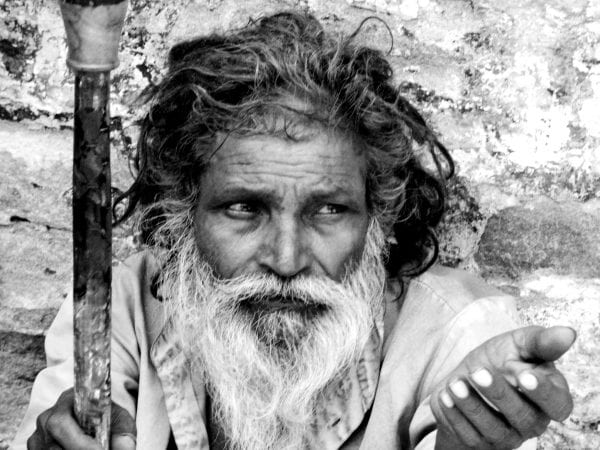
A Street Beggar Begging has been declared an offense in independent India, but it has really no real impact. On almost every red light’, there are number of beggars who beg in the name of mercy or religion. Initially, people used to beg only in desperate circumstances but now-a-days, it has become a profession. Those who can make easy money by begging. do not want to work. And at times, they can earn more than an honest worker. At every crossing, a woman carrying a child, a handicap person. young children asking for alms for food or in the name of God, IS a common sight. They can all work to earn their livelihood, even the handicapped, because all self-respecting people try to stand on their own feet. Of course, crippled people should be helped, but not by giving them alms. Begging cannot be justified at any cost. People use different innovative ideas for begging. Some form singing parties, some wear saffron clothes and carry a bowl, others beg in the name of charitable institutions. Some try to rouse sympathy by carrying small, crying, hungry infants but while giving aims to any beggar, one should always remember that one is not helping the beggar in any way by giving them money but is only satisfying his ego of being a kind and benevolent man. Begging is a stigma on the name of any nation and charity should be given only to charitable institution so that it reaches those who really need them.

Don’t encourage begging!