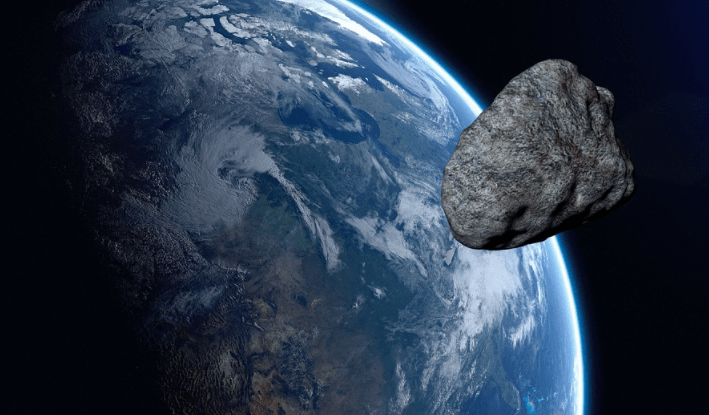
Asteroids- The Floating Rocks

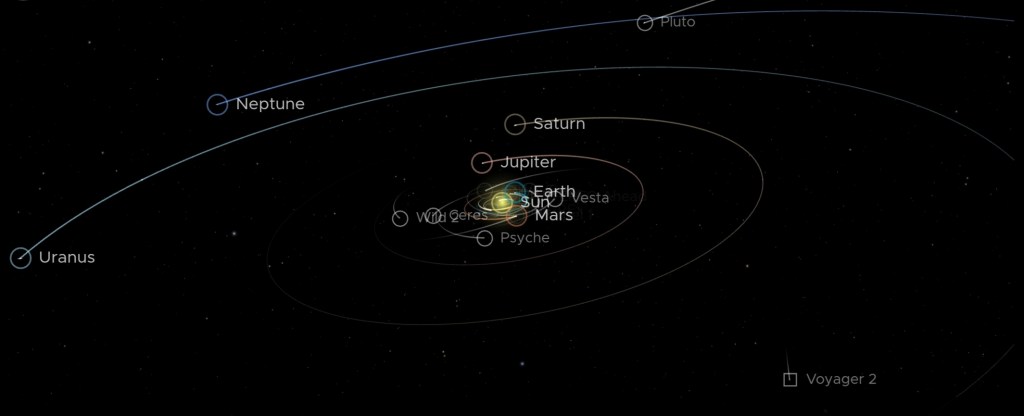
Asteroids, sometimes called minor planets, are rocky remnants left over from the early formation of our solar system about 4.6 billion years ago. The current known asteroid count is: 1,100,048. Most of this ancient space rubble can be found orbiting our Sun between Mars and Jupiter within the main asteroid belt. Asteroids range in size from Vesta – the largest at about 329 miles (530 kilometers) in diameter – to bodies that are less than 33 feet (10 meters) across. The total mass of all the asteroids combined is less than that of Earth’s Moon.

See the source image

Composition

The three broad composition classes of asteroids are C-, S-, and M-types.

  • The C-type (chondrite) asteroids are most common. They probably consist of clay and silicate rocks, and are dark in appearance. They are among the most ancient objects in the solar system.
  • The S-types (“stony”) are made up of silicate materials and nickel-iron.
  • The M-types are metallic (nickel-iron). The asteroids’ compositional differences are related to how far from the Sun they formed. Some experienced high temperatures after they formed and partly melted, with iron sinking to the center and forcing basaltic (volcanic) lava to the surface.

Asteroid Classification

Main Asteroid Belt: The majority of known asteroids orbit within the asteroid belt between Mars and Jupiter, generally with not very elongated orbits. The belt is estimated to contain between 1.1 and 1.9 million asteroids larger than 1 kilometer (0.6 miles) in diameter, and millions of smaller ones. Early in the history of the solar system, the gravity of newly formed Jupiter brought an end to the formation of planetary bodies in this region and caused the small bodies to collide with one another, fragmenting them into the asteroids we observe today.

Trojans: These asteroids share an orbit with a larger planet, but do not collide with it because they gather around two special places in the orbit (called the L4 and L5 Lagrangian points). There, the gravitational pull from the Sun and the planet are balanced by a trojan’s tendency to otherwise fly out of orbit. The Jupiter trojans form the most significant population of trojan asteroids. It is thought that they are as numerous as the asteroids in the asteroid belt. There are Mars and Neptune trojans, and NASA announced the discovery of an Earth trojan in 2011.

Near-Earth Asteroids: These objects have orbits that pass close by that of Earth. Asteroids that actually cross Earth’s orbital path are known as Earth-crossers.

Potentially hazardous asteroids- NEAs that are of greatest threat to Earth, which have chances of colliding with Earth are listed as potentially hazardous asteroids or PHAs.

Missions to asteroids

  • OSIRIS-REx – Sample Return Mission to Asteroid Bennu (2016)
  • Hayabusa2 – JAXA Sample Return Mission to Asteroid Ryugu (2014)
  • PROCYON – JAXA Small Satellite Asteroid Flyby Mission (2014)
  • Dawn – NASA Orbiter of Asteroids Ceres and Vesta (2007)
  • Rosetta – ESA Comet Mission, flew by asteroids Steins and Lutetia (2004)
  • Hayabusa (Muses-C) – ISAS (Japan) Sample Return Mission to Asteroid 25143 Itokawa (2003)
  • Genesis – NASA Discovery Solar Wind Sample Return Mission (2001)
  • Stardust – NASA Comet Coma Sample Return Mission, flew by asteroid AnneFrank (1999)
  • Deep Space 1 – NASA Flyby Mission to asteroid Braille (1998)
  • Cassini – NASA/ESA Mission to Saturn through the Asteroid Belt (1997)
  • NEAR – NASA Near-Earth Asteroid Rendezvous with 433 Eros
  • Galileo – NASA Mission to Jupiter via asteroids Gaspra and Ida

https://en.wikipedia.org/wiki/Asteroid
https://solarsystem.nasa.gov/asteroids-comets-and-meteors/asteroids/overview/
All you need to know about Eclipses

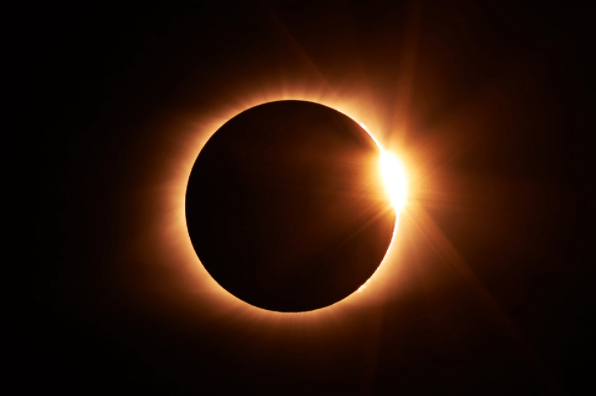
Ever heard of eclipses? I am sure you must have. Ever seen one? If you have then you are very lucky, and if you have observed a total or annular solar eclipse you are even luckier and I am jealous. The word eclipse is derived from the ancient Greek noun ἔκλειψις (ékleipsis), which means “the abandonment”, “the downfall”, or “the darkening of a heavenly body. 

What is an Eclipse?

For any two objects in space, a line can be extended from the first through the second. The latter object will block some amount of light being emitted by the former, creating a region of shadow around the axis of the line. Typically these objects are moving with respect to each other and their surroundings, so the resulting shadow will sweep through a region of space, only passing through any particular location in the region for a fixed interval of time. As viewed from such a location, this shadowing event is known as an eclipse.

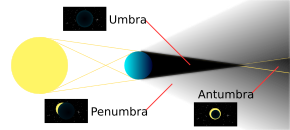
Typically the cross-section of the objects involved in an astronomical eclipse are roughly disk shaped. The region of an object’s shadow during an eclipse is divided into three parts:

  • The umbra, within which the object completely covers the light source. For the Sun, this light source is the photosphere.
  • The antumbra, extending beyond the tip of the umbra, within which the object is completely in front of the light source but too small to completely cover it.
  • The penumbra, within which the object is only partially in front of the light source.

Eclipses on Earth

On earth lunar eclipses and solar eclipses are the major form of eclipses which occur here on Earth.

Lunar eclipse:

Image result for Total Lunar Eclipse Diagram

The Moon moves in an orbit around Earth. At the same time, Earth orbits the Sun. Sometimes Earth moves between the Sun and the Moon. When this happens, Earth blocks the sunlight that normally is reflected by the Moon. Instead of light hitting the Moon’s surface, Earth’s shadow falls on the Moon. This is an eclipse of the Moon, or a lunar eclipse. A lunar eclipse can occur only when the Moon is full. A lunar eclipse usually lasts for a few hours. At least two partial lunar eclipses happen every year, but total lunar eclipses are rare. It is safe to look at a lunar eclipse. A lunar eclipse can be seen from Earth at night. 

There are two types of lunar eclipses:

  1. Total lunar eclipse- A total lunar eclipse occurs when the Moon and the Sun are on exact opposite sides of Earth. Although the Moon is in Earth’s shadow, some sunlight reaches the Moon. The sunlight passes through Earth’s atmosphere, which filters out most of the blue light. This makes the Moon appear red to people on Earth.
  2. Partial lunar eclipse-A partial lunar eclipse happens when part of the Moon enters Earth’s shadow. In a partial eclipse, Earth’s shadow appears very dark on the side of the Moon facing Earth. What people see from Earth during a partial lunar eclipse depends on how the Sun, Earth and Moon align.

Solar Eclipse:

Image result for Total solar Eclipse Diagram

Sometimes when the Moon orbits Earth, the Moon moves between the Sun and Earth. When this happens, the Moon blocks the light of the Sun from reaching Earth. This causes an eclipse of the Sun, or a solar eclipse. During a solar eclipse, the Moon casts a shadow onto Earth. Solar eclipses happen every 18 months somewhere on Earth. Unlike lunar eclipses, solar eclipses last only a few minutes.

There are three main types of solar eclipses:

  1. Total solar eclipse: A total solar eclipse is visible from a small area on Earth. The people who see the total eclipse are in the center of the Moon’s shadow when it hits Earth. The sky becomes very dark, as if it were night. For a total eclipse to occur, the Sun, Moon and Earth must be in a direct line.
  2. Partial solar eclipse: This happens when the Sun, Moon and Earth are not exactly aligned. The Sun appears to have a dark shadow on a small part of its surface.
  3. Annular solar eclipse: An annular eclipse happens when the Moon is farthest from Earth. Because the Moon is farther away, it seems smaller. It does not block the entire view of the Sun. The Moon in front of the Sun looks like a dark disk on top of a larger Sun-colored disk. This creates what looks like a ring around the Moon.

Eclipses on other planets

The gas giant planets have many moons and thus frequently display eclipses. The most striking involve Jupiter, which has four large moons and a low axial tilt, making eclipses more frequent as these bodies pass through the shadow of the larger planet. Transits occur with equal frequency. It is common to see the larger moons casting circular shadows upon Jupiter’s cloud tops.

On the other three gas giants (Saturn, Uranus and Neptune) eclipses only occur at certain periods during the planet’s orbit, due to their higher inclination between the orbits of the moon and the orbital plane of the planet. The moon Titan, for example, has an orbital plane tilted about 1.6° to Saturn’s equatorial plane. But Saturn has an axial tilt of nearly 27°. The orbital plane of Titan only crosses the line of sight to the Sun at two points along Saturn’s orbit. As the orbital period of Saturn is 29.7 years, an eclipse is only possible about every 15 years.

On Mars, only partial solar eclipses (transits) are possible, because neither of its moons is large enough, at their respective orbital radii, to cover the Sun’s disc as seen from the surface of the planet. Eclipses of the moons by Mars are not only possible, but commonplace, with hundreds occurring each Earth year. There are also rare occasions when Deimos is eclipsed by Phobos. Martian eclipses have been photographed from both the surface of Mars and from orbit.

Pluto, with its proportionately largest moon Charon, is also the site of many eclipses. A series of such mutual eclipses occurred between 1985 and 1990. These daily events led to the first accurate measurements of the physical parameters of both objects.

Eclipses in 2021

  • May 26, 2021 — Total Lunar Eclipse
  • Jun 10, 2021 – Annular Solar Eclipse
  • Nov 18–19, 2021 — Partial Lunar Eclipse
  • Dec 4, 2021 – Total Solar Eclipse

Scientists use solar eclipses as an opportunity to study the Sun’s corona. The corona is the Sun’s top layer. During an annular eclipse, NASA uses ground and space instruments to view the corona when the Moon blocks the Sun’s glare.

https://www.nasa.gov/audience/forstudents/5-8/features/nasa-knows/what-is-an-eclipse-58/ http://en.wikipedia.org/wiki/Eclipse

Neptune-The Coldest Planet

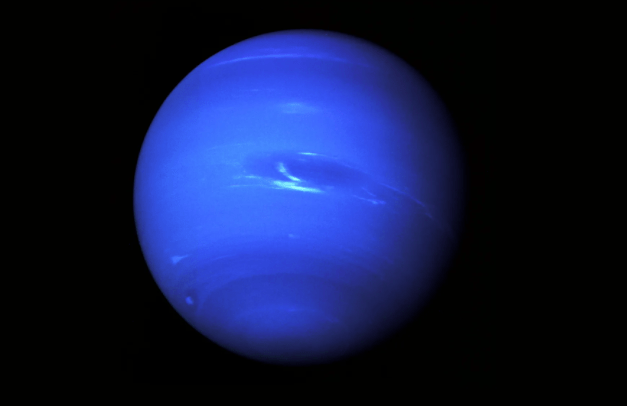
Neptune is the eighth and farthest-known Solar planet from the Sun. In the Solar System, it is the fourth-largest planet by diameter, the third-most-massive planet, and the densest giant planet. It is 17 times the mass of Earth, slightly more massive than its near-twin Uranus. Neptune is denser and physically smaller than Uranus because its greater mass causes more gravitational compression of its atmosphere. It is named after the Roman god of the sea and has the astronomical symbol ♆, a stylised version of the god Neptune’s trident.

Some facts about Neptune

Diameter-  49,500km

Orbital period-  164.8yrs

Length of a Day-   16.1hrs

Axis tilt- 28 degrees

Distance from  the Sun- 30.1AU(4.5 billion km)

Moons- 14

Special features

Neptune is not visible to the unaided eye and is the only planet in the Solar System found by mathematical prediction rather than by empirical observation. Unexpected changes in the orbit of Uranus led Alexis Bouvard to deduce that its orbit was subject to gravitational perturbation by an unknown planet. After Bouvard’s death, the position of Neptune was predicted from his observations, independently, by John Couch Adams and Urbain Le Verrier.

Neptune is our solar system’s windiest world. Despite its great distance and low energy input from the Sun, Neptune’s winds can be three times stronger than Jupiter’s and nine times stronger than Earth’s. These winds whip clouds of frozen methane across the planet at speeds of more than 1,200 miles per hour (2,000 kilometers per hour). Even Earth’s most powerful winds hit only about 250 miles per hour (400 kilometers per hour).

In 1989 a large, oval-shaped storm in Neptune’s southern hemisphere dubbed the “Great Dark Spot” was large enough to contain the entire Earth. That storm has since disappeared, but new ones have appeared on different parts of the planet.

Natural satellites and Rings

Neptune has 14 known moons. Neptune’s largest moon Triton was discovered on October 10, 1846, by William Lassell, just 17 days after Johann Gottfried Galle discovered the planet. Since Neptune was named for the Roman god of the sea, its moons are named for various lesser sea gods and nymphs in Greek mythology.

Triton is the only large moon in the solar system that circles its planet in a direction opposite to the planet’s rotation (a retrograde orbit), which suggests that it may once have been an independent object that Neptune captured. Triton is extremely cold, with surface temperatures around minus 391 degrees Fahrenheit (minus 235 degrees Celsius). And yet, despite this deep freeze at Triton, Voyager 2 discovered geysers spewing icy material upward more than 5 miles (8 kilometers). Triton’s thin atmosphere, also discovered by Voyager, has been detected from Earth several times since, and is growing warmer, but scientists do not yet know why.

  Neptune has at least five main rings and four prominent ring arcs that we know of so far. Starting near the planet and moving outward, the main rings are named Galle, Leverrier, Lassell, Arago and Adams. The rings are thought to be relatively young and short-lived. Neptune’s ring system also has peculiar clumps of dust called arcs. Four prominent arcs named Liberté (Liberty), Egalité (Equality), Fraternité (Fraternity) and Courage are in the outermost ring, Adams. The arcs are strange because the laws of motion would predict that they would spread out evenly rather than stay clumped together. Scientists now think the gravitational effects of Galatea, a moon just inward from the ring, stabilizes these arcs.

See the source image

Structure and Atmosphere

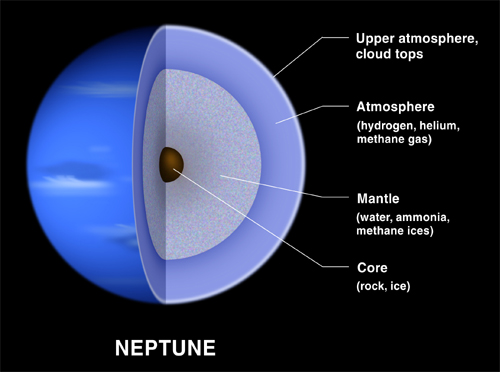
Neptune is one of two ice giants in the outer solar system (the other is Uranus). Most (80 percent or more) of the planet’s mass is made up of a hot dense fluid of “icy” materials—water, methane and ammonia—above a small, rocky core. Scientists think there might be an ocean of super hot water under Neptune’s cold clouds. It does not boil away because incredibly high pressure keeps it locked inside.

Neptune’s atmosphere is made up mostly of hydrogen and helium with just a little bit of methane. Neptune’s neighbor Uranus is a blue-green color due to such atmospheric methane, but Neptune is a more vivid, brighter blue, so there must be an unknown component that causes the more intense color.

Exploration

Voyager 2 is the only spacecraft that has visited Neptune. The spacecraft’s closest approach to the planet occurred on 25 August 1989. Because this was the last major planet the spacecraft could visit, it was decided to make a close flyby of the moon Triton, regardless of the consequences to the trajectory, similarly to what was done for Voyager 1’s encounter with Saturn and its moon Titan. The images relayed back to Earth from Voyager 2 became the basis of a 1989 PBS all-night program, Neptune All Night.

https://en.wikipedia.org/wiki/Neptune
https://solarsystem.nasa.gov/planets/neptune/overview/
Pluto-The King of Kuiper Belt

Pluto is the ninth-largest and tenth-most-massive known object directly orbiting the Sun. It is the largest known trans-Neptunian object by volume but is less massive than Eris. Pluto is a dwarf planet in the Kuiper belt, a ring of bodies beyond the orbit of Neptune. It was the first and the largest Kuiper belt object to be discovered. After Pluto was discovered in 1930, it was declared to be the ninth planet from the Sun. Beginning in the 1990s, its status as a planet was questioned following the discovery of several objects of similar size in the Kuiper belt and the scattered disc, including the dwarf planet Eris. This led the International Astronomical Union (IAU) in 2006 to formally define the term “planet”—excluding Pluto and reclassifying it as a dwarf planet.

Some facts about Pluto

Diameter-   2300km

Orbital period-  247.8 yrs

Length of a Day-    6.39 days

Axis tilt- 123 degrees

Distance from  the Sun- 39.5AU (5.9billion km)

Moons- 5

Special features

Like other Kuiper belt objects, Pluto is primarily made of ice and rock and is relatively small—one-sixth the mass of the Moon and one-third its volume. It has a moderately eccentric and inclined orbit during which it ranges from 30 to 49 astronomical units or AU (4.4–7.4 billion km) from the Sun. This means that Pluto periodically comes closer to the Sun than Neptune, but a stable orbital resonance with Neptune prevents them from colliding. Light from the Sun takes 5.5 hours to reach Pluto at its average distance (39.5 AU).

Natural satellites

Pluto has five known moons: Charon, Nix, Hydra, Kerberos and Styx. This moon system might have formed by a collision between Pluto and other similar-sized bodies early in the history of the solar system.

Charon, the biggest of Pluto’s moons, is about half the size of Pluto itself, making it the largest satellite relative to the planet it orbits in our solar system. It orbits Pluto at a distance of just 12,200 miles (19,640 kilometers). For comparison, our moon is 20 times farther away from Earth. Pluto and Charon are often referred to as a double planet. Charon’s orbit around Pluto takes 153 hours—the same time it takes Pluto to complete one rotation. This means Charon neither rises nor sets, but hovers over the same spot on Pluto’s surface. The same side of Charon always faces Pluto, a state called tidal locking.

Pluto’s other four moons are much smaller, less than 100 miles (160 kilometers) wide. They’re also irregularly shaped, not spherical like Charon. Unlike many other moons in the solar system, these moons are not tidally locked to Pluto. They all spin and don’t keep the same face towards Pluto.

See the source image

Structure and Atmosphere

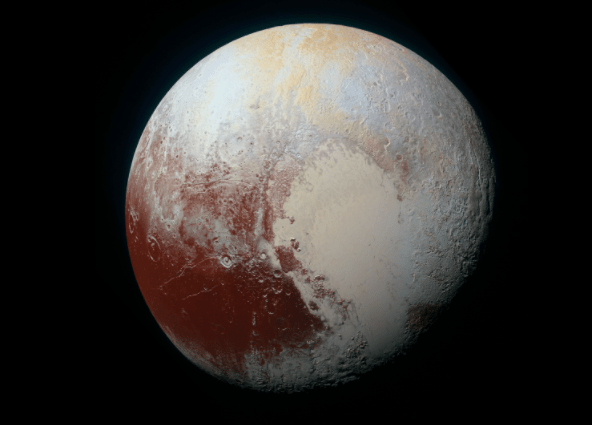
Pluto is about two-thirds the diameter of Earth’s moon and probably has a rocky core surrounded by a mantle of water ice. Interesting ices like methane and nitrogen frost coat its surface. Due to its lower density, Pluto’s mass is about one-sixth that of Earth’s moon. Pluto’s surface is characterized by mountains, valleys, plains, and craters. The temperature on Pluto can be as cold as -375 to -400 degrees Fahrenheit (-226 to -240 degrees Celsius).

Pluto has a thin, tenuous atmosphere that expands when it comes closer to the sun and collapses as it moves farther away—similar to a comet. The main constituent is molecular nitrogen, though molecules of methane and carbon monoxide have also been detected. 

When Pluto is close to the sun, its surface ices sublimate (changing directly from solid to gas) and rise to temporarily form a thin atmosphere. Pluto’s low gravity (about six percent of Earth’s) causes the atmosphere to be much more extended in altitude than our planet’s atmosphere. Pluto becomes much colder during the part of each year when it is traveling far away from the sun. During this time, the bulk of the planet’s atmosphere may freeze and fall as snow to the surface.

Exploration

The New Horizons spacecraft, which flew by Pluto in July 2015, is the first and so far only attempt to explore Pluto directly. Launched in 2006, it captured its first (distant) images of Pluto in late September 2006 during a test of the Long Range Reconnaissance Imager. The images, taken from a distance of approximately 4.2 billion kilometers, confirmed the spacecraft’s ability to track distant targets, critical for maneuvering toward Pluto and other Kuiper belt objects.

https://www.nasa.gov/audience/forstudents/k-4/stories/nasa-knows/what-is-pluto-k4.html
https://en.wikipedia.org/wiki/Pluto

OUR SOLAR SYSTEM

The “Solar system”

There are many planetary systems like ours in the universe, with planets orbiting a host star. Our planetary system is named the “solar” system because our Sun is named Sol, after the Latin word for Sun, “solis,” and anything related to the Sun we call “solar.”

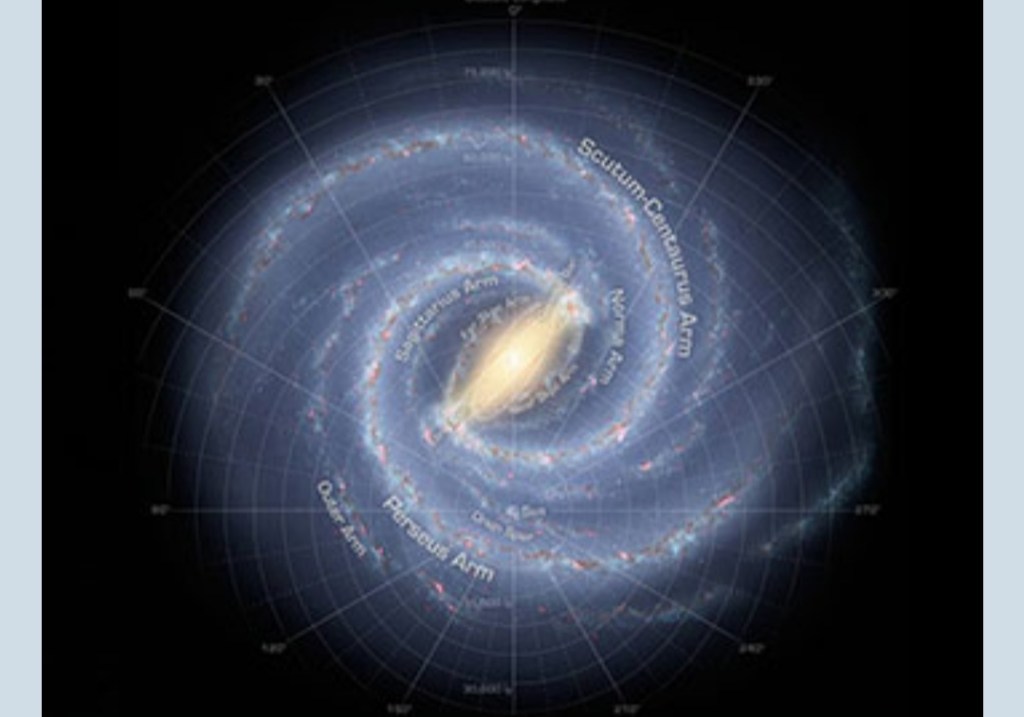
Our planetary system is located in an outer spiral arm of the Milky Way galaxy.Our solar system consists of our star, the Sun, and everything bound to it by gravity — the planets Mercury, Venus, Earth, Mars, Jupiter, Saturn, Uranus and Neptune, dwarf planets such as Pluto, dozens of moons and millions of asteroids, comets and meteoroids. Beyond our own solar system, we have discovered thousands of planetary systems orbiting other stars in the Milky Way.

10 Need-to-Know Things About the Solar System

1>ONE OF BILLIONS

Our solar system is made up of a star, eight planets and countless smaller bodies such as dwarf planets, asteroids and comets.

2>MEET ME IN THE ORION ARM

Our solar system orbits the center of the Milky Way Galaxy at about 515,000 mph (828,000 kph). We’re in one of the galaxy’s four spiral arms.

3>A LONG WAY ROUND

It takes our solar system about 230 million years to complete one orbit around the galactic center.

4>SPIRALING THROUGH SPACE

There are three general kinds of galaxies: elliptical, spiral and irregular. The Milky Way is a spiral galaxy.

5>GOOD ATMOSPHERE(S)

Our solar system is a region of space. It has no atmosphere. But it contains many worlds—including Earth—with many kinds of atmospheres.

6>MANY MOONS

The planets of our solar system—and even some asteroids—hold more than 150 moons in their orbits.

7>RING WORLDS

The four giant planets—and at least one asteroid—have rings. None are as spectacular as Saturn’s gorgeous rings.

8>LEAVING THE CRADLE

More than 300 robotic spacecraft have explored destinations beyond Earth orbit, including 24 astronauts who orbited the moon.

9>LIFE AS WE KNOW IT

Our solar system is the only one known to support life. So far, we only know of life on Earth, but we’re looking for more everywhere we can.

10>FAR-RANGING ROBOTS

NASA’s Voyager 1 is the only spacecraft so far to leave our solar system. Four other spacecraft will eventually hit interstellar space.

Spacecraft are Headed into Interstellar Space:-

Five spacecraft have achieved enough velocity to eventually travel beyond the boundaries of our solar system. Two of them reached the unexplored space between the stars after several decades in space.

  • Voyager 1 went interstellar in 2012 and voyager 2 joined it in 2018. Both spacecraft are still in communication with Earth. Both spacecraft launched in 1977.
  • NASA’s new horizons spacecraft—currently exploring the an icy region beyond Neptune called the Kuiper Belt—eventually will leave our solar system.
  • Pioneer 10 and pioner 11 also will ultimately travel silently among the stars. The spacecraft used up their power supplies decades ago.

Uranus- The Planet on its Sides

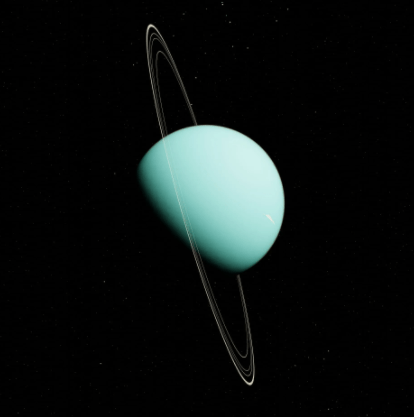
Uranus is the seventh planet from the Sun. Its name is a reference to the Greek god of the sky, Uranus, who, according to Greek mythology, was the great-grandfather of Ares (Mars), grandfather of Zeus (Jupiter) and father of Cronus (Saturn). It has the third-largest planetary radius and fourth-largest planetary mass in the Solar System. Uranus is similar in composition to Neptune, and both have bulk chemical compositions which differ from that of the larger gas giants Jupiter and Saturn. For this reason, scientists often classify Uranus and Neptune as “ice giants” to distinguish them from the other giant planets. 

Some facts about Uranus

Diameter-  51,118 km

Orbital period-   84yrs

Length of a Day-   17hrs

Axis tilt- 97.7 degrees

Distance from the Sun- 19.2 AU

Moons- 27

Special features

Uranus was discovered by William Herschel in 1781. Like the other giant planets, Uranus has a ring system, a magnetosphere, and numerous moons. The Uranian system has a unique configuration because its axis of rotation is tilted sideways, nearly into the plane of its solar orbit. Its north and south poles, therefore, lie where most other planets have their equators. In 1986, images from Voyager 2 showed Uranus as an almost featureless planet in visible light, without the cloud bands or storms associated with the other giant planets. Voyager 2 remains the only spacecraft to visit the planet. Observations from Earth have shown seasonal change and increased weather activity as Uranus approached its equinox in 2007. Wind speeds can reach 250 metres per second (900 km/h; 560 mph).

Natural satellites and Rings

Uranus has 27 known natural satellites. The names of these satellites are chosen from characters in the works of Shakespeare and Alexander Pope. The five main satellites are Miranda, Ariel, Umbriel, Titania, and Oberon. The Uranian satellite system is the least massive among those of the giant planets. The largest of Uranus’s satellites, Titania, has a radius of only 788.9 km (490.2 mi), or less than half that of the Moon, but slightly more than Rhea, the second-largest satellite of Saturn, making Titania the eighth-largest moon in the Solar System. Uranus’s satellites have relatively low albedos; ranging from 0.20 for Umbriel to 0.35 for Ariel (in green light). They are ice–rock conglomerates composed of roughly 50% ice and 50% rock.

The Uranian rings are composed of extremely dark particles, which vary in size from micrometres to a fraction of a metre. Thirteen distinct rings are presently known, the brightest being the ε ring. All except two rings of Uranus are extremely narrow – they are usually a few kilometres wide. The rings are probably quite young; the dynamics considerations indicate that they did not form with Uranus. The matter in the rings may once have been part of a moon (or moons) that was shattered by high-speed impacts. From numerous pieces of debris that formed as a result of those impacts, only a few particles survived, in stable zones corresponding to the locations of the present rings.

Image result for uranus structure

Structure and Atmosphere

Uranus’s atmosphere is similar to Jupiter’s and Saturn’s in its primary composition of hydrogen and helium, but it contains more “ices” such as water, ammonia, and methane, along with traces of other hydrocarbons. It has the coldest planetary atmosphere in the Solar System, with a minimum temperature of 49 K (−224 °C; −371 °F), and has a complex, layered cloud structure with water thought to make up the lowest clouds and methane the uppermost layer of clouds.

The standard model of Uranus’s structure is that it consists of three layers: a rocky (silicate/iron–nickel) core in the centre, an icy mantle in the middle and an outer gaseous hydrogen/helium envelope. The core is relatively small, with a mass of only 0.55 Earth masses and a radius less than 20% of Uranus’; the mantle comprises its bulk, with around 13.4 Earth masses, and the upper atmosphere is relatively insubstantial, weighing about 0.5 Earth masses and extending for the last 20% of Uranus’s radius. Uranus’s core density is around 9 g/cm3, with a pressure in the centre of 8 million bars (800 GPa) and a temperature of about 5000 K.The ice mantle is not in fact composed of ice in the conventional sense, but of a hot and dense fluid consisting of water, ammonia and other volatiles. This fluid, which has a high electrical conductivity, is sometimes called a water–ammonia ocean.

Exploration

In 1986, NASA’s Voyager 2 interplanetary probe encountered Uranus. This flyby remains the only investigation of Uranus carried out from a short distance and no other visits are planned. Launched in 1977, Voyager 2 made its closest approach to Uranus on 24 January 1986, coming within 81,500 km (50,600 mi) of the cloud tops, before continuing its journey to Neptune. The spacecraft studied the structure and chemical composition of Uranus’s atmosphere, including its unique weather, caused by its axial tilt of 97.77°.The possibility of sending the Cassini spacecraft from Saturn to Uranus was evaluated during a mission extension planning phase in 2009, but was ultimately rejected in favour of destroying it in the Saturnian atmosphere.It would have taken about twenty years to get to the Uranian system after departing Saturn.


Uranus – Wikipedia
https://www.universetoday.com/18883/diameter-of uranus/#:~:text=The%20diameter%20of%20Uranus%20is%2051%2C118%20km.%20Just,across.%20Things%20get%20a%20little%20more%20complicated%2C%20however.

Saturn- The Jewel

Saturn is the sixth planet from the Sun and the second-largest in the Solar System, after Jupiter. It is a gas giant with an average radius of about nine and a half times that of Earth. It only has one-eighth the average density of Earth; however, with its larger volume, Saturn is over 95 times more massive. Saturn is named after the Roman god of wealth and agriculture. 

Some facts about Saturn

Diameter-  120,536 km

Orbital period-   29.4yr

Length of a Day-   10hrs 39min

Axis tilt- 26.7degrees

Distance from the Sun- 9.58AU

Moons- 82

Special features

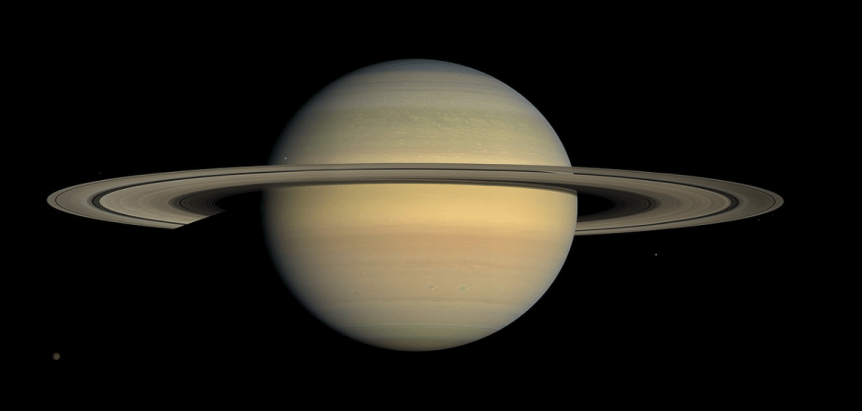
The planet’s most famous feature is its prominent ring system, which is composed mostly of ice particles, with a smaller amount of rocky debris and dust. At least 82 moons are known to orbit Saturn, of which 53 are officially named; this does not include the hundreds of moonlets in its rings. Titan, Saturn’s largest moon and the second largest in the Solar System, is larger than the planet Mercury, although less massive, and is the only moon in the Solar System to have a substantial atmosphere

The outer atmosphere is generally bland and lacking in contrast, although long-lived features can appear. Wind speeds on Saturn can reach 1,800 km/h (1,100 mph; 500 m/s), higher than on Jupiter but not as high as on Neptune.

Natural satellites and Rings 

Saturn has 82 known moons, 53 of which have formal names. In addition, there is evidence of dozens to hundreds of moonlets with diameters of 40–500 meters in Saturn’s rings, which are not considered to be true moons. Titan, the largest moon, comprises more than 90% of the mass in orbit around Saturn, including the rings. Saturn’s second-largest moon, Rhea, may have a tenuous ring system of its own,along with a tenuous atmosphere.

Saturn is probably best known for the system of planetary rings that makes it visually unique.The rings extend from 6,630 to 120,700 kilometers (4,120 to 75,000 mi) outward from Saturn’s equator and average approximately 20 meters (66 ft) in thickness.The particles that make up the rings range in size from specks of dust up to 10 m. While the other gas giants also have ring systems, Saturn’s is the largest and most visible.

There are two main hypotheses regarding the origin of the rings. One hypothesis is that the rings are remnants of a destroyed moon of Saturn. The second hypothesis is that the rings are left over from the original nebular material from which Saturn was formed. 

See the source image

Structure

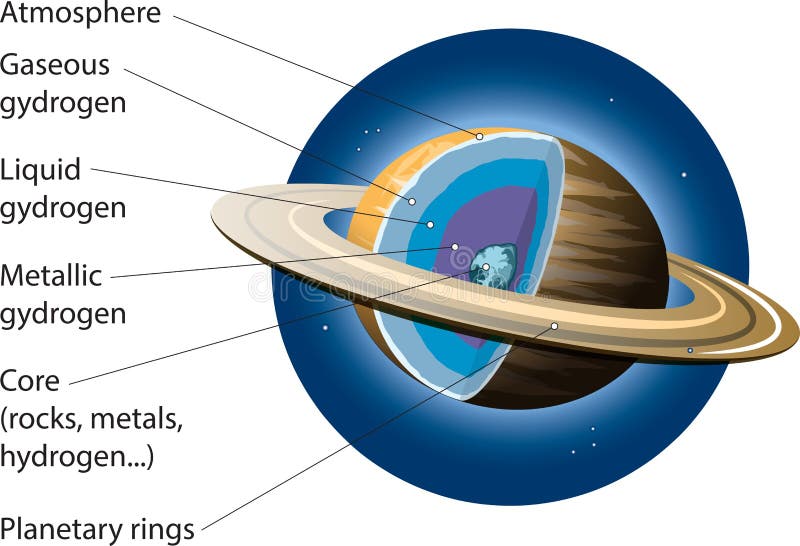
Despite consisting mostly of hydrogen and helium, most of Saturn’s mass is not in the gas phase, because hydrogen becomes a non-ideal liquid when the density is above 0.01 g/cm3, which is reached at a radius containing 99.9% of Saturn’s mass. The temperature, pressure, and density inside Saturn all rise steadily toward the core, which causes hydrogen to be a metal in the deeper layers.
Standard planetary models suggest that the interior of Saturn is similar to that of Jupiter, having a small rocky core surrounded by hydrogen and helium, with trace amounts of various volatiles. This core is similar in composition to Earth, but is more dense. The examination of Saturn’s gravitational moment, in combination with physical models of the interior, has allowed constraints to be placed on the mass of Saturn’s core. In 2004, scientists estimated that the core must be 9–22 times the mass of Earth, which corresponds to a diameter of about 25,000 km. This is surrounded by a thicker liquid metallic hydrogen layer, followed by a liquid layer of helium-saturated molecular hydrogen that gradually transitions to a gas with increasing altitude. The outermost layer spans 1,000 km and consists of gas.

Exploration

Pioneer 11 made the first flyby of Saturn in September 1979, when it passed within 20,000 km of the planet’s cloud tops. Images were taken of the planet and a few of its moons, although their resolution was too low to discern surface detail. 
In November 1980, the Voyager 1 probe visited the Saturn system. It sent back the first high-resolution images of the planet, its rings and satellites. Surface features of various moons were seen for the first time. Voyager 1 performed a close flyby of Titan, increasing knowledge of the atmosphere of the moon.
The Cassini–Huygens space probe entered orbit around Saturn on 1 July 2004. In June 2004, it conducted a close flyby of Phoebe, sending back high-resolution images and data. Cassini’s flyby of Saturn’s largest moon, Titan, captured radar images of large lakes and their coastlines with numerous islands and mountains. The orbiter completed two Titan flybys before releasing the Huygens probe on 25 December 2004. Huygens descended onto the surface of Titan on 14 January 2005.

Saturn – Wikipedia
https://space-facts.com/saturn/#:~:text=Saturn%20Facts%20%20%20Equatorial%20Diameter%3A%20%20,30%2B%20%287%20Groups%29%20%205%20more%20rows%20

Jupiter- The Giant

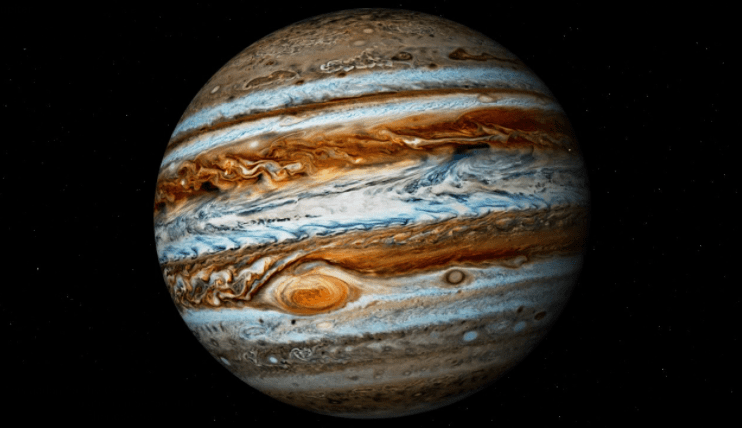
Jupiter is the fifth planet from the Sun and the largest in the Solar System. It is a gas giant with a mass more than two and a half times that of all the other planets in the Solar System combined. Jupiter is the third-brightest natural object in the Earth’s night sky after the Moon and Venus. It has been observed since prehistoric times and is named after the Roman god Jupiter, the king of the gods, because of its observed size.More than eleven Earths would fit across its diameter. It’s also the most massive. More than 1,300 Earths could fit inside Jupiter, with room to spare. 

Some facts about Jupiter  

Diameter- 142,984  km                                                                                                               

 Orbital period-  11.8yrs 

Length of a Day-  10 hours 

Axis tilt-  3degrees

Distance from the Sun-  779 million km(5.2AU)

Moons- 79known moons

Special features

Jupiter is primarily composed of hydrogen, but helium comprises one quarter of its mass and one tenth of its volume. It likely has a rocky core of heavier elements, but like the other giant planets, Jupiter lacks a well-defined solid surface. The on-going contraction of its interior generates heat greater than the amount received from the Sun. Because of its rapid rotation, the planet’s shape is that of an oblate spheroid; it has a slight but noticeable bulge around the equator. The outer atmosphere is visibly segregated into several bands at different latitudes, with turbulence and storms along their interacting boundaries. A prominent result of this is the Great Red Spot, a giant storm that is known to have existed since at least the 17th century, when it was first seen by telescope. Surrounding Jupiter is a powerful magnetosphere. Jupiter’s magnetic tail is nearly 800 million km long, covering the entire distance to Sa turn’s orbit. Jupiter has almost a hundred known moons and possibly many more, including the four large Galilean moons discovered by Galileo Galilei in 1610. Ganymede, the largest of these, has a diameter greater than that of the planet Mercury. 

Natural Satellites and Rings

Jupiter has 79 known natural satellites. Of these, 60 are less than 10 km in diameter. The four largest moons are Io, Europa, Ganymede, and Callisto, collectively known as the “Galilean moons” Jupiter has a faint planetary ring system composed of three main segments: an inner torus of particles known as the halo, a relatively bright main ring, and an outer gossamer ring.These rings appear to be made of dust, rather than ice as with Saturn’s rings

Image result for jupiter structure

Structure

The composition of Jupiter is similar to that of the Sun—mostly hydrogen and helium. Deep in the atmosphere, pressure and temperature increase, compressing the hydrogen gas into a liquid. This gives Jupiter the largest ocean in the solar system—an ocean made of hydrogen instead of water. Scientists think that, at depths perhaps halfway to the planet’s center, the pressure becomes so great that electrons are squeezed off the hydrogen atoms, making the liquid electrically conducting like metal. Jupiter’s fast rotation is thought to drive electrical currents in this region, generating the planet’s powerful magnetic field. It is still unclear if, deeper down, Jupiter has a central core of solid material or if it may be a thick, super-hot and dense soup. It could be up to 90,032 degrees Fahrenheit (50,000 degrees Celsius) down there, made mostly of iron and silicate minerals (similar to quartz).

Exploration

Pioneer 10 was the first spacecraft to visit Jupiter, making its closest approach to the planet in December 1973. Jupiter has since been explored on a number of occasions by robotic spacecraft, beginning with the Pioneer and Voyager flyby missions from 1973 to 1979, and later by the Galileo orbiter, which arrived at Jupiter in 1995. In 2007, Jupiter was visited by the New Horizons probe, which used Jupiter’s gravity to increase its speed and bend its trajectory en route to Pluto. The latest probe to visit the planet, Juno, entered orbit around Jupiter in July 2016. Future targets for exploration in the Jupiter system include the probable ice-covered liquid ocean of the moon Europa.

Jupiter – Wikipedia
https://www.bing.com/aclk?ld=e8k-pfHbjv-CV55VIl5abb_DVUCUz1ts_eBtiemCSpraSEheuOBIFn5ofp1EnODk3SRfdK9SS4VsZF0jXe2iaYVanAC3oPv4jWNaaOu2_WiBmnrz2FMCaeSWYay3tpoO2zWh3uJDSzpxMp8qmzs861Enln4hcX7sqAsEd3hHsHVrTQMqLN&u=aHR0cHMlM2ElMmYlMmZ3d3cuc2VsZmdhbGF4eS5jb20lMmYyMDIxJTJmMDQlMmZpbnRlcmVzdGluZy1mYWN0cy1hYm91dC1qdXBpdGVyLmh0bWw&rlid=5011e8abaa201a3eeb5488755f08da0f&ntb=1

Mars- The Red Planet

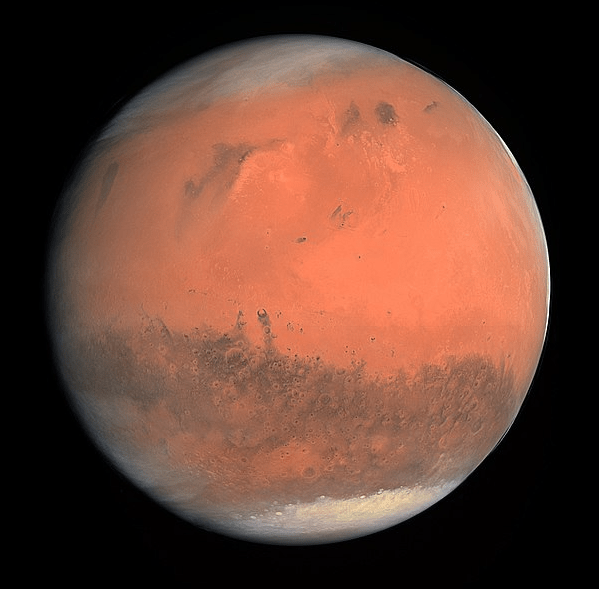
Mars is the fourth planet from the Sun and the second-smallest planet in the Solar System, being larger than only Mercury. Mars is often referred to as the “Red Planet ”, which refers to the effect of the iron oxide prevalent on Mars’s surface, which gives it a reddish appearance distinctive among the objects visible to the naked eye.Its apparent magnitude reaches −2.94, which is surpassed only by Venus, the Moon and the Sun.

Some facts about Mars

Diameter-  6,780km

Orbital period-  1.88yrs

Length of a Day-   24hr, 37min

Axis tilt-  25 degrees

Distance from the Sun- 228 million kilometer ( 1.52AU )

Moons- Phobos and deimos

Special features

 Mars is a terrestrial planet with a thin atmosphere, with surface features reminiscent of the impact craters of the Moon and the valleys, deserts and polar ice caps of Earth. The days and seasons are comparable to those of Earth, because the rotational period as well as the tilt of the rotational axis relative to the ecliptic plane are similar. Mars is the site of Olympus Mons, the largest volcano and highest known mountain on any planet in the Solar System, and of Valles Marineris, one of the largest canyons in the Solar System. The smooth Borealis basin in the Northern Hemisphere covers 40% of the planet and may be a giant impact feature. Mars has two moons, Phobos and Deimos, which are small and irregularly shaped. 

Exploration

Mars has been explored by several uncrewed spacecraft. Mariner 4 was the first spacecraft to visit Mars; launched by NASA on 28 November 1964, it made its closest approach to the planet on 15 July 1965. The Soviet Mars 3 mission included a lander, which achieved a soft landing in December 1971; however, contact was lost seconds after touchdown. On 20 July 1976, Viking 1 performed the first successful landing on the Martian surface. On 4 July 1997, the Mars Pathfinder spacecraft landed on Mars and on 5 July released its rover, Sojourner, the first robotic rover to operate on Mars. The Mars Express orbiter, the first European Space Agency (ESA) spacecraft to visit Mars, arrived in orbit on 25 December 2003. In January 2004, NASA’s Mars Exploration Rovers, named Spirit and Opportunity, both landed on Mars. NASA landed its Curiosity rover on August 6, 2012, as a part of its Mars Science Laboratory (MSL) mission to investigate Martian climate and geology. On 24 September 2014, the Indian Space Research Organisation (ISRO) became the fourth space agency to visit Mars when its maiden interplanetary mission, the Mars Orbiter Mission spacecraft, arrived in orbit.  China National Space Administration (CNSA)’s Tianwen-1 spacecraft arrived in Martian orbit on 10 February 2021. NASA’s Perseverance rover and Ingenuity helicopter successfully landed on Mars on 18 February 2021. On 14 May 2021, CNSA’s Tianwen-1 lander and Zhurong rover successfully landed on Mars. The Zhurong rover was successfully deployed on 22 May 2021, which makes China the second country to successfully deploy a rover on Mars, after the United States. 

Phobos and Deimos

Phobos has a diameter of 22.2 km (13.8 mi) and a mass of 1.08×10¹⁶ kg, while Deimos measures 12.6 km (7.8 mi) across, with a mass of 2.0×10¹⁵ kg. Phobos orbits closer to Mars, with a semi-major axis of 9,377 km (5,827 mi) and an orbital period of 7.66 hours; the semi-major axis of Deimos’s orbit is 23,460 km (14,580 mi), with an orbital period of 30.35 hours.

Atmosphere

Mars lost its magnetosphere 4 billion years ago, possibly because of numerous asteroid strikes, so the solar wind interacts directly with the Martian ionosphere, lowering the atmospheric density by stripping away atoms from the outer layer. The atmosphere of Mars consists of about 96% carbon dioxide, 1.93% argon and 1.89% nitrogen along with traces of oxygen and water. The atmosphere is quite dusty, containing particulates about 1.5 µm in diameter which give the Martian sky a tawny color when seen from the surface. It may take on a pink hue due to iron oxide particles suspended in it.

See the source image

Structure

Mars has a dense core at its center between 930 and 1,300 miles (1,500 to 2,100 kilometers) in radius. It’s made of iron, nickel, and sulfur. Surrounding the core is a rocky mantle between 770 and 1,170 miles (1,240 to 1,880 kilometers) thick, and above that, a crust made of iron, magnesium, aluminum, calcium, and potassium.

Mars – Wikipedia
In Depth | Mars – NASA Solar System Exploration

Earth- Sweet Home

11]Earth- Sweet Home 

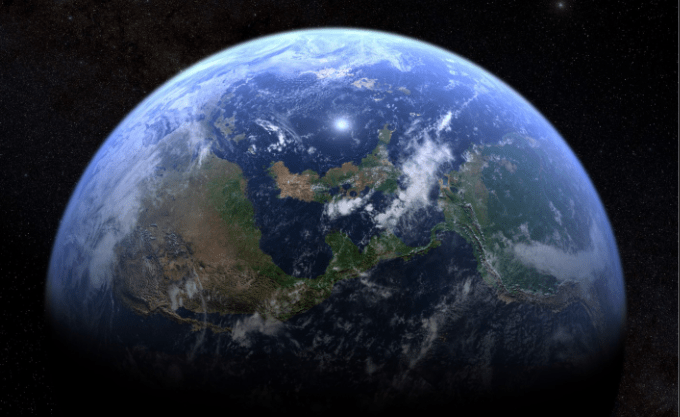
Earth is the third planet from the Sun. We have learnt about Earth since childhood. Here I will cover some facts and provide quick glances at the basic information which everyone must know about our home planet.

Some facts about Earth:

Diameter- 12,742 km

Orbital period-  365.25 days

Day-   23 hours, 56 minutes, and 4 seconds

Axis tilt- 23.5 degrees

Distance from sun- 1AU

 Hydrosphere:

Earth is the only object known to harbor and support life in the universe so far.  About 29.2% of Earth’s surface is land consisting of continents and islands. The remaining 70.8% is covered with water, mostly by oceans, seas,  lakes, rivers, and other water bodies, which together constitute the hydrosphere.  Much of Earth’s polar regions are covered in ice and many glaciers are present. 

Lithosphere and Structure of Earth

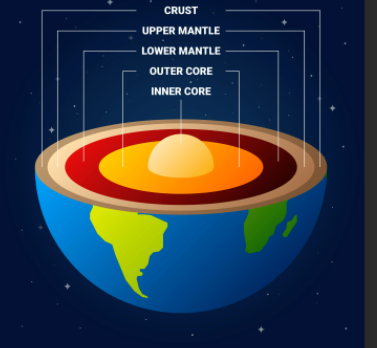
Earth is the densest planet in the Solar System and the largest and most massive of the four rocky planets. Earth’s outer layer is divided into several rigid tectonic plates that migrate across the surface over many millions of years, while its interior remains active with a solid iron inner core, a liquid outer core that generates Earth’s magnetic field, and a convective mantle that drives plate tectonics.  The Earth’s crust ranges from 5–70 kilometres (3.1–43.5 mi) in depth and is the outermost layer. Earth’s mantle extends to a depth of 2,890 km, making it the planet’s thickest layer.

See the source image

Atmosphere

Earth’s atmosphere consists of various gases which are (by volume) -78.09% nitrogen, 20.95% oxygen, 0.93% argon, 0.04% carbon dioxide, and small amounts of other gases. The atmosphere has various layers. From highest to lowest, the five main layers are:

  • Exosphere: 700 to 10,000 km (440 to 6,200 miles)
  • Thermosphere: 80 to 700 km (50 to 440 miles)
  • Mesosphere: 50 to 80 km (31 to 50 miles)
  • Stratosphere: 12 to 50 km (7 to 31 miles)
  • Troposphere: 0 to 12 km (0 to 7 miles)

Gravity and Orbit

The gravitational acceleration on Earth’s surface is considered to be 9.8 ms-2 . Earth’s gravity interacts with other objects in space, especially the Moon, which is Earth’s only natural satellite. Earth orbits around the Sun in about 365.25 days. Earth’s axis of rotation is tilted with respect to its orbital plane, producing seasons on Earth. The gravitational interaction between Earth and the Moon causes tides, stabilizes Earth’s orientation on its axis, and gradually slows its rotation. 

History of Earth and Life

According to radiometric dating estimation and other evidence, Earth formed over 4.5 billion years ago. Within the first billion years of Earth’s history, life appeared in the oceans and began to affect Earth’s atmosphere and surface, leading to the proliferation of anaerobic and, later, aerobic organisms. Some geological evidence indicates that life may have arisen as early as 4.1 billion years ago. Since then, the combination of Earth’s distance from the Sun, physical properties, and geological history have allowed life to evolve and thrive. In the history of life on Earth, biodiversity has gone through long periods of expansion, occasionally punctuated by mass extinctions. Over 99% of all species that ever lived on Earth are extinct. Almost 8 billion humans live on Earth and depend on its biosphere and natural resources for their survival. Humans increasingly impact Earth’s surface, hydrology, atmospheric processes, and other life.

Our responsibility

Recently, Earth has been facing many problems due to human activities. It is the responsibility of humans to fix these problems- Global warming and climate change. Carbon emissions and overpopulation is leading to the creation of many environmental as well as social problems. We must stand up for our Earth and contribute as much as we can, since every step matters.

Structure of Earth – Wikipedia
https://www.nasa.gov/topics/earth/index.html
https://en.wikipedia.org/wiki/Earth

Venus- Earth’s Twin

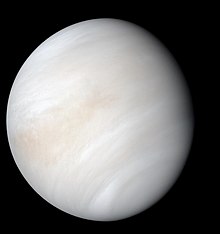
Venus is the second planet from the Sun. in our Solar System. It is the brightest natural object in Earth’s night sky after the Moon. Venus is one of the four terrestrial planets in the Solar System, meaning that it is a rocky body like Earth. It is similar to Earth in size and mass, and is often described as Earth’s “sister” or “twin”. The diameter of Venus is 12,103.6 km (7,520.8 mi)—only 638.4 km (396.7 mi) less than Earth’s—and its mass is 81.5% of Earth’s. Conditions on the Venusian surface differ radically from those on Earth because its dense atmosphere is 96.5% carbon dioxide, with most of the remaining 3.5% being nitrogen. The surface pressure is 9.3 megapascals and the surface temperature is 737 K (464 °C; 867 °F), above the critical points of both major constituents and making the surface atmosphere a supercritical fluid(distinct gaseous and liquid phases do not exist).

Some facts about Venus: 

Diameter- 12,103.6  km

Orbital period-  224.7 days

Length of a day-   117 days

Axis tilt-  177.3 degrees

Distance from the Sun- 108 million km (0.72AU)

Moons- none

Atmosphere and climate 

Venus has an extremely dense atmosphere composed of 96.5% carbon dioxide, 3.5% nitrogen—both exist as supercritical fluids at the planet’s surface—and traces of other gases including sulfur dioxide. The mass of its atmosphere is 92 times that of Earth’s, whereas the pressure at its surface is about 93 times that at Earth’s—a pressure equivalent to that at a depth of nearly 1 km (58 mi) under Earth’s oceans.

Studies have suggested that billions of years ago, Venus’ atmosphere could have been much more like the one surrounding the early Earth, and that there may have been substantial quantities of liquid water on the surface. After a period of 600 million to several billion years, solar forcing from rising luminosity of the Sun caused the evaporation of the original water. A runaway greenhouse effect was created once a critical level of greenhouse gases (including water) was added to its atmosphere. Although the surface conditions on Venus are no longer hospitable to any Earth-like life that may have formed before this event, there is speculation on the possibility that life exists in the upper cloud layers of Venus, 50 km (30 mi) up from the surface, where the temperature ranges between 303 and 353 K (30 and 80 °C; 86 and 176 °F) but the environment is acidic. The apparent detection of phosphine in Venus’ atmosphere, with no known pathway for abiotic production, led to speculation in September 2020 that there could be existing life currently present in the atmosphere.

Structure

The similarity in size and density between Venus and Earth suggests they share a similar internal structure: a core, mantle, and crust. Like that of Earth, the Venusian core is most likely at least partially liquid because the two planets have been cooling at about the same rate, although a completely solid core cannot be ruled out. The slightly smaller size of Venus means pressures are 24% lower in its deep interior than Earth’s. The predicted values for the moment of inertia based on planetary models suggest a core radius of 2,900–3,450 km.

Missions to Venus:

Many missions have been sent to Venus in the past decades. Venera 4 and 5, were the first to enter the atmosphere and send information. Venera 9  sent back the first images from Venus. Some other missions include- The Magellan Mission( a thirteen-year-long Venus radar mapping project ), The Pioneer Venus orbiters and Venus Express.

References: https://en.wikipedia.org/wiki/Venus#Atmosphere_and_climate https://en.wikipedia.org/wiki/Supercritical_fluid

Laundry in Space

Cleanliness is the half your health. But sadly this does not go well in space. Astronauts say they run through a pair of T-shirts and socks on a weekly basis. There’s no scope for laundry in space.

This unhygienic practice is not only affecting the astronaut’s health but also making a huge trash of cloths which are burnt up in the atmosphere. NASA has taken an initiative in order to bring a change in this. They have teamed up with Procter and Gamble Co. to find out the best remedies in cleaning astronaut’s cloths in space.

The company has assured to send a pair of a Tide detergent and stain removal experiments to the space station. As weight is a big issue in rocket cargoes, P & G is planning to send up some customized detergents in December to see how the enzymes and other ingredients will react to the six months of weightlessness. After getting approval from scientists they will send the stain removal pens and wipes in the May. The company is also trying to design a washer-dryer combo that will operate in space using minimal amount of the recyclable laundry water and detergent. Officials expressed high hope in this diverse research.

LIFE HISTORY OF APJ ABDUL KALAM

Early life :
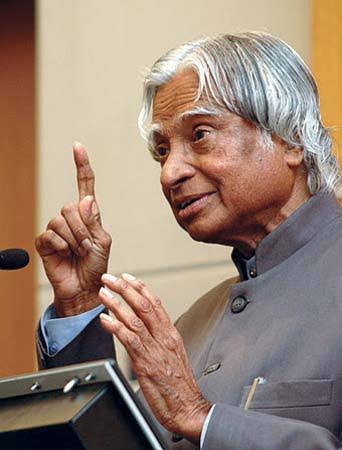
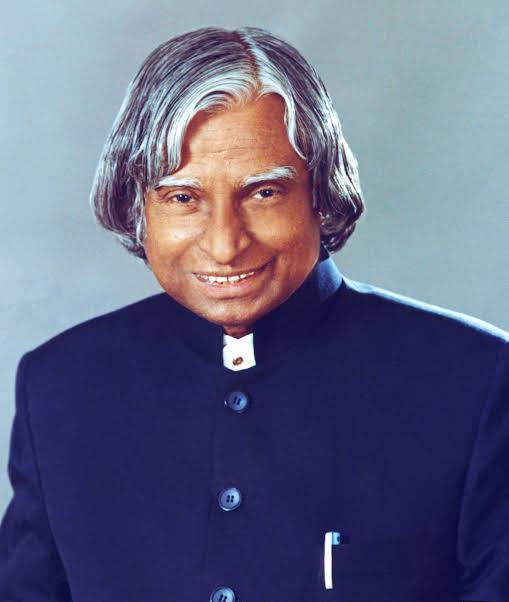
His full name is Abul Pakir Jainulabdeen Abdul Kalam. He was born on 15th October, 1931 in Rameswaram, Madras Presidency, British India which is presently known as Tamil Nadu, India. His father’s name was Jainulabdeen Marakayar who was a boat owner and imam of a local mosque. His mother’s name was Ashiamma. She was a housewife. He was the youngest of four brothers and one sister in his family. Even though his ancestors had numerous properties and were wealthy, they lost most of their fortunes by the 1920s. This is why Kalam was born and grew up during poverty.

Education:
He studied in Schwartz Higher Secondary School. Previously he had average grades but later he was described as a bright and hardworking student who had a strong desire to learn. He went to Saint Joseph’s College, Tiruchirapalli, then affiliated with the University of Madras. He graduated in Physics in 1954. In 1955 he moved to Madras to study Aerospace Engineering in Madras Institute of Technology. The Dean was dissatisfied with his lack of progress in a senior class project and threatened to revoke his scholarship unless the project was finished within the next three days. He met the deadline impressing the Dean who later said to him that he was putting Kalam under stress and was asking him to meet a difficult deadline. He narrowly missed achieving his dream of becoming a higher pilot, as he got ninth position and only eight positions were available in Indian Air force.

Career as a Scientist:
After graduating from Madras Institute of Technology in 1960 he joined the Aeronautical Development Establishment of the Defence Research and Development Organisation. He started his career by designing a small hovercraft but remained unconvinced by his choice of job. He was also a part of the INCOSPAR Committee. In 1969 he was transferred to the India Space Research Organisation (ISRO) where he was the project director of India’s first Satellite Launch Vehicle.

Presidency:
APJ Abdul Kalam served as the 11th President of India, succeeding KR Narayanan. He won the Presidential election held in 2002. His term lasted from 25 July 2002 to 25 July 2007.

Books written by Dr. APJ Abdul Kalam:
He played an important role in the second pokhran nuclear test in 1998. He was also associated with India’s Space Program and missile development program. Therefore, he is also called the “Missile Man” of India. He wrote many books. The name of these books are as follows:-
1. India 2020: A Vision for the New Millennium
Publishing year: 1998
2. Wings of Fire: An Autobiography
Publishing year: 1999
wings-of-fire-biography-kalam
3. Ignited Minds: Unleashing the Power within India
Publishing year: 2002
4. The Luminous Sparks: A Biography in Verse and Colours
Publishing year: 2004
5. Guiding Souls: Dialogues on the Purpose of Life
Publishing year: 2005
Co-author: Arun Tiwari
6. Mission of India: A Vision of Indian Youth
Publishing year: 2005
7. Inspiring Thoughts: Quotation Series
Publishing year: 2007
8. You Are Born to Blossom: Take My Journey Beyond
Publishing year: 2011
Co-author: Arun Tiwari
9. The Scientific India: A Twenty First Century Guide to the World around Us
Publishing year: 2011
Co-author: Y. S. Rajan
10. Failure to Success: Legendary Lives
Publishing year: 2011
Co-author: Arun Tiwari
Ramnath Kovind: 10 facts about 14th President of India
11. Target 3 Billion
Publishing year: 2011
Co-author: ‎Srijan Pal Singh
12. You are Unique: Scale New Heights by Thoughts and Actions
Publishing year: 2012
Co-author: S. Poonam Kohli
13. Turning Points: A Journey through Challenges
Publishing year: 2012
14. Indomitable Spirit
Publishing year: 2013
15. Spirit of India
Publishing year: 2013
16. Thoughts for Change: We Can Do It
Publishing year: 2013
Co-author: A. Sivathanu Pillai
17. My Journey: Transforming Dreams into Actions
Publishing year: 2013
18. Governance for Growth in India
Publishing year: 2014
19. Manifesto for Change
Publishing year: 2014
Co-author: V. Ponraj
20. Forge Your Future: Candid, Forthright, Inspiring
Publishing year: 2014
21. Beyond 2020: A Vision for Tomorrow’s India
Publishing year: 2014
22. The Guiding Light: A Selection of Quotations from My Favourite Books
Publishing year: 2015
23. Reignited: Scientific Pathways to a Brighter Future
Publishing year: 2015
Co-author: ‎Srijan Pal Singh
24. The Family and the Nation
Publishing year: 2015
Co-author: Acharya Mahapragya
25. Transcendence My Spiritual Experiences
Publishing year: 2015
Co-author: Arun Tiwari

Awards:
He won many awards. The list are as follows:-
1981: Padma Bhushan- Government of India
1990 : Padma Vibhushan- Government of India
1997 : Bharat Ratna- Government of India
1997 : Indira Gandhi Award for National Integration- Government of India
1998 : Veer Savarkar Award- Government of India
2000 : SASTRA Ramanujan Prize- Shanmugha Arts, Science, Technology and Research Academy, India
2013 : Von Brown Award- National Space Society

Death:
Dr. APJ Abdul Kalam breathed his last on 27th July,2015 due to a cardiac arrest while delivering a lecture at th Indian Institute of Management, Shillong.

@track2traininginstitute @track2trainingseminar @edunewsnetwork @pen2prints

The Solar Family

The universe is a big place. We have been granted a family in this vast dark nothingness- our solar system. So, what is so cool about it? There are thousands of such systems, but how is ours special? It is special since we ‘live’ here. It is the only known place to have life so far. 

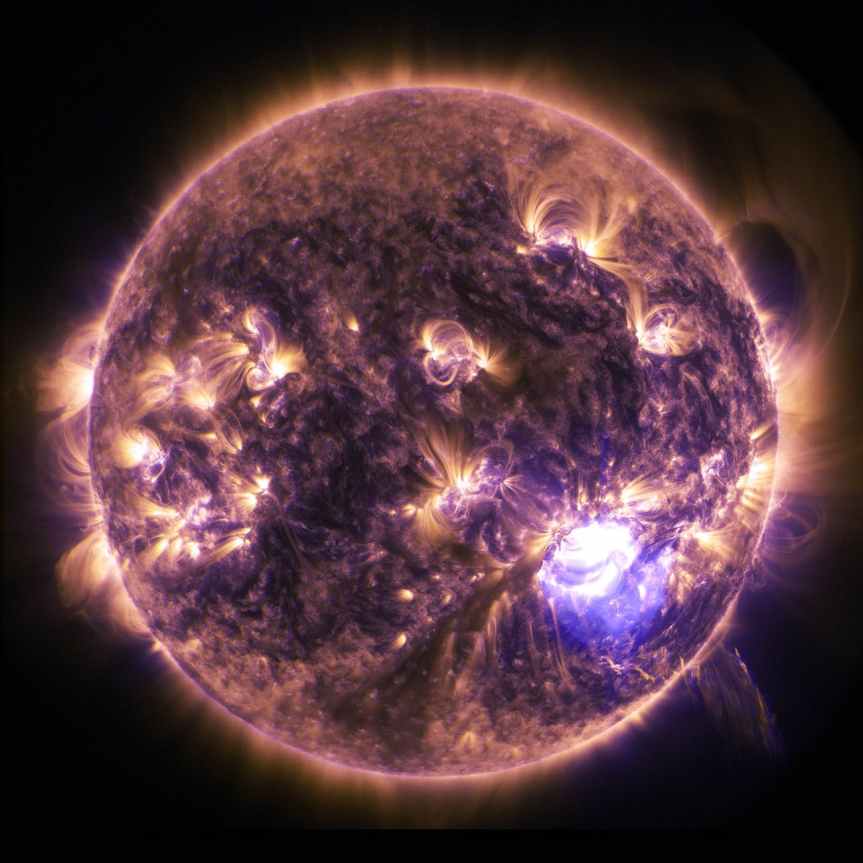
The solar system contains the sun, eight planets, many dwarf planets, comets, moons and asteroids. The Sun is our star. It is the source of energy and heat. It makes up 99.8 percent of the solar system’s entire mass, yet it is not that big of a star.

What is a planet?

The early sky gazers called planets as ‘planetes’ (wanderers). So, is a planet just a round object orbiting around the sun? Or perhaps is it an object having moons and  a large size? The definition of planets is a little more complex than that. A planet is defined by the International Astronomical Union (IAU) as a celestial body that has its primary orbit around the Sun, has sufficient mass for its own gravity to mold it into a round shape, and has cleared the neighborhood around its orbit by sweeping up all the planetesimals, which means that it’s the only body of its size in its orbit (got me breathless there).This complex definition excludes comets, asteroids, and smaller worlds that aren’t rounded by their own gravity. The IAU also defined another class called dwarf planets. These are objects that meet the first two criteria for planets but have not yet cleared their orbits. 

Inner solar system 

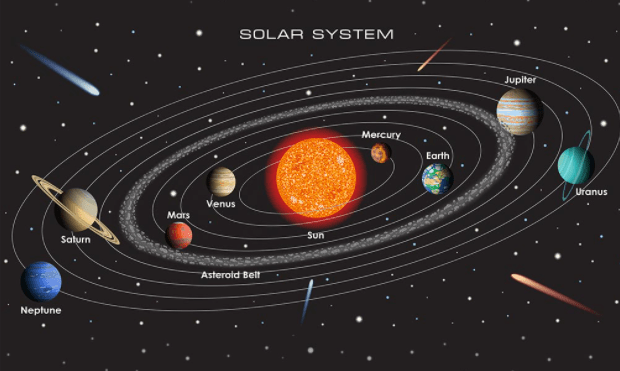
The area surrounding the sun, and bounded by the asteroid belt is the inner solar system. Here lie the first four planets of the solar system- Mercury, Venus, Earth and Mars. These planets are also referred to as “terrestrial” planets from the word ‘terra’ which is Latin for ‘earth’. It indicates that these planets have a similar rocky composition to Earth.

Asteroid belt

It is a collection of rocky objects (asteroids) of various sizes orbiting the Sun, located roughly between the orbits of the planets Jupiter and Mars.

Outer solar system

It lies beyond the asteroid belt. It consists of the gas giants- Jupiter, Saturn, Uranus and Neptune. These planets consist mostly of small rocky cores buried deep within massive spheres of liquid metallic hydrogen and some helium, covered by cloudy atmospheres. Neptune and Uranus are sometimes called as ‘ice giants’ as they contain significant amounts of super cold oxygen, carbon, nitrogen, sulphur and possibly some water. Each gas giant has a set of rings. Saturn’s is the most extensive and beautiful.

Kuiper belt

It extends from the orbit of Neptune out to a distance of well beyond 50AU from the sun. Think of it as a very distant and much more extensive version of the asteroid belt. It contains the dwarf planets- Pluto, Haumea, Makemake and Eris – as well as many other smaller icy worlds.

Oort cloud

The entire solar system is surrounded by a shell of frozen bits of ice and rock called the Oort cloud. It stretches out to about a quarter of the way to the nearest star. 

The solar system is about 4.6 billion years old and will continue to remain for another 1 or 2 billion years. Till then, this is our family, a huge one but is a family after all.

https://solarsystem.nasa.gov/
http://en.wikipedia.org/wiki/Solar_System

Anniversaries (as of 2019)

150th birth anniversary

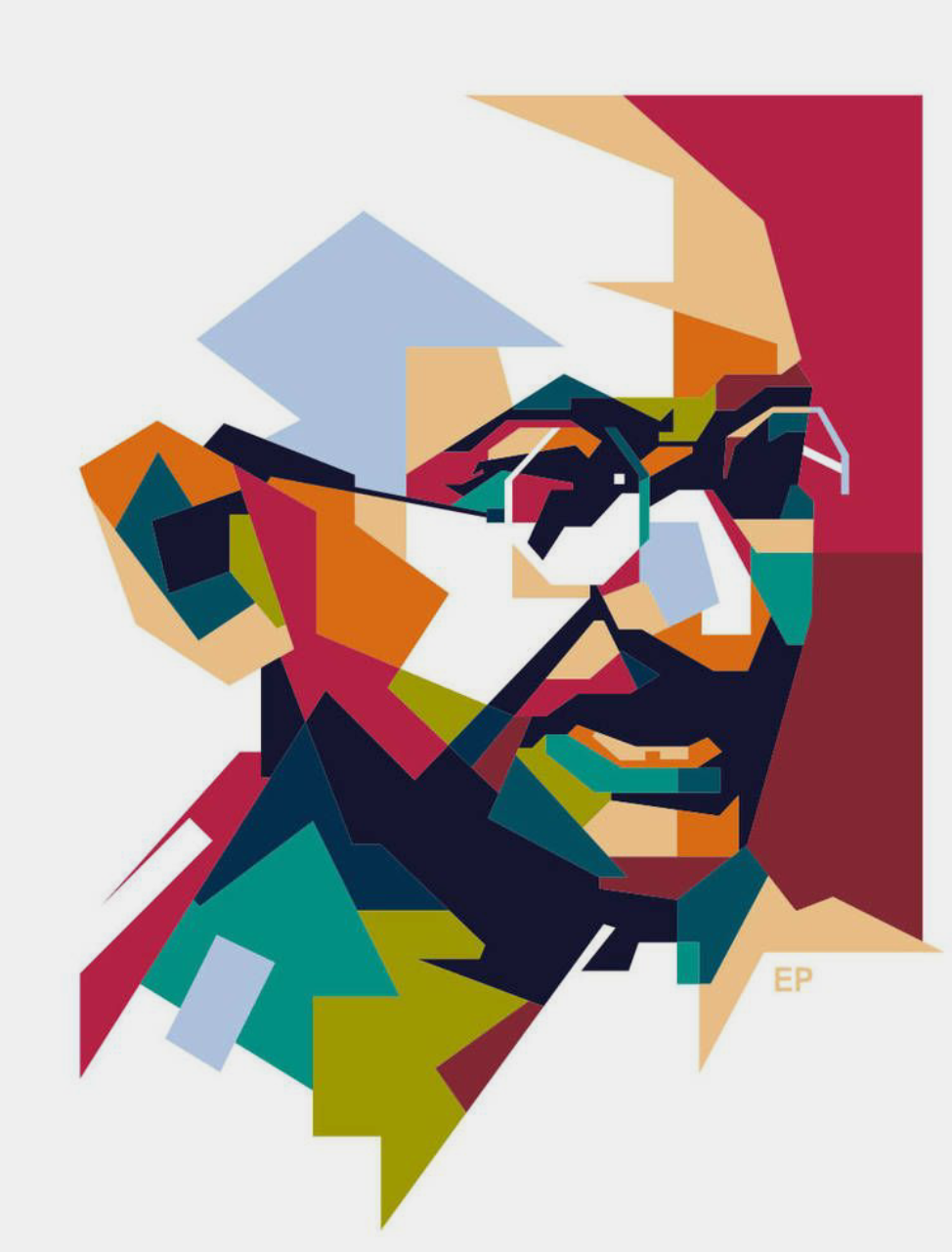
•Mahatma Gandhi, the father of our nation is an inspiring person, who shaped world history. Gandhiji stands out among the great men of the world as a symbol of non violent resistance to political and social repression. Mohandas Karamchand Gandhi was born on October 2nd, 1869 in Gujarat. He became the leader of a movement that attracted millions in the struggle for freedom. He was strong advocate of non-violence. India got freedom on August 15th, 1947. Gandhiji was assassinated on January 30th, 1948.

100th birth anniversary

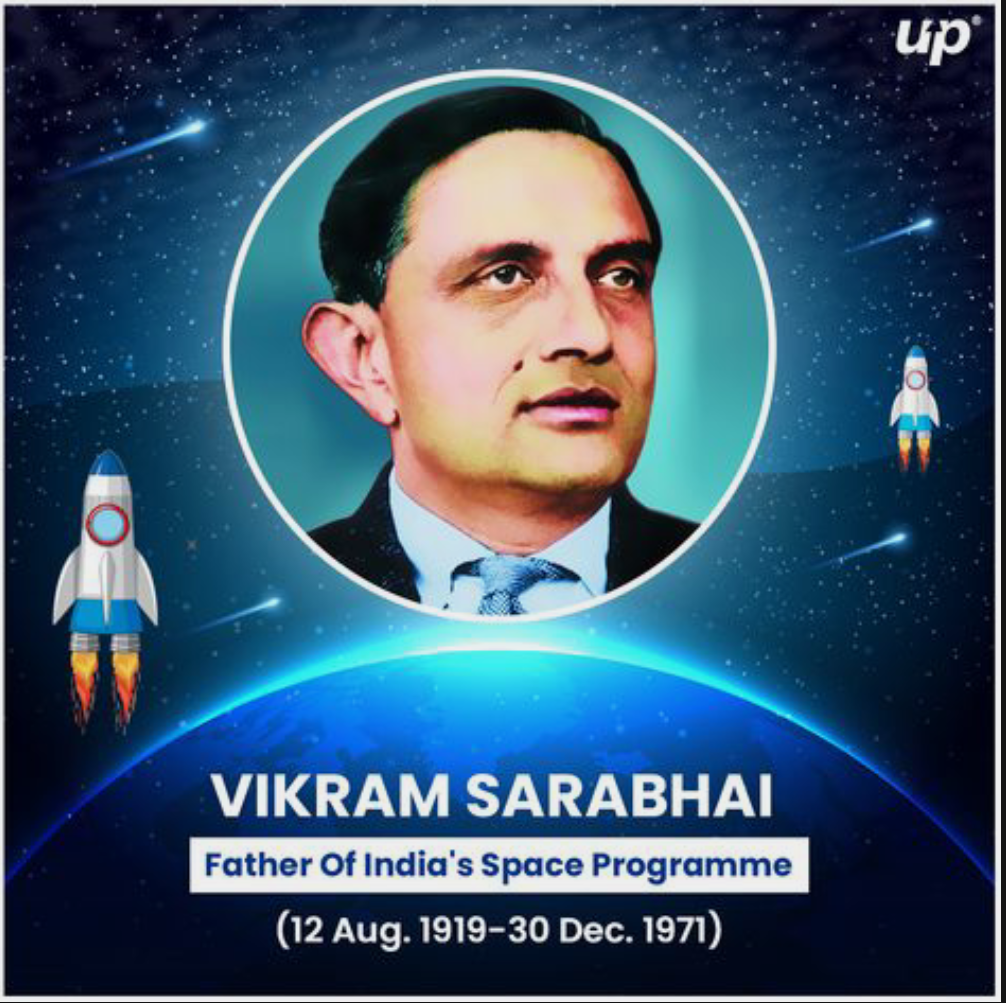
• The year 2019 marks the 100th birth anniversary of Dr. Vikram Sarabhai, the father of the Indian space programme. He was born on 12th August, 1919. Dr. Sarabhai has put India on the international map in the field of space research. In 1962, he became chairman of the Indian National committee for space research. The establishment of the Indian space research organisation, also known as ISRO, was one of his greatest achievements. Dr. Sarabhai died on 30th December 1971.

500th death anniversary

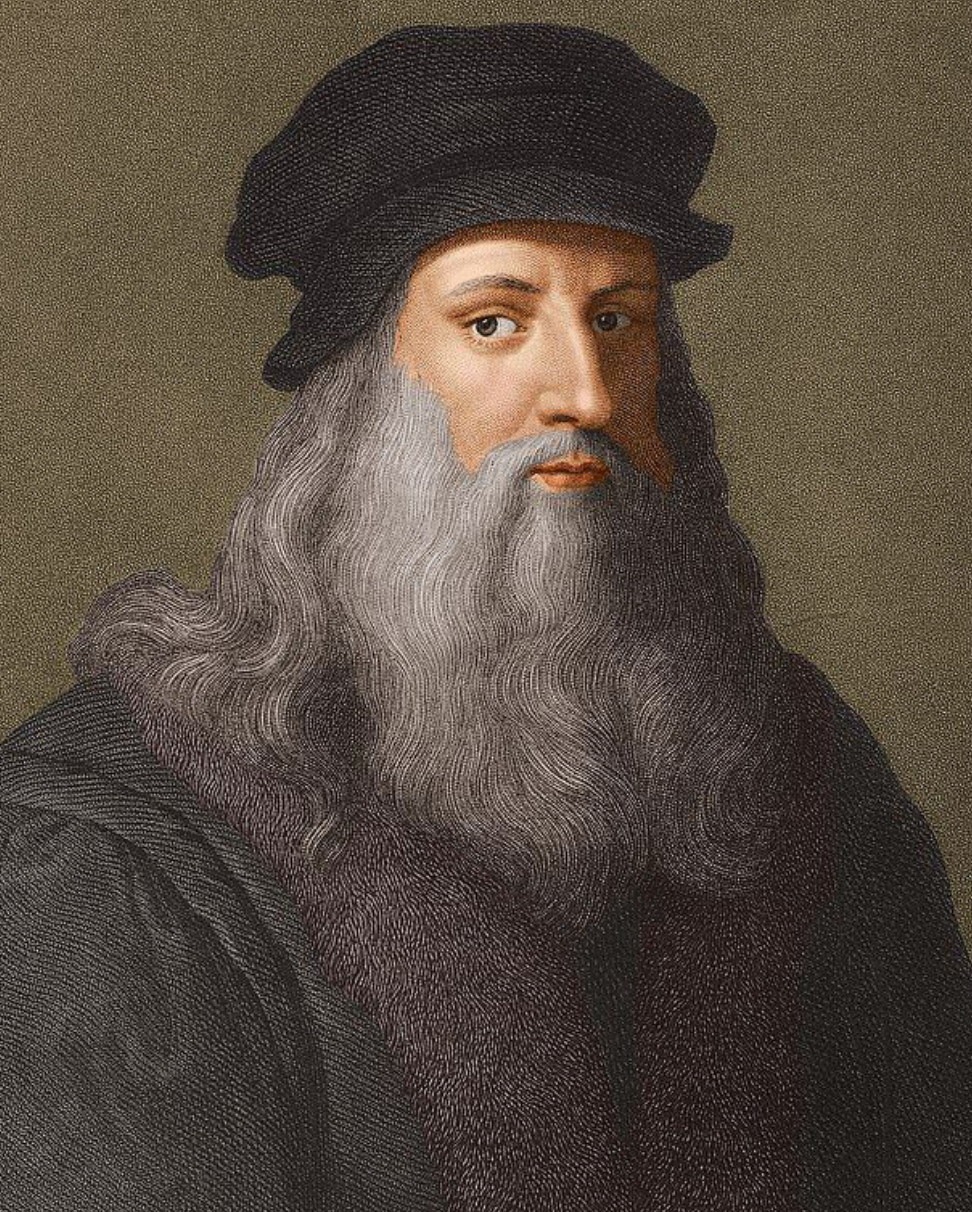
• Leonardo da Vinci was perhaps the most widely talented person ever to have lived. He was a consummate painter and sculptor, a great inventor, military engineer, scientist, botanist and mathematician! He lived during the Renaissance in Italy and while working in Milan as an artist, he began writing texts for his students and apprentices. His notebooks covered more than 1000 pages of observations and illustrations. They remained unpublished for more than a century and were printed only after his death. He was born on April 15th 1452 and died on May 2nd 1519.

150th anniversary

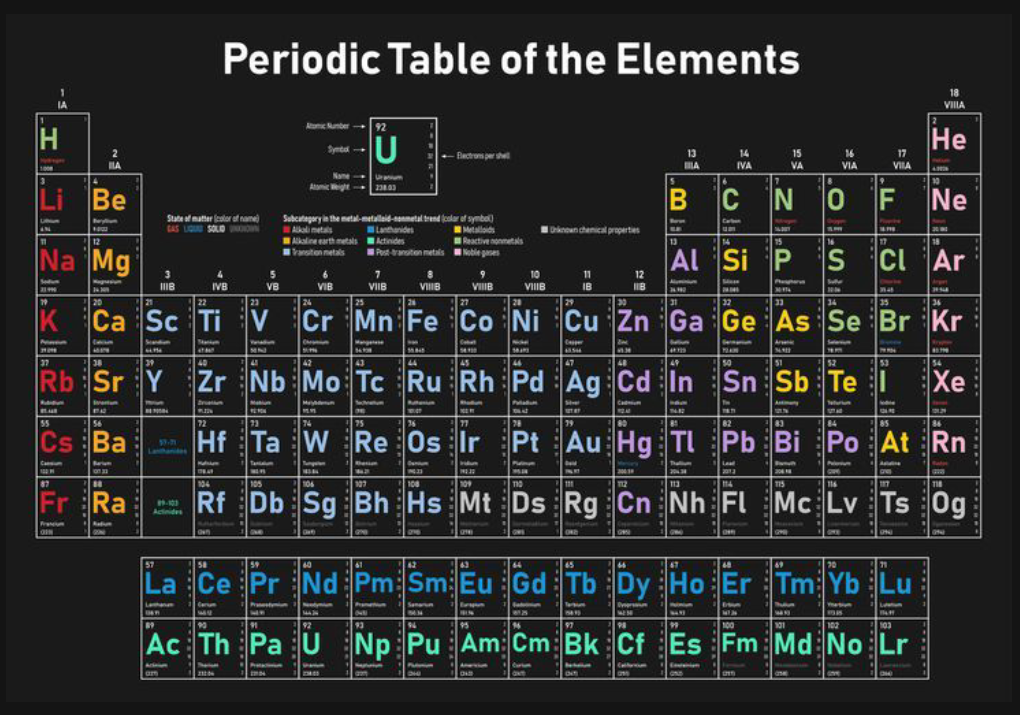
• The period table gives us information about element symbols and atomic weights. It brings order to information about the chemical elements and helps chemists to understand why elements react as they do. The milestone in the development of the periodic table was set by the Russian chemist Dmitri Mendeleev in 1869, who is acknowledged as the ‘father’ of periodic table though the title is also claimed by the German scientist Lothar Meyer. Today, the periodic table organizes the elements by order of increasing atomic number.

150th year of publication

• 2019 marks the 150th year of one of the greatest novels ever written – Leo Tolstoy’s ‘War and Peace’. This classic work from Russia was first published in the book form in 1869. Tolstoy took almost 7 years to finish this epic work and a Russian magazine named ‘Messenger’ serialised some portions of it during 1865-67. But the full novel came out as a book only in 1869. The story woven around Napoleon’s invasion of Russia covers a period of over 15 years. The unique literary style and the historical context make ‘War and Peace’ a monumental work.

125th year of publication

• Is there anyone who isn’t familiar with the famous character ‘Mowgli’? Hopefully none. The main character of the evergreen ‘Jungle Book’, a collection of stories written by Rudyard Kipling is a huge part of our childhood. ‘The Jungle Book’ was first published in 1894.

100th anniversary

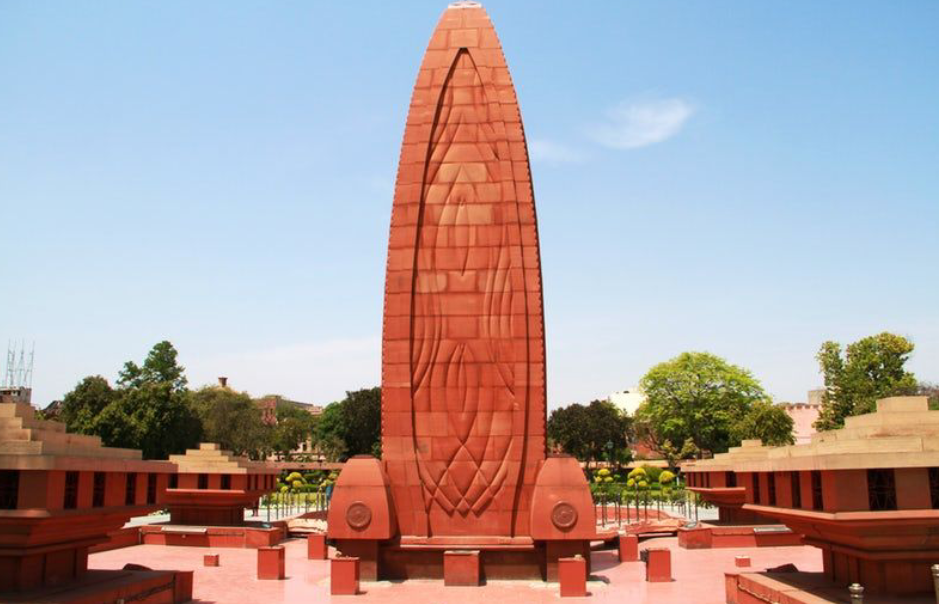
• The Jallianwala Bagh massacre was a turning point in our freedom movement. The British troops under the command of Colonel Reginald Dyer, opened fire on unarmed Indians on 13th April 1919. This event took place in the heart of Amritsar. Hundreds were killed and thousands injured. This was followed by widespread protests across a grieving country. Many Indians became convienced that the British had to be paid back in their own coin that violence has to be met with violence. The 100th anniversary of that cruel incident fell last year.

300th year of publication

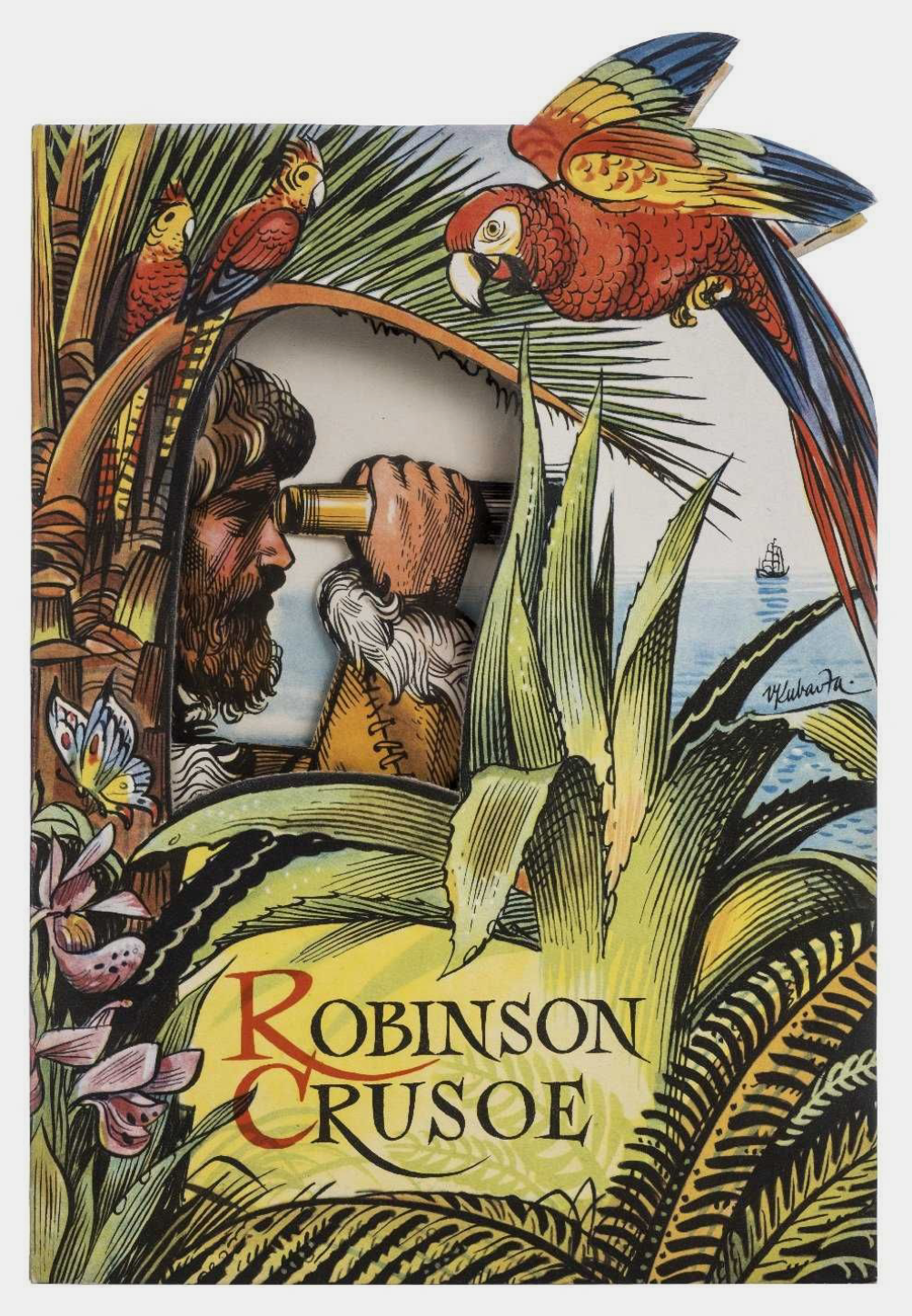
• Daniel Defoe’s ‘Robinson Crusoe’ has fascinated readers around the world for the last 300 years. Daniel Defoe was an English writer, famous for his novel Robinson Crusoe that was published in 1791. One reason for it’s popularity is that it us packed with excitement and adventure, with sailing ships, stormy seas and guns. Without doubt, Defoe’s ‘Robinson Crusoe’ established a realistic style of fiction and set the tone for modern novels.

Thank you for reading. Have a nice day!🌼