WAYS TO IMPROVE SPEAKING SKILLS

Speaking is the art of conveying thoughts and feelings vocally through language. It may be an informal speech or a formal one. Informal speech is the casual conversations that you have in our day-to-day life. Formal speech is the conversations that you have in official meetings, schools, and colleges. It is one of the communication skills that are necessary to maintain good relationships in the work environment. This skill gives the ability to speak with others effectively. Here are few tips that will help you to improve your verbal skills.

  • EXPAND YOUR VOCABULARY

Learning new words and phrases every day can widen your vocabulary. Have a target to learn few words per day and follow that throughout the year. For example, if you learn one word per day then you should have learned 365 new words in one year. These targets help you to have gradual increments daily. While you are learning be specific in what you are learning. Analyze what terms you require and learn accordingly.

  • CONCENTRATE ON YOUR PRONUNCIATION

You might know a lot of words, but do you pronounce them all correctly? You may or may not. When you are learning words have the habit of learning them with the right pronunciation. You may also need to learn how to use the word, intonation, and stress. Try to use a particular accent throughout your speech and don’t mix up different accents. This will showcase your speaking efficiency.

  • SPEECH SHADOWING

Shadowing helps to improve your language fluency. Shadowing is the technique of repeating a speaker right after him. It is like giving an echo to the speaker’s speech. Take a video of a good speaker and listen to it. Shadow the speaker with subtitles first, then try without transcripts. Start from simple videos, practice until you speak them perfectly, and move on to the next higher-level video.

  • IMITATE GOOD SPEAKERS

This is an effective way of improving your style and proficiency by listening to others. Listen to many good speakers and try to imitate them. Here, copying is not wrong rather it is good to do so as it helps in betterment your style and outlook. First, listen, observe then imitate. While you imitate record yourself to compare with the original one. You can repeat to listen as many times as you need until you are ready.

  • PRACTICE DAILY

Have a good practice of speaking the language. You may practice by speaking with your friends, colleagues or even with your family members. Start your practice from normal conversations and improve it gradually. You may also attend online classes to practice and speak along with a teacher to guide you. Practice by seeing yourself in the mirror. This self-talk enables you to know your expressions and body language. Record yourself when you practice and listen to it to correct your mistakes. Always speak with confidence in yourself. This shows your speech up. Try to keep the natural flow of the language. Use shortened forms and learn to use the word stress correctly. Participate in public events and competitions without hesitation. This will be a great learning for anyone because you gain confidence and lose fear as you do it in front of an audience.

These are some of the points that you could follow if you want to improve your speaking skills. Always keep in mind that even the best speakers emerged from the worst. So, practice hard until you master the skill. HAPPY LEARNING😊.


HOW TO ENHANCE COMMUNICATION SKILLS?

Communication is the mode of exchanging our feelings and ideas with others. It paves the way for the listener to understand and for the speaker to express their thoughts. Everyone can communicate with others but whether it is effective or not is decided by the way you convey messages. This requires communication skills. It is the ability to express and share thoughts and feelings effectively. It is one of the main soft skills that are very much essential to maintain a good rapport in the workplace. Communication may be of any form – spoken, written, visual, or even non-verbal communications like body actions. In general, it is a combination of all these. Here are few ways to upgrade your communication skills.

  • PRACTICE ACTIVE LISTENING 

Good communicator is always a good listener too. Try to listen to what others are saying so that you can communicate with those developed points and answer the questions raised as well. Don’t avoid listening or get distracted to think about what you have to respond to next. When you start paying close attention to others you become an active listener and this quality is very important to improve the skill.  

  • KEEP IT SIMPLE

Use simple words and sentences to convey your essence. Don’t show off your vocabulary and use complex words. It will not reach everyone as every listener may not be as skilled as you. Make sure that everyone understands what you are trying to convey. Try to engage the audience by asking questions and feedback to them. A mount hill of emotions or a vague expression will not get your attention. So, manage your emotions while you deliver something.

  • MAINTAIN COHERENCE

While communicating ensure that you start and end with the key points and gist. Maintain the coherent sequence of ideas from start till end. Don’t make it a mess by mixing up all the points. Be clear and precise in what you are delivering. Add short stories in the middle to have the attention of the audience throughout the session. Don’t be so spontaneous, pause in between. Stick on to the timing. Don’t finish it very soon or drag it so long. 

  • NON-VERBAL COMMUNICATION

Non-verbal communication is equally important as verbal communication. Your audience is going to judge you and your skills mostly based on this. Your body language conveys almost 50% of your ideations. So, try to have good postures and gestures. Make eye contact with the audience. This means that have eye contact with every person at least once when you communicate. Don’t be specific to a particular place, utilize most of the space provided to you.

  • OTHER FACTORS
    • Friendliness – This quality shows your positive attitude and drags others towards you to listen.
    • Confidence – Have full faith in what you do. It becomes difficult to make others understand when you are not confident enough.
    • Clarity – Use a clear tone of voice and volume to express the feelings more effectively. This is essential as it gives life to your speech.
    • Empathy – Be empathetic towards others and try to understand their emotions. Respect others’ opinions and views and give equal concern to them.

These are the few tips to enhance your communication skills. Practice this in your daily presentations and become an expert. Happy learning😊.

10 TIPS TO END A CONVERSATION

1. I’d better get going.

2. I have to rush off now.

3. Let’s meet up again son, bye for now.

4. Let’s get together soon. Take care.

5. You have been amazing

6. It was wonderful to talk with you. I must be going

7. It was great to see you again.

8. Sorry I’ve gotta go

9. Its been good talking to you

10. I look forward seeing you again soon.

TIPS TO MAKE YOUR SPEECH FUNNY

1. QUOTE OTHER PEOPLE

This is probably the most easy way to get a laugh from the audience without much time to spend on it! You just have to do your homework, search for the quotes and its not necessary it should be from famous people but only remember it should make other people laugh.

2. VIDEOS AND PHOTOS

Use videos and photos which you find funny or has a bit of humour in it, tell stories connected with them, tell them what happened exactly, by doing this you will take off the pressure from yourself to be funny.

3. ANECDOTES, OBSERVATION AND PERSONAL STORIES

Try to remember an incident from your pasty where you find humor and if you find it funny then it will definitely put a smile on other people faces too. But remember don’t try to get the big laughter you just need a smile and that’s it!

Conversation skills that you need

communication plays a very important role in human life. It helps in the exchange of information and knowledge, it helps in developing relationships, the bonding on which the human life dwells itself. Conversations are key to language development. Ideas and thoughts also find a way to enhance through conversations. They make learning easier when combined with perfect facial and body expressions.

how do you define conversation skills?

A perfect conversation is the one which “serves the intention” and “transfers the information” perfectly. People may define it differently, But for the most part, conversation skills include ability to initiate, sustain and end a conversation. You may have the best information, but how you share, matters a lot. And also Engagement- an attempt to perfectly involve others in the conversation, is important.

“Conversation skills refer to a collective set of skills needed to communicate effectively with another person”. Better skills allow to understand and comprehend better to every person in the conversation.

The pandemic which hit the world very badly is forcefully making people to isolate themselves, replacing in person conversations to Vedio calls. Obviously there is a difference when you talk to a person when he is in front of you and when you talk through a screen. But rise in social media popularity did this before pandemic. Conversations have been changed to texting. These all are taking important conversation skills away from people. Clearly avoiding screen is not a solution, but maintaining a balance is very important.

ways to improve conversation skills

LISTEN ACTIVELY: Listening shows that we are in the person and the topic of conversation. Listening is as vital as speaking since a conversation involves sharing which needs both giving and receiving end. Practice active listening by paying attention, Asking questions to clarify confusions and repeating the message or its summary back to the speaker.

LOOK FOR NONVERBAL CUES: Non verbal communication has importance exactly as the words person chooses to do conversation. For example, consider body language. Try to have a good eye contact with the person in front of you. By saying a good eye contact I mean, the eye contact shouldn’t be making the person uncomfortable. Nodding your head to show your agreement or disagreement also helps. Keeping yourself in a position that makes you hear them correctly will also help. And if you are the speaker, make sure the message you are sending is consistent both verbally and non verbally.

HAVE EMPATHY: When you are listening to other person, try to put yourself in his/her shoes. Try to understand their point of view. Use statements which shows that you are understanding. For example ” I can understand your situation”. This will help to build trust. Learn to “agree to disagree”. Respect them even if you disagree. Be polite throughout the conversation.

PAY ATTENTION TO THE DETAILS: A person with strong conversation skill will absorb more from the conversation than the average person just by noticing extra details. This will help you have more accuracy in the information. Noticing the accent and the motive in the conversation will help in long term.

OFFER INTRESTING INSIGHTS: People with good conversation skills frequently yell you things you didn’t know and find interesting. Increase your knowledge by reading books, magazines and listening to podcasts. Observe how they are choosing words or expressing them. Be Honest when you don’t know, that will not make you anything lesser.

TALK SLOWLY: A good conversationalist often act as they have abundance of time. Don’t hurry or cut others sentences. Take your time while speaking and be confident. Try to take a time before what you say to just reflect on it. be thoughtful.

USE RIGHT WORDS: A well ability to communicate has a lot to do with the words you choose. Bad choice of words will create misunderstandings. Constantly work on your vocabulary and practice communicating accurately.

A good communication skill will help you regardless of the field you are going to be in. Develop these skills as soon as possible and shine on!

Effective speech 101

The first step is to overcome the fear of public speaking. Effective speaking is not an inbuilt talent. You can develop it through correct practices just as we learn other things in life.

You can do this through:

  1. Deep breathing: Before and after your speech
  2. Shifting your focus from how you look and feel to the message you want to share with your audience. Do not imitate others, just be yourself.
  3. Visualizing: Take 10-15 minutes a day to relax, close your eyes and visualize the room you are speaking in, the audience and yourself confidently delivering your speech, smiling and moving across the stage.
  4. Focus on facts, not fears: Instead of focusing on your irrational fears- mind going blank or audience getting bored- focus on the thoughts like ‘I have the sketch, I know the bullet points or I am knowledgeable on this topic.’ Rehearse it with your friends or family.
  5. Focus on speech clarity: Organize the speech around two or more important points rather than including all the information from everywhere.
  6. Never memorize it word to word. Just remember the facts and major points and you will come around. Make brief notes of interesting things or which you don’t want to miss.
  7. Be excited about your subject, include experiences and provide examples. They do wonders!

After overcoming the fear of speaking, begin with all the important points for effective speaking.

  1. Story telling

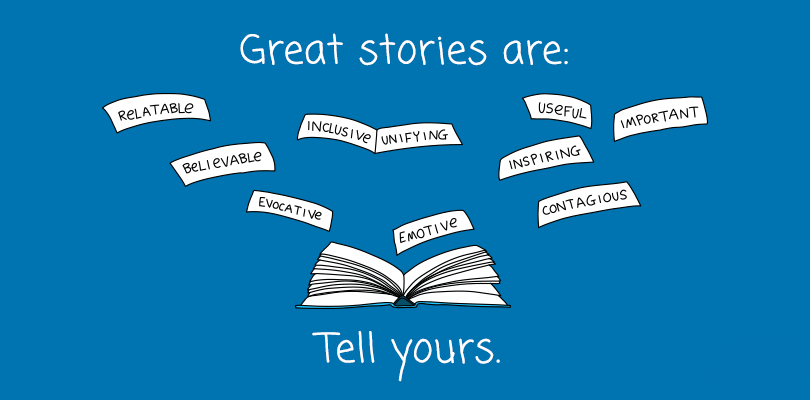
Audience can forget data and statistics, but they will never forget a delightful story. Use stories from real-life events, something funny to share from your past incidences or challenges, struggle and success stories, etc.

Your stories should be:

  • Relevant to the subject
  • Short and simple
  • At proper intervals
  • Relatable

        You should:

  • Express emotions through body language.
  • Use adjectives and verbs to make the stories more interesting.

You should not:

  • Use more than two stories on the same topic.
  • Fill it with too many minute details or characters which distract the audience from the primary concern.
  • Not use uncommon jargons.

2. Body language: It is our way of communicating through our body movements and gestures to express our emotions, expressions, and actions. We should also read the body language of our audience.

For a positive body language:

  • Posture: Feel comfortable and stay upright. No slouching shoulders or bent posture. Do not lean or grip the lectern. If you are sitting, do not lean, bent or move your legs very much.
  • Body placement: Move as you speak. Use the space, be with the audience and not behind the lectern or just positioned in one place. This cannot apply if you are sitting in a studio where you need to be seated.
  • Arms: Do not use hand gestures which reveal anxiety. Example: Clutching your hands, fiddling with your clothing, cracking fingers, etc.
  • Facial expressions: Smile at your listeners as you talk. It is very effective when you gain their admiration.

3. Tone of voice: The study related to the vocal part of the non- verbal communication is called paralinguistic. And paralanguage refers to the non- verbal elements of communication. These are:

Speech Pace: It is the speed at which we speak. Practice for 150 words per minute. It is the ideal limit. Steady your breathing, focus on enunciation, reflect about punctuation in your speech.

Speech Pitch: It is the placement of your voice on a musical scale from high to low. Usually men have lower pitch than woman. Varying your voice pitch differentiates different emotions and points. It is the easiest way to avoid monotony, add excitement, make certain words and ideas stand out, appear relaxed and confident to the listeners. Identify the exact words and phrases that you want to emphasize. Example: Use higher pitch for excitement and lower pitch for seriousness or to add weight to the message.

Speech Volume: It is the loudness of your voice. It depends on the space of speaking and the size of the audience. It should not look as if you are shouting when you are not. There should not be a difficulty in listening to you. Reach everyone in the distance too. You can change your loudness for creating dramatic effects or expressing powerful emotions.

4. Pauses: Pauses are much needed. There is no need to fill silence with umm, ahm, like, you know or and. There are 3 types of to use in different ways:

  • Brief pause: Last for half a second to 2 seconds. Use it for separating a thought, emphasizing last words, or building anticipation for what is coming.
  • Long pause: Can last anywhere from 3 seconds to a couple of minutes. Used for creating tension.
  • Spontaneity pause: Speakers are to use it when they are searching for the right word or pretending to reflect on something.You can also plan and plot these pauses. They ultimately make your the speech look more real, polished and less rehearsed.

5. Visual aids: These include flip charts, projectors, slide shows, handouts, and certain props.

  • Adding a visual dimension can make a speech look more vivid, graphic, and professional looking.
  • Multiplies understanding
  • Helps to maintain attention
  • Adds humour or creates excitement
  • Organizes complex information

Encourages gesture and movement to connect more with your audience. With good practice and knowledge of your subject, you can easily become an effective speaker.

What exactly is Storytelling?

There is so much to speak and listen. Who doesn’t have a story to hear! Everybody has more than one story whether it is Job-related, life-connected, pains of social media etc. And don’t know how many stories we all are filled with. Just try it once. The stories start flowing. That is, life itself is made up of stories. Stories are produced and circulated in our lives one after another. Sayers say if they have something to say. If you know how to tell others, then everyone listens. How will they not listen? They need a teller. A storyteller who is proficient in telling and speaking his voice. There is no shortage of listeners in today’s date. If you have the skills to express, then the listeners are ready. If we can provide any other option to the audience or listeners similar to social media, then nothing can be better than this.

We enjoy or tell stories of our own or others through social media or other mediums. Who went where? What did they eat? Information about where one is roaming etc. is taken and given. Many times you are happy to share your personal moments with others and sometimes you know who is doing what? In whose life now new guests have arrived ? etc. Actually, man is such a living being who cannot sit empty. Either narrates stories of his past or is interested in listening. How efficiently you can tell the story of yourself or others matters. These days there is a great demand for storytellers and speakers in the corporate sector. Storytellers who connect them with management tools by connecting strings of small incidents and everyday life-related events. How a manager treats his team, how to make a project successful, etc. shares theoretical things through the story. The charge for each session is at least ten thousand. What is special about them? If there is something special, can’t we learn the skill of storytelling? There is also a question, what happens in these stories? Our life philosophy and life’s ups and downs are recorded in the stories. If this happened in his or her life, what kind of tricks did he or she adopt and got out of that situation? We often find the light of way and hope from those stories. 

Actually, we understand more from stories rather than theories. In theory, you listen to many things and then throw them from the other ear. But when grandmother or friend narrates stories, our interest increases. Because a lot depends on what is said here, who is telling what things and how much interest they have on the stories of one’s own sufferings. 

There are women or men in the street who have the skills to tell and narrate stories throughout the day. But we have to understand a difference here or by drawing a line that there is a fundamental difference between storytelling and blasphemy. As mentioned above, through the story in the corporate sector, the biggest and the smallest incidents and things are conveyed to the people. Case studies are also provided in management classes. It is said that such and such employees work in the company. People take more holidays there. So how do you as a manager handle it? Another example can also be that the company was incurring losses for the last two-three years. Production was not happening on time. But when a new manager and leader was appointed, he removed the company from shortcomings within six months and enabled it to run everything on time and according to the goal. Thus this story which we can name it case study. New students of management learn them. And let’s see how to introduce theory into practice.

We learn quickly by listening to and reading the story of how to mould the principles into practice or how a successful leader has succeeded in taking the principles and practices to take the company and organization to a new height. It may be a matter of separate discussion that our socialization has happened many times by principles and grammar. In it, schools, curriculum and textbooks nurture a conservative tradition to a large extent. Whereas in management, everything is tested and verified in practice. Perhaps because of a successful leader and manager, the company and organization achieve new heights. 

We have to understand that if the new leader has the ability and skill to execute the sight and vision, from strategy-building to execution, then it can run any project on the path of development. This is a story. Companies share this story among their other employees. When a professional storyteller picks up the same story, he is treated completely different. Here, when we are talking about the story, then it is becoming a little different story of an academic narrator, novelist. Such a story sometimes slips from the eye of the narrator. We can also call such stories a case study.

20 Tips for Mastering the Art of Public Speaking

When my class was asked to describe our greatest fear- some said spiders while some said ghosts. But when the fingers were pointed at me and the entire class was staring at me for an answer, I froze. That is exactly when I knew my greatest fear was public speaking. The best way one can get over their fear is by practising it hence I made it my goal to be an ace at it. Today I’m a teacher and I speak in front of my students with ease and charisma.

The Wolf of Wall Street': A howling disappointment

Here are some of the tips that helped me through my process of practising public speaking:

1. Know your audience.

If you are speaking in front of an audience, there is usually a reason. Know who you are speaking to and what they want or need to take away. If it’s friends and family, entertain them. If it’s a corporate event, teach and inspire them. Knowing the demographic of the audience is imperative.

2. Rehearse, rehearse, rehearse.

Nothing becomes muscle memory unless you practice relentlessly. If you have a big speech coming up, make time every day to practice. Prepare your goals and the content well ahead of time. This can be done while driving, exercising, in the car, on a plane…anywhere.

3. Practice with your friends and family.

Once I know the content, I like to add a little bit of distraction to test how well prepared I really am. Turn on the TV or rehearse while pushing your child in the swing. Anything that adds a little more challenge. While taking a shower or even while dinner with your parents.

4. Maintain your own style.

Different events will often require a different approach or style. Sometimes reading a prepared speech is fine. But know it backward are forward so you’re not staring down at the pages the whole time. Some use notes. Others prefer to be 100 percent scripted and memorized. If that’s your style, memorize the content so well that you can go off script if needed — and so you don’t sound like you’re reciting a poem. Use the proper approach for the appropriate event.

5. Know the environment.

Know the venue where you will be speaking. Get there well ahead of time. Walk the room. Walk the stage. Get a feel for the vibe of the environment so you are more comfortable when its “go time.”

6. Test all equipment.

Nothing sucks more that last-minute technical difficulties. Avoid adding even more stress by testing any and all equipment and audio visual functions ahead of time. And have backups.

7. Practice in front of a mirror.

Practicing in front of a mirror is a good way to learn the proper amount of body motion, hand usage and facial expressions.

8. Take every opportunity to speak.

The only way to get better at anything is to do it all the time. Rehearsing is good, but nothing compares to actually getting up in front of an audience and doing it for real.

9. Practice body language and movement.

Remember, communication is much more about tone and body language than the words we say. The words of course matter, but emphasis comes with movement and body language.

10. Slow down.

We have some great sayings in the SEAL teams: “slow is smooth, and smooth is fast, ” and “don’t run to your death.” Nothing shows nerves more than racing through your presentation. If you want to impact the audience in a meaningful way, make sure they actually hear what you are saying. Slow it down.

11. Make eye contact, but avoid heavy body movements.

This one is very important, and it doesn’t matter how big the audience is. Make eye contact with as many people as possible. It makes the audience members feel like you are speaking directly to them. And don’t just stick to people in the first couple rows. Look at the people in the back too.

12. Know your material.

If your goal is to become a thought leader or actually teach the audience something, only a truly authentic understanding of the material will get you there.

13. Take long pauses.

Similar to slowing things down, make a point to take long pauses. And make them longer than you even think is appropriate. It can have a great impact on emphasizing key points and emotionally connecting to the audience.

14. Practice tone and voice modulation.

Don’t just eek your way through a speech using the same tone and volume. Tone and projection add a layer of entertainment and help keep the audience fully engaged from start to finish. These too must be practiced religiously.

15. Use humor and emotion.

It doesn’t matter what you are talking about. There is always a place for emotion or humor, or both. I find self-deprecating humor to work the best. And if you are starting to get emotional, so what? Use it. The audience may not remember everything you said, but they will remember how you made them feel. 

16. Mentally prepare.

Find time during the hour before your speech for some solitude. Get your mind right. Clear your head. If it’s five minutes before, just relax. The time for making sure you know the material perfectly has passed.

17. Exercise before you go on.

It’s almost impossible to feel stress and anxiety after a good workout. If you have the time, exercise. The closer to your speech, the better. It’s also a good time to practice. I like to rehearse while running or swimming.

18. Project confidence.

The more you project confidence, the more confident you are likely to feel. Get out there and own the room. Even if you are terrified. Fake it. Look people in the eye and command their attention.

19. Don’t go over the allotted time.

When in doubt, go under the allotted time. Less is sometimes more. But never, ever, go over. It’s poor speaking etiquette and shows you are not prepared. It’s also disrespectful of the agenda for the event. Again, just practice.

20. Ask for feedback.

Most of us don’t like to ask for feedback, especially when we know the response may include some constructive criticism.

However feedbacks if taken positively can do wonders for your speech improvisation especially from a third-party point of view.

Why Are We Clapping? - A History of Applause

Speaking is a great way to connect with people and a skill we all should master.

It’s a must for leaders and managers. It’s a must for sales. It’s basically a requirement for all entrepreneurs and business leaders.

So go on and practice this skill which will be your life saver!