Pilgrimage Rejuvenation and Spiritual Heritage Augmentation Drive’ (PRASHAD) 

Ministry of Tourism under its ‘Pilgrimage Rejuvenation and Spiritual Heritage Augmentation Drive’ (PRASHAD) Scheme provides Financial Assistance to the State Governments and Union Territories Administration for development of Tourism Infrastructure at the Pre-Identified Pilgrimage destinations/Heritage Cities. Under this Scheme, infrastructure interventions are carried out in consultation with the State Governments/UTs.

Ministry of Tourism, from time to time receives proposals from various sources regarding development of infrastructure under PRASHAD Scheme and these proposals are evaluated as per scheme guidelines and established procedures.

Ministry of Tourism has sanctioned 46 projects under its PRASHAD Scheme including 3 projects in Andhra Pradesh. A total of 29 sites are identified for development under the PRASHAD Scheme including 2 sites in Andhra Pradesh. The details of the projects sanctioned and sites identified are Annexed.

This information was given by Union Minister for Tourism and Culture Shri Gajendra Singh Shekhawat in a written reply in Lok Sabha today.
 

Annexure

List of projects sanctioned under PRASHAD Scheme of Ministry of Tourism given below:

(Rs. in Crore)

State/UTS.No.Project NameSanction YearApproved CostAmount ReleasedPhysical
Progress
%
Financial Progress%
Andhra Pradesh Development of Pilgrim Amenities at Amaravati2015-1627.7727.77100100
 Development of Srisailam Temple2017-1843.0843.08100100
 Development of Pilgrimage Amenities at Sri Varaha Lakshmi Narsimha Swami Vari Devasthanam at Simhachalam2022-2354.0413.692825
Arunachal Pradesh Development of Parshuram Kund2020-2137.8821.958658
Assam Development of Pilgrimage amenities at Kamakhya Temple2015-1629.8029.80100100
Bihar Development at Patna Sahib2015-1629.6229.62100100
 Development of basic facilities at Vishnupad temple2014-153.633.63100100
Chhattisgarh Development of Pilgrimage amenities at Maa Bamleshwari Devi Temple2020-2148 .4432.138466
Gujarat Development of Dwarka2016-1713.0810.4610080
 Development of Pilgrimage Amenities at Somnath2016-1745.3645.36100100
 Development of Promenade at Somnath2018-1947.1247.12100100
 Development of Pilgrim Plaza with Queue management complex at Somnath Gujarat2021-2249.970.0000
 Development of Pilgrimage Facilities at Ambaji Temple2022-2350.0010.543021
Haryana Development of Mata Mansa Devi Temple and Nada Saheb Gurudwara2019-2048.5334.687471
Jammu and Kashmir Development at Hazratbal Shrine2016-1740.4634.309085
Jharkhand Development of Baba Baidya Nath Dham2018-1936.7934.9510089
Karnataka Development of Pilgrimage Amenities at Sri Chamundeshwari Devi Temple2023-2445.710.0000
Kerala Development at Guruvayur Temple2016-1745.1945.19100100
Madhya Pradesh Development of Amarkantak2020-2149.9934.736869
 Development of Omkareshwar2017-1843.9343.93100100
Maharashtra Development of Trimbakeshwar2017-1842.1829.939357
Meghalaya Development of Pilgrimage Facilitation at Nongswalia Church, Nartiang Shakti Peeth, Aitnar Pool and Charantala Kali Temple2020-2129.2924.92100100
Mizoram Development of Infrastructure for Pilgrimage and Heritage Tourism at Chite Vang, Zuangtai, Reiek and Aizawl2022-2344.8913.182229
Nagaland Development of Pilgrimage Infrastructure at Molungkimong, Noksen Church, Aizuto, Wokha and Kohima2018-1925.2021.3310084
 Development of Pilgrimage Tourism Infrastructure at Zunheboto2022-2318.1810.906260
Odisha Infrastructure Development at Puri2014-1550.0010.0020
Punjab Development of Karuna Sagar Valmiki Sthal at Amritsar2015-166.406.40100100
 Development of Chamkaur Sahib2021-2231.5717.497955
Rajasthan Integrated Development of Pushkar/Ajmer2015-1632.6426.119280
Sikkim Development of Pilgrimage Facilitation at Four Patron Saints, Yuksom2020-2133.3228.318785
Tamil Nadu Development of Kanchipuram2016-1713.9913.99100100
 Development of Velankanni2016-174.864.86100100
Telangana Development of Jogulamba Devi Temple2020-2138.9033.077285
 Development of Pilgrimage and Heritage Tourism Infrastructure at Rudreshwara (Ramappa) Temple2022-2362.0012.823721
 Development of Pilgrimage Infrastructure at Bhadrachalam2022-2341.388.431520
Tripura Development of Tripura Sundari Temple2020-2134.4325.626368
Uttar Pradesh Development of Varanasi –Phase –I2015-1618.7318.73100100
 Development of Mathura-Vrindavan as Mega Tourist Circuit (Ph-II)2014-1510.9810.98100100
 Development of River Cruise Tourism at Varanasi2017-189.029.02100100
 Construction of Tourist Facilitation Centre at Vrindavan2014-159.369.36100100
 Development of Varanasi – Phase II2017-1844.6031.7710071
 Development of Infrastructure facilities at Govardhan2018-1937.5930.979978
Uttarakhand Integrated Development of Kedarnath2015-1634.7734.77100100
 Development of Infrastructure for Pilgrimage Facilitation in Badrinath Ji Dham2018-1956.1527.436249
 Augmentation of Pilgrimage Infrastructure Facilities at Gangotri and Yamunotri Dham2021-2254.3610.2210018
West Bengal Development of Belur Math2016-1730.0323.399278
  Total 1605.201036.96  

List of Identified sites under PRASHAD Scheme

S.No.State/UTProject / Subject
1Andhra PradeshAnnavaram, Kakinada District
2Andhra PradeshVedagiri Lakshmi Narasimhawamy Temple, Nellore District
3BiharSimariya Ghat, Begusarai District
4BiharAami Mandir, Saran District
5ChhattisgarhKudargarh Temple, Surajpur District
6GoaBom Jesus, Old Goa District
7GujaratShri Nilkanth Mahadev Temple, Sunak, Mahesana District
8Himachal PradeshMaa Chintpurni Temple, Una District
9Jammu & KashmirUtterbehni and Purmandal, Samba District
10KarnatakaSri Renuka Yallamma Temple, Saudatti, Belagavi District
11KarnatakaPapnash Temple, Bidar District
12Madhya PradeshShri Peetmbra Peetha, Datia District
13Madhya PradeshShanidev Temple, Morena District
14MaharashtraShri Ghrushneshwar Shivalaya, Chhatrapati Sambhaji Nagar District
15MaharashtraTuljapur, Dharashiv District District
16MaharashtraShre Kshetra Rajur, Ganpati Temple, Jalna District
17MizoramVangchhia, Champhai District
18OdishaChausath Yogini Temple, Ranipur, Jharial, Balangir District
19OdishaMaa Kichakeswari Temple in Kiching, Mayurbhanj District
20PuducherryNavagriha Temple- Sri Dharbaranyeswarar Temple & Spiritual Park, Karaikal District
21PunjabDurgyana Temple, Amritsar District
22RajasthanShri Karni Mata Mandir, Bikaner District
23RajasthanSun Temple, Budhahita, Kota District
24RajasthanMalaseri Dungri
25Tamil NaduNavagriha Temple at 8 places in Tamil NaduSri Kailasanathar Temple, Thingalur, Thanjavur DistrictGuru Bhagvan Temple, Alangudi, Thanjavur DistrictSri Naaganathar Temple, Thirunageshwaram, Thanjavur DistrictSri Suryanaar Temple, Thiruvidaimaruthur, Suriyanar Kovil, Thanjavur DistrictSri Agneeswarar Temple, Kanjanur, Thanjavur DistrictSri Vaitheeshwaran Temple, Vaitheeswaran Kovil, Mayiladuthurai District Sri Naganatha Swamy Temple, Keelaperumpallam, Mayiladuthurai District Suweathaaranyshwarar Temple, Thiruvenkadu, Mayiladuthurai District
26TelanganaGoddess Yellamma Temple at Balkampet, Hyderabad District
27Uttar PradeshShri Kali Mandir established by Adiguru Shankaracharya, Chowk, Lucknow District
28Uttar PradeshPilgrimage sites of Braj, Mathura District
29UttarakhandTimmersian MahaDev (Devnath), Chamoli District

The Incredible Life of Sri Ramakrishna Paramahamsa

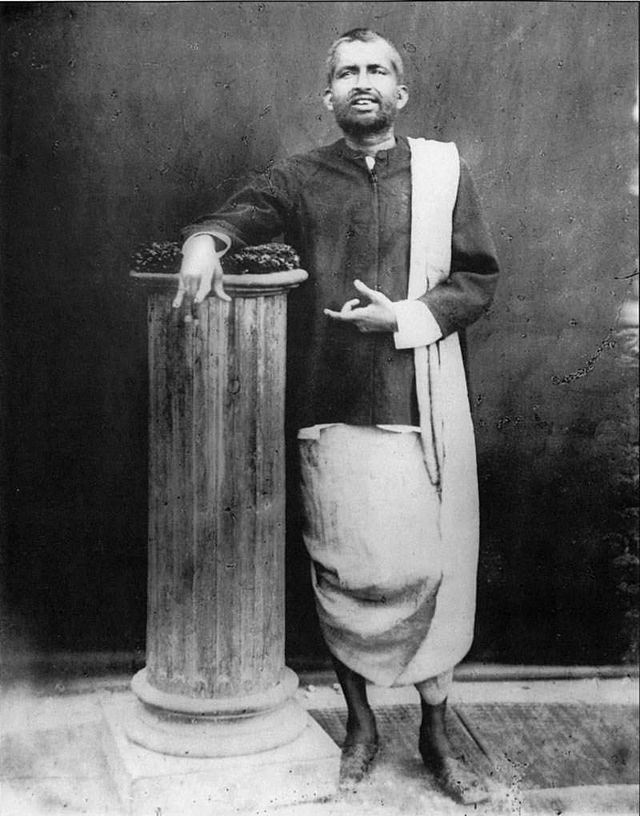
Sri Ramakrishna was an Indian Hindu religious leader and saint of 19th century Bengal who is known for his enlightening teachings on God and religion. On his 186th birth anniversary, let us take a look into his compelling life and ideals which has influenced and still remains influencing a great number of minds.

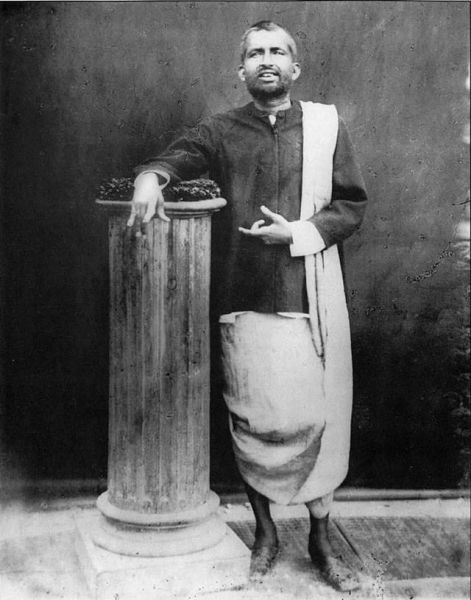
Sri Ramakrishna Paramahamsa

Sri Ramakrishna was born on 18 February 1836 to Kshudiram Chattopadhyaya and Chandramani Devi, in the village of Kamarpukur, West Bengal, in India. Born in a very poor, yet pious and orthodox household, he did not show much interest towards formal education, saying that he was not interested in “bread-winning education”.

Spirituality, Priesthood and Marriage

It was at the age of six that he went through his first experience of spiritual trance, when he came across the sight of a flock of white cranes flying against a background of black rain clouds and continued to have similar experiences throughout his childhood. He was also interested in spiritual discourses from an early age. The death of his father when he was just seven years old added to his introspective nature.

At sixteen, Ramakrishna travelled to Kolkata to help his brother Ramkumar who was the chief priest at the Dakshineshwar Kali Temple. When his brother died after a few months, Ramakrishna was made the priest. He now became completely absorbed in the worship of Goddess Kali. He spent days and nights in prayer, singing devotional songs and meditating, forgetting his priestly duties, longing for the divine vision of Mother Kali. Finally, on an occasion when he was in utmost despair yearning for Mother Kali, he was blessed with her vision, later describing it as an infinite sea of radiation and light which enveloped him and everything around him.

Rumors of Sri Ramakrishna’s unstable life resulted in his concerned family getting him married to Sarada, a five-year old from the neighboring village of Jayarambati. She later joined him in Dakshineshwar at the age of eighteen. Sri Ramakrishna had by this time been ordained a Sannyasin and thus observed the basic vows of monastic life. Thus, their marital life remained truly spiritual. He even worshipped Sarada as the Divine Mother while performing the Shodashi Puja in his room at Dakshineshwar.

After his marriage, Sri Ramakrishna returned to Dakshineshwar, where he proceeded to learn and experience different aspects of God he followed, with the help of various Gurus, and realized God through each path. Bhairavi Brahmani, an ascetic well-versed in scriptures, was the first Guru to arrive at Dakshineshwar in 1861 and teach Sri Ramakrishna various disciplines of the Tantric path. A Vedanta monk named Tota Puri arrived in 1865 and guided him to Nirvikalpa Samadhi, which is the highest spiritual experience according to Hindu scriptures. Sri Ramakrishna also went on to practice Islam and Christianity, wanting to experience God in all forms. He was able to attain the highest realization through each of them in a short span of time. He spent 12 years practicing various forms of religion and spirituality, finally expressing his spiritual realization as “So many religions, so many paths to reach one and the same goal”.

Disciples and Final Years

As his name and spiritual messages spread all over the country, it attracted people from different backgrounds. Disciples arrived from all over, wanting to learn from him. He divided his disciples into householders, who were taught to realize God while performing their family duties, and young, educated monks, who were tasked with spreading the universal message of Vedanta. One of his most influential disciples was Swami Vivekananda, who re-invigorated Hinduism and remains one of the most celebrated spiritual leaders in India.

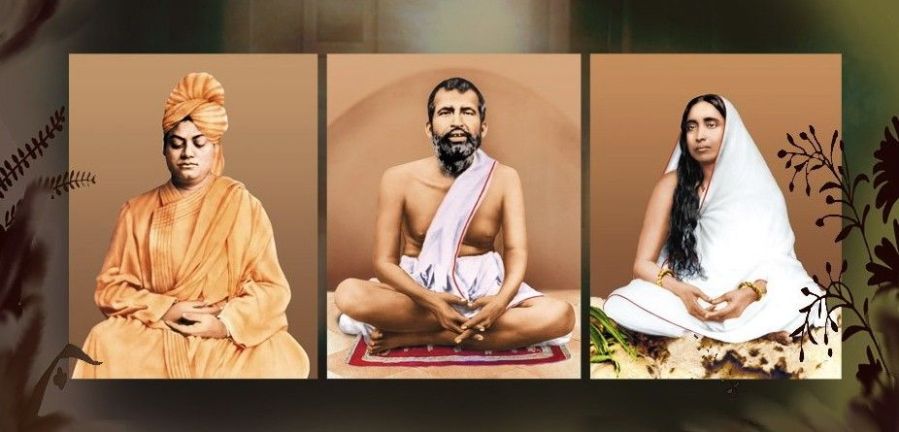
Swami Vivekananda, Sri Ramakrishna Paramahamsa and Sarada Devi

In 1885, Sri Ramakrishna was diagnosed with throat cancer after which he was shifted to a suburban villa where he was nursed by his disciples and Sarada Devi. He gave up his physical body on 16 August 1886, uttering “Ma” before passing away. Sri Ramakrishna’s disciples, led by Swami Vivekananda founded the Ramakrishna Math and Ramakrishna Mission. His illuminating conversations with visitors and disciples have been noted down by his disciple Mahendranath Guptha and published as a book “The Gospel of Sri Ramakrishna“, released in 1942.

Indian spirituality

In India there is a discipline prescribed for the gradual evolution of the human individual by stages of

(1) education,

(2) adjustment of oneself with the demands of natural and social living and,

(3) an austere detachment from the usual entanglements in life and

(4) final rootedness of oneself in God. This last mentioned stage is known as Sannyasa and the first two stages are the religious disciplines preparing a person for the third and the fourth stages.


Religion has its various restrictions imposed on a person, keeping all human activity confined to specific areas of living with its several do’s and don’ts – ‘do this’ and ‘do not do that’. There cannot be any religion without these two mandates imposed on man. People in the first two stages of life mentioned above are placed under an obligation to follow these dos and don’ts of religion in social behaviour, in personal conduct and dealings with people in any manner whatsoever. Every religion has these ordinances defining the duties, which are religious, whether in the form of ritual, worship, or pilgrimage and even in diet, daily ablution, and an exclusive literal devotion to the word of the scripture of the religion. These restrictions are lifted in the third stage where the life of a person is mainly an internal operation of thought, feeling and understanding and not connected with human society in any way.

Spirituality

Spirituality is a broad concept with room for many perspectives. In general, it includes a sense of connection to something bigger than ourselves, and it typically involves a search for meaning in life. As such, it is a universal human experience—something that touches us all. People may describe a spiritual experience as sacred or transcendent or simply a deep sense of aliveness and interconnectedness.

Some may find that their spiritual life is intricately linked to their association with a church, temple, mosque, or synagogue. Others may pray or find comfort in a personal relationship with God or a higher power. Still others seek meaning through their connections to nature or art. Like your sense of purpose, your personal definition of spirituality may change throughout your life, adapting to your own experiences and relationships.

SPIRITUAL-SELF

Prayer is unimaginable power. It is that enriching experience that provides abundant willpower and courage to deal with our daily problems. Man is not made up of body and mind alone but an integral part is embedded in us, which is the principal part called the “spirit”.

Why do we pray, fast, and meditate? All these practices enable us to control our growth of the spirit and direct our life to be worthy ones. As physical growth is essential for the various needs of our body, spiritual growth and control are important for knowledge and coping with physical problems.

In the Gita 6:24 it is written: “The man who longing, abandoning all desires, he attains peace.”

UNDERSTANDING SPIRITUALITY

PROLOGUE

Characterizing what otherworldliness is is is difficult on the grounds that there are various kinds of otherworldliness. There is otherworldliness inside religions (Islam, Christianity, Buddhism), and there is likewise otherworldliness without religion. The drive for otherworldliness is intrinsic in our temperament. However, the manner in which the profound way unfurls is exceptional to every person. There are numerous spiritualities, and what is an otherworldliness to you might not be quite the same as what it is really going after. All things considered, let me present you a wide meaning of otherworldliness, so we can be in total agreement. 

In basic terms, otherworldliness is a perspective and a lifestyle dependent on the conviction that there is something else entirely to life than what meets the faculties, more to the universe than simply purposeless mechanics, more to awareness than electrical driving forces in mind, and more to our reality than the body and its necessities. Otherworldliness generally includes the faith in a higher type of intelligence or Consciousness running the universe, just as post-existence. It exists to fulfill the more profound human hunger for significance, harmony, secret, and truth. 

TRADITIONS 

For as far back as 19 years, I have been presented to a few astuteness customs, trying to comprehend the embodiment of their way of thinking, the training and strategies included, and the objective. I’ve investigated Zen, Theravada Buddhism, Occultism, Taoism, New Age, Yoga, Vedanta, and so forth.  These customs share numerous normal practices, standards, and objectives – but there are significant contrasts in approaches, convictions, and perspectives. This post is my work of assembling everything and introducing an outline of the shared objectives and practice in various profound ways.  You don’t have to follow a systematized religion to have a productive otherworldly life. This doesn’t suggest, in any case, that you reject custom. 

Custom is there to serve you, and it is senseless to discard the aggregate improvement of spiritualists over centuries and attempt to waste time. Discover an astuteness custom that addresses your heart, then, at that point, study and practice its center. Simply don’t rethink your profound excursion – own it, investigate with your own feet, explore different avenues regarding the lessons, and trust your own acumen.  My objective with this post is to introduce an outline of the otherworldly scene – something you can use to comprehend and order the various practices/ways and discover the way generally reasonable for you. I don’t claim to know every one of the appropriate responses; rather, I’m transparently sharing a few reflections and bits of knowledge acquired en route. I trust you remove something from this! 

SIGNIFICANCE OF SPIRITUALITY 

For what reason do you require otherworldliness? Why?  Actually, like reflection is various things for various individuals, so it is with otherworldliness. I know how otherworldliness affects me. However, I needed to have a more extensive view on the range of alternate points of view on this. Along these lines, in July this year, I asked my perusers:  What is otherworldliness for you, and for what reason is it significant?  Also, got many various reactions. Taking a gander at the normal topics in the appropriate responses, I can say that individuals keen on after an otherworldly way are searching for at least one of the accompanying many drives. 

DIRECTION

Regardless of whether you are on the highest point of the wheel of material life or on the base, there is a fundamental feeling of disappointment, impediment, and void. There is some type of existential uneasiness. A few groups are touchy to this, others aren’t, or they attempt to top this off by pursuing outer objectives unendingly. Otherworldliness is a quest for significance, for a reason, and heading throughout everyday life. It satisfies our need to have an establishment for living, a way or lifestyle in the light of a bigger setting. It addresses the should be “adjusted” with an option that could be greater than our self-image and individual life. 

LOVE

This addresses our feeling of partition and deficiency. Since it is difficult, we look for association and love – either locally, or in being unified with the universe, or interfacing with the Divine (whatever shape this might take). To feel total, we desire to get and give unequivocal love, which brings a feeling of all-out acknowledgment and of satisfaction in being alive. This inquiry can likewise show as getting back to the source, to God, or to a feeling of holiness. 

DEVELOPMENT

There is an inborn drive in a significant number of us to develop, to improve, to push the limits, arrive at our maximum capacity. The drive to ceaselessly develop and learn, carry on with a day-to-day existence true to our reality, foster our psyche, develop ideas, and grow our awareness. 

REALITY

Questions like “Who am I?”, “What are we doing here?”, and “What else is there?” along with a drive to see how life functions and to find out about ourselves. For some, this appears as understanding, retaining, and becoming one with the essential Fact of the matter. 

INNER PEACE

Enduring is the underlying entryway of otherworldliness for some individuals (normally as uneasiness, despondency, or dread). At the point when our psyche relies upon outside things for satisfaction, its experience of bliss will be questionable, fleeting—actually like outer causes are. It has been properly begotten as “securities exchange bliss.” Since enduring is a psychological marvel, and otherworldly practices are a way to change one’s brain, it is an insightful method of looking for a superior life. Consequently, there is a drive to look for satisfaction and harmony inside. Or, on the other hand, to essentially decrease the experiencing that we are encountering. Otherworldliness assists us with acquiring balance, freedom from outside cases, and a more noteworthy enthusiasm forever.

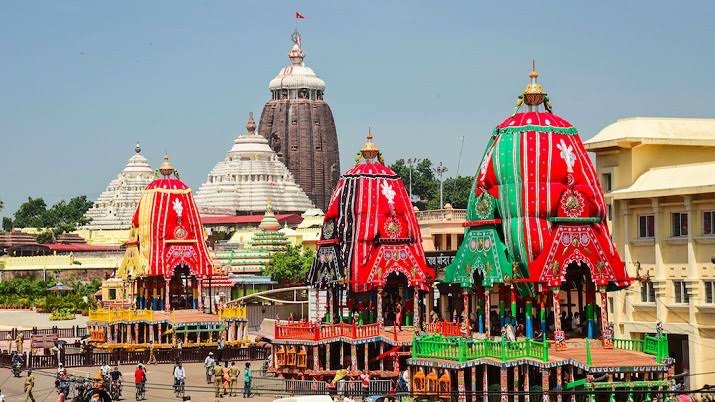
Jagannath Puri Rath Yatra: 5 Fast Facts about the temple.

One of India’s biggest festivals, Rath Yatra begins today, July 12 and that is celebrated all across the world by millions of Indians. The festival has its primary significance in Indian states like Odisha, Jharkhand, West Bengal and Assam.

Picture Credits: India TV. Location: Puri Jagannath Temple.

As everyone has their eyes on Puri Jagannath Temple’s grand celebration for this festival, let us know some of the important facts about the temple.

1) Formation of Temple.

The temple was first built by the Ganga Dynasty ruler Anantavarman Chodaganga in 12 Century CE and was further developed by several other kings including that of the Ganga Dynasty as well as the Suryvamshi Dynasty.

2) Deities Worshipped

Lord Jagannath, Lord Balabhadra and Goddess Subhadra are worshipped inside the temple. The deities are adorned with different jewelleries and accessories according to different seasons.

3) Structure of the Temple.

The Temple has four distinct structures:

a) Deula, Vimana or Garba Griha where the triad deities are kept on the ratnavedi, the throne of pearls, in Deula Style.

b) Mukhashala, the frontal porch

c) Nata Mandir, Natamandapa which is known as Jagmohan, the audience hall or the dancing hall.

d) Bhoga Mandapa, the offerings hall.

The main temple is a curvilinear temple and crowning the top is the Srichakra, an eight spoked wheel of Lord Vishnu. It is also known as Nilachakra which is made out of Ashtdhatu and is considered sacrosanct.

4) The Food Offerings:

The food is offered to the Lord six times a day. The breakfast that is offered early morning is called Gopala Vallabha Bhog, the next offering at about 10 am is known as Sakala Bhog and another offering after some time is called the Sankhudi Bhoga which consists of Pakhala with curd and Kanji Payas.

The noon offering is known as Madhyanha Dhupa and that is followed by evening food at 8 pm known as Sandhya Dhupa. The last offering to Lord is called the Bada Simhara Bhoga.

5) Rosaighara- Temple’s Kitchen.

The temple’s kitchen is considered to be the largest in the world. About 56 varieties of food are produced which are purely vegetarian and prepared without the use of onions, garlic or chilies as prescribed by some Hindu Texts. Cooking is done only by using earthen pots with some water that comes from two nearby tube-wells known as Ganga and Yamuna. The most awaited food offering is known as Kotho Bhoga, offered during Mid-Day. After being offered to Lord Jagannath and other deities, the food is sold in a nearby market.