Starbucks Failed In Australia WHY ?….

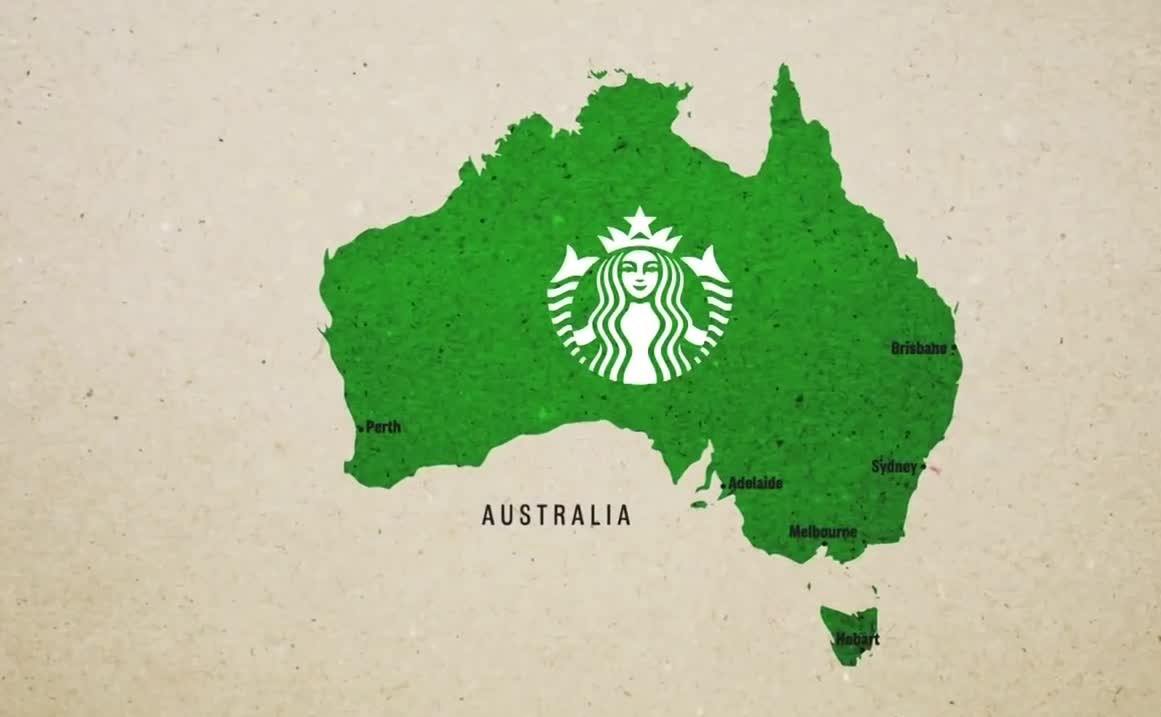
Starbucks has coffee shops all over the world There are more than 28,000 locations and 76 markets From Shanghai to Guantanamo Bay And in China, a new Starbucks location opens up every 15 hours But there is one continent that seems uninterested in the hype over the Seattle based coffee chain And that continent is Australia It’s proven to be one of the toughest markets in the world to break into So tough in fact, that Starbucks closed more than two-thirds of its stores on the continent back in 2008. So what went so wrong with Starbucks and Australia To answer that let’s go back to July of 2000 When Starbucks opened its first Australian shop in Sydney.

 From there it expanded fast By 2008 Starbucks had 87 stores across the continent I think one of the problems with Starbucks and its true for a lot of businesses that have been successful in one country is that they thought that their business model could just roll out to a different environment and there was no need for them to adjust But that was the problem They tried to grow the Empire too fast Starbucks rapidly opened up multiple locations instead of slowly integrating them into the Australian market When they launched they launched too rapidly and didn’t give .
The Australian consumer an opportunity to really develop an appetite for the Starbucks brand They also moved into regional areas into outer suburbs of major cities And so for the Australian consumer it was almost like it was too available for them And so there wasn’t this point of difference, this want, this need for Starbucks And it wasn’t an organic growth which is what we very much saw in the US In its first 7 years in Australia, Starbucks accumulated $105 million in losses By 2007, Starbucks Australia was hanging on by a thread taking big loans from the US, totaling up to $54 million And in 2008, Starbucks announced it was shutting down 61 stores But of course 2008 was a difficult time for businesses due to the financial crisis Along with Australia closures, Starbucks also closed 600 underperforming American stores But even still such a retreat in Australia was embarrassing for the brand.

When you’re shutting down 75 stores For the Australian consumer when they, when they did leave the market or at least a large number of bestowals were shut down they didn’t really care It’s partly because Australians are spoiled for choice when it comes to coffee Australia’s coffee market is one of the biggest in the world the industry is expected to hit more than $6 billion in total revenue in 2018 They’ve been immersed in nuances of cafe culture since the mid 1900s when Italian and Greek immigrants began traveling to the country The immigrants introduced Australians to espresso By the 1980s, Australians were fully engulfed in cafe culture.

They’ve also grown accustomed to specialty menu items like a flat white or an Australian macchiato So cafes in Australia were born out of like the Italian culture of, you know, meeting of friends and knowing your local barista and it being kind of like a local meeting place where everyone knew each other and that coffee was just a part of that and then Starbucks came in with what is more of an American style like coffee culture which is essentially just like coffee is a product, coffee is a commodity Coffee is like, like perk me up in the morning it’s caffeination Starbucks had a basic menu and offered more sugary drinks which most Australians didn’t like in Australia where, you know, local tastes are different So we don’t really want a coffee that’s, you know, hundreds of ounces with lots of sugar in it We want something a little more sophisticated Plus Starbucks charge more than local cafes .

So Australians instead opted to pay less for coffee they liked from a local barista they trusted And so when you come in with this big like hey, we’re going to open all these cafes And they’re all gonna be to go focus It just was the complete wrong market for what, what the Australian was used to But there is one American coffee company that’s thriving in Australia Founded in Chicago and now based in Australia Gloria Jean’s got the traction in Australia that Starbucks couldn’t Gloria Jean’s has more than 400 Australian locations And serves more than 35 million consumers in Australia each year So what is Gloria Jean’s doing in Australia that Starbucks isn’t Well the company attributed to success to two Australians who franchised the business in their home country Shops started to show up in Australia in 1996 Fast forward to today, the company has a presence in every Australian state .

The reason? Its menu The chain offers a wide variety of espresso drinks and specialty coffee Failing to adapt its menu to Australians coffee culture proved to be a mistake for Starbucks And the company faces another challenge later this year Italy Starbucks is opening its first store in Milan in late 2018 home of the espresso, Italy is rich in cafe culture But according to Starbucks it’s not going to make the same mistakes that it did in Australia The company said that it would develop in Italy with humility and respect for its coffee culture It announced it would be opening a roastery which is not your average cafe It gives customers a chance to see coffee beans roasted and processed before their eyes So there’s a chance that it won’t struggle like it did in Australia But Starbucks isn’t admitting defeat in Australia either Starbucks is staging a comeback on the continent In 2014, Starbucks locations in Australia were purchased by the Mount Waverley base withers group .

So this time it’s taking a different approach to putting Starbucks on the continent So if you just think about Australia as a big tourist destination There’s a lot of U.S. and Chinese tourists Starbucks has been very successful in China and it makes a lot of sense for them to build out because there are people looking for something that’s familiar to them Now with 39 locations in Brisbane, Melbourne, the Gold Coast, and Sydney areas this time it’s not looking to appeal to Australians but instead the coffee giant hopes to be a familiar face for tourists visiting popular vacation destinations in Australia free Australia has always been a high-volume tourist market .

The same thing in terms of international students at our universities are potential opportunities for them And we’re starting to see Starbucks enter into some large shopping malls here in Australia as well Australia welcomed 9 million tourists from 2017 and 2018 And those international visitors spent more than $30 billion in 2017 alone So tourists could possibly be the key to keeping the company afloat and preventing another downfall .

Why is Starbucks so Successful? Here are 6 Reasons behind it…

Its success stems from the fact that it was able to deliver an experience that revolutionised the way the world views coffee shops and how many of us drink coffee outside of our homes. Starbucks has created a space in between home and work where people can unwind, enjoy a cup of coffee, and take in the appealing atmosphere. Starbucks competes not with other coffee companies, but with going to the movies.

Photo by Adrianna Calvo on Pexels.com

The following are the primary components of the company’s success formula:

1. Core Competence and Visions: The Company’s primary job or responsibility is to ensuring that the organisational culture is consistent with the types of individuals they want to attract and retain. Starbucks strives to instil a sense of belonging among its staff and consumers, as well as trust and faith in the company’s values. The quality of the coffee and the quality of the experience are what keep their consumers coming back, and the experience comes to life thanks to the personnel. Starbucks believes in a successful, competitive business approach aided by a strong commitment to the product. The Company’s good leadership and management strategy has resulted in the brand’s outstanding success and a clear vision of core competence. The company’s desire to create the most recognisable brand was fueled by a well-thought-out planning and positioning approach.

2. Promotional Patience: Starbucks has decided to avoid what would be considered standard marketing techniques, which is a departure from the norm. By depending on cafés to advertise themselves, a major reliance on a strong brand and word-of-mouth to spread a good reputation is unavoidable. Sutter (2003) also claims that effective positioning of the Starbucks environment uses powerful marketing techniques to create a setting that encourages individuals to study, hang out, and read.

3. Employee’s Approach: The Starbucks brand’s main retail success is defined by people’s interactions with the company’s experience, as well as the culture and values of how they connect with consumers. By investing in and cultivating a unique relationship with employees, and ensuring that they understand that the primary goal is to surpass the expectations of both employees and consumers. Starbucks employees are never treated as commodities, but rather as business partners.

4. Command of a Premium Brand: According to Hayes (1999), customers are prepared to pay higher costs for Starbucks coffee because they are not only purchasing a beverage, but also making a social statement. Consumers are purchasing an experience, a way of life, and a mindset. While these intangibles are notoriously difficult to quantify, Starbucks consumers are making it easy by flocking in massive numbers.

5. Experimentation and Innovation: Starbucks is a disciplined innovator, and one of the key reasons for the Company’s constant high levels of same-store sales is its effective management of its innovation timetable. In the store, customers can sample a variety of coffee brands. The Company’s capacity to quickly launch new activities and products is a significant competitive advantage. Customers are also becoming more interested in Starbucks’ music compilations, which are produced by Hear Music exclusively for the company. Starbucks aims to launch hi-tech cafés by the end of 2005, with bespoke music CDs in addition to high-speed Internet access (Ruggless,1997; Vishwanath and Harding, 2000; Donation, 2003).

6. Measured Expansion: While McDonald’s is known for its lightning-fast location evaluation and company setup, Starbucks has taken a more careful approach, particularly in international markets. Outlets in China have continuously risen from 8 in 1999 to just under 70 in 2004. Because of rising opportunities and its well-known global brand, the company is expanding into new markets.

How Starbucks captured the coffee & the world…!!!

With nearly 30,000 cafes across the world , Starbucks has become over just a household name. From its iconic cups, often adorned with misspelled names, to the espresso inside them, Starbucks has catapulted from one coffee bean shop in Seattle to a sprawling $80 billion business over the last 47 years.

Starbucks has a 'void in innovation' and healthy beverages won't ...

Starbucks sales account for 57 percent of the total cafe market. Yes, 57 percent, nearly two-thirds of all coffee sold at cafes in the U.S. comes from a Starbucks. But this impressive expansion hasn’t come without growing pains. With more than 14,000 locations in the U.S. alone, Starbucks has spread itself too thin. Having too many stores has led to fewer transactions at individual stores. To compensate, the company has raised prices. But doing this too quickly or too often can drive customers away. So how did this happen? And what’s a coffee giant to do about it? The year is 1970.
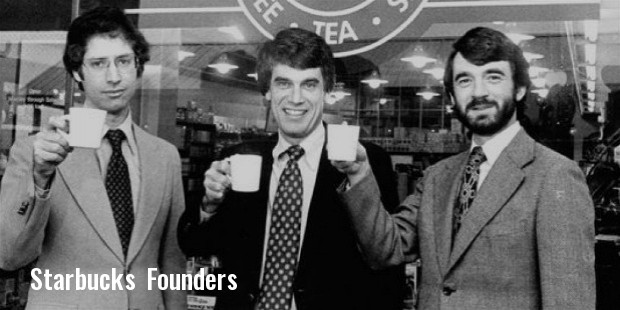
Three college friends, Zev Siegl, Jerry Baldwin and Gordon Bowker decide to get into the coffee business. They found a mentor in Alfred Peet, founder of Peet’s Coffee and the man responsible for bringing custom coffee roasting to the U.S. He knew the coffee industry inside and out, especially the gourmet end. He was the most educated coffee guy in the country at that time. So with Peet’s help, the three friends open Starbucks, a coffee bean shop and roastery at Seattle’s famous Pike Place Market in 1971. Peet provided the young entrepreneurs with roasted coffee beans and connected them with coffee brokers until they could set up their own roastery and source their own beans. For the first decade, the founders opened five more locations in Seattle. At this point, contemporary coffee consumers might have noticed a glaring absence: actual coffee drinks. But that’s the thing about the 70s coffee culture: it didn’t really exist outside the home. There were no coffee bars nor was there much of a requirement for espresso-based drinks. You purchased coffee beans and you either took them home as beans or we ground them for you in the store. Nobody expected to urge a beverage at a Starbucks coffee store until after 1980.

Starbucks Story - CEO, Founder, History | Coffee Company | Success ...
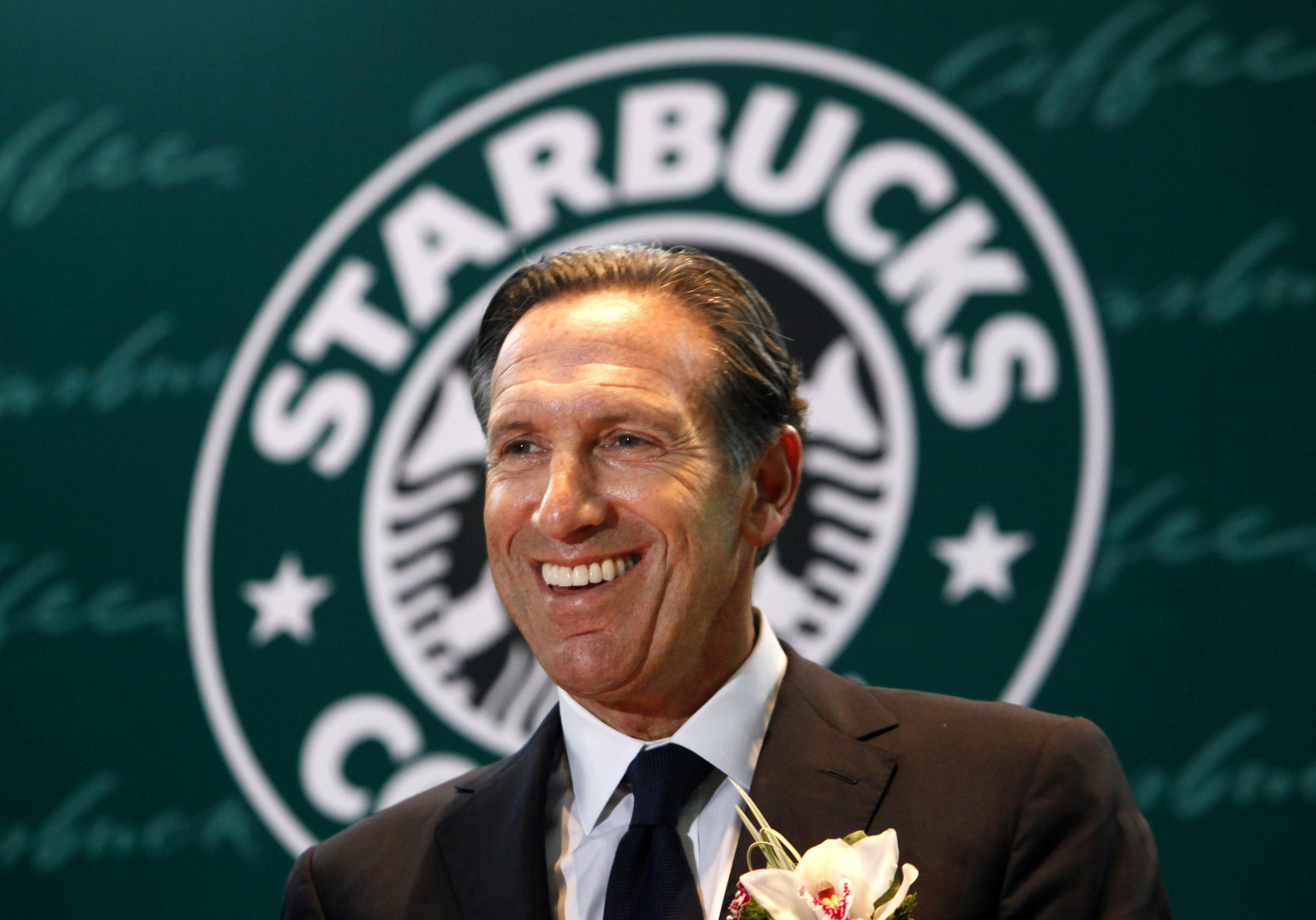
Starbucks’ initial focus was bringing high quality beans to consumers who were more accustomed to instant or canned coffee, but that changed with the addition of one man. The company hired its first really professional Director of Marketing and Sales, and that man was Howard Schultz. And he couldn’t figure out why we weren’t selling beverages. In 1983, Schultz travels to Italy and returns with an idea: turn the coffee bean stores into cafes. Starbucks served its first latte the next year. The experiment was a success, and four years later, Schultz partnered with investors and bought Starbucks for $3.8 million. He was only 34 at the time. Schultz pursued a strategy of aggressive expansion. By the time the company went public in 1992, it had 165 stores, in 1996 it had opened more than a thousand locations, including its first international cafes in Japan and Singapore.
Growth was so rapid that, just three years later, Starbucks opened its 2,000th location. Schultz switched from CEO to Executive Chairman in 2000, at which era Starbucks operated 3,500 stores in additional than a dozen countries. Between 2000 and 2007, the number of Starbucks cafes more than quadrupled, from 3,500 to over 15,000. During this era , the corporate opened a mean of 1,500 stores per annum , including 2,500 in 2007 alone. Sales shot up from $2 billion to $9.4 billion. Consumers were increasingly ditching their kitchen mugs for these iconic paper to-go cups. But then, Starbucks hit a wall: the 2007 financial crash. That year, its rapid growth screeched to a halt and its stock price plummeted by 50 percent as cash-strapped consumers backed away from pricey coffee habits. So, Starbucks brought back Howard Schultz. This news alone caused Starbucks stock to increase by 9 percent.

Xed Knowledge
Schultz halted growth and focused on customer experience. He shuttered cafes – more than 600 in 2008 and another 300 in 2009 – and laid off around 6,700 baristas. A month after his return, Schultz ordered Starbucks to shut all of its U.S. locations for one afternoon so he could retrain more than 135,000 baristas about how to make its signature espresso. Schultz’s goal was to remind customers what they loved about the brand by making the stores an experience, not just a place to get a quick coffee. They stopped selling breakfast sandwiches and brought back in-house grinding, infusing the cafes once again with that fresh coffee aroma. Schultz even mandated the removal of automatic espresso machines. These made service faster, but removed much of the romance and theatre of watching baristas craft each cup of coffee. Schultz’s makeover worked.

Starbucks | Description, History, & Facts | Britannica
The company’s stock soared more than 143 percent in 2009 and same-store sales rebounded. Starbucks has posted positive same-store sales ever since. During Schultz’s makeover of the cafes, Starbucks barely opened any new stores. But the pace picked up again in 2012. By 2017, Starbucks opened nearly 3,000 more locations, ending the year with 28,000 cafes round the world. However, this brings us back to the first problem: profit cannibalization. Over-saturation, particularly in urban locations, has spread sales thin. Because Starbucks has numerous locations, customers do not have to be loyal to only one. So albeit Starbucks overall sales are growing, its individual same-store sales won’t reflect it. Compounding this problem are changing consumer preferences. People are shying away from sugar-laden calorie bombs. which happens to be one of Starbucks’ staples. These signature Frappuccinos contain an average of 57 grams of sugar. That’s more than double the recommended daily limit of sugar. So, to combat these problems, Starbucks is changing once more . The company announced the closure of 150 stores in 2019. That may seem like a drop in the bucket for a sprawling company like Starbucks.

Starbucks App Users Now Drive 17 Pct Of Sales | PYMNTS.com

The company’s biggest undertaking is its new line of upscale stores: Starbucks Reserve Roasteries. These massive, 20,000-square foot stores are designed to be a tourist destination. Here, Starbucks baristas and bartenders’ experiment with different brewing methods and craft new, innovative beverages. These have proven popular. In the first weeks, the Shanghai Roastery made an average of $64,000 every day, which is double what a regular cafe makes in a week.