Start-up to Success: Ola Cabs

Gone are the days when commuting without a personal vehicle, used to be an issue for city dwellers. Either they had to resort to public transport which is not always the safest option, or book rental car services way before the trip for enormous amounts. Now with the coming up of app based cab riding services, voyaging has become easier for city dwellers.

And Ola is one of the key players in the market in regard to cab services. It is the first Indian cab aggregator company. Ola has made it much easier for the public to book cab at their own convenience. The company started in 2010 by Bhavish Aggarwal and Ankit Bhatia, and since then it has been bridging the gap between cabs and commuters.

Ola partners with a number of taxi drivers and owners, and with the help of their app they allows people to book cabs by entering their pick up location and destination. Ola has users in over 250 Indian cities and employs more than 2.5 million driver-partners.
How did it start ?

It all started when Bhavish Aggarwal while journeying from Bandipur to Bangalore, was left abandoned in his journey by his driver. This was because the driver was renegotiating the already decided payment. This unfortunate incident lead him to come up with a economical and satisfying cab service. And thus, Ola cabs was born.

The founders of Ola, Bhavish Aggarwal and Ankit Bhatia are both IIT Mumbai graduates, and launched Ola in December 2010. Both of them became the youngest billionaires of India, at the age of 25 and 26.

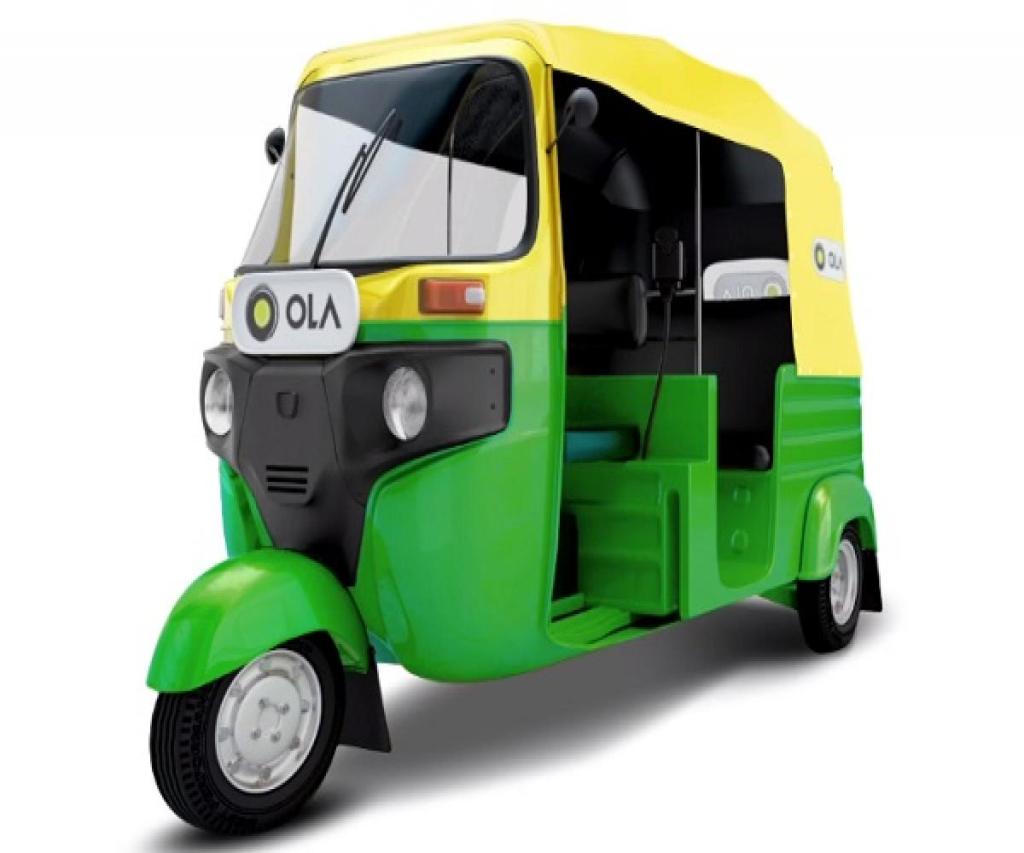
The name of the company is driven from the Spanish word ‘Hola’ that translates to ‘Hello’. The name ‘Ola’ probably indicates their services as easy and simple to use. Their logo is simple yet elegant and has the ‘O’ in the shape of a tyre.

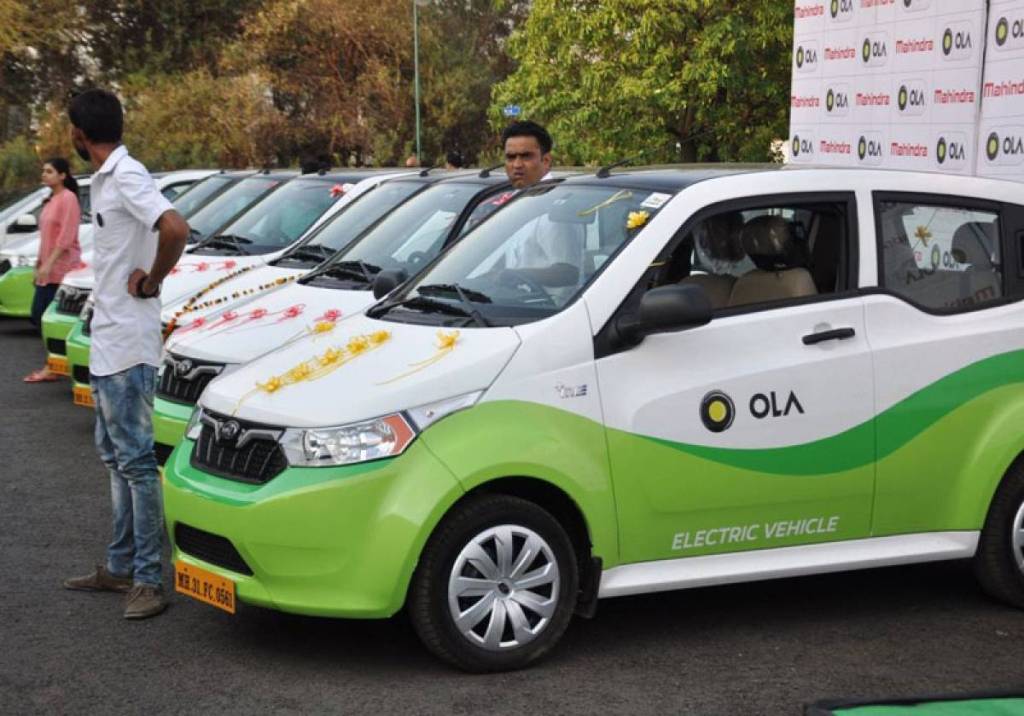
Ola has a wide range of car categories to choose from, such as hatchback, sedan, SUV and more. Travellers choose them depending on their budget and number of people travelling. For travelling within the city, people can hire cabs, bikes, autos and even e-rickshaws through Ola.
Challenges and Competitors

In the initial day of the start up they had to code for long hours and sometimes 48 hours straight. They even had to drive customers to their desired locations at times because the drivers did not show up. As much as Ola wanted to spread their services across India, they faced the issue of internet connectivity in smaller town. Thus, they designed the app so that I could accommodate network connectivity in smaller towns. However, after bagging an investment worth 2 crores, things were finally in track and there was no looking back.  

Every business has its fair share of competitors and so does Ola. Uber is Ola’s biggest competitor. There are other players in the Indian market such as, Meru Cabs, Zoomcars, PeIndia Cabs, Carzonerent and more. Rapido is increasing taking over the bike taxi segment as well, which is the competitor to Ola’s bike services.

Needless to say, just like most businesses, Ola too had to bear the burnt of the COVID-19 pandemic. The travel and transport sector was hit severely with the pandemic as there were repeated lockdowns and curfews affecting its revenue generation. However, with the upliftment of lockdowns and curfews, it is believed that Ola will regain its revenue generation soon.  
Addition and Expansions

In spite of facing ups and downs through out the years Ola manages to sail through smoothly. Over the years Ola introduced new services in ‘Ola pedal’, which is a huge success in IIT Kanpur and IIT Madras campuses. They have also introduced the option to book cabs on an hourly basis to travel out of the city and have named the segment ‘Ola outstation’.

‘Ola money’ was also introduced and the product includes Ola money credit card, Ola money post-paid, Ola money mobile wallet and Ola money hospicash. Ola launched ‘Ola corporates’ in 2016, where employees book their rides through Ola, and the fare is deducted from the company’s Ola corporate prepaid account.

In March 2015 Ola acquired ‘TaxiForSure’, another taxi aggregator for $200 million, and maintained its stand in the country’s cab hailing market. Another impressive deal was when Ola acquired Foodpanda-India, an food delivery aggregator in 2017 at a valuation of $40-$50 million. In 2018 onwards, Ola expanded its services overseas in countries of New Zealand, Australia and United Kingdom.

                     Clocking more than 150,000 bookings per day, Ola holds a little less than half of the Indian market (as of the Uber’s 2020 report). The CEO of Ola Bhavish Aggarwal has disclosed that the company is planning on initiating an IPO in the coming years. Ola plans on further expanding their services in remote areas, making India travel luxuriously on a budget.  
Start-up to Success: Zomato

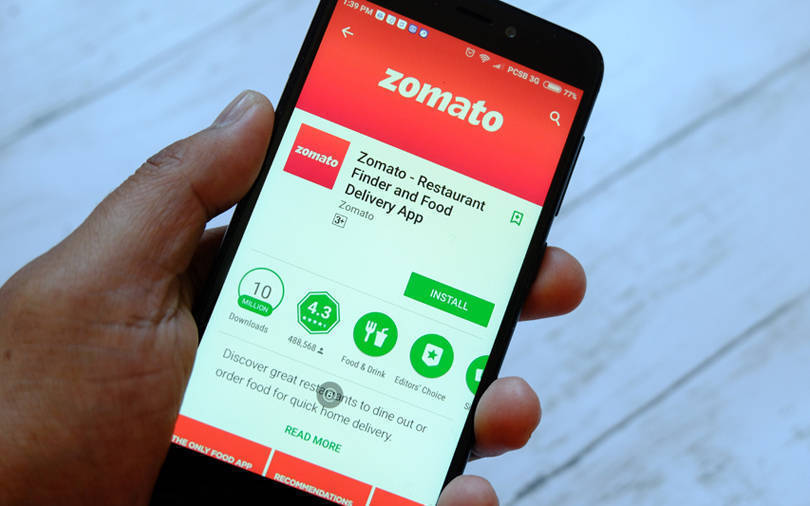
On lazy days when we aren’t in the mood to cook and don’t want to go out either, Zomato is one the first things that comes to our mind, to rescue us in situations like these. Zomato is an Indian food delivery aggregator app, other than delivery food from various partnered restaurants under one roof, it also provides concrete information regarding the restaurant, that includes the menu, reviews, pricing and more.  

The founders Deepinder Goyal and Pankaj Chaddah launched Foodiebay, a food directory website in 2008, and later rebranded it as Zomato in 2010. And since then the growth of Zomato has been phenomenal despite of having few ups and downs. The company is one of India’s first food-tech unicorn.

Origin of Zomato

The founders of Zomato, Deepinder Goyal and Pankaj Chaddah who are both IIT Delhi graduates worked as analysts at Bain and Company, Delhi. One day at their office they realised that there were a lot people who were waiting for a long time just to get a flash of the menu card at a nearby café. And at that moment, they came up with a solution to put an end to such inconveniences. And thus, Foodiebay was launched.   

Foodiebay gained tremendous user base and growth rate, and within nine months of its launch, it became the largest restaurant directory in Delhi NCR. It initially started out in Delhi and eventually extended their services to Mumbai and Kolkata, and now all across India. After having two successful years, the founders decided to go international. After being backed by investors and little modification, Foodiebay was rebranded to be called Zomato in 2010.

In 2012, Zomato started its international with its UAE launch and eventually launching its services in Europe and South Asia. In 2015, it launched Zomato Gold, which is a membership program in which consumers can avail exclusive deal at Gold-tagged restaurants.

Struggles of Zomato

Zomato had a good start to the business till 2014, as it had a fully functional international service, however things took a turn since 2015, and it went through a ‘make or break’ point. In 2015, Zomato laid off 300 employees to curb losses. In the same year, Zomato acquired Urbanspoon in the USA, and rebranded it as their own company, but things did not go as expected and the venture failed miserably.

In 2016, Zomato had to cut out its services in several countries like the US, UK, Chile, Canada, Brazil, Sri Lanka. Ireland, Italy and more. And when they resumed, Zomato had to resort to remote services. In 2017, Zomato faced its biggest blow as it encountered a cyberattack with a hacker that had breached into 17 million users record from the company database. However, the issue was soon resolved, as the hacker just wanted to prove that there were loopholes in the security system.

In 2019, the #logout campaigned surfaced when the partnered restaurants called out Zomato for consuming their profit margins through, Zomato Gold and Infinity dining service. The restaurants also highlighted unreasonably high commissions and arbitrarily applied additional charges. Post this campaigned Zomato altered Zomato Gold rules and discontinued Infinity dining features. In the following years, Zomato has been involved in a number of other controversies, which have been resolved soon.

Re-establishing Itself

Despite having such controversies, Zomato claims to have registered a rise of 177% of restaurant partners and got on board an additional 73,000 restaurants. Zomato has over 1.4 million listed restaurants and 12,000 restaurant partners aligned with its app, as of August 2021.

Zomato has raised more than $2.1 Billion in funding, and continues to do so. In the 12 years of its journey, Zomato acquired around 14 companies, and one of their biggest acquisition was Uber Eats- India for $206 Million in January 2021.

Despite having tough competitors like Swiggy, Foodpanda, it still managed to generate a revenue of $1 billion in the financial year 2021. And offered Rs 9,375 crore as initial IPO, which opened for subscription during July 14-15 July 2021, and received a strong reception from investors. The public issue was subscribed 38 times, which is the highest in the last 13 years among IPOs valued at more than Rs 5,000 crore.

Zomato also has a strong social media presences, which helps in connecting with urban youth. It produces content that are trendy and relevant to the target demographic.  

                      Zomato changed the Indian food delivery system and it continues to mould it further. Zomato’s tagline ‘Never have a bad meal’, truly lives up to it. Zomato shows that despite of having ups and downs, they stood strong and sailed through it, and continue to improve themselves by adding new and relevant features.

The utterly butterly delicious story of Amul

Over the years, Amul, one of the most beloved brands of our country, has become the taste of India, just as its tagline claims. Every Indian millennial has grown up listening to the jingles of its many dairy products, and the Amul girl, the brand’s mascot in the polka-dotted dress, has become a nostalgia-evoking symbol. Amul has truly come a long way since its founding in 1946.

The beginning

Amul was formed as a part of a cooperative movement against Polson Dairy in Anand, Gujarat, which procured milk from local farmers of Kaira District at very low rates and sold it to the then Bombay government. Everyone except the farmers benefited from this trade. The farmers took their plea to Sardar Patel, who had advocated farmers’ cooperatives since 1942. The result was the formation of the Kaira District Co-operative Milk Producers’ Union Limited in Anand.

The union started pasteurising milk produced by a handful of farmers for the Bombay Milk Scheme and grew to 432 farmers by the end of 1948. The rapid growth led to problems including excess production that the Bombay Milk Scheme couldn’t accommodate. To solve this issue, a plant was set up to process all that extra milk into products such as milk powder and butter.

Amul is born

The late Dr. Verghese Kurien, rightly called the Milkman of India, was Amul’s true architect. His journey at Amul began in 1949 when he arrived in Anand to manage a dairy as a government employee. He went from helping farmers repair machinery to revolutionising India’s dairy industry with the White Revolution (or Operation Flood), the largest dairy development programme in the world.

The new dairy with the milk processing plant was ready for operation in October 1955, the year that also saw a breakthrough in dairy technology —buffalo milk was processed to make products for the first time in the world. The word ‘Amul’, derived from ‘Amulya’, which means ‘precious’ or ‘priceless’ in Sanskrit, was used to market the range of milk products developed by the Kaira Union. It is also an acronym for Anand Milk Union Ltd.

Dr Kurien had a vision. He wanted to offer small-scale dairy farmers quality-control units and centralised marketing, which were missing at the time in the dairy economy. Thus, the Gujarat Cooperative Milk Marketing Federation (GCMMF) was created in 1973 to market milk and all milk products produced by six district cooperative unions in Gujarat. GCMMF is the largest exporter of dairy products in India and Amul is the umbrella for all of its products.

Awards, accolades, and a global presence

Over the years, Amul, together with GCMMF, has won numerous awards. Some of these include the Rajiv Gandhi National Quality Award, 1999; the Golden Trophy for Outstanding Export Performance, 2009-10; Best Marketing Campaign, 2014; and World Dairy Innovation Award, among many others. Amul earned recognition all over the world when GCMMF  introduced it on the Global Dairy Trade (GDT) platform, where only the six top dairy players across the world sell their products.

More than a mere slogan

Amul’s famous slogan, which is now a part of its logo, was created in 1994 by Shri Kanon Krishna of a Mumbai-based advertising agency called Advertising and Sales Promotion (ASP). According to Amul, the Taste of India slogan is more than just corporate positioning or advertising jargon. This slogan lends meaning to the brand’s never-ending commitment to taking quality food and products to the rural man, which he otherwise couldn’t have afforded.

The Butter Girl

Amul did not always have the round-eyed moppet as its mascot. The Butter Girl was born in 1966 when Sylvester daCunha, the then MD of the advertising agency handling Amul butter’s account, created her for its campaign. It was a pleasant change from the dull, corporate ads that the previous agency had come up with. Being a seasoned marketer himself, Dr Kurien gave daCunha complete creative freedom to create and release the ads without taking the company’s permission. 30 years later, the Utterly Butterly Girl still wins hearts wherever she is, whether on a billboard or on the packet of butter.

Amul is not just a brand; it is also a movement that represents farmers’ economic freedom. The name is now a household term that is here to stay, and the chubby-cheeked Amul girl will continue to cast a spell on the public.

BYJU’S: India’s most valuable Unicorn.

Photo Credits: BYJU’s

What’s the business about?,

BYJU’s is an Indian multinational educational company which was founded in 2011 by BYJU Raveendran and Divya Gokulnath. Today, it’s the most valuable unicorn in India and world’s most valuable technological educational company.

History of BYJU’S

In 2011, Mr. Raveendran and Ms. Divya Gokulnath founded an educational company with the help of their students which provided online video based learning programmes for students of kindergarten to Grade 12th.

In 2015, with the help of Think and Learn Ltd., the business firm launched its first ever app named BYJU’s: The learning app. After that, in 2017, BYJU launched its second app for mathematics for kids and subsequently they also launched another app for parents to help them track their child’s learning course.

Rose to fame: BYJU’s

By 2018, BYJU’s had more than 15 million users and 9 hundred thousand paid users. In 2019, BYJU’s won sponsorship rights for Indian Cricket Team jersey. Popular Indian actors Mohanlal and Shah Rukh Khan are the brand ambassadors for Byju.

Major Services provided by BYJU.

Initially, educational content was only made for students from classes kindergarten to 12. But now BYJU also trains students for Indian competitive examinations like IIT-JEE, NEET, CAT, UPSC and it also trains students for international exams like GMAT and GRE.

In 2019, the company announced that it would soon start providing classes to students in their respective regional languages in India. The same year it also announced the commencement of an international app for students living in countries outside of India.

Byju’s also launched its Future School which is a Kids Coding Platform where kids are taught to code online by experts.

The video tutorials in the app are about 12-20 minutes long and they’re digital animation videos for classes 4th to 12th and hence this makes it easy for students to grasp and learn.

Road to most valued start up!

BYJU’s has raised 350 million dollars from UBS, private equity Equity Giant Blackstone and also from Abu Dhabi state fund ADQ, Phoenix Rising and Zoom.

Byju’s has raised over 1.5 billion dollars in last eighteen months because of the increase in online learning and teaching due to the COVID-19 pandemic.

Byju’s has also acquired several other small business in the recent past like White Hat Jr, Scholr, Osmo and Toppr. In fact, it’s latest fundraising comes from popular educational chain, The Akash Educational Services, estimated at about 950 million dollars.

According to Mr. Raveendran, the 21st century illiterates are not those who can’t read and write, but those who can’t learn, unlearn and relearn.