How to Choose good stocks for investment

 Choosing good stocks for investment requires careful analysis and consideration of various factors. Here are some steps you can follow to help you choose stocks:

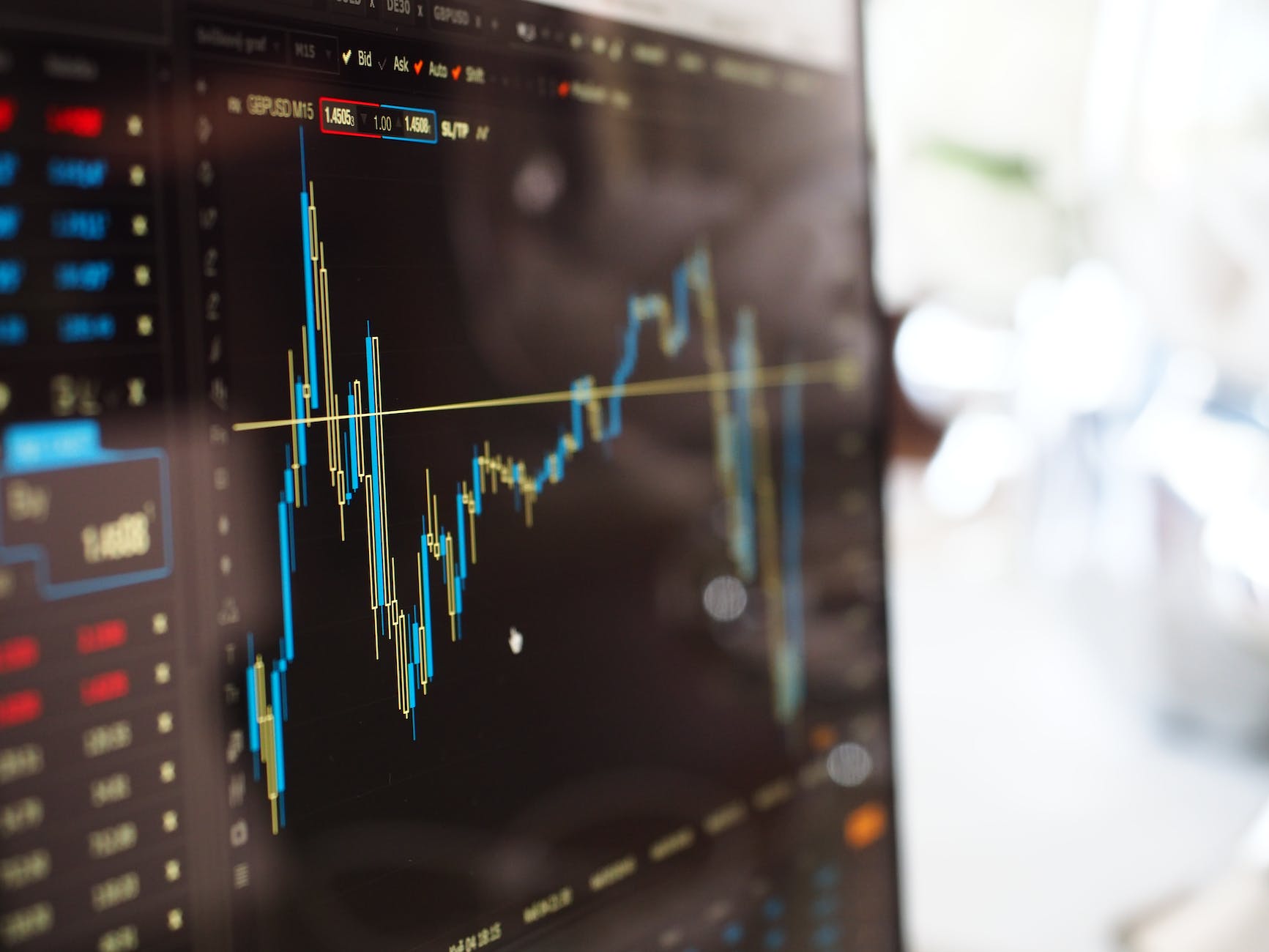
Photo by energepic.com on Pexels.com
  1. Research and Understand the Company: Start by researching and understanding the company you are interested in. Look into their business model, products or services, financial statements, management team, competitive position, and growth prospects. Consider factors such as revenue and earnings growth, market share, and industry trends.
  2. Evaluate the Company’s Financials: Review the company’s financial statements, including the balance sheet, income statement, and cash flow statement. Pay attention to key financial ratios like earnings per share (EPS), price-to-earnings (P/E) ratio, return on equity (ROE), and debt levels. Assess the company’s profitability, liquidity, and financial health.
  3. Assess the Industry and Market Conditions: Evaluate the industry in which the company operates. Consider factors such as the industry’s growth potential, competitive landscape, barriers to entry, and regulatory environment. Additionally, analyze the overall market conditions and macroeconomic factors that can impact the company’s performance.
  4. Analyze the Company’s Competitive Advantage: Determine the company’s competitive advantage or unique selling proposition. Look for factors that differentiate the company from its competitors, such as strong brand recognition, intellectual property, economies of scale, or technological advancements. A sustainable competitive advantage can contribute to long-term growth.
  5. Consider Management Quality and Track Record: Evaluate the management team’s experience, track record, and their ability to execute the company’s strategy. Look for signs of effective leadership, transparency, and shareholder-friendly policies. Consider if the management has a clear vision and the skills to navigate challenges and drive growth.
  6. Review Analyst Recommendations and Ratings: Check analyst recommendations and ratings from reputable sources to get insights from experts. These recommendations can provide additional perspectives on the stock’s potential and help validate your own analysis. However, do not solely rely on analyst opinions and always perform your own due diligence.
  7. Understand the Risks: Assess the risks associated with the investment. Consider factors such as industry volatility, competition, regulatory risks, economic factors, and company-specific risks. Diversification can help mitigate risks by investing in a mix of different stocks across various industries.
  8. Monitor and Stay Informed: Once you’ve invested, continue to monitor the company’s performance, news, and relevant industry developments. Stay informed about any changes that may impact your investment thesis. Regularly review financial reports and news updates to make informed decisions about holding or selling the stock.

Remember, investing in stocks carries inherent risks, and it’s important to have a long-term perspective, diversify your portfolio, and seek professional advice if needed. Conduct thorough research, stay informed, and make informed decisions based on your investment goals and risk tolerance.

Stock Market

 Stock Market

What is stock market?

A stock market, equity market, or share market is the aggregation of buyers and sellers of stocks (also called shares), which represent ownership claims on businesses; these may include securities listed on a public stock exchange, as well as stock that is only traded privately, such as shares of private companies which are sold to investors through equity crowdfunding platforms. Investment is usually made with an investment strategy in mind.

Benefits of stock market

The stock market provides the investor with several benefits and provides them with the easy handling of their money. These benefits include;
 

1. Gain received 

 
The ability of the market to generate the kinds of gains it does is the most essential component of investing directly in markets.
 
Stock markets have always stood the test of time, rising in value over time, even though individual stock values fluctuate daily, according to historical data.
 
Investing in companies with a consistent growth pattern and increased earnings every quarter, or in industries that contribute to the country’s economic growth, will result in you steadily developing your wealth and growing the value of your investment over time.
 
As this value grows, there is a gain of money and the investors receive all the benefits over the money they had invested. It is said that a long-term investment in certain stocks is a guarantee of gain in the stock market.

2. Safety against Inflation

 
The fundamental goal of investments is to guarantee our future, but we must keep track of inflation regularly.
 
The gains will be nil if inflation and the rate of return on investments are comparable. In an ideal world, the rate of return on investments would be higher than inflation.
 
Stock markets and benchmark indexes have consistently outperformed inflation.

3. Liquidity or Ease of conversion 

Stocks are considered liquid assets since they can be easily converted to cash and have a large number of purchasers at any given time.
The same cannot be said for all assets; some, such as real estate, are difficult to sell. It could take months to see a return on your home investment. It is, however, much simpler in the case of stocks.
 
If the average volume of transactions is high then we can say that there are multiple buyers and sellers for that specific stock.
 
This liquidity of a stock market is one of the key benefits for the investors as the process never stops.

4. Investors gets the advantage of economy 

 The stock market is always a factor in a thriving economy, and it responds to all economic growth indices like gross domestic product (GDP), inflation, corporate profit, and so on.
 Investors in the stock market can directly benefit from a thriving economy, and the value of their investments rises in lockstep with economic expansion.
 
When an economy is growing, corporate earnings rise, and as a result, the ordinary individual’s income rises.
As a result, customer demand rises, increasing sales. As a result, the value of your investment in a specific company rises, i.e. the share price rises.

5. Transparency 

The stock market in every country is regulated by a regulatory body, for example in India, the body is SEBI. the market functions by the guidelines of it and the bodies regulate stock exchange, transparency in the market, and protect the rights of investors. 
This means that when an investor invests in the stock market, not only his money but also his rights are protected by these regulatory bodies. This saves them from any kind of fraudulent activity done by the company they have invested in.
 
This makes the investments even secure and gives the investors the confidence and trust of no mishappenings.
 

Types of stock market 

1.  Growth stocks

These are the shares you buy for capital growth, rather than dividends. Growth stocks are essentially shares in those companies that are generating positive cash flows and whose earnings are expected to grow at an above-average rate relative to the market.
It’s worth remembering that some of the most successful firms in the US economy pay out relatively miserable dividends, such as Warren Buffett’s Berkshire Hathaway. If anything, they are the equivalent of a real estate investment. You buy and hold, riding the appreciating value of the asset. For the first few years you may not make much on the shares but if you hold onto them for long enough, and good quality managers avoid the pitfalls along the way, you’ll be well looked after when other investors hop on board at higher prices.
An example in Australia is CSL, the old Commonwealth Serum Laboratories. The shares are only yielding 1.62 per cent a year in terms of dividends but long term holders aren’t complaining. The former Government laboratories were privatised in 1994 at $2.30 a share and the shares have since gone up by a factor of more than 45 times. They broke through $100 in December and are now around $107 each.

2. Dividend aka yield stocks

Yield stocks, ideally, are those that perform well in bull markets while providing partial downside protection for investors in bear markets. They are the stocks of choice for the income-seeking investor.
The stock yield is calculated by dividing the yearly dividends paid by the company to the company’s share price. For example, if a company is expected to pay out $0.50 in dividends over the next year and is currently trading at $20, the dividend yield is 2.5%.
It is because of their dividend yield that the four big banks and Telstra account for well over half of retail investors’ shareholdings in Australia. They have been sold down since late last year on the reasonable basis that the economic outlook outlook is not rosy, but they’re not going out of business any time soon.
ANZ’s weak half year profit result last week saw the six month dividend cut from 95c to 80c, but a recovery in the share price on Budget Day, the day after the result, to just under $25, meant that the shares are yielding 6.4 per cent. If you are retired and not paying tax, the dividend imputation system means that if you buy at these levels, you’re getting more than 8 per cent in your hand per year.
While of course the higher the yield, the better, savvy investors are also aware that the stability in the cash flows and the business are also important considerations when purchasing shares for income.

3. New issues

Also known as Initial Public Offerings or IPOs, these are why the share market was created in the first place. These events mark the first time that companies make their shares available to the public. Once they’re listed on the share market, of course, any one can buy and sell but what is often lucrative is getting an allocation in the IPO before the shares list.
In times past, ordinary mortals found it hard to get access to those new floats unless the promoters were having trouble filling them. That’s changing now, thanks to technology, and the returns in recent times have been very good indeed. In 2015 IPOs returned 24 per cent on average.
We reported last week that investors in companies that have used our technology to buy the 25 mainly small companies we floated since they started in October 2013 would have found themselves ahead by significant amounts, particularly if they held on to the shares for a year.
We calculated that if they’d bought the full spread of 25 floats, investors would have been up
1. 5.1% if they sold on the first day
2. 9.3% if they sold at the end of the first month
3. 30.6% if they sold at the end of the first 3 months, and
4. 86.3% if they sold at the end of the first year.•
 

4. Defensive stocks

These are the shares that don’t go down so much when times are tough because they sell consumer staples. Typically, these types of stocks provide a constant dividend and report stable earnings regardless of the state of the share market as a whole.
Also known as non-cyclical stocks, these companies operate businesses that are not highly correlated with the economic cycle such as utilities, food, and (traditionally) oil. You don’t give up going to the supermarket, for instance, even in a recession.


Stock Market

Money plays a crucial role in our lives. Every person has a desire to be rich for which people search different paths. One such path is the stock market.
A stock market is a place where buying and selling of ownership of a company take place. These units of ownership are termed shares, which collectively are known as stocks.

Many regard it as a Gamble & state it’s an easy fortune for some, for others, it is a  road to doom.

There is some element of risk in this investment but majorly success depends on the person and their analysis of the stocks.
Some key things to consider while buying a share:-
• Face value(FV) of the share– Dividend is paid on the face value of the share.
For example, if a share is traded for Rs 1000 with a face value of Rs 2. 100% dividend it would mean a sum of Rs 20 is paid.

•Past performance of the company- A company with a good performance record. Have a growth potential and the chances of price rise are more.

• Any major Change in government policy -Change may have an impact on the business environment. For instance, a policy that bars or regulates new competitors from entry will be a good indicator for the existing players.
• ROI– ROI or Return on Investment tries to measure the amount of return a particular investment, relative to the investment’s costs.

STOCK MARKET IS A GAMBLING ??

Majority of population in India thinks that stock market is a gambling like casino. To be honest that’s not the reality.

Being in the stock market field for 1 year , I have realized that stock market is a far bigger concept that what normal people think it is. Even if you blindly invest in stocks of any company you are still speculatively investing and not gambling! The simple reason is that there is a sort of ownership here.

Investing in stocks involves careful analysis of company’s performance and future forecast. So as to own a handful of shares for some period of time, to claim trust on the products of the company, further gearing the economy.

as said by WILSON MIZNER : Gambling is the sure way of getting nothing from something.

When you gamble , you get to own nothing. You play with the available probabilities and are run by emotions or gut to chase a win.

Hence from this blog I just want to convey a message to all the readers that Investing in stocks is a gambling is a MYTH !!

Which Trading is Better?

Want to trade? Stuck choosing between online and offline? You have come the right way. We are here to help you through your decision for trading online or offline. First, you should know the basics of trading. Then we will guide you through some points stating differences between online and offline trading. 

Before the age of the internet, trading was carried out by stockbrokers. They dealt with the work of buying and selling equities on behalf of their clients. But the internet made this process a lot easier and faster. Today, both online and offline share trading is prevalent around the world. 

To understand more clearly, let us tell you something about Forex trading. 

What is Forex Trading? 

Forex trading or better known as foreign exchange trading is multipurpose trading carried out around the world. It can be explained as a network of various types of buyers and sellers willing to transfer currency between each other at an agreed price. 

Forex trading or any other type of trading can be carried out by individuals, organizations, companies, and central banks. They convert currency into one another and transfer the same. The amount of currency they convert daily causes price movements across many countries around the globe. 

Now let’s see some differences between online and offline trading. 

Differences between online and offline trading

  1. Ease of trade

Online trading is usually done individually and the person makes all the transactions for himself without any guidance. Also, online trading can be done with any device provided by the internet. Here all you need is the internet so it is less expensive. 

Whereas in offline trading all the transactions are carried out by the broker. And the individual has to approach the broker and contact him by going to his office. This also makes offline trading more expensive. 

  1. Convenience

Convenience is the most important factor to be considered when doing absolutely anything. Similarly, online or offline trading services should be selected based on the convenience of the individual. 

Lack of the internet can be a problem for those who prefer online trading. But if you have a mobile and full-time internet then your best option is online trading. But for people who prefer regular guidance, should go for offline trading. 

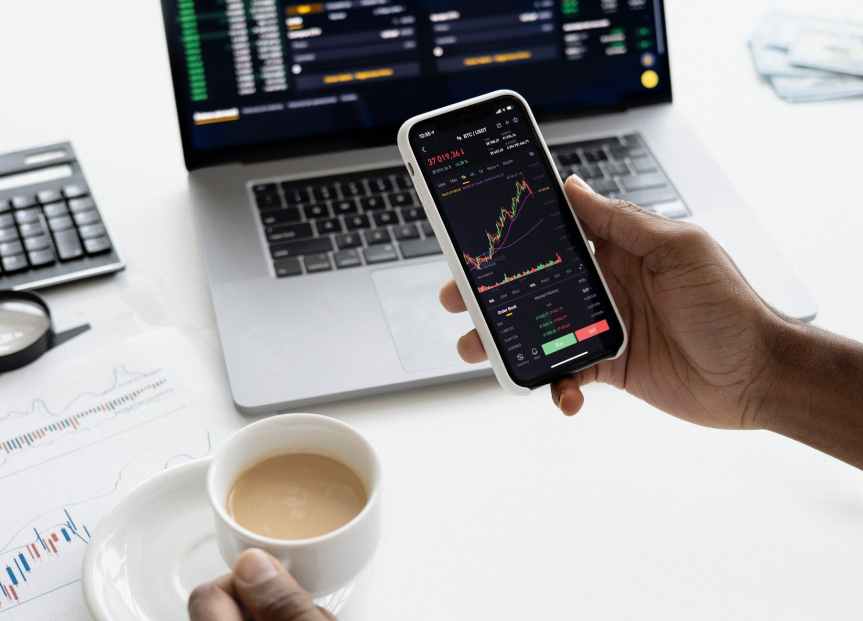
Photo by Karolina Grabowska on Pexels.com
  1. Security

In terms of security, online trading is much more secure than offline trading as in online mode, the individual has complete control over the transactions to be made. 

In offline trading, the transactions are in the hands of the broker. They carry out the transactions on behalf of the client without any knowledge. 

Another advantage of online trading is that the traders can check their tax, brokerage, and other statements. But in offline trading, the broker can easily manipulate the trader. 

  1. Real-time information

While trading, the trader needs to keep track of the real-time information. So again online trading has the ball in its court. It is a huge benefit of online trading that all the real-time information is displayed on the trader’s screen. He can have access to updates on any crashes in the stock market. 

Whereas in the case of offline trading, the trader can’t keep track regularly as the market keeps updating every second. 

  1. Trading fees

In online trading, the client executes the trade themselves so there is no need for middlemen. This reduces the trading fees to almost negligible in online mode. 

Whereas in offline trading there is more than one person involved in the process which increases the trading fees significantly. 

  1. Guidance

Guidance is necessary during trading. So in online trading, the trader can surf the internet for various expert comments and suggestions. 

Whereas in the side of offline trading, the trader has no other option but to depend on the broker’s word for everything. 

  1. Platform

It is a huge advantage of online trading that it has all the things under one umbrella. The trader can find everything on a single platform. No need to search here and there. Plus, the broker houses make sure they upload all the necessary things on their site. 

Whereas in offline trading, the trader needs to do independent research about everything, before asking the broker to trade. 

  1. Quality of service

In online trading, the trader can access detailed reports of trends in the market and can have all information regarding stocks and orders. 

Whereas in offline trading, the trader should trust the broker for all information. 

  1. Flexibility

With online trading, getting the order at the right time has become easier. All broker houses provide a trading platform like their website or app. There the trader can execute buying and selling of orders and make transactions. 

Whereas in offline trading, the trader needs to go to the broker’s office or carry out the trade on call. This is tiresome and inconvenient to almost everyone nowadays because of the busy schedule. 

  1. Fraud

Online trading provides the trader with full control over their trades and transactions. 

But in offline trading, clients have to take the broker on his word. This sometimes leads to mistakes and cases of fraud. 

Now you can easily start trading without depending on anyone for information and all the necessary transactions. Clearly, online trading won the battle online Vs offline. Hope you make the right choice. Happy trading! 

Zomato IPO opened for subscription

Indian Twitter is abuzz with activity as online food delivery service provider Zomato’s initial public offering (IPO) worth ₹ 9,375 crore opened up for subscription. India’s biggest this year – will be available for subscription till Friday, July 16, 2021. The price band of Zomato IPO is fixed at Rs 72-76 per share of the face value of Rs 1 each and the company aims to raise Rs 9,375 crore through the offer.The IPO comprises a fresh issue of equity shares worth Rs 9,000 crore and an offer for sale (OFS) worth Rs 375 crore by existing investor Info Edge (India), which is the parent company of Naukri.com, according to the information provided in the red herring prospectus.

What is IPO?

An initial public offering (IPO) refers to the process of offering shares of a private corporation to the public in a new stock issuance. Public share issuance allows a company to raise capital from public investors. The transition from a private to a public company can be an important time for private investors to fully realize gains from their investment as it typically includes share premiums for current private investors. Companies must meet requirements by exchanges and the Securities and Exchange Commission (SEC) to hold an initial public offering (IPO). An IPO can be seen as an exit strategy for the company’s founders and early investors, realizing the full profit from their private investment.

How does IPO work?

Prior to an IPO, a company is considered private. As a private company, the business has grown with a relatively small number of shareholders including early investors like the founders, family, and friends along with professional investors such as venture capitalists or angel investors.

When a company reaches a stage in its growth process where it believes it is mature enough for the rigors of SEC regulations along with the benefits and responsibilities to public shareholders, it will begin to advertise its interest in going public.

Typically, this stage of growth will occur when a company has reached a private valuation of approximately $1 billion, also known as unicorn status.

Zomato.

Zomato was founded as Foodiebay in 2008, and was renamed Zomato on 18 January 2010 as Zomato Media Pvt. Ltd In 2011, Zomato expanded across India to Delhi NCR, Mumbai, Bangalore, Chennai, Pune and Kolkata. In 2012, the company expanded operations internationally in several countries, including the United Arab Emirates, Sri Lanka.

With the introduction of “.xxx” domains in 2011, Zomato also launched zomato.xxx, a site dedicated to food porn. In May 2012, it launched a print version of the website named “Citibank Zomato Restaurant Guide,” in collaboration with Citibank, but it has since been discontinued.

  • On 21 January 2020, Zomato acquired its rival Uber Eats’ business in India in an all stock deal, giving Uber Eats 10% of the combined business.
  • On 29 June 2021, Zomato signed a deal with Grofers to invest nearly $120 Million in the online grocery firm by acquiring 9.3% stakes of the company

Breaches in security of users

On 4 June 2015, an Indian security researcher hacked the Zomato website and gained access to information about 62.5 million users. Using the vulnerability, he was able to access the personal data of users such as telephone numbers, email addresses, and Instagram private photos using their Instagram access token. Zomato fixed the issue within 48 hours of it becoming apparent. On 15 October 2015, Zomato changed business strategies from a Full-Stack market to an Enterprise market. This led Zomato to reduce its workforce by 10%, or around 300 people.