Who Moved My Cheese

About  Book

Author :  spencer Johnson

Published on :  8 September 1998

Publisher :  G. P. Putnam’s sons

Genres : Fiction and self-help book

My rating : 4.3/5

PLOT

The author has illustrated the change via short story of two mice and two humans. Who moved my cheese has four characters, two mice are sniff and scurry and two humans are hem and haw. They live in a maze and find cheese frequently to survive, but their ways of searching and perception about finding cheese were different. The mice follow simple strategy. They test each path to find cheese, but humans don’t follow the same strategy.

One day they all find a ton of cheese in one place that looks like it’s enough to last them a lifetime. After this their life become more convenient because they don’t have to struggle to find cheese. Inspite of getting cheese in bulk, mice are always vigilant . They always ready to dispatch if cheese disappears. Human usually don’t want to step out of their comfort zone.

One day, cheese gets over. And their response of accepting  the reality varies . Mice quickly move on accepting the fact , but humans are not ready to move on. They believe that they were entitled to the cheese. They decide to stay in hope that cheese will appear again. But nothing happens as they expected.  Haw decides to explore the maze for more cheese and also convince hem. But he refuses to go with him. Eventually ,he meets with a tons of cheese and also with sniff and scurry.

REVIEW :

This book has emphasised on change which  is universal truth of life. Cheese is a metaphor that everyone wants in their life. It could be money, fame, reputation, happiness, success, achievements, or anything else.we can link cheese with our passion , goal , dream. Author has given deeply broad massage with this simple story. Human beings perspective towards any problems or changes differs from each other. Stories four characters react and act as per of their individual sense. We can learn from each character’s attitude and action towards changes.The sooner you accept change and move on, the sooner you will get your cheese (goal).

This book will really help you to move ahead in life if you are stuck anywhere. You can foresaw yourself if you follow the path one of those characters . In case of hem he gets used to of comfort life and easiness. He was not accepting  the change and move ahead. So at the end he did not get the cheese. There is a lot to learn from each characters . Always stay vigilant like sniff and scurry. Make yourself ready for changes that we have to encounter in life. Initially haw deny to admit the fact, but after not changing the situation for long. He decides to move on. It taught us even if we are late but decide to stand , eventually we will get success and will be proud of our decision later.

Put yourself in a different circumstances, make you strong to overcome difficulties and come out as an outstanding personality. Its human tendency he gets used to of old habits and expect different results with doing the same thing. Today each one struggle for getting  easy and convenient life.

About Author  :   Dr. Spencer Johnson is one of the most spectacular thinker and beloved author. His international bestseller books include three books: Who Moved My Cheese?, sold 25 million copies. The One Minute Manager, the most popular management method for over two decades, An A-Mazing Way to Deal with Change, the mostly read  book on change,  and his newest, The Present. Over 40 million copies of Dr. Johnson’s books are printed in 42 language.
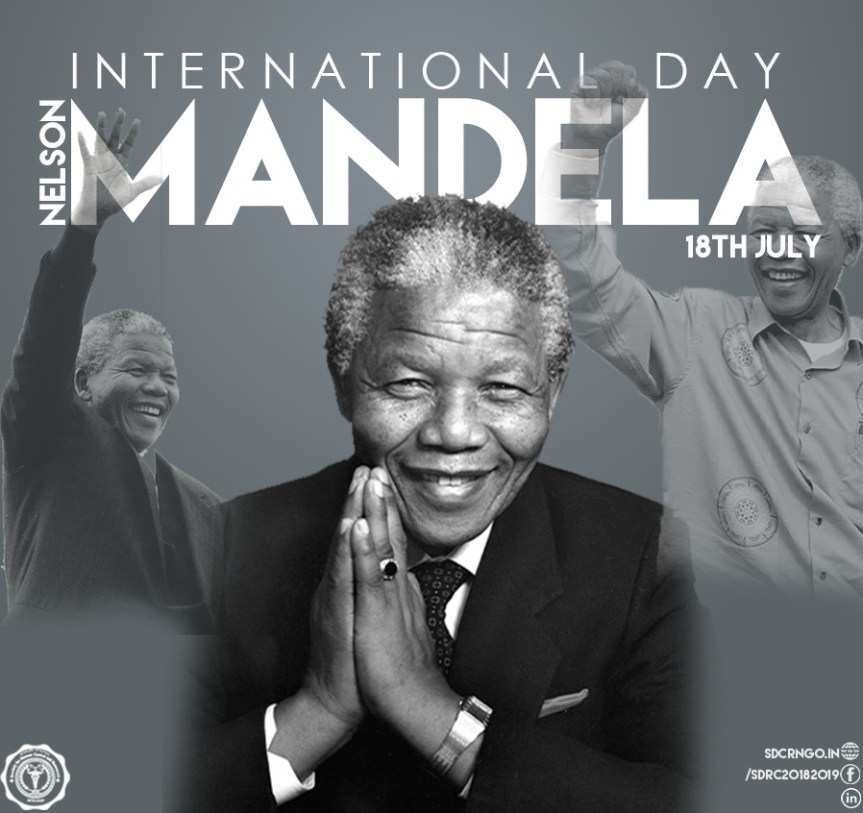
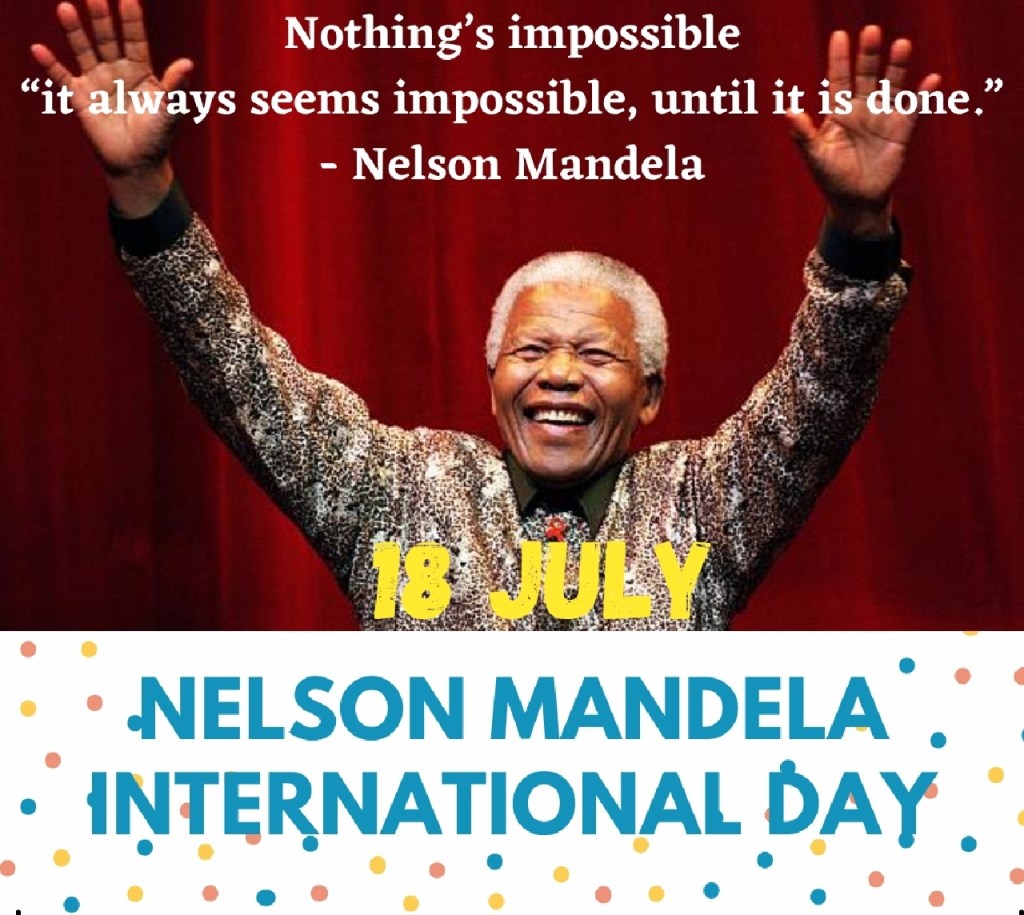
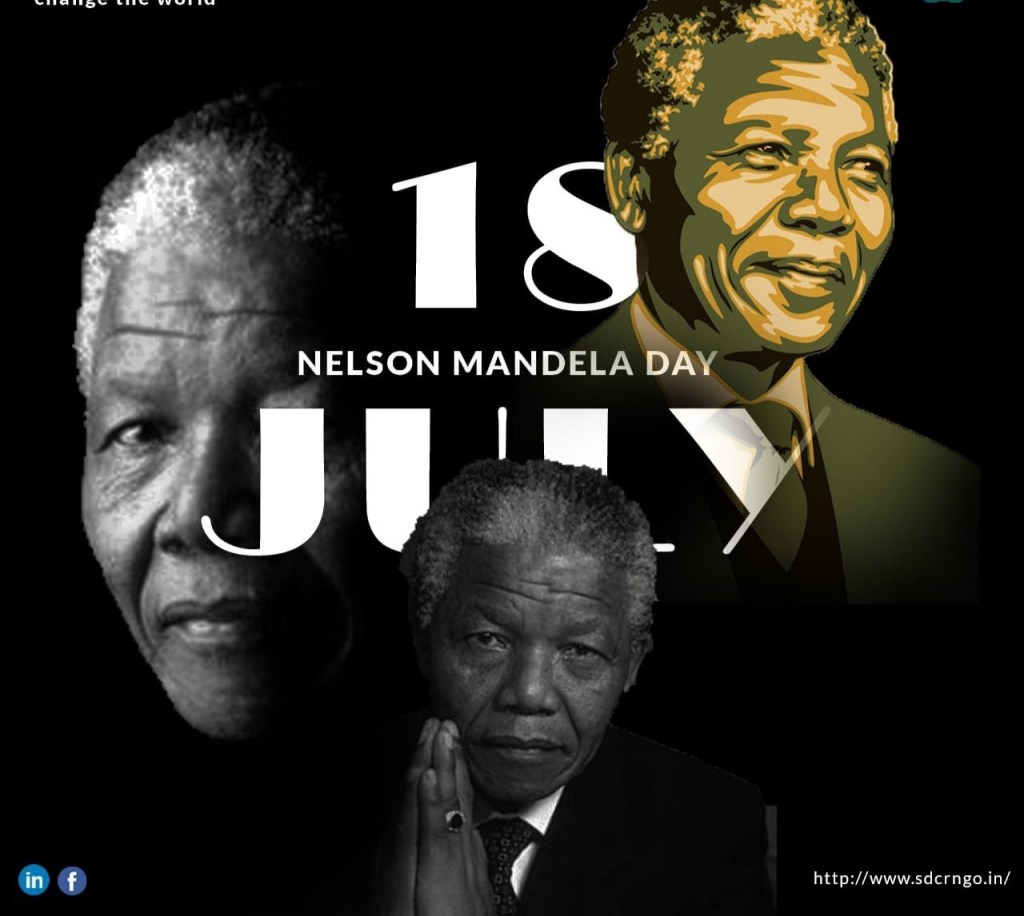
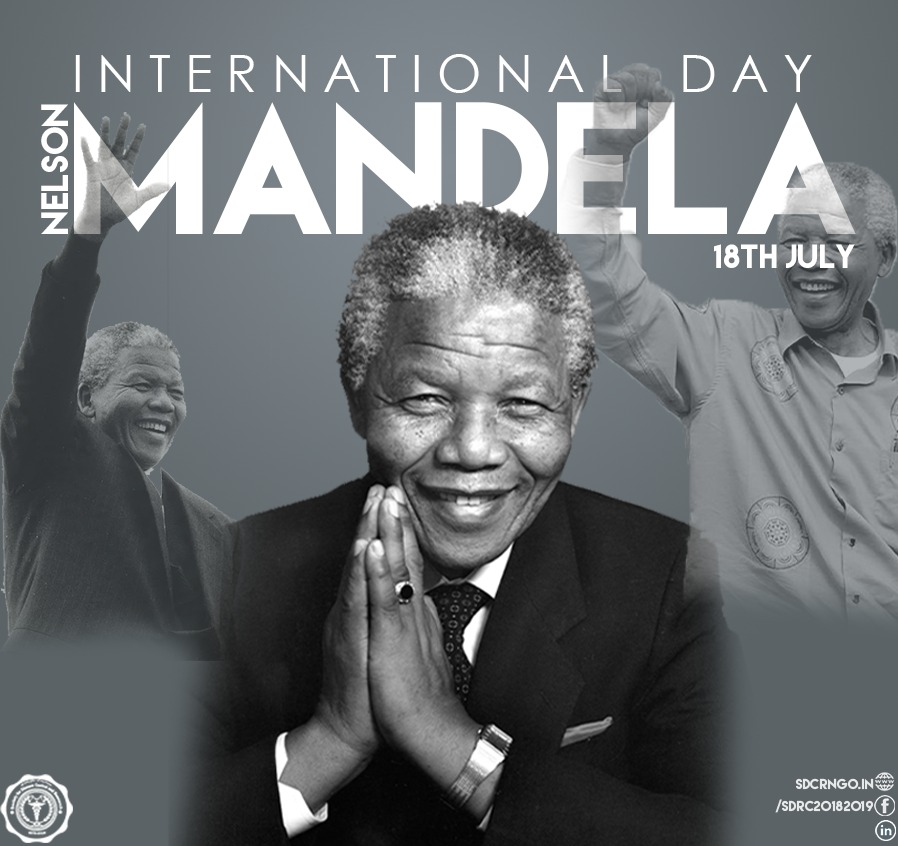
Long live ‘NELSON MANDELA’

Nelson Mandela was born on 18 July 1918, at Umtata, Cape of Good Hope in South Africa. He is an iconic figure in today’s world when it comes to fighting for one’s rights as a human being. The son of a Xhosa Chief, Mandela studied law at the University of Witwatersrand, and in 1944 joined the African National Congress (ANC), After the Sharpeville massacre (1960), he was disillusioned to the extent that he gave up his non-violent stance and became one of those who helped found the Spear of the Nation, the ANC’s military wing. Arrested in 1962, he was sentenced to life imprisonment. The South African Court convicted him on charges of sabotage as well as other crimes committed while he led the movement against apartheid.

How is Nelson Mandela International Day celebrated?

Mandela provides service to others and always wants to create a better world for everyone. So, on this day if people find injustice in the neighbourhood, city, or state they do everything to alleviate the problem. Work in soup kitchens, marched with protesters, volunteer in local organisations, and work to help bring about civil liberties for everyone. Inspire change, and make every day a celebration of Mandela Day. People work for others and want to improve the lives of people around them. They will do this by volunteering or taking part in protests.

“After climbing a great hill, one only finds that there are many more hills to climb.”

This day provides a global call for people to recognise their ability and have a positive effect on others around them. People also inspire others about the values that Mandela shared like democracy, freedom, diversity, reconciliation, and respect. To promote Nelson Mandela Day, many people and organisations around the world take part in several activities. These activities are volunteering, sport, art, education, music, and culture. This day also celebrates a campaign known as “46664”, in reference to Nelson Mandela’s Robben Island prison number. The campaign was originally launched to raise awareness about HIV/AIDS. In 1995 and 1999 Children’s Fund and the Nelson Mandela Foundation were established.

“I learned that courage was not the absence of fear, but the triumph over it. The brave man is not he who does not feel afraid, but he who conquers that fear.”

His Movements And Struggles:

In accordance with the conviction, Mandela served twenty-seven years in prison. While in jail, Mandela’s reputation grew and he became widely known as the most significant black leader in South Africa. The conditions that he had to go through as a prisoner were appalling. He performed hard labour in a lime quarry. Prisoners were segregated on the basis of race, and the black prisoners received the fewest rations. Political prisoners were kept separate from ordinary criminals and received fewer privileges. Mandela himself describes how as a D-group prisoner, the lowest classification, he was allowed one visitor and one letter every six months. Letters, when they came, were often delayed for long periods and made unreadable by the prison censors. It calls for nerves of steel for a man imprisoned for life to get a degree of Bachelor in Law from the University of London through correspondence.

In February 1985, President PW Botha offered Mandela conditional release in return for renouncing armed struggle. Mandela spurned the offer, releasing a statement through his daughter Zindzi saying, ‘What freedom am I being offered while the organisation of people remains banned? Only free men can negotiate. A prisoner cannot enter into contracts.’

Throughout Mandela’s imprisonment, local and international pressure mounted on the South African Government to release him. In 1989, South Africa reached a crossroads when Botha suffered a stroke and was replaced as President by Frederik Willem de Klerk. De Klerk announced Mandela’s release in February 1990. His release from jail was broadcast live all over the world.

South Africa’s first multi-racial elections, in which full enfranchisement was granted, were held in April 1994. The ANC won 62 per cent of the votes in the election. Mandela became the first black President. As President from May 1994 to June 1999, Mandela presided over the transition from minority rule and apartheid, winning international respect for his advocacy of national and international reconciliation.

It is not surprising that Mahatma Gandhi should have inspired Mandela in his war against apartheid. The most universally respected figure of post-colonial Africa, Mandela was awarded the Nobel Peace Prize in 1993 along with De Klerk for their efforts to end apartheid and bring about the transition to non-racial democracy. Mandela remains an inspiring figure for any man in any corner of the world who becomes conscious of his rights and is willing to fight for the same.

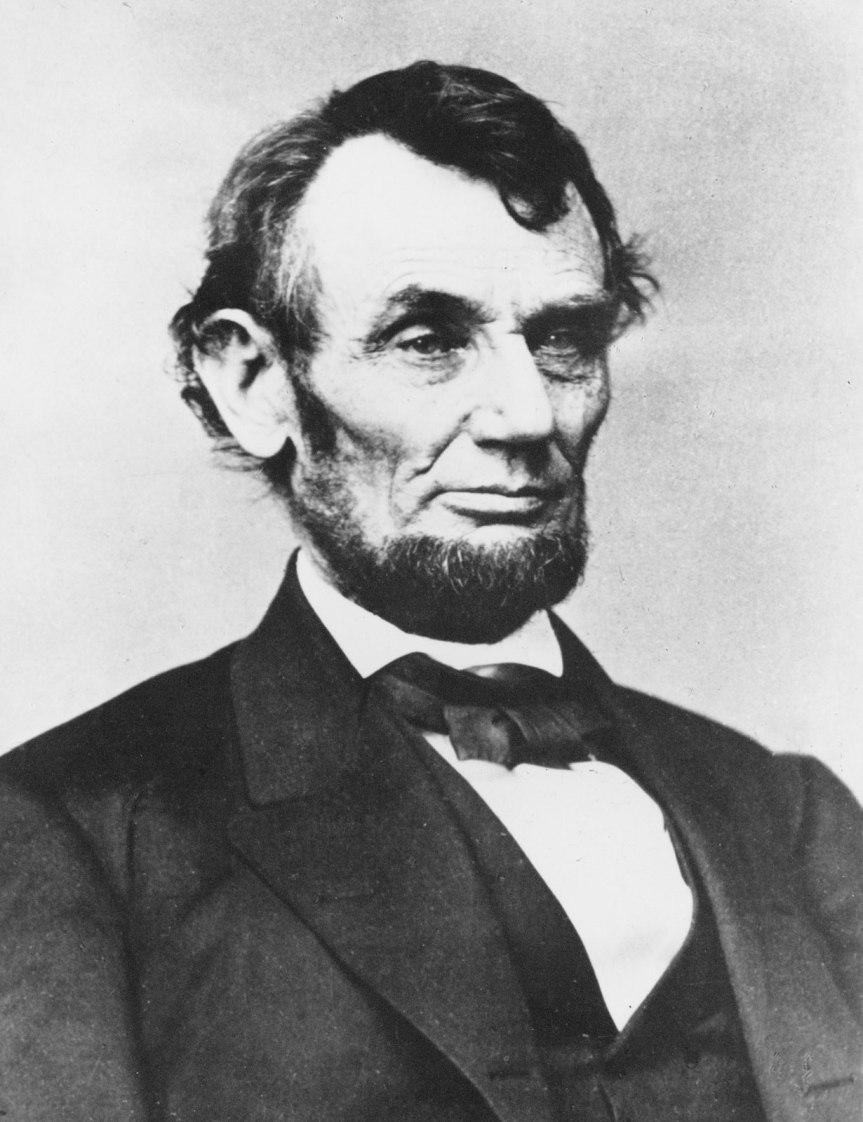
THE 16TH PRESIDENT OF THE UNITED STATES

Abraham Lincoln became the United States’ 16th President in 1861, issuing the Emancipation Proclamation that declared forever free those slaves within the Confederacy in 1863.

Lincoln warned the South in his Inaugural Address: “In your hands, my dissatisfied fellow countrymen, and not in mine, is the momentous issue of civil war. The government will not assail you…. You have no oath registered in Heaven to destroy the government, while I shall have the most solemn one to preserve, protect and defend it.”

Lincoln thought secession illegal, and was willing to use force to defend Federal law and the Union. When Confederate batteries fired on Fort Sumter and forced its surrender, he called on the states for 75,000 volunteers. Four more slave states joined the Confederacy but four remained within the Union. The Civil War had begun.

The son of a Kentucky frontiersman, Lincoln had to struggle for a living and for learning. Five months before receiving his party’s nomination for President, he sketched his life:

“I was born Feb. 12, 1809, in Hardin County, Kentucky. My parents were both born in Virginia, of undistinguished families–second families, perhaps I should say. My mother, who died in my tenth year, was of a family of the name of Hanks…. My father … removed from Kentucky to … Indiana, in my eighth year…. It was a wild region, with many bears and other wild animals still in the woods. There I grew up…. Of course when I came of age I did not know much. Still somehow, I could read, write, and cipher … but that was all.”

Lincoln made extraordinary efforts to attain knowledge while working on a farm, splitting rails for fences, and keeping store at New Salem, Illinois. He was a captain in the Black Hawk War, spent eight years in the Illinois legislature, and rode the circuit of courts for many years. His law partner said of him, “His ambition was a little engine that knew no rest.”

He married Mary Todd, and they had four boys, only one of whom lived to maturity. In 1858 Lincoln ran against Stephen A. Douglas for Senator. He lost the election, but in debating with Douglas he gained a national reputation that won him the Republican nomination for President in 1860.

As President, he built the Republican Party into a strong national organization. Further, he rallied most of the northern Democrats to the Union cause. On January 1, 1863, he issued the Emancipation Proclamation that declared forever free those slaves within the Confederacy.

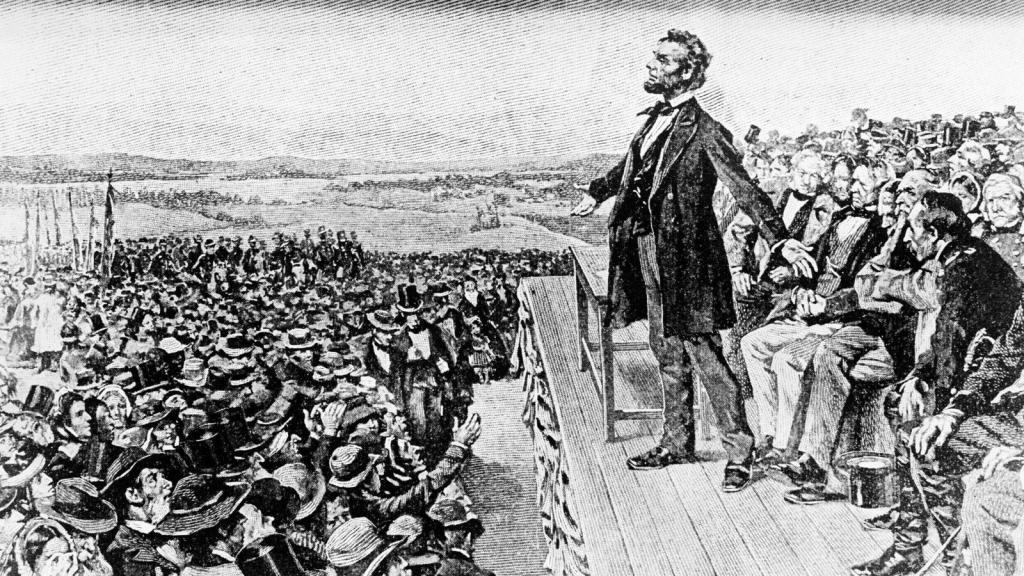
Lincoln never let the world forget that the Civil War involved an even larger issue. This he stated most movingly in dedicating the military cemetery at Gettysburg: “that we here highly resolve that these dead shall not have died in vain–that this nation, under God, shall have a new birth of freedom–and that government of the people, by the people, for the people, shall not perish from the earth.”

Lincoln won re-election in 1864, as Union military triumphs heralded an end to the war. In his planning for peace, the President was flexible and generous, encouraging Southerners to lay down their arms and join speedily in reunion.

The spirit that guided him was clearly that of his Second Inaugural Address, now inscribed on one wall of the Lincoln Memorial in Washington, D. C.: “With malice toward none; with charity for all; with firmness in the right, as God gives us to see the right, let us strive on to finish the work we are in; to bind up the nation’s wounds…. ”

On Good Friday, April 14, 1865, Lincoln was assassinated at Ford’s Theatre in Washington by John Wilkes Booth, an actor, who somehow thought he was helping the South. The opposite was the result, for with Lincoln’s death, the possibility of peace with magnanimity died.

The Third Gender: The Everyday Struggle as “Other”

Before the case of National Legal Services Authority v. Union of India affirmed the term ‘The third gender’, India had different expressions for people who tick on the ‘other’ checkboxes. The gender is defined as people who do not conform to the organic sex’s identification or conduct. After this ostracised gender went through derogatory behaviours and name calling, our society has finally changed a lot to accept their existence. But the acceptance is still bound by “what they are” and “how they are”. This estimated one million community has never got a ‘first class’ lifestyle. The disparities are not restricted to the societal stigma on their existence but also every day discrimination and denial of human rights.

The Constitution of India guarantees rights and protections to all humans in general. The only distinction in this regard are the reasonable restrictions except which no discrimination on the grounds of sex, religion, caste or creed is not tolerated. Even after the constitutionally guaranteed political and other benefits, the third gender community still finds itself in the same position. The issue that these laws are not implemented, that the gender finds itself more often than not without a job in the respectable positions is an unavoidable truth in which inequality is an everyday affair.

This particular issue took the light when Air India was brought to the court for refusing an airhostess job claiming she was a transgender and that the post was only reserved for women. The denial is an act which is banned by law. The question on how the gender forms a reasonable nexus with the description of job calibre is arbitrary and undoubtedly, is an infringement of equality under Article 14. The denial also violates Article 15 for infringing the prohibited discrimination on the basis of sex. Article 21 fnds as the personal dignity of the gender stands into question. The struggle as ‘other’ is not merely the name calling but also the opportunities since that lies as the only one through which the gender would be respected and could also afford to grow in their lives. Most of this gender related issues are not only connected to the societal issue but also because of their lifestyle due to the lack of resources and opportunities limiting them to only begging, which more often than not, is a bad business with no security.

When the Constitution sought to remove the untouchability issues, along with the guaranteed rights under Article 17, there were also reservations and job opportunities that the issue has almost been demolished and seen in only backward areas.

But a major issue that crosses between the blinking of an eye is the fact that the reservations bring lifelong recognition under the same society. The passing of Transgender Protection Act, 2019 starts on the wrong foot. The various instances where the Act does not take in the consideration of trans-activists puts the first question on the upliftment.

The most serious flaw that remains is the process of trans-people changing their documents to reflect the identity. The new law sets up a two-step process. Firstly, it requires the person to apply for a “transgender certificate” from the District Magistrate of the particular location. This specific part can be done on the basis of the person’s self-declared identity. Only for this step does the certificate holder gets eligible to apply for a “change in gender certificate,” which is to change the legally declared gender to a male or female. However, this second step requires the person to provide different documents such as surgery proof, issued by a hospital official, which is again sent to the District Magistrate for a second evaluation. It also requires the officials to be “satisfied with the correctness of such certificate.”

One important factor to notice here is that it sets an extraordinary amount of power with one government officer who might have the only power to abuse the position or arbitrarily “qualify” to the gender as required to be recognized as who they are. It also pressurizes people into medical procedures they might not want or might be comfortable with. Such a forceful act is in itself a fundamental rights violation made by the government officials.

Repetitively the Indian courts have long held that trans people deserve the government’s recognition on their own terms and with actions which are assimilated from their demands, without mandatory intervention or discrimination but the same has been dismissed.

Improvement in the status of the transgender community needs to be a collective effort in order to empower the discussed community in the workplace and to reduce the social stigmas which could also end up improving their economic position. Although the Act only puts an onus and does not place legal requirements on the people concerned, in view of the changing the dynamic status. However, preparing such an Indian workspace for an inclusive approach towards transgender individuals is going to be a continuing uphill task and accommodating such societal change of this magnitude is definitely going to be a slow process in India.

Stop Running and face it

Having to have isn’t having. Try hard to have what you want. Escaping is not a solution because everytime the only thing you do is keep running. Stop for a while if you wanna stop forever. The solution isn’t escaping, it’s facing it. Afraiding for a while is so much better than afraiding forever. Stop once and for all. Take it, if you have a chance to proove yourself then make it. Don’t fake it, try to make it. Till then keep on struggling.

Result is a process if struggling. Don’t be afraid because the life isn’t to be afraid of. There are n number of options. You may not live the life you wanted but you can live. At the end everyone lives. No one remembers our marks or our job because the people who had existed also should die. You live your life without fearing. Living your own life and fearing isn’t living. Face it, if you can’t try it, try it, try it. But don’t escape from it.

Giving a slap to the person isn’t a big deal. But the slap to the heart is much more stronger. Your success should wake them and make them sleepless. Remember everyone will have a day. The only thing you should do is keep on working. Struggle make struggling easy. Learn to struggle because it is what, at the end of the day keeps smile on our face. Beleive yourself, because it’s the least that you could do for yourself. Have a zeal and enthusiasm to push yourself and to make youself. Never be over confident else your confidence will be over.

Having a nice day isn’t so nice because there is nothing intresting about it. Having a day where you struggle and struggle to make your work done and the things you keep on doing will make you cross every obstacle possible and make you feel low is something that you never forget and the day will be remembered. Wish to have a such day because that is what makes you and make your day. Having comfortable life is so boring. Keeping struggle yourself makes you even struggle more and if any struggle comes in your way, it becomes easier for you to tackle. Reaching a position isn’t important but the way you reach makes your worth.

Start the stopped and stop the started if you don’t want to stop. Keep on doing, if you think you can’t, show that you can. Show yourself what you are capable of. Don’t underestimate yourself. You can push yourself whatever extent you can. The only thing that that you should do is believing yourself. Don’t hope for miracles, because hoping makes it expected. They all happen all of sudden. Keep pushing yourself in the struggle and keep on struggling because there’s no ending to it.