SUPERSTITION- IS IT TRUE?

MEANING OF SUPERSTITIONS 

However, there is no sole definition for strange notions. It, for the most part, implies faith in extraordinary powers. Like destiny, the longing to impact unusual components and a need to manage vulnerability. Singular convictions and encounters drive strange notions. This clarifies why it is generally unreasonable and normal to stand up to logical knowledge.  Numerous therapists have examined which job strange notions play. They have tracked down these from the supposition that a connection exists between co-happening, non-related occasions. For instance, the possibility that charms acquire the best of luck or shields one from misfortune. 

Individuals, including those with odd practices, give some a feeling of control and diminishes uneasiness. This is the reason levels of strange notion increment when there is pressure and apprehension. This is predominantly during the financial emergency and social vulnerability, especially wars and clashes. Scientists have identified how in Germany, somewhere in the range of 1918 and 1940, proportions of financial danger interrelated straightforwardly with that of strange notion. 

WHY DO WE BELIEVE THEM? 

The enthralling thing about notions is that individuals frequently have faith in it, notwithstanding knowing, in some capacity, that it can’t be valid. For what reason do individuals do this?  Jane Risen, a teacher of conduct science, utilized the double cycle model of insight to clarify the confidence in notions. As indicated by Risen, people can think both “quick” and “slow.” The quick method of reasoning is touchy and natural. The idle mode is more regular, and it supersedes the instinctive judgment when blunders happen. 

This double reasoning model is a remembered one, however, not intended for strange notions. Risen recommends that the model ought to go through alterations. Be that as it may, the odd idea isn’t only a showcase of defective cognizance. Now and again, it offers a large group of advantages.  The vast majority have something like a bit odd conviction. It may be the case that setting trust in lucky numbers or attempting to keep away from terrible signs. Offbeat beliefs are customary universally. Only a couple of them that individuals actually accept to date is additionally talked about. 

Offbeat Beliefs Globally 

666 

Figure 666 anyplace is regularly highlighted in accounts of setbacks. The most renowned one was the number plate “ARK 666Y”. Individuals accept this to have caused curious vehicle flames and terrible energies for travelers. 

Hope for the best 

This practice followed back to European church admirers. Individuals in the US utilize the expression “hope for the best” to pursue away misfortune. However, this has begun in Europe. 

Brandishing strange notions 

The strange notion is likewise pervasive inside sports. These practices change across sports. However, there are similitudes. For instance, petitioning God for triumph, looking at an appearance in the mirror, and sprucing up well to feel great arranged. They likewise include customized activities and practices, such as wearing suitable garments, packs, and charms. 

Toasting with water 

Toasting with a glass of water brings misfortune, or even passing is a generally held notion in Germany. 

Sewer vent covers set apart with ‘K’ or ‘A.’ 

Stepping on a sewer vent cover set apart with “K” is the best of luck as it connotes the Swedish word for affection. Furthermore, a body denoted “A” brings misfortune as it means the Swedish word for grievousness. 

The number 4 

Scarcely any individuals in China would keep away from anything having to do with the number 4. The way to express “four” in Chinese is basically the same as the word for “death.” Thus it is considered as an indication of misfortune. 

Odd notions sporadically have a quieting impact, delivering uneasiness of the obscure and providing a feeling of order over lives. This is additionally the motivation behind why it has made due for such a long time. 

Odd notions have progressed to make a misguided feeling of having command over outside conditions. This is an ideal justification to win in states of nonappearance of certainty, vulnerability, dread, and risk. These convictions have been displayed to empower a positive mental demeanor even though they can prompt unreasonable choices, for example, confiding in excellent good fortune and predetermination instead of settling on a quality choice. 

TOWARDS THE END 

Conveying charms, wearing specific garments, visiting places related with favorable luck, choosing detailed shadings, and utilizing particular numbers are all components of odd notions. Even though these practices and activities can seem trivial, they can frequently influence decisions made in the real world for specific individuals. It is suitable to be offbeat, as long as it doesn’t hurt anybody!
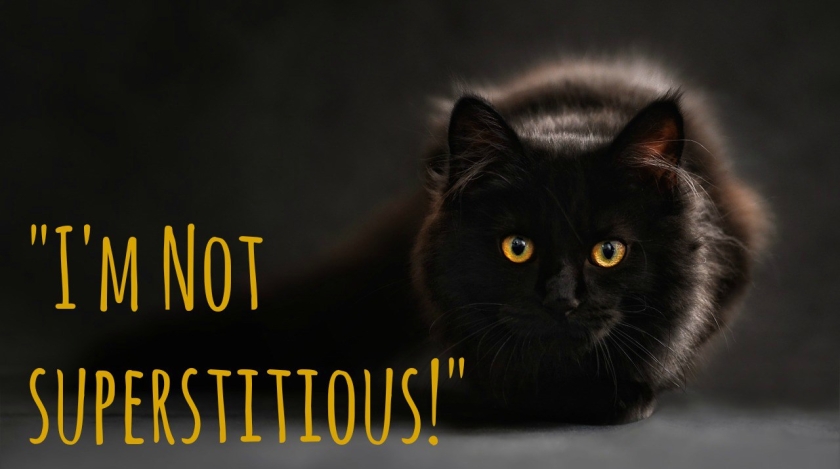
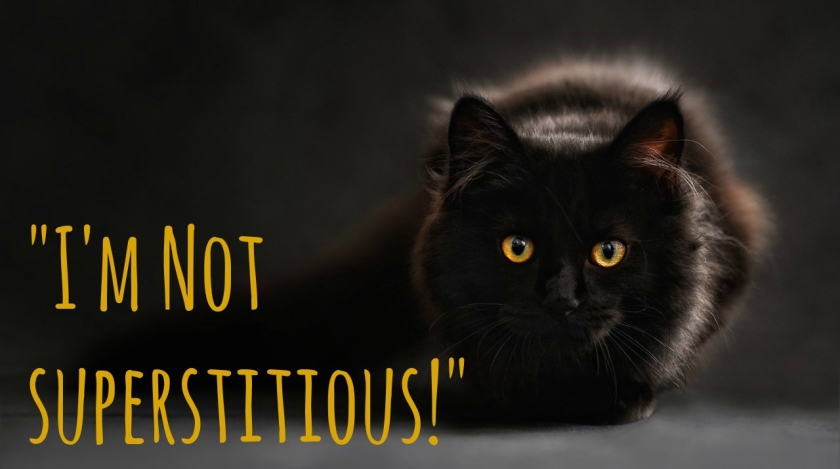
Superstitious beliefs

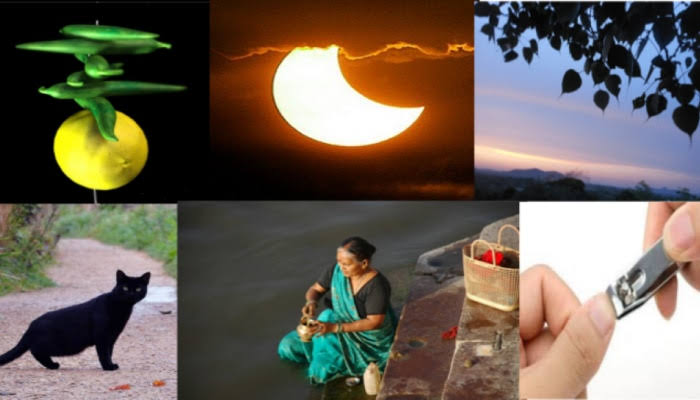
ITCHY PALM- Good luck, BREAKING A MIRROR – Bad luck, FINDING A HORSESHOE- Good luck, BLACK CATS – Bad luck, Don’t go near a Peepal tree in the night, lemon and green chilies to avert, bathe after attending a funeral, don’t cut nails after sunset, avoid sweeping the floors in the evening……..

and there many such superstitions revolving around us where some are considered as good luck and bad luck as well. Technologies has been evolving by leaps and bounds every day but still all these superstitions may tend to hold a major place in many people’s lives. Most of us probably don’t know why we stumble a bit when we see a black cat on our way, give a little shudder when see Friday the 13th looming in the calendar or we say ‘god bless you’ when someone sneezes. Many raise questions of such superstitions the way they are said and others accept them unwittingly. While some superstitions are just meant for fun which should be defied completely, others might have a real hidden fact or science behind them. It is absolutely important to question such beliefs to prevent a slow degradation and to put an end to blindly believing things and perceive the right truth and science. Other than the pointless beliefs termed as superstitions there are also many rituals and scientific procedures that we label as superstitions and tend to avoid it unmindfully.

Futile beliefs

In our country more than half the population literally thrives on pointless superstitions where most of them are illogical and senseless. The most common one is the poor black cats are just blamed for their color, if a black cat crosses your path, its a bad omen which is symbolized that when you come across such a thing the way to your work get delayed. If someone who is not aware of such superstitions and finds a black cat his way, obviously he is not bothered about and gets all his work right, but some just because they come to know such baseless beliefs they stumble themselves become intimidated. When your intellect is strong and you are confident about yourself nothing around can shake you.

Many omit the 13th floor in the building or the 13th room in a floor as they are considered unlucky with no explanations and reasons as the cinemas portray such a weird thing, till date apartments and hotels skip the 13th floor, lets hope that things like this doesn’t become a barrier and hurdle for anybody’s life because every number number is just a number. Can such numbers which are considered unlucky be omitted in all pats of life, isn’t it strange? Keeping onions and knife under one’s bed will drive away bad dreams. When your mind is in peace you will completely have a good sleep and when you are distressed or restless about something there are chances of erratic sleeps and dreams, so just don’t connect all these senseless practices in your life and there are chances of you to get hurt with the knife. Crows shit brings luck. Some believe that it brings money and if that’s the case everyone would be under a tree waiting for a crow to shit and also then crows would’ve been the pets no?

Hidden science/facts behind some beliefs

Not all the superstitions are meaningless because there is always a reason or scientific logic behind it and we should not label them as such because some may turn away from them thoughtlessly. We should make people believe them with right reasons without making them go blind or crazy with things by intimidating and also lets not take all the scientific things beneath superstitions because people hardly believe it.

People were discouraged from venturing near a peepal tree at night to avoid inhaling carbon dioxide so to highlight its importance the ancestors were spinning ghost stories around the trees. Bathing after attending a funeral ceremony was to prevent infection from the dead body because our ancestors did not have vaccination against hepatitis, small pox and other contagious diseases so they came up with a set of rituals to be followed after the funeral rites. Not to cut nails after sunset because in the absence of light one might get hurt because nail clippers were sharp blades which required precision. Sweeping the floor during the evening brings bad luck– This is something which we encounter now and then, the reason behind is that something important might get swept away in the dark so preferably to clean the houses in the morning. To eat curd and sugar before heading out can bring good luck- It is probably not a symbol of good luck, it is to keep oneself cool which provides instant glucose because the consumption of curd has a cooling effect, so this can avoid tension/ trauma before you set to work. A girl should be restricted to certain things at menstruation– because sanitary pads weren’t available those days and would be let to sit and sleep alone, so without knowing the reason behind it still some people follow it as a ritual which is senseless when many medications are available in today’s world. Breaking the mirror, sliding the door lock would bring fight in the family– The reason is anyone in the home can get hurt because of doing so. Plastering the floor with cow dung is auspicious– Before the people did not have luxury to buy bottled commercial disinfectants like we do, so before cowdung was effectively used as a disinfectant against insects and reptiles.

So just educate the budding generation the science and facts of doing such practices and do not label them as superstitions by weaving strange stories.

Superstition in India

Superstition refers to any belief or practice that is caused by supernatural causality, and which contradicts modern science. Superstitious beliefs and practices often vary from one person to another or from one culture to another.

Common examples of superstitious beliefs in India include: a black cat crossing the road symbolizes bad luck, a crow cawing indicates that guests are arriving, drinking milk after eating fish causes skin diseases, seeing a mongoose symbolizes to be very lucky, and itchy palms mean that money is coming your way.

Hindus believe that cutting nails and hair on Saturdays brings bad luck.

Hindus believe that it’s inauspicious to cut hair and nails on Saturday because it angers planet Saturn (shani), which then brings bad luck. However, ask people who cut their hair and nails on Saturdays, and we bet they’ll tell you their hair looked better and their nails neater, and no planet hovered above them with bad luck.

If a black cat crosses your path, then your tasks get delayed or postponed.

Poor black cats. They are blamed just for being black (no racist joke here). It’s a popular belief in the west too that, if a black cat crosses your path, it’s a bad omen. For the west, the origin of this superstition came from Egypt. Egyptian culture believed that black cats were evil creatures, whereas the Indian explanation is that black represents Shani and therefore brings bad luck. It is said that if a black cat crosses your path, then your day’s tasks get delayed or postponed.

Curse of 8

According to numerology, the number eight is ruled by the planet Shani (again Shani!) and therefore if you’re ruled by the number eight then there shall be lots of obstructions, limitations and frustrations in your way.

Keeping onions and knives under your bed will drive away bad dreams.

An onion and a knife is kept under a newborn child’s bed to drive away bad dreams. It is also believed that placing an onion under your pillow while you sleep will bring you great insight when dreaming about who your future partner in life will be.

SUPERSTITIONS IN INDIA…

Superstitions lead people towards a kind of darkness, it takes people to wrong intensions. In the list of Indian evils, this superstitions is also a part. Superstitions were actually created and introduced by humans, especially some group of humans created these for  their daily survival and livelihood. Superstitions include many things. Luckily in our Indian constitution, some of them were abolished or removed like Untouchability. Here I am going to discuss some of them which I know and I’m going to relate them with some examples that I heard and I experienced. So, let’s start.

SUPERSTIONS AND EXAMPLES:

1. Firstly, I want to discuss about Amavasya. It is said that during Amavasya we should not start any new program or work. Now I’m going to relate with an example of My personal experience, It was said not to take me from my grandma’s home along with my mom when I was a child as it was Amavasya, as women spent some days after giving birth to child I and My mom were there for some days. But My father is against to all these things and he wantedly brought me and my mom from there. And the same thing he did was he has joined me in school for the first time on the day of Amavasya itself, but you know what, till now nothing bad happened to me and my family and I am in the protection of My God. So, it is proven wrong.

2.Let me share another one, When girls are on periods they are not allowed to pray God and go near God, that too in some communities and religions. Now an example relating to it, A girl went to a temple of Goddess Kali I suppose, and that statue is having blood in her mouth, and this girl asked her mother, mother it is said that girls who are on periods, they should not go to Temple and God, but why this Goddess is having blood in her mouth, she asked her mother and the mother was shocked and had no answer to it. Do you have answer for this? even I was surprised when I heard about this.

3.This one is also the same thing, but a little different angle,  it is also said that girls at the time of their menses they are not supposed to touch anything or anyone in the house and in some aspects they are kept out of the house. To hear itself, it is so wired and disgusting, right? I don’t say that everyone will follow this, because, for example me and my family, we just don’t follow all this rubbish but most of the Indians especially some group of people belonging to a particular community and religion follow this. And coming to the example, recently I came to know about this in news, a old women who is in her menses was put out of the house as they don’t her, it was a forest kind of area, and at night while everyone was asleep, a snake entered her tent and bit her , then she was taken to hospital on their hands, I don’t understand why don’t you allow her inside instead of taking her to hospital after something bad has happen, at least then you have to touch her, right?. I felt very bad when I have seen this.

Yeah I have many more but I don’t have the examples to make things clear. To name some, a black cat should not come before us when we are going to start or do something, and some construct house according to some directions, do not sweep after sunset, do not cut nails at night, Wearing gemstones brings good fortune, Not To Sleep Facing The North, Broken Mirrors, Adding One Rupee To A Gift Sum, Twitching Eyes and many more like this. But I don’t say that all these are rubbish but some of these have scientific reasons, but making or implementing them very heavily in life may make us stupid’s

So, I say that some of these are really stupid and foolish. So, I don’t support and encourage those foolish things. And what’s your opinion. Feel free to comment and express.

Superstitions!

Superstitions in India

The blind belief in omens, augury, magic, magic formulas, useless rituals and superstitions have given rise to a mushroom growth of babas, swamis, tantriks, priests and godmen. There are numerous divine babas – Balti baba, Bhoot baba, Satellite baba, Computer baba, to name a few. Then there are godmen like Surya Swami, Chandra Swami, Mangal Swami, etc. Even in this age of rapid advancement of science and technology, modern man is afraid like his primitive forefather living in the cave and connects his misfortunes with mysterious and unknown forces and seeks help of the tantriks and godmen to avoid them. Such a state of mind gives rise to various types of superstitions, blind faiths, rituals, practices etc which are not only absurd and ridiculous but sometimes quite horrible. Animal and occasionally human sacrifices to appease the unknown black forces reflect man’s intellectual bankruptcy, primitiveness and ignorance. It shows how people are still obsessed with superstitions. They wear stones, rings, armlets, believe in talismanic charms and pay through their nose to the soothsayers, crystal gazers, astrologers, tantriks, babas and godmen.

People still believe in omens and auguries. They are afraid of number 13, crossing of their path by a cat, or spilling of the salt. The eclipse of the sun and moon, the sight of a comet or shooting star, cries of owls, ravens, weeping of cats, howling of dogs, and jackals or braying of the donkey at certain hours still send a chill down their spine and they resort to all sorts of foolish practices to ward off the imagined harm and evil. All superstitions have their origin in human psychology of fear of ill luck, insecurity and the dread of inexplicable forces in nature. When some phenomena cannot be understood or explained, people start dreading them and assign them divine, supernatural and mysterious origins. Tantriks, preists, godmen and babas and other vested interests also help in spreading superstition to make fast buck out of gullible and credulous public. Some times ago the rumour and superstition that the idols of Hindu gods and goddesses were drinking offered milk caused quite a flutter and thousands and thousands of people were made fool and a laughing stock.

Superstitions find a fertile soil and breeding ground in human ignorance and lack of scientific knowledge. The less a community is educated and enlightened, the more it tends to be superstitious, backward and gullible. In such communities the astrologers, priests, magicians, babas, godmen and charlatans have a very good business.

Much fraud is being perpetrated in the name of astrology, palmistry, occult science, rituals and so called religious faiths. These weaken the faculty of human reasoning and make men more gullible, credulous, helpless and miserable. Superstitions are great curse. Superstitious fear, ignorance and lack of scientific temper have done immense damage to our progress and development. Superstitions are vile as they deprive us of self confidence, self control and rationality by weakening our will power and spirit.

Man is still afraid, awed and haunted by the fear of the unknown and inexplicable and wants to ward off the imagined trouble and suffering through the observation of the rituals, offering to ghosts, appeasement of the spirits of the dead and the worship of the stars and plants. There are lucky and unlucky numbers, days, animals and birds. A worn out horseshoe fixed the right way up the door of the house is supposed to bring good luck and prosperity. English people still think number 13 as inauspicious and ominous and refuse to occupy room no. 13 in hotels. Belief in charms, supernatural powers, ghosts, goblins, witches, evil spirits, spiritual healing etc have their deep roots in our superstitions.

Fortune telling has become a big business. Newspapers, magazines and periodicals have regular columns on weekly fortune of the readers. No newspaper or magazine can afford to miss it such is its popularity. Superstitions are thriving on a large scale under the auspices of various cults, religious sects, godmen, priests and so called babas swamis and prophets of gods. They prevail in every society, nation and community. Sometimes they are absurd, foolish and ridiculous to the limit of primitive ignorance. All superstitions have common origins. This is the age of reason and science and yet many old superstitions continue. Consequently, astrologers, soothsayers, godmen and priests are in great demand. We are actually the maker or spoilers of our destiny. The heaven or the hell lies within ourselves and yet we blame the stars and the constellations for our misfortune. And the vicious circle continues endlessly.

Superstitions in India

Superstition refers to any belief or practice that is explained by supernatural causality, therefore contradicting modern science. Some beliefs and practices that are considered superstitious by some may not be considered so by others. The gap between what is perceived as superstitious and what is not widens when the opinions of the public and scientists are considered.

Common superstitions in India today include a black cat crossing the road being bad luck, a crow calling meaning that guests are arriving, drinking milk after eating fish causing skin diseases, and itchy palms signalling the arrival of money.

Superstitions are usually attributed to a lack of education. In India, however, there have been educated people with beliefs considered superstitious by the public. According to the 2011 census, the literacy rate of India is at 74%. Beliefs and practices vary in different regions. Practices range from harmless lemon-and-chili totems for warding off the evil eye to serious concerns like witch-burning. Passed down as part of tradition and religion, these beliefs and practices could be at least a century old. Due to the rich history of these beliefs and practices, the introduction of new prohibitory laws often faces opposition from the general public.

Sati

Sati is the act or custom of a Hindu widow burning herself to death or being burned to death on the funeral pyre of her husband. After watching the Sati of his own sister-in-law, Ram Mohan Roy began campaigning for abolition of the practice in 1811. The practice of Sati was abolished in British India in 1829 by Governor General Lord William Bentinck.

On 4 September 1987, 18-year-old Roop Kanwar, from Deorala, Sikar District, Rajasthan, who had been married for 7 months, was burned to death on her husband’s pyre. It was alleged the victim had tried to escape, but she was drugged and forced on to the pyre. On 1 October 1987, The legislative assembly of Rajasthan passed an ordinance against Sati, which was later turned into an Act. It was followed by pro-Sati rallies and protests in Jaipur. On 3 January 1988, the Indian parliament passed a new law (Prevention of Sati Act 1987) based on Rajasthan’s legislation of 1987, which also criminalized the glorification of Sati. Police charged Kanwar’s father-in-law and brother-in-law of allegedly forcing her to commit the act, but they were acquitted in October 1996.

Human sacrifice

Although human sacrifices are not prevalent in India, rare isolated incidents do happen, especially in rural areas. In some cases, humans have been replaced by animals and birds. This has caused backlash from animal rights groups, so in some places they have again been replaced by human effigies. The motives behind these sacrifices include inducing rainfall and helping childless women conceive. It is alleged that cases often go unreported or are covered up. Between 1999 and 2006, about 200 cases of child sacrifices were reported from Uttar Pradesh.

Godmen

The word godman is a colloquial blanket term used for charismatic spiritual leaders in India. Locally, they may be referred to as baba, swami, guru, shastri, bapu or bhagat. Many of them claim to have magic or psychic powers and perform miracles. On the other hand, some only provide spiritual advice. There are also female gurus. Many of them are worshiped by their followers as avatars or living gods. Many of them belong to ancient ascetic lineages or claim to be successor to some previous spiritual predecessor. Some of them have built large pan-Indian or international networks. Their recent success has been attributed to the use of mass media and public relations techniques.

Witch-hunts

Some people, mostly in villages, have the belief that witchcraft and black magic are effective. This prompts some to seek advice from witch doctors for health, financial or marital problems. Unfortunately, others, especially women, are accused of witchcraft, attacked, and occasionally killed. According to reports, widows or divorcees tend to be targeted to rob them of their property. Revered village witch-doctors are paid to brand specific persons as witches, so that they can be killed without repercussions. The existing laws have been ineffective in curbing the murders. In June 2013, the National Commission for Women (NCW) reported that according to National Crime Records Bureau statistics, 768 women had been murdered for allegedly practicing witchcraft since 2008. Alongside this, they announced plans for newer, more stringent laws.

Bizzare Indian Superstitions

https://www.pexels.com/

 As the world has entered the era of drone delivery & Chandrayaan launches, yet it fails to get rid of age-old beliefs that have no scientific or logical reasoning behind it. The Cambridge dictionary defines superstition as “a belief that is not based on human reason or scientific knowledge but is connected with old ideas about magic & etc. “
  This blind belief upon superstitions turns one into a mentally-weak, peevish & ridiculous person. This directly or indirectly causes retardation in the progress of the country.
  Although this blind trust upon superstitions is not the same as faith. Exemplary support to describe faith can be the existence of God. It’s not a superstition to believe in his existence. Faith is necessary for a man’s existence. This theism instills the quality of being religious & god-fearing thus ennobling one morally & spiritually.  
There are still many people in the country who believe and follow many of such beliefs and superstitions. While superstitions are usually attributed to lack of education, well-educated Indians also follow these superstitions quite blindly. Although you can’t make out the reason behind them. But they are still being followed within some Indian societies with utmost sincerity. So here is a collection of 10 super-weird & fun superstitions curated just for you :
1] A black cat crossing your way hints one to delay or postpone the work. To tackle the situation, people usually tend to change their way or direction, avoiding to take that particular path that the cat crossed.
2] The hooting of an owl & moaning of dogs are considered to be a bad omen.
3] This has to the most prominent Indian superstition by far. Having a spoonful of sweetened curd before heading out, to begin with, something important is considered auspicious.
4] If a crow is calling by your place, implies you are having guests. On the contrary, a crow’s shit is also implied to bring good luck.
5] Getting hiccups hints that someone is probably thinking of you.
6] Adding a rupee to the cash meant to be given, is considered auspicious.
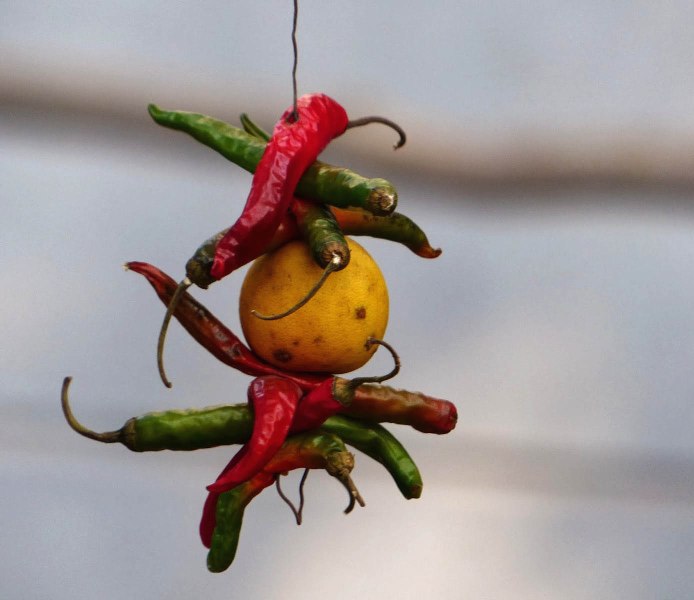
7] One can easily spot some chilies & a lemon hanging by a string in front of shops in India. This is believed to avert the evil power from your place.
8] There’s a right time & period to cut hair & nails. One shouldn’t cut his nails or hair on Thursdays & Saturdays. Plus also not in the night time.
9] No. 3 or 13 is said to bring bad luck. So one must avoid these numbers.
10] Wearing rings of different stones & metals is said to bring good luck. 

REALITY OR SUPERSTITION?

We live in the world, full of Myths, Superstitions and Old Wives’ Tale!

There are a plethora of fake believes that people still follow and has made these myths, a part of their lives! I want to drag your attention towards the realities behind a few famous superstitions which are been followed.

HANGING LEMON AND CHILLIES PREVENTS BAD LUCK!  This is one of the most famous superstitions that we can see at the door of every second house in India! Indians believe that a goddess named Alakshmi is fond of sour and spicy things, and, she only brings bad luck, disappointments and discomfort. If, lemon and chillies are hanged on the door. The goddess will satiate by eating this, and won’t enter inside, and, will go back. In reality, when lemon and chillies are threaded together, the thread soaks up the juices and averts insects, pesticides, etc. from entering inside.

BLACK CAT CROSSING PATH!  It is believed that, if a black cat crosses your path, you must hold your plans for a while, otherwise it will bring bad luck and you may meet an accident ahead. The truth behind this myth is that long ago people used bullock carts as their vehicles, and animals like leopards with glowing eyes were more likely to cross their path, this makes cows and horses afraid and threatens them, so people prefer to halt for some time so that the animals can refresh themselves.

BREAKING OF MIRROR BRINGS BAD LUCK!  People believe that, if a mirror breaks, it brings misfortune and bad luck. This is a myth; there is no connection between bad luck and mirror breaking. During the old times, mirrors were expensive, and, everyone was not able to afford it, so, this scuttlebutt was spread that breaking mirror brings bad luck!

STAY HOME AT THE TIME OF ECLIPSE!  It is believed that during the eclipse we should not step out of home, should not eat food as it becomes poisonous, the light is harmful and causes blindness. The truth is that we should not look directly against the sun as it may cause retinal damage. The UV rays emitted during an eclipse are not good for bodies.

AVOID SLEEPING WITH YOUR HEAD FACING NORTH!  Our forefathers made a rule that we should sleep without heading towards the South, if we sleep with our head in the North, we invite death. The actual reason behind this is that the relation between Earth’s magnetic field and the bio-magnetism (Human body’s field), it causes harmful effects like blood pressure and other diseases that asymmetry if the field would create.

GIRLS ARE NOT ALLOWED TO DO THINGS WHILE MENSTRUATION! Girls are not allowed to enter the kitchen while they are on their periods, they are not allowed to do work, and to touch things as this became a superstition. Earlier, there were no sanitary pads and painkillers which caused discomforts. Women were not allowed to work as they have to tolerate pain for the five stressful days, because of this they can’t do hard work. That’s why they were not allowed to work for those five days, but, it converted into a myth and a superstition and became a ritual.

GHOSTS LIVE IN PEEPAL TREE!  If people have their house in front, behind or beside the peepal tree, they prefer selling it out or prefer not to live there. It is said that we should not go near peepal tree in the night as ghosts roam and live there. The truth is that the sunlight and carbon dioxide produces glucose for plants, this process is called photosynthesis. And, inhaling carbon dioxide is not good for the human body, that’s why our forefathers made a rule of not going near the peepal tree.

BATHING AFTER ATTENDING FUNERAL! People believe that if we don’t bath after coming back from the funeral will cause link with the deportee’s soul. Years back, there was no vaccinations of the contagious diseases, so our ancestors set a ritual of bathing after attending the funeral for prevention of infections from the dead body.

DON’T CUT NAILS AFTER SUNSET!  It is said that we should not cut nails after sunset as it is not good. The reason behind this is that the blades of nail-cutters are very sharp and may cause harm if we use it in dim light or dark. That’s why we should avoid cutting nails at night.

DON’T WASH HAIRS ON THURSDAY!  Our grandparents say we should not wash hairs on Tuesdays and Thursdays. This rule was made for saving water as it requires a lot of water for washing of hairs.

DON’T SWEEP AFTER SUNSET!  Sweeping after sunset brings bad luck, it is believed in every Indian house. This rule was made by our forefathers, as artificial lights were not invented at that time, so, they preferred seeping home in the daylight to avoid sweeping something important because of dim light.

EAT CURD AND SUGAR BEFORE GOING OUT!  It is said that eating curd and sugar before starting something new or before heading out as this brings good luck and increases the chance of getting good. The reality behind this superstition is that the consumption of curd and sugar gives cooling to the stomach and keeps one cool.