Protecting networks, data, programs, and other information from illegal access, change, or destruction is the most basic definition of cyber security. Because of recent cyber-attacks and cyber-attacks, cyber security is becoming very important all over the world. Software for data protection is developed by many companies. Many businesses create software for data protection. The data is secured by this program. Cybersecurity is critical since it not only protects data but also protects our systems from viruses. India has the most internet users, followed by the United States and China.
What is the significance of cyber security in today’s society?
You require cybersecurity in the same way that the world requires an ozone layer to protect it from harmful ultraviolet radiation from the sun. And, just as holes in the ozone layer have an impact on our civilization’s destiny, so do vulnerabilities in your company’s cybersecurity. Hackers have gotten more active on the internet during the previous few years. They use advanced techniques to infect unsuspecting individuals and businesses with malware, ransomware, and other destructive attacks. Most of the time, you won’t know if you’ve been hacked or not. Cybersecurity risks are more widespread than you may believe, with one attack occurring every twenty seconds around the globe, according to statistics.
Cybersecurity risks are more widespread than you may believe, with one attack occurring every twenty seconds around the globe, according to statistics. Fundamentally, our society is more technologically dependent than it has ever been, and there is no indication that this tendency will reverse. Data breaches that potentially lead to identity theft are now being made public on social media accounts. Social security numbers, credit card numbers, and bank account data are now kept in cloud storage services such as Dropbox or Google Drive.
Cyber Security Threats and Attacks:
Malware: The most common sort of cyberattack is a malware attack. Malware is harmful software, such as spyware, ransomware, viruses, and worms, that is placed on a computer when a user clicks on a malicious link or email. Malware can block access to essential network components, harm the system, and collect confidential information, among other things, once it has gained access to the system.
Phishing is a type of fraud in which false emails posing as emails from trusted sources are sent with the purpose of stealing sensitive data such as credit cards or login information.
Ransomware assaults are a sort of malware in which an attacker encrypts and locks the victim’s computer system files, then demands payment to unlock and decode them. According to Mimecast’s The State of Email Security Report 2020, 51 percent of organizations have been affected by ransomware in the last 12 months.
Distributed denial-of-service (DDoS) attacks: A distributed denial-of-service (DDoS) attack is a malicious attempt to disrupt regular traffic on a targeted server, service, or network by flooding the target or its surrounding infrastructure with Internet traffic.
Social engineering assaults can be carried out in a number of ways. To carry out the assault, a perpetrator first examines the intended victim to obtain background information such as possible avenues of entry and weak security mechanisms. The attacker then works to acquire the victim’s trust and give stimuli for further acts that violate security protocols, such as exposing sensitive data or granting access to crucial resources.
Developers spend countless hours solving business problems with code. Then comes a never ending part where ops team’s turn to spend countless hours figuring out how to get the code that developers write up and running on whatever computers are available and making sure those computers operate smoothly. Serverless computing represents an enhancement of cloud programe models, abstraction, and platforms, and is a command to the attainment and wide acceptance of cloud technologies.
What is serverless computing?
Serverless computing is a cloud computing implementation model in which the cloud provider deals with machine resources on demand, taking care of the servers on behalf of their customers. It does not hold resources in volatile memory; computing is rather done in short bursts with the results persisted to storage. When an app is not in use, there are no computing resources allocated to the app. It is an execution model for the cloud in which Some of the Common languages supported by serverless runtimes are Java, Python and PHP. Amazon’s AWS Lambda was the first serverless platform and it defined several key dimensions including cost, programming model, deployment, resource limits,security, and monitoring. Supported languages include Node.js, Java, Python, and C programming. Initial versions had limited composability but this has been addressed recently.
Current trend
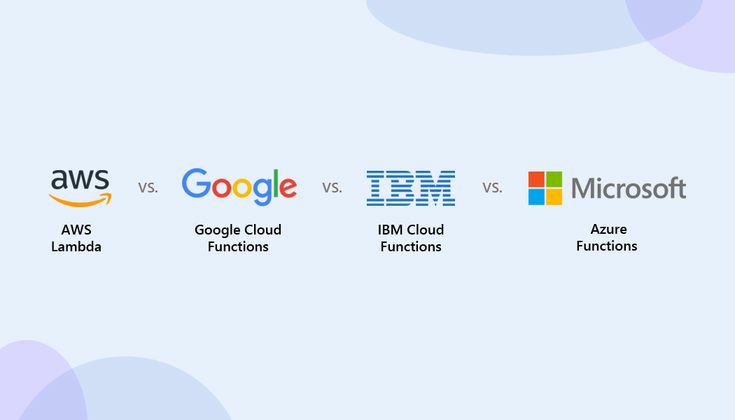
1.Google Cloud Functions : It provides basic FaaS functionality to run serverless functions written in Node. The functionality is currently limited but expected to grow in future versions.
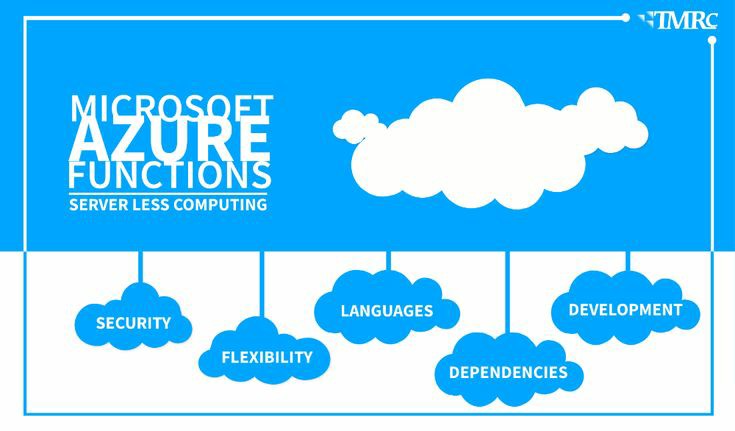
2.Microsoft Azure Functions: It provides HTTP webhooks and integration with Azure services to run user provided functions. The platform supports C , Node.js, Python, PHP, bash, or any executable. The runtime code is open-source and available on GitHub under an MIT License. To ease debugging, the Azure Func-tions CLI provides a local development experience for creating, developing, testing,running, and debugging Azure Functions.
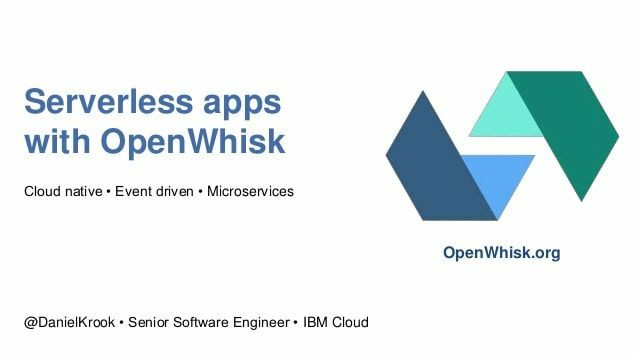
3.IBM OpenWhisk provides event-based serverless programming with the ability to chain serverless functions to create composite functions. It supportsNode.js, Java, Swift, Python, as well as arbitrary binaries embedded in a Docker Container. OpenWhisk is available on GitHub under an Apache open source license.Besides There are several serverless projects ranging from open source projects to vendors that find serverless a natural fit for their business. OpenLambda is an open source serverless computing platform. The source code is available in GitHub Lunder an Apache License. It’s paper outlines a number of challenges around performance such as supporting faster function startup time for heterogeneous language runtimes and across a load balanced pool of servers, deployment of large amounts of code, supporting stateful interactions (such as HTTP sessions), etc
4.AWS Lambda: It is a serverless compute service that lets you run code without provisioning or managing servers, creating workload-aware cluster scaling logic, maintaining event integrations, or managing runtimes. With Lambda, you can run code for virtually any type of application or backend service – all with zero administration. Just upload your code as a ZIP file or container image, and Lambda automatically and precisely allocates compute execution power and runs your code based on the incoming request or event, for any scale of traffic. You can set up your code to automatically trigger from over 200 AWS services and SaaS applications or call it directly from any web or mobile app. You can write Lambda functions in your favorite language (Node.js, Python, Go, Java, and more) and use both serverless and container tools, such as AWS SAM or Docker CLI, to build, test, and deploy your functions.
Advantages
1.No infrastructure to maintain :Serverless computer services, which are small snippets of code meant to execute a single function are executed on pre-existing servers that run functions for countless other customers as well. Since you’re literally using someone else’s computer to execute your serverless functions, there’s no infrastructure to maintain it.
2.No costs : when functions aren’t running As Hacker Noon points out, the costs associated with serverless computing are minimal compared to other cloud services. Access authorization, presence detection, security, image processing, and other costs associated with operating a server, whether physical or virtual, are eliminated under a serverless model. In short, serverless functions can be dirt cheap, and if they aren’t being spun up for use, you aren’t paying anything.
3.Infinitely scalable : Automatic scaling capability of any serverless platform worth investing in is designed to scale based on need. That’s another advantage to serverless computing as there’s never a need to partition a new cloud server or purchase additional computing power for an existing instance. All of that is handled by the serverless computing platform, leaving you with no complication outside of a slightly larger bill for additional computing time.
4.Reduced latency : Cloud flare points out that using serverless functions can greatly reduce the latency experienced by end users. Serverless functions don’t operate from an origin server, so there’s no single location that an end user’s traffic has to be directed to.
5.Reduced software complexity : Serverless computing functions don’t need to take any of that into account–the code just has to be supported by the cloud platform being used. On top of being easier to build, serverless functions require a lot less coding knowledge to build, which opens up development to those at lower skill levels. As cloud native systems inherently scale down as well as up, these systems are known as elastic rather than scalable. Small teams of developers are able to run code themselves without the dependence upon teams of infrastructure and support engineers; more developers are becoming DevOps skilled and distinctions between being a software developer or hardware engineers are blurring.
Disadvantages
1.Security issues : server that runs serverless functions runs them for myriad customers, which opens up a lot of security concerns.
2.Vendor lock-in : Building serverless functions on one platform can mean that migrating to another is difficult. Code might need to be re-written, APIs that exist on one platform may not exist. you’re going to invest in a serverless platform, be sure the vendor you’re considering has everything you need because becoming unhappy with your serverless computing provider a few months or years into your service can be a major problem.
3.Debugging is more difficult : Every time a serverless instance spins up it creates a new version of itself, and that means it’s difficult to collect data necessary to debug and fix a serverless function. Debugging serverless functions is possible, but it’s not a simple task, and it can eat up lots of time and resources.
Conclusion
Evolution of the trend towards higher levels of abstractions in cloud programming models, and currently exemplified by the Function as a Service (FaaS) model where developers write small stateless code snippets and allow the platform to man-age the complexities of scalably executing the function in a fault tolerant manner.This seemingly restrictive model nevertheless lends itself well to a number of common distributed application patterns, including compute intensive event processing pipelines. Most of the large cloud computing vendors have released their own serverless platforms.
The evolution of science is like a boon to the world, as human beings come to know a lot about the world they are living in including the activities they indulge into. Furthermore, the development of technology along with the advancement in Science helps to bring in a revolution in various fields such as medicine, agriculture, education, information and technology, and many more.In the present world, if we think of any sort of development, then the presence of science and technology cannot be ignored.
What is Science?
Science fundamentally is the systematic study of the structure and behavior of the natural and physical world through observations and experiments.
Study of science evolved with the civilization of human beings.
What is Technology?
Technology (which is basically derived from the Greek word ‘technologia’) is an art, skill or ability, which is used to create and develop products and acquire knowledge.
Scientists used their knowledge to develop technology and then used technology to develop Science; so, because of this reason science and technology are an integrated term in today’s world.
Consider the following points to understand the relationship between Science and Technology −
Contribution of Science to Technology
Contribution of Technology to Science
Let us discuss these points in brief.
Contribution of Science to Technology
Let us now understand how Science has contributed to Technology −
Science as a direct source of new technological ideas
For example, innovation and development medical instruments; nuclear technology, radar system, etc.
Science as a source of engineering
Most of the technical knowledge used in the designing and development of tools and techniques is actually an outcome of ‘engineering science’.
Science has also helped in the development of human skills. This is one of the fundamental contributions of Science.
Contribution of Technology to Science
Consider the following points to understand the contribution of Technology to Science −
Technology as a source of scientific challenges
The development in the field of technology paves way for research and development in the field of Science. For example, space science is one of them. Technological development likewise indirectly stimulates basic research in the field of science.
Instrumentation and measurement techniques
Development of advanced instruments facilitated scientists to measure the distance between sun and earth, the intensity of sun’s rays, the revolution of celestial bodies, internal problems of human beings, life of a bridge, etc.
Connection between science and technology:-
Science is the study of the natural world by scientific method i.e. collecting data through a systematic process. And technology is where we apply science to create devices that can solve problems and perform different tasks. Technology is literally the application of science. So, it is really impossible to separate the two.
Science, innovation, and technology each represent a successively larger category of activities that are highly interdependent from each other but distinct. Science contributes to technology generally in six ways:
New knowledge which serves as a direct source of ideas for new technological innovations.
Source of tools and techniques for more efficient engineering designs and a knowledge base for evaluation of the feasibility of different new designs.
Research instrumentation and laboratory techniques used in research eventually find their way into the design or industrial practices, through different methods in different areas.
The practice of research as a source for the development and assimilation of new human skills and capabilities useful for different innovative technologies.
Creating a knowledge that becomes increasingly important in the assessment of technology in terms of its wider social and environmental impacts.
Develops knowledge that enables more efficient strategies of applied research, development, and refinement of new technologies.
The confer impact of technology on science is of equal importance as a source of unavailable instrumentation and techniques needed to address difficult scientific questions more efficiently.
Coding is nothing but the computer language through which we can develop apps and any other software required for this technological world.
Most of them think it to be a difficult task . Actually it is not!. You have to be patient enough to learn and take effort to learn it with persistence. Do you know that all Indians have the capacity to be a good coder! Yes, Most Indians are good at mathematics. This logical thinking helps in problem-solving. Hence having a greater chance to be a good coder.
Computer coding is an important skill in the current job market. It serves as a valuable skill in several fields and job opportunities across the oceans. Knowing how to code is a valuable skill for anyone looking for a job in the technology or computer science fields.
Coding Languages
C Programming
HTML
CSS
JAVASCRIPT
C++
PYTHON
PHP
SQL …and many more
Careers to coders
Database Administrator
Web Developer
Information Security Analyst
Applications Developer
Instructional Designer
Digital Marketing Manager
sharpen the coding skills
Reading Books
Reading books to acquire knowledge is a primary way. The technology might have changed but the importance of books and its impact on human minds on gaining knowledge remains the same. Here are some books listed for reference:










 Eduindex
You must be logged in to post a comment.