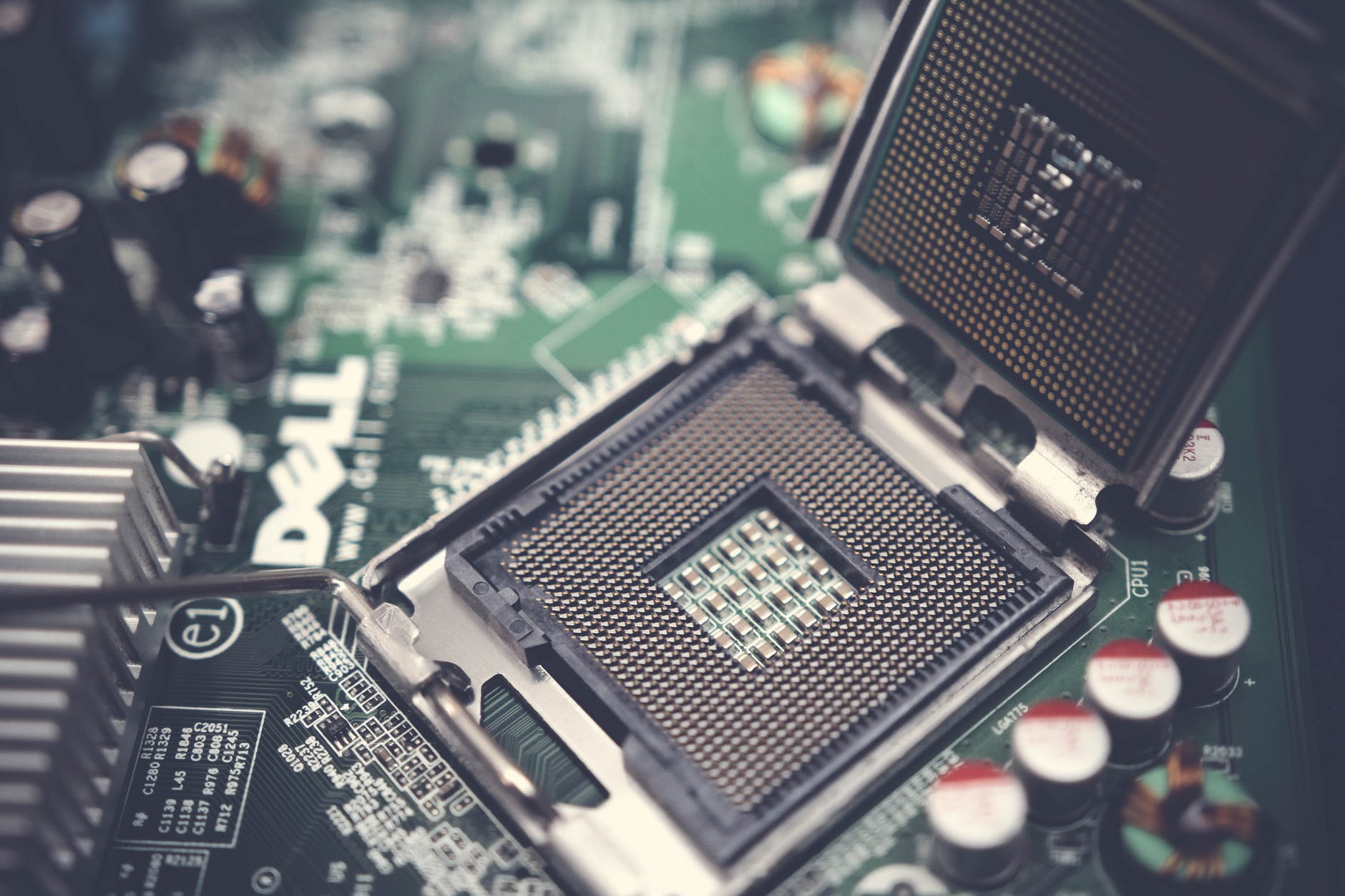
Already under pressure due to the surging demand for semiconductors amid the COVID-19 pandemic followed by the Russia-Ukraine war and now inflation, the chip industry is now witnessing signs of stress following US House Speaker Nancy Pelosi’s visit to Taiwan.
The effects of the global chip shortage last year, highlighted the world economy’s reliance on Taiwan. The semiconductor shortage had massive knock-on effects for the auto industry, for example, forcing many large firms to halt production. Taiwan Semiconductor Manufacturing Company (TSMC) is the world’s largest chip foundry and it’s Apple’s main producer of chips. During her visit to Taiwan, Pelosi met Mark Liu, chairman of the TSMC.
Cutting TSMC off from the rest of the world would currently be a major threat to the global economy, so tensions are obviously high. If production were to stop at the Taiwanese manufacturer, supply shortages would inevitably occur. These shortages could cause a global recession and stock market crash, which would likely lead to a spike in unemployment numbers at a time when many countries like the UK are currently enduring an ongoing cost of living crisis.
The negative consequences that dependencies such as these can have are currently being demonstrated more clearly than ever before by the war in Ukraine. To avoid the downside of globalization, countries are therefore increasingly turning to their own chip or semiconductor production. This is not only the case in China. In the USA and Europe, too, there are programs with the Chips Act for America and the European Chips Act, respectively, which are intended to ensure local semiconductor production.
Seeing the situation, the Indian government has launched the ‘Semiconductor Mission’ to establish a self-reliance and give boost to India’s fast-expanding electronics manufacturing and innovation ecosystem. The Union Cabinet has approved the ‘Semicon India’ programme with a total investment of Rs 76,000 crore in the growth of the country’s semiconductor and display manufacturing ecosystem. Through India Semiconductor Mission (ISM), the central government wants to encourage the use of secure microelectronics and the establishment of a reliable semiconductor supply chain, including raw materials, speciality chemicals, gases, and production equipment.
Technology is defined as the use of data to create and develop products and equipment that may be used in a variety of ways.
Technology has become an increasingly important aspect of our daily lives. Despite the fact that technology has made life easier for all of us, it has also brought with it a number of negative consequences that we must not overlook. Technology is essentially the means by which we put scientific discoveries into practice and combine them with our personal demands. Technology is a broad term that refers to the various tools, machinery, and equipment that we utilize on a daily basis. Man devised these tools and equipment to make tasks faster, easier, and more comfortable. Science and technology are inextricably linked; progress in one field leads to progress in the other. Science helps to build and produce technical items and equipment that serve humanity through research, experimentation, and observations.
Advantages of Technology in Life:
1. It has aided human growth and development.
2. Inventions and discoveries have improved the quality of life by making it easier, more effective, and more convenient.
3. Technology has connected the entire world, transforming it into a global village.
4. It is a boon to mankind because it is used in every aspect of life.
5. Technology has not only made our lives easier and more comfortable, but it has also contributed significantly to global economic growth.
6. Creative technology, which includes art, design, and advertising, has aided in the promotion of art and design through software applications.
7. Buildings, bridges, and plazas have become easier to design and construct thanks to advancements in architectural technology.
8. Industry has benefited from industrial technology as well.
9. Microtechnology is advancing at a breakneck pace, allowing chips and microelectronics circuits to improve performance and functionality while lowering costs.
10. Medical technology has produced a plethora of diagnostic and treatment devices and instruments. With the use of technology, diseases that were formerly difficult to diagnose and treat are now effectively diagnosed and treated.
Drawbacks of Technology:
While technological improvements are beneficial to us, we now appear to be overly reliant on them.
The following are some examples of technological disadvantages:
1. The use of mobile phones was intended to allow people to communicate in times of crisis. However, we now witness children becoming overly engrossed in various mobile applications, wasting their time.
2. The use of digital technology has been linked to a number of crimes.
3. It has also been observed that many people lack the fundamental education required to ensure proper use of today’s technology. Most of them, in fact, use it for the sake of fashion and hence end up misusing it.
4. People have become so reliant on technology that they are unwilling to engage in any manual labour. People prefer to use technology even for little tasks that can be completed manually. As a result, humans have become both intellectually and physically inert.
Finally, we must acknowledge that science and technology have led human society to the pinnacle of living perfection. However, we must proceed with prudence and in moderation. Misuse of science and technology can lead to negative outcomes. As a result, we must keep an eye on usage and behave wisely.
Artificial Intelligence, or simply AI, is the ability of a computer system or machine to operate and interpret information in the same way that a human does. It is capable of learning, analyzing, copying, and adapting to new knowledge without the need for external optimization. Experts believe that AI will be able to make human existence more easier in the future by providing solutions to nearly all problems. Artificial Intelligence will also make humans aware of potential hazards ahead of time. Artificial intelligence (AI) is one of the most rapidly evolving disciplines of science and creation. Artificial intelligence (AI), also known as “man-made reasoning,” is a branch of software engineering that aims to create machines that can think and function like humans.
Artificial Intelligence (AI): A Brief History
Artificial insight research was also started in 1950. The development of electronic computers and stored programs computers sparked AI research. A connection could not interface a PC to reason or act like a human psyche for a long time after that. Following that, Norbert Wiener made a revelation that accelerated AI’s early development tremendously. He demonstrated that the reaction component is responsible for all creative behavior in individuals. Logic Theorist was another step toward modern AI. It is considered the most important AI programs, having been created by Newell and Simon in 1955.
Who is the Father of Artificial Intelligence?
Mr. John McCarthy (1927-2011) is known as the “Father of AI.” He was born in Boston, Massachusetts, to a poor European immigrant family. McCarthy had already excelled in Mathematics as a teenager. He used to work as a carpenter and a fisherman to help support his family before becoming an official at the California Institute of Technology, Caltech. John McCarthy received his bachelor’s degree in mathematics from Caltech in 1948 and his doctorate in 1951.
Who was John McCarthy?
John McCarthy, also regarded as the “Father of AI,” was a brilliant computer scientist and cognitive scientist. He has been fascinated by artificial intelligence since 1948, and in 1955, he created the term. The formalization of common sense information has been his principal artificial intelligence research topic. In 1958, he created the LISP programming language, and in the late 1950s and early 1960s, he pioneered the concept of time-sharing. Since the early 1960s, he has worked on proving that computer programs fit their specifications. In 1978, he developed the circumscription approach of non-monotonic reasoning.
Applications of Artificial Intelligence:
Marketing: Marketing, which has been a significant area for improvement and the current AI trends, is one of the most notable artificial intelligence examples applications. In terms of AI’s application in the marketing arena online, the early 2000s were not very promising. Yes, there was e-commerce, but the search was not very good. When you didn’t know the specific name of anything, finding it in a store was difficult. Smart suggestions are now far more effective thanks to advancements in AI. Consumers on the web may soon be able to buy things by snapping a photo of them, thanks to advances in AI. This concept is already being tested by companies like Cam Find and their competitors. AI Platforms like IFlyTek also has many AI softwares that leverages on machine and AI intelligence such as text-to-speech and document translation tools to improve everyday life.
Gaming: Artificial Intelligence (AI) has been an important aspect of the game business in recent years. In fact, one of AI’s greatest achievements is in the gaming business. One of the most notable achievements in the field of AI is DeepMind’s AI-based AlphaGo software, which is famous for defeating Lee Sedol, the world champion in the game of GO. The gaming world is the best illustration of clever artificial intelligence applications because it is on this platform that there are many changes in the purpose. AI is employed to create the game, develop the characters, and, to some extent, frame the tale.
Healthcare: The healthcare industry has been one of the most enthusiastic adopters of AI technology. It all comes down to AI’s ability to crunch numbers quickly and learn from previous data, which is important in the healthcare industry. AI has also made a significant contribution to assisting people in the care of patients. The automated bots and healthcare software ensure that patients are properly medicated and treated in the facilities. In some circumstances, AI programs have been reported to assist surgeons during operations.
Chat Bots: Virtual assistants have become increasingly popular in recent years. Almost every home has a virtual assistant that manages the household equipment. Siri and Cortana, for example, are gaining popularity as a result of the user experience they deliver. Amazon’s Echo is an example of how AI can be used to interpret human words into desired actions. This device employs speech recognition and natural language processing to carry out a variety of operations at your direction. It’s capable of much more than just playing your favorite music. It may be used to control your home’s electronics, book cabs, make phone calls, order your favorite meals, and check the weather, among other things.
Human intelligence is the intellectual capability of humans, which is marked by complex cognitive feats and high levels of motivation and self-awareness.Through intelligence, humans possess the cognitive abilities to learn, form concepts, understand, apply logic, and reason, including the capacities to recognize patterns, plan, innovate, solve problems, make decisions, retain information, and use language to communicate. There are conflicting ideas about how intelligence is measured, ranging from the idea that intelligence is fixed upon birth, or that it is malleable and can change depending on an individual’s mindset and efforts.Several subcategories of intelligence, such as emotional intelligence or social intelligence, are heavily debated as to whether they are traditional forms of intelligence.They are generally thought to be distinct processes that occur, though there is speculation that they tie into traditional intelligence more than previously suspected.
Various definitions of intelligence tend to converge around similar notions designed to capture the essence of this psychological factor. Jensennotes Carl Bereiter’s definition of intelligence: “what you use when you don’t know what to do” (p 111). After their extensive survey, Snyderman and Rothmanunderscored reasoning, problem solving, and learning as crucial for intelligence. The “mainstream science on intelligence” report coordinated by Gottfredsonhighlights reasoning, planning, solving problems, thinking abstractly, comprehending complex ideas, learning quickly, and learning from experience. The American Psychological Association (APA) report on intelligence acknowledges that “individuals differ from one another in their ability to understand complex ideas, to adapt effectively to the environment, to learn from experience, to engage in various forms of reasoning, to overcome obstacles by taking thought.
For more than a century, psychologists have developed hundreds of tests for the standardized measurement of intelligence with varying degrees of reliability and validityThe resulting measures allowed for the organization of taxonomies identifying minor and major cognitive abilities. J. B. Carroll,for example, proposed a threestratum theory of intelligence after the extensive reanalysis of more than 400 datasets with thousands of subjects from almost 20 different countries around the world.shows a simplified depiction of the taxonomy of cognitive abilities.
This survey of factor analytic studies supports the view that intelligence has a hierarchical structure (ie, like a pyramid). There is strong evidence for a factor representing general intelligence (g) located at the apex of the hierarchy (stratum III). This g factor provides an index of the level of difficulty that an individual can handle in performing induction, reasoning, visualization, or language comprehension tests. At a lower order in the hierarchy (stratum II), several broad ability factors are distinguished: fluid intelligence, crystallized intelligence, general memory, visual perception, auditory perception, retrieval, or cognitive speed. Lastly, stratum I is based on specific abilities, such as induction, lexical knowledge, associative memory, spatial relations, general sound discrimination, or ideational fluency.
Artificial Intelligence:-
INTRODUCTION:-
Artificial intelligence (AI), the ability of a digital computer or computer-controlled robot to perform tasks commonly associated with intelligent beings. The term is frequently applied to the project of developing systems endowed with the intellectual processes characteristic of humans, such as the ability to reason, discover meaning, generalize, or learn from past experience. Since the development of the digital computer in the 1940s, it has been demonstrated that computers can be programmed to carry out very complex tasks—as, for example, discovering proofs for mathematical theorems or playing chess—with great proficiency. Still, despite continuing advances in computer processing speed and memory capacity, there are as yet no programs that can match human flexibility over wider domains or in tasks requiring much everyday knowledge. On the other hand, some programs have attained the performance levels of human experts and professionals in performing certain specific tasks, so that artificial intelligence in this limited sense is found in applications as diverse as medical diagnosis, computer search engines, and voice or handwriting recognition.
Today, Artificial Intelligence is a very popular subject that is widely discussed in the technology and business circles. Many experts and industry analysts argue that AI or machine learning is the future – but if we look around, we are convinced that it’s not the future – it is the present.With the advancement in technology, we are already connected to AI in one way or the other – whether it is Siri, Watson or Alexa. Yes, the technology is in its initial phase and more and more companies are investing resources in machine learning, indicating a robust growth in AI products and apps in the near future.
The following statistics will give you an idea of growth!
– In 2014, more than $300 million was invested in AI startups, showing an increase of 300%, compared to the previous year (Bloomberg)
– By 2018, 6 billion connected devices will proactively ask for support. (Gartner)
– By the end of 2018, “customer digital assistants” will recognize customers by face and voice across channels and partners (Gartner)
– Artificial intelligence will replace 16% of American jobs by the end of the decade (Forrester)
– 15% of Apple phone owners’ users use Siri’s voice recognition capabilities. (BGR)
Unlike general perception, artificial intelligence is not limited to just IT or technology industry; instead, it is being extensively used in other areas such as medical, business, education, law, and manufacturing.
In the following, we are listing down 9 very intelligent AI solutions that we are using today, marketing machine learning as a present thing – not the future.
Siri
Tesla
Cogito
Netflix
Pandora
Nest (Google)
Boxever
Flying Drones
Echo
1. Siri
Siri is one of the most popular personal assistant offered by Apple in iPhone and iPad. The friendly female voice-activated assistant interacts with the user on a daily routine. She assists us to find information, get directions, send messages, make voice calls, open applications and add events to the calendar.Siri uses machine-learning technology in order to get smarter and capable-to-understand natural language questions and requests. It is surely one of the most iconic examples of machine learning abilities of gadgets.
2. Tesla
Not only smartphones but automobiles are also shifting towards Artificial Intelligence. Tesla is something you are missing if you are a car geek. This is one of the best automobiles available until now. The car has not only been able to achieve many accolades but also features like self-driving, predictive capabilities, and absolute technological innovation.If you are a technology geek and dreamt of owning a car like shown in Hollywood movies, Tesla is one you need in your garage. The car is getting smarter day by day through over the air updates.
3. Cogito
Cogito originally co-founded by Dr. Sandy and Joshua is one of the best examples of the behavioral version to improve the intelligence of customer support representatives, currently on the market. The company is a synthesis of machine learning and behavioral science to enhance customer collaboration for phone professionals.Cogito is applicable on millions of voice calls that take place on a daily basis. The AI solution analyzes the human voice and provides real-time guidance to enhance behavior.
5. Pandora
Pandora is one of the most popular and highly demanded tech solutions that exist. It is also called the DNA of music. Depending on 400 musical characteristics, the team of expert musicians individually analyzes the song. The system is also good at recommending the track record for recommending songs that would never get noticed, despite people’s liking.
6. Nest (Google)
Nest was one of the most famous and successful artificial intelligence startups and it was acquired by Google in 2014 for $3.2 billion. The Nest Learning Thermostat uses behavioral algorithms to save energy based on your behavior and schedule.It employs a very intelligent machine learning process that learns the temperature you like and programs itself in about a week. Moreover, it will automatically turn off to save energy, if nobody is at home.In fact, it is a combination of both – artificial intelligence as well as Bluetooth low-energy because some components of this solution will use BLE services and solutions.
7. Boxever
Boxever is a company that heavily relies on machine learning to enhance the customer experience in the travel industry and conveys micro-moments or experiences that can please the customers.Boxover significantly improves customer engagement through machine learning and Artificial Intelligence to rule the playing field, helping customers to find new ways and make memorable journeys.
8. Flying Drones
The flying drones are already shipping products to customers home – though on a test mode. They indicate a powerful machine learning system that can translate the environment into a 3D model through sensors and video cameras.The sensors and cameras are able to notice the position of the drones in the room by attaching them to the ceiling. Trajectory generation algorithm guides the drone on how and where to move. Using a Wi-Fi system, we can control the drones and use them for specific purposes – product delivery, video-making, or news reporting.
9. Echo
Echo was launched by Amazon, which is getting smarter and adding new features. It is a revolutionary product that can help you to search the web for information, schedule appointments, shop, control lights, switches, thermostats, answers questions, reads audiobooks, reports traffic and weather, gives info on local businesses, provides sports scores and schedules, and more using the Alexa Voice Service
Conclusion
Artificial Intelligence is gaining popularity at a quicker pace; influencing the way we live, interact, and improve customer experience. There is much more to come in the coming years with more improvements, development, and governance.
Difference Between Artificial Intelligence and Human Intelligence
Artificial Intelligence: Artificial Intelligence is based on the human insights that can be decided in a way that can machine can effortlessly actualize the tasks, from the basic to those that are indeed more complex. The reason for manufactured insights is learning, problem-solving, reasoning, and perception. This term may be connected to any machines which show related to a human intellect such as examination and decision-making and increments the efficiency. AI covers assignments like robotics, control systems, face recognition, scheduling, data mining, and numerous others.
Human Intelligence: Human intelligence or the behaviour of the human being has come to past experiences and the doings based upon situation, environment. And it is completely based upon the ability to change his/her own surroundings through knowledge which we gained. It gives diverse sorts of information. It can provide data on things related to the particular aptitude and knowledge, which can be another human subject, or, within the case of locators and spies, diplomatic data to which they had to get to. So, after concluding all it can give data on interpersonal connections and arrange of interest.
Below is a table of differences between Artificial intelligence and Human intelligence:
Feature
Artificial Intelligence
Human Intelligence
Emergence
AI is an advancement made by human insights; its early improvement is credited to Norbert Weiner who theorized on criticism mechanisms.
On the other hand, human creatures are made with the intrinsic capacity to think, reason, review, etc.
Pace/Rate of AI and human
As compared to people, computers can handle more data at a speedier rate. For occurrence, in the event that the human intellect can solve a math problem in 5 minutes, AI can solve 10 problems in a minute.
In terms of speed human cannot beat the speed of AI, or, machines.
Decision Making
AI is profoundly objective in choice making because it analyzes based on absolutely accumulated data.
Human’s choices may be affected by subjective components which are not based on figures alone.
Perfection
AI frequently produces precise comes about because it capacities based on a set of modified rules.
For human insights, there’s more often than not a room for “human error” as certain subtle elements may be missed at one point or the other.
Energy Consumption
Modern computer generally uses 2 watts energy.
On the other hand, human brains uses about 25 watts
Modification of AI and Human
AI takes much more time to adjust to unused changes.
Human insights can be adaptable in reaction to the changes to its environment. This makes individuals able to memorize and ace different skills.
Versatility
AI can as it were perform less assignments at the same time as a framework can as it were learn duties one at a time.
The human judgment skills underpins multitasking as prove by differing and concurrent roles.
Social Networking
AI has not aced the capacity to choose up on related social and enthusiastic cues.
On the other hand, as social creatures, people are much way better at social interaction since they can prepare theoretical data, have self-awareness, and are delicate to others’ feelings.
Being a comedian, Tanmay Bhat has his way with words. Hence, what could be better than learning about stocks, trading, coding and other financial topics in his voice. It’s a platform where fun meets learning. It’s great for newbies who want to learn about finance or just utilise their time watching something resourceful rather than mindlessly scrolling on social-media.
BUSINESS INSIDER
This YouTube channel is exactly what it sounds like. You can find the inside and the development process of a large variety of topics from art, food, colours to industries, housing, etc. The channel is not geographically restricted. They have covered almost any and every country in the world, portraying what each has to offer, that adds on to their uniqueness.
RADHI DEVLUKIA
Roshni Devlukia aka Radhi is the wife of former monk and life-coach Jay Shetty. She’s a Nutritionists by profession. She uses her Instagram and YouTube channel to influences people to adapt to a healthy lifestyle. She is one of the most honest and transparent YouTuber i have found online. Her video’s are inspirational and her content is to the point (without unnecessary exaggerations). It’s on a must-check list for people interested in meditation, spirituality, self-love and growth.
MOSTLY SANE
MOSTLY SANE aka Prajakta Koli.She is one of the most famous Indian Youtuber and Diverse contentcreator online. Her content varies from Funny videos, vlogs, interviews to inspirational guidance, sister talk, life advisor, habit building, etc. Her channel shows the most transparent life a common yet hard working teenager turning into a successful adult. Her content include any and every adulting topic which we all can relate to. ( Basically, She’s a mix of Mummy, Didi and Best-Friend Advices)
ARJUNA HARJAI
Arjuna Harjai is a music creator, singer and vlogger. Love Kids? Then his channel is the perfect place to find the cuteness along with a reality check of a young parent’s life. Personally, watching his vlogs works more like a dose of serotonin for me as they have the cutest child. The couple went famous from a viral tiktok showing childhood love-birds turning into wedded couple and then to parents of a adorable child. They perfectly portray modernparenting and life after you marry your best-friend.






 Eduindex
You must be logged in to post a comment.